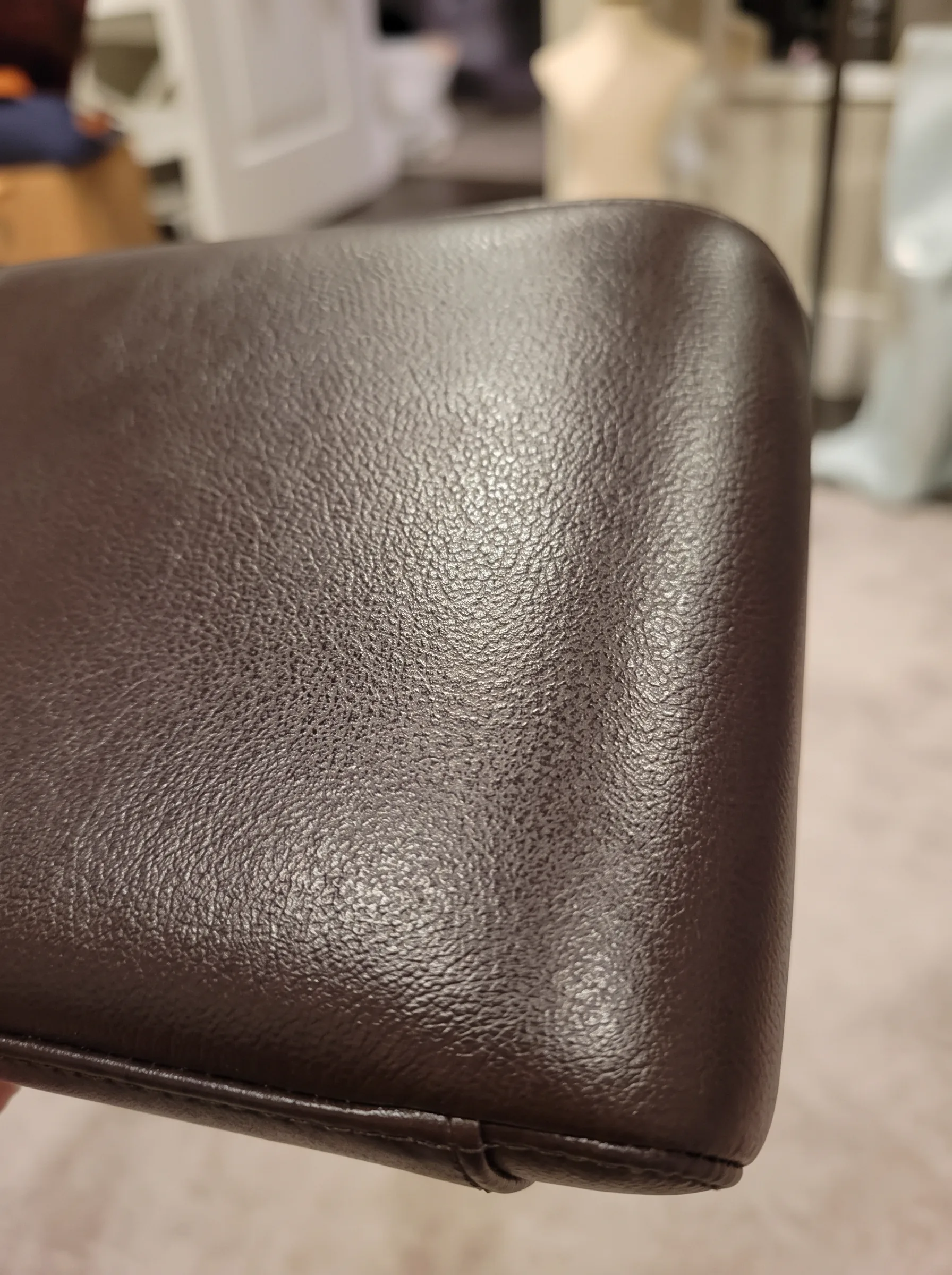
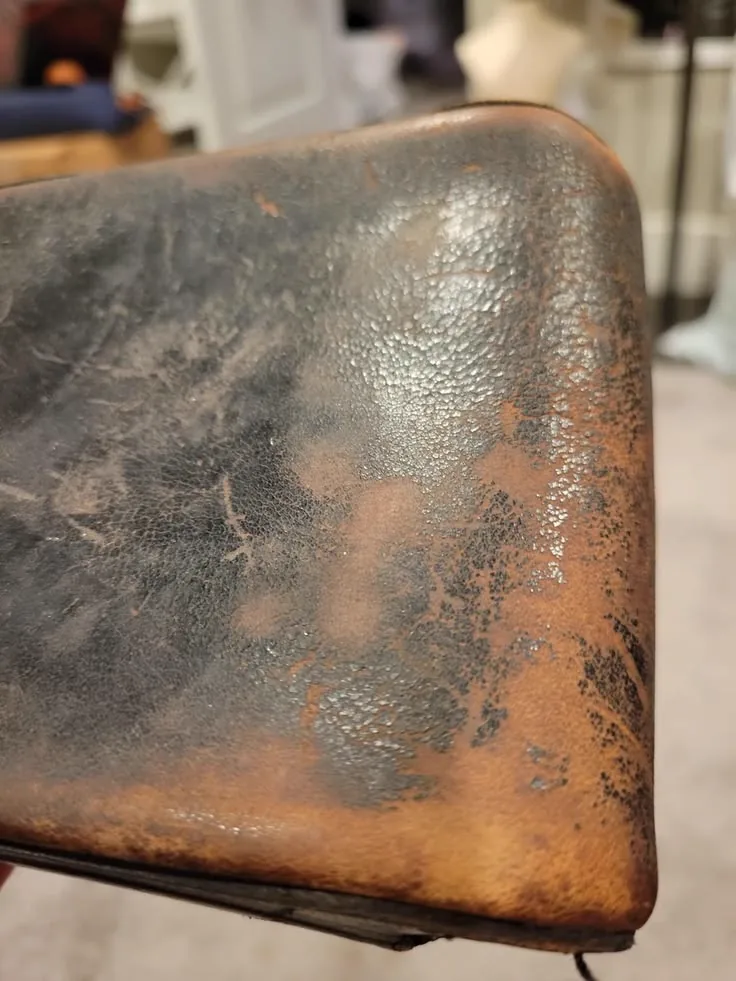
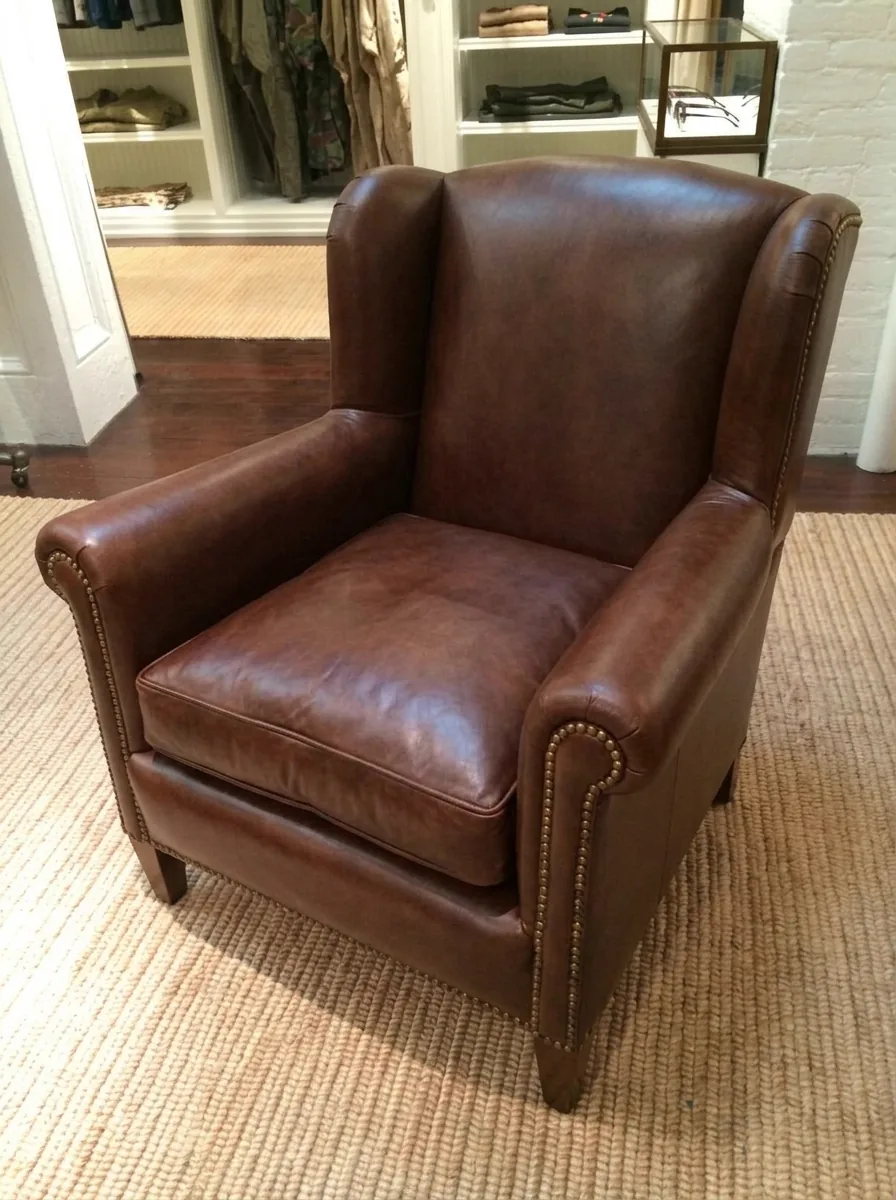
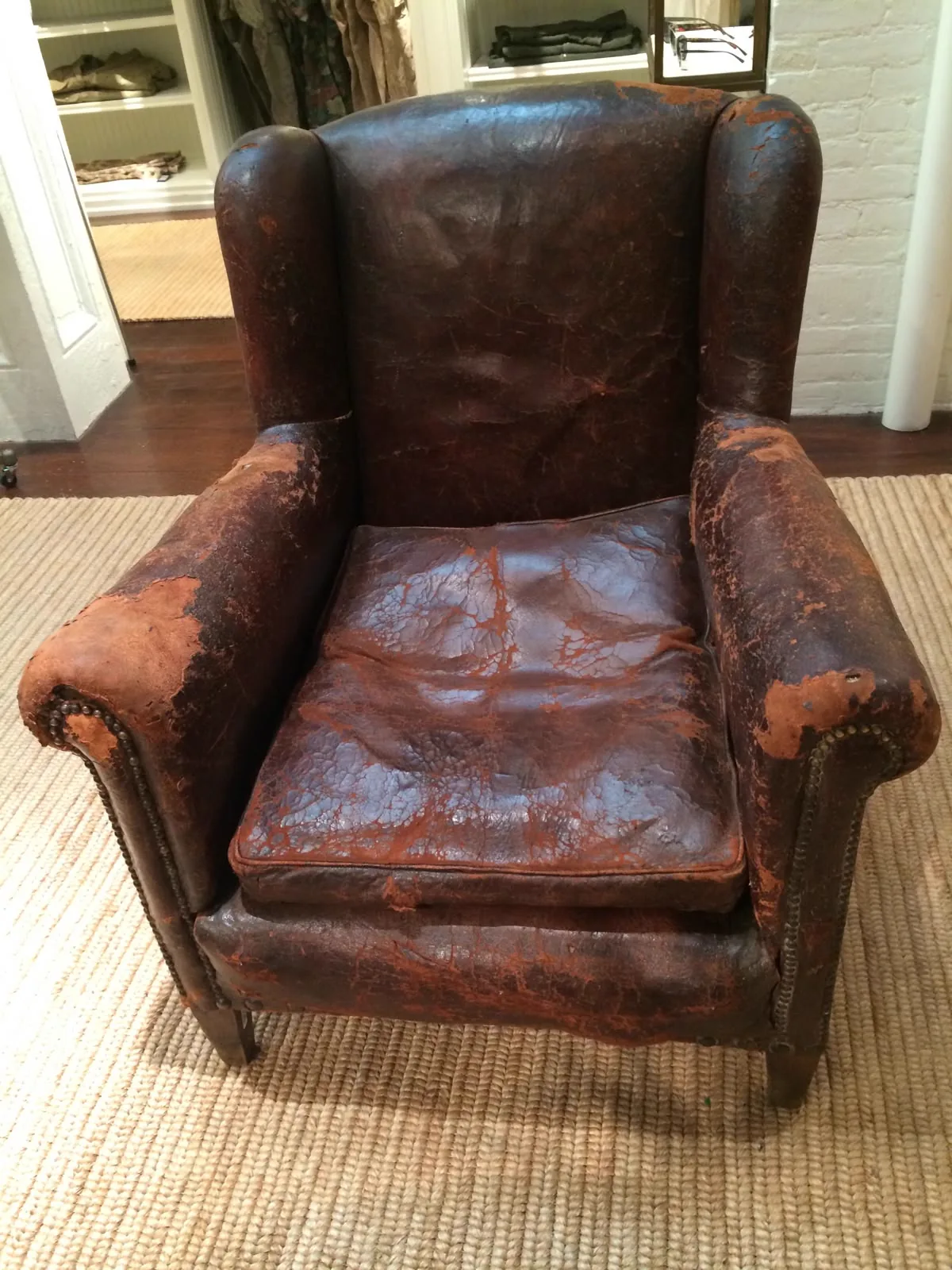
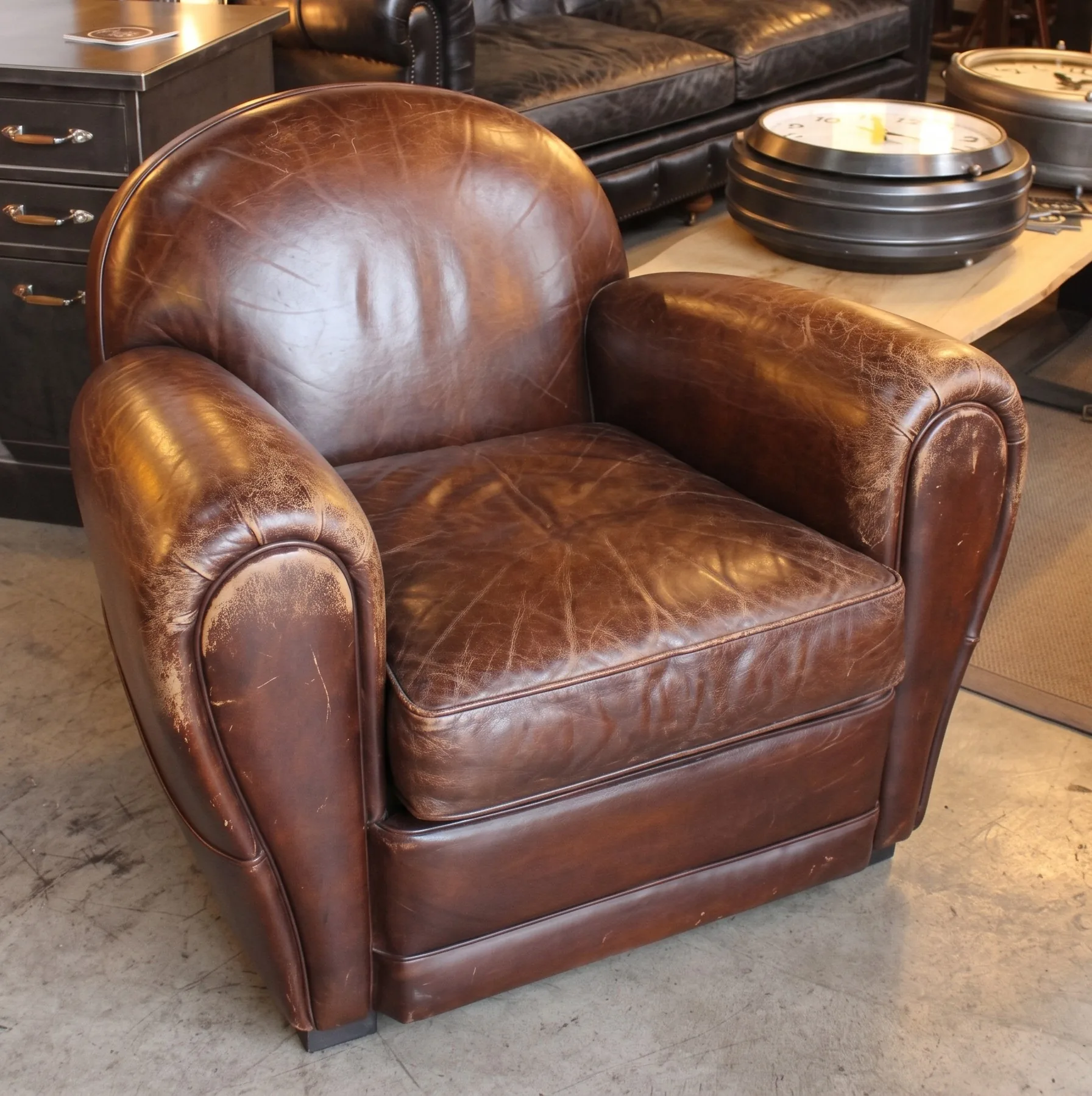
Run a fingernail along the line on your seat cushion. If it glides over a soft fold, you have a crease - the harmless patina every good hide earns with age. If it catches on a sharp, papery edge, you have a crack - dehydrated collagen that has already snapped below the surface and will keep widening until the leather tears. That one test separates a sofa that needs nothing more than conditioning from one racing toward irreversible failure. This guide shows you how to read the difference and how to fix a cracked leather sofa before the break becomes permanent.
For homeowners across India, the extreme fluctuations in climate,from the dry, searing heat of summer to the damp, humid monsoon,wreak havoc on premium aniline and semi-aniline leathers. What begins as a seemingly harmless wrinkle can quickly degrade into a sharp, structural fissure if proper conditioning and pH-balanced care are neglected. If you are wondering whether your sofa is simply breaking in or actively breaking down, you are in the right place.
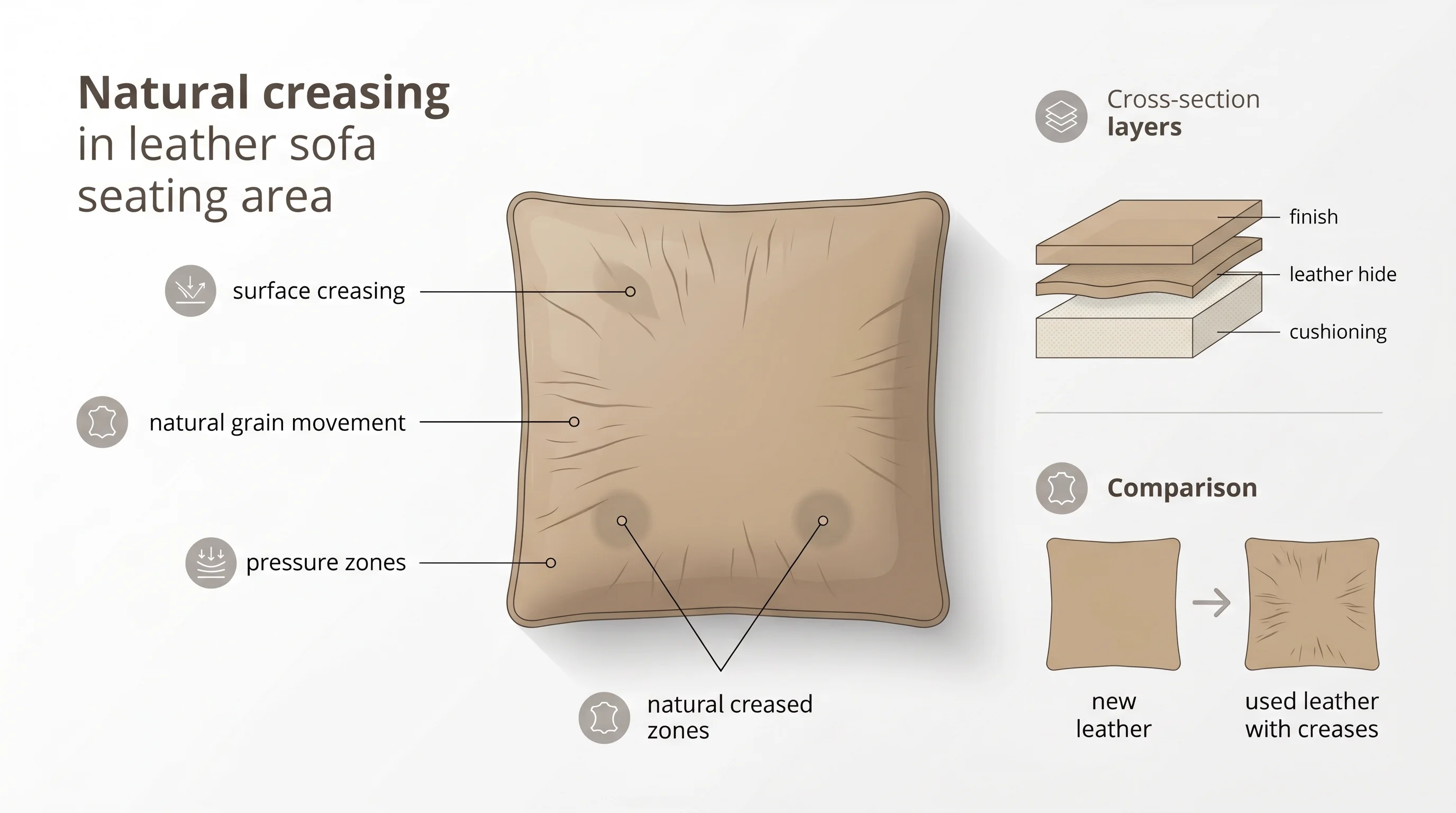
| Indicator | Healthy Creasing (Patina) | Dangerous Cracking |
|---|---|---|
| Texture | Soft, supple, flexible | Rough, scratchy, papery |
| Color in line | Matches surrounding hide | Lighter, exposed suede core |
| Edges | Smooth fold | Sharp, flaking, peeling |
| Pattern | Long parallel folds | Spiderweb / dry-riverbed |
| Pinch test | Snaps back instantly | Hesitates, holds wrinkles |
| Repair | Conditioning maintains it | Filler + sanding + re-dye required |
From the TLR Restoration Lab: In 180+ sofas inspected for cracking complaints across India (2024-2026), 58% were misdiagnosed creases requiring only conditioning. Of the genuine-crack cases, 83% had been placed within 1.5 metres of a split AC blower or south/west-facing window without UV film. Average humidity in Indian summers drops to 18-25% RH, well below the 40-55% RH leather equilibrium range.
References: Leather Working Group for hide-finishing standards, BIS for leather grading, and India Meteorological Department for Delhi humidity data referenced above.
The Anatomy of Leather: Why Does it Wrinkle and Crack?
To understand why your leather sofa is behaving the way it does, we must first look at the science of the material itself. High-quality leather, particularly full-grain and top-grain aniline leather, is a natural, organic material made up of millions of microscopic collagen fibers. These fibers are intricately interwoven, giving the hide its incredible tensile strength, flexibility, and durability.
When the leather is tanned and processed, it is infused with natural oils and moisture. This internal lubrication allows the collagen fibers to slide across one another effortlessly when you sit on the sofa, causing the leather to stretch and compress without breaking. We refer to this healthy state as the leather's "moisture equilibrium."
TLR EXPERT TIP: Leather has a natural pH of 4.5 to 5.5, which is slightly acidic. Using highly alkaline household cleaners,like dish soap or ammonia-based sprays,strips the protective topcoat and rapidly leaches the essential oils from the collagen matrix, accelerating the drying out process.
However, leather is also highly porous. It constantly breathes, absorbing and releasing moisture into the surrounding air. In air-conditioned environments or heated rooms, the ambient air actively pulls moisture out of the leather. When the internal oils and moisture evaporate, the collagen fibers shrink, become brittle, and lose their ability to glide. Instead of stretching when pressure is applied, the dry, stiff fibers snap. This snapping of the internal fiber structure is what manifests as a crack on the surface.
What is Leather Creasing? (The Natural Patina)
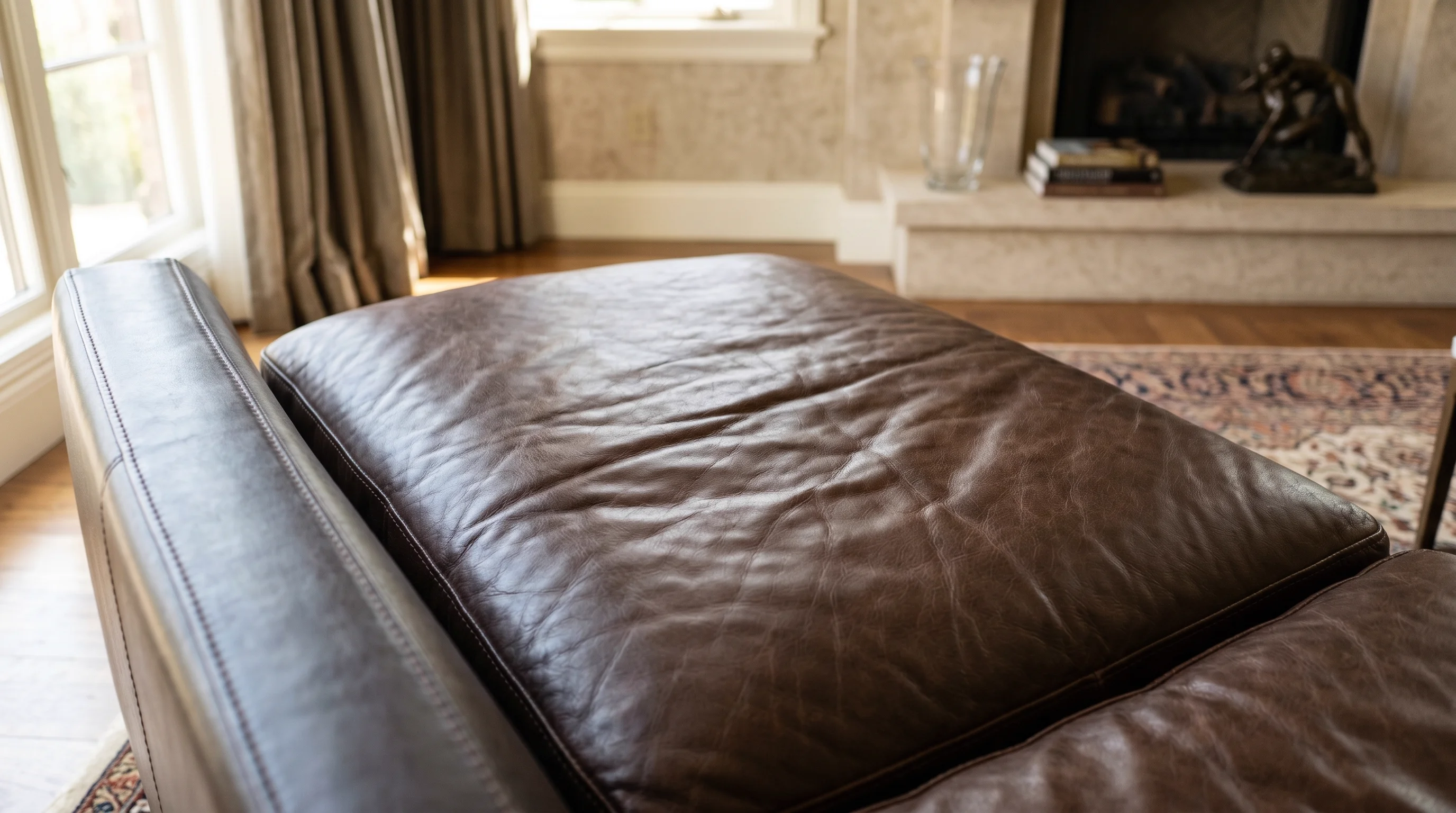
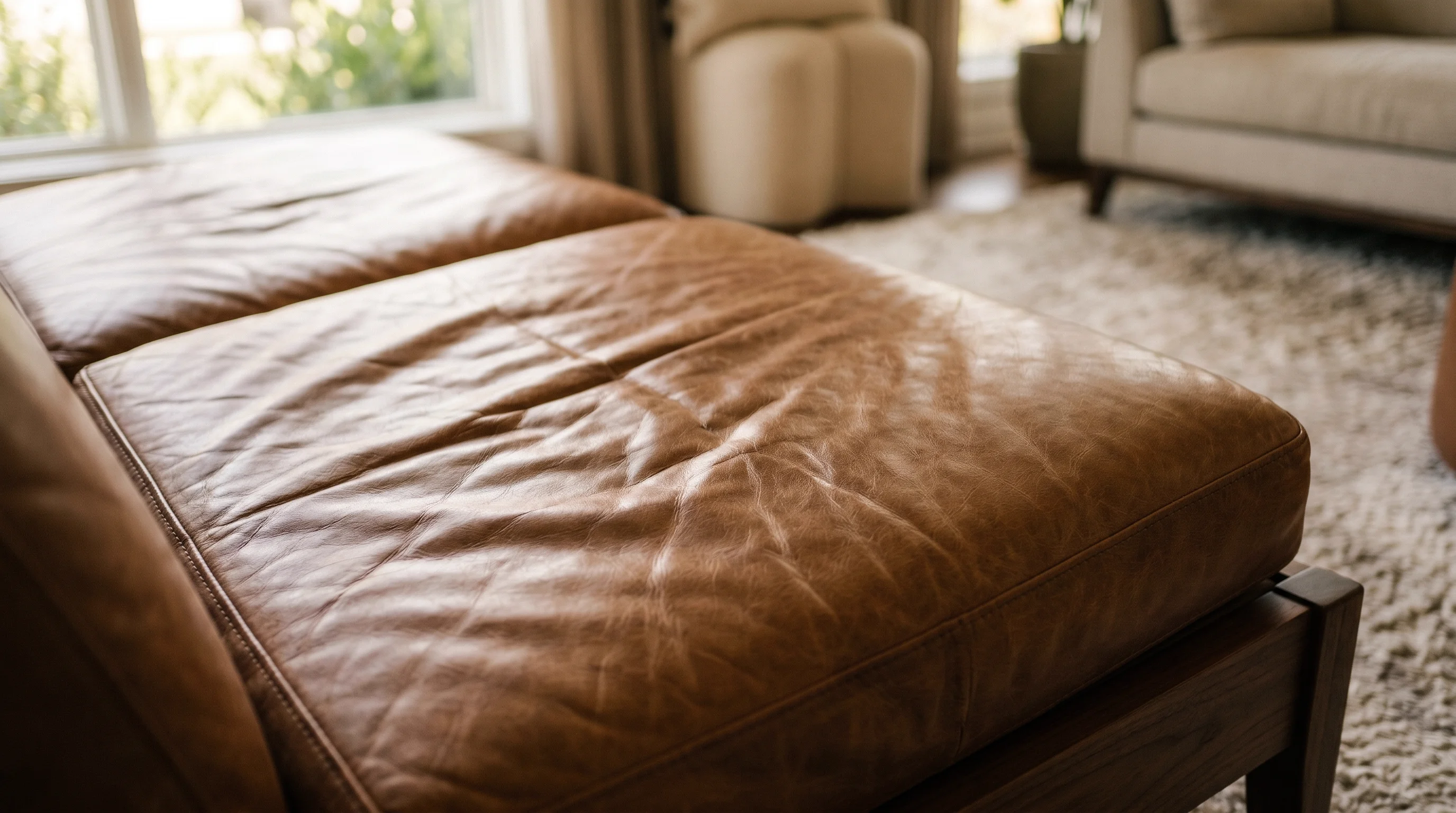
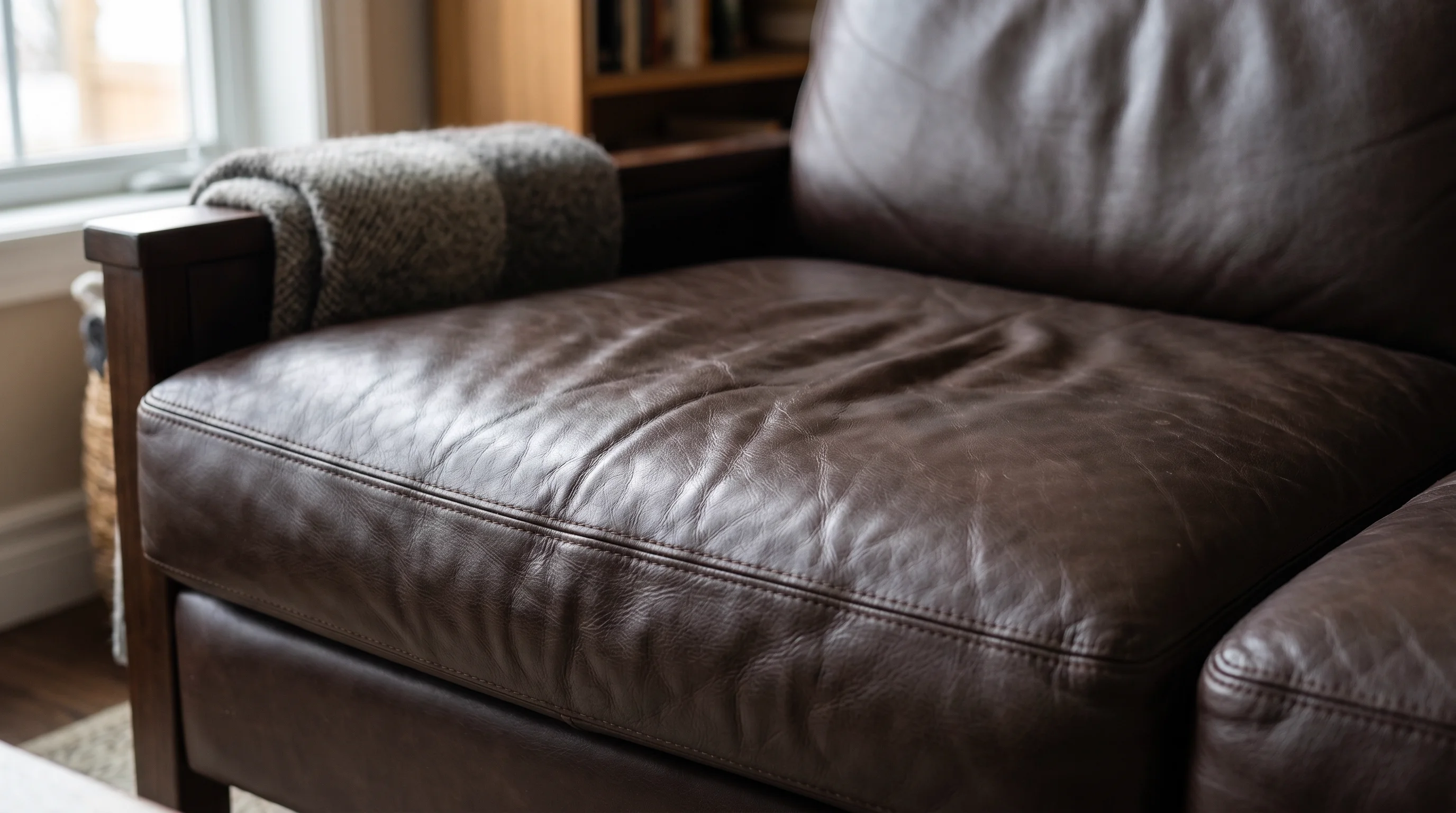
Many of our clients across India contact us in a panic when they notice lines forming on their brand-new Italian leather sofas. It is essential to understand that leather creasing is entirely normal and expected. In fact, in the luxury furniture industry, the development of creases and wrinkles is known as the "patina," and it is highly sought after as a hallmark of genuine, high-quality leather.
The Characteristics of Healthy Creasing
How can you tell if the lines on your sofa are just natural creases? Look for these key indicators:
- Softness to the Touch: When you run your hand over a natural crease, the leather should still feel soft, supple, and flexible.
- Color Consistency: The color inside the crease should match the surrounding leather. The dye should not look fractured or separated.
- Location: Creases typically form in high-traffic areas where the leather naturally compresses, such as the center of seat cushions, armrests, and backrests.
- Smooth Edges: A crease is simply a fold in the material. There are no sharp edges, flaking, or peeling associated with it.
"A pristine, unwrinkled leather sofa looks like a showroom piece. A beautifully creased leather sofa looks like a home. The goal of maintenance is not to prevent creasing, but to ensure those creases remain soft and hydrated." , Tyson, Lead Artisan
What is Leather Cracking? (The Danger Zone)
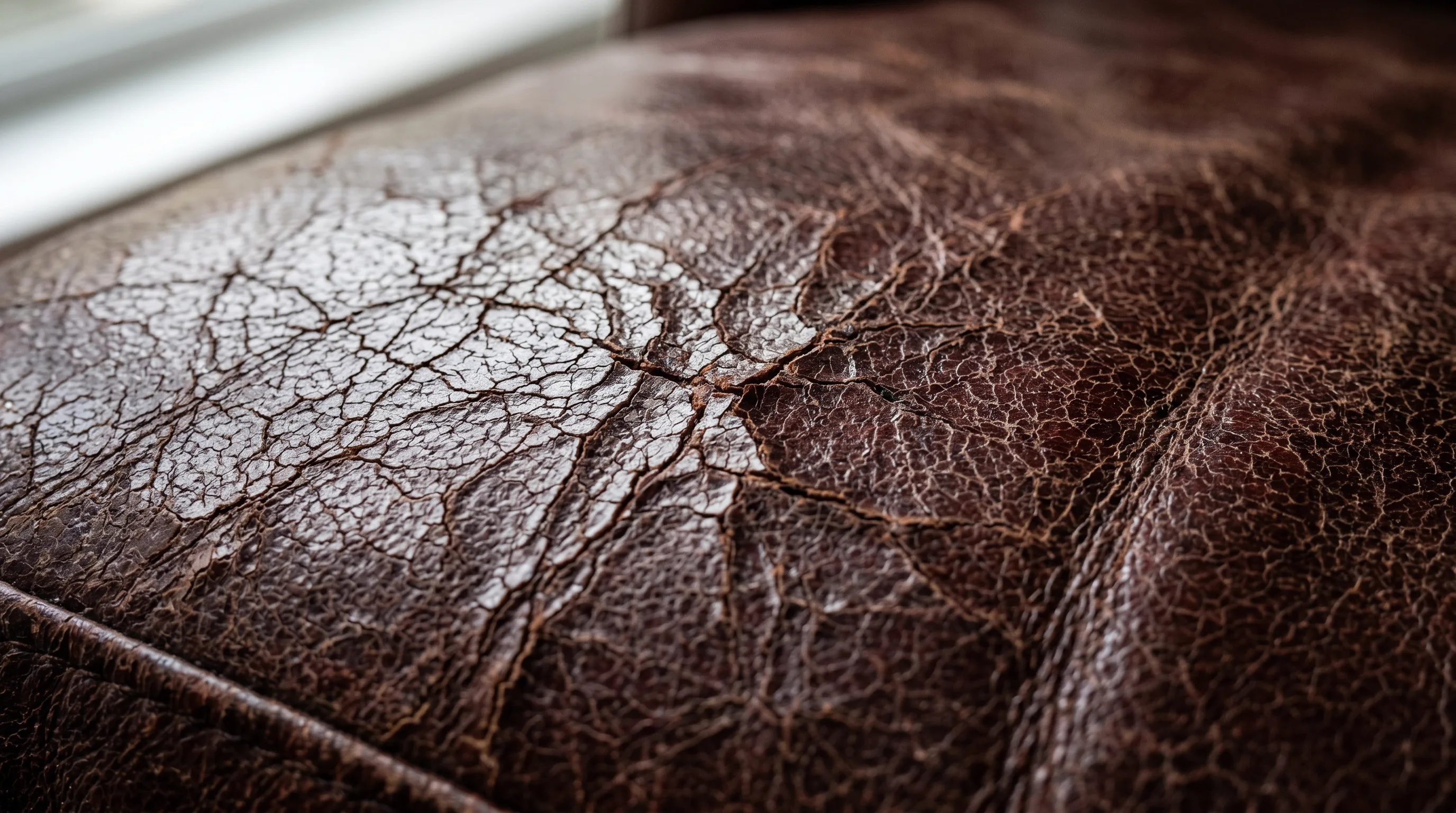
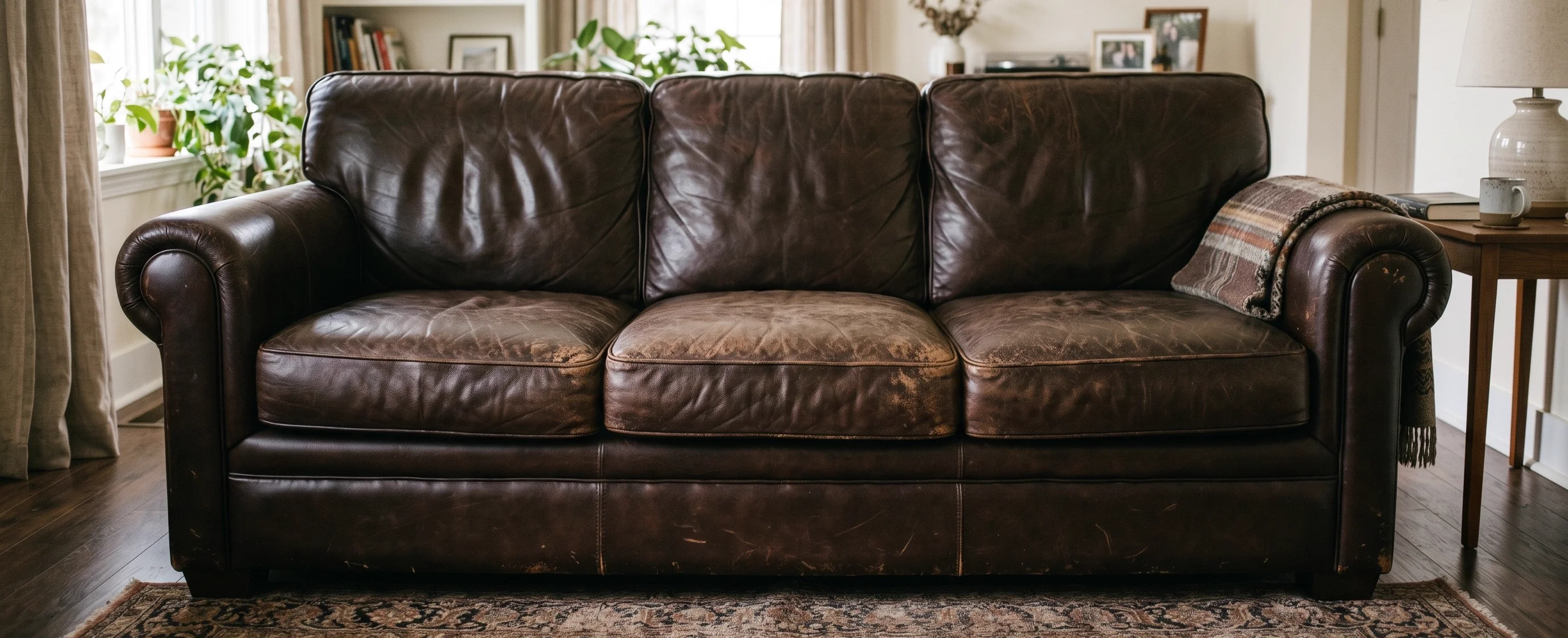
Unlike natural creasing, leather cracking is a sign of structural failure. When a cracked leather sofa is left untreated, the damage accelerates exponentially. Every time you sit on a dehydrated, cracked cushion, you are forcing the brittle collagen fibers to bend, which causes the cracks to deepen and widen until the leather ultimately tears.
How to Identify Dangerous Cracking
It is crucial to distinguish a crack from a crease early on. Look for these warning signs of severe dehydration:
- Rough, Scratchy Texture: Run your fingernail gently across the line. If it catches on a sharp edge, it is a crack. Creases are perfectly smooth.
- Color Loss in the Crevice: When leather cracks, the protective topcoat and dye layer split open, revealing the lighter, undyed suede-like fibers underneath. If the line looks significantly lighter than the rest of the sofa, it is a crack.
- Flaking and Peeling: Severe dryness causes the polyurethane topcoat on protected leathers to lose adhesion. If you see tiny flakes of color peeling away around the edges of the line, the structural integrity is compromised. This often overlaps with bubbling and flaking, a separate finish-failure pattern worth ruling out.
- Spiderweb Patterns: While creases usually form in long, distinct lines following the contours of the cushion, cracks often appear as a microscopic network of intersecting lines, resembling a dry riverbed or a spiderweb.
TLR EXPERT TIP: The "Pinch Test" is a great way to check hydration. Gently pinch a section of the leather on the seat cushion and release it. If it snaps back instantly, it is well-hydrated. If it hesitates or leaves a network of fine wrinkles that slowly disappear, your leather is dangerously dry and requires immediate deep conditioning.
What Are the 5 Signs Your Leather Sofa Is Dangerously Dry?
Prevention is always more cost-effective than restoration. By the time a crack is highly visible, the internal fiber structure has already failed. However, if you know what to look for, you can intervene with professional conditioning before the damage requires expensive leather filler and re-dyeing. Dry leather usually turns hard and stiff first - treat that stiffness as your early warning, well before any crack appears.
- The Surface Feels Like Paper or Cardboard: Healthy luxury leather should feel plush, buttery, and slightly cool to the touch. If your sofa feels stiff, papery, or crinkles audibly when you press on it, it has lost its vital moisture equilibrium.
- Micro-Cracks in High Friction Areas: Inspect the front edge of the seat cushions (where the back of your knees rest) and the top of the armrests. These areas endure the highest friction and body oil transfer, making them the first to dry out and form micro-cracks.
- Fading Color and Dullness: While UV sun fading is a separate issue, severe dryness also causes the dye to look dull, chalky, and lifeless. A deeply hydrated sofa reflects light beautifully, giving it a rich, saturated appearance.
- Increased Sensitivity to Scratches: When leather is dry, surface tension increases. A gentle scrape from a fingernail or a pet's paw that would normally glide off a well-conditioned sofa will instantly leave a permanent, light-colored scratch on a dehydrated hide.
- The Absorption Rate is Too Fast: If a drop of pure water is placed on an inconspicuous area and it is absorbed instantly, turning the spot dark within seconds, the leather is completely starved of moisture. (Note: Only test this on aniline leather; protected leathers will bead water regardless of hydration).
If you notice any of these signs, it is time to consider our professional leather sofa cleaning service in Noida and across India to restore the hydration balance before severe cracking occurs.
What Common Mistakes Accelerate Leather Cracking?
Many homeowners inadvertently cause their leather furniture to crack by following bad advice found online or using the wrong products. Here are the most common mistakes we see when performing leather sofa maintenance across India.
1. Using Harsh Household Cleaners
Never use glass cleaner, dish soap, antibacterial wipes, or multi-surface sprays on your leather sofa. These products are highly alkaline and contain aggressive solvents designed to strip grease. When applied to leather, they instantly destroy the protective clear coat and strip the natural oils from the hide, leaving it vulnerable to rapid drying and cracking.
2. The "Olive Oil and Coconut Oil" Myth
One of the most destructive DIY myths is the idea that applying food-grade oils (like olive oil, coconut oil, or baby oil) will hydrate leather. While these oils may temporarily make the leather look shiny, they do not penetrate properly. Instead, they sit in the pores, turn rancid, attract abrasive dust, and eventually break down the leather's fibers from the inside out, causing severe structural degradation and terrible odors.
3. Placing Furniture Near Heat Sources or AC Units
Leather is highly sensitive to environmental factors. Placing a sofa directly in front of a split AC blower, a radiator, or in direct, unfiltered sunlight will cause the ambient humidity to plummet. This acts like a sponge, pulling the essential moisture directly out of the leather. Where a long damp season and heavy indoor AC overlap, it is the swing rather than the dryness alone that breaks the finish - weeks of damp swell it, then the blower tightens the same panel until it crazes into a spiderweb of fine lines and starts to peel, which is the pattern behind most requests for sofa repair in Bangalore.
4. Ignoring Dust Accumulation
Dust is not just unsightly; it is abrasive. On a microscopic level, household dust acts like fine sandpaper. When dust settles into the natural creases of your sofa, and you sit on it, the dust grinds against the polyurethane topcoat. Over time, this friction wears away the protective finish, exposing the raw leather beneath to the dehydrating air, leading directly to cracking.
How to Fix a Cracked Leather Sofa: Professional vs. DIY
If your sofa has crossed the line from creasing to cracking, you might be wondering how to fix a cracked leather sofa. The reality is that the approach depends entirely on the severity of the damage. Our step-by-step guide on what to do about leather sofa cracking covers the first-response moves that stop a fresh crack from widening.
The DIY Approach (For Micro-Cracks Only)
If the cracks are microscopic and look more like a fine network of dry skin rather than deep fissures, you may be able to halt the progression with a high-quality, pH-balanced leather conditioner. A premium conditioner, applied carefully with a soft microfiber cloth, can penetrate the pores and restore some of the lost flexibility. However, it is vital to understand that conditioning will not repair a crack; it will only prevent it from getting worse. The physical break in the leather will remain.
The Professional Restoration Process
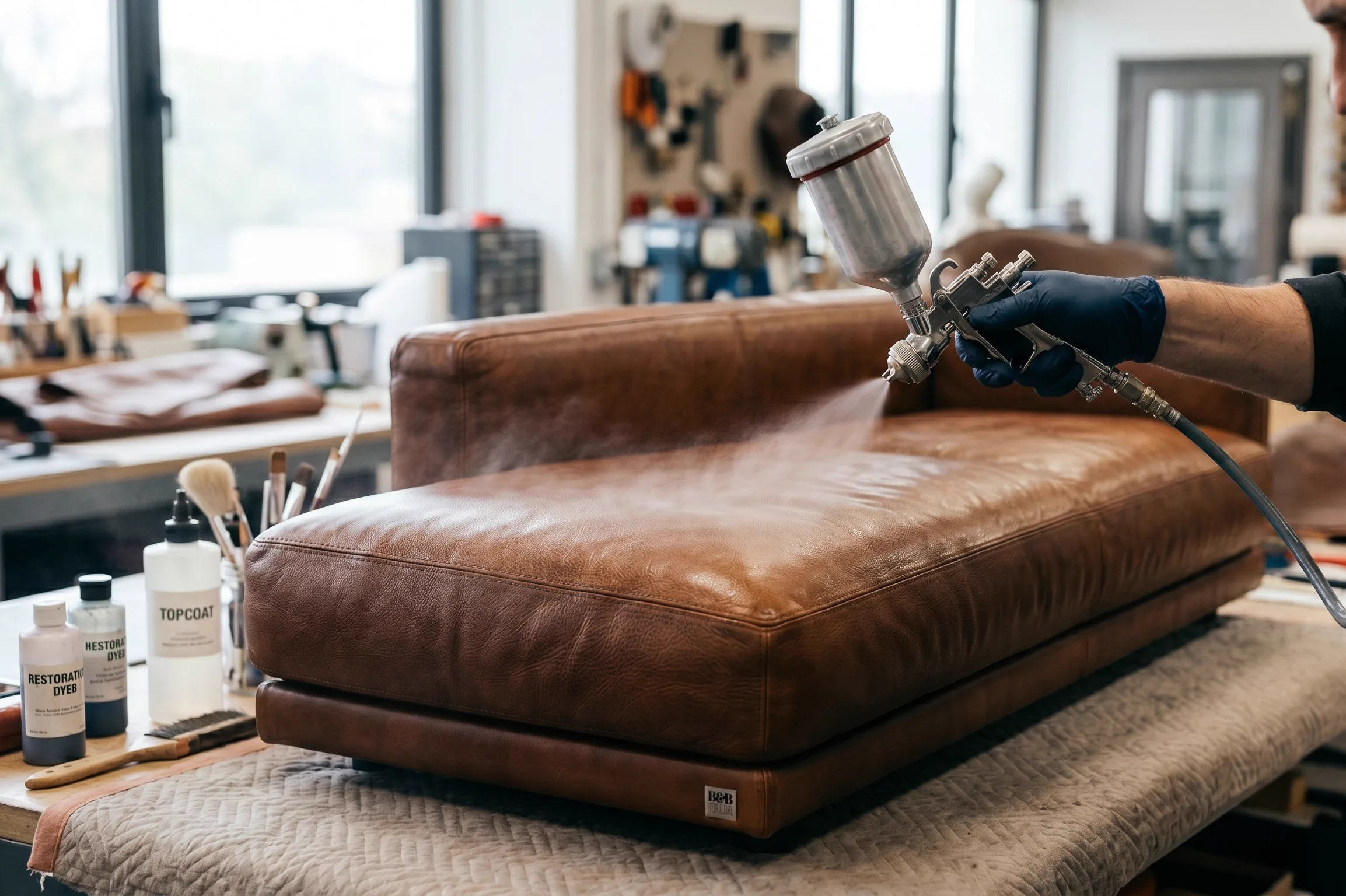
For deep cracks, peeling color, and rough textures, DIY methods will fail. Slapping a cheap leather repair kit patch over the area will look terrible and peel off within weeks. True restoration requires the expertise of a professional leather sofa repair service in India. At The Leather Restorators, our process involves:
- Deep Extraction Cleaning: We use specialized, pH-balanced foaming cleaners to extract all dirt, body oils, and abrasive dust from deep within the cracks without overwetting the hide.
- Surface Preparation & Sanding: The damaged topcoat is carefully stripped, and the sharp edges of the cracks are gently sanded down to create a smooth, level profile.
- Structural Filling: We apply a highly flexible, professional-grade leather binder and filler compound deep into the fissures. This reconstructs the missing leather and restores the structural integrity of the cushion, ensuring the crack will not reopen under pressure.
- Color Matching & Re-dyeing: Using advanced spectrophotometer technology and trained artistic eyes, we custom-mix water-based leather dyes to match your sofa's exact original color, blending the repair seamlessly into the surrounding area.
- Protective Topcoat Application: Finally, we seal the repair with a durable polyurethane topcoat (in the correct matte, satin, or gloss finish) to lock in the color and protect the leather from future wear and dehydration.
Frequently Asked Questions (FAQ)
Can a cracked leather sofa be repaired?
Yes, a cracked leather sofa can be repaired. Minor surface cracks can be treated with professional deep conditioning, while severe, deep cracks require leather filler, sanding, and professional color matching and re-dyeing to restore the original look.
How do you stop leather from cracking?
To stop leather from cracking, keep it away from direct sunlight and heat sources, which deplete natural oils. Clean it regularly with a pH-balanced leather cleaner to remove abrasive dust, and apply a premium leather conditioner every 3 to 6 months to maintain moisture equilibrium.
Is it normal for a leather sofa to crease?
Yes, it is entirely normal for a leather sofa to crease. Leather is a natural skin that stretches and flexes with use. Creasing, often called 'patina', adds character to high-quality leather. However, if the creases feel rough or sharp, it may be a sign of dryness leading to cracking.