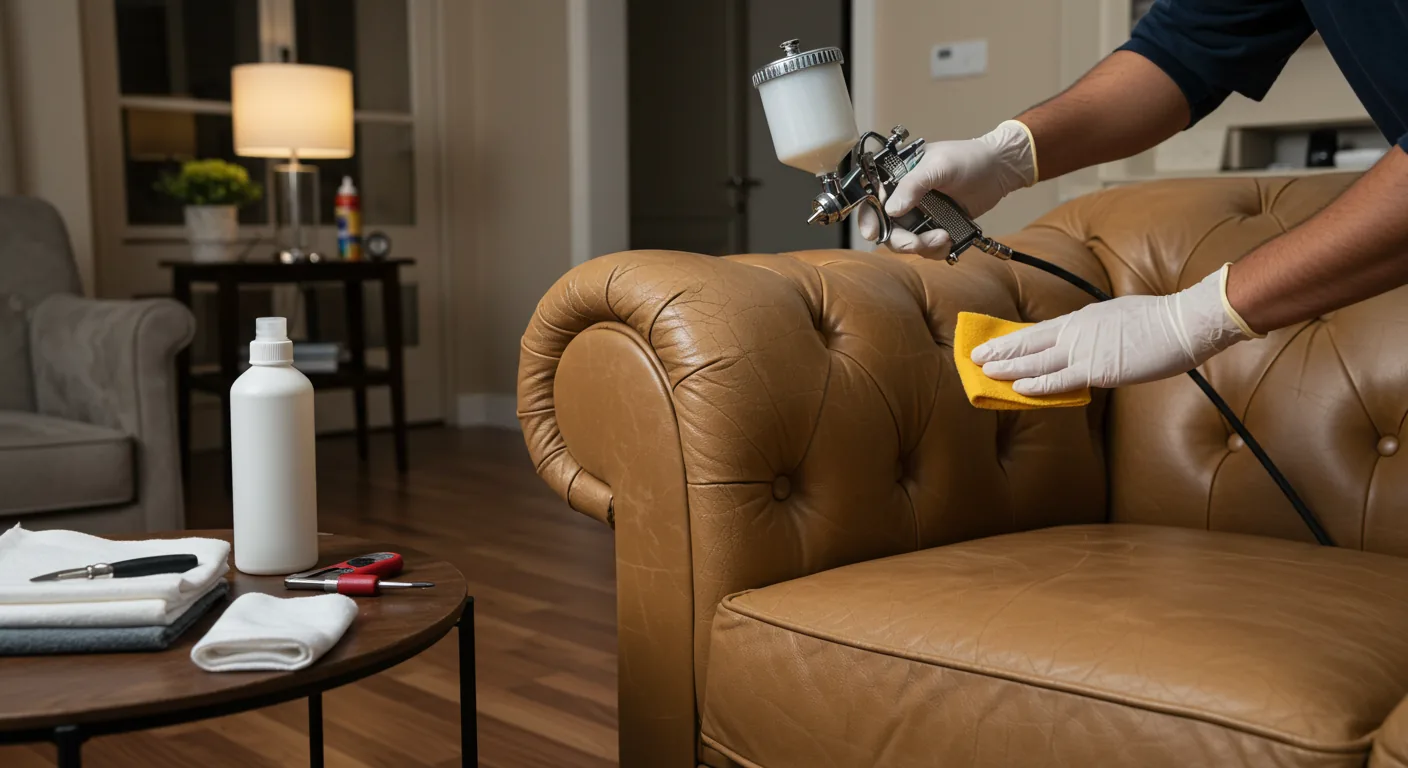
Your leather sofa does not need a professional visit to stay clean. Most routine maintenance - the weekly dust, the monthly wipe-down, the quarterly conditioning - can be done at home in under 30 minutes with the right products and the right sequence. What it does need is for you to stop reaching for whatever cleaning spray is under the kitchen sink. That is where most Indian leather sofas get damaged. This guide covers every step, the Indian context that matters, and the one situation where you genuinely do need to call someone.
In Delhi, Noida, and Gurgaon homes, leather sofas face a specific combination of stressors that sofas in cooler, drier climates do not: monsoon humidity followed by brutal AC-dry summers, heavy airborne pollution that settles as a fine abrasive film on surfaces, and hard water used in cleaning that leaves alkaline mineral deposits. A cleaning routine that works in London will not fully work here. This guide is built for Indian conditions.
Step One: Know What Type of Leather You Have
Before touching the sofa with any cleaning product, you need to know what you are working with. The same cleaner that is safe for protected leather can permanently damage aniline leather. There are two main categories in most Indian homes.
Protected (Pigmented) Leather
This is the most common type in Indian furniture showrooms - it is the leather most sofas from brands like Natuzzi, Durian, and WoodenStreet are made from. It has a uniform colour and a very slight plastic-like sheen. It is tougher and more stain-resistant. Do the water drop test: place a tiny drop on the armrest. If it beads and sits on the surface, you have protected leather. You can clean it with a slightly damp cloth and mild pH-balanced leather cleaner.
Aniline and Semi-Aniline Leather
This type shows the natural grain of the hide - you can see the pores, subtle colour variation, and marks that were in the original skin. It is far more luxurious but also far more delicate. If the water drop absorbs and darkens the surface within 30 seconds, you have aniline or semi-aniline. This leather needs gentler, less-wet cleaning. Excess moisture causes tide marks that are difficult to remove without professional help.
TLR EXPERT TIP: If you are not sure which type you have, test on the underside of a back cushion first - not on a visible panel. On aniline leather, even clean water left to dry in AC air can leave a tide mark. Always use a barely damp cloth, never a wet one, and dry the surface immediately after.
What You Need Before You Start
- pH-balanced leather cleaner (pH 5-7). Available on Amazon India - brands like Leather Honey, Bick 1, or Leather Master work well.
- Two white microfibre cloths - one for cleaning, one for drying. White only: coloured cloths can transfer dye to aniline leather.
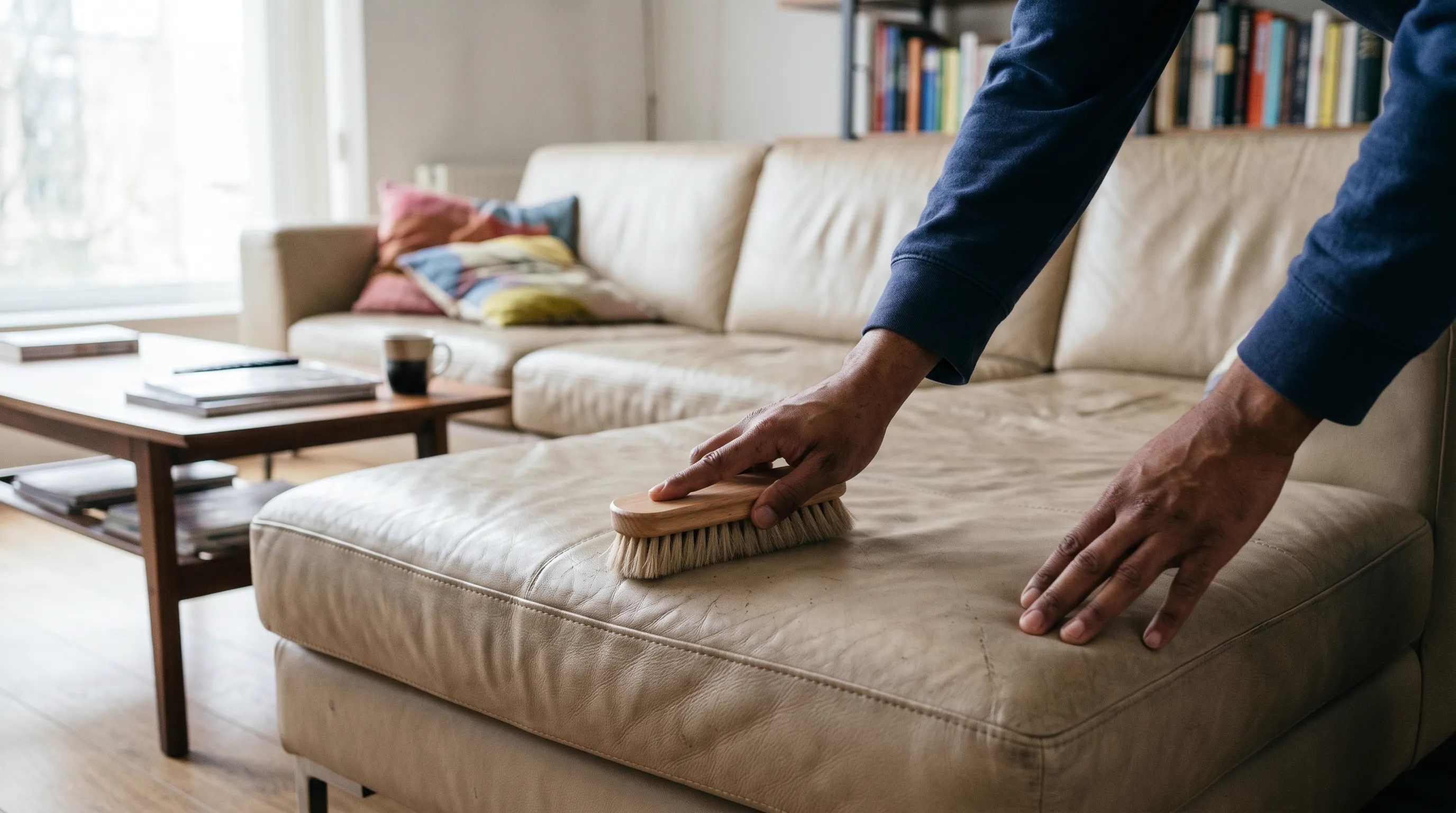
- Soft-bristle brush (a clean shaving brush or soft paintbrush) for dusting crevices and piping seams.
- Leather conditioner - same brand family as your cleaner. Do not mix brands with unknown pH levels.
That is all you need. Do not add to this list. The most damage we see in Delhi NCR sofas comes from people adding products - baking soda, diluted vinegar, coconut oil, baby wipes - that are not designed for leather chemistry.
Step-by-Step Home Cleaning Method
Step 1 - Dry Dust First
Use the soft brush to work dust and debris out of every seam, piping line, and cushion gap. Then wipe the entire surface with a dry white microfibre cloth. This step is non-negotiable. Cleaning a dusty surface without removing the dry dust first grinds the abrasive particles into the topcoat. In Delhi homes near Ring Road or Dwarka Expressway, the pollution film on a sofa surface can be visible as a grey tint on the cloth after just one week.
Step 2 - Apply Cleaner Section by Section
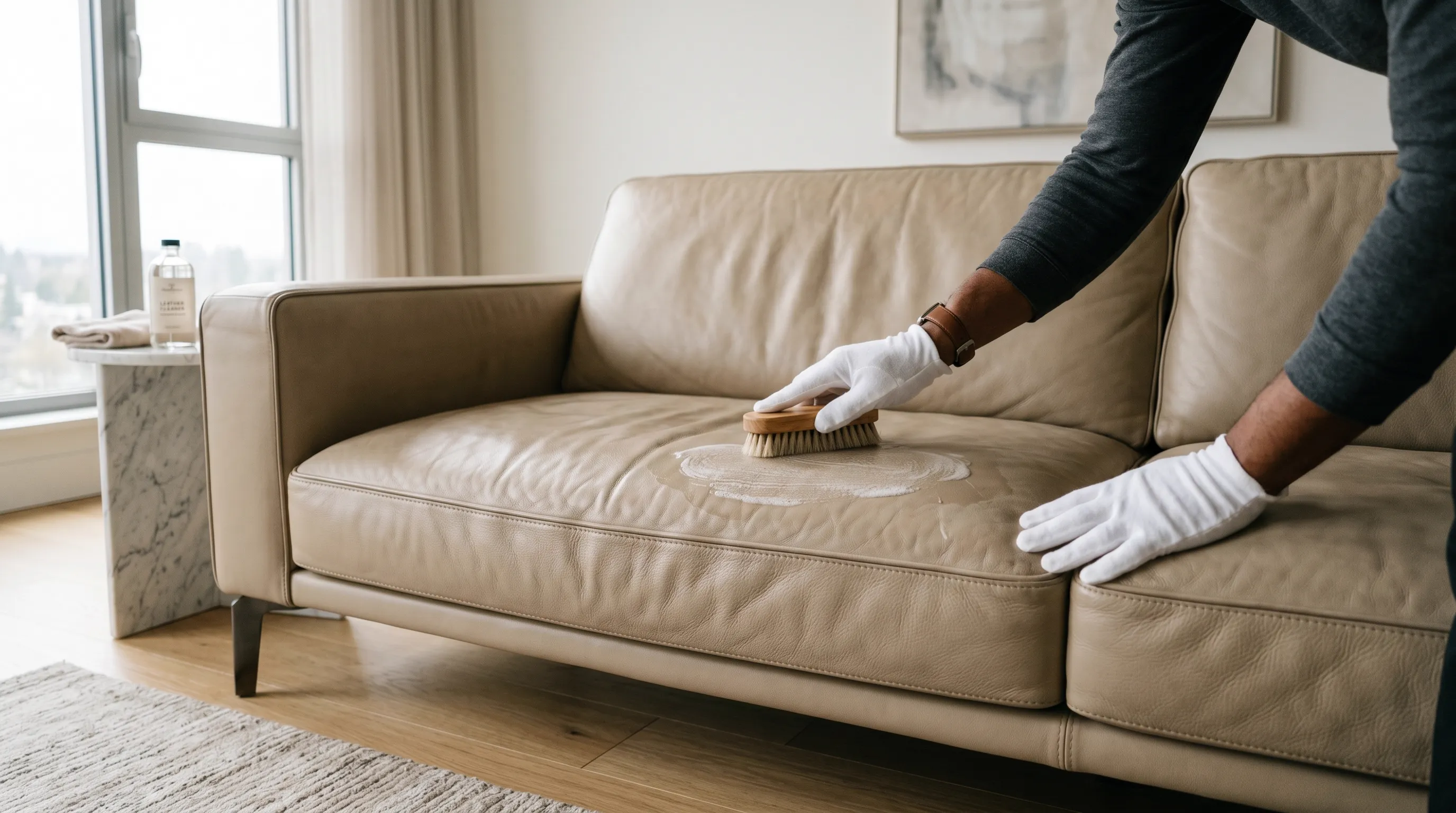
Apply a small amount of pH-balanced leather cleaner to a clean white cloth - not directly to the sofa. Work in one 30cm section at a time using gentle circular strokes. Light pressure is enough. Do not scrub. You are lifting the body oil and residue that has been sitting in the pores, not removing a stain. Move to the next section only when the previous one looks clean.
TLR EXPERT TIP: Pay extra attention to the armrests and the front edge of seat cushions. These two zones collect the most body oil, perspiration, and friction from clothing. In a Delhi home where the family uses the sofa daily, these areas can build up a thin film of oxidised body oil within 6-8 weeks. Left too long, it bonds chemically with the topcoat and requires professional extraction to remove.
Step 3 - Dry Immediately
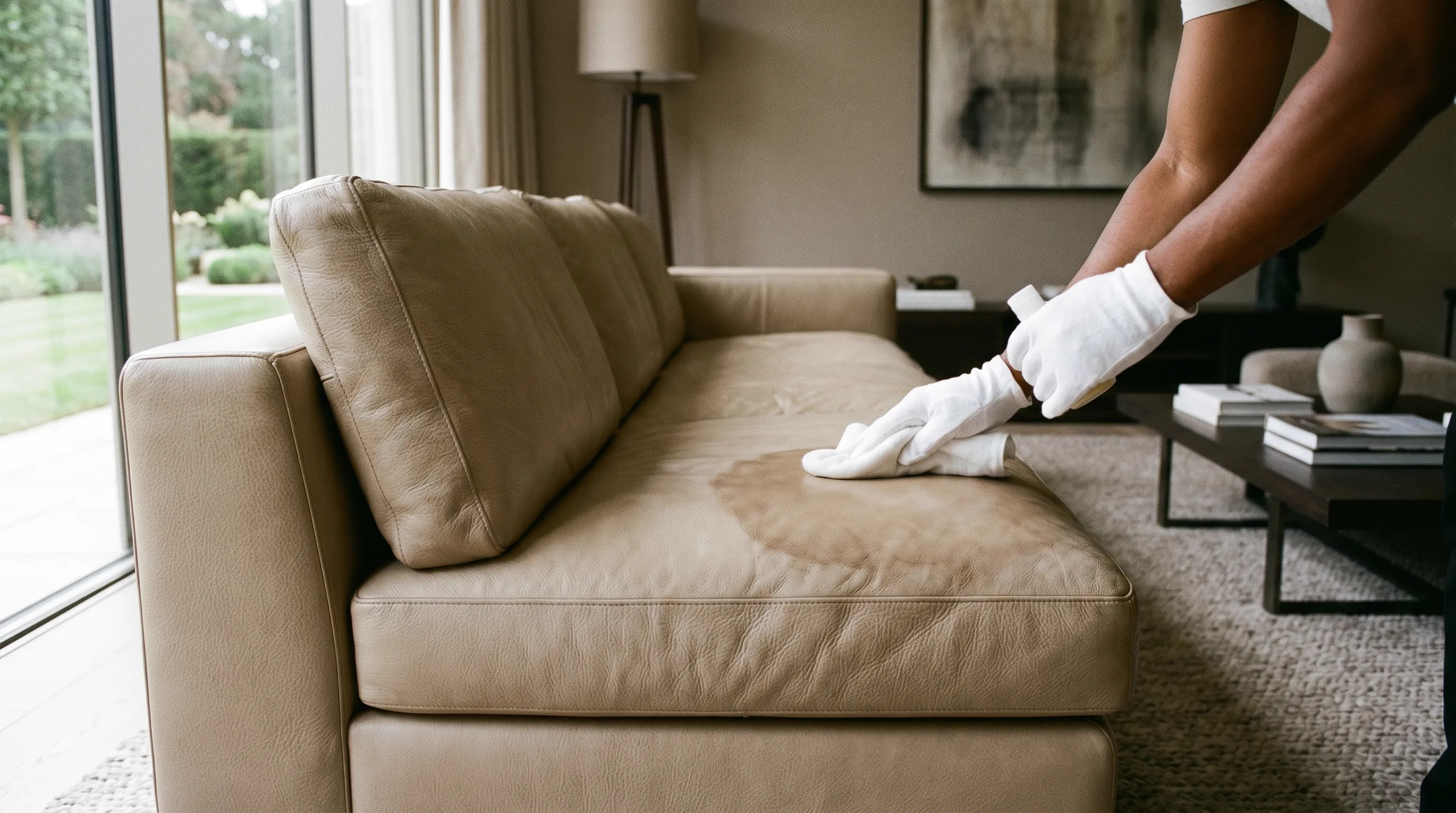
Follow each cleaned section immediately with a dry white cloth to remove moisture residue. You are not trying to polish - just lift the remaining dampness so the leather does not sit wet. In homes with AC running, residual moisture evaporates fast and leaves mineral deposits from the water. Drying immediately prevents this.
Step 4 - Condition After Every Full Clean
Cleaning removes surface oil and pollution - but it also removes a small amount of the leather's own moisture with it. Conditioning puts that back. Apply a pea-sized amount of conditioner to a clean cloth and work it in with slow circular strokes across the full sofa surface. Let it absorb for 20-30 minutes. If any excess remains on the surface after 30 minutes, buff it away with a clean dry cloth. A correctly conditioned sofa should feel soft and look slightly richer in colour, not greasy or shiny.
Things That Damage Leather Even If They Seem Safe
Every item below is frequently searched as a home remedy for leather cleaning in India. Every single one causes damage - some immediately, some over months.
- Baby wipes: pH 7.5-8.5 typically. Alkaline enough to strip the topcoat over repeated use. Also leave a film of lotion and fragrance that attracts dust and blocks conditioner absorption.
- Diluted vinegar: Acetic acid has a pH of 2-3, far too acidic. Strips dye on aniline leather and erodes the topcoat bonding on protected leather within weeks of regular use.
- Baking soda paste: pH 8.3. High alkalinity breaks the polymer in the protective topcoat. Often recommended for stain removal online - it removes the stain and the finish along with it.
- Dettol or antiseptic sprays: Chloroxylenol in Dettol is a phenolic compound that dissolves the polyurethane topcoat. One wipe looks harmless. Over three months, the area becomes visibly dull and starts to crack.
- Furniture polish or Mr. Sheen: These contain silicones designed for wood surfaces. On leather, they block pores, prevent conditioning absorption, and create a plastic-looking buildup that is very difficult to remove.
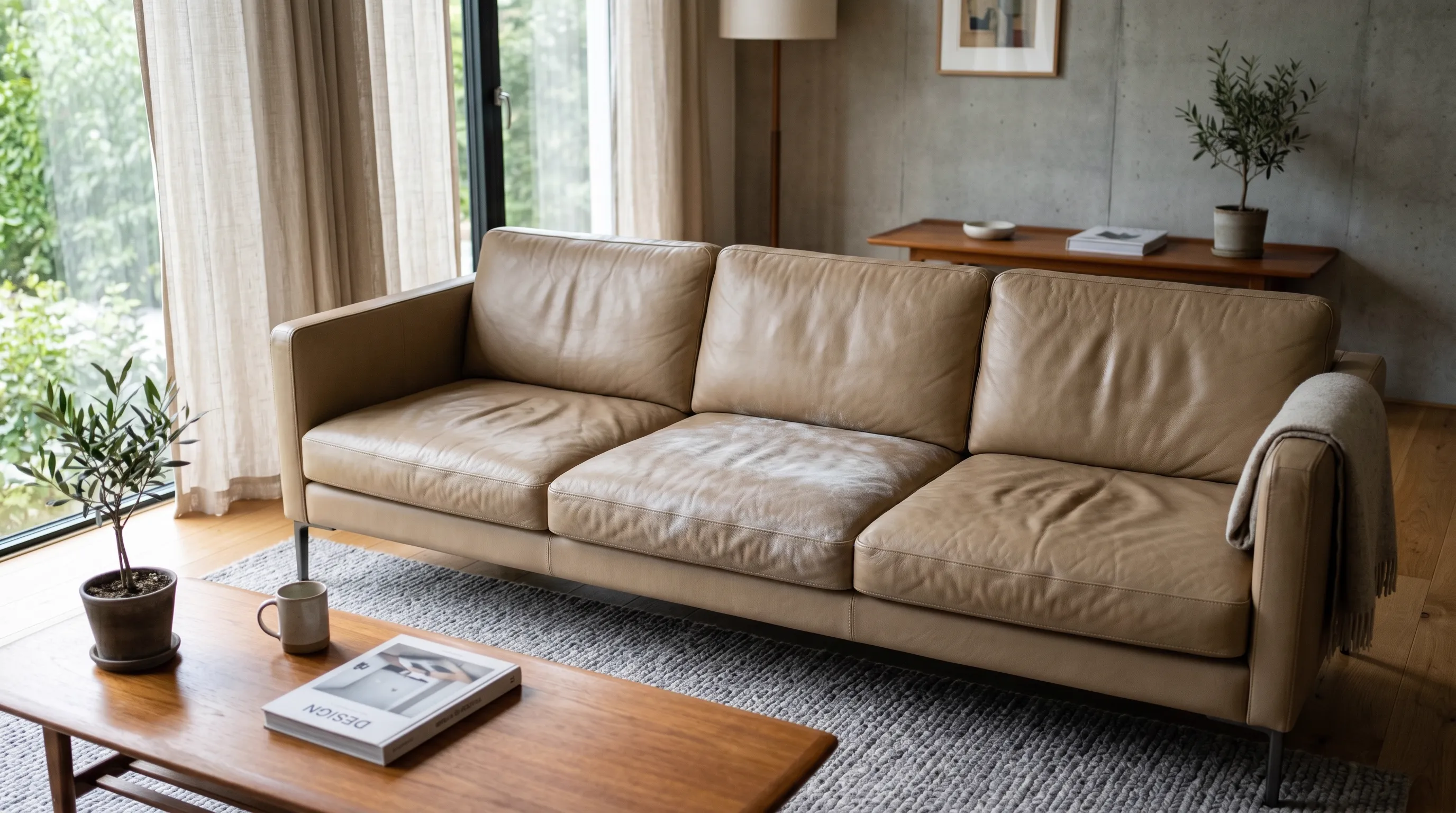
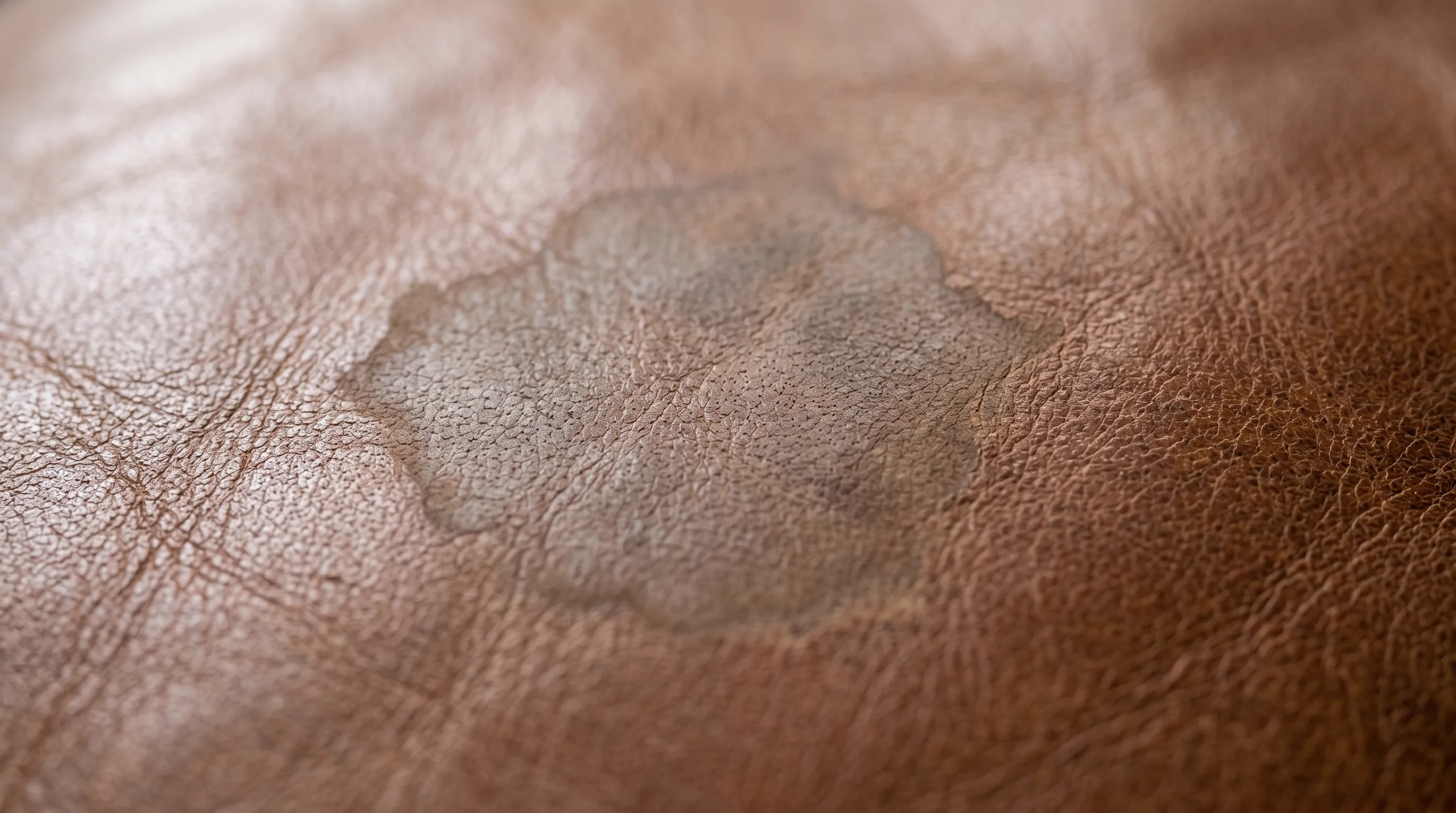
"In 8 out of 10 sofa cleanings we do in Delhi NCR where the client has been cleaning at home, we find residue from one of these products in the pores. The sofa looks clean from two feet away but the leather underneath is starved and weakened. Regular home cleaning with the wrong product is often more damaging than no cleaning at all." - Tyson, Master Leather Restoration Specialist, The Leather Restorators
Cleaning Schedule for Delhi NCR Homes
The right frequency differs by Indian season. Delhi's climate shifts dramatically across the year and each season has a different impact on leather.
| Season | Main Risk | Action |
|---|---|---|
| March - June (Summer) | AC dehumidification, UV through windows | Monthly clean + condition. Keep 1.5m from AC blower. |
| July - September (Monsoon) | Humidity, mould risk in non-AC rooms, sticky film buildup | Monthly clean. Keep room ventilated. Do not over-condition. |
| October - November (Post-monsoon) | Delhi smog, high particulate pollution | Weekly dust. Full clean mid-October. |
| December - February (Winter) | Indoor heating dries leather, less natural humidity | Full clean and condition in December. Light monthly clean through winter. |
When Home Cleaning Is Not Enough
Home cleaning handles routine maintenance. It does not handle structural problems. Call a professional when you see any of the following:
- Cracks with lighter fibre visible inside the line - this needs professional filler and colour matching, not conditioning.
- Stains that did not come out after two gentle cleaning attempts - ink, oil, and dye transfer stains often require specialist extraction chemicals that are not available retail in India.
- Colour loss or fading patches - these require professional re-dyeing and topcoat application to match the original colour accurately.
- Sticky or tacky surface texture that does not improve after cleaning - this is early topcoat breakdown, most common in sofas 5+ years old in high-AC Indian homes.
Our professional leather sofa cleaning service in Delhi covers full deep extraction, safe stain removal, and conditioning for all leather types, with doorstep service across NCR. For those in Gurgaon, our leather sofa cleaning service in Gurgaon handles the same full process.
Frequently Asked Questions
Can I use soap and water to clean a leather sofa at home?
No. Regular soap is alkaline and will strip the protective topcoat and natural oils from leather. Use only pH-balanced leather cleaner. Even mild dish soap damages leather over repeated use.
How often should I clean my leather sofa at home?
Light dusting weekly. Full clean with leather cleaner monthly. Deep clean and conditioning every 3 months. In Delhi NCR, homes near main roads or with AC running heavily may need monthly cleaning due to higher dust and pollution levels.
Can I use a wet cloth to clean leather?
A barely damp cloth is fine for light cleaning on protected leather. Never soak the cloth, and never let water pool on the surface. Wet leather left to air-dry in AC can develop tide marks and dry patches.
What is the best home cleaner for leather sofa in India?
A commercial pH-balanced leather cleaner (pH 5-7) is the only safe option. Common Indian home alternatives like diluted vinegar, baking soda, or coconut oil are not pH-safe and cause long-term damage.