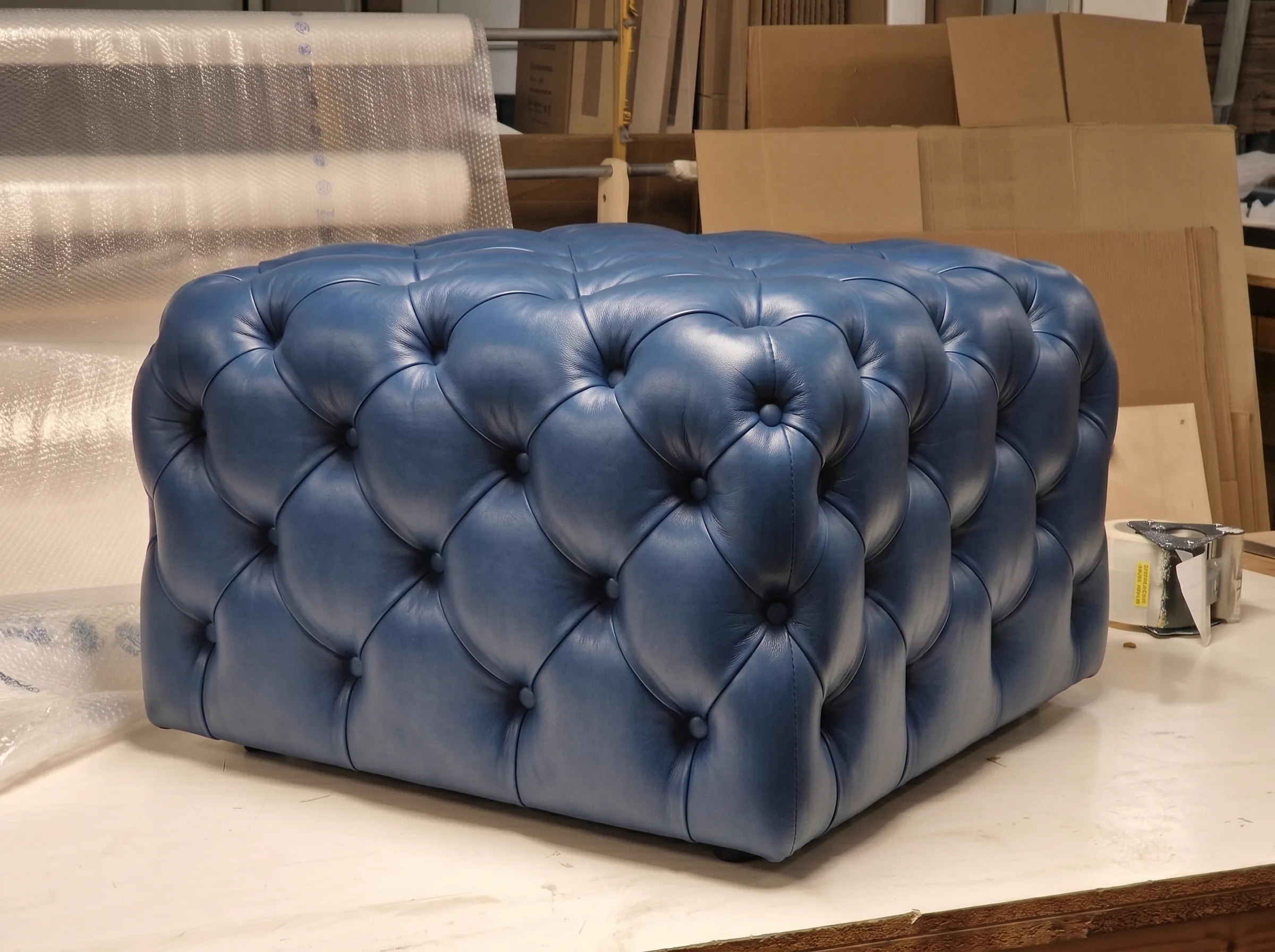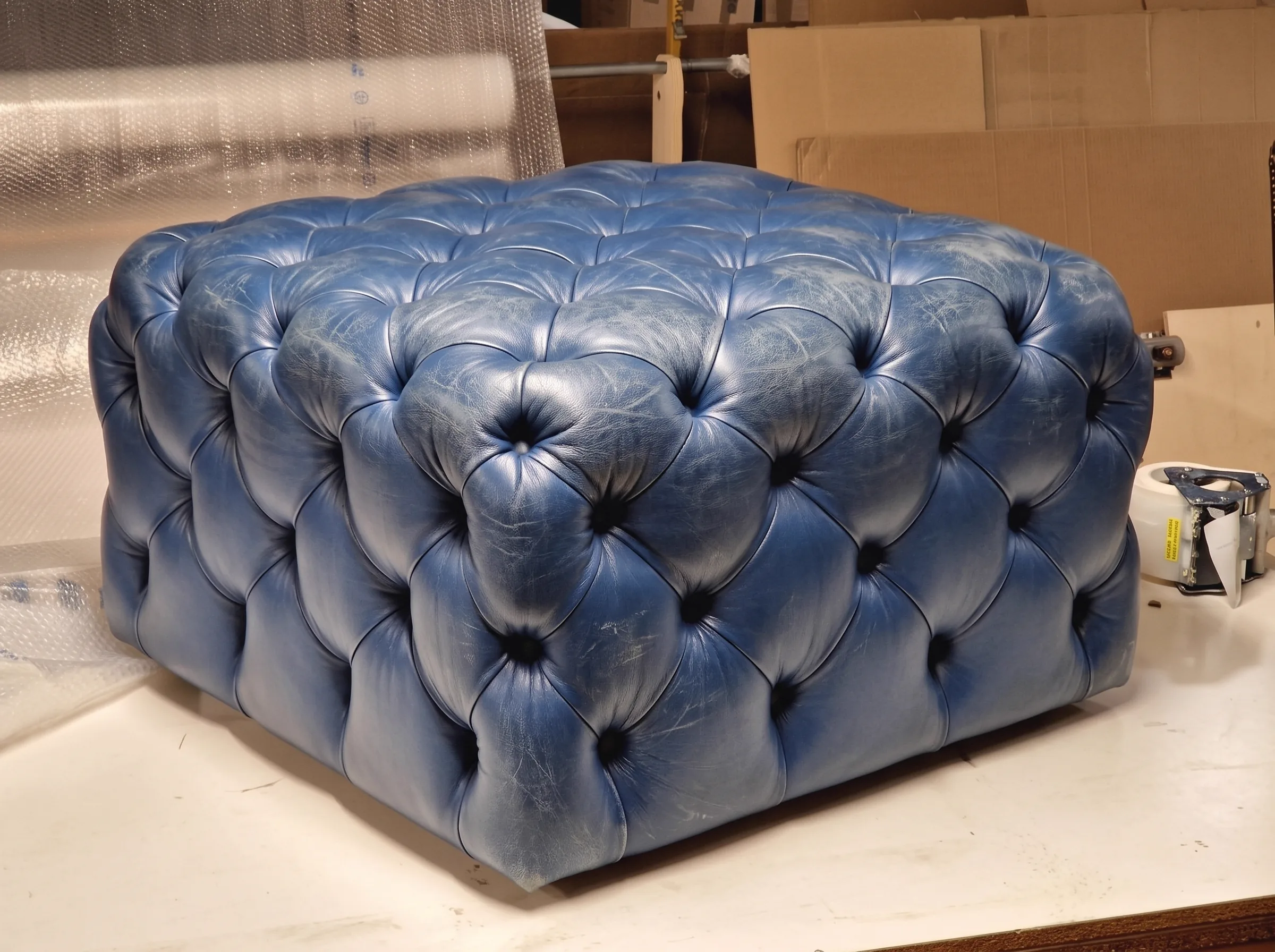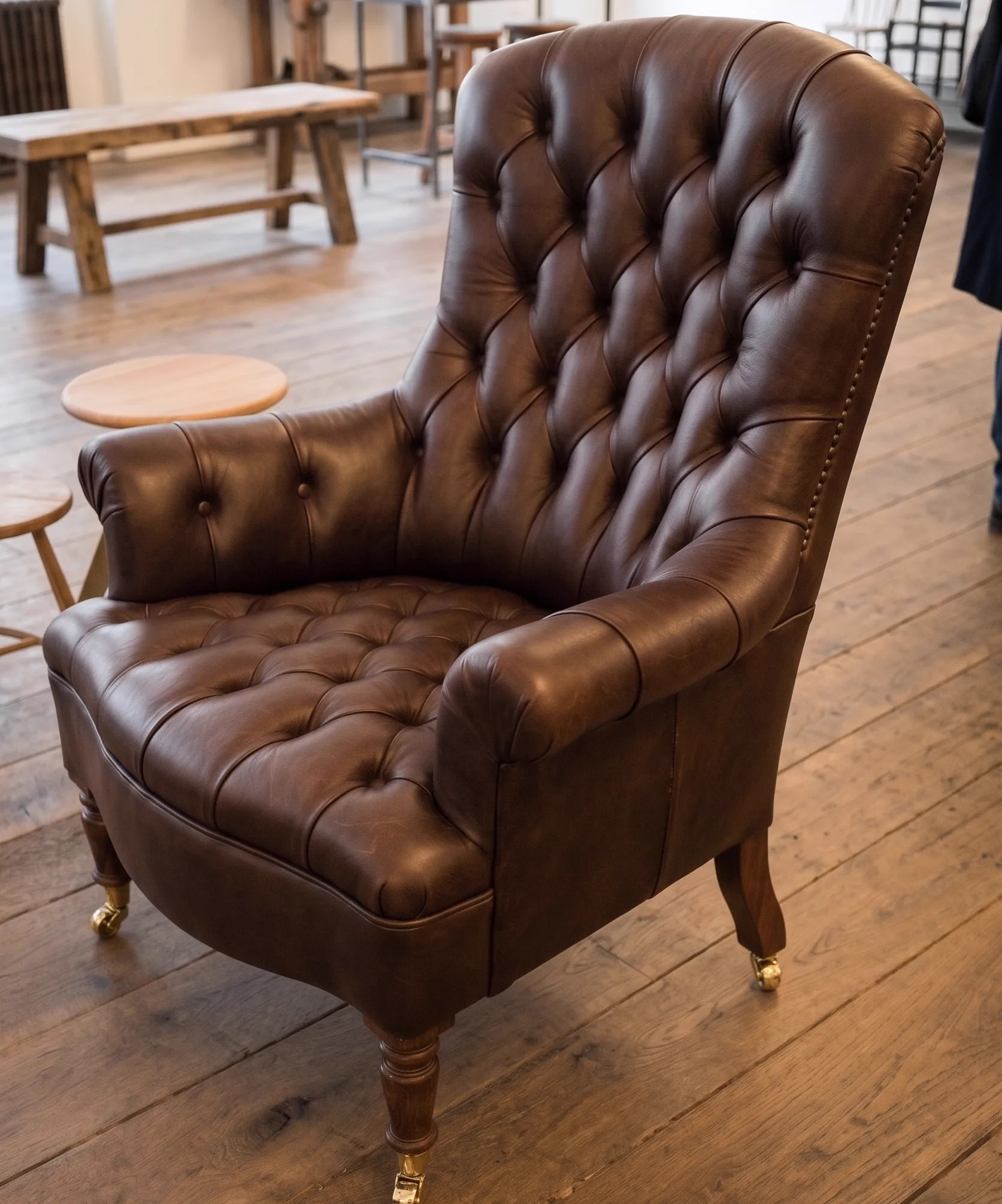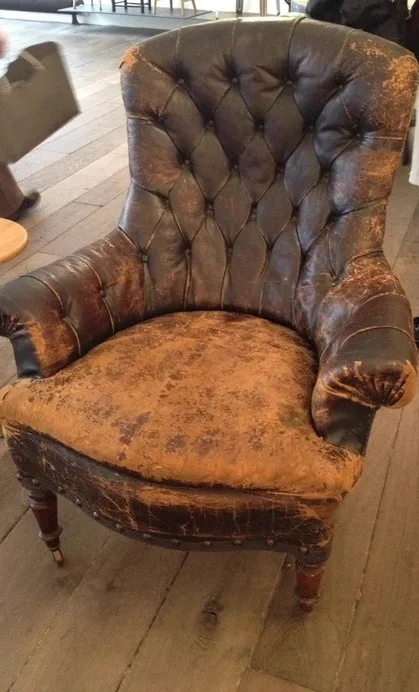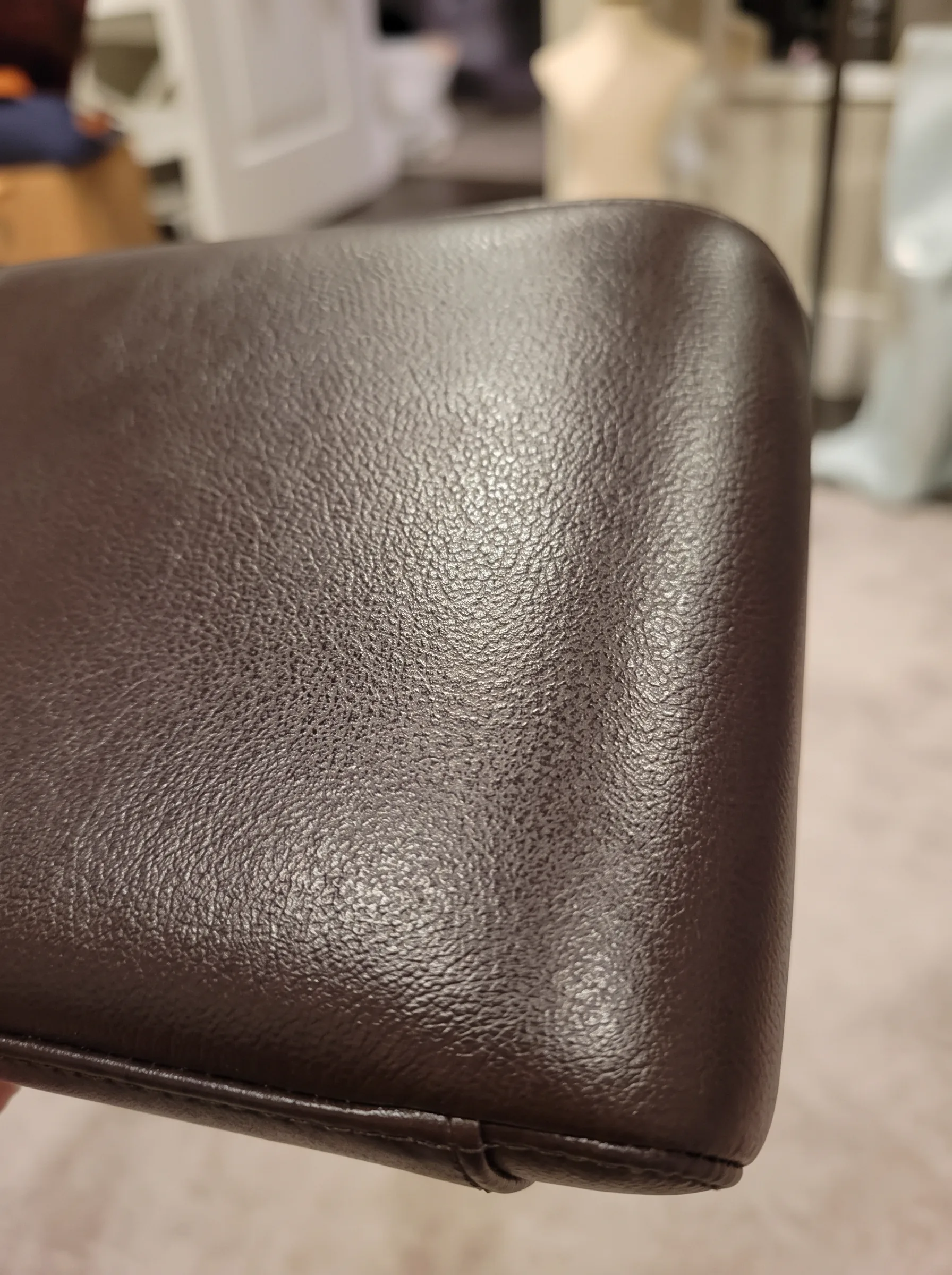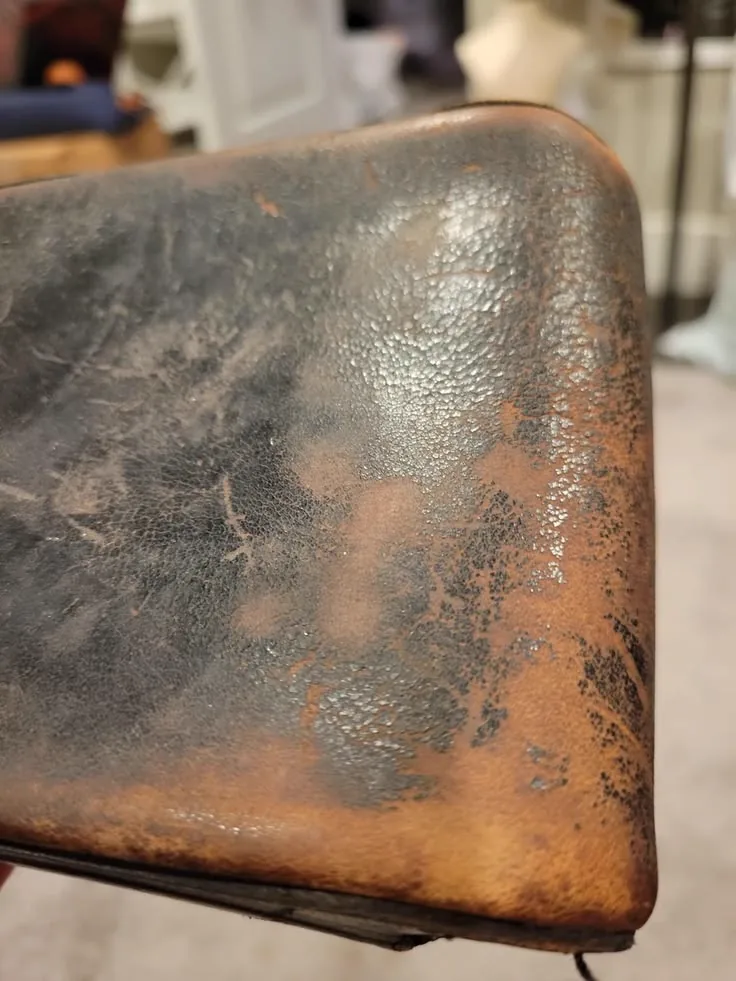
You noticed small raised bubbles on the seat surface. Or the surface is peeling in thin strips like old paint. Or flakes of the surface material are coming away when you rub your hand across it. This is one of the most alarming things that can happen to a sofa, and the diagnosis matters enormously. Bubbling and flaking on a leather sofa can mean one of two very different things: topcoat delamination on genuine leather (repairable) or PU coating breakdown on bonded leather (not repairable). Getting this diagnosis wrong means spending money on a repair that will not hold, or discarding a sofa that could have been restored.
How Do You Tell Genuine Leather from Bonded Leather?
Bubbling and flaking look identical on both types of material. The treatment paths are completely opposite. Here is how to tell them apart.
How to Check: The Raw Edge Test
Find any area where the sofa material is cut and exposed - the underside of a loose cushion, the back panel, or any seam where the material wraps around. Look at the material from the side or back.
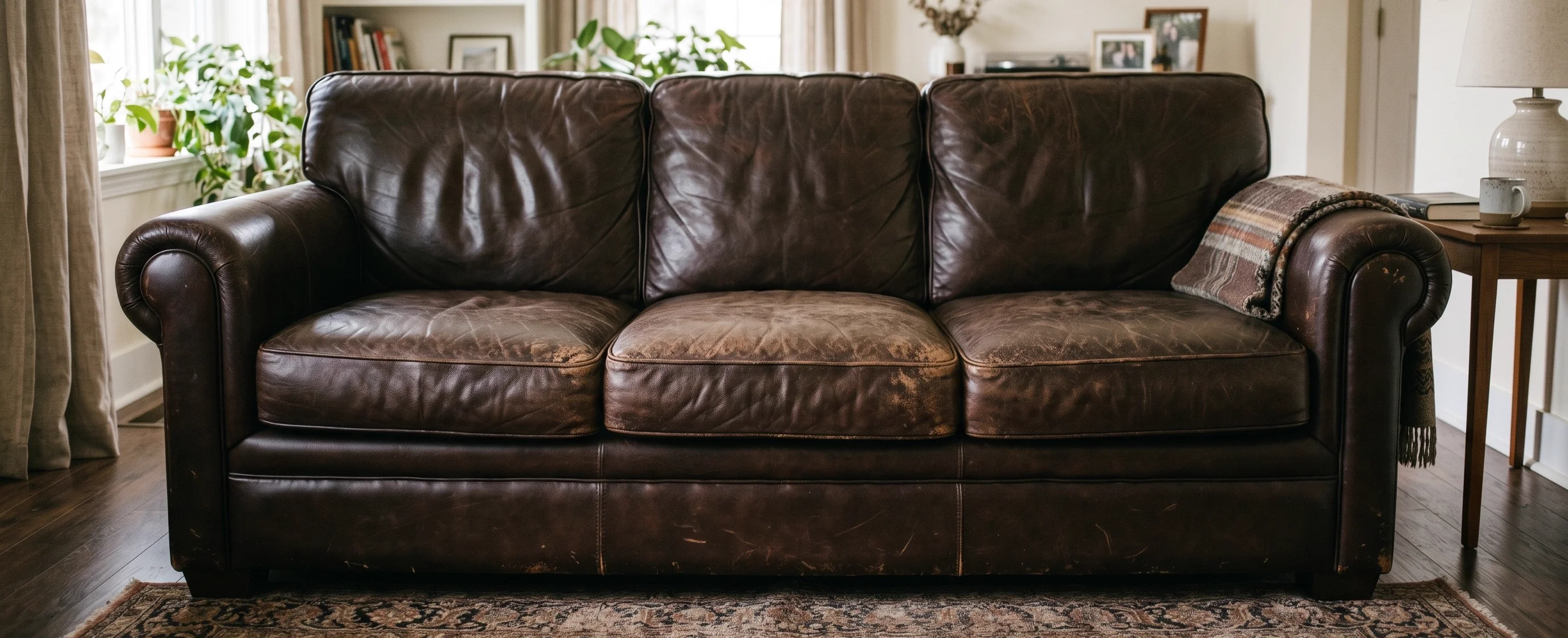
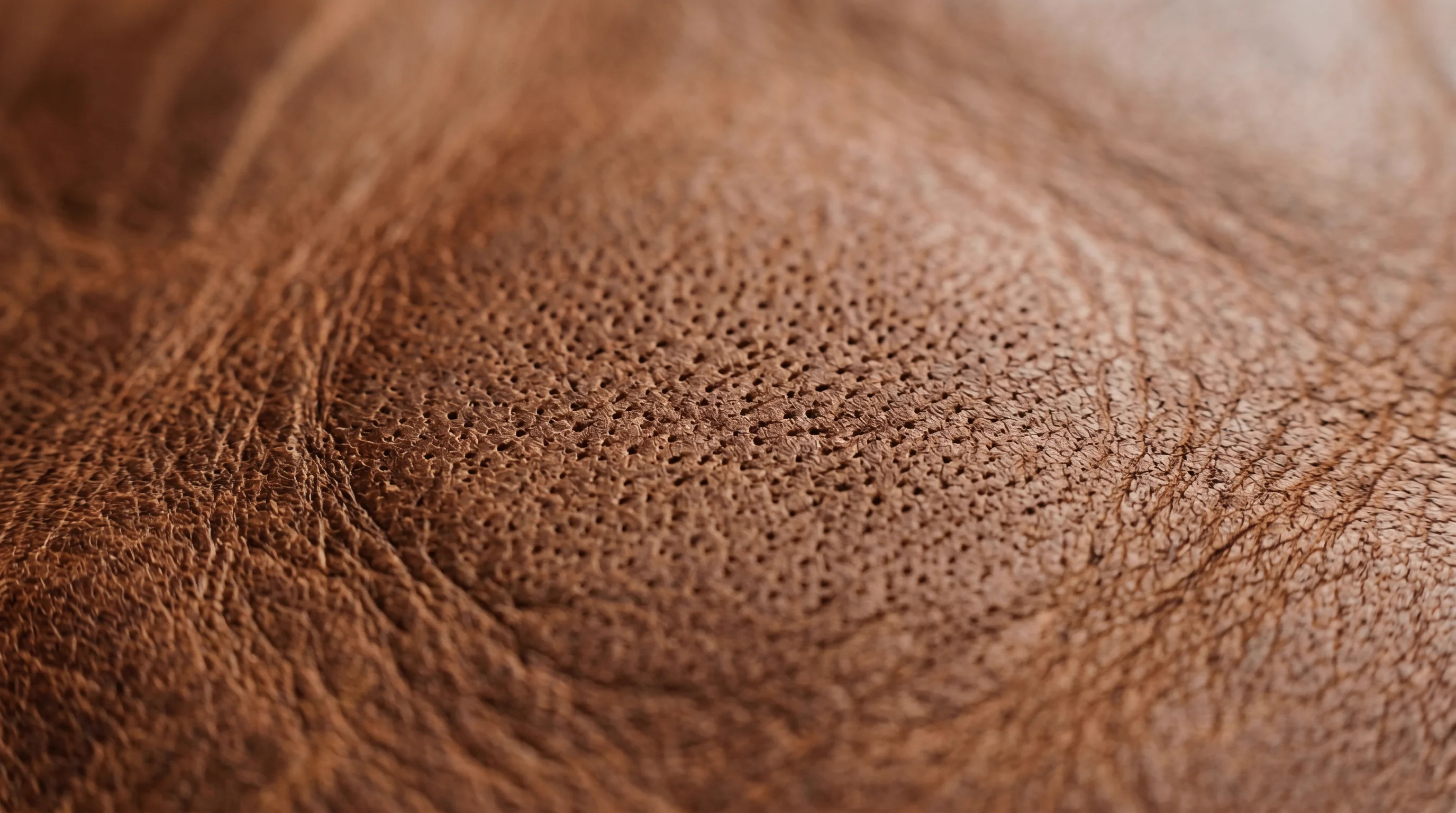
- Genuine leather: The back side shows a fibrous, slightly fuzzy suede texture - the raw split face of the animal hide. It feels like felt or suede. The material has variable thickness and you can see the natural fibre structure.
- Bonded leather: The back shows a woven fabric mesh or non-woven backing material. It looks and feels like a textile. The total thickness is very uniform because it is a manufactured composite.
The Smell Test
Press your nose to the flaking zone and inhale. Genuine leather has a distinctive earthy, slightly animal, organic smell even after years of use. Bonded leather smells like plastic or synthetic material - sometimes with a faint chemical note. If the flaking pieces smell plastic-like, you are dealing with bonded leather.
The Flake Examination
Pick up a loose flake from the peeling zone and look at it. A genuine leather topcoat flake is extremely thin, semi-transparent, and coloured throughout. A bonded leather flake is thicker, has a distinct base (the PU coating) and often shows the colour layer on top and a white or tan layer underneath where it separated from the base.
TLR EXPERT TIP: In India, a significant proportion of sofas sold as "leather sofas" in mid-market furniture stores - including some well-known chains - are bonded leather or PU-coated fabric. The giveaway is the price at purchase: a genuine full-grain leather 3-seater sofa costs Rs. 80,000 minimum at Indian import prices. Any leather-looking sofa sold for less than Rs. 40,000 is almost certainly bonded leather, bicast leather, or faux leather. Knowing what you have before attempting repair saves money and frustration.
What Causes Genuine Leather Topcoat Delamination?
On genuine leather, bubbling indicates the polymer topcoat has separated from the dye layer beneath. This is called delamination and it happens when:
- The leather was severely dehydrated over multiple seasons - the dye layer shrinks slightly while the topcoat does not, creating a gap between them. This is often the same neglect that produces surface cracking that precedes flaking.
- Wrong cleaning products were used repeatedly - alkaline products like dish soap disrupt the adhesion between the topcoat and the dye layer over time.
- UV degradation broke down the topcoat polymer - once UV breaks enough polymer chains, the topcoat can no longer maintain adhesion to the surface below.
- An amateur repair was attempted - cheap leather repair kits often apply a rigid filler or dye that does not flex with the leather. When the sofa is sat on, the rigid layer separates from the flexible hide beneath.
Can Genuine Leather Topcoat Delamination Be Fixed?
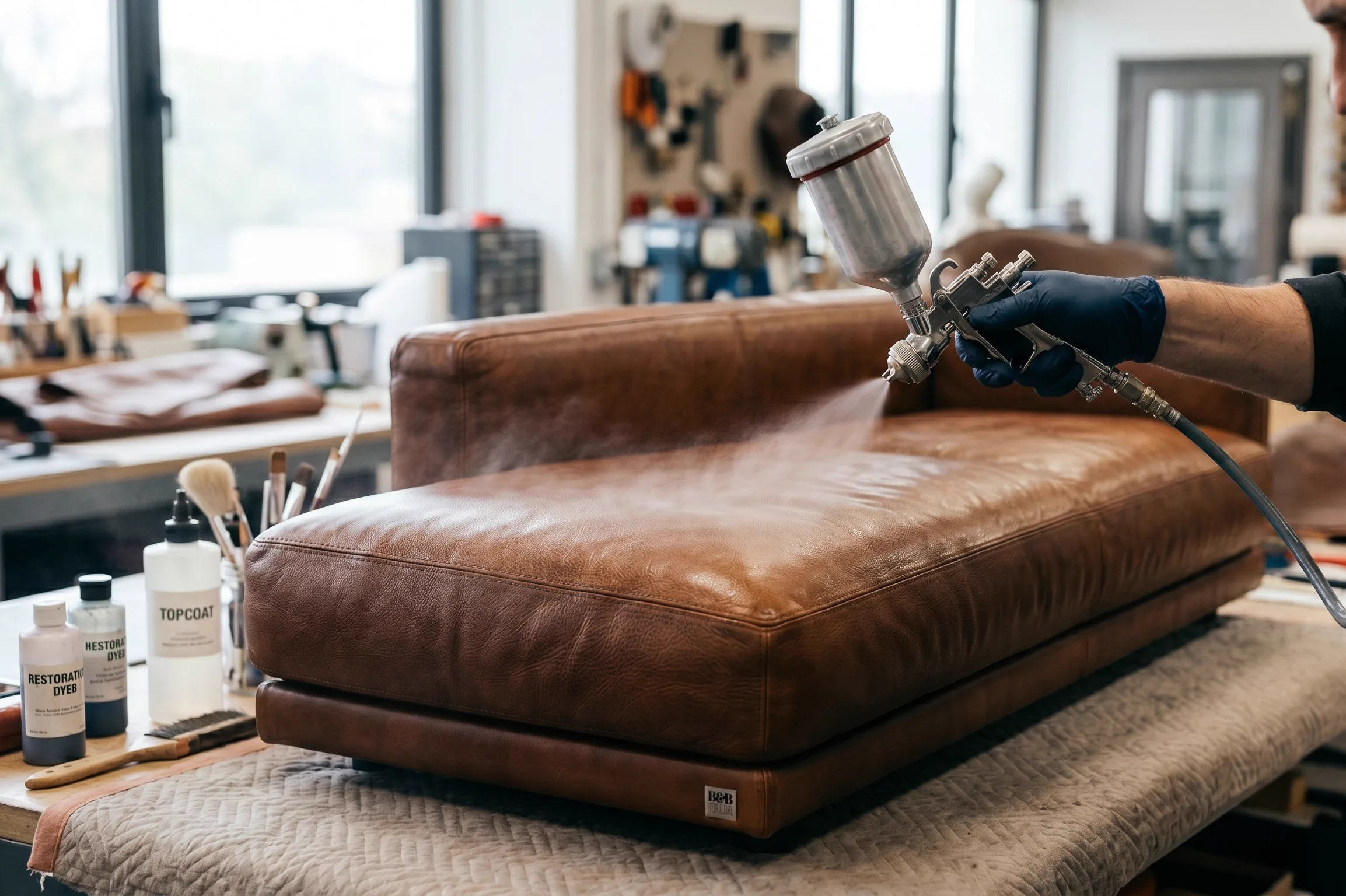
Yes, if the hide beneath is structurally sound. The process involves: removing the delaminated topcoat completely from the affected zone, preparing the dye surface beneath, and applying a new flexible pigmented topcoat matched to the original colour. This is professional work - attempting to re-adhere a bubbled topcoat with glue at home creates a lumpy, uneven surface that looks worse than the bubbling. Coastal homes reach this point sooner and in a readable pattern: salt-laden humid air keeps working at the adhesive under the finish until it lifts at the seat folds and inner arms first, so our artisans handle that stripping and re-laying as at-home leather sofa repair in Chennai, one visit, from Rs 6,500 per seat.
Typical cost for topcoat restoration: Rs. 8,000-18,000 depending on the extent of delamination and sofa size. Our leather sofa repair service covers full topcoat removal and reapplication with colour matching.
Why Can't Bonded Leather Flaking Be Fixed?
Bonded leather is a composite material: leather fibres and scraps from the tanning industry are ground up, mixed with a binder, and pressed onto a fabric backing. A PU (polyurethane) coating is then applied to the top and embossed to look like leather grain. It is fundamentally a plastic-coated fibre board.
When bonded leather bubbles and flakes, the PU coating is separating from the fibre board substrate. This separation is irreversible because:
- The adhesive bond between PU and the substrate degrades from heat, humidity cycling, and body oils penetrating the PU layer
- Once the bond fails in one area, it continues failing progressively - there is no way to re-bond the separating layers durably because the entire bond line is compromised
- The substrate (the fibre board) itself becomes structurally weaker as it absorbs moisture through the failed PU layer
Patch repair kits available in Indian furniture markets temporarily cover flaking areas but do not re-bond the underlying layers. The patch peels within three to six months as the surrounding material continues to fail. The honest advice for a bonded leather sofa with significant flaking is to plan for replacement and in the meantime use throws to protect clothing and delay further deterioration. If you are still weighing whether to repair or replace, our cost-and-condition breakdown walks through the decision in detail.
"Every year we receive calls from homeowners who have spent Rs. 4,000-8,000 on bonded leather repair kits that lasted four months. The sofa was bought for Rs. 18,000 five years ago. If they had known it was bonded leather at purchase, they would have either bought genuine leather or budgeted for replacement at year five. The material type is the most important thing to know before buying." - Tyson, Lead Artisan, The Leather Restorators
TLR EXPERT TIP: If you are replacing a bonded leather sofa, consider having the frame and cushions assessed by a reupholstery specialist before buying new. A well-built sofa frame can be reupholstered in genuine leather for Rs. 15,000-35,000 depending on size - significantly less than a new sofa and producing a result that will last 15-20 years. Our leather sofa reupholstery service covers full re-covering in genuine leather with frame inspection included.
How to Stop It Getting Worse Before You Decide
Whether your sofa turns out to be genuine or bonded, the days between noticing the damage and getting a verdict matter. Bubbling and flaking both accelerate once the surface is broken - every time someone sits on a lifted topcoat, the delamination front spreads a little further. A few simple habits slow that down and protect your decision.
- Cover the affected seat with a cotton throw. It stops clothing from catching and pulling flakes, and shields the broken area from body oil and friction.
- Keep it out of direct sun. North-Indian homes get harsh afternoon light - UV breaks down both topcoat polymer and PU coating, so draw the curtain on that window.
- Do not apply glue, kits, or home conditioners to a flaking zone. Re-gluing a bubble traps it in a lump; conditioner on bonded leather softens the failing bond and speeds separation.
- Run AC and dehumidification sensibly. Wild swings between humid monsoon air and dry AC stress the bond line - steady indoor conditions buy time.
- Photograph a raw edge and the flakes, then book a diagnosis. A specialist can confirm genuine versus bonded from those images before anyone touches the sofa.
What It Costs in India
Once the material is identified, the spend is predictable. Use these ranges to plan:
- Genuine leather topcoat restoration: Rs. 8,000-18,000 for full removal and re-pigmentation of the affected zone, colour matched.
- Bonded leather: no durable repair exists - budget for replacement, or reuse a sound frame.
- Genuine reupholstery on a good frame: Rs. 15,000-35,000 to re-cover in real leather, lasting 15-20 years.
Spending Rs. 4,000-8,000 on a patch kit for bonded leather is the one option that reliably wastes money - it buys three to six months, not a fix. Before you write the sofa off or pay for a patch, read our honest verdict on faux and bonded leather sofa repair, which sets out plainly which composite failures we will take on and which ones we turn away.
Frequently Asked Questions
Is a bubbling and flaking leather sofa worth repairing?
It depends on whether the sofa is genuine leather or bonded leather. Genuine leather with topcoat delamination can be professionally restored - a worthwhile repair if the hide itself is in good condition. Bonded leather flaking is terminal: once the PU coating separates from the fibre board substrate, it cannot be re-bonded reliably. Replacement is the only durable option.
How can I tell if my sofa is genuine leather or bonded leather without a lab?
Look at the back of a cushion or any raw-edge area where the material is cut. Genuine leather shows a fibrous, suede-like texture on the back - the split side of the hide. Bonded leather shows a fabric mesh or woven backing. The smell is also different: genuine leather has an earthy organic smell; bonded leather smells like plastic or synthetic material.
Can I stop flaking leather from getting worse with home products?
On genuine leather, conditioning can slow topcoat delamination slightly. On bonded leather, no home product arrests the process once it has started - the PU coating continues separating regardless. Covering the affected areas with a throw is the only way to preserve the sofa's usability while deciding on a repair or replacement path.
How long does a leather sofa last before it starts flaking?
Genuine leather sofas, if properly maintained, rarely flake at all - the topcoat can be refreshed professionally every few years indefinitely. Bonded leather sofas typically begin showing bubbling and flaking between three to seven years of use in Indian conditions, often earlier in homes with AC and direct sun exposure.
Sources & further reading: hide-versus-composite identification follows material guidance from the Leather Working Group, and labelling distinctions for bonded and coated leather materials per the Bureau of Indian Standards.