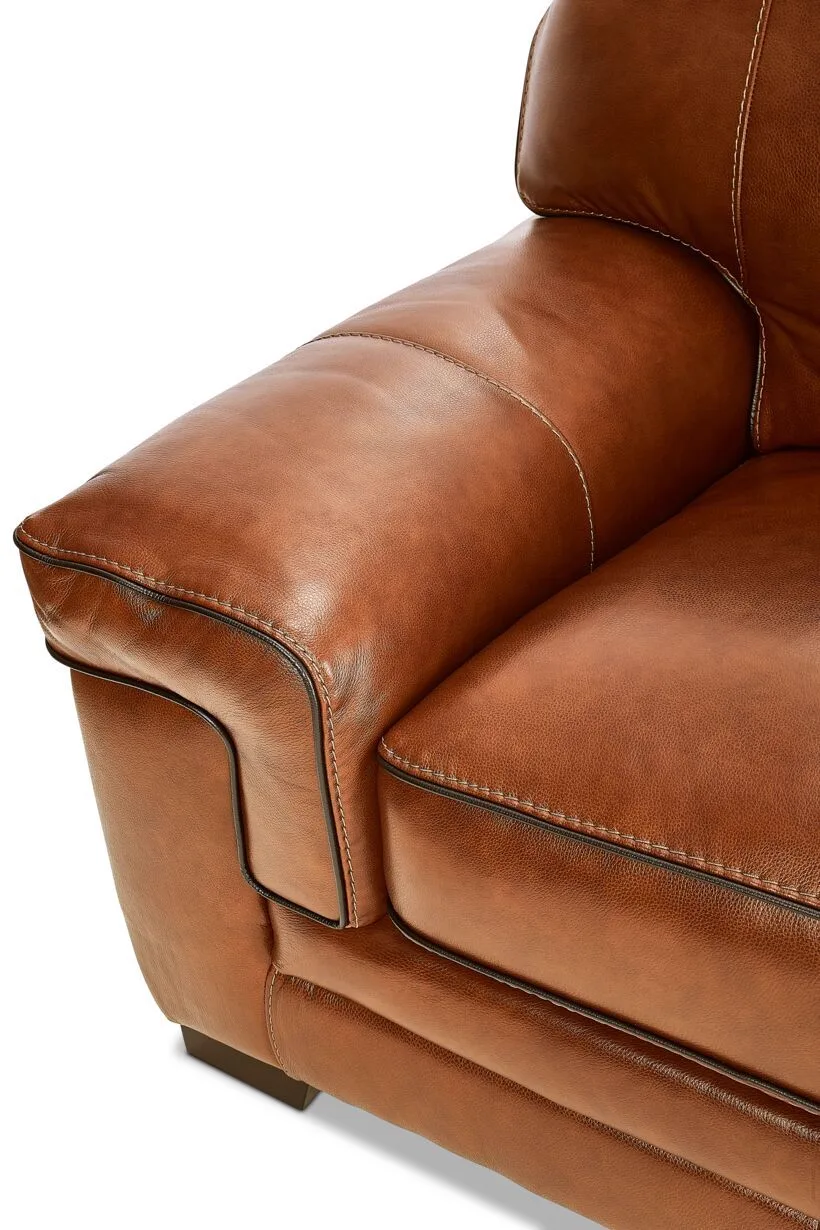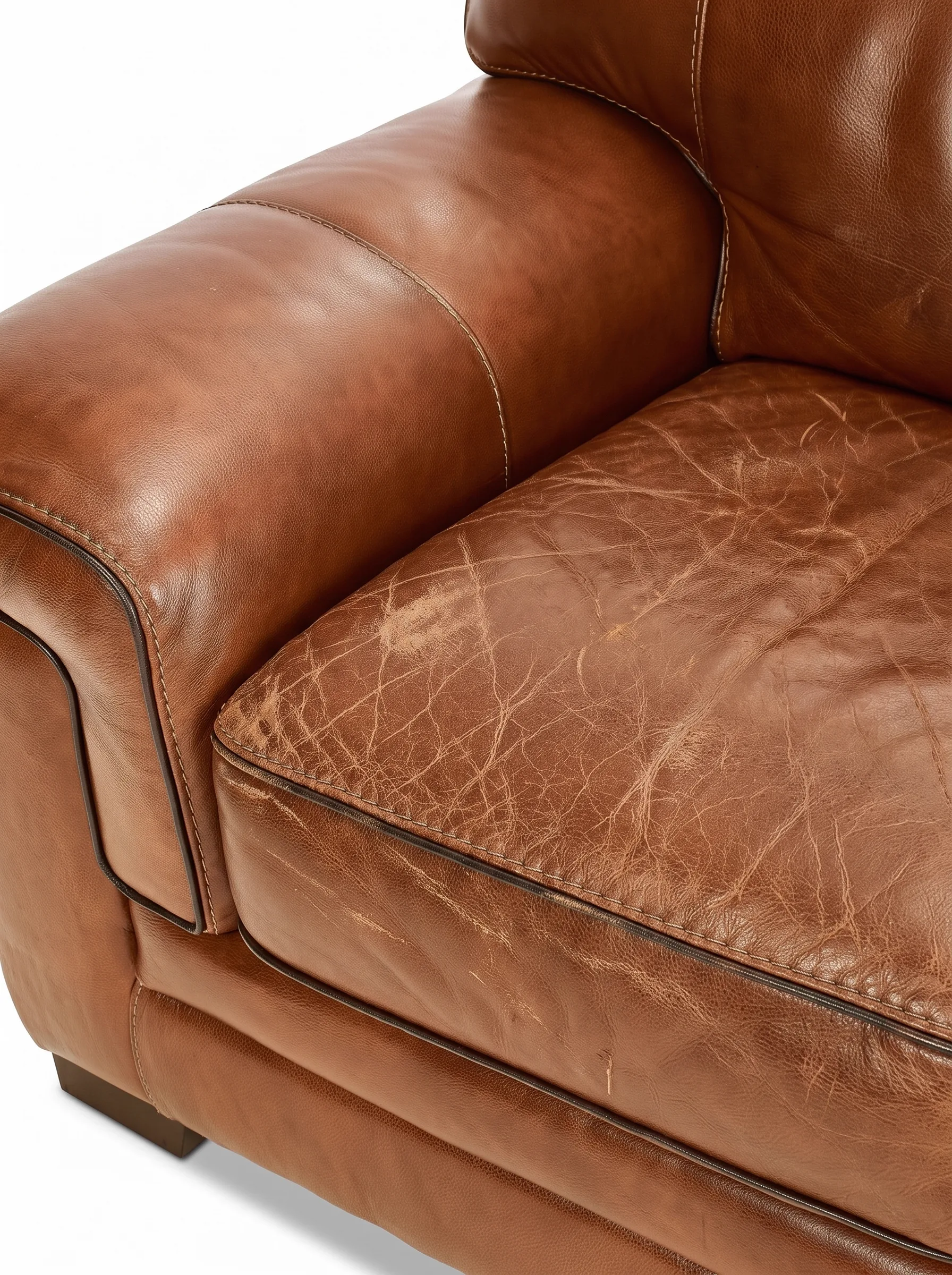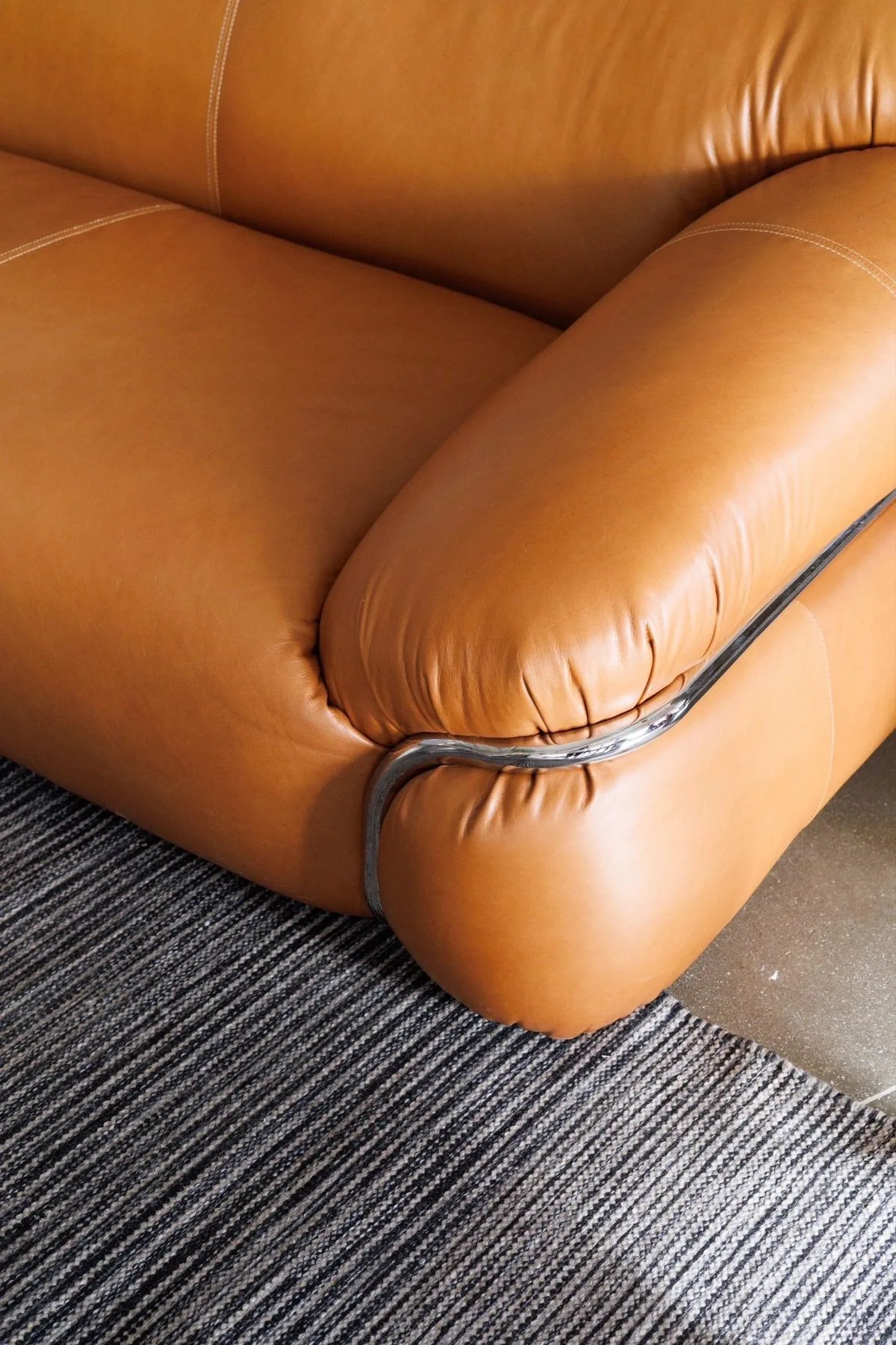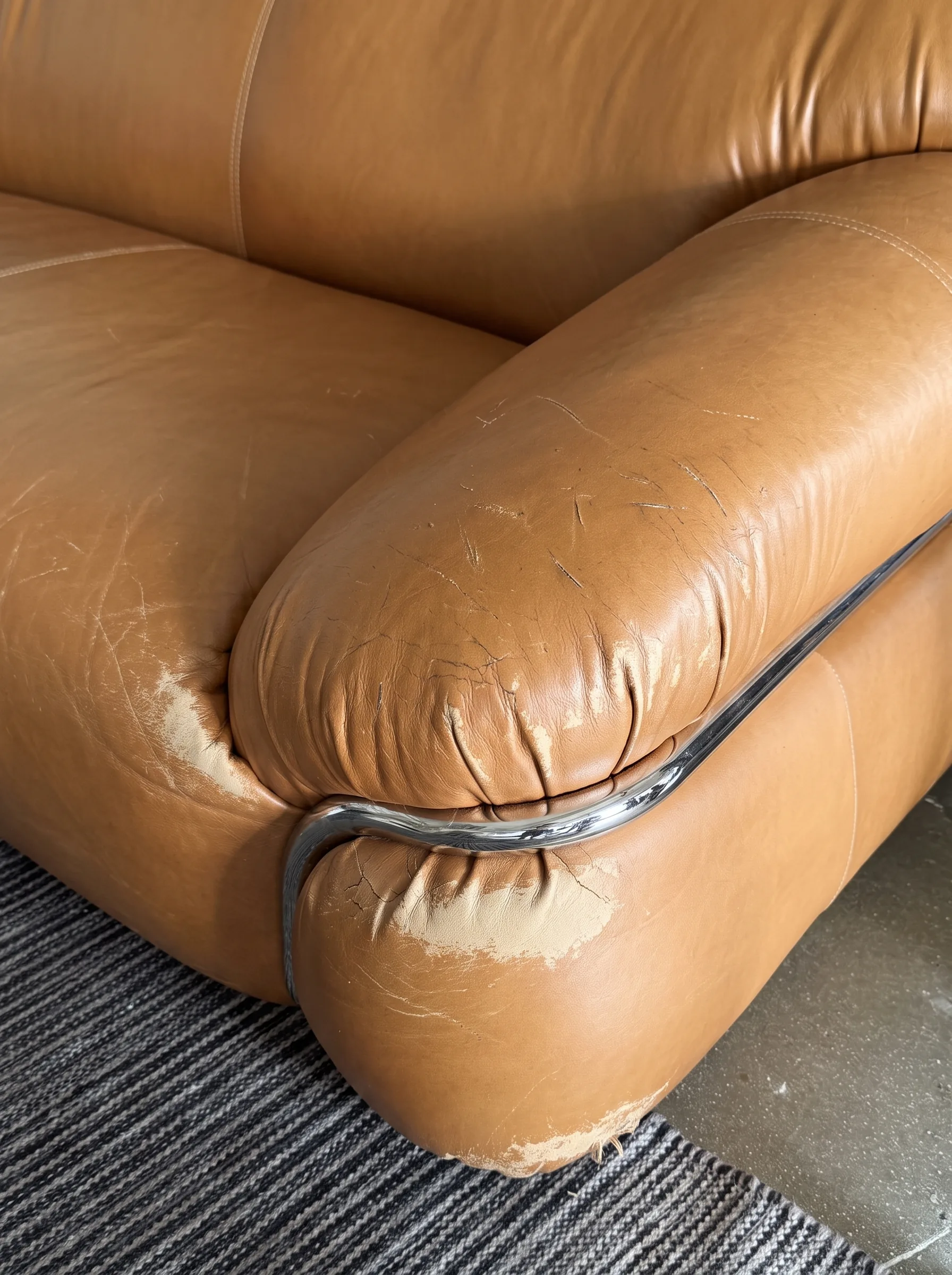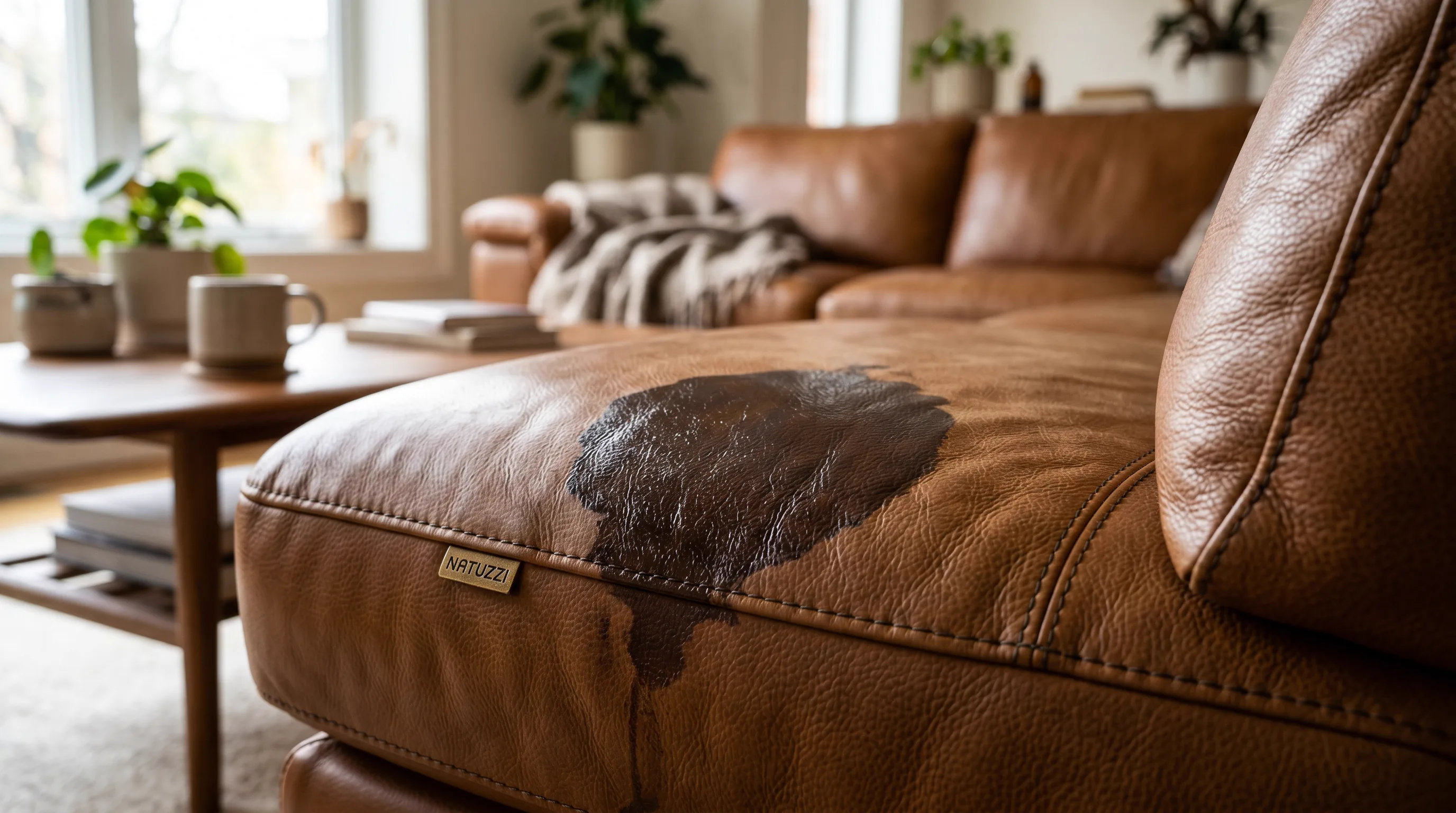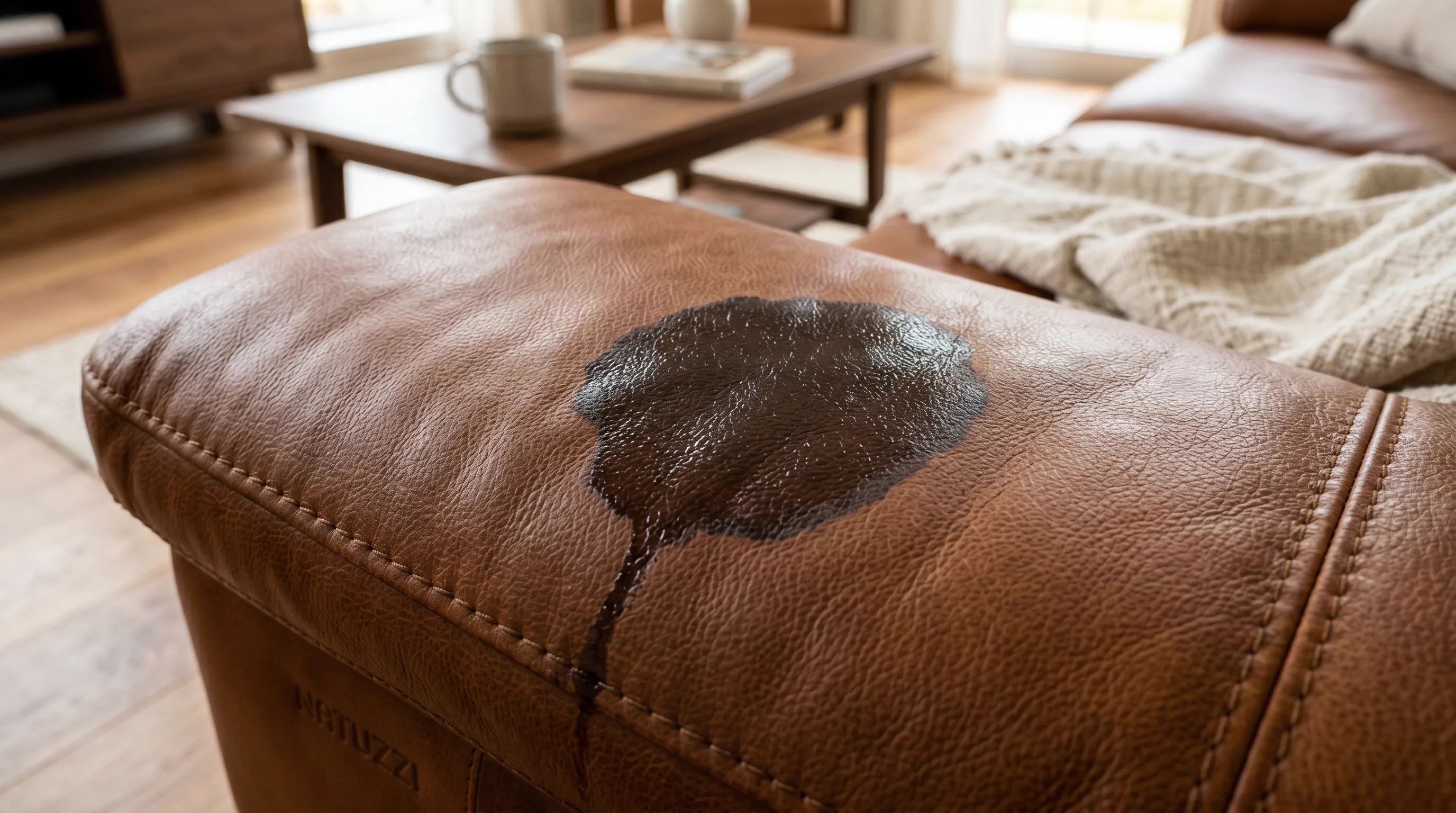
The rest of the sofa still looks good. But the armrests have gone noticeably darker. They look almost greasy. A slightly shiny patch where the arms rest, a darker halo spreading from the centre of the contact zone. Your housemates use the sofa every evening and nobody spilled anything. This is one of the most consistent patterns we see across Indian homes and it has a straightforward cause. The fix depends on how long the darkening has been building.
Armrest darkening is not a sign of poor quality leather. It is a sign that the leather is doing exactly what it is designed to do - absorbing what contacts it. The problem is that what is contacting it most is body oil, perspiration, hair oil, and skin products from human arms, and those substances darken the dye when they accumulate in the pores over months. If your sofa is instead suffering the opposite problem, colour fading, the causes and remedies are entirely different.
Why Does the Armrest Darken Fastest?
The armrest top is the single highest-contact zone on any sofa. When someone sits and rests their arm, the inner forearm presses against the leather for extended periods. The inner forearm is one of the highest oil-producing areas of the body. It deposits sebum, sweat, and whatever was applied to the skin that day - moisturiser, body lotion, or hair oil - directly into the leather with sustained pressure that opens the pores and drives absorption.
In Indian conditions, two additional factors accelerate the process. First, the summer heat increases perspiration volume significantly. A person resting an arm on a leather sofa in an Indian May evening deposits measurably more oil and sweat than the same action in December. Second, hair oil is extremely common in Indian households. Amla oil, coconut oil, almond oil - these are plant-based saturated fats that behave like cooking oil on leather: they penetrate, sit in the pores, oxidise over weeks, and leave a dark, slightly rancid deposit.
TLR EXPERT TIP: The light test: hold a torch or phone flashlight at a low angle across the armrest surface. Fresh body oil accumulation shows as an uneven sheen. Oxidised oil that has been in the pores for months appears as a flat dark patch with no reflective quality - the oil has lost its surface shine as it aged. This distinction tells you whether you are dealing with a cleaning job or a restoration job.
Authoritative references on the skin-oil and finish-wear mechanisms above: the National Center for Biotechnology Information (NCBI) for sebum and skin-oil composition, and the Leather Working Group (LWG) for leather finishing and top-coat wear standards.
How Do You Clean Dark Armrests at Home?
For Light Darkening (Less Than 6 Months of Accumulation)
- Use a pH-balanced leather cleaner on a white microfibre cloth. Work the armrest in small sections with gentle circular pressure, then straight strokes.
- Replace the cloth frequently. When the cloth turns grey or brown, it has lifted oxidised oil. Continue with a fresh section until the cloth comes away relatively clean.
- Allow to dry fully before assessing. Wet leather looks darker than dry leather - do not judge the result until it is fully dry.
- Repeat after 48 hours. A second cleaning session often lifts residual oil that was loosened but not fully removed in the first session.
- Condition lightly after the second session. Cleaning strips some protective moisture along with the oil.
For Deep Darkening (Over a Year of Accumulation or Hair Oil)
Standard leather cleaner is not strong enough for oxidised, deeply embedded oil. A leather degreaser is needed - this is a stronger formulation that cuts through rancid fat deposits without stripping the leather dye if used correctly.
- Test the degreaser on a hidden panel first. Some degreasers affect the surface sheen of certain leather finishes. The underside of a seat cushion is a safe test zone.
- Apply the degreaser to a cloth, not directly to the leather, and work the armrest in sections. Allow five minutes of dwell time before wiping.
- Multiple sessions one week apart produce better results than one aggressive session. The oil comes out in layers as successive treatments loosen what was bonded beneath.
If the armrest darkening does not respond after two degreaser sessions, the oil has chemically bonded with the dye and spot re-dyeing is the only reliable restoration path. Our leather sofa colour restoration service in India handles armrest re-dyeing with colour-matched pigments as part of a full armrest restoration.
"Armrests tell you everything about the maintenance history of a sofa. A dark armrest on a five-year-old sofa means it was never cleaned. The same sofa cleaned fortnightly would look ten years newer. The effort involved is literally a two-minute wipe every two weeks." - Tyson, Lead Artisan, The Leather Restorators
TLR EXPERT TIP: After restoring armrests to clean colour, apply a leather topcoat protector specifically to the armrest zone. It creates a micro-barrier in the pores that makes the surface easier to wipe clean and slows oil penetration significantly. Reapply every three months. This single step cuts armrest cleaning frequency in half in Indian conditions.
What Should You Never Try on Dark Armrests?
- Scrubbing with a stiff brush: Abrades the topcoat and creates micro-scratches that trap more oil in the future. Makes the armrest look worse after initial cleaning and accelerates future darkening.
- Rubbing alcohol or hand sanitiser: Instantly strips the protective topcoat from the armrest. You may remove some surface oil and most of the leather's protection in one wipe, leaving the pores fully open for faster re-darkening and eventual cracking.
- Attempting to lighten with bleach or whitening products: These cause irreversible dye damage. The armrest will turn patchy, lighter in some areas and darker in others, in a way that cannot be corrected without full re-dyeing.
- Adding more conditioner hoping to blend the colour: Conditioner does not remove oil staining. It adds more product to an already-saturated zone, further darkening it and making subsequent cleaning harder.
Does Leather Type Change How You Treat a Dark Armrest?
Before you touch any cleaner, identify what your sofa is actually made of - the right approach changes completely with the leather type. Aniline and semi-aniline leathers are dyed through and finished with little or no surface pigment, so the hide breathes and absorbs body oil directly into the fibre structure. On these, the dark armrest is not just sitting on top - it has soaked in. Degreasing is delicate work: an over-strong solvent can pull dye out along with the oil and leave a pale, blotchy halo. Always test on a hidden panel and build up in light passes rather than one heavy treatment.
Pigmented (protected) leather behaves more forgivingly. The dye sits under a sealed topcoat, so most of the body oil rests on the surface rather than in the pores. A pH-balanced cleaner, used patiently, lifts a large share of it before you ever need a degreaser. This is the easiest category to recover - and the most common on mid-range Indian sofas.
The caveat that matters most in the Indian market: a large share of sofas sold here as "leather" are in fact PU-coated split leather or bonded leather - a polyurethane skin laid over a fabric or fibre backing. On these, aggressive degreasing is the wrong move entirely. The solvent strips the thin PU coating, and once that surface layer peels there is no genuine grain underneath to restore. On PU or bonded material, stop at gentle pH-balanced cleaning and call a professional before the coating fails. To tell the difference, check a cut edge or the underside where the upholstery is stapled: genuine leather shows a fibrous, suede-like cross-section, while bonded and PU material reveals a flat fabric mesh backing bonded to a uniform skin.
TLR EXPERT TIP: If a drop of water beads and sits on the armrest, you likely have pigmented or PU-coated material with a sealed surface. If the water darkens a spot within seconds and slowly soaks in, you are dealing with aniline or semi-aniline leather that has open pores - treat it as the delicate category and test everything first.
Why Armrests Darken Faster in an Indian Summer
The darkening you notice on an armrest is rarely a slow, year-round drift - it tends to accelerate sharply through the Indian summer, then look settled and permanent by the time the rains arrive. The mechanism is simple. When the temperature climbs past 40C, the body sheds far more perspiration and sebum, and the inner forearm - already one of the oiliest contact points - transfers that load onto the leather every evening. Add the near-universal habit of applied hair oil, and the armrest receives a daily coat of oil and salt-laden sweat through April, May, and June.
Then comes the part most people miss. In the pre-monsoon weeks of late June, ambient humidity rises sharply while the days are still hot. That warm, damp air effectively bakes the accumulated oil into the grain - heat keeps the oil mobile enough to migrate deeper, and humidity slows evaporation so it lingers and oxidises in the pores rather than drying off the surface. By the time the monsoon settles in, what was a wipeable surface deposit has become a set-in stain. This is why so many Indian sofas that looked fine in March show a stubborn dark armrest by July.
The defence is unglamorous but effective: a fortnightly wipe-down of the armrests specifically through the hot months - not the whole sofa, just the high-contact zones - with a barely damp white microfibre cloth. Clearing each fortnight's oil load before the pre-monsoon humidity sets it in is the single most useful habit for an Indian household, and it costs two minutes.
What Professional Armrest Degreasing and Re-Dyeing Involves
When body oil has bonded with the dye and home cleaning has stopped making a difference, the restoration follows a defined sequence rather than more scrubbing. The first stage is controlled degreasing. Leather-safe solvents are worked into the armrest to dissolve the oxidised oil, and the loosened fat is drawn back out of the pores by osmosis - applying an absorbent medium that pulls the dissolved oil toward the surface as the solvent flashes off, repeated in layers until the cloth comes away clean. This is slow and deliberate; the aim is to remove the oil without lifting the dye beneath it.
Once the zone is degreased and colour-stable, the high-contact area is re-pigmented. Colour is matched to the surrounding undamaged leather and laid down in fine coats with an HVLP spray (high-volume, low-pressure) so the new pigment feathers seamlessly into the armrest rather than leaving a hard edge. The zone is then sealed with a topcoat that restores the original sheen and rebuilds the protective barrier the oil had broken down. Done correctly, the repaired armrest is colour-matched and protected, not merely masked.
As a realistic guide for the Indian market, restoring a darkened armrest is priced as recolour work from Rs. 5,500 per seat (final price confirmed at the free home diagnosis), depending on the depth of the staining, the leather type, and how much colour matching the panel needs. The figure rises when both arms plus the seat front are involved, since these high-contact zones usually darken together and are best treated as one continuous restoration to keep the colour even. A precise quote always follows an in-person assessment of the hide and the extent of the oil penetration. Our leather colour restoration team across India carries out this degreasing and re-dyeing at your doorstep. If the armrest has only just begun to shadow and the oil has not yet bonded with the dye, a deep leather sofa cleaning is often enough on its own, with no recolouring needed at all.
Frequently Asked Questions
Can dark armrest stains on leather be removed at home?
Fresh and light armrest darkening from body oil can be reduced significantly with a pH-balanced leather cleaner used consistently over two to three weekly cleaning sessions, the same safe at-home cleaning method we recommend for routine upkeep. Deep, long-standing dark staining where the oil has oxidised and bonded with the dye requires professional degreasing and in some cases spot re-dyeing to restore even colour.
Why does the armrest darken faster than the rest of the sofa?
Armrests receive the most direct skin contact on the sofa. The inner forearm deposits body oil, sweat, and hair product directly onto the armrest top. In Indian conditions, the volume of perspiration transferred to the leather is higher than in temperate climates, and hair oil use is common, compounding the effect.
My leather sofa armrest has a dark patch from hair oil - how do I remove it?
Hair oil behaves like a combination of body oil and cooking oil. A leather degreaser applied carefully removes the surface deposit. For oil that has soaked deep into the pores over months, professional hot-extraction cleaning is more effective than any home method. Test the degreaser on a hidden area first.
How do I prevent armrests from going dark again after cleaning?
Wipe armrests every two weeks with a barely damp white microfibre cloth during summer and monthly in winter - the same humid-season care that stops leather turning sticky in summer. Apply a leather topcoat protector quarterly - this seals the pores slightly and makes the surface easier to wipe clean. A protective throw on armrests in high-use periods is also effective.