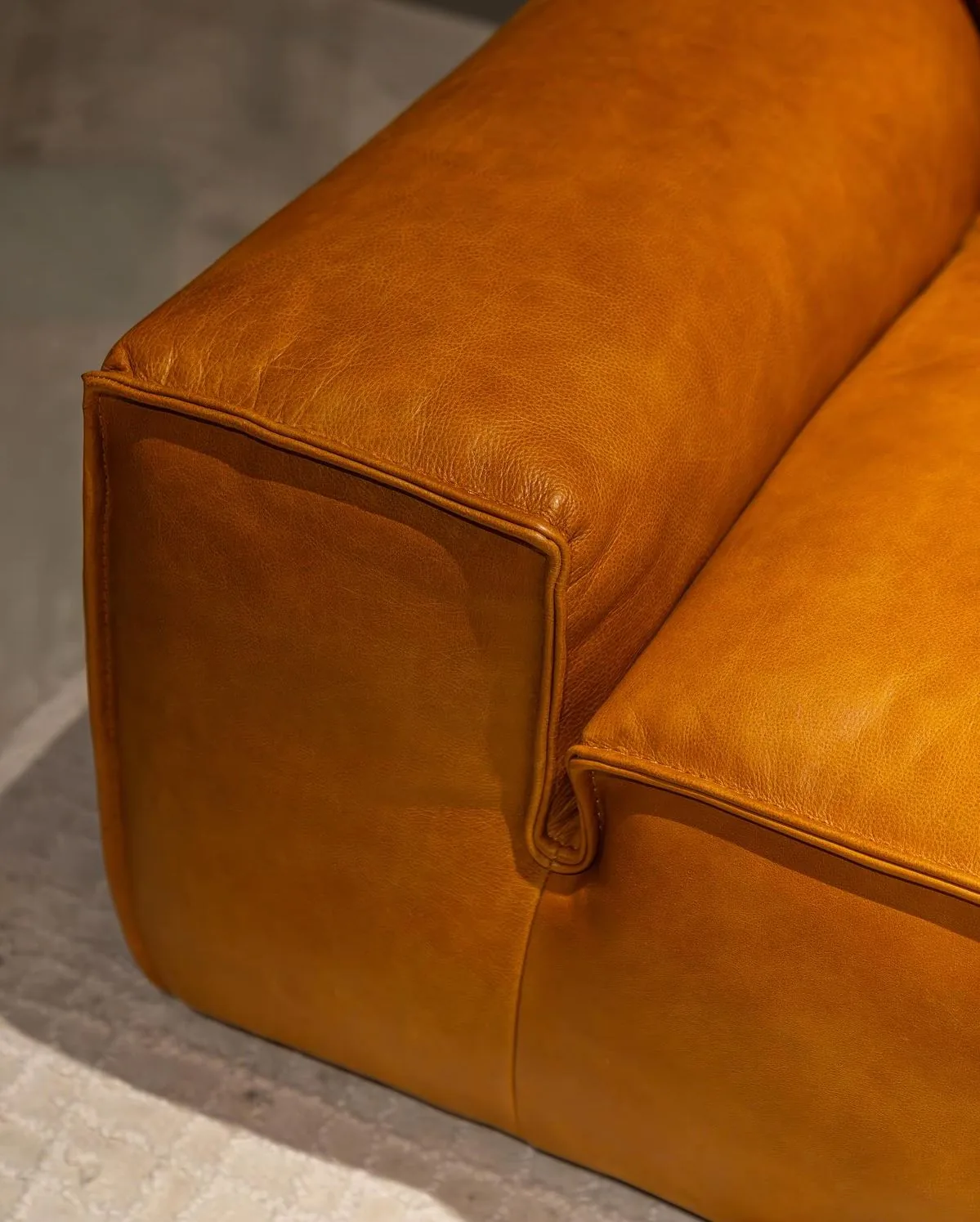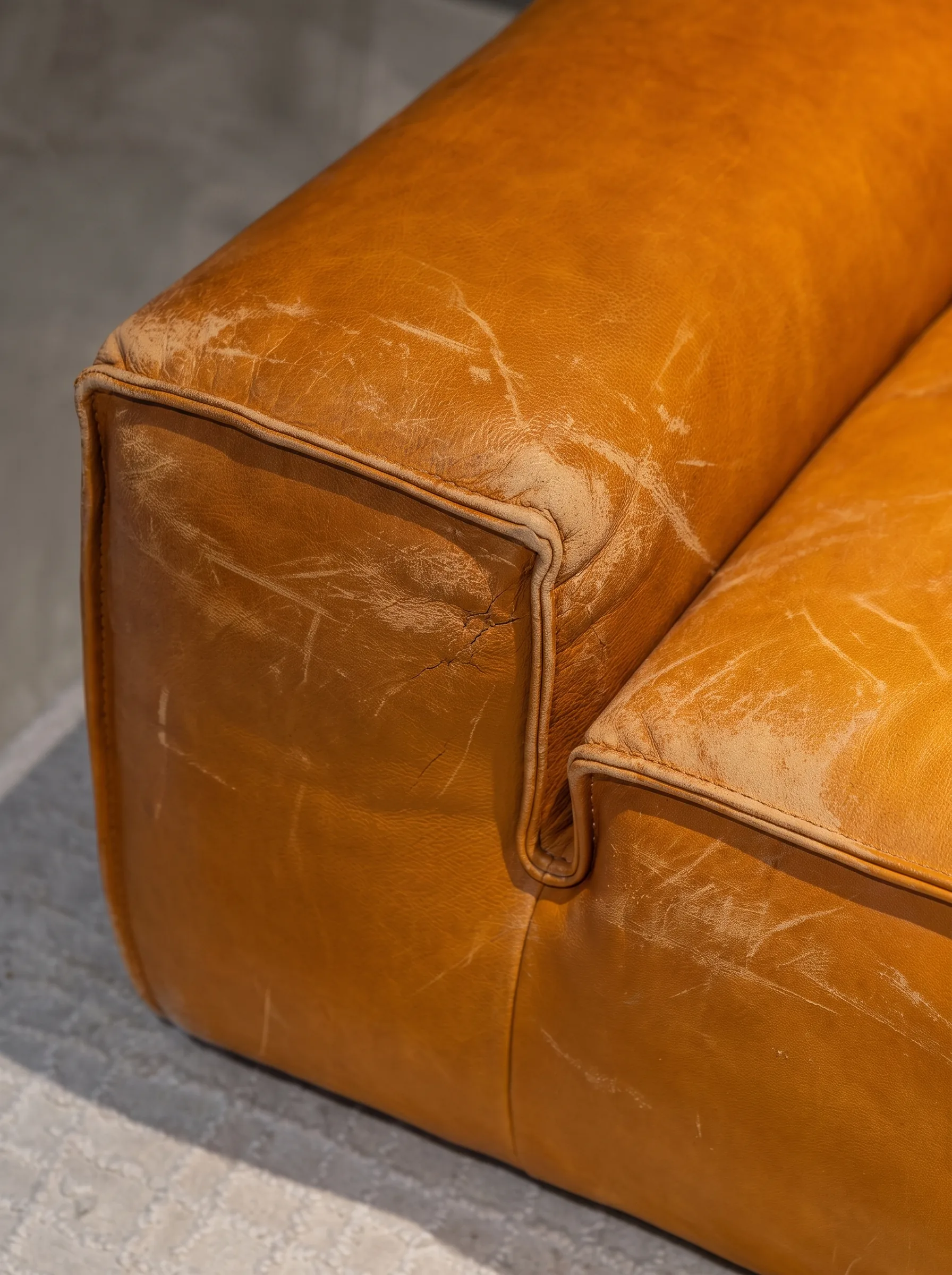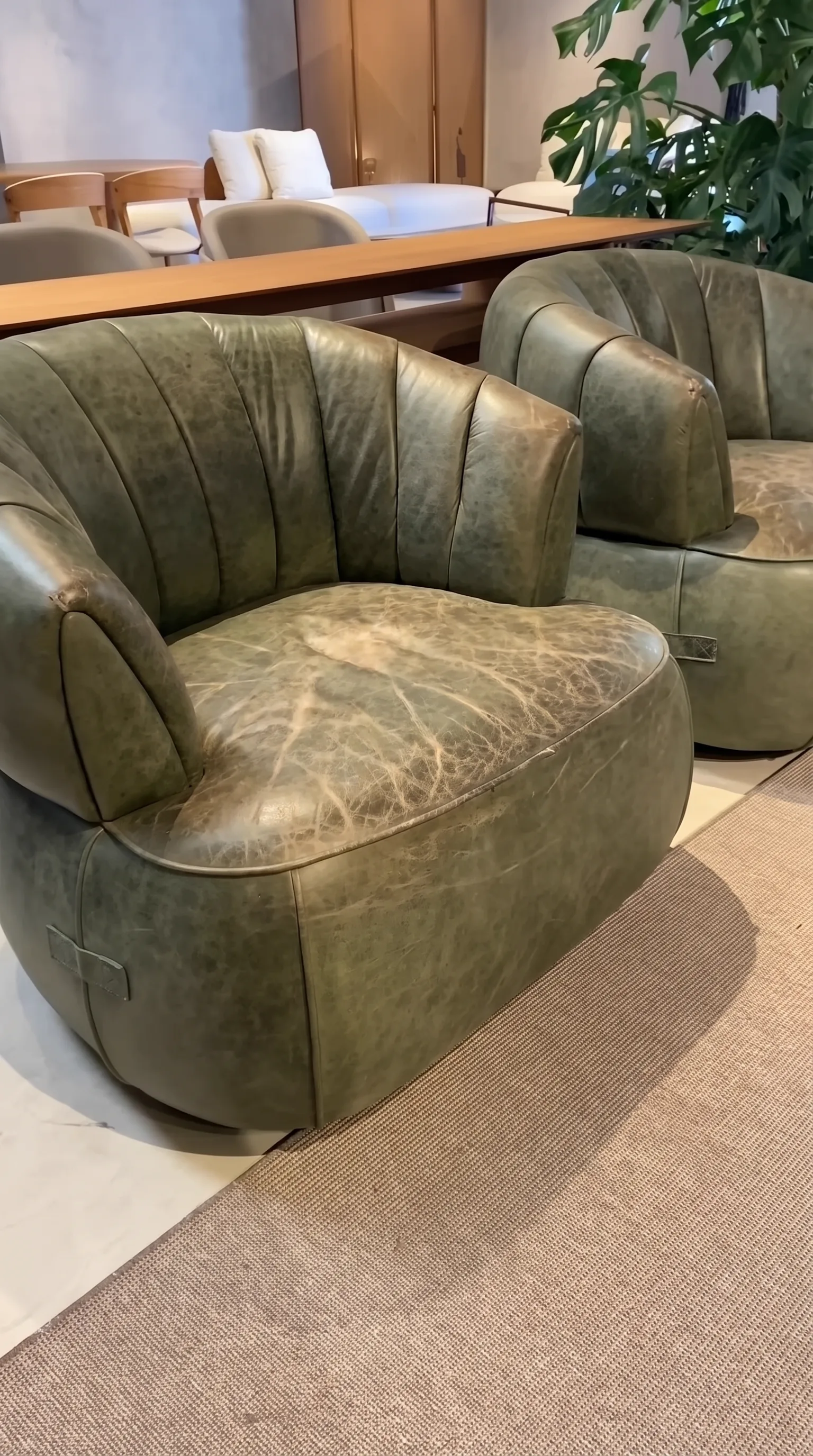
A chalky white bloom on dark leather looks alarming, but panic is the wrong first move. Before you reach for a wet cloth or a bottle of cleaner, you need to know which of three different culprits you are dealing with - because fat spew, salt spew, and mould each demand a completely different response. This is among the most frequent calls we field from sofa owners across India, and a wrong guess here is exactly what turns a ten-second fix into a spreading problem.
White spots on leather are not always a sign of damage. In many cases, they are a chemical process happening inside the hide that is being triggered by the Indian climate. But left untreated, some types progressively damage the surface. Here is exactly what to look for and what to do.
What Are the Three Types of White Spots on Leather?
Type 1 - Fat Spew
Fat spew is the most common type of white deposit on leather sofas in India and is almost always mistaken for mould. During the tanning process, animal fats are worked into the hide to give it suppleness. In certain conditions - specifically temperature fluctuations between warm monsoon and cool AC air - these fat molecules migrate from inside the hide to the surface and crystallise. The result is a flat, waxy, whitish film across the surface.
Fat spew has no smell, appears uniformly across exposed surfaces (not in corners or seams), and can be gently buffed away with a soft dry cloth. It tends to return once or twice and then stops, once the temperature cycle stabilises. It is not damaging, but it signals the leather needs conditioning to replenish what migrated out.
Type 2 - Salt Spew
Salt spew looks similar to fat spew but is caused by mineral salts from the tanning chemicals migrating to the surface as moisture evaporates. This is common in August and September in Indian homes, when the monsoon ends and people switch AC back on heavily. The sudden drying pulls water through the hide, carrying dissolved salts with it. The water evaporates and leaves white salt crystals behind.
Salt spew feels slightly gritty under your finger, unlike the waxy feel of fat spew. Do not rub it aggressively as salt crystals are abrasive. Wipe gently with a barely damp cloth first, then follow with a pH-balanced leather cleaner. The same caution applies when cleaning white and light leather, where any residue shows up far more readily than on dark hides.
TLR EXPERT TIP: The fastest diagnosis: press your fingertip firmly onto the white spot for three seconds, then lift. If the spot partially disappears where your warm finger touched, it is fat spew - body heat melts the crystallised fat temporarily. If the spot stays identical, it is mould or salt. This test takes ten seconds and tells you exactly which treatment path to follow.
Type 3 - Mould and Mildew
Mould appears on leather sofas in India during or after monsoon, particularly in homes with poor cross-ventilation where flats retain humidity for weeks. Mould spots are fuzzy or powdery rather than flat, have a distinctly musty damp smell, and concentrate in low-airflow areas like the back of cushions, under armrests, and in seam creases. If that musty mould smell lingers after the spots are gone, the odour itself needs separate treatment.
Mould is the most serious of the three types because the fungal mycelium penetrates below the surface finish and into the collagen fibre structure. Surface cleaning removes visible mould but does not kill the spores embedded in the hide. Without antifungal treatment, mould returns within two to four weeks. Recurrence is fastest where the damp is cool and long rather than seasonal and the hide never fully dries between spells, which is why mould-safe cleaning in Bengaluru treats the spores in the grain and the absorbed musty odour in one home visit instead of wiping the bloom off the surface.
"Every monsoon season we receive calls from homeowners who wiped away white spots with a wet cloth and saw them come back worse in ten days. Wet cloth spreads mould spores. Dry the area first, then treat with a pH-balanced antifungal leather cleaner — never water alone." - Tyson, Lead Artisan, The Leather Restorators
How Do You Treat Each Type of White Spot?
Treating Fat Spew and Salt Spew
- Do not use water first. A wet cloth on fat spew spreads the crystallised oils and makes the deposit larger.
- Dry buff gently with a clean soft microfibre cloth to lift the surface deposit. Use light pressure in one direction rather than circular scrubbing.
- Apply a pH-balanced leather cleaner on a second cloth and work the area in small sections. This removes residual deposits and prepares the surface for conditioning.
- Condition after cleaning. Fat spew indicates the hide is cycling oils to the surface because it is dry. Conditioning replenishes the internal oil balance and reduces recurrence.
Treating Mould
- Ventilate the room before starting. Open windows, switch on a fan. Mould spores become airborne during cleaning.
- Do not use a wet cloth first. Moisture spreads spores to new areas of the leather and into seams.
- Use a dry soft brush to gently lift visible surface mould away from the leather. Collect it in a bin - do not let it fall onto the floor and re-settle on the sofa.
- Apply a leather antifungal cleaner - available from leather care suppliers - on a microfibre cloth. Work the affected zone thoroughly, including seams and crevices where mould hides.
- Allow to dry completely with airflow before use. Reapply after 48 hours for persistent mould.
TLR EXPERT TIP: After treating mould, place a small mesh bag of activated charcoal behind the sofa cushions. Charcoal absorbs residual humidity from the immediate microenvironment around the leather and reduces the moisture that mould needs to grow. Replace every three months through monsoon season. This single step cuts mould recurrence significantly in flats across India with limited ventilation.
How Do You Prevent White Spots Year-Round in India?
The Indian climate creates three distinct risk windows for white spots on leather:
- Pre-monsoon (May-June): Heat and dust. Risk: salt spew from rapid dehydration as temperatures peak. Condition in April and ensure the sofa is not in direct afternoon sun.
- Monsoon (July-September): High humidity. Risk: mould growth on unprotected leather surfaces, especially in rooms with poor airflow. Run the AC periodically even on mild days to reduce indoor humidity below 60% RH.
- Post-monsoon (September-October): Temperature swing as AC restarts. Risk: fat spew and salt spew as moisture exits the leather rapidly during the shift from humid to dry indoor air. Condition in September before this cycle begins.
If white spots return despite cleaning and conditioning, the cause may be internal to the hide - a tanning chemistry issue that requires professional assessment. Our leather sofa cleaning and restoration service includes spew diagnosis, antifungal treatment, and conditioning in one visit.
What Professional White-Spot Treatment Involves
When spew or mould keeps coming back after two or three home attempts, the problem is no longer on the surface - it is in the chemistry of the hide, and that is where a workshop process separates from a wipe-down. The treatment is matched to the deposit, not applied blanket-fashion to everything white.
For fat spew, we use controlled warming and a solvent lift rather than water. Gentle, even heat raises the crystallised fats back to a workable state, and a leather-safe solvent draws them off the finish without flooding the hide. Plain dry-buffing at home only flattens the bloom for a week; the migrated fats are still cycling, which is why it returns. For salt spew, the step that matters is a neutralising wash - a pH-corrected clean that dissolves and removes the abrasive mineral crystals instead of grinding them into the grain. For mould, surface wiping is the part that fails most often: the fungal mycelium sits below the finish, so we run a full antifungal protocol into the seams, piping, and crevices, let the hide dry under airflow, and then reseal with a fresh topcoat so airborne spores have no soft, unsealed surface to recolonise.
This is why recurring spew rarely responds to DIY - a cloth treats the symptom on the surface, while the cause keeps feeding it from inside the hide. A realistic spew or mould treatment in India runs roughly Rs. 2,500 to Rs. 7,000, depending on how far the bloom has spread and whether it is straightforward fat spew or an embedded mould case that needs resealing.
An Indian Monsoon Prevention Calendar
White spots are seasonal across much of India, so prevention works best when it is tied to the calendar rather than done reactively once the bloom appears.
- Pre-monsoon (June): Condition the hide before the rains arrive and start reducing dampness in the room. A well-fed hide holds its oils internally instead of forcing them to the surface when the humidity swings.
- Monsoon (July-September): Give the sofa a fortnightly dry wipe to clear early bloom, hold the room at 40-55% RH, keep a silica pack or a dehumidifier near the sofa, and air the room out whenever there is a dry spell.
- Post-monsoon (October): Inspect the seams and piping - the low-airflow channels where spew and mould take hold first. Catching a faint bloom in a seam now is far cheaper than treating a spread surface later.
PU and Bonded Sofas - A Different Problem
One important caveat before you reach for conditioner: a white bloom on a PU-coated or bonded sofa is usually coating breakdown, not spew. It is the polyurethane skin flaking and going chalky as it ages, which means it will not wipe away and conditioner will not fix it - the surface needs recoating, not feeding. To tell the two apart, check a hidden cut edge or the underside: genuine leather shows a fibrous, suede-like cross-section, while a bonded or PU sofa reveals a fabric or mesh backing under a thin coating. If you see that backing, treat the white as coating failure and skip the spew protocols entirely.
Frequently Asked Questions
Are white spots on leather sofa dangerous to health?
White mould on leather can release spores that trigger allergies and respiratory irritation, especially in enclosed rooms. Salt spew and fat spew are not health hazards. If the spots are fuzzy or have a musty smell, treat them as mould immediately and air the room well during cleaning.
Why do white spots appear on leather sofa after monsoon in India?
Post-monsoon white spots are almost always mould or fat spew. During monsoon, humidity is high and the leather absorbs moisture. When AC is switched on in September-October, rapid drying pulls salts and fat compounds from inside the hide to the surface as the moisture evaporates, leaving white deposits.
Can I use vinegar to remove white spots from leather?
No. Vinegar is acidic enough to disrupt the pH balance of leather and strip the topcoat over repeated use. It may remove surface deposits temporarily but causes long-term dye fading and surface hardening. Use a pH-balanced leather cleaner only.
How do I know if white spots are mould or fat spew?
Mould is fuzzy or powdery and usually has a musty or damp smell. It often appears in patches concentrated in low-airflow corners of the sofa. Fat spew and salt spew look like a flat, waxy or chalky film, have no smell, and are uniform across exposed surfaces. Both require different treatments.