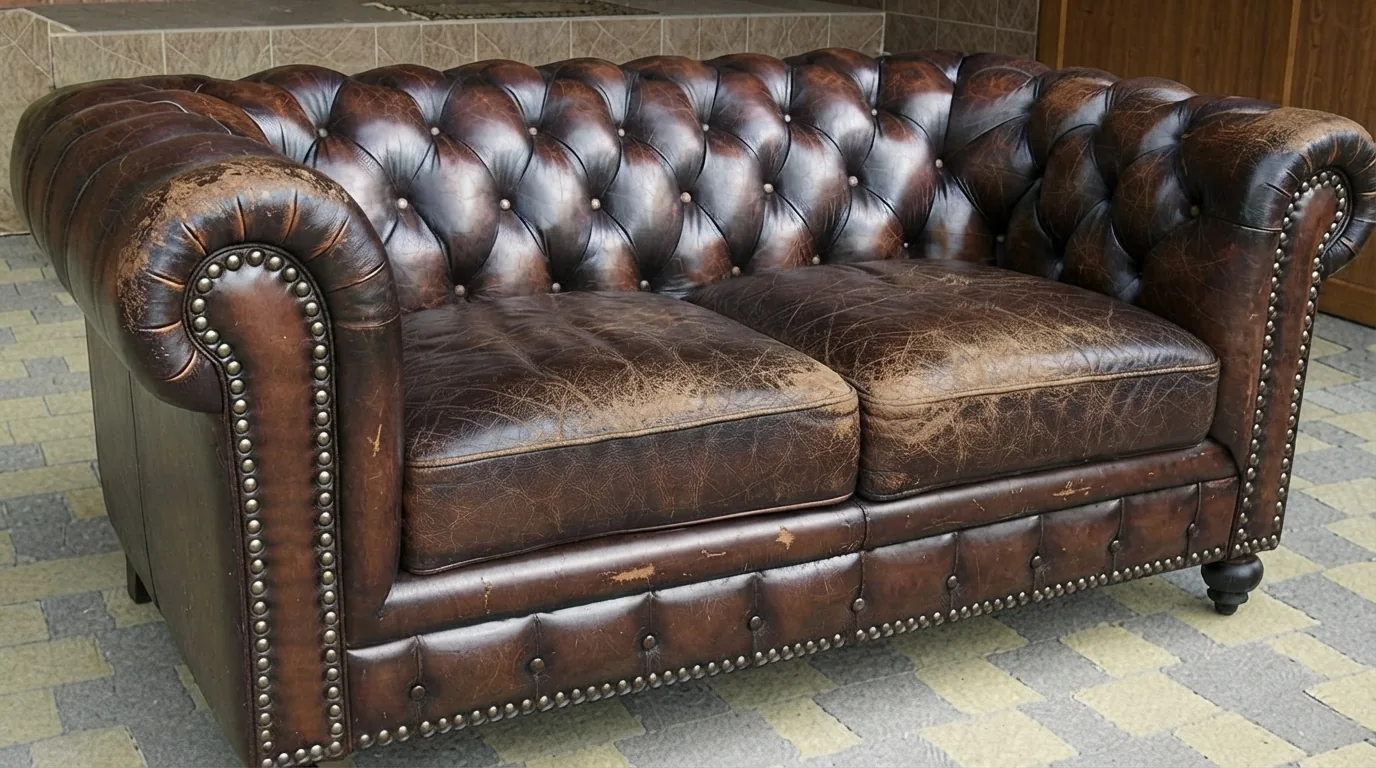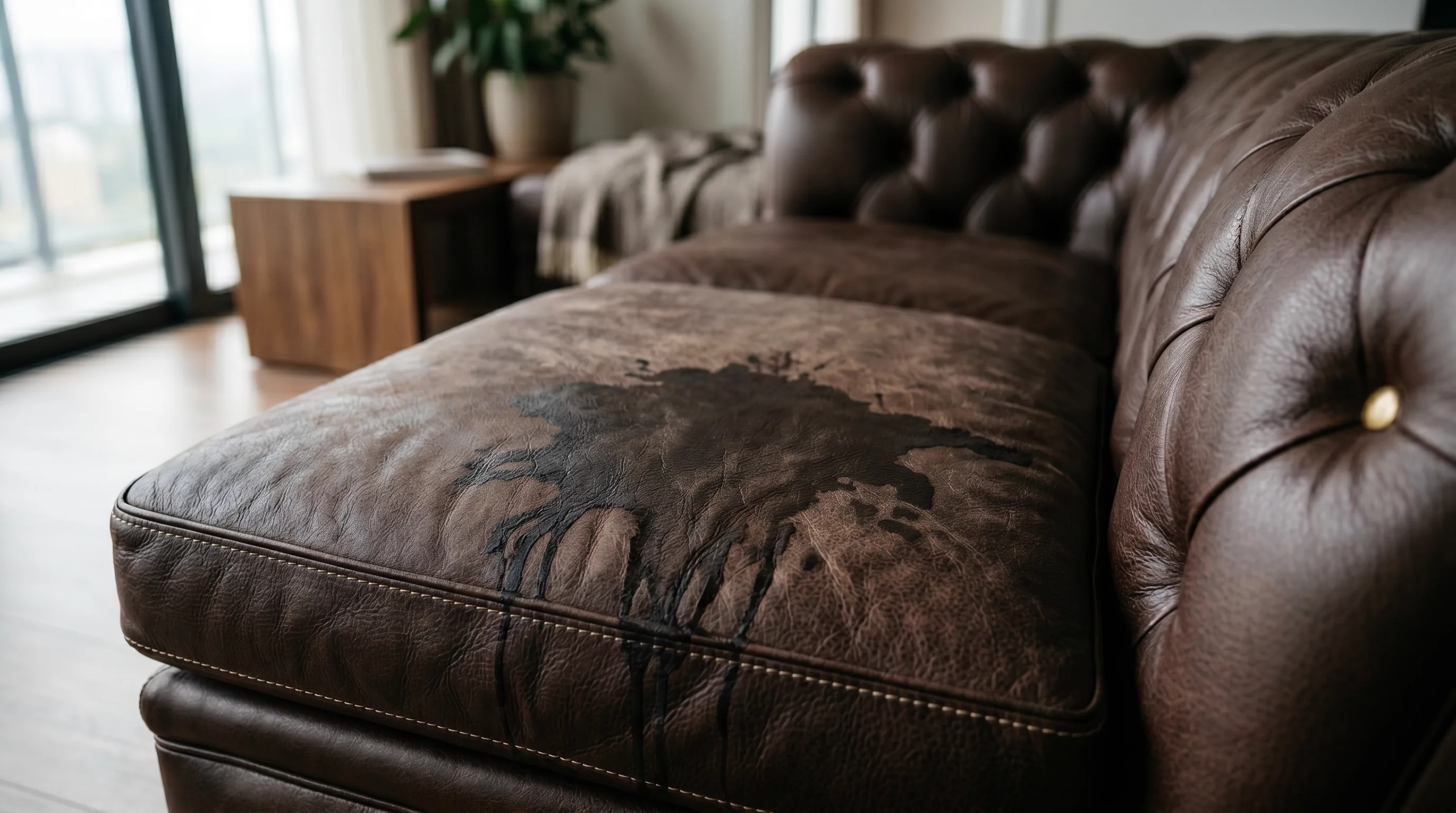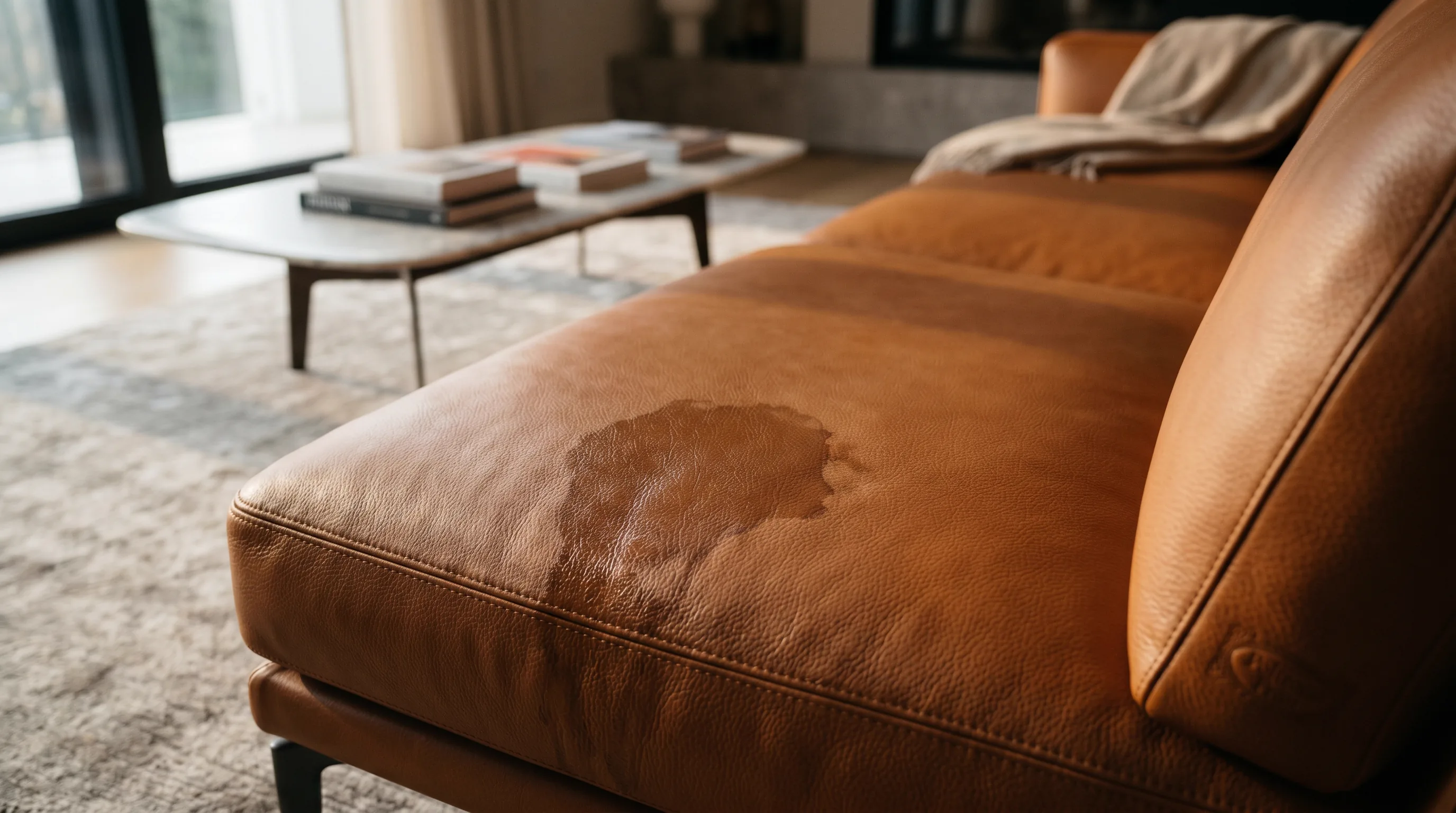
It happened. The chai cup tipped. The biryani plate slipped. Someone sat down in a hurry and ghee from their roti transferred to the armrest. Indian homes and leather sofas coexist with these hazards every day. What you do in the first five minutes determines whether you are looking at a complete removal or a permanent reminder. This guide covers every major Indian food stain on leather, in order of difficulty, with exact steps that work - and exact steps that make things worse.
Indian cooking involves turmeric, oil, chilli, ghee, and chai tannins - all of which interact with leather chemistry differently. A single treatment approach does not work across all of them. The key variable is always time: the stain you treat in two minutes is a different problem from the same stain you find three hours later. Pairing fast spill response with routine at-home cleaning keeps the leather resilient enough to shrug off most everyday accidents.
What Is the First Rule for Any Food Spill on Leather?
Blot, never rub. Every Indian food stain on leather gets worse the moment someone grabs a cloth and rubs it. Rubbing spreads the stain laterally, pushes oil and pigment deeper into the pores, and abrades the topcoat. The correct motion is always a firm vertical press-and-lift with a clean cloth. Repeat with a fresh section of cloth each time. One motion per press. No circular scrubbing.
TLR EXPERT TIP: Keep a clean white microfibre cloth within arm's reach of wherever you eat near the sofa. White cloth shows you what is being lifted. A coloured cloth can transfer its own dye to the leather while you are trying to remove the food stain. The three-second rule applies: the faster you blot the bulk of the spill, the less penetration occurs.
How Do You Treat Each Indian Food Stain?
Chai (Tea)
Why it stains: Chai contains tannins that bond with leather's collagen fibres, leaving a brownish tide mark as the liquid evaporates. The tannin bond strengthens with time and heat.
- Blot the bulk of the liquid immediately with a dry white cloth. Press firmly, do not rub.
- Once the bulk is absorbed, apply a pH-balanced leather cleaner to a fresh cloth and work the stain zone in a dabbing motion from the outside edge inward. Working inward prevents the stain from spreading.
- Allow to dry. If a tide mark remains, repeat the cleaner application once.
- Condition after drying to restore moisture stripped by the cleaning.
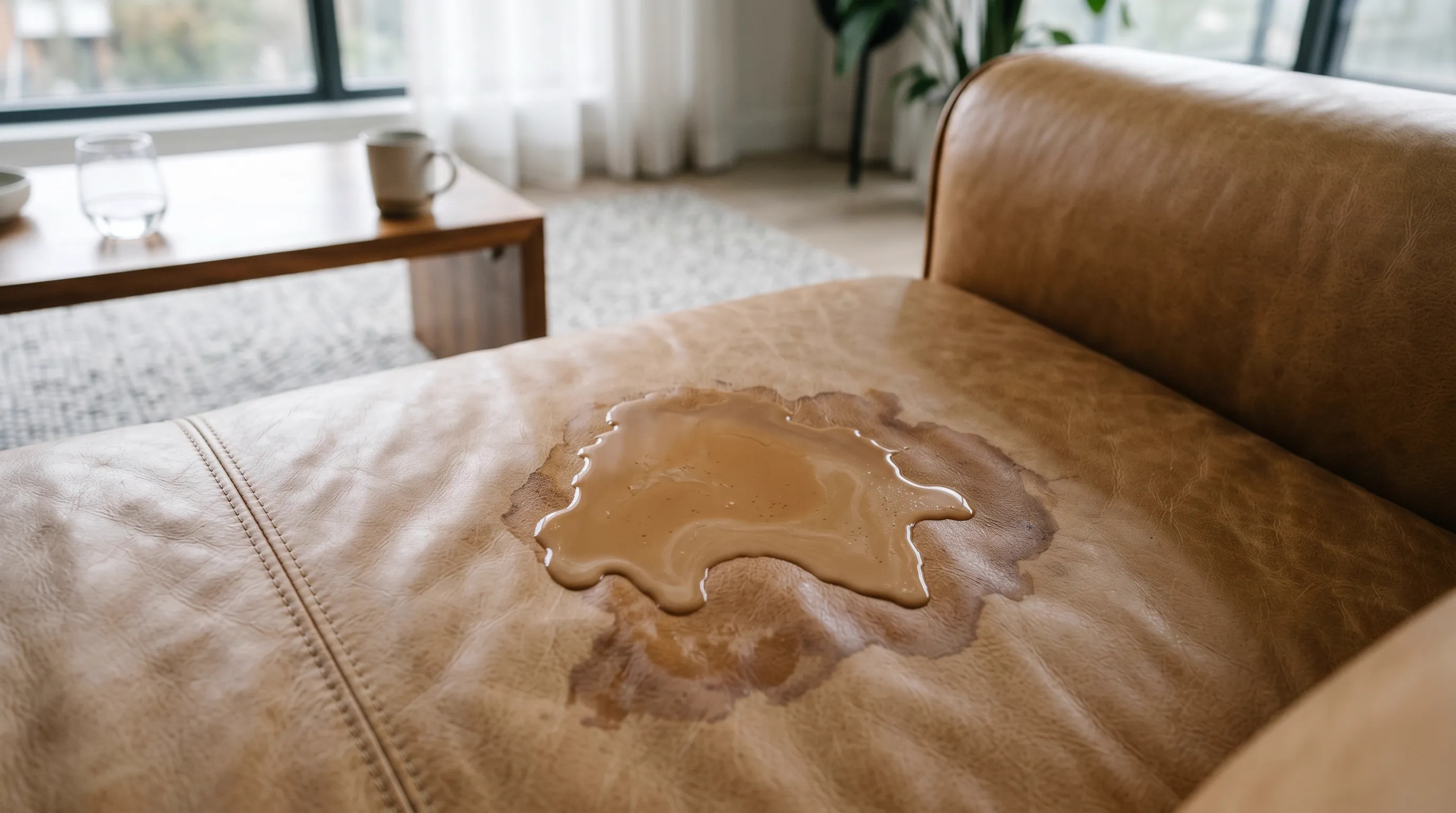
Dal and Lentil-Based Dishes
Why it stains: Dal combines water (which carries tannins and colour) with oil and spices. The water carries the staining compounds into the pores while the oil seals them in as it dries. You are effectively dealing with a two-component stain.
- Lift any solid material with a spoon - do not press it down trying to wipe it away.
- Blot the liquid component immediately.
- Apply pH-balanced leather cleaner to address the water-carried tannins and spice colour.
- If an oily residue remains after the cleaner dries, a second pass with a leather degreaser lifts the oil component.
- Condition after fully dry.
Turmeric (Haldi)
Why it stains: Curcumin, turmeric's yellow pigment, is one of the most tenacious natural dyes known. It bonds with protein-based materials - which leather is - at a molecular level. It is also light-activated: UV exposure deepens the bond. This is why a turmeric stain left in sunlight becomes almost impossible to remove. On a pale sofa the contrast is unforgiving, so our guide to haldi and masala stains on white leather covers extra precautions worth knowing.
- Blot immediately. Do not rub - curcumin spreads and bonds faster under friction and heat.
- Apply pH-balanced leather cleaner immediately and work from the outside edge inward.
- If yellow remains, a specialist leather stain remover with enzymatic action is needed. Apply carefully, following the product instructions. Test on a hidden area first.
- For old turmeric stains, professional treatment is required. Attempting aggressive home removal causes more colour loss to the leather itself than the stain.
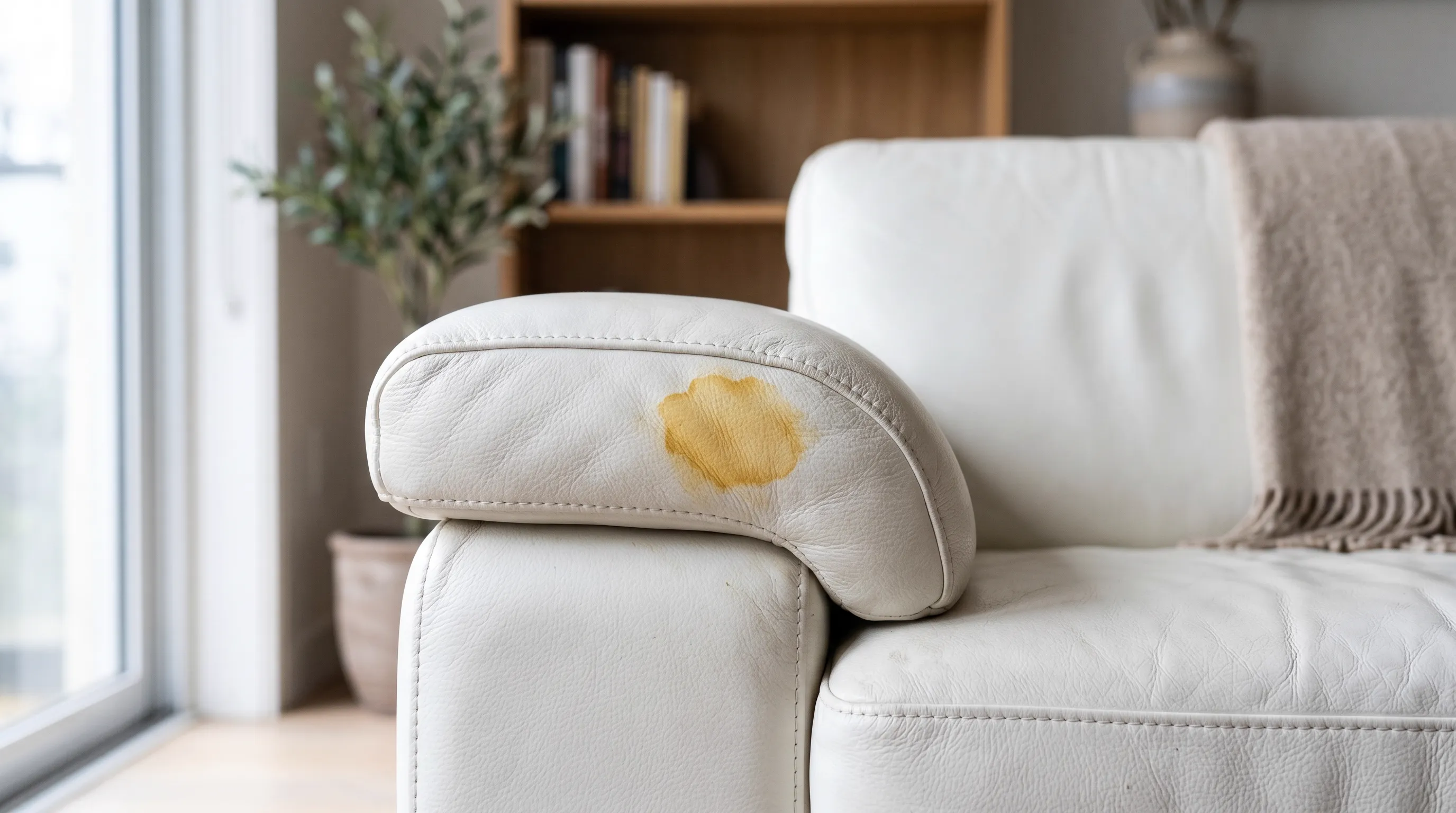
TLR EXPERT TIP: Never put a freshly turmeric-stained leather sofa near a window hoping the sunlight will bleach it out. UV actually fixes curcumin more deeply into the collagen structure. Keep the area in shade and treat it chemically. This is the single most common mistake we see from Indian homeowners dealing with haldi stains.
Ghee and Cooking Oil
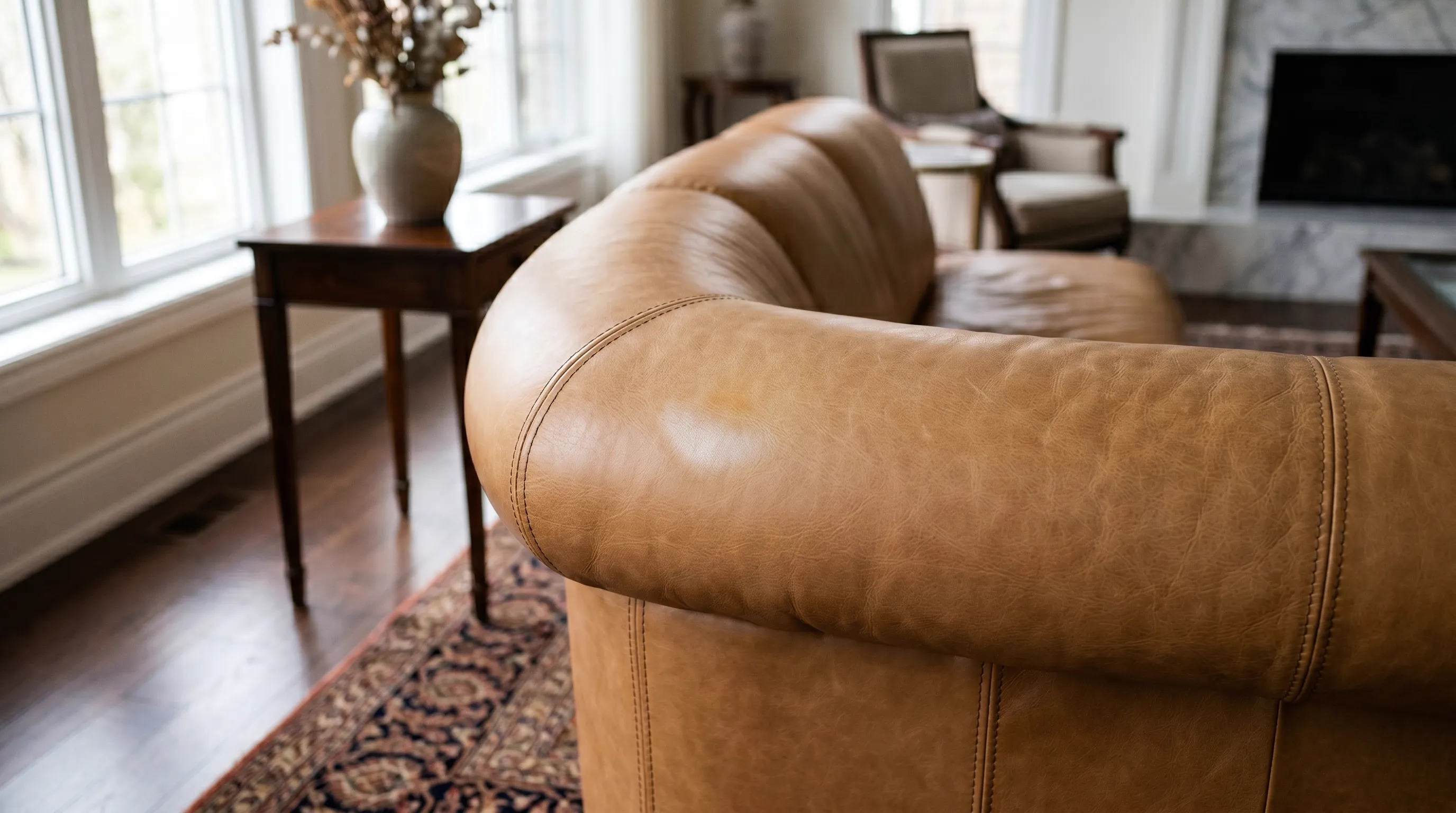
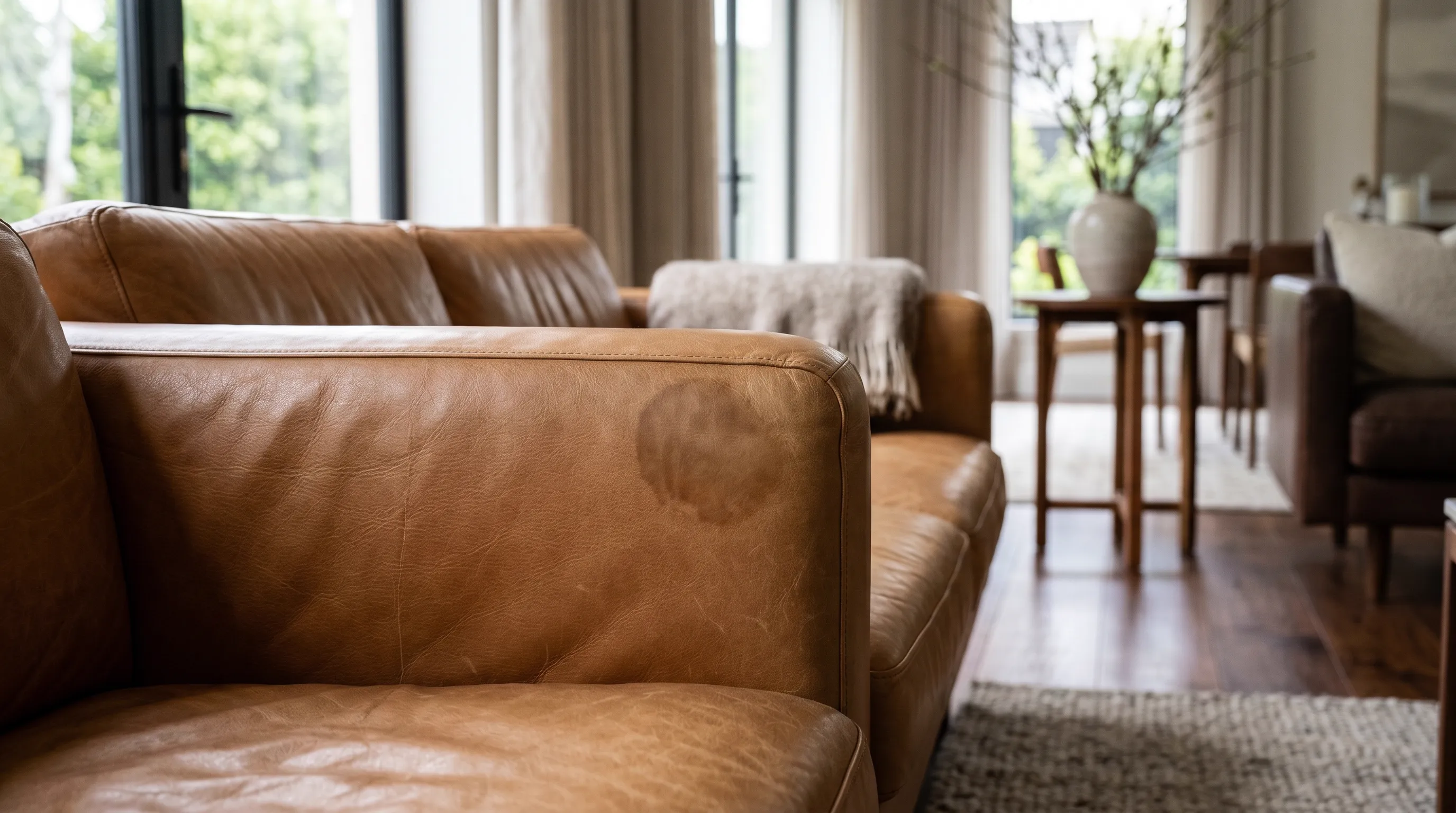
Why it stains: Ghee and cooking oils are saturated fats that penetrate leather's pore structure quickly. Once inside the pores, they oxidise and turn rancid over days to weeks, producing a darkened area and eventually a sour smell. The longer they are in the leather, the deeper they go and the harder they are to extract.
- Absorb the surface ghee immediately with a dry cloth using press-and-lift motions only.
- Sprinkle a small amount of cornstarch or arrowroot powder over the stain area - these absorb surface fat without affecting the leather. Leave for ten minutes, then brush away gently.
- Apply a pH-balanced leather degreaser to a cloth and work the zone from outside inward.
- Allow to dry fully - a fan helps. If darkening remains, a second degreaser pass the following day often lifts residual oil.
- Condition once the area is clean and dry.
Biryani and Rice Dishes
Why it stains: Biryani combines the worst of all categories: cooking oil, saffron or food colouring, and turmeric. A biryani spill is a multi-component stain that needs to be treated in layers.
- Remove solid rice and meat with a spoon, lifting away from the surface.
- Blot the oil component first with cornstarch as above, then remove.
- Apply pH-balanced leather cleaner to address the water-soluble colour components.
- If yellow/orange colour remains, follow the turmeric protocol with an enzymatic stain remover.
- Condition after fully dry.
Red Chilli Oil and Mirchi
Why it stains: Red chilli oil is a double problem. The capsaicin and oil bind to the topcoat the same way ghee does, while the red pigment from the chilli stains fast and runs the moment it is rubbed. On light or aniline leather the colour can ghost into the grain within minutes.
- Blot the spill immediately - never rub. Rubbing spreads the red colour sideways and drives the oil deeper.
- On protected leather only, draw out the oil component first by sprinkling cornstarch over the area, leaving it ten minutes, then brushing it away gently. Do not use the powder draw on absorbent aniline.
- Clean the remaining colour with a pH-balanced leather cleaner, working from the outer edge inward.
- If the red tint persists, stop. On light and aniline hides, residual chilli colour usually needs professional colour-matched work - do not attempt the haldi enzymatic method on it, as the two stains react differently and aggressive home removal lifts the leather's own pigment.
"In twelve years across Indian homes, the stains that defeated us were never the fresh ones. Every single case of permanent leather staining we have seen involved a spill that was wiped with a wet rag, rubbed vigorously, and then left hoping it would dry out and disappear." - Tyson, Lead Artisan, The Leather Restorators
What Should You Never Use on Indian Food Stains?
- Lemon juice: Recommended in many online guides for turmeric. Citric acid strips the dye from leather and creates a bleached patch that is worse than the stain it was trying to fix.
- Dishwash liquid: Highly alkaline, it disrupts leather's pH instantly. One wipe removes the stain's colour and the leather's topcoat at the same time, leaving a dull, faded patch.
- Hand sanitiser or rubbing alcohol: Common grab-and-wipe reaction. Strips topcoat instantly and opens pores, pushing the stain deeper while destroying the surface protection simultaneously.
- Hot water: Expands pores and drives the staining compound deeper into the hide. Always use ambient temperature or slightly cool water if water is needed at all.
For stains that have set, or biryani and turmeric stains more than a few hours old, professional treatment via our leather sofa stain removal service in India achieves significantly better results than home treatment at that stage. For step-by-step removal of a single stain type, see our dedicated guides to ghee and butter stains, turmeric (haldi) stains, and coffee and chai stains. Where years of dal, ghee and chai have layered into a general dullness rather than one distinct mark, a full professional leather sofa cleaning resets the whole hide instead of chasing spots one at a time.
Frequently Asked Questions
Does turmeric stain permanently on leather?
Turmeric's curcumin binds quickly with the leather's collagen fibres and becomes harder to remove with time. Treated within five minutes, success rate is high. After an hour it deepens significantly. After 24 hours it may require professional colour-matched topcoat touch-up. Act immediately - no other stain punishes delay as severely as turmeric.
My leather sofa has a ghee stain that is months old - is it too late?
Old ghee stains are difficult but not always impossible. The stain is now oxidised and rancid, embedded deep in the pores. A professional leather degreaser and enzyme cleaner applied with heat can lift a significant portion. Remaining discolouration may need spot re-dyeing. Do not attempt to scrub an old ghee stain - abrasion spreads the rancid oil deeper.
Can I use salt or soap on a chai stain on leather?
Salt absorbs fresh liquid spills and is safe to use immediately to lift the bulk before it soaks in. Regular soap is not safe on leather - it strips the protective topcoat and dries the hide. Always follow any emergency absorption with a pH-balanced leather cleaner only.
What stains cannot be removed from leather sofa at home?
Old turmeric, dried biryani oil, deep haldi-based stains, and red chilli oil stains that have been allowed to set for more than 24 hours generally cannot be fully removed at home without risking further damage. Professional enzymatic treatment and spot re-dyeing is the reliable solution for these.
Authoritative references on leather finishing and oil-stain behaviour behind this guide: Leather Working Group (LWG) for tanning and finish classifications, and the Bureau of Indian Standards (BIS) for leather grading in India.