Before / AfterRecolour & Feed
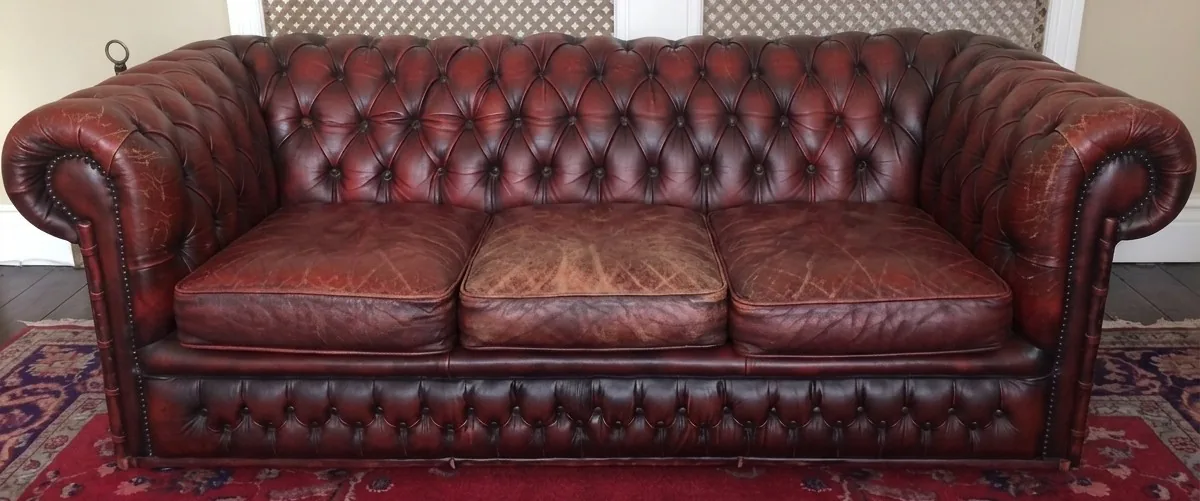

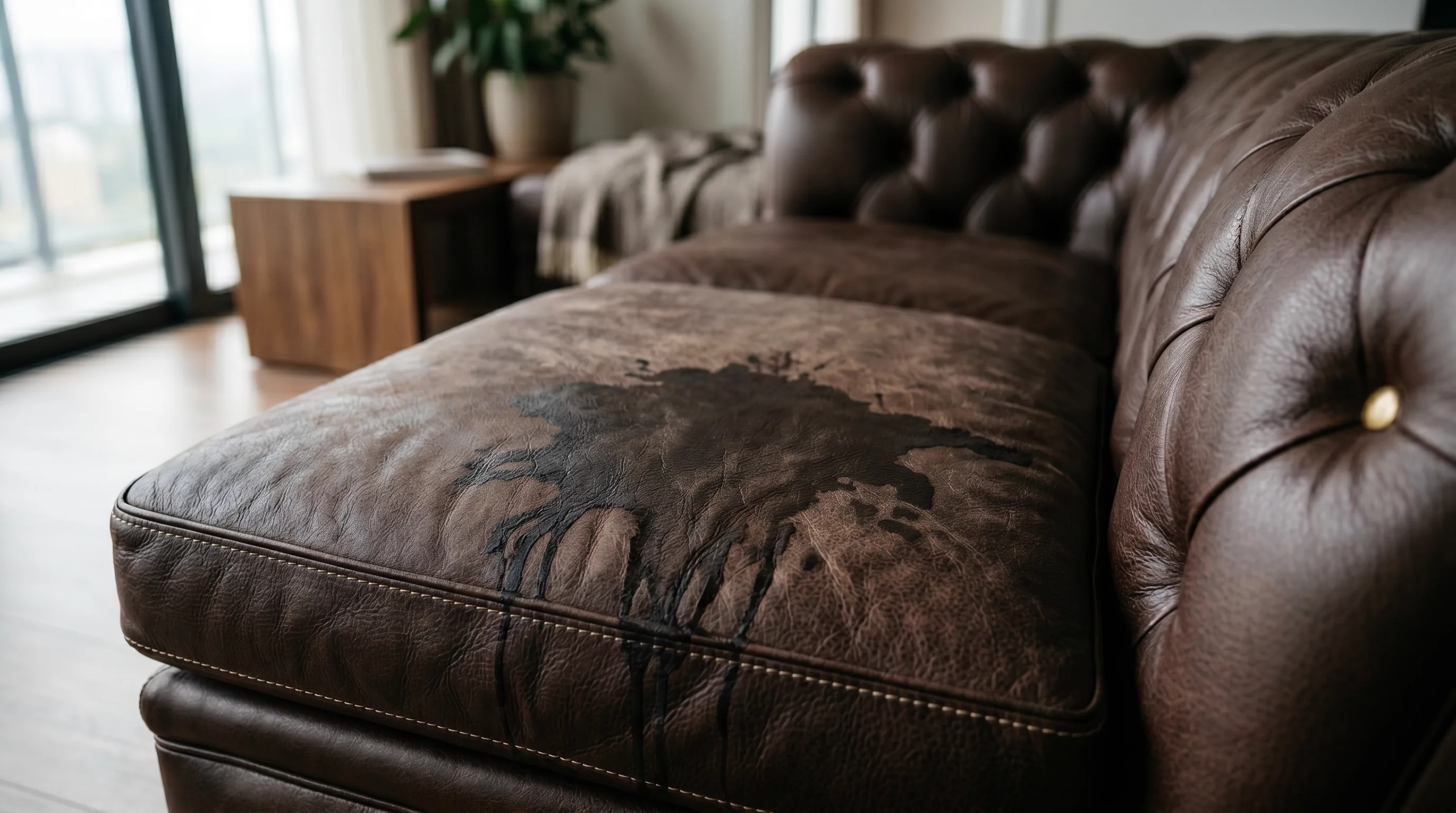
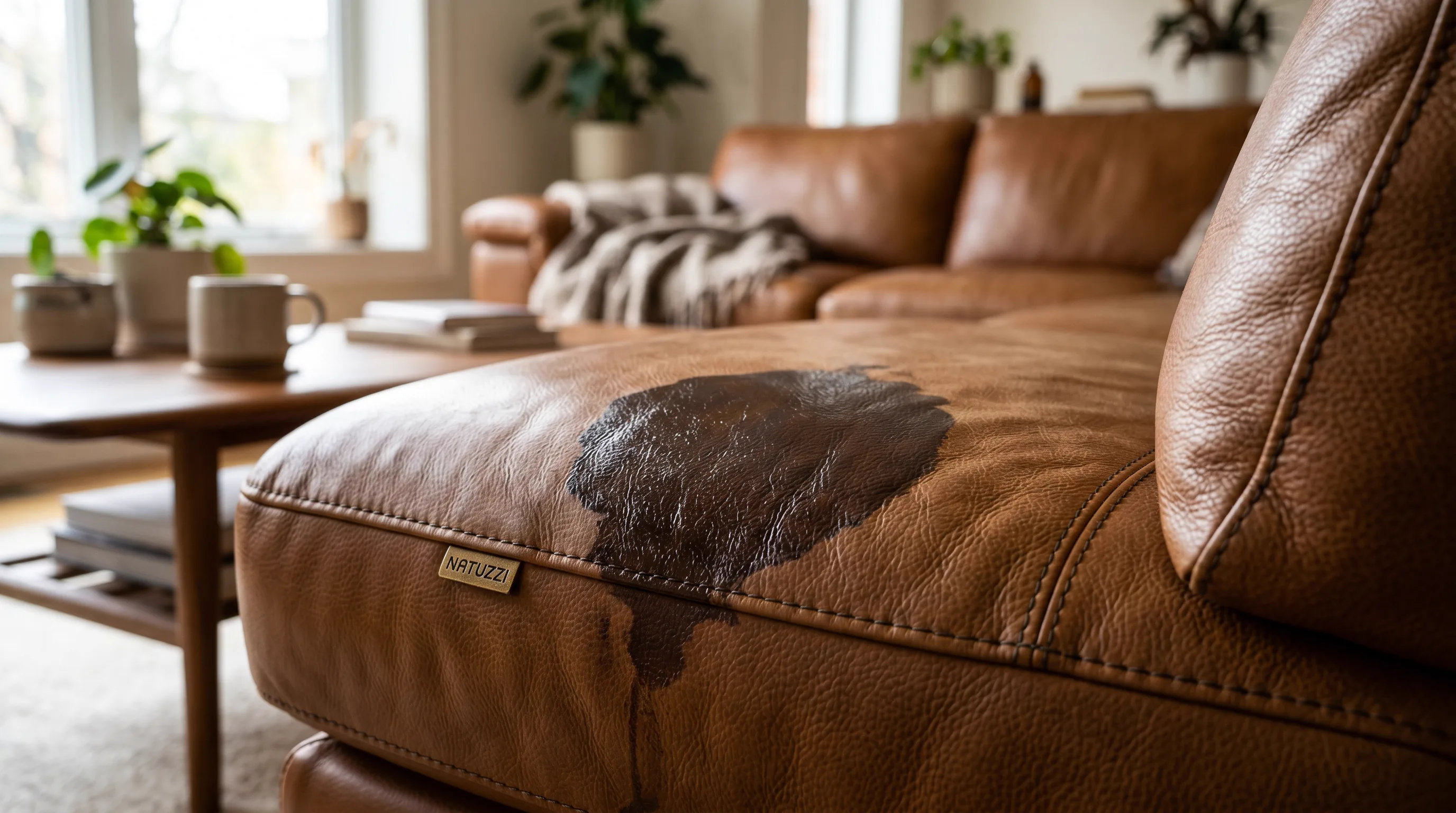
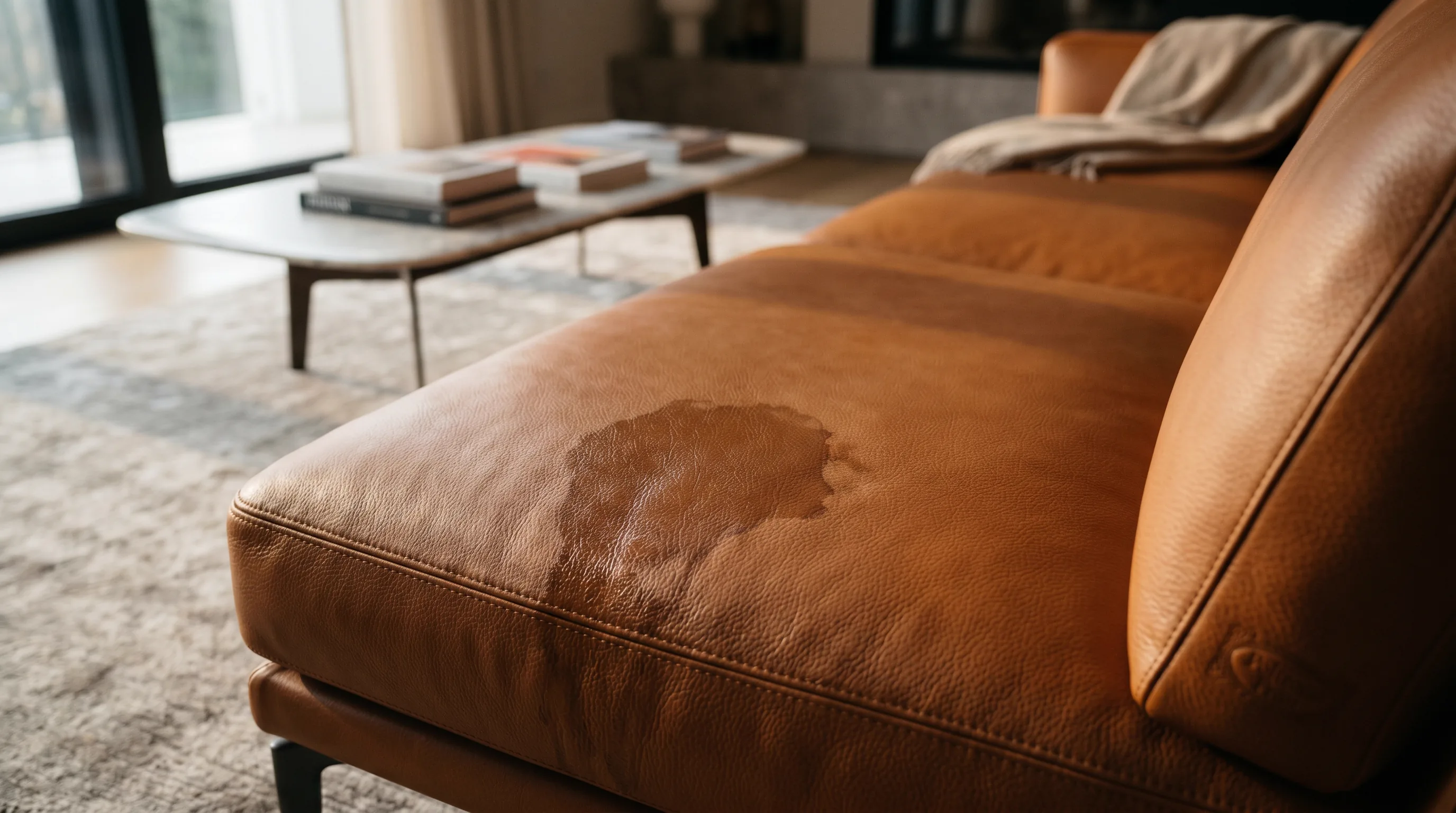
Wine, ink, oil, curry, blood, lipstick, ice-cream - each stain has its own chemistry, and the wrong solvent sets it forever. We apply the right protocol per stain, no household-product guesswork. For stubborn hair-oil and grease stains, see our dedicated removal page.
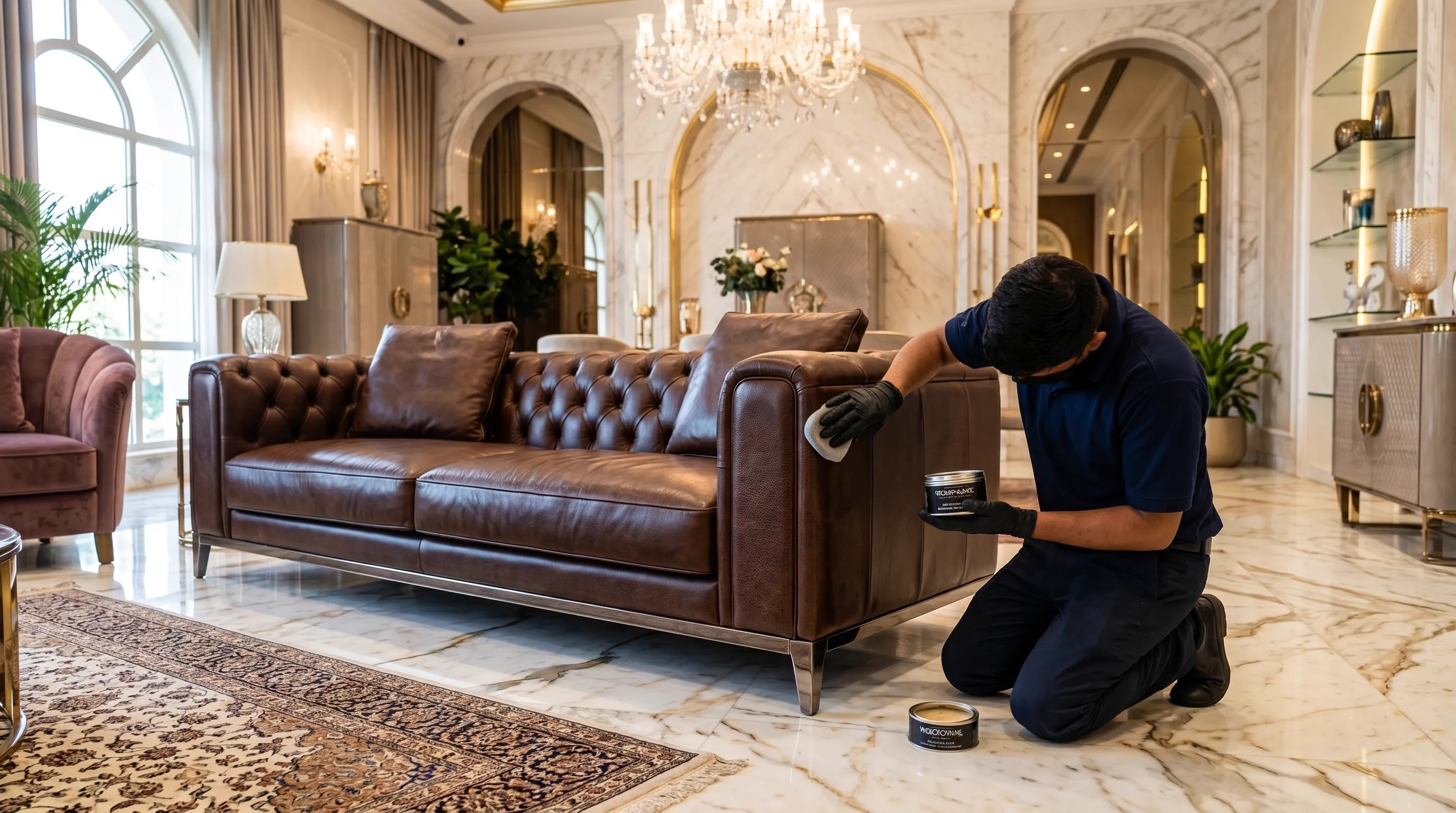
Vinegar on a wine stain locks the tannin into the leather. Baby wipes on a pigmented hide lift the colour with the stain. Magic erasers shred the topcoat. Stain removal is a chemistry decision, not a household-product decision.
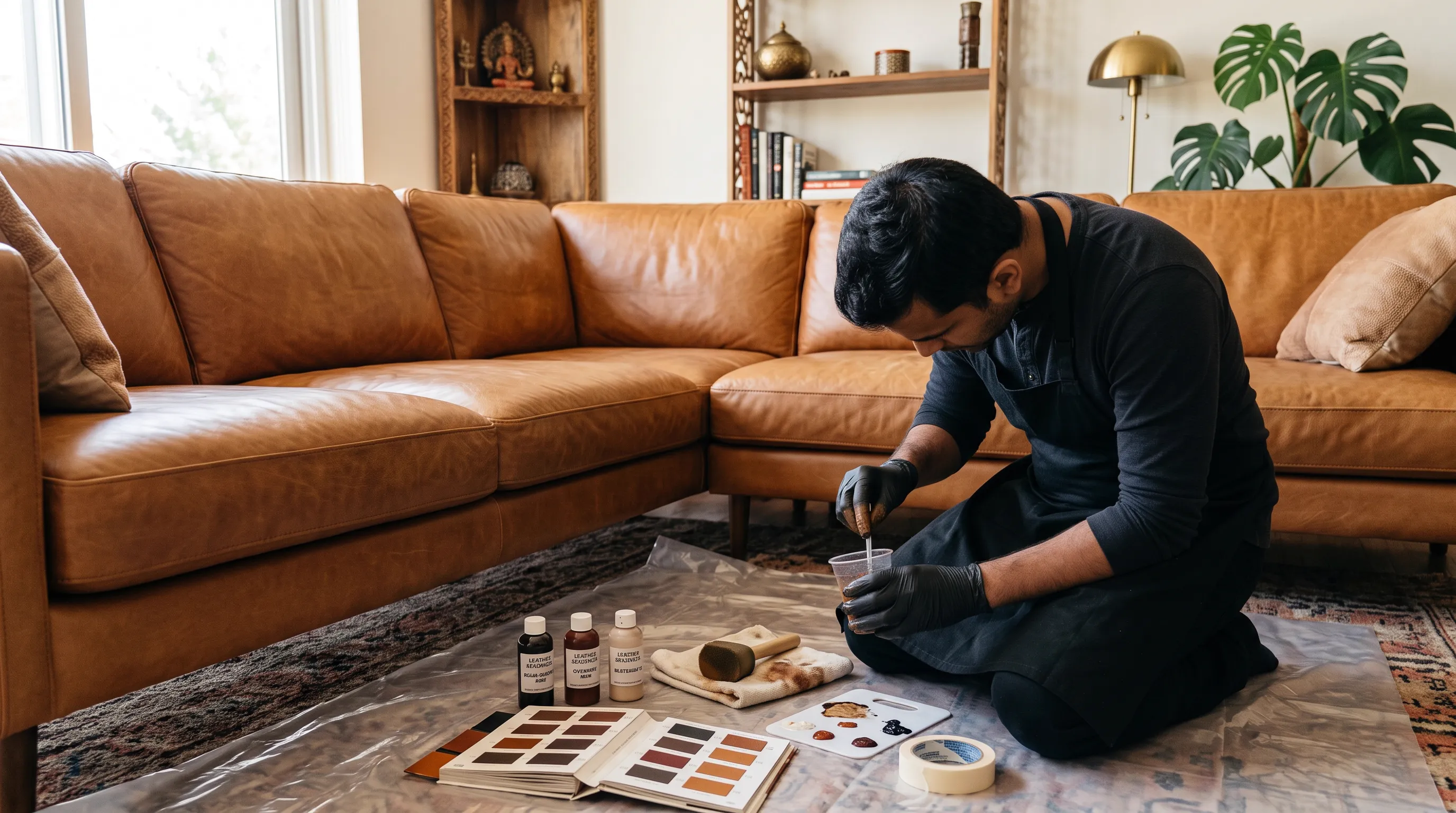
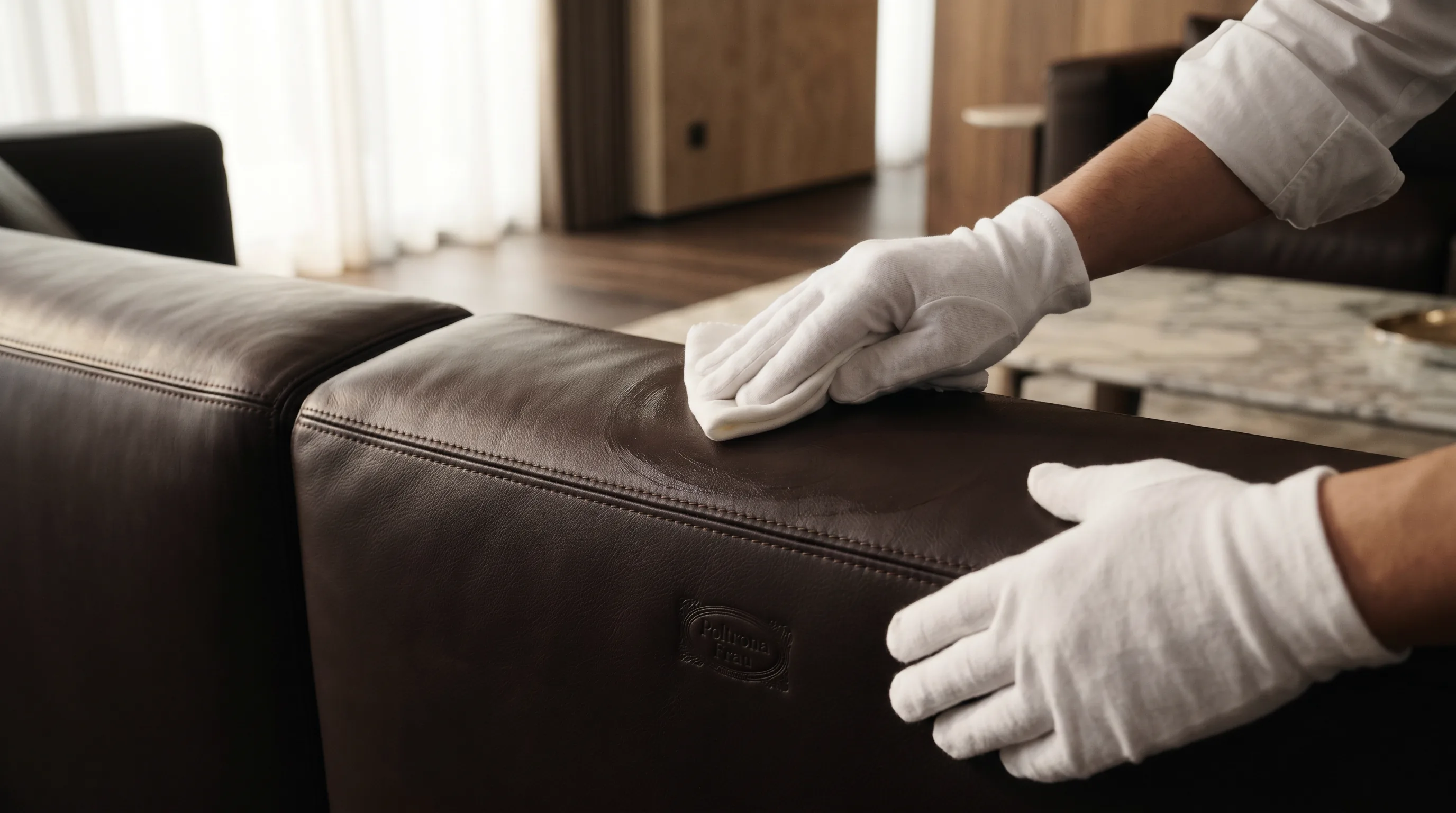
Photographed in studio · IndiaStain identification first, reagent second, application third, re-seal fourth - never the other way round.
Learn MoreIdentify the stain family - tannin, ink, lipid, photo-reactive, protein, dye-transfer. Substrate test on a hidden panel to confirm aniline, semi-aniline, pigmented or bonded leather, and pH tolerance.
 01.
01.
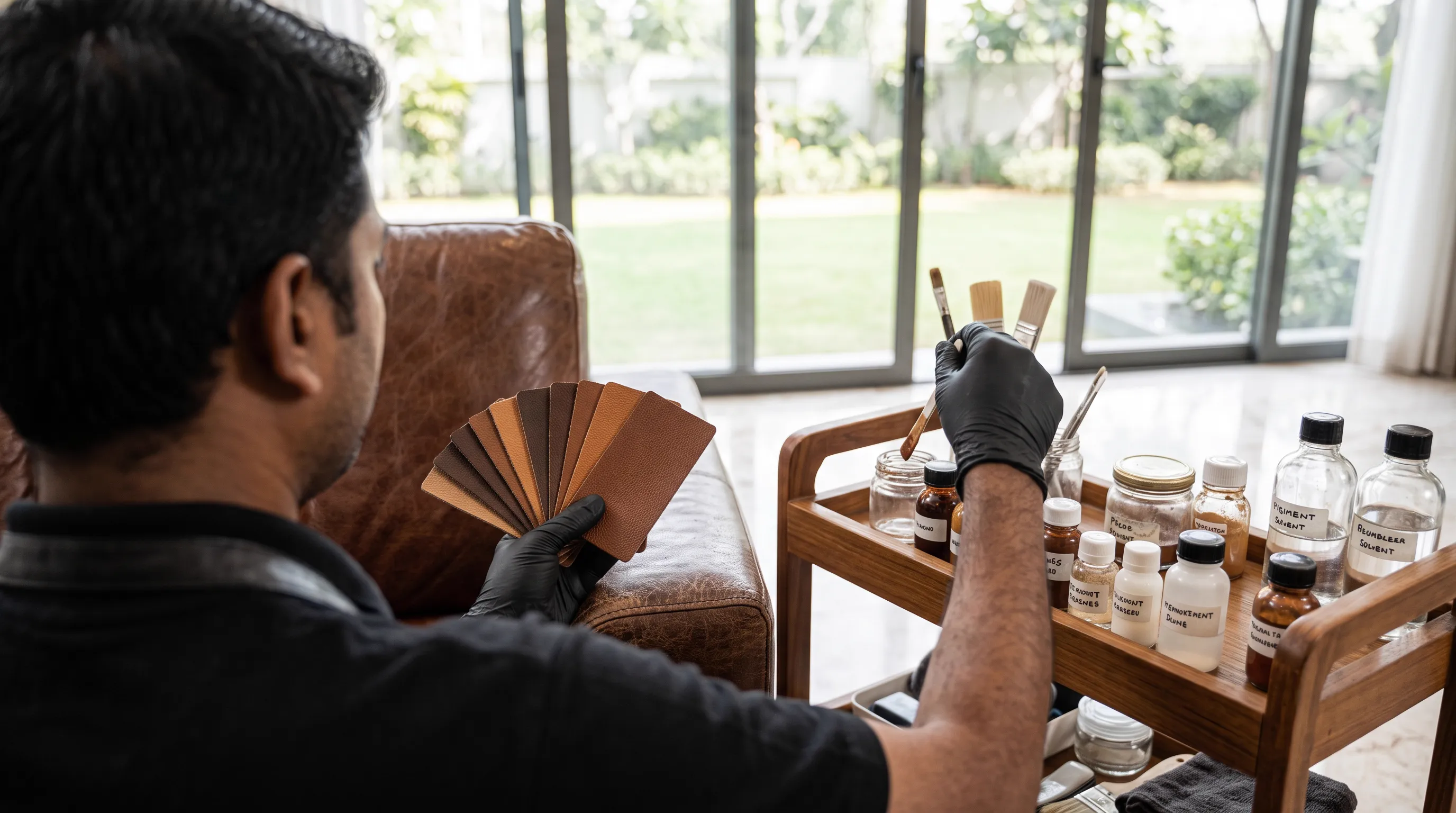
Pick the matching reagent from our 30-protocol library, mixed at the correct pH window for the substrate. Buffer added where the stain has aged or oxidised.
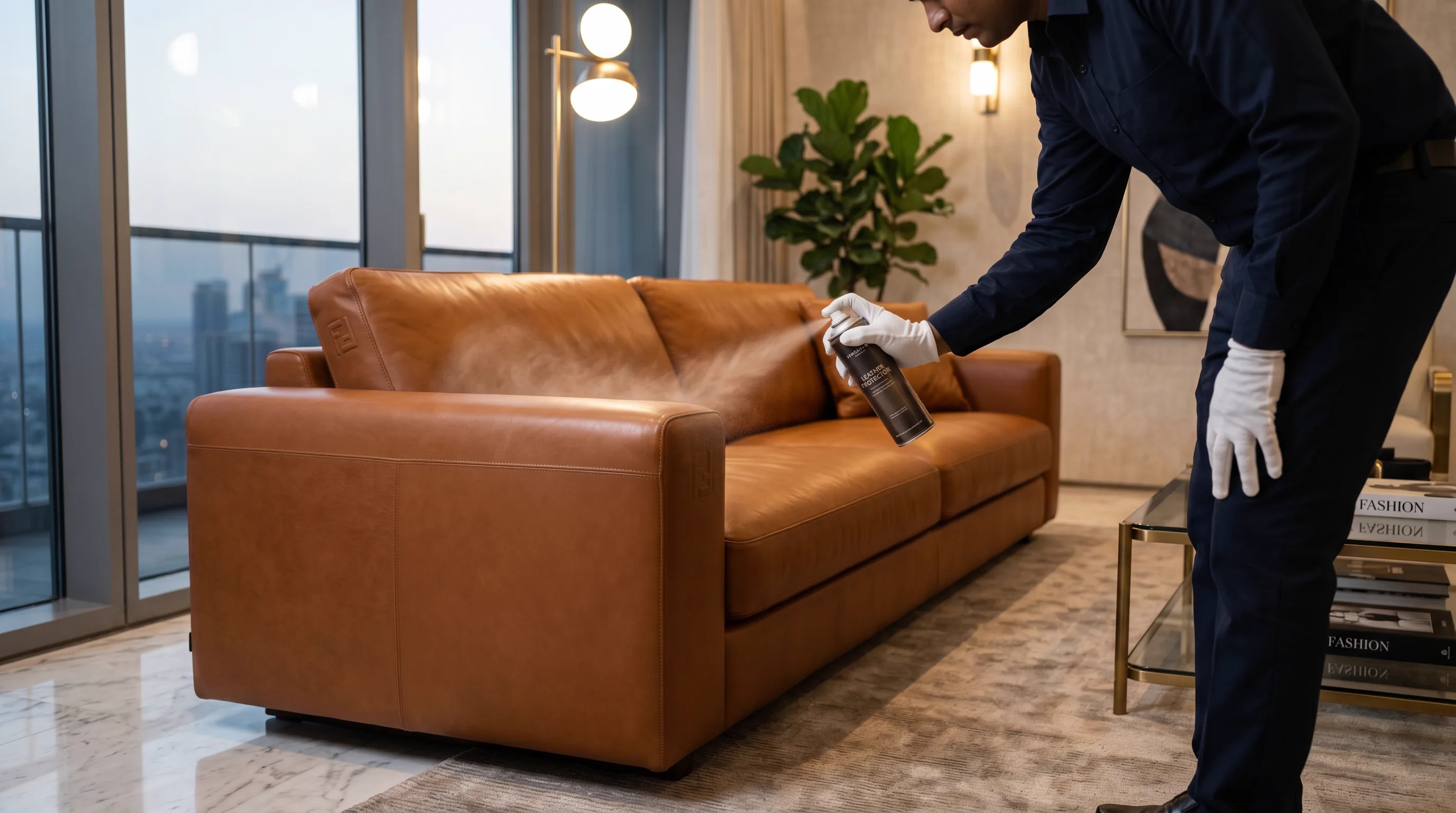 02.
02.
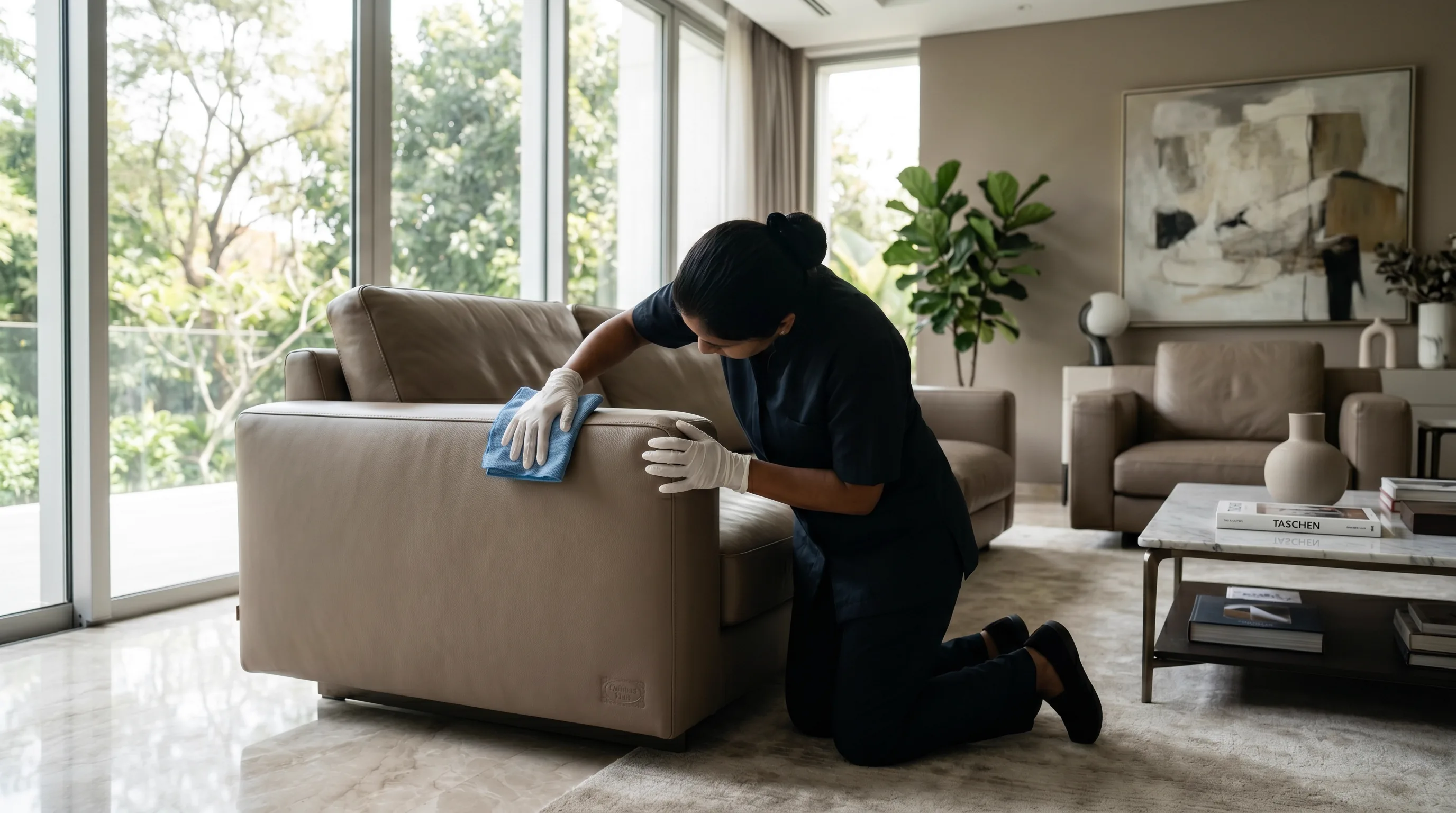
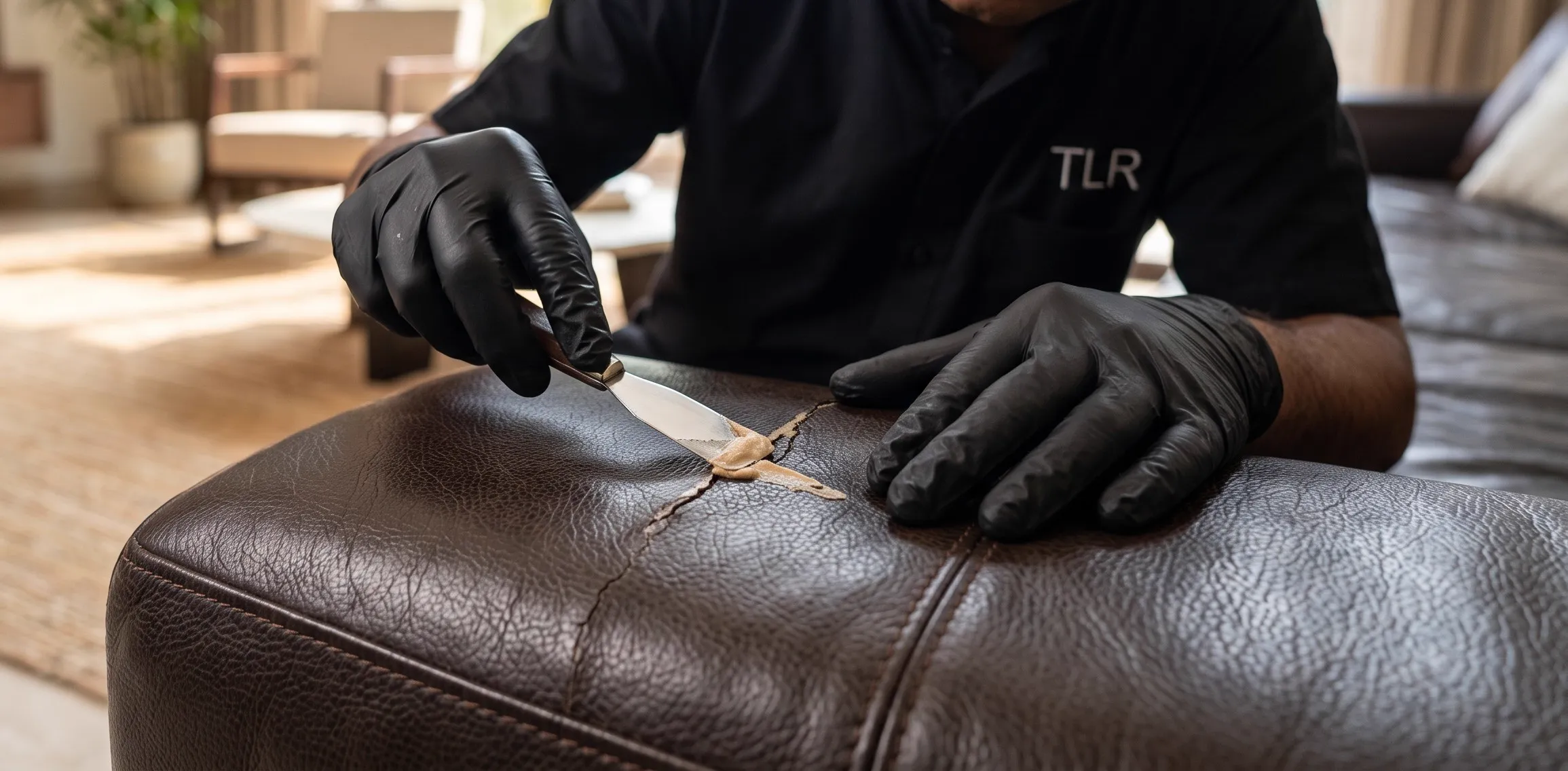
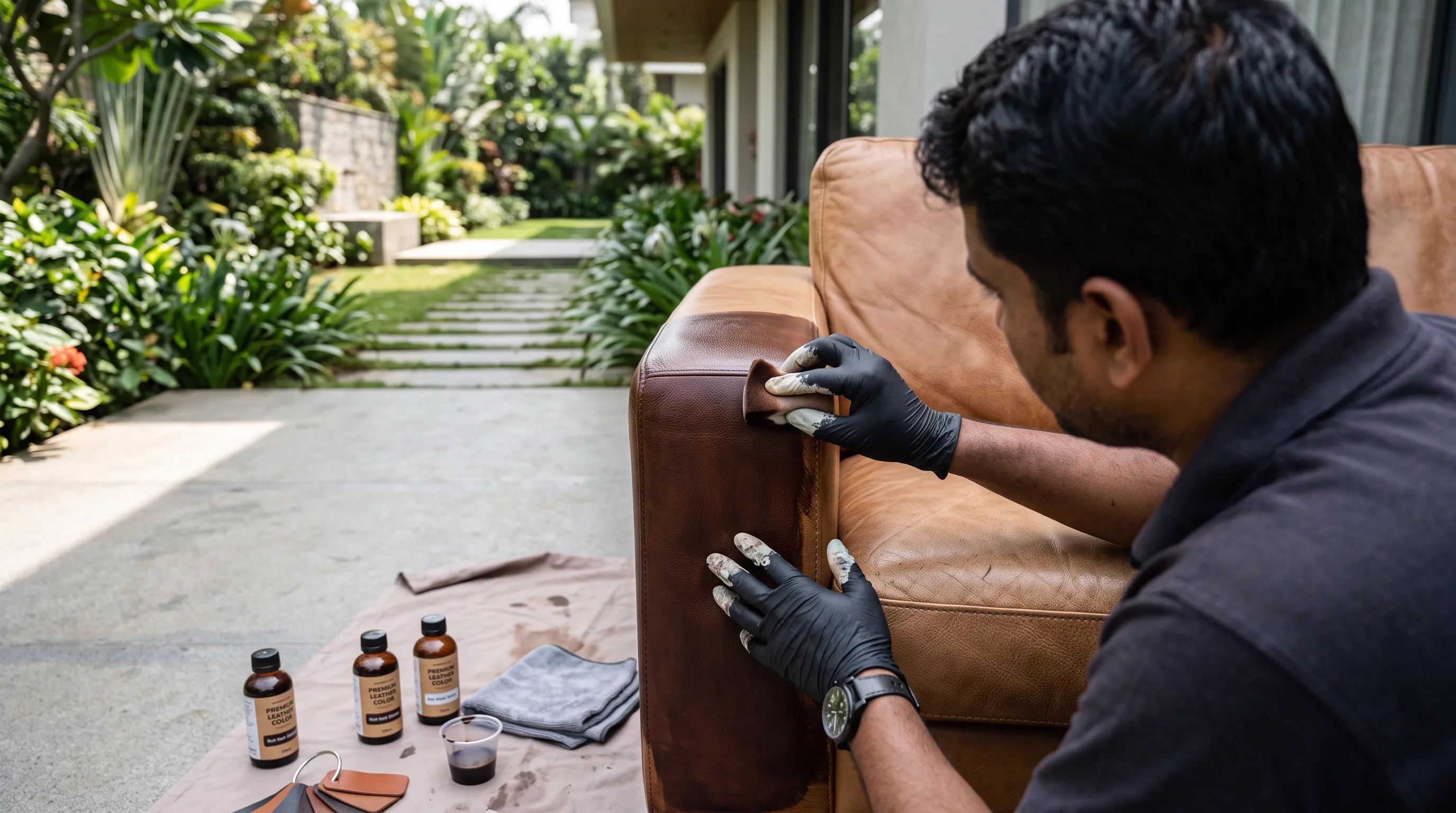
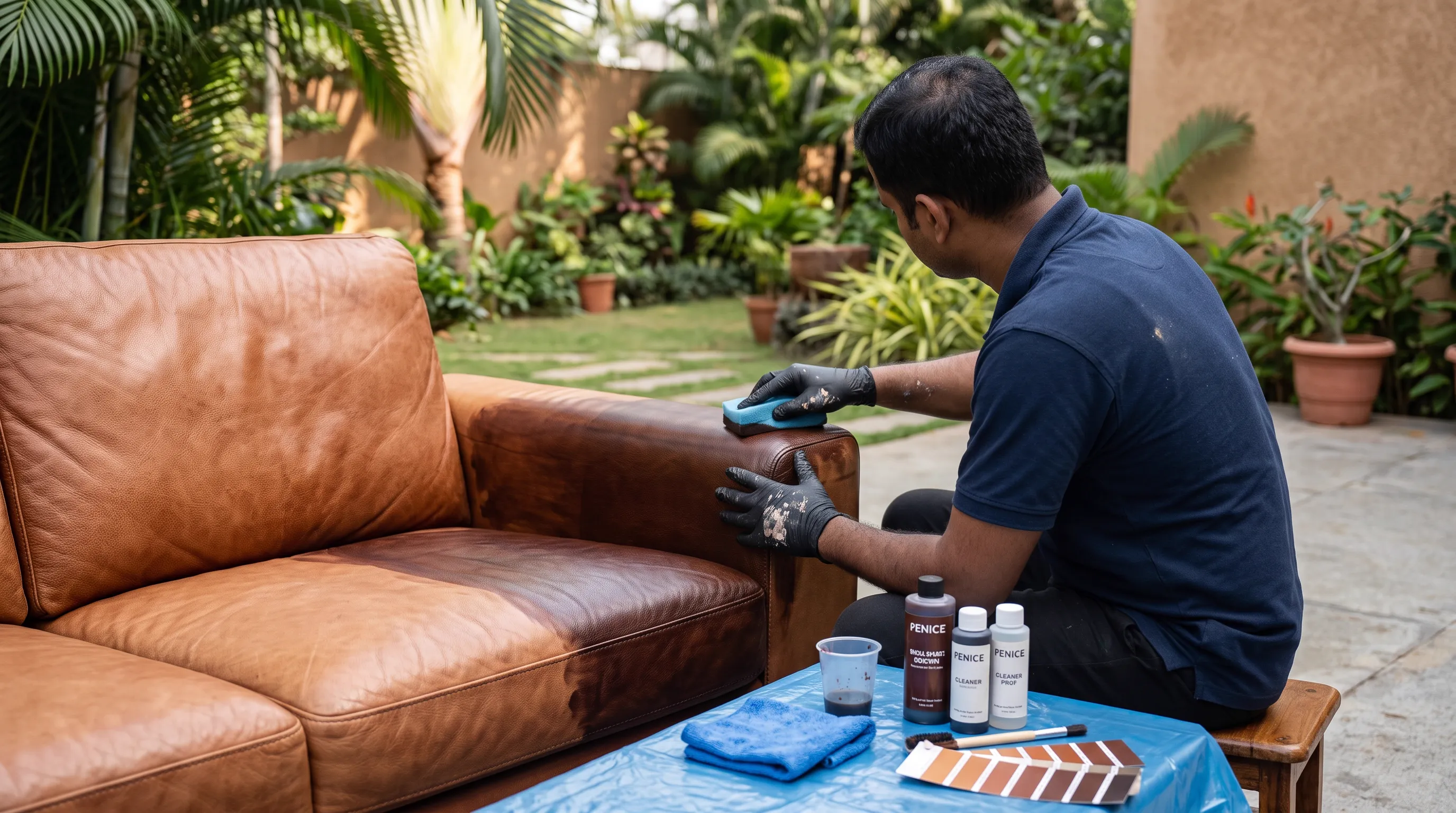
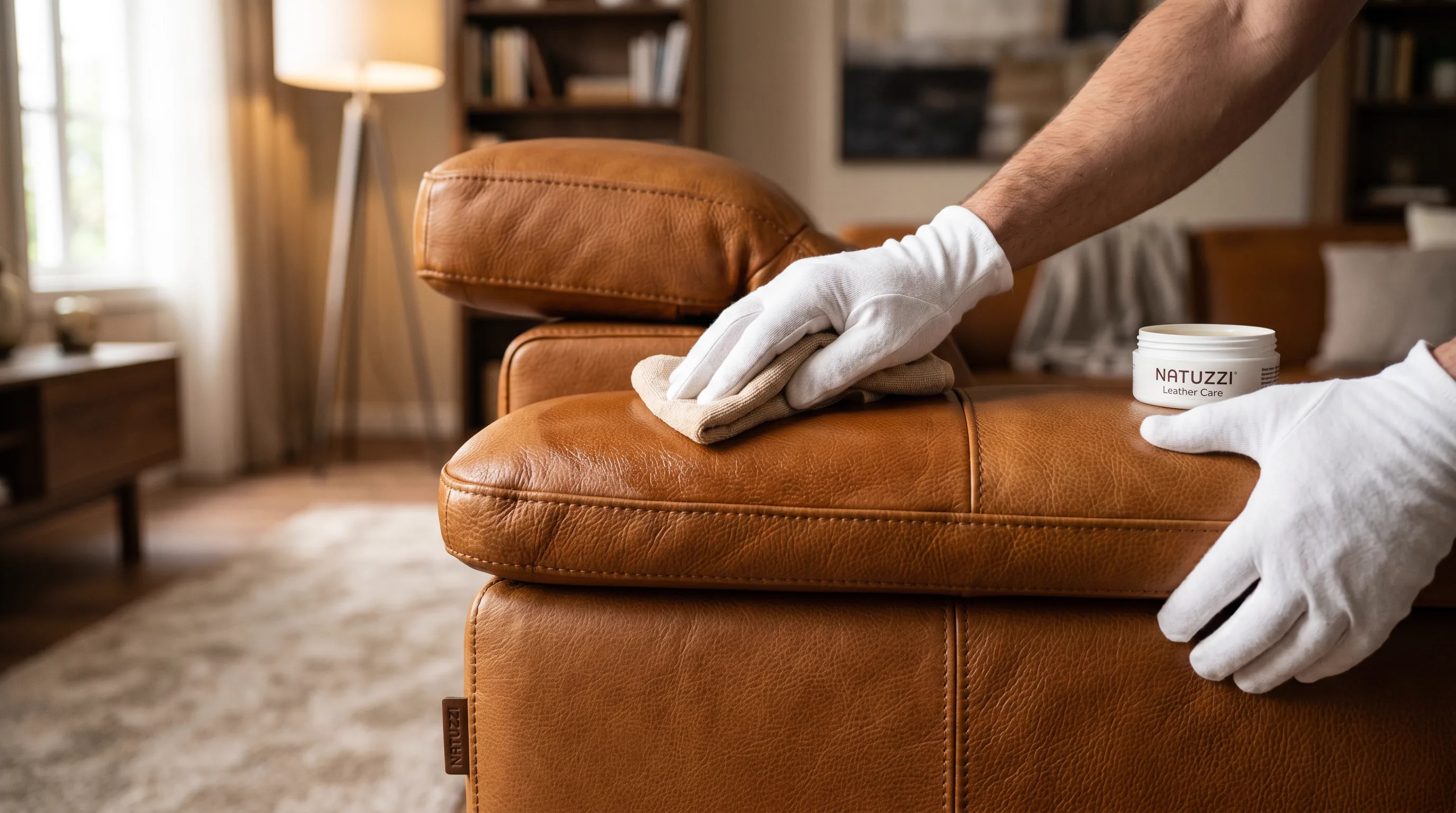
Reagent applied with feather strokes from the outside in to prevent halo bloom. Dwell time controlled by stopwatch. Lifted with a damp microfibre, never scrubbed.
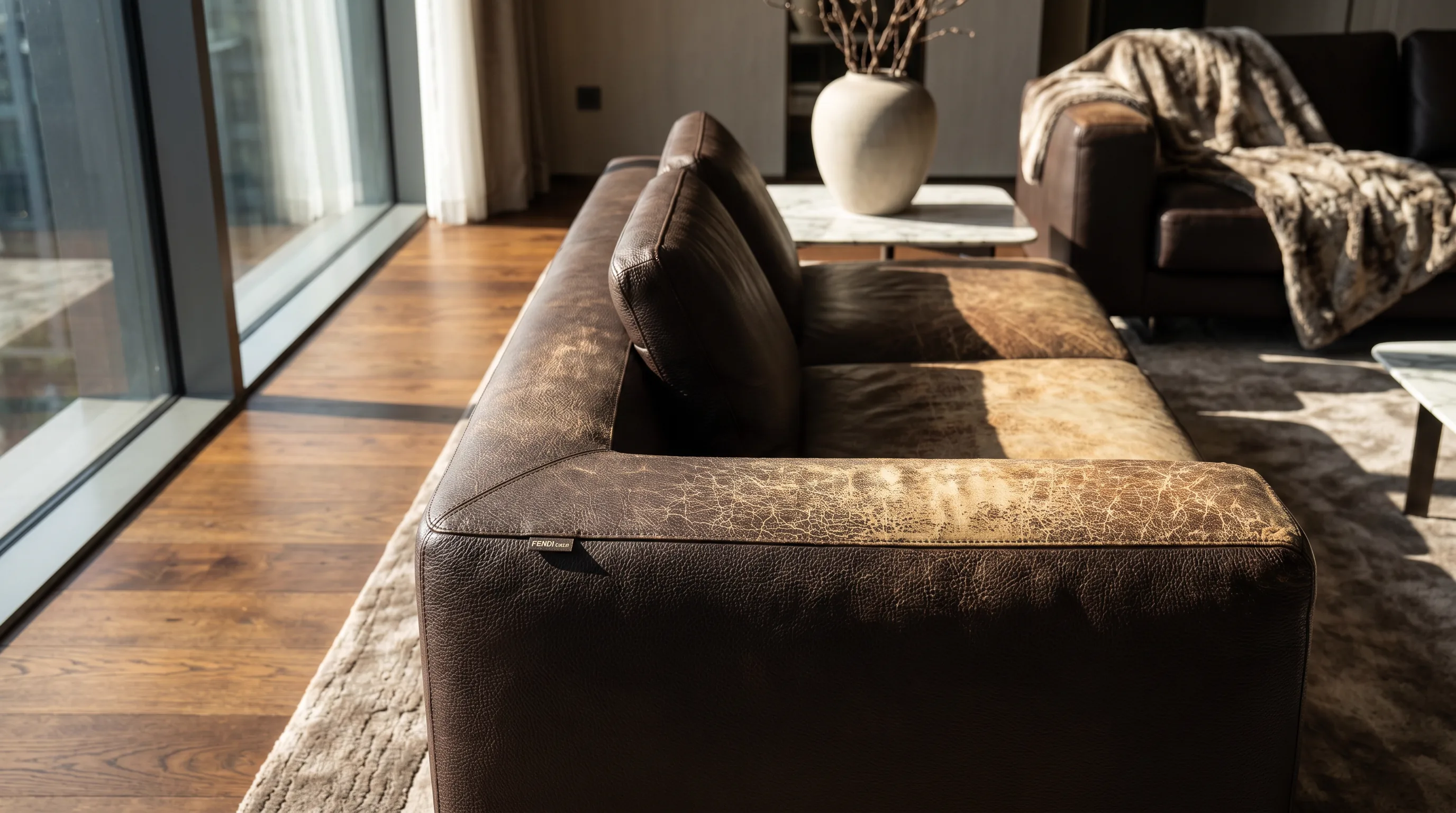 03.
03.
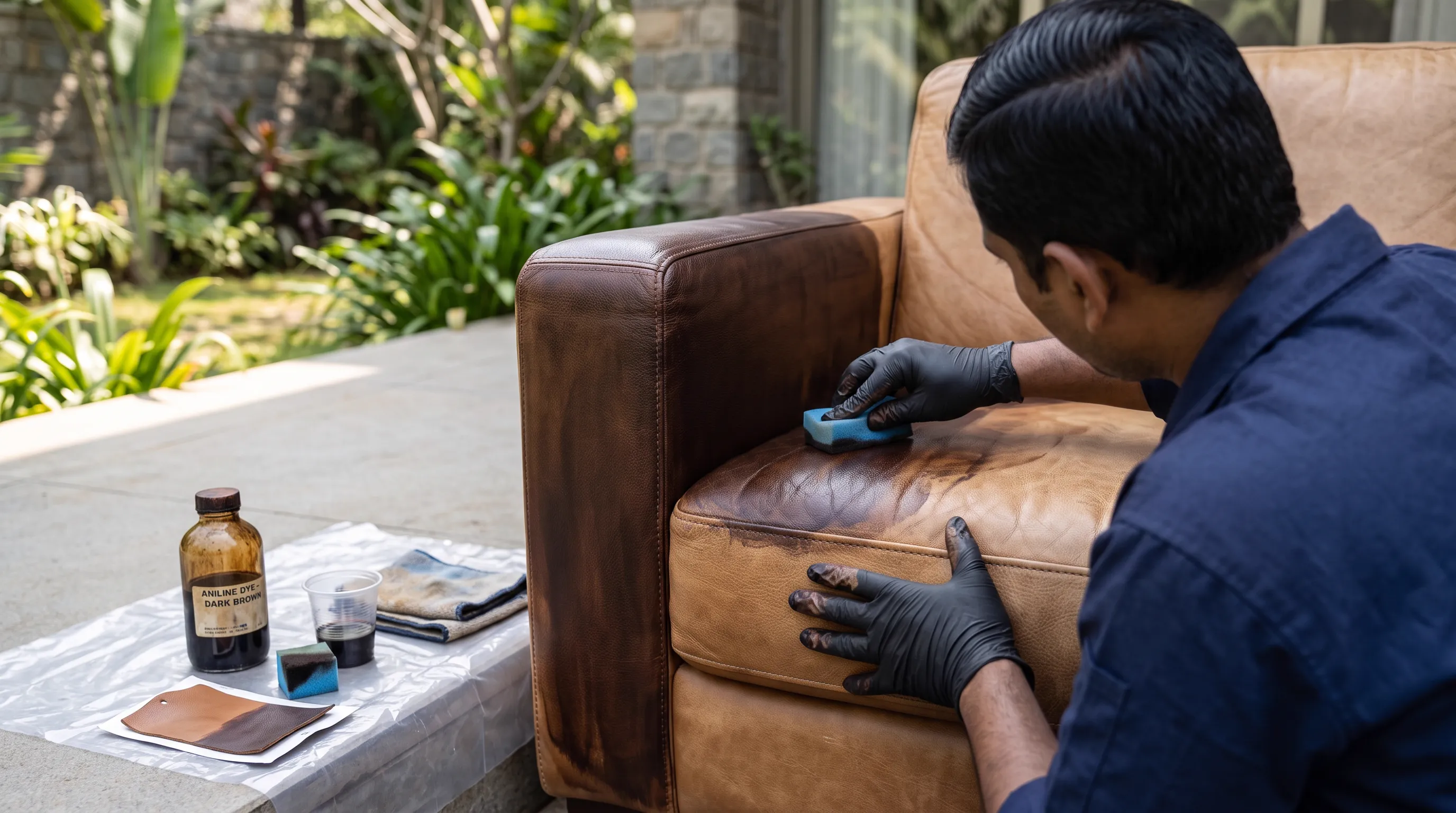
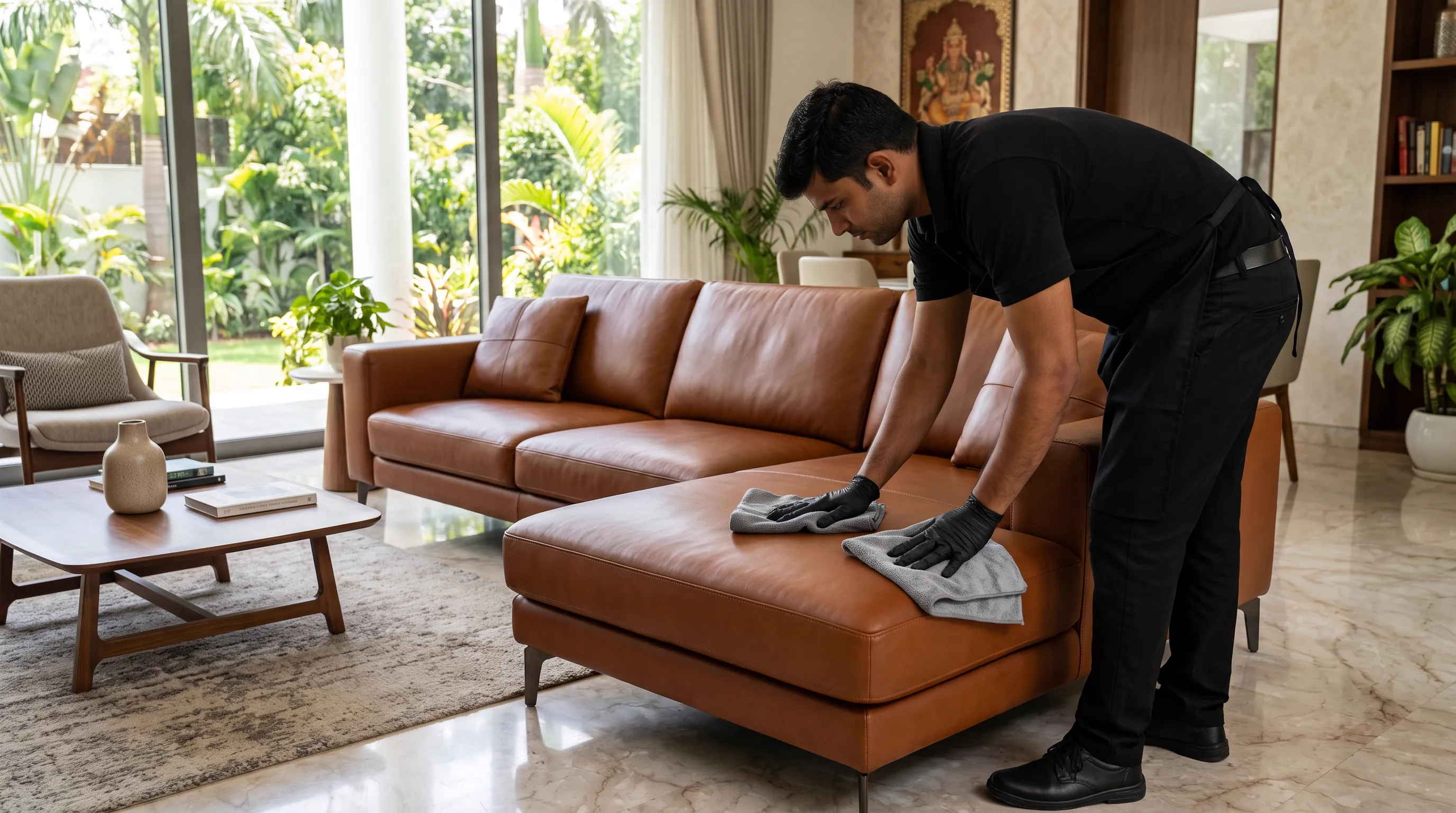
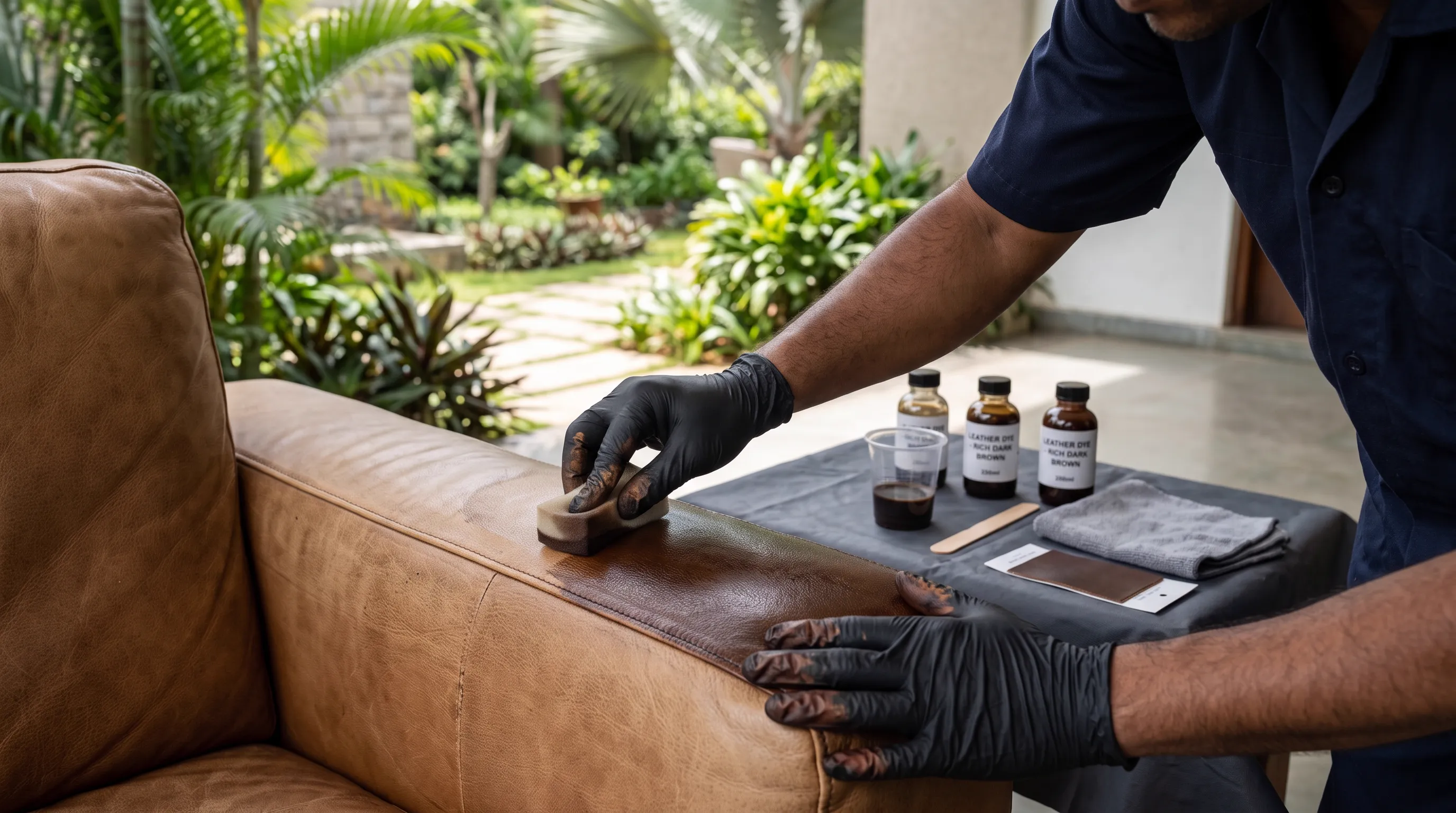
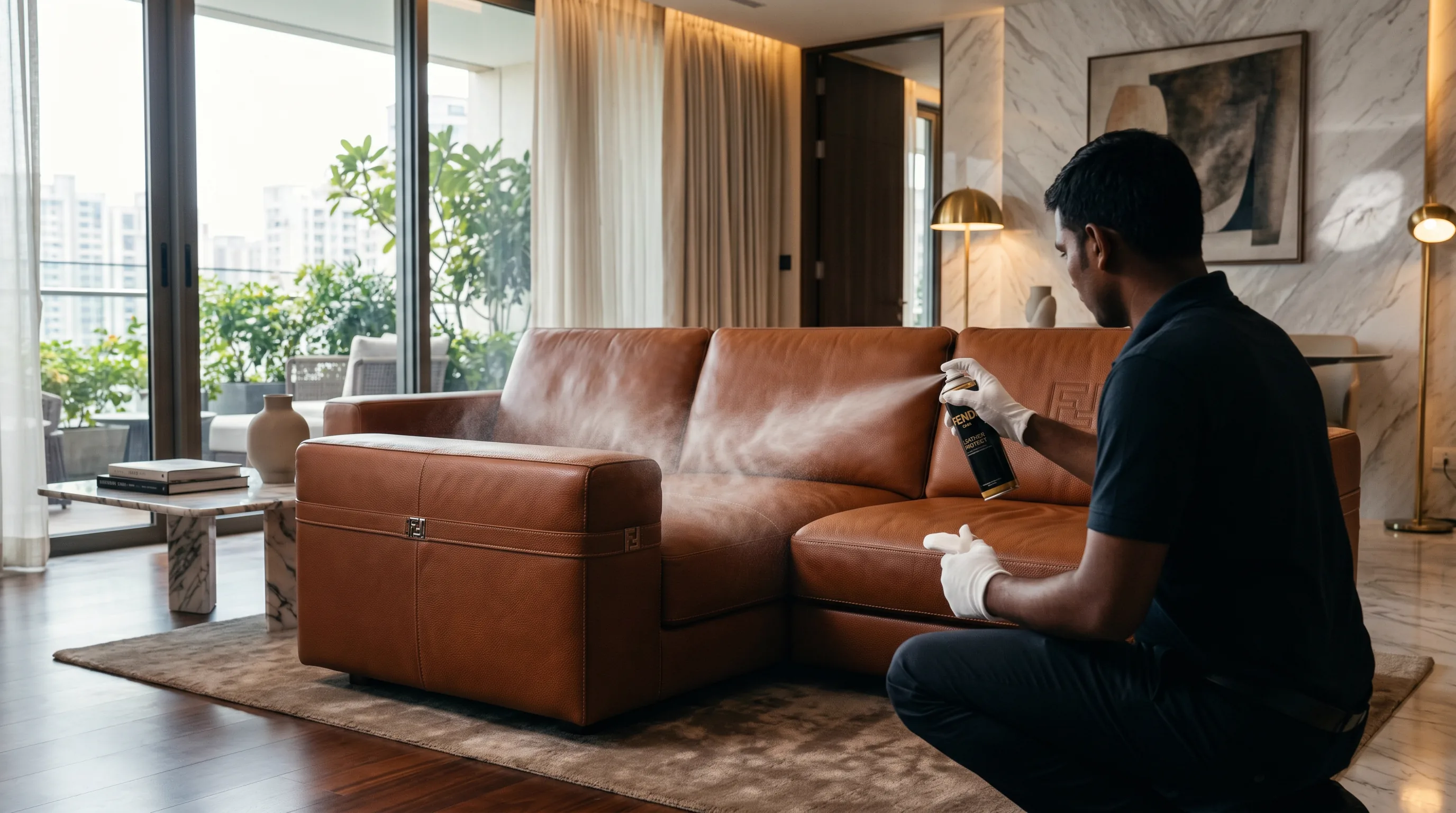
UV-stable flexible topcoat re-applied to the lifted zone, feathered into adjacent panels. Aniline conditioner massaged across the panel so the lifted area looks like the rest of the sofa.
 04.
04.
Most leather stain DIY guides on the internet are wrong, dangerous, or both. We work from a 30-protocol library built over 12 years - the right reagent at the right pH for the right stain, every time.
Learn morePolyphenol-based stains lifted with non-acidic chelating agents at pH 5.5-6.5. Vinegar (a common DIY remedy) actually crystallises tannin into leather - the stain becomes permanent. We do the opposite.
 Atelier
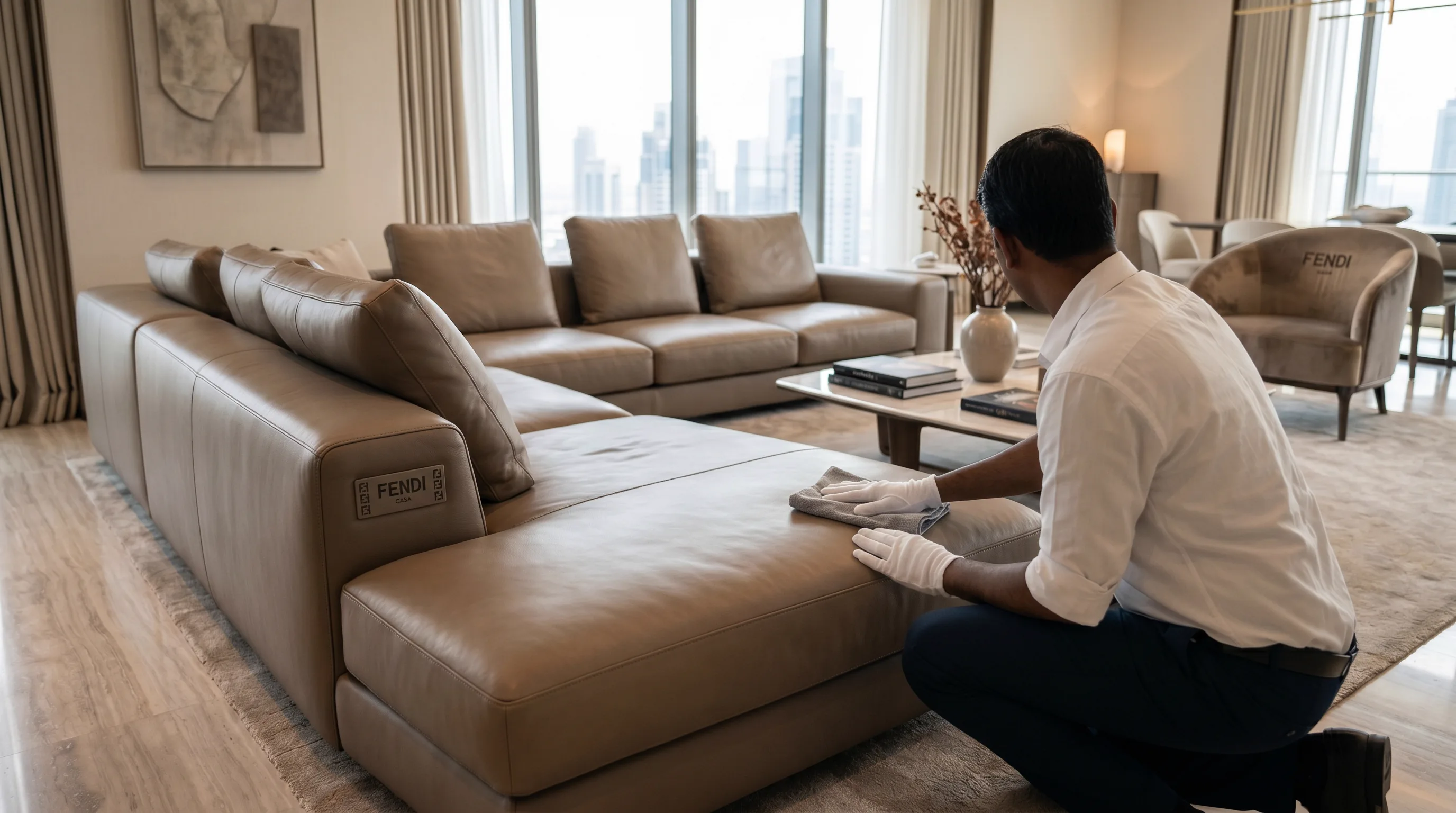
Glycol-vehicle inks lifted with isopropyl-based feather passes. Aniline leathers need a special low-aggression formula because the dye system is integrated, not surface-applied. We test and grade before any reagent touches the panel.
Non-polar oil contamination is what darkens leather progressively over weeks. Soap will not lift it - it needs a powdered leather-safe absorbent followed by a leather-graded degreaser. We treat the absorbed oil, not the surface oil.
 On-Site,
Turmeric (curcumin) is photo-reactive - it lifts with controlled UV exposure plus a reductive bleach buffered to leather pH. Most cleaners brighten the rest of the panel and leave the stain. We do the inverse: the stain lifts, the panel stays.
Protein stains denature with heat - never use hot water. We use cool-water enzyme protocols at pH 7.5-8 to break protein bonds without denaturing them into the leather fibre.
The blue cast on light-coloured leather sofas from denim contact is dye migration into the topcoat layer. Lifted with a leather-safe surface solvent, then re-sealed with our flexible topcoat to block re-occurrence.
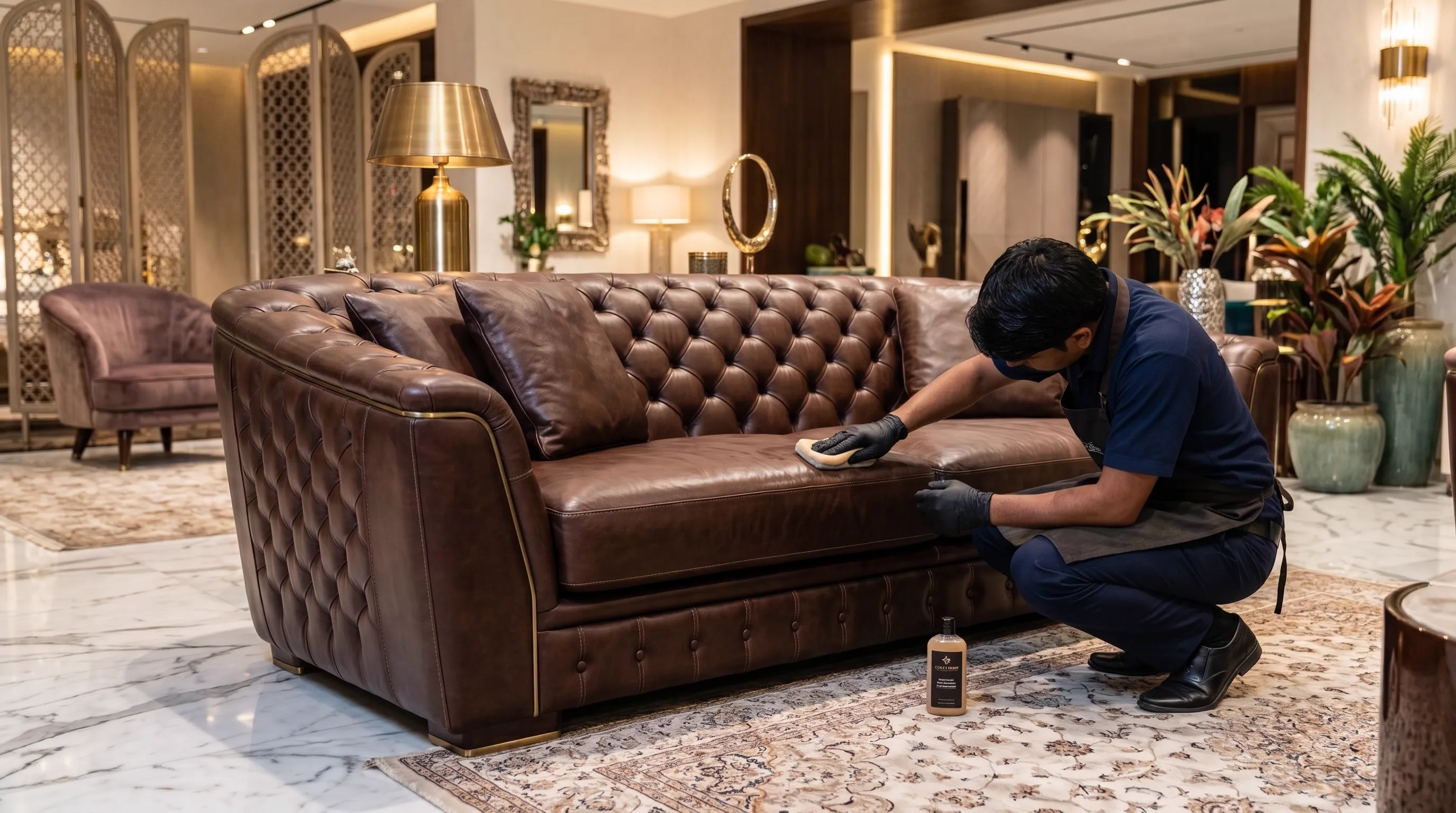
Tyson, our lead artisan, identifies a stain by colour, edge profile, and substrate response within 60 seconds. The reagent that follows is rarely the one a customer expects - and almost always the one the stain expects.
Photographed in studio · India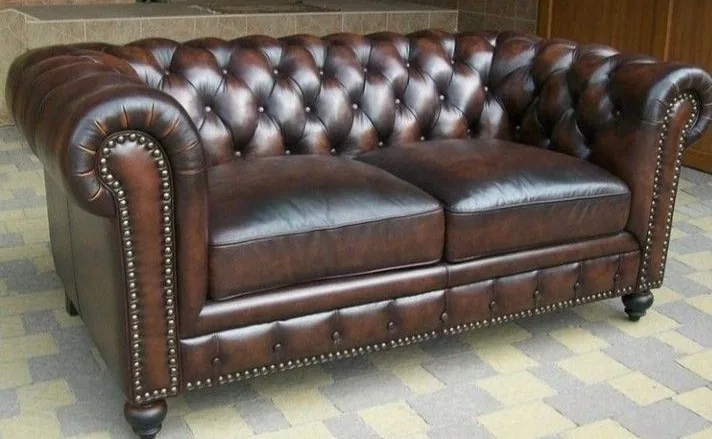
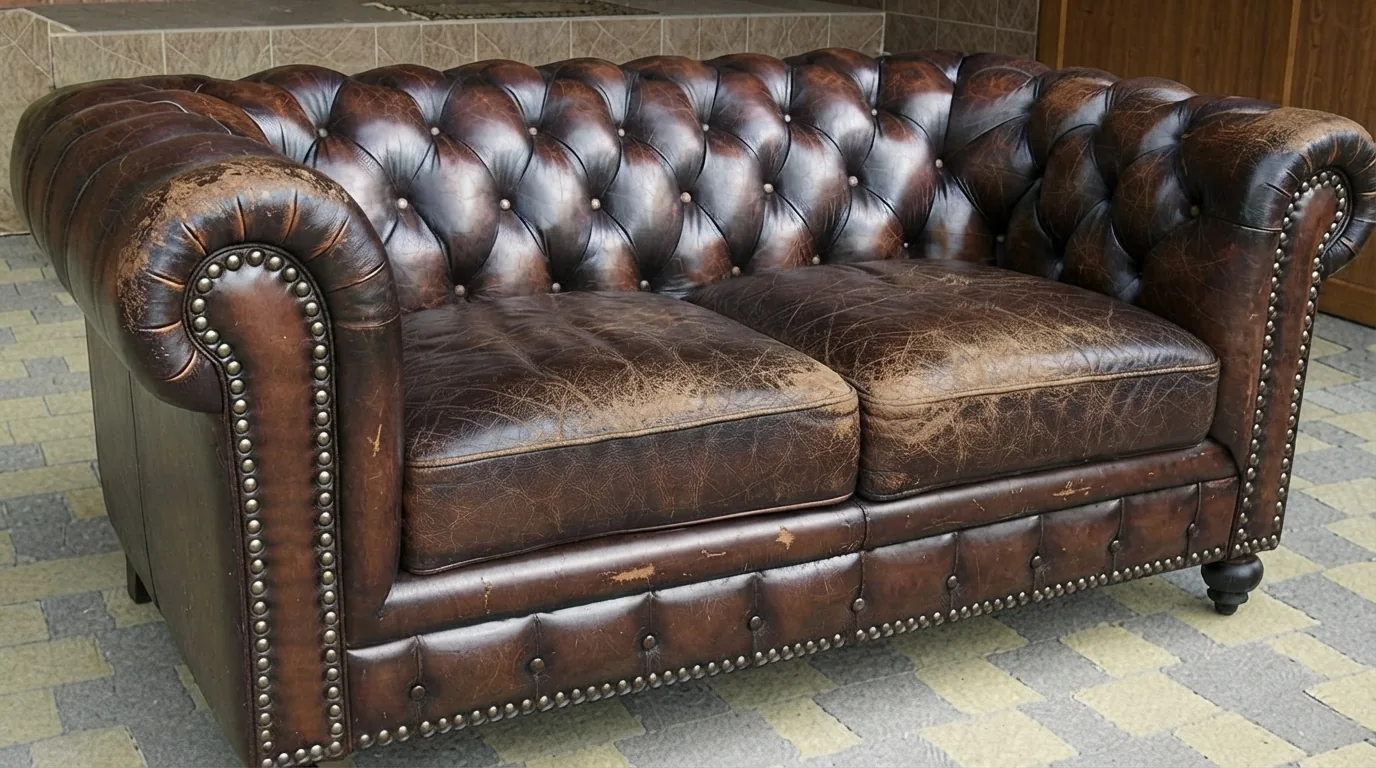
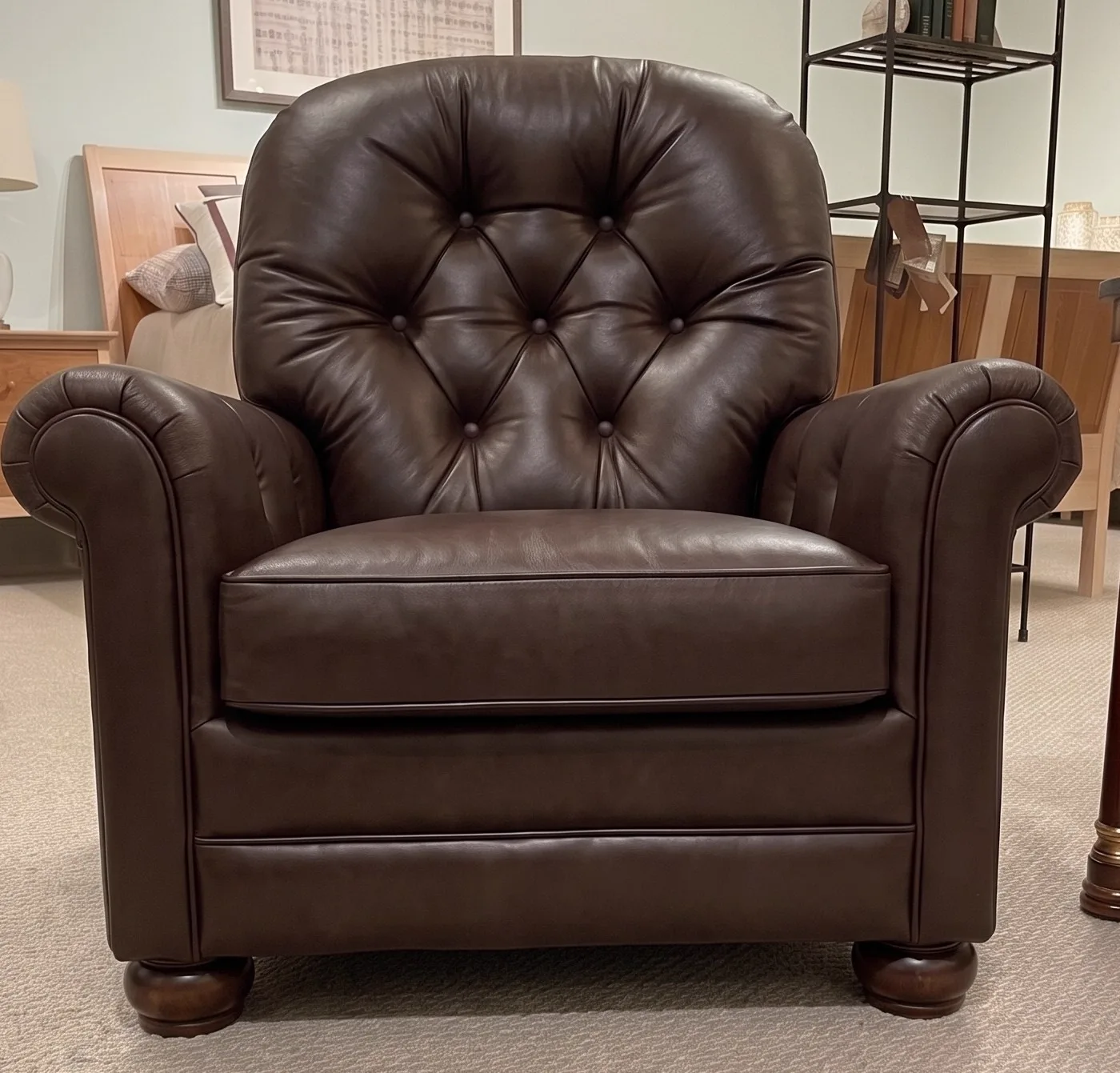
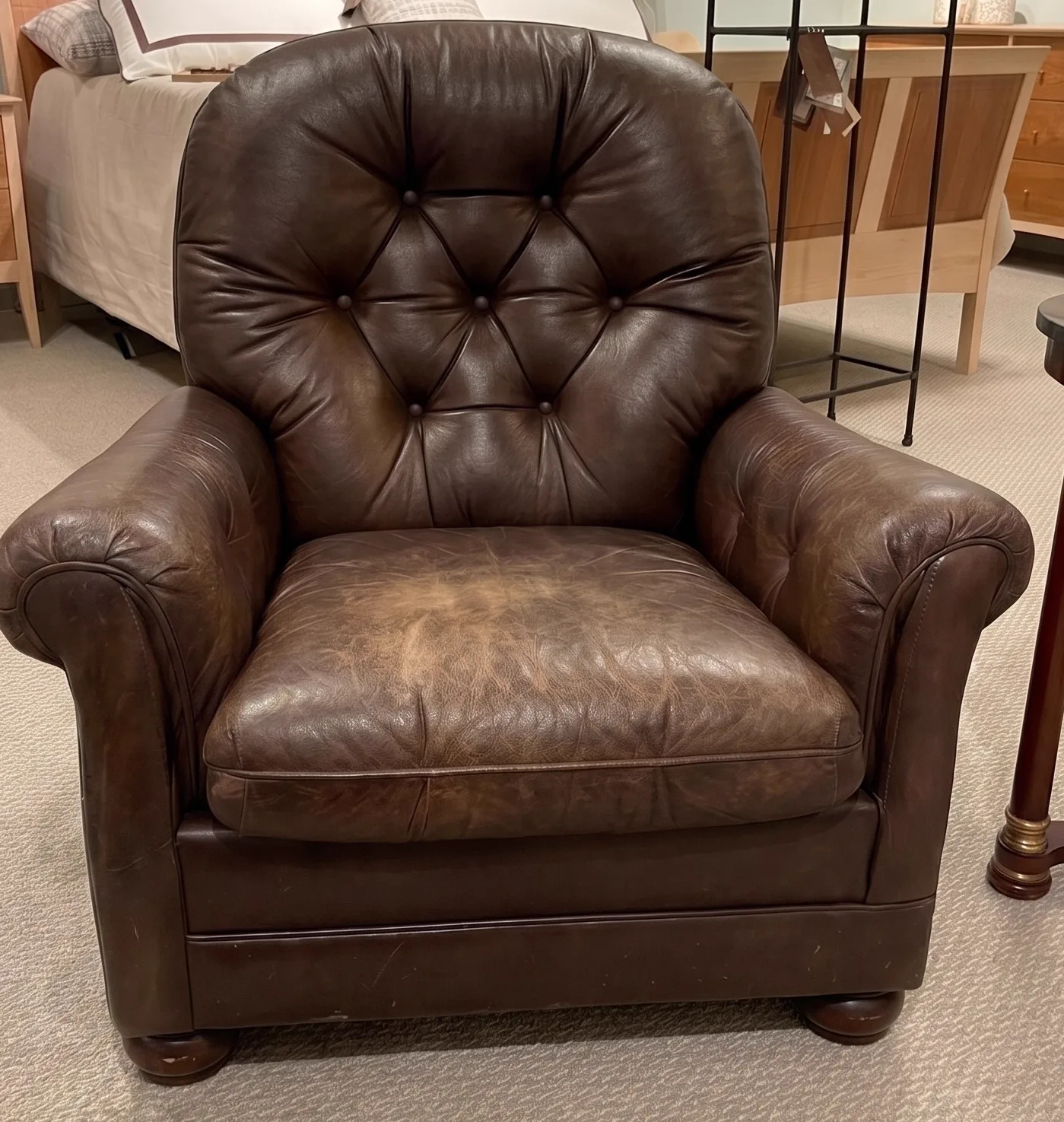
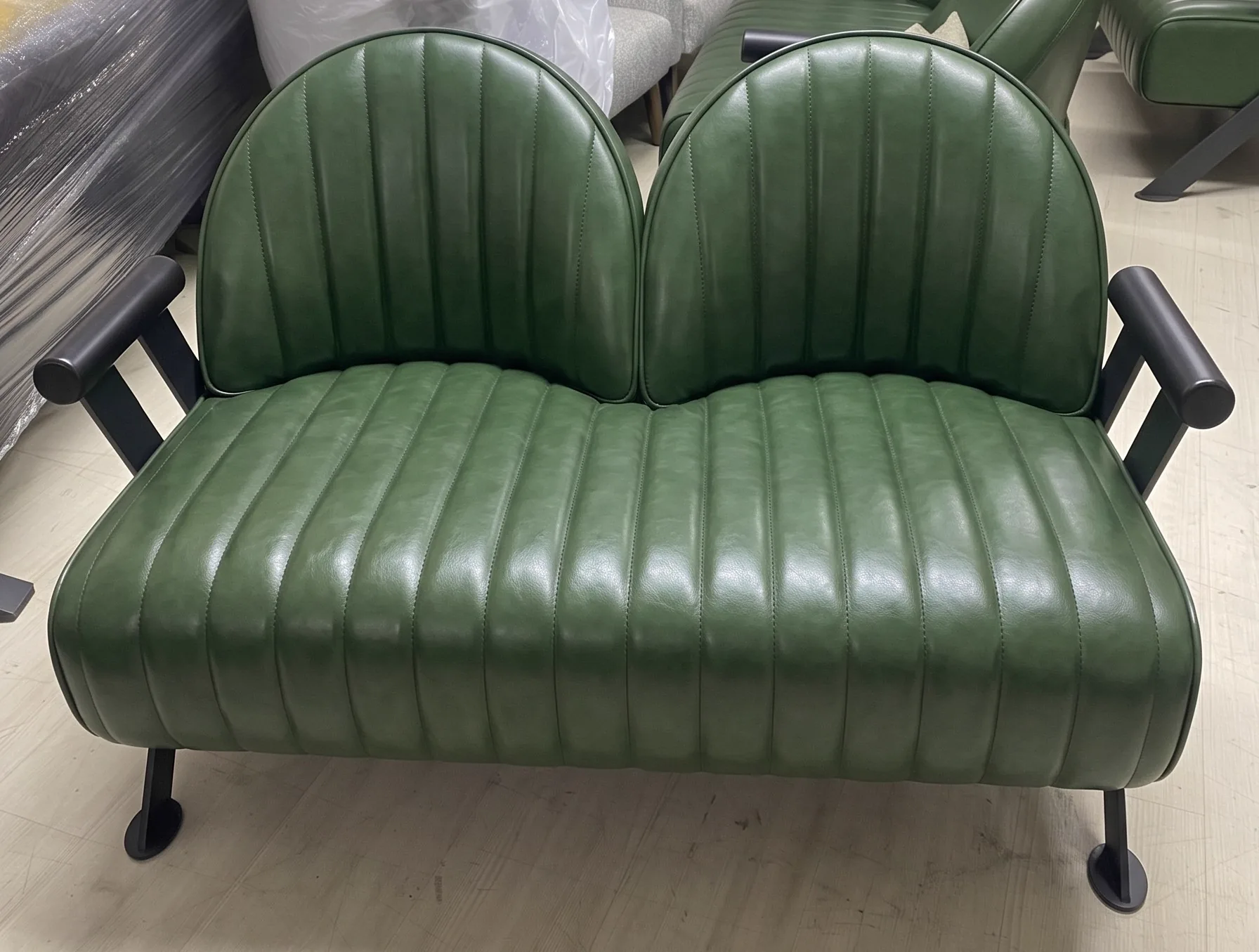
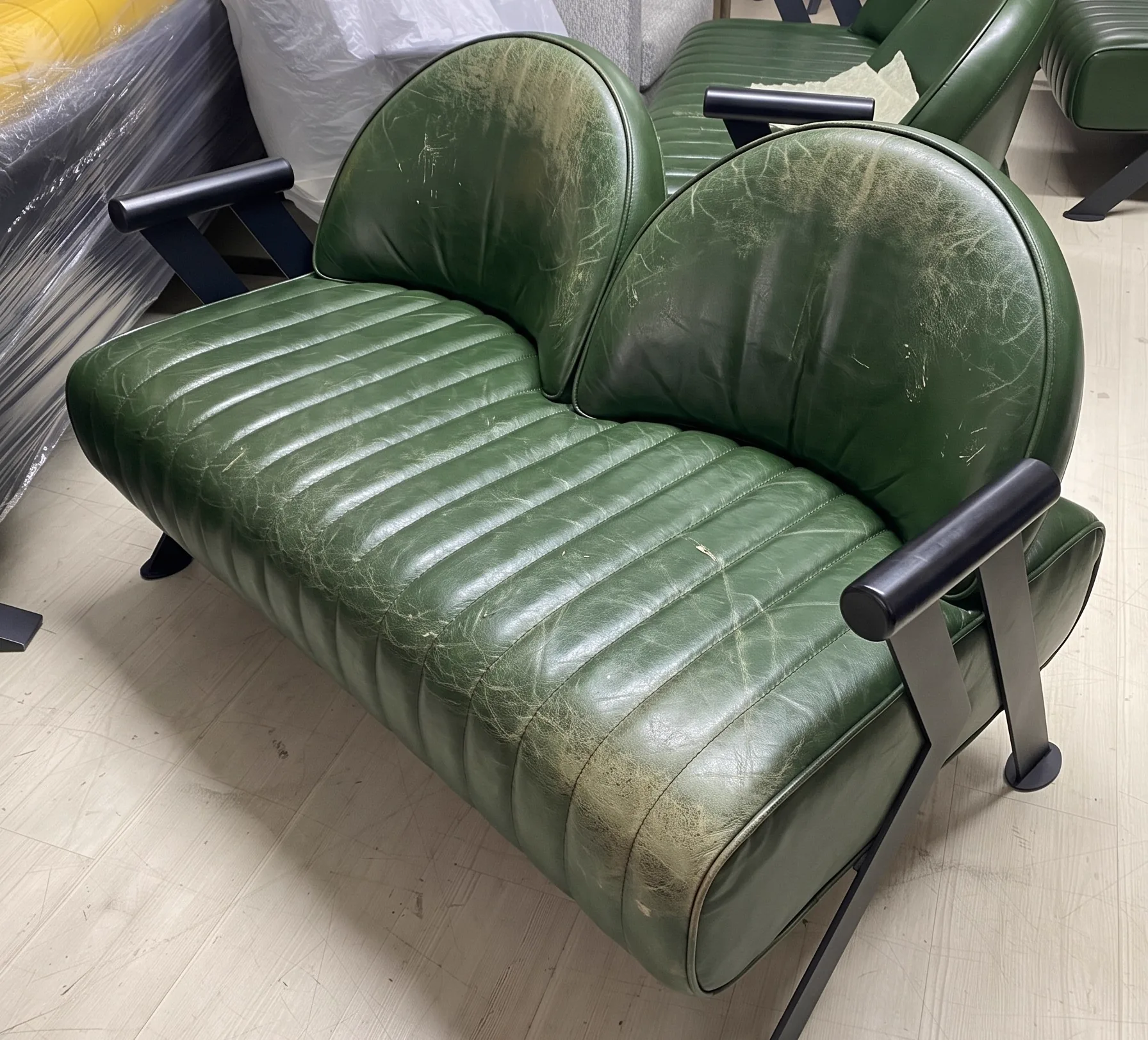
There is no universal leather cleaner. Wine is a tannin-based polyphenol stain - it needs a non-acidic chelating agent. Ballpoint ink is a glycol vehicle stain - it needs an isopropyl-based pigment lift. Oil and grease are non-polar lipid stains - they need a leather-safe degreaser, not a soap. Curry is a turmeric (curcumin) stain - it is photo-reactive and lifts with UV exposure plus a specific reductive bleach. Each chemistry is different. Each protocol is different.
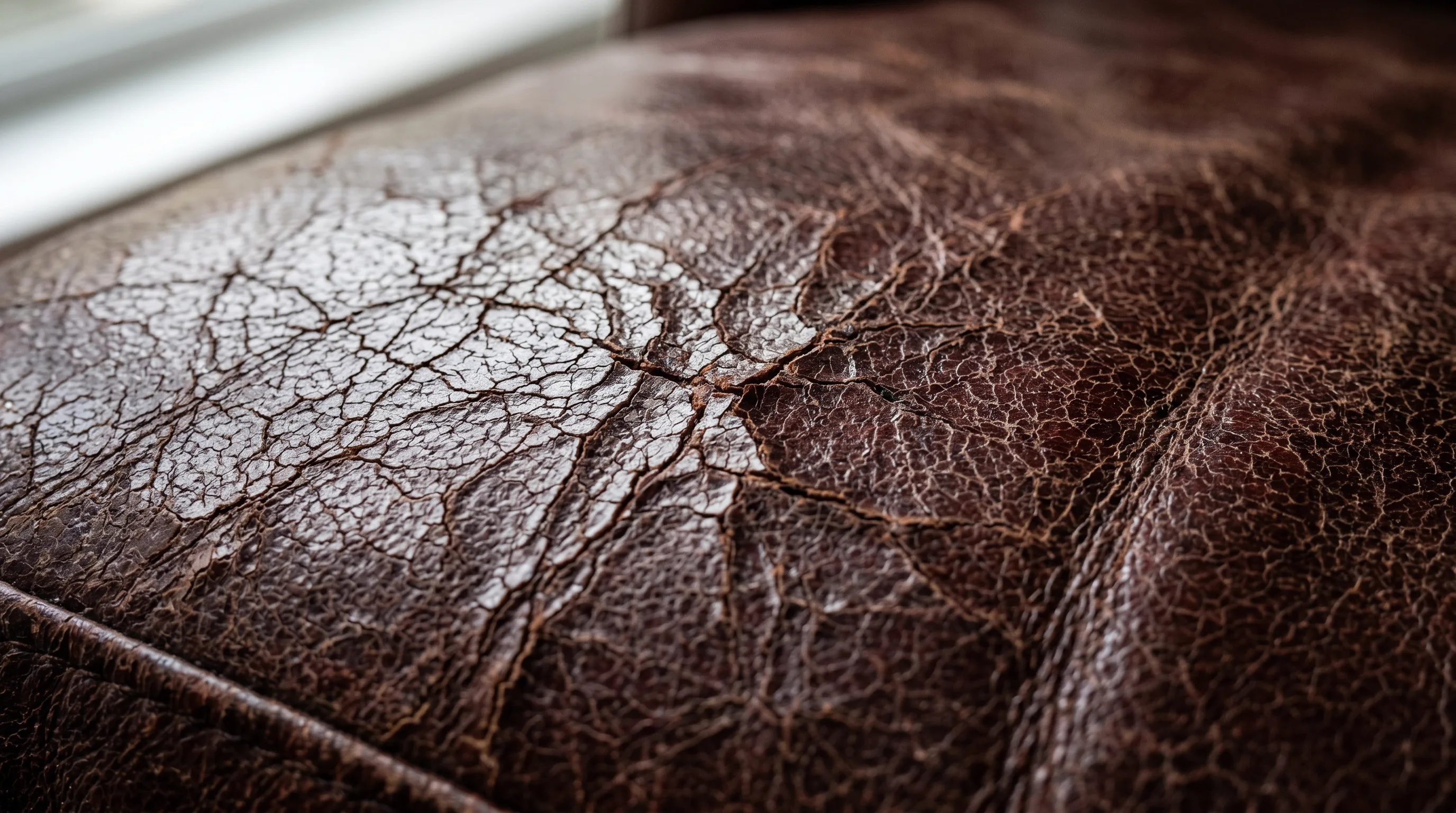
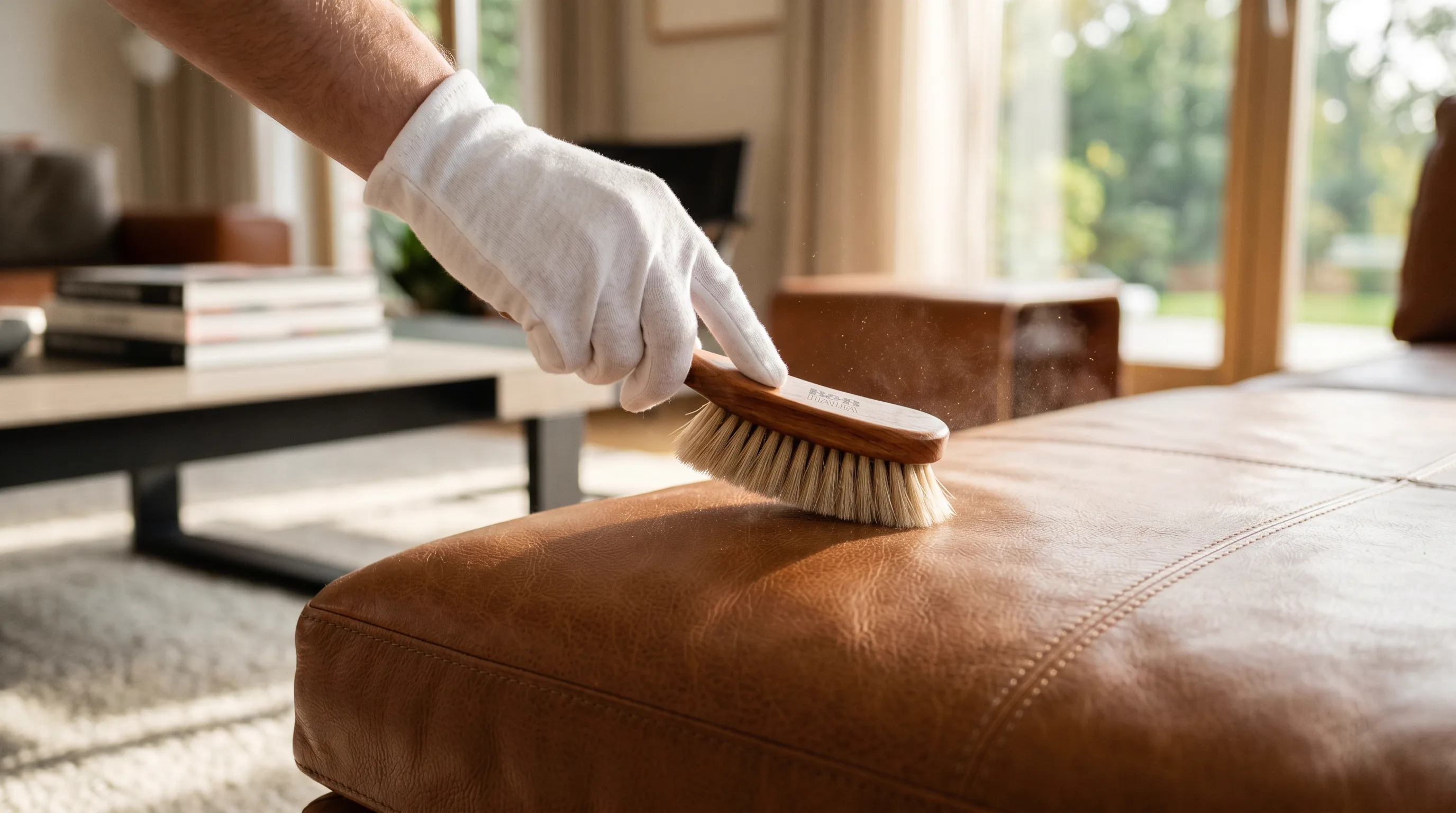
Our stain pillar service runs the diagnosis, picks the right reagent from a 30-product specialist line (water-based, leather-safe, never solvent-loaded), and finishes with a feathered topcoat re-seal so the lifted area blends back into the surrounding panel. We treat aniline, semi-aniline, pigmented, full-grain, top-grain, and bonded leathers - each requires a different pH window and different dwell time. Most stains are lifted in a single doorstep visit across India.
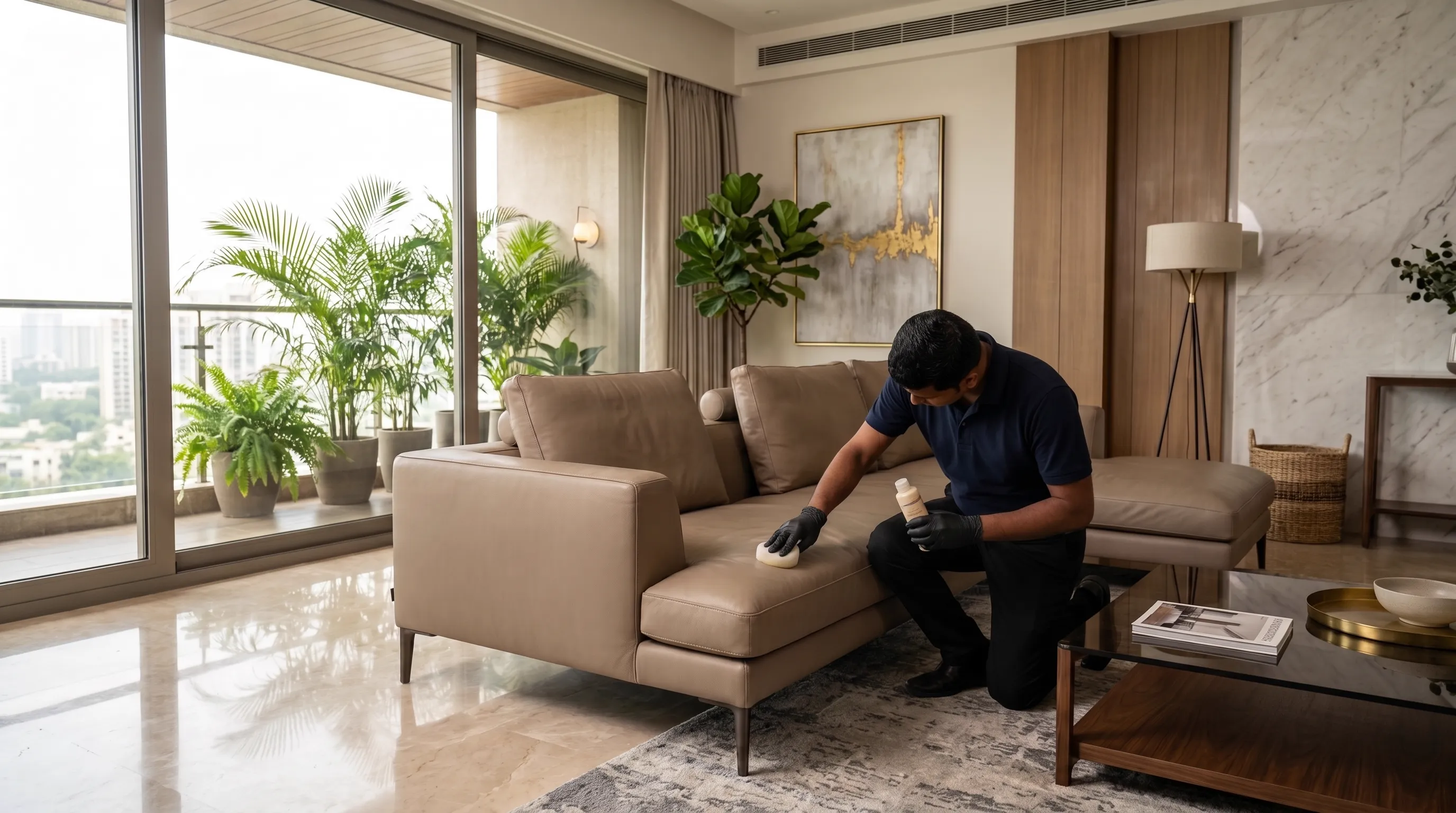
Stain pricing is per stain category and area, not per square foot of leather. Most single stains are priced under three thousand rupees - including the post-lift topcoat re-seal.
Photographed on-site · IndiaHonest answers about leather sofa stain removal across India.
Still have questions? Our leather specialists are just a call away.
Call a Specialist"My five-year-old took a sketch pen to our cream Natuzzi armchair. I tried baby wipes (mistake), then nail-polish remover (bigger mistake). They came the next morning, lifted both the ink and my chemical halo, and the chair looks new. Saved a forty-thousand armchair."
"Diwali curry on a cognac Poltrona Frau, three weeks old by the time I called. Tyson used a turmeric-specific protocol I'd never heard of - controlled UV plus a buffered bleach - and the stain lifted completely. Honest, technical, brilliant."
"Red wine on a cream B&B Italia, I panicked and used vinegar, which darkened it. They reversed the vinegar damage with a chelating agent and then lifted the wine. Wish I'd called them before reaching for the vinegar."
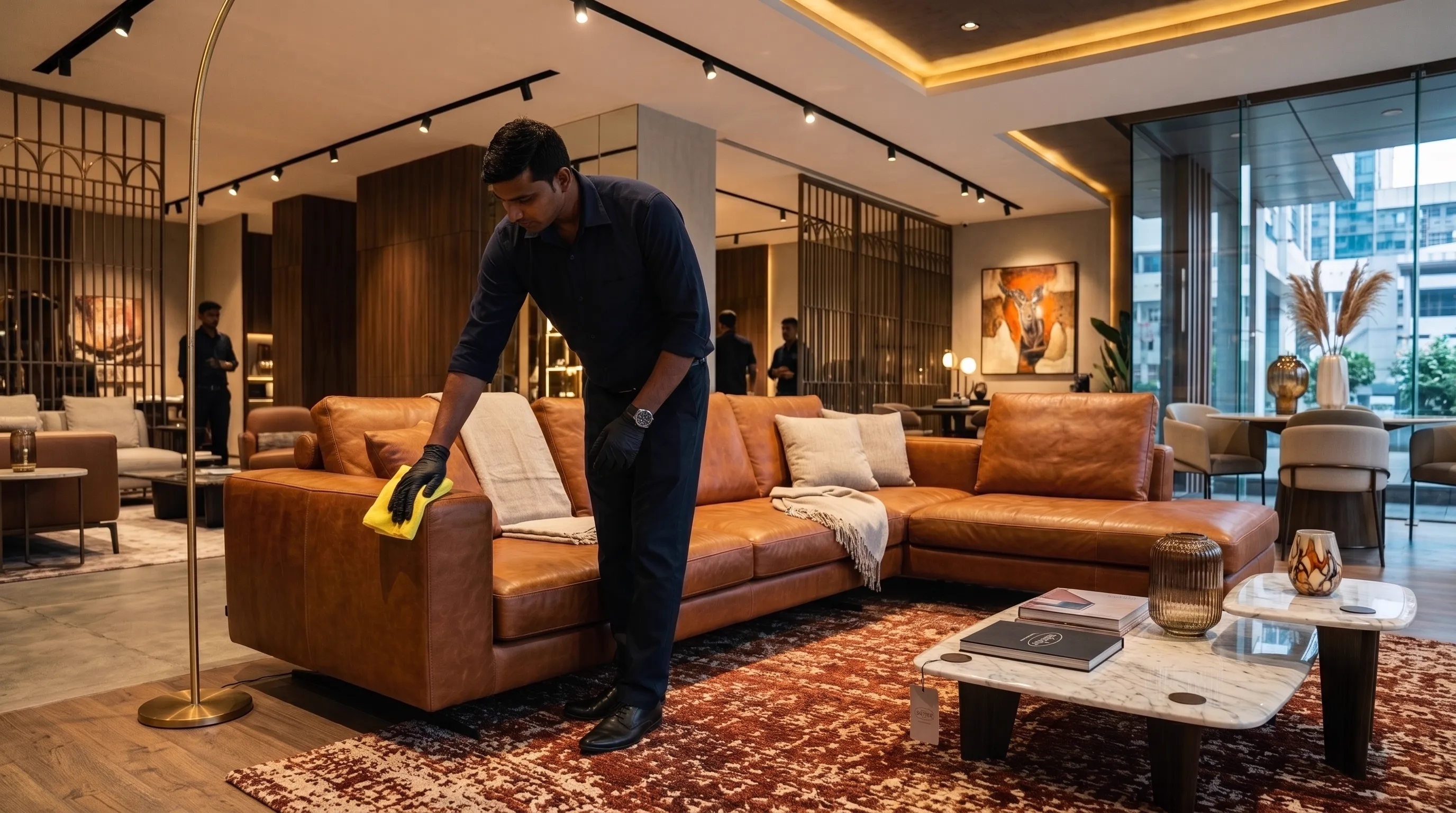
The 6% that need a second visit are usually aged stains where pigment has migrated into the dye layer. We always say so honestly at diagnosis.
Photographed on-site · IndiaFinal pricing confirmed at the free diagnosis. All plans include at-home service across India.
One stain, one panel, one visit. Stain identification and substrate test, the right reagent at the right pH, a feathered lift application, and a topcoat re-seal on the lifted zone with a 12-month spot warranty.
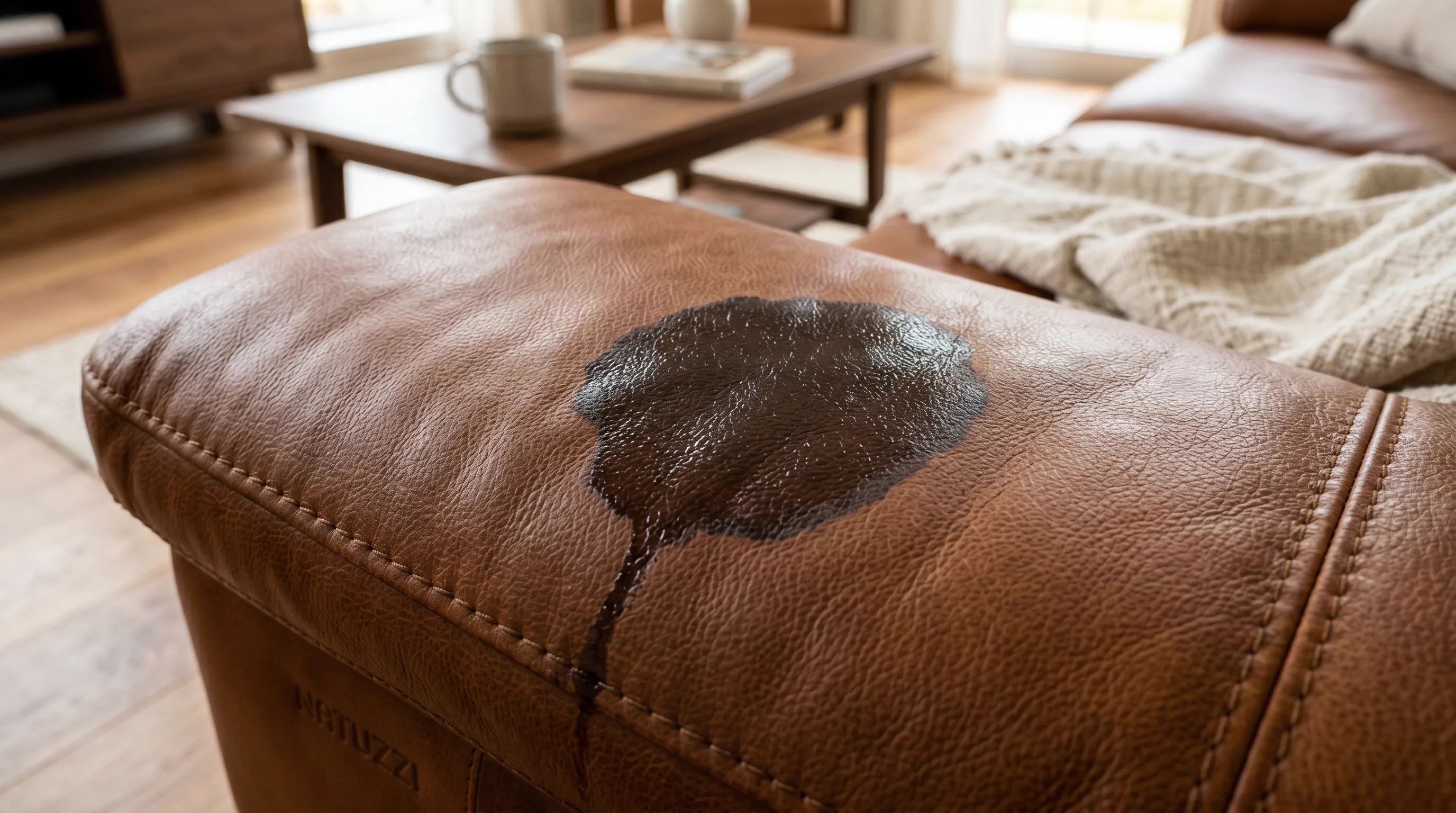
Multiple stains plus a full sofa cleaning pass. Up to 5 stain protocols across the sofa, a full pH-neutral leather cleaning pass, aniline conditioner across all panels, a UV-stable flexible topcoat over lifted zones, and a 12-month sofa warranty.
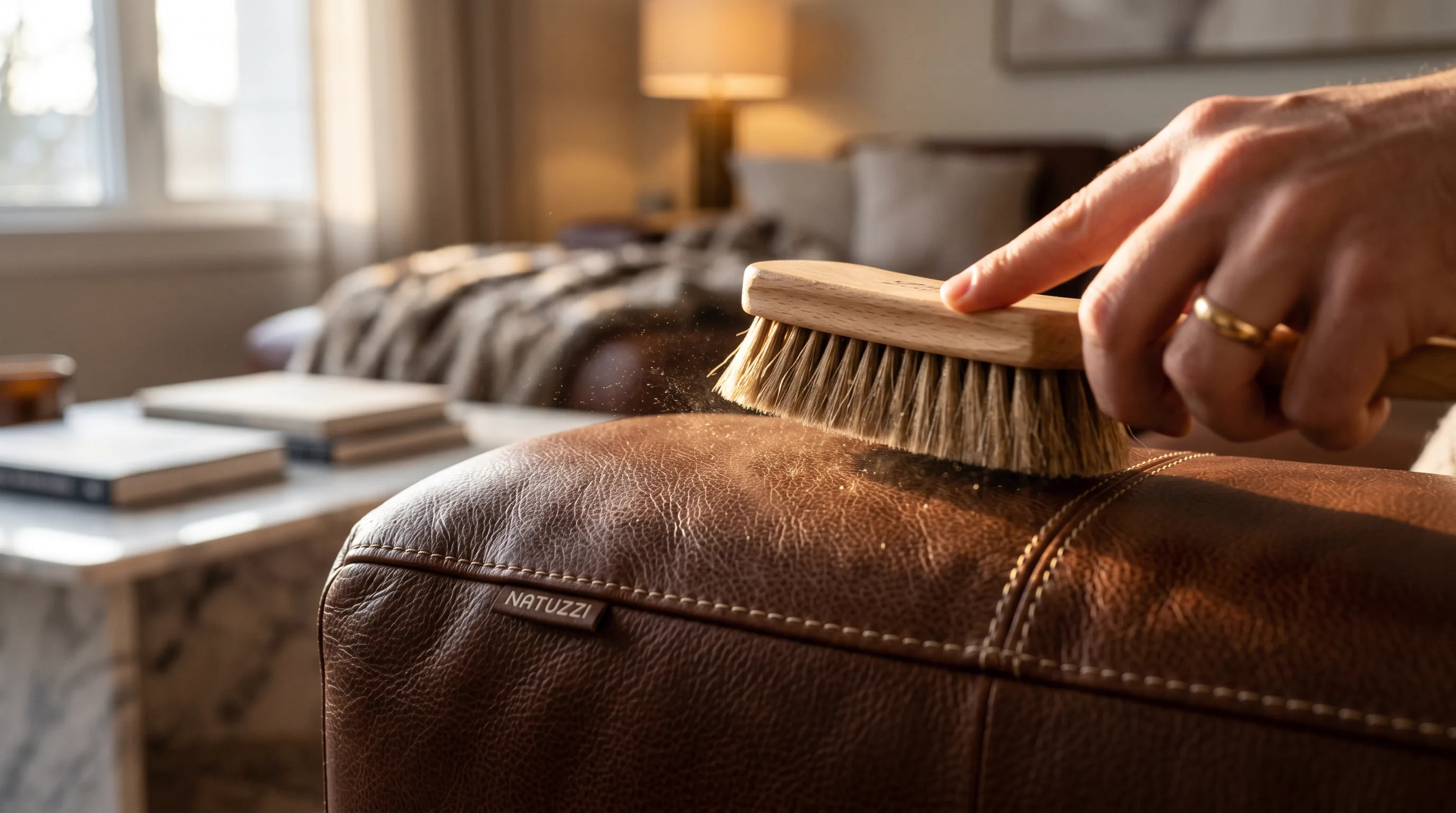
When stains have aged into the dye layer. Everything in the Multi-Stain plan plus pigment-rebuild on lifted zones where colour was dragged, an aniline and UV-stable topcoat across the whole sofa, cross-panel pigment matching, and 24-month workmanship cover with a 6-month check-in.
All prices include at-home service across India. Final pricing may vary based on sofa condition and size.
Ready When You Are
Free home diagnosis. At-home service across India. 94% of stains lifted in a single visit.
Quote turnaround
Share the stain type, leather and how long it has set, and our specialist will reply within 24 hours.
A leather specialist will be in touch within 24 hours to discuss your restoration plan.
Return to Website