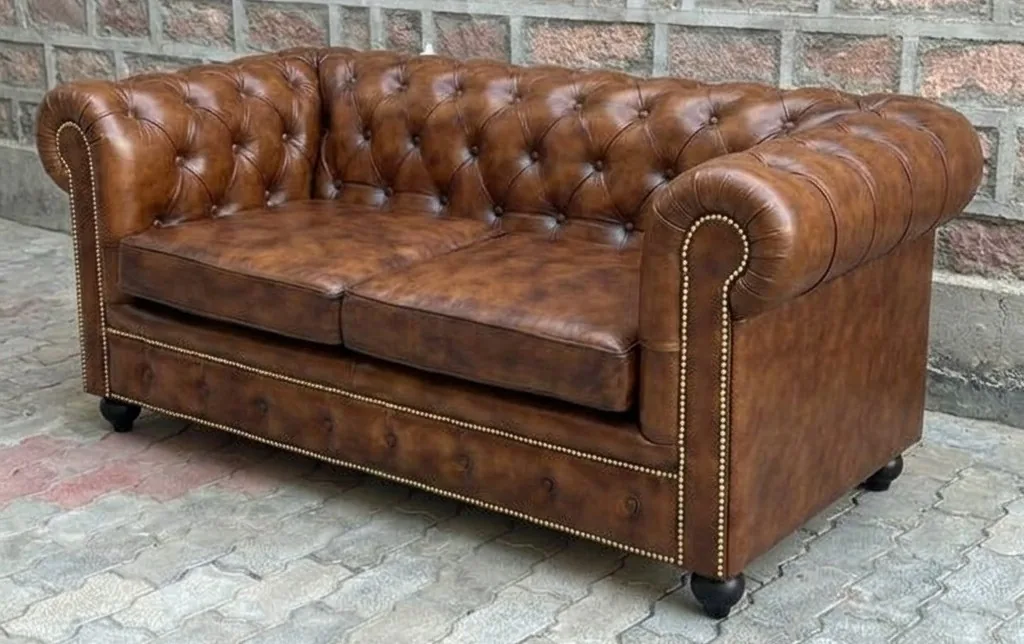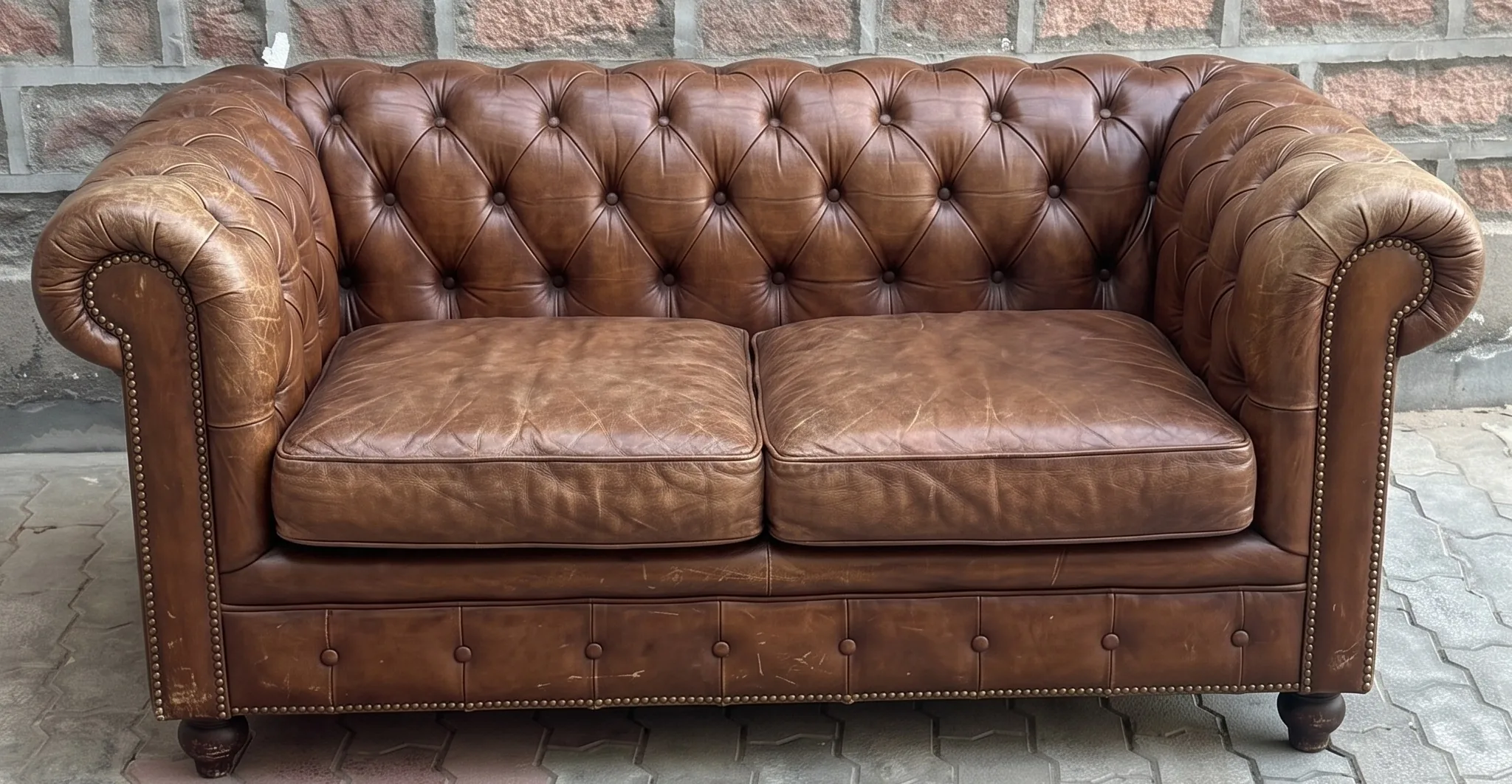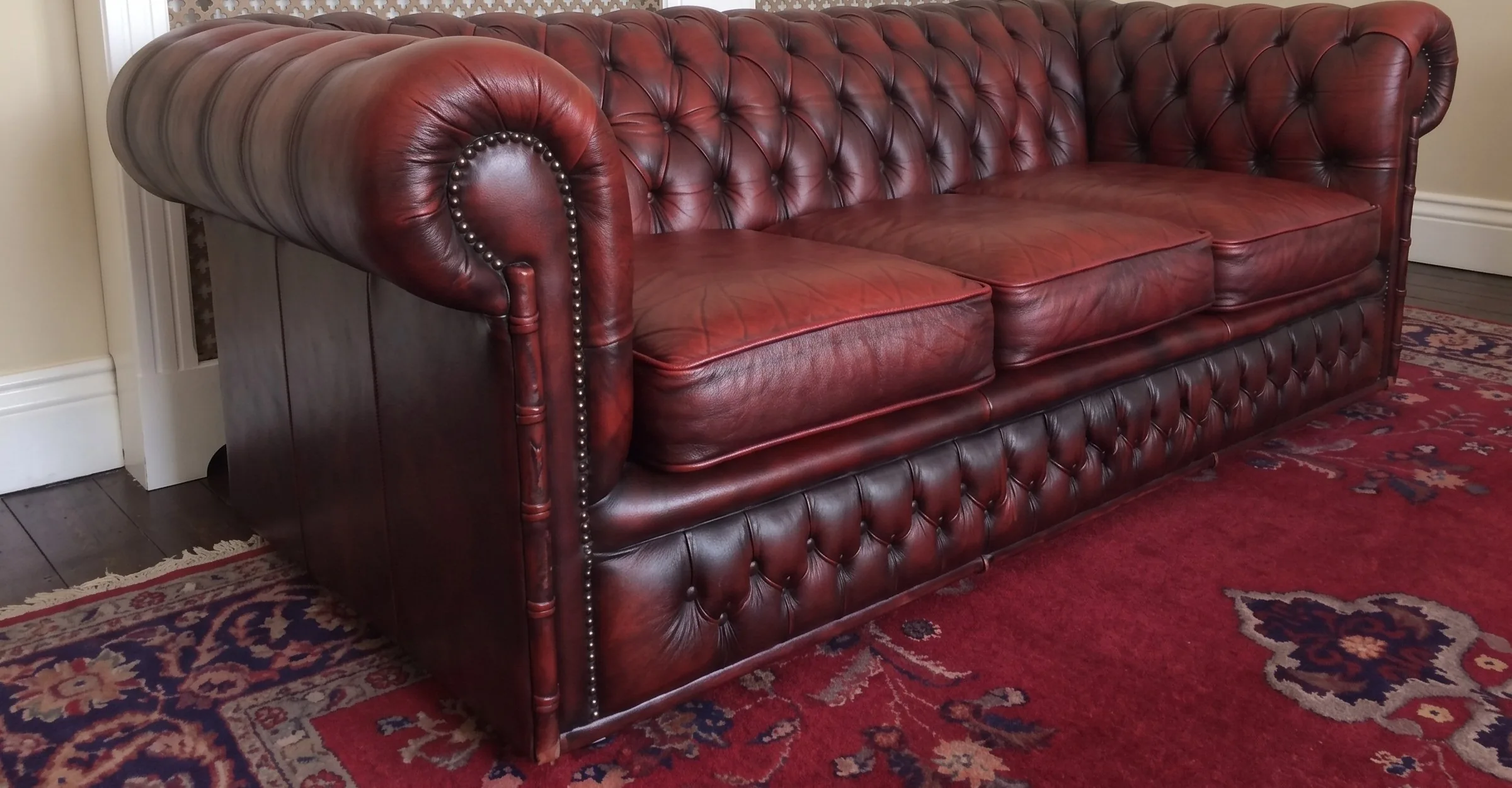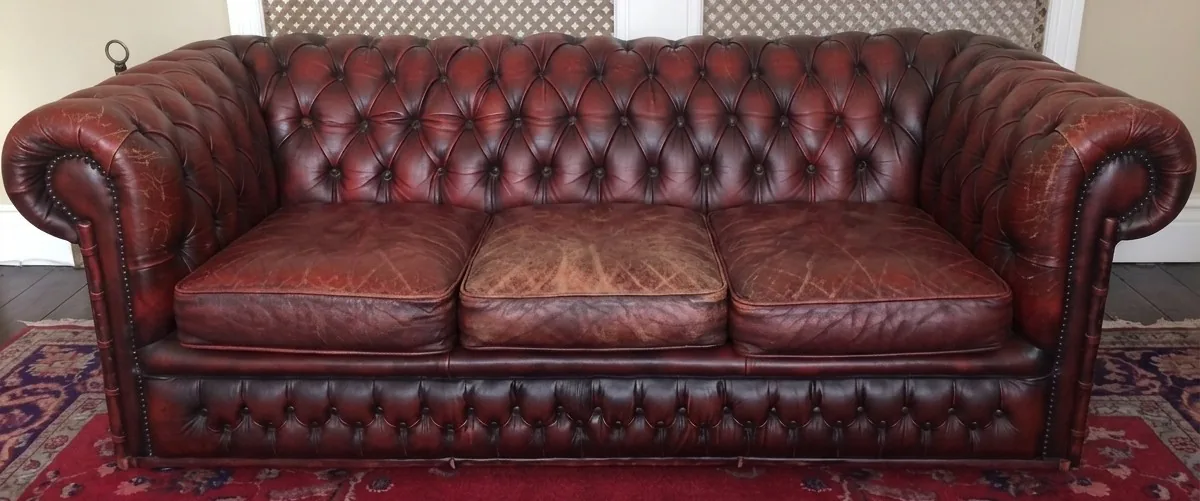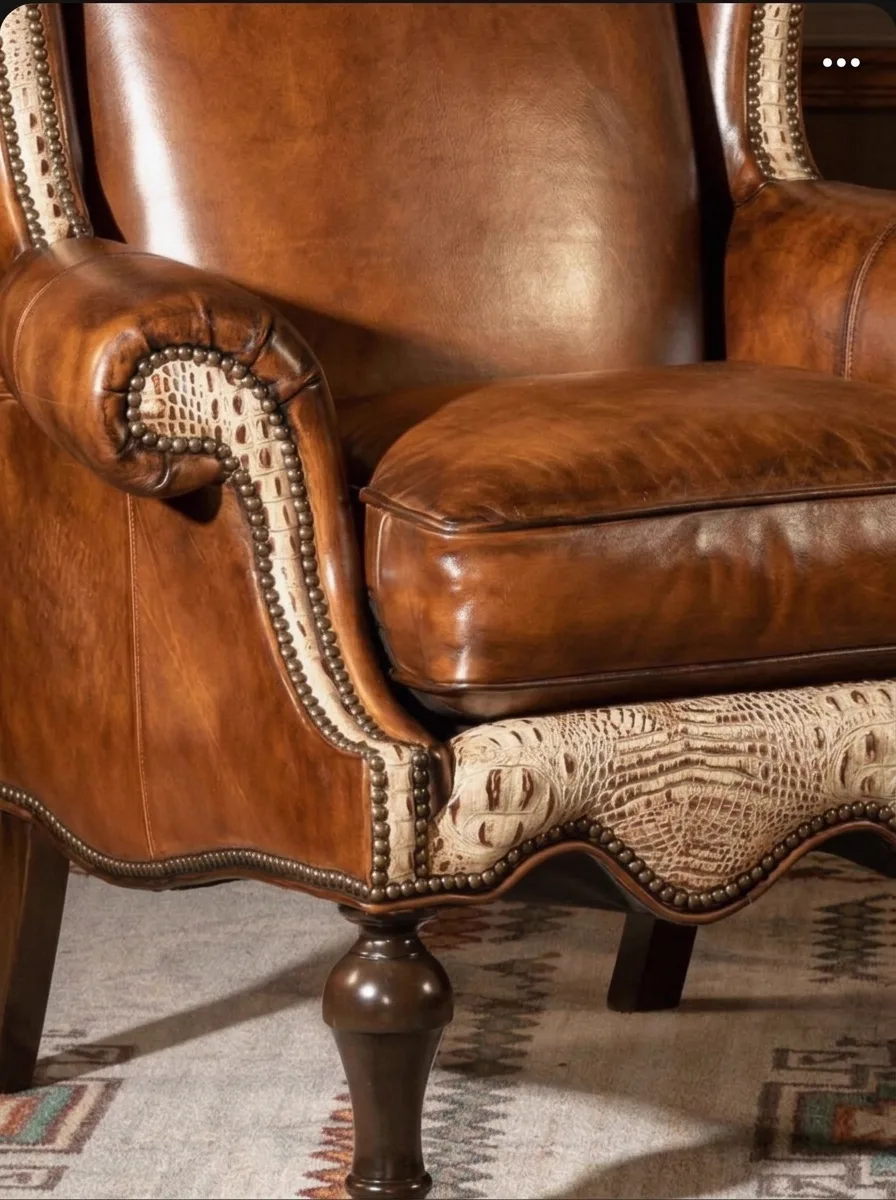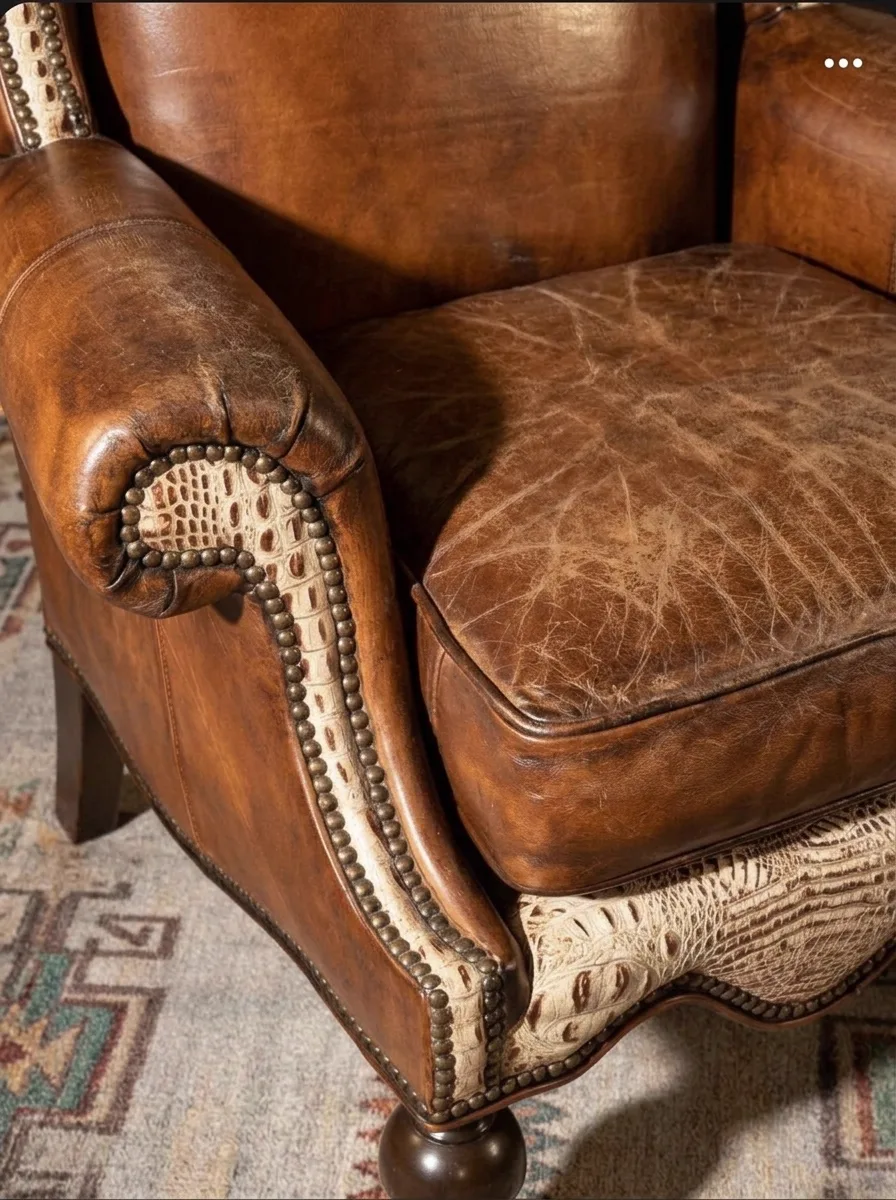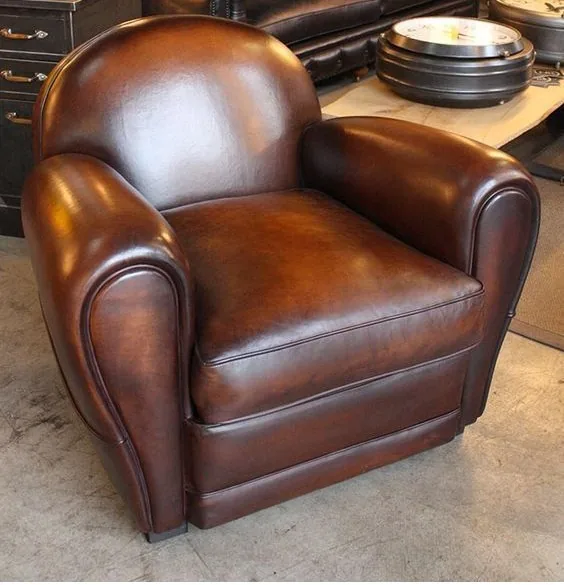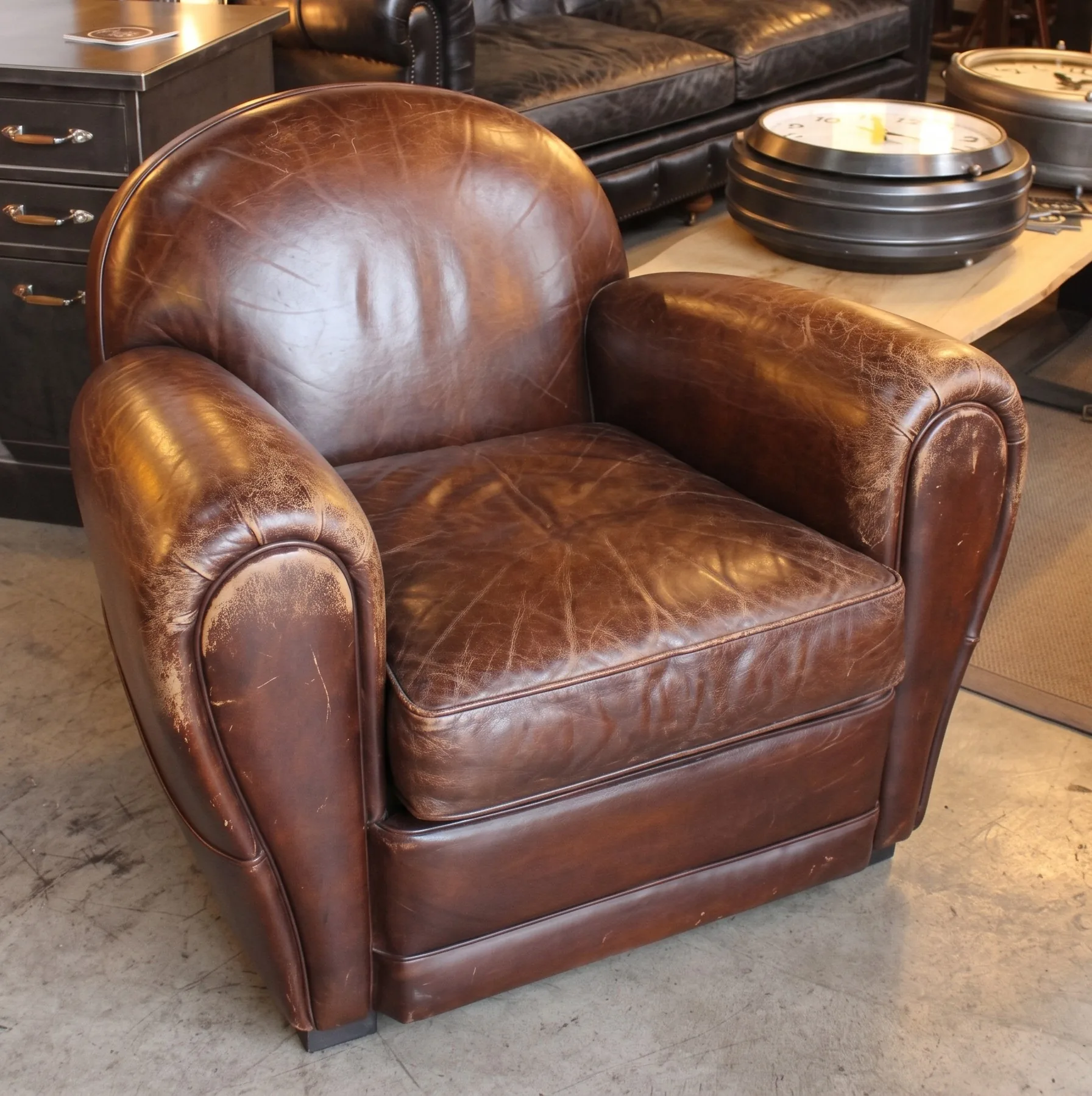
The difference between a leather sofa that looks better at thirty years than at three, and one that cracks into a brittle relic, comes down to a handful of habits practised correctly. A multi-lakh aniline-dyed Italian masterpiece, a century-old Chesterfield, or a designer mid-century piece each carries the same hidden requirement: the hide is a porous, biological surface whose collagen, finish, and acid mantle must be fed and protected on a schedule, not rescued in a panic. This guide is the conservation discipline behind that longevity, written for owners who intend to pass their pieces on rather than replace them.
In the high-stakes world of premium interiors, luxury leather furniture care is frequently misunderstood by owners and domestic staff alike. Many rely on generic, mass-market cleaners that contain harsh surfactants or, even more dangerously, "home remedies" involving vinegar or oils that act as silent assassins to the leather's delicate finish. True connoisseurs understand that leather care is an intricate art of preservation rather than just a cleaning task. It requires a profound balance between maintaining the hide's natural pH equilibrium, protecting its microscopic "acid mantle," and ensuring that the internal collagen fiber network remains lubricated against mechanical stress. In this definitive authority guide, we delve into the clinical and aesthetic protocols required to keep your luxury leather furniture in showroom condition, ensuring that every sit remains as soft, supportive, and sensory-rich as the very first day it entered your home.
The sensory experience of high-end leather is unparalleled. There is a specific tactile feedback,a combination of temperature responsiveness, moisture absorption, and "grip",that defines a premium hide. When a leather piece is neglected, it loses this sensory DNA. It becomes "cold" to the touch, "slippery" due to wax buildup, or "hard" due to dehydration. Our mission in this guide is to provide you with the technical vocabulary and the practical steps to prevent this decline, effectively doubling or even tripling the lifespan of your leather collection through proactive, expert-led intervention.
| Frequency | Aniline / Heritage | Semi-Aniline | Pigmented |
|---|---|---|---|
| Weekly | Soft microfibre dust | Soft microfibre dust | Vacuum + dust |
| Quarterly | pH 5.0-5.5 surface clean | Foam clean + light condition | Foam clean |
| 6-monthly | Tannery-grade hydration | Conditioning cycle | Top-coat inspection |
| Annually | Pro deep restoration | Pro audit (every 18-24 mo) | Pro top-coat refresh |
From the TLR archive: Of 92 heritage Chesterfield and aniline-dyed Italian sofas we audited across India (2024-2026), the average usable lifespan was extended from 18 to 35+ years simply by switching from generic furniture polish to pH-balanced aniline-specific care. Wax buildup from store-bought polishes was the single most common chronic issue (61% of cases).
References: Leather Working Group for tannery and finishing standards, ICOM-CC Leather Working Group for heritage conservation guidance, and BIS for Indian leather grading.
What Are the Different Types of Luxury Leather Hides?
Before you even consider touching your furniture with a cloth, you must perform a technical audit of exactly what you are sitting on. In the luxury furniture industry, all leathers are not created equal, and a "one-size-fits-all" approach to cleaning is the fastest way to ruin a high-value piece. The tanning and finishing processes determine not only the look and feel but also the chemical resilience of the hide. In the luxury segment, there are three primary categories that dictate your care protocol, each with its own "vulnerability profile." If you are unsure which you own, our breakdown of aniline versus semi-aniline leather walks through the water test and grain checks that settle it.
Pure Aniline Leather is the undisputed king of the luxury world. Sourced from only the top 5% of global hides (because the surface must be virtually blemish-free), it is dyed in vats with transparent dyes that allow the natural markings,scars from insect bites, grain variations, and microscopic pores,to remain fully visible. It has no protective topcoat, making it exceptionally soft, warm to the touch, and highly breathable. However, this aesthetic purity comes with extreme vulnerability: it is highly absorbent. A single spill of red wine or a drop of skin oil can become a permanent part of its patina within seconds. Care here is focused on extreme prevention and the use of specialized "low-moisture" cleaners that won't leave water rings.
Semi-Aniline Leather offers a more practical but still highly luxurious compromise. It undergoes the same artisanal vat-dyeing process as pure aniline but is finished with a microscopic, translucent protective layer and a subtle dusting of pigment. This provides a more consistent color and a vital degree of stain resistance while retaining much of the hide's natural softness and tactile warmth. For most high-end family homes, this is the gold standard, requiring a balanced regimen of gentle, pH-neutral cleaning and regular protective conditioning to keep the thin topcoat from becoming brittle.
Protected (Pigmented) Leather is the robust workhorse of the luxury segment. It features a thicker protective coating and a solid pigment layer that masks surface imperfections. While it loses some of the "heat-responsiveness" and breathability of aniline hides, it is significantly more resilient to the challenges of modern life,children, pets, and frequent social gatherings. Maintenance here is focused on preserving the flexibility of the top-seal lacquer. If this lacquer is allowed to dry out, it will develop "crackle-wear",tiny fissures that allow dirt to penetrate the base leather, leading to structural peeling.
Finally, we must mention Nubuck and Suede. These are luxury outliers created by sanding the surface of the leather to create a velvet-like nap. These materials are technically "open-pored" and are the most difficult to maintain. They require a completely different set of tools, including brass-bristle brushes and specialized erasers, as liquid cleaners can instantly mat the nap and ruin the texture forever.
TLR EXPERT TIP: The "Pore Test" is the connoisseur's secret. Use a magnifying glass to look at the surface. Visible, irregular pores indicate a high-quality aniline hide. A uniform, plastic-like texture suggests a heavily pigmented finish. Your care products must be matched to these surface characteristics.
What Is the Ritual of Weekly Leather Maintenance?
In the realm of high-end design, maintenance is a ritual of respect, not a mundane chore. The most insidious cause of "premature aging" in luxury leather furniture is the silent accumulation of microscopic particulates. In bustling Indian homes, airborne dust is a constant presence. These particles are not just unsightly; they are functionally abrasive. Every time a person sits, these microscopic "razors" grind against the leather's surface, slowly eroding the protective finish and clogging the pores that allow the hide to breathe.
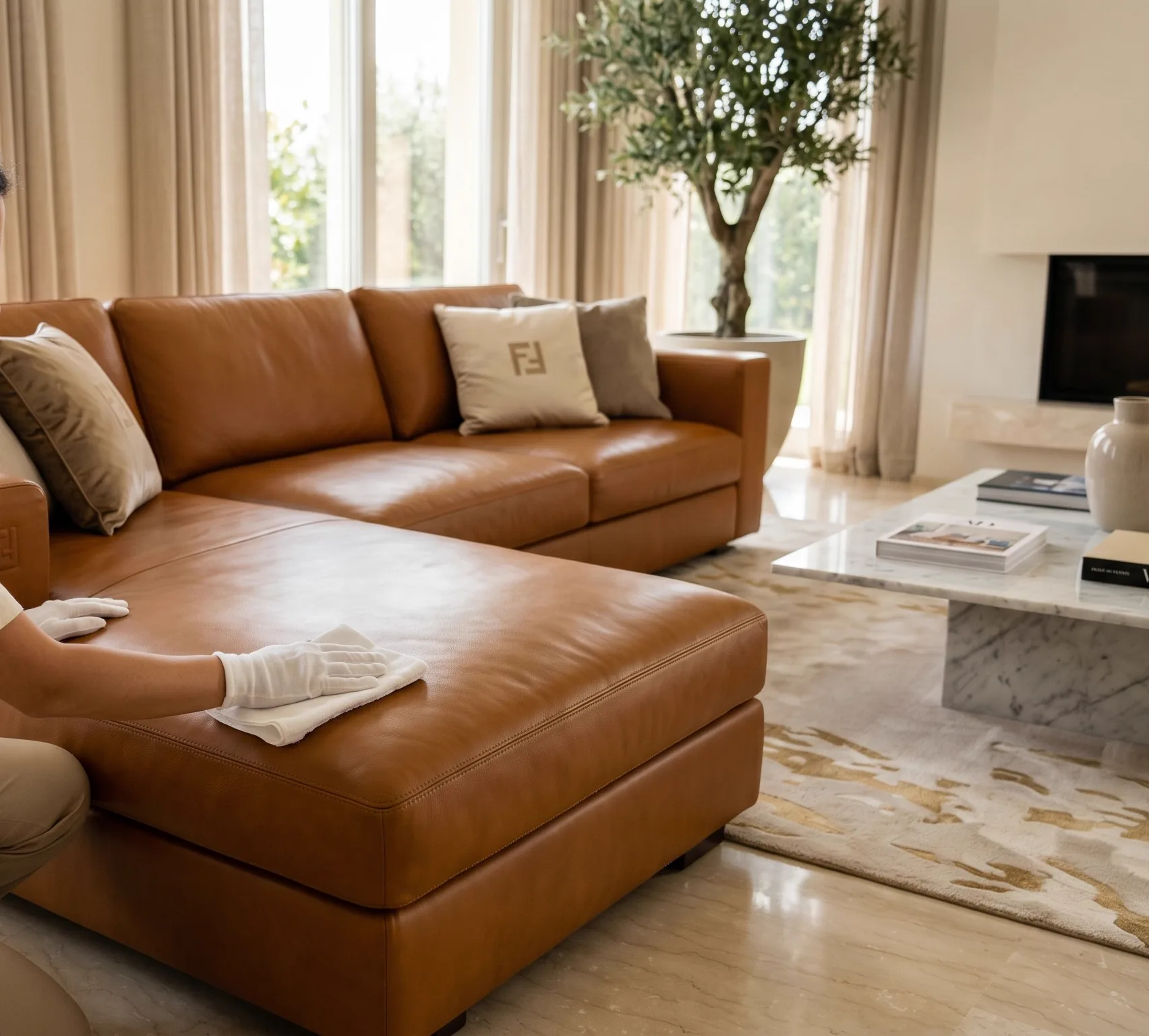
A weekly dry-wipe is the single most effective intervention you can perform. However, the tool you use matters as much as the frequency. Never use a feather duster, which merely redistributes the soil into the air. Instead, use a high-density, clean microfiber cloth or a dedicated leather-wipe cloth. The goal is to lift and trap the dust, not push it deeper into the grain. Pay clinical attention to what we call the "Micro-Geography of the Sofa",the deep valleys between cushions, the undersides of decorative piping, and the hidden folds of a Chesterfield. These are the zones where abrasive dust accumulates and begins to eat away at the expensive silk or nylon stitching.
The "Oil Migration" Factor: Armrests and headrests are the most vulnerable zones on any luxury piece. They collect body oils, hair products, and perspiration. Over time, these organic acids penetrate the leather and break down the internal fibers, leading to darkened, sticky patches. A weekly wipe-down of these high-contact areas with a slightly damp (never wet) cloth is essential to neutralize these oils before they can migrate deep into the hide's core.
- The Vacuum Protocol: Use only a soft-brush attachment. A plastic nozzle can leave permanent indentations or scratches on delicate aniline hides.
- Cushion Rotation: High-end leather "remembers" weight. Rotate and plump your cushions weekly to ensure even wear and prevent localized stretching of the hide.
- Micro-buffing: Use a clean, dry silk or microfiber cloth to buff the high-contact areas (armrests/headrests). This redistributes natural surface oils and prevents "shiny spots" from body oil buildup.
Why Does pH-Balanced Cleaning Matter for Luxury Leather?
One of the most dangerous and pervasive myths in luxury leather furniture care is the belief that "mild soap and water" is a safe, universal cleaning solution. From a chemical perspective, leather is an acidic material, typically stabilized during the tanning process to a natural pH of approximately 4.5 to 5.0. Most household soaps, including those marketed as "gentle" or "natural," are significantly more alkaline. When an alkaline substance is introduced to an acidic leather surface, it triggers a catastrophic chemical reaction that begins to de-tannify the hide. It effectively breaks down the very cross-linking agents,the chemical "glue",that keep the leather from decomposing like raw skin.
Over time, this pH imbalance causes the leather to lose its characteristic suppleness, making it feel stiff, "plasticky," and eventually leading to surface delamination where the pigment peels away from the base hide. A professional-grade luxury cleaning protocol necessitates the use of a pH-neutral, surfactant-rich cleaner specifically engineered for high-end upholstery. These solutions are designed to emulsify surface oils and lift microscopic soil without breaching the leather's "acid mantle" or stripping the essential internal moisture that maintains its structural integrity.
The "Sectional Method" of Precision: When cleaning a multi-lakh sectional, never approach the task as a single job. Work with architectural precision,one panel at a time, from seam to seam. Apply your specialized cleaner to a slightly damp high-density sponge, create a low-moisture foam, and apply in gentle, consistent circular motions. The goal is to suspend the dirt in the foam, then immediately lift it away with a clean, dry microfiber cloth. On sensitive aniline hides, excessive moisture is the enemy; it can cause "wicking," where the water pulls internal tannins to the surface, creating permanent tide marks as it dries.
How Do You Restore Leather's Internal Suppleness?
Conditioning is far more than a cosmetic polish; it is the fundamental soul of high-end leather maintenance. Beneath the surface, the hide consists of an incredibly complex network of intertwined collagen fibers. In a well-maintained piece of furniture, these fibers are coated in a microscopic layer of natural fat-liquors that act as ball bearings, allowing the fibers to slide past each other without friction when weight is applied. As these lubricants naturally evaporate over time,a process accelerated by indoor heating and air conditioning,the fibers reach their "Elastic Limit." They become dry, brittle, and lose their ability to flex. When you sit on a dehydrated sofa, these fibers don't slide; they grate against each other and eventually snap. This is the microscopic origin of visible surface cracking. Once those fissures have opened on a high-value hide, conditioning alone cannot rebuild the grain; our cracked leather sofa repair service fills and re-finishes the damaged area before it spreads.
A luxury conditioner is designed to penetrate the leather's grain and re-establish this internal lubrication. However, the chemistry of the conditioner is critical. High-end modern leathers thrive on water-based, nutrient-dense creams rather than heavy oils, waxes, or silicones. Heavy oils and waxes are "occlusive",they create an impermeable seal that prevents the hide from breathing and exchanging moisture with the air. This can lead to internal "rot" where the structure becomes soggy and loses its shape. A water-based cream, conversely, feeds the fibers while allowing the leather's natural "respiration" to continue unimpeded.
Physics of the "Absorption Window": For maximum efficacy, always condition your furniture when the leather is at a comfortable room temperature (24-26°C). Cold leather has tight pores that resist penetration. Apply the cream sparingly with a lint-free applicator; remember that the leather is like a sponge,it will only absorb a specific volume of nutrients. Any excess that remains on the surface after 30 minutes must be buffed away with a clean cloth. A sticky or greasy finish after conditioning is a clear sign of either over-application or that the leather's "saturation point" has already been reached.
What Environmental Controls Protect Luxury Leather?
Even the most rigorous cleaning and conditioning regimen cannot salvage a piece of furniture that is positioned in a hostile living environment. Luxury leather is a biological, reactive material that remains in a constant state of flux with its surroundings. To truly preserve your investment, you must act as a "Micro-Climate Manager," controlling the temperature, light, and humidity of your interior spaces with professional precision. For a focused walkthrough on protecting luxury leather against everyday wear, spills, and UV, our dedicated protection guide goes deeper.
- The UV Eraser: Direct sunlight is a relentless, high-energy enemy of high-end hides. It doesn't merely fade the color; it triggers "photo-oxidation," a chemical process that permanently alters the molecular structure of the tanning agents and fibers. If your sofa is in a room with large windows, UV-filtering sheer curtains or museum-grade window films are non-negotiable requirements for long-term preservation.
- Managing Humidity Transitions: Leather is happiest at a relative humidity (RH) of 45% to 55%. In many luxury homes, the humidity fluctuates wildly between seasons. In the dry summer months, leather can dehydrate in days. During the monsoon, it can absorb too much moisture, leading to "spue",a waxy white film,or even microbial growth in hidden seams. A high-quality dehumidifier or humidifier system is a vital tool for the leather connoisseur.
- Thermal Fatigue: Never place your leather furniture flush against an external wall or directly under the focused blast of an air conditioning unit. These localized "micro-climates" cause the hide to expand and contract unevenly, leading to "stress fatigue" in the grain and potentially causing the internal frame to warp or the stitching to pull under tension.
How Do You Manage Stains on Luxury Leather Professionally?
In a luxury household, accidents are inevitable, but they need not be catastrophic. The secret to professional stain removal is a deep understanding of surface tension and molecular bonding. Most common stains,ink, wine, or oil,don't ruin the leather immediately; they ruin it when the owner tries to "scrub" the mark away, effectively grinding the pigment deep into the hide's core.
For an oil-based stain, the goal is extraction, not friction. Use a specialized degreasing leather powder or foam that is designed to "wick" the oil back out of the pores. For ink marks, quick action with a specialized de-inker is necessary. Modern inks are designed to be permanent, and on aniline hides, they can bond with the leather within minutes. If a stain doesn't respond to the first gentle attempt, stop immediately. Repeated aggressive attempts will only damage the leather's top-seal and spread the stain horizontally.
Frequently Asked Questions
Is it normal for my luxury leather to change its visual character over time?
Indeed, this is a defining characteristic of high-quality hides, particularly those in the aniline family. This evolution is known as a "patina." It is a sophisticated combination of light exposure, the absorption of body oils, and the natural wear of the grain. A well-cultivated patina is considered the ultimate mark of authenticity and artisanal luxury,it is the furniture's way of telling its life story. However, there is a fine line between a rich patina and dry, sun-bleached neglect. Regular conditioning ensures the patina remains lustrous rather than brittle.
Are high-quality "baby wipes" acceptable for localized cleaning?
We strongly discourage this practice. While baby wipes are designed for delicate human skin, they are chemically engineered for a biological environment that is fundamentally different from leather. Many contain moisturizing agents or mild alcohols that can compromise the leather's specialized top-seal or leave a sticky residue that attracts abrasive urban dust. In some cases, the surfactants in wipes can cause the pigment to become cloudy or "ghosted" over time. Always use a dedicated leather-safe cleaning solution.
How should I address minor surface scuffs on a luxury sofa?
For light surface scuffs on aniline or semi-aniline hides, the most effective "repair" is often the most natural. You can frequently "heal" the mark by simply rubbing the area with a clean, warm finger. The combination of localized friction and your body's natural heat redistributes the hide's internal waxes and oils back into the scuffed area. For deeper scratches that have breached the pigment layer, do not attempt a home repair with colored markers or generic shoe polish; instead, consult a professional restoration specialist who can perform a perfect pigment-match repair. The same caution applies to pet damage - see how we handle cat scratches on high-end leather.
What is the truth about "protective sprays" for new leather furniture?
This is a nuanced area of luxury care. We only recommend water-based "protectors" that are specifically formulated for your exact leather type (Aniline vs. Pigmented). These sprays create a breathable, fluorocarbon-based barrier that increases surface tension, causing spills to bead up rather than soak in. However, you must be extremely cautious of silicon-based aerosols; these create an impermeable plastic-like barrier that suffocates the hide, preventing essential moisture exchange and eventually leading to internal fiber rot and a "plastic" feel.
What Do the Technical Terms in Luxury Leather Care Mean?
To truly master the art of luxury leather preservation, one must speak the language of the tannery. Understanding these technical terms will help you communicate more effectively with restoration specialists and better interpret the care instructions provided by high-end furniture manufacturers.
- Fat-Liquoring: The critical process during tanning where oils are reintroduced into the hide to lubricate the collagen fibers. This is what gives luxury leather its signature "hand" or feel.
- Full Grain: The highest quality of leather, where the original grain surface remains completely intact. It has not been sanded, buffed, or corrected to remove natural marks.
- Milling: A process where leather is tumbled in a large drum to soften the fibers and enhance the natural grain pattern. High-end "pebbled" leathers are often the result of extensive milling.
- Crocking: The transfer of dye from the leather surface onto another material (like your clothing) through friction. In luxury leathers, a small amount of "dry crocking" can be normal, but "wet crocking" usually indicates a failure of the topcoat.
- Spew (Spue): A white, powdery or waxy film that appears on the surface of the leather. It is caused by the migration of natural fats or tanning oils to the surface due to changes in temperature or humidity. It is easily wiped away but indicates an environmental imbalance.
How Do You Build a Legacy of Leather Preservation?
Owning luxury leather furniture is a stewardship. It is an agreement between the owner and the artisan who spent weeks, if not months, transforming a raw hide into a masterpiece of interior design. By following the protocols outlined in this guide,from the clinical precision of pH-balanced cleaning to the strategic management of your home’s micro-climate,you are doing more than just keeping a sofa clean. You are preserving a legacy of craftsmanship.
Remember that leather is a material that rewards attention. A well-cared-for aniline sofa doesn’t just "last"; it matures. It develops a depth of color and a softness of texture that synthetic alternatives can never replicate. It becomes a reflection of the life lived upon it. At The Leather Restorators, we believe that every high-end piece of furniture deserves to reach its full potential. Whether you are maintaining a new acquisition or restoring a family heirloom, the principles remain the same: respect the hide, understand the chemistry, and honor the ritual of care. Where the piece came from matters too, and our restoration guides for individual leather sofa makers cover how each house's hides and finishes behave over the decades.
FINAL WORD: When in doubt, seek professional counsel. In the world of luxury leather, a single mistake can be costly. Our specialists are always available for private consultations to ensure your collection receives the bespoke care it deserves.