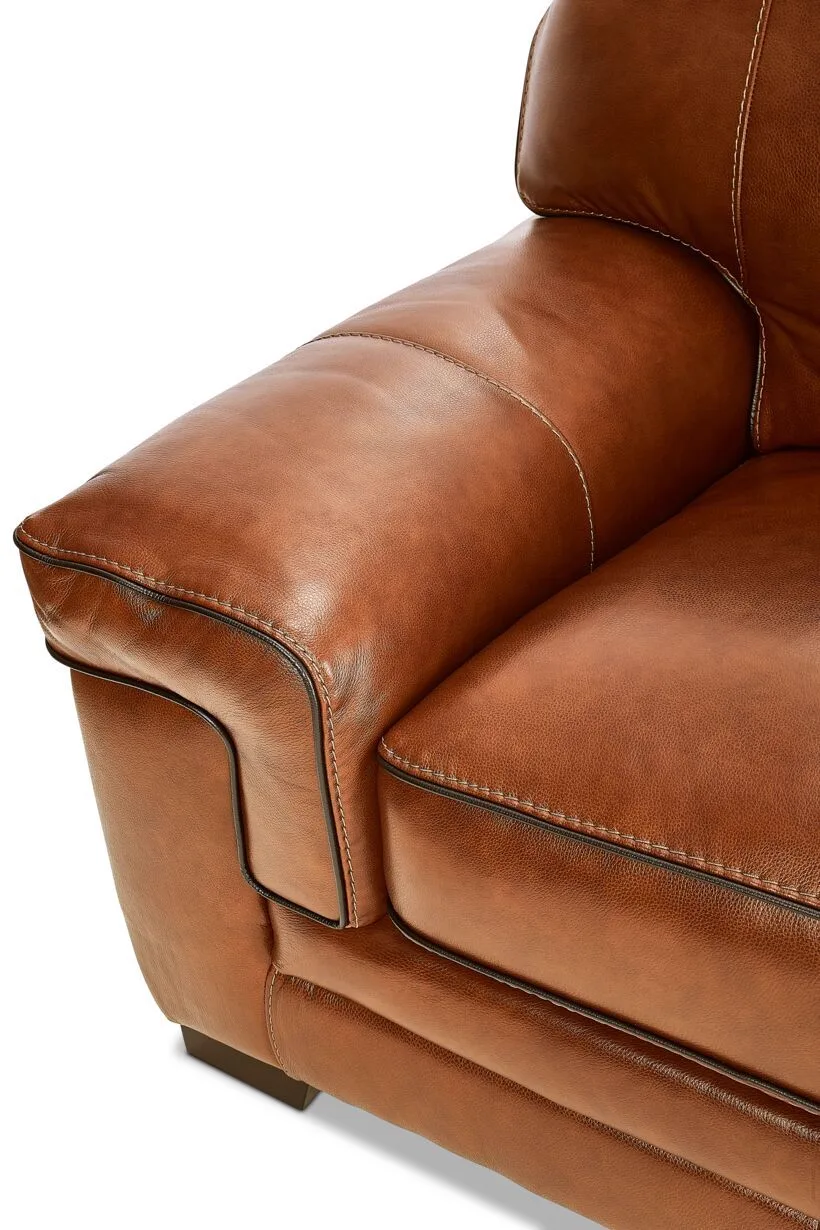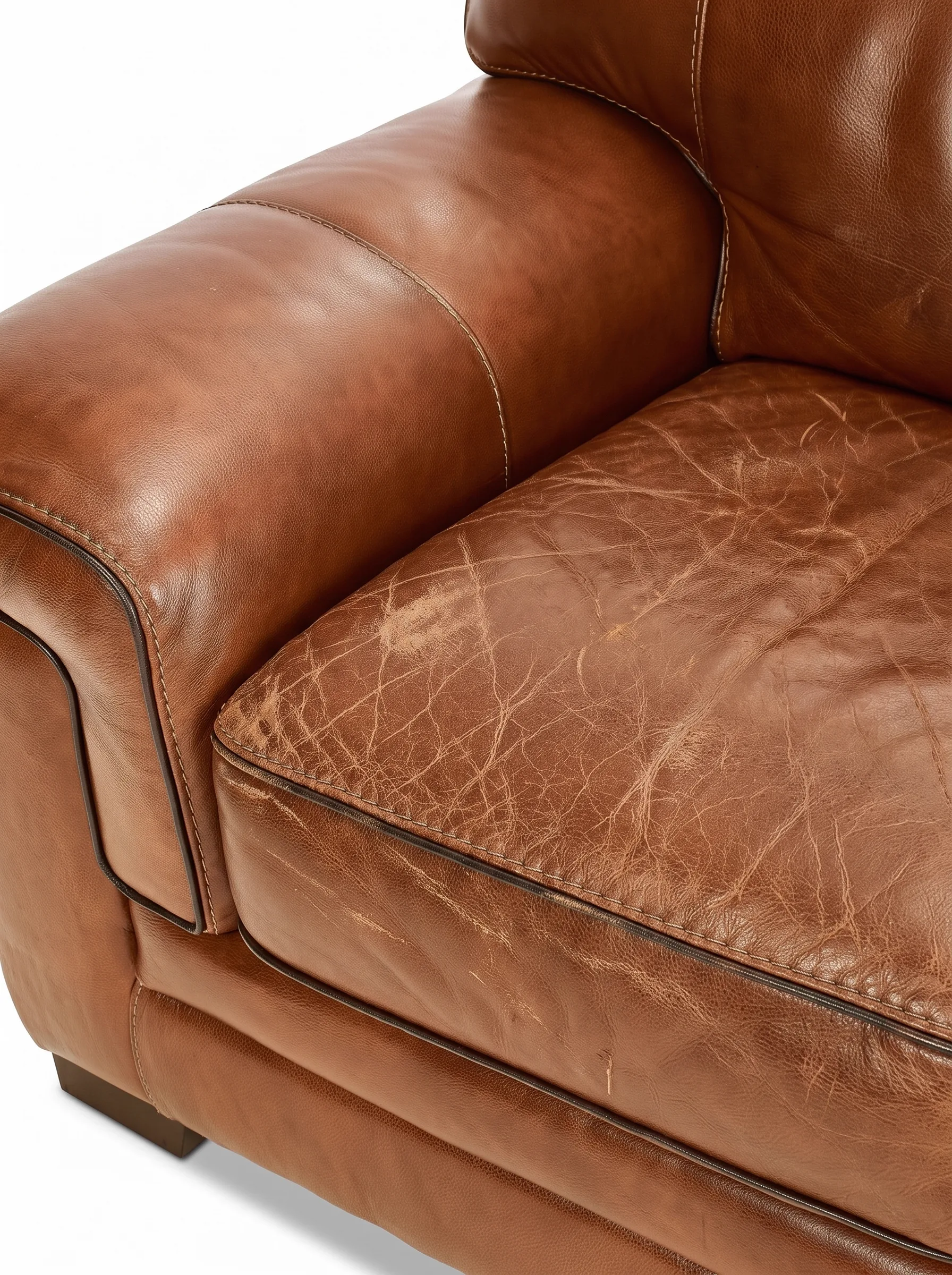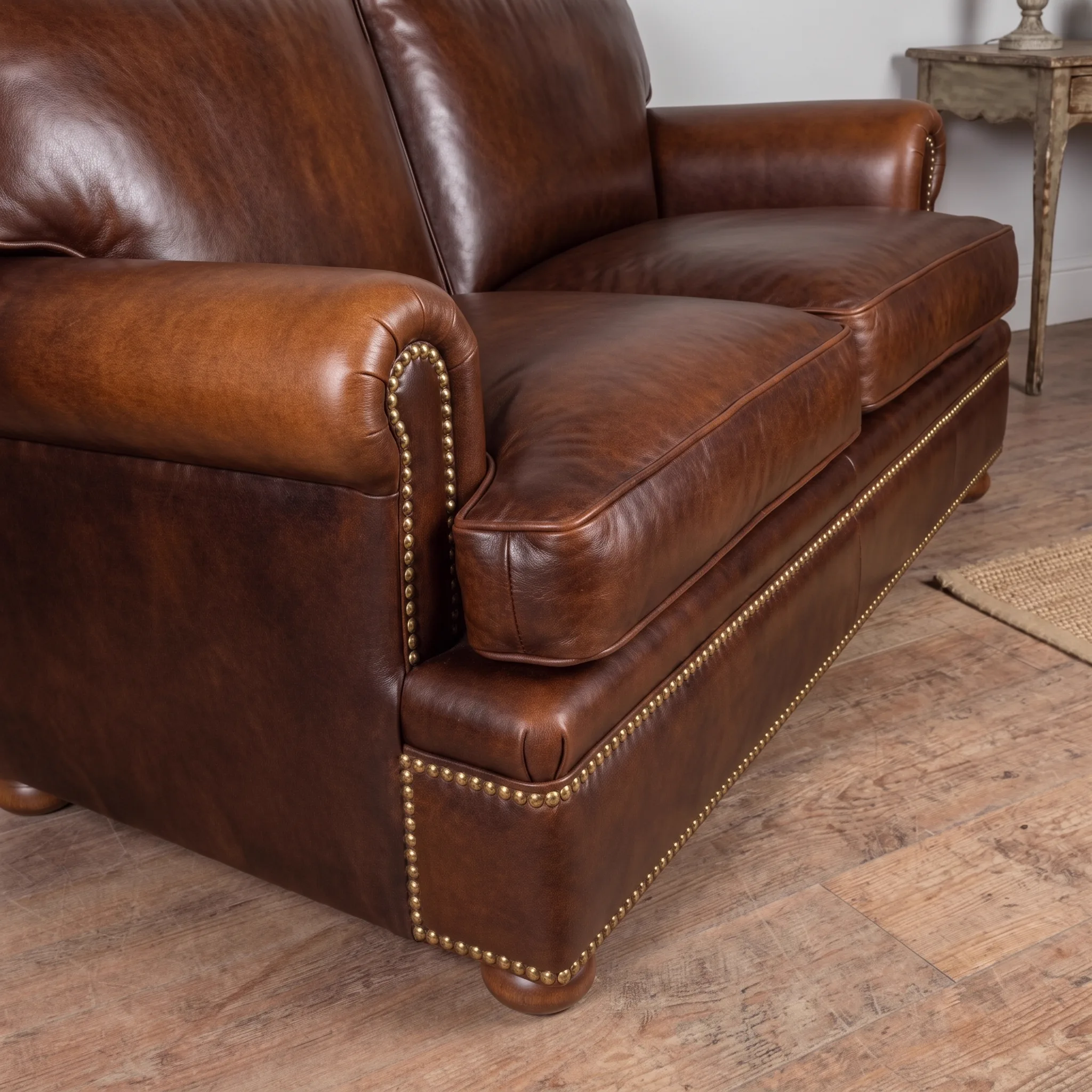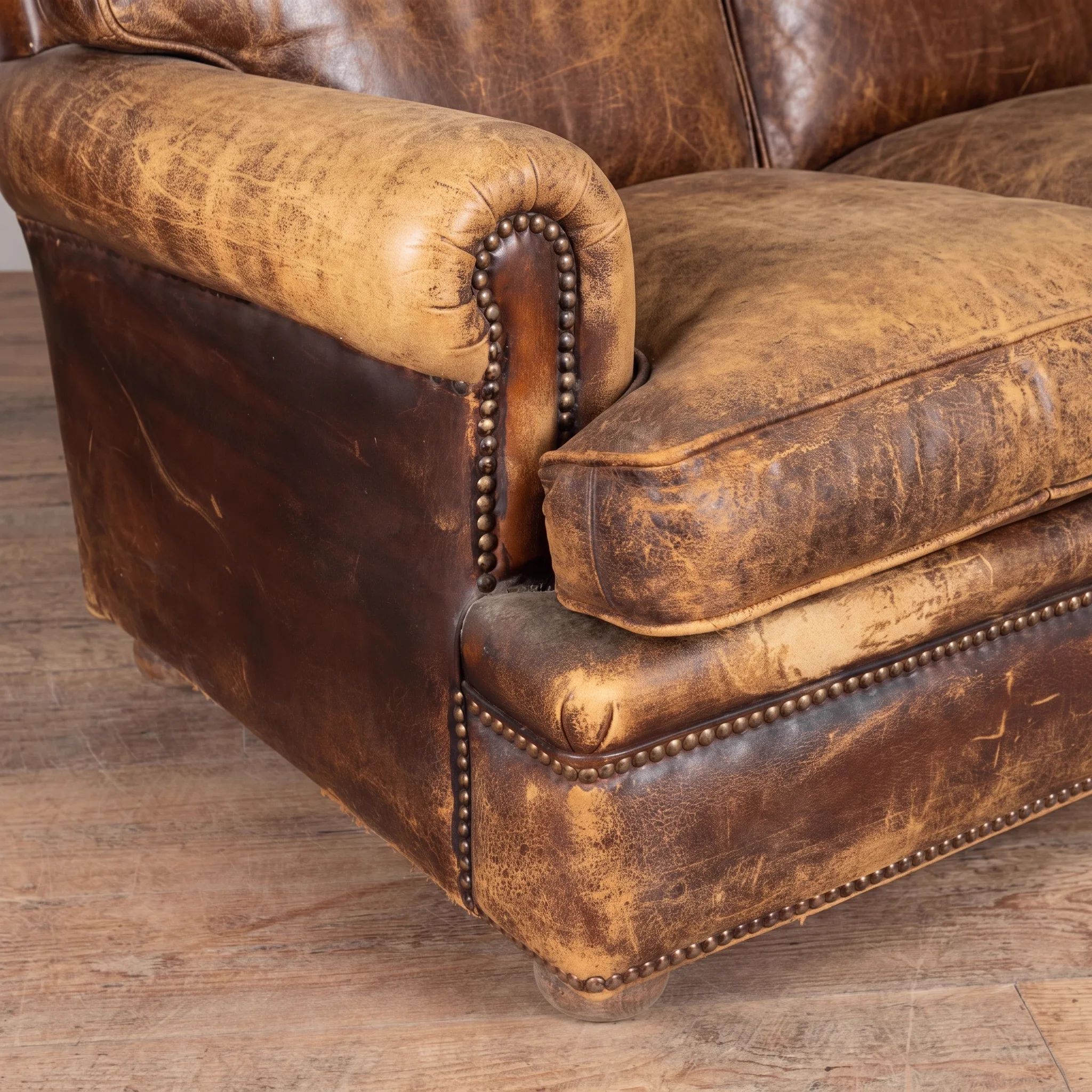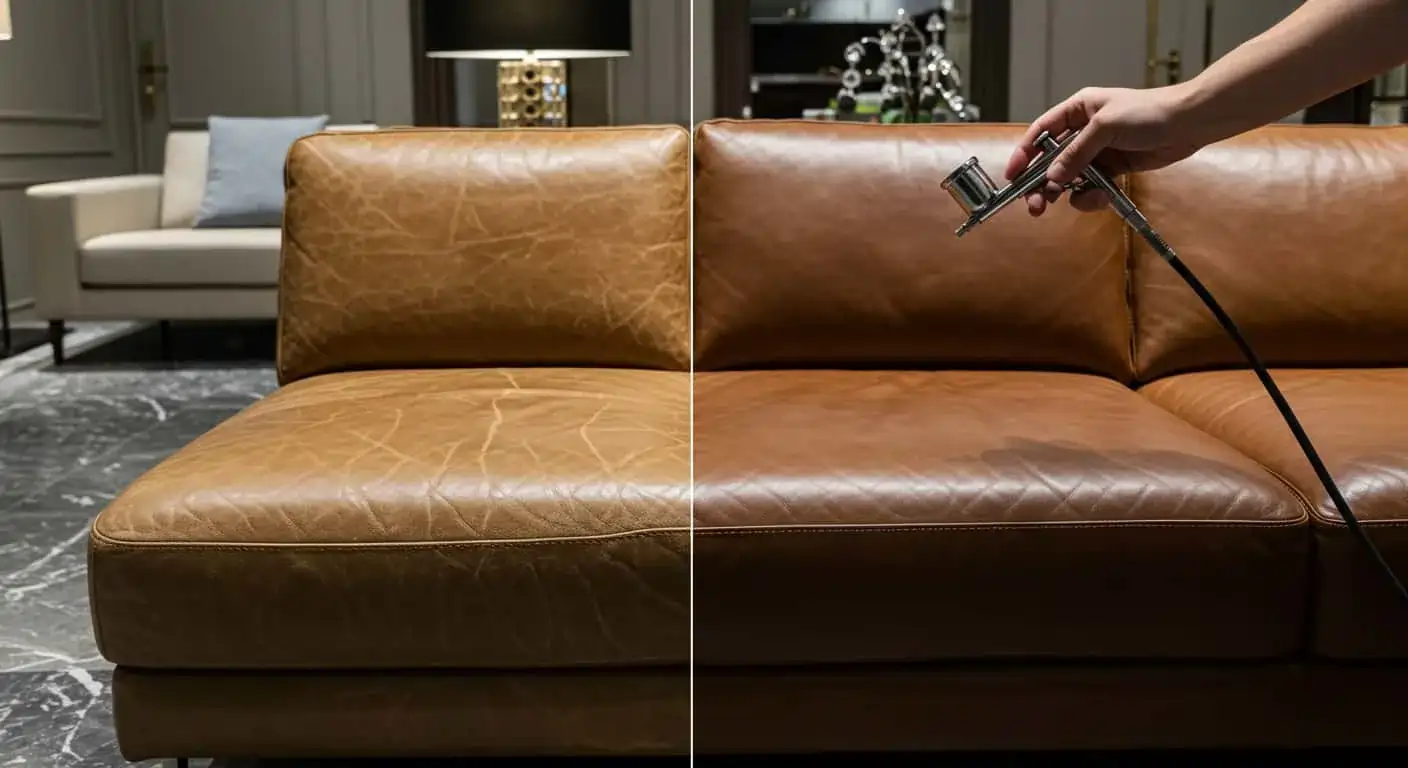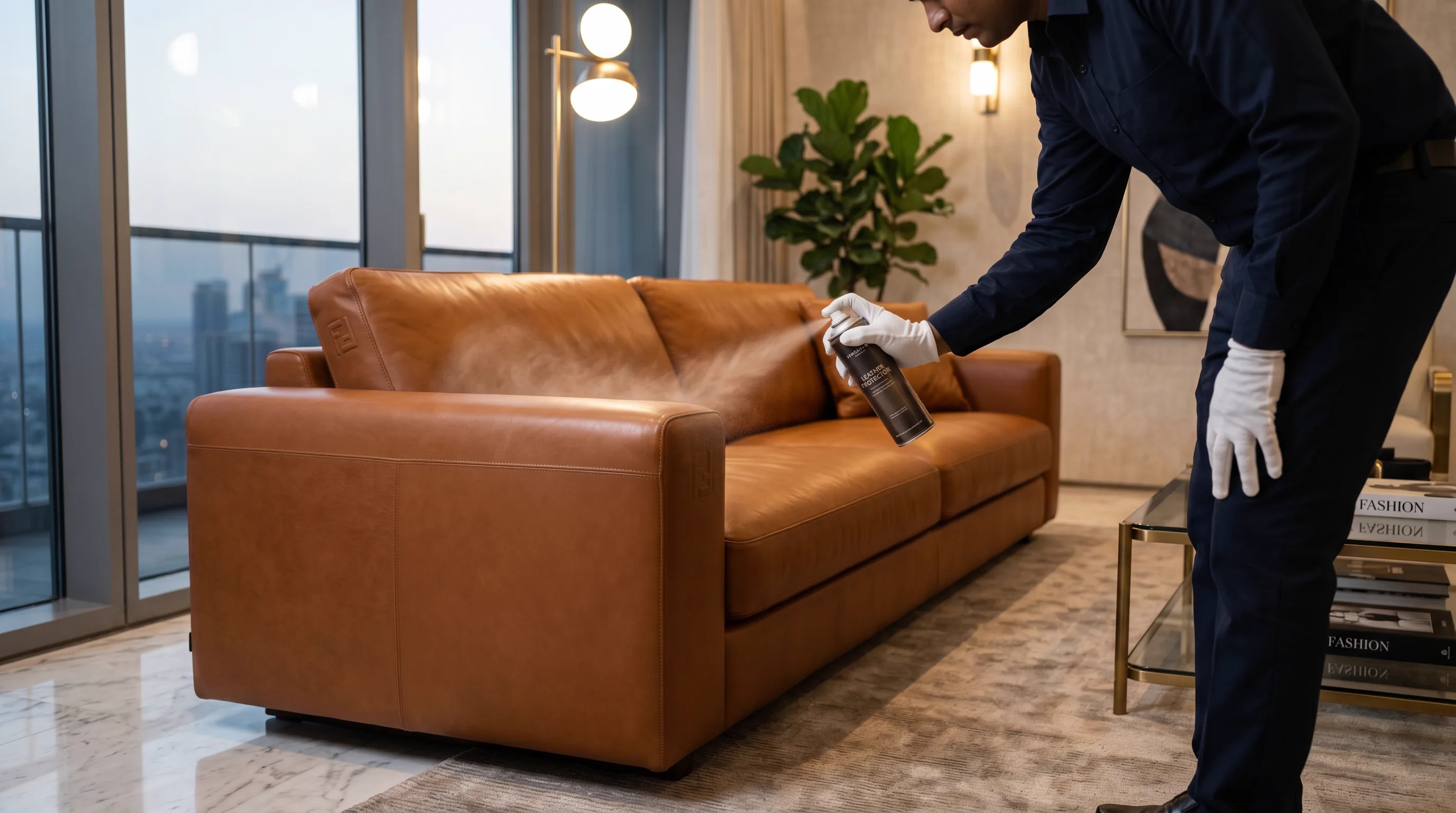
If you own a leather sofa in Delhi NCR, monsoon is the one season that can undo years of careful use. Between late June and mid-September, humidity in Delhi, Gurugram, Noida, Faridabad, and Ghaziabad routinely exceeds 80 percent for weeks at a stretch. At those levels, leather does not merely absorb moisture. It enters a sequence of failure: mold growth, fat-liquor migration, finish blistering, and dimensional swelling. That sequence can compress five years of natural ageing into ninety days. This article sets out the steps we apply to every Natuzzi, Poltrona Frau, Fendi Casa, and B&B Italia sofa that comes to us for monsoon care. Follow them before the first heavy rain, keep them up through the season, and your sofa will come through untouched.
Why Is Delhi Monsoon Harder on Leather Than Other Cities?
Delhi NCR sits in a particular climate trap. The pre-monsoon summer dries leather aggressively. May humidity routinely drops below 25 percent, and indoor RH in air-conditioned rooms can reach 18 percent. Your sofa enters July already at the bottom of its safe moisture range. Then monsoon flips the cycle within days. RH climbs from 25 to 85 percent in under two weeks. The fibre matrix is forced to absorb water faster than the hide chemistry can handle.
This dry-then-wet whiplash is what makes Delhi monsoon damage uniquely severe. Mumbai sofas live in moderate humidity year-round. Bengaluru sits at the other extreme again: the damp there is cool and long rather than sudden, so the hide never dries out between spells and white mold bloom settles into the grain with a musty note the leather absorbs - which is why a sofa there usually needs a professional deep-clean at home in Bengaluru rather than the re-fatliquoring an NCR hide asks for. Delhi sofas arrive at monsoon already stressed, then absorb moisture too fast. The result: uneven swelling across the hide, micro-fractures in the pigment binder of semi-aniline finishes, and a sharp rise in mold-growth risk wherever fat liquor [the oils built into leather during tanning] has migrated to the surface.
Three NCR-specific factors make this worse. Ground-floor and basement rooms where dampness rises through the floor. Older Delhi homes without sealed walls, where outside air infiltrates faster than a dehumidifier can compensate. And monsoon-season power cuts that interrupt AC and dehumidifiers for hours, letting humidity rebound in rooms where the sofa cost ₹3 lakh or more.
The window rule: safe ambient RH for leather is 45 to 60 percent. Above 65 percent, mold spores germinate within 48 hours on any organic deposit on the surface. Above 75 percent, the hide itself becomes the food source. Once mold reaches the corium [the deep fibre layer of the hide], the repair cost far exceeds what seasonal care would have cost.
What Are the Four Ways Monsoon Damages Leather?
1. Mold growth
Mold spores are present in every Delhi home at low levels year-round. They become a problem when surface RH stays above 65 percent for more than 48 hours and there is an organic food source: skin oils, dust, food residue, or conditioner residue. Leather sofas collect all four. Mold first appears as a fine grey-white dusting in seam channels, behind backrests, and under cushion edges. Leave it for two weeks and it moves into the foam and the underside of the hide, where surface cleaning cannot reach.
Catching mold early is the difference between a single-panel fix and a full-sofa restoration. Inspect weekly during peak monsoon. Seams and the floor-contact zone of the sofa base are where damage starts.
2. Fat-liquor migration
The fat liquor inside your sofa , explained in the pH balance article , is an oil-water emulsion that keeps the fibre matrix supple. In high humidity, the oils that should stay locked between fibres start migrating outward. They appear on the surface as fat bloom: a waxy white deposit that owners often mistake for mold. Wiping fat bloom with anything alkaline or solvent-based removes the visual problem but strips more fat liquor from the panel, making things worse.
Fat bloom is reversible if you catch it within four to six weeks. After that, the migration shifts the distribution of oils inside the hide. Some panels feel soft, others stiff. At that stage, professional re-fatliquoring is the only fix.
3. Finish blistering on pigmented and semi-aniline sofas
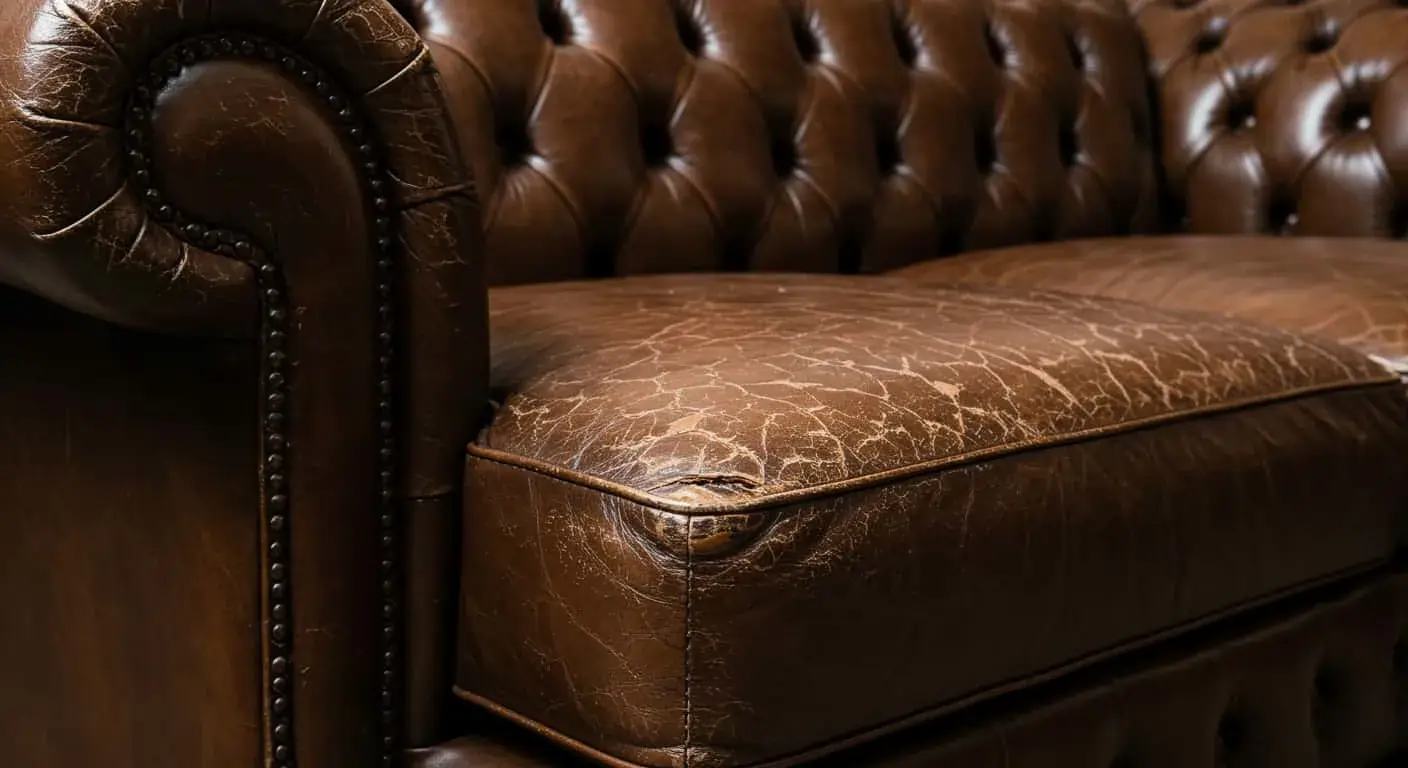
Pigmented and semi-aniline finishes carry a sealed top-coat designed for stable moisture conditions. Sustained humidity above 80 percent causes water vapour to build up at the interface between the hide and the binder layer. Where the binder is thinnest , along stitch lines and pulled-tight zones , the trapped moisture lifts the binder slightly. This produces the small dome-shaped blisters you see on neglected pigmented sofas after two or three unprotected monsoons.
Blistering cannot be fixed with cleaning or conditioning. The lifted top-coat must come off, the panel must be stabilised, and a micro-pigmentation specialist must rebuild the finish. Prevention is the only cost-effective answer.
4. Swelling and seam stress
Leather swells slightly as it absorbs water , typically less than 2 percent, but enough to stress the stitched seams that were set for dry-state geometry. After repeated monsoon cycles, seams begin to loosen. The leather panel develops a slight wrinkle-set in flex zones. Fixing this is more invasive than any of the surface failures above. The panel has to come off the frame, be re-tensioned, and be re-stitched.
What Should You Do Before, During, and After Monsoon?
The steps divide the season into three windows. Each window has specific actions. Skip one and the next window compounds the damage.
Stage 1 , Pre-monsoon (last week of June)
Your sofa must enter monsoon clean and conditioned. Surface contamination , skin oils, dust, food residue , is what mold feeds on. Dry, brittle fibres absorb humidity faster and unevenly. Fix both before the first heavy rain.
- Identify the finish first. Run the three-question test in the aniline, semi-aniline, and pigmented identification guide. The finish determines which conditioner to use.
- Vacuum the whole sofa, including seam channels and the underside of cushions. Use a soft-brush attachment at low suction. No aggressive contact.
- Run the full pH-neutral cleaning steps. The seven steps are in the pH balance article. Do not use household cleaners. Pre-monsoon is the worst time to introduce alkaline residue , monsoon humidity will reactivate it inside the fibres.
- Air dry at room temperature for 24 hours before conditioning. Your sofa must be fully dry before you apply the conditioner.
- Apply a thin coat of non-comedogenic leather conditioner. Moisturised fibres absorb less ambient water than dry ones. This step is monsoon protection, not just maintenance.
Stage 2 , Monsoon (July through mid-September)
Through the active season, focus on controlling the environment and watching for early signs of damage. Do not apply any products to the leather itself during peak monsoon. The hide is in an unstable moisture state. Any chemistry you apply will trap moisture rather than release it.
- Keep the room at 45–60 percent RH. A small hygrometer (₹500–1500) on the side table makes this measurable. Use AC dry mode for 4–6 hours daily. For rooms where AC is intermittent, use a dedicated dehumidifier.
- Keep 30 cm of clearance from external walls. External walls in Delhi NCR run 4–8 percent higher RH than the room interior during monsoon. Pull the sofa forward by a foot before the rains start.
- Place silica gel sachets under the cushions. Replace or recharge them every 10–14 days. They are inexpensive and effective at managing the pocket of air under each seat, where humidity collects.
- Inspect weekly. Lift each cushion. Check the floor-contact base, seam channels, and the area behind the backrest. Look for: grey-white dusting (mold), waxy white deposit (fat bloom), small surface domes (binder blistering), or any musty smell.
- For surface dust, use a dry microfiber cloth only. No water, no cleaner, no conditioner during peak monsoon. The fibres are already at the top of their moisture tolerance. Adding chemistry makes things worse.
- Do not use plastic covers. Plastic and vinyl trap humidity against the hide and create the worst possible conditions for both mold and fat-liquor migration. Use breathable cotton or linen covers only.
- If mold appears: vacuum the visible spores with a soft brush attachment. Wipe the area with a barely damp microfiber cloth and pH-neutral leather cleaner. Move the sofa to a dehumidified room (50% RH) for 48 hours. If mold comes back within a week, it has reached the foam and needs professional treatment.
Stage 3 , Post-monsoon (first two weeks of October)
Monsoon damage often stays hidden until the season ends. As the fibres dry back to ambient RH, problems that were invisible before now surface. Fat bloom appears on drying hides. Blistering becomes visible as the binder sets. Any mold deep in the foam starts releasing a musty smell into the room. October is when you find out what actually happened , and when repair decisions need to be made.
- Do a full inspection under raking light [a flashlight held at a low angle, which reveals surface damage]. Check every panel, every seam, every flex point.
- Run the pH-neutral cleaning steps once humidity has stayed below 60 percent for at least two weeks.
- Re-condition. Aniline and semi-aniline sofas benefit from a second conditioning application after monsoon. The season typically depletes fat liquor unevenly, and post-season conditioning restores consistency across the panels.
- Book a professional assessment if you notice any of these: persistent musty smell, visible blistering, fat bloom that returned within two weeks of cleaning, mold that came back, or any colour shift on aniline panels.

Does It Matter Where in NCR You Live?
Within NCR, monsoon impact varies by city more than most owners expect. The same steps apply everywhere, but the level of care shifts.
Central and South Delhi , older bungalows in Lutyens, Defence Colony, Greater Kailash, and Vasant Vihar have the longest exposure window. Brick-and-stone construction holds residual moisture longer. Ground-floor rooms in these homes routinely sit above 70 percent RH for the entire monsoon. A dehumidifier is not optional here. Apply conditioner more heavily than the standard dose before the rains. For service in Delhi, see leather sofa repair in Delhi.
Gurugram , newer high-rise buildings have better-sealed walls, but glass-walled penthouses on Golf Course Road and in DLF phases face a different problem. Condensation on cool glass surfaces creates localised humidity spikes of 10–15 percent above the rest of the room. The fix is simple: never position a leather sofa within 1.5 metres of a single-glazed window during monsoon. For restoration in Gurugram, see leather sofa polishing in Gurugram.
Noida , homes in Noida and Greater Noida range from older builder floors to sealed apartment towers. Floor level is the key variable: ground floor and second floor see stronger humidity ingress. Fifth floor and above runs closer to NCR average. Inspect weekly regardless of floor. See leather sofa repair in Noida.
Faridabad and Ghaziabad , both share the Yamuna-belt humidity profile of East Delhi. They also have older industrial-area air quality that deposits more particulate on leather surfaces during pre-monsoon weeks. The pre-monsoon vacuum-and-clean step matters more here than anywhere else in NCR. For service, see Faridabad and Ghaziabad.
What Should You Never Do to Leather During Monsoon?
The list of what not to do is as important as the steps above. Most monsoon damage we see at the workshop came from well-intentioned fixes that made things worse.
- Do not condition during peak monsoon. Conditioning seals the surface. When the hide is already at peak moisture, conditioner traps water inside. Condition only pre-monsoon and post-monsoon.
- Do not wipe mold with alcohol or vinegar. Both push the hide pH outside the safe range. You end up with damage on top of the mold. The damage outlasts the mold.
- Do not use a heater or hairdryer on damp leather. Rapid drying causes uneven shrinkage and a wrinkle-set in the hide that cannot be fully reversed.
- Do not use plastic or vinyl covers. Trapped humidity under plastic is the fastest way to grow mold and produce binder blistering at the same time.
- Do not ignore early signs. A faint musty smell, a single small mold spot, slight stiffening in one panel , each is recoverable in week one. Leave the same conditions for a month and you need professional treatment.
"Every October we get a wave of calls describing the same thing , 'the sofa smells different and feels different after monsoon.' The sofa can almost always be saved. The cost depends entirely on whether the owner called in week one or week twelve."
Is Seasonal Care Worth It for an Expensive Sofa?
For a Natuzzi Iconic, a Poltrona Frau Pelle SC armchair, or a B&B Italia modular set, the seasonal steps described above cost: one conditioning application, a hygrometer, and four weekly inspections. Under ₹5,000 in supplies and about an hour a week. The cost of one missed monsoon , mold in the foam, binder blistering on a single panel , runs into lakhs and may not return your sofa to original condition.
The numbers are straightforward. A premium leather sofa in Delhi NCR has an average service life of four to six years under unmanaged monsoon exposure. The same sofa, cared for with the steps above, has a 25-to-40-year service life , with the patina and structural integrity that defines a piece worth passing on.
If your sofa is already showing post-monsoon symptoms , musty smell, fat bloom, surface blistering, colour shift , get a professional assessment before the next pre-monsoon window. Early action preserves the option of cosmetic repair. Delay forces a structural rebuild.
Bookmark this page now. Set a calendar reminder for the last week of June. Delhi monsoon does not wait, but a sofa that enters the season prepared will come through it untouched.