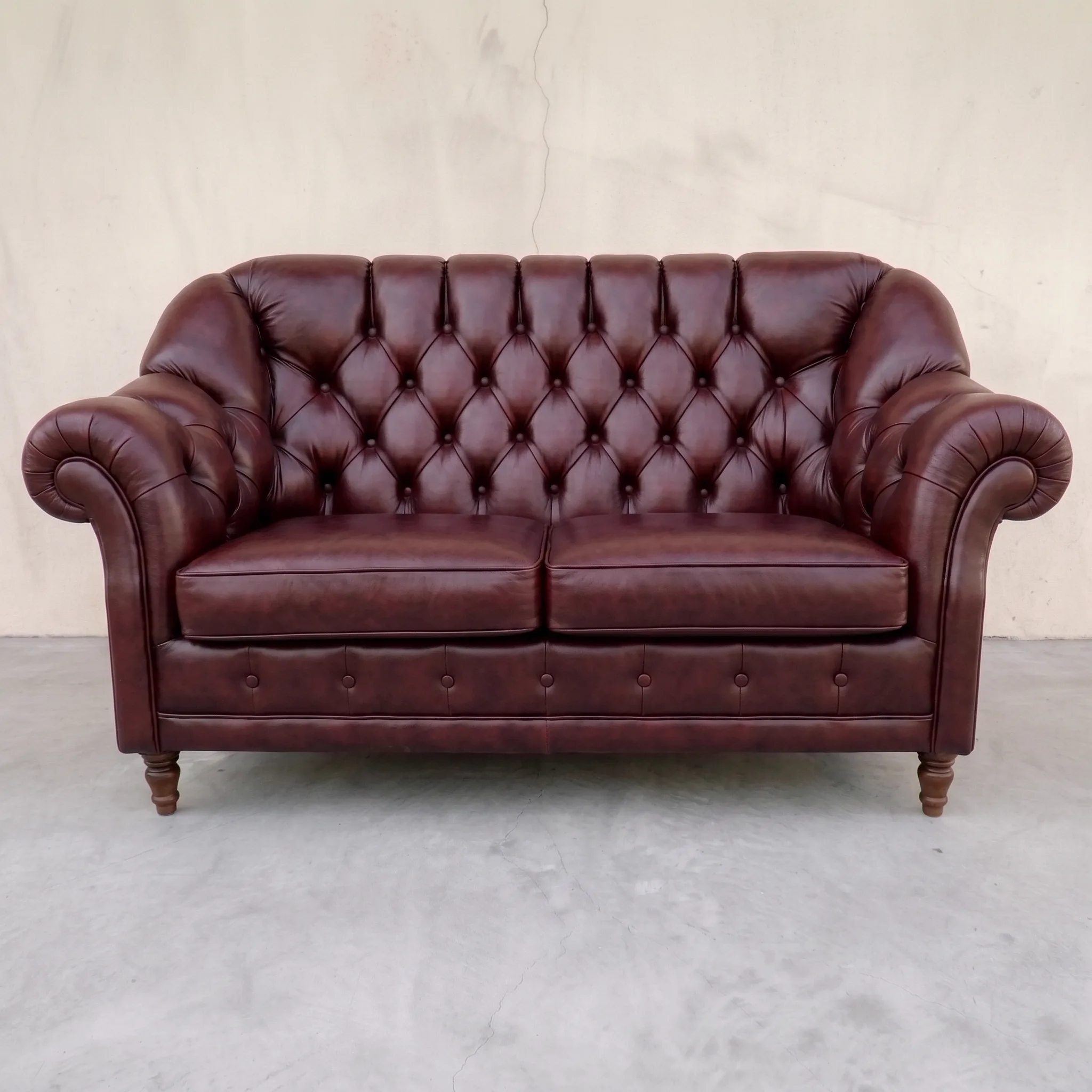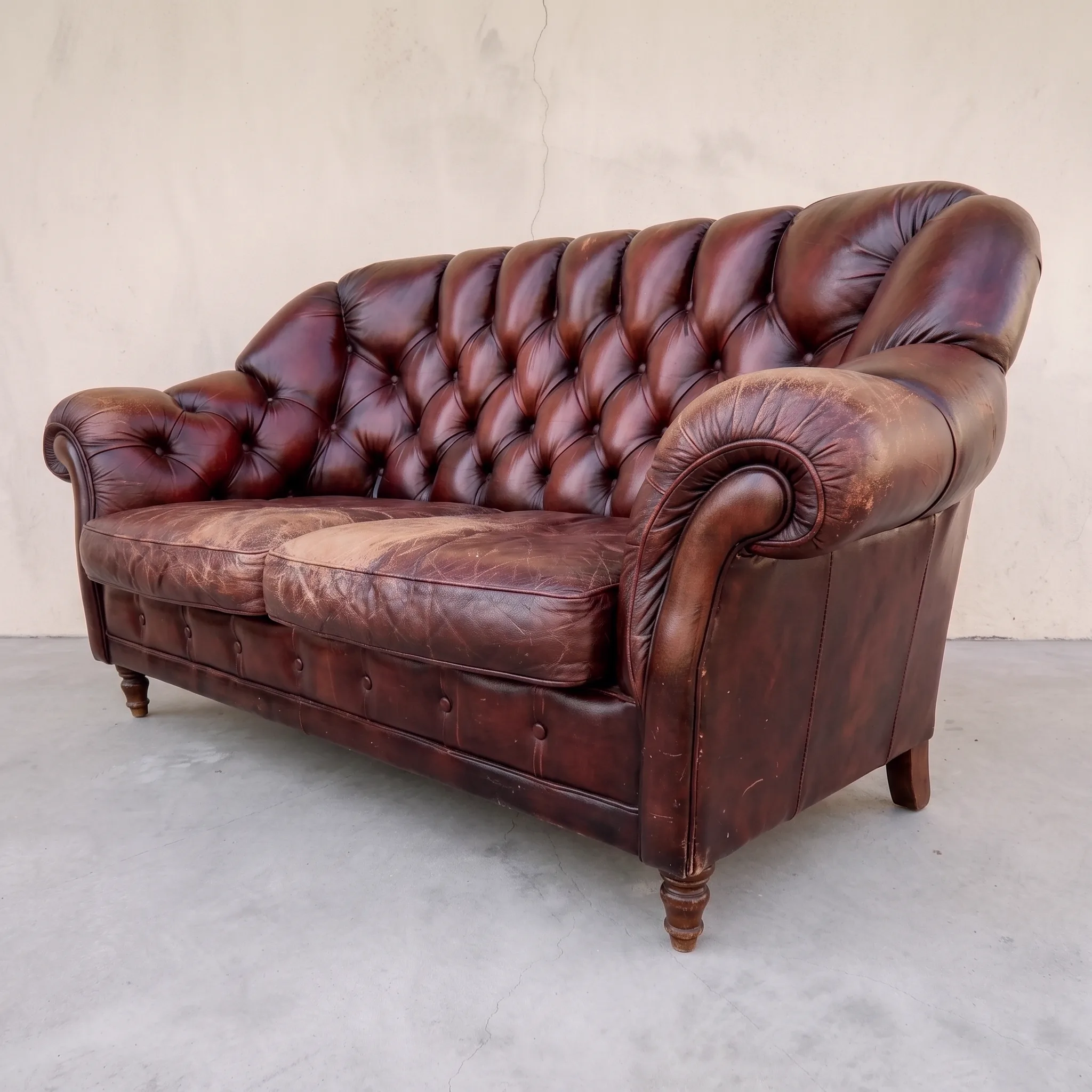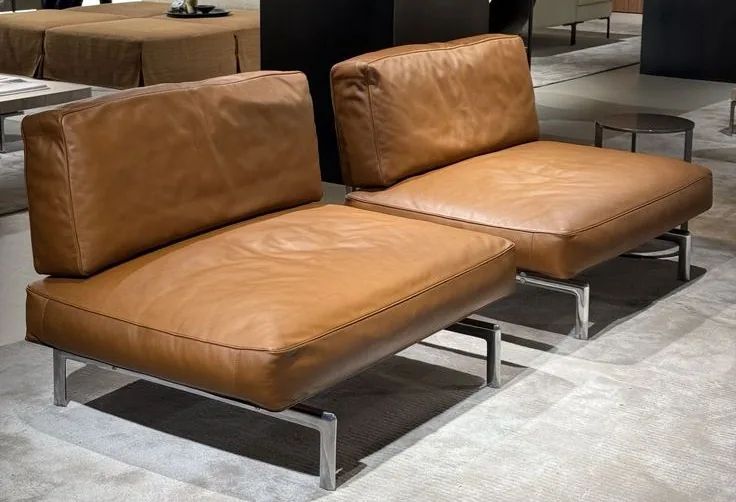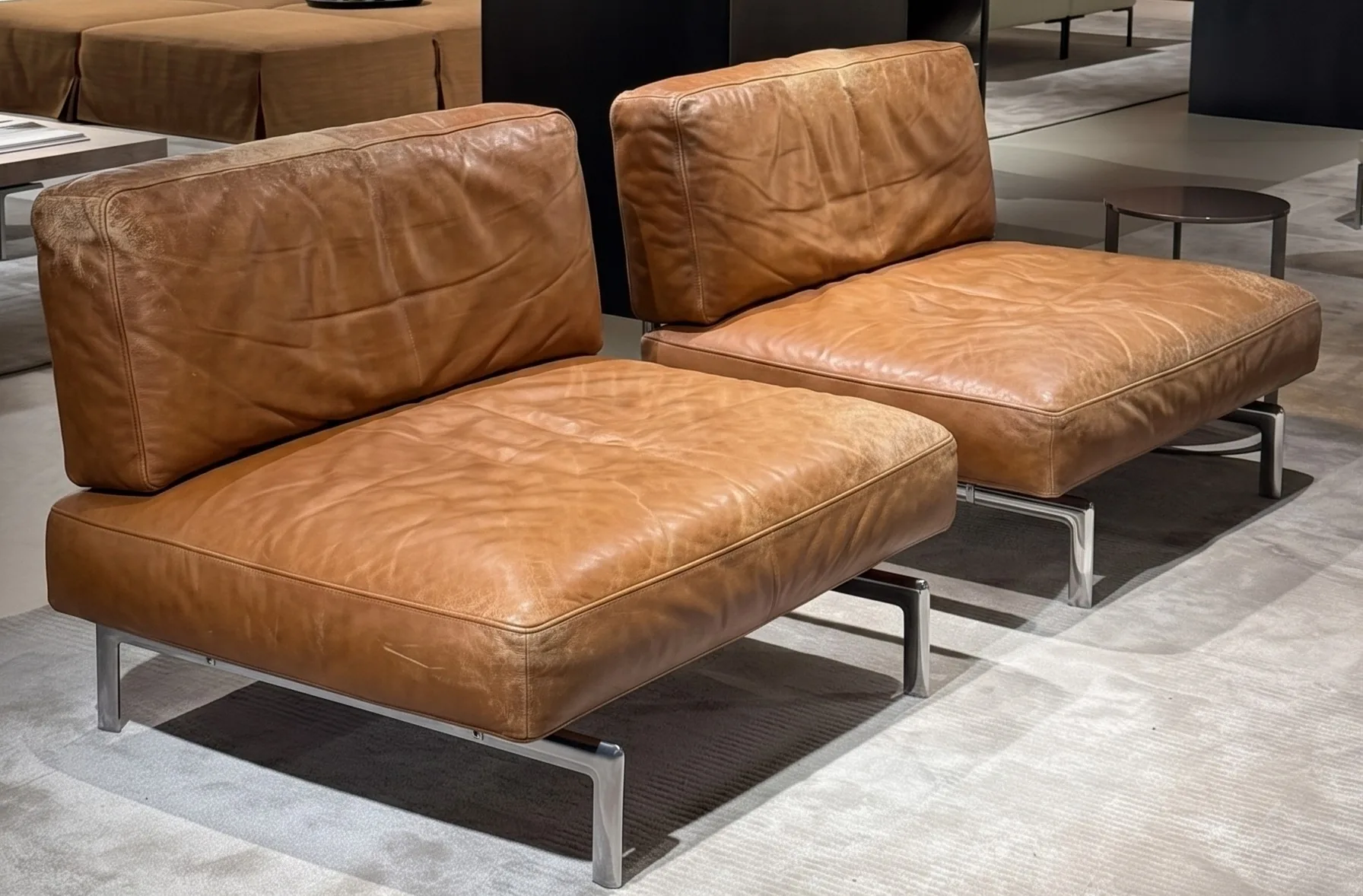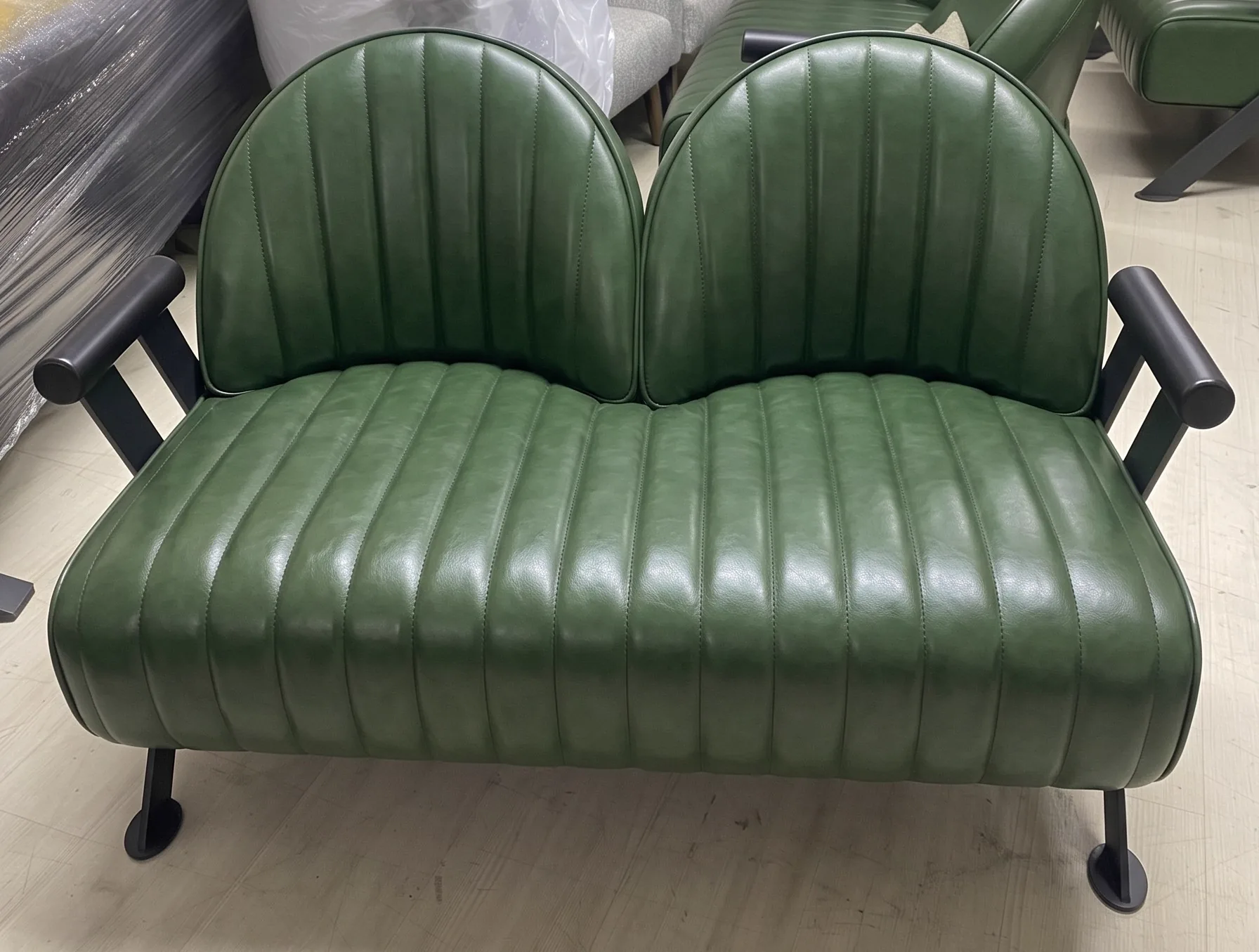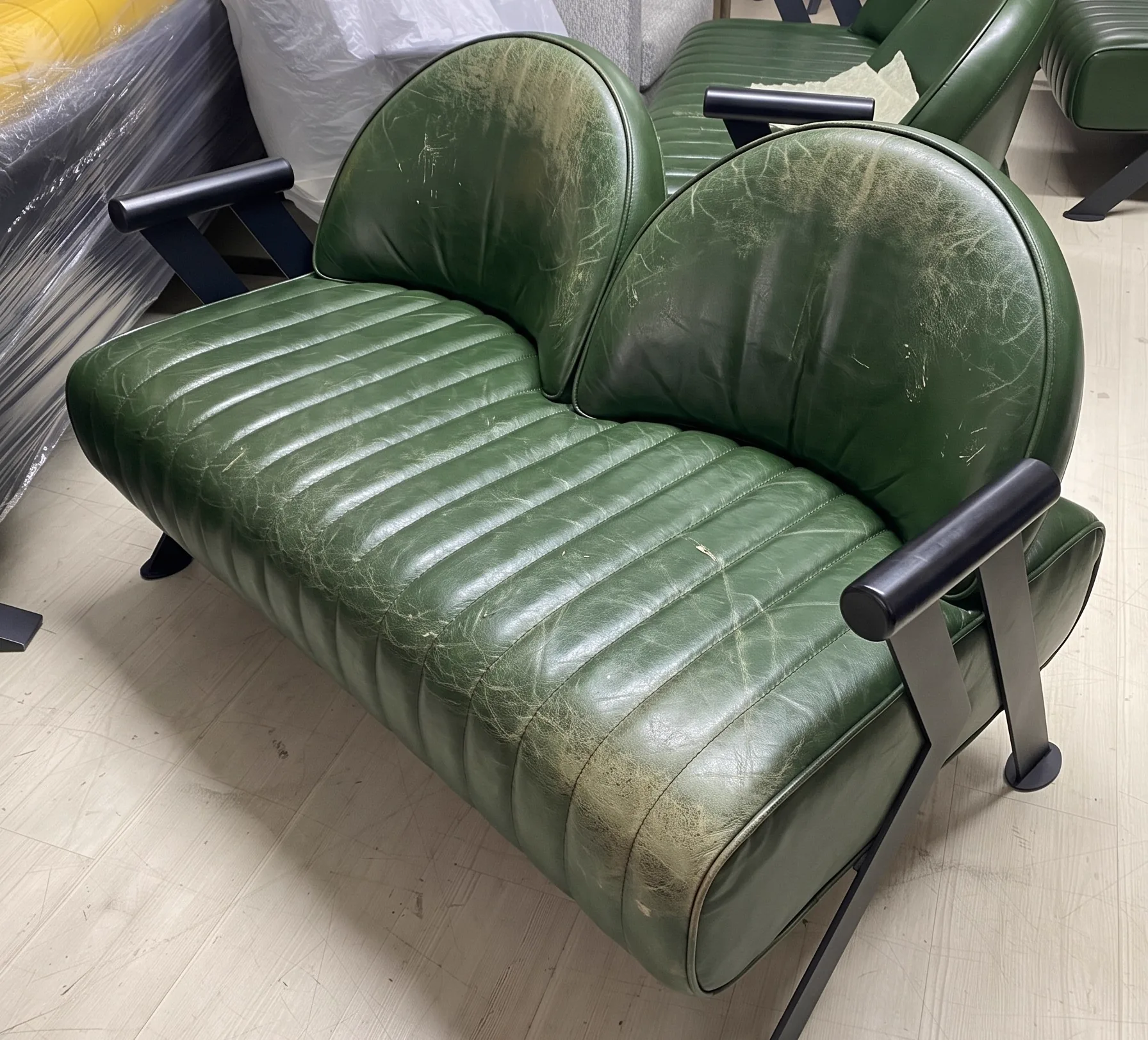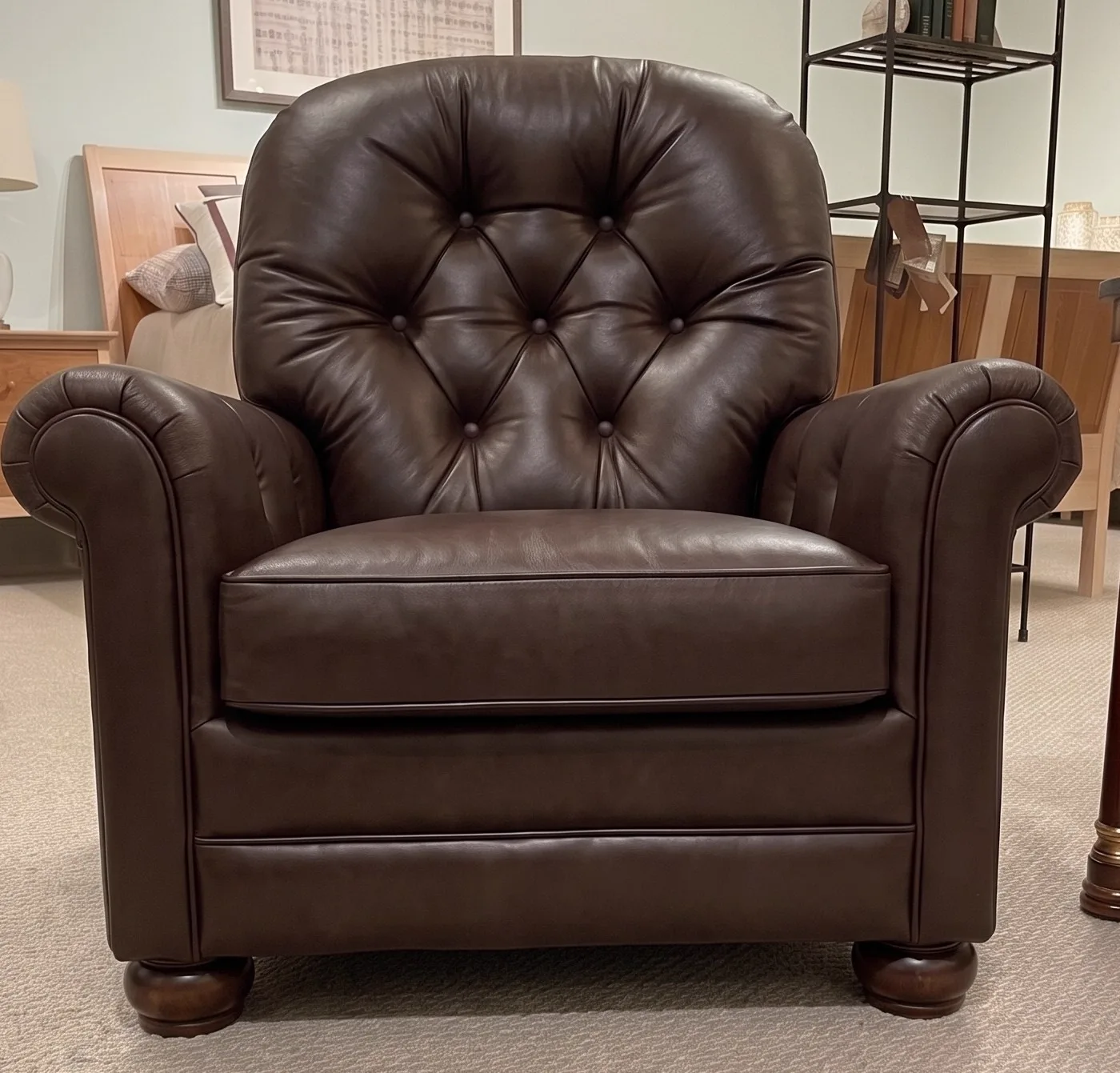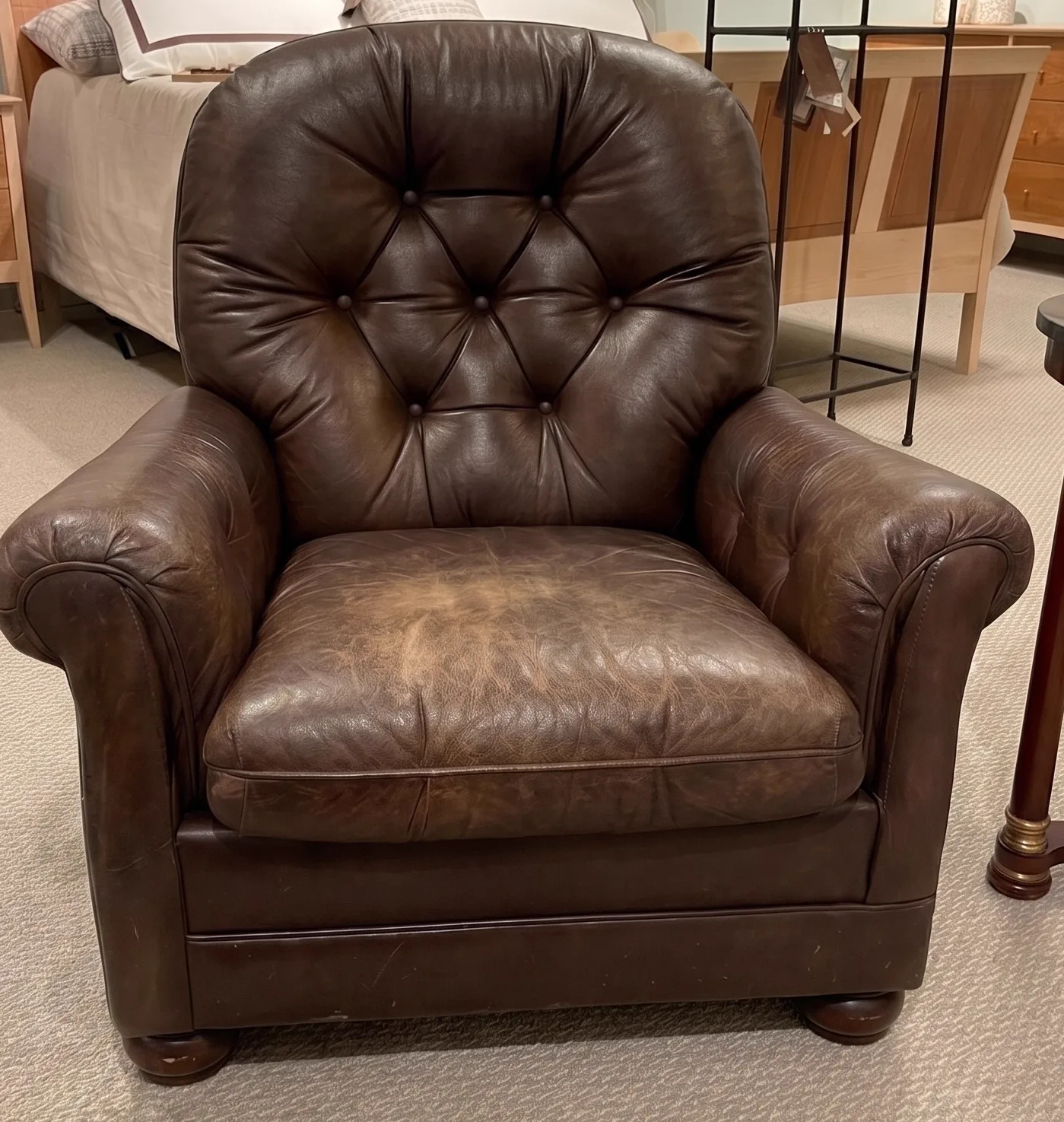
Your leather sofa is not an inert surface. It is a stabilised collagen matrix held in chemical balance , and that balance depends on a single narrow band on the pH scale. Stay inside the band and a luxury hide will outlive you. Drift outside it, even by two points, and damage starts immediately at the molecular level. The cleaning products under most Indian kitchen sinks , dish soap, vinegar, baby shampoo, all-purpose sprays , sit far outside that band. They are not "gentle alternatives." They are slow-motion solvents for the chemistry that keeps a Natuzzi, a Frau, or a B&B Italia piece alive. This article explains the science, names the worst offenders, and lays out the pH-neutral steps that master restorators apply to every aniline, semi-aniline, and pigmented finish in the workshop.
What Is the Safe pH Range for Leather?
Leather is stable between pH 4.5 and 5.5. This is not a marketing range. It is the range where the collagen fibres of the hide, the chrome or vegetable tanning complex, and the residual fat liquor stay chemically settled. Tanneries finish hides at this pH because it is the balance point where the leather's structural proteins resist swelling, the pigment binders cure correctly, and the protective top-coat holds without stress.
The pH scale is logarithmic. A jump from pH 5 to pH 7 is not a small shift , it is a hundred-fold increase in hydroxide-ion concentration at the surface. A jump to pH 9 is ten thousand times more alkaline. This is why one wash with dish soap can do measurable damage that a glance at the bottle would never predict. The bottle says "mild." The chemistry on your sofa says catastrophic.
Three failure modes follow when leather drifts outside the safe pH band. Each one is invisible until it becomes structural.
The chemistry rule: if a cleaner has not been formulated and pH-tested for leather, it does not belong on your sofa. "Natural" or "gentle" on a label means nothing here. Vinegar is natural. Lye is natural. Both destroy leather.
What Does Dish Soap Do to a Leather Sofa?
Most household cleaners are alkaline by design. Soap, dish liquid, laundry detergent, all-purpose spray, and even "natural" castile preparations sit between pH 8 and pH 11. Alkalinity is what lifts grease off ceramic plates. The same chemistry, applied to your leather sofa, attacks three structures at once.
1. Collagen swelling
Collagen, the main protein of the hide, is stable in mildly acidic conditions. Above pH 7, the collagen fibres start to swell as hydroxide ions break the hydrogen bonds inside the fibre bundle. Swelling forces the fibres apart at a microscopic level. When the leather dries, the fibres do not return to their original packed structure , they settle slightly looser, slightly weaker, slightly more porous. This is the first stage of fibre delamination, the failure mode that produces "loose grain" and a sagging surface in older sofas.
2. Fat liquor stripping
Every tanned hide carries a precise quantity of fat liquor , an emulsion of oils and surfactants worked into the fibre matrix during tanning. This is what gives leather its supple feel and stops the fibres from sticking together when the hide flexes. Alkaline surfactants are built to bind fats and rinse them away. They cannot tell the difference between dinner grease on a plate and the fat liquor inside your sofa. One pass of a degreasing cleaner may remove 5 to 8 percent of the residual fat liquor. After ten cleanings, the hide loses one-third of its internal lubrication and starts to feel papery, brittle, and dry.
3. Pigment binder dissolution
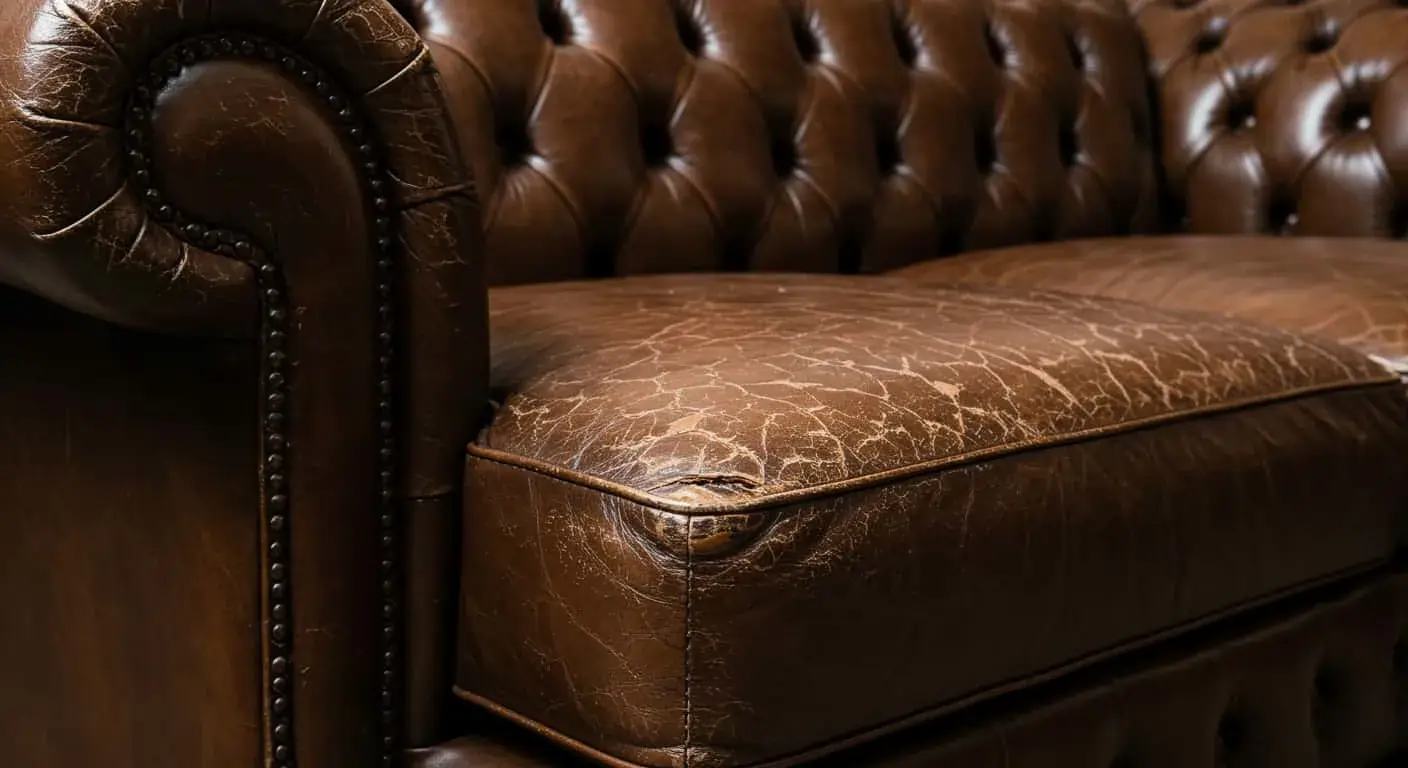
On semi-aniline and pigmented finishes, the pigment is held to the hide by a polymer binder that cures at the tannery's finishing pH. Strong alkalinity attacks the cross-links in this binder. The pigment layer does not lift in one wash, but the bond weakens. After repeated alkaline exposure, the pigment starts to crock , transferring colour to clothes and hands , and the top-coat develops a microcracked, dull surface that no conditioner can fix.
"By the time you notice that the leather feels dry, the chemistry has already been off for two years. The cleaning product that caused the damage is usually still under the kitchen sink, still considered safe."
Does Vinegar Clean Leather, or Destroy It?
Acid is the other failure mode , and the worse one on premium aniline finishes. The most common household acid used on leather is vinegar: typically 5 percent acetic acid, sitting at roughly pH 2.4. Lemon juice is similar. Both are pushed in viral cleaning videos as "natural leather cleaners." Both cause damage that ranges from visible within hours on aniline to silent-then-permanent within months on pigmented.
Below pH 3.5, the acid starts breaking peptide bonds in the collagen , a process called acid hydrolysis. Once the bonds break, the protein chain shortens. Your sofa loses tensile strength permanently. Fibres go brittle. The leather stiffens unevenly across the panel because the acid was not spread evenly when you wiped it. On aniline finishes, the acidic environment also dissolves the transparent dye itself, leaving pale streaks where the cloth travelled.
Vinegar damage cannot be undone. The peptide bonds, once broken, do not re-form. Re-fatliquoring restores some softness but cannot rebuild the protein chain. When a vinegar-cleaned aniline piece arrives at the workshop, the response is almost always the same: stabilise what remains, accept the loss in the affected zone, and re-pigment with a colour-matched system to hide the residual stiffening.
For a full breakdown of the damage timeline and the mechanism behind every household "remedy," read the dedicated investigation: why vinegar and olive oil are ruining your luxury leather.
pH of Common Cleaners: How Bad Is Your Bottle?
Below is the approximate pH of the products most often used on leather sofas in Indian homes. Compare each against the safe band of 4.5 to 5.5. The further a product sits from that band, the more damage it does every time you use it.
- White vinegar (pH ~2.4) , strongly acidic. Causes hydrolysis of collagen and dissolves aniline dye. One of the most destructive products in common use.
- Lemon juice (pH ~2.5) , same hydrolysis risk as vinegar, plus citric acid that bleaches dyes. Leaves pale rings on darker hides.
- Pure water (pH 7) , neutral, but distilled or RO water pulls minerals and fat liquor from the hide as it absorbs and dries. Use sparingly.
- Baby wipes (pH ~5.5–6.5) , the pH looks acceptable, but most contain alcohol, propylene glycol, and surfactants that strip fat liquor on contact. Safe for skin, damaging on aniline.
- Saddle soap (pH ~9–10) , built for thick, untreated tack leather. Too alkaline for furniture-grade aniline or semi-aniline finishes. The "traditional leather cleaner" myth that causes the most damage.
- Dish soap (pH ~8–10) , alkaline degreaser. Strips fat liquor and dissolves pigment binder. Diluting it does not fix the pH; it only lowers the concentration.
- All-purpose spray (pH ~10–12) , built to dissolve grease on hard surfaces. One application can lift pigment from a semi-aniline panel.
- Bleach (pH ~12–13) , strongly alkaline plus oxidising. Causes immediate fibre damage and complete pigment failure. Keep it away from leather entirely.
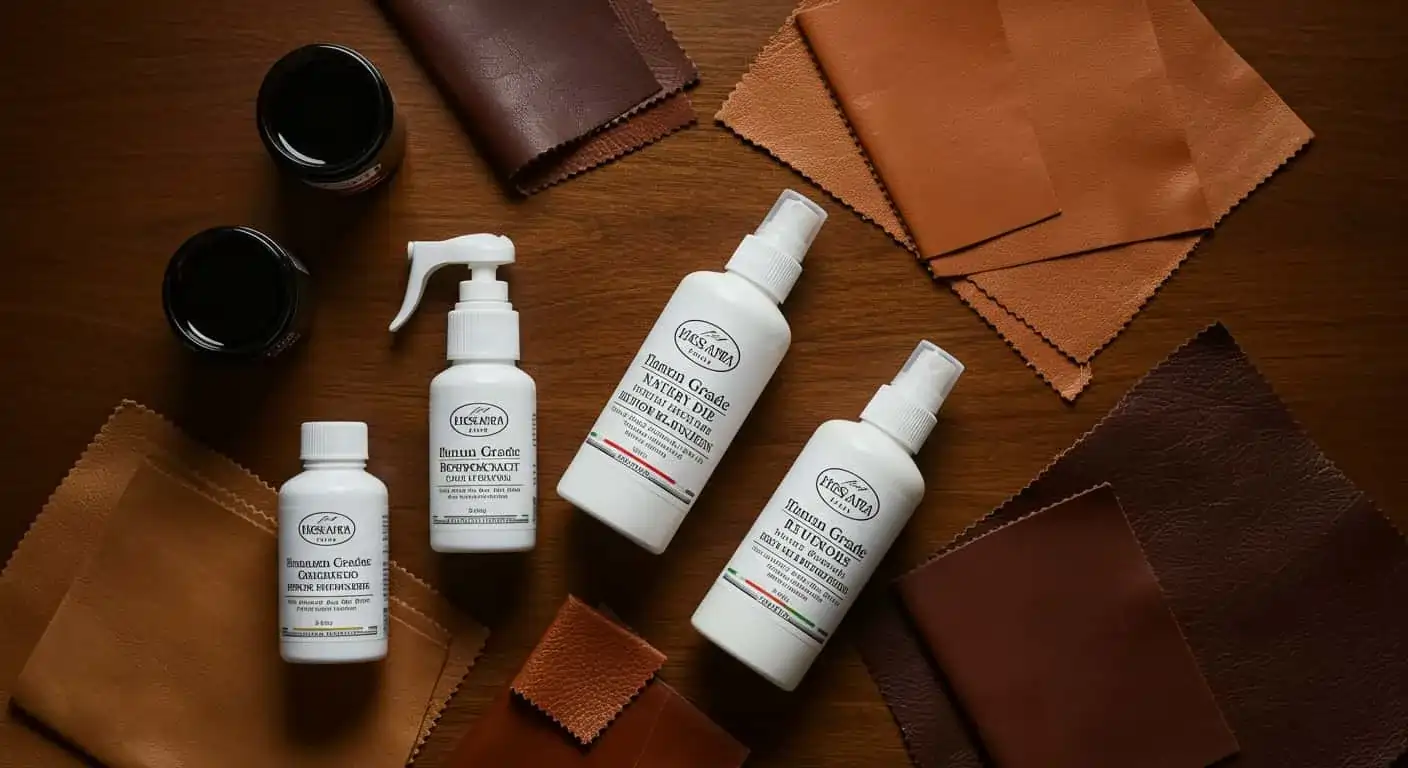
- pH-neutral leather cleaner (pH 5.0 ± 0.5) , the only correct option. Formulated with non-ionic surfactants that lift contaminants without touching the fat liquor or pigment binder beneath.
Why Aniline Leather Gets Damaged First
Of the three premium finishes covered in the definitive guide to aniline, semi-aniline, and pigmented leather, aniline is the most pH-sensitive surface in the entire furniture leather category. There is no opaque pigment layer to act as a chemical buffer. There is no thick top-coat to absorb the first contact with a wrong-pH product. The cleaner reaches the dyed fibre directly.
This is why the same dish-soap wash that leaves a pigmented IKEA sofa untouched will leave a permanent pale streak on a Frau Pelle Estro armchair within minutes. The pigmented sofa survived because the top-coat absorbed the alkalinity. The aniline did not, because nothing stood between the surfactant and the dye.
Semi-aniline sits between the two. The thin pigment coat tolerates one or two wrong-pH cleanings before damage shows , which sets up a damaging pattern. "It cleaned fine last time" becomes the reason to keep using the wrong product. By the time the pigment lifts, the hide has absorbed three or four rounds of alkaline stress, and the damage is severe.
How to Clean Leather Without Damaging It
The steps below are the workshop standard for aniline, semi-aniline, and pigmented finishes. The cleaner changes between finishes; the procedure does not.
Step 1 , Identify the finish. Run the three-question identification test from the aniline-semi-aniline-pigmented guide. Aniline, semi-aniline, and pigmented each need a slightly different cleaner formulation. Skip this step and the rest is pointless.
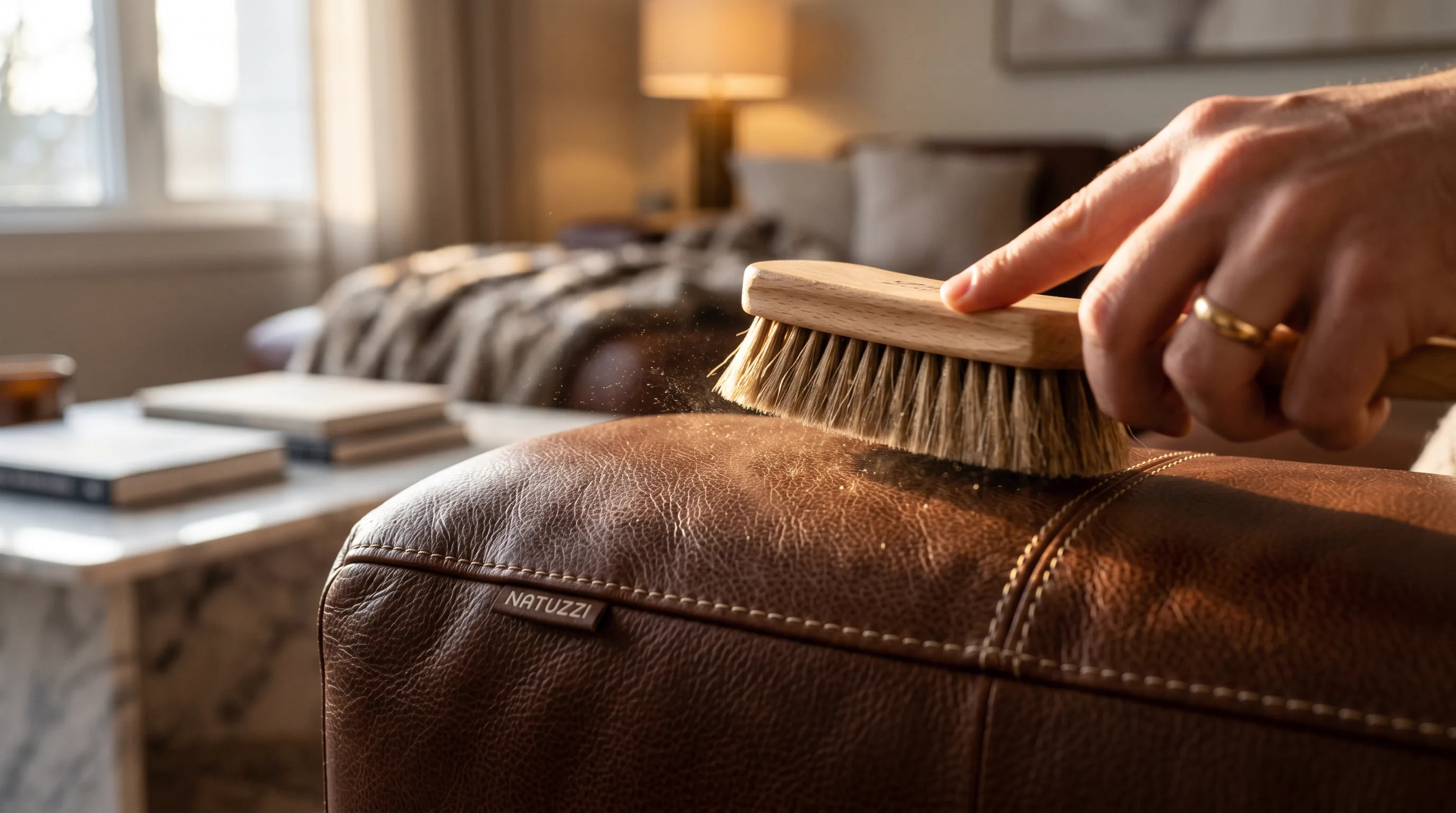
Step 2 , Vacuum first, dry. Use a soft brush attachment. Remove loose dust, hair, and grit. Any abrasive particle left on the surface will be ground into the finish during step three.
Step 3 , Apply pH-neutral cleaner to the cloth, not the leather. Use a clean, soft microfibre cloth. Mist or pour a small amount of cleaner onto the cloth. The cloth should be barely damp , never soaked. Applying directly onto leather risks pooling, uneven absorption on aniline, and water rings on semi-aniline.
Step 4 , Wipe in straight, light passes. Work panel by panel. No circular scrubbing. Do not re-pass the same area within the same minute. The surfactants in a pH-neutral cleaner need a moment to lift contaminants. Scrubbing hard only abrades the finish.
Step 5 , Lift residue with a second clean cloth. Damp microfibre, distilled water only, single pass. This removes dissolved contaminants and surfactant residue.
Step 6 , Air dry. Do not speed it up. Let the panel dry naturally at room temperature. Fans, hairdryers, and sunlight cause uneven drying and heat stress on the dye. Drying may take 20 to 40 minutes depending on Indian humidity.
Step 7 , Condition on the right schedule. Cleaning removes contamination but also takes a small fraction of fat liquor with it. Aniline and semi-aniline finishes need a non-comedogenic conditioner every 6 to 9 months. Pigmented finishes need one per year to stop the underlying hide from drying beneath the sealed top-coat. Never use silicone, beeswax, coconut oil, or olive oil. These block the hide's ability to breathe and speed up top-coat failure.
How to Check If a Leather Cleaner Is Safe
Most cleaner labels do not state pH. The gap is deliberate , manufacturers know that "pH 9.5" on a leather product would not sell. Use these signals to check any cleaner before it touches your sofa.
- Look for "pH-balanced for leather" or a stated pH in the 4.5–5.5 range. Vague claims like "pH-balanced" without a number usually mean balanced for skin, not leather.
- Avoid any product listing alcohol, isopropanol, or ethanol in the first five ingredients. These are degreasers regardless of pH. They dissolve top-coat binders.
- Avoid any product containing "ammonia," "lye," "sodium hydroxide," or "potassium hydroxide." These are alkaline boosters that destroy fat liquor.
- Avoid "natural cleaner" formulas built around vinegar, lemon juice, citric acid, or castile soap. "Natural" does not mean safe for leather pH.
- Test on a hidden area before using it all over. Apply a coin-sized amount under a cushion seam. Wait 24 hours. Look for darkening, lightening, stiffening, or any sheen change.
If the brand cannot or will not tell you the pH on request, walk away. A proper leather cleaner is a tested formulation, not a fragrance product. The information should be available.
What to Do If You've Already Used the Wrong Cleaner
Most calls to the workshop come after the wrong-pH cleaning has already happened. The signs are consistent: a panel that feels stiffer or papery, a section where the colour has gone lighter than the rest, a sheen change in high-contact zones, mild crocking when a damp cloth runs over a previously cleaned area. None of these signs mean the piece is lost. They mean the chemistry needs to be rebalanced before more damage builds up.
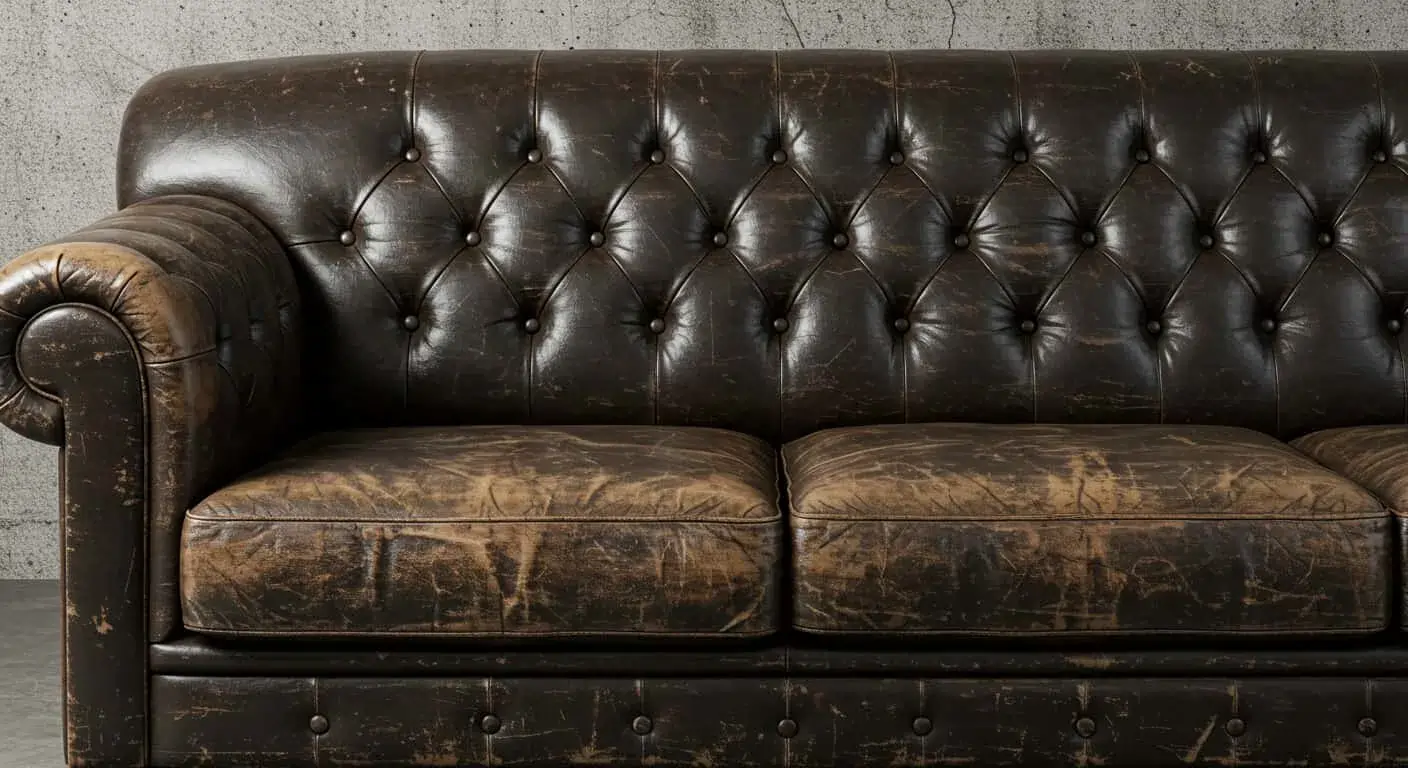
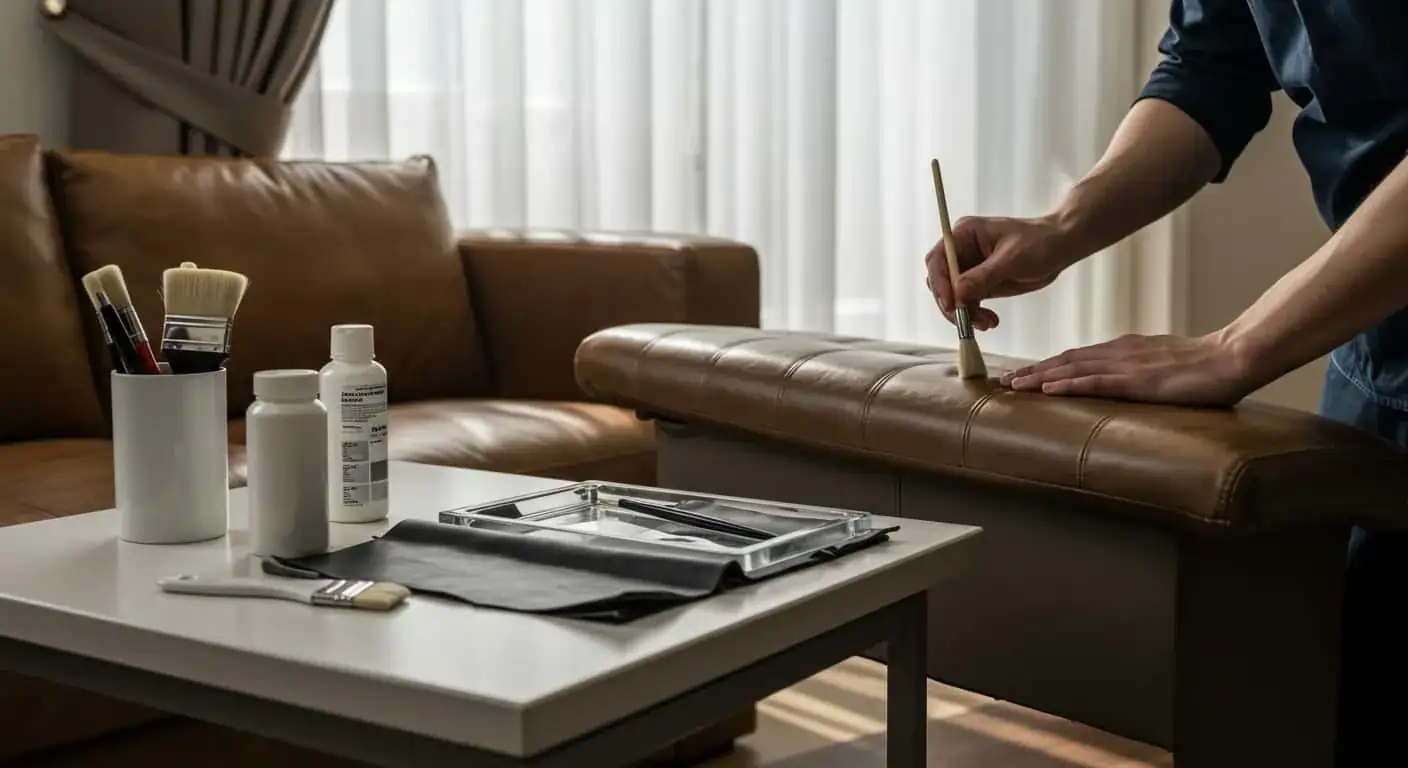
A professional leather restoration fix for pH damage runs in three stages: deep neutralisation of any surfactant or acid still trapped in the fibre, re-introduction of fat liquor through a controlled emulsion soak, and , where pigment loss has occurred , micro-pigmentation to restore even colour. The earlier you act, the lower the cost. A pH-stripped panel treated within six months can usually be restored to indistinguishable-from-original. The same panel left for three years often needs full re-pigmentation of the affected zone.
India's climate speeds everything up. Summer dryness widens the daily moisture cycle inside the hide. Monsoon humidity floods the fibres with water that carries residual alkalinity deeper. A wrong-pH wash that causes slow damage in a Bangalore home causes visible damage in a Gurugram penthouse within the same year. The seasonal steps that reduce this risk are in the dedicated guide on monsoon leather care.
"Every leather sofa we receive with unexplained dryness, unexplained sheen change, unexplained stiffening , the answer is almost always pH. Once you understand the chemistry, the diagnosis writes itself."
The One Decision That Protects Your Sofa
pH is the most under-discussed part of owning a luxury leather sofa in India. You spend lakhs on the piece, time on the conditioning routine, and then undo it with a Sunday clean using whatever bottle was within reach. Switching to pH-neutral, leather-specific products costs nothing extra over the life of the sofa. Not switching is measured in restoration bills, lost patina, and , on rare hides , permanent structural damage.
If you own a Natuzzi, Poltrona Frau, Fendi Casa, B&B Italia, or any aniline-finished piece above the ₹3 lakh range, the rule is absolute: only pH-neutral, leather-specific products, used with the steps above, on the right conditioning schedule. Every other option is a bet against time , and time always wins.
Bookmark this article. The next time someone at home reaches for the dish soap or vinegar bottle to clean a spill, the chemistry is right here to settle the argument. And if the wrong bottle already had its turn on the hide, a pH-neutral leather sofa cleaning is the corrective step to book before the stripped panel stiffens any further.