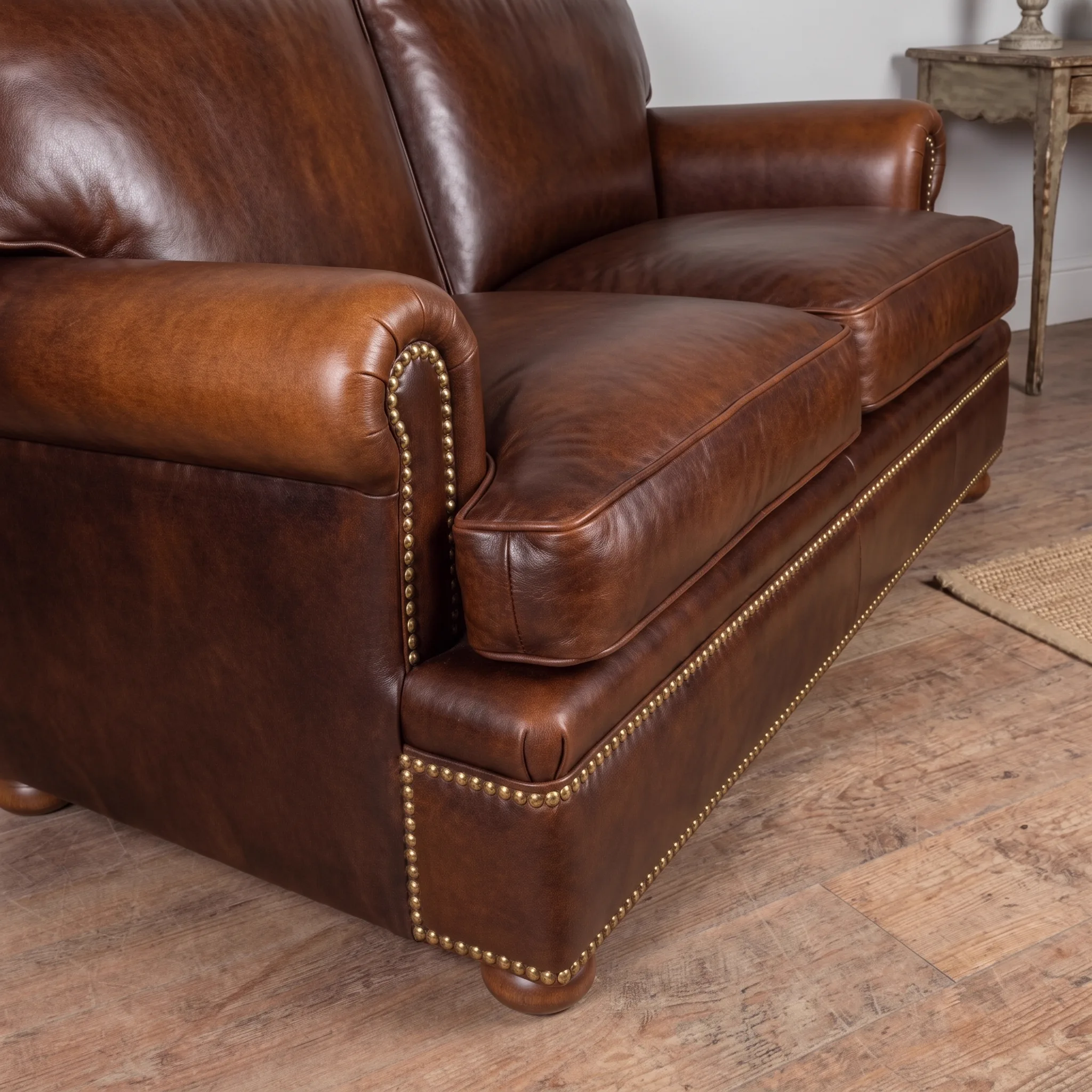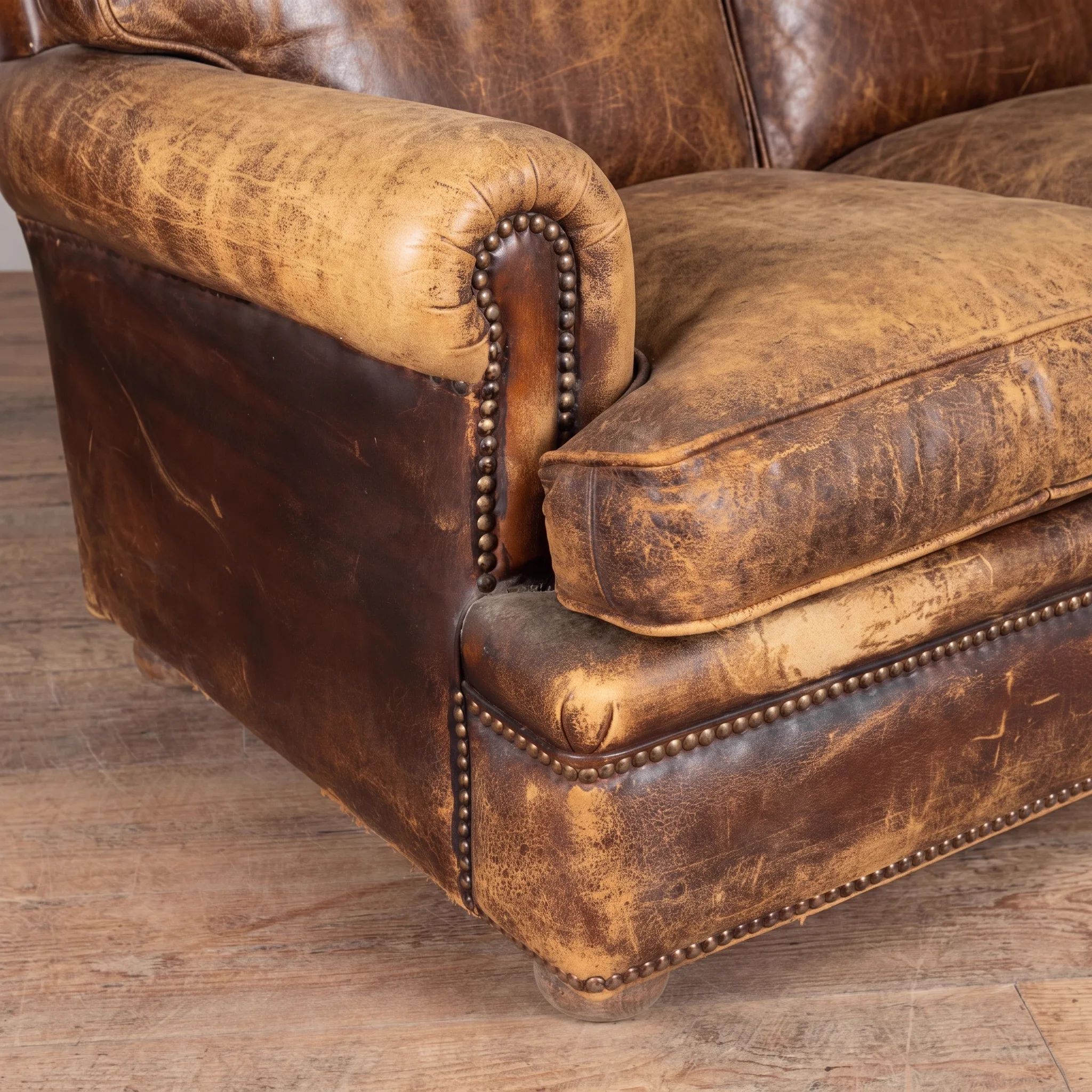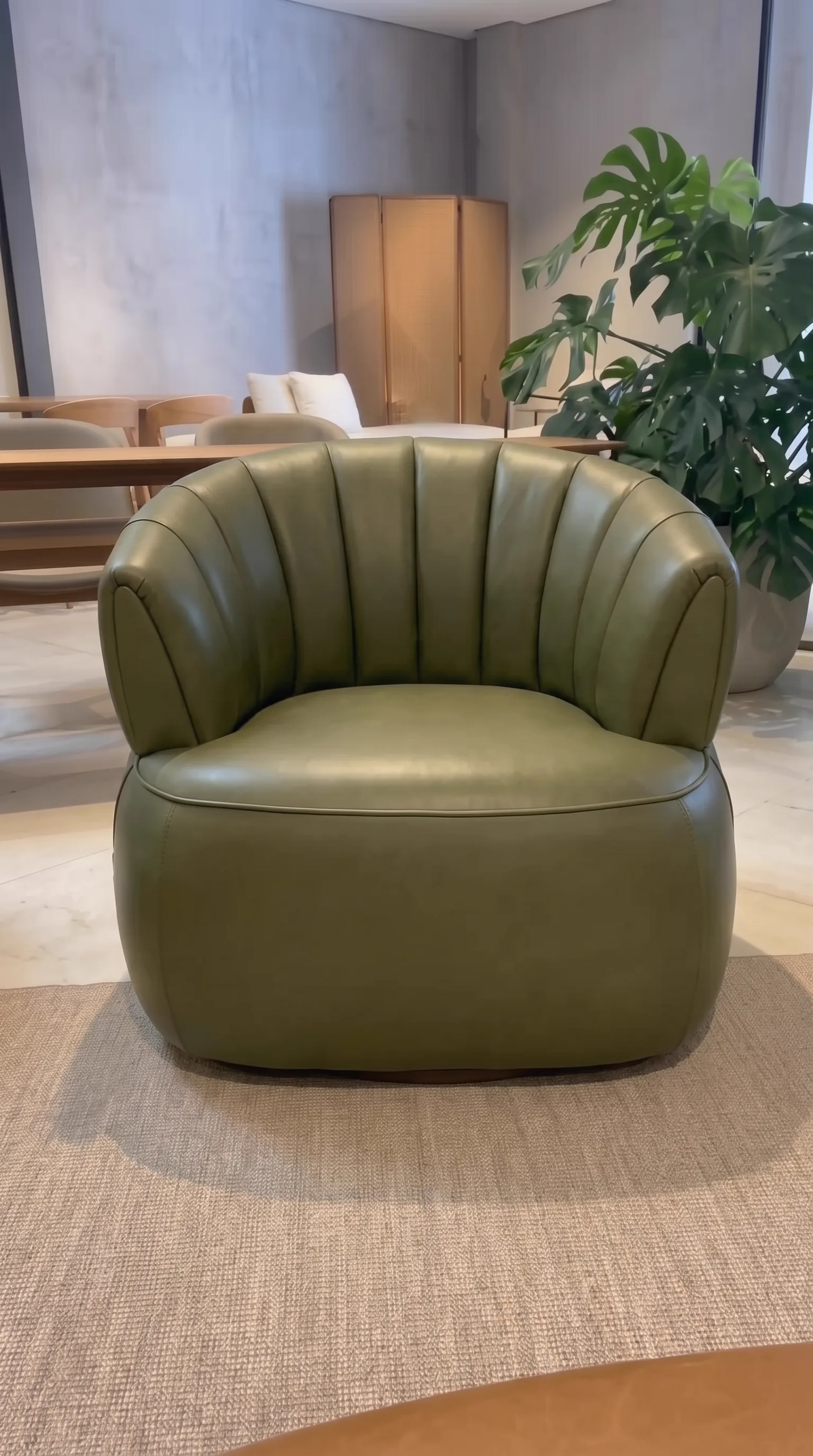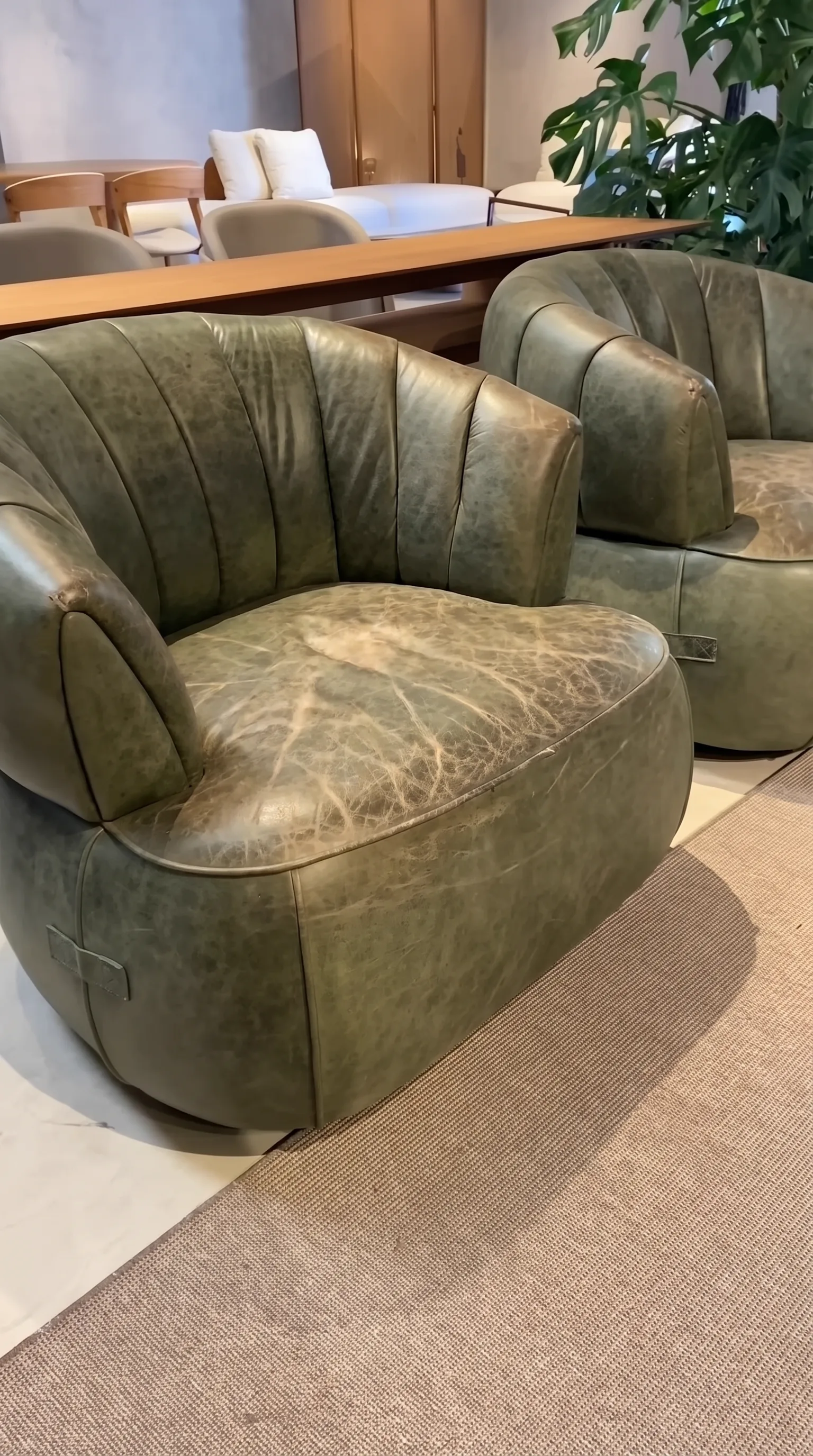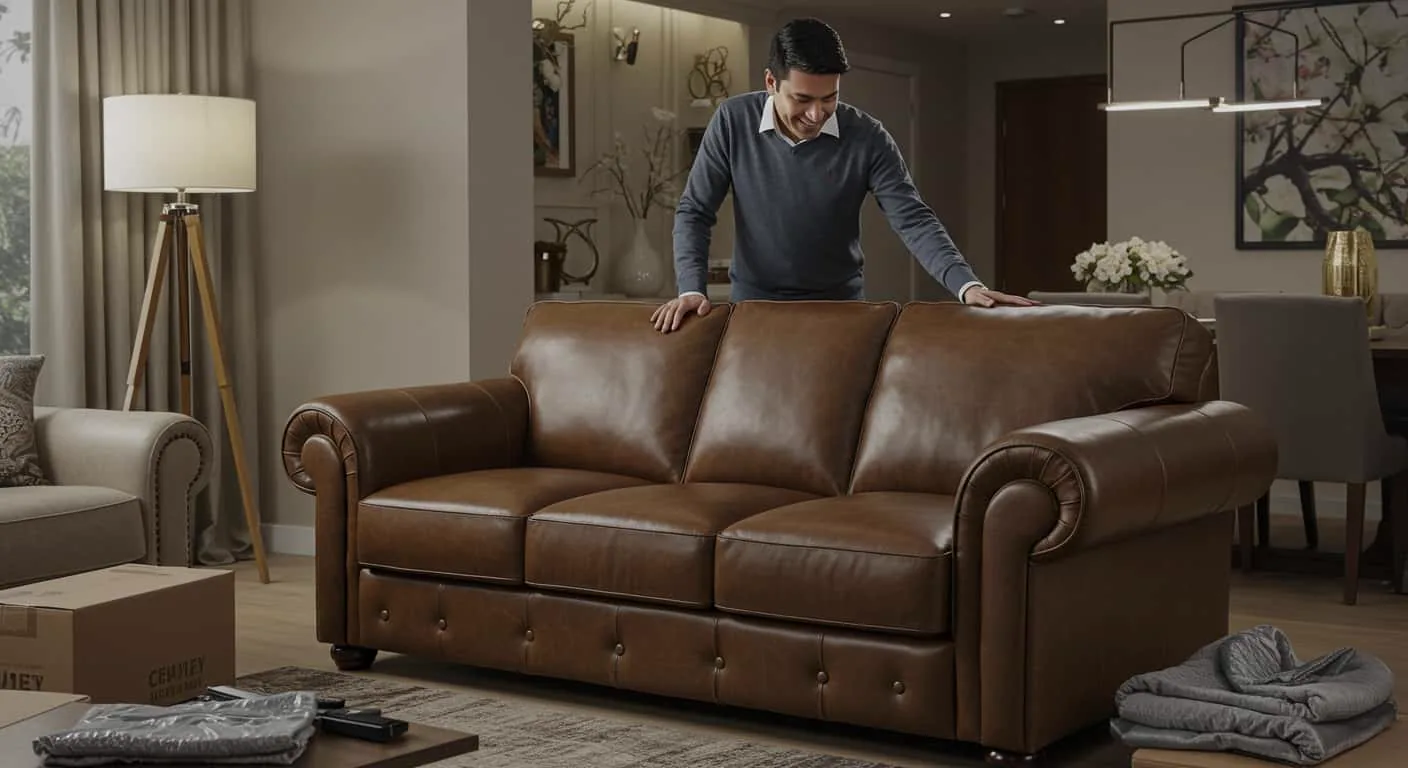
The question "how long does a leather sofa last" has a very different answer in India than in Europe or North America - and a very different answer depending on what you actually bought. India's climate is measurably harsher on leather than the conditions most furniture manufacturers use when publishing lifespan figures. And the Indian furniture market has significant labelling ambiguity that means many "leather" sofas are not leather at all and have fundamentally different lifespans regardless of care. This guide gives you the honest numbers by material grade, explains what shortens or extends that lifespan in Indian conditions, and helps you assess where your sofa currently sits in its lifecycle.
Lifespan by Material Grade
The first thing to establish is what your sofa is actually made from. The lifespan ranges below assume Indian residential conditions with typical AC use and normal family use. "With maintenance" means twice-yearly conditioning with a furniture-grade conditioner, UV screening from direct sunlight, and cleaning with pH-neutral leather cleaners only.
Full-grain leather
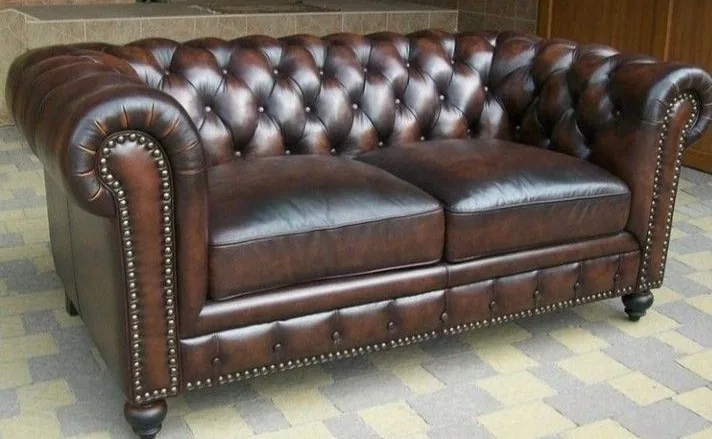
The highest grade of genuine leather - the complete outer surface of the hide with the natural grain intact and unchanged. No buffing, no correction, no additional polyurethane topcoat (on aniline) or only a minimal one (on pigmented full-grain). Full-grain leather improves with age - it develops a patina that increases character and value. In Indian conditions: 20 to 25 years with correct maintenance. 8 to 12 years without consistent conditioning. Full-grain leather is the only grade that genuinely gets better with age rather than simply deteriorating more slowly , see the full-grain vs top-grain vs corrected-grain guide for how the grades differ. It is the material used by Poltrona Frau and in Fendi Casa's most premium ranges.
Top-grain leather
The outer surface of the hide with a light buffing to remove natural marks and imperfections, followed by a pigmented or semi-aniline finish. More uniform in appearance than full-grain but slightly less durable over very long timescales because the buffing process removes some of the densest fibre structure. In Indian conditions: 15 to 20 years with correct maintenance. 6 to 10 years without. Top-grain is the most common genuine leather in the Rs 2-5 lakh Indian market. Most major Indian furniture brands that use genuine leather (Durian, La-Z-Boy leather ranges) use top-grain pigmented leather.
Corrected-grain leather
The hide surface is heavily buffed to remove most natural marks, then embossed with an artificial grain pattern, and coated with a thick pigmented topcoat. The underlying hide is genuine leather but the protective layer is a significant polymer coating. Lifespan in Indian conditions: 10 to 15 years with maintenance. 4 to 8 years without. The topcoat is more vulnerable to UV degradation than the thinner coatings on top-grain leather. UV-induced topcoat cracking is more common and more pronounced on corrected-grain leather. The artificial grain pattern also makes crack-filling and topcoat restoration more technically demanding - matching the embossed texture requires specialised tools.
Bonded leather
Shredded leather fibre in a polyurethane binder, coated with a polyurethane surface layer. Not genuine leather. In Indian conditions: 3 to 5 years before surface peeling begins. Cannot be extended meaningfully through maintenance. The delamination is a material failure, not a maintenance failure. Conditioning does not penetrate PU and the underlying composite does not respond to fat liquor replenishment. Once delamination begins (typically at seam edges and high-contact zones), it progresses across the surface within 6 to 12 months regardless of care. See the peeling leather guide for the India-specific causes of accelerated bonded leather failure.
PU leatherette
Entirely synthetic - polyurethane coating over a fabric base. No leather content. In Indian conditions: 2 to 4 years before surface peeling and delamination begins. PU is more UV-sensitive than any leather grade and responds more dramatically to India's thermal cycling from AC use. Frequently seen in the under-Rs 30,000 market but also present in mid-range product labelled ambiguously as "premium leatherette" or "Italian leatherette."
The climate correction factor: Most manufacturer lifespan estimates for genuine leather are written for 45-55% relative humidity and UV index below 5. Delhi NCR AC rooms run at 20-35% RH for 7 months a year. Delhi's UV index exceeds 10 for 6 months. Applying these climate stresses to manufacturer estimates: reduce the stated lifespan by approximately 30-40% for unconditioned genuine leather in typical Delhi NCR AC room placement. With Delhi-specific maintenance (twice-yearly conditioning, UV screening, pH-neutral cleaning), the full manufacturer lifespan estimate is achievable.
The Factors That Shorten Lifespan Most
In order of impact, based on restoration work across hundreds of sofas across India:
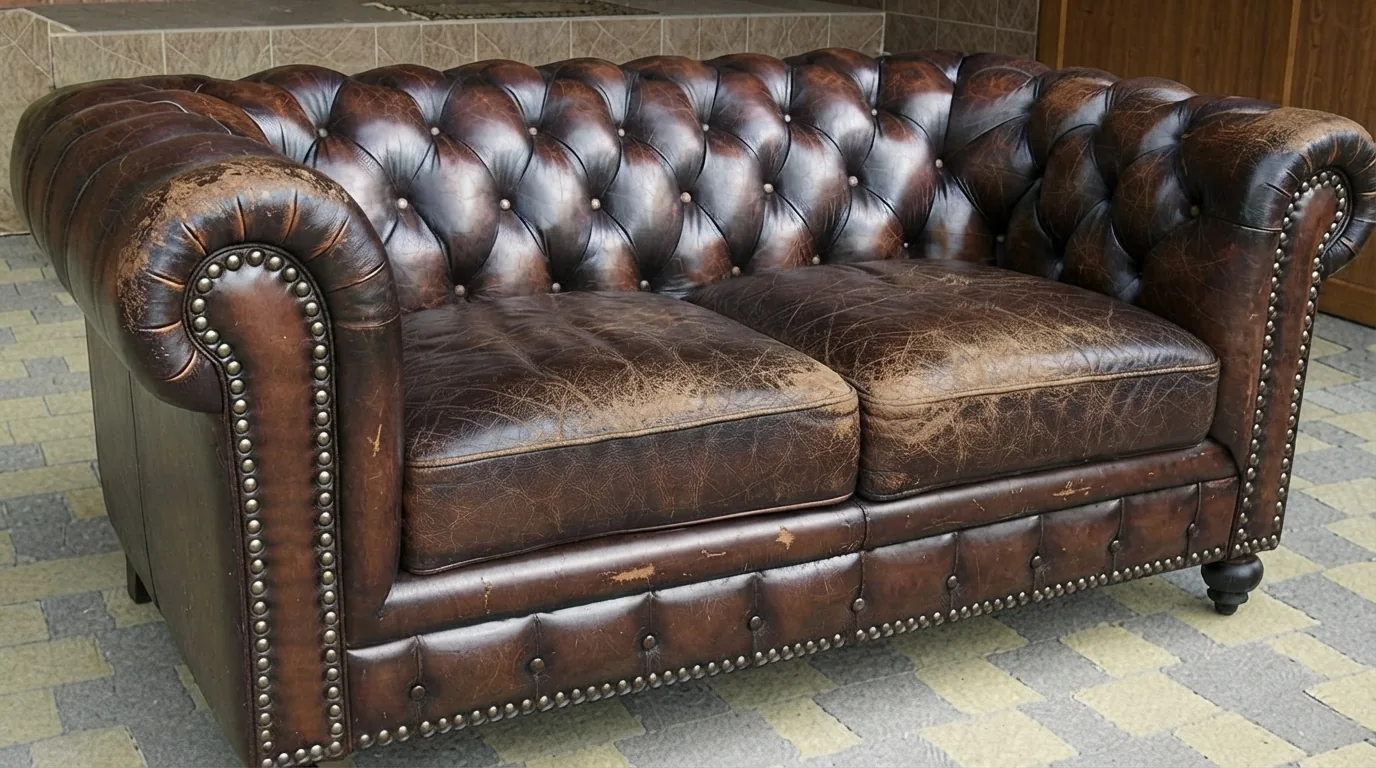
- No conditioning (biggest single factor): An unconditioned full-grain leather sofa in an AC room loses fat liquor at a measurable rate from day one. By year 3 to 4, the fibre bonding process has started. By year 5 to 6, surface cracking is visible. By year 8 to 10, structural cracking has begun. The same sofa conditioned twice yearly: minimal cracking at 20 years. The conditioning schedule is the single variable with the largest impact on longevity.
- Direct AC vent exposure: Sofas positioned directly below ceiling cassette ACs or within 1 metre of wall units experience localised humidity so low that fat liquor depletion is 3 to 4 times faster than on sofas in the same room but further from the vent. The full mechanism is covered in the AC damage guide. Repositioning or vent redirection is one of the highest-return interventions available.
- Direct sunlight from south- or west-facing windows: UV index 10 to 11 for 6 months per year will cause visible colour fade on aniline leather within 18 months and topcoat degradation on pigmented leather within 2 to 3 years of direct exposure. Even 2 to 3 hours of direct afternoon sun daily is sufficient to produce measurable UV damage in 2 to 4 years.
- Wrong cleaning products: Alkaline cleaners (pH above 5.5) used regularly on leather break down the fibre-topcoat bond, accelerate fat liquor evaporation, and cause pigment lift. A sofa cleaned monthly with a household multi-surface spray will show topcoat degradation within 2 to 3 years regardless of material grade.
- Plant oil application: Coconut oil, olive oil, and mustard oil - widely applied in Indian home care as leather "moisturisers" - cause oxidative rancidity inside the collagen fibre. The darkening and fibre cross-linking produced by oil oxidation can reduce effective lifespan by 5 to 8 years relative to a correctly conditioned equivalent sofa.
How to Maximise Lifespan in India
The India-specific maintenance schedule that achieves full leather lifespan in Indian climate conditions:
- Condition in March and October (every year, without exception): These two sessions bracket the highest-stress periods - the summer AC season and the monsoon humidity cycling. Use a furniture-grade conditioner (Leather Master, Fenice, or Bickmore Bick 4) appropriate for your leather finish. For aniline in an AC room, add a June session. The full application method is in the conditioning guide.
- Screen UV from April to September: Curtains, blinds, or UV-filtering window film on south- and west-facing windows during peak sun hours (10am to 4pm). This is the lowest-cost intervention with the highest impact on colour stability and topcoat longevity.
- Maintain indoor RH at 45 to 55%: A room humidifier alongside AC use. This single change slows fat liquor depletion more than any maintenance product. Measure with a hygrometer.
- Professional cleaning every 18 to 24 months: Professional cleaning with correct pH-neutral products, followed by conditioning, removes deep soiling and body oil accumulation that cannot be addressed at home. Each professional clean should include conditioning - this is non-negotiable for post-clean fat liquor restoration.
- Never use household cleaning products on leather: pH-neutral leather cleaner only. Damp microfibre cloth for daily wipe-downs. Spills blotted immediately with a dry cloth, never rubbed. See the home cleaning guide for the correct daily and weekly cleaning approach.
Assessing Where Your Sofa Is in Its Lifecycle
If you already own a sofa and are trying to understand its remaining lifespan, the following assessment tells you where it sits:
Early stage - fully recoverable
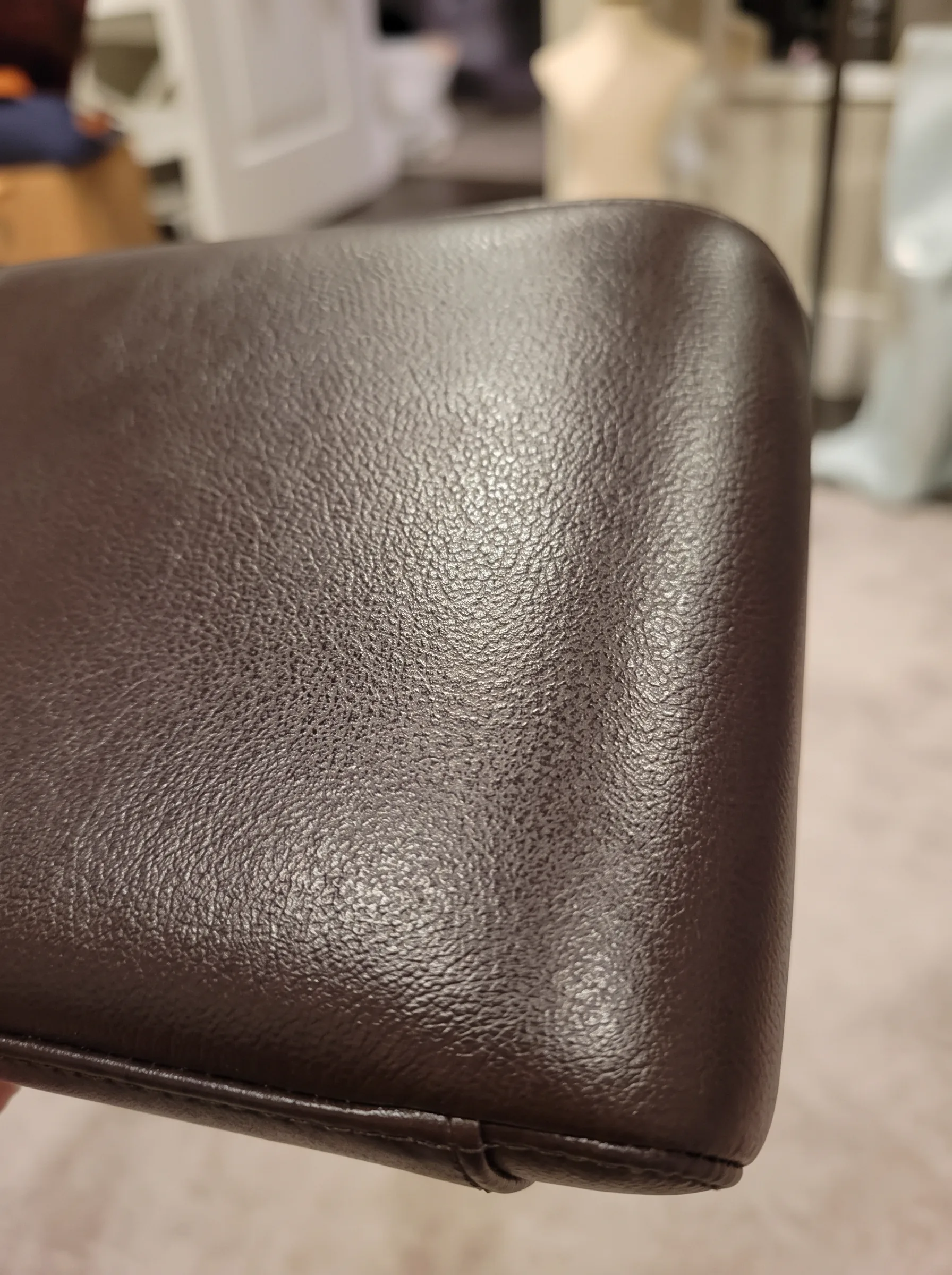
Sofa feels slightly drier or firmer than when new. No visible surface cracks. The flex test (firm flex of a cushion in both directions) may produce a faint crackling. This sofa is in the fat liquor depletion phase but has not reached fibre bonding. A thorough conditioning session restores it fully. Expected remaining lifespan at this stage: close to full. The leather has not structurally degraded.
Mid stage - partially recoverable
Visible surface checking (fine network of surface cracks visible on close inspection). Colour may be fading at high-exposure zones. Professional conditioning and surface treatment can stop further progression and significantly improve appearance but will not restore original condition. Expected remaining lifespan with professional intervention and correct maintenance from this point: 8 to 15 years depending on grade.
Late stage - repair required
Deep structural cracking, colour change at stress points, and possible topcoat separation. A professional leather sofa repair assessment is needed to determine what is repairable versus what requires panel replacement. Remaining lifespan without intervention: 1 to 3 years of continued deterioration. With professional repair and maintenance: potentially 10+ additional years if the frame and non-cracked sections are sound.
"The economics of genuine leather in India make complete sense, but only if you buy the right material and maintain it correctly. A Rs 4 lakh full-grain leather sofa that lasts 20 years costs less per year than a Rs 60,000 bonded leather sofa replaced every 4 years - and the full-grain sofa will still look better at year 20 than the bonded leather did at year 2. The maths is simple. The challenge is making sure you are actually buying full-grain leather and not something labelled to suggest that." - Tyson, Lead Artisan, The Leather Restorators
Extending Lifespan with What You Have at Home
While professional-grade conditioners are the correct long-term answer, there are meaningful lifespan-extending actions you can take using items already in your home, at zero cost. These work best on genuine leather that has not yet reached the visible-cracking stage.
Weekly damp wipe: the single biggest free lifespan extender
A clean cotton cloth (old dupatta, muslin, or cotton T-shirt fabric) wrung barely damp in lukewarm plain water, used to wipe the sofa surface once a week. This removes dust particles that act as abrasives against the topcoat with every use, removes surface body oil before it oxidises and embeds in the grain, and provides a very small amount of surface moisture that partially offsets AC drying. In 15 years of working on sofas across India, the consistently maintained sofas that have lasted the longest are almost all homes where someone wiped the sofa regularly with a damp cloth - not because of what it adds, but because of what it removes before it can cause damage. Cost: zero. Time: 5 minutes per week. Impact on lifespan: measurable.
Rotation: equalising wear to extend functional life
Most households use the same seat position on a sofa. The result is that one or two seat cushions and one armrest take the entire daily wear load, while the rest of the sofa remains relatively unused. Rotate cushions every 3 months - swap left seat with right seat, swap back cushions. On sofas with removable seat cushions, flip them over if the construction allows. This distributes the fat liquor depletion, UV exposure, and mechanical flex stress evenly across the entire sofa instead of concentrating it in two spots. A sofa where cushions have been rotated consistently will look dramatically more uniform at year 10 than one where the same two seats have taken all the use.
Cornflour for dark body-oil zones on armrests and headrests
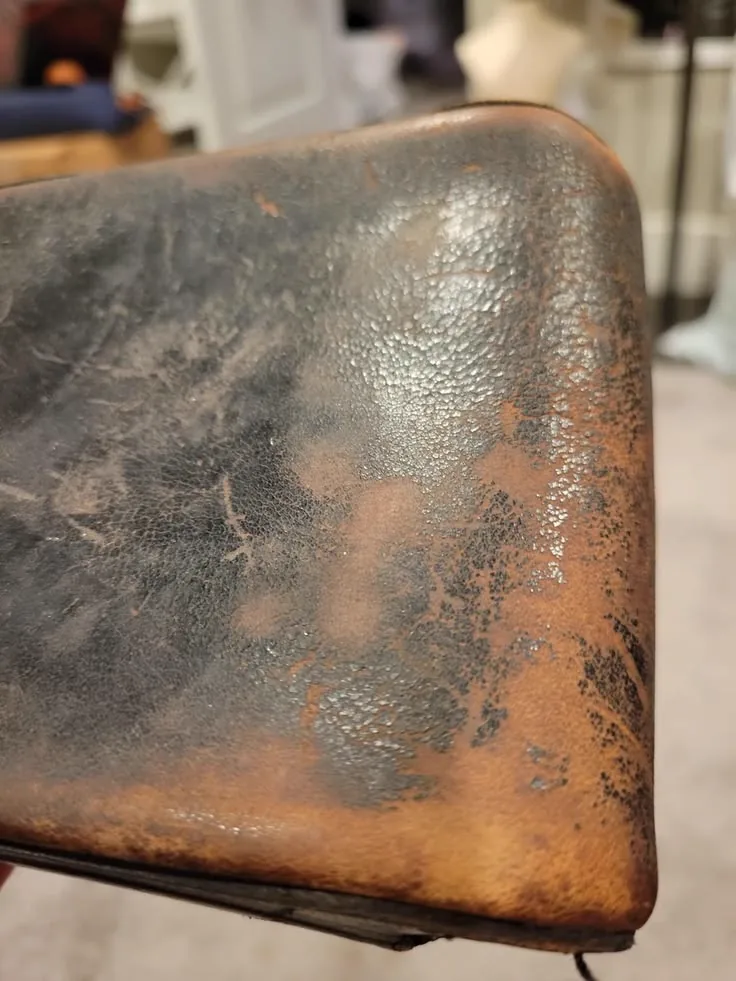
The darkening that develops on armrests and headrests in Indian homes is accumulated, oxidised body oil. At early stages - before it has fully embedded - plain cornflour (maize flour from the kitchen) can help draw it out. Sprinkle a light layer over the dark zone, press down gently with a clean cloth, and leave for 45 to 60 minutes. The flour absorbs surface and near-surface oil by capillary action. Brush off thoroughly with a clean dry brush. The darkening will be reduced, not eliminated. Repeat monthly as maintenance on the headrest and armrest zones specifically. This will not remove embedded, oxidised deep oil but it prevents the light-accumulation stage from progressing to the deep-embedded stage.
Curtain and sheet shading: the free UV shield
Close the curtains or blinds on any window that directs sunlight onto the sofa between 10am and 4pm. If you do not have curtains, drape a light cotton bedsheet over the sofa on the sun-facing side during these hours. India's UV index is 10 to 11 for 6 months of the year - this level of UV causes quantifiable topcoat degradation within 2 to 3 years of direct daily exposure. The cotton sheet costs nothing extra and blocks approximately 90% of UV transmission. Done every day, this intervention alone can extend topcoat life by 5 to 8 years relative to an unshaded sofa in the same position.
Baking soda for odour management between cleans
For sofas that have developed a musty or body-odour smell - common in India during monsoon or in households with pets - sprinkle a light layer of plain baking soda (sodium bicarbonate, available at any grocery for Rs 30-40) over the cushion surfaces. Leave overnight. In the morning, vacuum off thoroughly with a soft brush attachment. Baking soda is safe on genuine leather surfaces - it is pH neutral and does not damage the topcoat when used dry and fully removed. It neutralises odour-causing acids and volatile organic compounds without introducing any moisture. This is a maintenance measure, not a substitute for cleaning, but it genuinely works for between-clean freshness management.