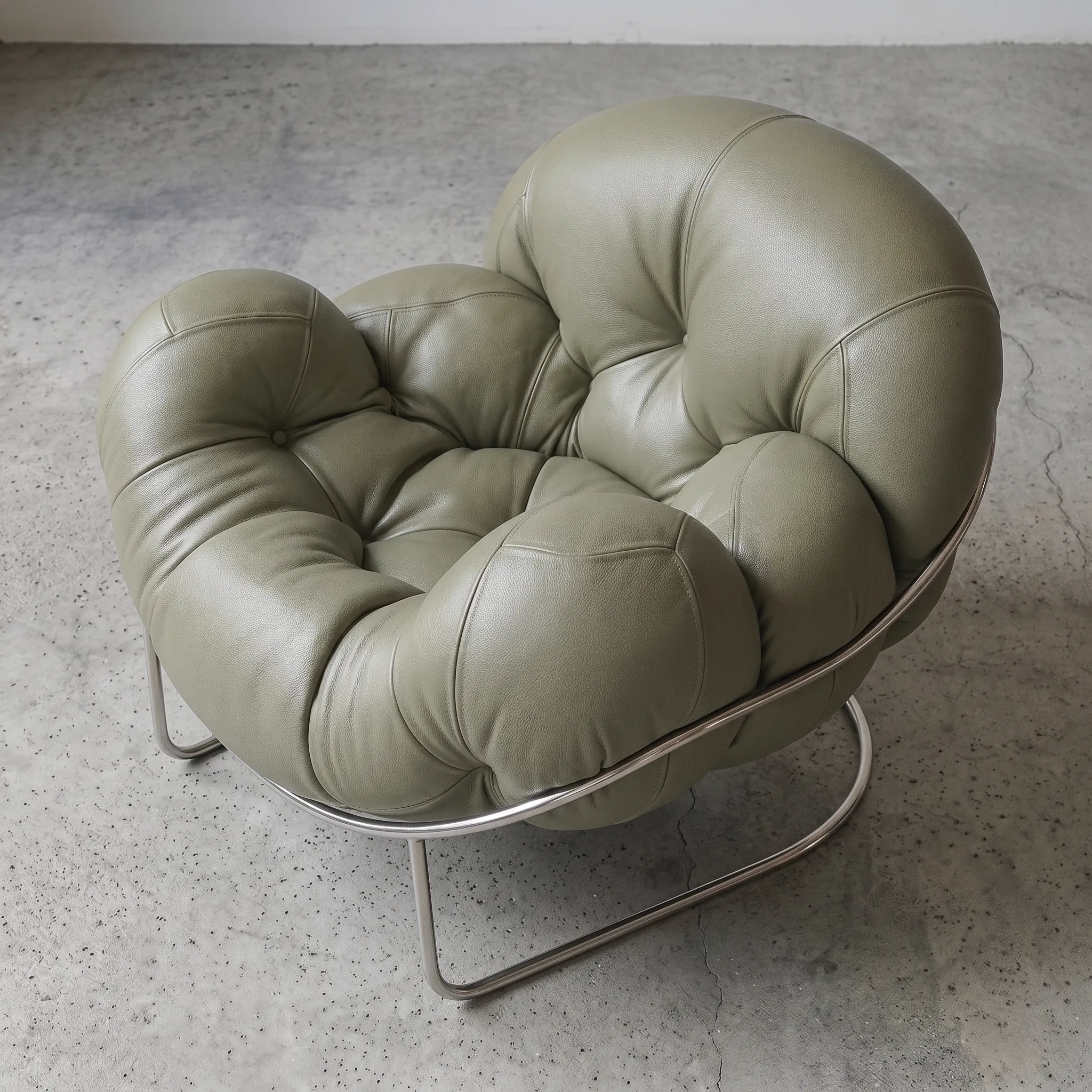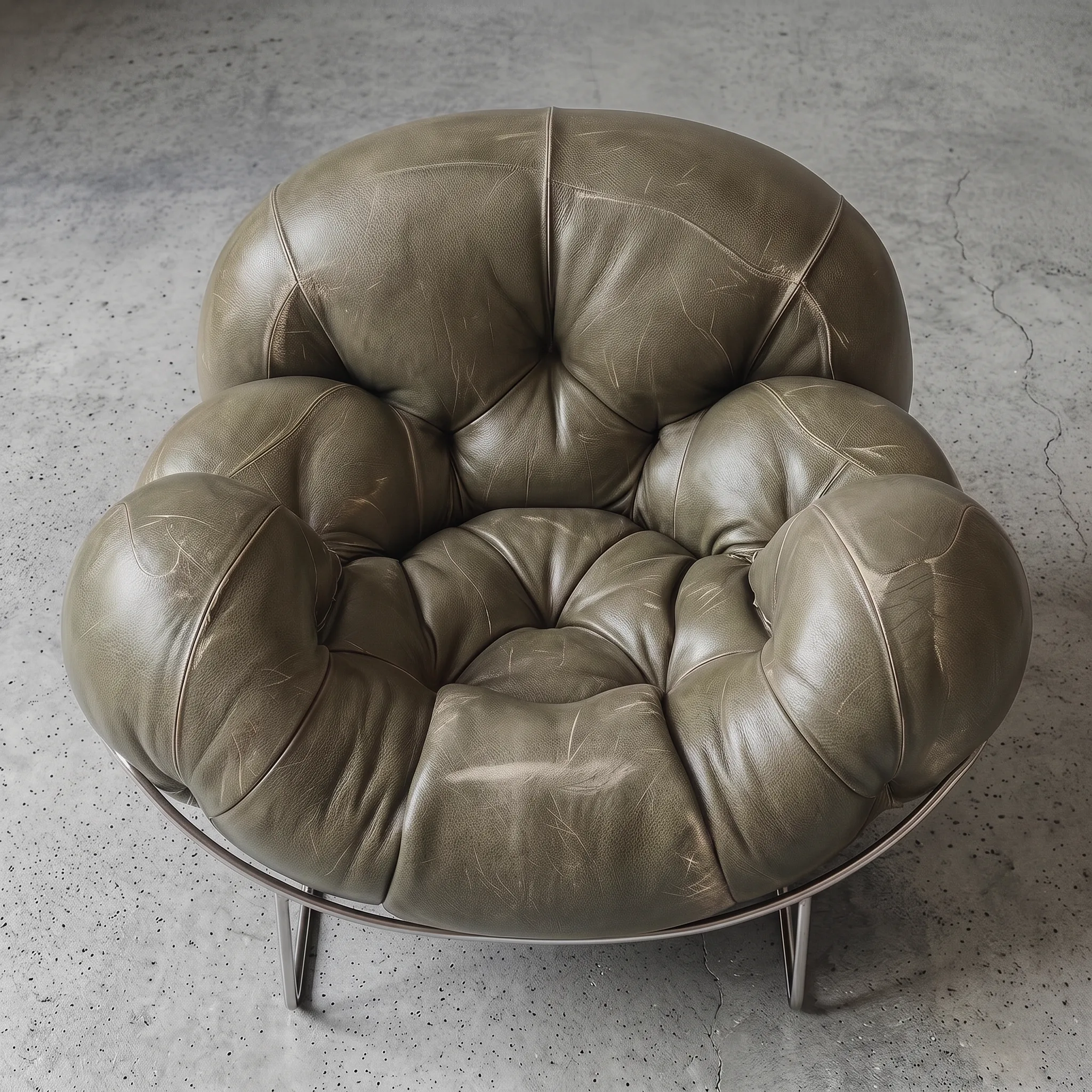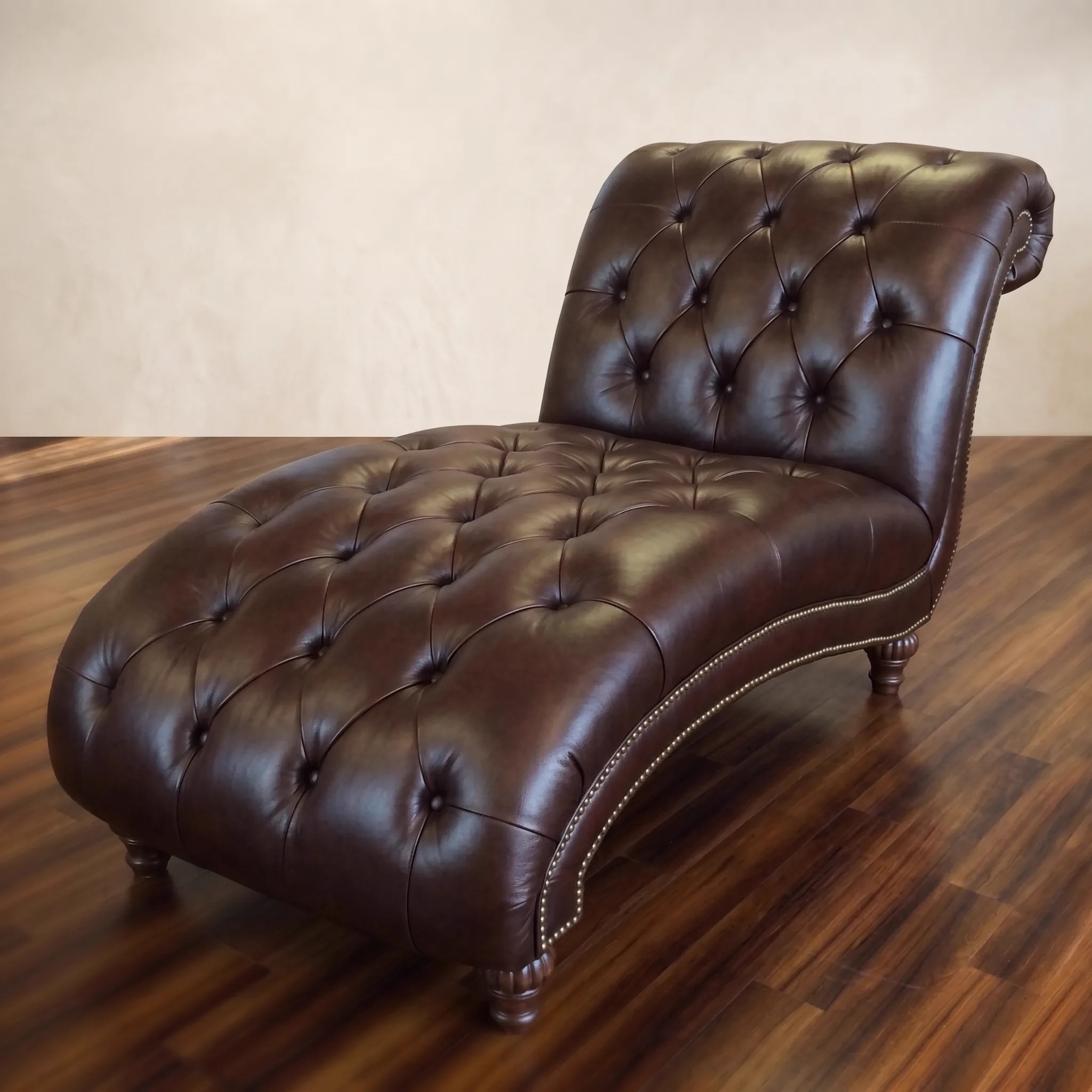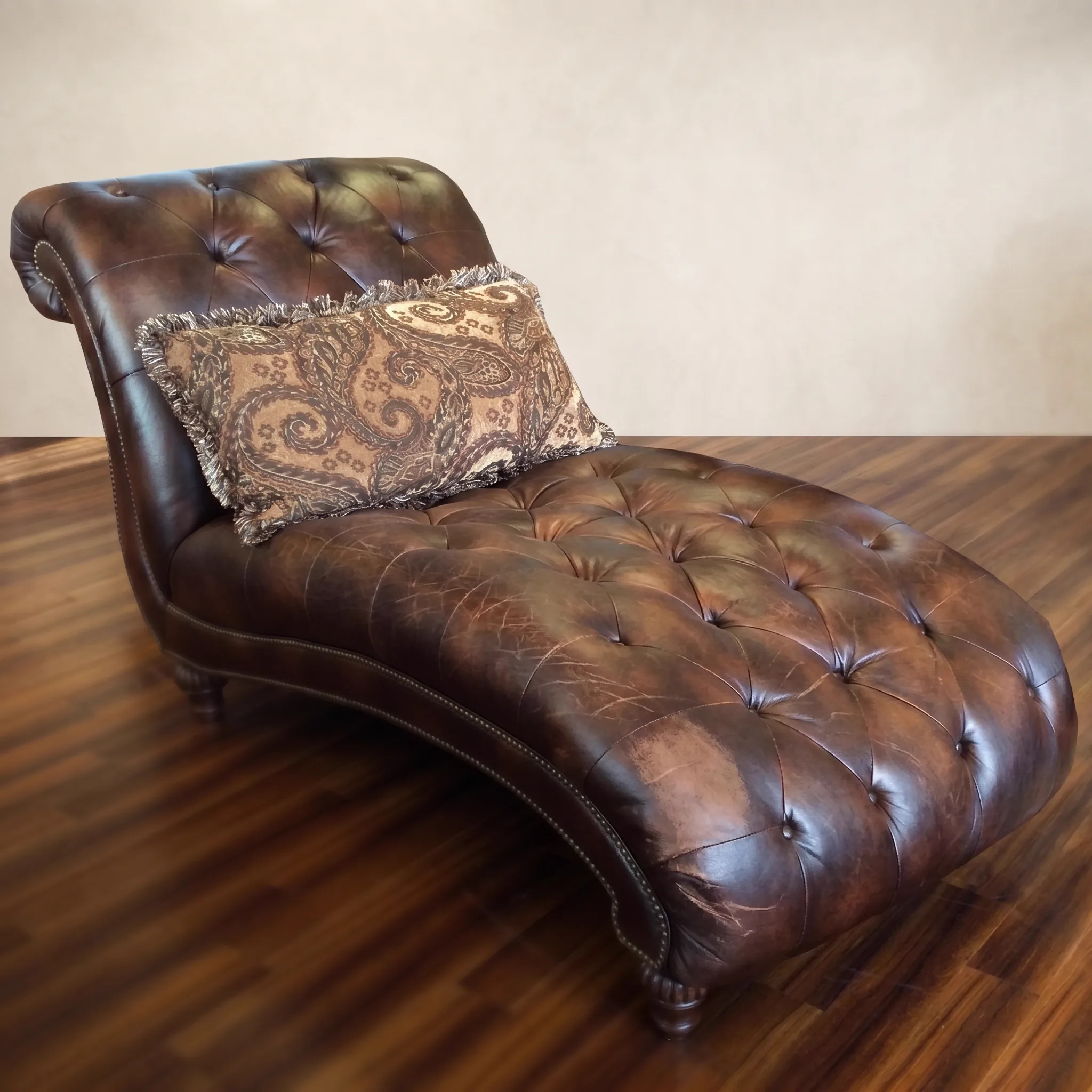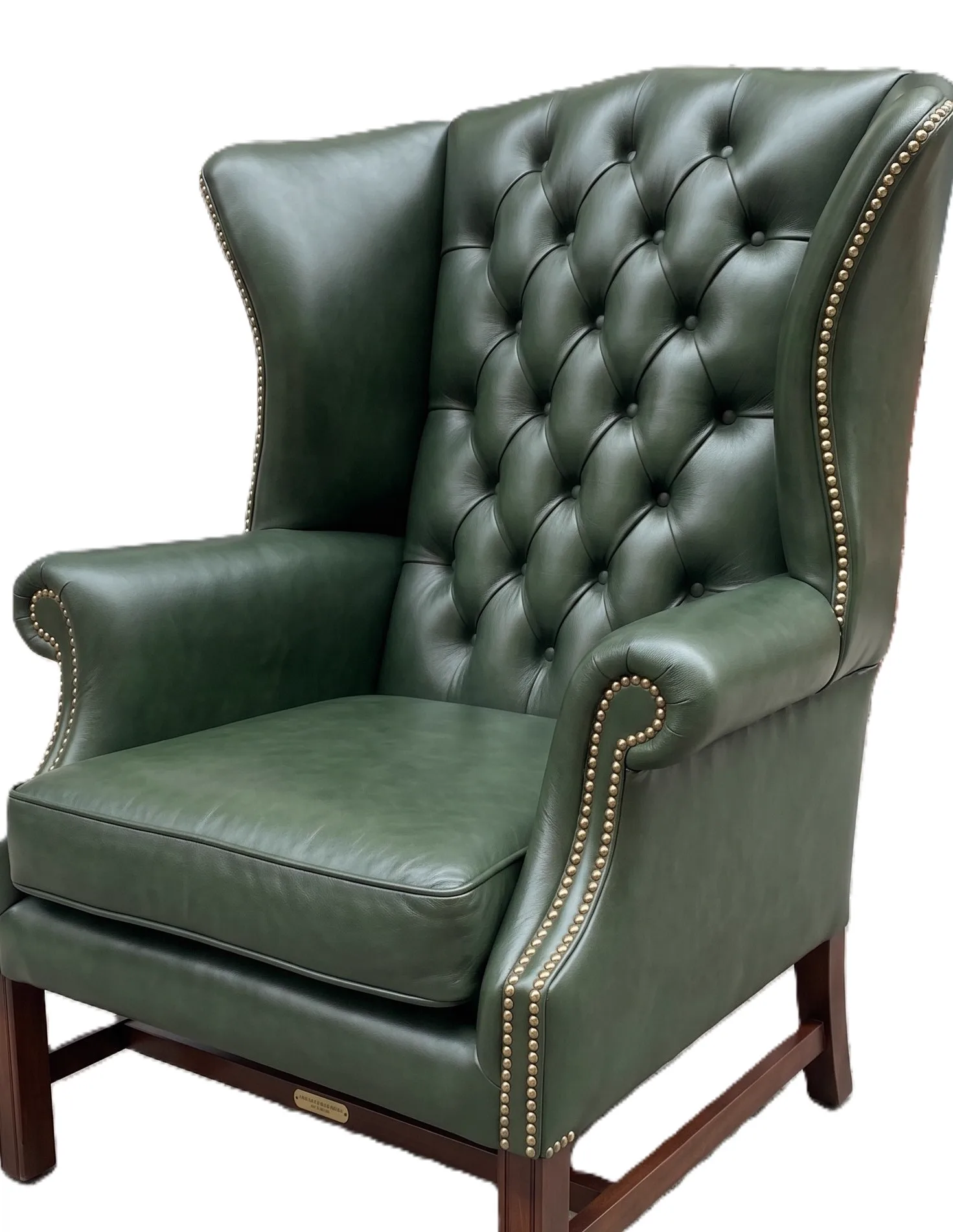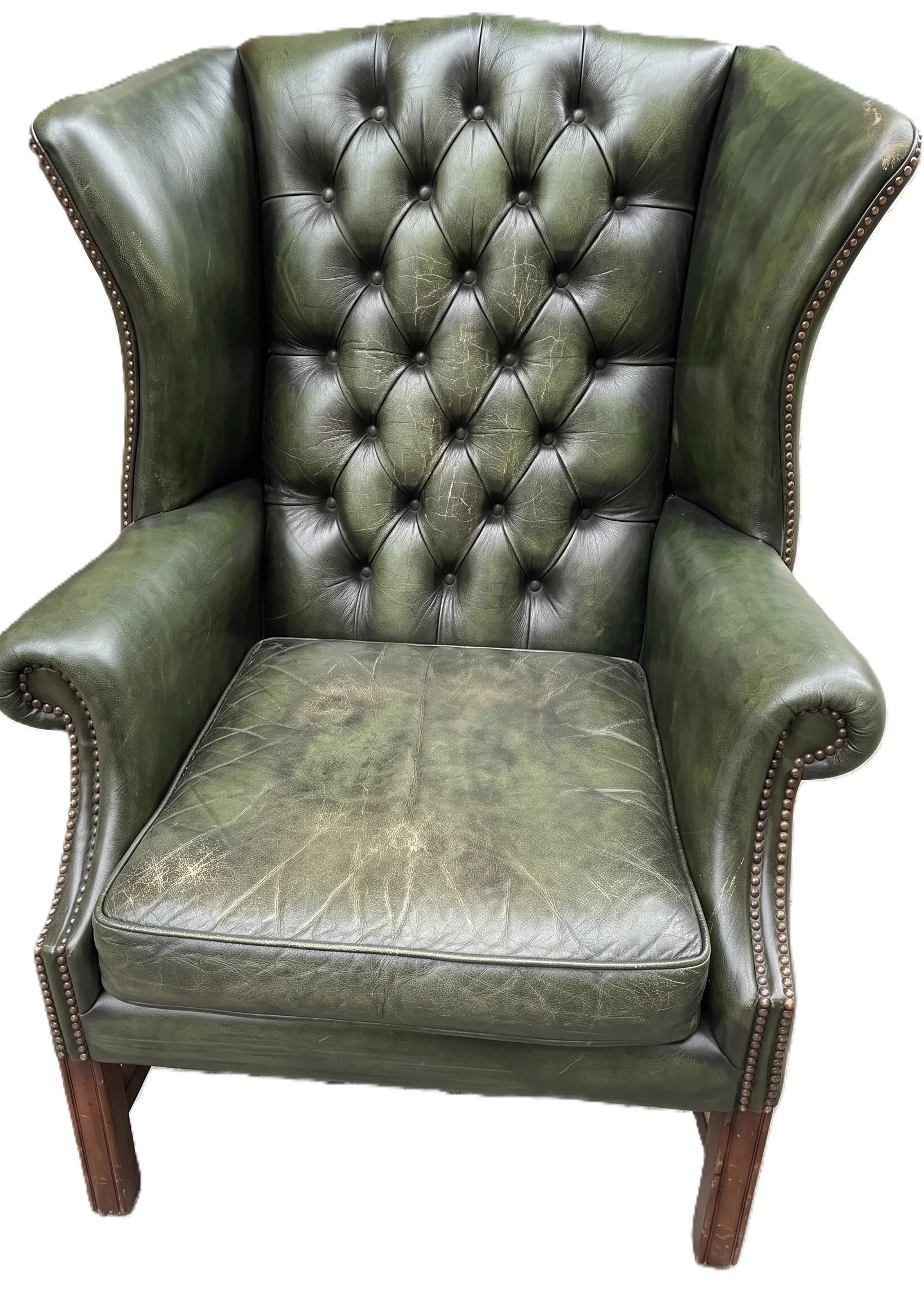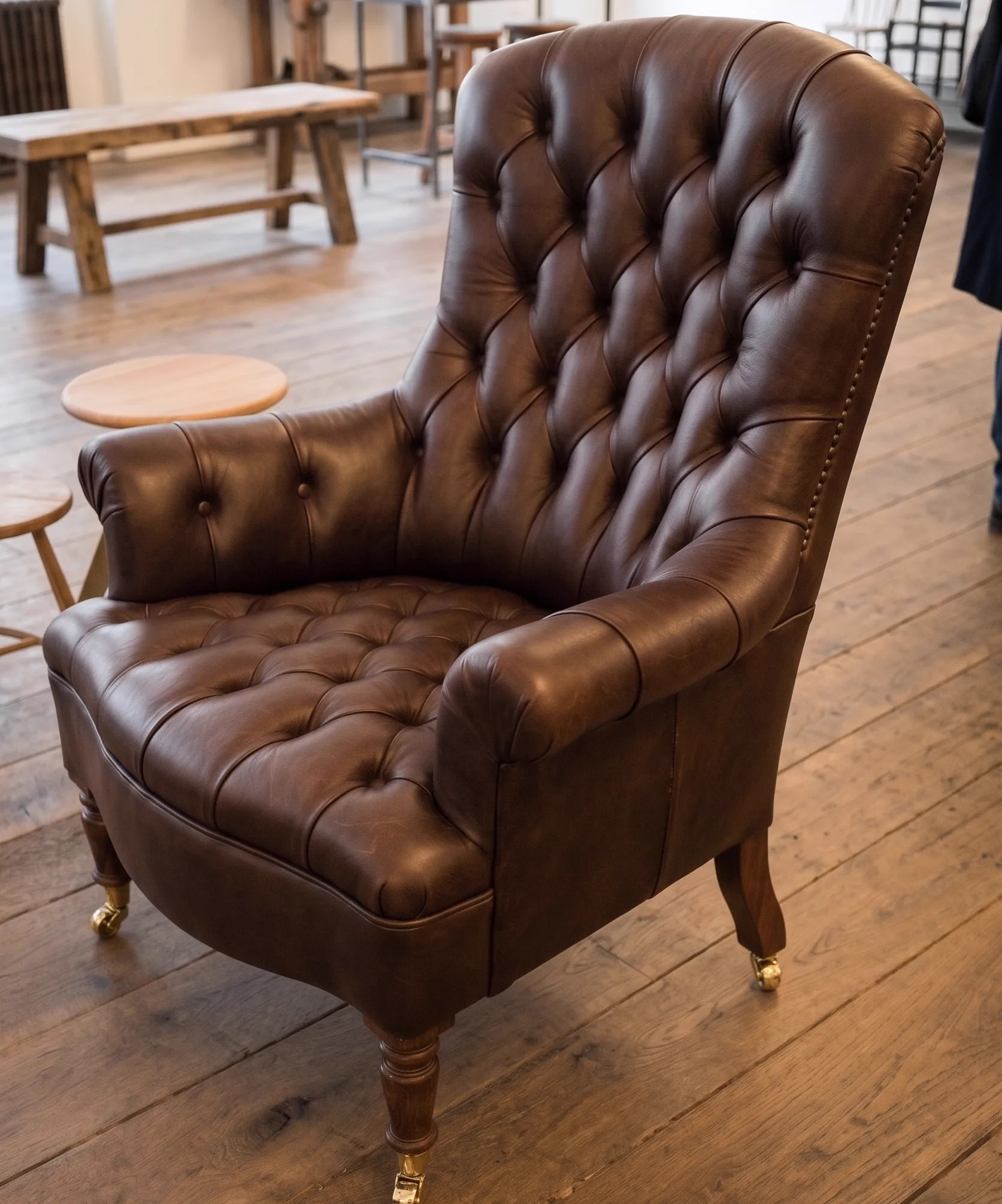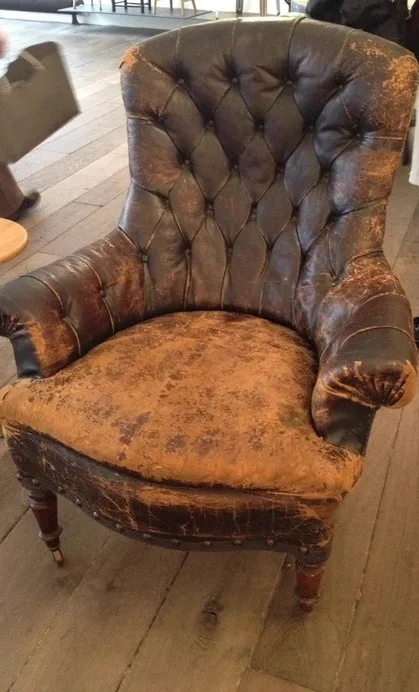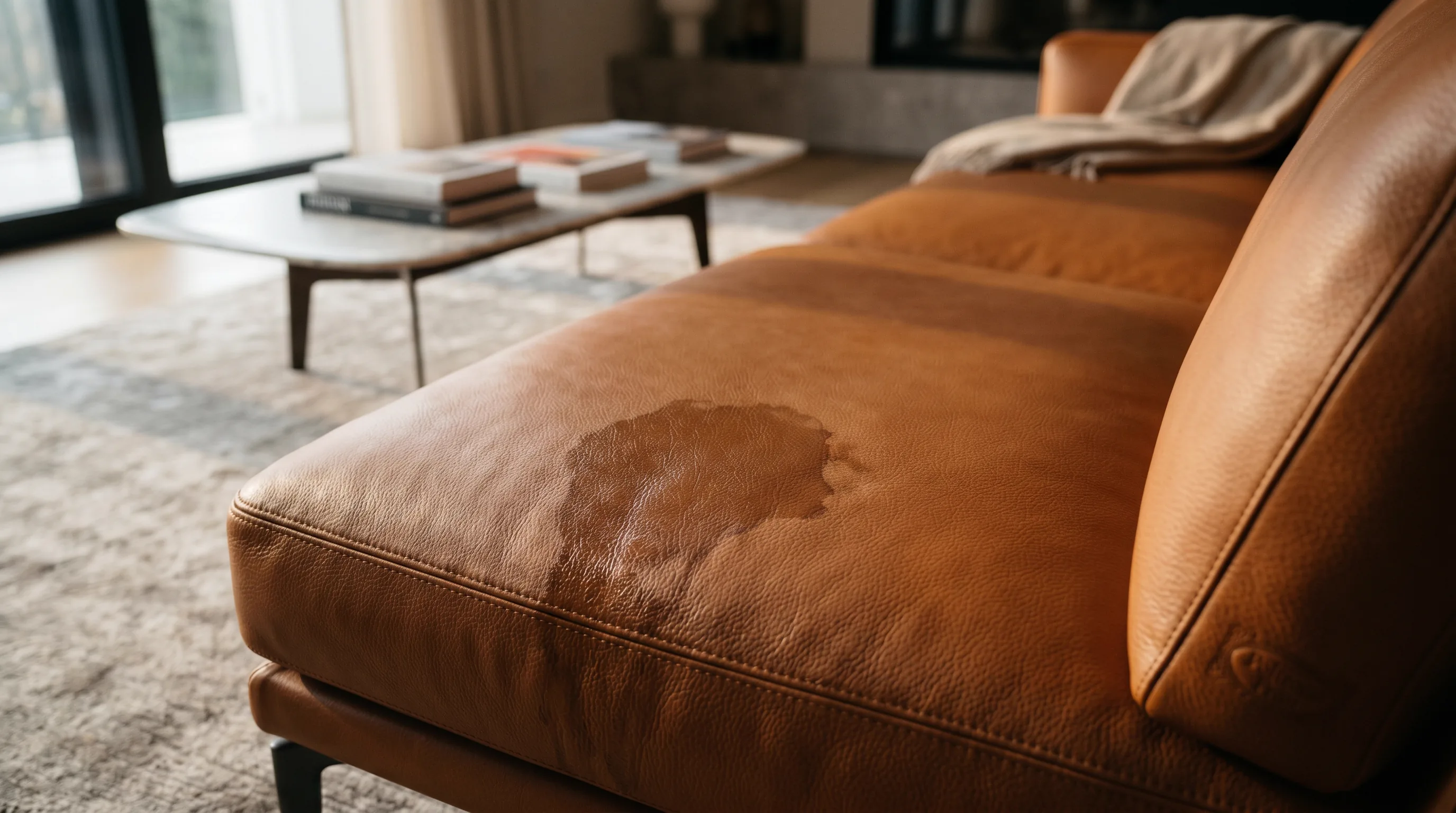
Your sofa looks cleaner after the wipe. The pen mark has faded. A household-tips video told you that vinegar and olive oil are a natural, grandmother-approved swap for expensive leather cleaners. That single video has caused more irreversible damage to premium leather sofas in India than any other source of bad advice we know. This article explains the chemistry: what vinegar does to collagen, what olive oil does to fibres, and the case-by-case twelve-month timeline from "looks cleaner today" to "needs full re-pigmentation." The chemistry is not a matter of opinion.
Two Kitchen Staples That Wreck Leather
Vinegar and olive oil damage leather through completely different chemical routes. Combining them , vinegar first, then oil , is uniquely destructive. The acid breaks down the fibre. The oil then locks that damage in place.
Both feel safe because they are food. The reasoning goes: "if I can eat it, my sofa can take it." That logic is wrong. Your skin replenishes its oil overnight. Saliva neutralises acid in seconds. A leather hide has no biology to repair itself. Once the fat liquor is stripped or the collagen is broken down by acid, the damage compounds with every application.
The framing rule: "natural" and "edible" are not the same as "safe for leather." Lye is natural. Battery acid contains substances found in fruit. Vinegar at pH 2.4 is closer in acidity to stomach acid than to anything that should touch a Natuzzi or a Frau. The category is wrong from the start.
What Does Vinegar Do To Leather?
Standard white vinegar is roughly 5 percent acetic acid in water, at pH 2.4. Apple cider vinegar is slightly milder at pH 3.1, but still well outside leather's safe band of 4.5 to 5.5. The damage runs in three stages, each one making the next worse.
Stage 1 , Acid hydrolysis of collagen
Leather is stabilised collagen. The triple-helix collagen molecule is held together by peptide bonds , exactly the bonds that acetic acid breaks. Below pH 3.5, the rate of acid hydrolysis on leather collagen rises sharply. Each vinegar application shortens a share of the protein chains in the contact zone. The fibre matrix gets weaker. Your sofa loses tensile strength permanently. Peptide bonds, once broken, do not re-form.
This is the same chemistry laboratories use to deliberately break down collagen for analysis. Vinegar on your leather is a slow-motion version of the same process.
Stage 2 , Aniline dye dissolution
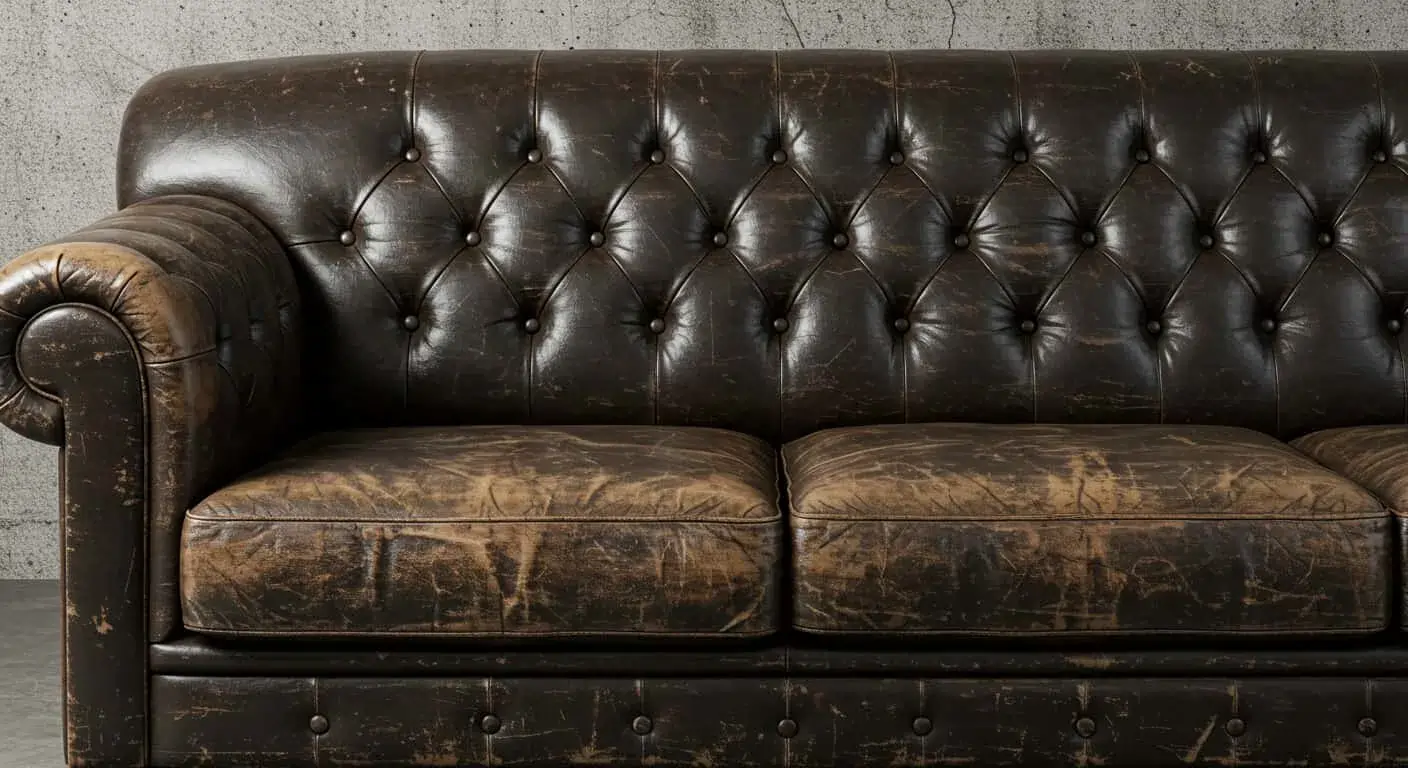
Aniline dyes , the colour layer of every premium nappa, every Frau Pelle SC, every Natuzzi Iconic , are pH-stable between 4.5 and 5.5. At pH 2.4, the dye complex begins to dissolve out of the fibre. That dye leaves with the cleaning cloth. The "cleaner-looking" result you see is partly because the cloth removed dye, not dirt. After three or four vinegar applications, panels show pale streaks where the cloth travelled, patchy colour shifts in the spots you clean most, and an overall lightening you cannot fix without re-pigmentation.
Stage 3 , Fat liquor neutralisation
The fat liquor inside the hide , explained in detail in the pH balance article , is an emulsion held stable at the leather's native pH. Acid breaks that emulsion. The oil phase collapses, the surfactants are protonated, and the fat liquor stops lubricating the fibres. Within weeks of repeated vinegar use, the hide feels papery and brittle. At the same time, the same panels are losing dye and weakening structurally , all three failure modes run together.
What Does Olive Oil Do To Leather?
Olive oil gets marketed to sofa owners as a "natural conditioner." The logic: leather needs oil, olive oil is oil, so olive oil conditions leather. Every step of that argument is wrong. The damage is worse than vinegar because it takes longer to show , you won't see the failure until the hide is structurally compromised.
1. Oxidative rancidity inside the fibre
Olive oil, like all plant oils, contains unsaturated fatty acids. These molecules oxidise when exposed to oxygen. They break down into short-chain aldehydes and free fatty acids. In a kitchen, this takes weeks. Inside the warm, oxygen-permeable, mildly acidic environment of your leather hide, the process is faster. The compounds it produces cannot be extracted by cleaning. Within four to six months, your sofa develops a stale, rancid smell. You may think it's old leather or monsoon mustiness. It's decomposing oil residue saturating the fibre from the inside.
2. Pore blockage and surface dulling
Aniline and semi-aniline finishes depend on the hide exchanging moisture with the air around it. Olive oil is heavy, slow-drying, and does not evaporate. It sits in the natural pore structure and blocks that moisture exchange. The hide starts to dry out beneath a sealed surface. Twelve months after you applied oil to "condition" your sofa, the hide is drier and stiffer than before you started.
3. Fat-liquor displacement
The hide's engineered fat liquor is a precisely formulated emulsion. Olive oil is not. When olive oil saturates the fibre, it pushes out the original fat liquor and replaces it with chemistry that has neither the same lubrication properties nor the same oxidation resistance. Your sofa may feel softer for the first few months as the oil builds up. By month nine, the original fat liquor is gone, the olive oil is breaking down, and the hide is in worse shape than when you started.
4. Permanent darkening
Olive oil permanently darkens leather. Every drop deepens the staining. Once the oil saturates the fibres, no extraction method fully restores the original colour. Sofas treated with olive oil for two years arrive at the workshop two to three shades darker than the original spec. The darkening is always worst at the contact zones , the spots where you applied the most oil.
What Happens to Your Sofa Over 12 Months
This is the documented progression on a typical aniline or semi-aniline nappa piece cleaned monthly with vinegar and olive oil. The timeline comes from workshop case files built over the last five years.
Day 0 , The first application
You wipe the cushion with a vinegar solution, then a microfibre cloth dipped in olive oil. The surface looks cleaner. The pen mark has faded. The leather feels softer. You tell friends, post the video. Damage at this stage: 2 to 5 percent of fat liquor stripped, microscopic acid hydrolysis started in the contact zone, oil saturation underway. Visually invisible.
Month 1 to 2 , The repeat cycle
You clean every two to three weeks because the result "feels good." Your sofa is now under continuous chemical stress. Acid strips fat liquor and breaks peptide bonds. Oil saturates the fibre matrix and starts to oxidise. Damage at this point: 8 to 12 percent fat liquor loss, early colour mottling in the spots you clean most, a subtle softening you read as a good sign. The sofa still looks fine.
Month 3 to 4 , First visible signs
Your sofa starts to look uneven. The armrests and seat front feel slightly different from the back panels. A faint tonal shift appears in raking light [light held at a low angle to show surface texture]. You notice something is off but dismiss it , the cleaning has been working. Damage: 15 to 20 percent fat liquor loss, dye dissolution producing visible streaking, oil starting to oxidise. Still recoverable with a professional fix at this stage.
Month 5 to 6 , The smell appears
A rancid smell develops. It is worst on warm days and mornings when the AC has been off overnight. You blame monsoon humidity or the dog. The real source is the olive oil now in active oxidative decomposition inside the fibre. Damage: 25 to 30 percent fat liquor loss, structural collagen damage in heavy-application zones, permanent darkening underway. The window for a clean recovery is closing.
Month 7 to 9 , Visible darkening and stiffening
Your sofa is now visibly one to two shades darker than the original. The contact zones are darker than the back panels. The feel has shifted from soft and supple to dense and slightly stiff. You call a professional, usually after a guest comments on it. Damage: 40 percent fat liquor loss, reduced tensile strength in acid-stressed zones, full oil saturation. Major restoration needed.
Month 10 to 12 , Structural failure begins
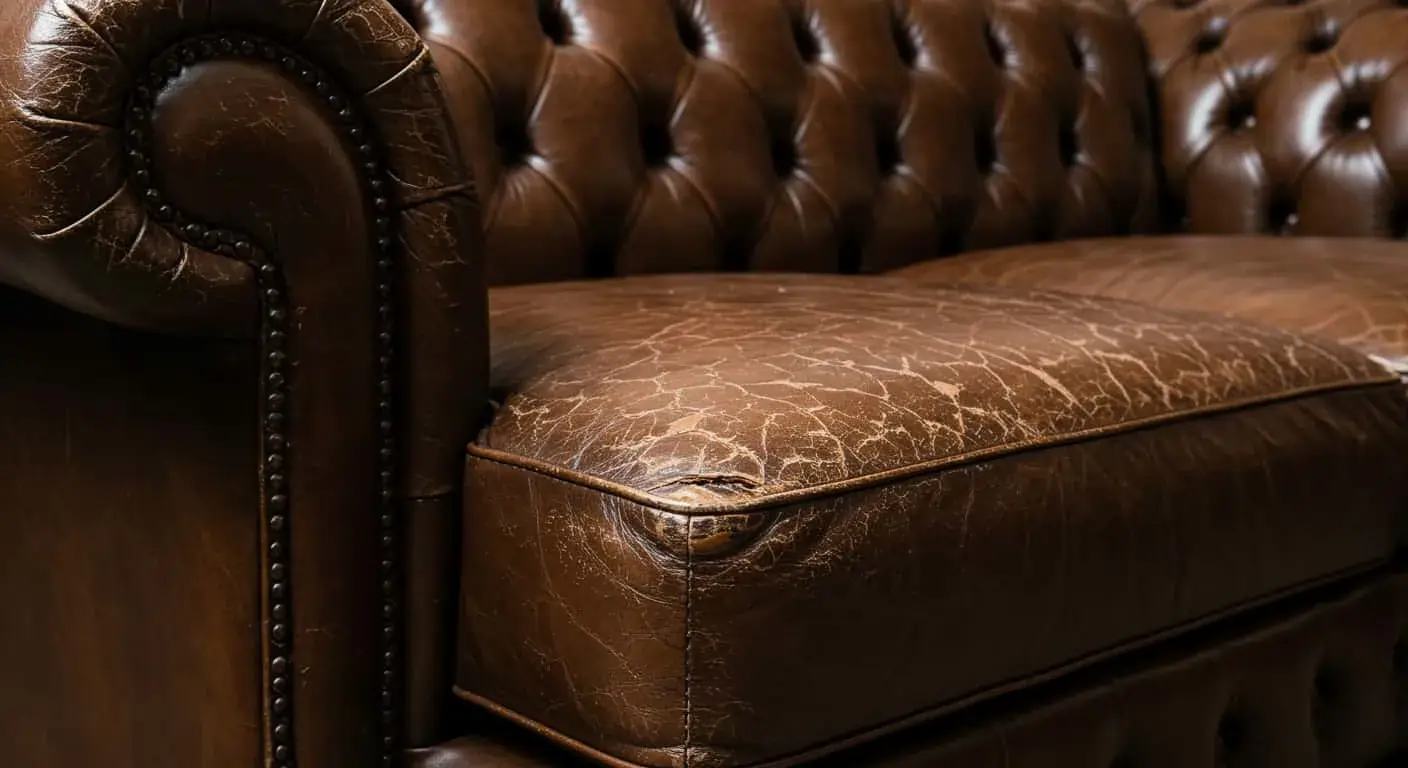
Micro-cracking appears at flex points. Seam areas show wrinkle-set. Pigment lift appears on semi-aniline grades. The smell is permanent. The piece arrives at the workshop. Multiple panels need work. Damage: 50 percent fat liquor loss, permanent aniline streaking, structural compromise across 30 to 50 percent of panel area. Cosmetic recovery means full re-pigmentation. Structural recovery requires panel-level work.
By month twelve, the total restoration cost is typically four to six times what one professional pH-neutral cleaning and conditioning service would have cost. That one service costs less than what you spent on vinegar, olive oil, microfibre cloths, and time over the same year.
Which Leather Finish Gets Damaged First?
Not all leather types take the damage at the same rate. The order of vulnerability follows the chemistry covered in the three-finish identification guide.
Aniline , catastrophic
Aniline finishes have no protective barrier. Vinegar reaches the dye and the fibre on first contact. A single wipe with vinegar can produce visible damage on a Fendi Casa Selleria or Natuzzi Iconic full-grain piece within hours. Olive oil darkening is also worst on aniline , there is no pigment layer to mask it. If your sofa is aniline, treat both vinegar and olive oil as hard exclusions. Never use them.
Semi-aniline nappa , severe
Semi-aniline nappa , the Frau Pelle SC standard, most B&B Italia upholstery, the Natuzzi semi-aniline ranges , has a thin pigment-and-binder layer that absorbs the first one or two off-pH applications before visible damage appears. This is the most dangerous pattern: the apparent tolerance of the first few applications encourages you to keep using vinegar. By the time the binder cracks, the underlying aniline has taken the same damage a pure aniline finish would have shown on day one. For nappa-specific damage, see the nappa restoration guide.
Pigmented , slow but compounding
Pigmented finishes have a 50 to 100 micron pigment-and-top-coat layer that buffers the first few vinegar applications. The damage takes longer to appear, but the mechanism is identical: acid slowly dissolves the pigment binder over months. After a year of vinegar use, pigmented sofas typically arrive at the workshop with binder cracking, pigment crocking [colour transferring to clothing], and full-panel top-coat lift. Recovery requires full re-pigmentation , a workshop job, and not a cheap one.
Common Defences of Vinegar , And Why They're Wrong
Everyone who defends vinegar and olive oil offers the same handful of reasons. Here is why each one fails.
- "My grandmother used vinegar for thirty years." Pre-2000 furniture leather was mostly vegetable-tanned, thicker, and finished as pull-up or saddle-grade hide , built to absorb oils and take aggressive cleaning. Modern aniline and semi-aniline nappa is a different material. It is engineered chemistry held at a precise pH. Vinegar that did limited harm to a 1970s tack hide causes structural failure on a 2020 Frau Pelle SC.
- "It's natural, so it must be safe." Lye, hydrochloric acid, lemon juice, and ammonia are all natural. Natural and safe are not the same thing. The only question that matters is: what does this chemistry do to collagen and aniline dye? For vinegar and olive oil, the answer is clear and well-documented.
- "It worked for my friend's sofa." Your friend's sofa is either pigmented (damage is still building slowly), or aniline (damage is already there but not yet recognised), or your friend has been cleaning for less than three months. Two years from now, that sofa will arrive at the workshop with the same diagnosis.
- "Diluted vinegar is fine." Dilution lowers concentration but barely shifts the pH. A 1:5 vinegar-water solution still sits at roughly pH 3.2 , well outside leather's safe band. The damage mechanism is the same. Only the rate slows.
- "Professional cleaners are just expensive vinegar." A leather-specific cleaner is a formulation built around pH-neutral non-ionic surfactants at pH 5.0 to 5.5. The surfactant chemistry is chosen specifically for surface contamination on tanned hide. There is no household equivalent. Swapping it for vinegar replaces a matched tool with a known damaging agent.
- "Olive oil is the same as leather conditioner." Expert leather conditioners are non-comedogenic emulsions formulated for slow, controlled absorption. The oil phase is chosen for oxidation resistance over decades. Olive oil is a food-grade plant oil that begins oxidising on contact with air. Both are oils. The chemistry is in completely different categories.
"In every workshop case where the owner argued that vinegar and olive oil were safe, that same owner had walked through the workshop, seen the documented damage on other pieces, and still held the position. The conviction is cultural, not chemical. The leather only responds to chemistry."
What To Do If The Damage Is Done
Most people who call us have already been cleaning with vinegar and olive oil for months. Your sofa is salvageable in almost every case , but how much we can recover depends entirely on how early you bring it in.
At intake, we check four things: residual acid still active in the fibre (titration with a leather pH probe), oil saturation depth (solvent-wick analysis on a hidden sample point), structural integrity (tensile check on flex zones), and aniline dye loss (tonal mapping under matched light). From those four readings, we build the restoration plan , neutralisation first, then controlled extraction of oxidised oil, then re-fatliquoring, then colour-matched micro-pigmentation on panels where dye loss is too far gone to recover.
How well we can restore your sofa depends on when you bring it in. A sofa that arrives at month three of vinegar-and-oil cleaning typically comes back indistinguishable from the original. A sofa at month twelve may need visible re-pigmentation , close to the original, but not a full match. A sofa at year three can be structurally saved, but the original Italian nappa surface is gone. The patina is the timeline. Once destroyed, it cannot be rebuilt.

If you are in India, see the monsoon leather care guide for how monsoon humidity reactivates trapped acid residue and speeds up oil oxidation , a Delhi-specific problem that makes this damage worse through the rainy season.
What To Use Instead
Replacing vinegar and olive oil takes two products used in two situations.
For routine cleaning: use a pH-neutral, leather-specific cleaner formulated at pH 5.0 ± 0.5. Follow the seven-step guide in the pH balance article. The cleaner must show a stated pH on the bottle. Reject any product with vague claims like "pH-balanced" and no number.
For conditioning: use a non-comedogenic, leather-specific conditioner. Aniline and semi-aniline nappa needs conditioning every six months. Pigmented finishes need it once a year. The conditioner must contain no silicone, no beeswax, no plant oils, and no fragrance. The ingredient list should be short and verifiable. For nappa-specific guidance, see the nappa leather restoration guide.
Use both products on the right schedule. First, identify your finish once using the three-question test from the aniline, semi-aniline, and pigmented identification guide. That single step replaces the entire household-cleaning routine. The yearly cost , for a Natuzzi, a Frau, a Fendi Casa, or a B&B Italia piece , is a fraction of one panel restoration, and a tiny fraction of replacing the sofa.
Your instinct to care for the piece is right. The mistake is in what you use. Replace the substances, keep the care routine, and the same sofa that was heading for a workshop job will instead pass through three generations of your family. Where vinegar and olive oil have already had months on the leather, a professional leather sofa deep clean lifts the rancid oil film and the trapped acid residue before either oxidises further.
Bookmark this page. The next time a household-tips video circulates, the chemistry here is the answer.