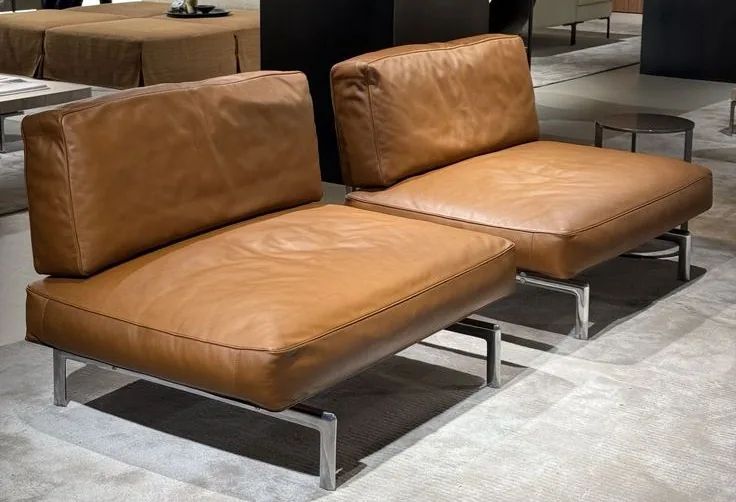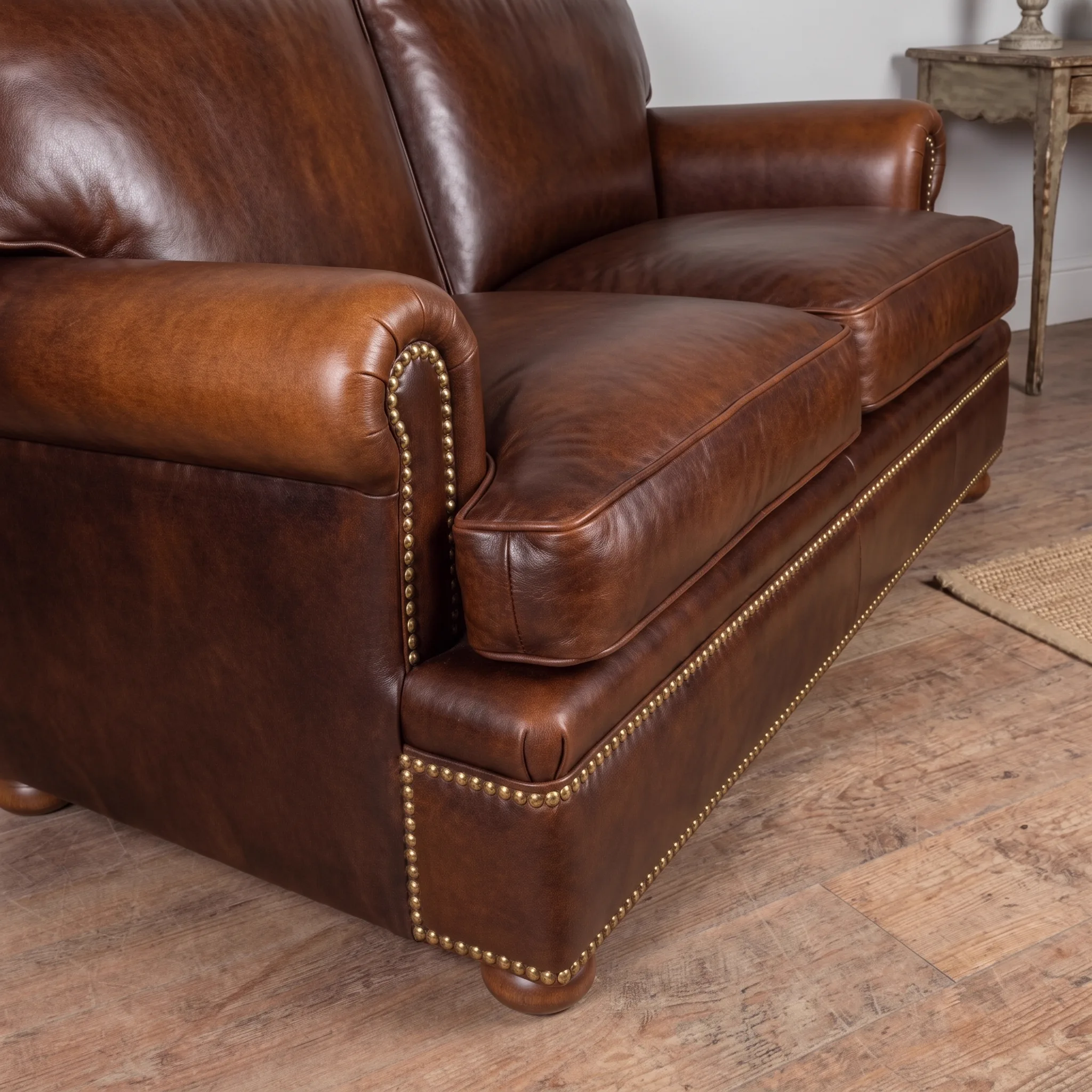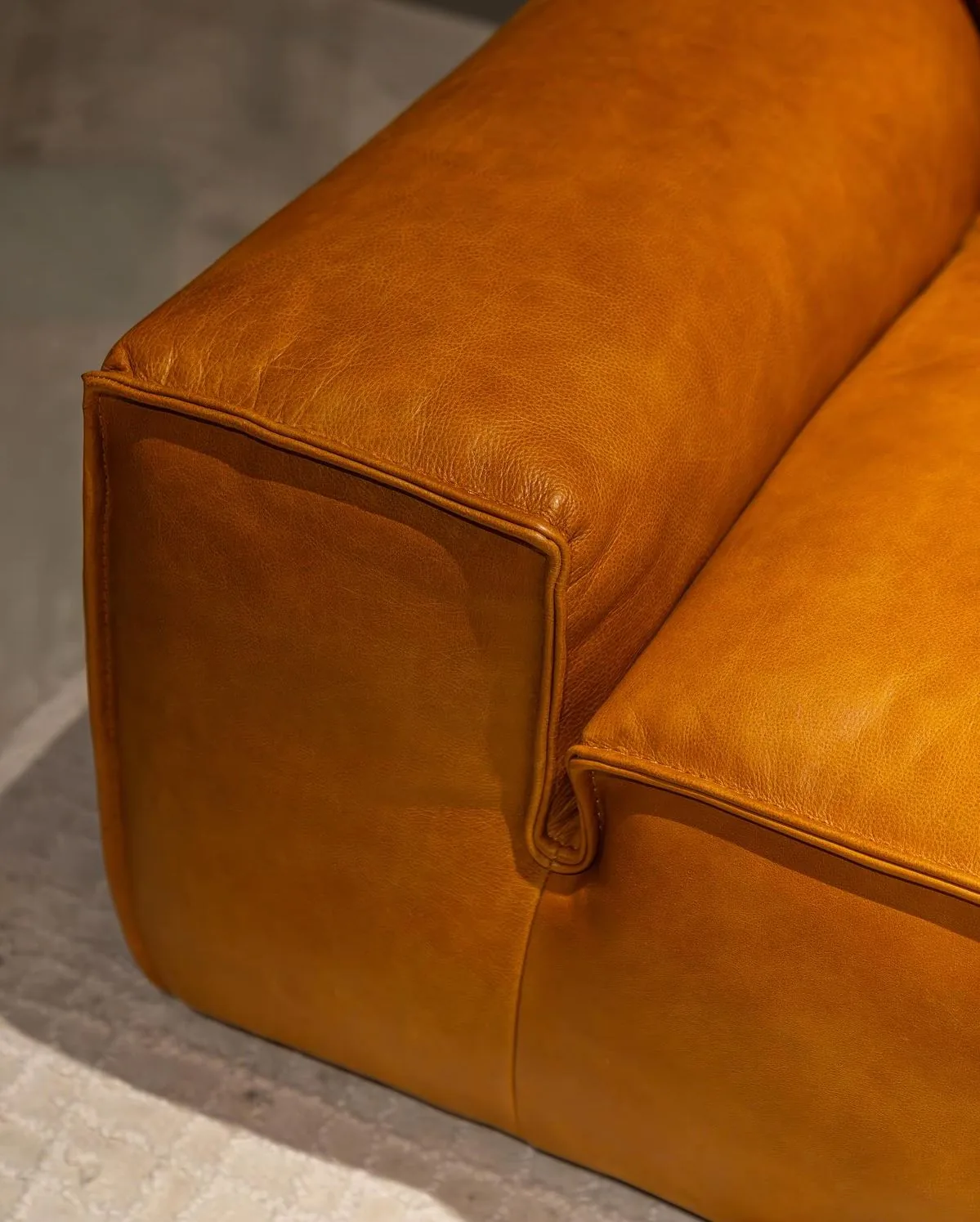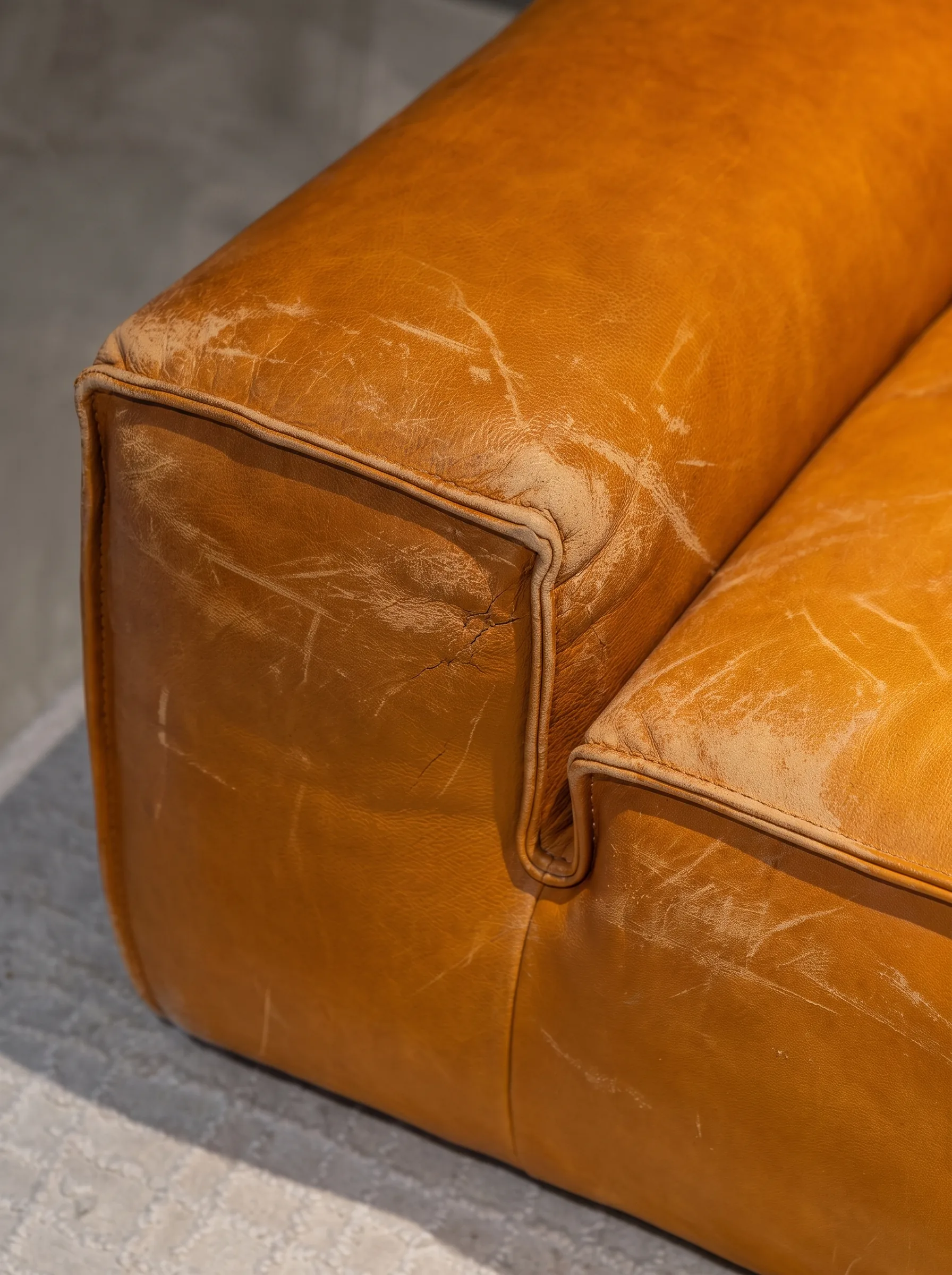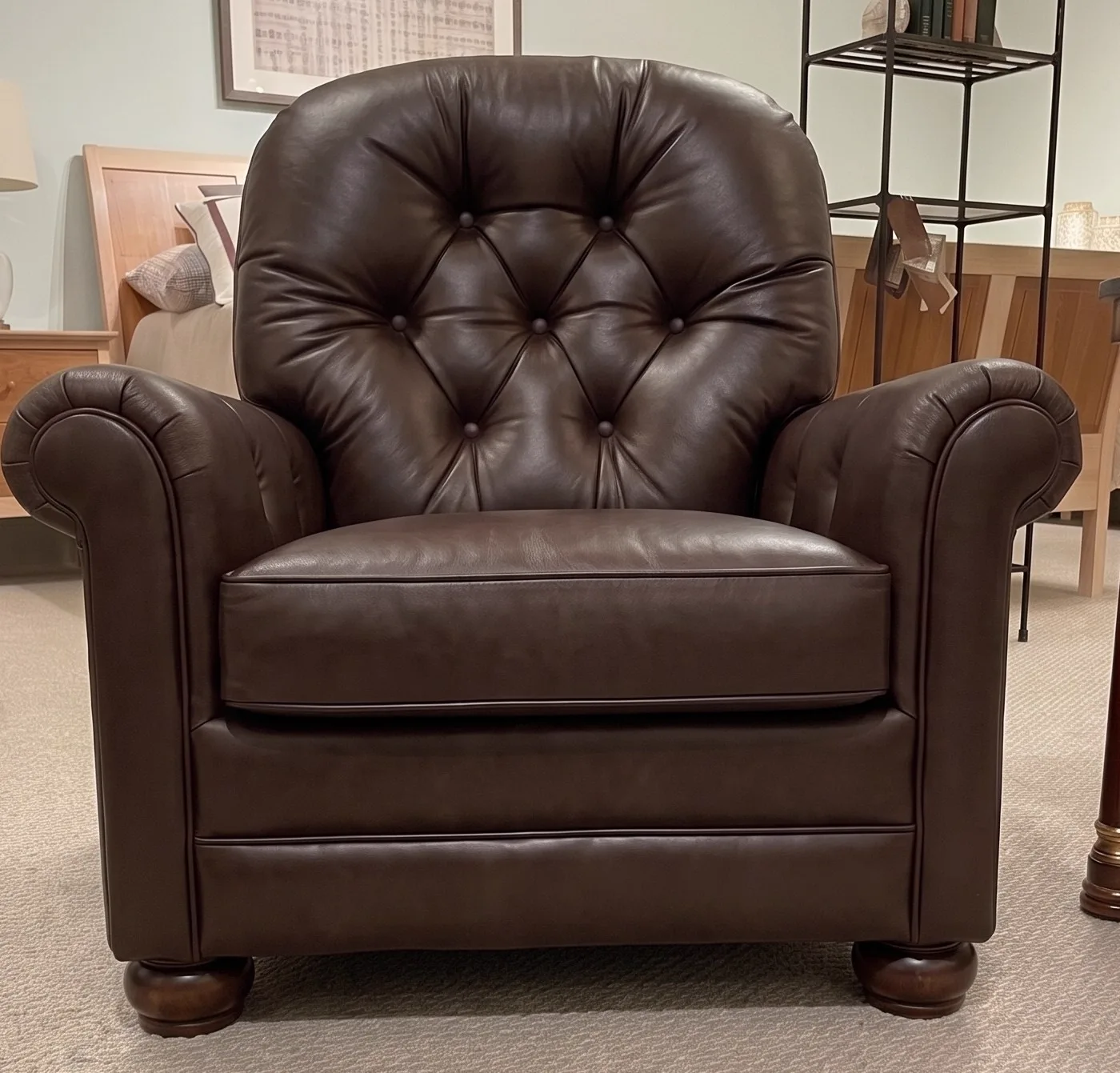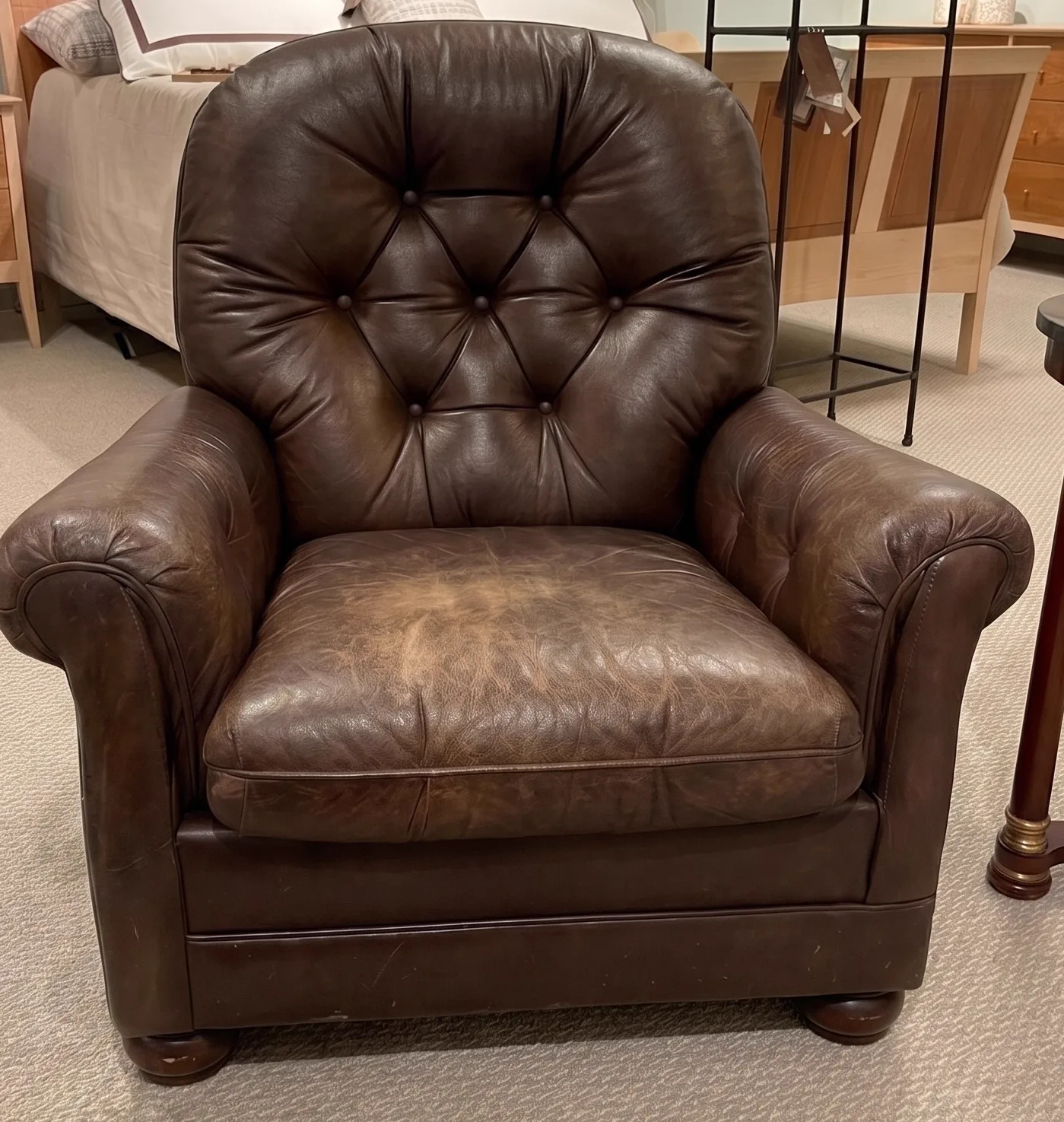
Delhi is one of the most demanding cities in the world for leather furniture. Not because of outdoor heat - the sofa sits indoors - but because Delhi's specific combination of UV intensity, extended AC use, monsoon humidity cycling, and winter smog particulate creates an indoor microclimate that is measurably harsher on leather than the conditions furniture manufacturers use when specifying their products. The answer to "is leather sofa good for Delhi weather" is yes - but with a specific maintenance approach that is different from what works in Europe or in a more moderate Indian city. This guide explains what each Delhi season does to leather and what to do about each one; for the full season-by-season routine, the Delhi NCR climate care guide sets out the complete maintenance protocol.
The Four Delhi Seasons and What Each Does to Leather
Summer (April to June): UV and AC drying
Delhi's summer UV index reaches 10 to 11 from April through September - among the highest of any major city. For sofas positioned near south- or west-facing windows, direct sunlight exposure of 2 to 3 hours daily is sufficient to cause visible topcoat fading and degradation on aniline leather within 18 months and on pigmented leather within 2 to 3 years. The UV degrades the dye molecules and causes colour fade; it also accelerates topcoat embrittlement, making cracks appear sooner.
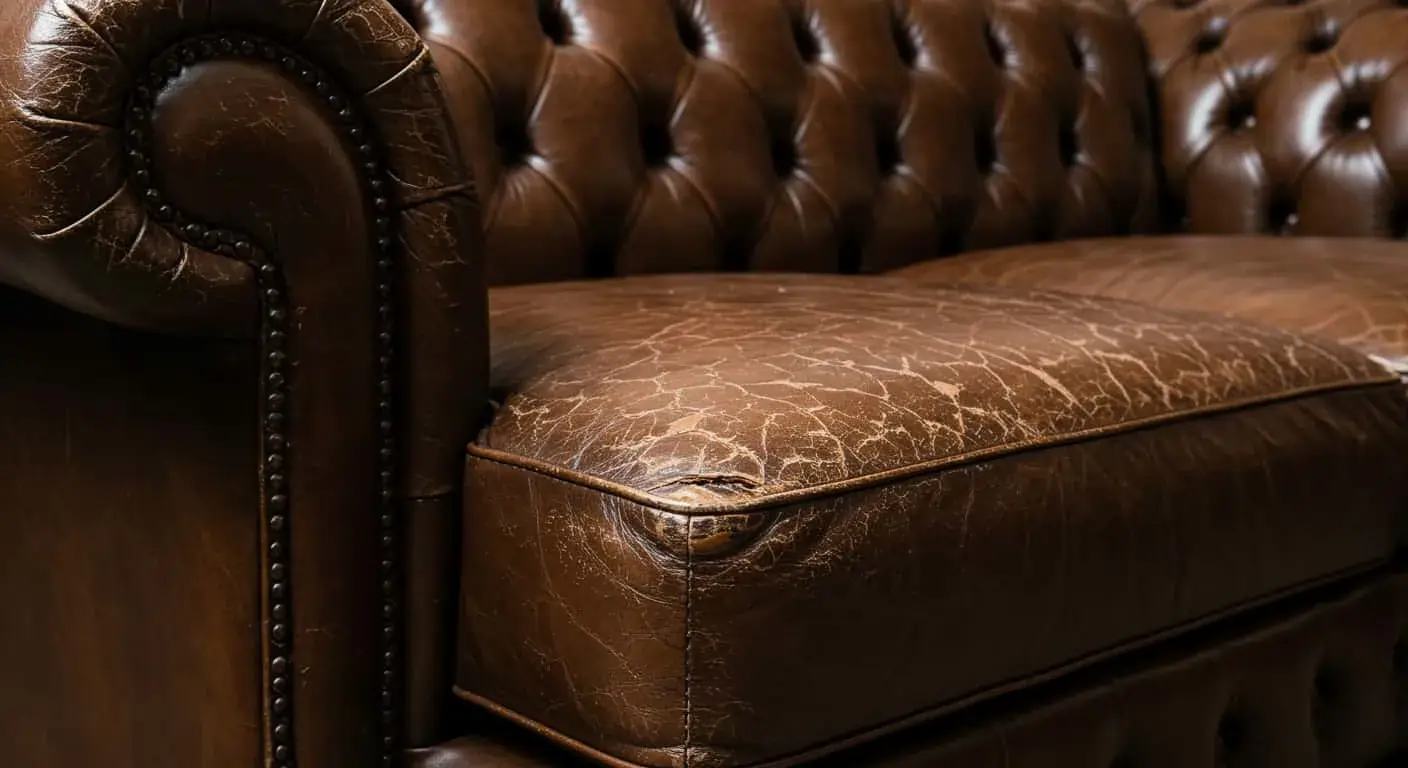
The bigger threat is what the AC does. From April to June, most Delhi households run AC for 8 to 12 hours daily. This drops indoor relative humidity to 20 to 30% - the range that strips fat liquor from leather fastest. Fat liquor is the lubricating agent in the collagen fibre structure of leather that keeps it supple and flexible. Without it, the fibres dry out, bond together, and eventually crack at flex points. A leather sofa in an AC room that runs continuously from April to October and is never conditioned will show visible surface checking by year 3 to 4 and structural cracking by year 5 to 7. The complete mechanism is covered in the AC damage guide.
Monsoon (July to September): humidity cycling and mould risk
Delhi's monsoon raises outdoor relative humidity to 80 to 95%. For rooms with open windows or without AC, this means the leather sofa experiences very high ambient humidity - enough to partially restore surface moisture that was lost during the summer AC season. This is not uniformly beneficial. The rapid cycling between high outdoor humidity and low AC-cooled indoor humidity causes leather fibres to expand and contract repeatedly. Over multiple monsoon cycles, this cycling stresses the topcoat and fibre structure in ways that conditioning partially but not fully mitigates.
Mould is the specific monsoon risk. Leather sofas in non-AC rooms, or in rooms where windows are regularly left open during heavy monsoon rain, are at risk of surface mould growth if indoor RH stays above 75% for more than 48 consecutive hours. Mould grows in the protein-rich surface of leather and in the organic compounds in body oils that accumulate in the grain. A sofa that has not been cleaned before monsoon - with accumulated body oil and skin cell deposits - is significantly more susceptible than a clean sofa. See the monsoon leather care guide for the prevention protocol.
Post-monsoon transition (October to November): the conditioning window
October is the single most important month for leather sofa maintenance in Delhi. The AC season has ended, humidity is normalising, and winter has not yet begun. This is when the fat liquor depleted over the summer AC season should be replenished. A conditioning session in October - before the leather enters winter in its post-summer depleted state - is the highest-return single maintenance action in the Delhi calendar. October conditioning also creates a protective film that slows particulate penetration during the smog season that follows.
Winter (December to February): smog particulate and low indoor humidity
Delhi's winter brings two leather-specific threats. The first is smog particulate. PM2.5 and PM10 particles are small enough to penetrate the grain of leather, particularly on aniline and semi-aniline finishes where the protective topcoat is minimal. Accumulated smog particulate creates abrasion as the sofa surface flexes and compresses, and the sulphur compounds in smog particulate react with the leather tannins, causing progressive darkening and degradation of the grain surface. The full mechanism of winter smog damage is covered in the smog leather care guide.
The second winter threat is indoor heating. Delhi homes that use room heaters, blowers, or gas geysers for heating create a dry indoor environment comparable to summer AC use, with relative humidity again falling to 25 to 35%. If a leather sofa is placed near a room heater or in the direct airflow of a blower, winter heat causes the same fat liquor depletion as summer AC - just from a different mechanism. Keep leather sofas at least 1.5 metres from any direct heat source in winter, exactly as you would keep them from AC vents in summer.
Delhi climate summary for leather: The three highest-threat periods are April to June (UV + AC drying), October post-monsoon transition (when conditioning has the highest impact), and December to February (smog particulate + heating drying). The maintenance actions that address these: conditioning in March and October every year without exception, UV screening for south and west exposures from April to September, and cleaning before the monsoon (June) to remove the organic deposits that accelerate mould.
The Delhi Leather Maintenance Calendar
The standard manufacturer recommendation - condition once per year - is written for European conditions. For Delhi NCR, the correct schedule is:
- March (pre-summer): Full conditioning session. This prepares the leather for the 7-month AC and UV season ahead. Use a furniture-grade conditioner appropriate for your leather finish - Leather Master, Fenice, or Bickmore Bick 4. Apply two thin coats, allowing each to fully absorb before applying the next. For aniline leather in a high-UV room, consider a UV protectant as a final layer.
- June (pre-monsoon): Cleaning session - not conditioning. Clean the sofa thoroughly with a pH-neutral leather cleaner before the monsoon begins. This removes the body oil and skin cell deposits accumulated over the spring season that serve as mould substrate during monsoon humidity. For aniline leather in continuous-AC rooms, add a light conditioning pass in June as well - aniline leather dehydrates faster than pigmented leather and benefits from a third session in high-AC-use environments.
- October (post-monsoon): Full conditioning session. The most important session of the year. This replenishes fat liquor depleted over the summer AC season and creates a protective surface before the smog season begins. Do not skip this session - a leather sofa that enters winter without October conditioning is entering its most particulate-heavy season in its most vulnerable annual state.
- December (early winter): Light cleaning pass. Remove smog particulate accumulation from the first two months of the smog season. A damp cloth wipe removes surface particles before they penetrate the grain. This is a 10-minute task, not a full cleaning session.
- Weekly (year-round): Damp cloth wipe with a clean cotton cloth wrung barely damp in plain water. Five minutes. This single habit removes abrasive dust and body oil before they embed, and is the most consistent predictor of good leather sofa longevity across the Delhi homes where we have done repeat maintenance visits.
Placement Rules for Delhi Homes
Where you place the sofa in a Delhi home matters more than in most cities, because the damage agents are more severe. Three placement rules that have the highest impact:
Rule 1: Minimum 1.5 metres from any AC vent
This is the single most impactful placement rule for Delhi leather sofas. A sofa directly below a ceiling cassette AC or within 1 metre of a wall unit sits in a localised low-humidity zone where fat liquor depletion is 3 to 4 times faster than a sofa elsewhere in the same room. The pattern of damage is characteristic: cracking on the top surfaces (backrest tops, seat cushion tops, headrests) while the undersides and arms remain supple. If your current placement violates this rule, repositioning is the highest-return action available - more impact than any conditioning product.
Rule 2: No direct sunlight on south- or west-facing placements April to September
A leather sofa in a room with south- or west-facing windows should be positioned so that direct sunlight does not fall on any sofa surface during peak hours (10am to 4pm) from April to September. If repositioning is not possible, UV-filtering window film or heavy curtains drawn during peak hours achieves the same effect. UV damage on leather is cumulative and irreversible - no conditioning product reverses UV-induced colour fade or topcoat embrittlement. Prevention is the only effective strategy.
Rule 3: No direct heat source within 1.5 metres in winter
Room heaters, blowers, and gas heaters create a localised dry heat zone that desiccates leather exactly like an AC vent. In Delhi winters, where indoor heating is common from December to February, a leather sofa placed within 1.5 metres of a direct heat source will show accelerated drying on the surfaces facing the heat source. The October conditioning session provides some buffer but is not sufficient if direct heat exposure is continuous through December to February.
Which Leather Grades Perform Best in Delhi
Not all leather performs equally in Delhi conditions. The grade matters significantly for both durability and maintenance requirements. If you are unsure which finish your sofa has, the breakdown of aniline, semi-aniline and pigmented leather explains how to tell them apart before you choose a care routine:
Full-grain pigmented leather: best overall for Delhi
The combination of genuine full-grain hide structure and a pigmented topcoat gives the best performance in Delhi specifically. The topcoat provides UV and stain resistance that aniline leather lacks. The genuine full-grain structure holds fat liquor better than corrected or bonded grades and responds well to conditioning. This is the grade used by Poltrona Frau and other premium manufacturers for their market-facing leather, and it is the grade that performs best across all four Delhi seasons.
Semi-aniline: good performance with moderate additional care
Semi-aniline leather has a thin pigmented topcoat over an aniline-dyed hide. It offers better stain and UV resistance than pure aniline while retaining more of the natural grain character. In Delhi AC rooms, semi-aniline requires the three-session conditioning schedule (March, June, October) rather than the two-session minimum, because the thinner protective layer offers less fat liquor retention than full pigmented leather. It is a high-quality choice but requires slightly more attention than pigmented leather for Delhi-specific conditions.
Pure aniline: beautiful but demanding in Delhi
Aniline leather has no protective topcoat - the dye is absorbed directly into the hide. It shows natural grain character, pore structure, and develops a genuine patina over time. In Delhi, aniline requires the most careful management: three conditioning sessions per year, strict UV avoidance, and pre-monsoon cleaning every year. It is not the right choice for households where maintenance will be inconsistent or for sofas positioned near windows without UV screening. For buyers willing to maintain it correctly, aniline leather in Delhi can be extraordinary at year 15 - but the tolerance for maintenance mistakes is very low.
Avoid: corrected-grain in Delhi's UV environment
Corrected-grain leather has a thick polymer topcoat over a buffed and embossed hide. The thick topcoat is more sensitive to UV degradation than the thinner coatings on semi-aniline and pigmented leather. Delhi's UV index causes visible topcoat crazing on corrected-grain leather within 3 to 5 years of south or west window exposure. The artificial embossed grain pattern also makes crack repair technically demanding. For Delhi specifically, corrected-grain is a lower-value choice than top-grain pigmented leather at a similar price point.
"When someone asks me if leather is right for Delhi, my answer is always: which leather? Full-grain pigmented in an AC room, conditioned twice a year, away from direct vents - yes, absolutely. Aniline leather in a naturally ventilated room with west-facing windows and no conditioning plan - probably not. Delhi is demanding but it is not impossible for leather. You need to match the material to the environment and then maintain it correctly for that environment." - Tyson, Lead Artisan, The Leather Restorators
If Your Delhi Leather Sofa Is Already Showing Damage
Many Delhi leather sofas that reach us have been in homes for 3 to 8 years with little or no maintenance. The damage patterns are predictable and most are partially or fully recoverable with professional intervention - our leather sofa repair service in Delhi handles each of the stages below, and clients closer to our studio can use the dedicated Faridabad leather sofa repair page:
- Surface dryness and firmness, no visible cracks: Fully recoverable. A professional conditioning session restores the fat liquor and the leather returns to close to original condition. This is the pre-crack stage and the best time to intervene.
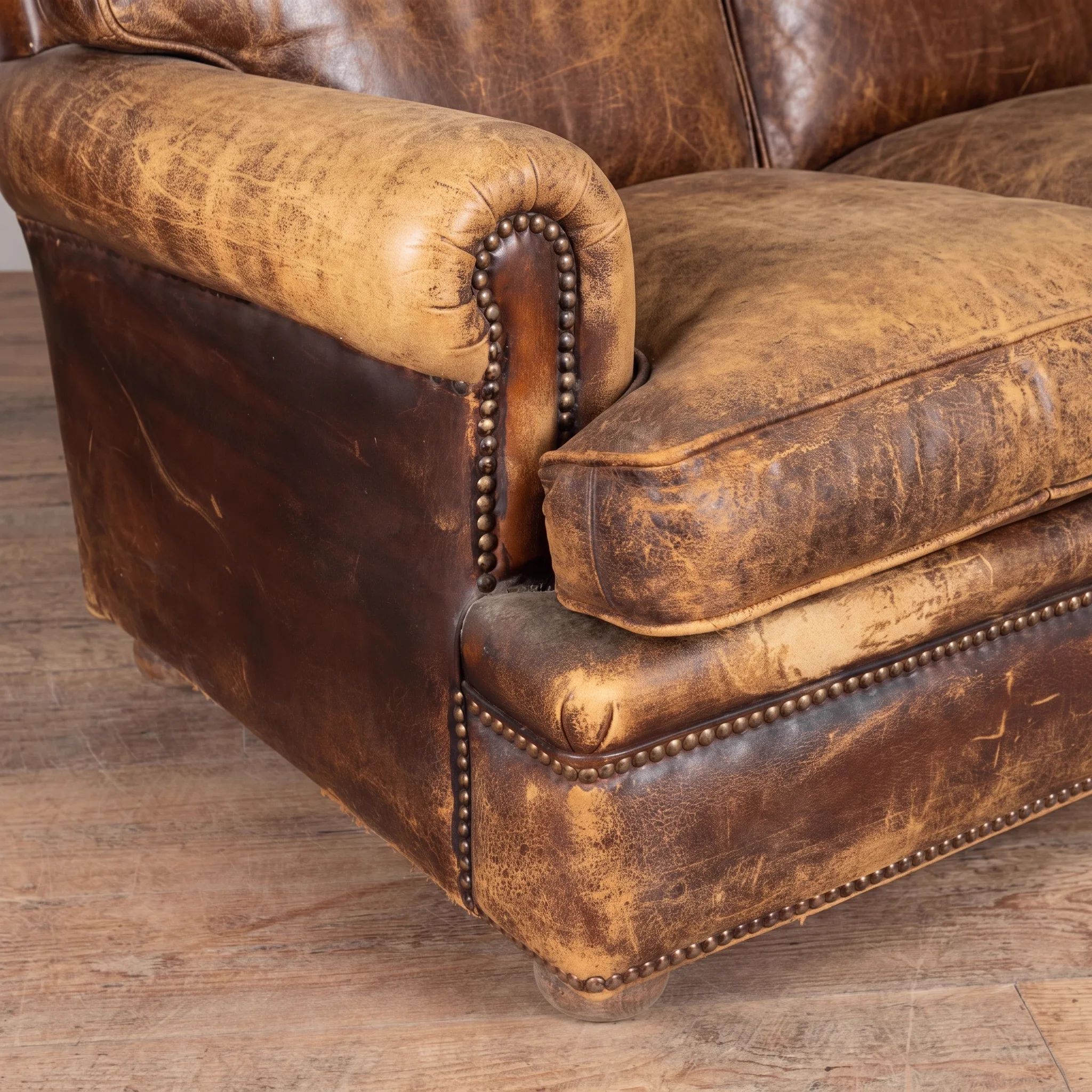
- Fine surface checking (network of tiny cracks visible on close inspection): Mostly recoverable. Professional conditioning, crack filler, and topcoat repair can restore appearance significantly. The leather will not return to original condition but can be stabilised and made to look considerably better. Cracking will not progress if correct maintenance is implemented from this point.
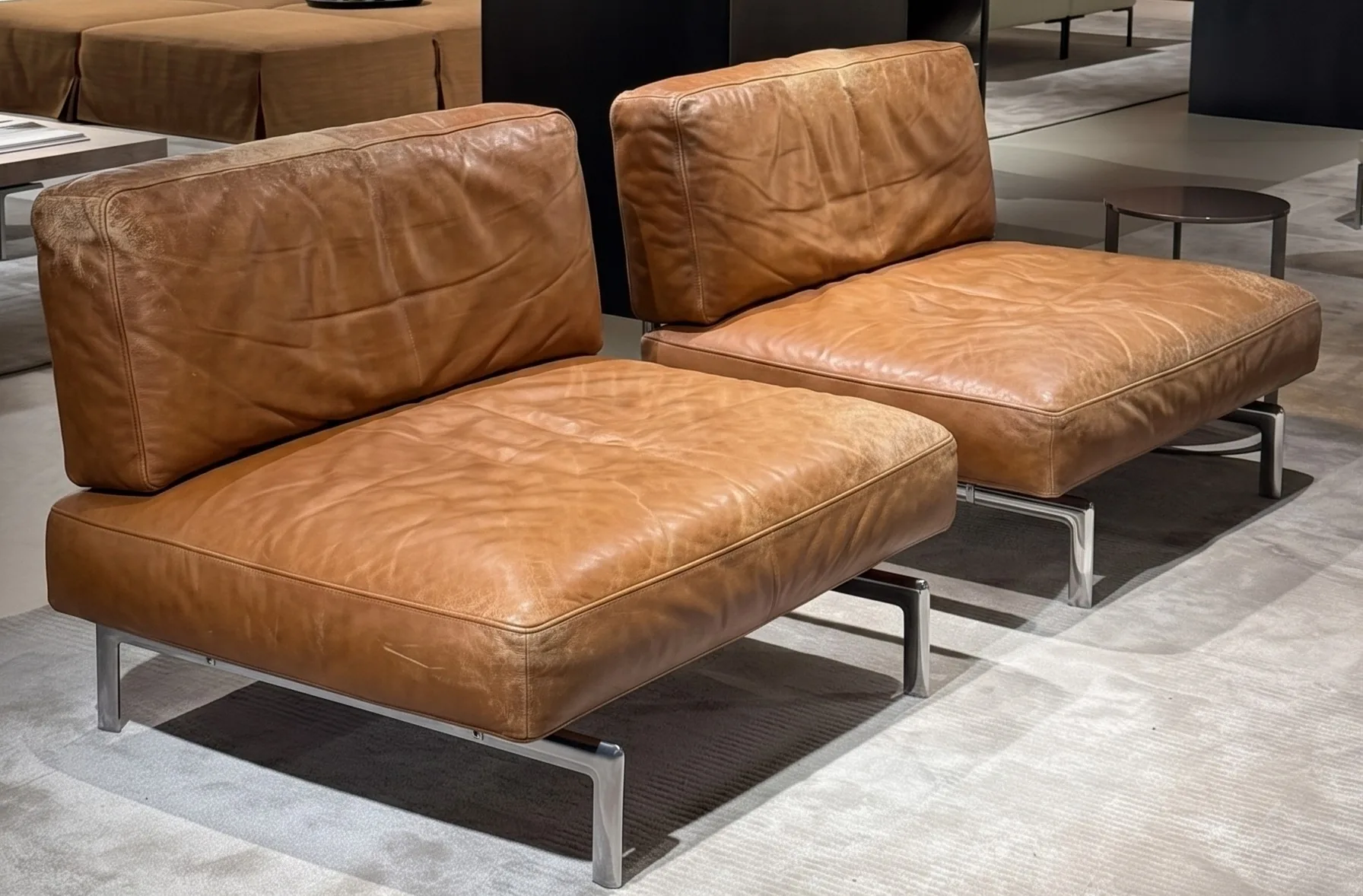
- Deep visible cracks at seat cushion fronts or backrest tops: Partially recoverable. Professional crack-filling, colour matching, and topcoat restoration can significantly improve appearance but will not restore original condition. Placement correction (away from AC vent) and ongoing maintenance is required to prevent further progression. See the cracking cause and fix guide for the full repair assessment framework.
- Peeling surface: If the surface is peeling, the sofa is likely bonded leather or PU leatherette rather than genuine leather. This is not repairable - the delamination is a material failure. Professional assessment can confirm whether the material is genuine leather (in which case peeling is a topcoat separation issue that may be partially repairable) or bonded leather / PU (in which case replacement is the only option). See the peeling leather guide.