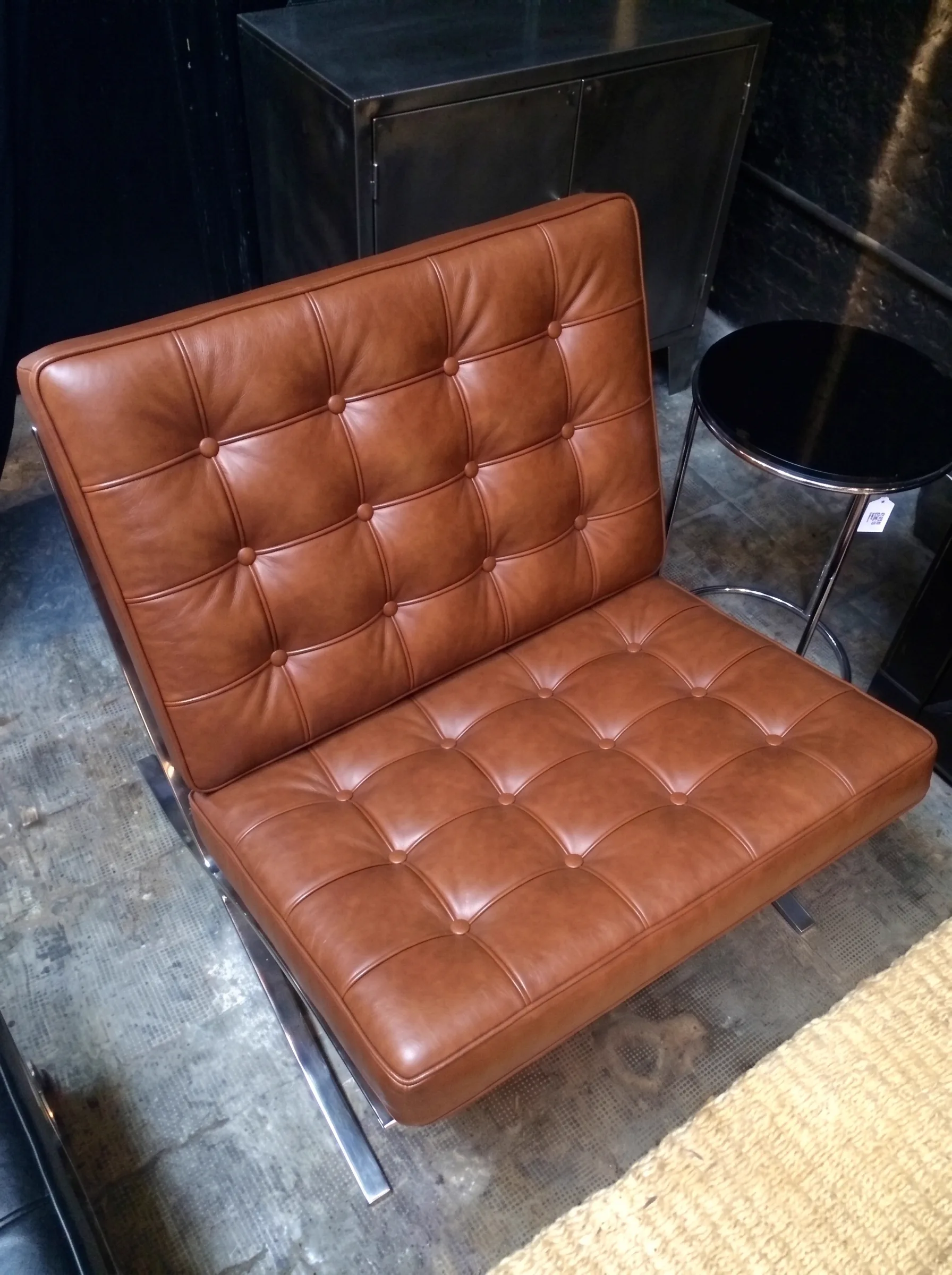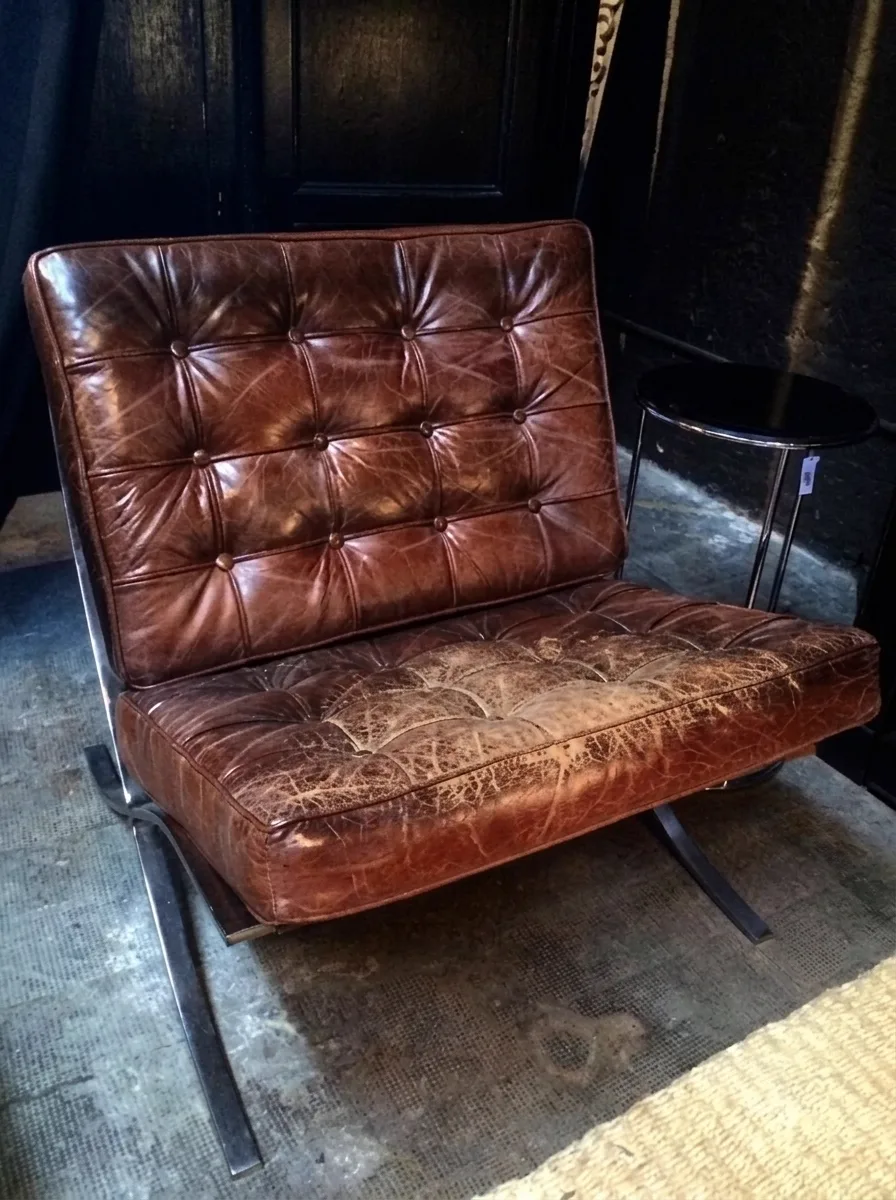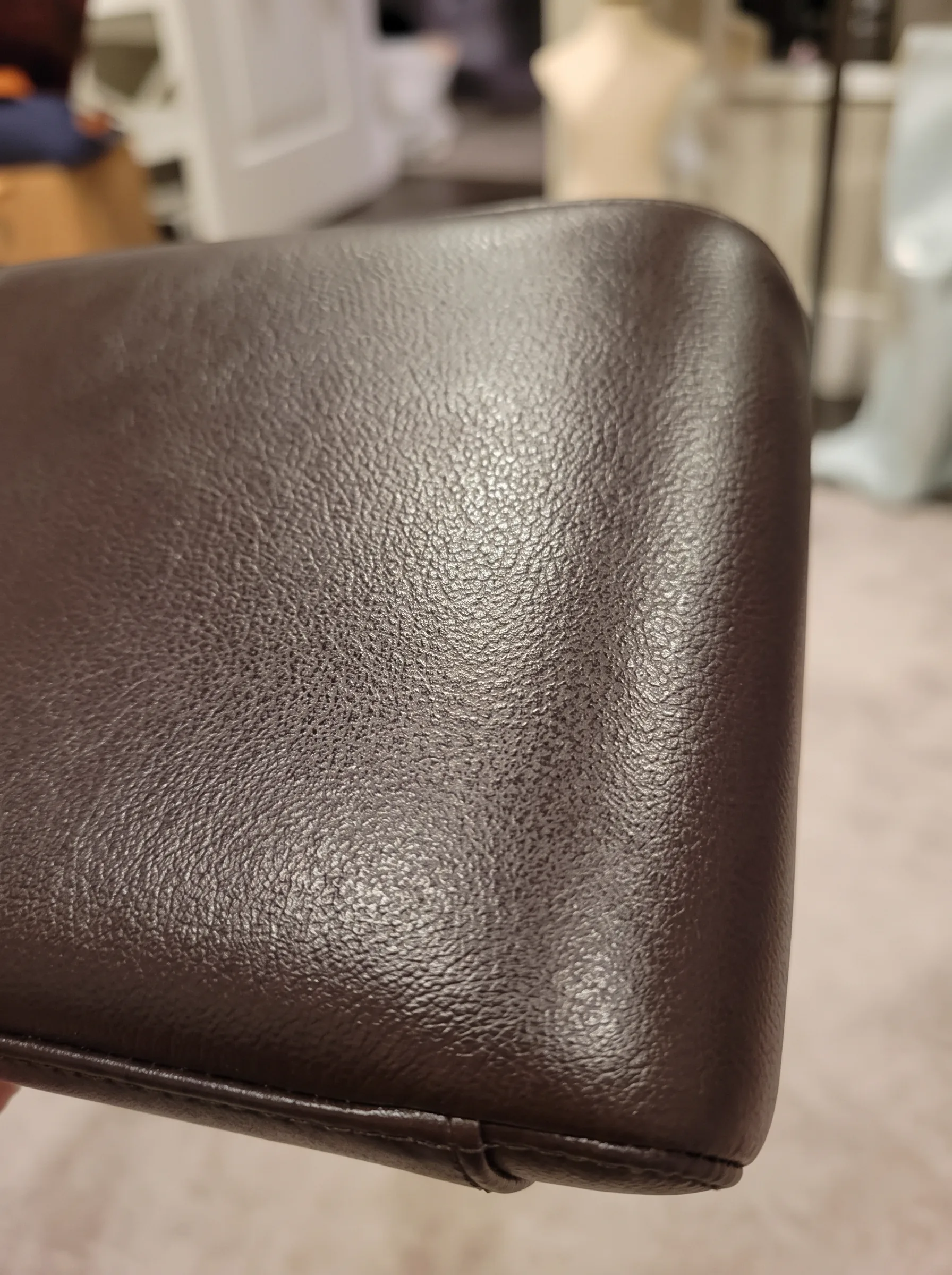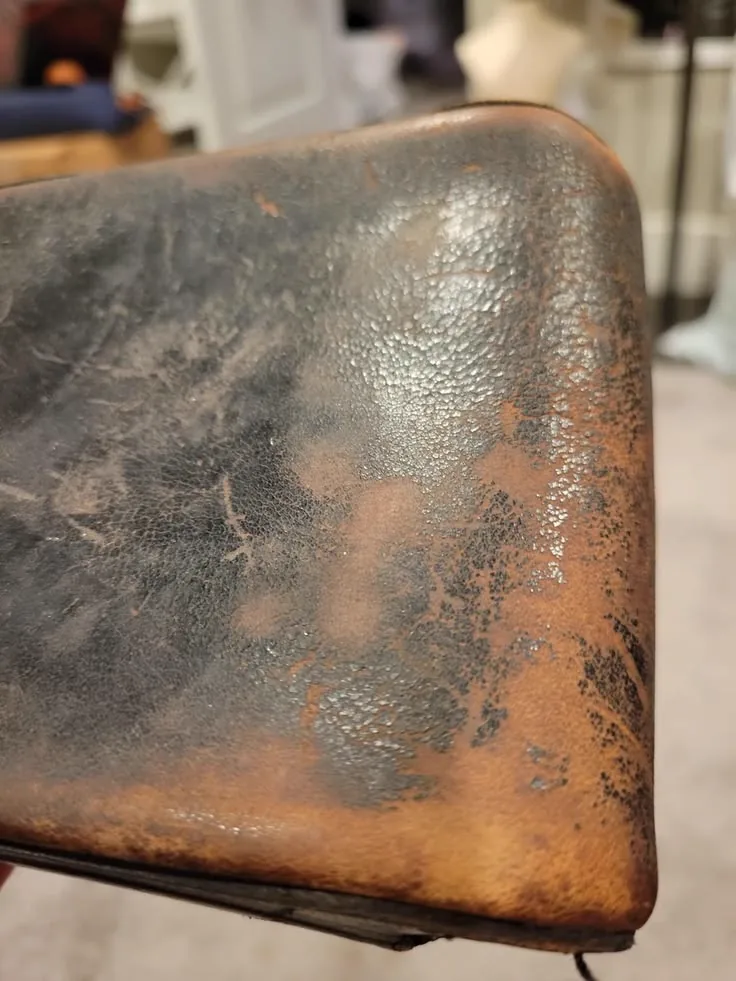
Leather sofas crack in India at a rate that surprises most people who buy them. A sofa that looked pristine at a Delhi showroom, specified from an Italian brand at a significant price, begins showing surface cracks within three to four years. The same sofa in a European apartment would last fifteen. This is not a quality problem in most cases. It is a climate and care problem that is entirely predictable - and almost entirely preventable if you know what is actually causing it.
The causes of leather cracking in India are specific, measurable, and distinct from what general leather care guides (mostly written for temperate climates) describe. This guide covers all of them - from the most common cause that almost nobody addresses correctly, to the less obvious damage pathways that accelerate cracking even in sofas that are regularly cleaned. And it explains which cracking can be fixed, which can be improved, and which has passed the point of repair.
Cause 1: AC-Induced Fat Liquor Depletion
This is the leading cause of leather sofa cracking in Delhi NCR homes. A split AC running 8 to 10 hours a day reduces indoor relative humidity to 20 to 35%. Leather equilibrates to ambient humidity. At these RH levels, the fat liquor - the engineered oil emulsion inside the collagen fibre matrix that keeps the leather supple - migrates to the surface and evaporates. Without regular conditioning on a schedule calibrated to Delhi's AC use, the fat liquor deficit accumulates invisibly over 18 to 24 months until surface cracking appears.
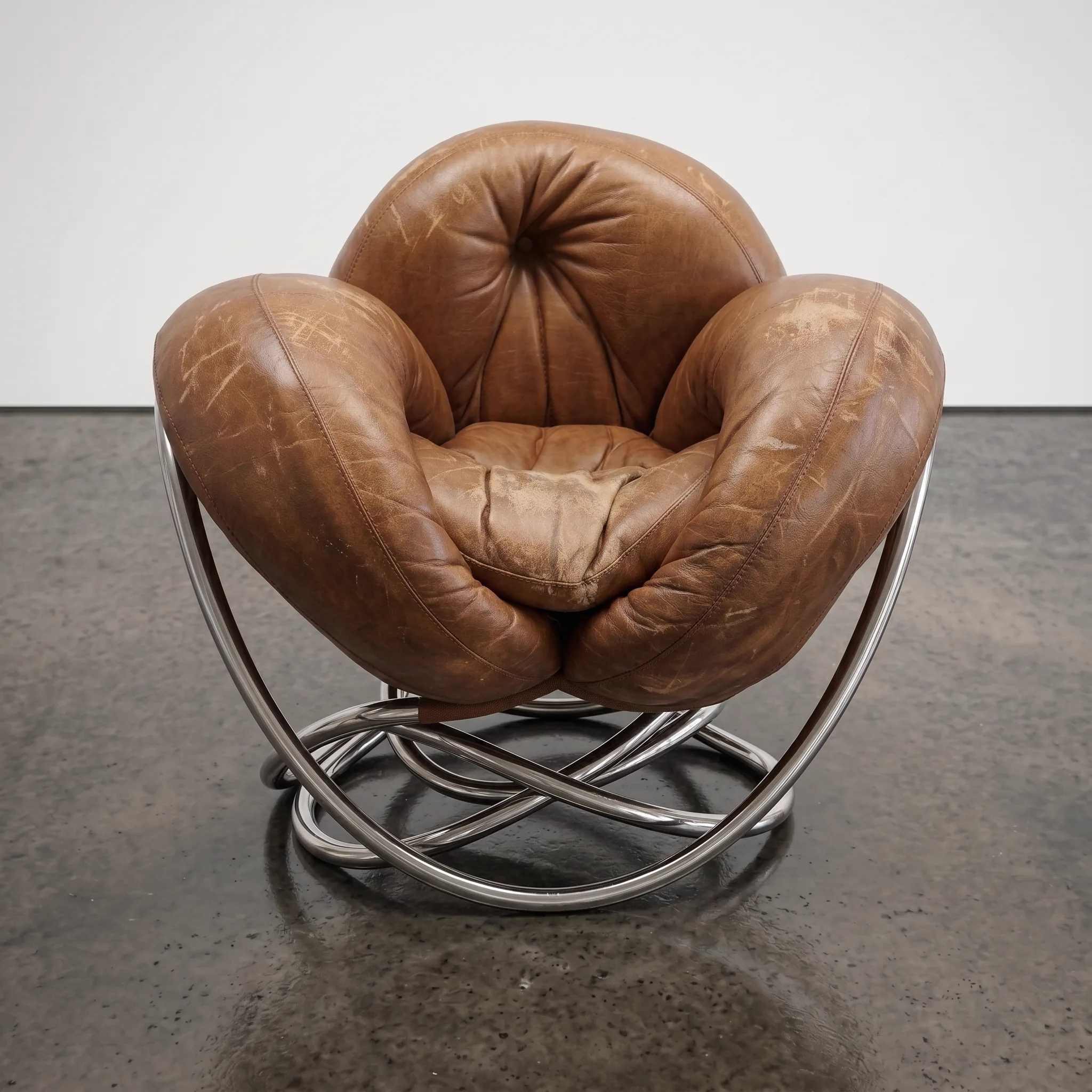
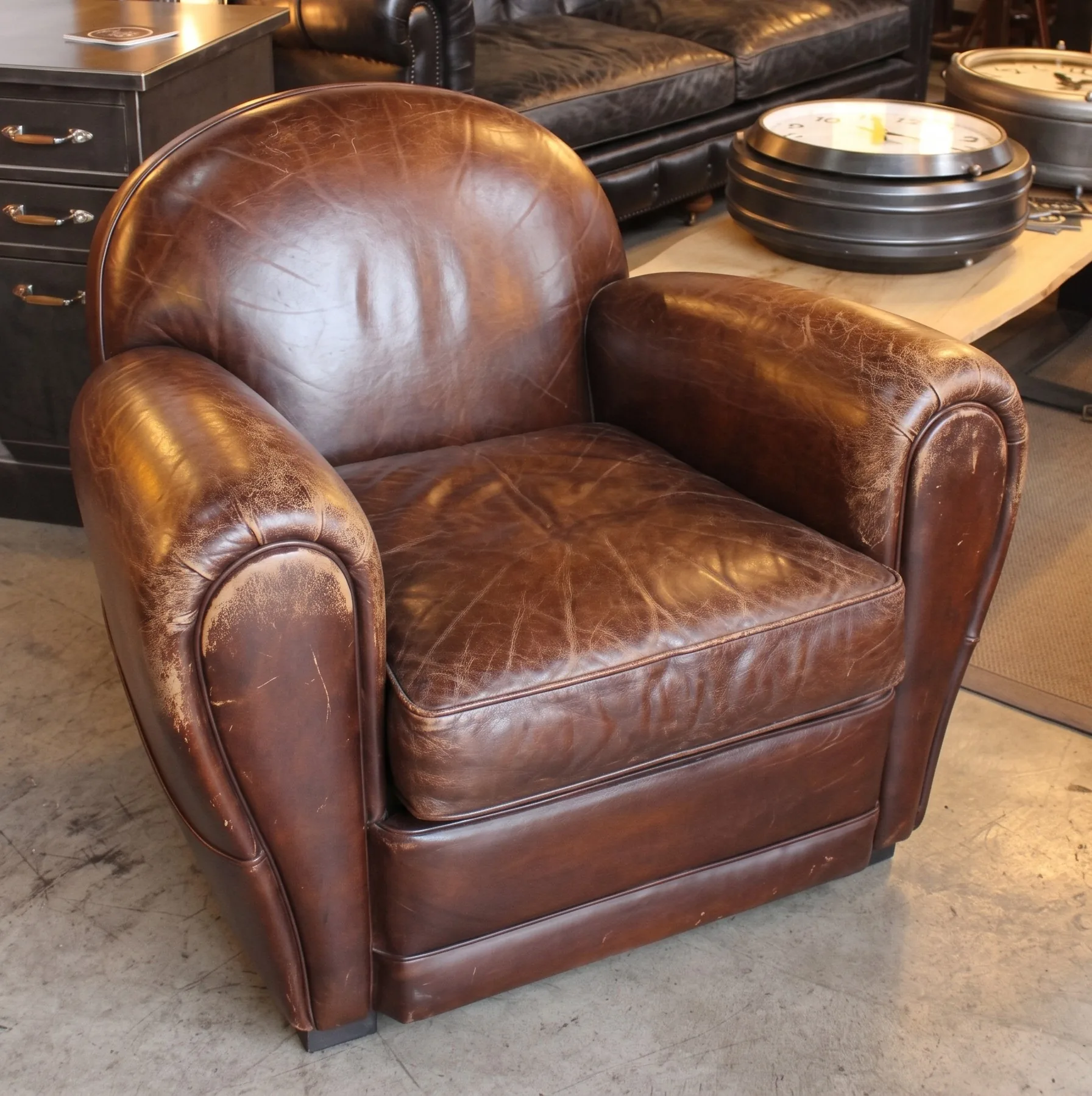
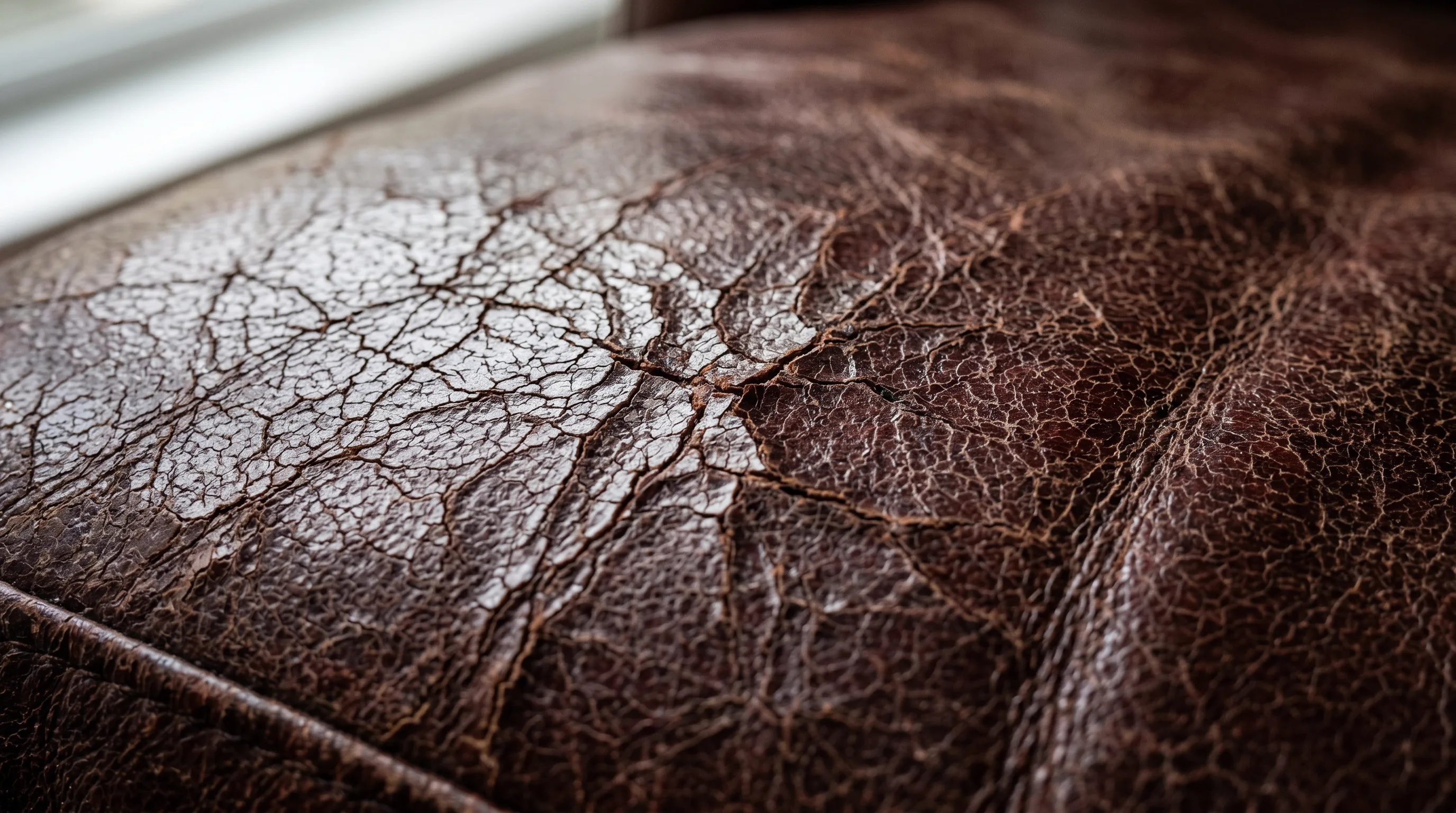
The cracking pattern from AC damage is specific: it begins on horizontal surfaces (headrests, seat backs, cushion tops) and at high-flex points (front edge of seat cushions, armrest creases). The underside and lower sections of the sofa remain supple. This positional pattern diagnoses the cause without further investigation. The full mechanistic explanation is in the AC damage guide. The fix for early-stage AC damage (no visible surface cracks yet) is a thorough conditioning session. Once cracks are visible, professional intervention is needed.
Cause 2: UV Degradation from India's High Solar Load
India's UV index reaches 10 to 11 from March through September across the northern plains. For comparison, London rarely exceeds UV index 7. This matters for leather because UV radiation breaks down the pigment topcoat on pigmented leather, causes dye fade on aniline leather, and progressively weakens the collagen fibre structure through photochemical oxidation. A leather sofa in a room with a south- or west-facing window that is not screened by curtains or blinds will show UV damage within 2 to 3 years - colour fade first, then topcoat brittleness, then surface cracking.
UV cracking has a distinct visual signature: the cracking is shallow, involving primarily the topcoat and upper grain layer, and the cracked areas are discoloured relative to the protected zones. The leather under armrests or behind cushions that have been shielding the backrest will be noticeably different in colour and texture from the exposed areas. This fading gradient makes UV damage diagnosis straightforward. The UV degradation guide covers the full photochemical mechanism and protective measures.
The curtain test: Look at whether any part of your sofa is consistently shielded from window light - by a cushion, a throw, the sofa's own arm structure. Compare the shielded section to the exposed section. If the shielded area is noticeably darker, more supple, and more uniform in colour, the exposed area has sustained UV damage. The difference you can see is the degradation that has already happened. Addressing it requires topcoat restoration - conditioning alone does not protect against UV or reverse UV-induced topcoat breakdown.
Cause 3: Wrong Cleaning Products and Methods
Leather has a natural surface pH of 4.5 to 5.5 - slightly acidic. Cleaning products with pH above this range (alkaline cleaners, household detergents, multi-surface sprays, phenol-based disinfectants common in Indian households) disrupt the leather's surface chemistry. Repeated alkaline exposure breaks the bond between the pigment topcoat and the hide surface, causing the topcoat to stiffen and crack independently of the hide beneath. This produces a specific cracking pattern: the cracks are very shallow, the topcoat flakes or lifts at the crack edges, and the leather beneath may still be relatively supple.
After alkaline cleaning damage, conditioning the underlying leather does not repair the already-cracked topcoat. The topcoat needs to be professionally removed, the hide cleaned and re-fatliquored, and a new topcoat applied in matched colour and sheen. This is a full restoration process, not a maintenance operation. The pH balance guide explains which products are safe for furniture leather and how to verify a product's pH before use.
Cause 4: Monsoon Humidity Cycling
Delhi monsoon brings outdoor RH of 70 to 85% for three months (July to September). In most households, AC continues running to keep indoor temperature down - which means the indoor RH fluctuates between 30% (during AC hours) and 60%+ (when AC is off overnight or during power cuts). Leather responds to these humidity changes by expanding slightly as it absorbs moisture and contracting slightly as it dries. This repeated micro-expansion and contraction at the fibre level is mechanically stressful. On leather that is already fat-liquor-depleted from the preceding AC season (April to June), the monsoon cycling accelerates cracking at flex points.
The mould risk from monsoon humidity is a separate concern covered in the monsoon leather care guide. The cracking contribution of monsoon cycling is most pronounced on sofas that entered the monsoon season already dry from the summer AC period. The prevention is conditioning in May or early June, before monsoon onset, to ensure fat liquor levels are replenished before the cycling begins.
Cause 5: Plant Oil Application
This is an India-specific cause that we see regularly. Coconut oil, olive oil, almond oil, and mustard oil are culturally embedded home remedies for wood and leather care in Indian households. All of them cause oxidative rancidity when applied to furniture leather. The unsaturated fatty acids in these oils absorb into the leather fibre and undergo progressive oxidation. At 30 to 90 days, the oxidation products cross-link with the collagen, causing permanent darkening and rigidity in the treated areas. The rigidity from oil-induced collagen cross-linking mimics advanced fat liquor depletion cracking and cannot be reversed.
The cracking from plant oil damage looks similar to AC depletion cracking but is concentrated in the areas where oil was applied (typically armrests and seat cushion tops where people applied it most liberally) and may be accompanied by darkening. The coconut oil damage timeline documents the 30, 60, and 90-day progression with specific images. There is no home remedy for this damage. Professional assessment is needed to determine whether re-fatliquoring and topcoat restoration can address the affected areas or whether panel replacement is required.
What Can Be Fixed vs What Cannot
The most important question any sofa owner asks after seeing cracking. The honest answer from 15 years of Delhi NCR restoration work:
Fixable at home: pre-crack fat liquor depletion
If the sofa is dry, stiff, or shows the audible crackling on the flex test but has no visible surface cracks, a thorough conditioning session can fully restore suppleness. This is the ideal intervention point. Use a furniture-grade conditioner (Leather Master, Fenice, or Bickmore Bick 4 - all available on Amazon India). Apply two thin coats 24 hours apart. This reverses the depletion before the fibre bonding stage begins. The conditioning method guide covers the correct application process.
Improvable professionally: surface checking
Fine surface cracks visible on close inspection but not deep cracks that open or lift. Professional treatment: pH-neutral deep clean, professional re-fatliquoring at depth, flexible leather crack filler applied to fill the surface checking, topcoat blended and sealed to match original. Result is not original but substantially improved - cracks are filled, surface is uniform, further progression is stopped. This is the most common restoration work for Delhi NCR sofas that have been AC-damaged for 2 to 3 years without conditioning, and it is the exact work our cracked leather sofa repair is built around, filler flex rating and topcoat blending included.
Requires panel replacement: structural cracking
Cracks that penetrate through the full leather thickness, with visible leather edge lifting, opening under flex stress, or sections of leather separating from the substrate. Crack-filling cannot bridge structural separation. The cracked panel needs to be removed and replaced with matched leather. On modular sofas with removable cushion covers, this is relatively straightforward. On single-piece structured sofas, it requires skilled panel replacement with colour and grain matching to the remaining undamaged panels.
Not repairable by any method: full surface delamination
When the bonded leather or bicast leather surface has delaminated - the polyurethane or vinyl coating separating from the base material in sheets across large areas - repair is not feasible at the panel level. This is more common on budget bonded leather sofas than on genuine leather. The only practical option is full reupholstery. The guide to bicast, bonded, and PU leather explains why these materials behave differently from genuine leather and have shorter life expectancies regardless of care.
India-Specific Prevention Schedule
The following schedule is calibrated for Delhi NCR conditions with regular AC use. Adapt to your specific situation - less AC use means less frequent conditioning is needed. More direct sun exposure means UV protection measures are higher priority.
- March - first conditioning of the year: Before AC season begins. Replenish fat liquor levels from the previous year. This is the most important conditioning session for Delhi NCR sofas. Apply to the whole sofa including back panels and arm undersides. Use a furniture-grade conditioner appropriate for your leather finish type.
- April to October - UV screening: During the high UV period, keep curtains or blinds partially drawn during peak sun hours (10am to 4pm) on any windows that direct sunlight onto the sofa. A UV-filtering window film is a permanent solution for south- and west-facing rooms with large windows.
- June - pre-monsoon conditioning (aniline and semi-aniline): Condition again before monsoon if you have aniline or semi-aniline leather in an AC room. The three months of summer AC running will have depleted fat liquor significantly. Entering monsoon with replenished fat liquor reduces the mechanical stress from humidity cycling.
- October - post-monsoon conditioning: Condition all leather types after monsoon. Check for any mould residue (faint white bloom on darker leathers) and clean before conditioning. This is also a good time to apply a UV protective spray on pigmented leather as a topcoat supplement before the next sun-heavy period.
- Year-round - correct cleaning only: Use only pH-neutral leather cleaners on genuine leather. No household sprays, no wet wipes, no disinfectants. A lightly damp microfibre cloth for regular wipe-downs is sufficient for maintenance between professional cleans. Clean spills immediately with a dry cloth, blotting not wiping.
"The pattern we see is almost universal across Delhi NCR: people buy a beautiful leather sofa, put it in an AC room, clean it occasionally with whatever spray is in the house, and condition it never. Then at year three or four they call us with visible cracking. At that point the repair is 4 to 5 times the cost of preventive conditioning would have been. India's climate is hard on leather. But it is not unmanageable. The protocol just has to be calibrated to this climate, not to a European apartment." - Tyson, Lead Artisan, The Leather Restorators
What You Can Do at Home Right Now
If you have just discovered cracking on your sofa and are assessing whether home intervention is possible, the following immediate steps use items available in every Indian household. These do not repair visible cracks - nothing at home can - but they halt the progression of early-stage drying and make a meaningful difference before you get professional-grade products.
The flex test: confirming whether cracks are surface or structural
Before doing anything else, determine what you are dealing with. Remove a back cushion and flex it firmly in both directions. If the crackling sound is audible but no cracks open visibly during flex, you are at early-stage fat liquor depletion - still home-recoverable. If cracks visibly open during flexing and you can see pale fibre material in the crack channel, the damage is structural and needs professional assessment. This test costs nothing and saves you time applying home treatments to a sofa that is beyond their reach.
Lukewarm water wipe to rehydrate surface (pre-crack stage only)
For a sofa at the pre-crack dry stage: wring a clean cotton cloth in lukewarm water until barely damp. Wipe the surface in long strokes, one panel at a time. This reintroduces surface moisture to the leather, temporarily softening the surface and reducing the audible crackling on flex. It is not conditioning - it does not replace fat liquor - but it is a legitimate first step that causes no damage and provides immediate relief. Follow immediately with a dry cloth. Do not apply to sofas with visible open cracks - moisture entering an open crack can swell the exposed fibre edges.
Petroleum jelly as a short-term emollient (pigmented leather only)
Plain petroleum jelly (Vaseline) - available at any pharmacy for Rs 50-80 - is one of the safer short-term emollient options for pigmented leather when no proper conditioner is available. Apply an extremely thin smear across a very small area of dry, pre-crack leather with a finger, leave 30 minutes, then thoroughly buff off all visible residue with a dry cloth. The goal is to leave almost nothing visible - just the fraction of emollient that penetrated. Petroleum jelly does not oxidise or cause rancidity in the same way plant oils do, and because it is a mineral oil product it does not react with the collagen fibre in the same damaging way. This is a stopgap only. Do not use on aniline leather (it will cause blotching), and do not apply thickly - excess petroleum jelly left on the surface attracts dust, clogs the grain, and forms a film that prevents proper conditioning later. One thin application, thoroughly buffed, buys you 2 to 4 weeks until you get proper conditioner.
Blocking UV with what you already have
If cracks are appearing on the side of the sofa facing a window, the UV contribution to cracking is significant. Close curtains or blinds during peak sun hours (10am to 4pm) every day - this is free and immediate. If you do not have curtains or blinds on that window, lay a cotton bedsheet over the sofa on the side facing the window during the day. This is not a design solution but it is a genuine intervention that immediately reduces the UV load on the leather surface at no cost. Even a single summer of UV screening can prevent the topcoat cracking that takes years to professionally restore.
Identifying and stopping further chemical damage
Check your cleaning routine. If you have been cleaning the sofa with Colin, Lizol, Dettol, wet wipes, or any household spray, stop immediately. Replace the cleaning routine with a barely damp plain water wipe using a clean cotton cloth. This single change stops the pH-related topcoat damage that is likely contributing to cracking alongside any drying or UV factors. A plain water wipe costs nothing and causes no damage. It removes surface dust and light soiling without the alkaline pH disruption that household sprays cause.