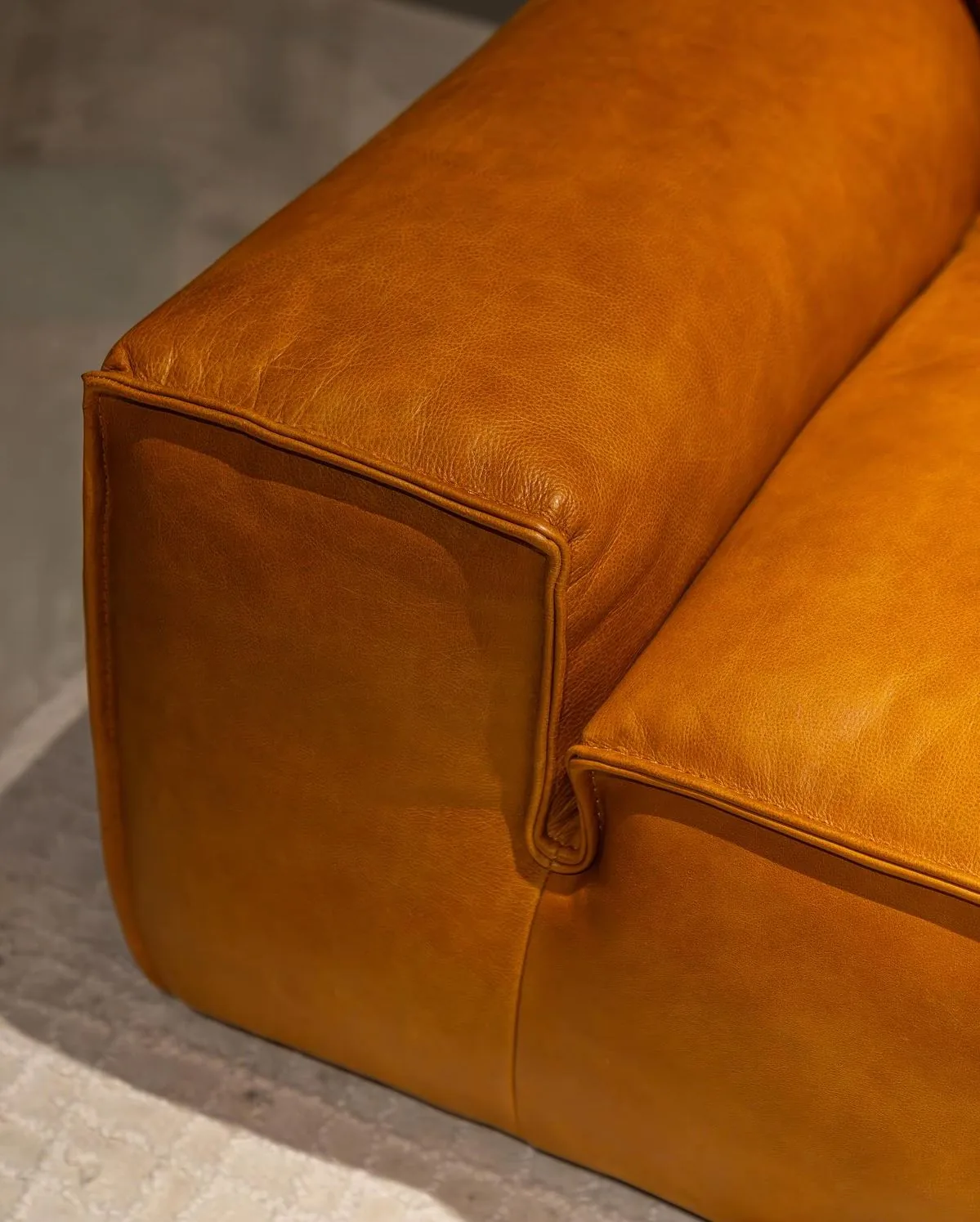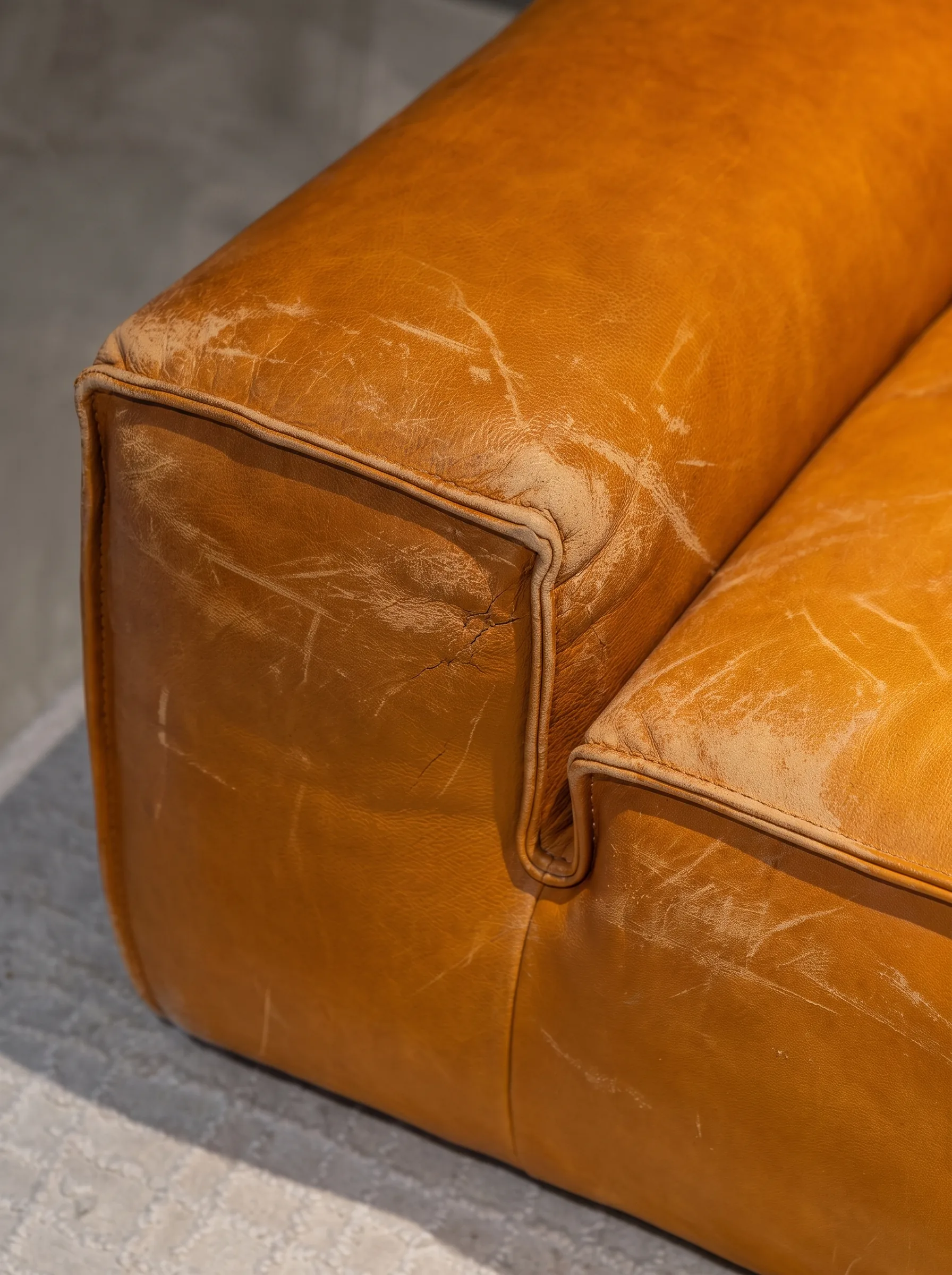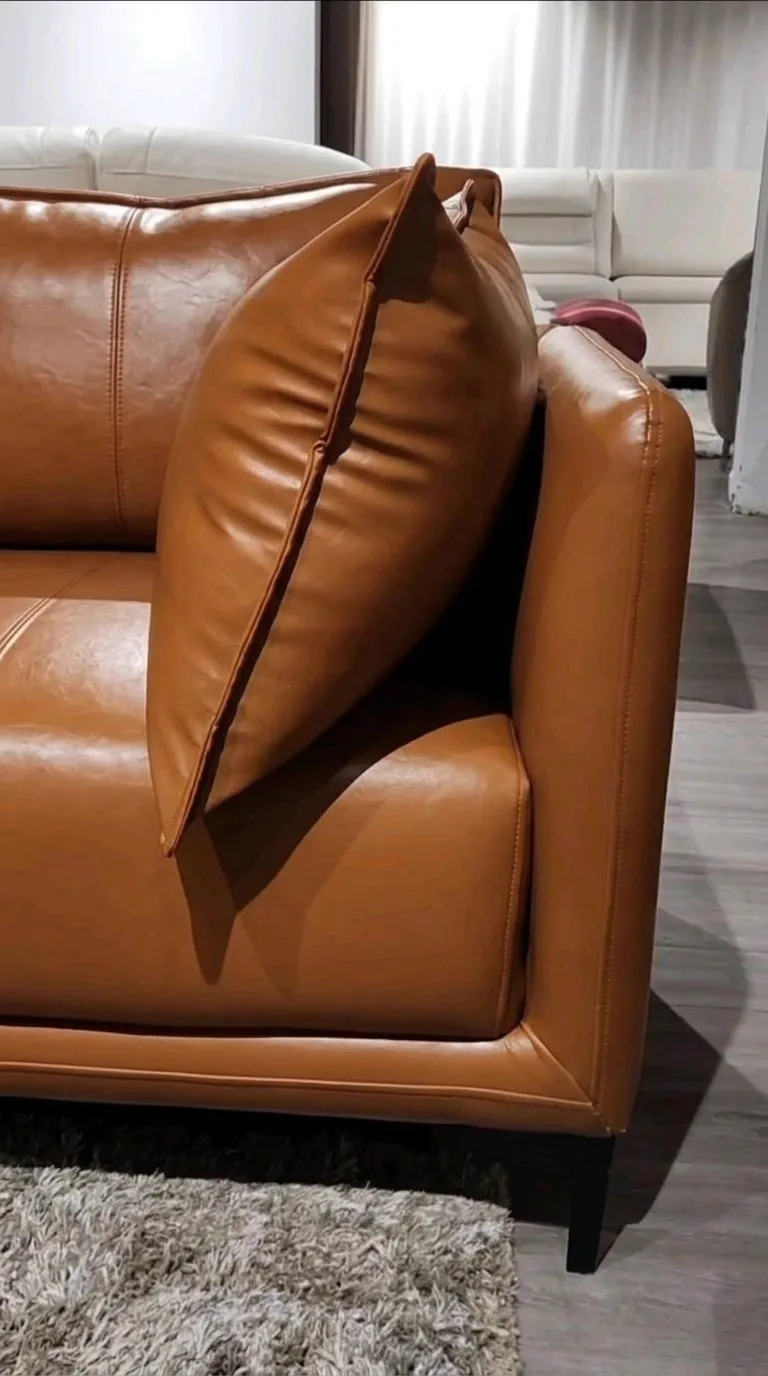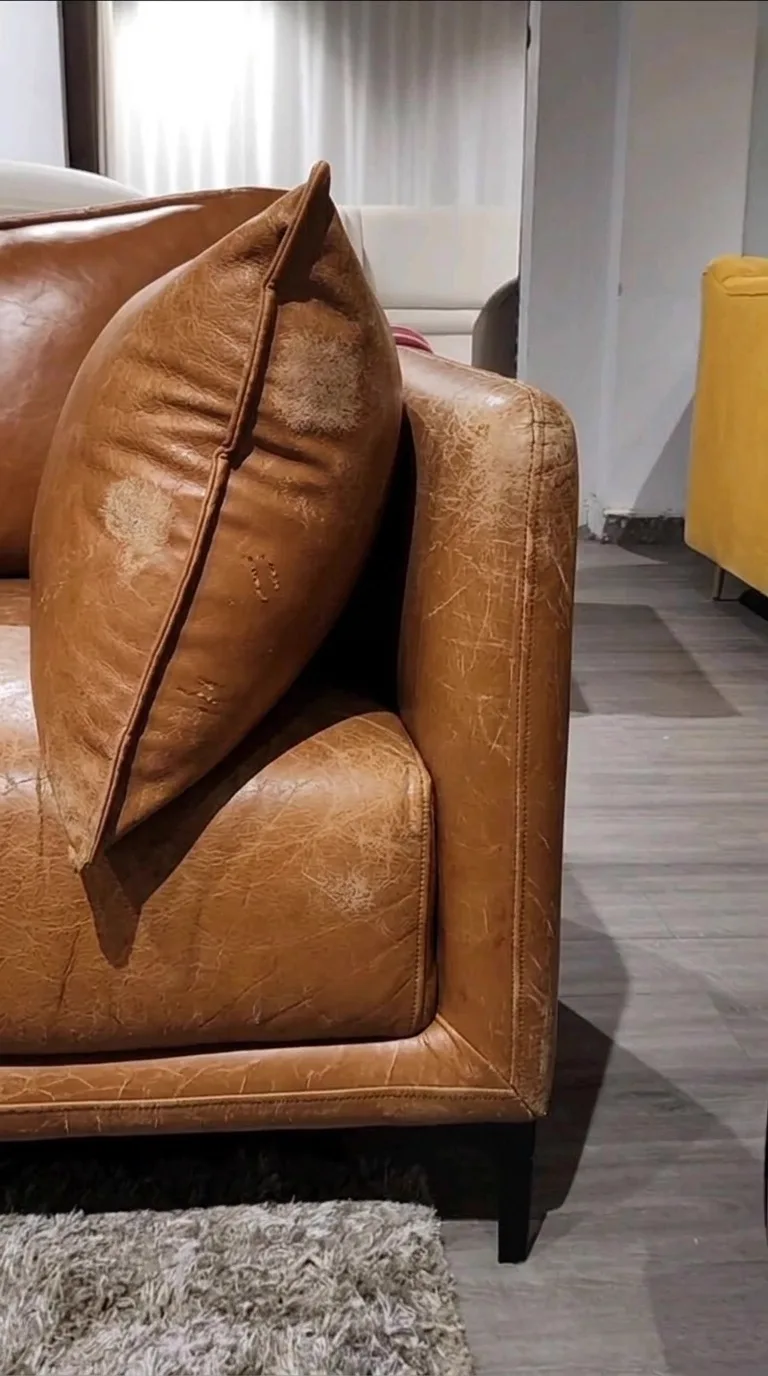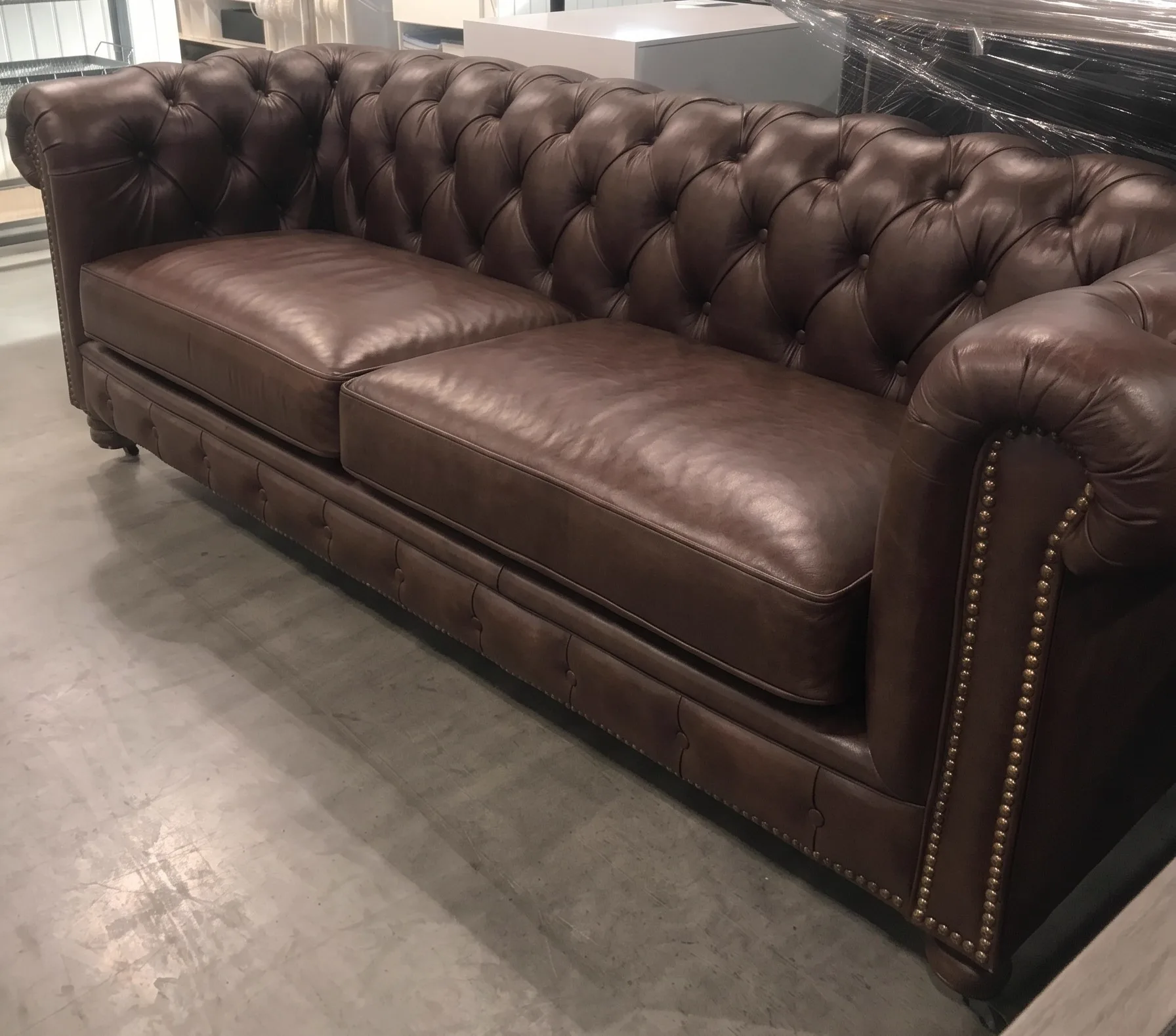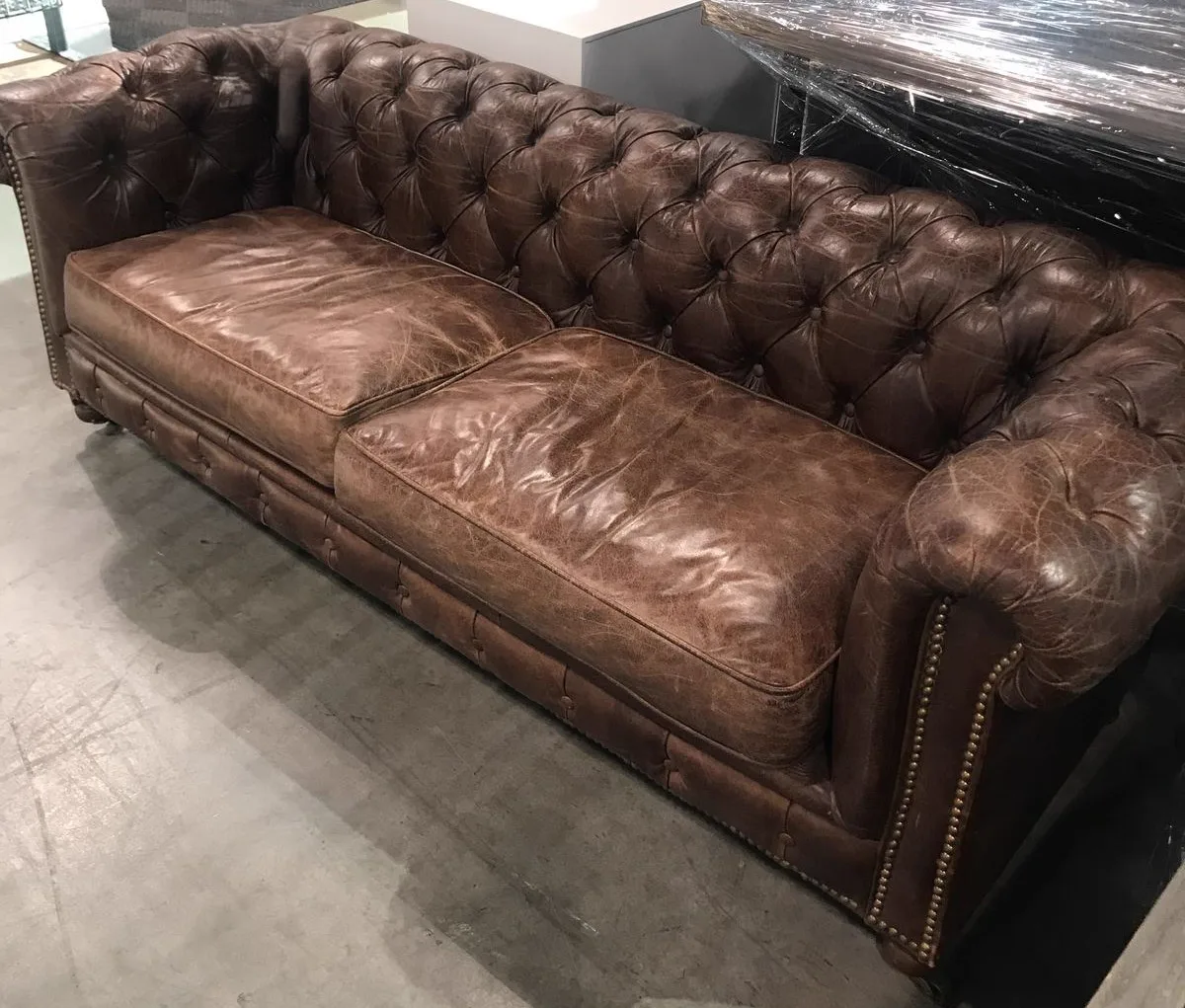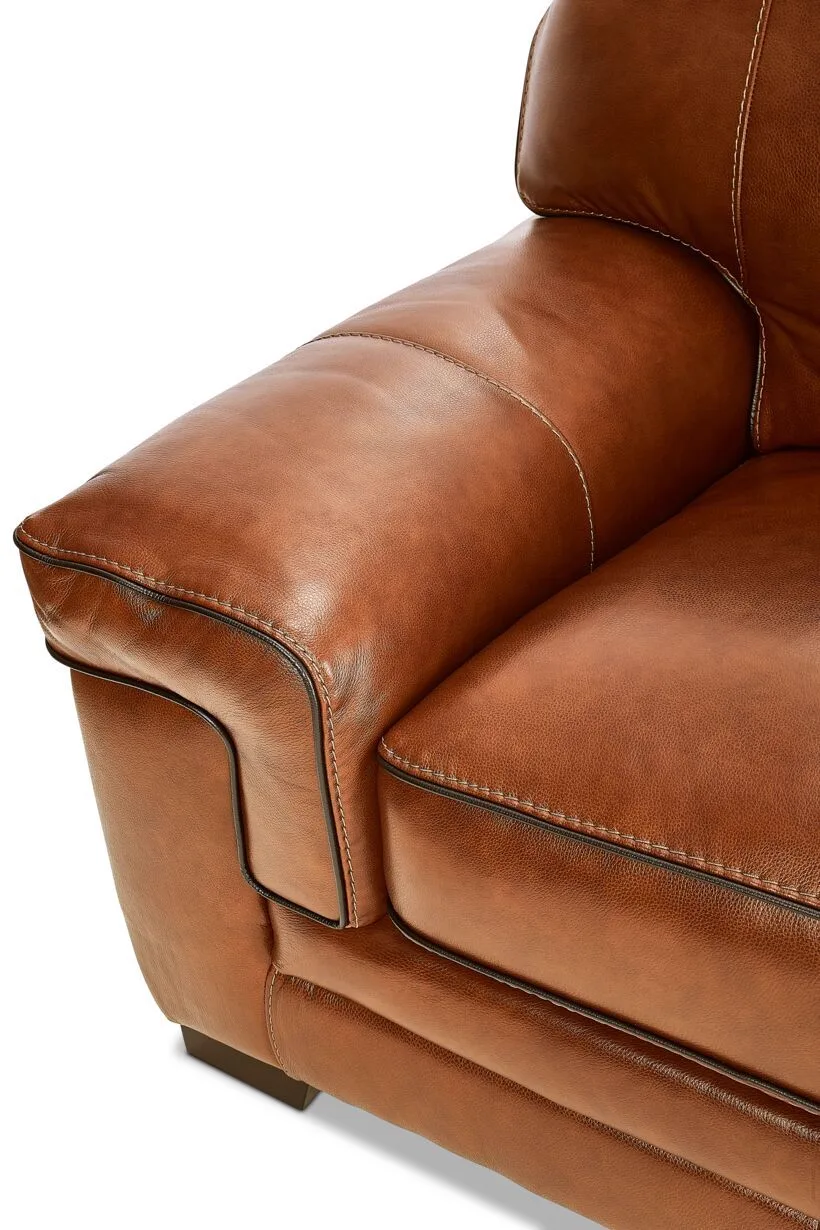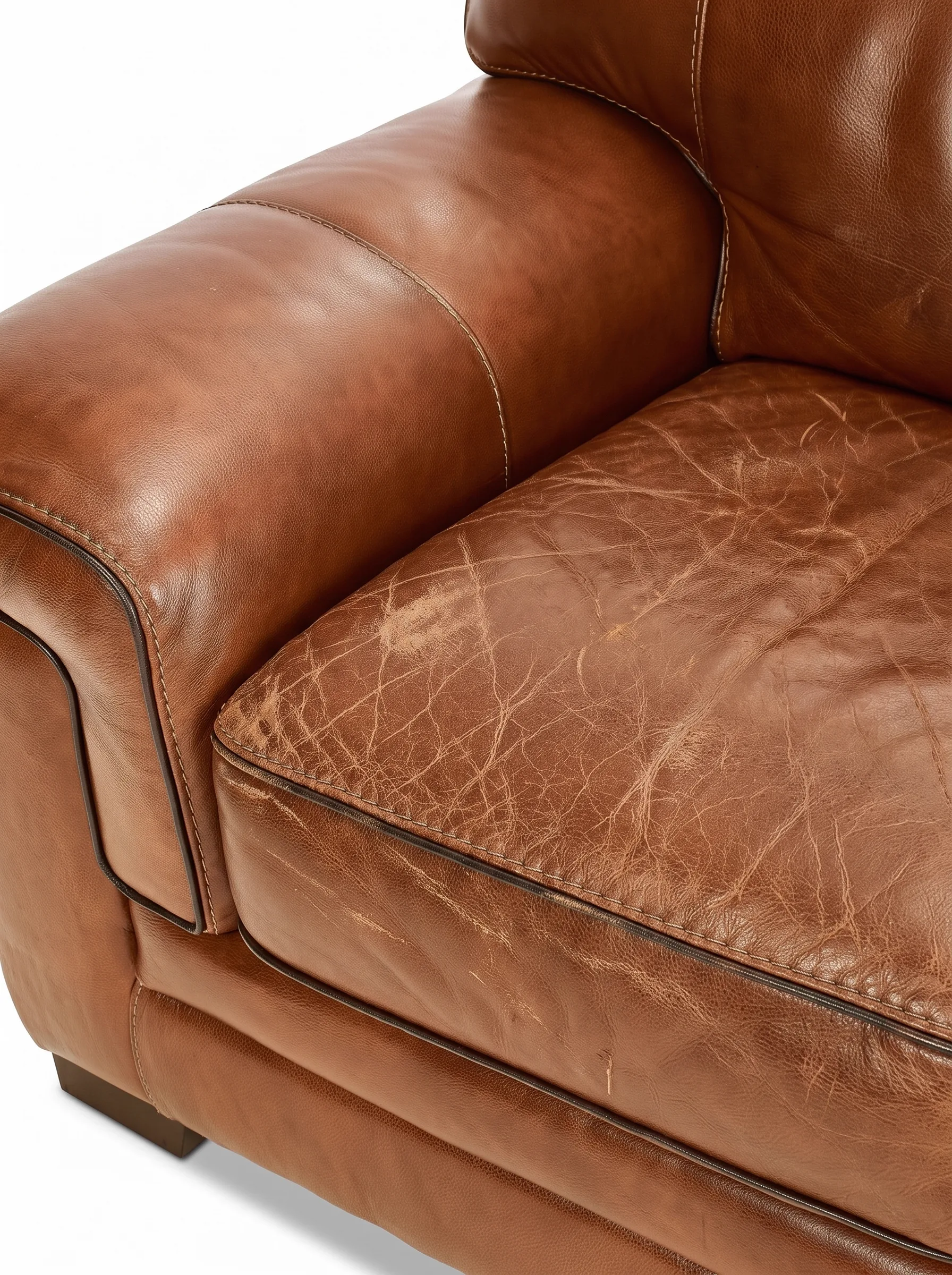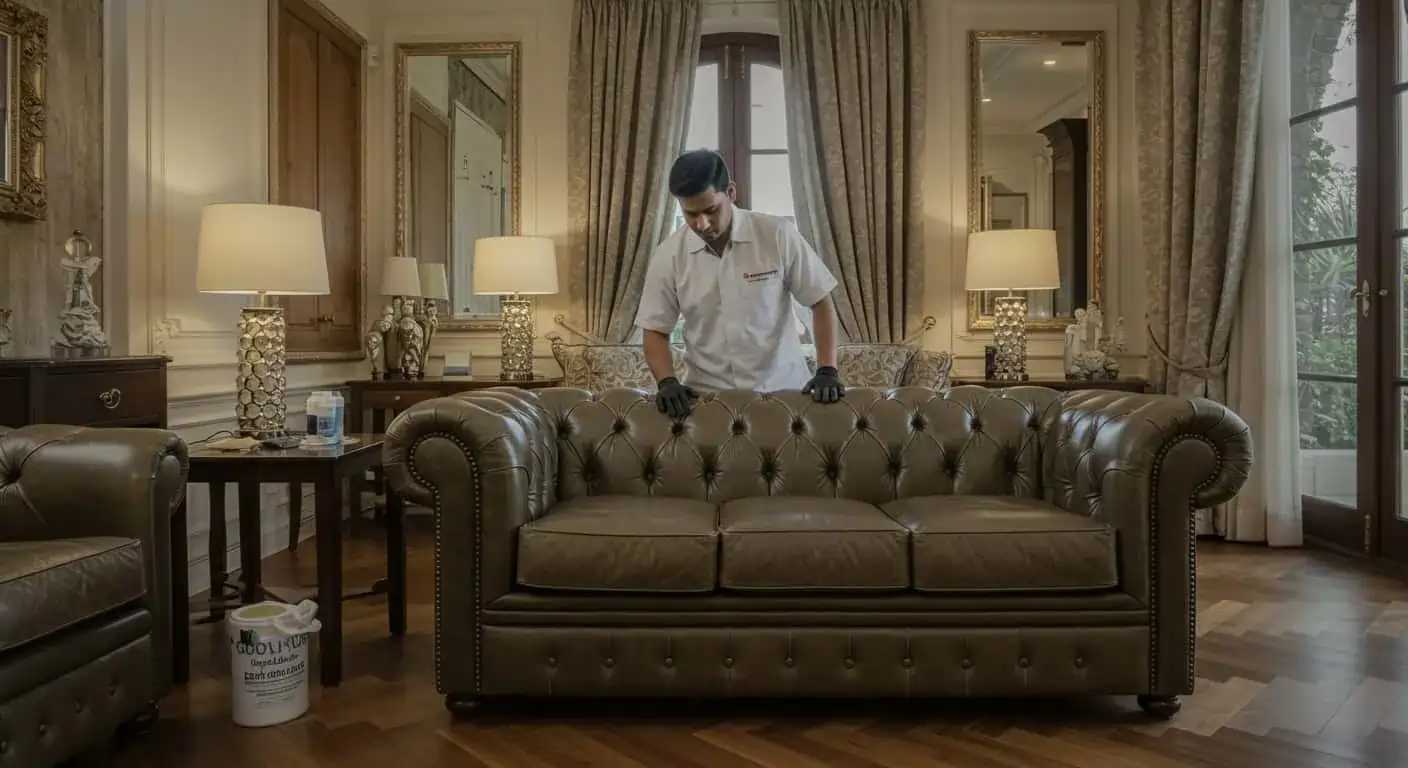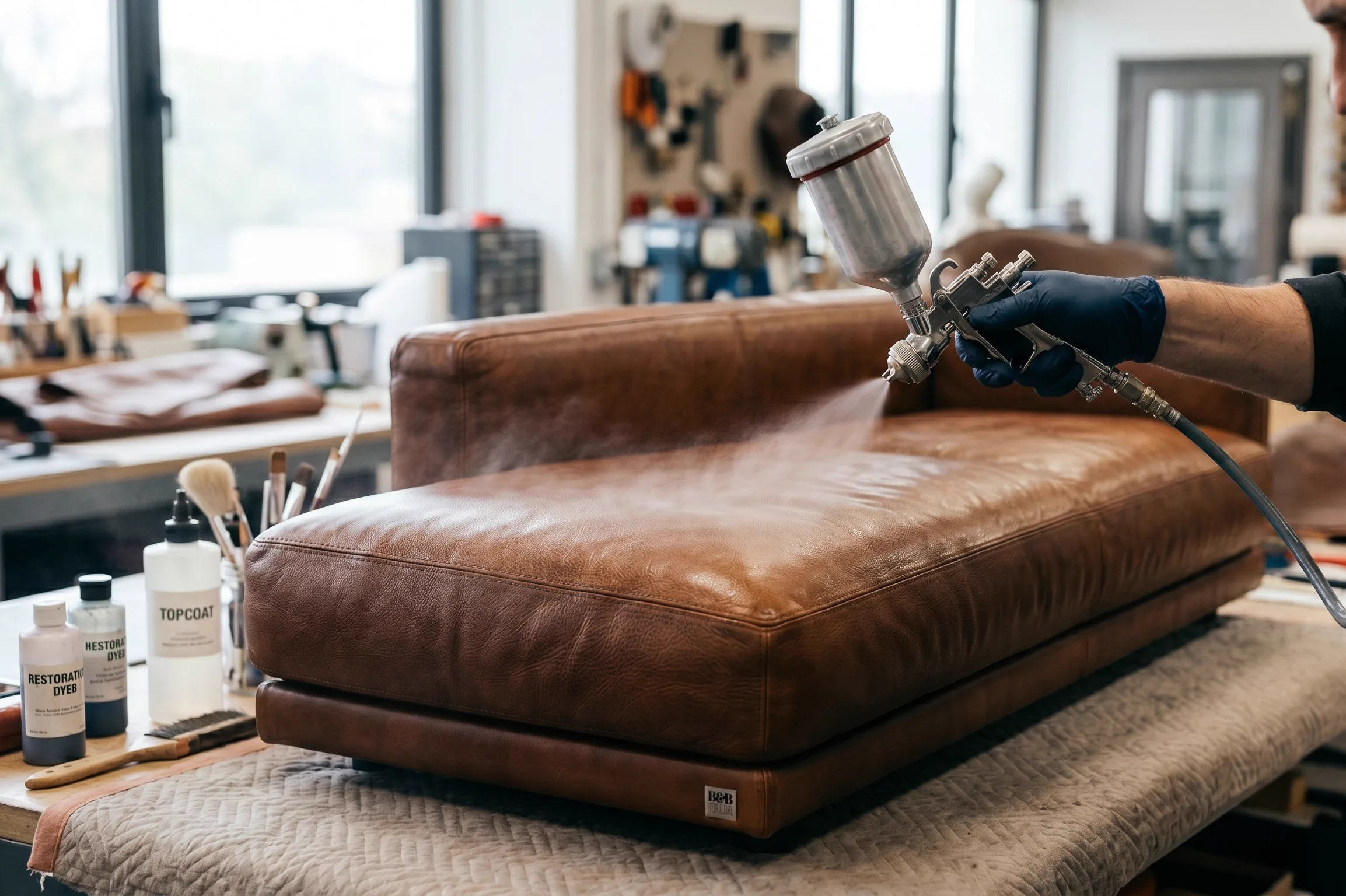
Your Natuzzi Iconic, your Poltrona Frau Pelle SC, your Fendi Casa Selleria , they all carry Italian nappa as the surface. To the touch it is unlike anything else in the leather category: cool, weightless, almost soft enough to mistake for fabric. Restoring it is a completely different job from working with commercial pigmented leather. The chemistry is more sensitive, the failure modes are subtler, and the margin for error during cleaning approaches zero. This article covers what nappa is, how it differs from other premium leathers, where it fails in Indian homes, and the expert steps that protect your investment from the day the piece arrives.
What Is Nappa Leather , and What Is Not?
The word "nappa" is used loosely across the furniture market. The technical definition is narrower than the marketing language. Nappa is a category of full-grain leather defined by three properties: the hide is finished with the natural grain intact, the surface is dyed with aniline or finished as semi-aniline, and the leather is processed to a soft, supple, low-tensile hand. The category originated with sheep and lamb hides tanned in the Napa Valley tradition in the late nineteenth century. Modern usage extends to bovine, ovine, and caprine hides finished to the same standard. Italian tanneries , particularly the Tuscan and Lombardy hide districts , set the global benchmark.
What nappa is not: it is not a finishing process applied to any leather. It is not corrected-grain leather softened with chemicals. It is not pigmented leather embossed to fake a natural pore pattern. The marketing claim "nappa-style" or "nappa-effect" almost always means a finish that copies the look of nappa without the underlying hide quality. Genuine Italian nappa starts with the top 5 to 8 percent of hides selected at the tannery , hides without significant scarring, insect damage, or grain defects , because the aniline or semi-aniline finish exposes the natural surface entirely.
What this means for restoration: real nappa is precious because the raw material is precious. The surface tells the truth about the hide beneath it. There is no opaque pigment layer to hide poor restoration work. Every step of any fix will be visible in raking light for the rest of the piece's service life.
The identification rule: if the surface is cool to the touch, shows fine irregular natural pores under raking light, absorbs a single drop of water within 10 to 60 seconds, and shows a temporary fingernail mark that fades within seconds , your piece is genuine aniline or semi-aniline nappa. If the water beads off and the fingernail leaves no mark, the piece is pigmented leather sold under the nappa name.
Which Italian Brands Use Nappa and What Grade Is on My Sofa?
Most buyers acquire nappa furniture without being told which sub-grade of nappa is on the piece. Knowing the grade determines the restoration approach.
Natuzzi nappa
Natuzzi sources hides from a network of European tanneries and finishes most of its premium lines as full-grain or top-grain nappa. The Iconic collection uses an aniline-finished full-grain Italian nappa with minimal correction. The Re-Vive and Editions ranges are semi-aniline, with a thin protective coat that adds stain tolerance without obscuring the grain. Restoration uses aniline-grade chemistry only, with extended dwell times during cleaning and re-fatliquoring on a six-month interval through India's seasonal cycle.
Poltrona Frau Pelle SC
Pelle SC is Frau's signature material , a semi-aniline nappa from their Tolentino tannery in central Italy. It is sold across the Pelle Frau, Heritage, and SC series. The "SC" designation refers to the proprietary saturated-colour finishing process. Pelle SC accepts conditioning more readily than pure aniline but is acutely vulnerable to alkaline cleaning chemistry. The 27 standard Pelle Frau colours each have a slightly different binder formulation, which is why colour-matched micro-pigmentation requires careful tonal analysis, not generic dye work.
Fendi Casa Selleria
Fendi Casa's Selleria line is finished as full-grain aniline nappa with a deliberately minimal surface treatment to preserve maximum tactile sensitivity. The collection draws from the same hide stock used for Fendi luggage, which is among the most demanding leather quality standards in the world. Restoration is the most conservative possible: pH-neutral cleaning only, conditioning every six months, and zero tolerance for any household cleaning.
B&B Italia upholstery
B&B Italia uses Italian nappa across most upholstery ranges, with finishing varying by collection. The Maxalto sub-brand and the Husk, Tufty-Time, and Charles series typically carry a semi-aniline nappa with a mid-thickness pigment coat (20–25 microns). The Mart and Camaleonda pieces call for the full Pelle SC-equivalent steps because the underlying hide quality is comparable.
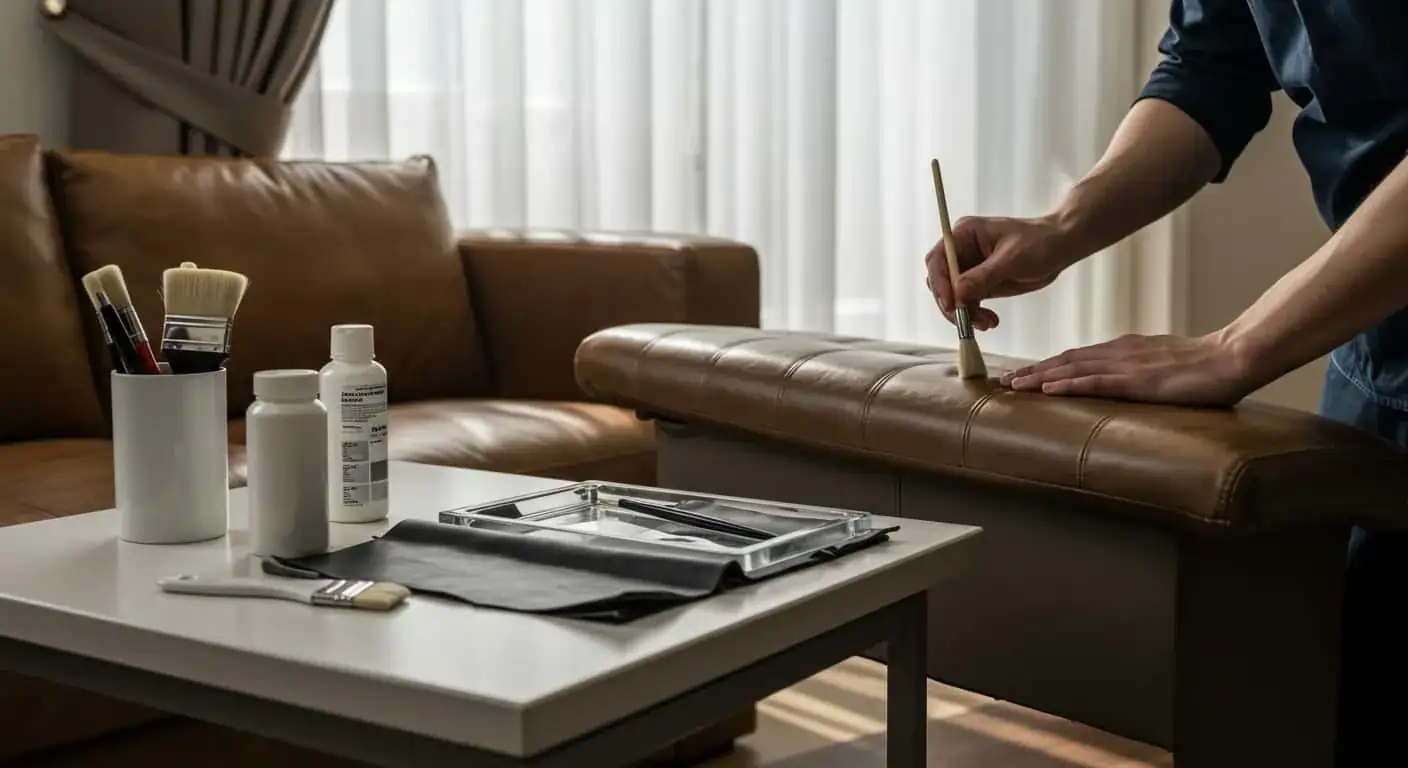
For a full identification framework that applies to any of these brands, the underlying chemistry is in the foundation guide on aniline, semi-aniline, and pigmented finishes. Nappa is the premium expression of the aniline / semi-aniline category. The same chemistry rules apply, with tighter tolerances.
How Does Nappa Fail in Indian Homes?
Italian nappa was built for the climate it was tanned in: temperate, low-particulate, moderate humidity, indirect sunlight. None of that applies to Delhi NCR. The same hide that ages gracefully in a Milan apartment faces six aggressive failure modes in an Indian home, each compounding the others.
1. Skin-oil saturation in armrest and headrest zones
Nappa absorbs sebum directly into the fibre because there is no opaque pigment barrier. Over two to three years of normal use, contact zones , armrests, headrests, seat fronts where the leg crosses , collect enough oil to darken and develop a "polished" sheen that no longer matches the surrounding panels. On aniline nappa this is the most common failure mode. Surface cleaning lifts only a fraction of the accumulation. The bulk has migrated into the fibre matrix and needs solvent-based extraction in a controlled workshop environment.
2. UV fading on south-facing pieces
Aniline dye is transparent and sits in the fibre. UV penetrates directly to the dye molecules and breaks the chromophore bonds that produce the colour. A south-facing Frau armchair in a Gurugram glass-walled penthouse can shift two to three shades lighter within twelve months. The fading is not uniform: the seat back facing the window fades first and most, the cushion cores fade slower, and the back panel may stay close to original. The result is a piece that looks multi-tonal even in indirect light.
3. Monsoon humidity and fat liquor migration
Nappa is more vulnerable to humidity than commercial leather because the hide carries a higher fat liquor load to maintain its softness. Sustained 75-percent-plus RH during India's monsoon causes the fat liquor to migrate outward unevenly, producing fat bloom (waxy white deposits) and panel-to-panel inconsistency in feel. The detailed seasonal steps are in the dedicated monsoon leather care guide.
4. Wrong-pH cleaning damage
The single most common cause of irreversible nappa damage at the workshop is well-intentioned cleaning with household products: dish soap, baby wipes, vinegar solutions, "natural" cleaners. Each works the same way , the wrong pH strips the fat liquor, dissolves the binder, or hydrolyses the collagen. Nappa fails fastest because there is no protective layer to absorb the first contact. The full chemistry breakdown is in the pH balance article. If you own nappa, that article is required reading.
5. Ink and dye transfer
Nappa absorbs ballpoint pen ink, denim indigo, newsprint dye, and colour transfer from any non-colour-fast textile within minutes. Once absorbed, the dye sits in the same fibre layer as the nappa colour itself, which is why surface cleaning rarely lifts it cleanly. Ink restoration on nappa is one of the most delicate procedures in leather conservation. It requires reducing the ink without disturbing the surrounding aniline dye.
6. Top-coat micro-cracking on semi-aniline grades
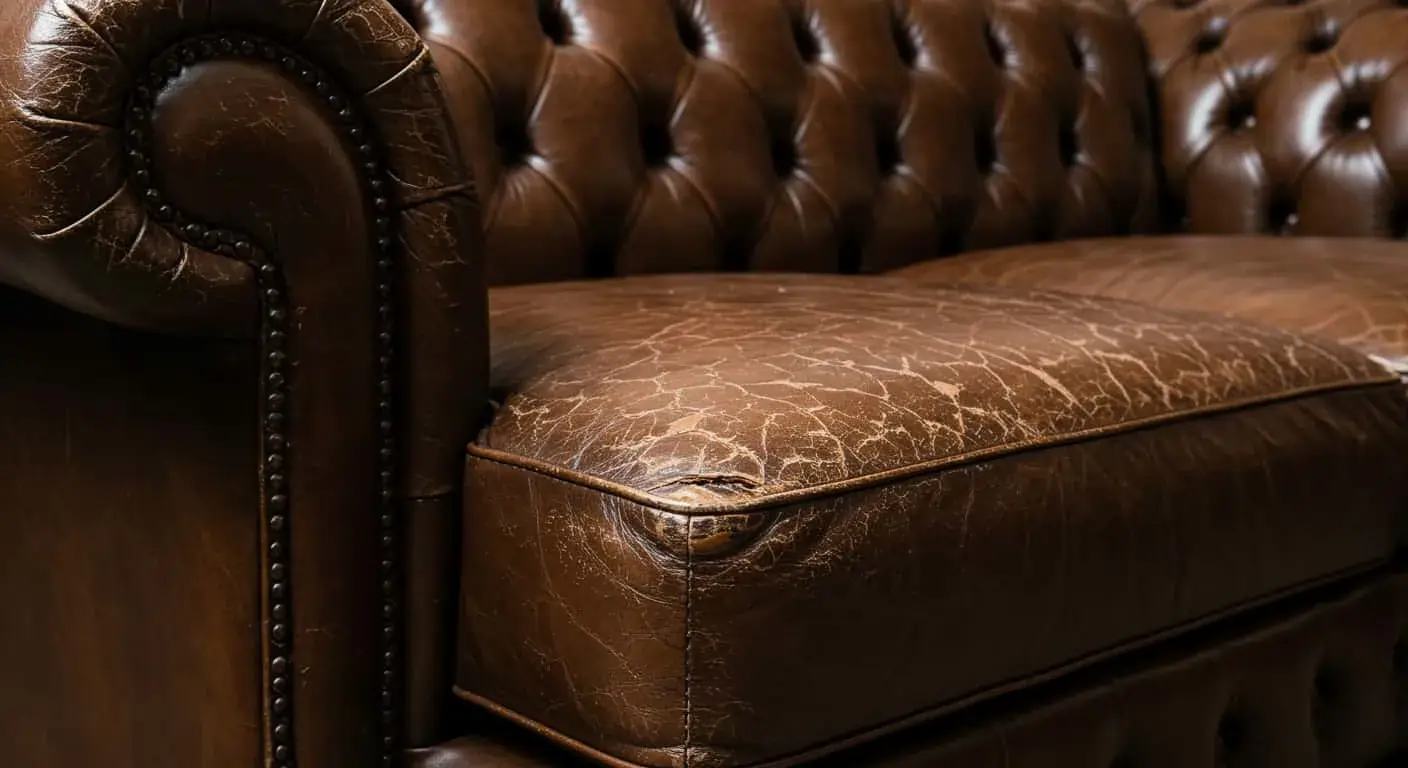
Semi-aniline nappa carries a 15 to 30 micron pigment-and-binder layer above the dyed hide. Repeated humidity cycling, abrasion from clothing in flex zones, and any alkaline cleaning event combine to produce micro-cracks in this layer. The cracks are invisible at arm's length but show clearly under raking light. Once the binder cracks, contaminants reach the aniline layer underneath and the failure compounds rapidly.
How Does a Workshop Restore Nappa Leather?
Workshop nappa restoration runs in five stages. The steps are consistent across Natuzzi, Frau, Fendi Casa, and B&B Italia , only the chemistry parameters shift between aniline and semi-aniline grades. The stages are sequential. Skipping any one shows in the final result.
Stage 1 , Diagnostic mapping
Before any chemistry touches the leather, the entire piece is mapped under raking light. Each panel is photographed at 1:1 macro scale with matched lighting, and damage is annotated by class: skin-oil saturation, fade severity, fat bloom, ink transfer, mechanical abrasion, top-coat cracking, dye damage. The map determines which panels receive which treatment. Not every panel needs the same work, and over-treating undamaged areas introduces unnecessary stress.
Stage 2 , Deep-pore extraction
Surface contamination is lifted with pH-neutral, leather-specific surfactants at workshop concentration. For skin-oil-saturated zones, the extraction extends through controlled solvent wicking , a non-aggressive technique that draws sebum out of the fibre without disturbing the aniline dye. Consumer products cannot replicate this stage. Domestic alternatives are either too aggressive (alcohol, isopropanol, citrus solvents) or too weak (water, baby wipes) to perform the extraction at the right depth.
Stage 3 , Fibre stabilisation
The hide fully dries and equilibrates to workshop humidity (controlled at 50–55% RH). Stabilisation typically runs 24 to 48 hours. The purpose is to release any moisture trapped during extraction and restore the fibre matrix to its dry-state geometry before the next chemistry is introduced. Rushing this stage produces uneven absorption in the next.
Stage 4 , Re-fatliquoring
This is the most delicate step. A controlled emulsion of expert-grade oils and surfactants replaces the fat liquor lost during cleaning and ageing. The emulsion is matched to the specific nappa grade: lighter for Frau Pelle SC, slightly heavier for Natuzzi Iconic full-grain aniline, mid-weight for B&B Italia semi-aniline. Application is by hand with a soft conservation cloth, following the natural hide fibre orientation. A typical three-seater requires 60 to 90 minutes of working time.
Stage 5 , Colour-matched micro-pigmentation (where required)
For panels showing dye damage, ink transfer, or fading that extraction and re-fatliquoring cannot resolve, micro-pigmentation rebuilds the surface chemistry without obscuring the underlying grain. Pigment is matched against the original tannery formulation by tonal analysis , Pelle SC's 27 colours, Natuzzi's nappa palette, and Fendi Casa's Selleria range each have a documented colour reference. The pigment is applied in three to seven micron-thin passes, cured between passes, and finished with a top-coat lamination matched to the gloss profile of the surrounding undamaged hide.
For the technical depth on the colour-matching stage, see the dedicated piece on micro-pigmentation process. All five stages run in a controlled workshop - book a professional leather sofa repair assessment to map your nappa piece before damage compounds.

How Should You Care for Nappa Day to Day?
Restoration is the once-a-decade fix. Your day-to-day care determines whether ten years of service is feasible at all. The steps below are what the workshop hands to every Natuzzi, Frau, Fendi Casa, and B&B Italia owner at handover.
- Weekly: dry dust with a clean, soft microfiber cloth. No water, no spray. The dust that collects on nappa is mostly skin flakes and ambient particulate , both contribute to mold germination and surface dulling if left for two to three weeks.
- Monthly: vacuum with a soft brush attachment, including seam channels and the underside of cushions. Use low suction and no aggressive contact. Check for early signs of skin-oil sheen in armrest zones.
- Quarterly: light pH-neutral cleaning of high-contact zones only , armrests, headrests, seat fronts. Use the seven-step steps from the pH balance article. Do not clean the whole piece quarterly; over-cleaning is itself a failure mode on aniline nappa.
- Every 6 months (aniline) or 9–12 months (semi-aniline): condition with a non-comedogenic, leather-specific conditioner. Test on an inconspicuous area first. Apply by hand in light, even passes following the grain direction.
- Pre and post-monsoon: run the full NCR monsoon steps. Skipping the seasonal care is the single most common reason nappa pieces in India fail before their fifth year.
- UV control: never park nappa within 1.5 metres of an unfiltered south-facing window. Use sheer curtains, UV-filtering window film, or reposition the piece. Two hours of direct sunlight daily produces visible fade within twelve months on aniline nappa.
- Spill response: blot immediately with a clean dry microfiber cloth. Do not rub. Do not apply water, soap, or any cleaner in the first 30 minutes. Wait for the spill to set before any wet treatment, and use only pH-neutral leather chemistry when you do. Most spills become permanent stains because of the cleaning attempt, not the spill itself.
What Products Will Permanently Damage Nappa?
This list is short and firm. Every entry on it has produced workshop cases that were either unrecoverable or needed full panel re-pigmentation.
- Vinegar and lemon juice , acid hydrolysis of collagen, dissolution of aniline dye, irreversible stiffening. Detailed in the pH balance article.
- Coconut oil and olive oil , both go rancid inside the hide. Your sofa develops a stale odour within months that no cleaning removes. The damage is permanent at the fibre level.
- Saddle soap , pH 9 to 10. Strips fat liquor from any aniline finish within one application. It is the most damaging "traditional leather cleaner" myth.
- Beeswax and silicone-based "leather creams" , block the hide's moisture exchange. The fibres dry out beneath the sealed surface and develop micro-cracking that cannot be reversed without re-pigmentation.
- Baby wipes , alcohol and propylene glycol strip fat liquor on contact. They are safe for skin because skin replaces oils overnight. Nappa cannot do that.
- Magic erasers (melamine foam) , abrasive at the micron scale. They strip the top-coat of semi-aniline finishes and expose the dyed layer beneath to further damage.
- Any "all-purpose" or "multi-surface" cleaner , built for hard surfaces, alkaline by chemistry, and devastating on aniline within one application.
The full mechanism behind each of these , with damage timelines and case evidence , is in the dedicated investigation: why vinegar and olive oil are ruining your luxury leather.
"Every Italian nappa piece that arrives at the workshop with severe damage tells the same story. The owner did everything right for the first eighteen months. Then something spilled, and the household reflex took over. The cleaning caused more damage than the spill ever would have."
Does Italian Nappa Actually Get Better With Age?
Italian nappa is one of the few materials in modern furniture that genuinely gets better with age , if you maintain it correctly. A Frau armchair in its third generation of family ownership develops a depth of colour and softness that no new piece can replicate. The patina is not a flaw to clean away. It is the material doing exactly what the tanner designed it to do forty years ago.
If you are buying nappa for the first time in India, the numbers are clear. A nappa piece costs four to ten times what a comparable pigmented leather sofa costs. Under household cleaning steps it lasts five to seven years. Under expert care it lasts thirty to fifty years and gains value as it ages. The investment is in the surface chemistry and your maintenance habits , not the brand label or the showroom.
If your sofa is already showing damage , fading, oil saturation, pigment lift, micro-cracking, fat bloom , get a workshop assessment before the next monsoon compounds the problem. The earlier you map the damage, the more restoration options you have. What recovery involves on a nappa hide specifically, finish by finish, is set out under Italian leather sofa repair.
Bookmark this guide. The next time someone offers to clean your Frau with a generic foam cleaner, the chemistry on this page is how you protect it.