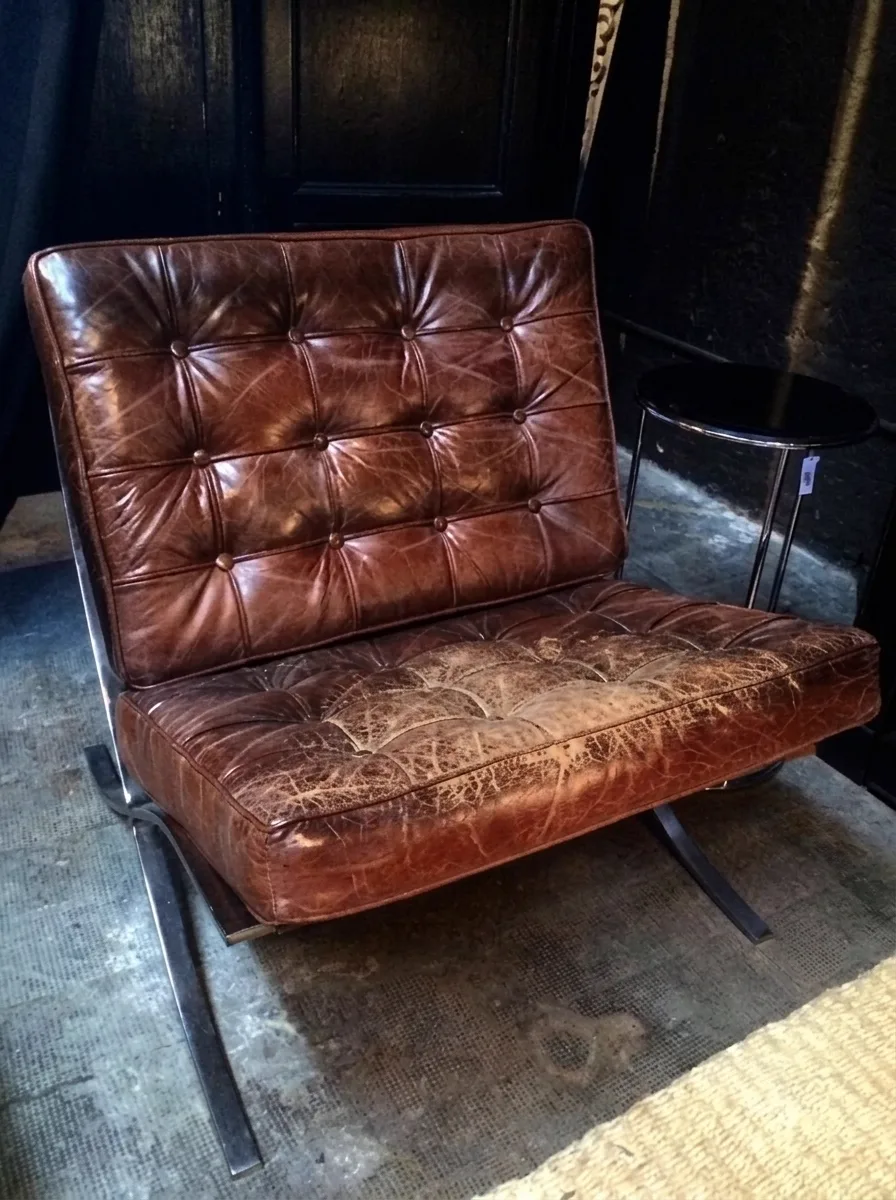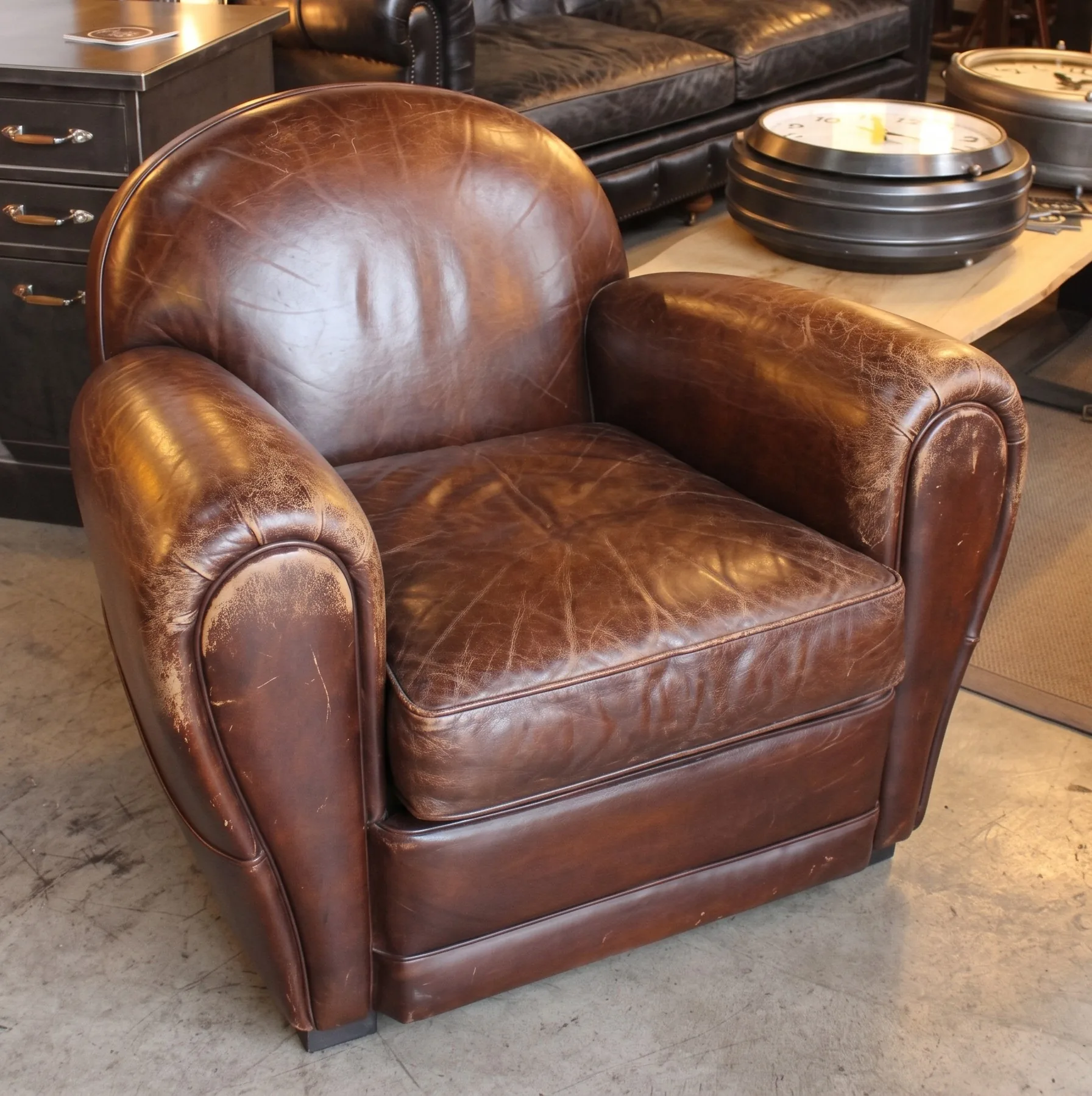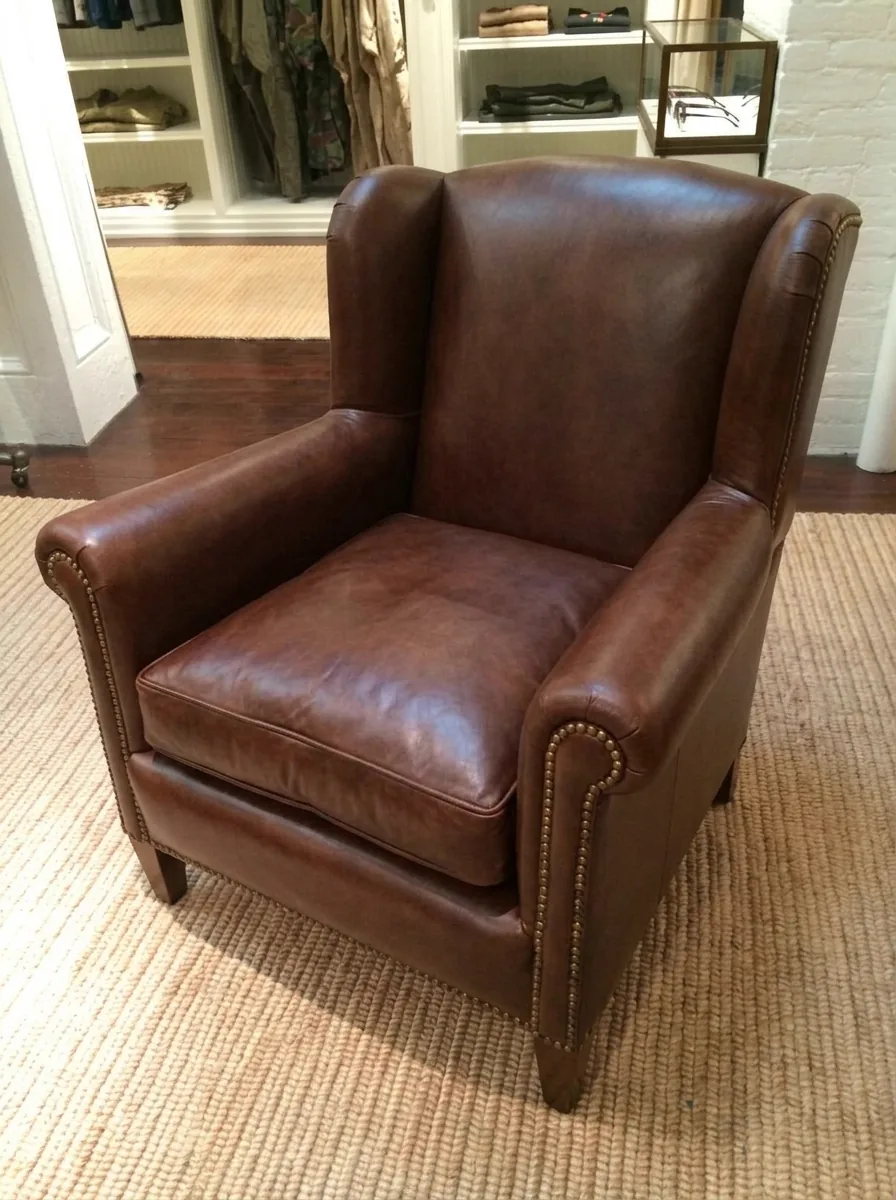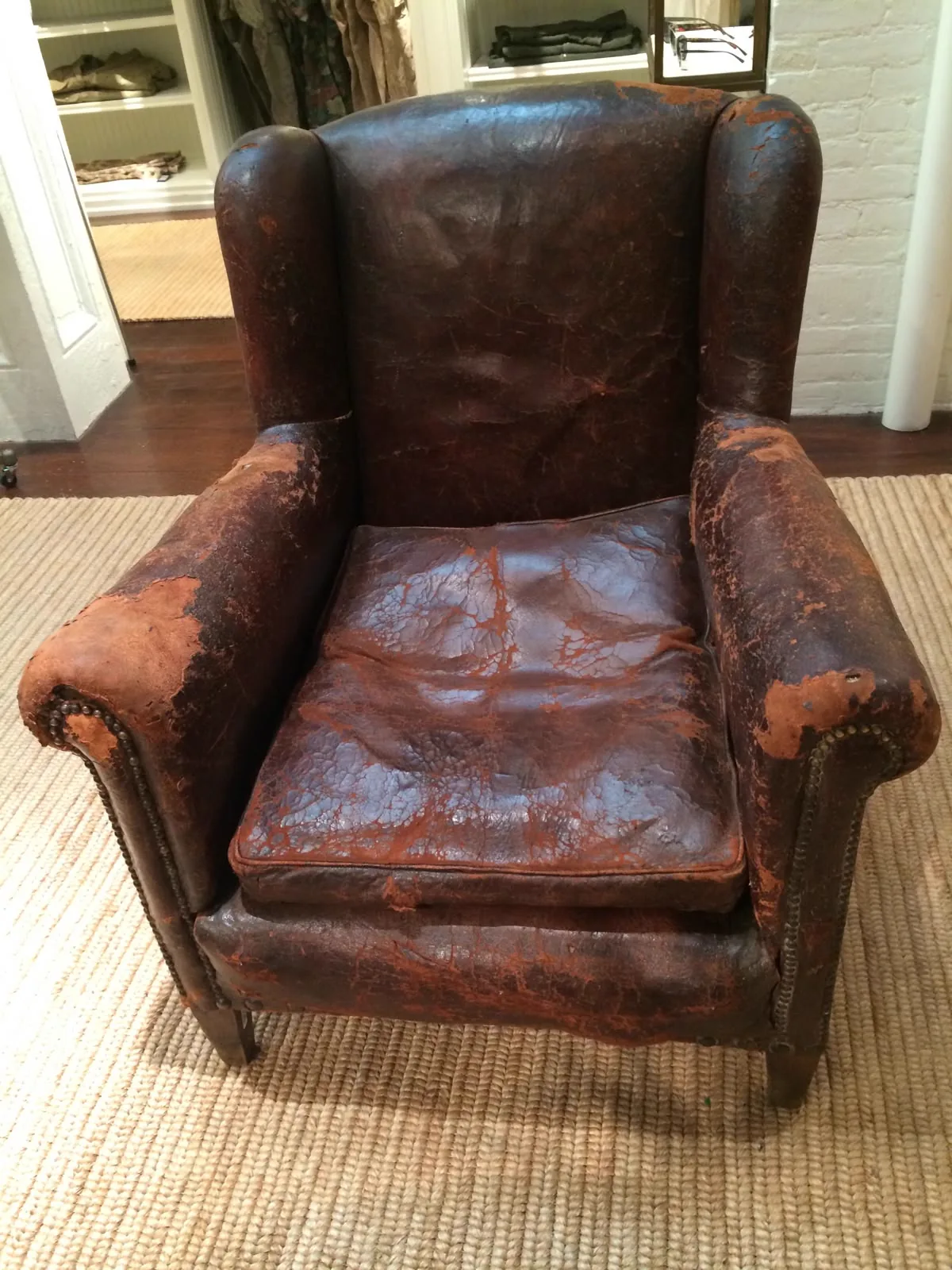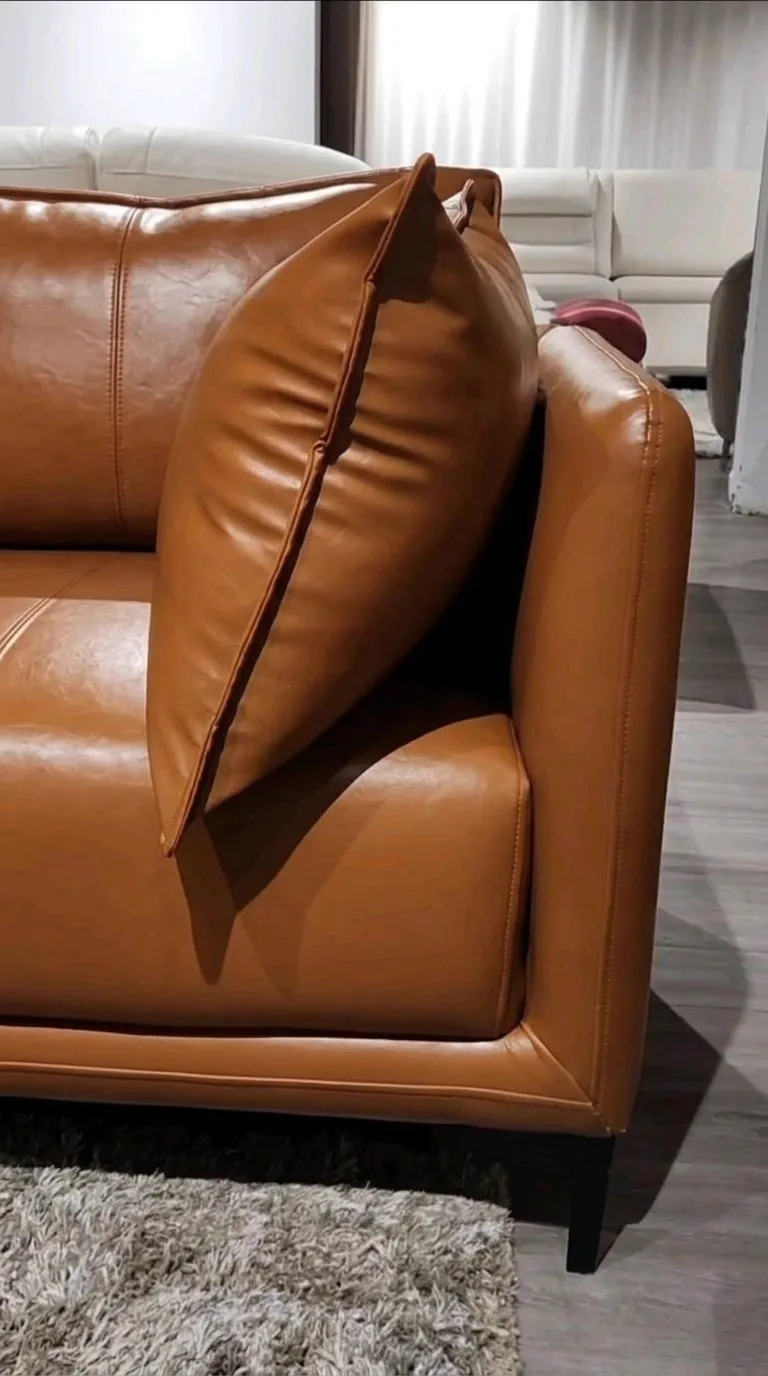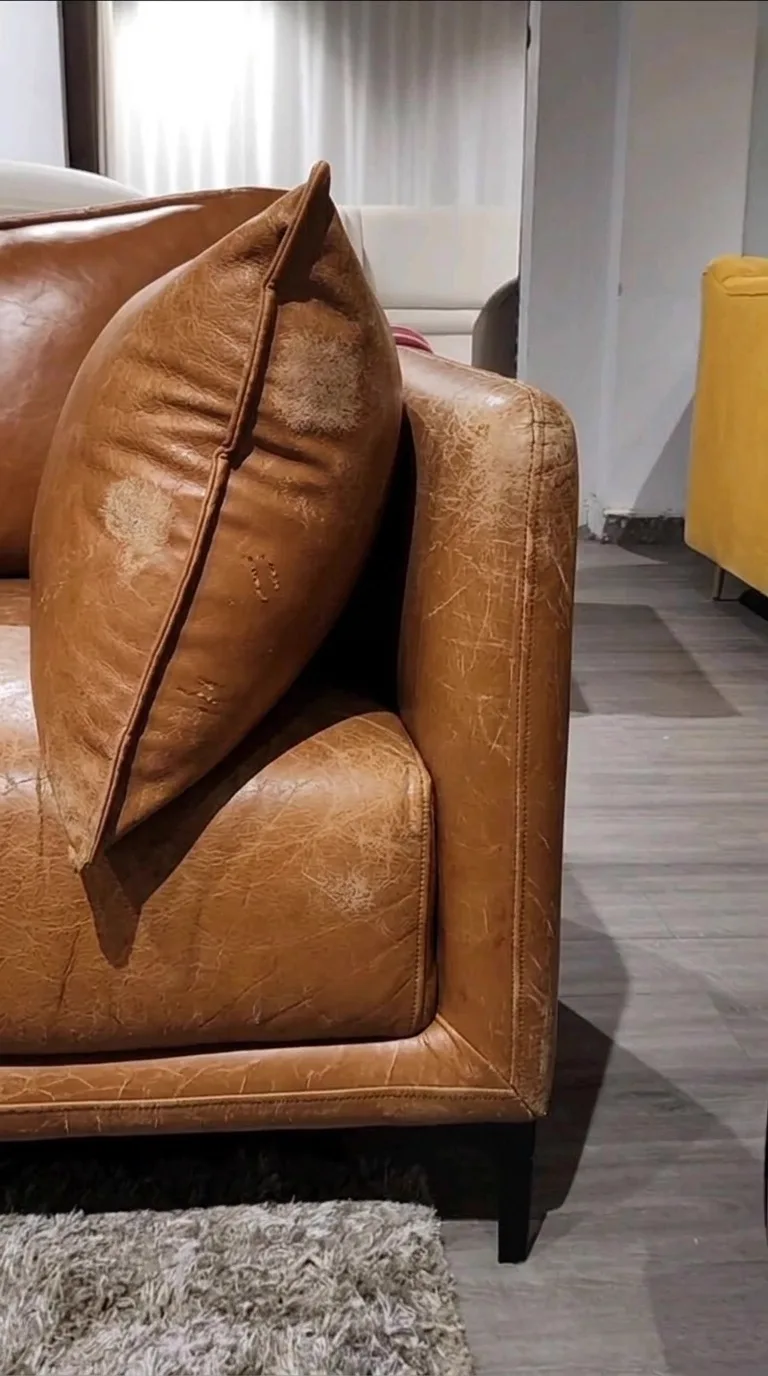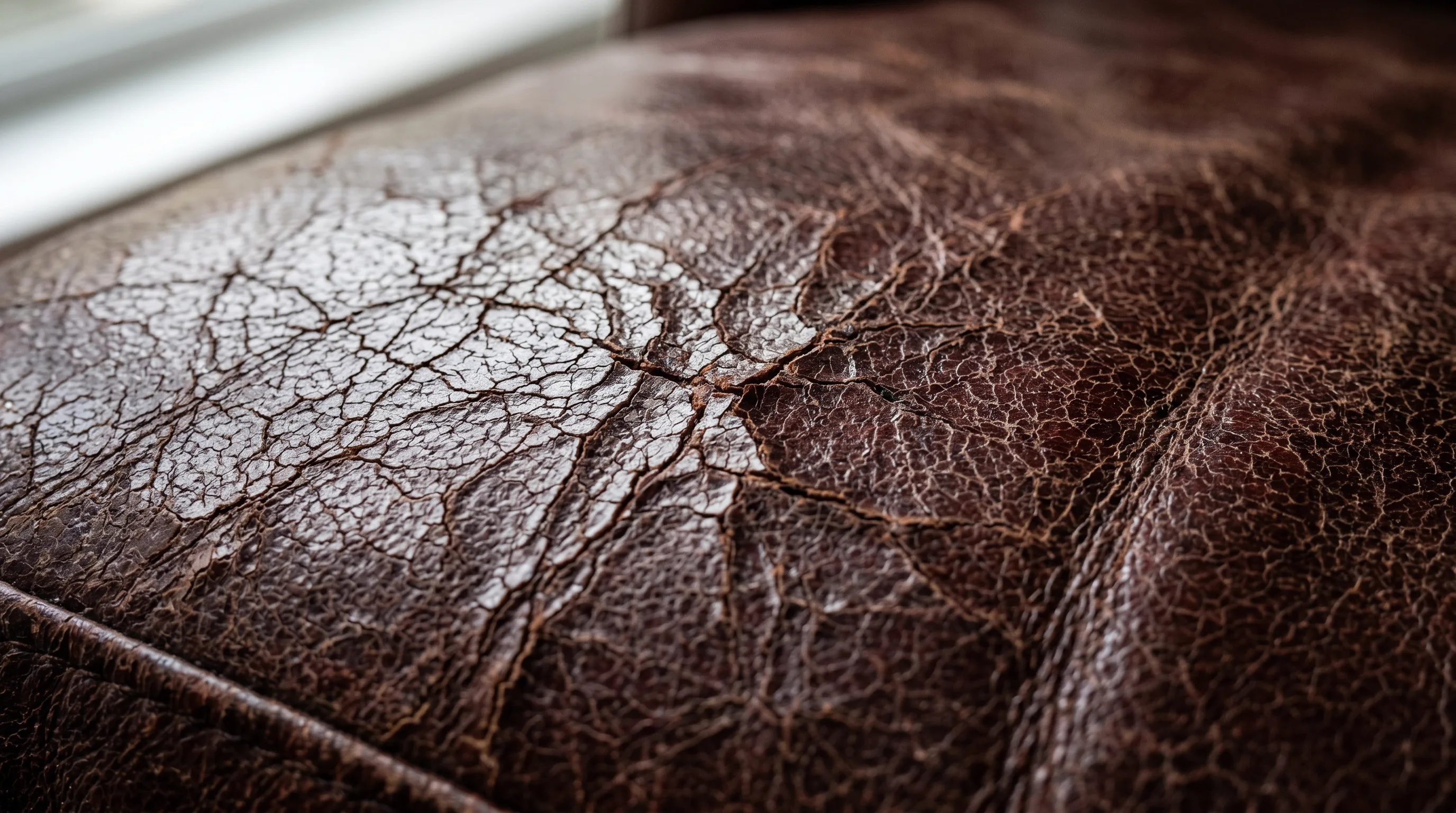
You sat down on your sofa this morning and something felt different. A roughness under your hand. You looked closer and saw it: a fine network of lines spreading across the armrest like a dry riverbed. Your leather sofa is cracking. The good news is that you have not missed the window to act. The bad news is that every week you wait, those lines deepen and the repair cost climbs. This guide tells you exactly what is happening, what works, what does not, and when to call someone.
Cracking is one of the most common leather sofa problems we see across India, and one of the most mishandled. Homeowners reach for coconut oil. They apply petroleum jelly. They buy a leather repair kit from a furniture shop and smear filler over the surface. None of it fixes the underlying problem. By the time we arrive, the crack is often three times worse than it needed to be. Let us start from the beginning.
Why Do Leather Sofas Crack in the First Place?
Leather is a natural material built from millions of interlocked collagen fibres. When it was tanned and finished at the factory, those fibres were saturated with oils and moisture that let them flex and stretch without breaking. Think of it like a new rubber band versus one left in a drawer for five years. The old one snaps the moment you stretch it because the plasticisers have evaporated out.
The same thing happens to leather in an Indian home. Indian summers are brutal. The moment you switch on your split AC, the unit starts pulling humidity out of the room air. That dry air then pulls moisture out of the leather. Repeat this every day for two or three summers without any conditioning, and the collagen fibres become brittle. When you sit down and the leather flexes, the fibres do not bend anymore. They fracture. That fracture is the crack you are seeing.
TLR EXPERT TIP: The indoor AC environment drops relative humidity to 18-25% RH during summer. Leather needs 40-55% RH to stay supple. At 20% RH, untreated leather loses moisture far faster than in a naturally ventilated room. If your sofa is near the AC blower, it is the first thing to move before any repair begins.
The other major cause specific to Indian homes is placement near south or west-facing windows. UV radiation bleaches the dye in the topcoat and breaks down the surface polymer layer, leaving the raw leather exposed to drying air. A sofa sitting against a large glazed window will start showing micro-cracks within 18 months without UV protection.
How Do You Tell if It Is Cracking or Just Creasing?
Before doing anything, confirm you are dealing with a crack and not a natural crease. Natural creasing is healthy - it is called patina, and it is a sign of genuine leather. Misdiagnosing a crease as a crack and filling it does actual damage. If you are unsure whether it is cracking or just creasing, take a moment to settle that question first, because the two need completely different treatment.
Run your fingernail lightly across the line. If it glides through smoothly, it is a crease. If your nail catches on a sharp edge, it is a crack. Then look at the colour inside the line. A crease matches the surrounding leather because the dye goes all the way through. A crack reveals lighter, undyed fibres underneath because the surface layer has physically split open.
"The single most expensive mistake an Indian sofa owner makes is waiting until the cracks are visible from across the room. By that point, the topcoat is gone, the dye has fractured, and you are looking at a full restoration rather than a conditioning job." - Tyson, Lead Artisan, The Leather Restorators
What Should You Do? Step-by-Step Action Plan
Step 1 - Stop the Cause
No repair lasts if the drying source is still active. Move the sofa at least 1.5 metres away from the AC blower or the window. This single step slows crack progression more than any product you can apply. If repositioning is not possible, add UV-blocking window film - available from any hardware store for around Rs. 400-600 per square foot - and redirect the AC vent away from the sofa.
Step 2 - Clean Before You Condition
Never apply conditioner to a dirty surface. Body oils, dust, and pollution residue sit in the pores of leather sofas and act as a barrier. Use a pH-balanced leather cleaner with a soft white microfibre cloth. Work in small circles. Let the surface dry fully before the next step - usually 15-20 minutes in an Indian home with the fan on.
TLR EXPERT TIP: Use a white cloth only when cleaning leather. Coloured cloths can transfer dye, especially on light-coloured aniline sofas. If the cloth comes away dark or grey after cleaning, that is years of accumulated body oil and dust being removed - a sign conditioning was long overdue.
Step 3 - Assess Whether This Is a DIY Job
Be honest with yourself here. If the cracks are fine and shallow - like a network of hair-width lines - a quality conditioner applied correctly twice over two weeks can stop further progression. The existing lines will not vanish, but they will soften and stop deepening. One caution: where months of damp are followed by hours of dry AC on the same panel, that swell-and-tighten cycle crazes the finish into a spider of fine lines that reads shallow but is often already lifting underneath, so owners in that climate do better to have the cracking assessed at home in Bengaluru before committing to conditioner alone.
If the cracks are deep enough to see lighter fibre inside, if there is peeling or flaking around the edges, or if there are sharp ridges you can feel - this is beyond conditioning. Applying conditioner to open cracks actually wicks the product away from the surface into the gap and accelerates degradation. If the surface is also lifting in patches, what looks like cracking may actually be a bubbling and flaking topcoat, which is a different failure mode. Either way, you need professional cracked leather sofa repair.
Step 4 - For Micro-Cracks, Apply Conditioner Correctly
Apply a pea-sized amount of conditioner to a soft cloth, not directly to the leather. Work it in with slow, circular strokes covering roughly a 30cm section at a time. The leather should absorb the conditioner within 10-15 minutes. If it sits on the surface and looks greasy after 30 minutes, you have applied too much. Buff away the excess with a clean dry cloth. Repeat after 7 days.
Step 5 - For Deep Cracks, Call a Professional
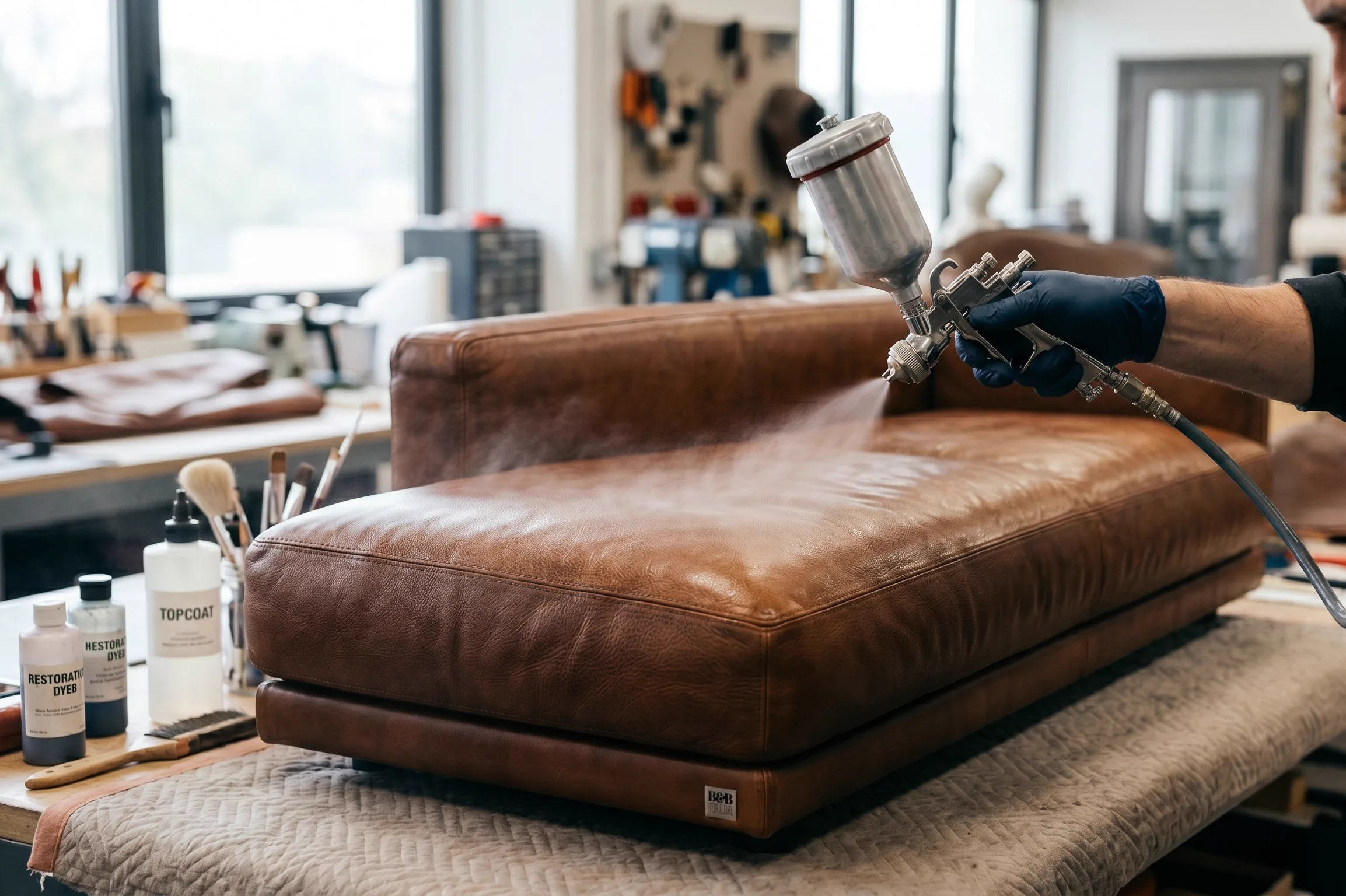
Deep crack repair involves three steps that cannot be done reliably at home: filling the crack with a flexible leather binder compound, sanding the surface smooth without damaging surrounding leather, and colour-matching the repair with dye that exactly matches your sofa's original finish. Our leather sofa repair service in India covers all three, with doorstep visits across India. For the full science of why hides crack in Indian conditions and how each cause is fixed, see our cause-and-fix guide to leather sofa cracking in India. If the surface is bubbling and flaking rather than cracking it is a different problem, and once damage spreads across most panels it is worth weighing repair versus replace.
What Makes Leather Cracking Worse?
Every week someone across India calls us after trying one of these. Do not make these mistakes.
- Coconut oil or olive oil: Does not penetrate leather's collagen structure. Sits in the pores, turns rancid over weeks, attracts abrasive dust, and causes the fibres to swell unevenly. We have seen it turn a single-seat repair into a full-sofa restoration costing several times as much.
- Petroleum jelly (Vaseline): Same problem. Petroleum-based products do not bond with leather chemistry. They create a surface film that attracts dust and blocks future conditioner penetration.
- Cheap leather repair kits from local furniture markets: The filler compounds in these kits are rigid once dry. Leather flexes with every sit. A rigid filler inside a flexible material cracks again within 4-6 weeks, often taking surrounding good leather with it.
- Rubbing alcohol or sanitiser: Used to clean stains near the crack. Alcohol strips protective topcoat instantly and opens the crack further by dehydrating the surrounding leather in seconds.
- Leaving it and hoping it self-heals: Leather does not regenerate. Every day the crack is open, dust enters and abrading action deepens it. Micro-cracks become moderate cracks within two monsoon cycles in India.
How Do You Prevent Cracks From Coming Back?
Once a crack is repaired, the same conditions that caused it will cause it again unless something changes. A maintenance plan for an Indian home looks like this:
- Condition every 3 months: March and September are the critical times. March because summer AC use is about to begin. September because the monsoon dampness has stressed the surface and AC is still running at night.
- Wipe down armrests and seat fronts fortnightly: These two zones absorb the most body oil and perspiration. In India's humid pre-monsoon months, sweat residue can break down the topcoat over a single season if left uncleaned.
- Keep 1.5 metres from the AC blower minimum: Non-negotiable. No conditioner compensates for sustained 20% RH air blowing directly onto leather.
- UV film on south and west windows: A one-time investment that extends sofa life by 3-5 years in typical Indian flats where windows face the afternoon sun.
TLR EXPERT TIP: The best time to condition a leather sofa is in the evening, not during the day. Daytime AC keeps the leather at low humidity while the conditioner is absorbing. Apply in the evening when the AC is off, let it absorb overnight, and buff in the morning. Absorption is measurably better with this timing.
Frequently Asked Questions
Can a cracking leather sofa be saved?
Yes, in most cases. Micro-cracks caught early can be halted with professional deep conditioning. Deep, open cracks require leather filler, sanding, and colour matching by a specialist. The sooner you act, the lower the repair cost.
Why is my leather sofa cracking even though it is indoors?
Indoor leather sofas crack mainly from AC dehumidification, which strips moisture from the hide, and from UV rays through windows. Indian summers drop indoor RH to 18-25%, well below the 40-55% leather needs to stay supple.
How much does it cost to repair a cracking leather sofa in India?
Crack and tear repair (filler + colour touch-up) starts from Rs. 6,500 per seat in India. Full restoration with re-dyeing starts from Rs. 12,000 per sofa, with the final price confirmed at the free home diagnosis and depending on leather type and crack severity.
What home remedy actually works for leather sofa cracking?
None reliably. Olive oil, coconut oil, and petroleum jelly are frequently recommended online but they do not penetrate the leather's collagen matrix. They sit in the pores, attract dust, and eventually accelerate degradation. Use a pH-balanced leather conditioner only.