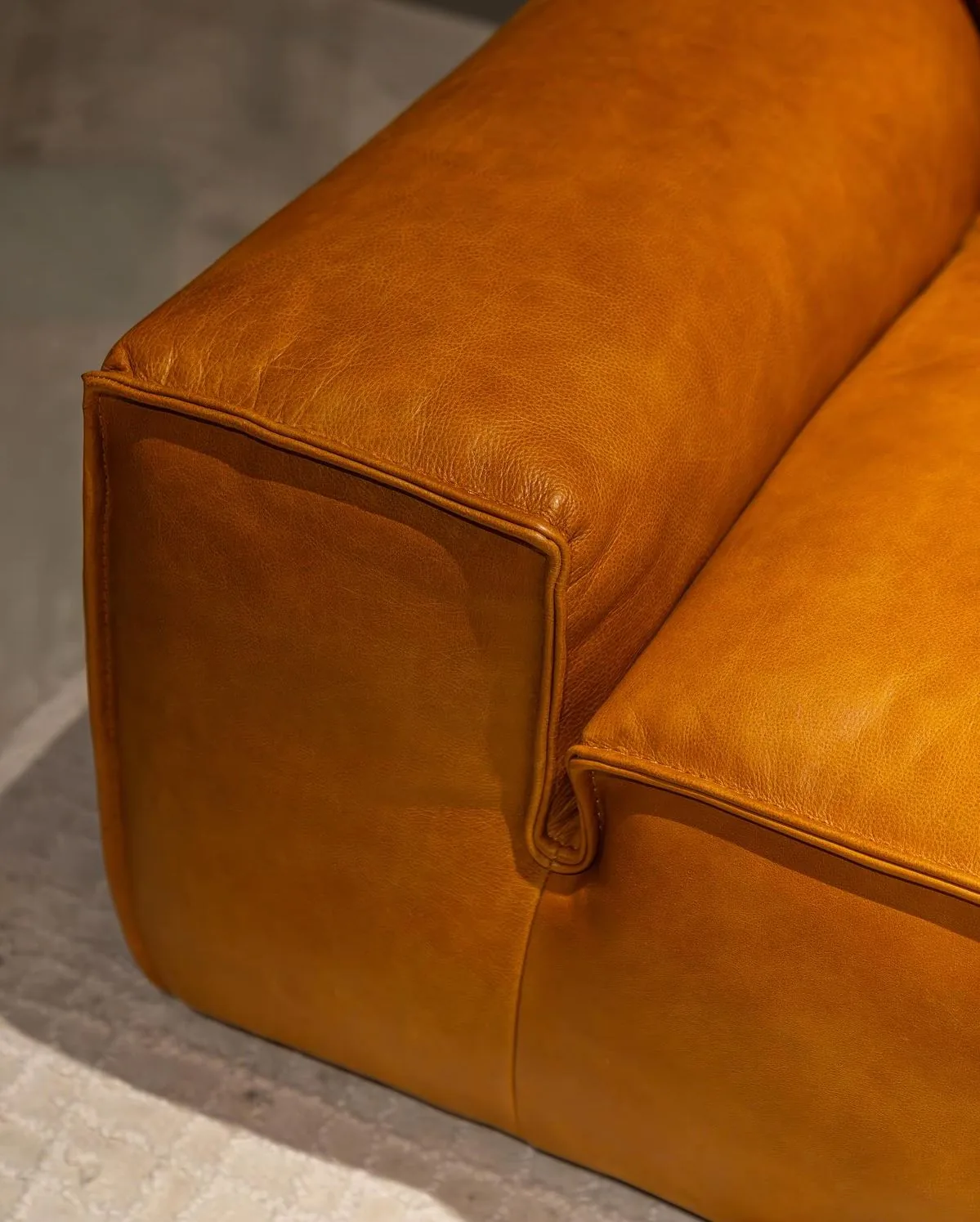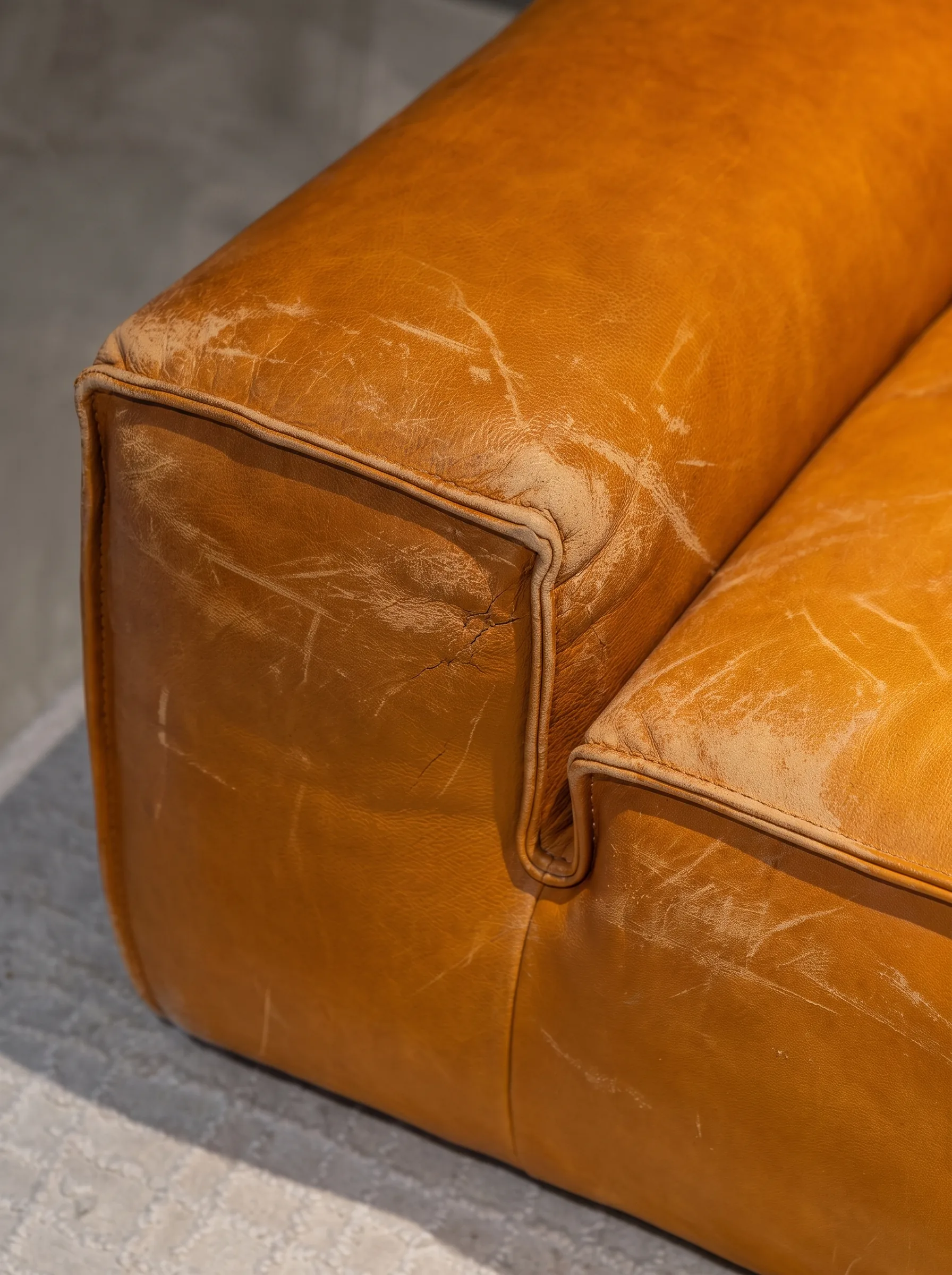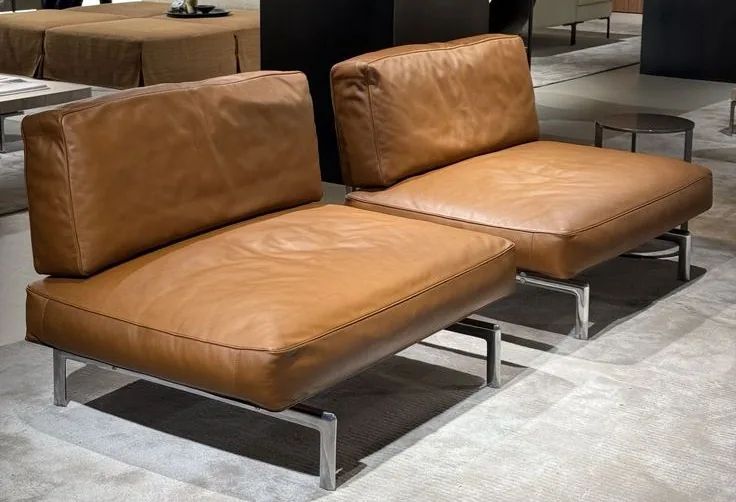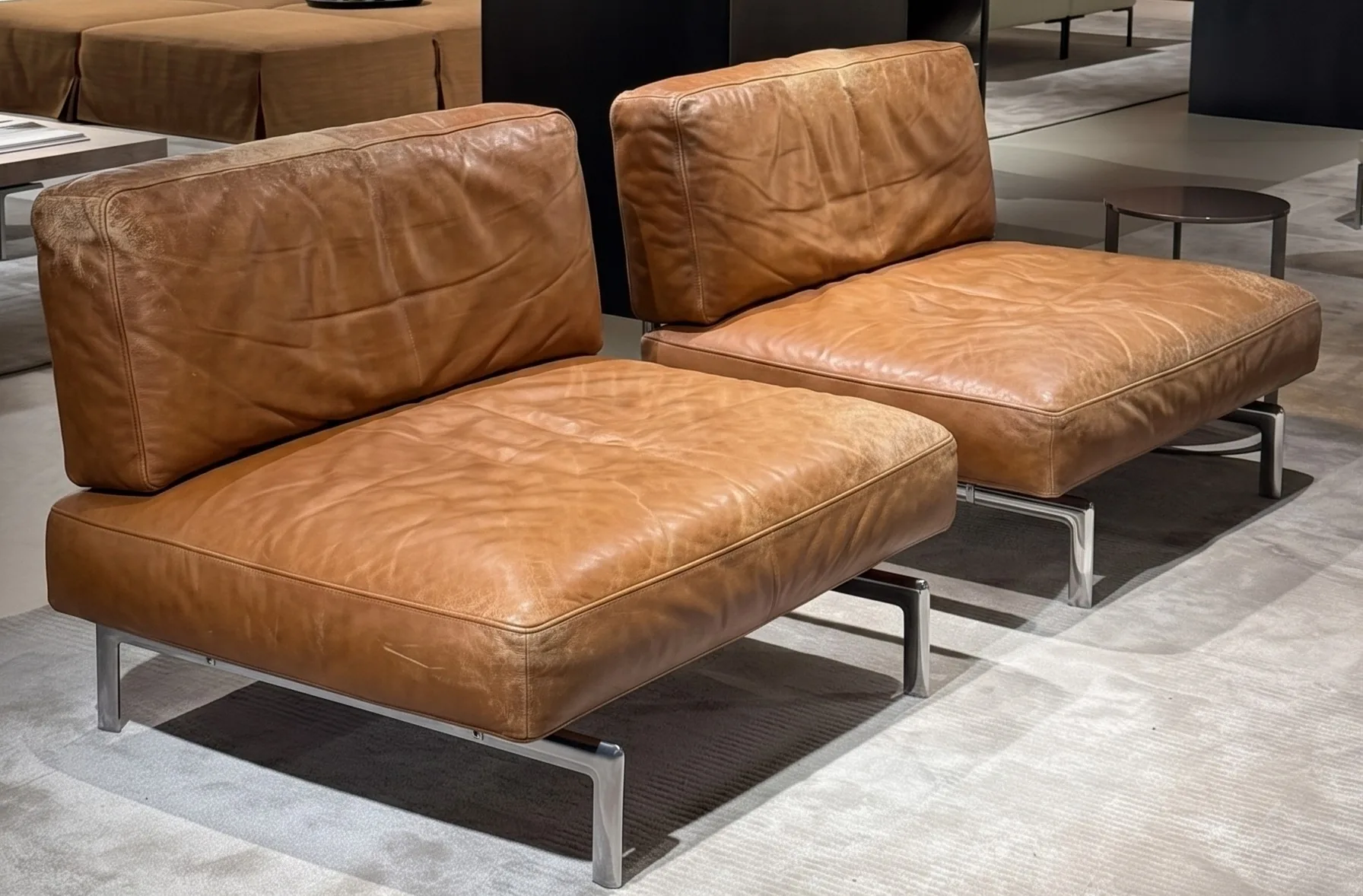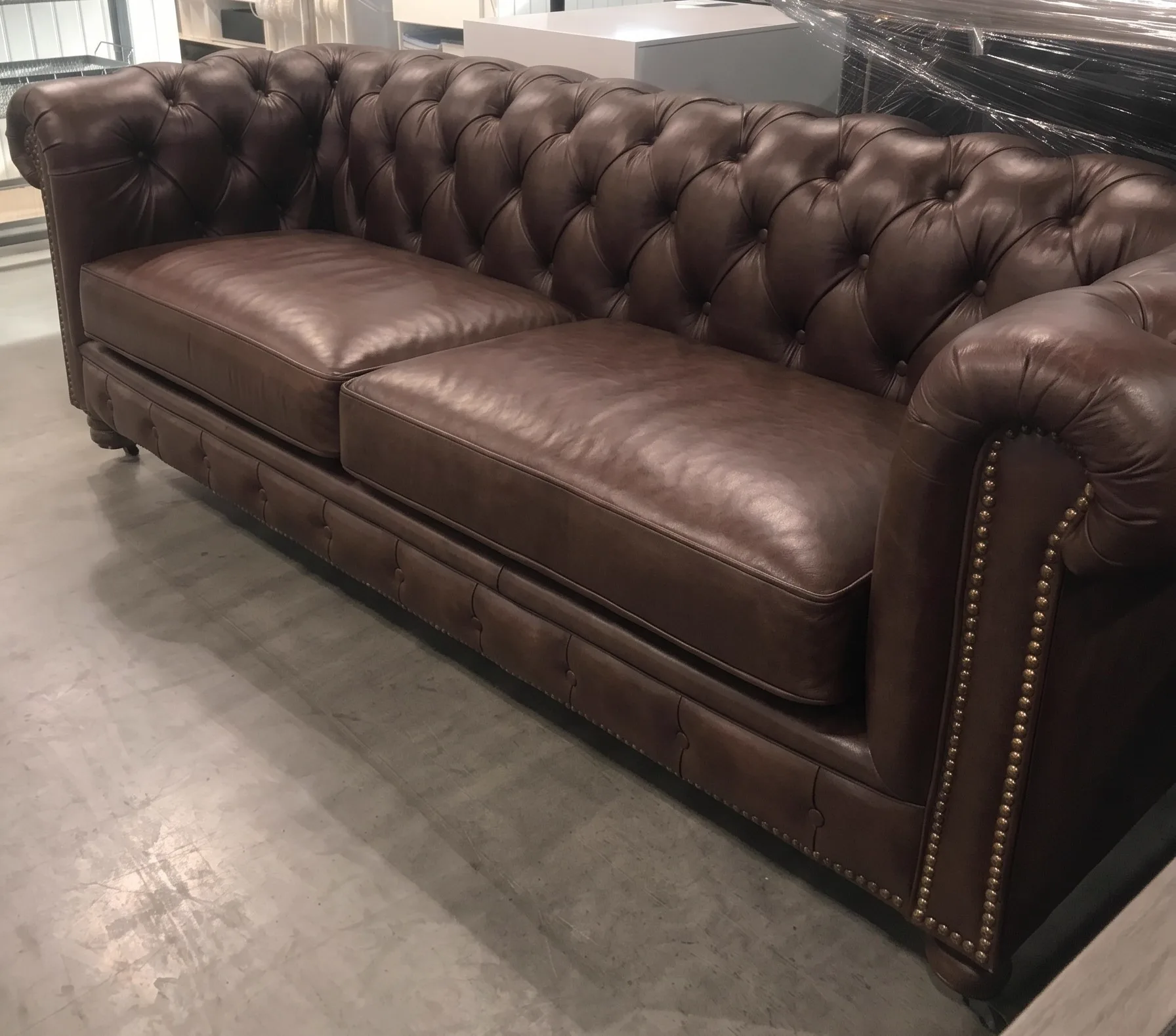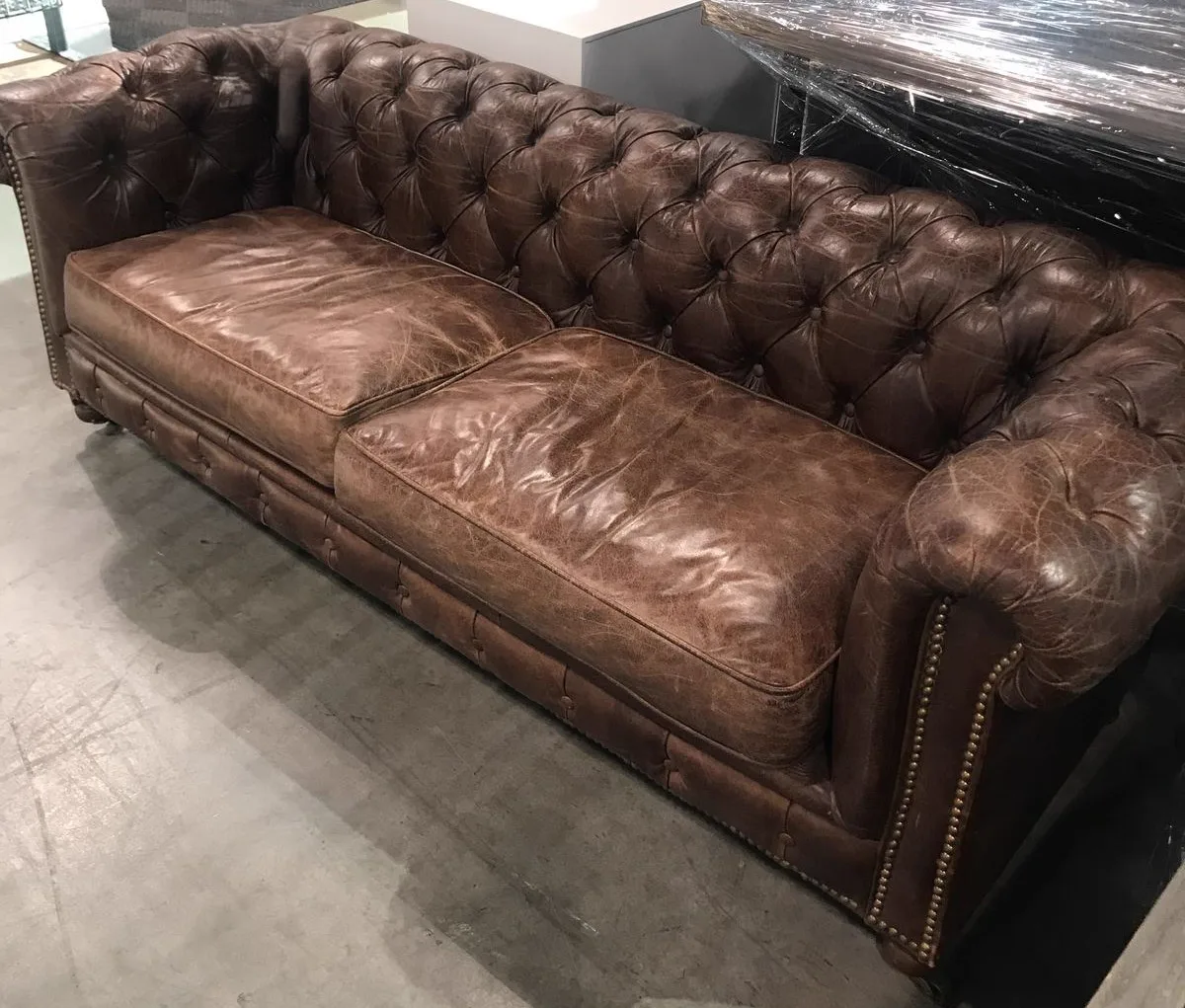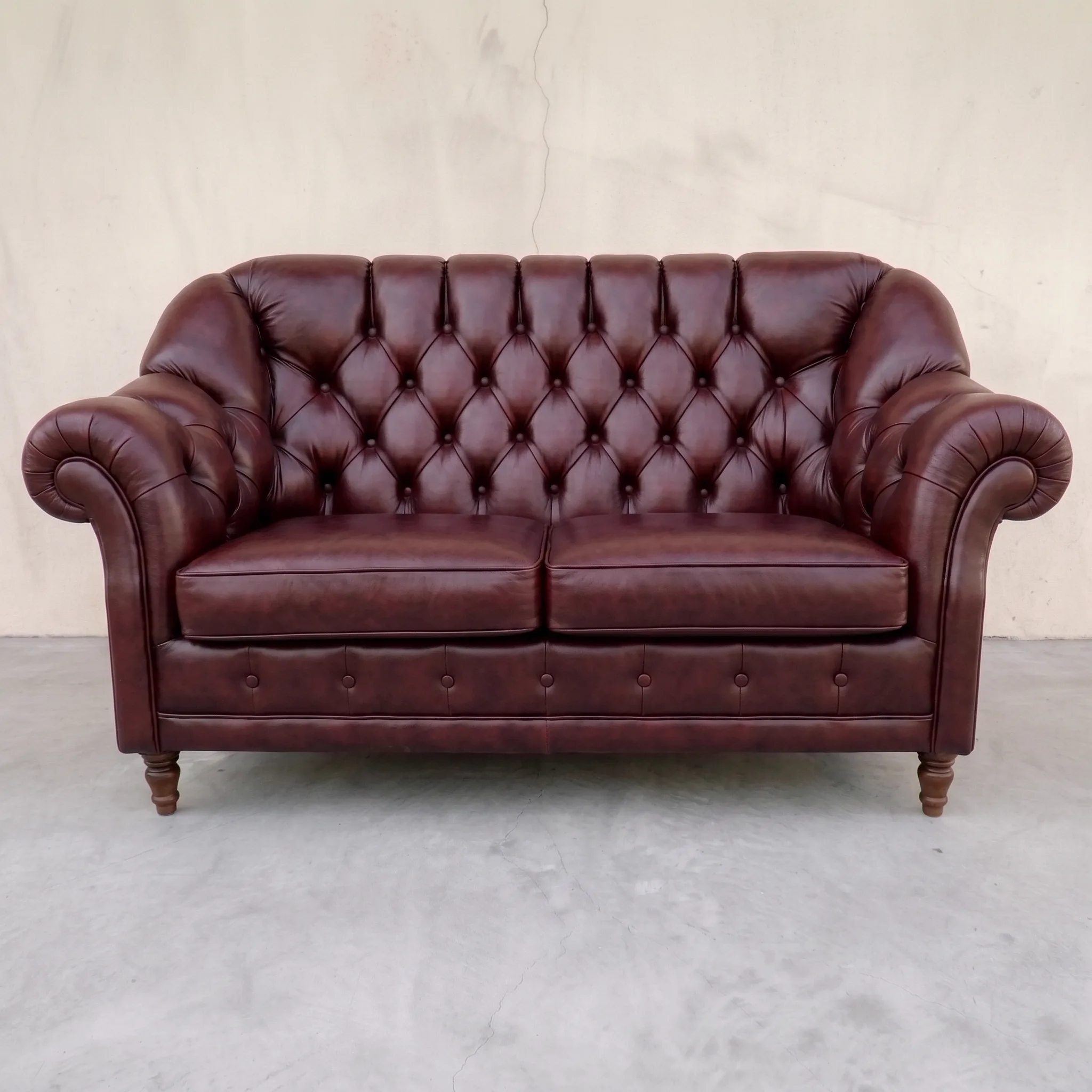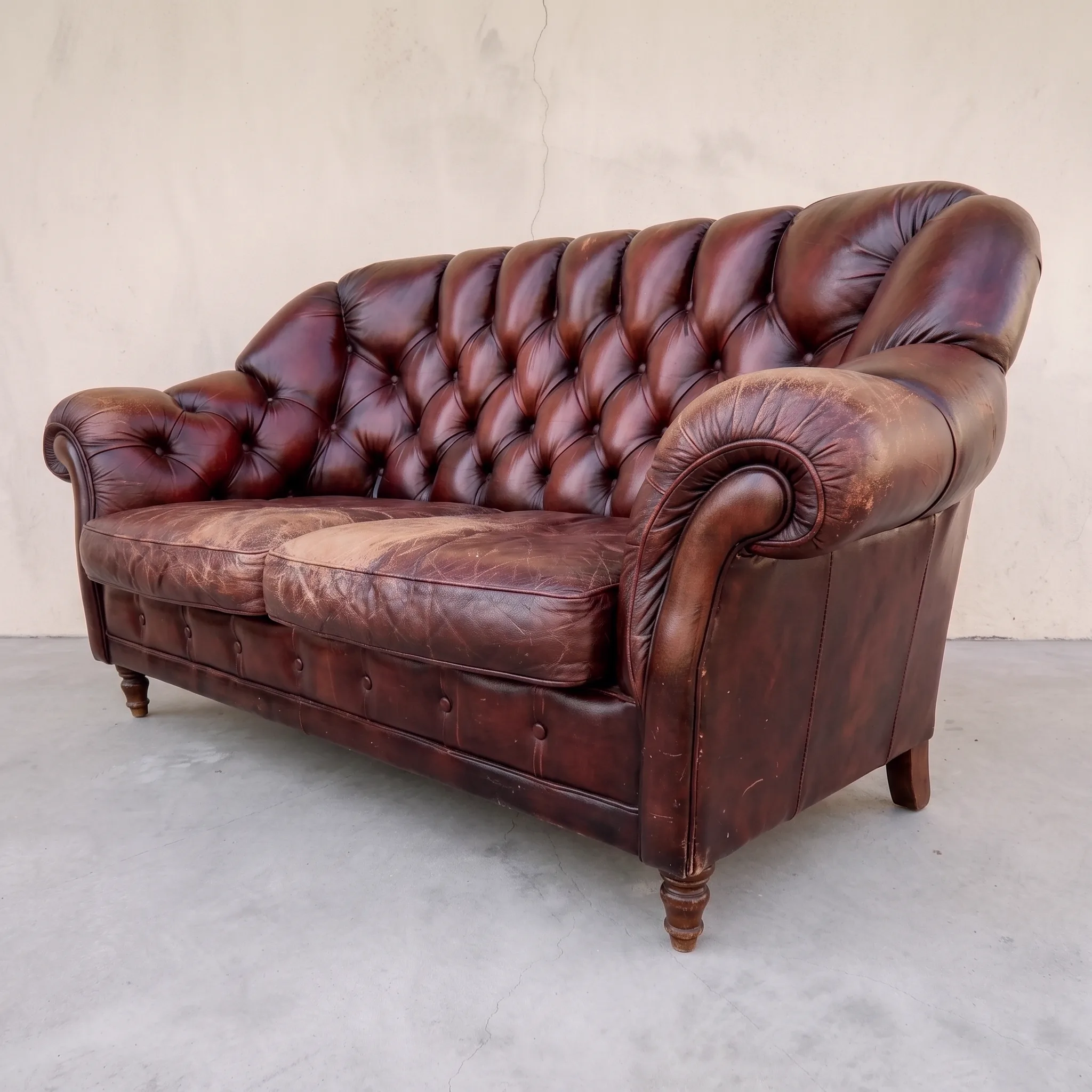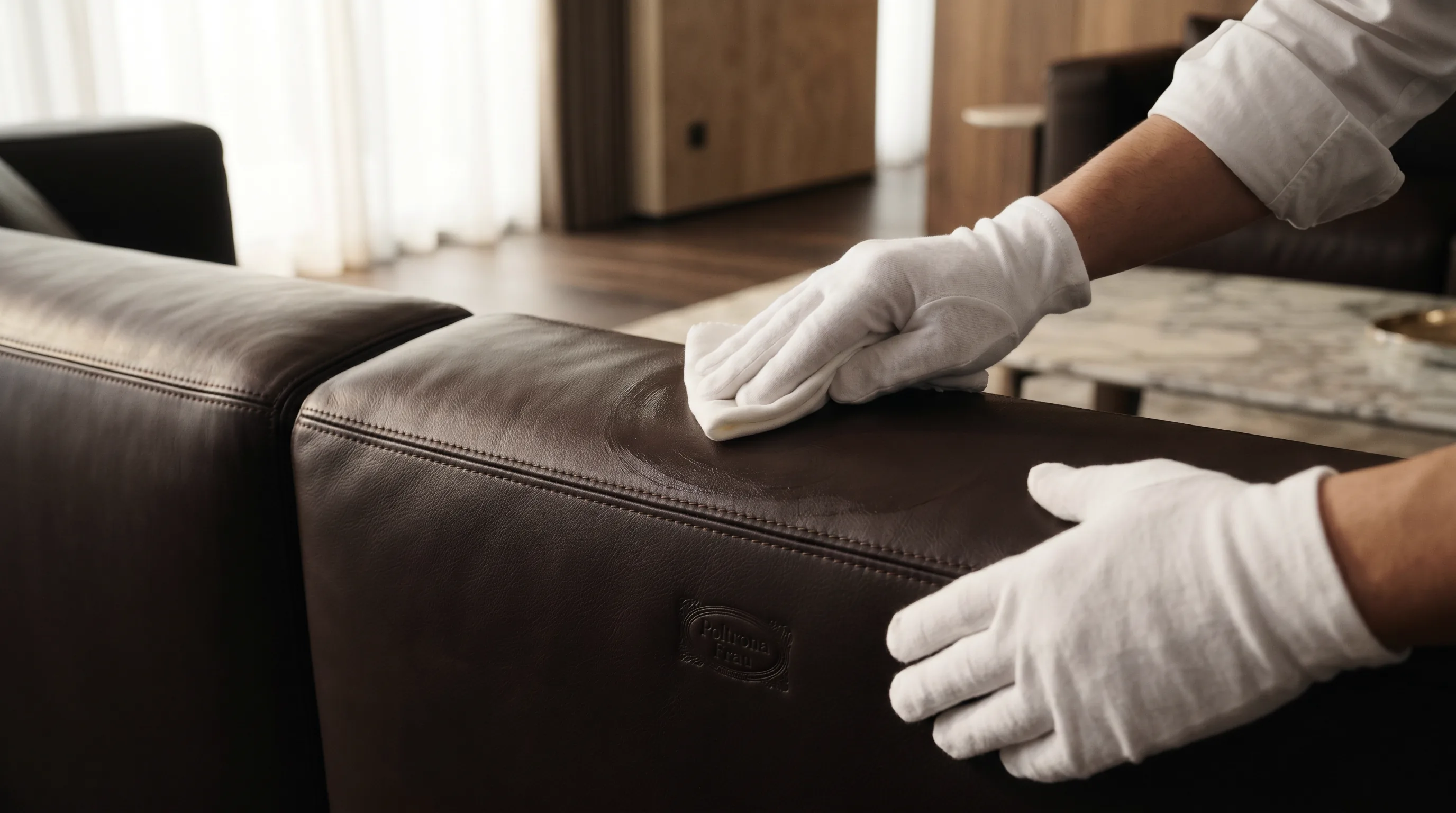
You sit down on the leather sofa in May and your skin sticks to it slightly. You stand up and there is a faint peeling sensation. The surface feels tacky and slightly greasy. It is fine in January. Only summer brings this problem. You are not imagining it, and it is not sweat alone causing it. What you are experiencing is a very specific set of chemical changes that happen to leather in India's summer conditions. The good news is it is fixable. The bad news is that ignoring it for another two summers makes the fix much harder.
What Are the Three Causes of Leather Sofa Stickiness?
Cause 1 - Topcoat Plasticiser Migration
The polymer topcoat on pigmented leather contains plasticisers - chemical compounds that keep the topcoat flexible so it does not crack when the sofa is sat on. At temperatures above 30-32 degrees Celsius, which Indian rooms regularly reach before AC is switched on, these plasticisers soften and migrate to the surface. You feel them as tackiness under your hand or the back of your legs.
This happens faster on cheaper sofas where lower-grade topcoat chemistry is used, but it can occur on quality leather too after three or more years in Indian conditions. The stickiness is seasonal because the plasticisers firm up again in winter when the room cools. But the cycle of softening and rehardening progressively degrades the topcoat structure. Eventually it separates from the dye layer below - this is the beginning of the peeling and flaking you see on older sofas, and it often runs alongside the leather turning hard and stiff as the underlying fibres lose their flexibility.
Cause 2 - Body Oil and Sweat Accumulation
Human sweat and body oil are tacky at body temperature. In Indian summers, the amount of perspiration deposited on a leather sofa per sitting session is significantly higher than in a temperate climate. Without fortnightly cleaning, these oils accumulate on the leather surface and combine with dust to create a progressively tackier film. On the coast the film never gets a chance to dry out - salt-laden sea air keeps the surface damp enough that sweat darkens the leading edge of every seat cushion, which is why a repair visit in Chennai so often begins with degreasing those edges at the customer's home before any finish work starts. This type of stickiness is concentrated on the seat surface and armrests and has a slightly sour smell - if you also notice a musty smell forming in the seams, the same trapped oil and moisture is usually the cause.
Cause 3 - Over-Conditioning with the Wrong Product
If someone applied coconut oil, olive oil, mustard oil, or a petroleum-based product to the leather, that product does not fully absorb. It sits on the surface and becomes tacky when the temperature rises. Petroleum-based products - including some cheap branded conditioners available in Indian markets - also soften and become sticky at temperatures above 30 degrees. This type of stickiness is usually uniform across all surfaces where the product was applied.
TLR EXPERT TIP: Press a clean white tissue firmly onto the tacky area for ten seconds and peel it away. If the tissue shows a yellow or brown oily residue, the stickiness is body oil accumulation or wrong conditioner. If the tissue shows a faint coloured residue with no oiliness, it is topcoat plasticiser migration. These two causes require different treatments - knowing which one you have avoids wasted effort and accidental damage.
Authoritative references on the heat and humidity thresholds discussed above: India Meteorological Department (IMD) for India's summer temperature and humidity ranges, and the Leather Working Group (LWG) for leather finishing and top-coat standards.
How Do You Fix Leather Sofa Stickiness?
For Body Oil and Wrong Conditioner (Oily Residue on Tissue Test)
- Clean thoroughly with a pH-balanced leather degreaser. A regular leather cleaner is not strong enough to lift accumulated body oil or petroleum residue. A degreaser formulated for leather removes the sticky film without stripping the dye.
- Work in sections - a 30cm area at a time with a clean white microfibre cloth. Replace the cloth when it shows significant colour or oil pickup.
- Allow to dry fully with a fan running - at least two hours in an Indian summer room.
- Condition lightly with a professional leather conditioner. The cleaning will have removed some surface moisture along with the oil. One light application is sufficient.
For Topcoat Plasticiser Migration (No Oily Residue on Tissue Test)
This is beyond home treatment. Topcoat migration means the polymer layer is breaking down and needs to be stripped and reapplied by a professional. A leather topcoat restoration involves: cleaning the surface, lightly abrading the degraded topcoat, applying a new pigmented topcoat matched to the original colour, and sealing with a UV-protective finish. Cost in India: from Rs. 5,500 per seat (final price confirmed at the free home diagnosis) depending on sofa size.
Attempting to fix topcoat breakdown at home with additional conditioner makes it worse - adding product over a degraded topcoat seals in the problem and accelerates delamination. Our leather sofa restoration service covers topcoat assessment and reapplication as part of a full restoration visit.
"The sticky sofa problem starts small in May - a slight tackiness when it is hot. Most people put up with it. By August of the third summer, the topcoat is peeling in strips. The difference between a topcoat restoration from Rs. 5,500 per seat and a full re-leather priced on assessment is often just two years of action versus inaction." - Tyson, Lead Artisan, The Leather Restorators
How Do You Prevent Stickiness in Future Summers?
- Clean armrests and seat surface fortnightly through April-September - the six months when body oil accumulation is fastest in India. A quick wipe with a barely damp microfibre cloth removes the day's deposit before it compounds.
- Never apply cooking oils or petroleum products as conditioners. These are the primary source of the oily-sticky residue on Indian leather sofas. Use only pH-balanced, leather-specific conditioners.
- Apply a UV and heat protective topcoat sealer annually before summer begins (February-March). This reinforces the topcoat against the thermal cycling that drives plasticiser migration in Indian conditions.
- Keep the room at 24-25 degrees when occupied, rather than cooling it down to 18-20 degrees. Extreme temperature cycling between outdoor heat and over-cooled interiors stresses the topcoat polymer more than moderate steady temperature does.
Is Your Sofa Genuine Leather, PU-Coated, or Bonded?
Before you spend an evening degreasing, settle one question first: what is your sofa actually made of? On genuine leather, summer stickiness is almost always plasticiser migration or a body-oil-plus-heat film - both of which respond to cleaning and resealing. But a very large share of "leather" sofas sold across Indian showrooms are PU-coated or bonded leather, and on those the cause is completely different.
On a PU-coated or bonded sofa, a tacky surface in summer is usually the coating itself breaking down - a process called hydrolysis, where heat and humidity attack the polyurethane skin and it begins to dissolve. This is the same gummy, peeling failure people see on old PU shoes and bag straps. The critical point: a degreaser does not fix hydrolysis, it speeds it up. Home solvents and multi-surface sprays strip what is left of the coating, and once a PU or bonded surface starts going sticky it cannot be re-conditioned back to health - the only real options are a full recoat or replacement.
To tell the two apart, find a hidden cut edge or the underside of a seat cushion and look at the cross-section. Genuine leather shows a dense, fibrous edge - the cut looks like compressed natural fibre all the way through. Bonded leather shows a thin coloured skin sitting on top of a grey or white fabric mesh backing; PU sofas show a similar plastic film over woven cloth. If you see fabric backing, treat the stickiness as a coating failure, not a leather-care problem - and skip the degreaser entirely.
What Actually Removes Stickiness (and What to Avoid)
On confirmed genuine leather, the only product that lifts a sticky film without harming the finish is a leather-specific, pH-balanced cleaner or degreaser. Decant a little onto a white microfibre cloth - never pour it on the sofa - and work the surface in 30cm sections, turning to a clean face of the cloth as each patch picks up oil and colour. Working in sections stops you from spreading dissolved residue across the whole seat and lets you see exactly where the tack is concentrated, usually the armrests and the centre of each cushion.
Just as important is what you keep away from the leather. Avoid generic multi-surface sprays - they are built for plastic and glass, and their solvents can haze or strip a leather topcoat. Avoid alcohol and surgical spirit; they flash-dry the finish, lighten the colour, and leave the surface brittle. And avoid anything sold as "leather polish" or "shine": most of these are wax or silicone blends that re-tack the moment an Indian room warms past 30 degrees, so you simply trade one sticky layer for another.
Once a genuine-leather surface is clean and fully dry, there is one finishing step home users skip too often. Degreasing inevitably thins the protective topcoat, so the surface needs to be resealed - a light, even pass of a leather-appropriate topcoat or sealer that locks out body oil and slows the next round of plasticiser migration. Skip the reseal and the tackiness tends to return faster than before, because you have stripped protection without putting any back.
TLR EXPERT TIP: Test any cleaner on a hidden patch - the rear corner or the underside lip of a cushion - and wait an hour before treating the whole sofa. If that test patch looks lighter, feels rougher, or goes tackier as it dries, stop immediately: you are likely on a PU or bonded surface, and continuing will only accelerate the coating failure.
When Summer Stickiness Means Call a Professional
A careful home degrease handles light body-oil tack on genuine leather. Past that, three signals tell you the problem is into finish failure and needs a professional, not another bottle of cleaner. First, the tackiness returns within days of a proper clean - that points to plasticiser migration from a degrading topcoat, which keeps surfacing no matter how often you wipe it. Second, the surface peels or transfers - if colour, sheen, or a faint film comes away onto your skin or clothes, the topcoat is already delaminating and needs to be stripped and rebuilt. Third, the sofa is PU-coated or bonded - as covered above, that stickiness is coating hydrolysis, and no amount of home cleaning reverses it.
In each of these cases the fix is a professional reseal on genuine leather, or a recoat where the original finish has failed. For a genuine-leather sofa in India, a full degrease plus topcoat reseal starts from Rs. 5,500 per seat (final price confirmed at the free home diagnosis) depending on size and how far the finish has degraded - far less than the cost of living with a surface that gets tackier every May until it has to be re-leathered. Our leather sofa restoration service assesses the material first, confirms whether it is genuine, PU, or bonded, and only then recommends a reseal, a recoat, or replacement.
Frequently Asked Questions
Why is my leather sofa sticky only in summer and not winter?
The topcoat plasticiser on the leather surface softens at higher temperatures. In Indian summers where room temperature can reach 36-38 degrees before AC kicks in, the softened plasticiser feels tacky to the touch. In winter, the same material firms up and the stickiness disappears. This temperature-dependent behaviour tells you the topcoat is degrading.
Is a sticky leather sofa dangerous to children or pets?
Topcoat breakdown and body oil accumulation that cause stickiness are not toxic. However, a sticky surface accumulates dust, hair, and bacteria faster than a well-maintained surface. For homes with young children or pets, a professional deep clean and topcoat reapplication is worth doing sooner rather than later.
Will the stickiness go away on its own?
No. Topcoat breakdown is progressive - once the plasticisers start migrating to the surface, the process continues. Without intervention, the stickiness worsens each summer and eventually the topcoat flakes away entirely. Early treatment is significantly cheaper than full topcoat restoration later.
Can I use talcum powder to stop leather sofa from being sticky?
Talcum powder reduces the immediate feeling of stickiness by coating the surface. But it blocks the leather's pores, accelerates dehydration, and does not address the underlying cause. It is a temporary comfort measure that causes medium-term damage. Clean properly and address the root cause instead.