The search for a home remedy to clean a leather sofa is one of the most common things that brings people to our workshop with a sofa that should never have needed professional help. The internet has no shortage of suggestions: vinegar, toothpaste, baking soda, Dettol, soap water, coconut oil, baby wipes. They circulate on Pinterest and YouTube, they get shared in family WhatsApp groups, and they appear credible because the person sharing them tried it once and the sofa did not immediately fall apart. The deceptive part is that most of these remedies do improve the appearance in the short term - they lift dirt, reduce odours, or add a temporary sheen. What they also do, invisibly and cumulatively, is strip the finish, break down the collagen structure, or deposit damaging residues that compound with every subsequent application. This article goes through the most common Indian household remedies one by one and tells you exactly what each does to leather chemistry - so you can make a genuinely informed decision about your sofa, not a decision based on a 60-second YouTube video.
First: Know Your Leather Finish
Before any cleaning decision, you need to know what finish your sofa has. This single step changes every answer below. The water drop test takes ten seconds: put one small drop of distilled water on a hidden spot (inside a cushion seam or on the back panel). If it absorbs in under 30 seconds and leaves a dark wet patch, your sofa is aniline or semi-aniline. If it beads and sits on the surface without absorbing, it is pigmented. The full three-finish guide explains the differences in detail and what each finish means for care requirements.
Aniline leather has no protective barrier. Everything you put on it reaches the dye and the collagen directly. One wrong application can cause visible damage on the same day. Semi-aniline has a thin protective coat - it offers limited buffering against off-pH chemistry but not enough to make harsh remedies safe. Pigmented leather has the thickest finish layer and tolerates mild cleaning better than the other two, which is why remedies that destroy aniline sofas seem to "work fine" on the pigmented leather your neighbour has. Most mid-range Indian sofas (Durian, Evok, WoodenStreet, Pepperfry house brands) are pigmented. Most imported European sofas (Natuzzi, B&B Italia, Poltrona Frau, Roche Bobois) are aniline or semi-aniline nappa.
This distinction is the reason "it worked for my friend's sofa" is not reliable evidence. Your friend's pigmented mid-range sofa and your aniline Italian nappa are two completely different materials with different chemistry, different failure modes, and different tolerances. A remedy that looks safe on one will destroy the other.
Rule before you start: When in doubt, use less. A barely damp clean microfibre cloth removes 80 percent of what people try to remove with household chemicals. Try that first, always. The most common cleaning mistake is escalating to a chemical solution before exhausting mechanical cleaning with just water and cloth.
Common Home Remedies: The Honest Verdict
Vinegar - Do not use on any leather type
White vinegar sits at pH 2.4. Leather's safe cleaning range is pH 4.5 to 5.5. Every vinegar application causes acid hydrolysis of the collagen fibres - the same process laboratories use to deliberately break down collagen for analysis - dissolves aniline dye, and strips the fat liquor that keeps the hide supple. The damage is invisible after the first application because the initial improvement in surface appearance masks what is happening at the fibre level. By month three, you may notice slightly uneven colour. By month six, you have streaking, stiffness, and permanent colour shift. The 12-month vinegar damage timeline documents the full progression with workshop case data.
Apple cider vinegar is marginally less acidic (pH 3.1) but still well outside the safe range. Diluted vinegar barely moves the pH - a 1:1 vinegar-water solution still sits below pH 3. There is no safe dilution of this remedy. The people recommending it are confusing "I did not see immediate damage" with "it is safe." The damage from vinegar is structural and cumulative. It shows up three to twelve months after the first application, by which time most people have forgotten what they used.
The specific question we get asked most: "Can I use vinegar to remove a stain?" The answer is no - not for any stain on any genuine leather surface. Vinegar does lift some water-soluble surface stains, but it does so by partially dissolving the leather finish. The stain is reduced because the surface it was sitting on has been chemically attacked. The result looks better, but the leather is worse.
Olive oil / coconut oil - Do not use on any leather type
Plant oils get marketed as "natural leather conditioners" because leather needs oil and olive oil is oil. This logic fails at every step. The oil leather needs is the engineered fat liquor inside the hide structure - a precisely formulated emulsion of synthetic esters and surfactants chosen for oxidation resistance over decades. Olive oil and coconut oil are food-grade plant oils with high unsaturated fatty acid content that undergo oxidative rancidity inside the warm, slightly acidic leather environment.
The oxidation process breaks the oil down into short-chain aldehydes and free fatty acids over four to six months. This creates a permanent rancid smell that no cleaning can fully remove because the decomposition products are saturated into the fibre structure. The oil also permanently darkens the leather (one to three shades depending on finish), blocks the pore structure preventing moisture exchange, and displaces the original fat liquor - replacing a matched, stable emulsion with chemistry that decays. The coconut oil damage timeline tracks this failure month by month in workshop cases.
The critical trap with these oils is that they feel good for the first four to eight weeks. The leather becomes visibly softer and shinier. This is the oxidation and fibre saturation in early stages, before breakdown begins. It leads people to use the remedy repeatedly during the exact window when it is causing irreversible damage.
Baking soda - Do not use as cleaner; one limited use only
Baking soda is alkaline at pH 8.3 - far above leather's safe band on the opposite end from vinegar. Alkaline chemicals break the same structural collagen bonds as acids, just through base hydrolysis instead of acid hydrolysis. The mechanism is different but the outcome is the same: collagen degradation, fat liquor disruption, and finish damage. On dark leather, baking soda leaves visible white residue in the grain texture that is difficult to fully remove. On aniline surfaces, a single application strips the finish and causes visible dullness within hours of drying.
The one legitimate use of dry baking soda: sprinkle it generously over a fresh grease spill (cooking oil, ghee, body cream), leave undisturbed for 20 to 30 minutes without rubbing, then vacuum off gently with a soft brush attachment. The alkaline powder absorbs surface oil before it penetrates further into the fibre. This is a single-use emergency measure, not a cleaning step. Do not repeat. Do not rub it in. Do not dissolve it in water and apply as a paste - that is where the pH damage starts. After vacuuming off the powder, follow with a barely damp cloth to remove residue, then condition the area.
Dettol - Do not use
Dettol contains chloroxylenol (the active antiseptic) in a carrier of isopropyl alcohol, pine oil, and water. Each component in this formula damages leather through a different route. The isopropyl alcohol dries leather on contact by stripping surface lipids and partially dissolving the top coat of pigmented finishes. The pine oil is a terpene-based solvent that degrades the pigment binder over two to four weeks and leaves a sticky, dust-attracting residue the cloth cannot fully remove. The chloroxylenol itself is not designed for leather surfaces and has no benefit for sofa cleaning.
One wipe on aniline leather produces visible dulling within hours as the alcohol strips the unprotected finish. On semi-aniline, the damage takes a few applications before it shows visibly - which gives people false confidence that Dettol is safe because they used it twice and the sofa looks fine. By the fourth or fifth application, the binder has begun degrading and the colour starts shifting. We regularly see sofas that the owner believed were "just aging" that turn out to have been Dettol-cleaned once a week for six months.
The motivation for using Dettol is usually sanitisation - after illness in the household, or with children and pets. If sanitisation is the goal, use a 70 percent isopropyl alcohol solution on a cloth, wipe pigmented leather quickly, and buff dry immediately. This is acceptable on pigmented leather only, once, for a specific reason. It is not a regular cleaning method and should not be used on aniline leather at all.
Toothpaste - Do not use
Toothpaste is mildly abrasive, typically at pH 6 to 8, with abrasive particles (hydrated silica or calcium carbonate) that polish tooth enamel. On leather, these same particles micro-scratch the finish on every application. A single application is unlikely to produce visible damage on pigmented leather. Repeated use over months progressively removes the top coat layer, one microscopic scratch at a time, until the finish is uniformly dulled and the underlying colour layer is exposed and vulnerable. On aniline leather where there is no protective finish, the grain itself is damaged directly from the first application.
Toothpaste is frequently recommended online specifically for ink removal. It does sometimes reduce ink visibility on pigmented leather, and this creates its reputation as useful. What it is actually doing is abrading away the top layer of the finish along with the ink. The ink becomes less visible. The leather finish also becomes less intact. This trade-off is not worth it - professional ink extraction using the correct solvent system removes the ink without damaging the surface. For ink removal guidance, the stain removal guide covers the correct approach.
Baby wipes - Emergency use only on pigmented leather, never regularly
Baby wipes vary widely in chemistry depending on brand and formulation. Some are close to pH-neutral with gentle surfactants. Some contain preservatives (phenoxyethanol, methylisothiazolinone) that degrade leather pigment binders over repeated exposure. Some contain aloe vera, fragrance compounds, or skin-conditioning agents that leave residue attracting dust and degrading the finish over weeks. The problem is you cannot determine which category your brand falls into from the packet - the ingredient list rarely gives you enough information to make a definitive assessment.
On pigmented leather as a single emergency measure for a fresh food spill when nothing else is immediately available, one wipe is unlikely to cause visible immediate damage. The risk accumulates with repeated use. As a regular cleaner used weekly, baby wipes will produce visible finish degradation within three to six months. The baby wipes and pigment lift guide documents workshop cases showing the specific pigment lift pattern caused by regular baby wipe use. On aniline and semi-aniline leather, even single-use emergency application carries real risk.
Mild soap and water - Acceptable for pigmented leather only, with strict conditions
A very small amount of mild, unscented soap in distilled water is one of the least harmful home cleaning options available, but it comes with more conditions than most guides state. The soap must be genuinely mild and unscented - Castile soap (available at some health food stores and on Amazon India) is the best Indian candidate because it drops to near pH-neutral at high dilution. Standard dish soaps like Vim Liquid and Pril contain degreasers and lemon extracts that are too harsh for leather. Bar soap like Dove or Lux is alkaline at pH 8 to 9 and should not be used. Antiseptic handwashes contain the same problematic chemistry as Dettol.
The critical rules for safe soap-and-water cleaning: use distilled water only (tap water contains minerals that deposit in the grain and cause long-term dullness); mix one drop of soap in 250ml water (no more - more soap means more pH deviation and more residue); wring the cloth until barely damp before touching leather (the cloth should not be able to transfer a drop of water if held over a dry surface); wipe one seat panel or one cushion at a time; dry immediately with a second dry cloth before moving to the next section; never let water pool or sit on the surface. Do not use this method on aniline or semi-aniline leather under any circumstances - even plain distilled water applied generously can cause water marks on aniline.
Even with all these precautions, soap-and-water cleaning leaves a small amount of surfactant residue in the grain that builds up with each application. This is why a leather-specific pH-neutral cleaner is better than soap and water even for pigmented leather - the cleaner is formulated to rinse cleanly without residue. For product options available in India, the India products guide lists verified options with prices.
Lemon juice - Do not use
Lemon juice is citric acid at pH 2 to 3 - more acidic than vinegar and with the same collagen-destroying acid hydrolysis mechanism. It appears in some home remedy lists because of its bleaching effect on fabric stains. On leather, that bleaching is achieved by dissolving the aniline dye. Do not use it for stain removal, brightening, or any other purpose. The result on a light-coloured leather sofa where someone has tried lemon juice for stain removal is typically a pale, dull patch that no cleaning will restore - it requires re-pigmentation.
Sanitiser / hand gel - Do not use
Alcohol-based hand sanitisers became common in Indian homes post-2020 and we began seeing a new pattern of sofa damage shortly after - rapid drying and finish lifting particularly at seating contact zones. Hand gel is typically 60 to 70 percent isopropyl or ethyl alcohol. At that concentration, it dissolves the binder layer of pigmented leather on contact and completely strips aniline finish. Even one accidental application that goes unwiped will cause visible damage. If sanitiser spills on your leather sofa, blot immediately with a dry cloth to remove as much as possible, then follow with a slightly damp cloth. Condition the area within 24 hours. Do not use it deliberately as a cleaner.
The Safe Home Routine: Step by Step
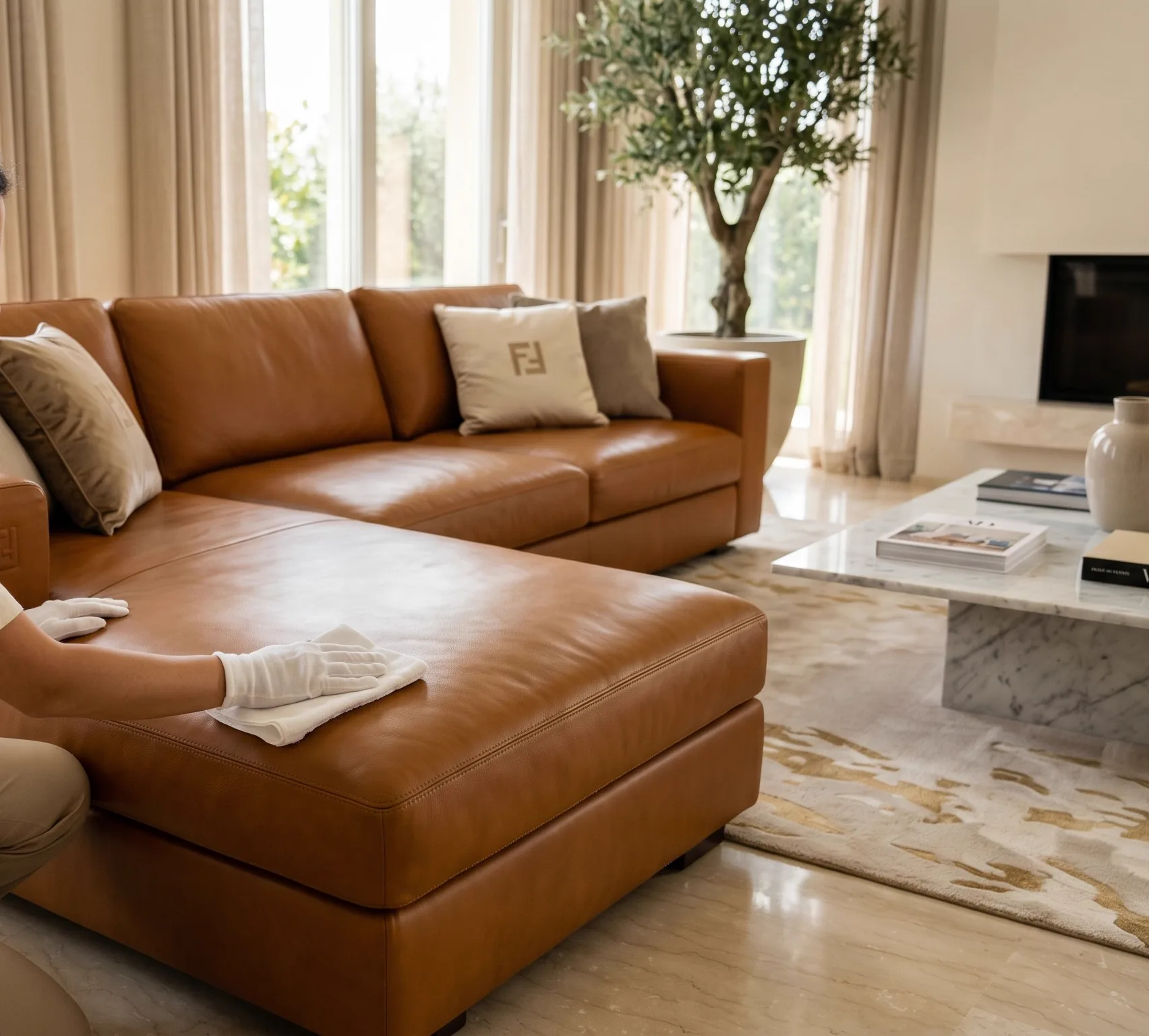
This is the cleaning routine that does not damage any leather finish and handles 90 percent of what a sofa accumulates over a month of normal use in an Indian home. It requires no special products for routine maintenance - only a microfibre cloth and distilled water.
- Weekly: Dry microfibre cloth wipe across all surfaces. Removes dust, pet hair, and surface particles before they grind into the grain under body weight. Pay particular attention to the seam lines where dust accumulates. No liquid required. Five minutes is enough for a three-seater.
- Monthly (pigmented leather only): Barely damp microfibre cloth with distilled water. Wring the cloth until you cannot transfer a drop by squeezing. Wipe one cushion or panel at a time using long, even strokes. Dry immediately with a second dry cloth. No soap needed for routine cleaning - distilled water alone handles surface body oil and light dust effectively.
- Monthly (aniline and semi-aniline): Dry microfibre wipe only. Do not use liquid on these finishes for routine cleaning. If a specific mark appears that dry wiping does not remove, use a cloth dampened with distilled water only - no soap - on that spot only, dry immediately, and condition the area within 24 hours.
- Fresh spills (all leather types): Blot immediately with a clean dry cloth. Do not rub - rubbing spreads the spill and pushes it deeper into the grain. Work from the outside edge of the spill inward. For water-based spills (tea, coffee, juice), blot until no more liquid transfers, then allow natural air drying. For grease spills, sprinkle dry baking soda, leave 20 to 30 minutes without touching, vacuum off gently, then blot with a damp cloth. Do not add water to a fresh grease spill - it spreads the grease.
- Every 6 months: Apply a leather-specific conditioner. This is the single most important step most people skip and the one that determines whether your sofa lasts 5 years or 20 years. See the leather conditioning guide for product selection and method. For India-available products, the cleaning products guide lists specific options with prices.
- Once a year: Professional deep clean. Home cleaning removes surface soiling. It does not extract embedded body oils, deep dust penetration, or chemical residues from prior cleaning. Annual professional cleaning resets the baseline and catches early damage before it becomes structural. The Delhi NCR professional cleaning service includes conditioning as standard in every service.
"Every sofa that arrives at our workshop after DIY cleaning damage looked better after the first remedy application. That is the most dangerous part - initial improvement masks the structural damage happening underneath. The sofa that looks clean after vinegar wiping is chemically worse than before the cleaning. By the time the visible damage appears, the damage is six to twelve months old."
The Indian Climate Complication
India's climate creates specific home cleaning challenges that make the safe routine above more important than in other Indian cities. The problem is not just the heat - it is the combination of factors that no single other Indian city has simultaneously: severe AC use from April to October that dehumidifies indoor air aggressively and strips fat liquor faster than any other environmental factor; monsoon humidity from July to September that reactivates any residual acid trapped in the fibre from prior vinegar cleaning and encourages mould in seam structures; and winter smog from November to February that deposits a PM2.5 particulate film on indoor surfaces that looks like ordinary dust but scratches leather finish when rubbed with a cloth.
The practical implication: Sofas in humid Indian cities need conditioning more frequently than the manufacturer's recommendation (typically annual) - every six months is more realistic given these cycles. And the temptation to clean visible smog film with a strong household product - vinegar because it "cuts through" the film, or Dettol because it "sanitises" - is exactly the moment most DIY damage happens. Distilled water and a microfibre cloth handles urban smog film without chemistry. The film is mostly fine carbon particulate and water-soluble compounds that lift cleanly with physical cleaning.
The monsoon complication is worth specific attention. If you have used vinegar on your sofa at any point in the previous year, the residual acid that was neutralised into the fibre can be reactivated by monsoon humidity as the moisture enters the hide and mobilises trapped compounds. This is why we see a spike in workshop enquiries in August and September from people reporting that their sofa "developed problems" during the rains - problems that actually originated months earlier from DIY cleaning. The monsoon leather care guide covers the full seasonal adjustment needed for NCR specifically.
Stain Situations That Need Immediate Specific Action
Beyond routine cleaning, specific spill scenarios require immediate specific responses. The wrong first response to a stain often causes more damage than the stain itself would have caused if left alone and treated correctly later.
Ink from pen or marker
Do not rub. Do not apply water. Do not apply any household cleaner. Fresh ink (within the first 30 minutes) on pigmented leather: apply a tiny amount of isopropyl alcohol (70 percent, from a medical store) to a cotton bud, press - do not rub - onto the ink mark only, lift off. Repeat with a clean cotton bud until no more ink transfers. Wipe the area immediately with a barely damp cloth to remove alcohol residue, then dry. For set ink (more than a few hours old), or any ink on aniline leather, stop and call a professional. Set ink on aniline leather treated at home almost always becomes permanent. Professional extraction within 48 hours can often recover it.
Food and drink spills
Blot immediately. The first 60 seconds determine how much absorbs into the fibre. For tea or coffee, blot with a dry cloth until you cannot pick up more liquid, then use a cloth with distilled water only to lift any remaining surface mark. For oily food (ghee, butter, biryani, curry), blot surface oil, apply dry cornstarch or baking soda as described above, vacuum off, then condition the area. Never use dish soap on a curry or ghee stain - the degreaser in dish soap is too alkaline and will strip the finish in addition to the oil.
Colour transfer from clothing
Dark denim is the most common source. The transfer happens through prolonged contact between wet or sweating denim and aniline leather. Once the dye has transferred and dried, home cleaning will not remove it without stripping the leather finish simultaneously. This is a professional-level stain. Do not attempt to "lighten" it with bleach, lemon juice, or any whitening agent - the result on leather is finish destruction, not stain removal. Call a professional. Early treatment (within 48 to 72 hours of the transfer) significantly improves the outcome.
When Home Cleaning Is Not Enough
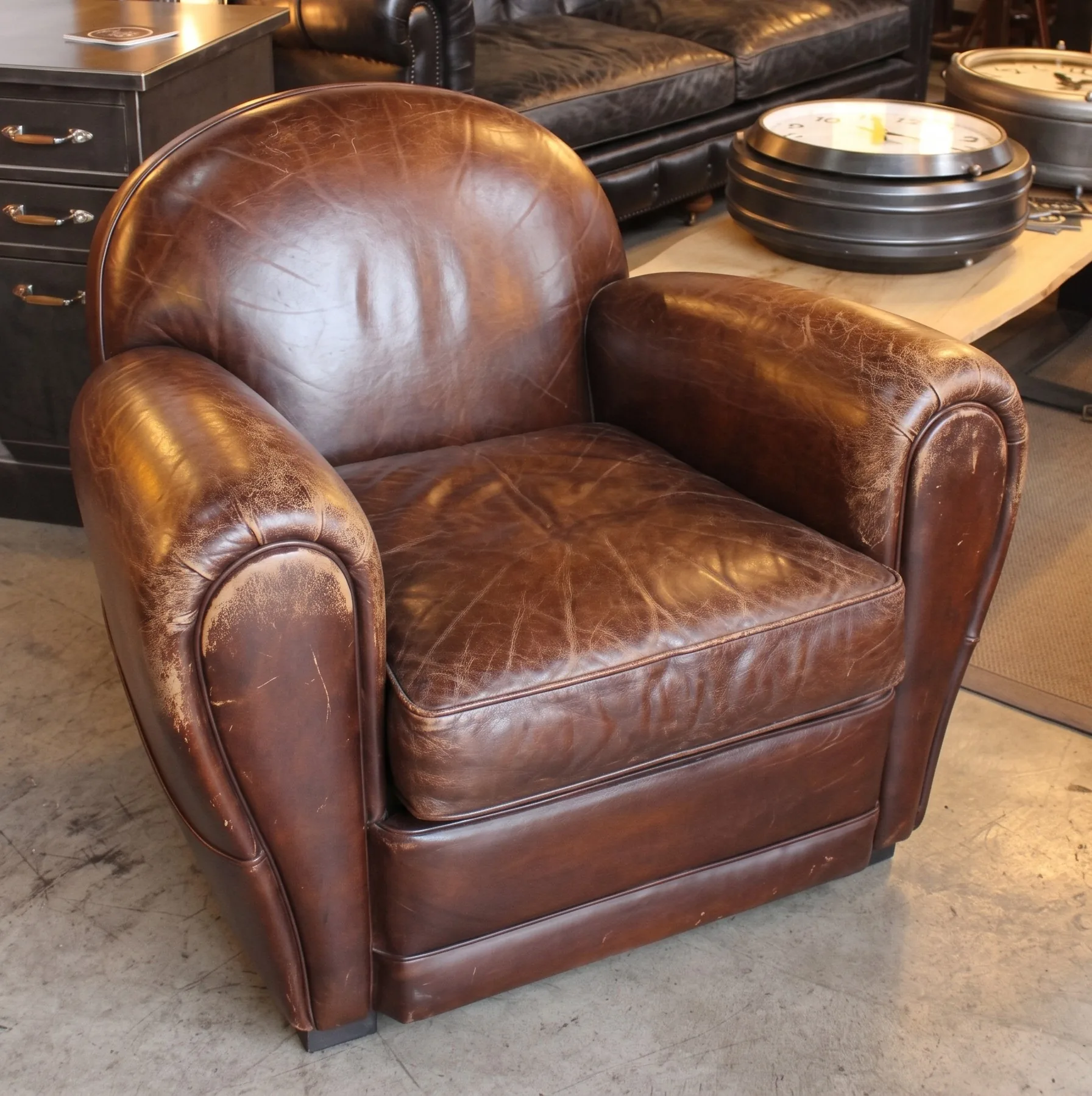
Some situations are outside the scope of home cleaning regardless of what product you use. Ink stains that have set for more than a few hours. Grease that has fully penetrated the fibre. Colour transfer from clothing or denim. Cracking or peeling surface. Persistent odour that returns after cleaning. Any visible stiffening or tonal shift that is not explained by a known spill. Mould in seam structures. All of these require professional-grade extraction and chemistry that is not available over the counter in India.
If your sofa already shows any of these signs, stop cleaning at home immediately. Each additional attempt at home cleaning compounds the existing damage - particularly if you are using any of the household remedies covered above. The earlier a professional assessment happens, the more that can be recovered. A sofa that arrives at the workshop with three months of visible damage recovers far better than one where the owner has spent six months trying home remedies before calling. For stain-specific guidance before calling, the stain removal guide outlines what professional extraction involves for each stain type and what the realistic recovery outcomes are.