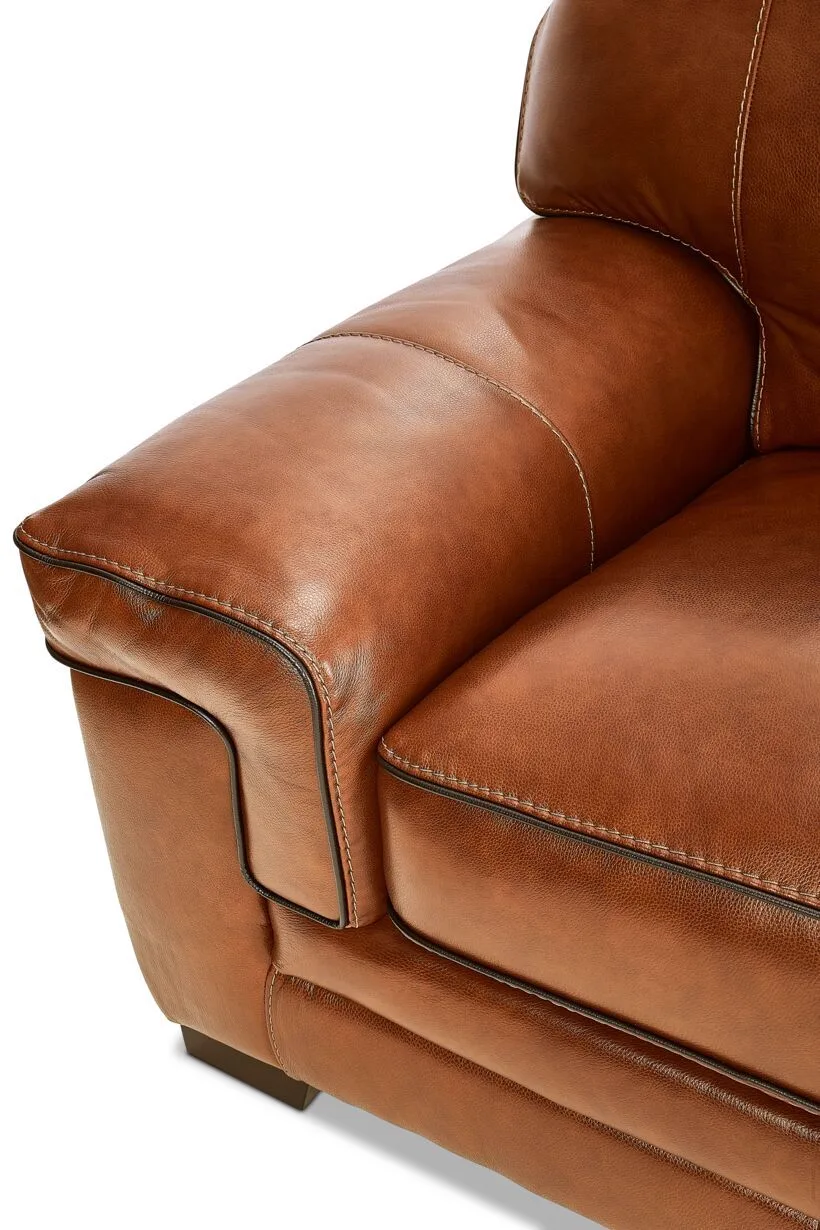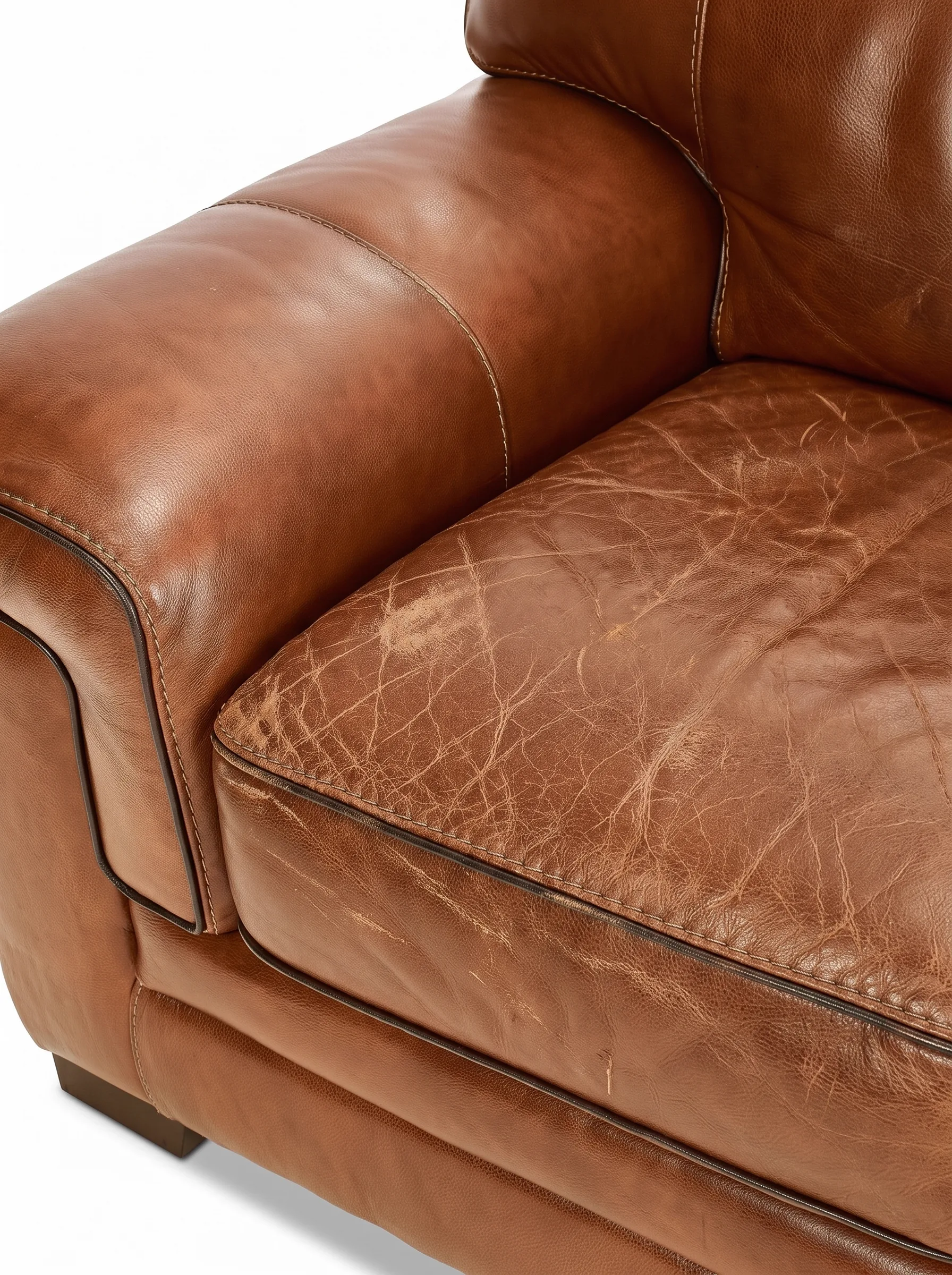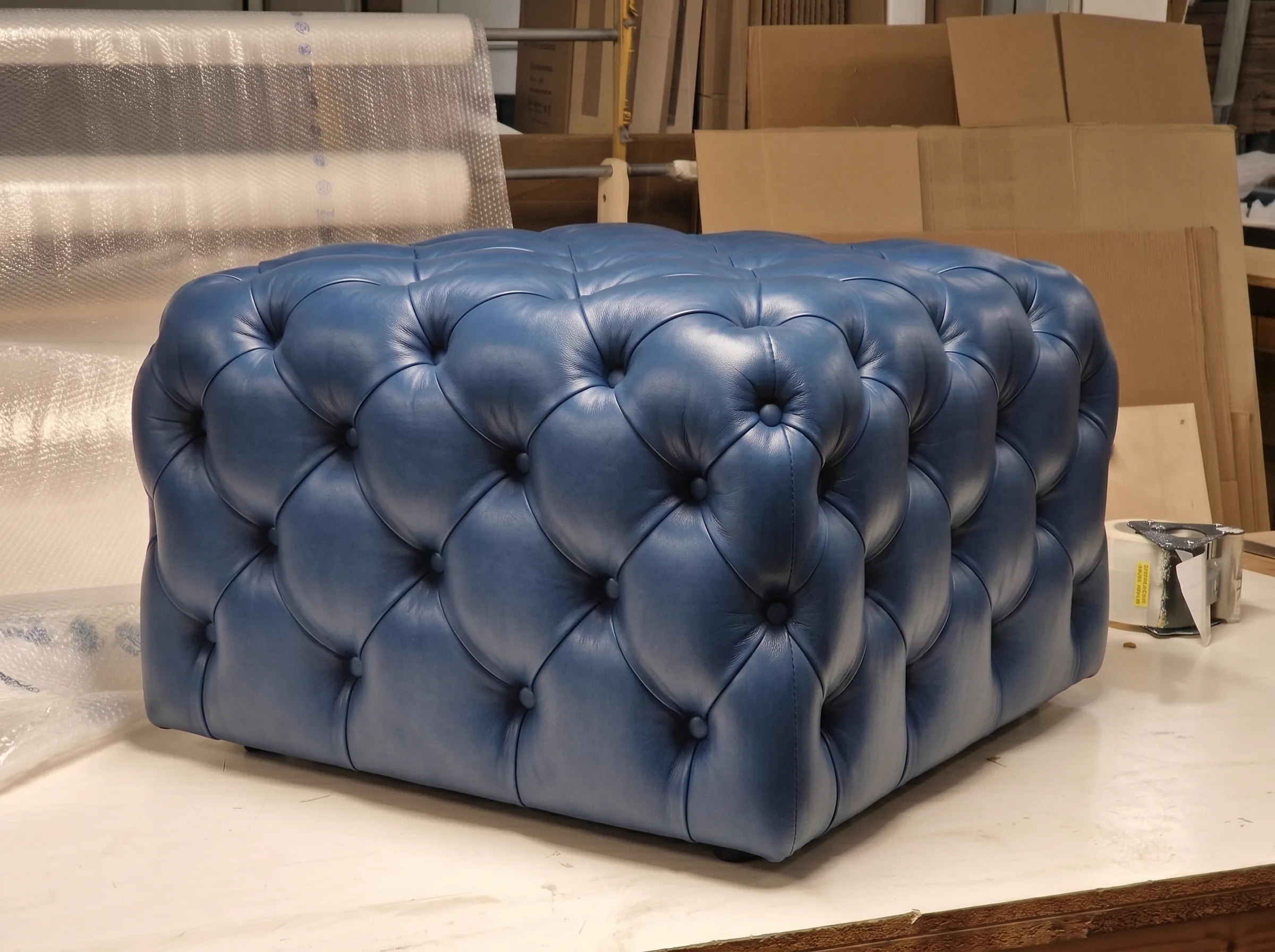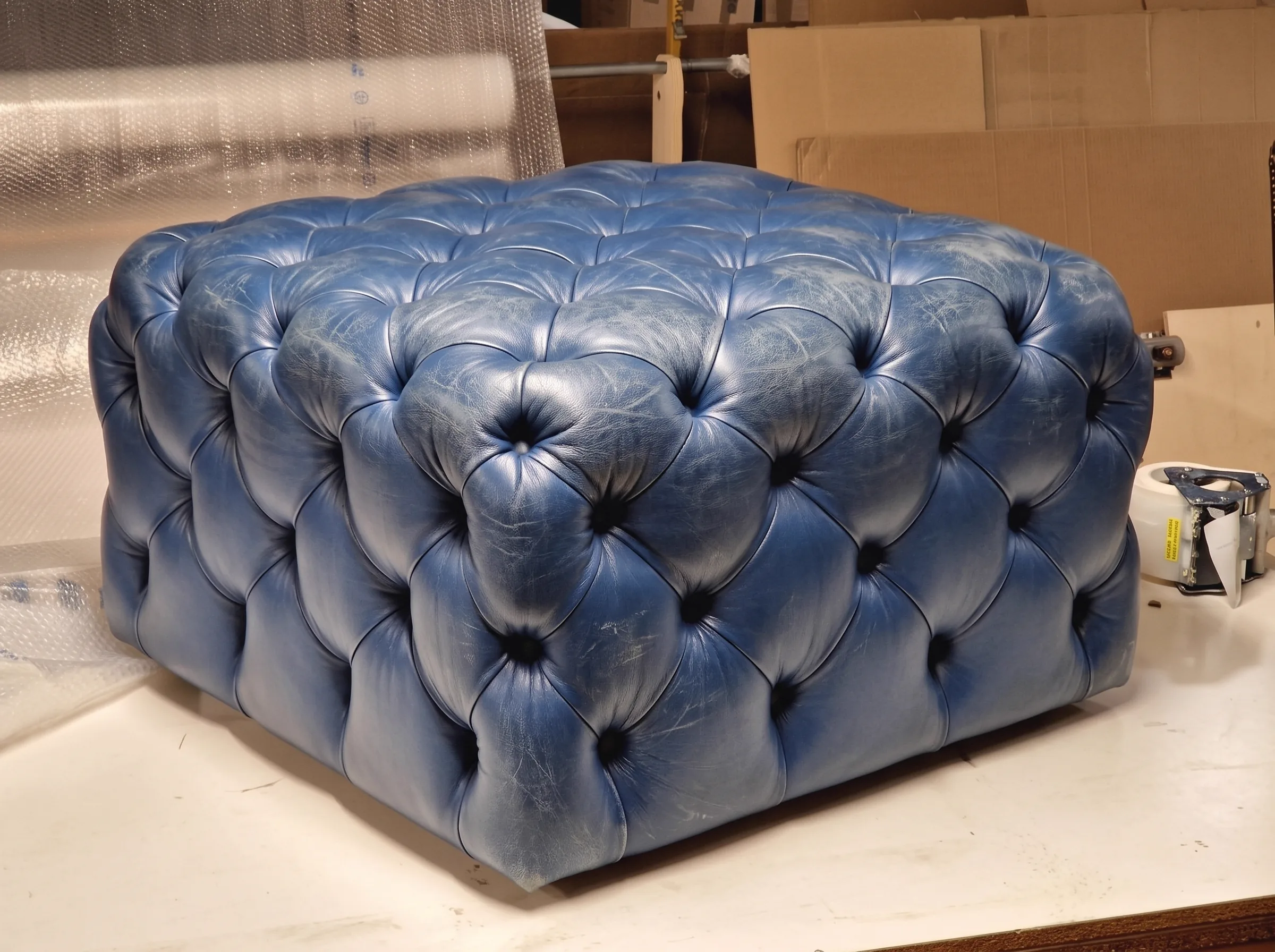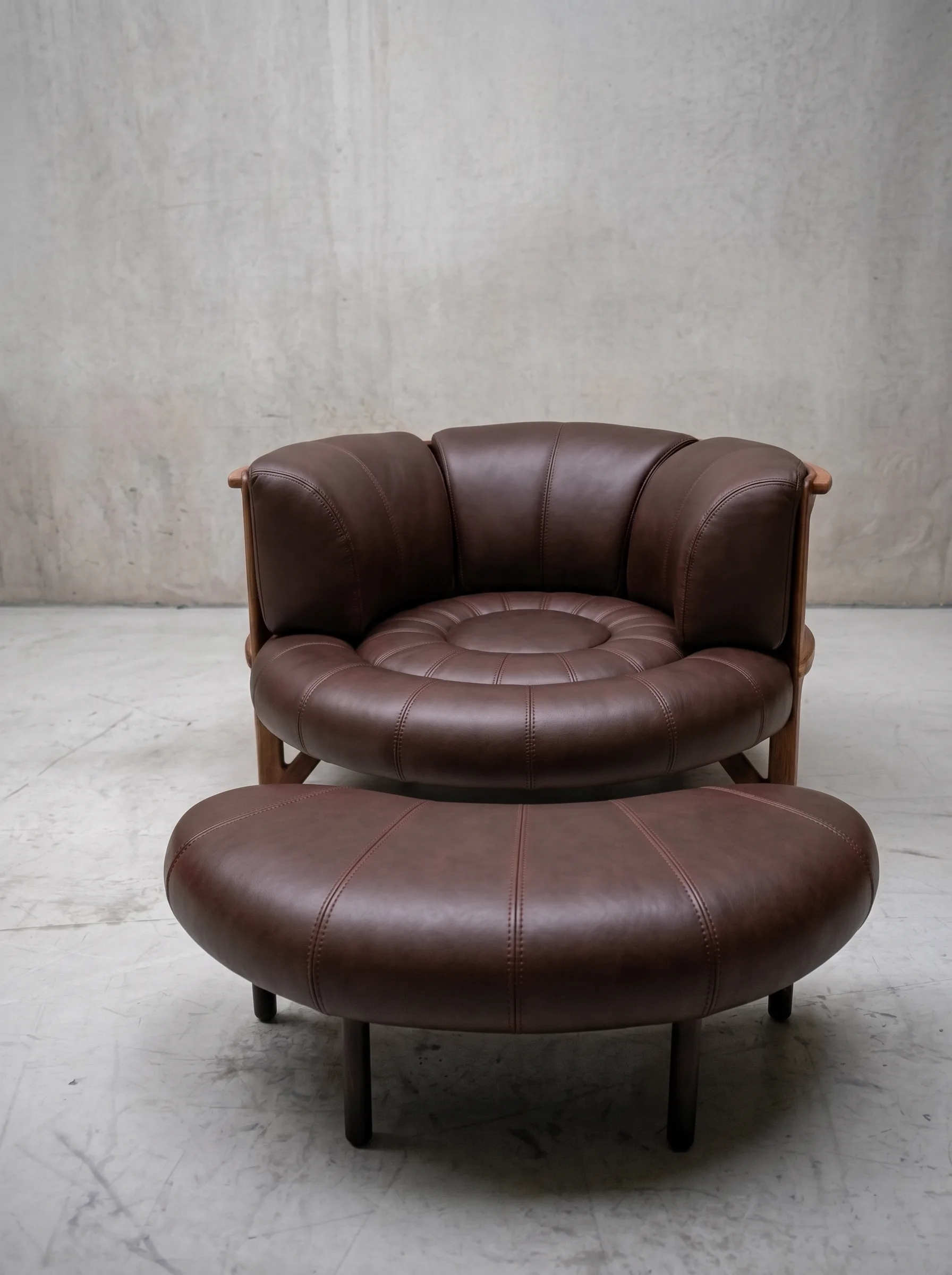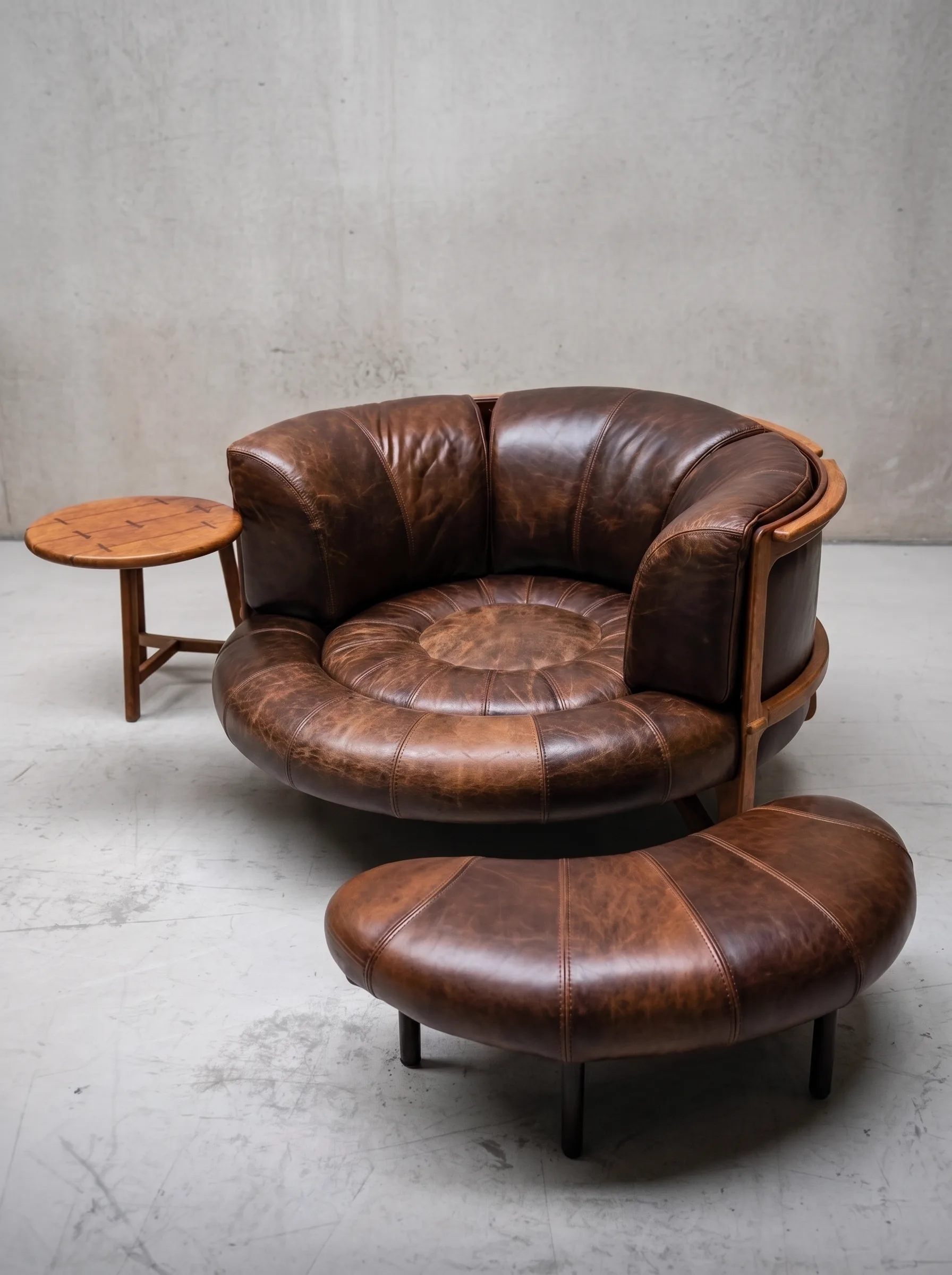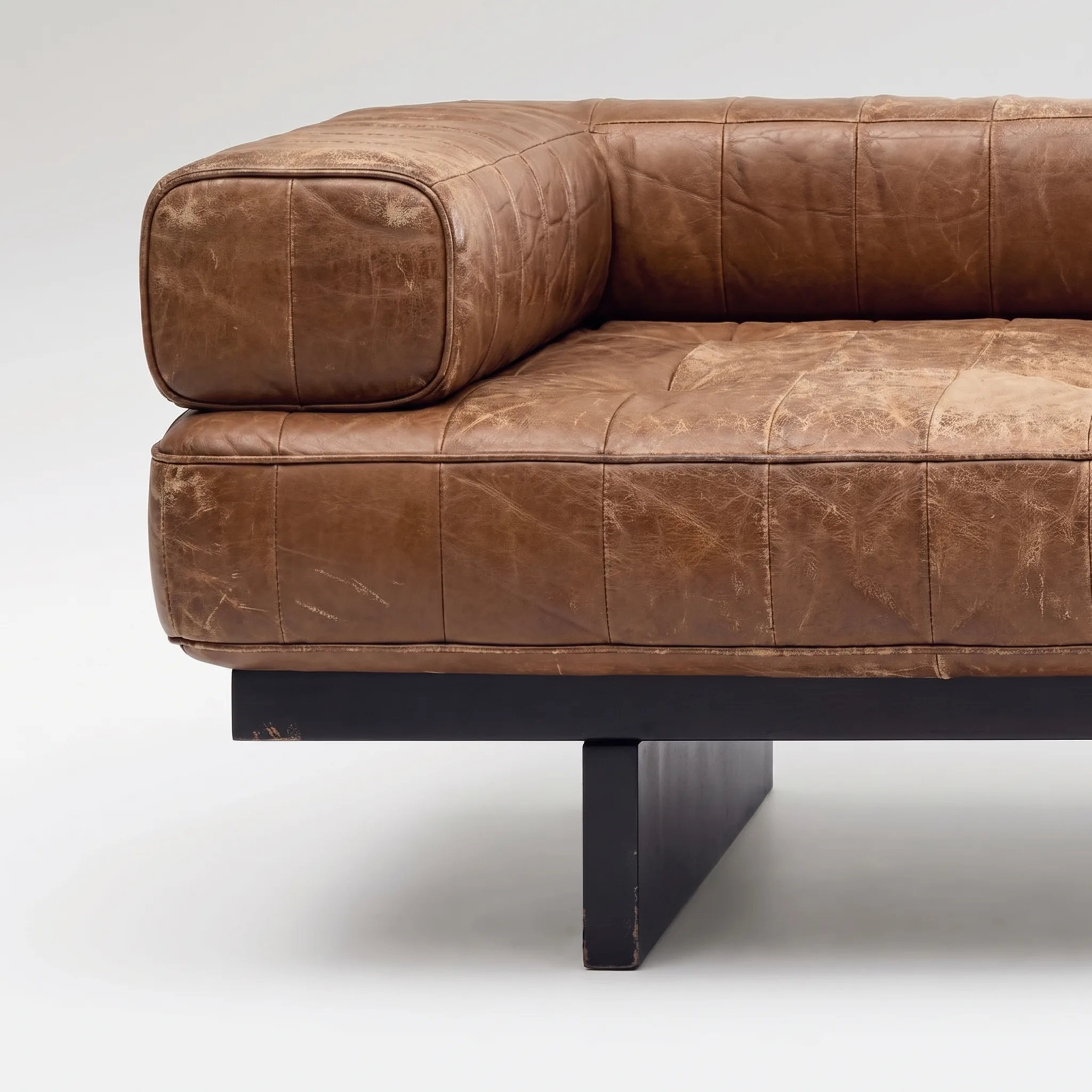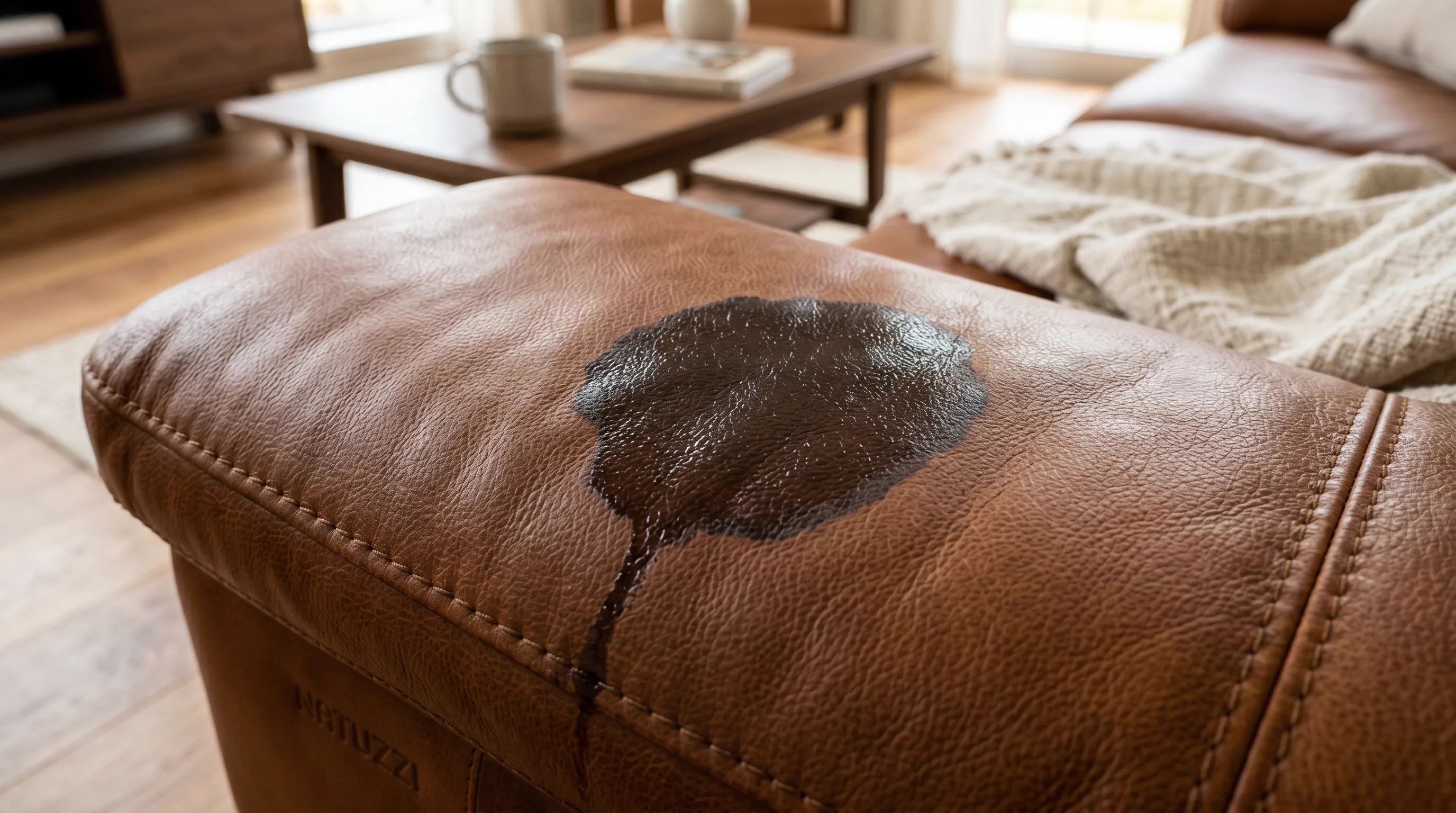
Your sofa has dark patches, a sticky surface, and a faint sour smell , and you used coconut oil on it. Every other week, the workshop takes in a Frau armchair, a Natuzzi three-seater, or a Fendi Casa Selleria piece with exactly that signature. The owner is always surprised. Coconut oil is natural. It works on skin and hair. It seemed like the right thing. The chemistry disagrees. This article explains what coconut oil does to luxury leather, how the damage progresses month by month, and what workshop recovery looks like when it has already happened. Technical terms used here are defined in the leather conservation glossary. The underlying chemistry is covered in the guides on leather moisturising and fat liquor.
Why Do Indian Households Reach for Coconut Oil?
Coconut oil is in nearly every Indian kitchen. People use it for cooking, hair care, skin moisturising, infant massage, and ayurvedic preparations. It stands for nourishment and natural goodness. When a leather sofa looks dry, reaching for the coconut oil feels automatic.
The logic seems sound: leather is natural, coconut oil is a natural moisturiser, so the two should work together. Family advice backs this up. Older relatives remember coconut oil on cricket gloves, school shoes, and country furniture with no obvious harm. The tip travels down generations alongside good advice on fabric care, brassware polishing, and silver.
The problem is that those old leather items were vegetable-tanned , a different chemistry entirely from the chrome-tanned aniline and semi-aniline finishes used in modern Italian luxury furniture. What worked on a cricket glove in 1985 does not work on a Frau Pelle SC armchair in 2026. The category looks the same. The chemistry has changed completely.
The category rule: family leather-care knowledge grew around vegetable-tanned materials. Modern luxury Italian furniture is chrome-tanned. Using vegetable-leather products on chrome-tanned hides is the most common mistake among luxury leather owners in India , and coconut oil is the most common product behind that mistake.
What Does Coconut Oil Actually Do to Leather?
Three failure mechanisms run at the same time when coconut oil contacts luxury leather. Each works on a different timescale. Together, they produce serious damage.
1. Oxidative rancidity
Coconut oil is roughly 90 percent saturated fatty acids , mostly lauric, myristic, and palmitic acids. Despite that high saturation (which keeps it solid below 24°C), it does oxidise when exposed to air. Warmth, light, and trace metals accelerate the process. In a sealed jar, oxidation is slow. Spread thin across a leather surface in a warm room, it runs much faster. Within months, the oil develops the rancid smell you eventually notice.
The rancid by-products are the real problem. Free radicals attack the hide's collagen fibres. The dark rancid compounds stain the leather permanently. Those darker patches that appear six to twelve months in are not sitting on top of the leather , they are oxidised oil bound into the upper grain layer. Cleaning cannot fully remove them.
2. Pore blockage and breathability loss
Premium leather , especially aniline and semi-aniline finishes , has a microscopically permeable surface. That pore structure lets moisture move in and out as humidity changes. It also lets conditioner penetrate the grain layer when you apply it.
Coconut oil is too viscous and too prone to oxidising to stay fluid on the surface for long. Within weeks it thickens and clogs the pores. Once clogged, your sofa can no longer regulate its own moisture. No conditioner can reach the fibre layer underneath. Each new coat of coconut oil piles on top of the last, building a progressively thicker sticky film. The surface catches dust, lint, and clothing fibres visibly.
3. Incompatibility with chrome tannage
The fat liquor inside chrome-tanned hides , covered in detail in the fat liquor guide , is engineered to bond with the chromium-collagen complex. Synthetic esters, sulphated lanolin, and light oils all integrate with chrome chemistry. Coconut oil does not. Its high saturated-fat profile is closer to the heavy dressings made for vegetable-tanned hides. On chrome leather it sits as a foreign substance the hide rejects.
That rejection shows up as uneven darkening, patchy absorption, and a tacky surface. The hide cannot absorb the oil into its existing fat liquor, and the oil is not easy to remove either. The tanning chemistry guide covers the broader principle: products that don't match the tannage cause damage that tannage-compatible products simply wouldn't.
How Does the Damage Progress Month by Month?
Coconut oil damage follows a consistent timeline on most chrome-tanned aniline and semi-aniline pieces. The stages below come from years of workshop intake. Individual sofas vary by hide quality, room conditions, and how often oil was applied , but the sequence is reliable.
Week one , apparent improvement
Your sofa feels softer, looks slightly richer, and the dry surface seems improved. This is where the misconception starts. You see a benefit and conclude it's working. What actually happens: the unoxidised oil temporarily plumps the upper grain layer. The chemistry damage hasn't had time to show yet. Many people reapply weekly through the first month based on this, which dramatically speeds up what comes next.
Month one , first stickiness
The surface develops a subtle tackiness that catches lint and dust. Contamination starts to show. The rich tone from week one looks slightly uneven across the panel. Most people don't connect this to the coconut oil. They blame room dust or cushion fabric.
Months two and three , visible darkening begins
Darker patches appear where oil was applied most heavily , seat fronts, arm caps, headrests. The patches have soft edges and a slightly different sheen from the surrounding hide. Under raking light at 5x magnification, you can see oxidised oil residue in the upper grain layer. At this stage, workshop intervention can still partially reverse the damage.
Months four to six , rancid signature appears
A faint sour smell becomes detectable close to the affected zones. The patches grow larger and darker. The surface is noticeably tacky. Your sofa no longer responds to additional conditioning , the clogged pores reject further product. At this point, workshop recovery requires deep-pore extraction with controlled solvent treatment before any restoration can start.
Months six to twelve , structural compromise begins
Free radical activity from the oxidising oil starts attacking the collagen fibres below the surface. The hide loses drape. Affected zones feel slightly stiff or papery. Crocking [colour rubbing off on clothing] may begin in the worst areas as the binder system weakens. Workshop recovery now needs re-fatliquoring on top of surface cleaning , the foreign oil has disrupted the hide's fat liquor.
Months twelve to eighteen , irreversible damage on aniline
On aniline finishes, cumulative damage reaches the point where panel-level micro-pigmentation is the only way to cover permanently darkened zones. Semi-aniline and pigmented finishes take longer because protective top-coats buffer some of the damage. But even those finishes show clear failure signs by month eighteen of regular coconut oil use.
Beyond eighteen months , systemic damage
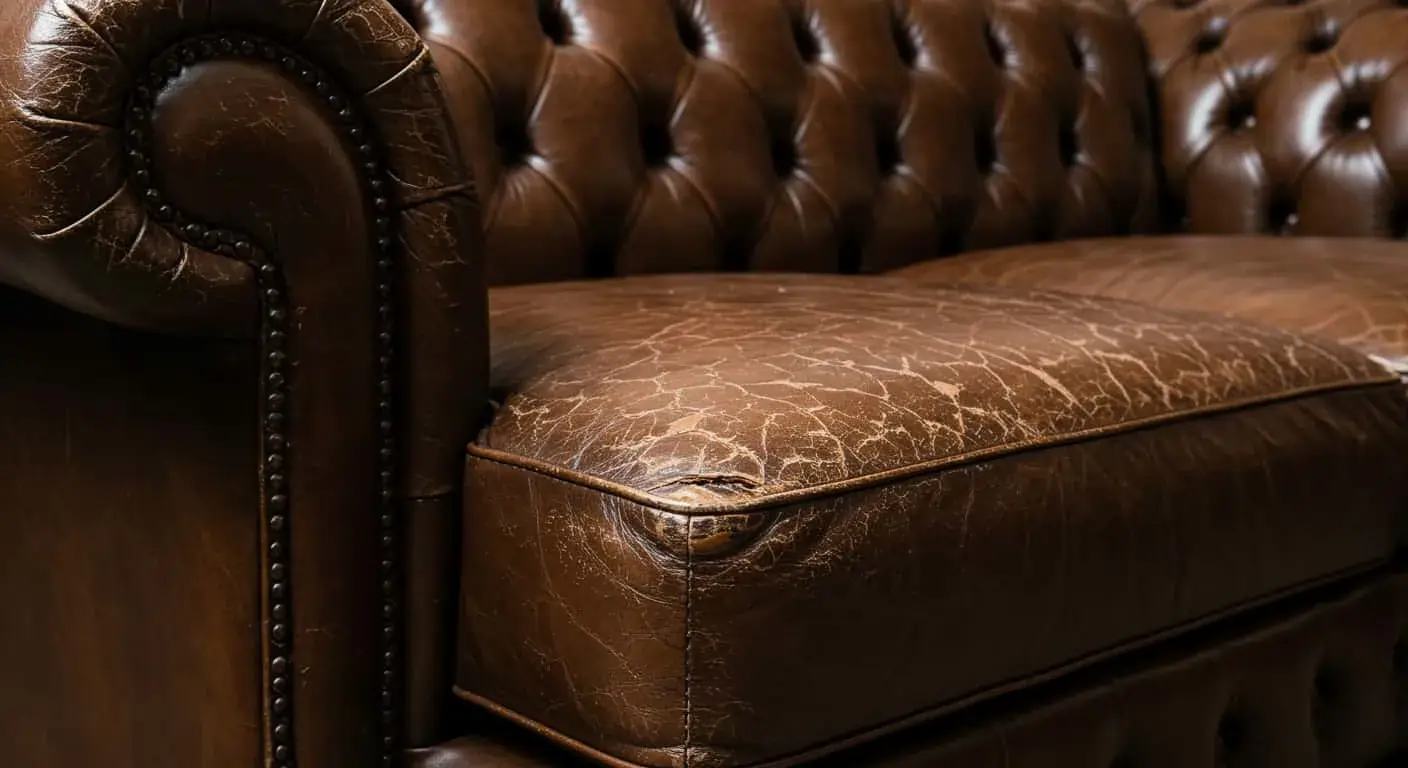
After eighteen months of regular application, damage crosses from cosmetic into structural. The hide may show grain layer compromise, brittle fibres, and early delamination. Restoration scope expands toward whole-piece reconstruction. The economics shift sharply against you.
How Do You Know It's Coconut Oil Damage?
Coconut oil damage has a clear signature that sets it apart from other types of luxury leather failure. Three signals together confirm it.
The darkening pattern. You see patches with soft edges, concentrated where the oil was applied most , seat fronts, arm caps, headrests. The pattern follows the path of a rag, not UV exposure (which darkens a whole panel evenly) or wear (which concentrates at flex points). An experienced restorer can often trace the exact application path from the damage.
The smell. The faint sour smell of oxidised oil is unmistakable to anyone who has worked with leather for years. A cleaner-damaged piece has no smell. A UV-faded piece has no smell. A coconut-oil-damaged piece smells faintly like cooking oil left in a warm cupboard for months.
The feel. The surface is subtly but persistently tacky. A cleaner-damaged piece feels dry. A UV-faded piece feels normal. A coconut-oil-damaged piece feels slightly sticky to your fingertip even after cleaning, especially in the worst zones.
All three signals together confirm the diagnosis and point the workshop toward the right recovery steps.
What Does Workshop Recovery Actually Involve?
Recovering from coconut oil damage runs through four workshop stages. How intensive each stage needs to be depends on how long the oil has been there and how much was applied.
Stage 1 , Deep-pore extraction. A chrome-leather-compatible solvent system lifts the oxidised oil residue from the upper grain layer. This takes several hours per panel and requires controlled ventilation. No consumer product can replicate it. Damage older than six months usually needs multiple passes.
Stage 2 , pH neutralisation. Once the oil residue is lifted, the hide returns to its safe pH band of 5.0 ± 0.5 using a pH-neutralising solution. This follows the seven-step cleaning documented in the pH balance guide, modified with longer dwell times and more thorough rinsing.
Stage 3 , Re-fatliquoring. A chrome-compatible emulsion rebuilds the disrupted fat liquor. Early-stage damage may need only surface conditioning. Damage older than a year requires full workshop re-fatliquoring per the fat liquor guide. The hide must stay dimensionally stable throughout to prevent tension marks during drying.
Stage 4 , Micro-pigmentation where needed. Where darkening has gone past what extraction and re-fatliquoring can fix, panel-level micro-pigmentation rebuilds the colour to match the surrounding hide. The colour target depends on the brand: Frau Pelle SC uses a documented 27-colour archive; Natuzzi Iconic uses the brand's palette; other pieces match the undamaged surrounding hide.
The full four stages take five to ten workshop days per piece. Catching the damage within three months usually keeps things to stages one and two. Damage beyond a year typically needs all four.
"Coconut oil is the most expensive household product anyone has ever applied to a luxury leather sofa. The bottle costs ₹200. The workshop bill to undo what it did costs anywhere from ₹15,000 to several lakhs. The household economics are absurd. The chemistry is unforgiving."
What Should You Use Instead of Coconut Oil?
What coconut oil is trying to replace is fat liquor , the engineered emulsion of oils and surfactants explained in the fat liquor guide. The right product is a workshop-grade leather conditioner formulated as a synthetic ester or sulphated lanolin emulsion at pH 5.0 ± 0.5, matched to the tannage of your hide.
Used through the seven-step conditioning sequence in the science of moisturising guide, the right product replenishes fat liquor cleanly. It integrates with existing hide chemistry. It causes no oxidative damage, no pore blockage, no rancid residue. Apply every six to nine months for aniline, eight to twelve months for semi-aniline, once a year for pigmented. The decade-long cost is a fraction of one workshop recovery from coconut oil damage.
For the full picture of kitchen substances mistaken for leather care, see the guide on why vinegar and olive oil are damaging your luxury leather. The pattern holds across all of them: products made for skin, food, or general household use cannot replace products engineered for tanned leather chemistry.
Stop Now and Recover While You Can
If coconut oil has been applied to your sofa in any quantity, stop now. Book a workshop assessment in weeks, not months. Every extra application accelerates the damage. Every extra month widens the recovery scope.
The assessment costs nothing. What you pay for recovery depends entirely on how early you act. Stopping at month three costs a fraction of stopping at month eighteen. Never stopping eventually means a whole-piece restoration on a sofa that should have lasted thirty more years.
If you're in the Delhi NCR and suspect coconut oil damage on a Frau, Natuzzi, Fendi Casa, B&B Italia, or any premium aniline piece, you can book an expert-grade leather repair service, surface refinement, or a doorstep assessment across Noida, Faridabad, and Ghaziabad. Every intake starts with the three-signal check. Ongoing care guides by brand are here: Natuzzi and Poltrona Frau, Fendi Casa, and B&B Italia and Maxalto.
Bookmark this page. The next time someone in your household reaches for the coconut oil, the chemistry is here to settle the question before your sofa pays the price.