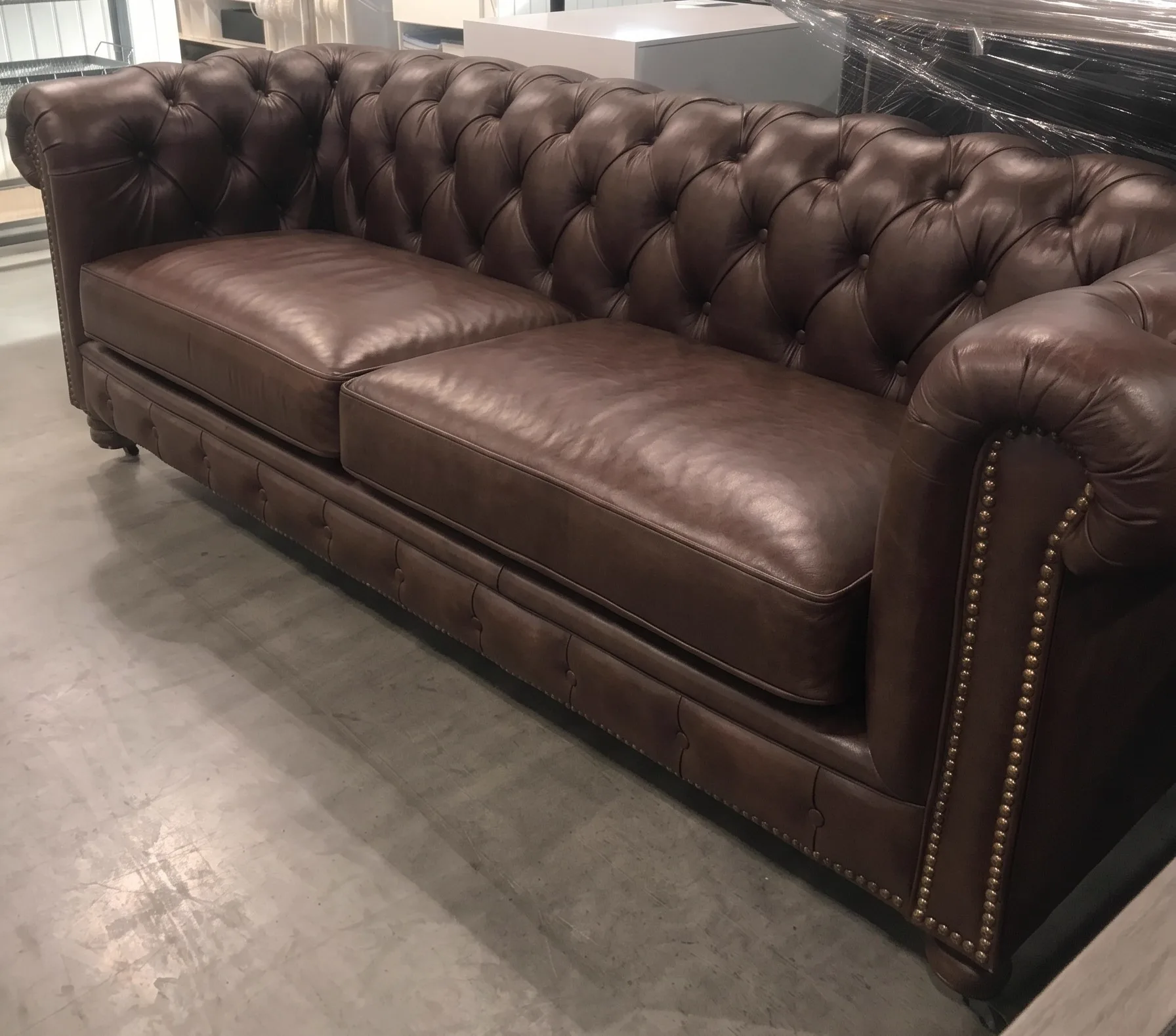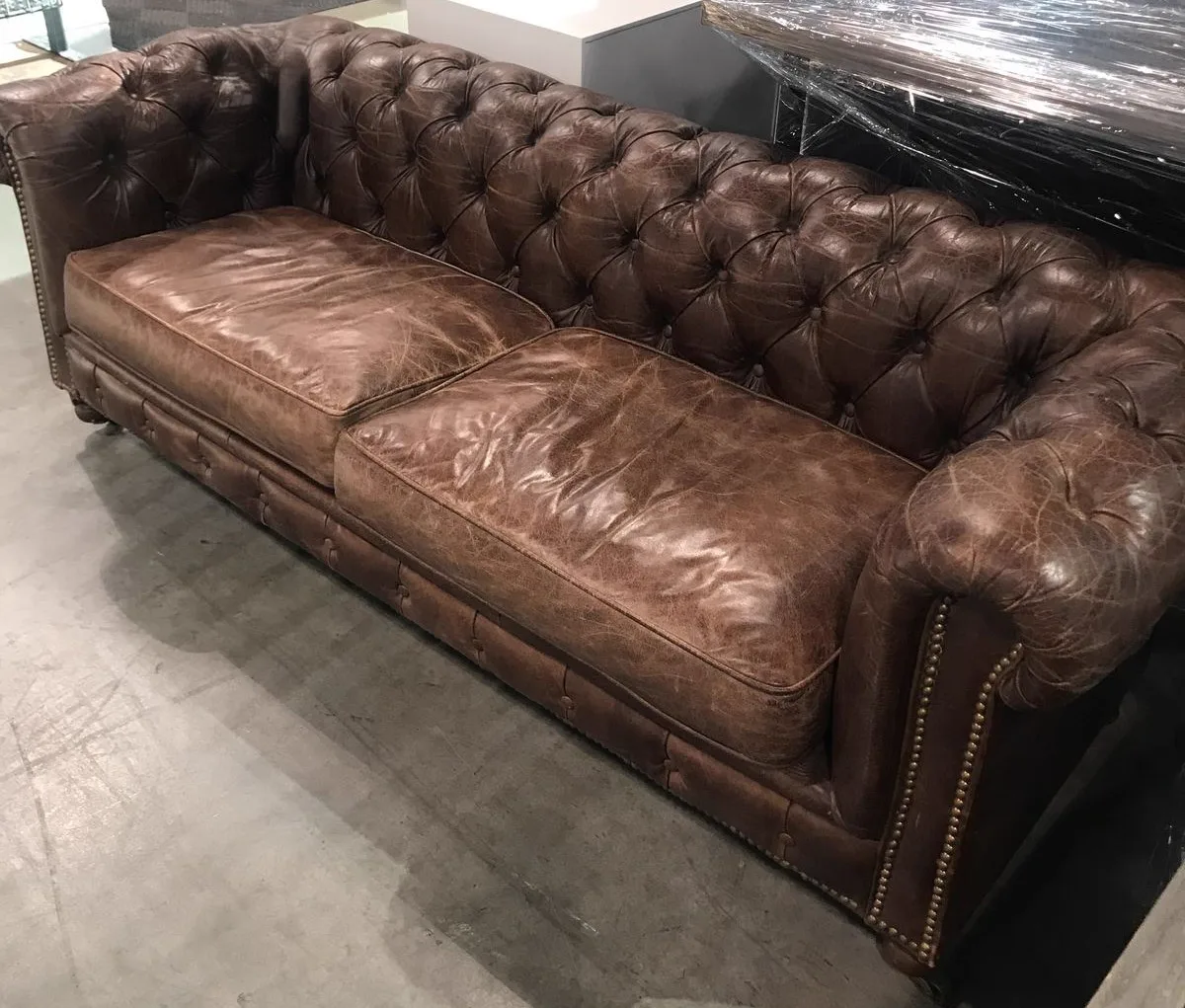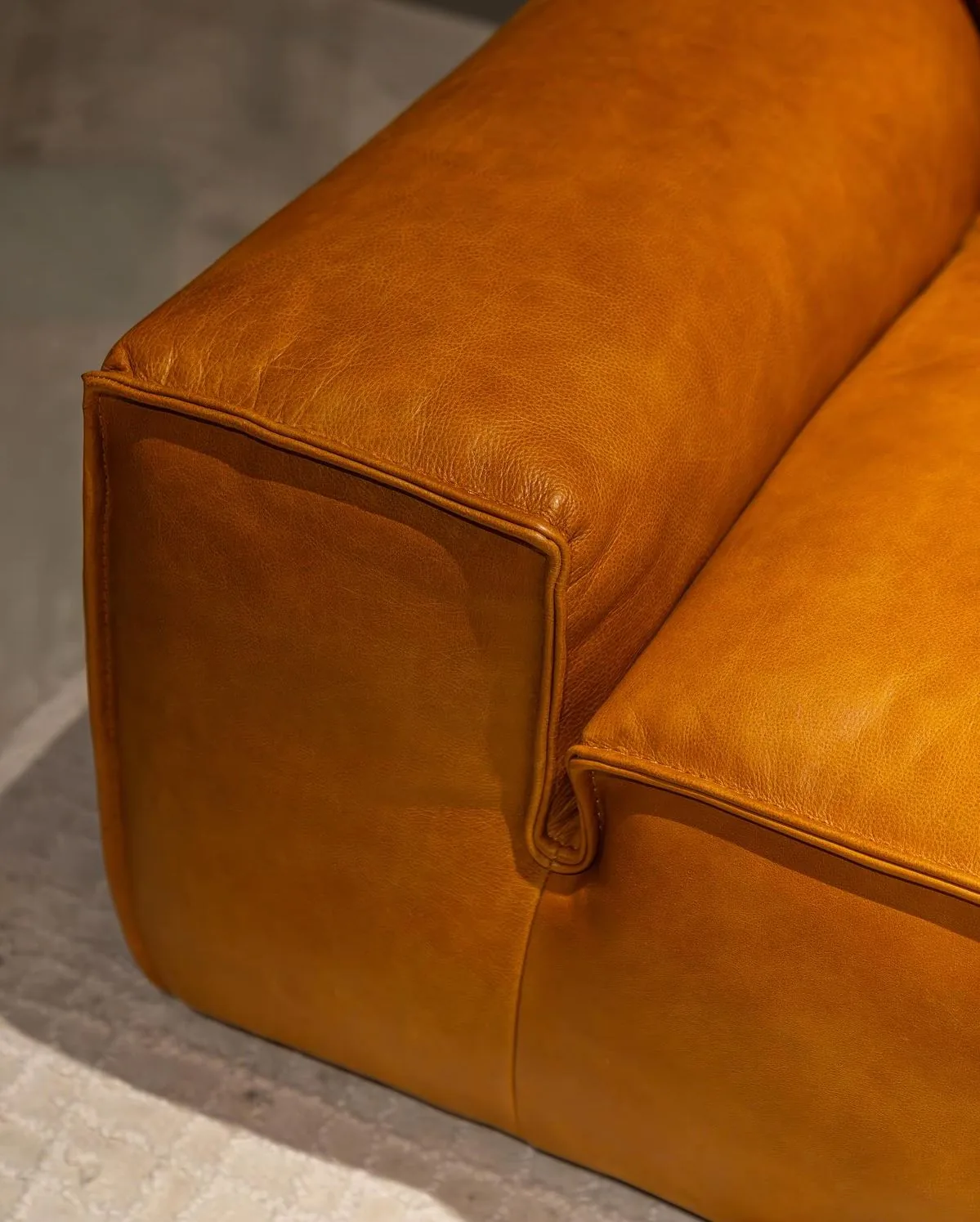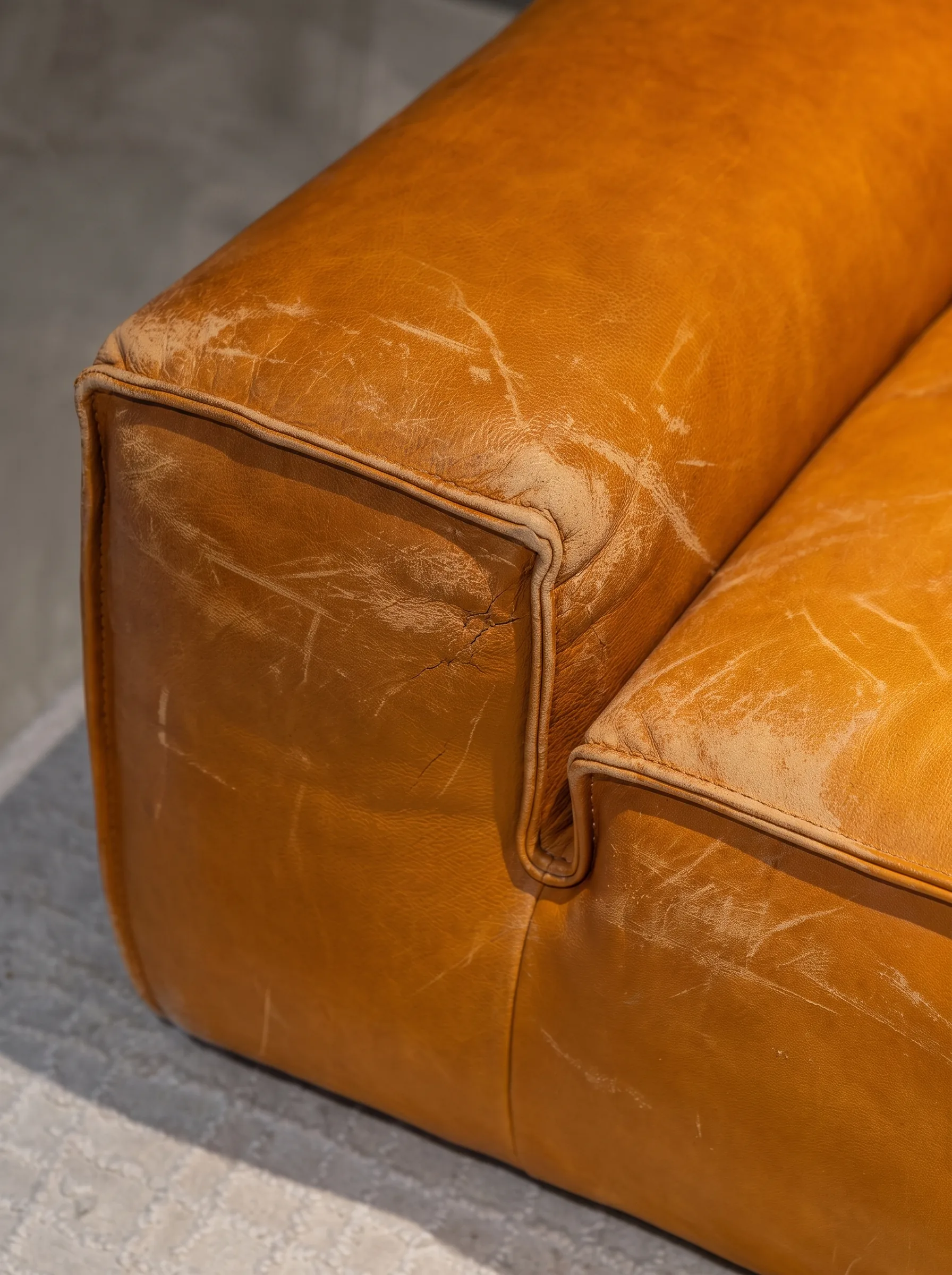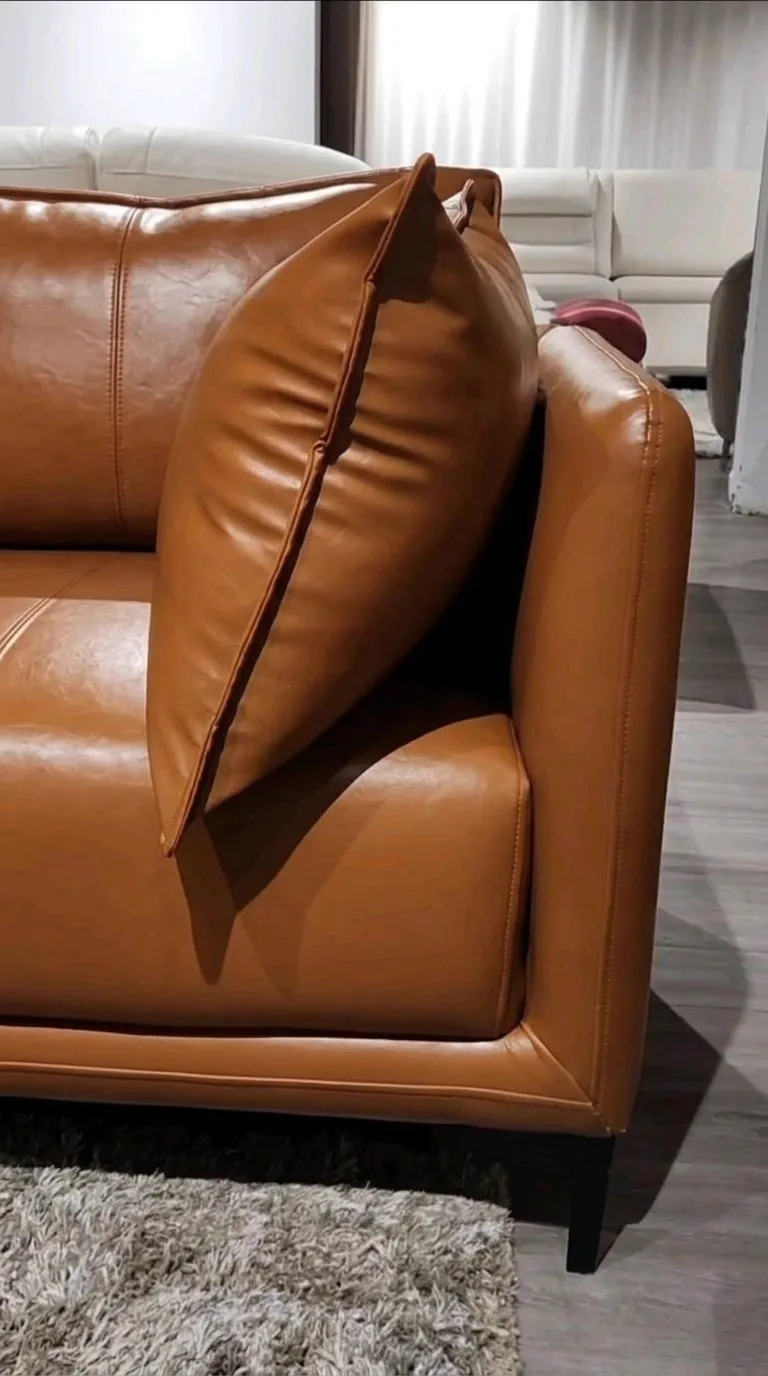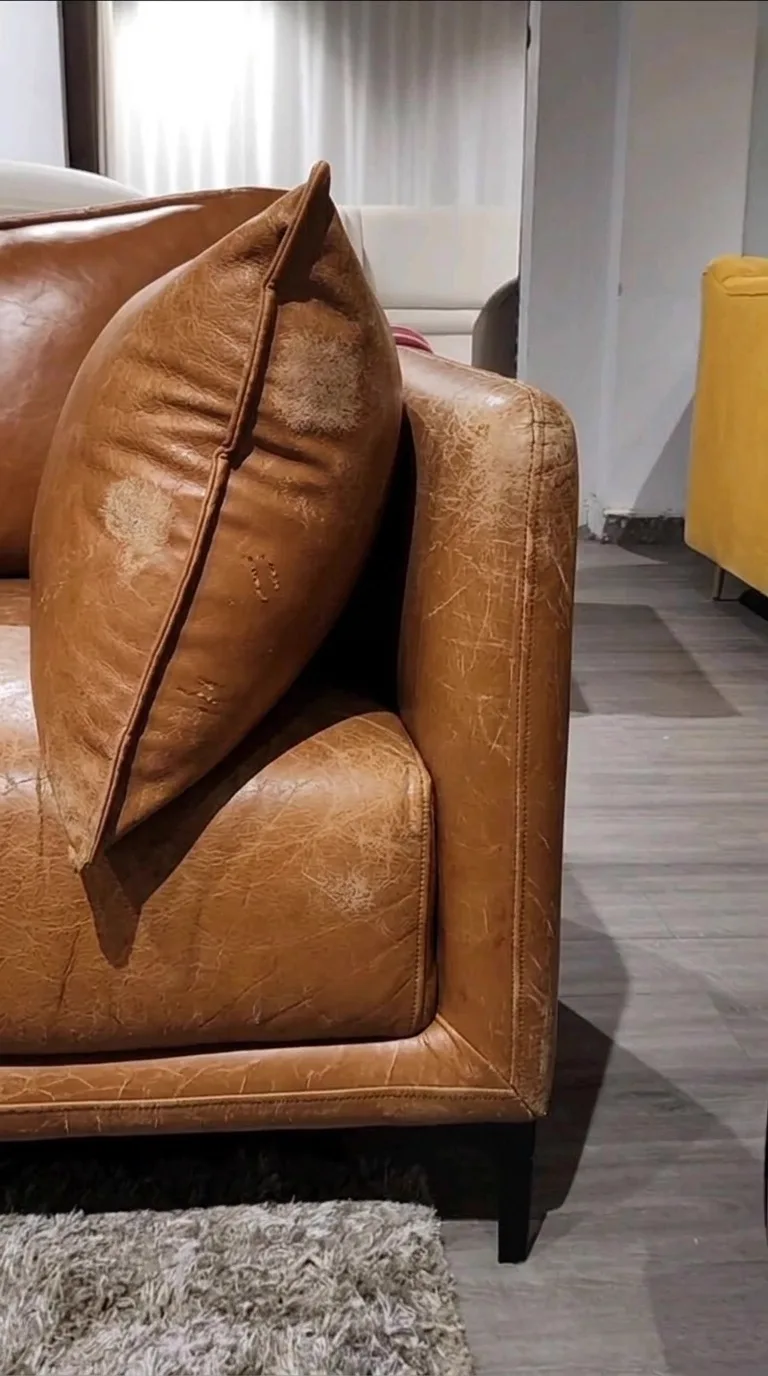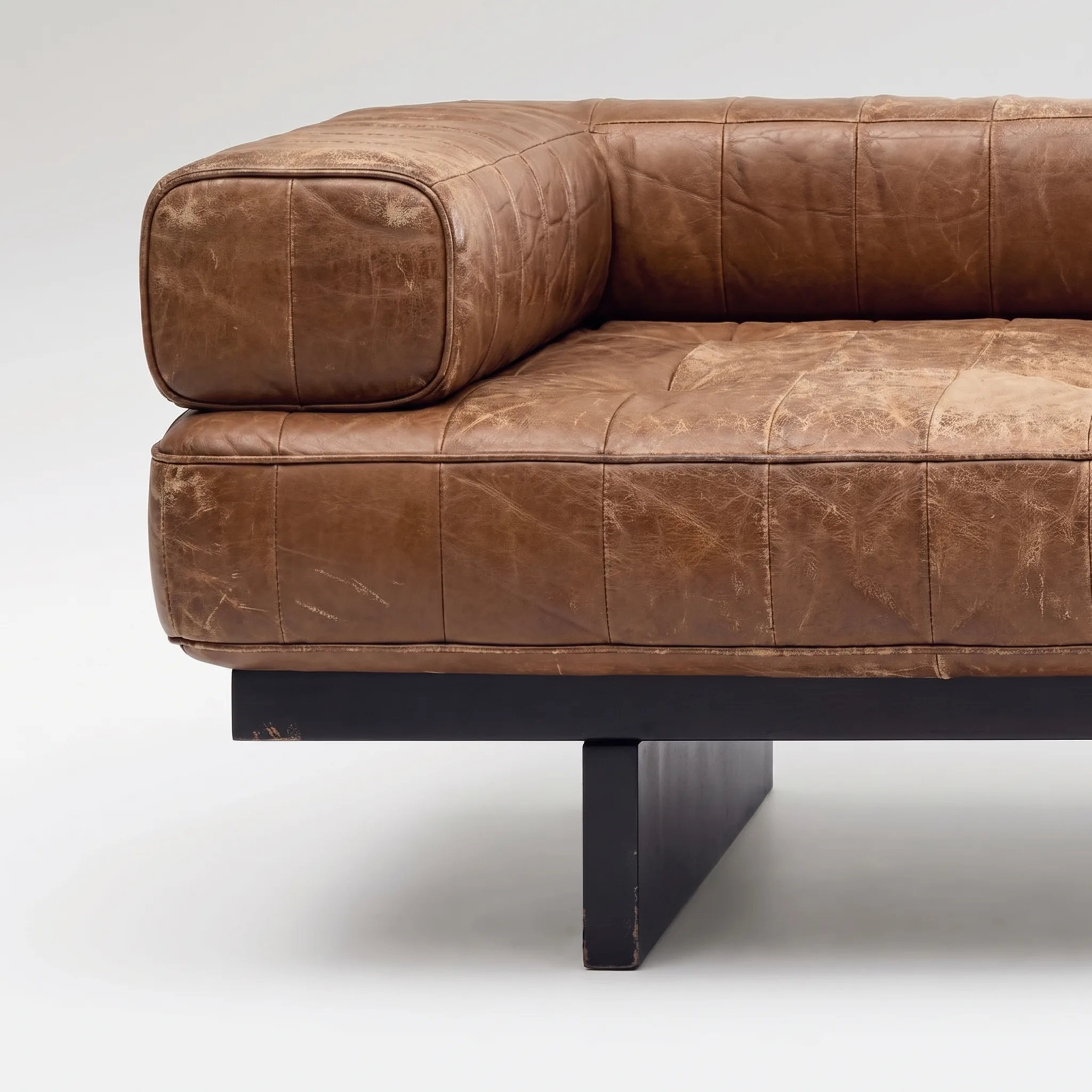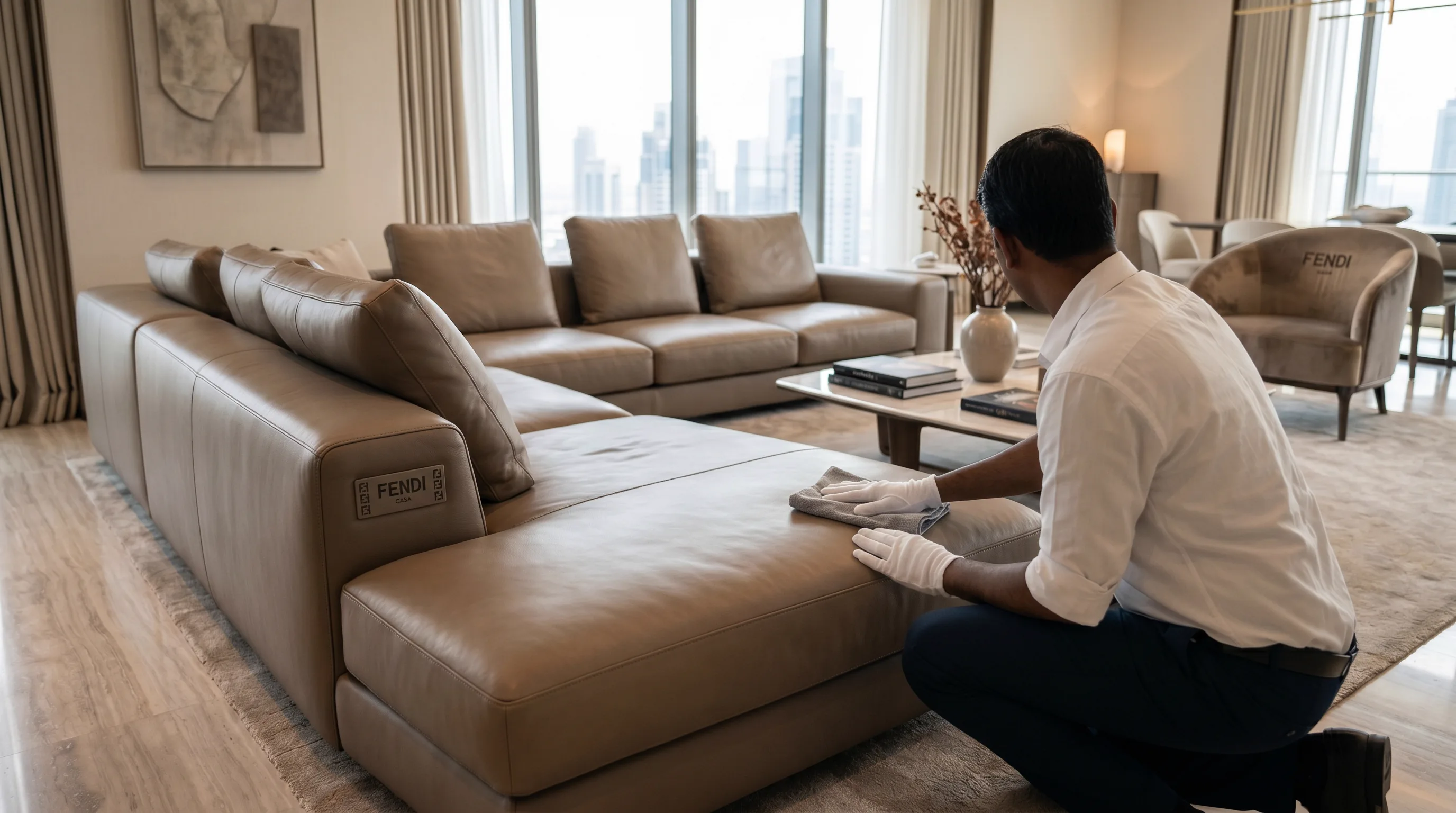
Your leather sofa does not get thirsty. It is not skin. It is not alive. The language of "feeding" and "hydrating" leather , borrowed from cosmetics marketing , has led many owners to pour the wrong substances onto their sofas at the wrong times. The real chemistry of a leather conditioner predates synthetic surfactants by a century. It has nothing to do with moisture in the everyday sense. This article explains what a conditioner actually does at the fibre level, why fat liquor is the only thing that matters, and how the wrong oils , coconut, olive, mink, neatsfoot, beeswax , speed up the very damage they seem to fix. By the end, conditioning your Natuzzi, Poltrona Frau, or B&B Italia sofa becomes a scheduled decision, not a guess.
Why Does Your Leather Not Need Water?
The most damaging idea in leather care is that your sofa needs to be hydrated. Living skin stays hydrated through blood, sebaceous glands, and the body's internal cycle. Tanned leather has none of those systems. The moment a hide leaves the tannery, it becomes a stable matrix of collagen fibres, residual tanning agents, and a precise quantity of fat liquor , the only substance it truly needs. Water sitting on or inside a hide is a problem to manage, not a resource to add.
What your sofa actually needs is lubrication between its fibres. Every time you sit, lean, shift, or get up, millions of collagen bundles inside the panel slide past each other. When they slide cleanly, the hide flexes for forty years and builds the patina that defines premium leather. When the lubricating film dries out, the fibres bind instead of slide. They fracture. The hide loses tensile strength permanently, cracks appear on the surface, and an irreversible process called fibre delamination begins.
A conditioner is not a moisturiser. It is a re-lubricant. Think of it as engine oil, not face cream.
The conditioning rule: if a product promises to "hydrate" or "feed" leather, it uses the wrong physical model. Look for products that name fat liquor, emulsion, or fibre lubrication on the label.
What Is Fat Liquor and Why Does It Matter?
Fat liquor is the most important term in luxury leather ownership , and almost no sofa owner has heard of it. During tanning, after the hide is chemically stabilised but before finishing, the tannery passes it through a controlled bath of an oil-and-water emulsion. This emulsion soaks into the entire fibre matrix and deposits a microscopic film of oil on every collagen bundle. The water carries the oil in, then evaporates. The oil stays. That oil is the fat liquor.
The formula is precise. Modern fat liquors blend sulphated natural oils , neatsfoot, fish, vegetable , with synthetic emulsifiers tuned to the hide's specific tanning chemistry. A chrome-tanned aniline hide bound for a Poltrona Frau Pelle Estro armchair gets a different fat liquor profile than a vegetable-tanned hide going to a saddle workshop. By weight, fat liquor sits between four and twelve percent of the finished hide. That small fraction determines whether your leather feels buttery or dry, whether it drapes over the cushion frame or stands stiff, whether it builds patina or cracks.
Every cleaning cycle removes a fraction of fat liquor. Every year of normal use removes more through evaporation and migration. Every wrong-pH wash, as the dedicated guide on the pH balance of leather explains, removes a much larger fraction. A conditioner's job is to put fat liquor back. Not to add something new. To replenish what was always there.
What Happens When Leather Dries Out?
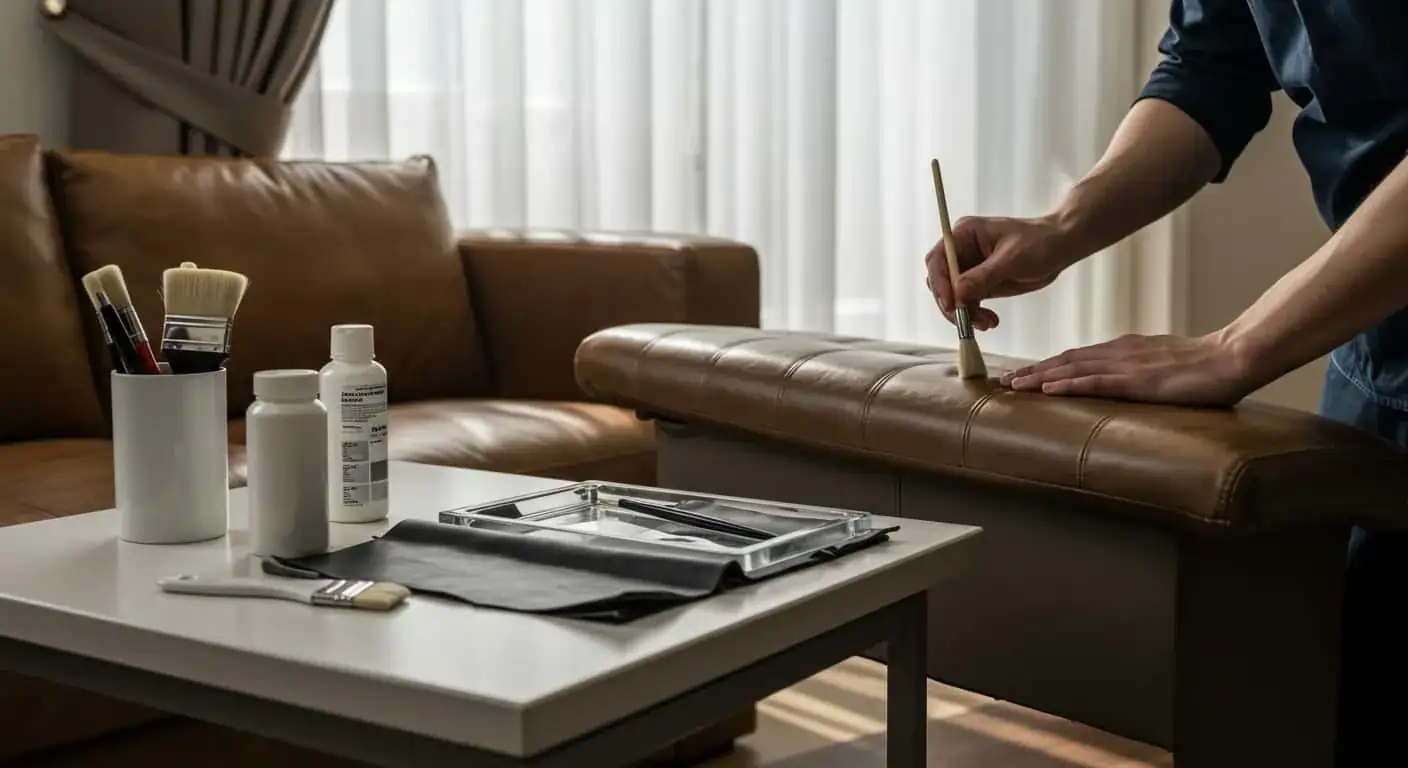
When fat liquor drops below a critical threshold , around fifty to sixty percent of the original quantity, depending on the hide , a failure cascade begins. The sequence is the same across every finish. It stays invisible until very late in the timeline.
1. Loss of slip
The collagen bundles start binding against each other during flexing. Your sofa loses some of its draping quality. To the touch it feels slightly "tighter" or "less yielding," but most owners miss this stage entirely. You can only detect it by comparing the sofa against a freshly conditioned hide of the same model.
2. Micro-fracturing
Without lubrication, repeated flexing creates tiny fractures inside the fibre bundles. These fractures are too small to see. Under a 30x loupe they show as faint stress lines that follow the natural grain direction. The hide still looks intact. It is no longer structurally intact.
3. Surface laxity
The micro-fractured fibres can no longer hold their original packed structure. The hide settles slightly looser across the panel. This is when you notice the cushion "feels different" or the leather "has lost its shape." The technical term for this is loose grain, and it signals advanced fibre depletion.
4. Delamination proper
Eventually the fibre layers begin to separate. The grain layer , the dense, tight outer surface that defines premium leather , peels away from the corium beneath it. Visible cracks appear, first on seat cushions and arm caps where the leather flexes most. At this point the damage is permanent. Restoration can mask it. Nothing rebuilds broken fibre bundles.
This cascade runs over five to ten years on a hide that is never conditioned. It runs in two to three years on a hide cleaned repeatedly with alkaline soap and never conditioned. It runs in eight months on a hide treated with coconut oil , which oxidises, hardens, and speeds up the very binding it was meant to stop.
"By the time the customer sees a crack in the leather, the fat liquor has been gone for two years. The crack is the gravestone, not the cause of death."
How Does a Good Conditioner Work?
A correctly made leather conditioner is an emulsion , oil and water held in suspension by emulsifiers. Both phases penetrate the hide together. The water carries the oil through the porous grain layer into the fibre matrix. Then the water evaporates. The oil deposits a film on the collagen bundles and stays. The process mirrors the original fat liquoring at the tannery, scaled down to a few millilitres applied through the surface instead of litres applied to a raw crust.
Three things must be right for the emulsion to work.
The droplet size must be small enough to penetrate the grain layer. Workshop-grade conditioners use droplet diameters in the one-to-five-micron range. Cosmetic creams sold for leather often run ten times that size. They sit on the surface, never reach the fibre matrix, and produce a sheen that wipes off within weeks.
The oil must not oxidise. Natural plant oils , coconut, olive, almond, jojoba , contain unsaturated fatty acids that oxidise when exposed to air. Inside the hide, oxidation produces free radicals that attack the collagen, dark rancid by-products that stain the leather, and a hardened residue that defeats the purpose. The right oils are saturated synthetic esters, sulphated lanolin, or refined neatsfoot , formulas that stay stable inside the hide for years.
The pH must sit inside the leather-safe band. Conditioners outside pH 4.5 to 5.5 cause the same swelling and fibre stress as wrong-pH cleaners. The most damaging product on the market is an alkaline conditioner , alkaline because the maker used a cheap soap-based emulsifier , which strips fat liquor from your sofa while appearing to add it.
Which Products Help and Which Cause Damage?
Here is every substance commonly applied to leather sofas in Indian homes under the label of "conditioning." Each is judged on the only thing that matters , what it does to the fibre matrix over twelve months.
- Workshop-grade leather conditioner (sulphated lanolin or synthetic ester emulsion, pH 5.0 ± 0.5) , the only correct option. Penetrates the grain, deposits stable oil on the fibres, lets the water phase evaporate. Lasts six to twelve months.
- Coconut oil , oxidises within four months, turns rancid, darkens the hide unevenly, blocks the pore structure. The most popular wrong choice in Indian homes. Damage timeline: visible darkening at six months, sticky residue at twelve, structural failure of aniline finishes at eighteen.
- Olive oil , same oxidation profile as coconut, plus higher acidity that pulls the surface pH downward. Gives a deceptive immediate sheen. Causes the same long-term failure cascade.
- Mink oil , historically used on boots and saddles. Far too heavy for furniture-grade aniline or semi-aniline finishes. Darkens the hide permanently and leaves a tacky surface that attracts dust.
- Neatsfoot oil (raw) , right for thick tack leather, dangerously aggressive on furniture hides. Causes irreversible darkening on aniline. Refined neatsfoot at correct dilution is acceptable, but only inside a properly made emulsion.
- Beeswax cream , does not penetrate. Builds a wax film on the surface that traps contamination, blocks the next conditioner application, and dulls the finish. This is the "leather balm" category sold in most premium boutiques.
- Silicone-based "leather protectors" , give an immediate rich sheen and a feeling of suppleness. The sheen is a barrier, not absorbed oil. Once silicone is on your sofa, no real conditioner can reach the fibres until the silicone is professionally stripped. The most insidious category on the market.
- Petroleum jelly , does not absorb. Sits on the surface, attracts grit, transfers to clothing. No expert leather care framework allows petroleum-derived products on luxury leather.
- Saddle soap , not a conditioner, despite frequent confusion. Saddle soap is an alkaline cleaner made for thick tack leather. Reviewed in detail in the pH guide.
The mistake that does the most damage is straightforward. You reach for substances you associate with "natural moisture" , kitchen oils, plant balms, body creams , and apply them to a chemistry that needs the opposite. When the sofa fails, you blame the weather, the climate, the age of the sofa, or a defect in the original purchase. The cause was always the bottle.
For the full damage timeline of vinegar, olive oil, and other household substances mistaken for leather care, read the dedicated investigation: why vinegar and olive oil are ruining your luxury leather.
Does the Conditioner Change by Leather Finish?
The conditioner that protects an aniline armchair will damage a pigmented sofa. The three premium finishes , aniline, semi-aniline, and pigmented , each present a different surface, and each needs its own approach.
Aniline
Aniline finishes have no opaque pigment layer. The conditioner reaches the dyed fibres directly through an open grain. This is good for absorption and bad for errors. A wrong conditioner will darken aniline in a single application , and there is no undo. The right product is a low-viscosity emulsion with a small droplet size and zero silicone, applied in the smallest workable quantity. Condition every six to nine months in India. The Nappa hides used in Italian luxury furniture are the classic case , magnificent when maintained correctly, ruined within a year by the wrong oil.
Semi-aniline
Semi-aniline has a thin pigment layer over the aniline base. The pigment reduces some of the absorption risk but also slows penetration. The right conditioner is similar in chemistry to the aniline product but uses a slightly stronger penetration aid to push the emulsion through the pigment film. Condition every eight to twelve months. Watch for sheen change after application , if the pigment lifts, the product was wrong.
Pigmented
Pigmented finishes are sealed by a polymer top-coat. Most of the conditioner sits on top of the coat and gives only a surface gloss. The hide beneath still needs lubrication. The coat is microscopically permeable, so a small fraction of the emulsion does reach the fibres , that fraction matters for long-term flexibility. Condition once a year, mainly to keep the top-coat supple and to stop the hide beneath from drying out so much that the coat cracks from the inside.
If you have not identified the finish, conditioning is a guess. Run the three-question identification test from the definitive guide to aniline, semi-aniline, and pigmented leather before any conditioner touches the hide.
How Do You Condition a Leather Sofa Correctly?
These are the steps used at the workshop for routine conditioning. They assume the hide has been cleaned using the pH-neutral steps and is fully dry. Conditioning a damp or dirty hide drives whatever was on the surface into the fibre matrix permanently.
Step 1 , Check the finish. Aniline, semi-aniline, or pigmented. Use the identification test in the academy guide if you are unsure.
Step 2 , Make sure the hide is dry and clean. No leftover cleaner, no surface dust, no wet patches. If you cleaned within the last hour, wait until the hide is fully dry.
Step 3 , Pour a small amount onto a soft microfiber pad. Three to five millilitres per panel , never more. Applying straight from the bottle floods the surface and causes uneven absorption on aniline.
Step 4 , Spread in light, even circles across the panel. Work one panel at a time. The pad should leave a faint sheen, never a wet film. If the surface looks wet, you applied too much.
Step 5 , Wait ten minutes. The water phase of the emulsion needs to move inward and start evaporating. Direct sunlight or fan drying stops this. The water must leave through the same path the oil took in.
Step 6 , Buff lightly with a clean dry microfiber. One direction, light pressure. This lifts any unabsorbed oil, evens the surface sheen, and stops the tacky residue that signals over-conditioning.
Step 7 , Leave the sofa for twenty-four hours before normal use. No sitting, leaning, or covering with throws or cushions. The fibre matrix is still settling. Using it too soon can create localised compression marks that take weeks to relax.
Step 8 , Note the date. Conditioning is a calendar task. Your next application is six to twelve months from today depending on finish and climate. Set a reminder.
When Is the Damage Beyond a Conditioner?
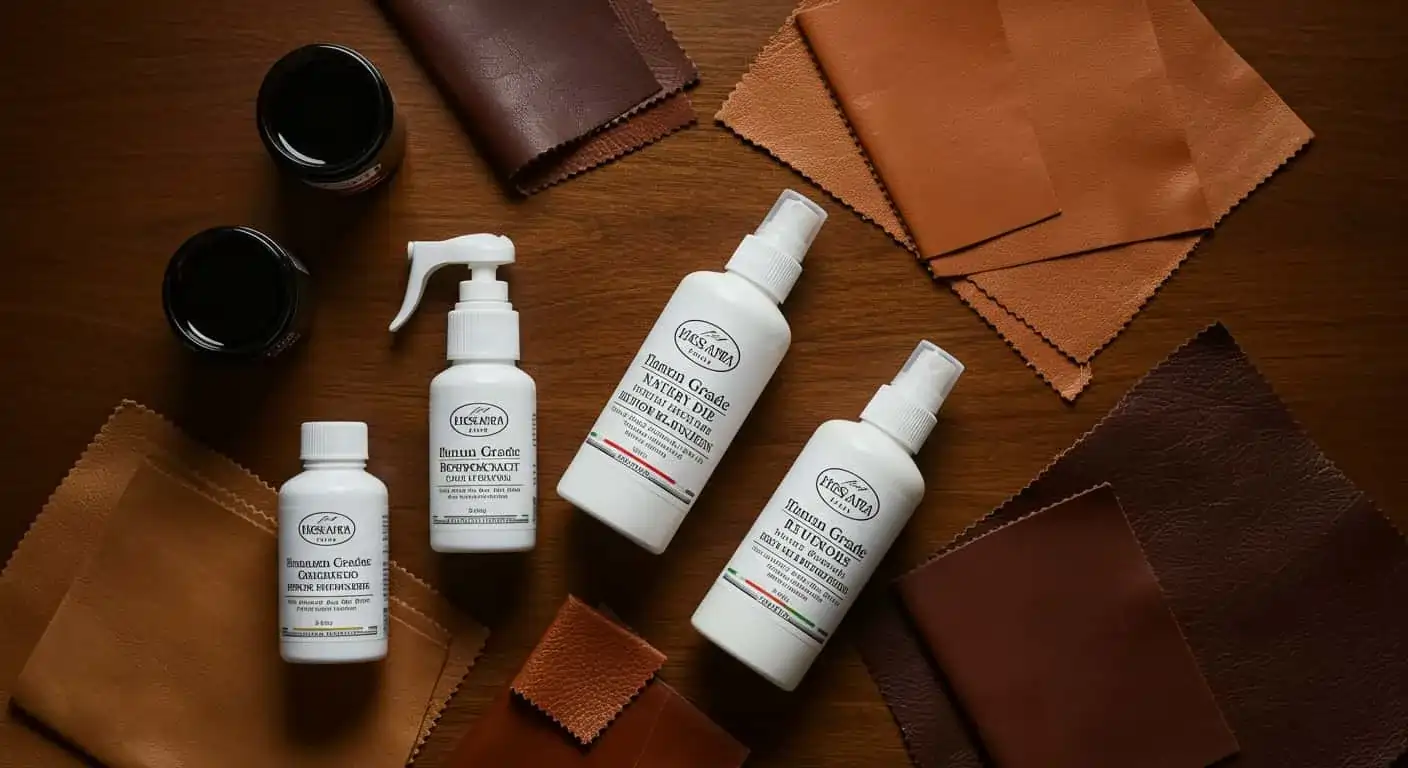
A surface conditioner can replace fat liquor lost gradually through normal use. It cannot rebuild fat liquor stripped by alkaline cleaners, oxidised oils, or repeated wrong-pH cycles. When depletion goes past what a topical product can fix, the next step is workshop re-fatliquoring , a full submersion or controlled-pressure soak that reintroduces the emulsion through the entire fibre depth.
Re-fatliquoring is not a job for home use. The hide must come off the frame, go into a controlled-temperature bath, dry under tension to prevent shrinkage, then go back on. The chemistry matches the original tannery profile , chrome-tanned hides need a different fat liquor blend than vegetable-tanned ones, and the wrong choice will not bond. This is one of the steps detailed in the workshop's micro-pigmentation and reconstruction process, where re-fatliquoring is almost always the second step before any colour work.
Three signals tell you a conditioner has reached its limit. First, the hide saturates after a single light application without absorbing , the fibre matrix has lost the capillary structure that pulls oil in. Second, the conditioner gives a temporary sheen that disappears within four weeks instead of six months. Third, cracks in the grain layer take the conditioner but reappear visually within days. Any one of these means the topical product has done all it can. Workshop re-fatliquoring is the next step.
"A consumer conditioner is preventive medicine. Re-fatliquoring is surgery. The first one done correctly for a decade prevents the second one entirely."
When Should You Condition Your Sofa in India?
Climate determines the conditioning interval more than anything else. India moves through four distinct moisture cycles each year , dry winter, dry pre-monsoon, wet monsoon, post-monsoon transition , and each one stresses the hide differently. A calendar that works for a Bangalore or Mumbai sofa will under-protect a north-Indian penthouse or a heritage bungalow.
Late February to early March (pre-summer prep). Indoor humidity across north India collapses through January and February. Your sofa loses fat liquor from the fibre matrix faster than at any other point in the year. Condition aniline and semi-aniline pieces in the first week of March, before the dry-heat phase fully arrives.
Mid-June (pre-monsoon). The window between the dry-heat peak and the monsoon arrival is the second critical conditioning point. Your sofa has just survived the summer dry spell and is about to face high humidity. A properly conditioned fibre matrix handles that swing without permanent change. An unconditioned matrix absorbs moisture unevenly and develops the early signs of loose grain.
Late September (post-monsoon recovery). Pigmented finishes typically need only one conditioning per year, and this is the right moment. The monsoon is over, the air is drying out, and the hide is ready to absorb a single replenishing application before the winter dry phase begins. Aniline and semi-aniline sofas conditioned in March may not need a second application here , check by feel, not by calendar.
The companion guide on monsoon leather care covers the humidity control steps that go alongside each of these conditioning windows. The two practices work together. Condition without humidity control and the climate reverses the conditioning within a season.
How Do You Get Twenty Extra Years?
A correctly conditioned sofa lasts two to three times as long as an unconditioned one. The difference between a Poltrona Frau armchair that reaches heirloom quality at thirty years and the same piece that fails at twelve is not the brand, the leather grade, or the climate. It is whether you understood that the hide needed scheduled lubrication every six to twelve months, applied with a chemistry matched to the finish, in the quantity the steps above describe.
The cost comparison makes itself. A premium conditioner runs a few thousand rupees per bottle and treats a full sofa twice. Workshop re-fatliquoring of a single hide runs into the high tens of thousands. Full reconstruction of a fibre-delaminated panel , frame off, hide off, re-fatliquoring, re-tensioning, micro-pigmentation, top-coat lamination , runs into the lakhs. Conditioning on schedule for a decade costs a fraction of one percent of the restoration bill that skipping it will create.
For Natuzzi, Poltrona Frau, Fendi Casa, B&B Italia, or any bespoke aniline-finished piece, the conditioning steps above are not optional. Use workshop-grade emulsion, matched to your finish, applied through the eight-step process, on the India calendar above. If you would prefer the steps done at your door, you can book our sofa repair specialists or the corresponding surface refinement service , same workshop standard, same finish-specific chemistry. Anything else is a bet against the chemistry of the hide, and the chemistry always wins. The conditioning steps just move "eventually" past the lifetime of the owner.
Bookmark this page. The next time someone in your home reaches for coconut oil, an old tin of beeswax, or a tube of "leather food" with a perfume note and a cosmetic price tag, the chemistry is here to settle the argument before your sofa pays the cost.