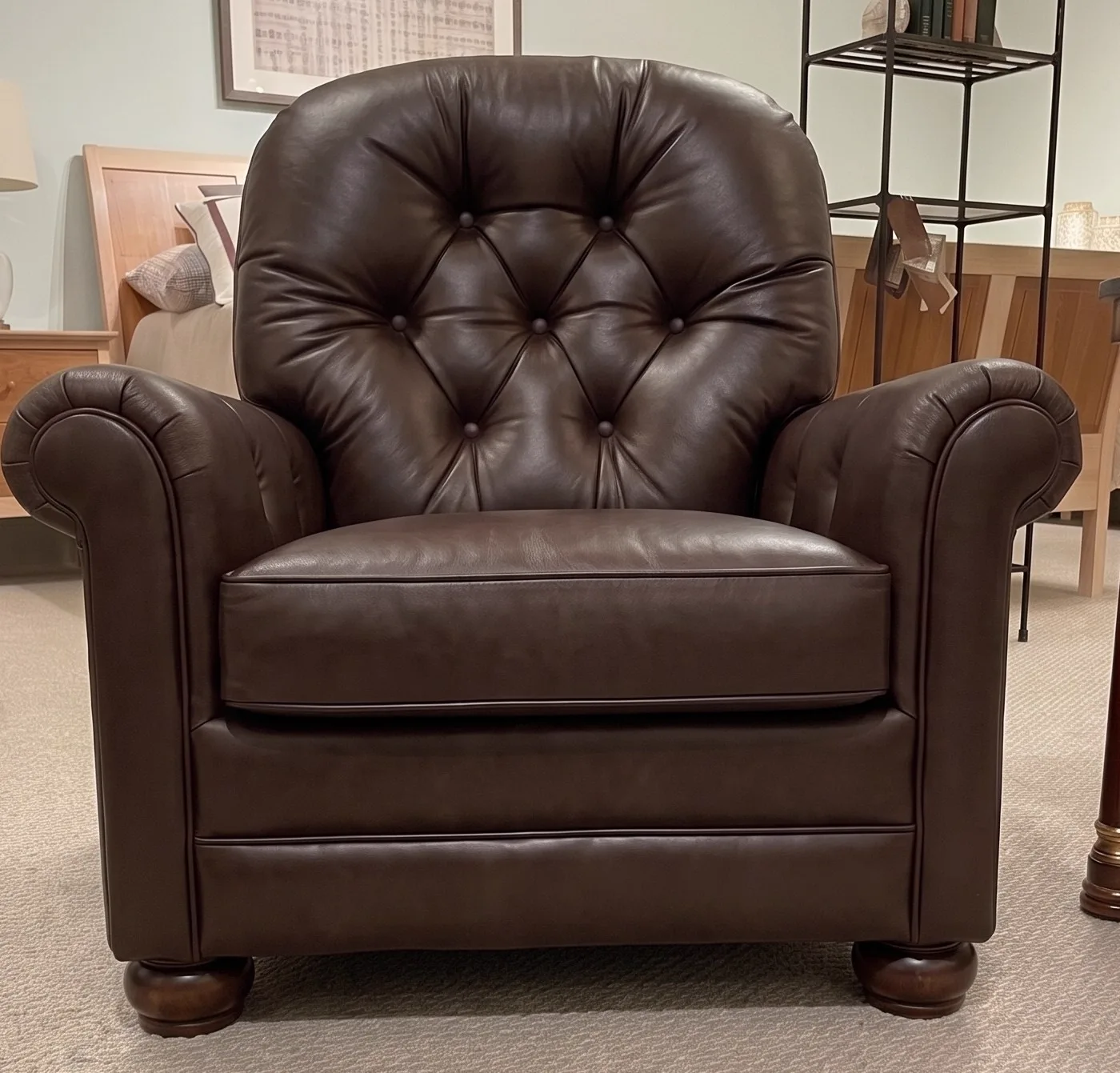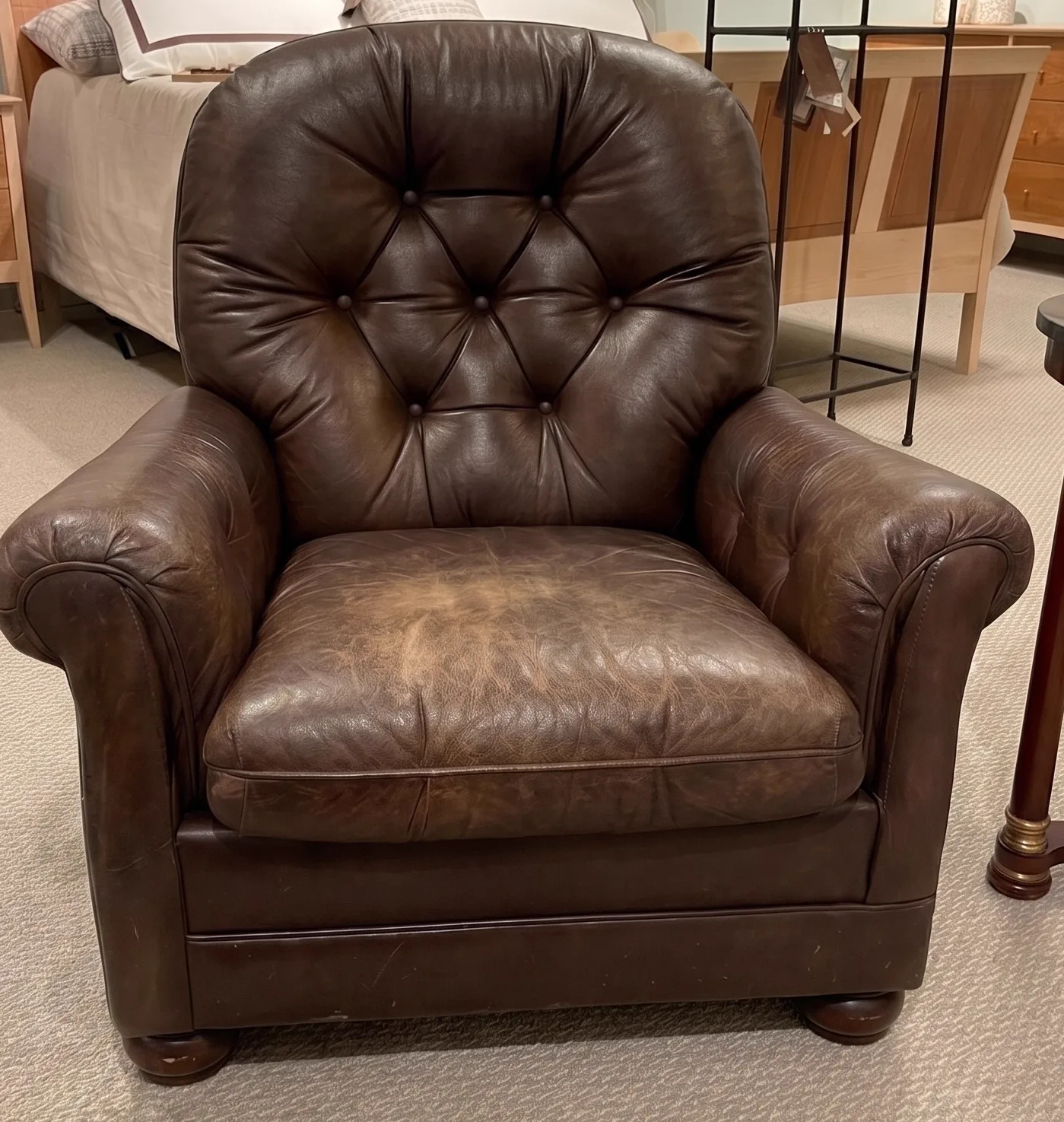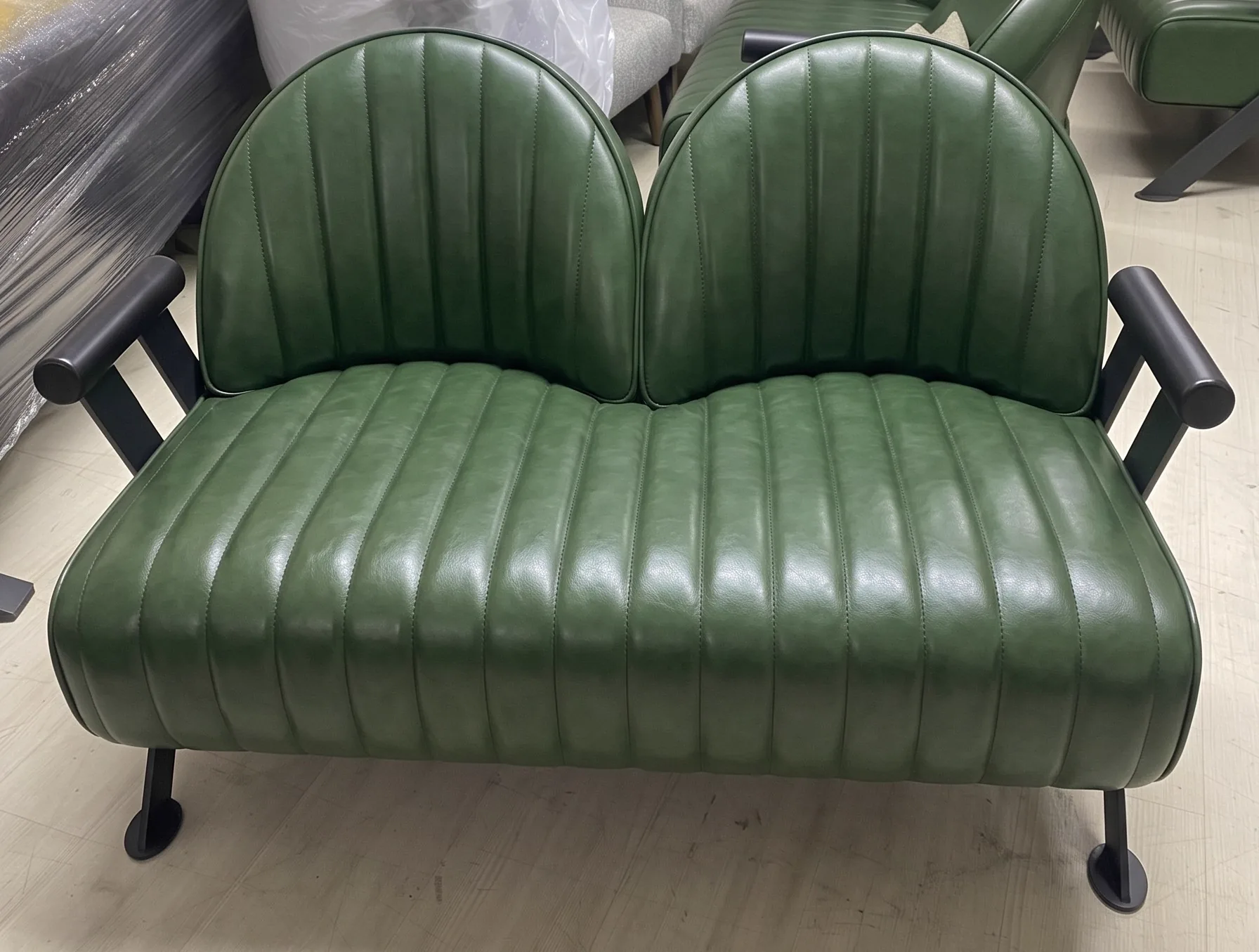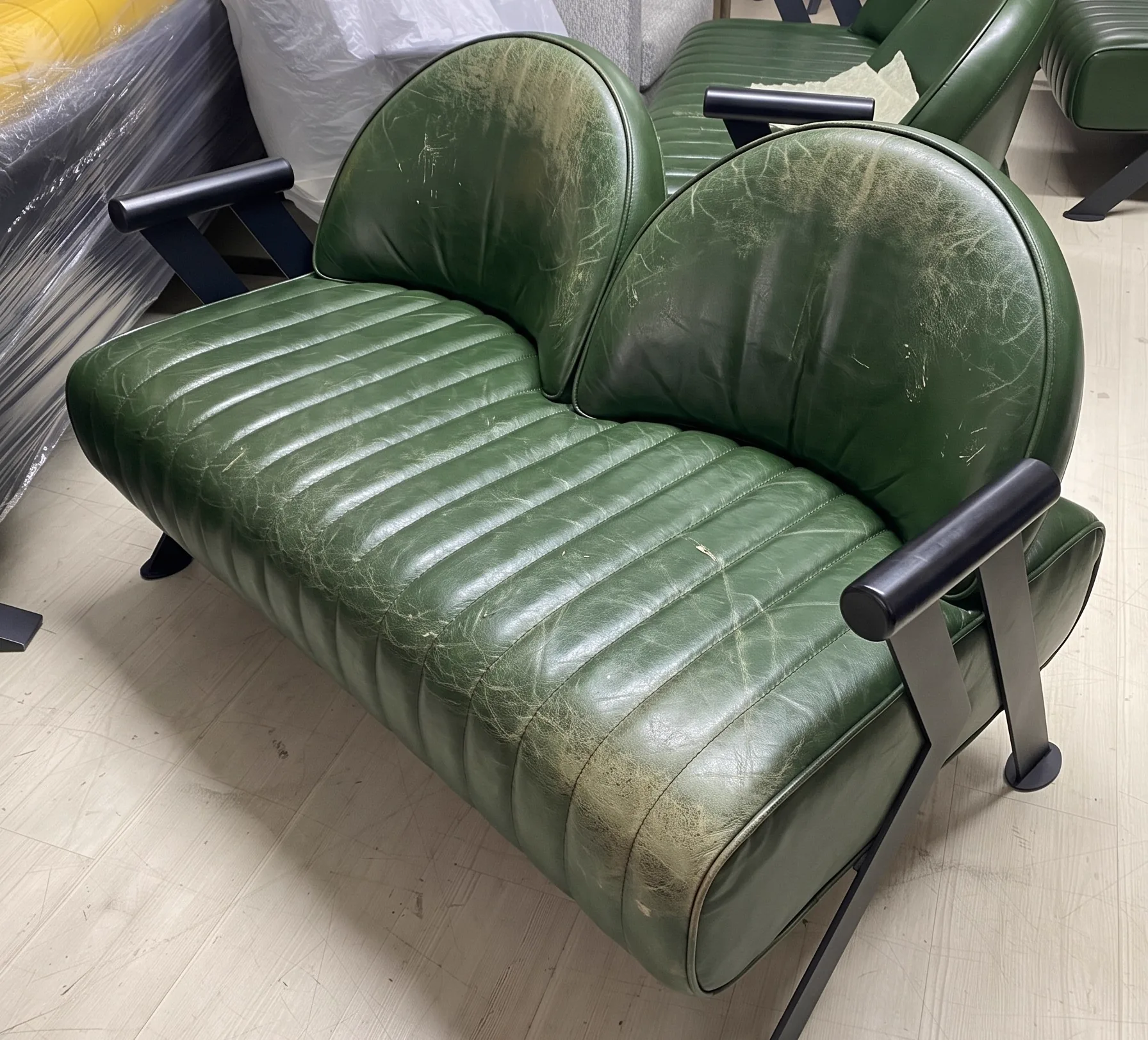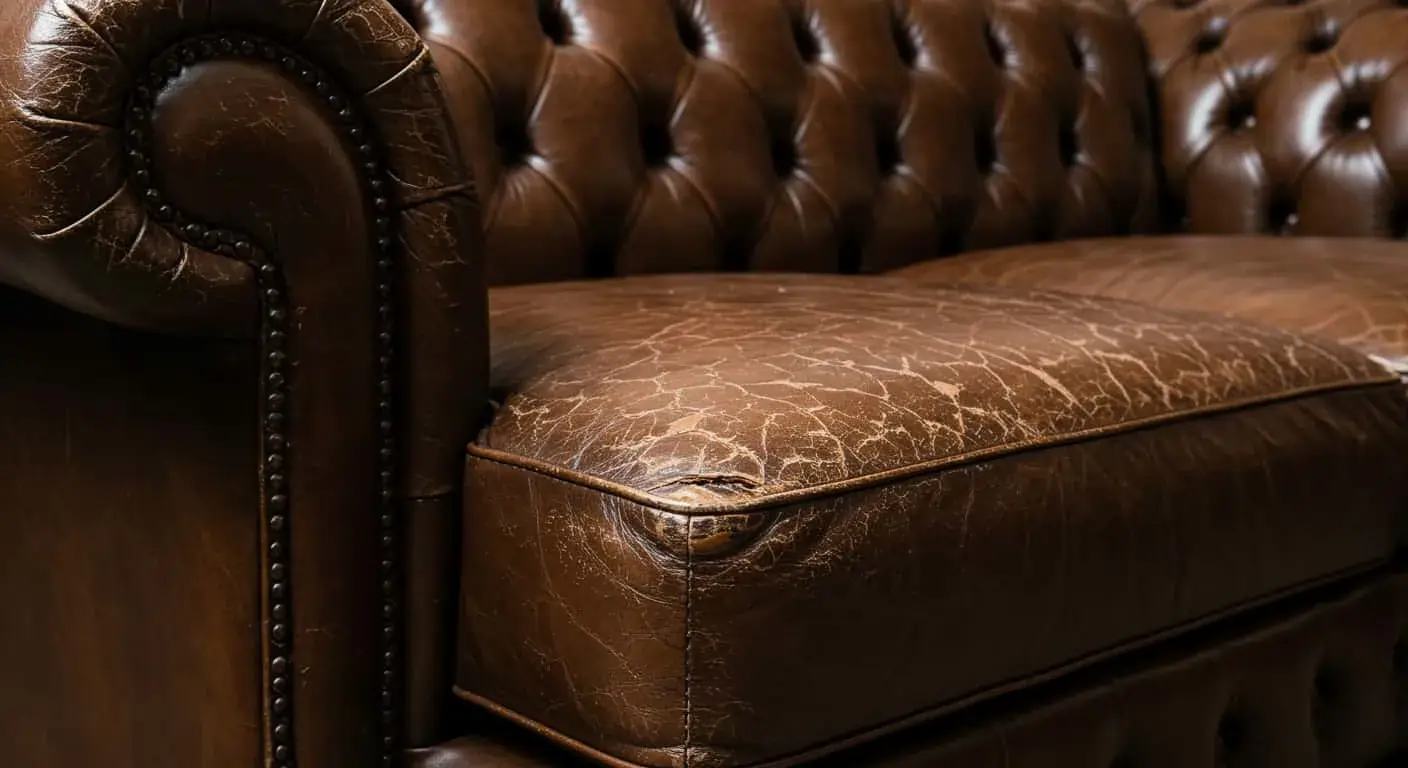
Most leather sofa care guides are written for European or North American climates - 45 to 55% relative humidity year-round, UV index below 5, no monsoon, no smog season. Delhi NCR is none of these things. The capital region runs at 20 to 30% indoor RH for 7 months due to AC use, UV index above 10 for 6 months, outdoor humidity swinging from 90% in July to 30% in December, and PM2.5 levels in winter that deposit fine particulate on every horizontal surface including leather. Standard care instructions applied in Delhi NCR will leave your leather sofa underprotected. This guide gives you the care schedule that is actually calibrated for what Delhi's climate does to leather.
Why Standard Care Fails in Delhi
The standard manufacturer recommendation is to condition leather once per year and clean as needed. This is calibrated for an indoor environment where relative humidity stays between 45 and 55% throughout the year, where UV exposure is moderate, and where there is no significant seasonal shift in particulate levels. Delhi NCR violates all three assumptions simultaneously.
In a Delhi AC room: relative humidity from April to October averages 20 to 30%. This is the fat liquor depletion range - the range where the lubricating agents in leather fibre evaporate faster than they would in a temperate climate. Standard once-yearly conditioning replenishes fat liquor that depletes at a temperate rate. At Delhi's depletion rate, once-yearly conditioning leaves the leather in a progressively moisture-deficient state from roughly month 6 of each conditioning cycle onwards. The mechanism by which constant air conditioning dries leather, and how to counter it specifically, is covered in detail in our guide to AC damage to leather sofas in Delhi.
On UV: Delhi's UV index exceeds 10 from April through September. At this level, UV degradation of leather topcoats and dyes is 2 to 3 times faster than in Northern Europe, where most leather furniture is designed and where manufacturer UV resistance specifications are tested. A topcoat rated for "10 years UV resistance" in a European test may show visible degradation within 3 to 5 years of Delhi south-window exposure.
On particulate: Delhi's winter AQI regularly exceeds 300 (hazardous range). Fine PM2.5 particles deposit on leather surfaces continuously through November to February. On aniline and semi-aniline leather, these particles penetrate the open grain structure and cause progressive darkening and abrasive damage. Cleaning frequency needs to increase proportionally to particulate exposure - once-yearly cleaning is inadequate for Delhi winter conditions. The full picture of how winter smog damages leather across NCR - and the cleaning rhythm that keeps pace with it - is worth reading before the season begins.
The calibration principle: Every care action in this guide is calibrated to Delhi NCR's specific climate parameters rather than to standard European specifications. Apply the schedule below and your leather sofa will perform at its full genuine leather lifespan. Apply standard manufacturer care and expect 30 to 40% reduction in effective lifespan under Delhi conditions.
The Delhi NCR Annual Care Calendar
Before the month-by-month detail, here is the entire Delhi NCR leather care year at a glance. The table below maps each season to its dominant threat, the single most important action, and how often that action needs repeating. Print it, save it, or set calendar reminders from it - the discipline of doing the right thing in the right month is what separates a sofa that looks excellent at year 12 from one that needs full restoration by year 6.
| Season / Months | Main Risk | Priority Action | Frequency |
|---|---|---|---|
| Summer heat & AC (April - June) |
Fat liquor depletion from 20-30% indoor RH; UV fading at south/west windows | Full March conditioning (two thin coats); keep sofa 1.5 m from AC vents; screen UV | Condition once (March); weekly damp wipe |
| Monsoon (July - September) |
Mould growth on body-oil deposits at 75%+ RH; sustained humidity | Pre-monsoon June clean; keep RH below 70% (dehumidifier / AC dry mode); monitor for bloom | Clean once (June); check weekly |
| Post-monsoon reset (October) |
Leather at its most depleted before smog season starts | Year's most impactful conditioning (clean, two-plus coats); add protector on aniline | Condition once (October) |
| Winter smog (November - February) |
PM2.5 particulate embedding in grain; abrasion and surface darkening | Light damp-cloth wipe of horizontal surfaces; deep clean in late January | Wipe every 2 weeks; deep clean once (Jan-Feb) |
January - February: winter smog cleaning
Delhi's PM2.5 peaks in December and January. By late January, horizontal leather surfaces - seat backs, cushion tops, headrests - will have accumulated 6 to 8 weeks of fine particulate. Left in place, these particles act as abrasives under the friction of daily use and the sulphur compounds in smog particulate react with leather tannins to cause progressive surface darkening.
The January or February cleaning action: wipe all leather surfaces with a clean microfibre cloth wrung damp in plain water. Work in straight lines from top to bottom, not in circles. Change the cloth or rinse when it shows visible grey-brown particulate - this tells you the cleaning is working. For heavier build-up, follow the damp wipe with a pH-neutral leather cleaner applied with a soft-bristle brush, then a clean damp wipe to remove residue. Do not condition after this clean unless the leather feels noticeably dry - the October conditioning session should still be active.
March: pre-summer conditioning - most important conditioning session
March is when you prepare the leather for the 7-month AC and UV stress period that runs April through October. A full conditioning session in March is non-negotiable for Delhi NCR leather care. At this point the leather has come through winter (low outdoor humidity, dry indoor heating if applicable, smog particulate) and is about to enter the AC depletion period. The fat liquor reserves need to be at maximum before this period begins.
How to condition correctly for Delhi's climate: start with a thorough clean using pH-neutral leather cleaner to remove any residual smog particulate and body oil from winter. Allow the surface to dry completely - 30 minutes minimum at room temperature. Apply conditioner in two thin coats, not one thick coat. The first coat should be fully absorbed before applying the second. Work in sections, using a clean soft cloth or applicator pad in gentle circular motions. Pay particular attention to high-use areas: seat cushion fronts, armrests, backrest top rails. These are the zones that crack first in Delhi AC conditions. Allow the second coat to absorb for at least 2 hours before use. For aniline leather, finish with a UV protectant applied as a final thin coat.
Managing the April-to-June heat and UV window
The pre-monsoon months are when Delhi NCR's two summer threats - desiccating AC air indoors and intense UV at the windows - run at full strength simultaneously. Indoors, the gradient is severe: a room held at 24 to 26 degrees on the AC while outdoor temperatures touch 44 to 46 degrees creates a low-humidity bubble that pulls moisture out of leather faster than any other condition in the Indian climate calendar. Position matters more in these months than at any other time of year. A sofa placed within a metre of an AC vent or a split-unit's downdraft will show edge stiffening and the first hairline checking within two to three summers, even on otherwise well-conditioned leather. Move the sofa, redirect the vent louvres upward, or both.
UV is the second summer vector and it is permanent in a way that dryness is not. Dryness is reversible with conditioning; UV-faded dye is not - it requires re-pigmentation. From April through September, Delhi's UV index sits above 10 for most of the day, and any leather surface that catches direct sun through a south or west window is fading whether or not you can see it week to week. Sheer curtains, UV-filtering window film, or simply repositioning the sofa out of the direct beam are all effective. The cost of prevention here is a curtain; the cost of the cure is a full colour restoration. If you run heavy air conditioning year-round, the deeper mechanics and a position-by-position fix are laid out in the AC damage guide.
June: pre-monsoon cleaning
The June action is cleaning, not conditioning - unless you have aniline leather in a high-AC-use room, in which case add a light conditioning pass as well. The purpose of June cleaning is specific: remove the body oil, skin cell deposits, and environmental dust that has accumulated on the leather since March. These organic deposits are the substrate on which mould grows during monsoon humidity. A sofa that enters monsoon with clean leather surfaces is significantly less likely to develop mould than one carrying 3 months of accumulated organic deposits. For the complete humidity-management playbook through the rains, see our dedicated guide to monsoon leather sofa care in Delhi.
Use a pH-neutral leather cleaner. Clean all surfaces systematically, including the sides of cushions and the crevices at the backrest-cushion join where body oil accumulates most. Allow to dry completely. For rooms where windows will be open during monsoon, consider applying a mould-inhibiting leather protector as an additional step - this is particularly relevant for ground-floor homes and homes where natural ventilation means the leather is regularly exposed to outdoor air during monsoon.
July - September: monsoon monitoring
No scheduled care actions during monsoon, but two monitoring tasks: watch for any white or green surface bloom (early mould) at cushion edges, crevices, and the sofa underside. If any appears, treat immediately with a pH-neutral leather cleaner - early mould on leather is easily removed if caught within the first week. Left for 2 to 3 weeks, mould hyphae penetrate below the surface and become significantly harder to remove without professional intervention.
The second monitoring task: check indoor relative humidity with a hygrometer. If it consistently exceeds 75% for more than 48 hours (common in non-AC rooms during heavy monsoon weeks), run AC in dehumidifier mode or a standalone dehumidifier to bring RH below 70%. You are not trying to dry the air to AC levels - you are preventing the sustained high humidity that creates mould conditions. 65 to 70% RH in monsoon is fine for leather. Sustained 80 to 90% RH for multiple days is not.
October: post-monsoon conditioning - the year's most impactful session
October is the single highest-impact maintenance month for Delhi NCR leather sofas. The reasoning: the leather has just completed 7 months of AC-driven fat liquor depletion (April to October), the AC season is ending, and the smog season is about to begin. The leather enters November in its most depleted state of the year. A thorough October conditioning session replenishes fat liquor, restores surface suppleness, and creates a protective film that slows particulate penetration during the smog season. Without October conditioning, the leather goes into 3 months of heavy smog exposure in its most vulnerable annual state.
October conditioning follows the same protocol as March: clean first, allow to dry, two thin coats of conditioner, full absorption between coats, 2-hour minimum absorption time before use. For sofas that showed any surface dryness or early checking during summer, add a third conditioning coat and allow overnight absorption. For aniline and semi-aniline leather, the October session should be followed by a mould-inhibiting protector to cover the upcoming transition to winter humidity conditions.
November - December: smog season start, light cleaning
As Delhi's AQI begins climbing in November, the particulate accumulation rate on horizontal leather surfaces increases. A light damp-cloth wipe every 2 weeks through November and December prevents particulate from embedding in the grain. This is a 5-minute task, not a full cleaning session - a clean damp microfibre cloth wiped across all horizontal surfaces. This replaces the weekly wipe rather than adding to it during peak smog months.
Why the winter wipe rhythm matters more than the deep clean
The instinct in smog season is to wait, let particulate accumulate, then do one heavy clean in spring. This is exactly backwards for Delhi NCR leather. PM2.5 particles are abrasive and angular at the microscopic level; once they settle into the grain and are then ground in by the friction of daily sitting, they cut tiny channels into the topcoat that no amount of later cleaning reverses. The damage is done in the days the particle sits there being rubbed, not in the cleaning. A fortnightly two-minute wipe removes the particle before it can do this work. The late-January deep clean exists to lift what the wipes inevitably miss in the crevices and seams, not to substitute for the wipes. Households that run the bi-weekly wipe through winter and condition in October and March almost never need crack or topcoat repair driven by smog; households that skip the wipes and clean once a year reliably do. The full seasonal mechanism, including how smog chemistry interacts with leather tannins, is detailed in the winter smog leather guide.
Weekly and Daily Habits That Matter
The annual calendar above covers the scheduled care sessions. These weekly habits determine how much work each session needs to do - good weekly habits mean the seasonal sessions are maintenance; neglected weekly habits mean the seasonal sessions are remedial.
- Weekly damp wipe: Clean cotton cloth (old muslin, cotton dupatta, or T-shirt fabric) wrung barely damp in plain lukewarm water. Wipe all leather surfaces in straight lines. Takes 5 minutes. This single habit is the most consistent predictor of good leather sofa condition at year 10 across the Delhi NCR sofas we have maintained. It removes the abrasive dust particles and body oil before they embed, which is more effective than removing them after they have set in.
- Immediate spill response: Any liquid spill on leather should be blotted immediately with a dry cloth. Do not rub - rubbing spreads the liquid and works it into the grain. Press the dry cloth firmly onto the spill and lift. Repeat with a fresh dry section of cloth until no transfer. For food spills with colour (chai, turmeric, curry): blot first, then clean with a pH-neutral leather cleaner within the same day. The longer coloured liquids sit on leather, the deeper the stain sets.
- Cushion rotation every 3 months: Swap left and right seat cushions. Flip reversible seat cushions. This distributes fat liquor depletion, UV exposure, and flex wear evenly across the entire sofa rather than concentrating it in the 1 or 2 most-used positions. A sofa where cushions have been rotated consistently looks dramatically more uniform at year 10 than one where the same seat took all the use.
- Never use household cleaners on leather: Multi-surface sprays, furniture polish, glass cleaner, floor cleaner, phenyl - all are pH-inappropriate for leather and all cause progressive topcoat and fibre damage. The only products that should touch your leather sofa: plain water (damp wipe), pH-neutral leather cleaner (deep clean), furniture-grade leather conditioner (conditioning sessions). That is the complete list.
Products: What Works in Indian Conditions
Product selection for Delhi NCR conditions is different from what works in Europe. The warm temperatures and high humidity cycling affect how products behave on leather.
Conditioners
For pigmented leather (most common in Indian homes): Leather Master Protection Cream or Fenice F200 Leather Cream are both well-formulated for warm-climate use. Bickmore Bick 4 is widely available and performs adequately. The critical requirement is that the conditioner is water-based rather than solvent-based - water-based conditioners penetrate the leather fibre appropriately and do not leave a surface residue that traps particulate the way wax-heavy formulas can. For aniline and semi-aniline leather: Leather Master Nourishing Lotion or Colourlock Leather Milk. Both penetrate the open grain structure of aniline leather effectively without blocking the natural breathability that is characteristic of the finish.
Cleaners
Any pH-neutral leather cleaner (pH 4.5 to 5.5) is appropriate. Leather Master Leather Cleaner, Fenice F100, and Colourlock Leather Cleaner all work correctly. The pH requirement is the critical factor - leather itself has a pH of approximately 4 to 5, and cleaners at or near this pH clean without disrupting the surface chemistry. Alkaline cleaners (pH above 6) remove body oil effectively but also strip fat liquor and topcoat compounds. Do not substitute any household cleaning product regardless of how mild it appears - the pH is not visible on the label of household products and is frequently outside the safe range for leather.
What to avoid specifically
In Delhi NCR conditions, avoid silicone-based conditioners and protectors. Silicone creates a surface film that in European conditions is stable, but in Delhi's temperature cycling (from 26-degree AC rooms to 40-degree outdoor temperatures when sofas near windows warm in sunlight) this film can develop micro-bubbles and uneven adhesion that worsens the appearance of the topcoat over time. Avoid any petroleum-based products - they are incompatible with the water-based fat liquor system in leather. Avoid all food-grade oils unconditionally - the risk of oxidative rancidity from coconut oil, olive oil, or mustard oil applied to leather in Delhi's warm temperatures is very high.
DIY vs Professional Care in Delhi NCR
The annual care calendar above is designed to be DIY-executable. The weekly wipe, seasonal conditioning, and spill response are all household tasks. Professional care becomes necessary in two scenarios:
When professional care is required
Deep cleaning of embedded smog particulate (after 2 or more winters without cleaning) requires professional-grade extraction equipment to remove particles embedded below the topcoat surface level. The same is true for embedded body oil in the grain - DIY cleaning removes surface deposits but professional cleaning addresses the deeper accumulation that changes the colour and texture of the leather over time.
Crack repair and colour restoration require professional tools and materials. Surface checking (fine crack networks) and deeper flex cracks both require crack filler, colour matching, and topcoat restoration that cannot be done accurately without the correct equipment and a matched product set. DIY crack fillers sold online are almost universally formulated for non-Indian climates and crack again within 6 to 12 months in Delhi's temperature cycling. Professional crack repair using correctly matched materials, followed by correct maintenance, holds for years. If the damage has already progressed past what conditioning can address, our leather sofa repair service handles crack filling, colour matching, and topcoat restoration at your doorstep across Delhi NCR.
For Delhi NCR leather sofas, professional cleaning and conditioning every 18 to 24 months is the appropriate schedule - not because DIY conditioning is ineffective, but because professional cleaning accesses the deeper soiling that DIY products cannot, and the professional session provides a baseline reset that makes the following 18 to 24 months of DIY maintenance more effective. This is the same principle as professional dental cleaning alongside daily brushing - both are necessary, and neither replaces the other. For Delhi-specific restoration needs, the cracking repair guide and peeling guide cover the specific damage patterns most common in this region.
"The sofas I see at year 12 that still look excellent are almost all homes where someone wiped the sofa every week and conditioned it twice a year. It is not complicated. The problem is that in Delhi the consequences of not doing it are worse than anywhere else in India - the climate removes fat liquor faster, the UV damages topcoat faster, and the smog adds a third damage vector that most cities do not have. The maintenance discipline has to match the climate." - Tyson, Lead Artisan, The Leather Restorators