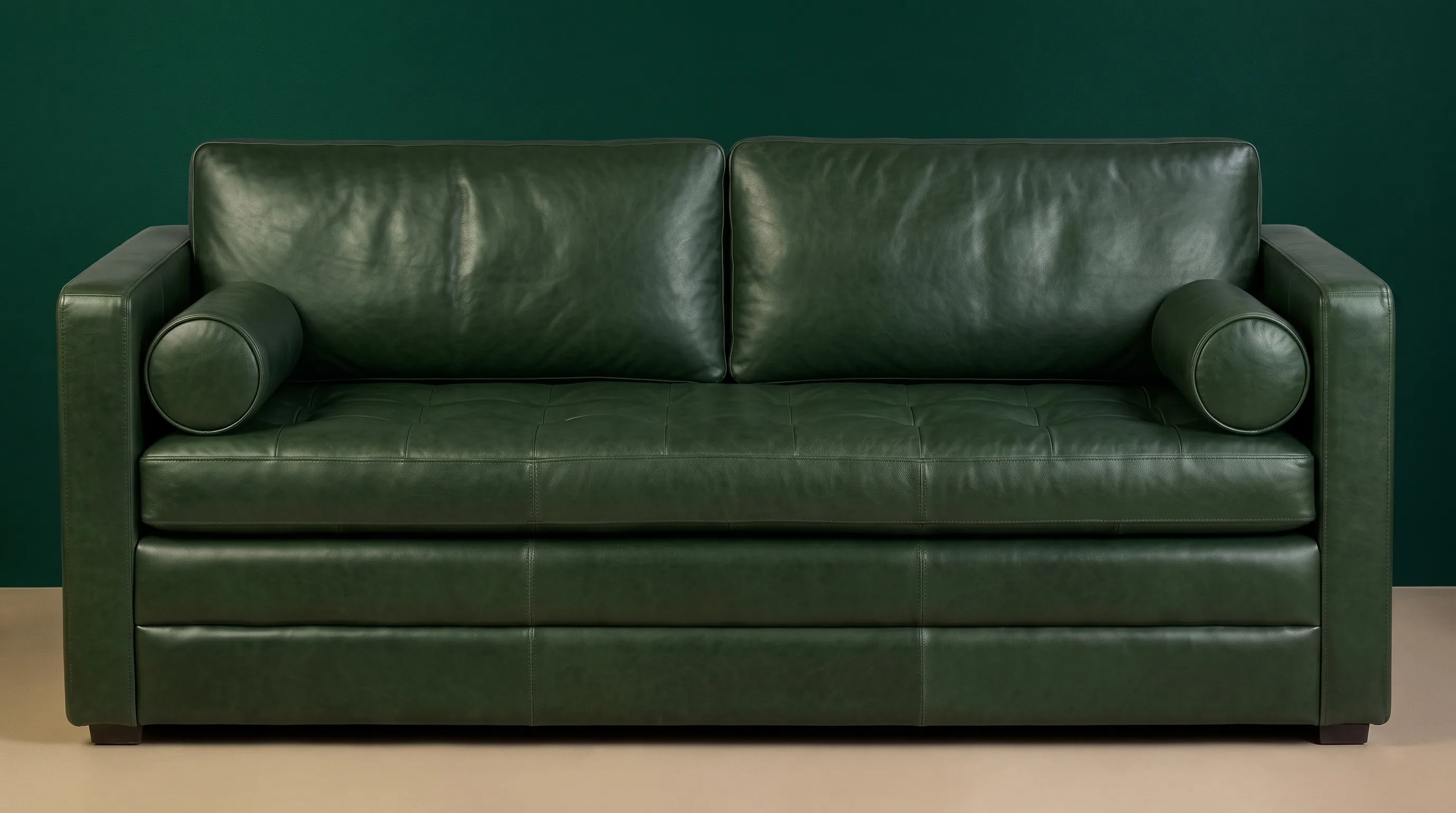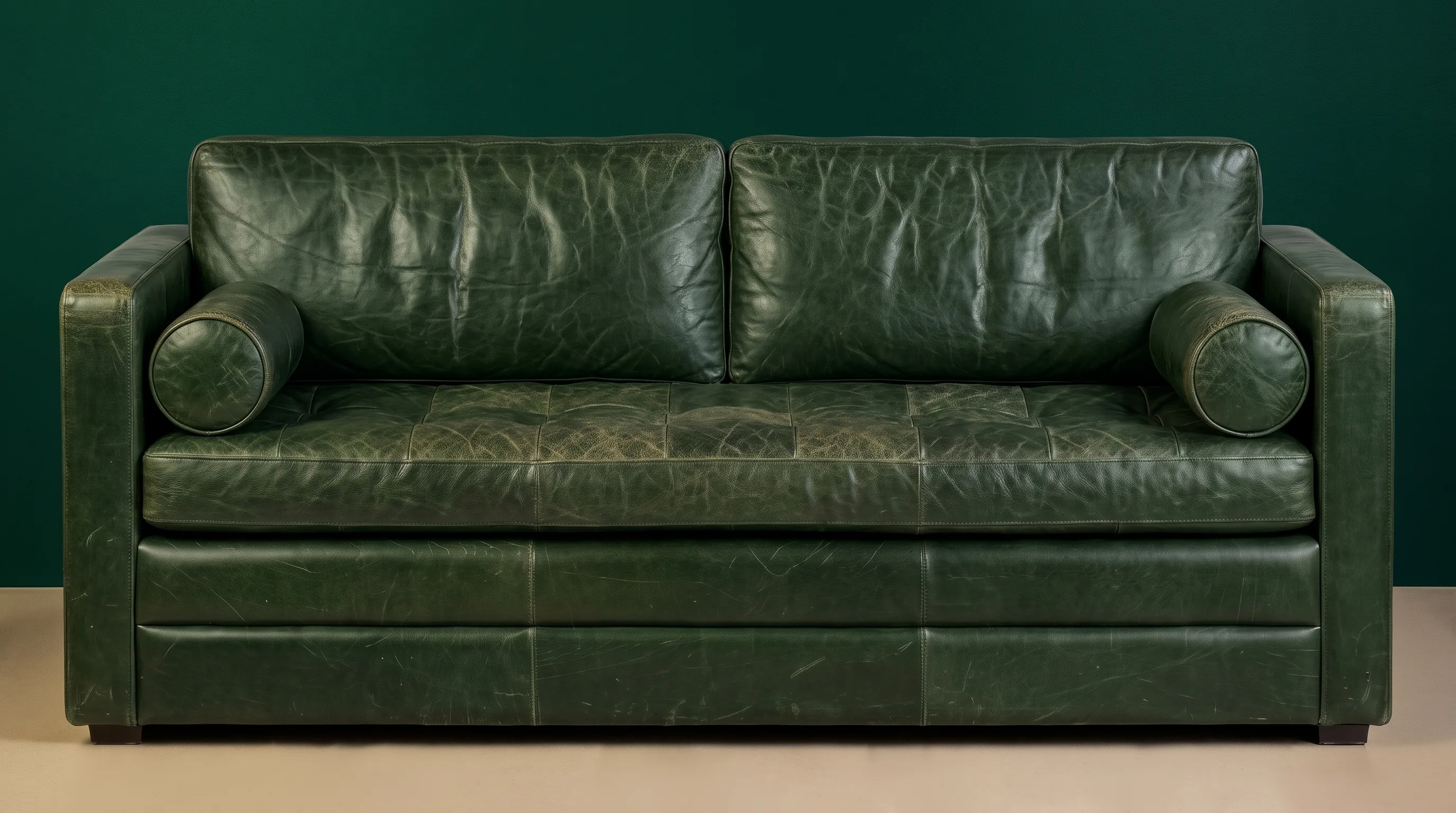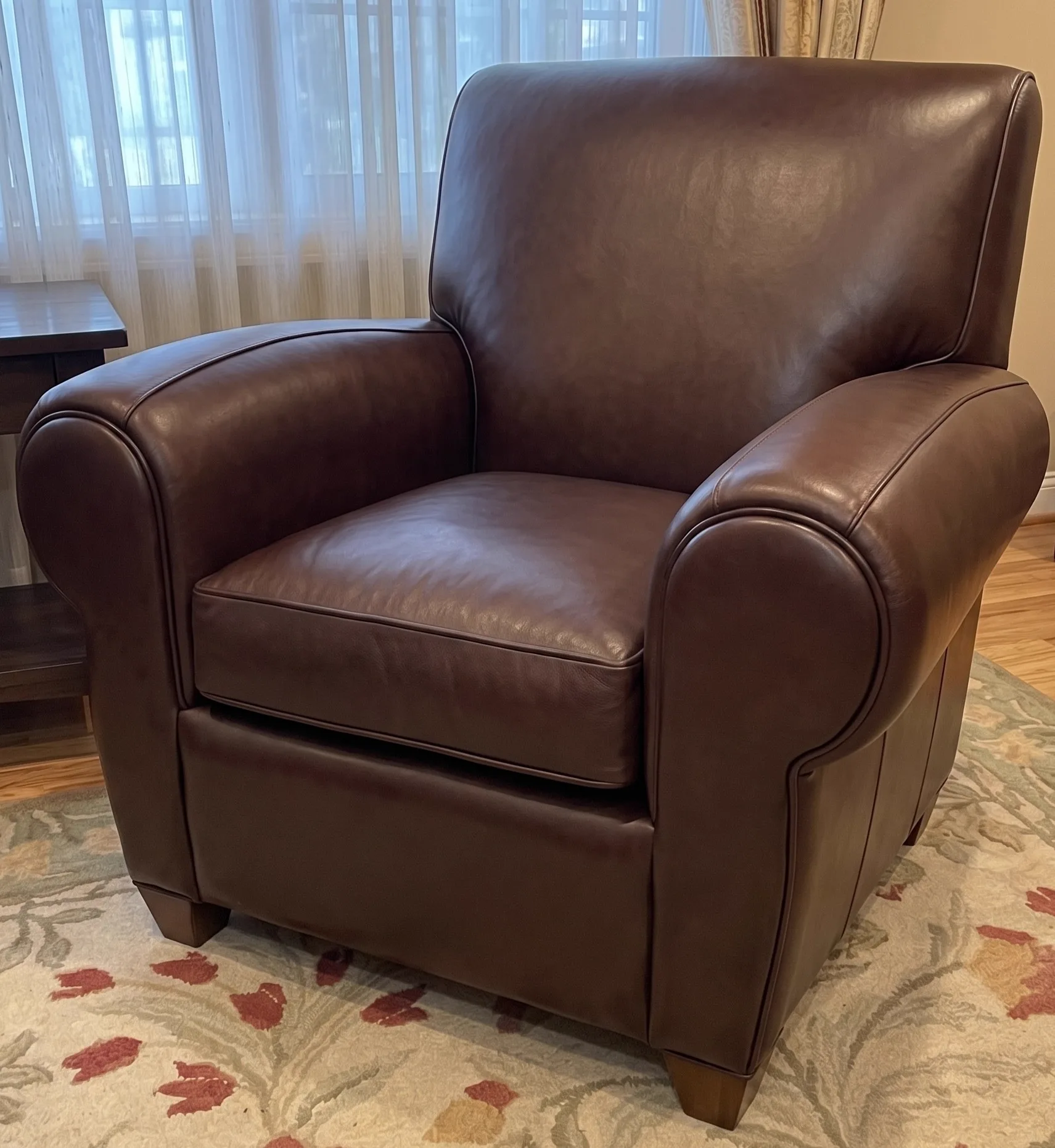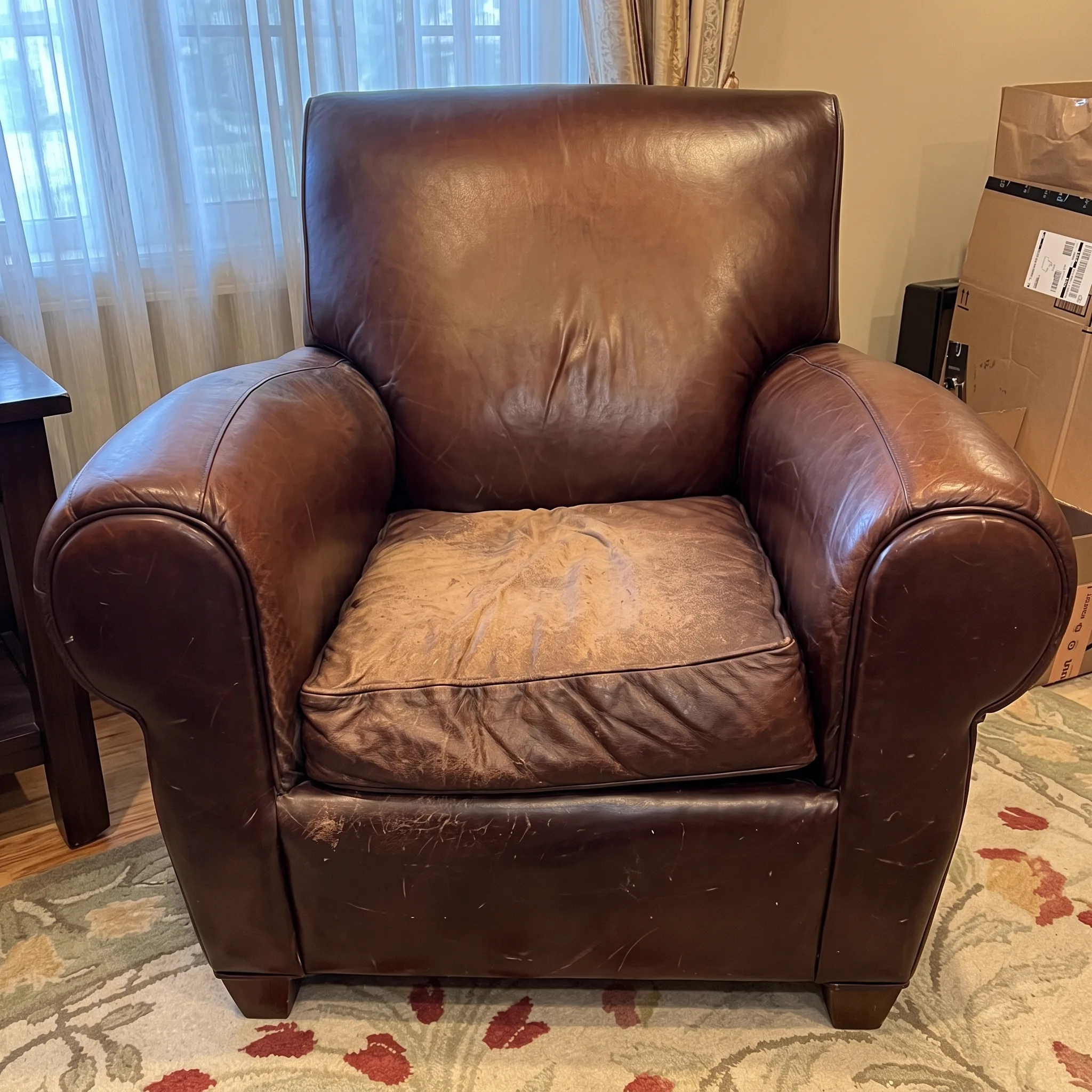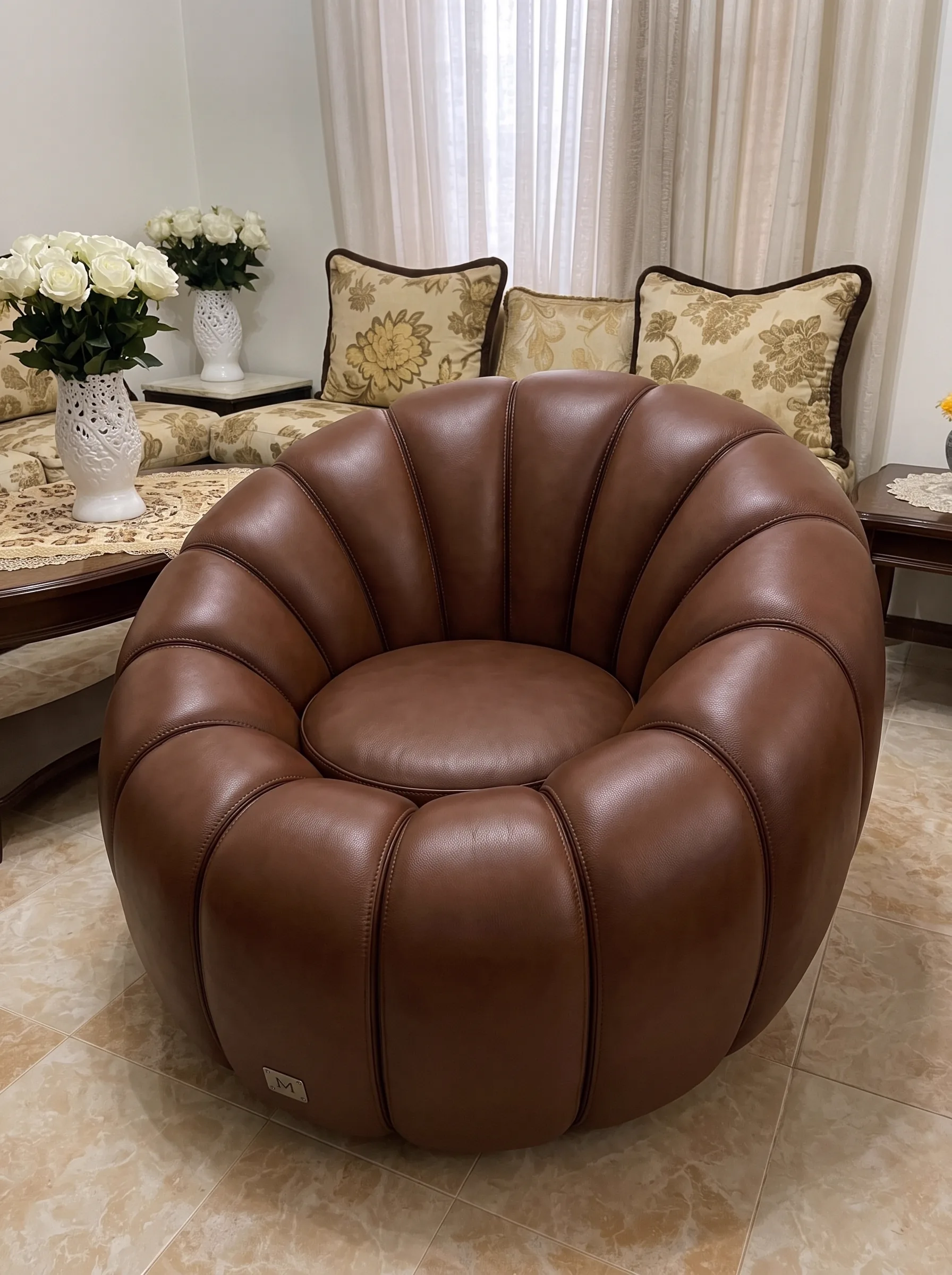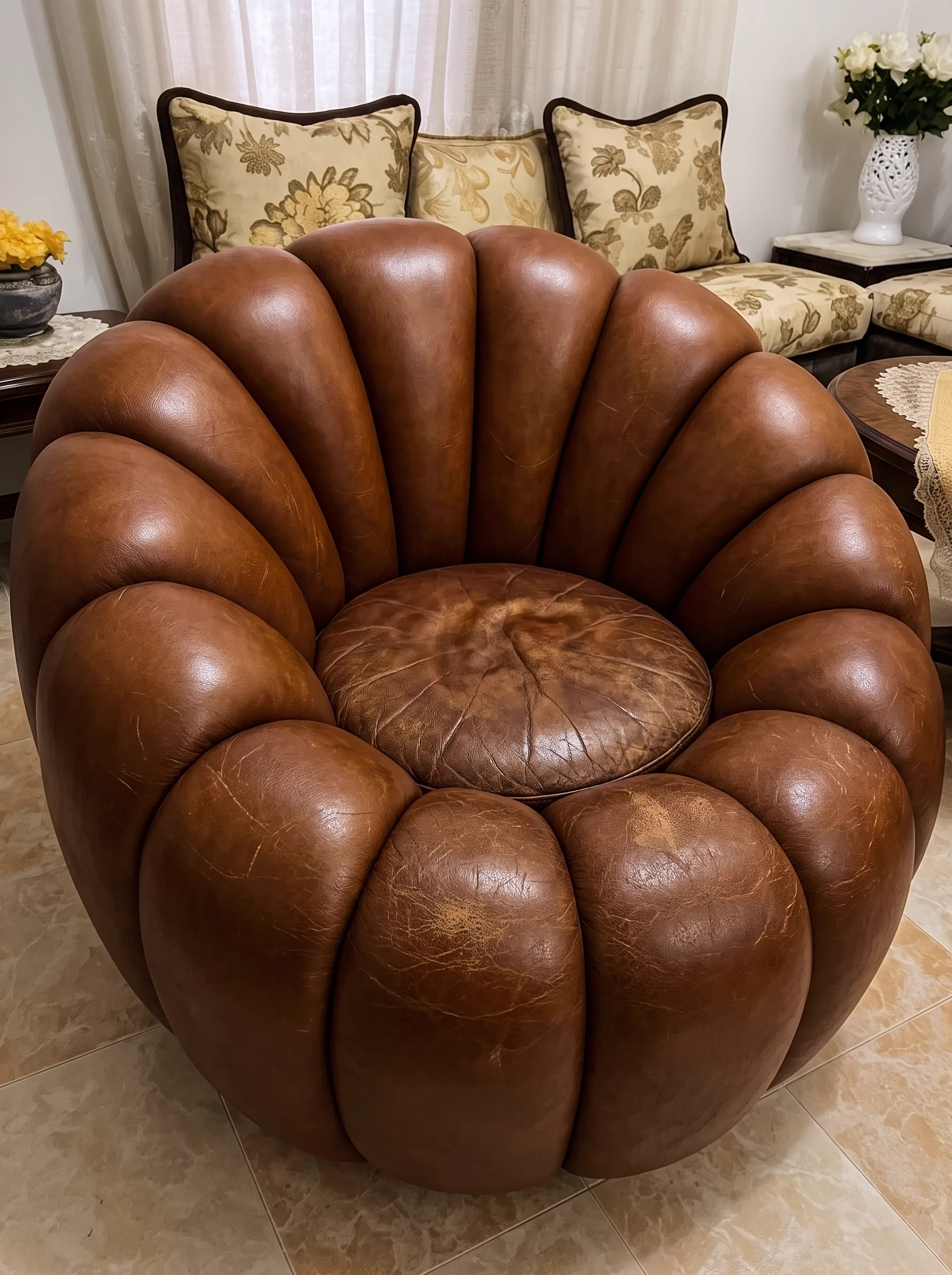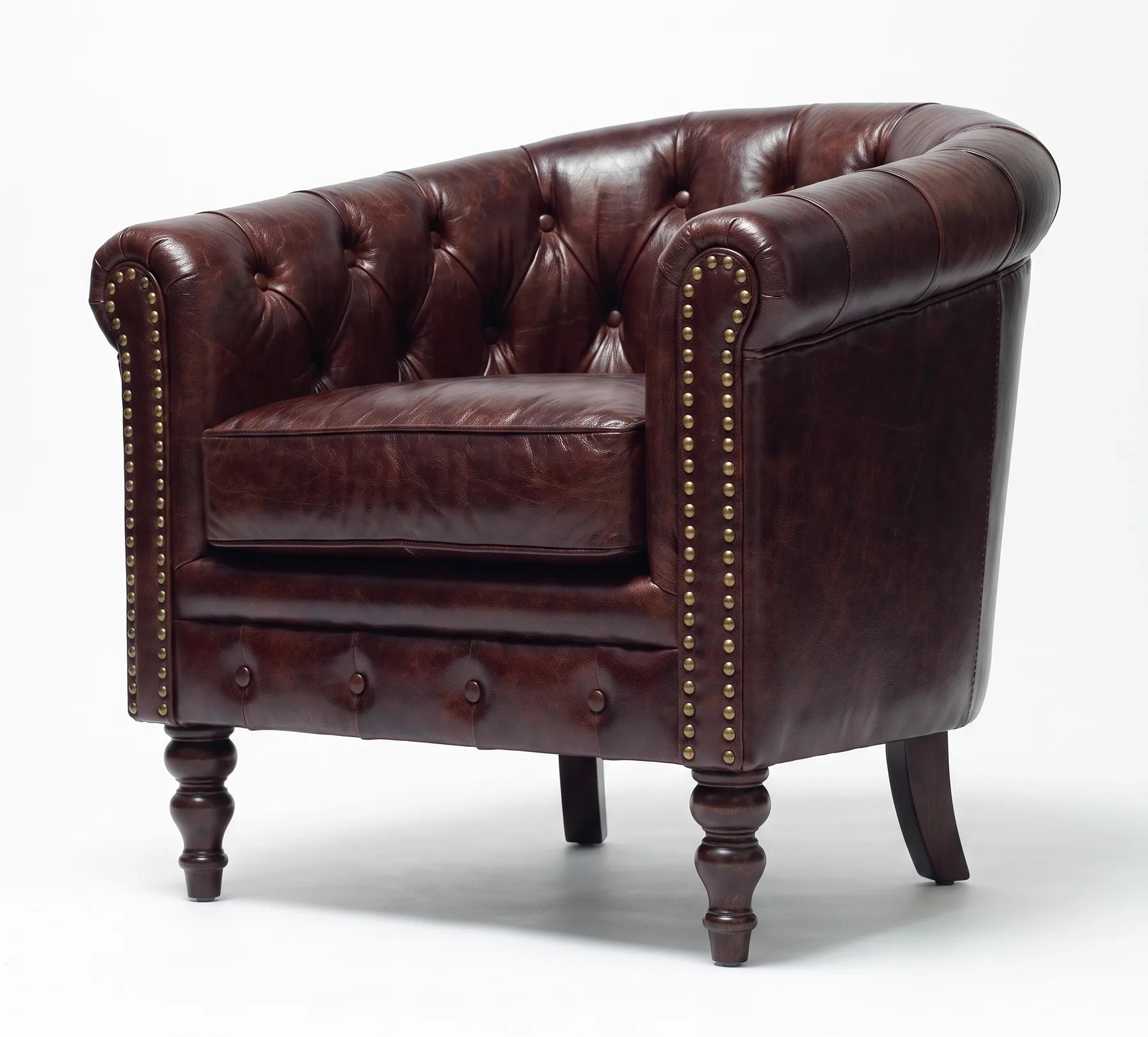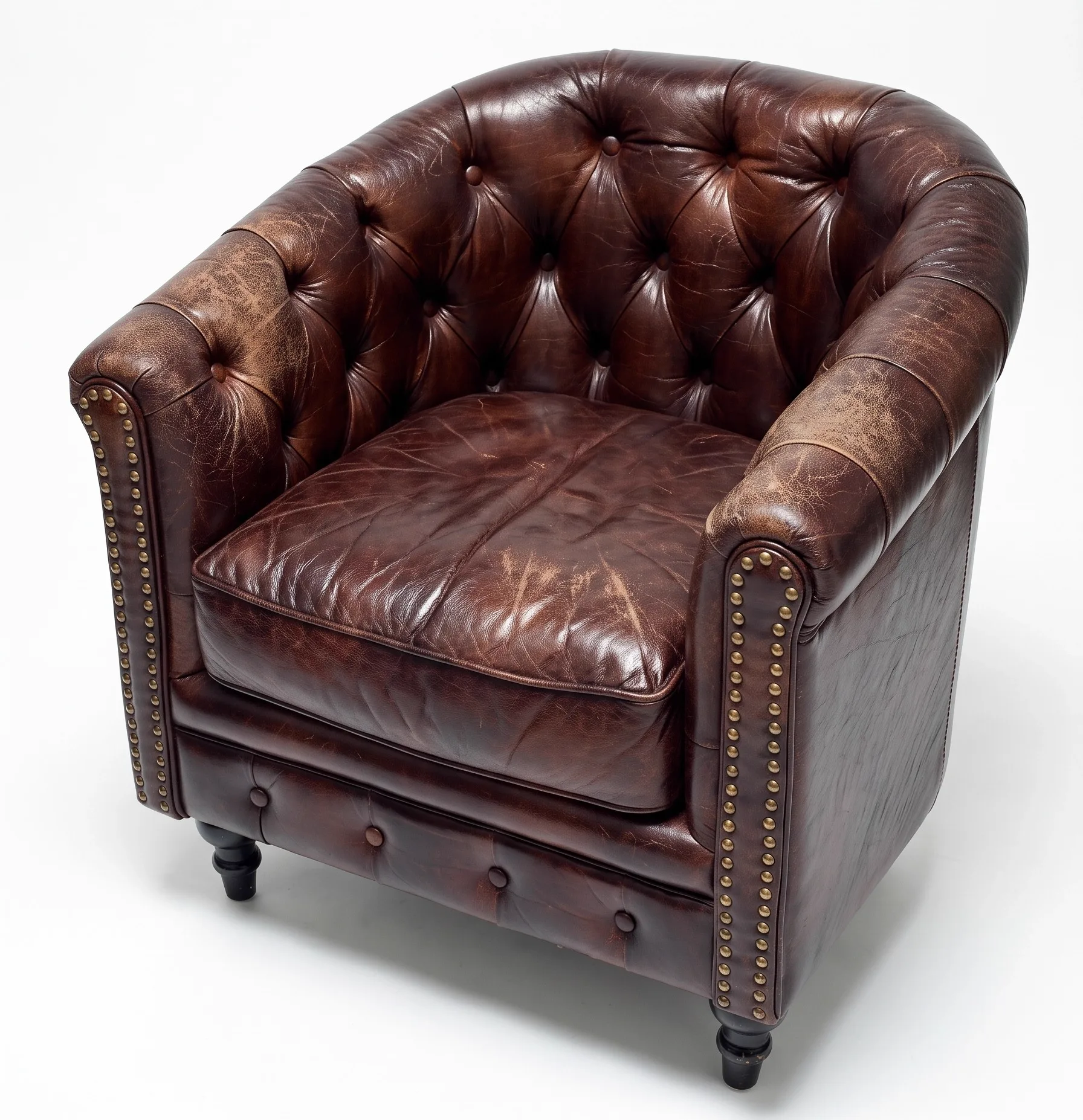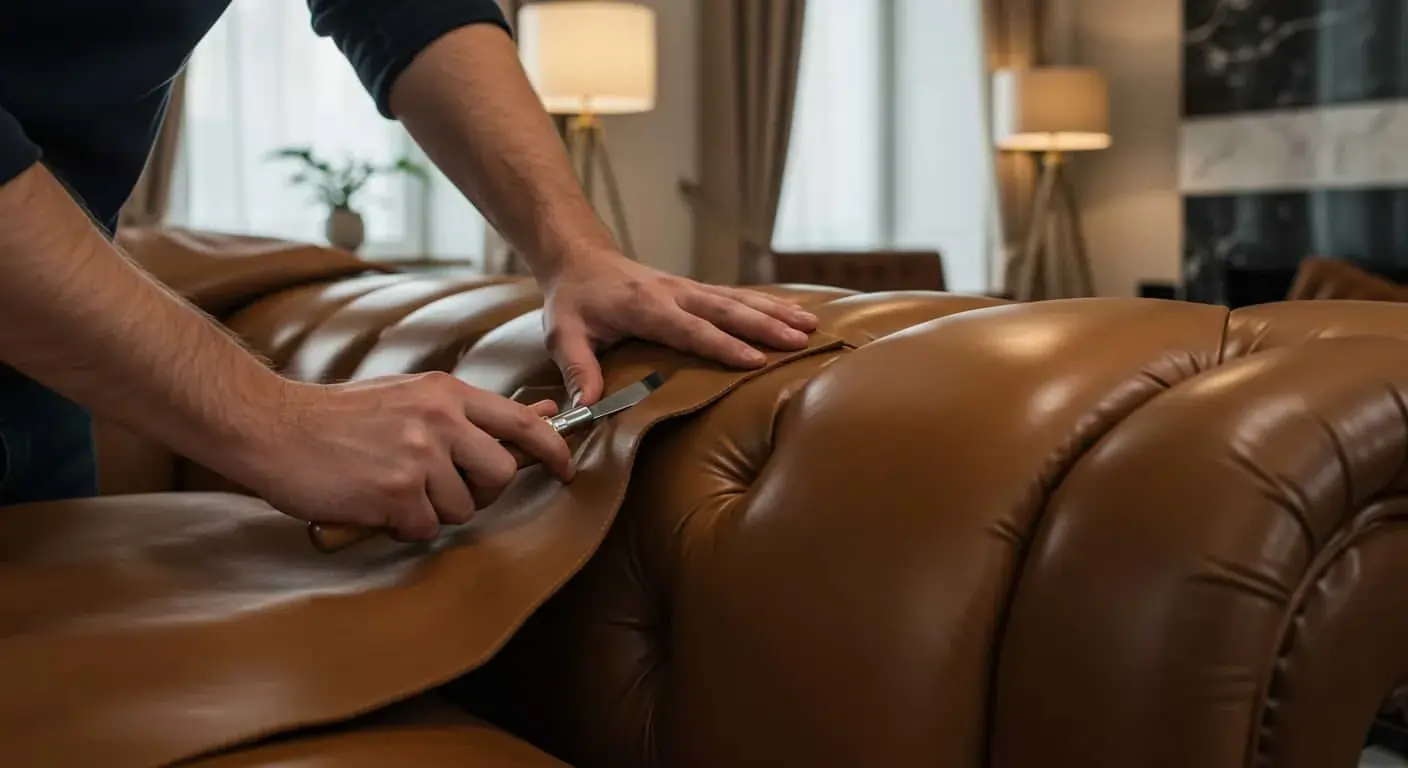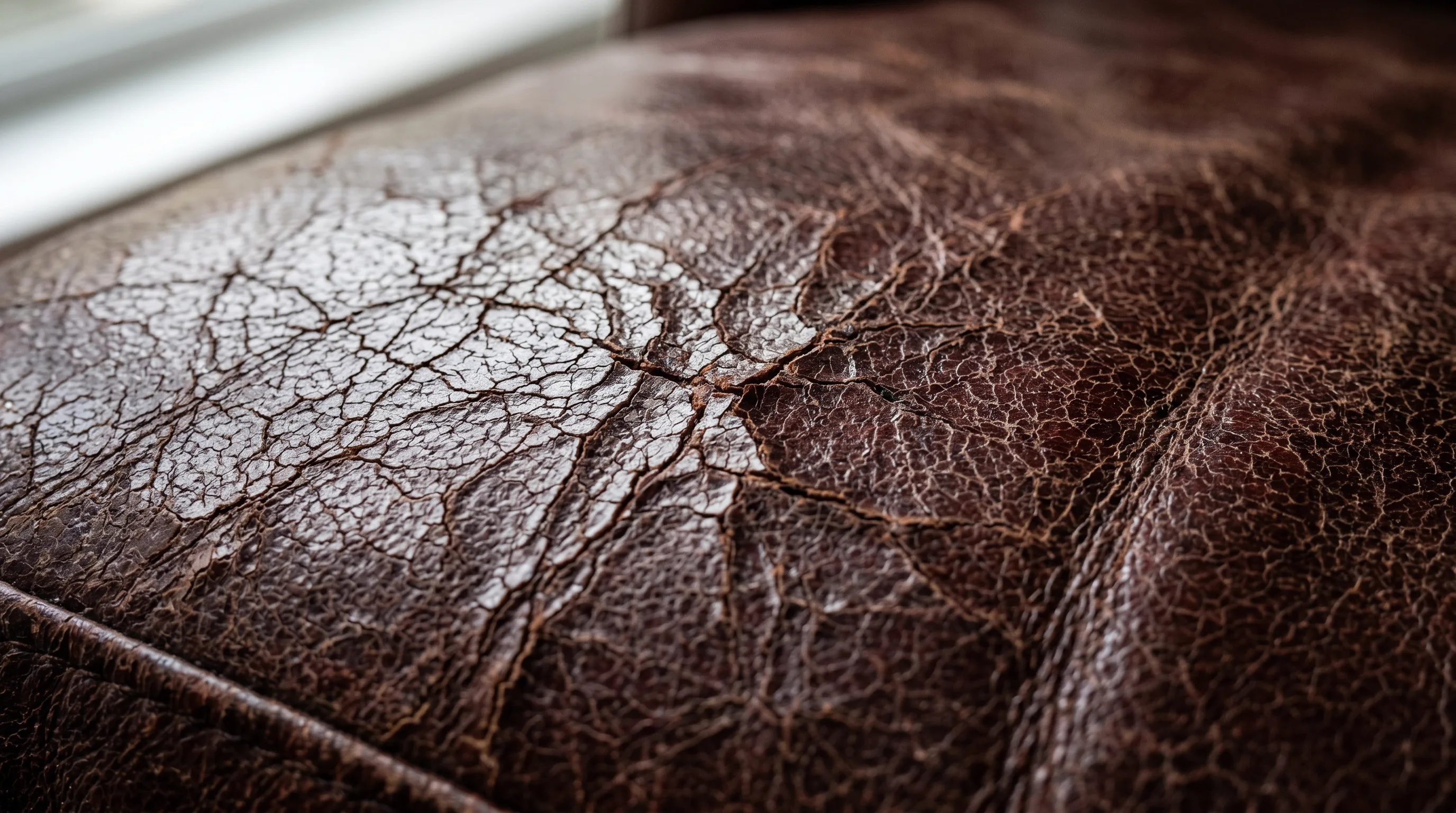
If your sofa has an uneven tone that deepens in some spots and lightens where you sit, you may own pull-up leather , and the care steps for it are the opposite of what you have probably been using. Pull-up and pigmented are the two most-confused finishes at the point of purchase. One shifts its tone every time you press it and builds character over years. The other seals the hide completely and resists any change at all. Use a standard cleaner on pull-up and you strip the wax that defines it in one pass. Use a dry buff on pigmented and you leave contamination sitting on a sealed surface that a damp cloth would lift in seconds. This guide gives you the identification tests, the chemistry behind each finish, and the care steps that keep a Chesterfield, Timothy Oulton, or Restoration Hardware piece looking the way the tannery intended. Technical terms , pull-up, fat liquor, top-coat , are defined in the leather glossary.
What Is the Difference Between Pull-Up and Pigmented Leather?
Pull-up and pigmented sit at opposite ends of the leather spectrum. Pigmented leather , covered in detail in the three-finishes guide , is full-grain or corrected-grain hide sealed with an opaque pigment layer and a polymer top-coat [top-coat: a clear or coloured surface layer that protects the pigment underneath]. The surface is uniform, stain-resistant, and stable. The trade-off is that it can never develop true patina. The sealed coat blocks the interaction with light, oil, and time that gives premium hides their depth.
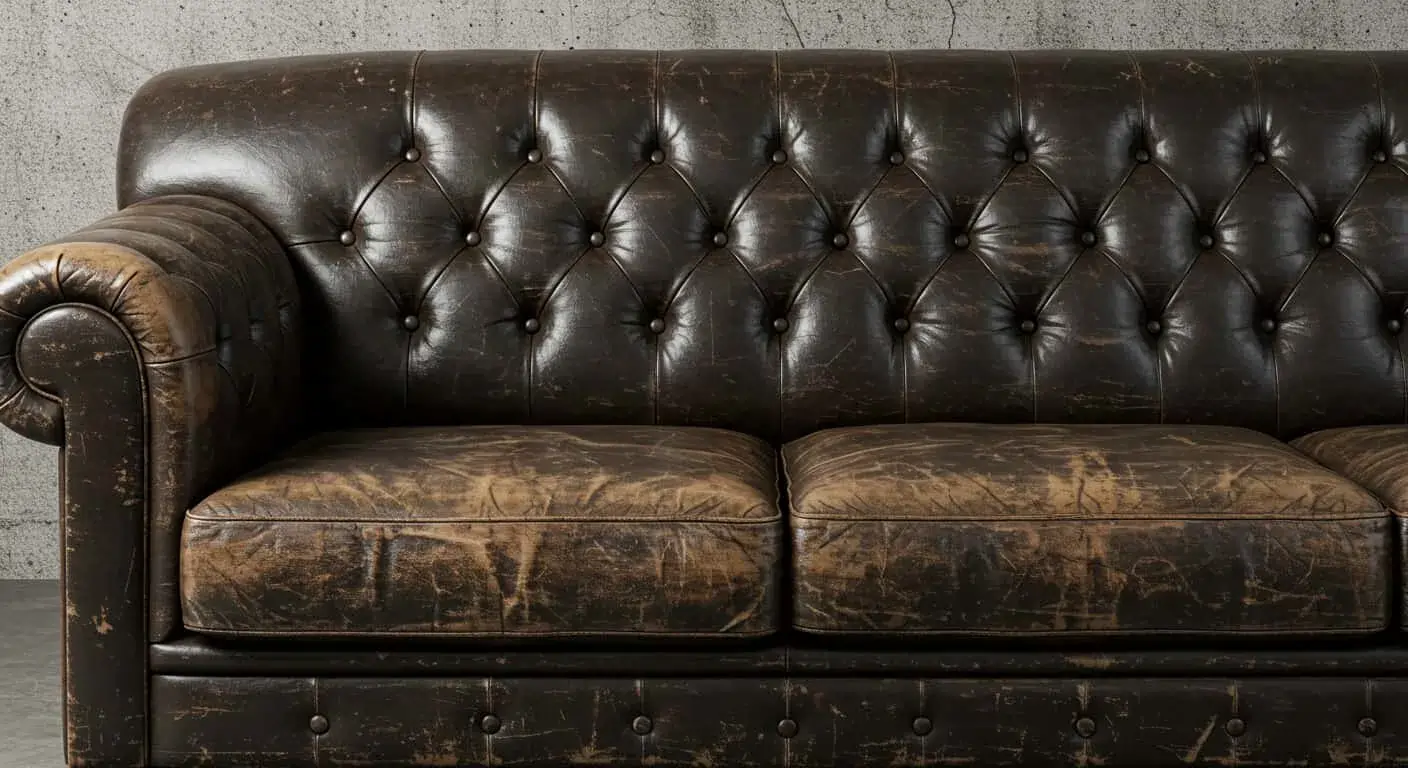
Pull-up leather is the opposite. It is full-grain aniline-dyed hide saturated with wax, oil, or a blend of both during finishing. There is no opaque pigment, no polymer top-coat, no stain seal. The dye penetrates the fibres directly. The wax or oil sits inside the grain layer and migrates with every flex of the hide. The result is a finish that lightens visibly when stretched, develops tonal contrast in high-use zones, and builds a patina no pigmented finish can produce. The cost is that everything that lands on the surface , water, oil, ink, hand cream , reaches the hide directly and immediately.
Both are legitimate choices. Neither is better. Choosing between them is a decision about what you want from your sofa over the next twenty years.
The quick rule: if the leather lightens when you press it and the mark fades back, it is pull-up. If nothing happens at all, it is pigmented. Everything else in this guide follows from that single test.
How to Identify Pull-Up Leather in 30 Seconds
Run three quick tests in sequence on a hidden area , the underside of a cushion or the back panel of an arm. Each takes about ten seconds. Together they produce a result no marketing label can override.
Test 1 , The fingernail press
Press a clean fingernail firmly into the leather for two seconds. Lift. Watch for thirty seconds.
- A lighter mark appears and fades within minutes , pull-up. The wax or oil in the grain layer moved away from the pressure point and is flowing back.
- No mark at all, or a faint indent with no colour change , pigmented. The opaque pigment layer blocks any sub-surface movement.
- A darker mark or water-absorbed look , aniline or nubuck. Run the full three-finish identification instead.
Test 2 , The warmth and softness check
Place a flat palm on the surface for ten seconds. Lift. Run a fingertip across the area.
Pull-up feels warm, supple, and slightly oily. The wax and oil carry body heat efficiently and give a tactile depth pigmented cannot match. Pigmented feels cool, smooth, and uniform , closer to dense vinyl than to a living material. Once you have felt both side by side the difference is obvious.
Test 3 , The water drop
Place a single drop of distilled water on the surface. Wait twenty seconds.
On pigmented leather, the drop sits as a perfect bead and rolls off when you tilt the panel. On pull-up, the drop partially absorbs and may leave a slightly darker spot that fades as the water evaporates and the wax flows back. Do not soak pull-up. A single test drop is harmless. A wet cloth is not.
If all three tests confirm pull-up, every cleaning and care decision you make from this point forward changes. The wax-oil chemistry demands different steps than any other premium finish.
What Makes Pull-Up Leather Look and Feel Different?
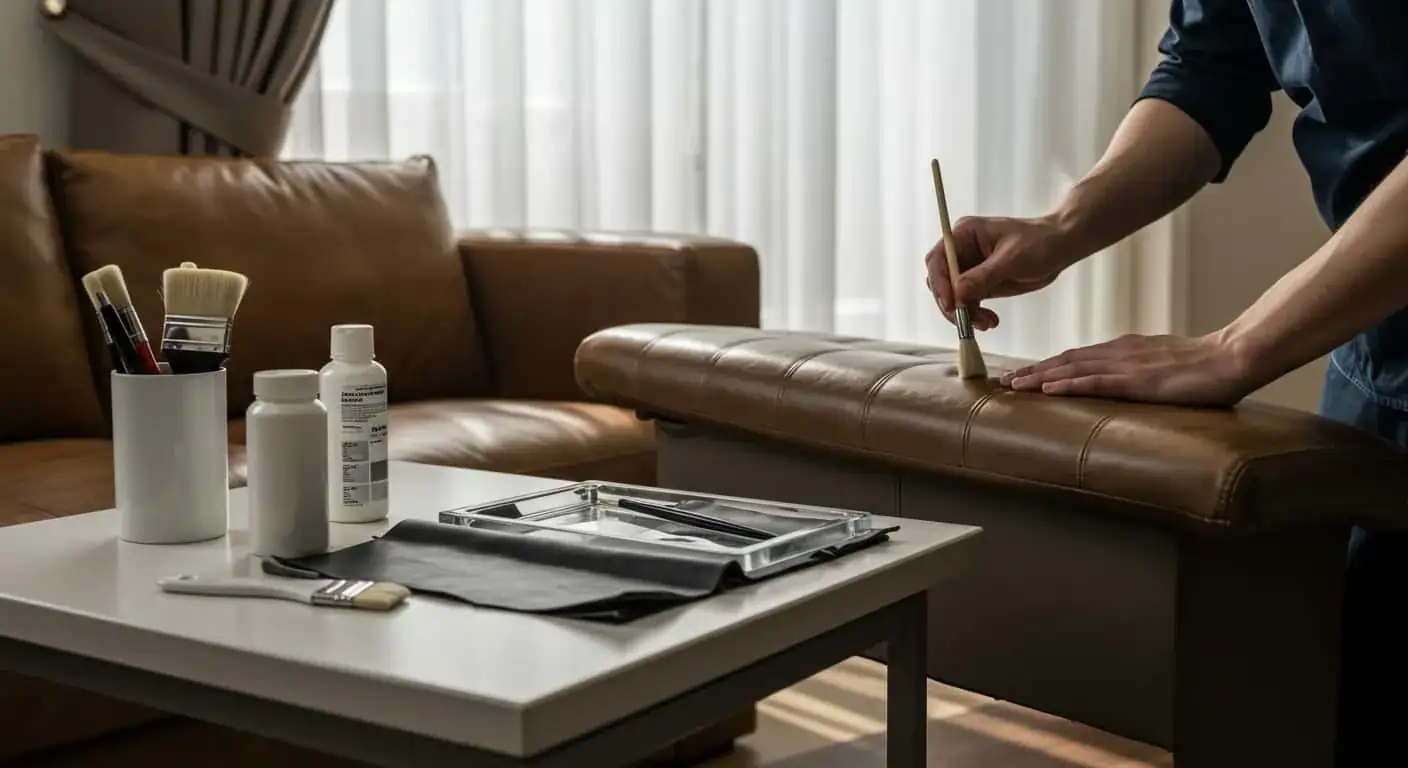
Pull-up starts as a high-quality full-grain aniline hide , the same grade described in the grain hierarchy guide. After tanning and aniline drum-dyeing, the hide goes through a hot-stuffing or oil-impregnation stage. The leather heats to between 50 and 70 degrees Celsius and submerges in a bath of molten wax, refined oil, or a blend of both. The heat opens the fibre matrix. The wax-oil emulsion floods through the grain. The hide cools and the saturating compound solidifies inside the leather rather than on top of it.
The blend ratio defines the sub-categories. A wax-pull-up uses hard waxes , beeswax, carnauba, paraffin blends , and produces a finish that lightens dramatically under flex with sharp tonal contrast. An oil-pull-up uses softer fish oils, neatsfoot, and synthetic esters [synthetic esters: lab-made oils that mimic natural fats]. It produces a richer, deeper finish that lightens more subtly and develops more uniform patina. Most luxury pull-up sofas use a hybrid blend the tannery tunes to produce a specific aesthetic signature.
The fibre structure is identical to a premium aniline at the molecular level. Visually and to the touch, it is a completely different product. This wax-oil matrix is also why pull-up is so sensitive to the wrong cleaner , anything that strips fat or wax, including most "leather" cleaners, removes the substance that defines the finish.
How Is Pigmented Leather Built , and Why Does It Feel Different?
Pigmented leather is built for the opposite result. After tanning, the hide goes through a finishing line that applies three distinct layers in sequence. First, a base coat that bonds the finishing system to the hide. Second, an opaque pigment layer , typically two to four spray passes , that delivers uniform colour across the whole panel and hides any natural grain variation. Third, a polymer top-coat that seals the pigment, adds scratch resistance, and produces the matte, satin, or gloss finish you specified.
The total finishing thickness sits between thirty and one hundred microns , invisible to the eye but decisive in how the leather behaves. The hide underneath still flexes, breathes slightly, and ages. But the surface is stable and chemically separated from everything above it. Spills sit on top until you wipe them. UV is partially blocked by the pigment. Body oils never reach the dye.
This is why pigmented is the default choice for high-traffic family sofas, hotel furniture, automotive interiors, and anywhere consistency matters more than character. It is also why pigmented leather can never develop patina. The same coat that protects the hide from staining blocks the only mechanism that produces depth.
Which Finish Is Right for Which Room?
These two finishes belong in genuinely different rooms. Putting the wrong one in the wrong room is the most common ownership mistake after misidentification.
Pull-up belongs in the study, library, or lounge. These are rooms where adults use the sofa daily, where a fountain pen or a glass of single malt is more likely than a juice box, and where you value a hide that records its history through deepening tonal contrast. The Chesterfield, the Hampton, the heavy English club chair, the cigar lounge banquette , all classic pull-up territory. Luxury homes in India increasingly specify pull-up for the formal drawing room and the master suite reading area.
Pigmented belongs in the family room, children's lounge, or open-plan space. Anywhere a spill is almost certain within the first month and where uniform appearance matters more than character. Most Italian three-seaters in the under-five-lakh bracket are pigmented for this reason. Modular sectionals from the major European brands run almost entirely on pigmented finishes because the modules need to look identical even when delivered six months apart.
If you want patina in the family room, you are choosing the wrong finish for the room. If you want stain resistance in the formal study, you are choosing the wrong finish for that room too. Both mistakes are common. Both get expensive in restoration cost over a decade.
"The best leather sofa is the one whose chemistry matches how the room actually lives. Pull-up in a toddler's playroom dies in eighteen months. Pigmented in a connoisseur's library never wakes up at all."
How to Care for Pull-Up vs Pigmented , Side by Side
The two sets of care steps share almost nothing. Cross-applying them is the fastest way to destroy either finish.
Pull-up routine care
- Dust weekly with a dry, soft microfiber. No water. No spray. The wax surface attracts particulate [particulate: fine dust and airborne particles] and a dry pass is enough to maintain it.
- For light marks, buff with a clean dry chamois. The friction warms the wax slightly and redistributes it to even out the tone. Many minor marks clear themselves entirely.
- Blot spills , do not wipe. Wiping pushes liquid sideways into the wax matrix. A vertical blot lifts it before it penetrates.
- Re-wax every 12 to 18 months with a pull-up wax matched to the original tannery profile. Workshop application is strongly preferred over home products.
- Never use a standard leather conditioner. The emulsifiers strip the saturating wax and leave the hide blotchy.
Pigmented routine care
- Dust weekly with a soft microfiber. Slightly damp is fine here, unlike pull-up.
- Clean monthly with a pH-neutral leather cleaner applied to the cloth first, not directly to the surface. Full steps in the pH balance guide.
- Wipe spills immediately. The top-coat gives you reaction time that pull-up does not have.
- Condition once a year with an emulsion designed for sealed finishes. The mechanism is covered in the science of moisturizing.
- Never use wax, beeswax balm, or oil-based products. They sit on the top-coat, attract dust, and dull the finish.
The single most damaging mistake is using a pigmented-leather cleaner on pull-up. The first pass strips the wax. The second produces visible blotchy depletion. By the third cleaning your sofa looks dry, chalky, and twenty years older than it is. Restoration is possible , workshop re-waxing rebuilds the matrix , but the damage was completely avoidable with the thirty-second identification test.
What Does Pull-Up or Pigmented Failure Actually Look Like?
Both finishes have a recognisable failure pattern. Catching it early decides whether the fix is a re-application or a full reconstruction.
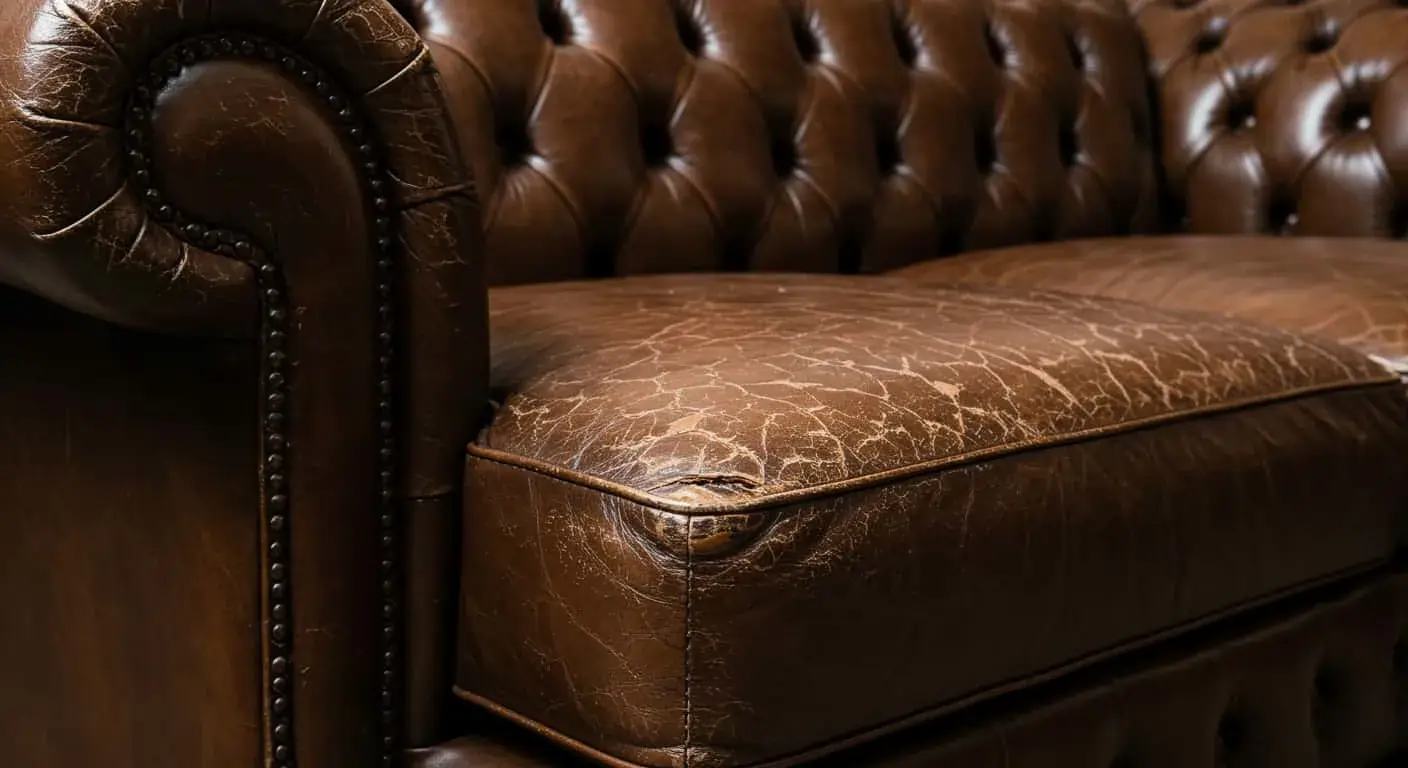
Pull-up failure looks like dryness, blotchiness, and chalk. Your sofa's hide that once felt warm now feels papery. High-contact zones go pale and stay that way instead of recovering. The patina that should be deepening with use lightens unevenly instead. The cause is almost always wax depletion , from wrong cleaning, extreme heat, or years of use without re-waxing. The workshop fix is a controlled re-waxing using a tannery-matched compound applied with heat to reopen the fibre matrix and re-saturate the grain layer.
Pigmented failure looks like cracking, peeling, and pigment lift. The top-coat develops a microcracked surface that progresses to visible flaking. Pigment lifts in patches and exposes the base coat or the hide underneath. The cause is usually wrong-pH cleaning over years, UV exposure that breaks down the polymer, or repeated abrasion that wears through the coat from above. The workshop fix is micro-pigmentation , stripping the failed coat, rebuilding the pigment in a tannery-matched colour, and laminating a new top-coat that bonds to the original hide.
Neither failure is permanent if you catch it at the right stage. Pull-up depletion addressed within the first year of visible signs restores cleanly. Pigmented cracking addressed before the hide dries out restores cleanly. The same problems left for three or four years require full reconstruction at several times the early-fix cost.
Where Does Pull-Up Fit Among Premium Leather Finishes?
Pull-up completes the four finishes that cover nearly every premium leather sofa in the Indian luxury market. Together with the three in the aniline, semi-aniline, and pigmented guide, they form the full identification picture. Aniline is the purist's finish , transparent dye on full grain, maximum patina, maximum vulnerability. Semi-aniline sits in the middle , light pigment over an aniline base, moderate patina, moderate protection. Pigmented is the engineered option , opaque coat, no patina, full protection. Pull-up is the fourth axis , full-grain aniline plus saturating wax-oil, dramatic patina under flex, vulnerability comparable to aniline.
If you own a Nappa or another premium Italian hide, pull-up is rarely what the original brand chose. Natuzzi, Frau, B&B Italia, and Fendi Casa lean toward smooth aniline and semi-aniline finishes. Pull-up dominates the British and American luxury heritage market , Chesterfield-style pieces, Restoration Hardware, Timothy Oulton, traditional country house furniture. Indian buyers commissioning bespoke pieces from Jodhpur or Rajasthan workshops increasingly ask for pull-up because of the visible character it develops in the dry NCR climate.
Run the Fingernail Test First , Before You Reach for Any Cleaner
Almost every consultation that starts with a damaged pull-up sofa traces back to the same moment: the day you cleaned it with a product designed for pigmented. The cleaner stripped the wax, the hide blotched, and a finish built to last forty years started failing inside its first three. The thirty-second fingernail test would have prevented all of it.
If you own pull-up , Chesterfield, English club, oil-saturated, wax-pull country house , the rule is absolute. Dry care first. Blot before you wipe. No surfactants. Re-wax on the workshop calendar. If you own pigmented , Italian three-seaters, family sectionals, modular contract pieces , the rule is equally absolute. pH-neutral cleaner, monthly maintenance, annual conditioning, no wax or oil products. Two finishes, two sets of care steps, never crossed. The household products that destroy both finishes , vinegar, olive oil, baby wipes, kitchen soaps , are covered in detail in the vinegar and olive oil leather damage guide.
If you would rather have both care routines done properly at your door, we offer expert panel and seam repair, surface refinement, and doorstep assessment across Noida, Faridabad, and Ghaziabad.
Bookmark this page. The next time you reach for a leather product without knowing which finish it is for, the test is here and takes less time than reading the bottle label.