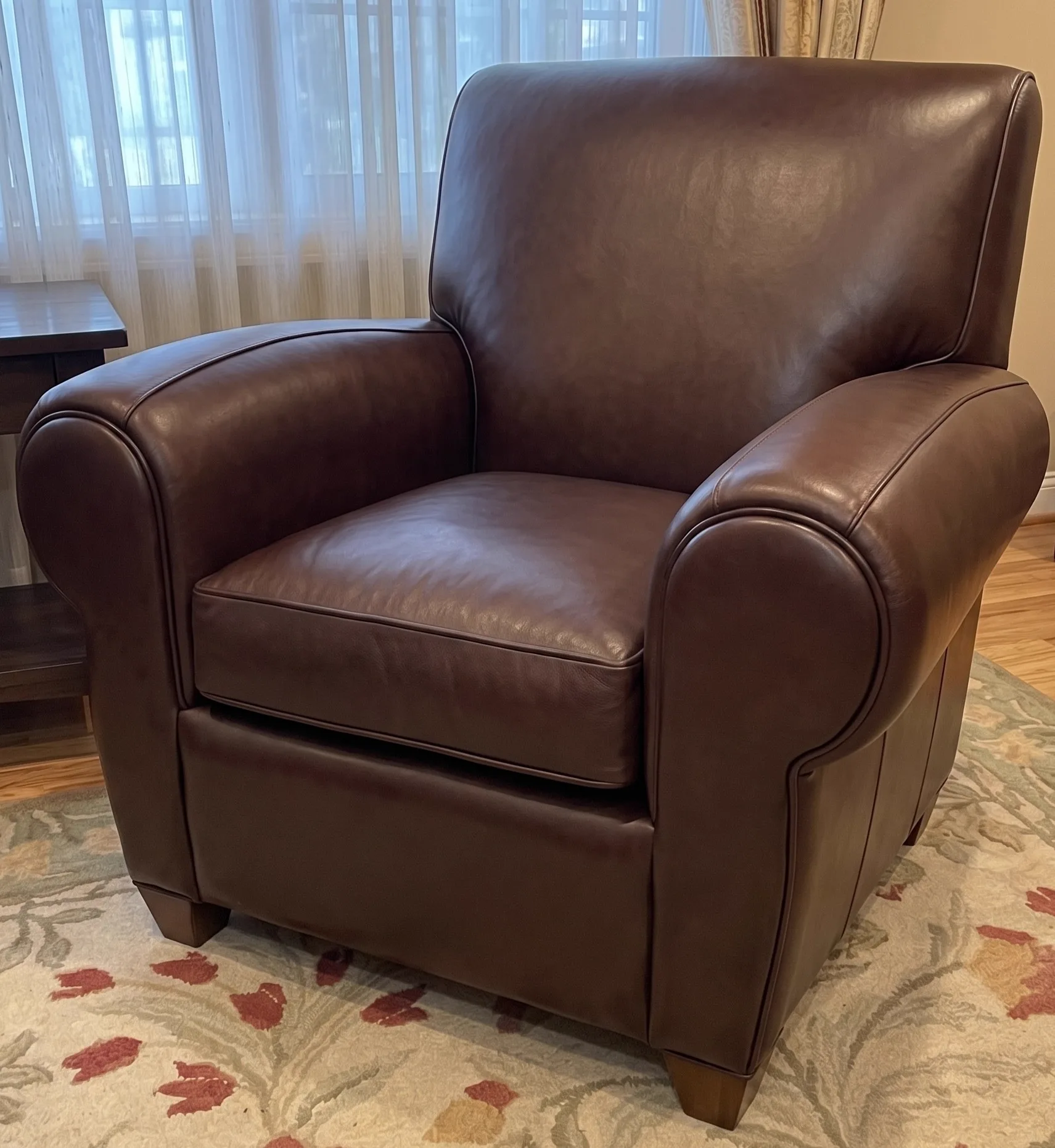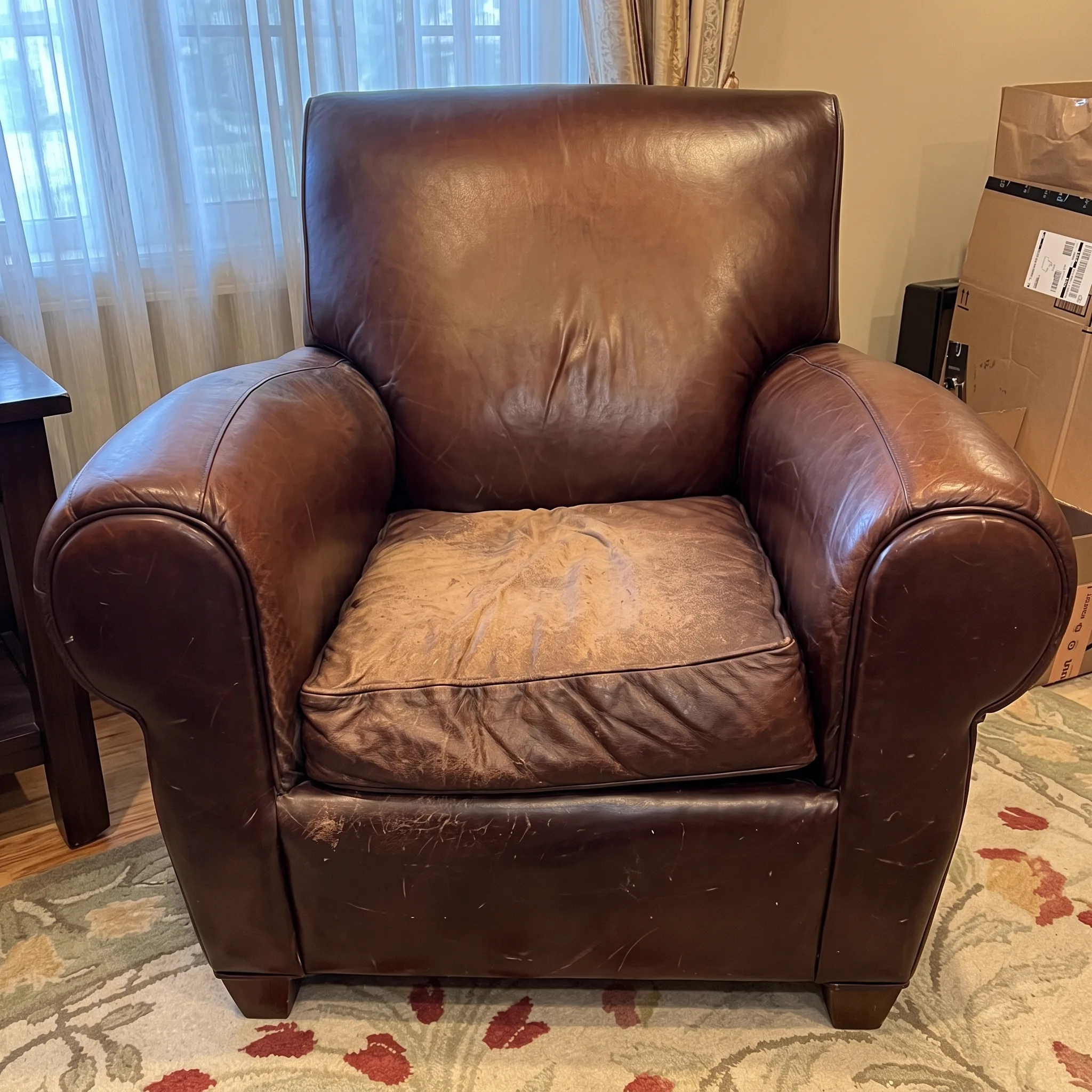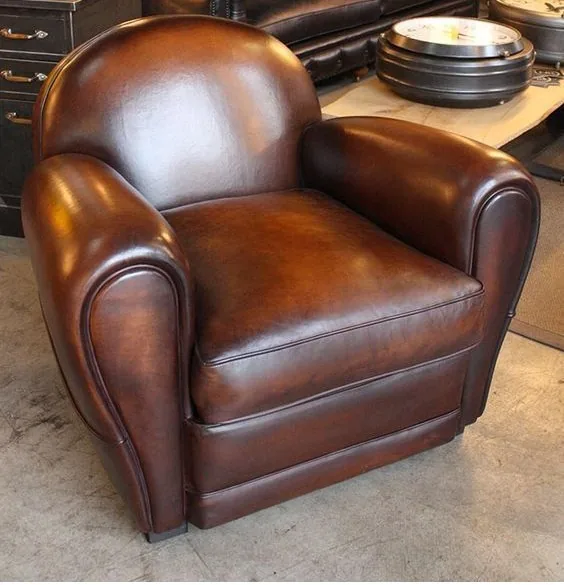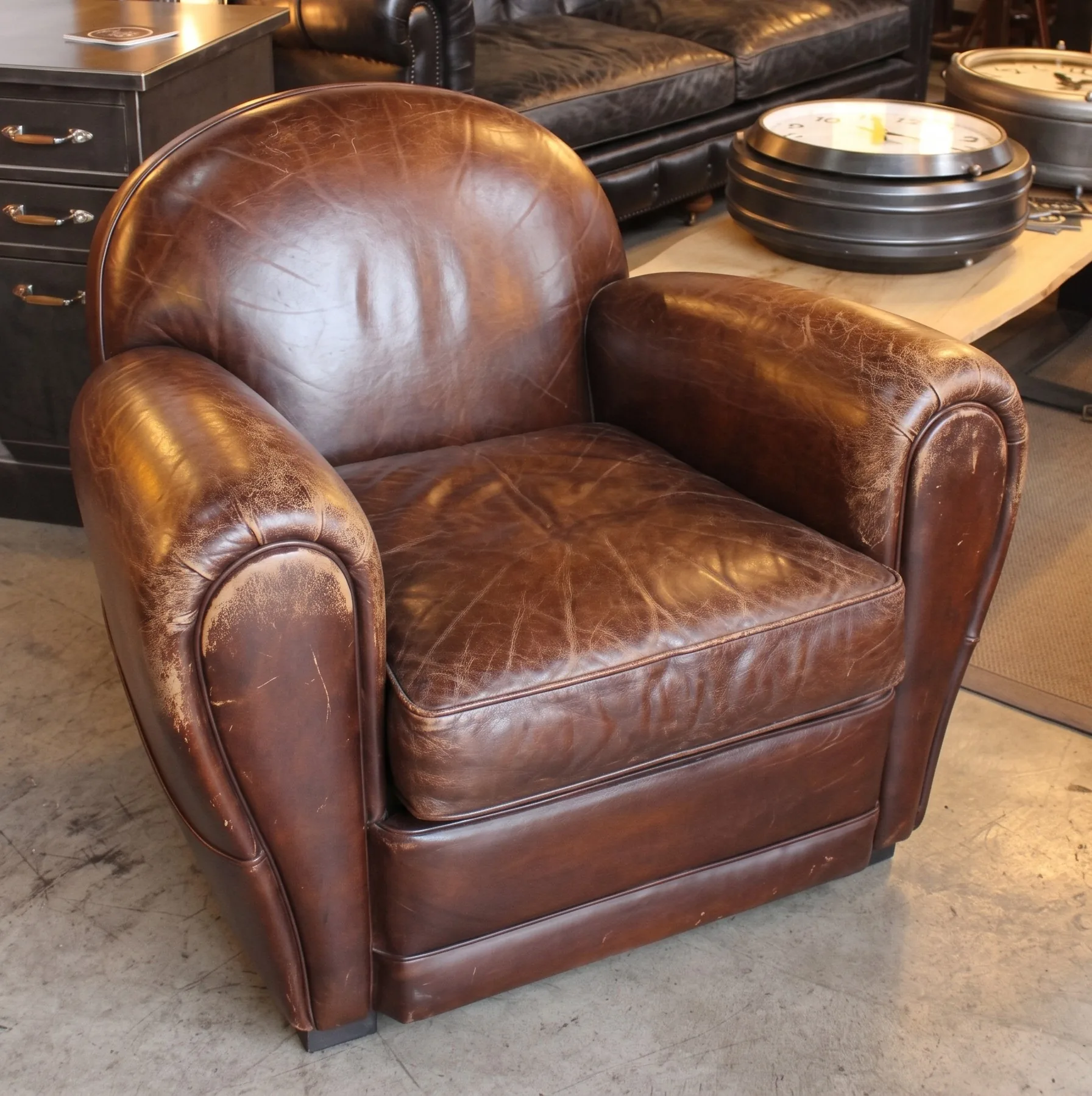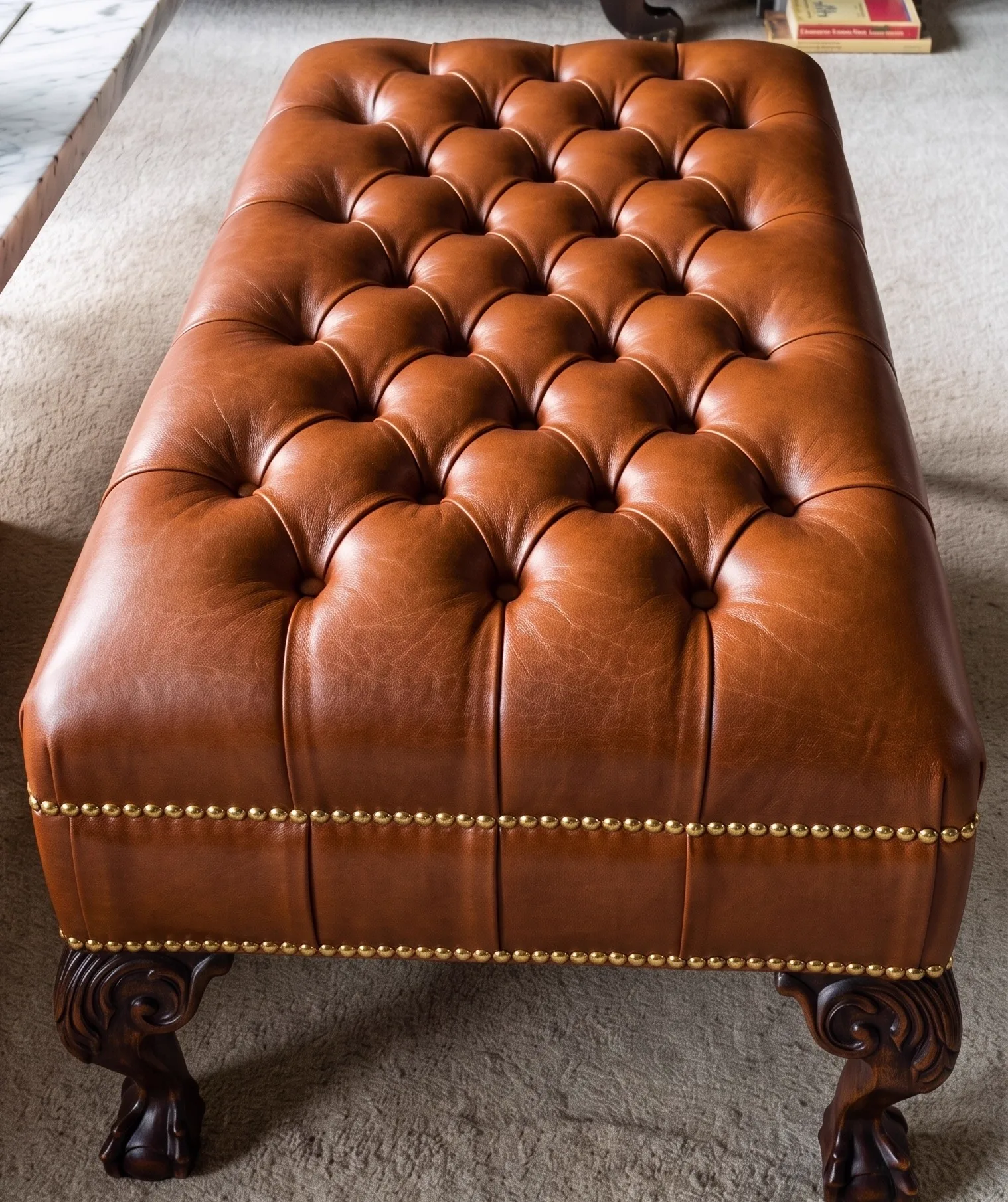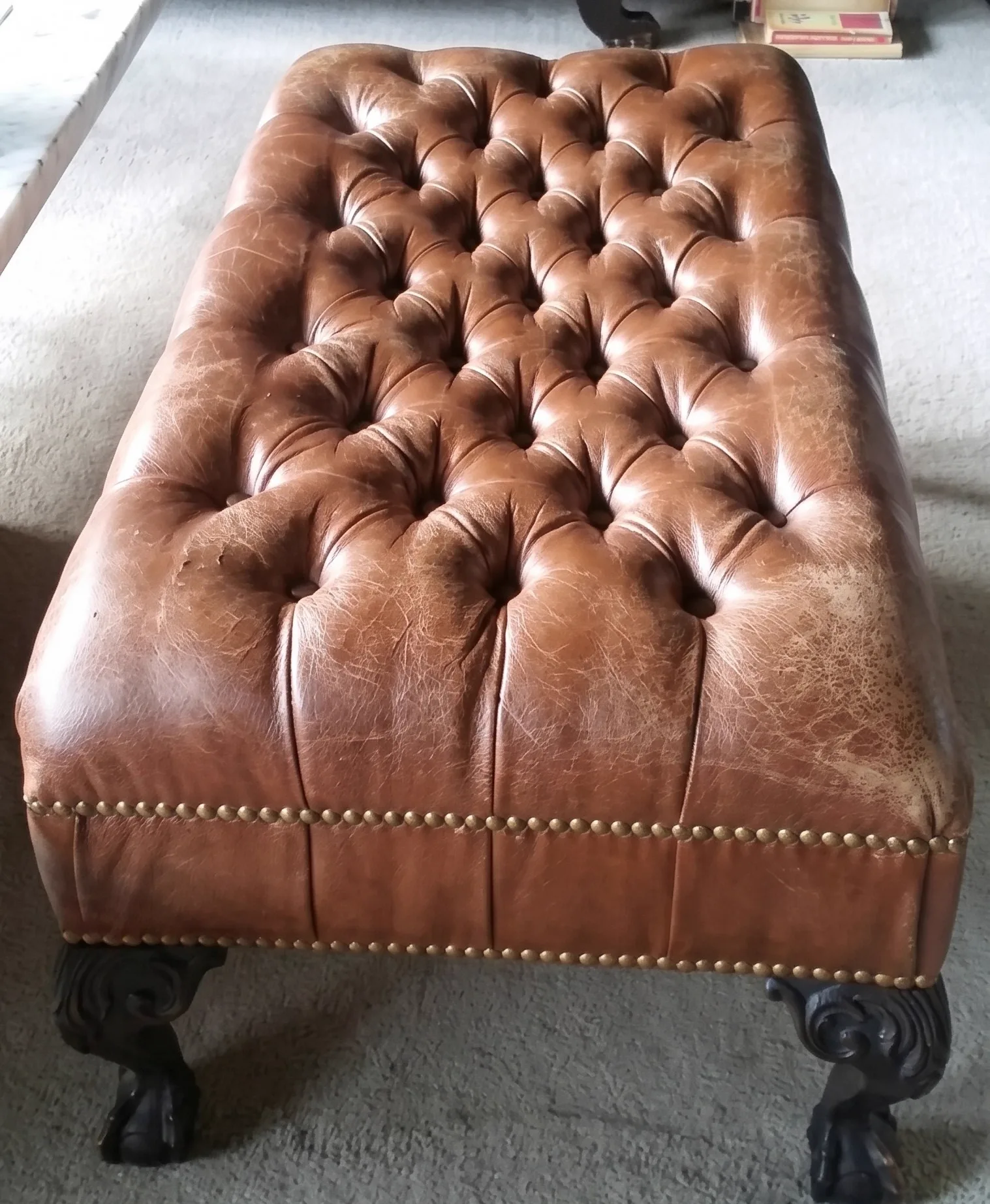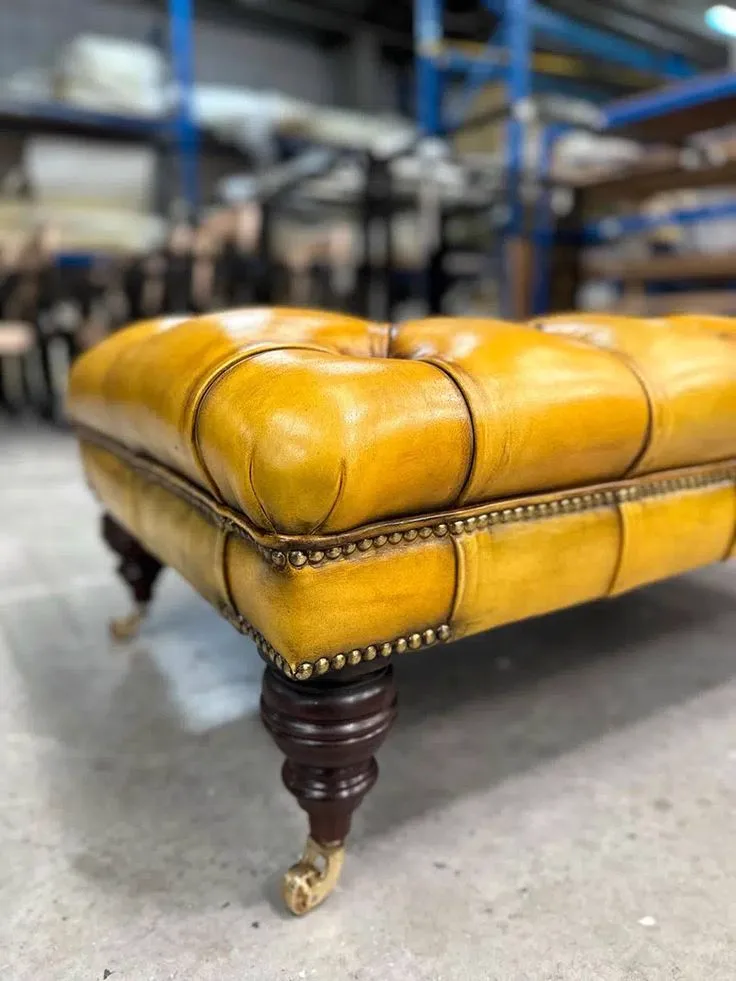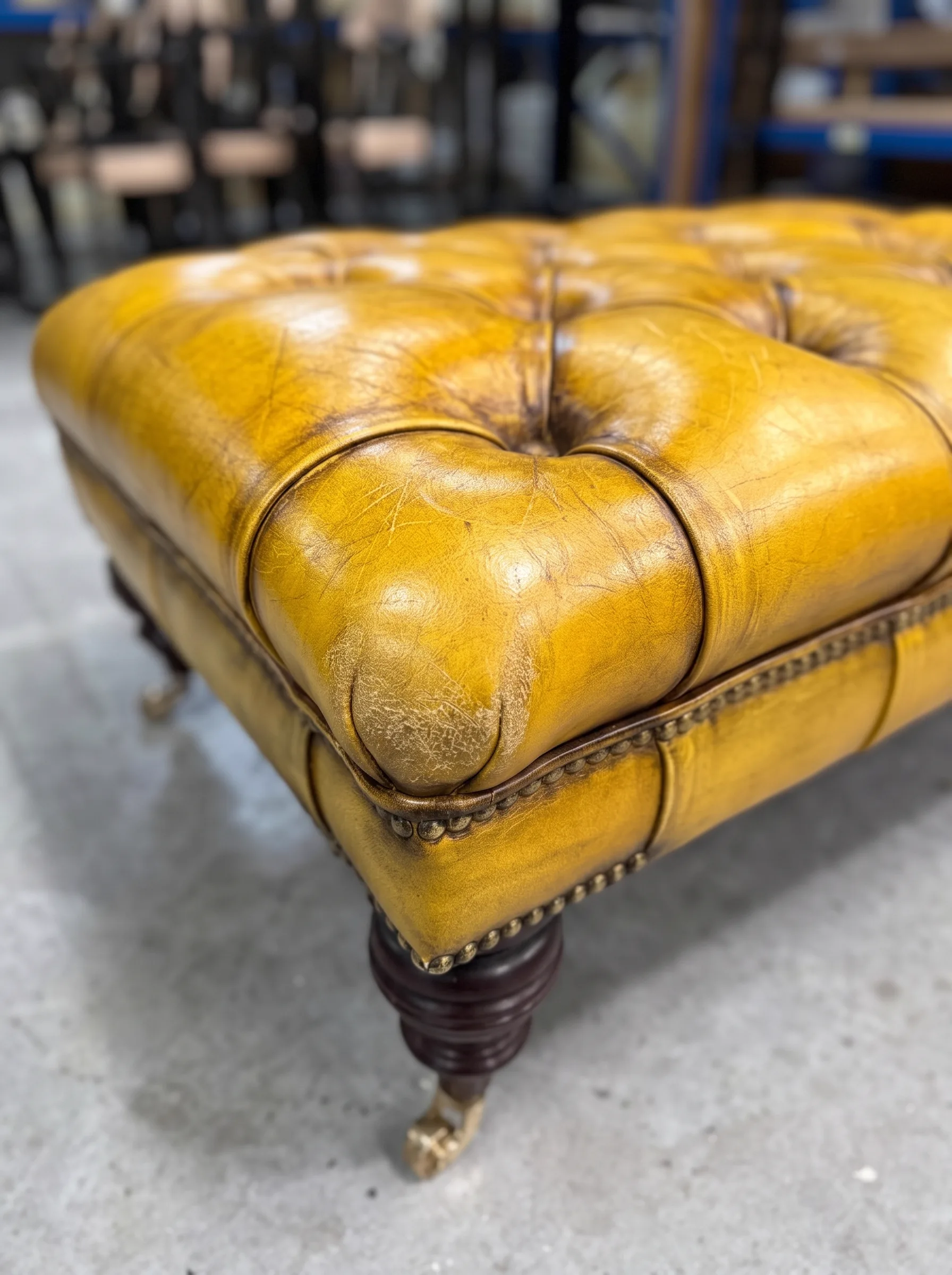
Two sofas in a showroom can look almost identical and carry similar price tags , but be made from leather that is fundamentally different. One was tanned the slow way: plant extracts over months, in a process unchanged for three thousand years. The other was tanned the fast way: industrial chromium salts in a rotating drum, done in 24 hours. If you are buying something you want to keep for 30 years, restore and pass on, or know you bought responsibly , this difference matters. This guide explains what vegetable tanning is, why it costs more, why it ages better, and how to tell which type you have. The deeper chemistry is in the dedicated guide on the science of leather tanning; what follows is the plain version.
What Is Leather Tanning and Why Does It Matter?
Start with the basic question. A raw animal hide, fresh from the slaughterhouse, is a sheet of wet protein that will rot within days if you do nothing to it. Tanning stops the rot. It stabilises the proteins so they no longer break down. It turns the raw material into the durable, flexible, structured thing we call leather.
The hide is made of collagen fibres , long protein chains that are interlinked but reactive and unstable when raw. Tanning cross-links those fibres so they become stable. The question is: what do you use for the cross-linking?
For most of human history, the answer was tannins from plants , mainly from the bark of trees like oak, chestnut, mimosa, and quebracho. You grind the bark, soak it in water, and the liquid is rich in naturally occurring compounds called polyphenols. These bond with the collagen chains and stabilise them. That is vegetable tanning.
In the 1850s, chemists found that chromium sulphate did the same cross-linking job , but far faster and more cheaply. Chrome tanning became the dominant industrial process. Today it accounts for roughly 80 to 90 percent of all leather produced worldwide. It is fast, cheap, and scalable. It is also the reason most leather furniture feels soft but thin, ages poorly, and cannot be meaningfully restored.
The plain version: vegetable tanning uses tree-bark extracts over months. Chrome tanning uses industrial chemicals over hours. The first builds leather to last 50 years. The second builds leather to survive 5 to 10. The price gap in the showroom rarely reflects the full lifetime cost gap.
How Does Vegetable Tanning Actually Work?
A traditional vegetable tannery looks nothing like a modern factory. The centrepiece is a series of large stone or concrete pits sunk into the ground. Each pit holds a tannin solution at a progressively stronger concentration. Hides move slowly through this sequence over weeks and months, absorbing tannins at each stage.
You cannot rush this in any meaningful way. Push the hide through stronger solutions too quickly and you get uneven tanning , the outer grain layer is over-tanned while the inner corium is still raw. The leather looks finished but has no structural depth. A traditional tanner will tell you: the hide is ready when it is ready. Hurrying produces an inferior product every time.
A full vegetable-tanning cycle runs 30 to 90 days per hide, depending on the tannery and the spec. The most respected traditional tanneries , including those that supply Poltrona Frau and the great Chesterfield workshops , run the longest cycles. Some run programmes of up to six months for the heaviest hides going into furniture built for 50-year lifespans.
After the pit sequence, the hide is dried and conditioned with fat liquor , the natural oils that keep the fibres supple , then finished to spec. From raw hide to finished leather, dozens of skilled decisions are made by hand at every stage.
Why Did Chrome Tanning Take Over, and What Does It Cost?
Chrome tanning is fast and efficient. Hides go into large rotating drums with a chromium sulphate solution. The drum's mechanical action combined with the reactivity of chromium ions completes the cross-linking in 24 to 48 hours rather than 30 to 90 days. The result is soft, uniform, consistently-coloured leather that is easy to dye and easy to finish at scale.
For the fashion industry , handbags, shoes, garments , chrome tanning makes sense. These items have short lifespans and fashion cycles where 50-year durability is irrelevant. Chrome-tanned leather takes dye well, can be split to very thin gauges without cracking, and works across a wide range of fashion requirements.
For furniture you want to restore across generations, the problems with chrome tanning build over time. The chrome-tanned hide structure is less dense than vegetable-tanned. It starts softer but ages worse , the fibres break down faster under UV and mechanical stress. It cannot absorb conditioning treatments as well because the chrome-tanned structure is more chemically inert. And when chrome-tanned leather cracks or delaminates, the damage is largely irreversible without full panel replacement.
The environmental cost is the other side. Chromium tanning produces wastewater containing hexavalent chromium , a toxic heavy metal. Responsible tanneries treat this waste and recover the chromium. But a large share of global leather production happens in regions with weak environmental rules. In those places, the chromium waste goes into rivers and groundwater. When the leather industry's pollution problem makes the news, it is almost always a chrome tanning problem in a poorly regulated context.
What Does Vegetable-Tanned Leather Feel and Look Like?
If you have only handled chrome-tanned leather, vegetable-tanned hide can surprise you. It is heavier. It is firmer. It has a characteristic warm smell , woody and slightly earthy, a trace of the tannin pits. The surface has a tighter, more structured feel than you might expect from "soft luxury leather."
That firmness is not a defect. It is a feature. The density comes from tannins penetrating through the full depth of the hide. That density is what lets you work, carve, mould, and stitch it in ways chrome-tanned leather cannot match. Traditional saddlers, bookbinders, and shoemakers have always used vegetable-tanned leather for exactly this reason.
Over years of use, vegetable-tanned leather builds a patina , a warm, deepening richness of colour and surface that chrome-tanned leather cannot replicate. The Chesterfield in your grandparents' study that turned from stiff caramel to deep burnished chestnut over decades? That is vegetable tannage doing its intended work. The aniline finish on a 30-year-old Poltrona Frau that looks richer now than when it was bought? Same mechanism.
Chrome-tanned leather fades instead of developing a patina. The surface may feel similar in year one. By year ten, the difference is visible to anyone who knows what to look for.
How Can You Tell Which Type of Leather You Have?
You do not need any special equipment. Three quick checks will get you most of the way there.
Check 1 , Look at the cut edge
Find a hidden edge of the leather , the underside of a cushion, the back of an arm, anywhere the leather wraps over a frame and you can see the cross-section. Vegetable-tanned leather shows a consistent warm tone all the way through: tawny, tan, warm brown. Chrome-tanned leather often has a pale blue-grey cast through the middle. That is the chromium still in the hide structure. It is not always visible, but when it is, it is unmistakable.
Check 2 , Feel the weight
Pick up a loose cushion if you can. Vegetable-tanned leather is noticeably heavier than chrome-tanned at the same thickness. The extra weight is the tannin-loaded fibre structure, which has more mass per unit volume than the chrome equivalent. If the cushion feels surprisingly light for a piece marketed as heritage construction, that is worth noting.
Check 3 , Check the brand documentation
Heritage Italian brands , Poltrona Frau in particular , state the tannage in their material documentation. Frau's Pelle Frau SC 27 is a vegetable-retanned and chrome-tanned combination that the brand documents explicitly. Some Chesterfield workshops also document their hide sourcing. If you have the original purchase papers, look for a tannage spec. If you bought second-hand, the first two checks plus a call to the manufacturer's archive will usually confirm it.
If you want certainty, a master restorator can confirm tannage with a spot chemistry test in minutes. The test is non-destructive and is a standard part of the diagnostic intake for any restoration project , as documented in the Project 001 Chesterfield case study.
Why Does Vegetable-Tanned Leather Restore So Well?
One of the most practical differences between vegetable and chrome tannage is how each responds to restoration. This matters a great deal over the lifetime of a piece of furniture.
Vegetable-tanned leather has an open, receptive fibre structure. When it is dry, it absorbs. When you apply a conditioning treatment , replenishing the fat liquor that keeps the fibres from cracking , the treatment penetrates deeply and evenly through the corium, the thick middle layer of the hide. The fibres are re-lubricated from within. That is why a well-maintained vegetable-tanned Chesterfield from the 1970s can still feel genuinely supple today.
Chrome-tanned leather is more chemically inert. It does not absorb conditioning treatments as deeply or evenly. Surface conditioners stay near the top rather than reaching the corium. Over time, the fibre structure dries out in ways that are hard to reverse. The leather may look fine on the surface while becoming brittle underneath. When it eventually cracks, the crack runs through the full thickness rather than staying at the grain layer where it could be fixed.
This difference in restorability is an environmental argument as much as a quality one. A vegetable-tanned sofa you can restore multiple times across 50 years replaces several chrome-tanned sofas that go to landfill. Buying vegetable-tanned leather and maintaining it is the lower-waste choice across any realistic ownership period. The guide on the heirloom steps covers what long-term care of a vegetable-tanned piece actually involves.
Why Does Vegetable-Tanned Leather Cost So Much More?
The price difference between vegetable-tanned and chrome-tanned leather furniture is real , and often larger than buyers expect. A Chesterfield built on properly specified vegetable-tanned hide from a traditional tannery will cost meaningfully more than a comparable chrome-tanned piece. The reasons are clear once you understand the process.
Time is the biggest factor. A hide that takes 60 to 90 days to produce ties up tannery capacity, skilled labour, and raw material capital for three months. A hide that takes 24 hours does not. The tannery passes that cost into the hide price. The furniture maker pays more. You pay more for the finished piece.
Skill is the second factor. Traditional vegetable tanneries employ craftspeople who have spent years learning to read hides by hand , knowing when a hide needs more time, when the tannin concentration needs adjusting, when a specific animal's hide needs different handling. This knowledge cannot be automated. It is paid for in wages and in decades of apprenticeship. Chrome tanning is largely automated and needs far less skilled oversight.
Yield is the third factor. Vegetable tanning is less forgiving of hide defects. A hide with natural scarring, uneven thickness, or inconsistent grain shows those characteristics more clearly in a vegetable-tanned finish than in a chrome-tanned one. Chrome tanning is more uniform and easier to correct. Traditional tanneries end up with a higher share of seconds or lower-grade output per batch, which reduces their sellable yield.
What the higher price buys you is a different lifetime cost calculation. A vegetable-tanned sofa properly cared for and restored over 40 years is likely to cost less in total than three chrome-tanned replacements across the same period. At the end of 40 years, your vegetable-tanned piece has a patina, a character, and potentially a market value that no replacement ever will. It also leaves a fraction of the material waste.
How Should You Buy and Care for Vegetable-Tanned Leather?
If you are buying a new piece of leather furniture and want to own it long term, ask about the tannage directly. Most showrooms will not volunteer this information , it requires the salesperson to know their supply chain, and many do not. The right question is: "Can you tell me the tannage and the tannery?" A brand or workshop that cannot answer is likely selling chrome-tanned leather regardless of what the marketing says.
If you already own a piece and are unsure about the tannage, the three checks above are a good starting point. A master restorator can confirm with certainty at intake. The tannage matters for care decisions. Vegetable-tanned leather needs conditioning treatments matched to its tannage. Using the wrong conditioning chemistry on vegetable-tanned hide is a long-term mistake that is hard to undo. The guide on the science of leather moisturizing explains why matching the conditioning to the tannage matters.
For day-to-day care, vegetable-tanned furniture in a home faces specific challenges. The monsoon humidity swings in the monsoon leather care guide speed up tannin migration in high-humidity conditions. The dry winter months in the winter smog guide drive fat-liquor depletion. A conditioning calendar matched to the NCR climate cycle is more useful than a generic "condition once a year" rule.
The full-grain versus top-grain guide covers how grain grade interacts with tannage , both variables together determine the restoration potential of a hide, not either one alone. The finish guide explains how the aniline, semi-aniline, and pigmented finish hierarchy sits on top of the tannage and shapes your day-to-day care.
If you own a vegetable-tanned piece in India , Chesterfield, heritage Frau, traditional English club, or any piece where tannage-matched care matters , you can book tannage confirmation, conditioning assessment, and expert restoration through heritage leather restoration, surface refinement, and doorstep service across Noida, Faridabad, and Ghaziabad. Traditional pit tannage turns up most often in the houses documented across our luxury sofa brand restoration pages.
The short version of everything on this page: slow leather is better leather. A hide that took three months in a traditional pit tannery, built into a frame meant to be repaired rather than replaced, and maintained with the right chemistry across decades , that is the opposite of a disposable luxury object. It pays back across the full ownership period: in durability, character, restorability, and the satisfaction of owning something made properly.