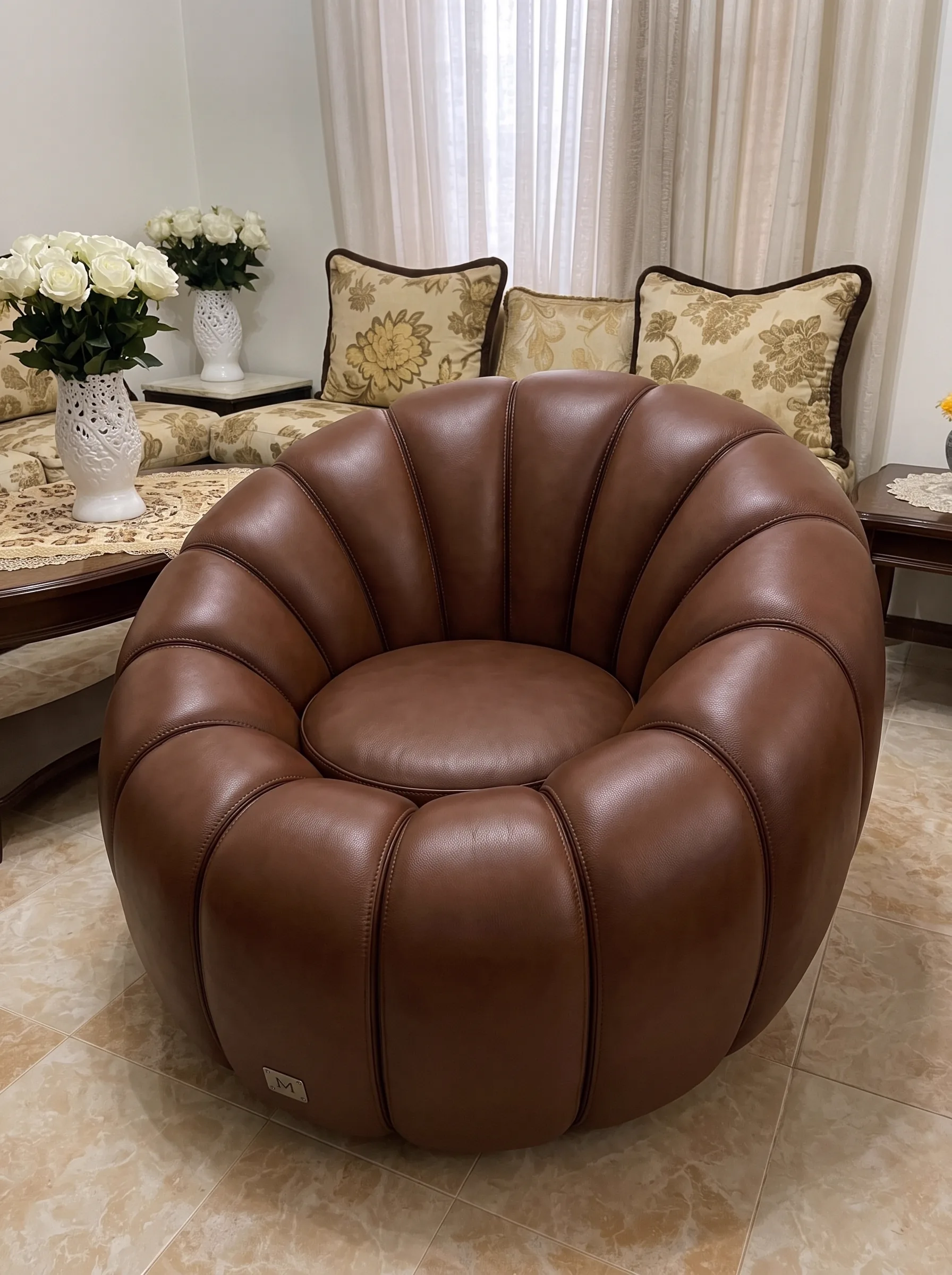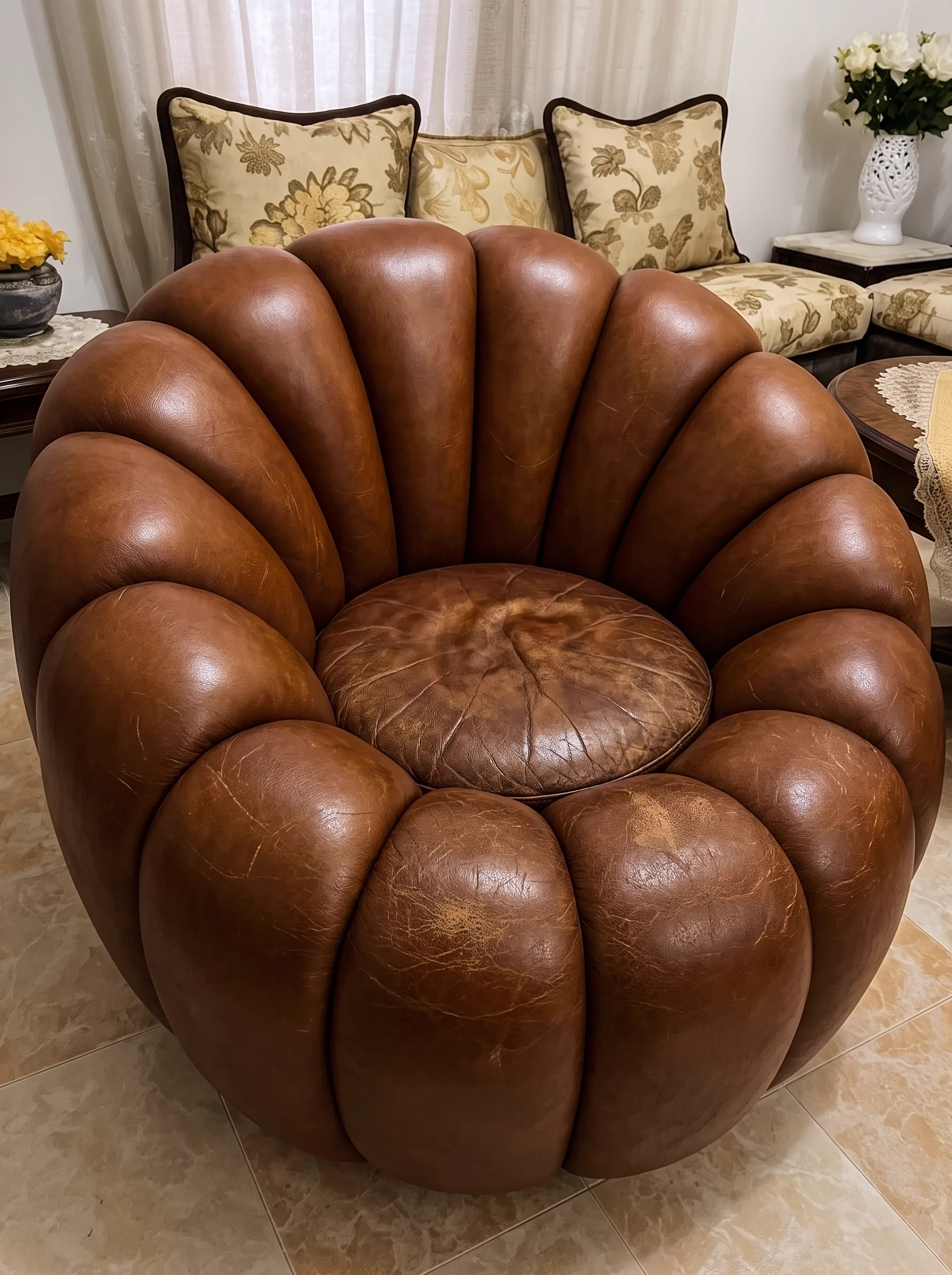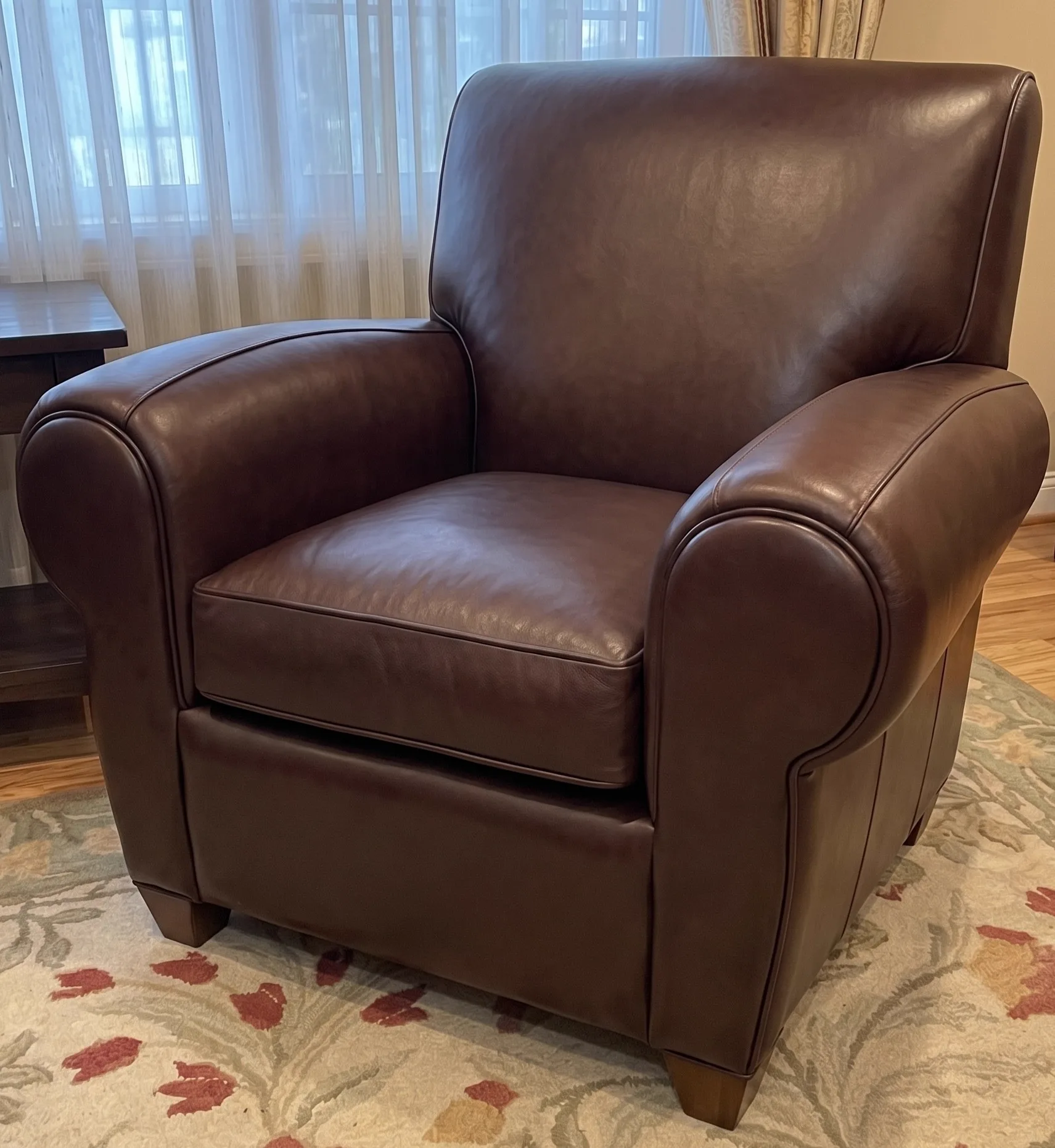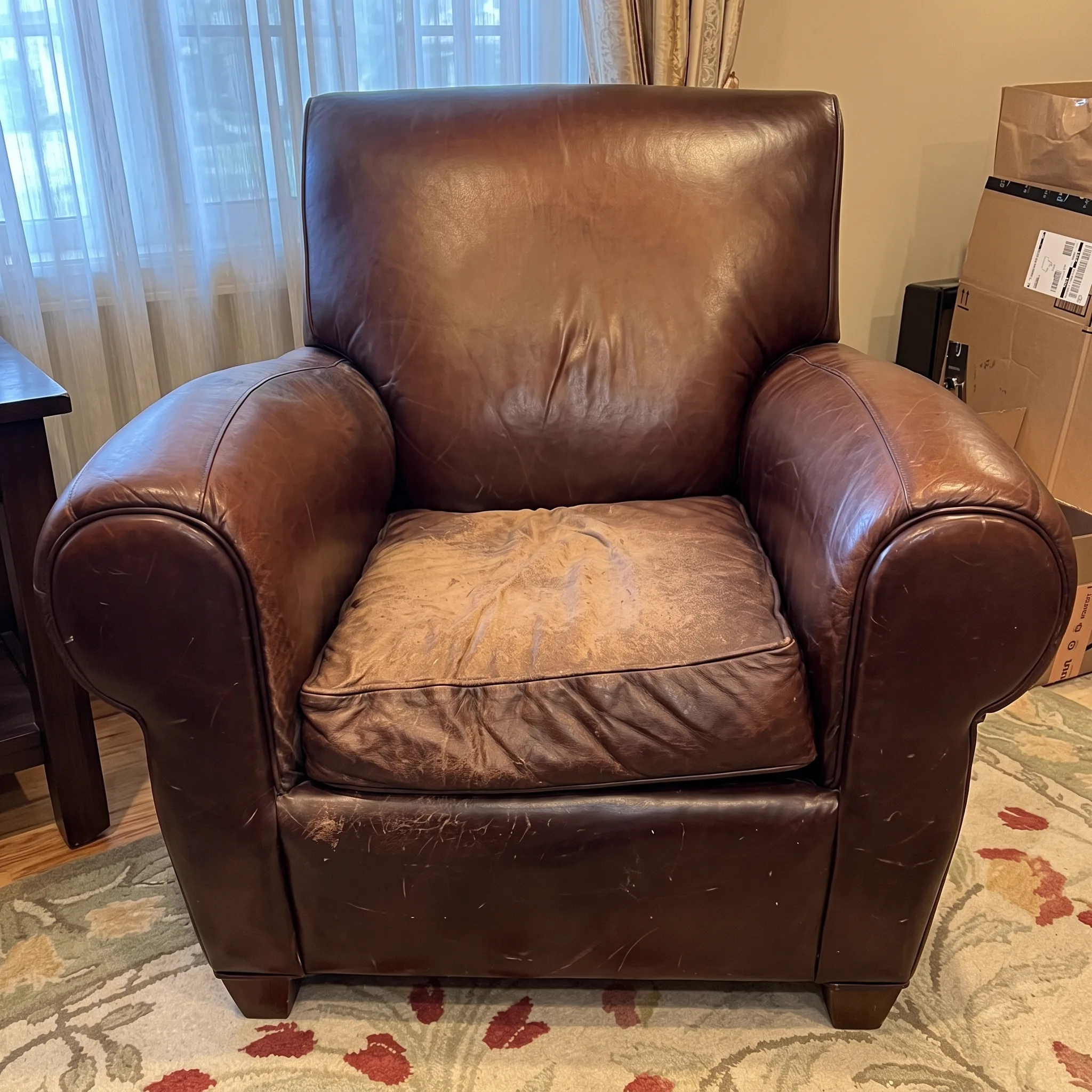
If you have ever used a leather product that promised to "feed" or "restore" your sofa , and watched it darken, stiffen, or peel within a year , the most likely explanation is a chemistry mismatch. Every decision about a leather sofa: which cleaner, which conditioner, which colour system, which heat is safe, traces back to a single chemical event that happened months before the hide was cut into panels. That event is the tanning. Vegetable, chrome, and aldehyde tannages produce three structurally different materials that share only the word "leather." Treating a chrome-tanned Natuzzi nappa like a vegetable-tanned saddle is the most common care error , and the source of damage that no consumer-grade product can undo. This article covers the chemistry of all three tannages, how to identify which one you have, and what care each one actually needs. Terms used throughout are defined in the leather conservation glossary.
What Does Tanning Actually Do to Leather?
A raw hide from the slaughterhouse is chemically unstable. The collagen fibres are reactive, the protein chains are vulnerable to bacterial degradation, and within 48 hours the hide will start to rot. Tanning converts this perishable raw material into a stable, durable substance that can survive for centuries.
The mechanism is the same across all tannages. Bonds are introduced between the collagen fibres that lock the protein structure into a permanent state. The tannage agent , chromium salts, plant tannins, or aldehyde compounds , cross-links the collagen chains the way mortar cross-links bricks in a wall. Once cross-linked, the protein no longer hosts bacteria, no longer denatures with moderate heat, and no longer absorbs water destructively. The hide becomes leather.
Where the three tannages differ is in the specific chemistry of the cross-link, the time it takes, the character of the finished hide, and what that means for everything that follows. The cross-link decides tensile strength, drape, heat resistance, colour absorbency, response to fat liquor, patina pathway, and the failure modes the leather will eventually develop. The cross-link is the leather's identity.
The diagnostic rule: before any cleaner, conditioner, or restoration product touches your sofa, you need to know the tannage. Most product damage in luxury leather comes from a chemistry mismatch between the hide's tannage and the product applied to it.
What Is Vegetable Tanning and Why Does It Still Matter?
Vegetable tanning is the oldest tanning chemistry humans have continuously used. The process predates written history. Egyptian, Roman, Indian, and Chinese tanneries all used variants of the same chemistry , bark extracts from oak, chestnut, mimosa, quebracho, or sumac, soaked into the hide over weeks to months until the tannin molecules permanently bonded to the collagen.
The active compounds are polyphenolic vegetable tannins , large, complex plant molecules with numerous hydroxyl groups. These hydroxyls form hydrogen bonds with the collagen chains, building a cross-link network that stabilises the hide. The bond is not as tight as chrome's coordination complex (covered below) but is more chemically flexible. Vegetable-tanned leather accepts a wider range of subsequent treatments and develops a deeper patina with age because the bond does not lock the dye chemistry into a fixed position.
The vegetable tanning timeline
A traditional veg-tan tannery runs the hide through a sequence of pits or drums, starting at low tannin concentration and building over 30 to 90 days. That slow, gradual penetration produces the warm tan-brown core colour and the characteristic firmness of the finished leather. Rush this timeline and the tannins only reach the outer layers, leaving an unstabilised core that fails within years.
Where vegetable tanning belongs
Saddlery, equestrian leather, briefcases, traditional English club chairs, museum bookbinding, and luxury small leather goods , wallets, belts, cardholders , are where vegetable tanning performs best. The leather's firmness, memory, and patina development suit those uses. Furniture made from vegetable-tanned leather is rare in the modern luxury market. Most heritage Chesterfield production has shifted to chrome-tanned base hides with surface finishing that imitates the veg-tan look.
Vegetable tanning vulnerabilities
Vegetable-tanned leather is the most water-sensitive of the three tannages. Prolonged wetting causes irreversible darkening, swelling, and tannin migration. Heat above 60°C shrinks the leather dramatically and permanently. Strong alkalinity attacks the polyphenolic bonds. Strong acidity dissolves the tannin complex. The beauty of veg-tan leather comes at the cost of fragility , protective care matters more here than with chrome.
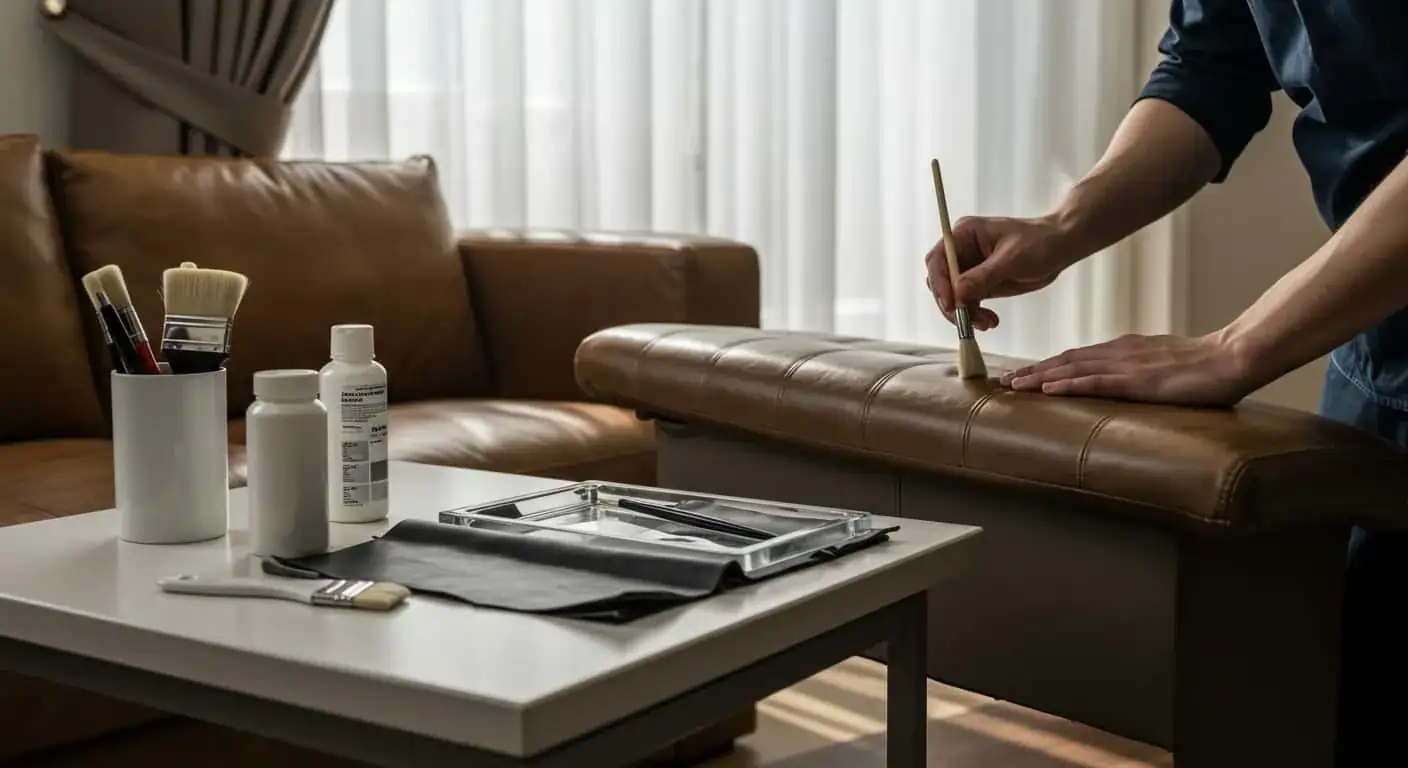
What Is Chrome Tanning and Is It in Your Sofa?
Chrome tanning was developed commercially in 1858. Within four decades it became the dominant tanning chemistry in the industrial world. Today about 85 percent of all leather produced globally is chrome-tanned , and nearly 100 percent of luxury upholstered furniture leather. Every premium Italian sofa in the Indian market , Natuzzi, Poltrona Frau, B&B Italia, Fendi Casa , is chrome-tanned at the base, regardless of the surface finish applied later.
The active compound is basic chromium sulphate , Cr(OH)SO₄ , which delivers trivalent chromium ions (Cr III) to the collagen matrix. The chromium ion forms a coordination complex with the carboxyl groups of the collagen side chains. This builds a much tighter cross-link than vegetable tannins can achieve. The bond is so robust that chrome-tanned leather can survive temperatures up to 100°C without shrinking , something vegetable tanning cannot match.
The chrome tanning timeline
Chrome tanning runs in 24 to 48 hours from start to finish , compared to weeks or months for vegetable tanning. The hide goes into a rotating drum with chromium sulphate liquor. The liquor is gradually basified to drive the chromium into the fibre matrix. The finished tanned hide comes out as wet-blue , soft, blue-grey, fully stabilised, and ready for retanning, fat liquoring, dyeing, and surface finishing. Most international leather trade happens at this wet-blue stage. Tanneries in Italy, Brazil, and India ship wet-blue hides worldwide for finishing closer to the buyer.
Where chrome tanning belongs
Upholstered furniture, automotive interiors (until aldehyde substitution), garments, footwear, and the entire luxury Italian furniture category. The drape, suppleness, dimensional stability, dyeability, and heat resistance make chrome the only tannage that produces the soft, draping nappa and aniline finishes that define modern premium leather. The dedicated guide on nappa leather restoration covers the specific chrome-tanned hides that Italian luxury brands use.
The Cr III versus Cr VI question
The chromium controversy around chrome tanning is real but widely misunderstood. The chromium used in tanning is trivalent chromium , Cr III , which is biologically inert and present as a trace nutrient in the human body. The hazardous form is hexavalent chromium , Cr VI , which is a confirmed carcinogen. A properly run tannery never produces Cr VI. The risk appears only when chrome leather degrades oxidatively over decades without proper care, when heat above 80°C converts some Cr III to Cr VI, or when low-quality tanneries cut corners. EU and IULTCS standards require Cr VI testing at the tannery. Leather from regulated tanneries , Italian, German, Indian premium , carries certification that Cr VI is below detection limits. Leather from unregulated sources carries no such assurance.
Chrome tanning vulnerabilities
Chrome leather's vulnerabilities come from chemistry mismatch, not environmental sensitivity. It rejects heavy natural oils , coconut, olive, mink, raw neatsfoot all darken chrome leather permanently and disrupt the chromium-collagen bond. The right approach is in the science of moisturizing: light synthetic ester emulsions, controlled droplet size, scheduled intervals. The finishing chemistry is equally specific. Wrong-pH cleaning attacks the chromium complex faster than it attacks vegetable tannins. That is why the pH balance steps are non-negotiable on chrome-tanned luxury hides.
What Is Aldehyde Tanning and Who Uses It?
Aldehyde tanning emerged in the late twentieth century as the chrome-free option for applications that require metal-free certification , automotive interiors (especially European premium brands), infant products, footwear linings, and any context where regulations or buyer preference ruled out chromium.
The active compound is most commonly glutaraldehyde , a five-carbon dialdehyde that cross-links collagen by reacting with the amine groups on lysine side chains. The bond is covalent rather than coordinated (chrome) or hydrogen-bonded (vegetable). It produces a leather with a characteristic near-white colour at the wet stage , called wet-white, in deliberate contrast to chrome's wet-blue. The result has excellent water resistance and full biodegradability under environmental exposure.
Where aldehyde tanning belongs
Premium European automotive , BMW, Mercedes, Volvo specify aldehyde-tanned for many interior applications. Infant products requiring chrome-free certification, performance footwear linings, and a growing segment of luxury furniture from manufacturers responding to buyer demand for chrome-free upholstery. The category is small in furniture but expanding, particularly in Scandinavian and Northern European brands that prioritise environmental certification.
Aldehyde tanning vulnerabilities
Aldehyde leather has narrower chemistry tolerances than chrome. Both alkaline and acidic excursions damage the covalent bond more aggressively than they damage chrome. UV exposure degrades aldehyde-tanned hides faster. The biodegradability that is an environmental plus is a service vulnerability: an aldehyde-tanned hide stored in damp conditions degrades visibly in years, where a chrome-tanned hide would last decades. The conditioning chemistry overlaps with chrome but tolerates a narrower band of conditioner formulations.
What Is the Beam House and Why Does It Affect Your Sofa?
Tanning is only one stage in a longer sequence. Before any tannin or chromium touches the hide, the raw material moves through the beam house , the part of the tannery that prepares the hide for tanning. Each beam-house step shapes how the hide later accepts dye, fat liquor, and finishing chemistry. That means it affects every restoration decision you might make decades later.
Soaking rehydrates the salted or dried raw hide back to working moisture levels. Insufficient soaking produces hard zones that resist tanning chemistry. Over-soaking produces soft zones that absorb tannins unevenly. Both failures appear at the finishing stage as panel-to-panel colour variation that no later fix can fully correct.
Liming exposes the hide to a high-pH calcium hydroxide bath that swells the fibre matrix, dissolves residual hair root, and opens the structure to receive tanning chemistry. The lime soak is what gives traditional leather its characteristic open pore structure. Under-limed hides produce tight, low-character grain.
Deliming and bating bring the hide back to the slightly acidic pH (around 5.5) at which tanning occurs cleanly. Bating uses controlled enzymatic action to soften the fibre matrix and build the suppleness that defines premium leather. Heritage Italian tanneries bate longer than industrial competitors. That difference is one of the things that separates a Pelle Frau hide from a generic chrome-tanned upholstery panel.
Pickling drops the pH further (to about 2.5–3.0) immediately before chrome tanning. This prevents the chromium from precipitating on the surface before it can penetrate the fibre matrix. The pickle is what lets chrome tanning complete in 24 to 48 hours rather than weeks.
Each beam-house decision compounds. A hide that leaves the beam house with uneven absorption never produces a uniform finished panel, no matter how skilled the finishing tannery is. That is why provenance matters in premium leather. The beam house in Arzignano, Vicenza, or Santa Croce sull'Arno , the Italian leather district capitals , is what builds the foundation that lets a Frau or Natuzzi hide accept the finishing chemistry that defines those brands.
What Happens After Tanning , Retanning, Fat Liquoring, and Finishing
Tanning produces stabilised crust leather , chemically settled but not ready for use. The finishing cycle that follows is what produces the leather you actually see and touch. Three steps matter most for restoration work, and you should understand them as an owner of a luxury hide.
Retanning
Retanning is a second tanning step, often using a different tannage from the primary tanning. A chrome-tanned base hide may receive a vegetable retan to add firmness, a synthetic retan to improve dye uptake, or an aldehyde retan to soften the hand. Retanning is invisible to you but decides whether the leather will accept a particular finish. Heritage Italian luxury hides often combine a chrome base with a controlled vegetable retan. That hybrid produces the deep patina-development of vegetable leather combined with the drape of chrome.
Fat liquoring
Fat liquoring deposits an emulsion of oils and surfactants onto every collagen fibre in the hide. The detailed mechanism is in the science of moisturizing. The percentage and composition of fat liquor is matched to the tannage , chrome hides receive 6 to 10 percent fat liquor by weight, vegetable hides 4 to 8 percent, aldehyde hides 5 to 9 percent. The exact recipe determines whether the finished hide feels buttery or dry, whether it drapes over the cushion frame or stands stiff, and whether it accepts conditioning over decades or stops absorbing after a year.
Surface finishing
The finishing line applies dye, pigment, and top-coat in sequence. The three premium furniture finishes , aniline, semi-aniline, and pigmented , are covered in the three-finishes guide. The finishing chemistry that adheres to the hide is determined by the tanning chemistry beneath it. A polymer top-coat that bonds beautifully to chrome leather may delaminate within months on aldehyde leather. A pigment binder that loads correctly on vegetable leather may bleed colour on chrome. Tanning chemistry sets the floor. Finishing chemistry must respect it.
How Do You Identify the Tannage of Your Sofa?
The steps below identify the tannage of any leather sofa in about five minutes. Run them in sequence on an inconspicuous area , the underside of a cushion or the back panel of an arm.
Step 1 , Cut edge inspection. Examine any visible cut edge under raking light at 5x magnification. Chrome-tanned hides show a faint blue-grey core throughout the cross-section. Vegetable-tanned hides show a warm tan-brown core. Aldehyde-tanned hides show a near-white core. That colour is the residue of the tanning chemistry visible in the unfinished interior of the hide.
Step 2 , Drape and stiffness check. Bend a panel section gently. Chrome leather drapes softly with high elasticity , the panel falls into a smooth curve. Vegetable leather feels firmer with more memory , the panel holds whatever shape you bend it into. Aldehyde leather sits between: softer than vegetable, less elastic than chrome.
Step 3 , Smell test. Bring a clean panel section close to your nose. Chrome leather has a faint clean chemical scent , almost neutral, slightly metallic. Vegetable leather smells of bark, tannins, and tea. Aldehyde leather is nearly odourless. The smell test is the most reliable diagnostic when you have no lab equipment.
Step 4 , Brand and provenance check. Italian luxury furniture brands , Frau, Natuzzi, B&B Italia, Fendi Casa, Cassina , are almost always chrome-tanned. Saddlery, English club leather, briefcases, and traditional craft leather are usually vegetable-tanned. Premium European automotive , BMW, Mercedes, Volvo , increasingly uses aldehyde tanning. Provenance gives you a strong starting assumption even before the physical tests confirm it.
To identify the finish type within the tannage, run the parallel diagnostic in the aniline, semi-aniline, and pigmented guide and the wax-oil test in the pull-up versus pigmented guide. Tannage and finish are independent variables , the same chrome-tanned base hide can carry any of the three luxury finishes.
How Should You Care for Each Type of Tannage?
The tannage decides which conditioner, which cleaner, which heat exposure, and which restoration steps are right for your sofa. Using the wrong tannage's steps is the source of most consumer-grade leather damage.
Chrome-tanned care
- Light synthetic ester emulsion conditioners only. No heavy natural oils.
- pH-neutral cleaning, narrow band 5.0 ± 0.5. Off-pH attacks the chromium complex.
- Heat tolerance up to 100°C briefly. Sustained heat above 80°C risks Cr III oxidation.
- Conditioning interval: 6 to 12 months depending on finish, per the moisturizing guide.
Vegetable-tanned care
- Heavier natural oil dressings acceptable , neatsfoot, mink, traditional saddle compounds work as designed.
- pH band slightly wider, 4.0 to 6.0. But strong alkalinity still attacks the polyphenolic bonds.
- Heat tolerance limited to 60°C. Above this the leather shrinks dramatically and permanently.
- Water sensitivity high. Prolonged wetting causes irreversible darkening and tannin migration.
- Conditioning interval: 4 to 8 months, shorter than chrome because the hide accepts more product per cycle.
Aldehyde-tanned care
- Specialised aldehyde-compatible conditioners. Many chrome-grade products work; some do not. Match formulation to tannage.
- Strict pH band, 5.0 to 5.5. Narrower than chrome. Off-pH excursions damage faster.
- UV sensitivity higher than chrome. Reference the UV degradation protocol with shorter intervals.
- Storage in damp conditions accelerates degradation. The biodegradability that is environmentally celebrated is a service vulnerability.
Why Does Tannage Matter When You Restore Leather?
Every restoration fix starts with the tannage. When a damaged Frau Pelle SC armchair arrives at the workshop, the technician's first technical question is not "what is the visible damage" , it is "what tannage is this hide." The answer determines which cleaning chemistry, which fat liquor blend, which pigment binder, and which top-coat lacquer is safe to apply.
Micro-pigmentation on a chrome-tanned aniline hide uses a different binder system than the same procedure on a vegetable-tanned bridle leather. The finishing layer must bond to the tannage chemistry beneath it. Mismatching the binder produces a top-coat that delaminates within months. The seven-stage workshop protocol in the micro-pigmentation guide includes a tannage identification step before any pigment is mixed, for exactly this reason.
Re-fatliquoring , the workshop fix that follows years of fat liquor depletion , is equally tannage-specific. The fat liquor emulsion used on chrome hides will not bond to a vegetable hide. The heavier traditional dressing used on vegetable hides will overwhelm a chrome hide and permanently darken it. Matching the chemistry to the tannage is the difference between restoration and compounding the damage.
Climate response also varies by tannage. The monsoon leather care steps are matched primarily to chrome-tanned hides because that is what 95 percent of Indian luxury furniture is. The same humidity that causes mild fat liquor migration on a chrome Natuzzi can produce severe tannin bleed on a vegetable-tanned saddle hide stored under the same conditions. If you own vegetable-tanned heirlooms , Chesterfield-style English clubs, vintage briefcases , treat the published Indian climate intervals as a starting point and condition more frequently.
"The tannage is the leather's accent. You can say the same thing to a chrome-tanned hide and a vegetable-tanned hide , and only one of them will understand you. Match the chemistry to the tannage and the leather will outlive its owner."
Why Getting the Tannage Right Is the Most Important Decision
Every decision you make about a leather sofa , which cleaner, which conditioner, which restoration fix, which climate steps , flows from the tanning chemistry applied to the hide before it ever entered the upholstery workshop. Tannage is the foundation. Get the tannage right in the diagnostic, match the chemistry to the tannage in every subsequent step, and a luxury Italian piece will outlast its original owner. Get the tannage wrong , treat a chrome hide like a vegetable saddle or vice versa , and the failure timeline compresses from decades to years.
If you own a Natuzzi, Poltrona Frau, Fendi Casa, or B&B Italia, the steps are consistent: pH-neutral chemistry, light synthetic ester conditioning every 6 to 12 months, climate-matched care through the Indian seasonal cycle, and tannage-matched workshop restoration when damage appears. You can book expert repair before it spreads, or surface refinement , the workshop intake starts with tannage identification and every downstream chemistry decision follows from that single diagnostic.
Bookmark this article. The next time a product label promises to "feed" leather without specifying the tannage, the chemistry on this page tells you whether that product should go anywhere near your hide.