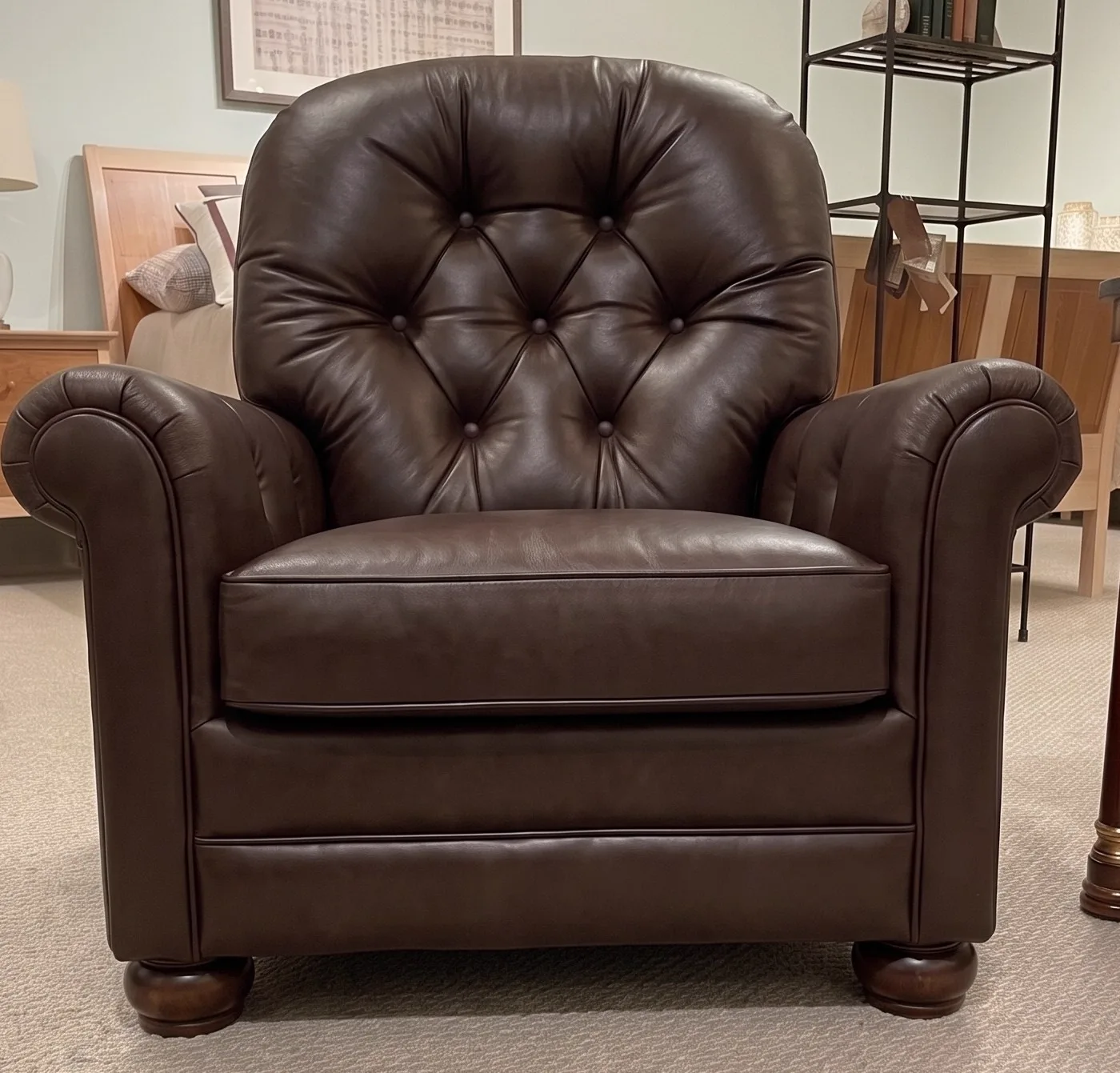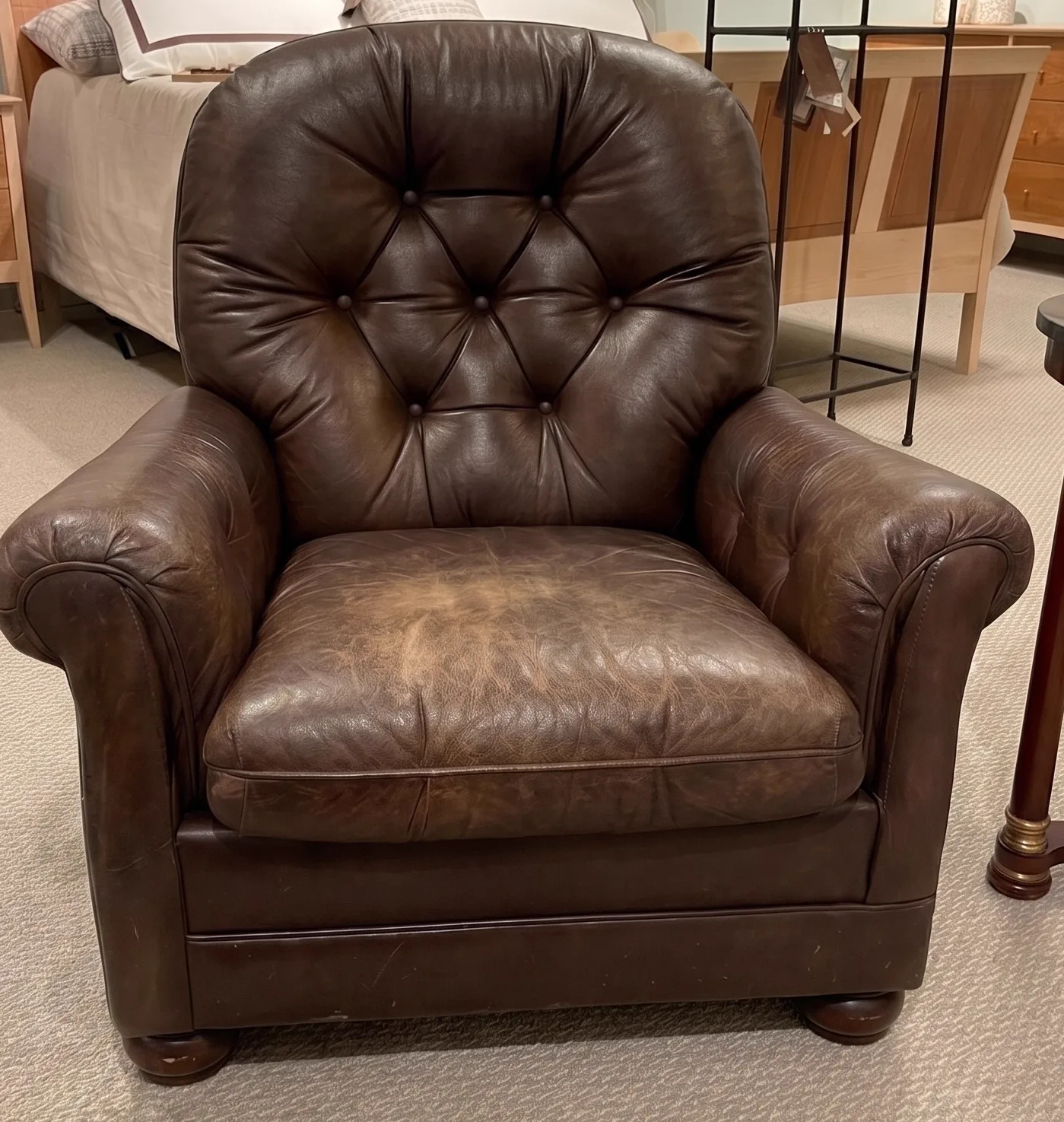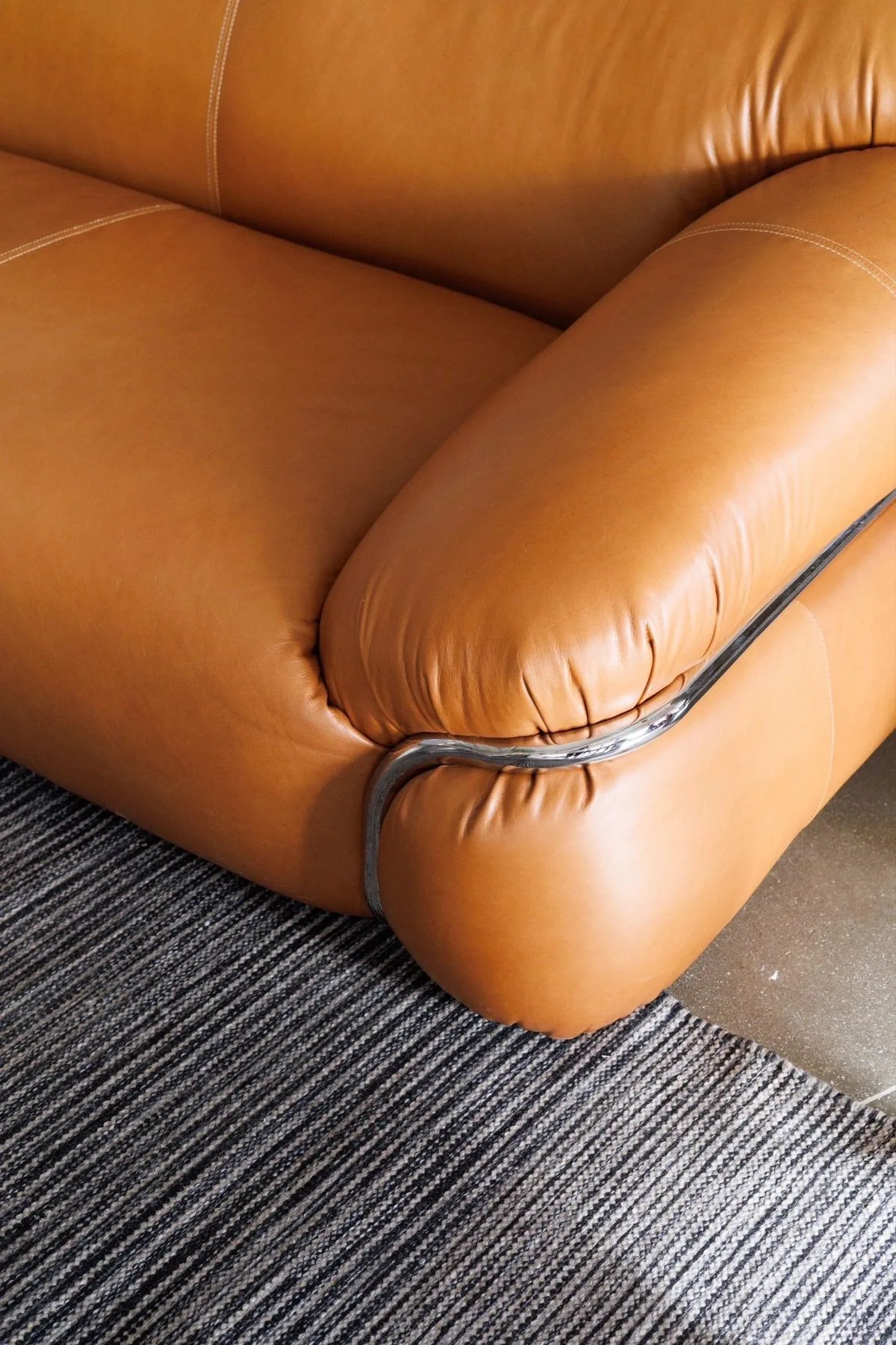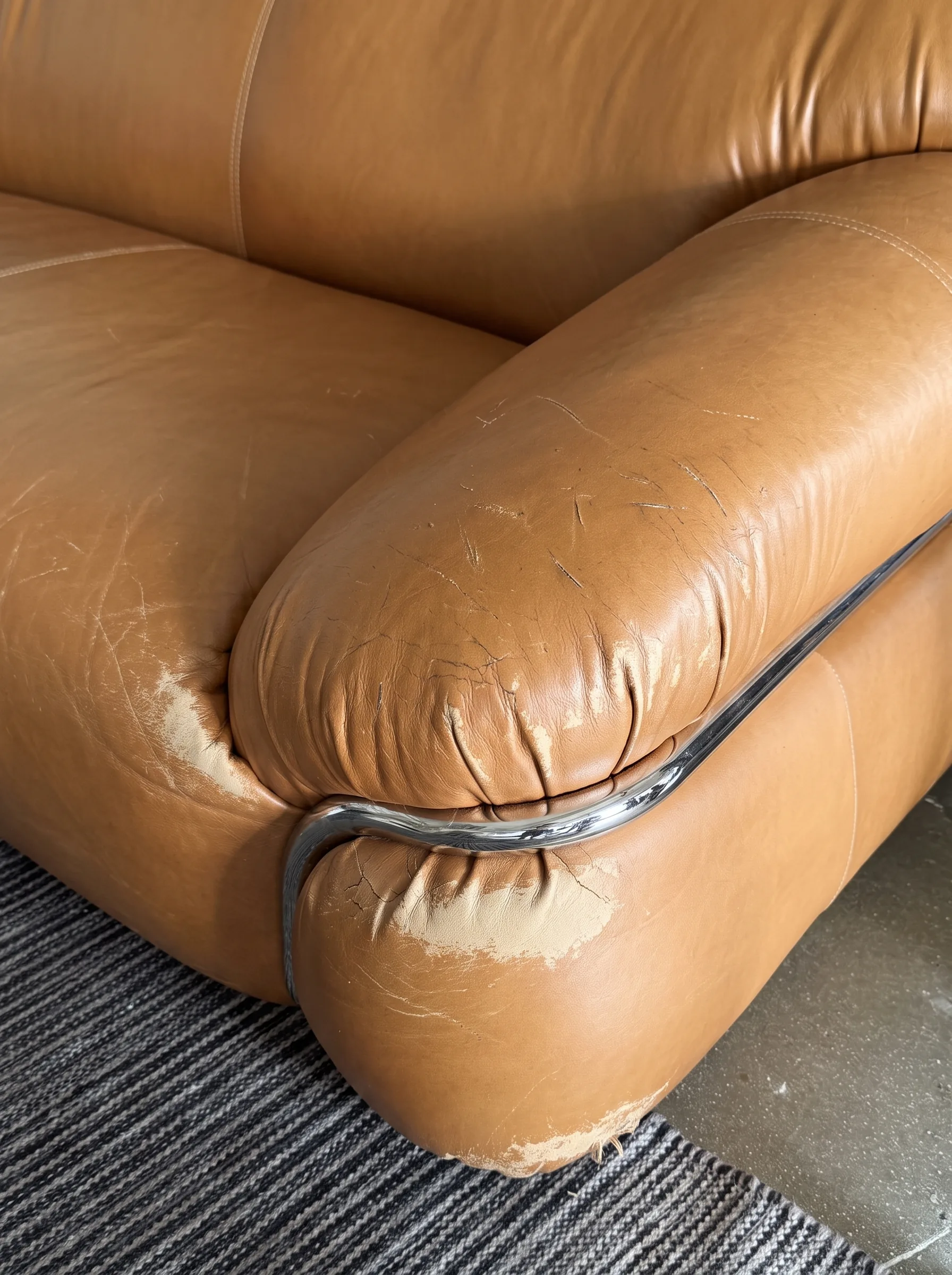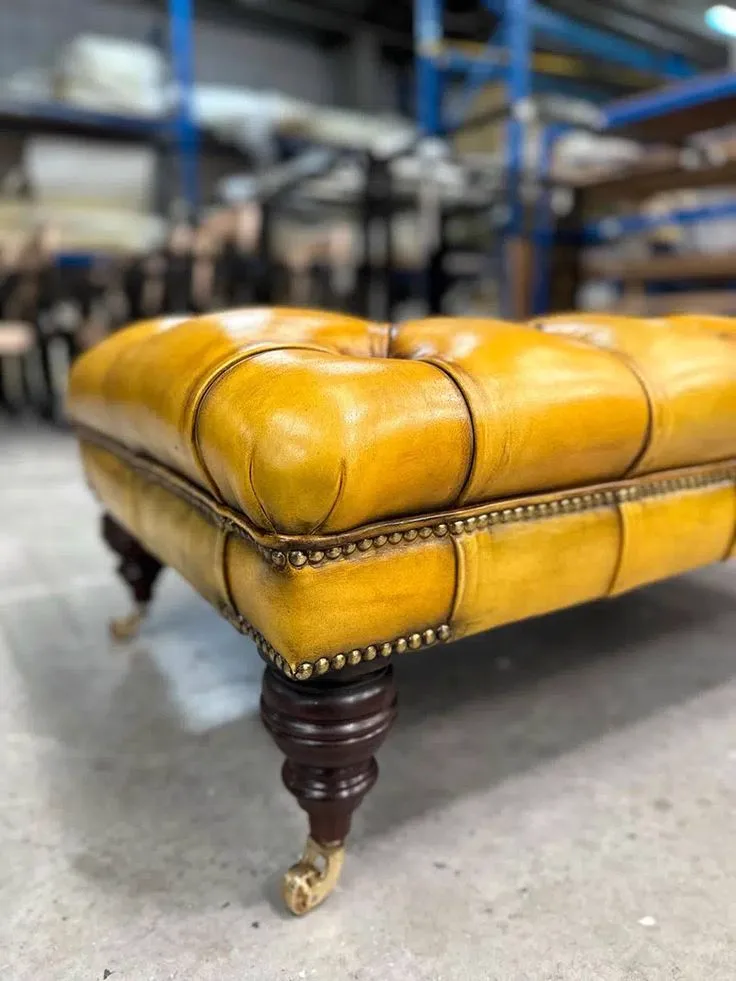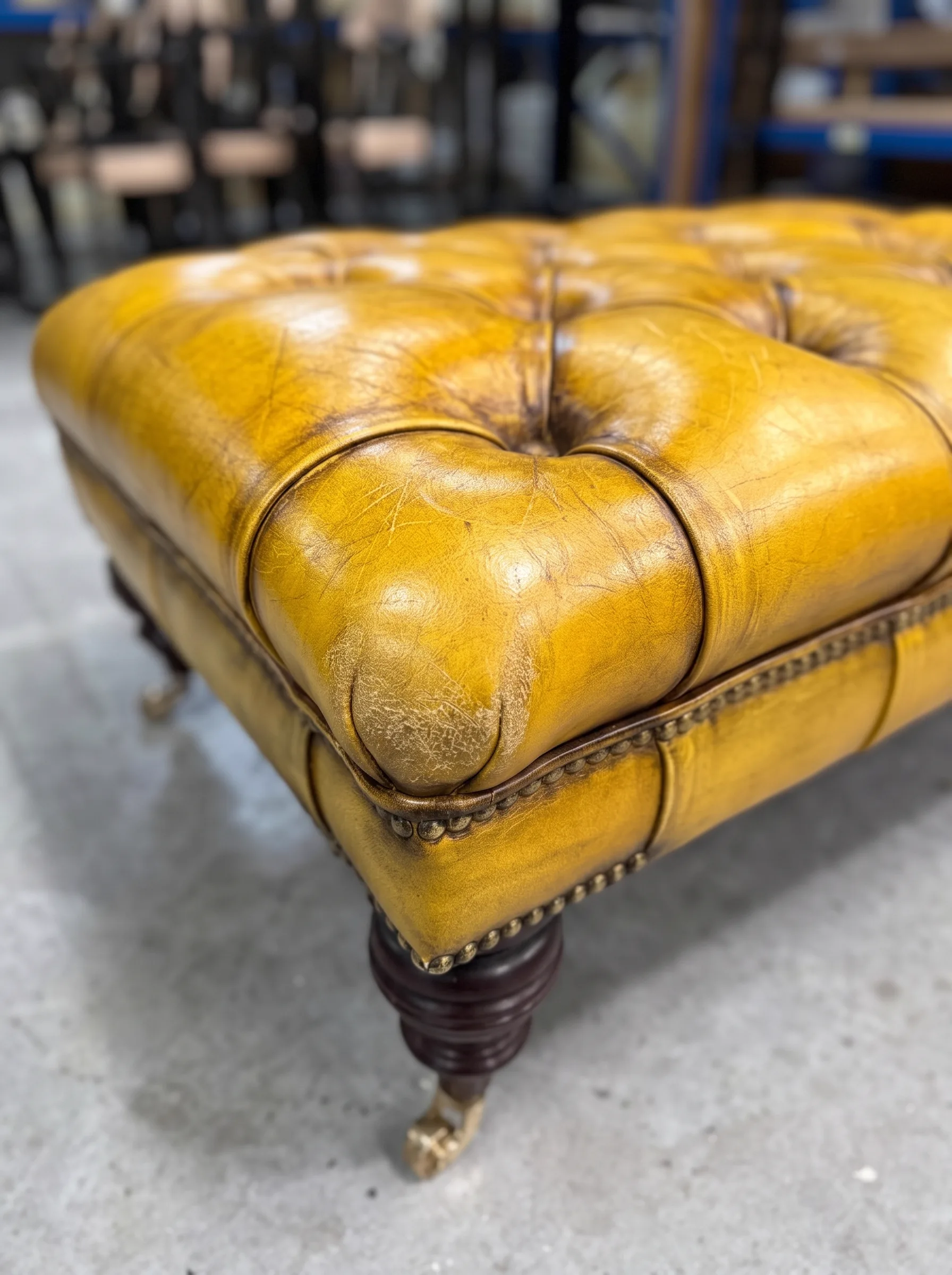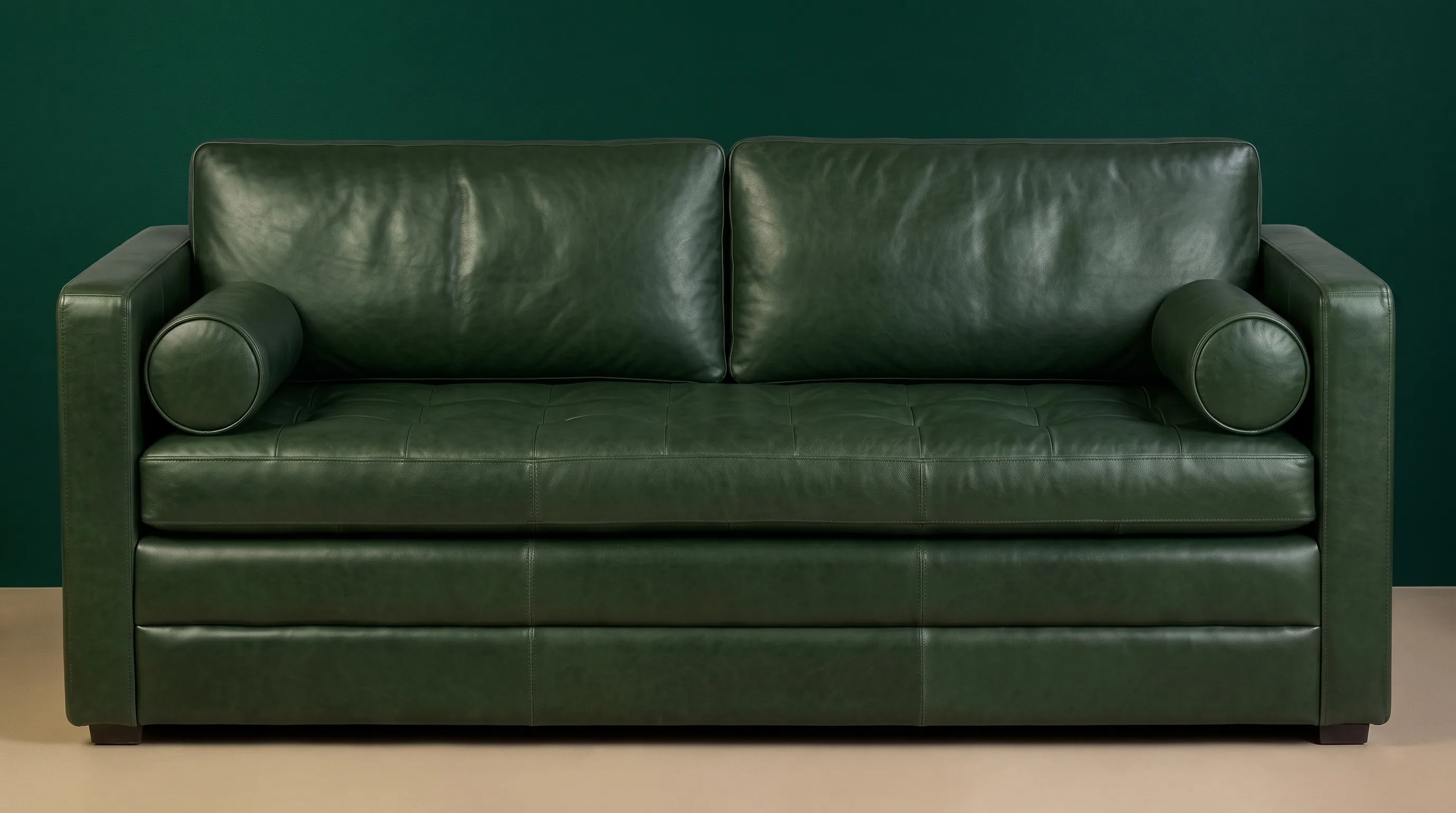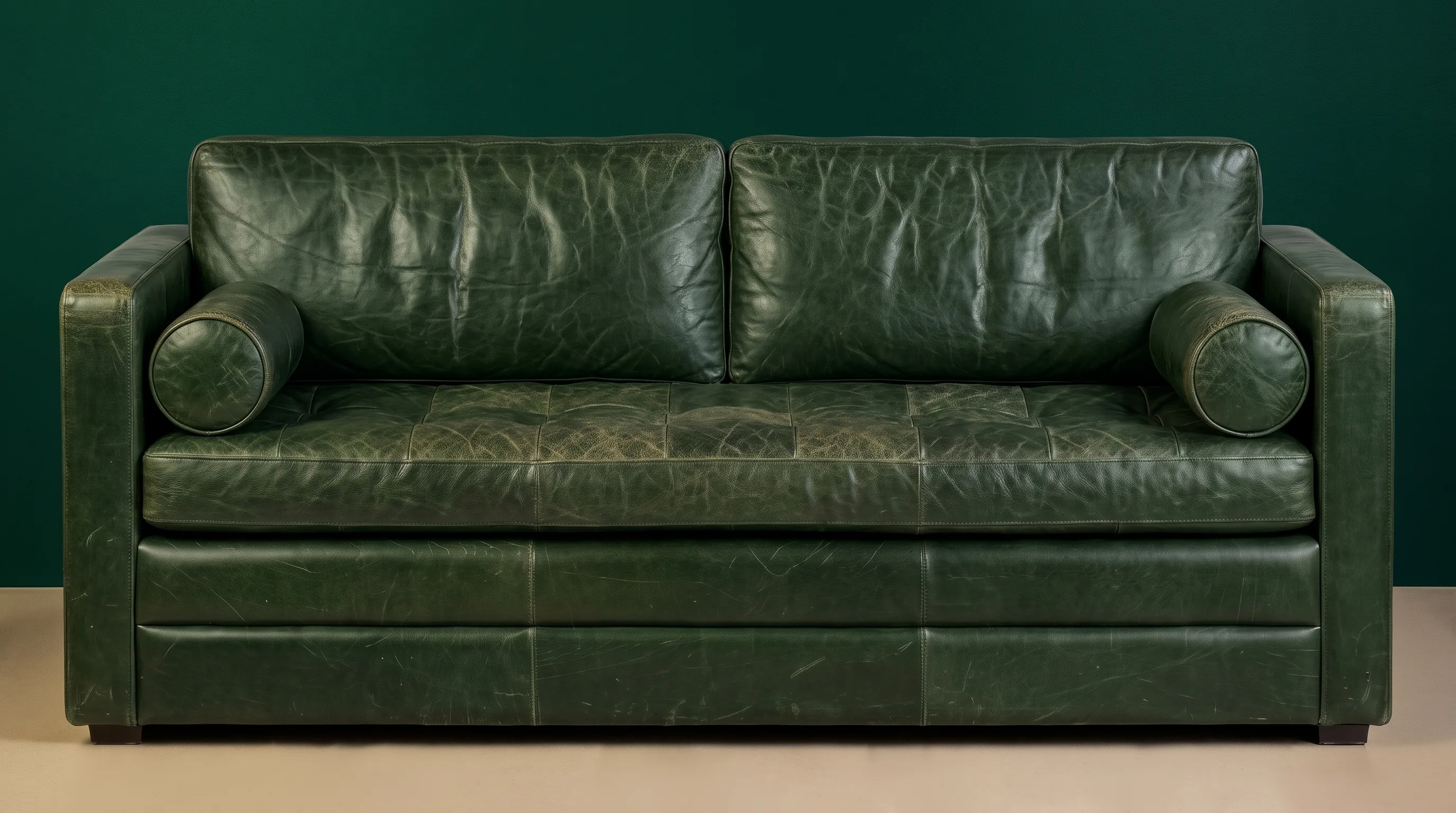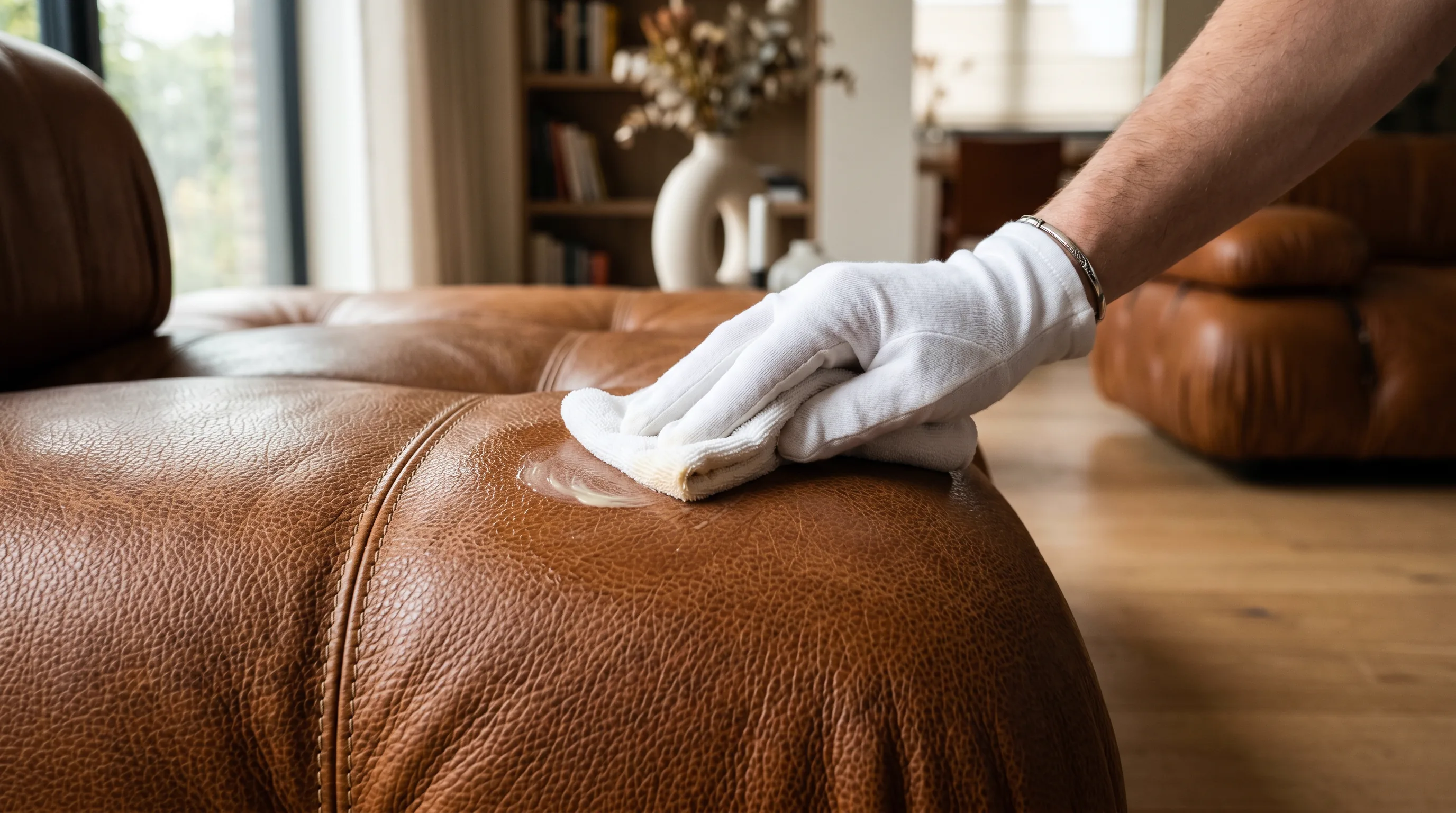
Your nubuck armchair and a suede chaise look almost identical from across the room. They share a velvety feel that most people , including many furniture sellers , cannot reliably tell apart by touch. The chemistry behind them is opposite. The vulnerabilities are opposite. The care steps are opposite. Cleaning one as if it were the other is the most common mistake in napped-leather ownership, and it produces staining, matting, and structural damage that no consumer product can fix. This guide gives you the four-test identification method, the care steps for each material, and what to expect from workshop restoration when things go wrong. Technical terms are defined in the leather conservation glossary; the structural background is in the guide on grain hierarchy and hide anatomy.
What Makes Nubuck and Suede Structurally Different?
The difference between nubuck and suede is decided at the tannery's sanding stage. It cannot be changed by anything done afterward. Both leathers start as full bovine hides and end as napped, velvety surfaces , but they are sanded from opposite sides of the hide. That single decision determines everything about the finished material.
Nubuck is sanded from the grain side , the outer surface that originally faced the animal's environment. The tannery removes a microscopic layer of the grain through controlled buffing, exposing the dense, tightly packed fibres just beneath. The result is a fine, short, uniform nap sitting on top of the intact grain layer. Nubuck keeps nearly all of the strength, water resistance, and patina-development capability of full-grain leather. It trades the smooth surface for a velvety feel.
Suede is sanded from the flesh side , the inner surface that originally faced the animal's body. The grain layer has been split off entirely (typically used to make a separate top-grain leather product), leaving only the corium [the inner layer of the hide below the grain] beneath. Corium fibres are looser, longer, and less structurally coherent than grain-layer fibres. The result is a longer, softer, more drapeable nap with significantly less mechanical strength than nubuck. Despite the visual similarity to nubuck, suede is a structurally different category of leather.
The structural rule: nubuck is grain-layer leather with a velvety surface; suede is corium-layer leather with a velvety surface. The grain layer is the strongest, densest part of the hide. The corium is the weakest. Every difference in performance, vulnerability, and care chemistry traces back to this one fact.
How to Tell Nubuck from Suede in 60 Seconds
Run four quick tests in sequence on a hidden spot , the underside of a cushion or the back panel of an arm. Each takes ten to twenty seconds. Together they give you a clear answer that no marketing label can override.
Test 1 , Magnification of the nap
Look at the surface at 5x magnification under strong directional light. Nubuck shows a very fine, tight nap. The fibres are nearly uniform in height and lie in an almost combed pattern. Suede shows a longer, looser nap. The fibres point in slightly different directions and vary noticeably in length.
Test 2 , The fingertip drag
Drag a clean fingertip across the surface in one direction, then reverse. Both nubuck and suede show directional shading , the surface looks lighter in one direction, darker in the other, depending on how the nap bends. Watch the recovery: nubuck's tight nap springs back quickly and the shading contrast is subtle. Suede's longer nap holds the pattern longer and produces more dramatic light-to-dark contrast.
Test 3 , Cut edge inspection
If any cut edge is visible , a seam corner, an underseat edge, a sample swatch , examine it at 5x magnification. Nubuck shows a two-layer structure: the velvety nap on top, and a denser fibre core below it where the intact grain layer sits. Suede shows a single uniform fibre structure all the way through , the loose corium arrangement runs from surface to back with no distinct layer change.
Test 4 , Feel and weight
Press the surface gently with a fingertip. Nubuck feels velvety on top but firm underneath , the grain layer provides structural resistance. Suede feels softer all the way through, with less resistance and more pliable drape. The same panel size in suede weighs slightly less than nubuck because the corium is less dense than the grain layer that has been removed.
If all four tests confirm nubuck, use nubuck-specific care chemistry. Nubuck behaves much like full-grain leather under cleaning and conditioning , the grain hierarchy guide applies. If all four confirm suede, use suede-specific care with tighter limits on water and abrasion.
Which Rooms and Uses Does Each Suit?
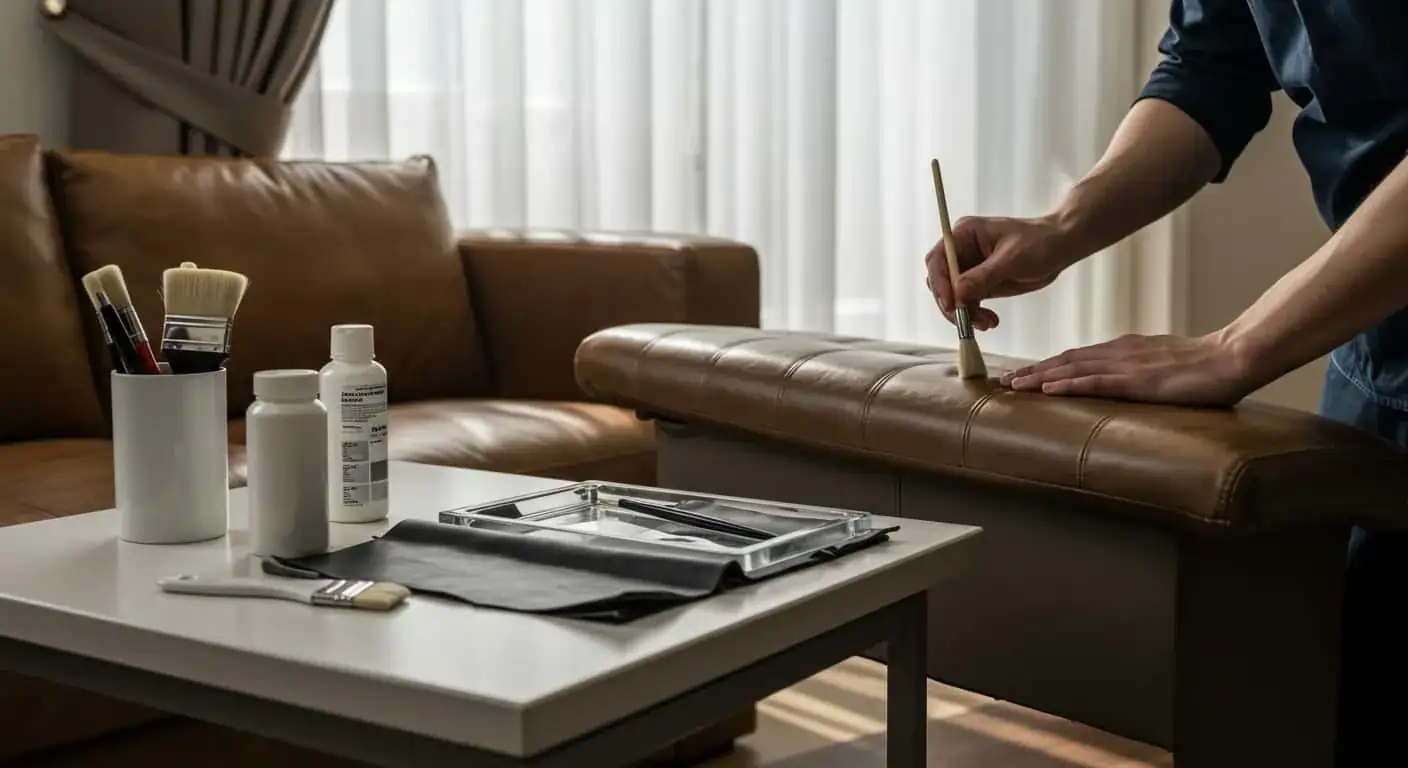
Nubuck and suede belong in genuinely different settings. Putting the wrong one in the wrong context is the most common mistake after misidentification.
Nubuck suits considered seating. Lounge chairs, accent armchairs, library reading chairs, occasional sofas in formal rooms. These are spaces used by adults, where spills are rare, and where you accept the trade-off of a velvety surface for stricter care. Italian luxury brands sometimes specify nubuck for accent pieces , a single nubuck armchair paired with smooth-leather sofas is a common Frau or Natuzzi configuration. Bespoke commissions through luxury Indian ateliers increasingly use nubuck in similar accent roles.
Suede suits fashion accessories, garments, footwear linings, and small leather goods. Genuine suede furniture is rare. Its structural weakness and stain vulnerability make it impractical for the daily punishment upholstery takes. When "suede" appears on a furniture label, the material is usually nubuck mislabeled, microsuede (a synthetic textile imitating the look), or low-cost suede in budget furniture not intended to last. Genuine suede sofas exist but are specialty commissions. Run the four-test identification before trusting any label.
Microsuede and Alcantara , synthetic imitations. A significant share of "suede" furniture in the Indian market is actually microsuede or Alcantara , synthetic polyester-based textiles designed to look like suede but with far better stain resistance and easier care. These are textiles, not leather. They follow textile cleaning steps, not leather chemistry. The four-test identification tells you the difference: synthetics show no grain-layer structure at a cut edge, no genuine fibre depth under magnification, and a uniform manufactured texture rather than the natural variation of a real hide.
What Actually Damages Nubuck and Suede?
Nubuck and suede both have an open napped surface. Anything that wets, compresses, or stains the nap fibres reaches the leather chemistry directly. There is no protective coat in the way.
Water
Water is the most damaging substance for both materials. It absorbs into the open fibre structure within seconds and leaves a permanently darker, slightly stiffened patch. On nubuck the damage is partly recoverable through controlled drying and brushing. On suede it is usually permanent , corium fibres absorb water more deeply, and the resulting tannin migration leaves ring marks that no consumer product can lift. Blot spills immediately. Never wipe them sideways. Air-dry at room temperature with no fan or heat.
Body oil and skin contact
Repeated skin contact transfers natural oils that compress the nap and progressively darken high-contact zones. On a nubuck armchair, this shows as visible darkening on the armrest tops and seat front within months of regular use. Brushing partly recovers the compression. The underlying oil saturation needs workshop treatment.
Abrasion and compression
Pressure from sitting, friction from clothing, accidental scuffs , all of these mechanically compress the nap and produce directional matting that changes how the surface looks. Light compression resolves through brushing. Severe compression needs workshop steam treatment and controlled brushing to lift the matted fibres.
Wrong cleaning chemistry
Smooth-leather cleaners and conditioners are built for sealed or pigmented surfaces. On napped leather they are destructive. The cleaner soaks into the nap, leaves visible marks, strips the natural oils that give the fibres their feel, and produces blotchy, dry, damaged zones that no follow-up treatment can fully restore. The pH-neutral framework in the pH balance guide applies to smooth leather only. Napped leather needs dedicated napped-leather cleaning chemistry.
For comparison with failure modes on other premium finishes , aniline, semi-aniline, pigmented, and pull-up , see the guides on aniline finish identification and pull-up versus pigmented chemistry. Napped leather sits in its own vulnerability category, separate from the smooth-leather framework.
How to Care for Nubuck vs Suede , Side by Side
Both care routines share the same principles but differ in how firmly you can apply them. Nubuck tolerates more frequent and slightly more assertive care because the underlying grain layer absorbs the workload. Suede needs a lighter touch throughout , the corium structure cannot handle aggressive treatment.
Nubuck routine care
- Weekly nap brushing with a dedicated nubuck brush (soft brass or rubber bristle). This lifts compressed fibres and restores the velvety standing nap.
- Spot cleaning with a clean rubber eraser for minor marks. Rub gently in one direction, then brush to restore the nap.
- Quarterly deep-clean with a dedicated nubuck cleaner. Follow the manufacturer's steps. Never use water as the carrier.
- Annual nubuck protector spray to refresh the surface barrier. Apply in a well-ventilated room. Let the surface dry naturally for 24 hours before use.
- Spills: blot immediately, never wipe. Wiping forces liquid sideways into the nap structure. A vertical blot lifts it before deep absorption.
Suede routine care
- Weekly soft-brush dusting with a softer brush than you would use on nubuck (natural bristle or soft rubber). The corium fibre structure cannot take the firmer brushing nubuck tolerates.
- Spot cleaning with a dry suede eraser only. Do not use rubber erasers designed for harder surfaces.
- Workshop cleaning twice yearly instead of home deep-cleaning. Suede tolerates fewer DIY attempts than nubuck before the damage compounds.
- Suede-specific protector spray at intervals matched to use. High-traffic pieces: twice yearly. Low-traffic: annually.
- Spills: blot immediately, then get workshop attention. Suede stains compound fast. Acting in the same week versus the same year is often the difference between full recovery and permanent damage.
Neither routine uses water, smooth-leather cleaners, or oil-based conditioners. The chemistry framework in the science of moisturising applies to smooth leather only. Napped leather has its own dedicated product category that respects the open fibre structure.
How Does India's Climate Affect Nubuck and Suede?
Delhi NCR subjects napped leather to three climate stresses that smooth leather can tolerate or recover from but that napped categories struggle with much more.
Monsoon humidity is the worst stress on napped leather. The open fibre structure absorbs ambient moisture continuously from July through September, producing matted, slightly darkened, structurally compromised surfaces by the end of the season. The monsoon leather care guide covers the smooth-leather steps. For napped leather, the protection needs to be more aggressive: active dehumidification, no direct fan exposure, weekly brush passes to prevent compression set, and no wet cleaning through the season.
Winter smog particulate [PM2.5 airborne particles] embeds in the open fibre structure of napped leather more aggressively than in smooth-finished hides. The particles lodge between the standing nap fibres and resist ordinary brushing. The winter smog leather damage guide for NCR covers the protection steps , HEPA filtration, weekly soft-brush dusting, breathable cotton covers when you are away. For napped leather, increase vacuum frequency to twice weekly through the worst smog months.
Summer dryness can over-dry the underlying hide on both nubuck and suede, making the fibres brittle and prone to breaking under brushing. Workshop conditioning with a dedicated napped-leather emulsion once or twice a year addresses this. Never use smooth-leather conditioners , they saturate the nap and produce visible matting.
Can Nubuck or Suede Be Restored , And What Can't Be Fixed?
Napped leather restoration is a narrower discipline than smooth-leather restoration. Fewer fixes are available. Success depends heavily on acting early. Some failures, once they compound, are genuinely irreversible.
Nap lifting on compressed zones is the most common workshop job on nubuck. Controlled steam treatment combined with directional brushing lifts matted fibres and recovers most of the velvety surface. Best results come within the first six months of visible compression. Older matting partially responds but rarely fully recovers.
Spot cleaning of localised stains uses solvent-based napped-leather chemistry rather than water-based cleaners. The solvent dissolves contamination without saturating the fibre structure. Acting within weeks of the stain gives the strongest outcome. Aged stains that have penetrated deep into the corium (suede) or the grain-layer fibres (nubuck) often resist full removal.
Re-dyeing of faded zones is possible on nubuck through micron-thin pigment application that respects the nap structure , a specialised version of the standard micro-pigmentation process. On suede, re-dyeing is harder because the longer nap and looser fibre structure make uniform pigment distribution difficult. Results are functional rather than indistinguishable from the original.
Severe water damage, comprehensive staining, or structural failure on suede frequently sits beyond what any workshop can restore to an acceptable visual standard. If you are considering suede furniture for a high-traffic room, understand this limit before you buy. Suede does not forgive errors the way smooth leather does.
"Nubuck rewards careful ownership with decades of velvety service. Suede is a beautiful material that demands you treat it like an evening gown rather than upholstery. The two are not interchangeable , and the most consequential conversation in any napped-leather purchase is telling the buyer which one they are actually getting."
Identify Your Material First , Everything Else Follows
Every care decision for napped leather starts with the four-test identification. Confirm the material before anything touches the surface. Use the right steps for what you have , nubuck-specific or suede-specific. Adjust your routine for India's seasonal climate. And get workshop attention promptly when staining, matting, or compression appears.
If your home has a mix of napped and smooth leather pieces, the guide on aniline, semi-aniline, and pigmented identification covers the smooth-leather framework. The pull-up versus pigmented guide covers the wax-oil distressed category. Napped leather is the fifth distinct category of premium leather furniture , outside the smooth-leather framework but built on the same hide structure explained in the grain hierarchy guide.
If you are in India and own nubuck or suede pieces, you can book a leather sofa repair visit, surface refinement, or a doorstep assessment across Noida, Faridabad, and Ghaziabad. The workshop intake for napped leather starts with the four-test identification. Every decision after that flows from that single step.
Bookmark this page. The next time a salesman, a brochure, or anyone in your household uses "nubuck" and "suede" as if they are the same thing, the four-test protocol is here to settle which material you actually have.