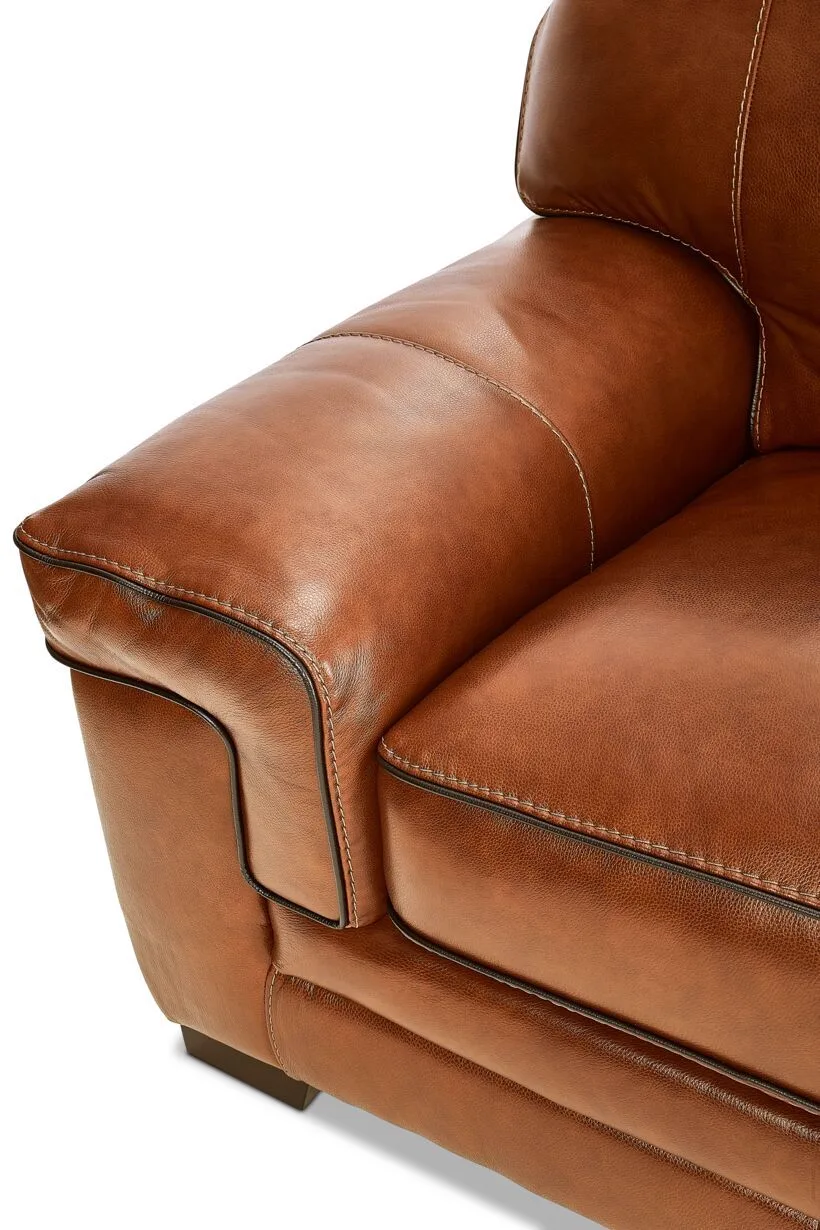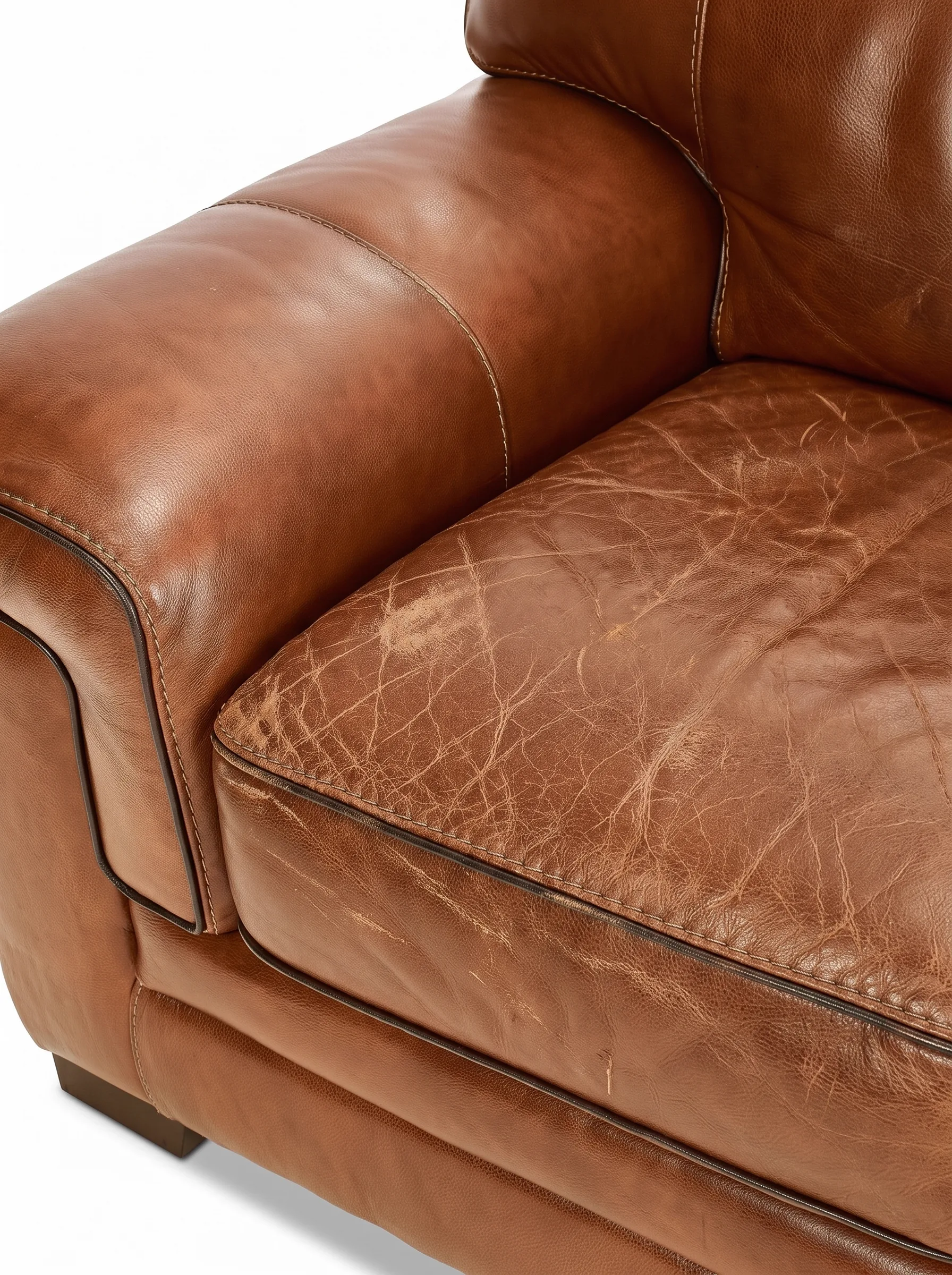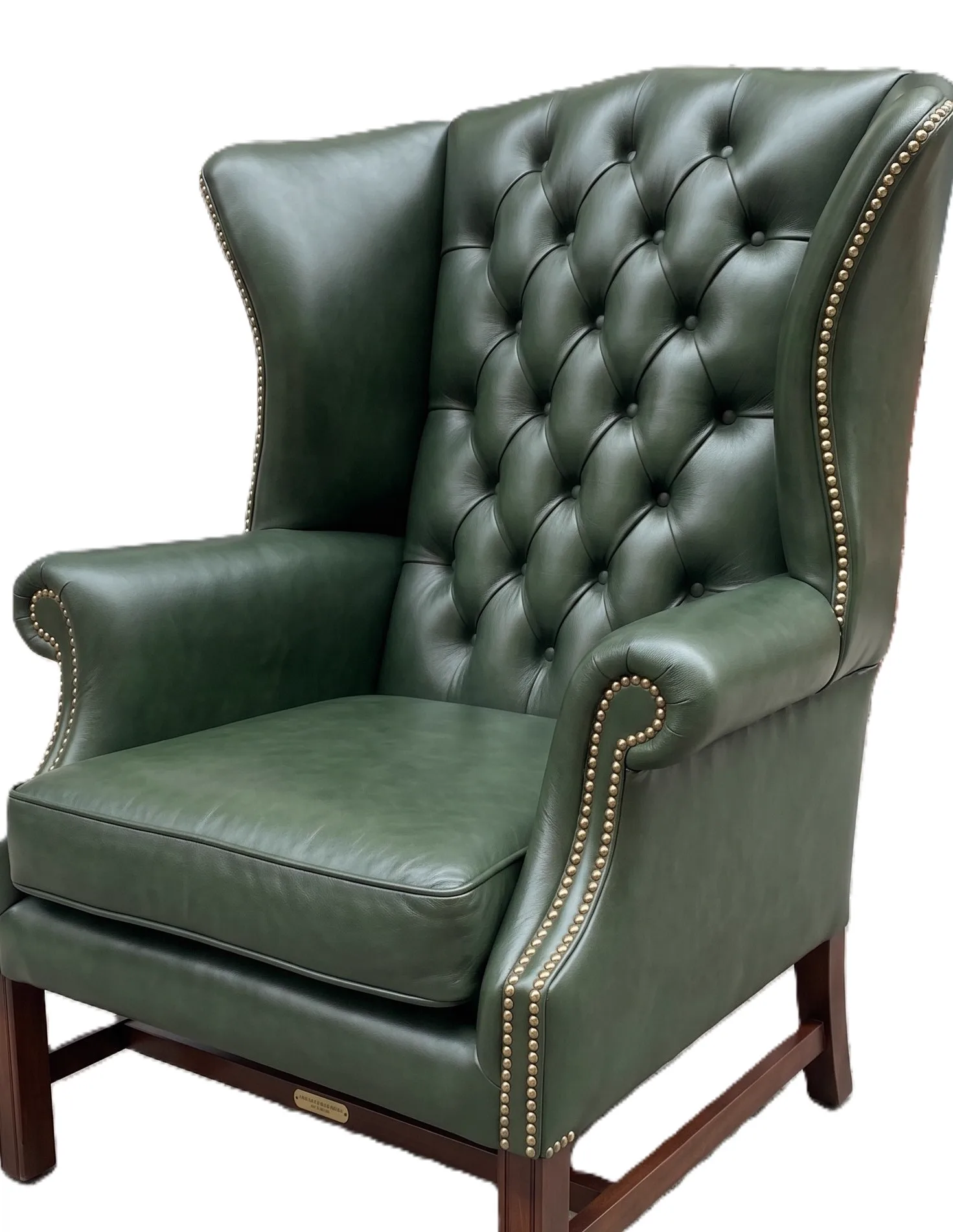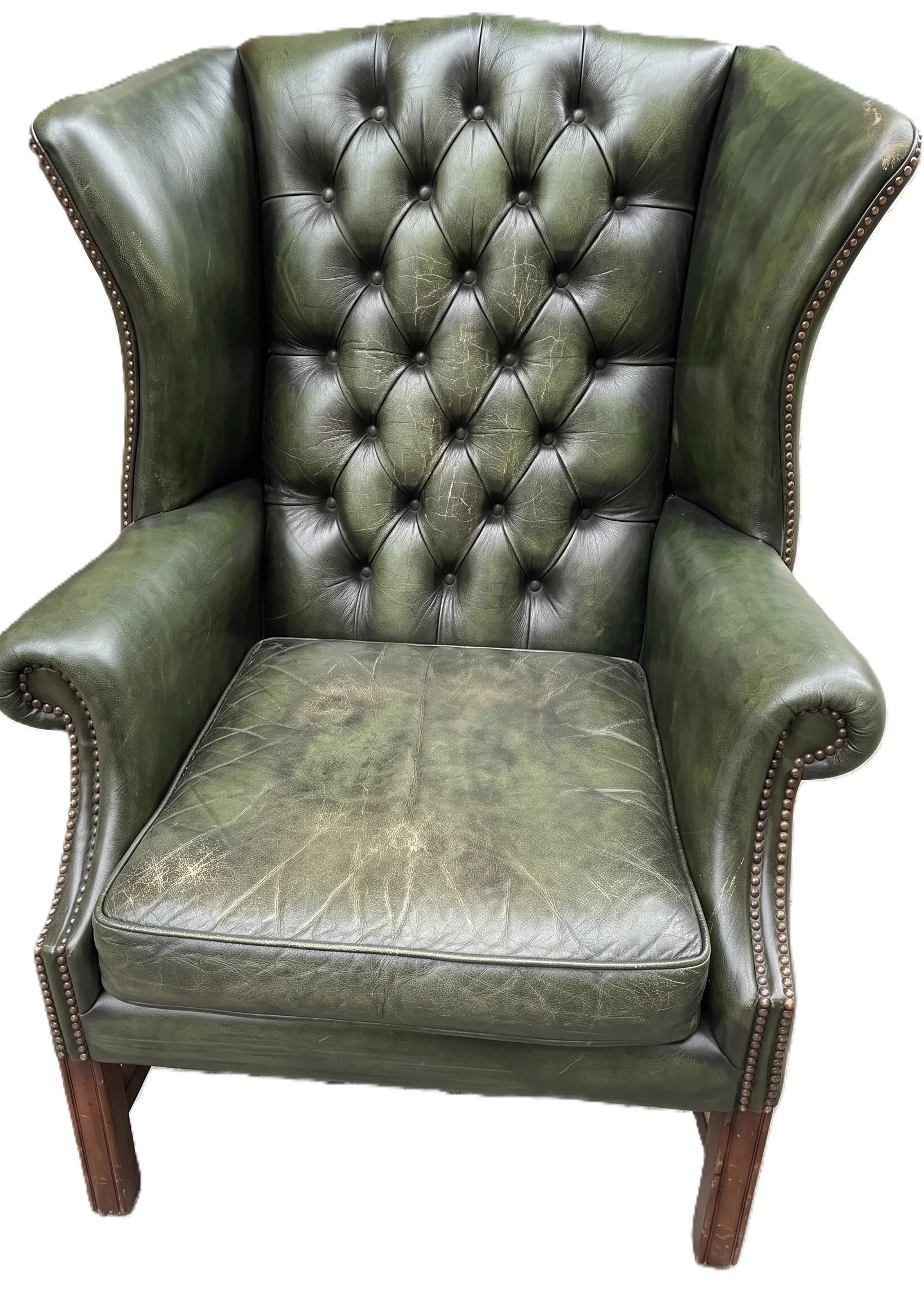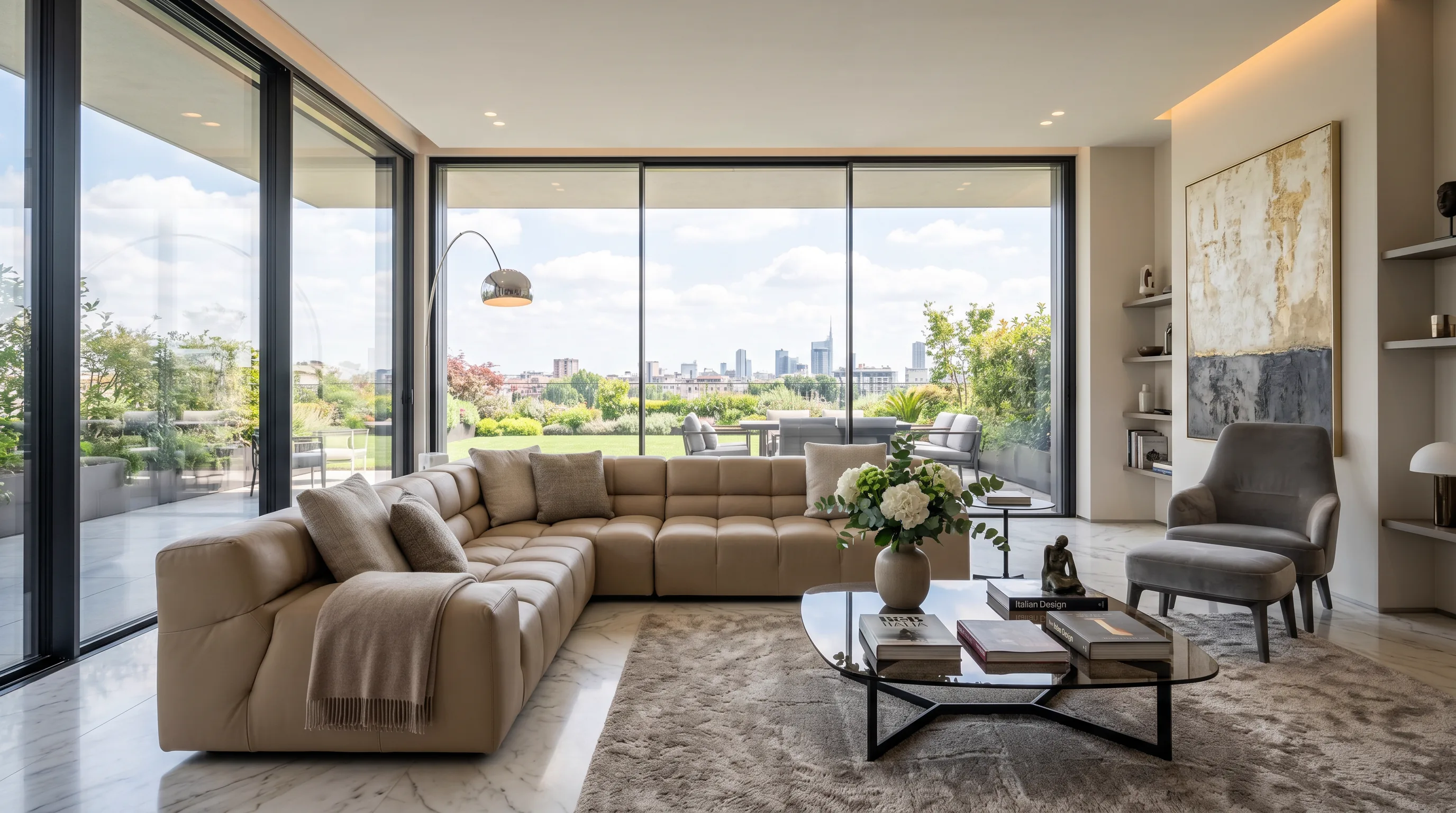
Your B&B Italia or Maxalto sofa is not one piece. It is a system of individual modules. Each one sits in a different position, flexes a different number of times each day, and picks up a different amount of sun and dust. Care for them the same way and they drift apart. Within five years, you can tell which cushion gets used and which does not -just by looking. This guide covers the care steps that keep every module looking like the rest. Technical terms are in the leather conservation glossary. Finish chemistry is in the guides on aniline, semi-aniline, and pigmented finishes, grain types, and pull-up versus pigmented leather.
Two Brands, One Group -How Are They Different?
B&B Italia and Maxalto belong to the same parent group. But they sit at different levels of the market and need different care.
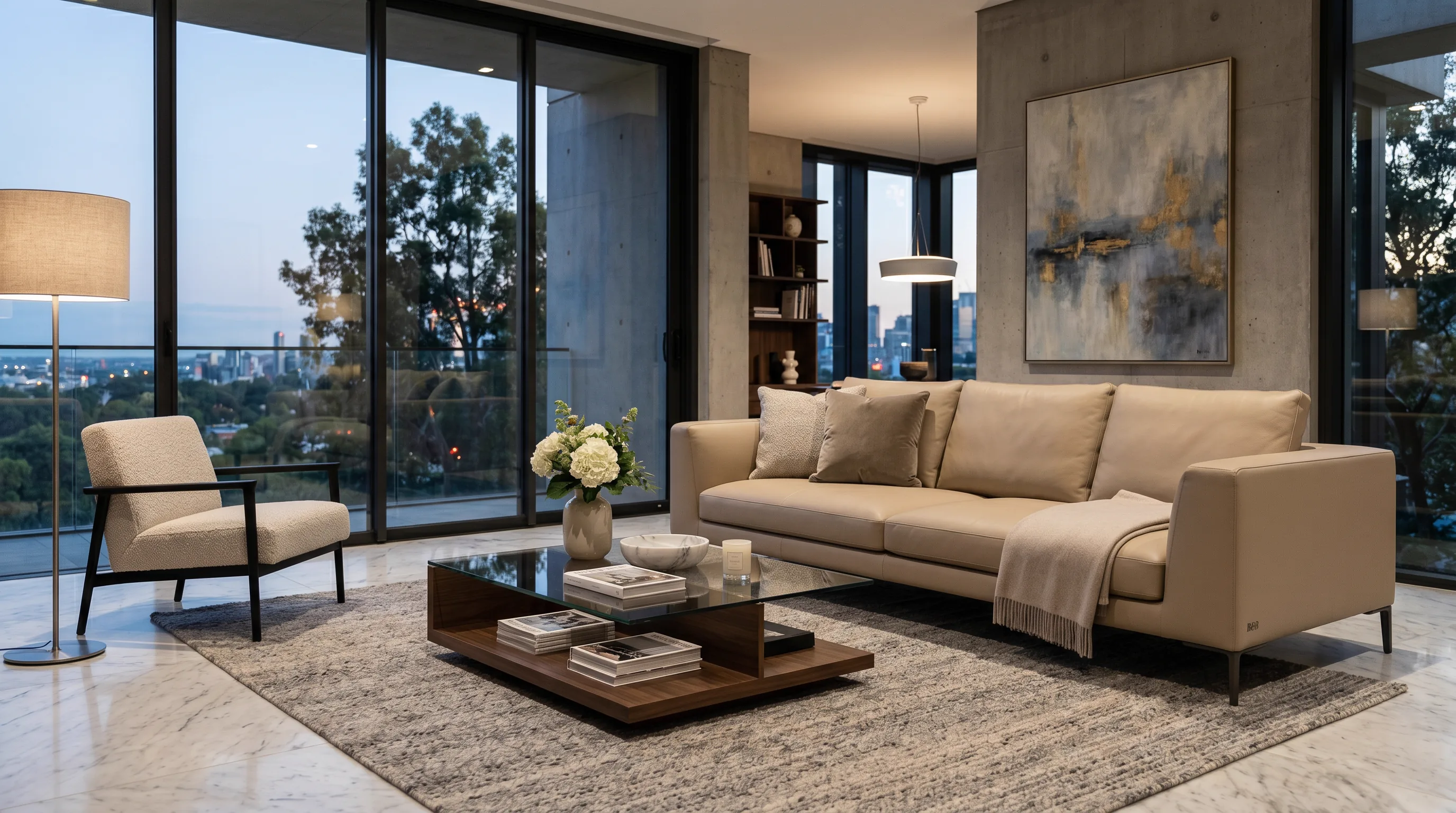
B&B Italia launched in 1966. It built its name on bold contemporary design -Patricia Urquiola's Tufty-Time, Mario Bellini's Camaleonda, Antonio Citterio's Charles series, Naoto Fukasawa's Husk. The focus is modular sofas you can reconfigure. Leather finishes range from full-grain aniline [leather with no surface coating, shows natural grain] at the top through semi-aniline and pigmented finishes built for modular use.
Maxalto is the Antonio Citterio brand inside the B&B Italia group. It targets a higher tier, with more focus on craft and heritage. Maxalto pieces -Apta, Selene, Convivium -usually use full-grain aniline or premium semi-aniline finishes. They show more natural hide variation than standard B&B Italia. Maxalto's top range needs stricter, aniline-grade care.
The modular rule: your B&B Italia or Maxalto sofa is a system, not a single piece. You must care for each module separately and keep the whole system consistent. Treat one module differently from the others and you will see visible drift within three years.
Which B&B Italia Model Do You Have?
Leather finish varies by model. You need to know your model before you can choose the right care steps.
Iconic modular sofas -Tufty-Time, Camaleonda, Husk
These use mainly semi-aniline and pigmented finishes. They are built for modular use -stable shape, resistant to stains, tolerant of more cleaning than pure aniline. Clean monthly with a pH-neutral cleaner. Condition every 9 to 12 months. Rotate modules every three months where the design allows.
Premium upholstered sofas -Charles, Frank, Bend
The Antonio Citterio Charles series and similar models use a wider mix of finishes, including full-grain aniline at the top end. Use the three-finishes guide to identify yours. Aniline pieces need the same careful care as Frau Pelle SC or Natuzzi Iconic. Semi-aniline tolerates more frequent cleaning. Pigmented follows the standard pigmented routine.
Contract and hospitality range
B&B Italia makes a contract range for hotels and offices. These use engineered pigmented finishes built for heavy use. Luxury NCR hotels -Aman, Oberoi, Leela, Taj -use these pieces in lobbies and lounges. They need more frequent care: weekly cleaning, conditioning twice a year, and a top-coat refresh every five to seven years.
Pelle Tessuta and woven finishes
Some B&B Italia pieces use Pelle Tessuta [woven leather -strips of leather interlaced like fabric]. It looks and acts like a textile on the surface, but it is still leather underneath. You need to vacuum it more often because the woven structure traps dust. Wet cleaning should be less frequent because water travels deep into the woven channels. Workshop repair on Pelle Tessuta is more involved than on flat leather panels.
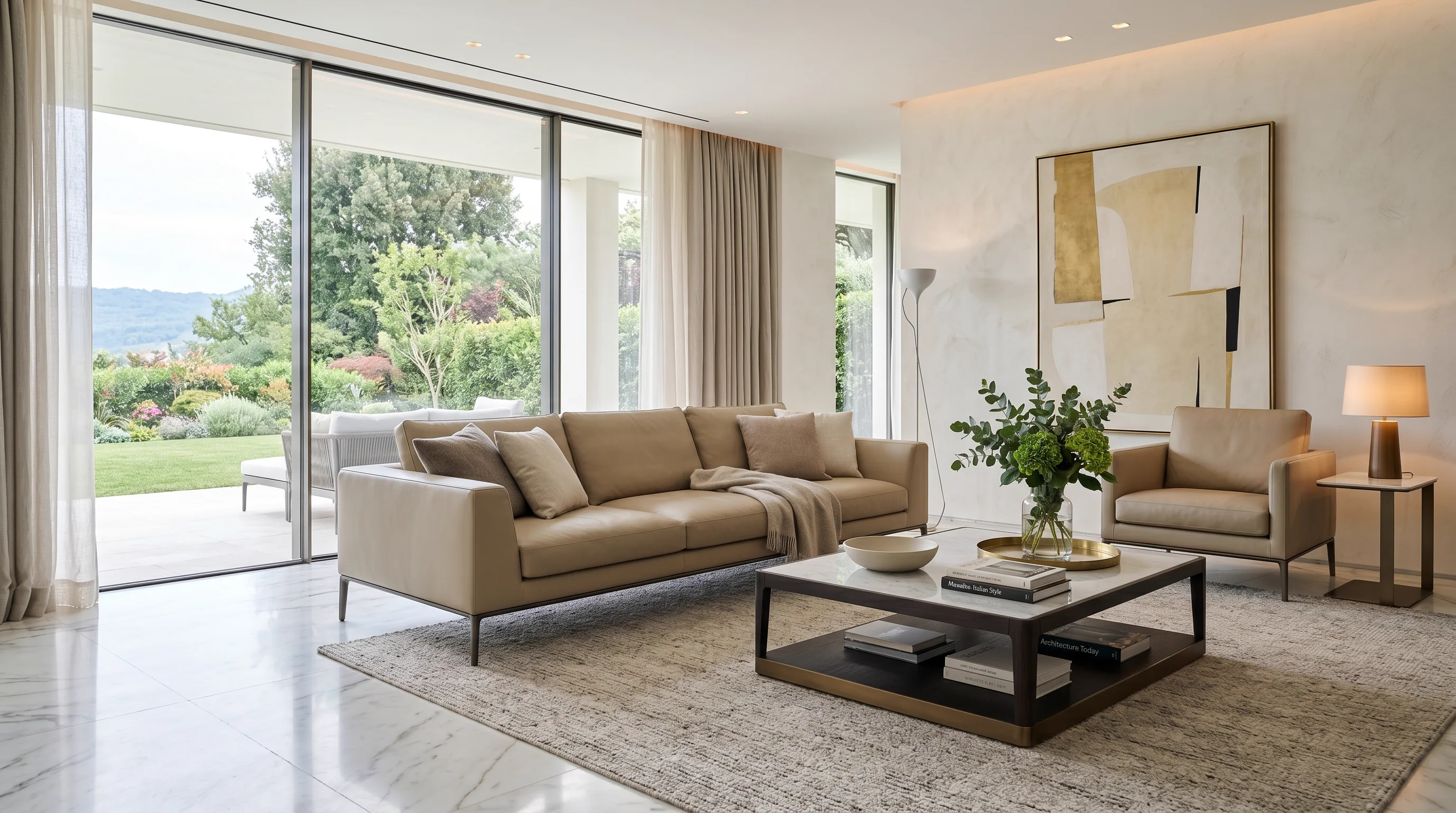
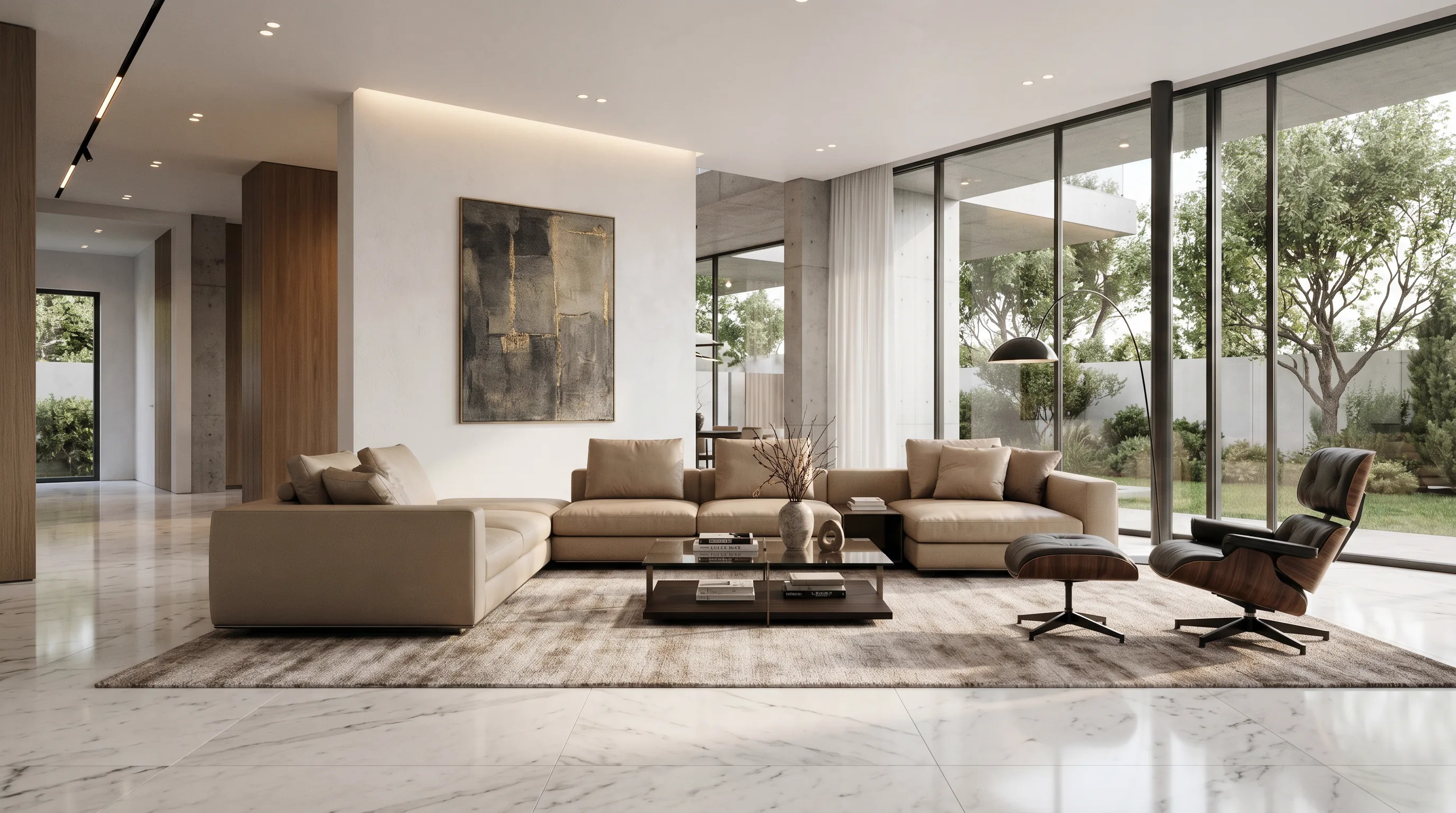
The Maxalto Range , Why Does It Need Different Care?
Maxalto can be configured in modules like B&B Italia, but the finish is different. The Apta system, the Selene seating range, and the Convivium dining series all prioritise natural hide variation and deeper tonal character. They are built to develop patina over time -which is the mark of premium Italian aniline.
What this means for your care routine: Maxalto pieces often need the same stricter aniline care described in the Natuzzi and Poltrona Frau care guide. A Maxalto Husk sofa looks similar to the B&B Italia Husk. But it may carry a full-grain aniline finish that needs tighter, gentler chemistry.
When a Maxalto piece arrives at our workshop, we treat it as aniline-grade by default. We only relax that if the finish test shows semi-aniline or pigmented. This protects pieces that might be damaged by harsher cleaners used for standard B&B Italia modulars.
How Do You Keep All Modules Looking the Same?
The most important thing in B&B Italia and Maxalto care is keeping every module looking the same. Each module builds up its own history. Different positions mean different flex, different body oils, different sun, different dust. Without a routine that accounts for this, modules drift apart over time.
Track each module's position
Start by photographing how your sofa is arranged. Label each module. Many B&B Italia and Maxalto modules have serial numbers or position codes from the factory -write these down too. This record guides three decisions: how often to rotate, which modules to repair, and how much conditioning each one needs.
Rotate modules every three months
If the design allows, move modules through different positions each quarter. The corner module that carried most of the sitting moves to the end. The end module moves to the corner. This spreads flex stress, sun fade, and contamination evenly. A Camaleonda or Maxalto Apta sofa on a quarterly rotation looks consistent at fifteen years. The same sofa without rotation shows visible difference at five.
Condition based on how much each module flexes
Do not condition all modules on the same schedule. High-flex modules -corner seats and main seats -need conditioning every 6 to 8 months. Low-flex modules -end pieces and ottomans -need it every 9 to 12 months. The reason is that flexing depletes fat liquor [the oils built into the leather during tanning] faster. See the science of moisturizing for the full explanation.
Focus on the seams between modules
Dust builds up between modules where two sections meet. Your weekly vacuum should focus on these seams. Every three months, if the design allows, pull the modules apart and check the contact surfaces. Surface-level cleaning cannot reach the dust that collects there.
The Care Steps , Module by Module
These steps cover the full care routine for B&B Italia and Maxalto modular sofas. They build on the wider Italian luxury framework in the Natuzzi and Frau guide and the Fendi Casa guide, with adjustments for modular construction.
Step 1 -Find your model and finish. Locate the B&B Italia or Maxalto label on each module. Note the model name. Then identify the finish using the three-finishes test. In some custom configurations, different modules carry different finishes. Check each module on its own.
Step 2 -Photograph module positions. Take photos of the current arrangement. Label each module. This record supports both your rotation routine and targeted repairs later.
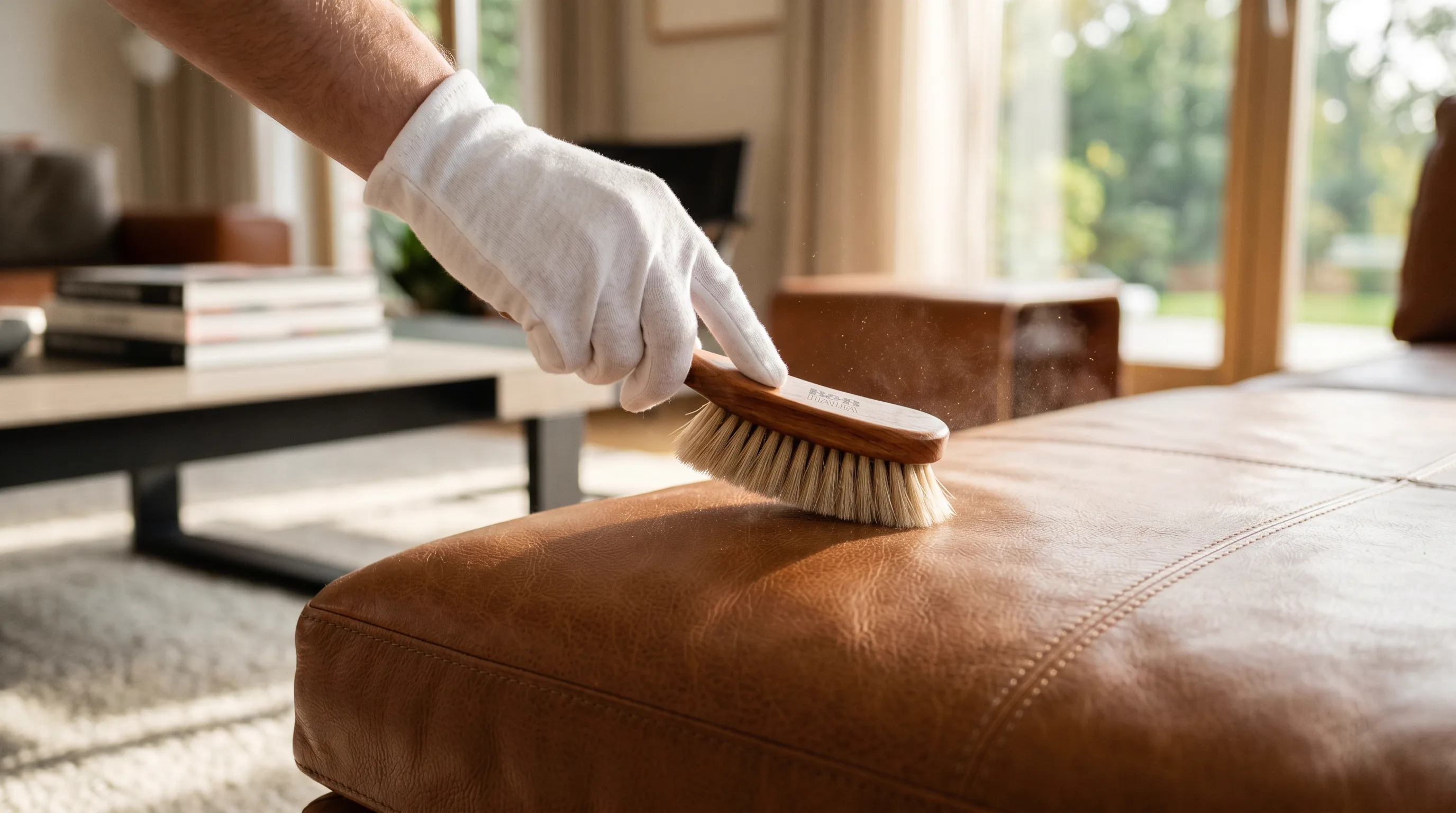
Step 3 -Vacuum each module every week. Use a soft brush attachment on low suction. Do one module at a time. Focus on cushion crevices and the seams between modules. Pelle Tessuta sections need more vacuum time -the woven structure traps more dust than flat panels.
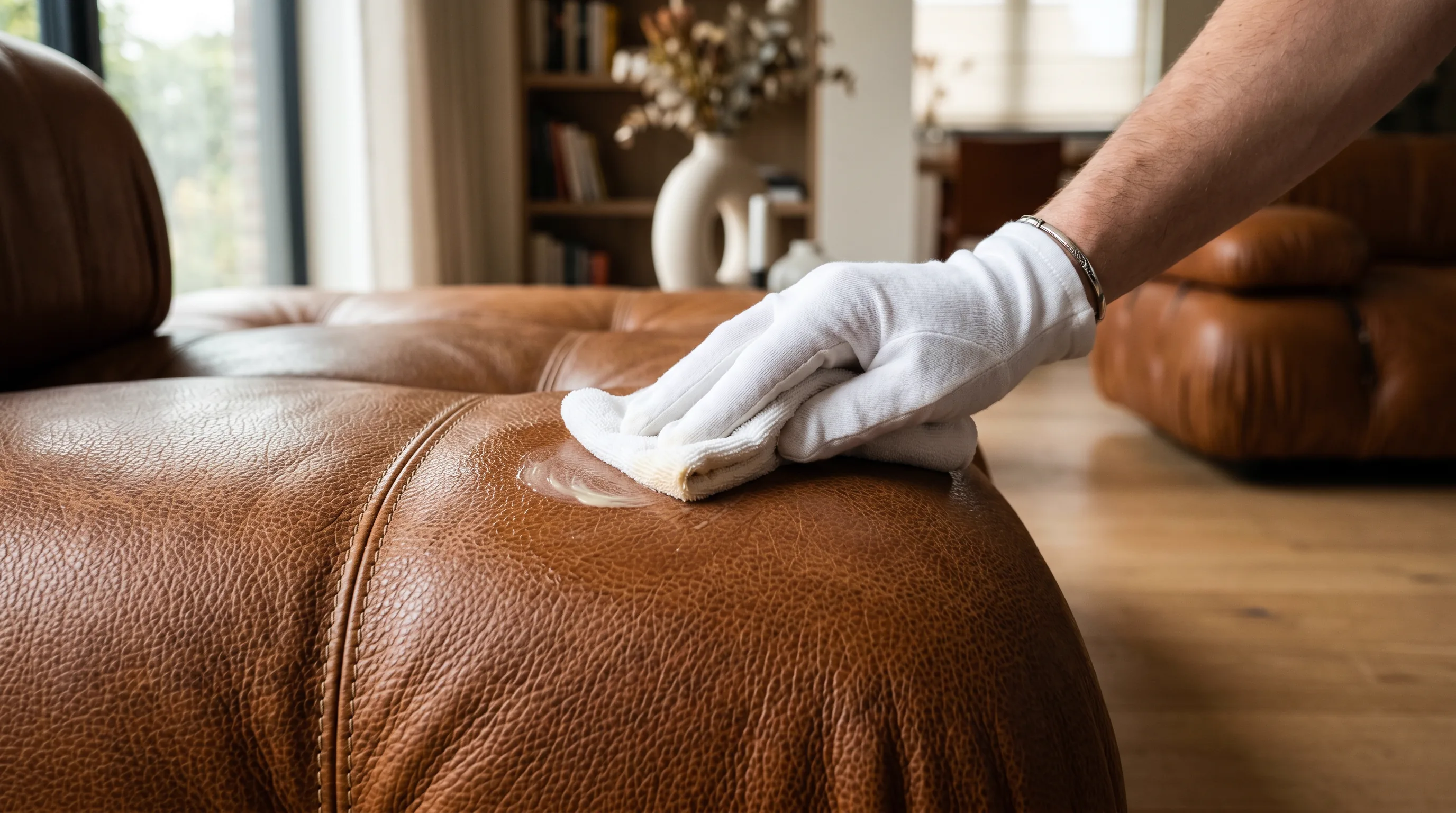
Step 4 -Clean monthly with pH-neutral cleaner. Put the cleaner on a microfiber pad, never directly on the leather. Make one light pass per panel, moving through modules in order. Use the seven-step routine from the pH balance guide. If one module looks different after cleaning, it may be sitting in different light -rotate it sooner.
Step 5 -Condition based on flex frequency. High-flex modules every 6 to 8 months. Low-flex modules every 9 to 12 months. Use 3 to 5 ml of synthetic ester emulsion per panel. Let it absorb for ten minutes, then buff lightly with a dry microfiber cloth. See the science of moisturizing for detail.
Step 6 -Rotate modules every three months. Move modules through different seating positions where the design allows. Update your position log after each rotation. This is the single most important step for a modular sofa.
Step 7 -Adjust for Indian seasons. Follow the four-phase calendar: condition in March, condition again before the monsoon in June, control humidity during monsoon using the monsoon guide, and protect from winter smog from October to February using the winter smog guide. Do this for every module.
Step 8 -Annual check by a specialist. Have a master restorator inspect your sofa each year. They will check each module under raking light [angled light that reveals surface texture], inspect the seams, and adjust conditioning levels. Assessing a multi-module sofa costs less per module than a single-piece sofa because all modules are covered in one visit.
What Goes Wrong With Modular Sofas?
Four problems account for nearly every B&B Italia and Maxalto repair job in India.
Modules that look different from each other
This is the most common failure of a modular sofa. Without rotation, the main seat flexes more, absorbs more body oil, and fades more than the end pieces. The difference shows at three to five years and becomes severe by year seven. The fix is micro-pigmentation on the affected modules, matched to the undamaged ones.
Dust trapped inside Pelle Tessuta
The woven leather strips in Pelle Tessuta trap dust deep in the channels between them. Surface vacuuming removes the visible layer, but the deep dust stays. It gradually darkens the texture over years. A workshop deep-channel extraction -using compressed air -is the only way to fully restore Pelle Tessuta sections.
Wear at the seams between modules
The surfaces where two modules touch wear differently from exposed leather. They get abraded by movement, compressed dust, and uneven moisture. Annual disassembly and inspection catches seam wear early, when panel-level repair is still possible.
Fine cracks in the top-coat on pigmented finishes
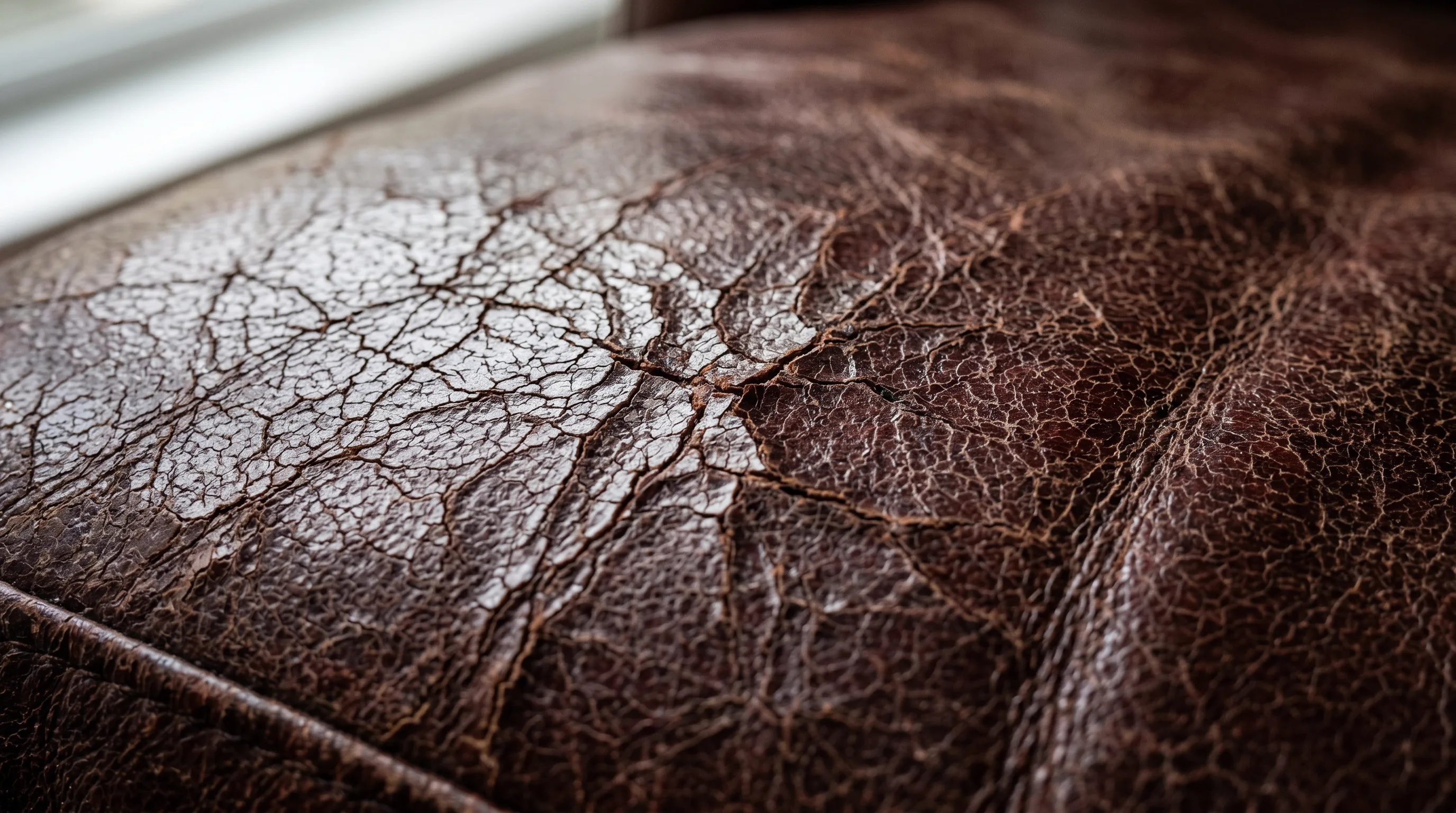
The pigmented finishes on contract and high-use B&B Italia sofas eventually develop fine cracks in the top-coat [the clear or pigmented surface layer] as the polymer ages and the hide moves through humidity changes. The first sign is a dull surface that cleaning cannot fix. Under raking light you will see a fine crack pattern. A workshop top-coat refresh every five to seven years stops cracks before they reach the pigment layer and require full re-pigmentation.
"A modular sofa is the only luxury furniture where doing nothing makes the problem worse. Every module that stays in the same spot for years drifts away from the rest. Rotation is not optional."
Can You Repair One Module Without Touching the Rest?
Yes. The modular build of B&B Italia and Maxalto sofas allows repair approaches that solid single-piece sofas cannot use.
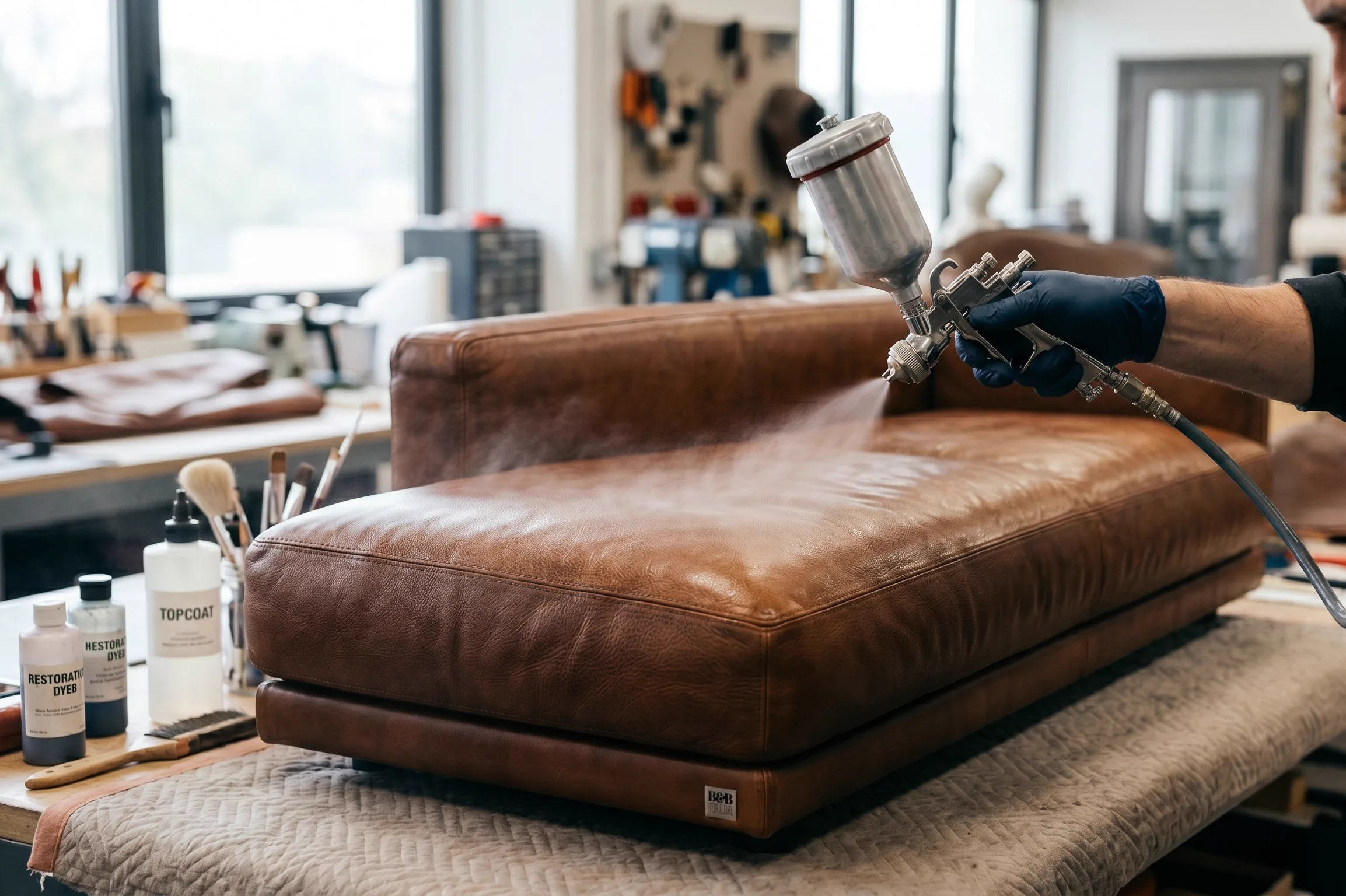
Single-module repair is the most common job. One module -usually the corner seat that carries the most sitting -is taken to the workshop. Its finish is rebuilt using micro-pigmentation matched to the undamaged modules nearby. Then it comes back. The rest of the sofa stays in use throughout. Repairing one or two modules costs a fraction of what a full single-piece sofa would cost.
Full system repair applies when several modules have drifted far apart and no single module can serve as a colour reference. The workshop then matches against the original B&B Italia or Maxalto factory specification -colour code, hide lot reference. A full system job on a multi-module sofa takes four to six weeks.
Top-coat refresh extends life on pigmented pieces without full repair. The existing top-coat is cleaned, lightly abraded, and re-applied to restore gloss and seal any cracks before they reach the pigment layer. Do this every five to seven years on contract and high-use pieces.
Pelle Tessuta sections need a different approach. Standard micro-pigmentation does not work because the woven channels take pigment unevenly. Restoring Pelle Tessuta means disassembling it section by section, treating each strip, then reassembling it. This takes more time than flat panel work.
Caring for Your Modular Sofa in India
Your B&B Italia or Maxalto sofa in India will look its best for decades -if you follow the module-by-module routine. Find each module's finish. Record the arrangement. Rotate every three months. Condition based on how much each module flexes. Use pH-neutral cleaners. Follow all four NCR climate phases. Get an annual specialist check for every module.
The numbers make sense. A six-module Tufty-Time in a Gurugram home, cared for correctly, builds even patina across decades and only ever needs single-module repairs. The same sofa without rotation shows visible damage in five years. A full system repair can cost lakhs. A decade of routine maintenance costs far less.
If you own a B&B Italia, Maxalto, or similar Italian modular sofa in NCR, we offer expert B&B Italia and Maxalto sofa repair, general leather restoration, surface work, and doorstep assessment in Noida, Faridabad, and Ghaziabad. Every job starts with module identification and a position record. Related guides: Natuzzi and Poltrona Frau care and Fendi Casa leather care.
Bookmark this page. When your sofa needs attention -or when you are deciding whether quarterly rotation is worth it -the answer is here.
References & Further Reading
- B&B Italia Group official site, Maxalto collection overview - bebitalia.com/en/maxalto
- Patricia Urquiola, Tufty-Time design archive (B&B Italia, 2005) - bebitalia.com/en/tufty-time
- Antonio Citterio Patricia Viel, Maxalto designer profile - acpvarchitects.com
- UNI EN ISO 17226 - leather chemical analysis standards
- Article author Tyson, Lead Artisan, The Leather Restorators about page