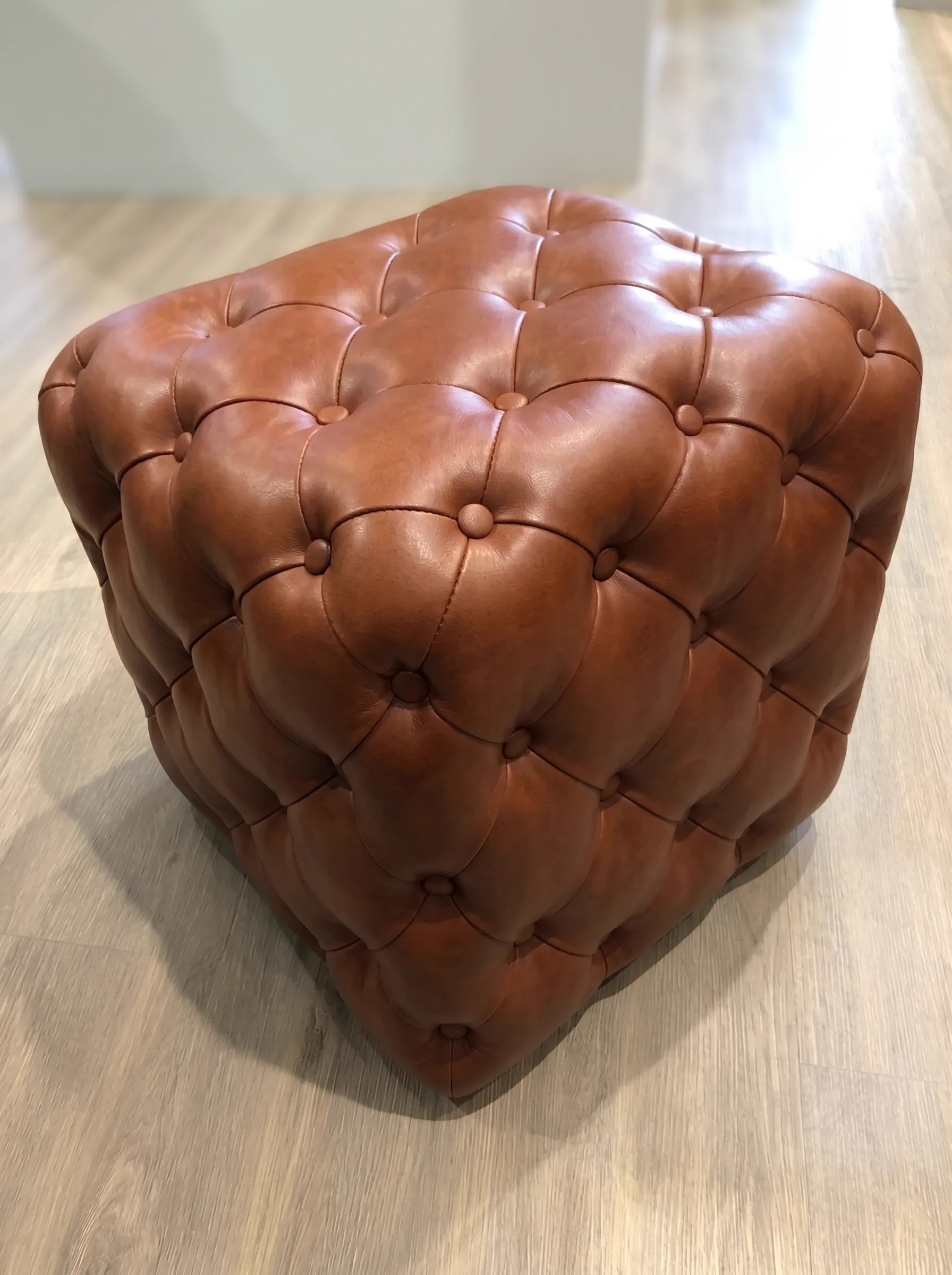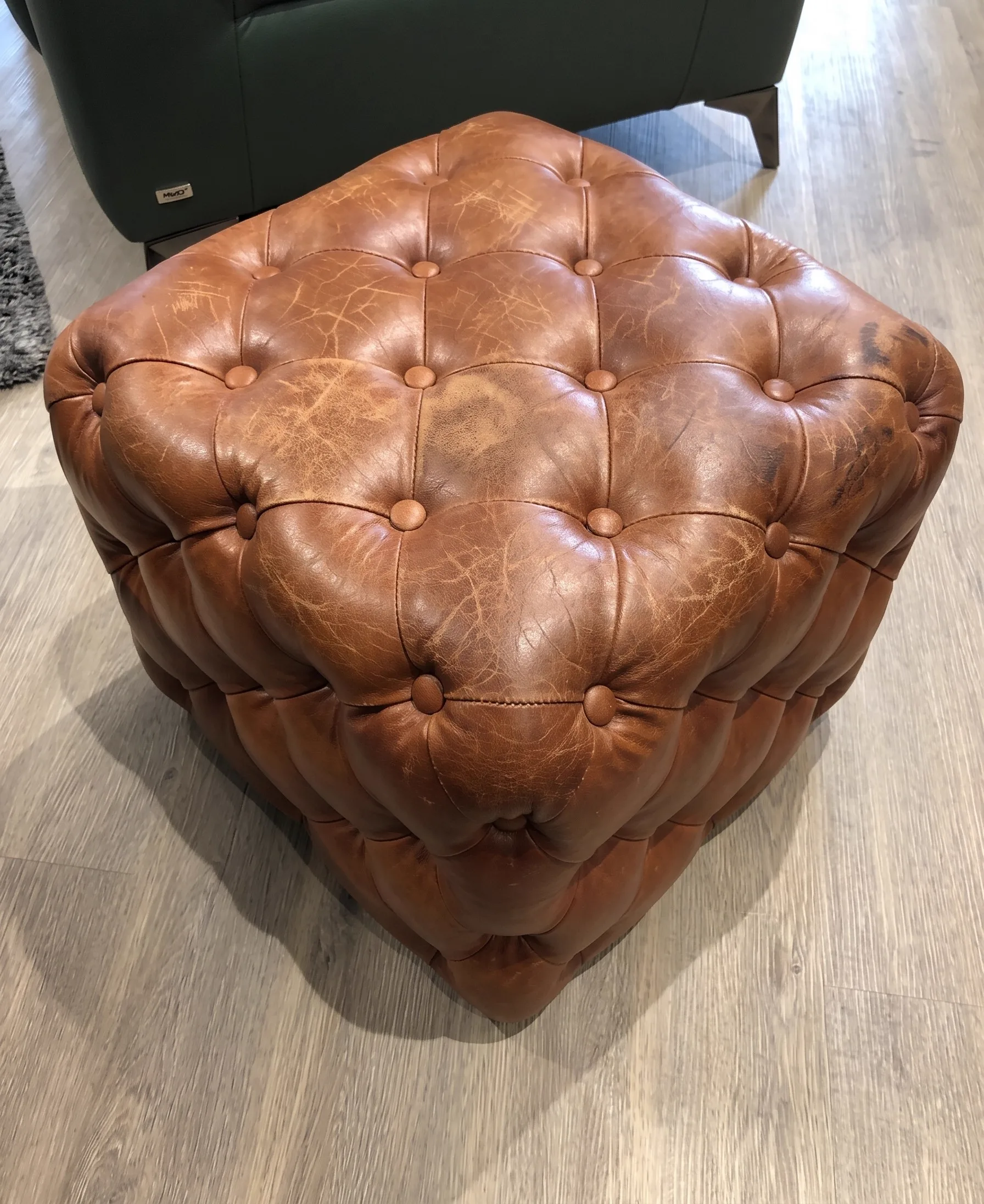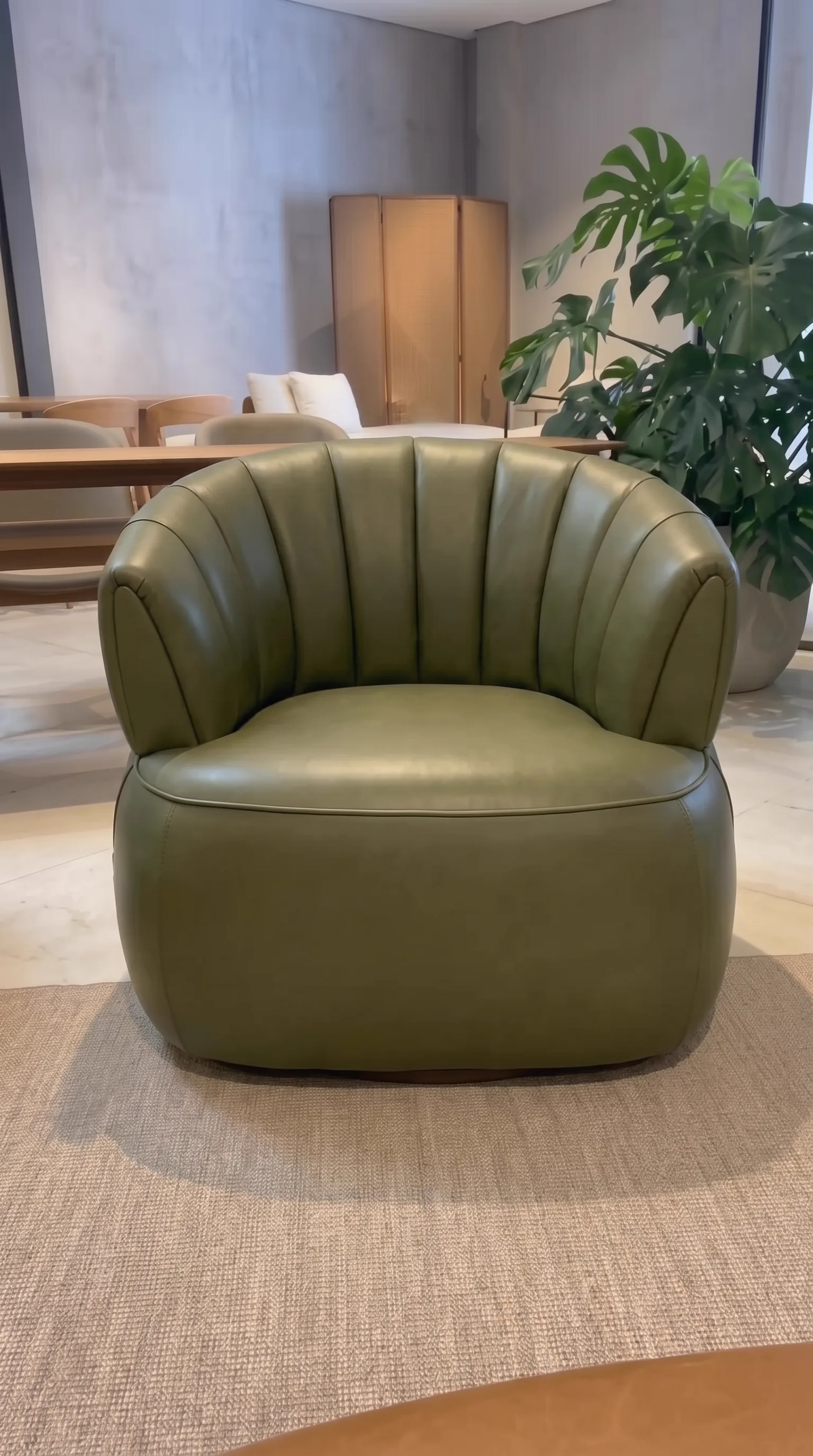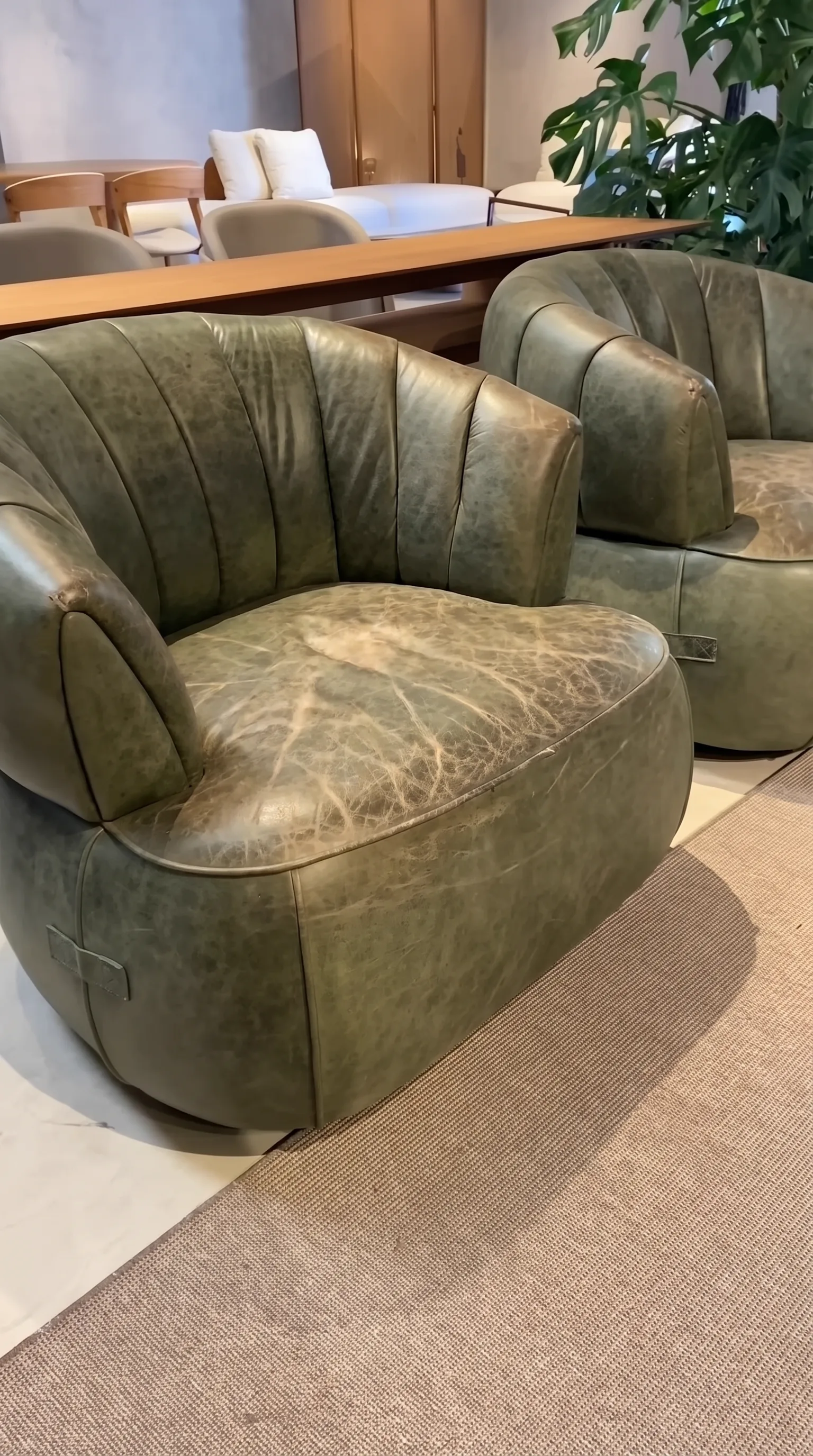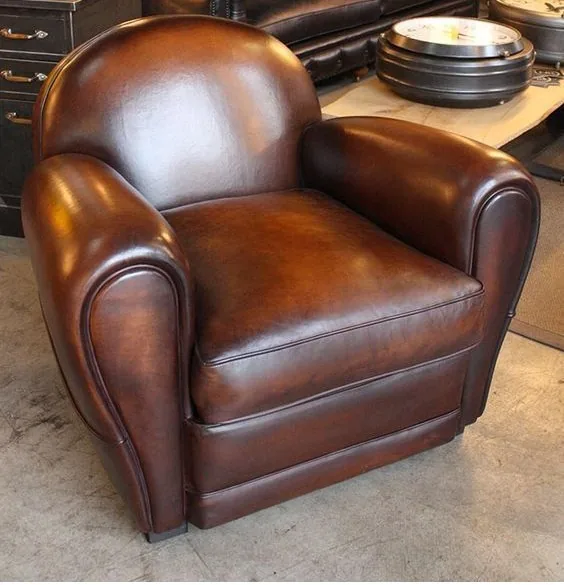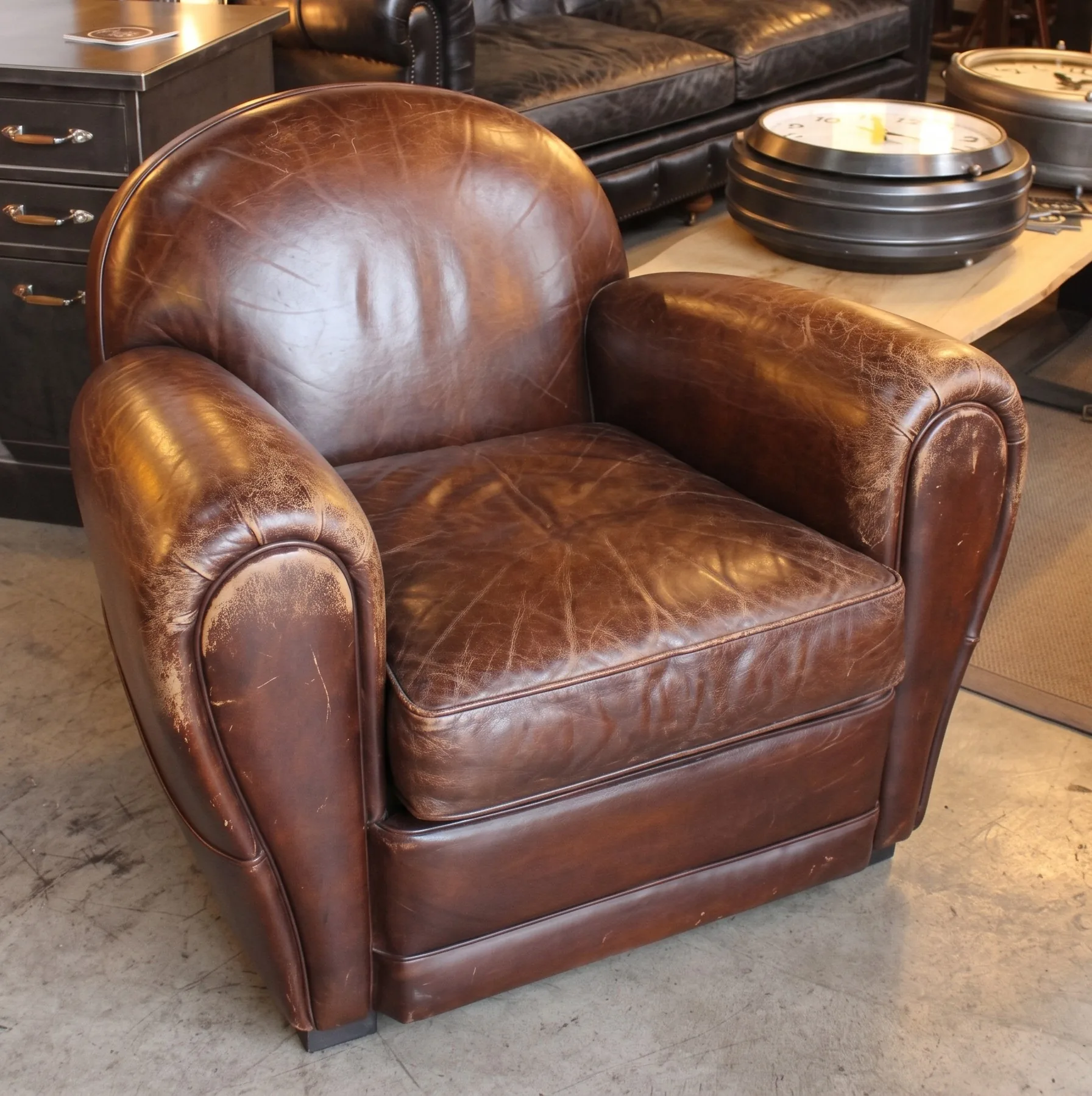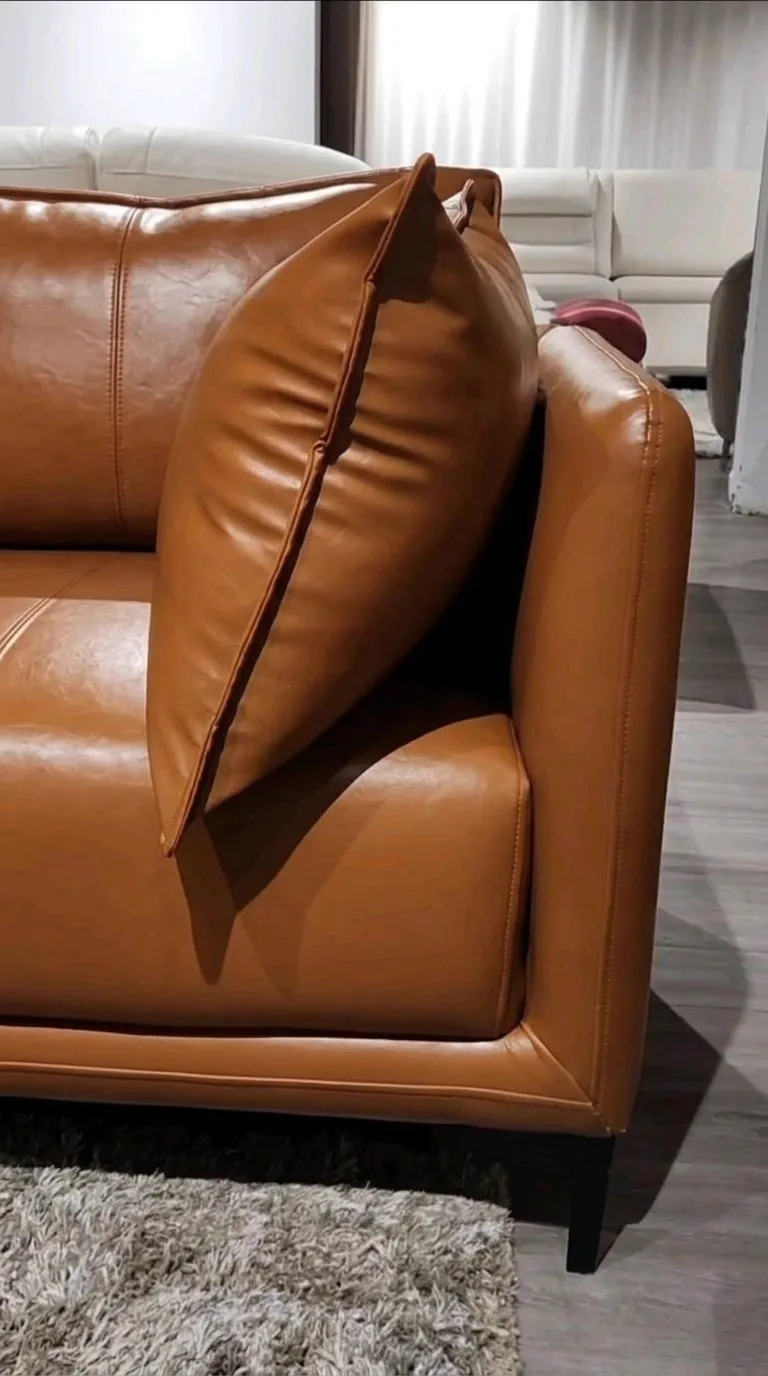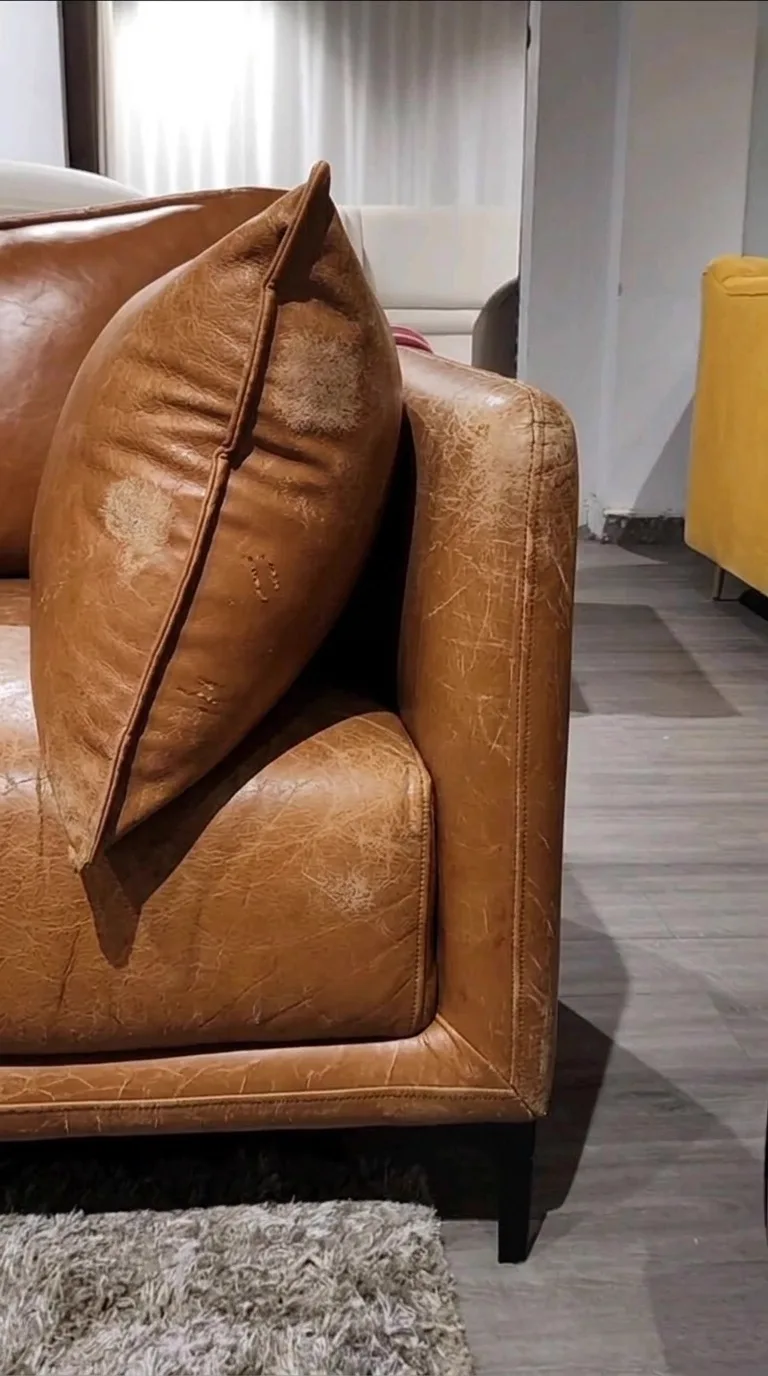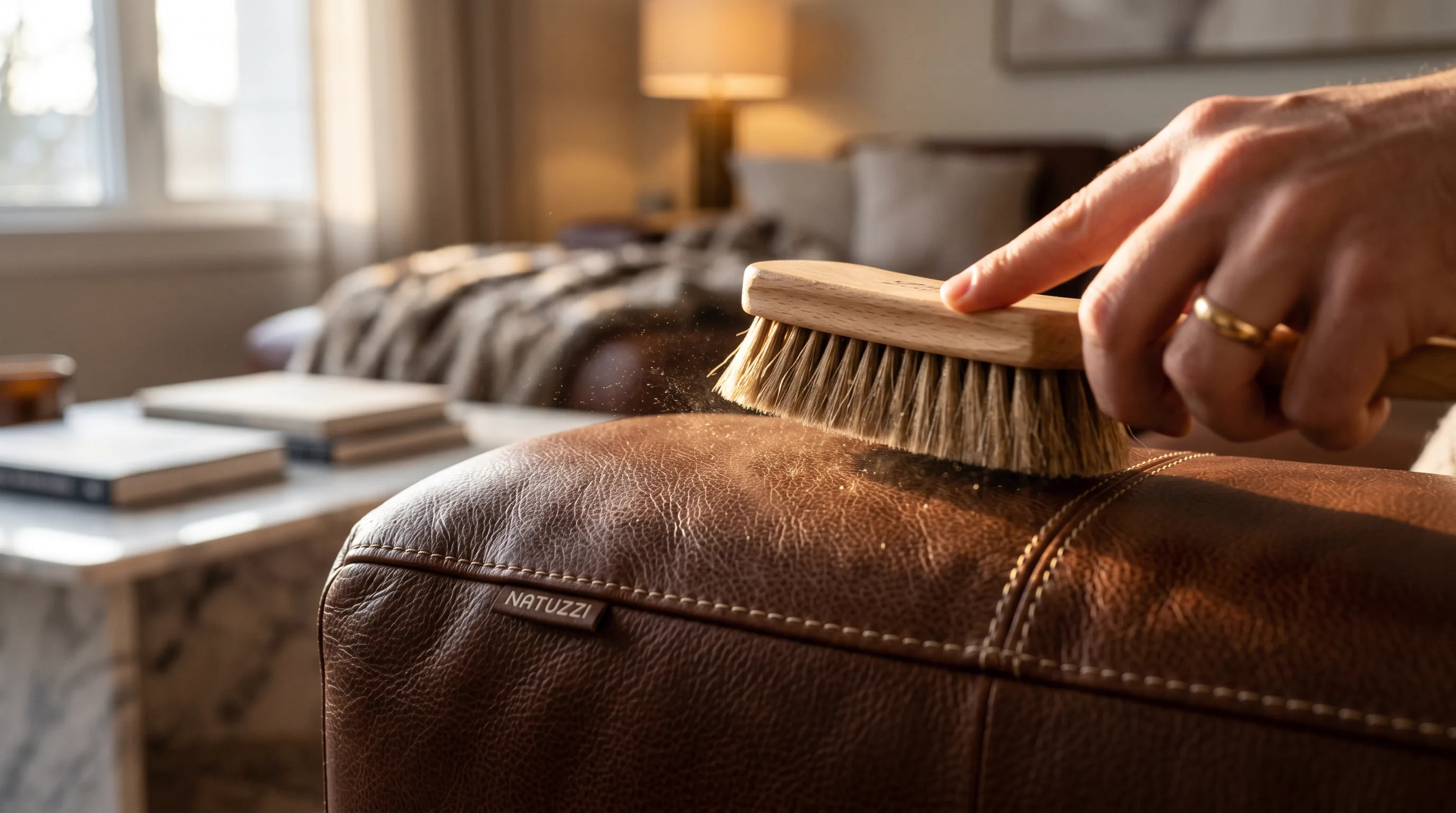
If you own a Natuzzi or Poltrona Frau sofa, the biggest mistake you can make is using a generic leather cleaner on it. These brands use specific Italian-tanned hides finished to documented tannery standards. No off-the-shelf product is matched to those hides. A Frau Pelle SC armchair and a Natuzzi Iconic three-seater share a country of origin. But the hide chemistry, the colour archive, and the repair steps for each are brand-specific. This guide covers the hide types, finish chemistry, and expert care steps we apply to both brands across India. Terms are in the leather conservation glossary. Finish chemistry detail is in the guides on aniline, semi-aniline, and pigmented finishes and tanning chemistry.
Natuzzi vs Poltrona Frau , What Is the Difference and Why Does It Matter for Care?
Both brands sit at the top of Italian leather furniture. But they got there differently and use different approaches to hide selection and finishing. Knowing the difference is the first step in caring for either one correctly.
Poltrona Frau was founded in Turin in 1912. Its reputation is built on hand-finished heritage pieces -the Vanity Fair armchair, the Chester Lounge, the Archibald, the Dezza. The signature material is Pelle Frau, the brand's own leather. Pelle SC (Selezionata Cuoio - "Selected Leather") is its flagship aniline expression. The hides are chrome-tanned in the Tuscan leather district at Santa Croce sull'Arno. Frau finishes them to a documented archive of 27 reference colours that has stayed chemically consistent for decades. A Frau bought in 1995 and one bought in 2024 in the same SC colour will match within tannery tolerances. This is why heritage pieces can be restored across generations.
Natuzzi was founded in Matera in 1959. It built its position through a wider collection range with a stronger comfort focus -the Re-Vive recliner, the Iconic series, the Editions range, entry-level family lines. The leather is similarly Italian and European, but the collection range is broader. Full-grain aniline sits at the top (Iconic, some Editions pieces). Semi-aniline covers the mainstream. Pigmented finishes cover entry and contract. The collection name on the label under your seat is the reliable identifier. Natuzzi care is collection-specific, not brand-wide.
The identification rule: before any care decision, confirm your collection. For Frau, this means knowing the Pelle SC reference colour. For Natuzzi, find the collection name on the underseat label or original brochure. Care that is right for Pelle SC may be wrong for a Natuzzi entry pigmented piece. Care that suits Natuzzi Iconic full-grain aniline may be too strong for the same brand's Re-Vive semi-aniline.
What Is Pelle SC and Why Is It So Hard to Clean?
Pelle Frau is not a marketing term. It is a documented technical specification with defined hide selection, tanning steps, dyeing, and finishing tolerances. If you own a Frau piece, understanding what the term covers will help you make every care and repair decision correctly.
Hide selection
Pelle Frau hides come from a controlled European supply chain. The top fraction goes to the Pelle SC range. Only hides with minimal scarring, even pore density, and consistent thickness pass the tannery's threshold for Pelle SC. The rejection rate is high. That scarcity is what allows the aniline finish to perform decade after decade without the failures that affect lower-tier leathers.
Tanning and finishing
Chrome tanning in the Tuscan district gives Pelle SC its supple drape and dimensional stability. The hide also goes through a retanning step that adds a controlled vegetable component. This hybrid chrome-veg retan is what gives Pelle SC its characteristic deepening tonal character as it ages. The hide is drum-dyed with transparent aniline -the colour is in the leather, not on top of it. A minimal protective film is applied last, which keeps the pore structure open while providing basic stain resistance.
The 27-colour archive
Frau's historical Pelle SC palette covers 27 documented colours. Each one is defined by tannery formulation, gloss profile, and tonal target. Workshop repair of a damaged Pelle SC piece matches against this documented archive, not a generic colour chart. This is what allows panel-level micro-pigmentation to blend invisibly with the surrounding original hide. A piece from 1990 and a piece from 2020 in the same SC colour share the same archived formulation.
Natuzzi Collections , Which Leather Does Your Sofa Have?
Natuzzi's range is wider than Frau's. What this means for your care routine: the right steps depend on which collection you own. Identifying your collection is the first step. The breakdown below is the framework we use when a Natuzzi sofa arrives at our workshop.
Natuzzi Iconic
Top of the range. Mostly full-grain aniline and semi-aniline nappa. The hides are selected and finished to standards close to Frau Pelle SC -chrome-tanned, drum-dyed, minimally finished, built to develop patina over decades. Iconic pieces need the same careful care as Frau aniline. Condition every 6 to 9 months in India. Use pH-neutral cleaning only. Never use silicone or beeswax-based products.
Natuzzi Editions
Mid-to-upper range with finish variation by collection. Most Editions pieces use semi-aniline with a thin pigment layer that buffers daily contamination while keeping most of the natural grain visible. Use the standard semi-aniline care steps: pH-neutral cleaning, conditioning every 8 to 12 months. More tolerant of spills than Iconic, but still sensitive to wrong-pH products.
Natuzzi Re-Vive
The recliner range. Mostly semi-aniline with a reinforced top-coat at high-flex zones -seat front and arm caps -where mechanical stress is highest. Care overlaps with Editions, but condition more often because the reclining mechanism stresses the leather more. The reinforced top-coat zones tolerate slightly more frequent cleaning than pure semi-aniline panels.
Natuzzi entry collections
Family-oriented mainstream pieces, mostly pigmented finish. The polymer top-coat [a clear or pigmented surface layer] seals the hide and gives stain resistance for daily use. Care shifts to pigmented standards: pH-neutral monthly cleaning, condition once per year to keep the top-coat supple. The full pigmented care framework is in the pull-up versus pigmented guide.
If you own Italian leather that shares a hide lineage with Natuzzi and Frau but carries a different brand, see the nappa leather restoration guide. The underlying chemistry of the soft Italian standard applies across multiple brands and collections.
When Should You Clean and Condition Your Sofa in India?
Delhi NCR puts your Italian leather sofa through conditions the brands never designed for. Four climate phases stress the leather through the year. Each one needs a specific response at the right time.
Late February to early March -pre-summer conditioning. Indoor humidity drops sharply through January and February. Your sofa's hide loses moisture from its fibre matrix faster than at any other point in the year. Apply the six-monthly conditioning in the first week of March, before dry-heat sets in fully. See the science of moisturizing for steps. For Frau Pelle SC and Natuzzi Iconic, this is the most important conditioning window in the year.
Mid-June -pre-monsoon conditioning. This short window between the dry-heat peak and monsoon arrival is your second critical conditioning point. Properly conditioned hides handle the humidity swing without permanent change. Unconditioned hides absorb water unevenly and develop early loose grain. Do not skip this window even if your March conditioning was thorough.
Monsoon (July to September) -humidity control. Run active dehumidification. Keep the sofa away from direct fan airflow. Do light weekly dusting only. Do not wet-clean during the monsoon. The hide is already absorbing ambient moisture. Adding more water destabilises the fat liquor. Full monsoon steps are in monsoon leather care.
Late September -post-monsoon recovery. Pigmented Natuzzi pieces typically need only one conditioning per year. This is the right moment for it. Aniline Iconic and Pelle SC pieces conditioned in March may not need a second application here. Judge by feel and by checking under raking light [angled light that reveals surface texture], not by calendar.
October to February -winter smog protection. This is the highest-risk window in NCR. Run continuous HEPA filtration. Dust dry every week. Use breathable cotton covers when you are away. Acidic particulate from sustained AQI 200+ days attacks aniline pigment and binder chemistry across the season. Full steps in winter smog leather damage in NCR.
The Full Care Steps , What to Do and When
These steps cover both Natuzzi Iconic and Frau Pelle SC. The same sequence works for semi-aniline Editions and Re-Vive pieces -adjust the intervals as noted in the collection section above.
Step 1 -Find your collection and finish. Check the label under the seat or your original purchase brochure. You must identify the finish before using any product. Care that is right for one collection can damage another. If the label is missing, use the three-question test from the aniline, semi-aniline, and pigmented guide.
Step 2 -Vacuum with a soft brush every week. Use a soft brush attachment on low suction, one panel at a time. The aniline grain layer traps particulate that surface dusting alone cannot lift. Never use a hard nozzle or high suction on Iconic or Pelle SC surfaces -it can pull surface fibres.
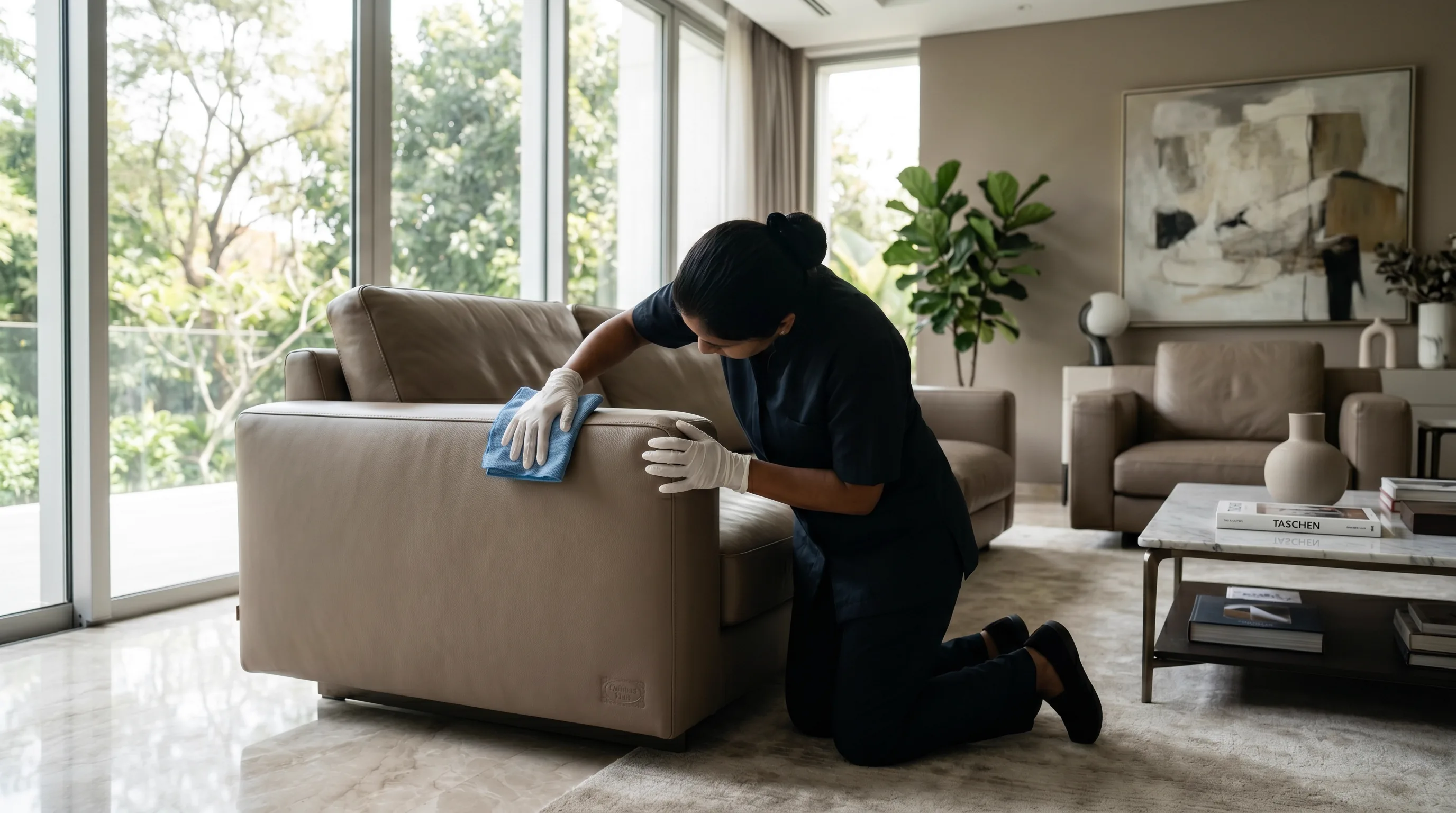
Step 3 -Clean monthly with pH-neutral cleaner. Put the cleaner on a microfiber cloth -never directly on the leather. Make one light pass per panel. Do not scrub in circles. Do not re-pass the same area within the same minute. Lift residue with a second damp microfiber. Air-dry. Full steps in the pH balance guide. The same steps apply to all aniline and semi-aniline pieces regardless of brand.
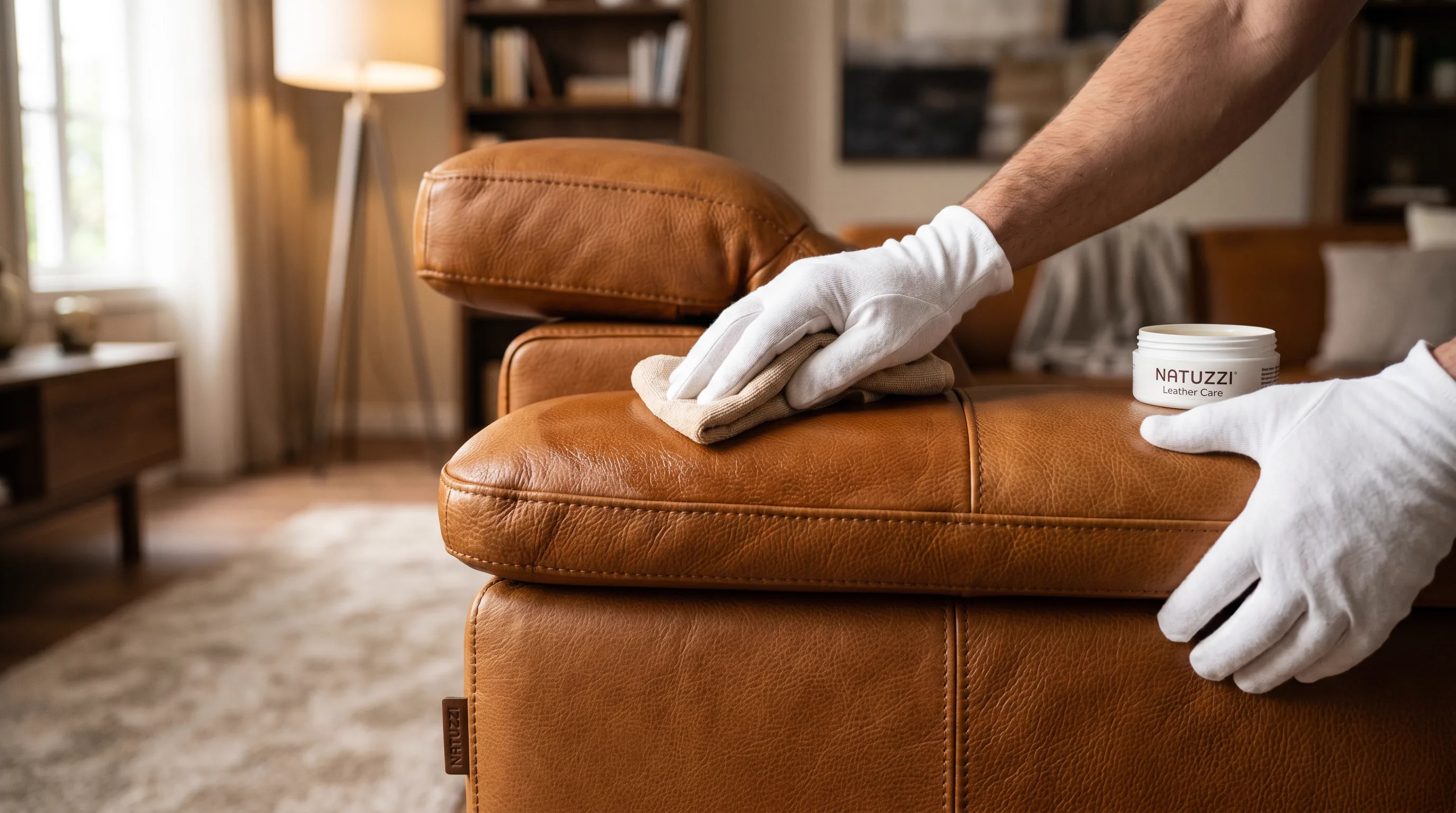
Step 4 -Condition every six to twelve months. Apply 3 to 5 ml of synthetic ester emulsion per panel. Spread in light circles and let it absorb for ten minutes. Buff lightly with dry microfiber. Let the hide rest for 24 hours before normal use. Aniline pieces (Pelle SC, Natuzzi Iconic): every 6 to 9 months. Semi-aniline (Editions, Re-Vive): every 8 to 12 months. Pigmented entry pieces: once per year. See the science of moisturizing for the full mechanism.
Step 5 -Follow the seasonal calendar. Run the four-phase NCR calendar above. Each phase needs a specific action. Missing one phase causes damage that the next phase cannot recover.
Step 6 -Annual check by a specialist. Have a master restorator inspect your sofa each year. They catch early problems -loose grain, micro-cracking in the pigment binder, fat liquor depletion at flex points -while panel-level repair is still possible. An annual check costs a fraction of what a panel repair costs once damage is missed.
What Are the Most Common Ways Frau and Natuzzi Sofas Get Damaged?
Five problems account for nearly every Natuzzi and Frau repair job in India. Catching them early decides whether the repair is a single panel or the whole piece.
Darkening from the wrong conditioner
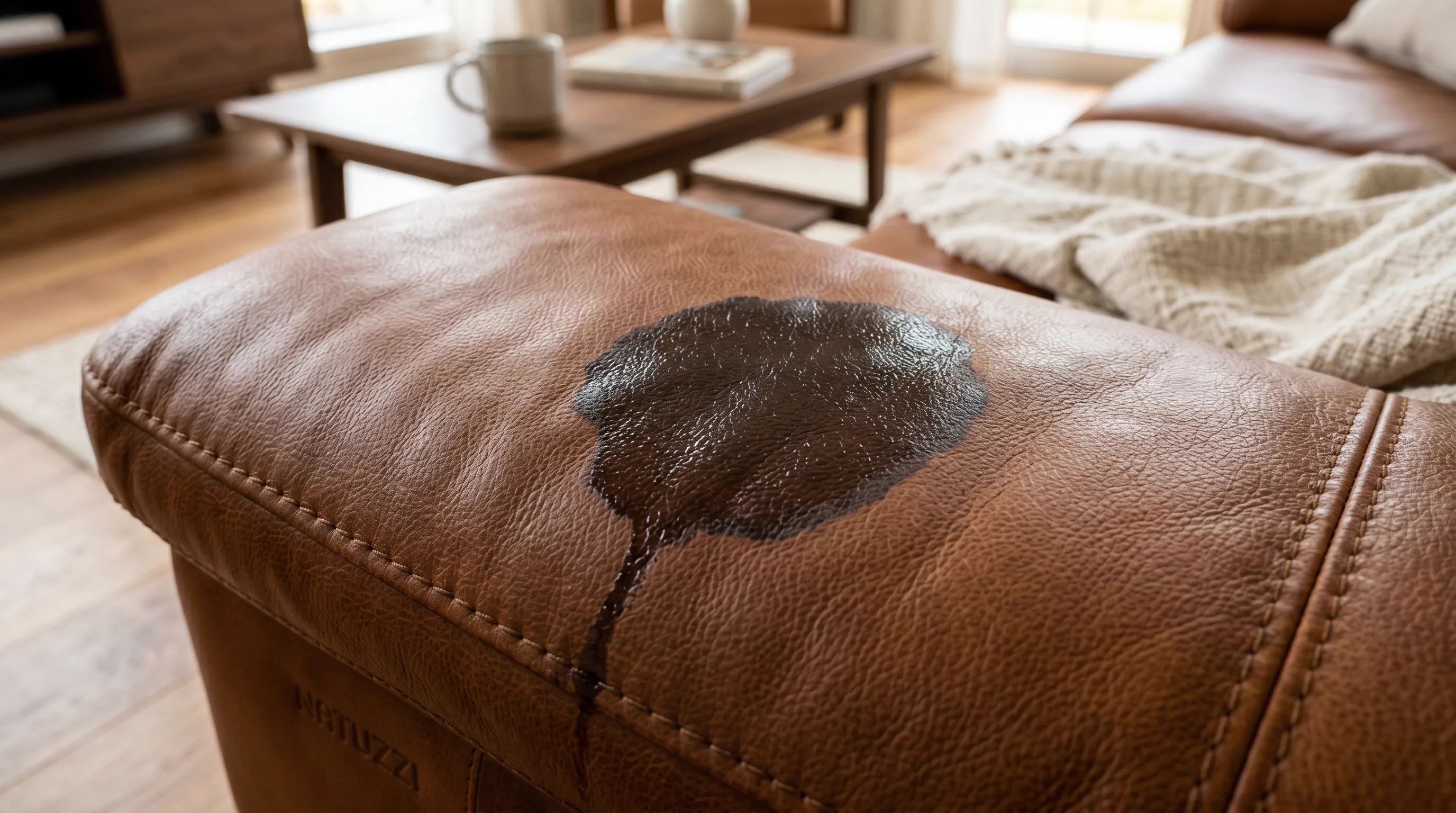
This is the most common damage on Pelle SC and Natuzzi Iconic. Owners apply coconut oil, olive oil, beeswax, or generic "leather food." These products give a temporary sheen and then permanently darken the hide within months. The aniline finish has no protective coat to slow the oil down. It reaches the dyed fibres directly. Workshop recovery requires deep-pore extraction and re-fatliquoring with chrome-tanned compatible chemistry.
South-facing UV fade
This is the most visible damage in Gurugram penthouses and DLF Phase apartments with unfiltered glass walls. Aniline dye molecules break down under sustained UV, making south-facing panels two to three shades lighter while back panels stay original. Full explanation and protection steps in the UV degradation guide. Repair uses panel-level micro-pigmentation matched to the unfaded reference panels.
Crocking and pigment lift
Pigmented Natuzzi pieces and the thin pigment layer of semi-aniline Editions can develop crocking -colour transfers to clothing or hands when wiped. This typically follows years of wrong-pH cleaning. The pigment binder loosens. The dye no longer holds to the hide. Workshop repair rebuilds the binder and then re-applies the top-coat.
Loose grain and surface laxity
This is the visible sign of fat liquor depletion [loss of the oils built into the hide during tanning]. The hide settles slightly looser, the cushion feels different, and faint stress lines appear under raking light. The full mechanism is in the science of moisturizing. Caught within the first year of visible signs, workshop re-fatliquoring restores the fibre matrix completely. Left for three or four years, it becomes fibre delamination that needs panel reconstruction.
Smog particulate damage
This is the NCR-specific problem. The surface dulls. High-contact zones darken. A damp cloth picks up colour. These are all signs of cumulative winter smog exposure across multiple seasons. See winter smog leather damage in NCR for the mechanism and repair steps. Workshop deep-pore extraction removes embedded PM2.5. Re-fatliquoring matched to the original tannage restores the lubrication that metal-catalysed oxidation has stripped out.
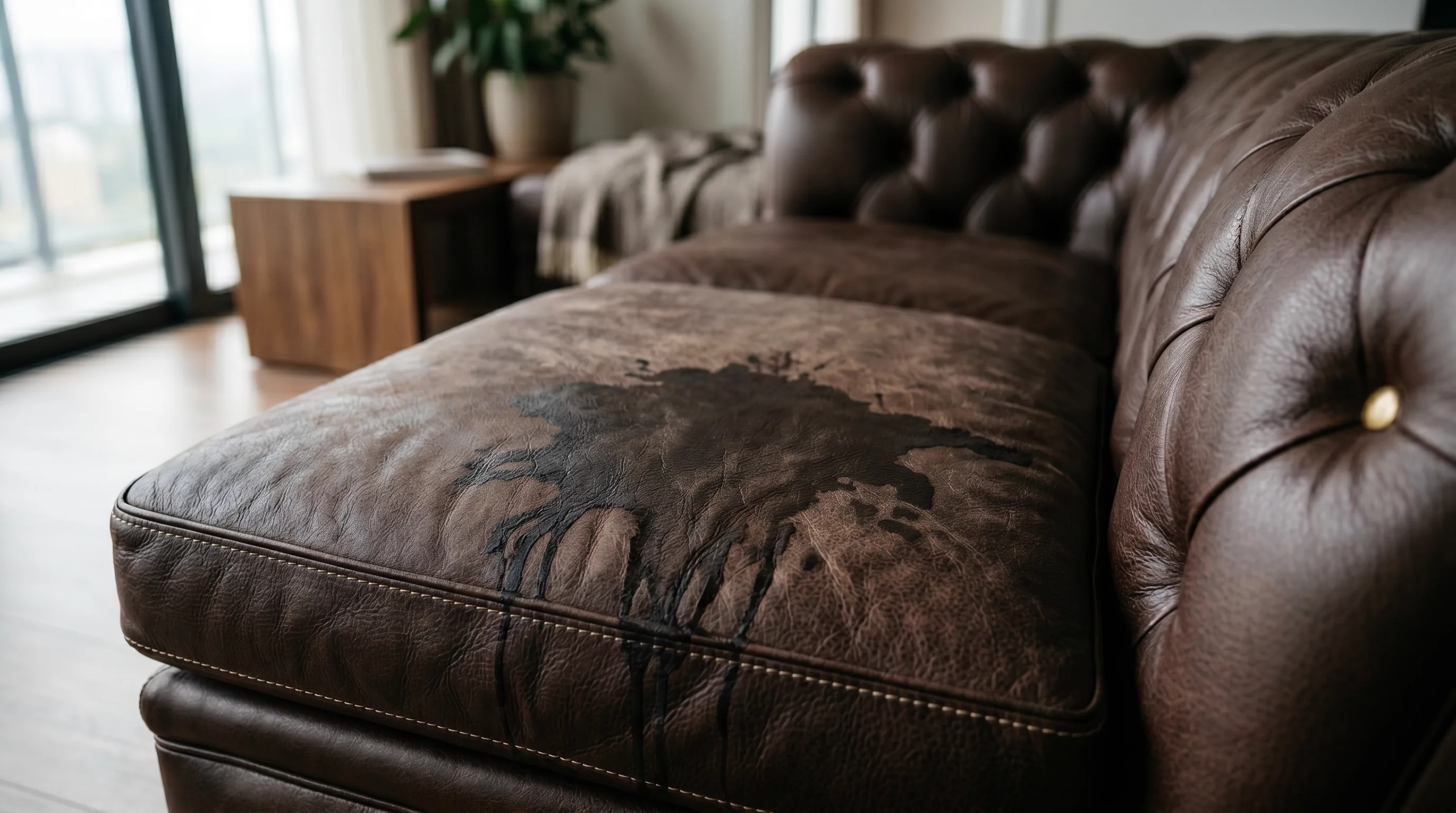
"A Frau or Natuzzi sofa is built to outlive its first owner. Whether it does depends not on the brand or the purchase price but on whether the care chemistry over the next three decades respects what the tannery built into the hide."
How We Repair a Damaged Frau or Natuzzi -Panel vs Full Piece
We decide repair scope at workshop intake based on how much damage there is and how much structural integrity the hide has left.
Panel-level repair is the standard approach for localised damage -a darkened seat from the wrong conditioner, a faded south-facing arm cap, a single panel of pigment lift. We map the damaged area against the undamaged hide around it. We match the pigment to the original Pelle SC reference colour or Natuzzi tannery formulation. We rebuild the damaged zone in very thin passes. After the integration period, the transition from repaired to original is invisible. Full process in the micro-pigmentation guide.
Whole-piece repair is for multi-panel damage, heritage pieces that have lost tonal consistency across decades, or pieces with severe damage. The colour reference target shifts from the surrounding undamaged hide to the documented original tannery formulation. For Frau Pelle SC this means matching against the 27-colour archive. For Natuzzi this means matching against the brand's documented collection palette. Whole-piece repair of a heritage Frau Vanity Fair or a vintage Natuzzi Iconic can take two to four weeks. It recovers pieces that would otherwise be retired.
Where the damage is too structural for surface micro-pigmentation alone, we rebuild the fat liquor through workshop re-fatliquoring. We remove the hide from the frame and treat it in a controlled-temperature emulsion bath matched to the original tannage chemistry -see the tanning chemistry guide. The hide is dried under tension to prevent shrinkage, then reattached. Combined with micro-pigmentation, full re-fatliquoring adds two to three more decades of service life to a Frau or Natuzzi piece.
Owning an Italian Leather Sofa in India -What You Need to Know
Your Pelle SC armchair or Natuzzi Iconic three-seater was made for European climate conditions. Delhi NCR is harsher than anything the Italian engineers designed for. The expert care routine that protects the hide through that climate is what determines whether your sofa reaches its intended service life -three to four decades for properly cared-for aniline pieces, longer for heritage Frau pieces that enter the documented repair cycle.
The routine is the same regardless of brand. Identify your collection. Use pH-neutral chemistry. Condition on schedule. Follow the four NCR climate phases. Get an annual specialist check. Use finish-matched repair when the time comes. Everything else -generic cleaners, kitchen oils, household sprays, advice from showroom staff -works against the chemistry of the hide. The hide chemistry does not negotiate.
If you own a Frau, Natuzzi, or similar Italian luxury piece in NCR, we offer expert leather restoration, surface work, and doorstep assessment across Noida, Faridabad, and Ghaziabad. Every job starts with collection identification -Pelle SC reference colour or Natuzzi collection map. Heritage Frau owners can follow how the documented repair cycle runs, from workshop intake through tannery colour reference to re-finish, on our Poltrona Frau restoration page. Related guides: Fendi Casa leather care and B&B Italia and Maxalto modular care.
Bookmark this page. When your Frau or Natuzzi sofa needs care or repair -or you just want to know whether a product is safe to use on it -the answer is here.
References & Further Reading
- Poltrona Frau official site, Pelle Frau leather specification - poltronafrau.com/leathers
- Natuzzi Italia, leather collections and care documentation - natuzzi.com/care-guide
- Consorzio Vera Pelle Italiana Conciata al Vegetale - Tuscan tannery district registry - pellealvegetale.it
- Leather Working Group (LWG) chrome tannage standards - leatherworkinggroup.com
- UNI EN ISO 17226 - leather chemical analysis standards
- Article author Tyson, Lead Artisan, The Leather Restorators about page