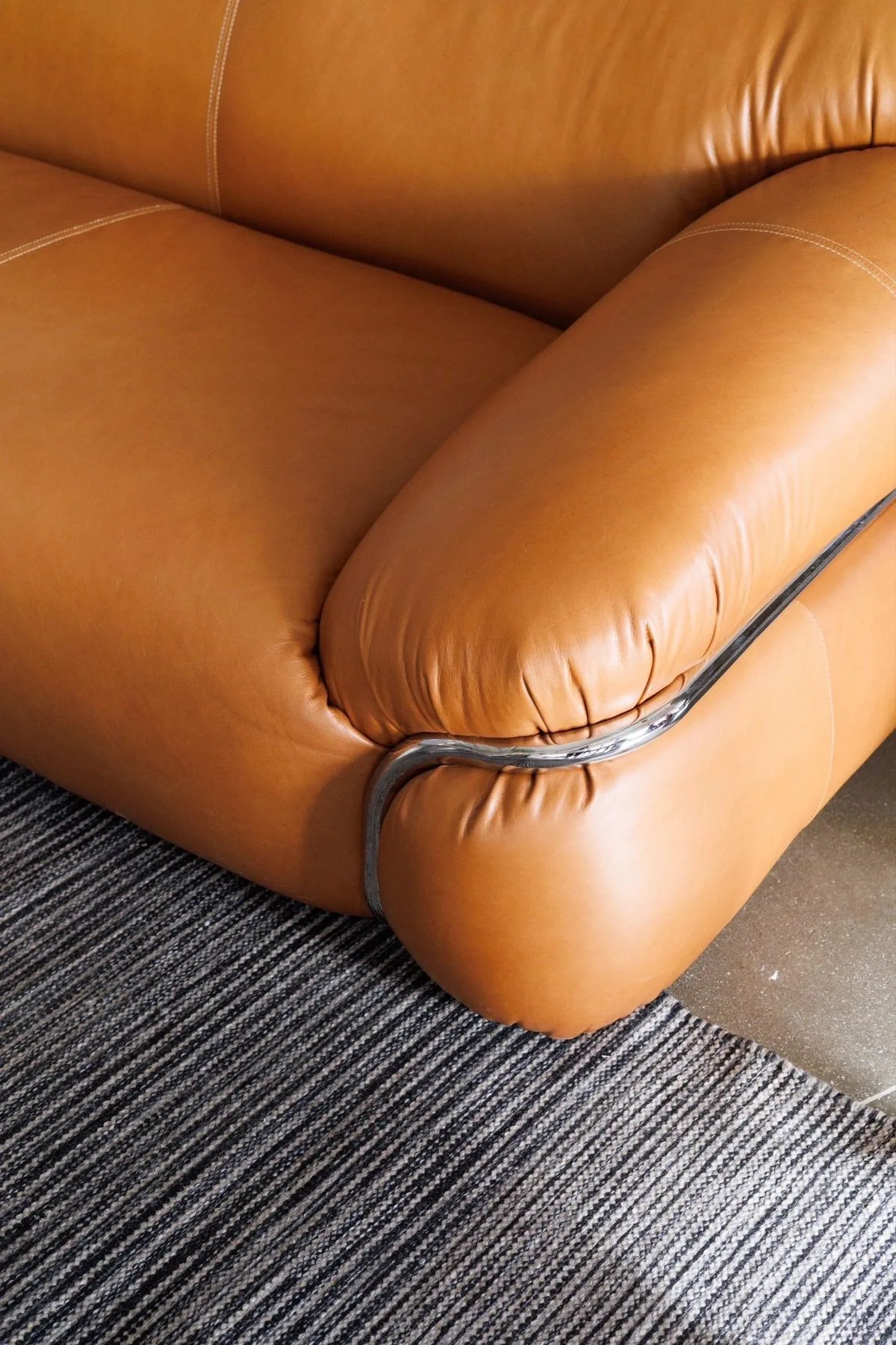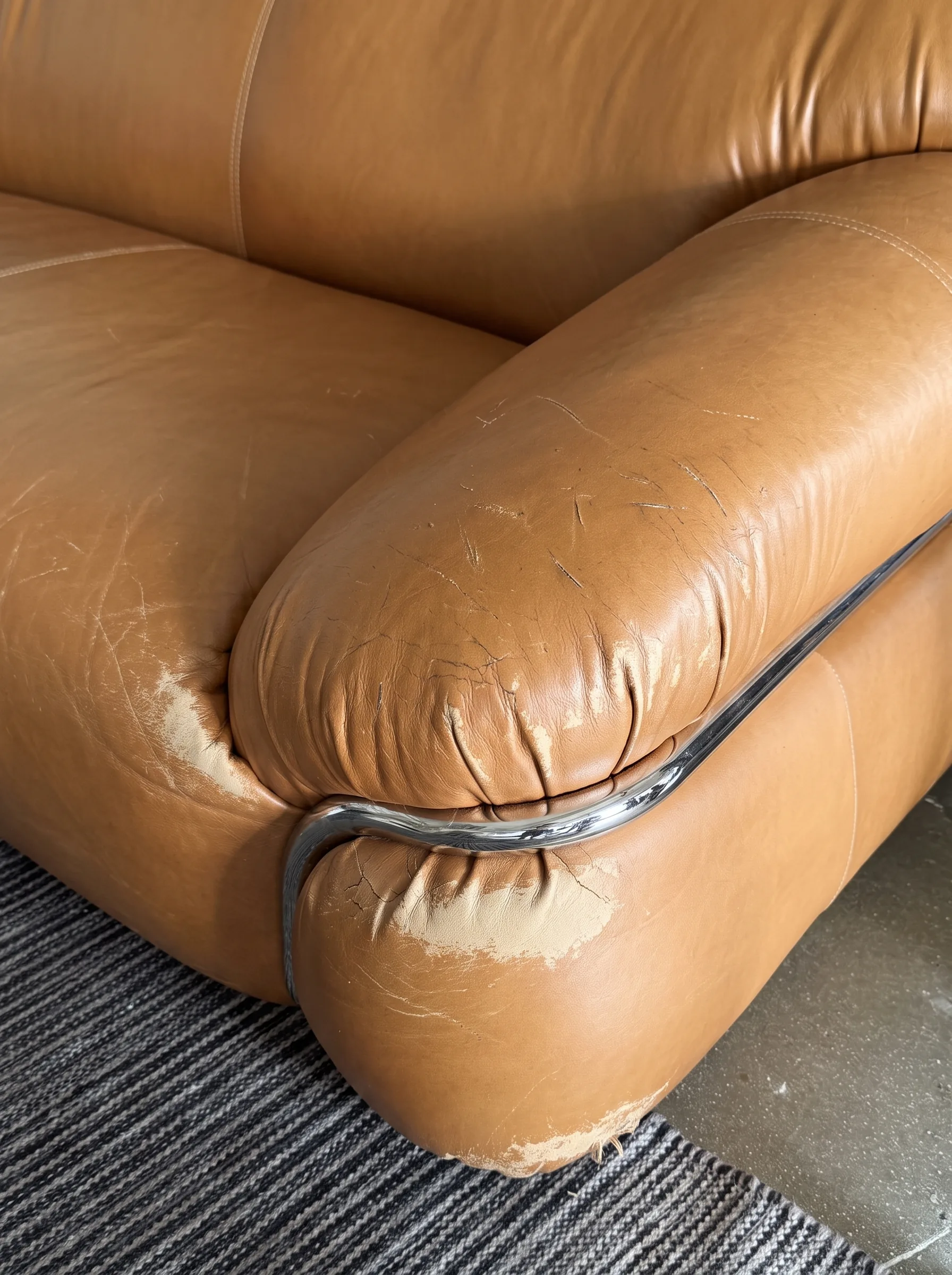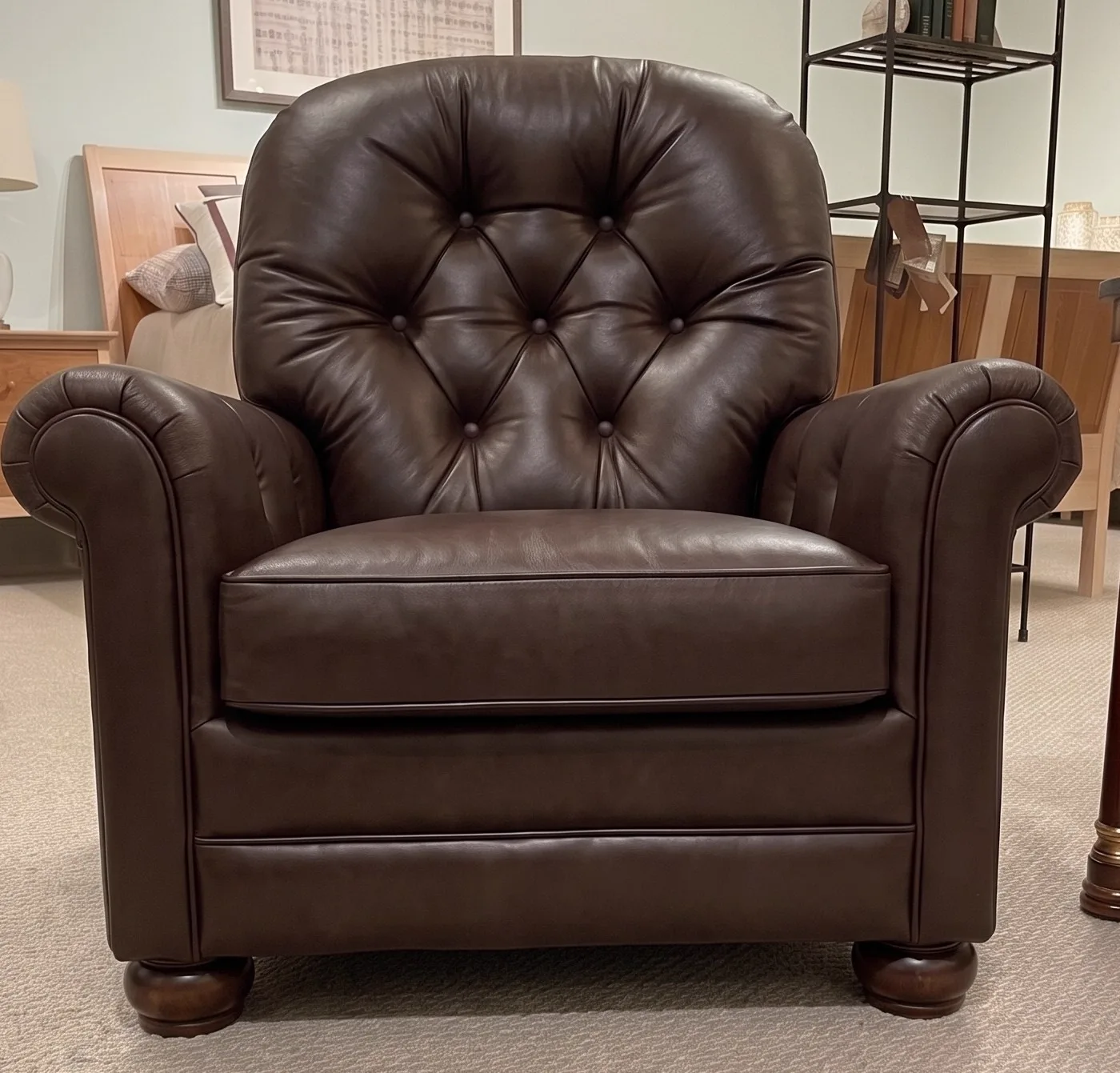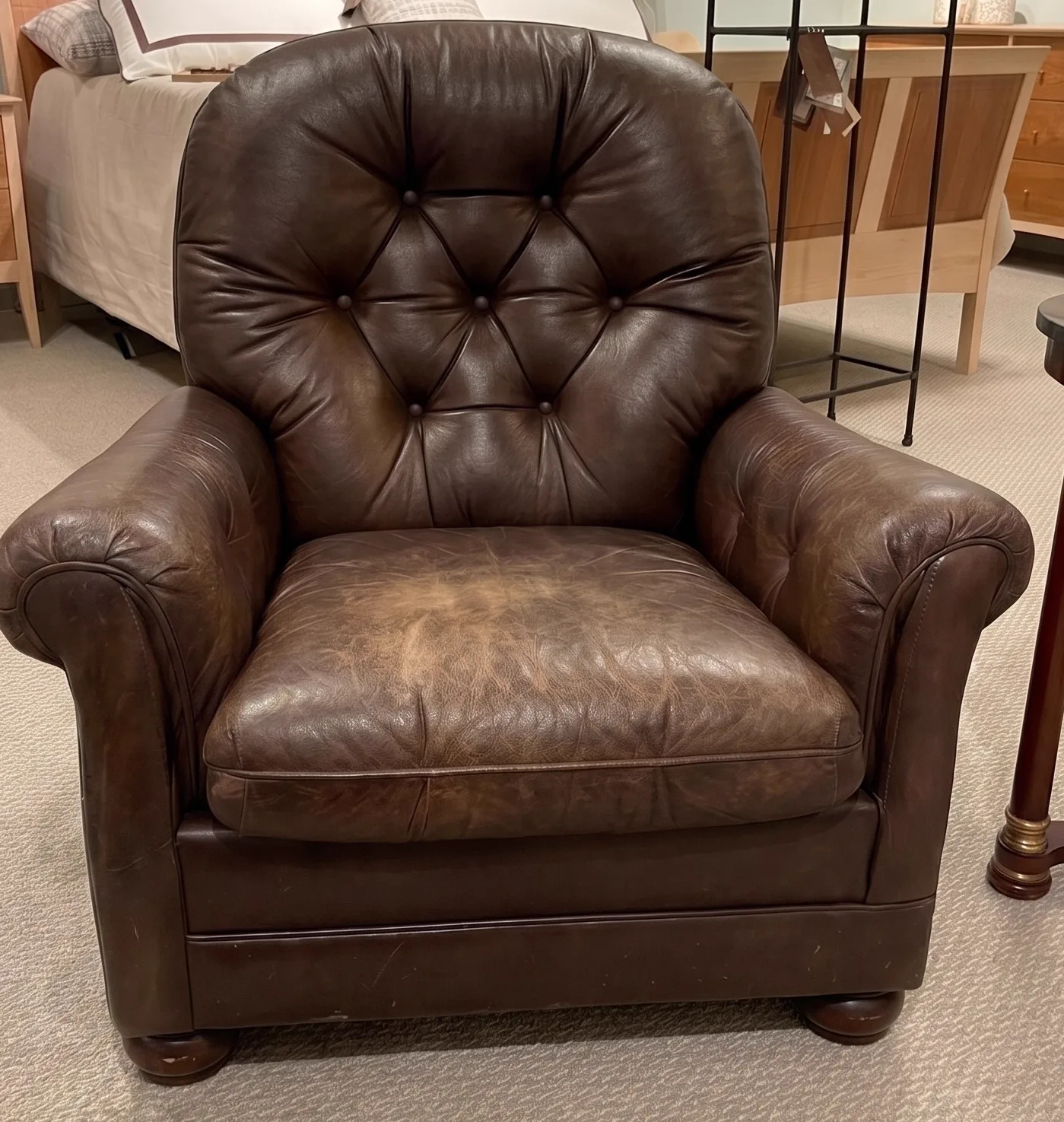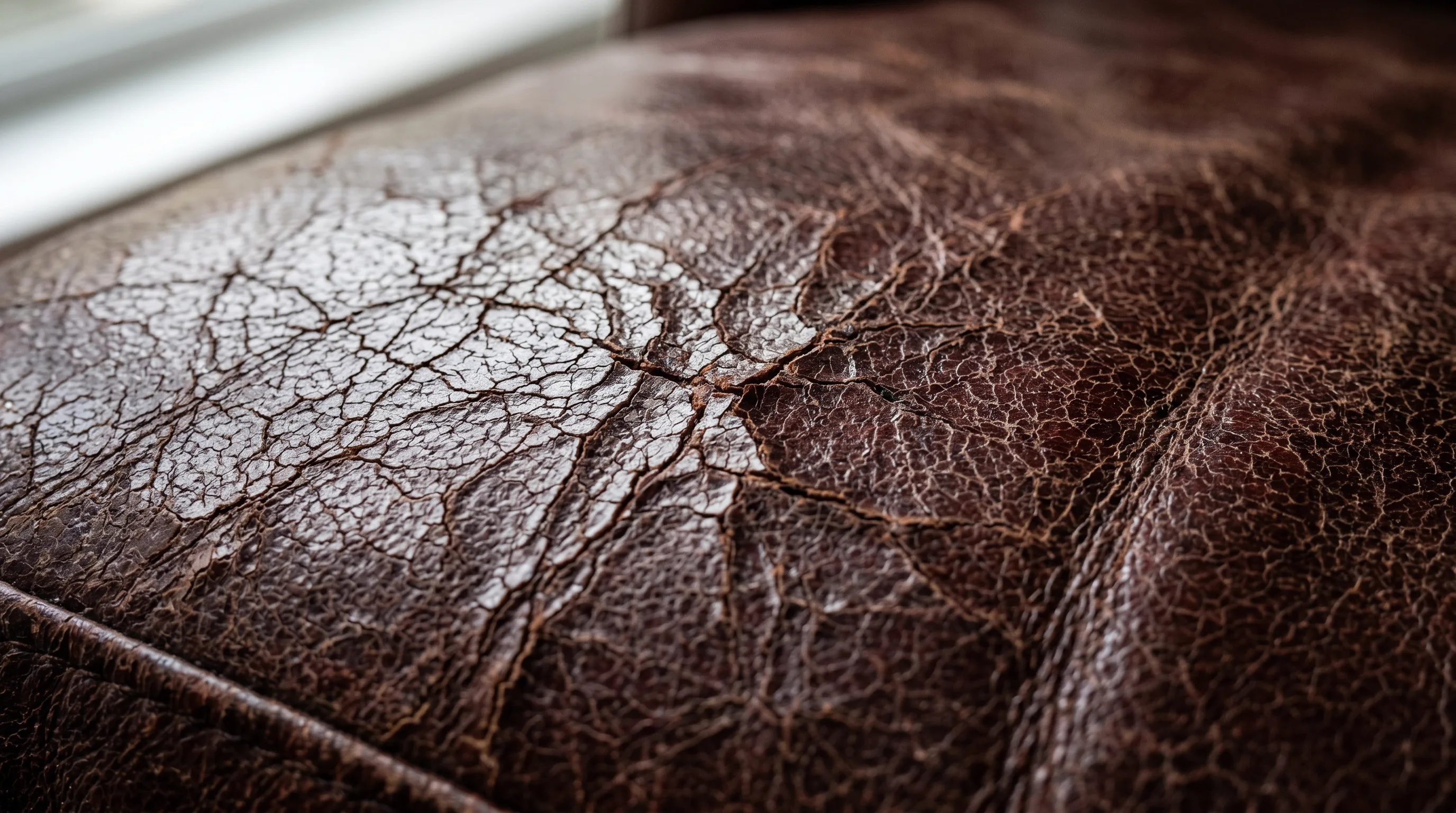
You used a magic eraser on your leather sofa to lift a stain , and it worked. For about ten seconds. Then you noticed the clean spot no longer matches the rest of the panel. That matte patch is not a trick of the light. The polymer top-coat has already been shaved off and is sitting in fragments inside the foam. Melamine foam damage is the fastest DIY mistake a leather sofa can suffer , not the slow chemistry of coconut oil over six months, not the creeping pH drift of vinegar over weeks, but a step-change in seconds. This article explains what melamine foam actually is, why it acts as ultra-fine sandpaper at the microscopic level, how damage progresses, and what workshop recovery looks like. Terms used throughout are defined in the leather conservation glossary. Foundational chemistry is in the dedicated guides on the pH balance of leather and the micro-pigmentation process.
What Is Melamine Foam and Why Is It Abrasive?
Mr Clean Magic Eraser and the hundred white-label equivalents on Indian e-commerce are all the same material: melamine foam. The chemistry is a formaldehyde-melamine-sodium bisulfite copolymer polymerised into an open-cell foam structure. To the eye and the hand, it feels like a soft white sponge , slightly stiffer than a kitchen sponge, firmer under pressure. Nothing in the feel suggests anything abrasive.
Under an electron microscope, the foam reveals what it actually is. The cell walls are extremely thin. The resin is hard and brittle. The foam surface is a network of micron-scale fibres and fragments that behave like glass. When you rub the foam across any softer surface, those glass-hard fibres scrape material off. The cleaning action that lifts marker pen off walls and grease off countertops is not chemistry. It is mechanical abrasion.
The closest comparison is fine sandpaper. Laboratory measurements place melamine foam at roughly 5000-grit equivalent or finer. That sounds gentle , 5000-grit is what woodworkers use for a final polishing pass. But apply it to a soft polymer top-coat measured in tens of microns and 5000-grit removes the entire top-coat in one wipe. The foam is not gentle. It is a polishing-grade abrasive sold in the shape of a sponge.
Why "Just Add Water" Is Misleading
Melamine foam is marketed as needing only water , no detergent, no chemical, no solvent. The message that reaches most buyers is that it must therefore be gentle. No strong cleaner needed means nothing strong happening to the surface. That reasoning is wrong. The marketing language is designed to hide the actual mechanism.
The mechanism is mechanical abrasion, regardless of what wets the foam. Water only lubricates the abrasion. It lets the foam glide more smoothly and lets abraded material wash away from the contact point. A dry melamine foam still abrades , just with more friction and more visible drag. Wetting changes nothing about the cleaning action because there is no chemistry involved. The foam removes contamination by shaving off a thin layer of the surface beneath the contamination, taking the contamination with it.
On leather, this matters a great deal. The "no chemical needed" framing creates false confidence. Vinegar and coconut oil at least carry labels that invite caution. Melamine foam warns you of nothing. You will not know it is damaging your leather until the damage is already done.
The rule: any cleaning product that removes contamination through mechanical abrasion will also remove the protective layer beneath that contamination on a soft surface. Marketing language is irrelevant. If the eraser lifts marker pen off a hard wall in seconds, it will lift the polymer top-coat off your leather in the same seconds. The wetting agent does not change the mechanics of the removal.
What Does a Magic Eraser Actually Do to Leather?
Damage to luxury leather follows a three-layer progression. How deep it goes depends on how long the foam stays in contact and how much pressure you apply. Each layer means a deeper, more expensive recovery.
Layer one , top-coat removal
Within the first second of contact, the foam shaves off the polymer top-coat across the entire contact area. On a pigmented finish, that top-coat is typically a clear or lightly tinted polyurethane-acrylic film 10 to 30 microns thick. It handles abrasion from clothing, jewellery, and routine cleaning , but not from a 5000-grit abrasive at hand pressure. The foam removes the film cleanly. Fragments lodge inside the foam. Your leather now has no protective film, no sheen control, and no abrasion buffer over the pigment layer.
Layer two , pigment removal
With continued pressure, the pigment layer beneath the top-coat goes next. Pigmented finishes carry a layer of opaque colour pigment bound to the hide by a polymer binder. That binder is soft and equally vulnerable. If you wipe two or three times to "make sure it is clean," you almost always strip through to this second layer. You will see a visibly paler, fibrous-looking patch where the dyed fibres underneath are now exposed.
Layer three , dye complex damage
On aniline and semi-aniline finishes, the colour lives in the dyed fibres themselves, not in a separate pigment layer. Sustained foam pressure removes the upper grain fibres directly and exposes a damaged dye complex underneath. The patch looks paler with a disturbed grain pattern. The surface character of that panel is permanently changed.
Across all three failure modes, the damage is uniform across the wiped area and immediately visible as a different sheen , typically matte where the surrounding panel reads satin or gloss. The damage boundary exactly traces the path of the foam. An experienced restorator can usually tell which direction the eraser was wiped, how many passes were made, and how much pressure was applied, just from reading the abrasion pattern at intake. Surface failures of pigment and binder systems are also catalogued in the crocking and colour transfer reference.
Why the Damage Is Hard to See at First
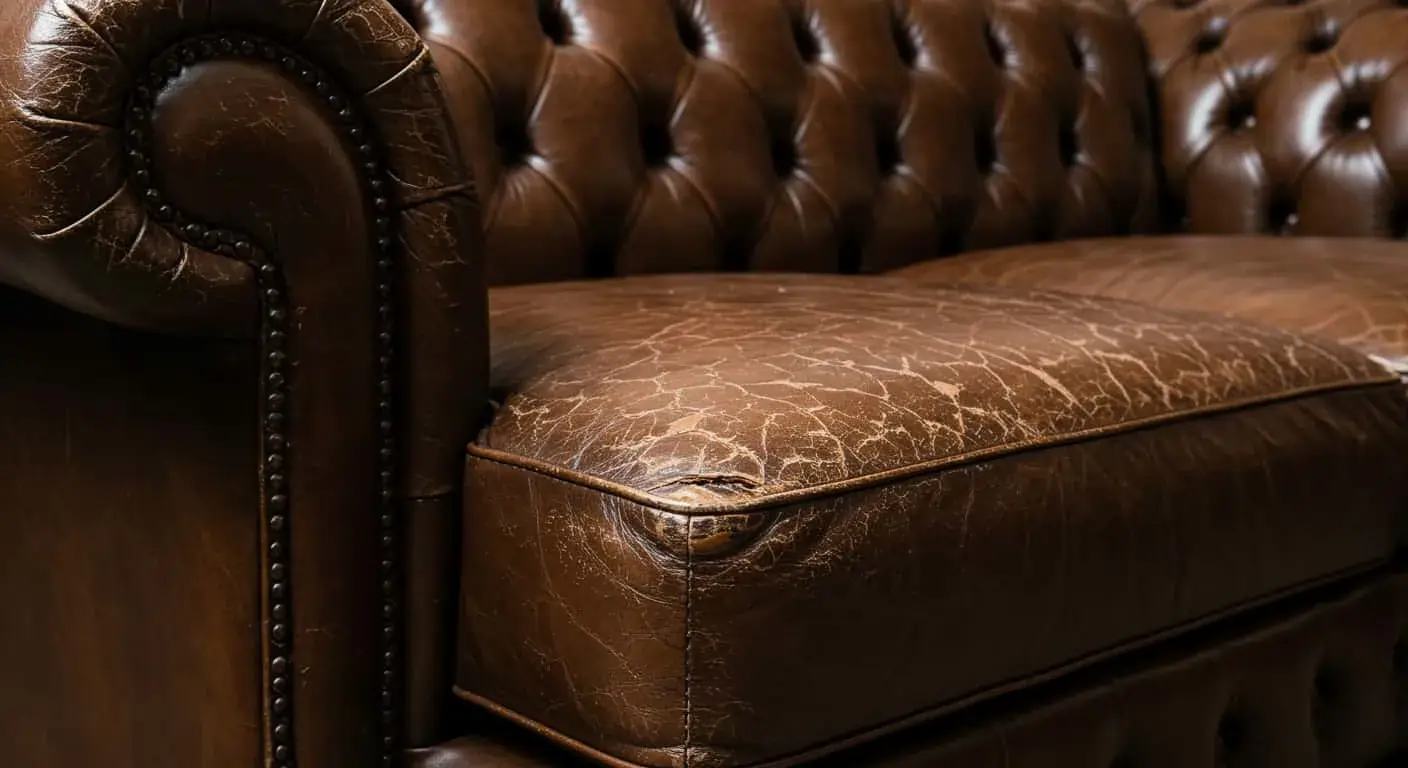
The most dangerous thing about magic eraser damage is that it looks like success at first. The eraser does lift the stain. You were trying to remove a stain, and in narrow technical terms it worked , the stain is gone. What you do not immediately register is that the eraser also lifted the top-coat the stain was sitting on. The clean spot is now a stripped-finish spot.
Living room lighting is forgiving enough that the matte zone is not always obvious in week one. Many owners report initial satisfaction , "it worked perfectly" , followed by growing concern over the next few weeks as raking sunlight or an angled lamp reveals the matte zone against the surrounding satin or gloss panel. By month two, most people notice the patch as obviously different. By month three, the exposed substrate has collected enough contamination from contact and dust that the stripped zone has darkened visibly against the protected surrounding finish.
This pattern creates a particular kind of regret: the moment of damage felt like a moment of success, which makes the realisation harder. It also explains why people delay getting help. The damage did not feel urgent in week one. By the time it is clearly visible, the assumption has set in that the only fix is replacement or re-upholstery. Neither is true. Workshop recovery is possible at every layer of melamine foam damage , but the scope grows the longer the stripped substrate stays exposed.
Which Leather Finishes Are Most at Risk?
Different leather finishes show different damage signatures under melamine foam. The top-coat structure differs between aniline, semi-aniline, and pigmented finishes , and so does the recovery scope. Workshop intake across India maps cleanly to finish category.
Pigmented Natuzzi entry collections. These show a textbook top-coat removal pattern , a bright matte zone where the polymer film has been shaved off the pigment layer. The pigment itself is usually intact after one wipe. The damage boundary is sharp. Recovery typically needs top-coat lamination only, sometimes with thin pigment binder restoration if the wipe was repeated. See the Natuzzi and Poltrona Frau care guide for brand-specific steps.
Semi-aniline Natuzzi Editions and B&B Italia. Semi-aniline finishes have a thinner top-coat and a less opaque pigment layer beneath. One wipe tends to remove both the top-coat and a portion of the pigment. The result is a paler matte zone with an indistinct boundary. Recovery requires pigment binder restoration plus top-coat lamination. Steps for B&B Italia and Maxalto pieces are in the B&B Italia and Maxalto modular care guide.
Aniline Poltrona Frau Pelle SC, Natuzzi Iconic, Fendi Casa Selleria. Pure aniline finishes have no separate pigment layer. The colour lives in the dyed fibres themselves. Melamine foam pressure removes the upper grain fibres directly and exposes a damaged dye complex underneath. The damage is paler, fibrous-looking, and the most expensive to fix. Workshop recovery typically requires panel-level micro-pigmentation rebuild , not spot repair , with brand-archive colour matching to the Frau, Natuzzi Iconic, or Fendi Casa palette.
Bonded and bicast leathers , documented in the bicast and bonded PU leather reference , fail differently. The engineered top-coat on these pieces is the only structural finish. Once it is breached, the bonded substrate underneath cannot be cleanly rebuilt. These pieces often need full-panel re-upholstery rather than restoration after melamine foam damage.
How Fast Does the Damage Get Worse?
The progression after a melamine foam wipe is short and predictable. Workshop observations across hundreds of intake pieces show the same timeline every time.
Minute one , top-coat lifted
The polymer top-coat is gone across the foam contact area. Your leather still feels smooth because the pigment layer underneath is intact , but the sheen has changed, typically from satin to matte. Under raking light from a window or lamp, the damage boundary is faintly visible. Most people miss this stage because they are focused on the stain that just lifted.
Week one , matte zone visible
As light shifts across the day, the matte zone becomes visible to anyone looking at the panel from a slight angle. You start to recognise it as a problem. The instinct is to apply a conditioner or polish to even out the sheen. That will not work. The top-coat that controlled sheen has been physically removed. The matte will not buff back.
Month one , substrate begins darkening
The exposed pigment layer or dye complex starts collecting contamination from skin contact, dust, and ambient pollutants. The surrounding intact top-coat admits none of this. The matte zone gradually darkens against the protected surrounding panel. The contrast becomes visible from across the room, not just at close angles.
Month three , panel-level fix required
By month three, contamination has bound into the exposed substrate and can no longer be cleaned off the surface. Recovery now requires panel-level micro-pigmentation, not spot repair. The entire affected panel must be cleaned, pigment-rebuilt, and re-laminated to produce a uniform finish. Catching the damage in week one keeps the fix to a clean spot recovery. Waiting until month three roughly triples the scope.
The top-coat structure of your specific leather , whether it is an integrated finish on a full-grain hide or the separate-layer construction on bicast and bonded materials (documented in the bicast and bonded PU leather reference) , determines which workshop steps apply. The correct conditioning rhythm to protect these top-coats over years is in the science of moisturizing guide.
"There is no DIY fix for magic eraser damage on leather. You cannot buff it out. No conditioner rebuilds a missing top-coat. No polish replaces lifted pigment. The eraser shaved the protective layer off in seconds. Restoring it takes a workshop."
What Should You Use to Remove a Stain Instead?
The right fix for a stain on luxury leather is workshop spot extraction , never any abrasive. Workshop spot extraction uses chrome-compatible solvents at controlled pH (see the pH balance guide) to lift contamination without touching the polymer top-coat or pigment layer beneath. The steps are matched to the finish category , aniline, semi-aniline, or pigmented , and to the contamination type. No abrasion of the surface happens at any point.
For stubborn marks that resist solvent extraction, the workshop escalates to professional micro-pigmentation rebuild , restoring colour and finish through additive rebuilding, not abrasive stripping. The principle holds throughout leather care: where your instinct is to scrub off, the correct approach is to extract or rebuild. The two methods produce opposite outcomes.
For a complete picture of household products that damage luxury leather, see the sibling guides: why vinegar and olive oil damage your leather and the six-month coconut oil damage timeline. Magic eraser is the abrasive version of those chemical mistakes , different mechanism, same result: expensive damage from a well-intentioned household product.
If you have used a melamine foam eraser on a Poltrona Frau, Natuzzi, Fendi Casa, B&B Italia, or any premium aniline or semi-aniline piece, you can book expert repair for damaged leather, top-coat refinement and leather sofa polishing, or a doorstep assessment across Noida, Faridabad, and Ghaziabad. Workshop intake starts with depth assessment under raking light and follows the four-stage recovery steps. Brand-specific care for ongoing protection is in the Natuzzi and Poltrona Frau guide and the B&B Italia and Maxalto modular care guide.
Bookmark this page. The next time someone in your home reaches for the magic eraser to lift a stain off the leather sofa, the explanation is here to stop them before the top-coat pays the cost.