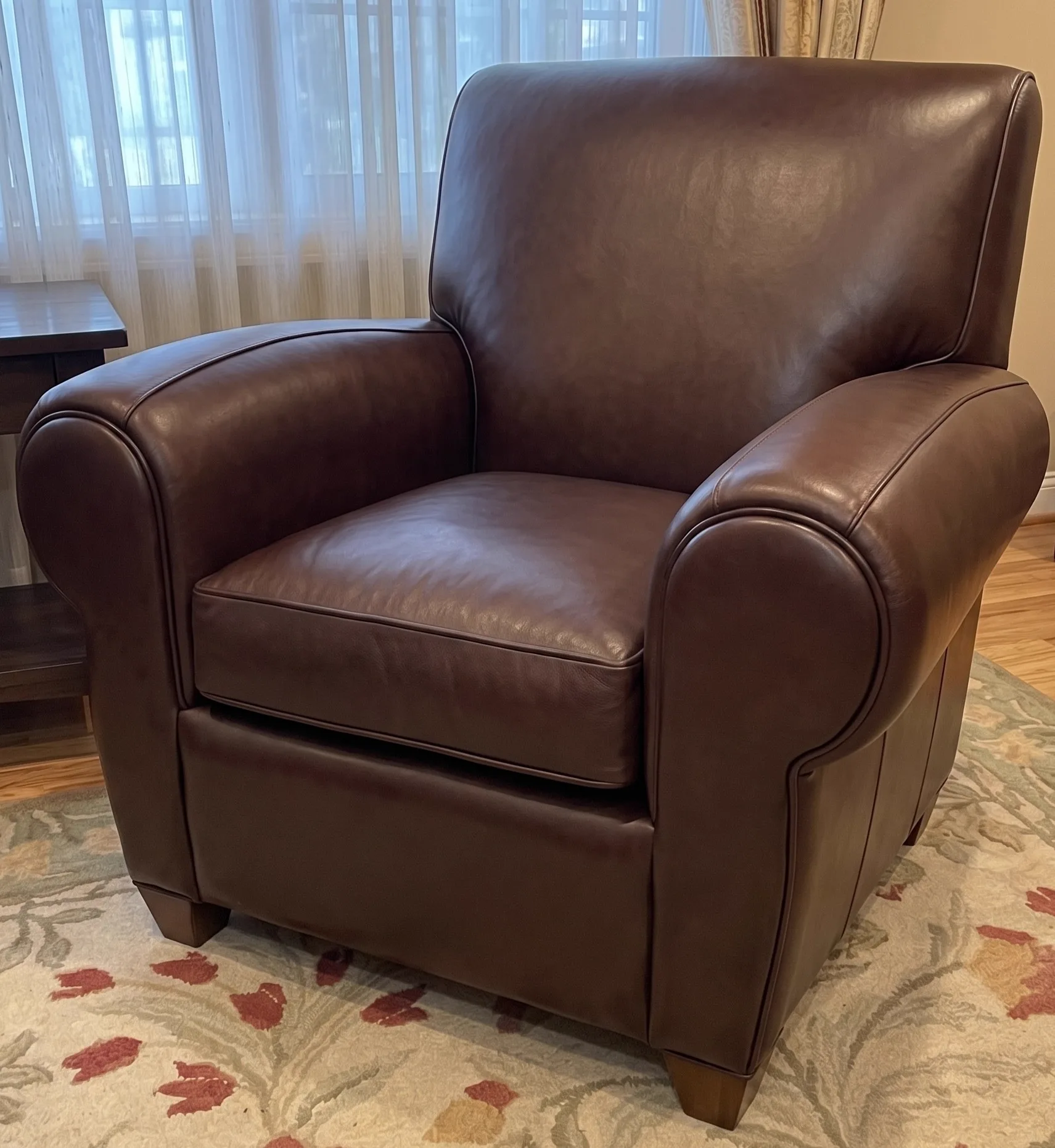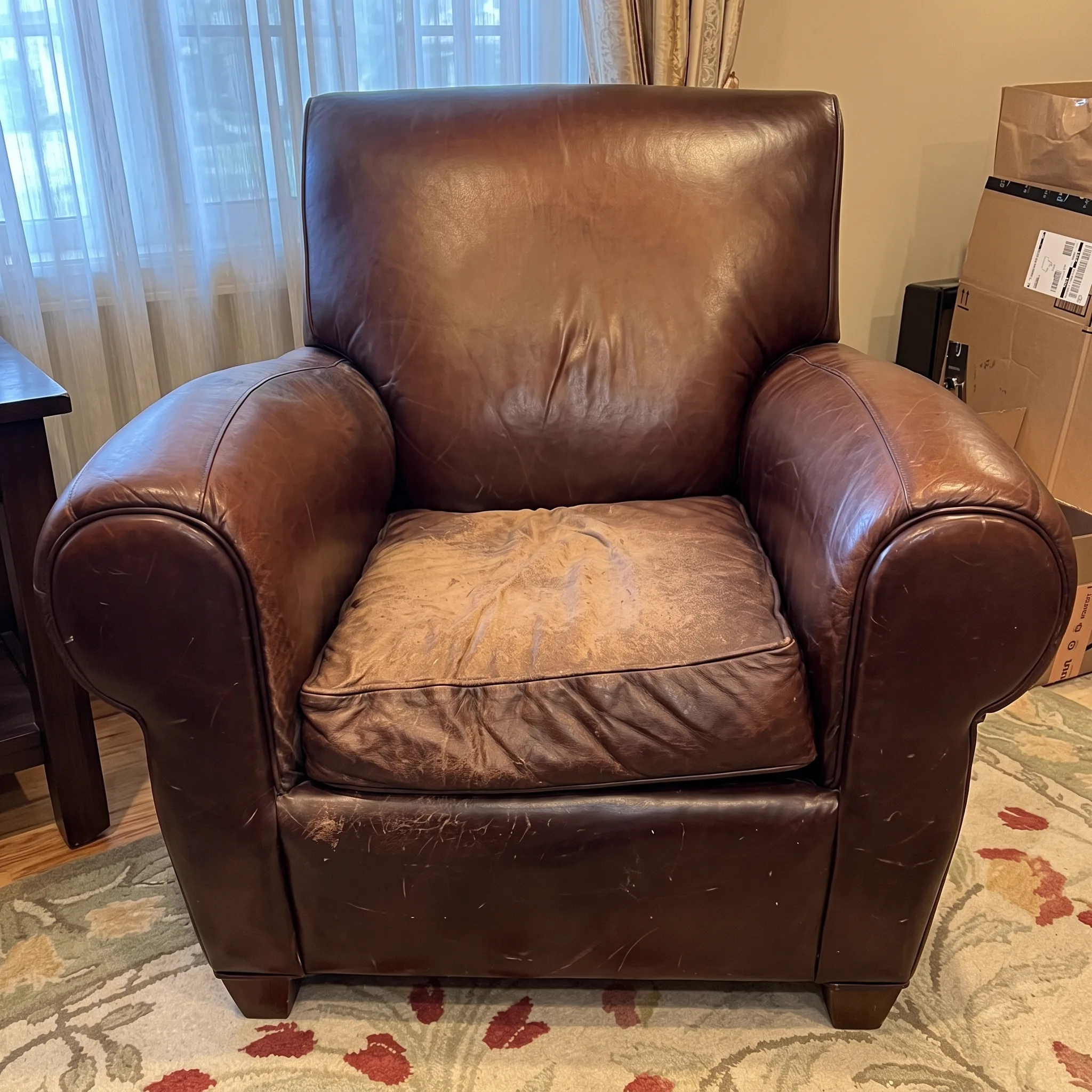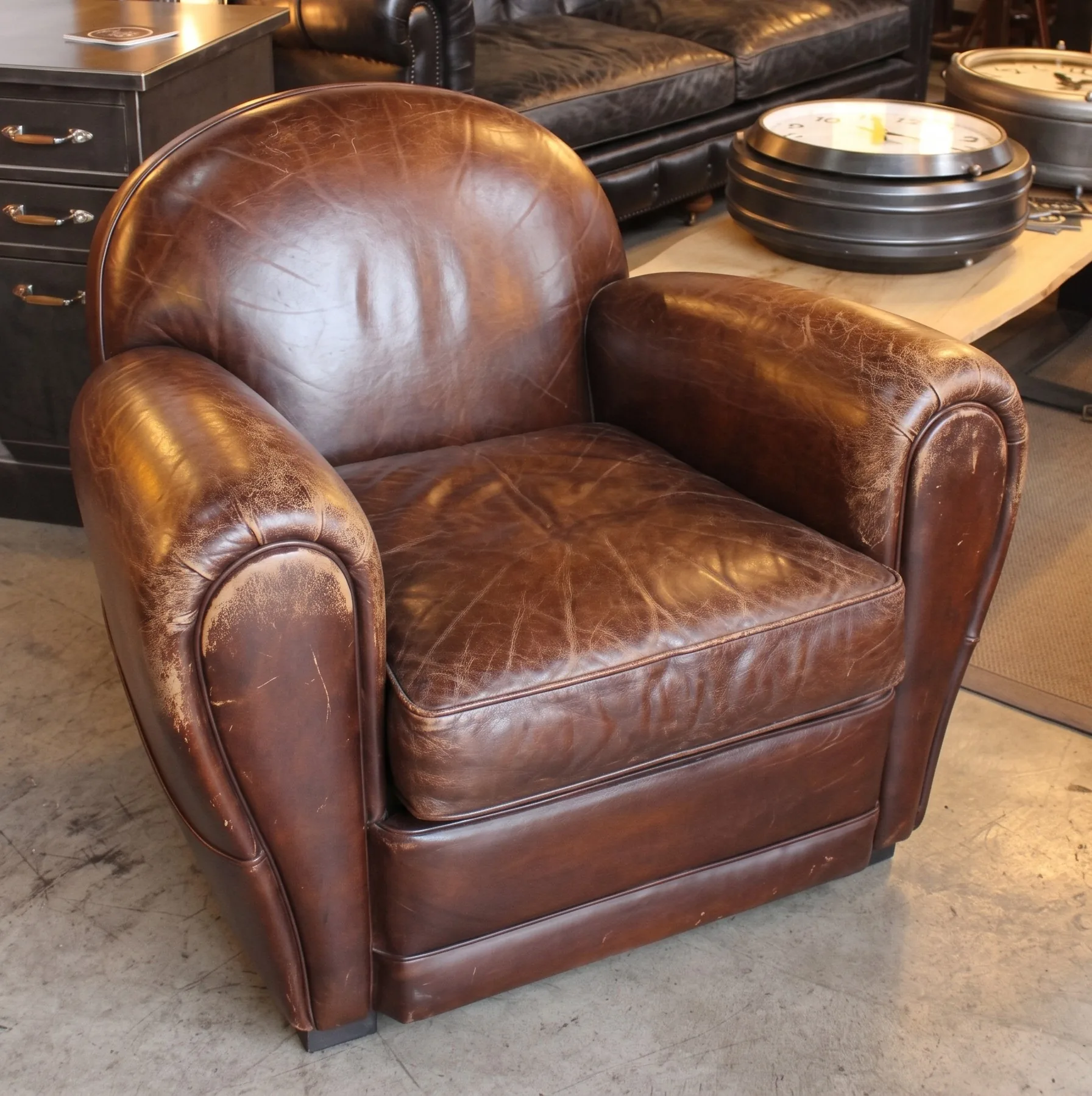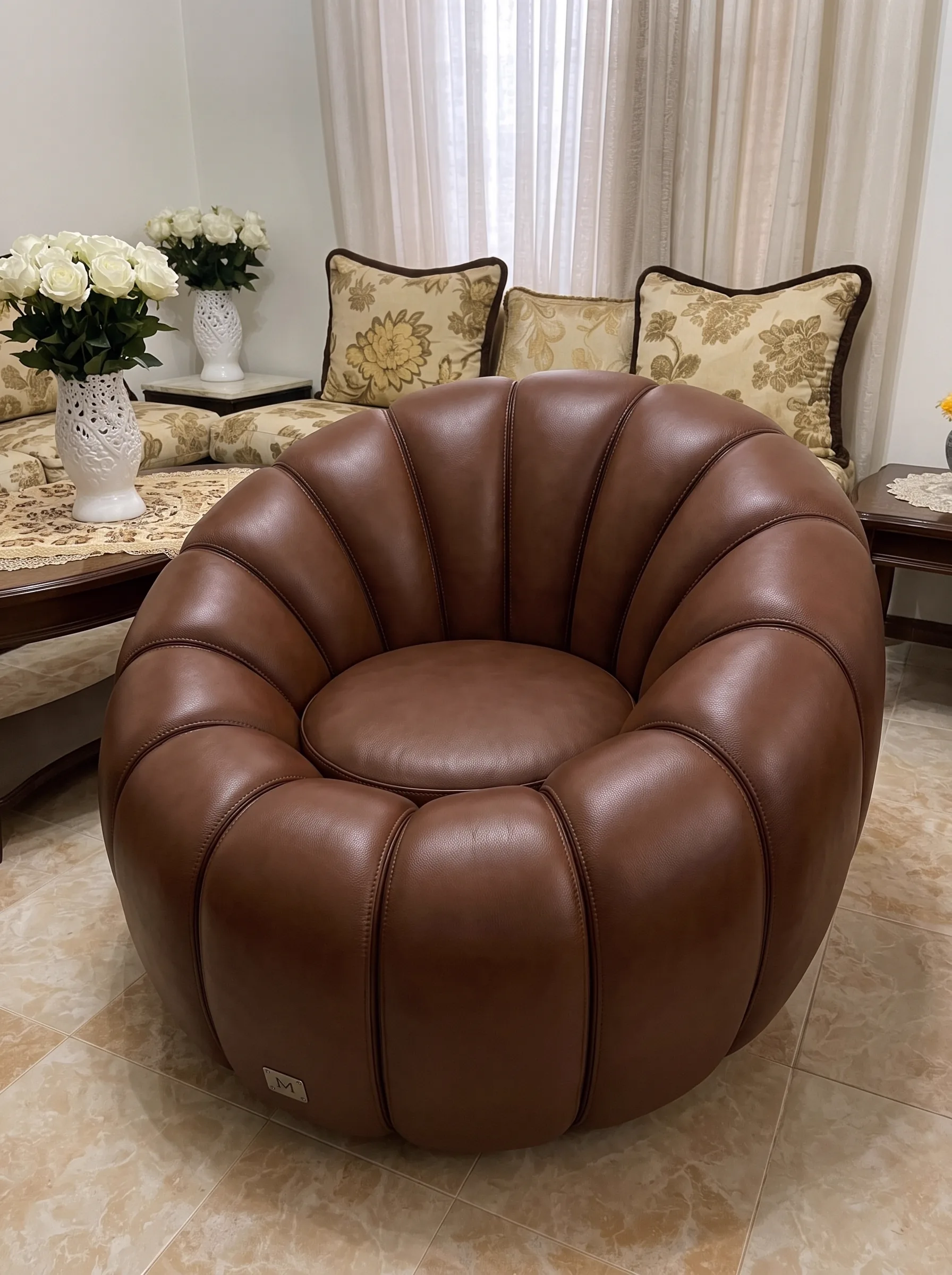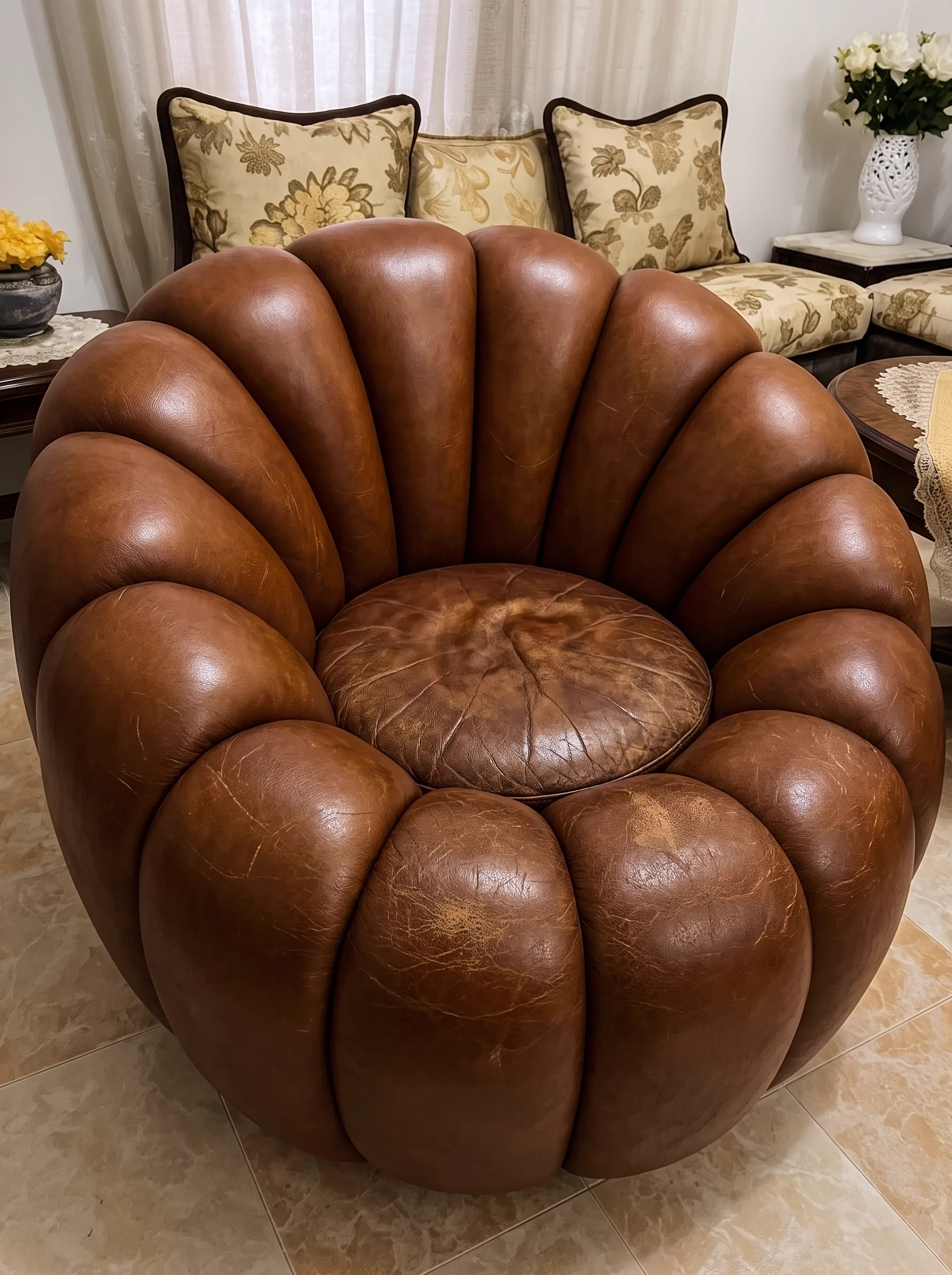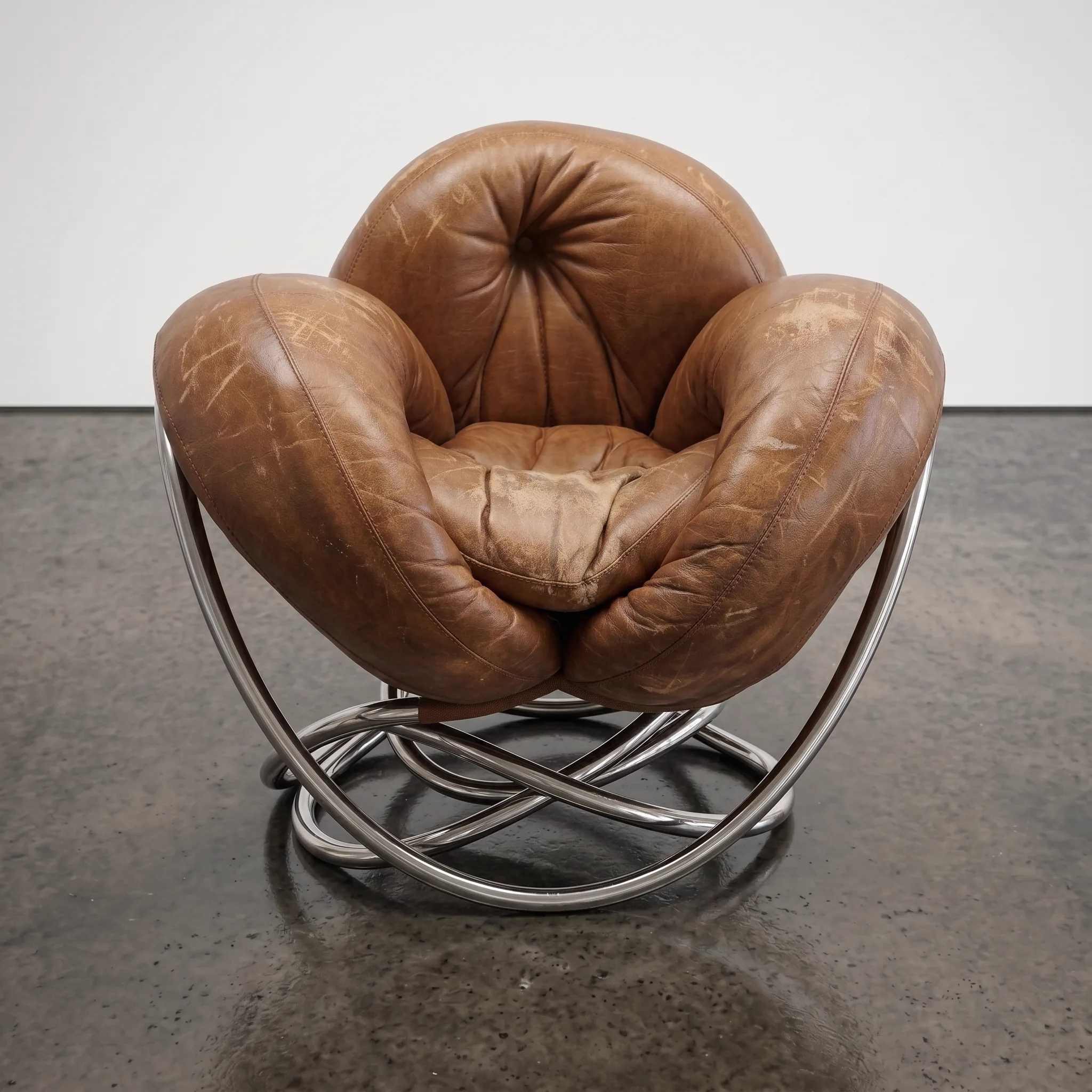
Your sofa's lifespan was decided before it left the tannery , and mostly before it left the animal. Every downstream choice , tannage, finishing, dye system, fat liquor percentage, mechanical embossing, surface coating , either works with or fights against the structural reality of the raw hide. A great finishing chemistry cannot rescue a structurally weak hide. A poor finishing decision can waste the inherent longevity of the finest one. Understanding the hide's three structural zones is what separates a buyer who chooses furniture that lasts thirty years from one who replaces it in five. This guide covers the three structural zones present in every bovine hide, how tanning chemistry transforms each zone, and the diagnostic steps a master restorator applies at workshop intake to read any panel placed before them. Technical terms are defined in the leather conservation glossary. The structural conclusions feed directly into the dedicated guide on grain hierarchy and finished-leather classification.
What Does a Raw Hide Look Like Before Tanning?
Before any tannery chemistry touches the material, a bovine hide's structure is already set by biology. A raw hide arriving at a tannery is a layered, three-dimensional tissue that spent the animal's entire life absorbing mechanical loads, regulating temperature, and resisting environmental damage. That biological history is preserved in the cross-section and readable to anyone with a loupe.
A typical raw bovine hide is 4 to 6mm thick across the back and shoulders, tapering to 2 to 3mm at the belly and flanks. Three structural zones are already present, layered from the outer (grain) surface inward to the flesh side. The epidermis and papillary dermis combine to form what tanners call the grain layer. The reticular dermis , the bulk middle zone , becomes the corium of the finished leather. The loose subcutaneous fibre arrangement at the back becomes the flesh side. Each zone has distinct collagen fibre density, orientation, and mechanical character. Each responds differently to the tanning chemistries applied over the next several weeks of processing.
For furniture upholstery, finished leather is typically 1.0 to 1.4mm thick , a significant reduction from the raw hide. This reduction happens through splitting (mechanical separation of the hide into two or more horizontal layers) and shaving (controlled removal of corium thickness to a target gauge). The decisions made during splitting and shaving determine which structural zones survive into the finished product. A premium full-grain upholstery hide preserves the entire grain layer plus a substantial corium band. A heavily split top-grain hide preserves only the grain and a thin corium remnant. A corrected-grain hide preserves the corium but removes the natural grain surface through mechanical buffing and embossing.
The structural rule: tanning chemistry can transform the chemical character of a hide but cannot add back structural zones that selection and splitting have already removed. The cross-section visible at the cut edge of any finished leather is the permanent record of every selection and splitting decision made before tanning began.
What Is the Grain Layer and Why Does It Matter?
The grain layer is the densest, tightest, and most valuable part of any bovine hide. Anatomically it combines two biological strata , the epidermis (a thin protective layer largely removed during liming) and the papillary dermis (the upper portion of the dermis where collagen fibres are finest, most tightly packed, and most uniformly oriented). In finished leather, the grain layer is what the eye sees, the fingertip touches, and the patina develops on. Its preservation, integrity, and finish are what separate a heritage hide from a commodity one.
Under 10x magnification, a genuine grain layer reveals two unmistakable signatures. The first is visible pore structure , the openings where hair follicles once emerged, preserved as fine indentations across the surface. The second is the natural hair-cell pattern , a subtle topographical variation unique to the individual animal that mechanical embossing cannot perfectly reproduce. Both signatures confirm a full-grain leather where the original surface has been preserved through tanning and finishing.
The grain layer carries the wear, abrasion, and deformation loads that upholstery use places on a sofa. Its dense, tightly intersected collagen fibres resist puncture, tear propagation, and compressive deformation better than any other zone of the hide. Hydration character is also different: the tightly packed fibres admit moisture slowly and release it slowly. This produces the characteristic resilience to spills, body oil, and ambient humidity that distinguishes full-grain leather.
The grain layer is the only zone of the hide where patina genuinely develops. Patina , the gradual deepening of colour, softening of feel, and emergence of usage character that defines aged premium leather , is a phenomenon of the grain. It comes from the slow penetration of air, body oil, and ambient humidity into the grain's controlled fibre structure. It comes from the gradual reorganisation of dye and fat liquor under repeated mechanical stress. It comes from the photochemical transformation of surface colourants under light exposure. A hide stripped of its grain , corrected to the corium, or split entirely , cannot patina. It can only fade, crack, or delaminate. The dedicated grain hierarchy guide documents the four-tier classification of finished-leather grain treatments and the patina trajectory of each.
What Is the Corium and What Does It Do?
The corium , anatomically the reticular dermis , is the thicker middle zone of the hide and the structural bulk on which the grain layer rests. Where the grain is fine, dense, and oriented, the corium is built from larger collagen fibre bundles in a three-dimensional intersecting weave. Under magnification it looks noticeably different from the grain: the fibres are coarser, the spaces between them are larger, and the orientation is more random.
The corium provides tensile strength. The intersecting fibre arrangement distributes load in every direction and resists tearing along any single axis. A leather panel with a substantial corium band can be stretched, seamed, tufted, and frame-mounted under tension without structural failure. A panel with the corium reduced to a thin remnant through aggressive splitting loses much of this strength. It becomes prone to seam failure, cushion-corner stretching, and panel-edge tearing under the cyclic loads of daily use.
The corium has much less wear resistance than the grain. The looser fibre structure abrades more readily, absorbs liquid more deeply, and lacks the tight surface that resists puncture and contamination. This is why hides finished with the corium exposed , split leather and suede being the obvious examples , produce far less durable furniture than hides finished with the grain intact. The corium is excellent at the structural job of holding everything together. It is poor at the surface job of resisting daily life.
Suede is corium-side leather: the grain has been split off entirely, leaving the corium fibre arrangement as the visible and napped surface. The structural and care implications of this are in the dedicated nubuck versus suede guide. For buyers evaluating premium leather options, the practical rule is this: the corium is the foundation, not the surface. Any product where the corium is the surface is a different category of material with different performance expectations.
What Is the Flesh Side and When Does It Matter?
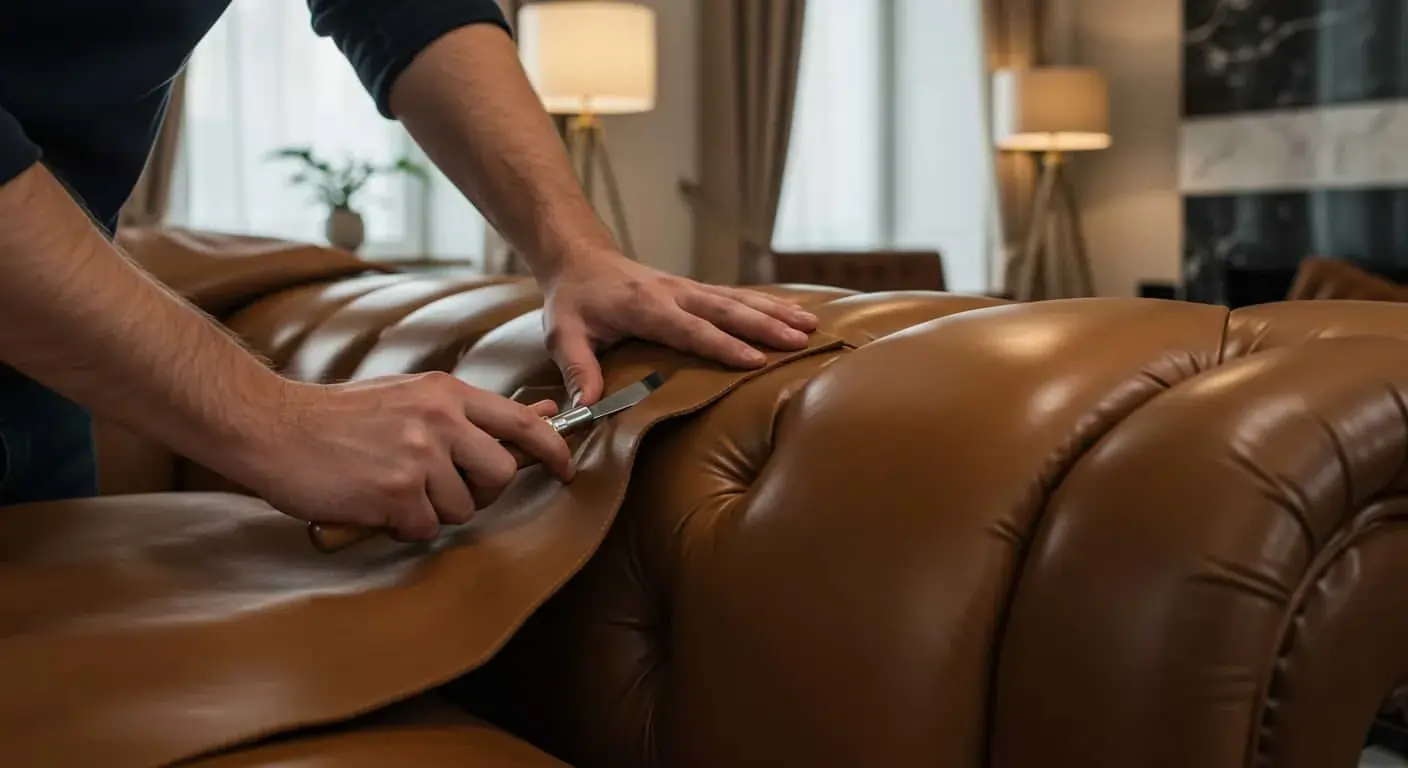
The flesh side is the innermost layer of the hide , the surface originally next to the animal's subcutaneous tissue. It is the loosest of the three structural zones: lowest fibre density, most random fibre orientation, and lowest mechanical strength. In finished upholstery leather, the flesh side is the back of the panel , hidden against the cushion foam or frame, never seen, never exposed to wear or contamination.
For most furniture leathers, the flesh side is functionally invisible. Its only role is to accept the bonding adhesive, the stitching anchor, or the foam-cushion interface. A clean, uniformly thick, properly prepared flesh side indicates a hide that received correct beam house preparation. A rough, uneven, or biologically contaminated flesh side indicates a hide that bypassed standard processing and will likely develop structural problems over time.
The flesh side becomes relevant in two specific cases. The first is suede , where the grain layer has been split off entirely and the visible nap is generated by sanding the corium and exposing some of the loose flesh-side fibre arrangement beneath. This is why suede has the soft, drapeable, structurally weak character documented in the dedicated nubuck versus suede comparison. The second is split leather and bicast leather , where the lower corium and flesh-side material is rescued from the splitting process, given a polyurethane surface laminate, and sold as a budget alternative. The structural consequences are in the bicast and bonded leather guide. The short version: flesh-side material promoted to the visible surface cannot deliver the longevity that the grain layer would have delivered.
For premium furniture leather that preserves the grain side as the visible surface, the flesh side is a quiet structural foundation , clean, uniform, properly prepared , that you never see but your upholsterer relies on for adhesive bonding and stitching integrity. Its quality matters. Its appearance does not.
How Does Tanning Change Each Layer of the Hide?
The three structural zones above are biological , they exist in every bovine hide before any chemistry is applied. Tanning is the process that transforms this perishable biological tissue into the stable, durable, dimensionally consistent material we call leather. The chemistry choices made during tanning act on each structural zone differently and leave a permanent signature visible at the cut edge under raking light.
The process starts with beam house preparation , soaking, liming, fleshing, and unhairing , which removes the epidermis, the hair, the residual fat, and the soluble proteins. A correctly prepared hide arrives at the tanning vessel as clean collagen, with the three structural zones intact and ready to react with the tanning agent. Beam house shortcuts , incomplete liming, residual fat in the corium, incomplete unhairing , produce hides that look acceptable at first but reveal flaws over years of service as residual biological material decays inside the leather structure.
Tanning chemistry is the central transformation. Three chemistries dominate premium furniture leather. Chrome tannage uses chromium sulphate complexes that crosslink collagen fibres rapidly and deeply, producing a soft, dimensionally stable hide with excellent water resistance and a characteristic blue-grey core. Vegetable tannage uses plant-derived tannins from oak, chestnut, mimosa, and quebracho that crosslink more slowly, producing a firmer, warmer hide with a tan-brown core and outstanding patina capacity. Aldehyde or chrome-free tannage uses formaldehyde or glutaraldehyde derivatives to produce a creamy white hide with a softer hand. Each chemistry produces a hide with distinct ageing, conditioning, and restoration characteristics that must be matched to the right care products. The full chemistry framework is in the dedicated tanning chemistry guide.
Retanning, fat liquoring, and dyeing follow the primary tannage. Retanning adjusts the hand, fullness, and dye affinity of the hide. Fat liquoring , the introduction of carefully formulated oil and wax emulsions , lubricates the collagen fibres and determines the long-term suppleness, drape, and flex resistance of the finished leather. The percentage and chemistry of fat liquor is matched to the intended use case. The dedicated fat liquor explained guide covers the science in depth. Dyeing introduces colour to the structure. Aniline dyes penetrate throughout the hide. Semi-aniline systems combine a penetrating dye with a thin pigment layer. Full pigment systems apply colour as a surface coat. The dedicated aniline, semi-aniline, and pigmented identification guide documents the visual and tactile signatures of each system.
Surface finishing closes the process. The grain surface receives some combination of penetrating sealer, pigment coat, top-coat, and embossing. The flesh side may receive a brushed finish or a backing fabric. Each finishing decision either preserves or overrides the structural advantages built up by selection, splitting, tanning, and fat liquoring. A great grain layer can be smothered by a heavy pigment top-coat that converts what should have been an aniline heritage hide into a generic pigmented panel. A structurally weaker hide can look presentable for a few years under a thicker finish , but the structural reality reasserts itself as the finish wears. The dedicated micro-pigmentation process guide covers the workshop discipline of restoring finishes that respect rather than mask the underlying grain.
Why Does One Leather Sofa Last 30 Years While Another Fails in 5?
Two leather sofas can sit side by side in an Indian living room , both labelled "genuine leather," both in the same price range, both stitched and framed with comparable craftsmanship , and one will look superb after thirty years while the other fails in five. The variable that decides this is the structural anatomy of the hide. Four factors compound at the tannery to produce the difference, and each one can be read at workshop intake.
Hide selection. Only the top 5 to 10 percent of bovine hides arriving at a premium tannery are graded for full-grain upholstery use. The remaining 90 percent carry insect bites, barbed wire scars, brand marks, parasite damage, or growth irregularities that disqualify them from premium grain-preserving finishes. These hides are corrected, split, or routed to lower-tier finishes. A heritage sofa carries hides from the top selection grade. A budget sofa carries hides from the lower grades, where finishing chemistry is asked to compensate for biological imperfection.
Hide source quality. Hides from European bovine breeds , northern European cattle raised in temperate climates with low parasite pressure, predictable feed, and careful husbandry , produce structurally superior hides. Cleaner grain surfaces, denser corium, and more uniform thickness than hides from less rigorous supply chains. Premium Italian and German tanneries source predominantly European hides for this reason. The structural advantage is built in at the biological stage and cannot be replicated by chemistry alone.
Fat liquor percentage matched to use case. The fat liquor regime , quantity, chemistry, penetration depth , is the single most important variable in long-term suppleness and crack resistance. A hide intended for thirty-year furniture service receives a meaningfully higher fat liquor loading, with deeper penetration into the corium, than a hide intended for short-life budget use. Under-liquored hides feel acceptable at delivery but become brittle and crack-prone within years. Correctly liquored hides remain supple for decades. The science is in the fat liquor explained guide.
Tannage matched to finishing. The tannage chemistry must align with the intended finishing system. A vegetable-tanned hide intended for aniline finishing produces the patina-developing heritage leather that collectors prize. The same hide finished with heavy pigment loses much of its structural advantage. A chrome-tanned hide intended for semi-aniline finishing produces a soft, water-resistant, uniformly coloured furniture leather. Mismatching tannage and finishing produces a hide that performs well in neither dimension. Premium variants , including the soft, full-aniline nappa leathers and the wax-oil pull-up finishes , succeed because tannage, fat liquor, dye, and surface finish are aligned by deliberate chemistry, not chosen ad hoc.
How Does a Workshop Read a Hide's Structure at Intake?
Every panel of leather that arrives at a master restorator's workshop is read for its structural anatomy before any cleaning, conditioning, or restoration work is planned. The five-step diagnostic takes ten to fifteen minutes per panel and reveals more about the hide's quality, history, and remaining service life than any brand label or seller's invoice.
Step 1 , Cut edge inspection under raking light
An exposed cut edge , a seam corner, a hidden underside, or an inconspicuous trim line , is examined under strong directional raking light at 10x magnification. The cross-section shows the three structural zones in layered bands: the dense, finely textured grain band on top, the thicker, looser corium band beneath, and the loosest flesh-side fibres at the back. The proportion and clarity of these bands is the first read on hide quality. A panel with a thick, clean grain band and a substantial corium beneath it indicates a premium full-grain hide. A thin grain remnant over a dominant corium indicates aggressive splitting. No clear grain band at all indicates a corrected or split-leather construction.
Step 2 , Loupe inspection of pore density
The grain side is examined at 10x magnification with the loupe held perpendicular to the surface. A genuine, intact grain layer shows visible pore structure , fine indentations where hair follicles once emerged , and the natural hair-cell pattern of the original animal. A buffed, corrected, or embossed grain shows uniform texture without genuine pore depth. The embossed pattern is too regular, the spacing too even, the surface lacking the subtle variation of a real grain. This single observation distinguishes full-grain from corrected grain and determines which restoration approach applies.
Step 3 , Bend test for grain integrity
An inconspicuous corner of the panel is bent gently between thumb and forefinger. A structurally sound hide shows uniform bending, with the grain forming fine, evenly distributed creases that disappear when the panel is released. A hide with a compromised grain , through over-finishing, surface coating delamination, or corium failure , shows discrete cracks along the bend line, irregular crease patterns, or visible delamination of the surface coat from the substrate. The bend test takes ten seconds and reveals failures that would otherwise only emerge after months of further use.
Step 4 , Hydration assessment
A small drop of distilled water is placed on an inconspicuous area and observed for 30 seconds. A correctly fat-liquored, structurally sound hide shows the droplet beading initially and then absorbing slowly without a visible darkening ring. An over-dried or under-liquored hide absorbs the droplet rapidly and leaves a clear darker patch that persists. A hide with a heavy pigment top-coat shows the droplet beading indefinitely with no absorption. The water test is the entry point to the wider conditioning steps in the science of moisturizing.
Step 5 , Tannage signature reading
The cut edge colour and aroma reveal the tannage chemistry. A blue-grey core indicates chrome tannage. A warm tan-brown core deepening through the cross-section indicates vegetable tannage. A creamy white core indicates aldehyde or chrome-free tannage. Each chemistry calls for a different conditioning, cleaning, and restoration approach. Confusing chrome tannage with vegetable tannage in workshop work produces results that range from disappointing to actively damaging.
"Hide anatomy is not an academic abstraction. It is the daily diagnostic vocabulary of every workshop hour, the basis on which every restoration fix succeeds or fails, and the silent contract between a furniture maker and the household that will live with the piece for the next thirty years. The buyer who understands anatomy is the buyer who chooses well."
Why Is Hide Anatomy the Starting Point for Every Leather Decision?
Hide anatomy is the first step for every other premium leather decision. The grain hierarchy guide builds on it. The aniline, semi-aniline, and pigmented identification guide builds on it. The nubuck versus suede distinction depends on it. The bicast and bonded explanation only makes sense in light of it. Architects specifying leather upholstery for heritage interiors, buyers commissioning bespoke pieces, and owners evaluating restoration estimates all need the same thing: an accurate mental model of what a hide actually is, structurally, before chemistry, finishing, and decades of use act upon it.
For owners ready to apply this framework to specific finished-leather categories, the dedicated guides on grain hierarchy, aniline versus semi-aniline versus pigmented, pull-up versus pigmented, nubuck versus suede, nappa leather, and bicast and bonded constructions each translate the structural foundation into a buying, ownership, and restoration framework for the specific category. The companion craft guides on tanning chemistry and fat liquor science cover the tannery decisions that act on the structural foundation.
Owners who suspect a discrepancy between the anatomy implied by a sales label and the anatomy actually present in a panel can book expert leather sofa diagnostic and restoration or structural assessment and polishing, with doorstep coverage across Noida, Faridabad, and Ghaziabad. Workshop intake starts with the five-step anatomy diagnostic , every downstream restoration decision flows from that single reading.
Bookmark this page. Every other guide in the academy assumes the foundation laid here, and every restoration estimate you commission becomes legible once the anatomy of your hide is read accurately at intake.