Before / AfterRecolour
A conservator's three-layer protocol for tannin, milk-fat and the sugar ring - lifted clean, in the right order.
Explore
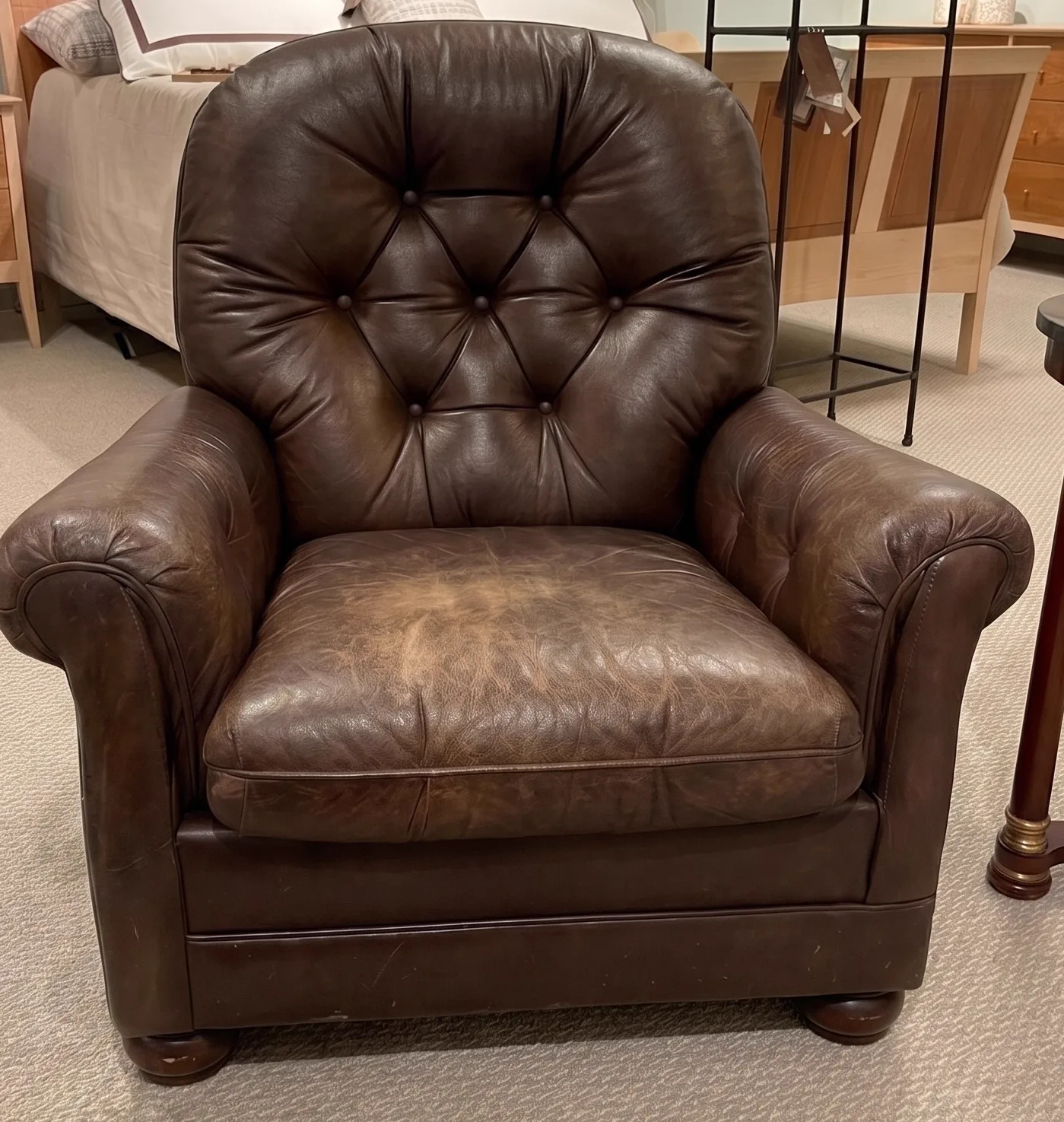
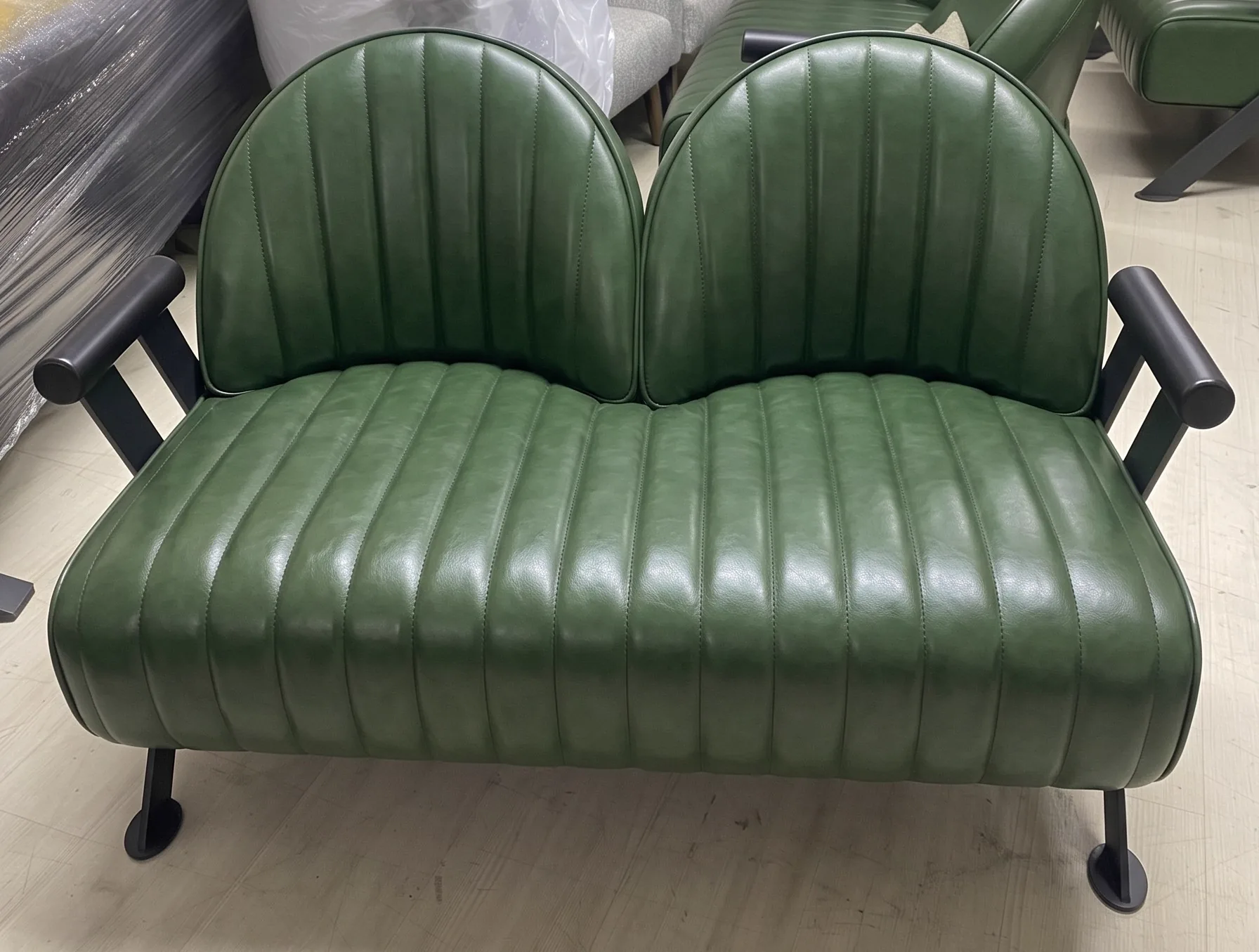
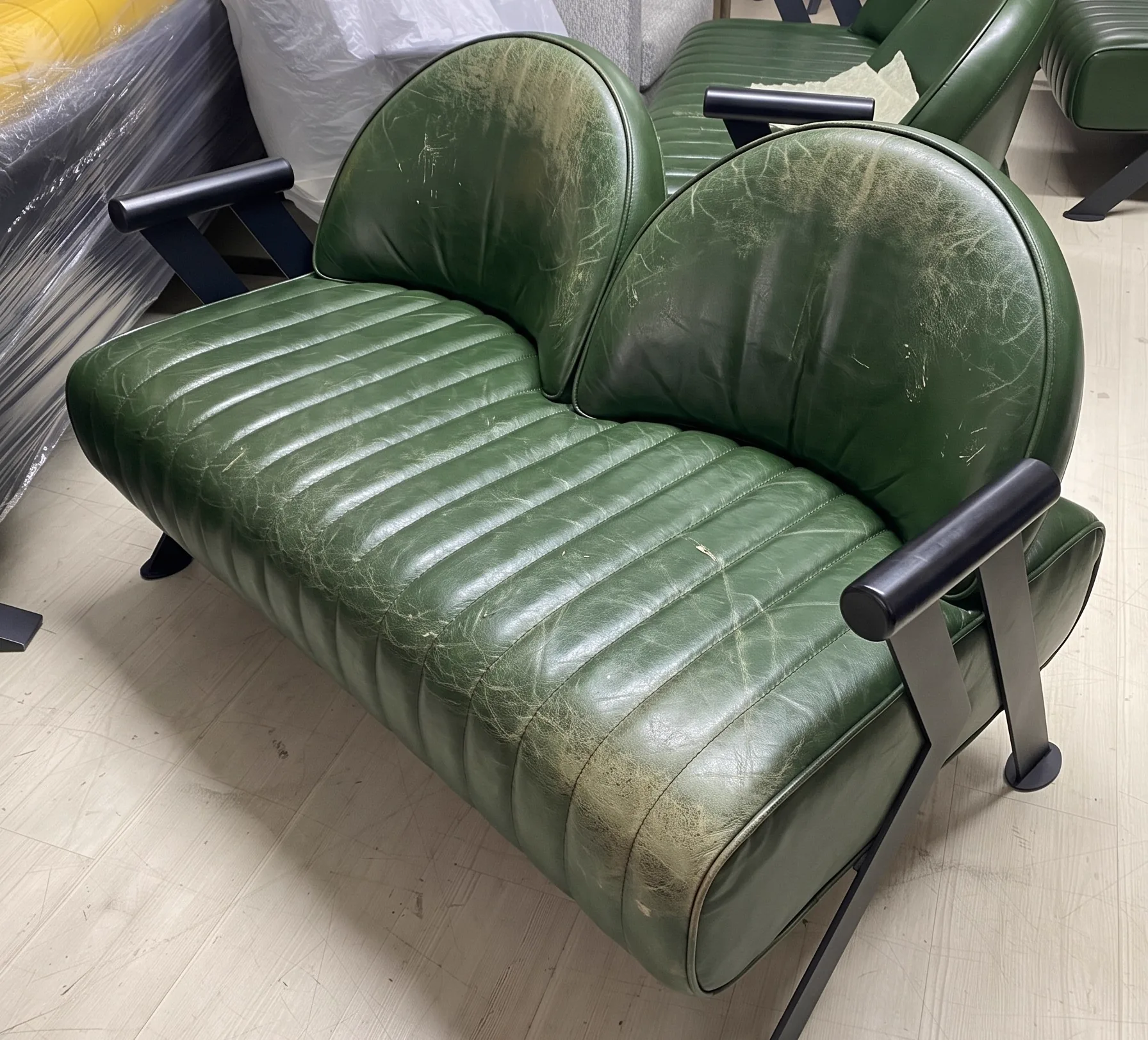

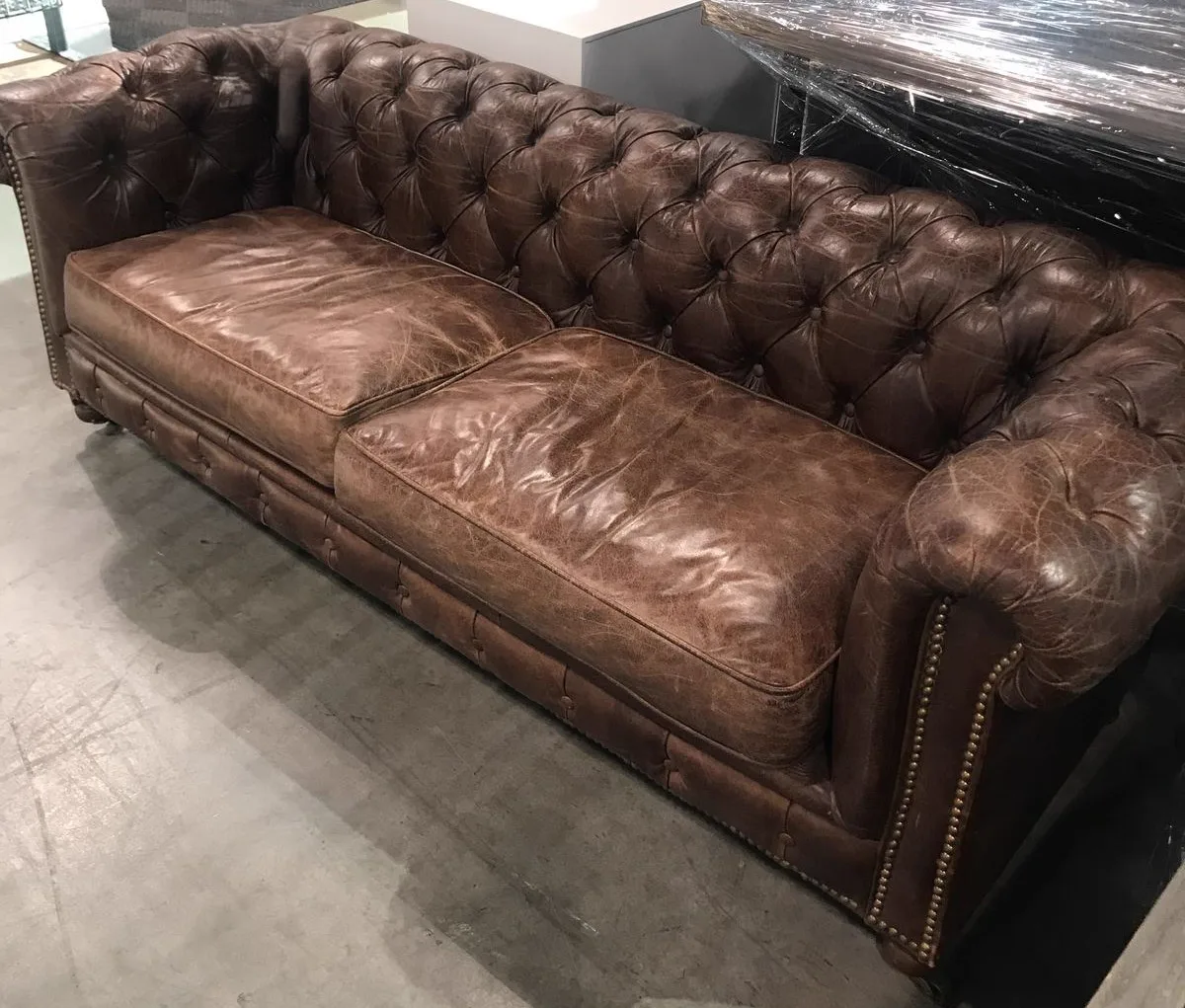
The honest verdict before you start - how fast to move, what is at risk, and how far it really reverses.
Book a Damage Check Time-Sensitive
Tannin sets faster when the cup was hot.
 Leathers At Risk
Pigmented forgives - aniline soaks in.
 Difficulty
Two stains in one - tannin then milk-fat.
 Reversibility
Sugar ring sometimes shadows on aniline.
Chai is two stains in one - milk-fat over tannin - so order matters. Lift the fat with cornstarch first, chase the tea colour second, and keep every step cool, because hot water drives tannin deeper.
Half the chai stains we see at the studio came from a wipe before the milk-fat was lifted. White cotton, fifteen minutes of patience, soap before tannin - and most of the stain never reaches our bench at all.
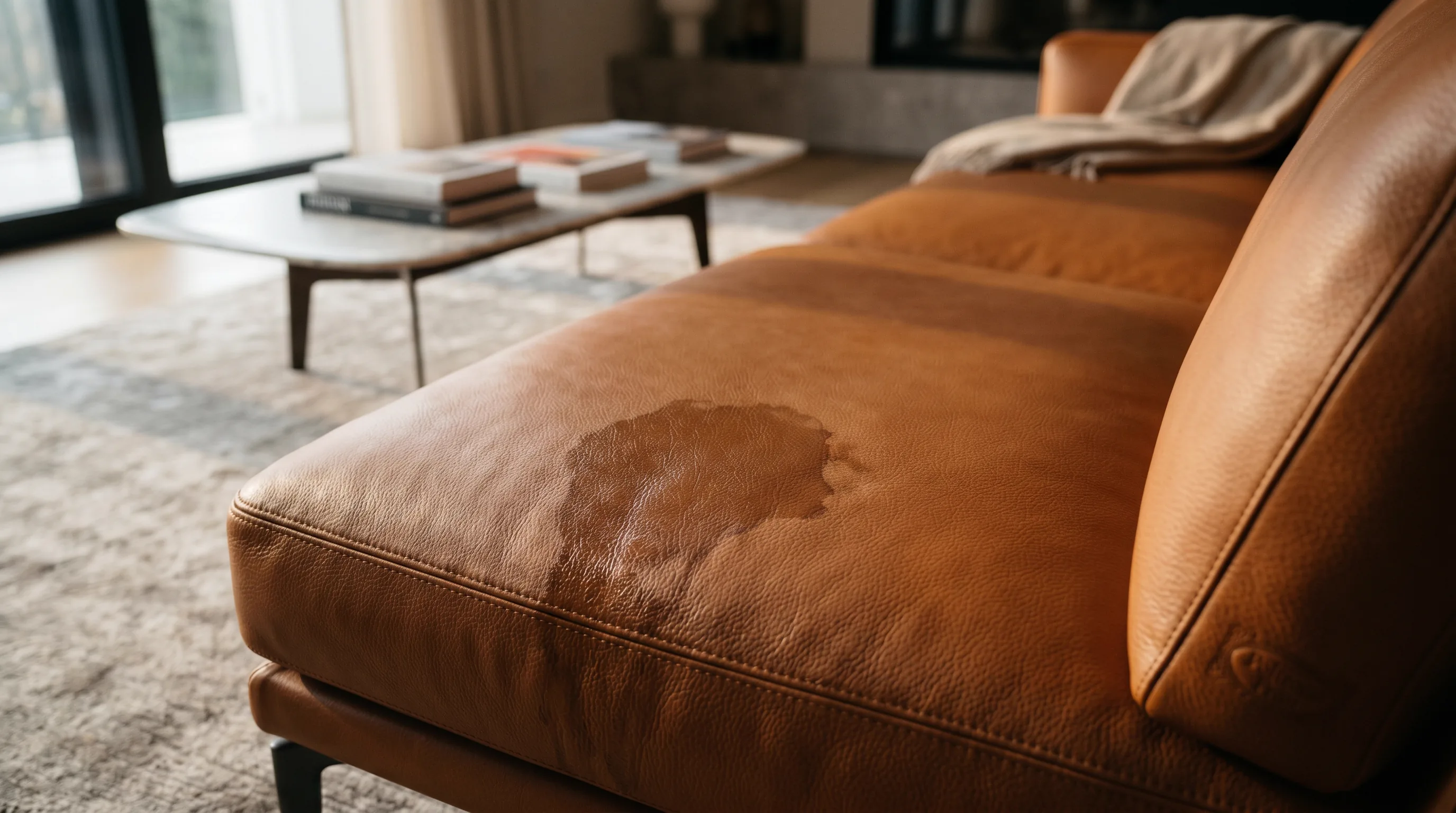
Photographed in studio - FaridabadHalf the "coffee stains" people send us turn out to be milky chai, cola, or stray gravy. Thirty seconds of looking before you start saves the wrong cleaner from making the wrong stain permanent.
Black coffee and chai both dry as a darker ring around a paler centre, because the water carries pigment outward as it evaporates. A solid blob is more likely gravy or a juice spill - chemistry is different.
Milky chai, cappuccino and filter coffee with milk leave a slightly cloudy or matte patch in the middle of the ring - that is milk-fat sitting on the topcoat. Plain black coffee or black tea will not show this haze.
Pass a clean fingertip lightly across the dried ring. If it tugs, even faintly, sugar is in there - which is most home chai in India. Sticky residue keeps attracting dust until it is washed off.
Lean in close. Masala chai will leave a faint cardamom or clove note for two to three days; coffee leaves a roasted, slightly bitter smell. Old protein-based stains (egg, milk gone bad) smell sour, not sweet - that is a different protocol entirely.
Lighter colour, no milk haze, no sticky feel. Lifts fully with distilled water and patience - alcohol or detergent is overkill.
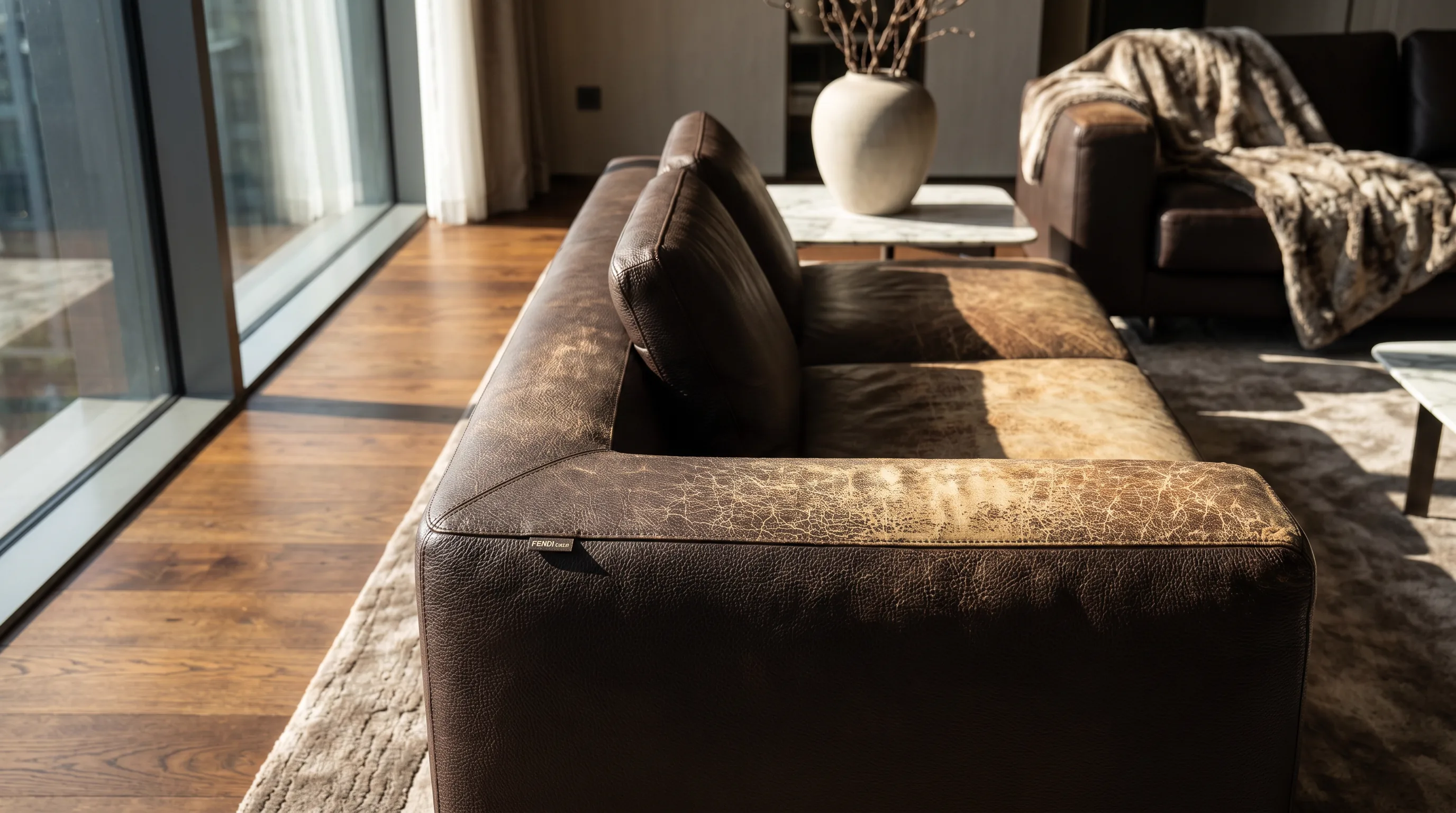
Looks similar but is a protein-and-fat stain, not tannin. Wants cool water and dish soap from the start - skip the alcohol step on this one.
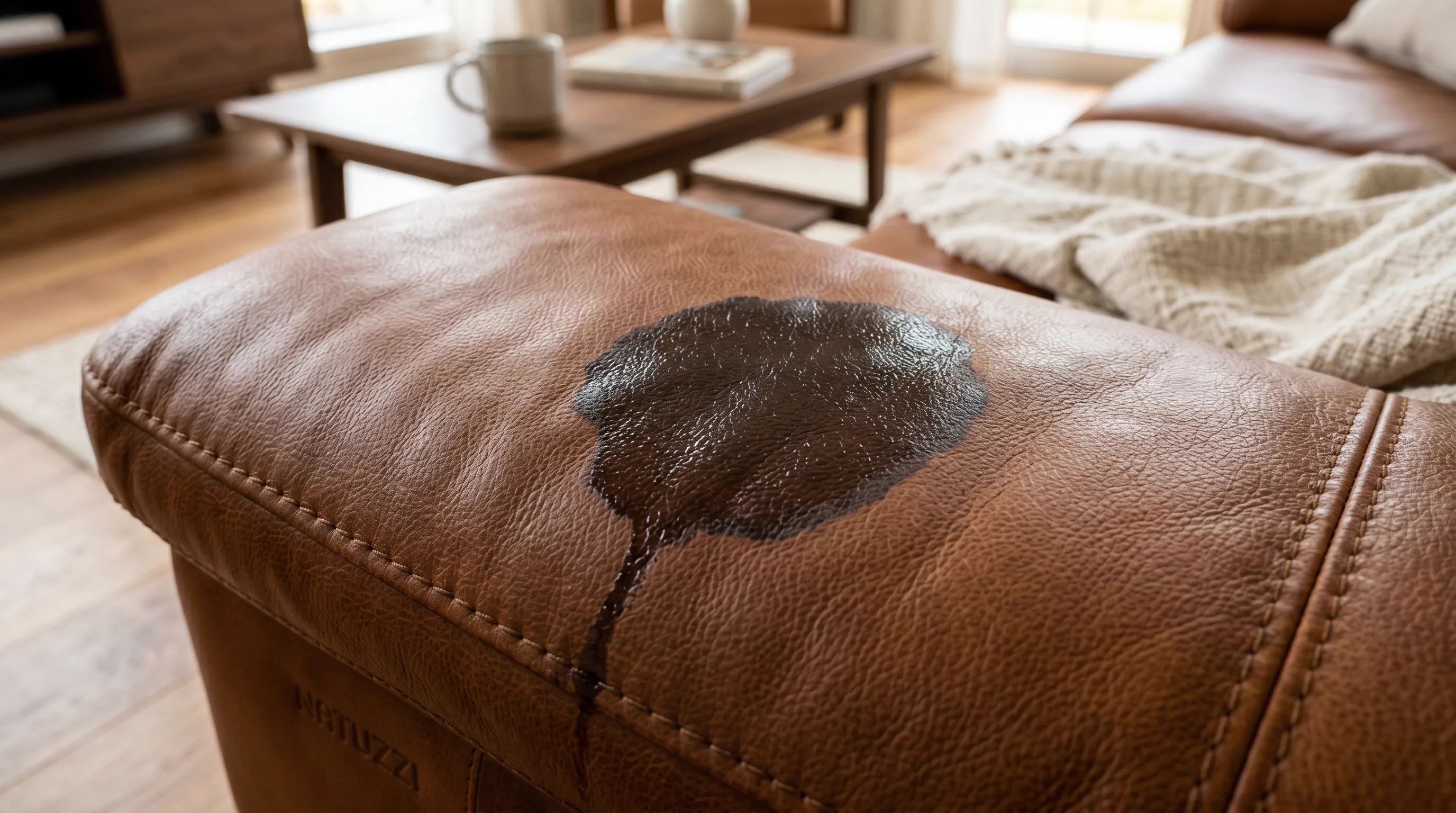
Glossy when fresh, sticky-only when dry, no milk haze. Lifts with distilled water and a pH-neutral cleaner; phosphoric acid in cola can dull pigment if left more than a day.
A cup of black coffee is one stain class. Add milk and you have two. Add cardamom-and-clove masala and you have three. The protocol below works because it lifts each layer in the right order - skip the milk step and the tannin will not come out clean.
Black coffee and tea are roughly the same chemistry - tannin (a plant pigment that bonds with protein) and roast pigment dissolved in hot water. Tannin is a glossed term for polyphenol, a class of molecules with hydroxyl groups that hydrogen-bond with collagen, the protein leather is mostly made of. The bond is weak when wet but strengthens dramatically as the water evaporates. That is why hot chai sets in five minutes and a cooled cup gives you closer to thirty - heat speeds the bond, cold delays it.
Add milk and the second stain class arrives. Milk is a fat-in-water emulsion (fat globules suspended in water). When the water flashes off, the fat is left behind sitting on the topcoat. That fat does two things at once - it traps the tannin pigment under it, and it forms its own greasy patch that simple water-rinses will not touch. This is why a milky chai stain looks darker than a black-coffee stain even when the actual tea was lighter, the fat layer is acting like a magnifier on the colour underneath. Pigmented and semi-aniline finishes hold the fat on the surface, where it is liftable; aniline lets it through into the grain layer, where it usually is not.
Masala chai brings a third complication - the cardamom, clove and ginger oils released when the chai simmers. Those are essential oils, lipid-soluble (they dissolve in fat, not water), and they ride the milk-fat down into the leather. Even after you lift the visible ring, a faint warm-spice smell can sit in the panel for days. That is the cardamom oil still off-gassing. Sugar adds the last layer - it dries to a sticky residue that attracts dust and turns slightly tacky every monsoon evening. Honest answer, the home protocol below handles tannin and milk-fat well; it handles cardamom oil partially, and against very old masala chai we sometimes still need a deeper studio clean.

Milk-fat stays liquid for ten minutes after a hot chai lands. Lift it before it sets and the tannin underneath usually comes out with it. Patience is not waiting - it is technique.
Photographed on site - IndiaTannin keeps moving for the next ten minutes while it is still wet, and milk-fat is still liquid for about as long. Slow them both down before they set. The lifting comes after, and it is gentler than you think.
Do not reach for anything wet yet. Lift the cup, take a daylight photograph from two angles - this is your reference for "before". Run the thirty-second self-test in Section 06 to find out whether your leather is aniline, semi-aniline, or pigmented. Everything else depends on this answer.
Press a clean white cotton cloth straight down on the spill. Lift it, rotate to a fresh dry section, press again. Each press takes roughly twenty percent of the wet liquid away with it, including a little fat. Keep going until the cloth picks up nothing more. Do not wipe outward - that drags the tannin into a wider ring you will then have to lift back in.
Patch-test first (full method in Section 04). If it passes, work the visible ring with a barely-damp cloth dipped in cool water with one drop of mild dish soap (Vim or Pril is fine). Soap breaks the milk-fat. Then a second pass with plain distilled water lifts the tannin pigment that the fat was hiding. Outside-in, dabs not strokes.
Wipe the worked area once with a fresh barely-damp distilled-water cloth. Pat it dry with fresh white cotton. Then walk away for thirty minutes. Do not poke at it, do not condition yet - the leather is still settling and will look darker than it actually is. The cardamom smell will fade as the panel dries.
These cause permanent damage. The stain may lift; the leather will not recover.
Conservator-grade first response. Buys you the time to do this properly.
These steps assume cool distilled water, mild dish soap and a final pH-neutral conditioner. If the patch-test fails, and on aniline it sometimes does, stop here and read Section 07. Handing the job over is not a failure; on the wrong hide it is what saves the leather.
Fresh - Run all six steps in order. Most fresh chai or coffee lifts to acceptable on semi-aniline and pigmented leather within 45 minutes.
Dried - Skip Step 1 (blotting wet liquid is irrelevant). Spend longer on Step 4 with the milk-fat lift, then Step 5 with the tannin pass. Expect partial recovery - 60-70 percent on pigmented, less on aniline.
Set - Step 1-2 will not help; Step 3 risks lifting pigment without removing the dried ring. Stop and photograph. Set masala chai almost always needs studio dye-correction. Send the photograph for a free assessment.
Press a clean white cotton cloth straight down on the wet chai or coffee. Do not rub, smear, or drag - that spreads the tannin into a wider ring. Lift, refold to a dry section, press again. Repeat until a fresh press picks up nothing on the cloth. You are removing surface liquid before it migrates further; expect to lift roughly forty percent of the visible spill this way.
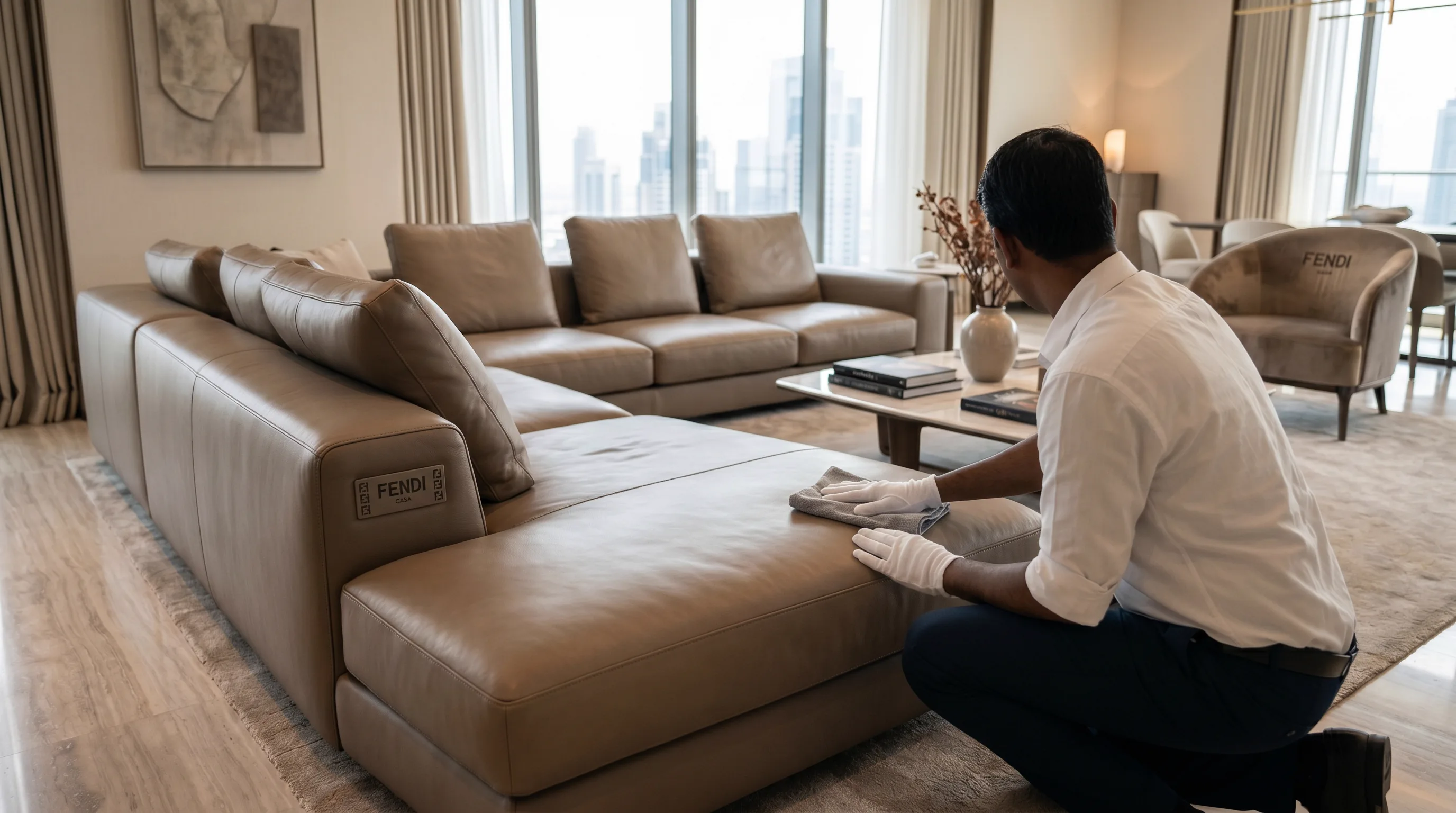
Sprinkle a teaspoon of plain cornstarch (or talcum powder) over the milky part of the spill. Pat it gently into place with a fingertip - do not rub. Leave it for fifteen minutes. The starch absorbs free milk-fat that has not yet bonded into the topcoat, and lifts the cardamom oils riding with it. Then brush off with a soft dry cloth or a vacuum nozzle. Skip this step if the spill was plain black coffee or plain black tea.
Choose a hidden patch on the back of the seat-back, under a cushion, or behind the skirt. Mix one drop of mild dish soap (Vim, Pril, or any pH-neutral kitchen soap) into a small bowl of cool distilled water. Dab a coin-sized drop on the hidden patch with a cotton swab. Wait ten minutes. If the patch dulls, lifts colour, or leaves a halo, stop here - your leather is aniline or has a delicate finish, and the protocol below will damage it. Send a photograph and stop.
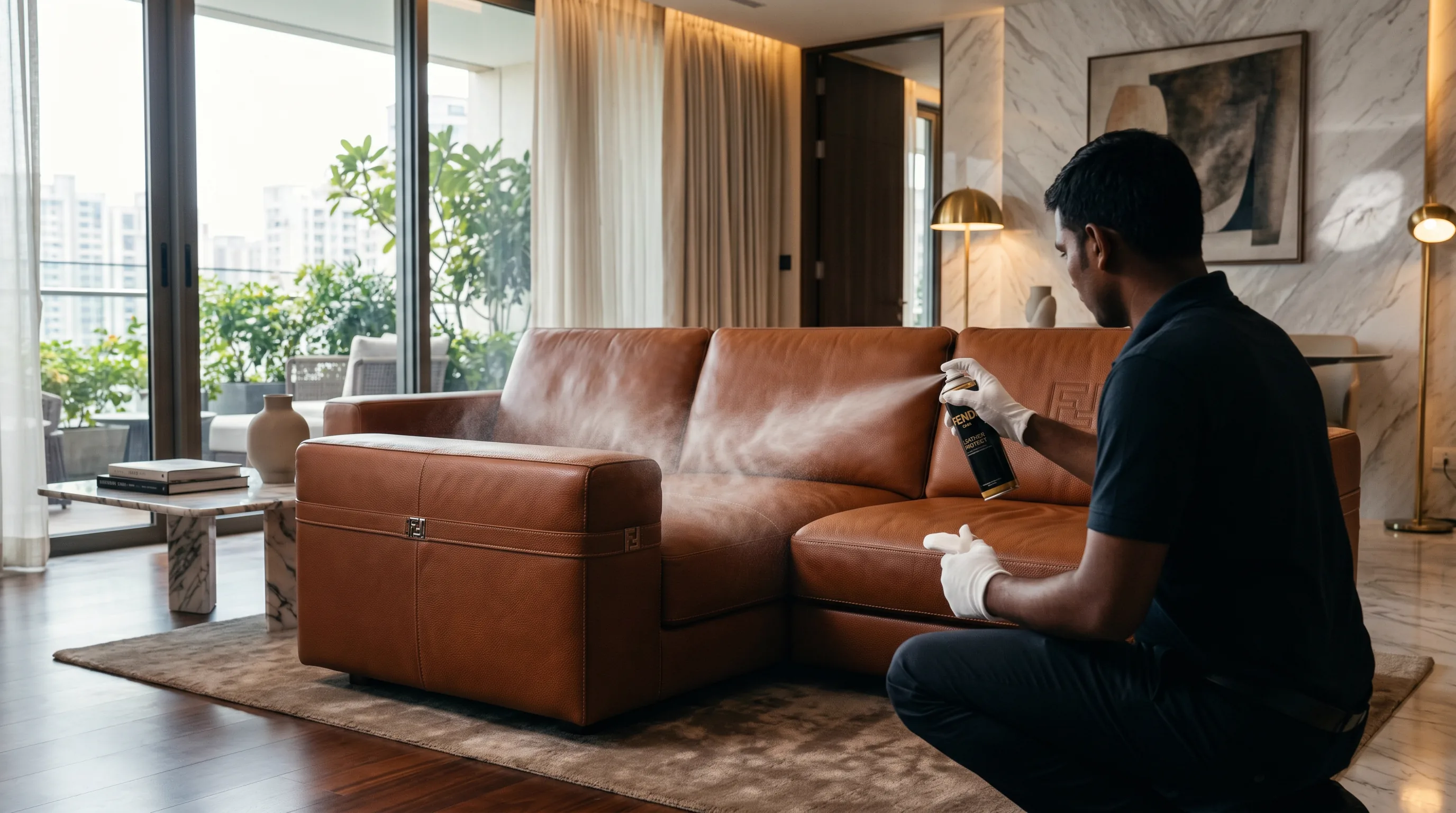
Damp a fresh white cotton cloth in your soapy-water mix - barely damp, not wet, no liquid should drip. Place the cloth at the outer edge of the ring. Dab inward toward the centre in three to four millimetre presses, lifting and rotating to a clean section every few dabs. The soap breaks the milk-fat, water carries it away. The instant any beige or brown transfers, rotate the cloth. Outside-in only, dabs not strokes.
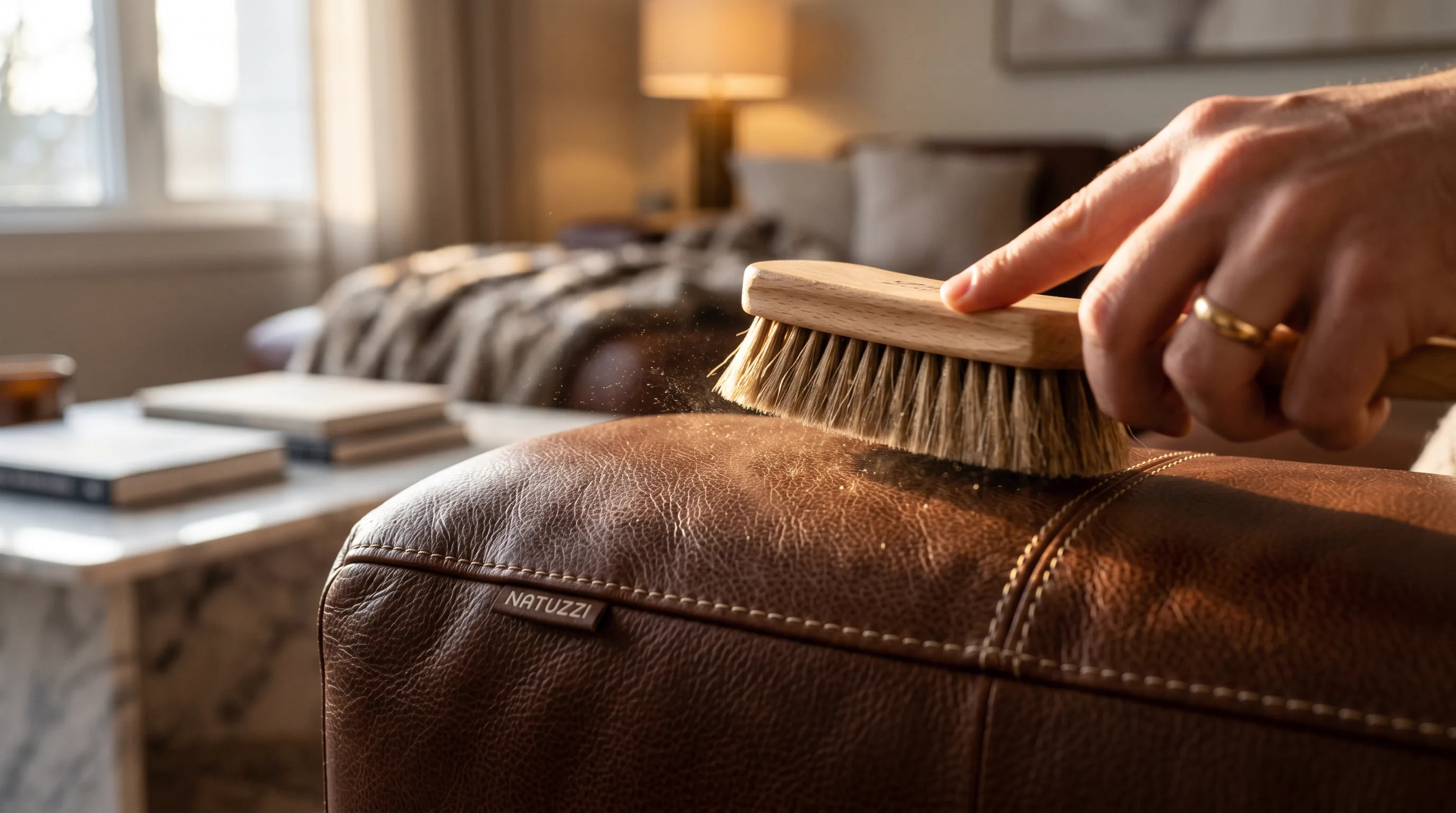
Switch to a fresh cloth dampened in plain cool distilled water - no soap this time. Wipe the worked area once in a single direction. This carries away soap residue and lifts the tannin pigment that the milk-fat was hiding. Tannin is water-soluble while still wet but bonds with collagen as it dries, so this pass needs to happen now, not tomorrow. Tap-water is fine if distilled is unavailable, but distilled avoids any mineral scale on dark hides.
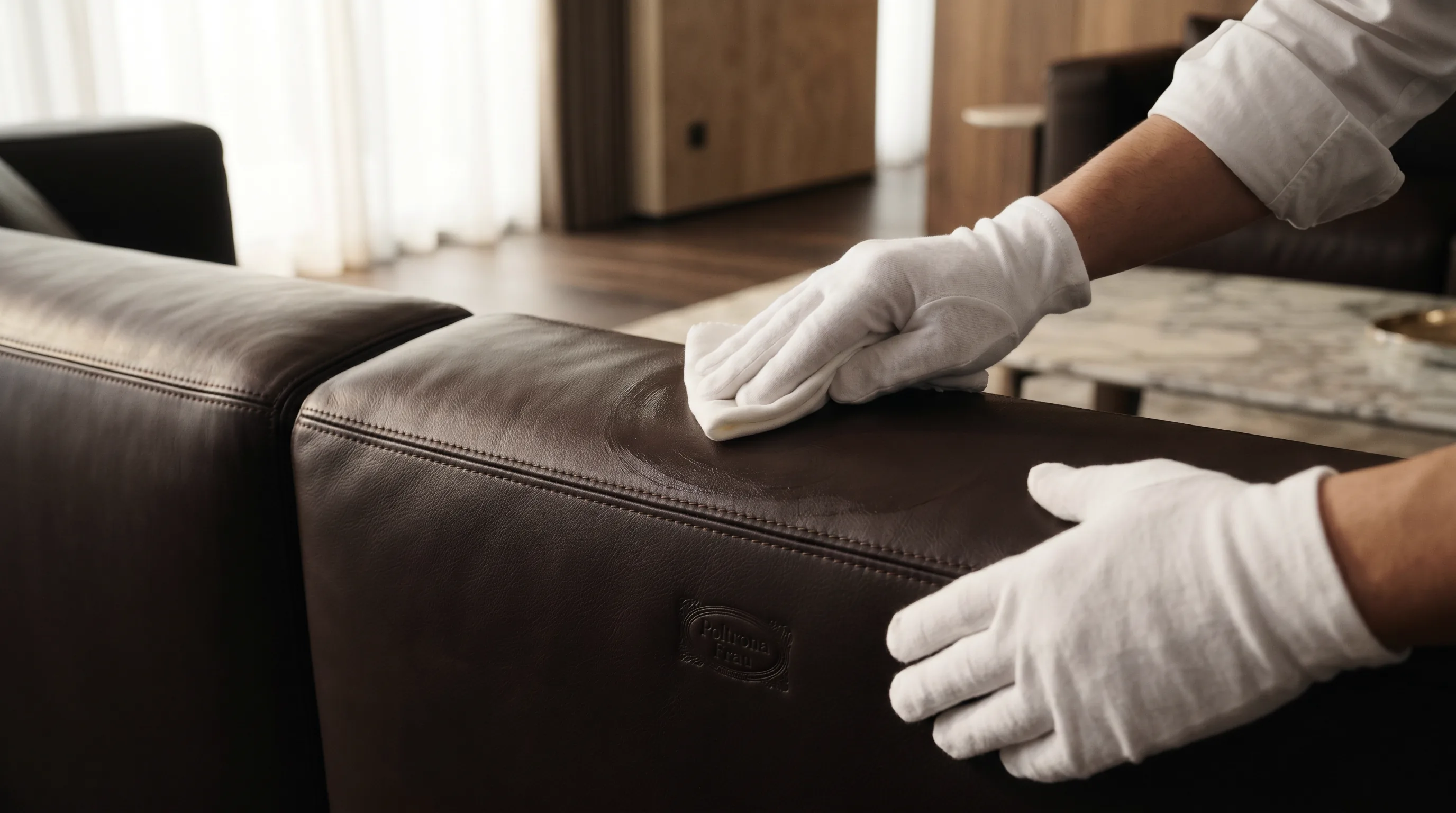
Pat the area dry with a fresh white cotton cloth. Walk away. Let the panel air-dry for at least thirty minutes - longer in monsoon humidity, when the leather will need an hour or more. Never use a hairdryer, never aim a fan at it, never put it in direct sunlight. Once fully dry and at room temperature, apply a small bead of pH-neutral leather conditioner to a microfibre cloth and buff in small overlapping circles, feathering outward. The cleaning stripped a fraction of the natural lipid layer; you are restoring it.
No visible ring, even at oblique angles. The cushion matches the surrounding panel in colour and sheen within 24 hours. No sticky feel where the sugar dried, no greasy patch where the milk-fat sat.
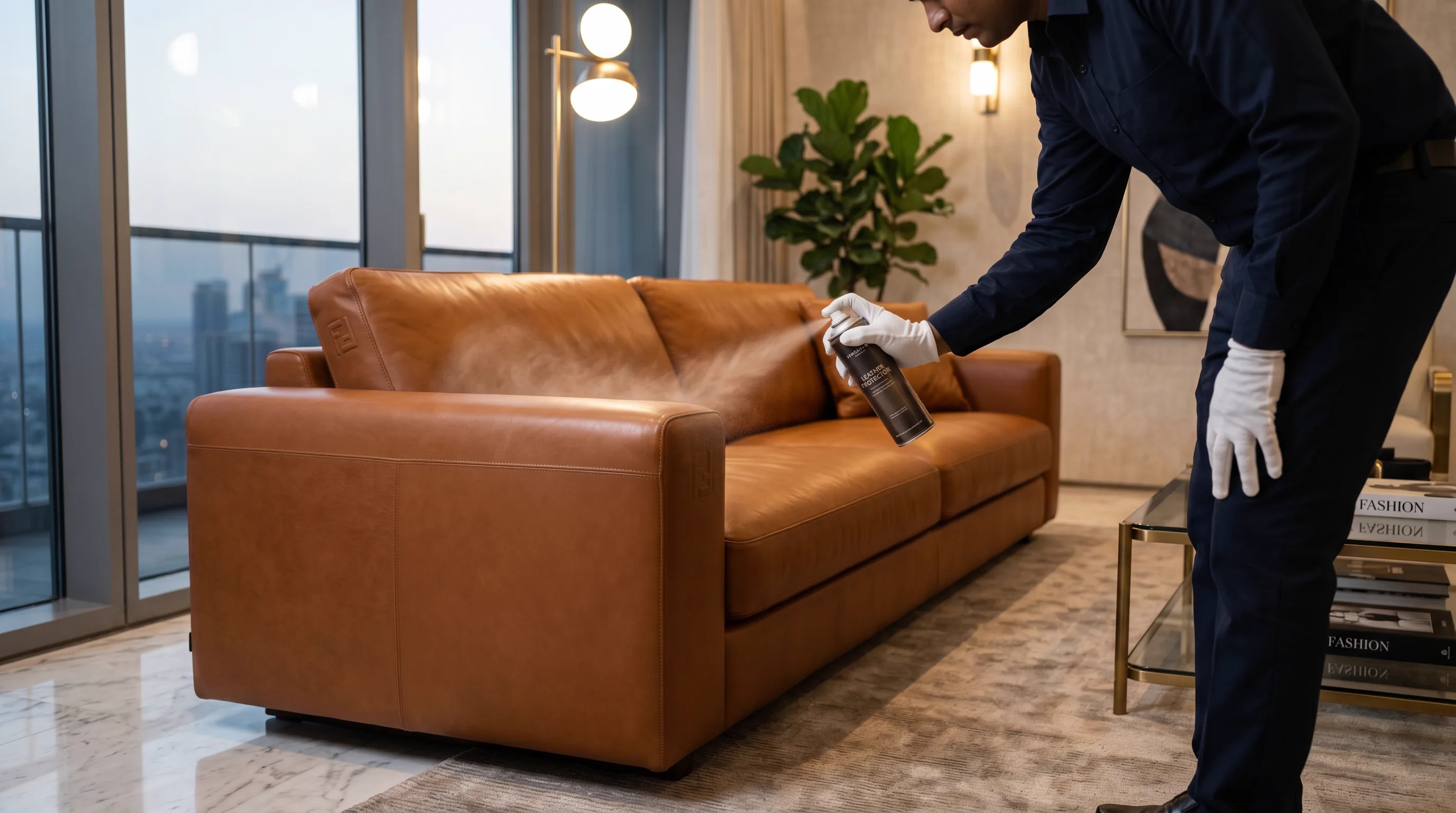
A faint shadow remains where the original ring was - visible only in raking light. No halo, no pigment lift, no roughness. This is the realistic best case on aniline and most masala chai older than a day.
A pale halo, a darker rim, or a sticky patch that returns each time the air is humid. Any of these mean the protocol has reached its limit. Stop, photograph it in daylight, and send it to us. This is fixable in the studio.
Coffee and chai removal needs less than ink. Almost everything here is in your own kitchen, or in a kirana shop within a kilometre of your home. The only thing worth ordering specially is the leather conditioner.
The single most important fluid in this protocol. Cool, never hot - hot water opens the leather grain and drives the tannin in deeper. Distilled to avoid mineral scale on dark hides; cooled boiled tap-water is a fine substitute.
One drop in 200ml of water is all you need. The surfactant breaks the milk-fat from chai or cappuccino without stripping the leather finish. Avoid antibacterial or scented variants - the perfume oils stain.
For absorbing free milk-fat before it bonds into the topcoat. Sprinkle, wait fifteen minutes, brush off. Skip on plain black coffee or black tea spills.
Restores the lipid layer the cleaning stripped. The hardest item to source well in India - most cheap "leather shines" are silicone polishes that yellow over time. Buy one trusted bottle and it lasts years.
For blotting (Step 1), the soapy lift (Step 4) and the neutralising wipe (Step 5). White only - coloured cloths transfer their own dye onto wet leather.
Held in reserve for set masala chai with cardamom-oil residue that water and soap will not touch. Use only after Step 5 if a faint warm-spice smell or oily shimmer remains. One swab dab, never a wipe.

Aniline forgives nothing. Pigmented forgives almost everything. Reading the leather before reaching for soap is the one habit that has saved more sofas than any product on the shelf.
Photographed in studio - The PracticeThe same cup of masala chai behaves five different ways across the five common leather finishes. Find your row first. Your odds, and your next step, depend on it more than anything else on this page.
Pick a hidden patch (back of seat-back). Run all three tests, then read the matrix below for your type.
Place a single drop of water on the surface. Soaks in within 30 seconds = aniline. Beads and sits on top = pigmented or bicast. Slow darken with eventual absorb = semi-aniline.
Press a fingernail into the leather for two seconds, release. Mark stays then fades slowly = aniline / semi-aniline. No mark at all = pigmented or bicast (top-coat hides the indent).
Look across the surface at a low angle in daylight. Uneven natural grain, soft matte sheen = aniline. Plastic-like even sheen, perfectly uniform grain = bicast or heavily pigmented PU-leather.
Still unsure? WhatsApp a close-up photograph in daylight to +91 98915 96597 - identification is free.
Tannin soaks into the corium within minutes; milk-fat follows. No topcoat to lift the stain off. Aniline is the one finish where chai often shadows permanently.
Treat fast or hand over. Aniline is unforgiving with milk-fat - read the deep-dive before you decide.
Most modern leather sofas in Indian living rooms are pigmented or semi-aniline - and that is good news for chai. The topcoat is doing most of the work for you, and the protocol on this page is calibrated for those two finishes. The aniline and suede rows are warnings as much as instructions; on those, hand the job over earlier than you think.
If you do not know which kind of leather you own, the thirty-second self-test above is the fastest answer. WhatsApp a daylight photograph if you are still unsure - identification is free, and the right answer at this step saves the rest of the protocol.
Most chai and coffee stains lift at home. Some do not. Knowing which is which - before you escalate the cleaner - is what separates a clean recovery from a permanent halo.
When the home protocol stalls on chai, the next step is almost always studio dye-correction or a finish-coat refresh, not stronger chemicals. Reaching for a harsher cleaner at home is the most common way a recoverable mark turns into a permanently disfigured panel - we rebuild dozens of these every year, and the original spill was usually fine.
Send a daylight photograph by WhatsApp. We will tell you honestly whether it is a home job, a studio job, or simply a panel that has reached the end of its finish life. Diagnosis is free, and the answer comes back the same day.
A pale ring around the cleaned area, where surface pigment has lifted with the tannin.
A sticky patch that returns each time the room is humid - dried sugar deeper than the cloth can reach.
A faint cardamom or clove smell that lingers after a full week, on aniline leather.
A darker shadow that does not lighten after 24 hours of drying and conditioning.
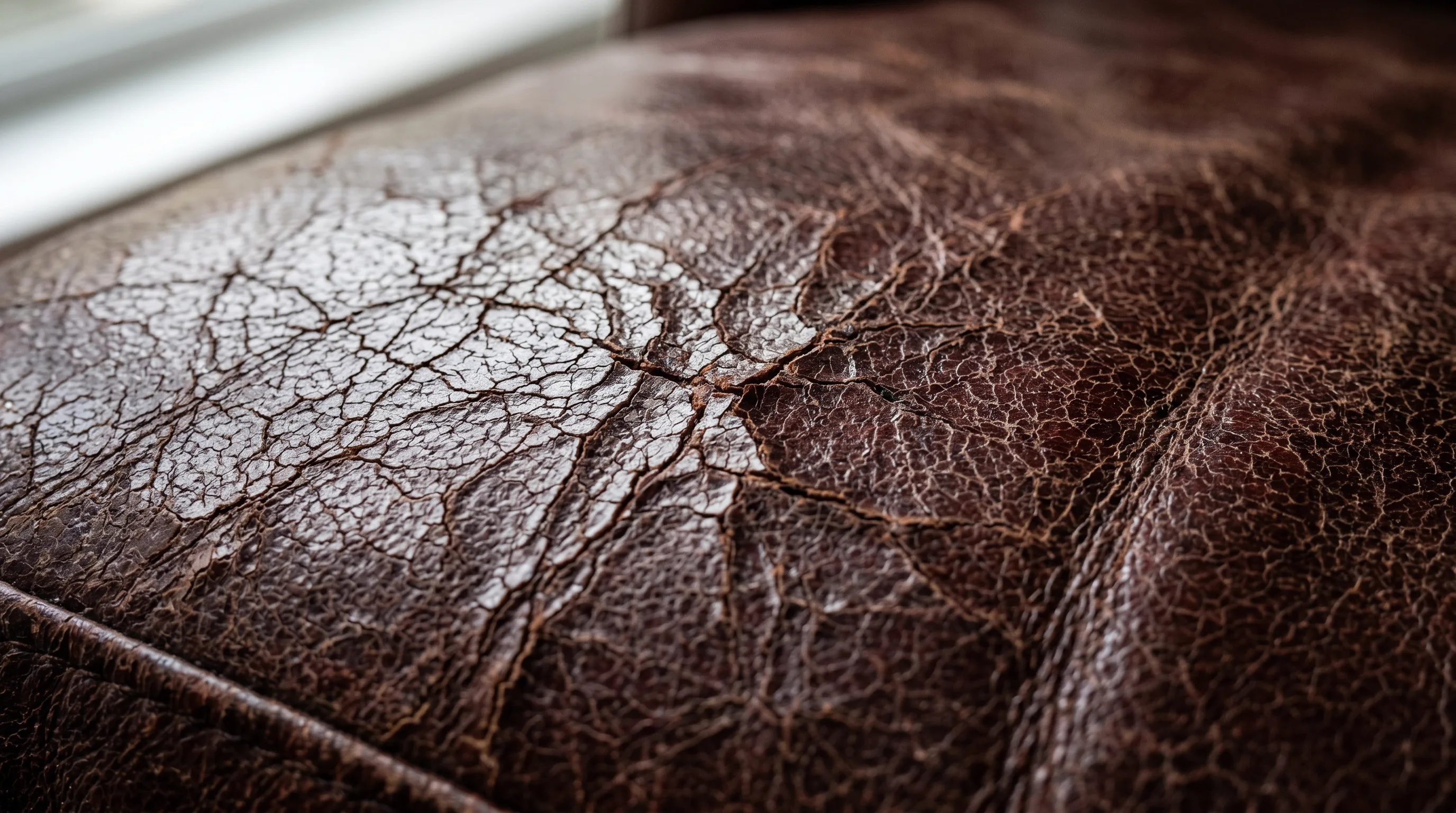
Any roughness, dryness, or grain change where the soapy water sat - a sign the topcoat dulled.
On a chai stain, the first cup we worry about is not the one that spilled - it is the one the customer reached for to "dab it dry". Half the panels on our bench were salvageable until then.
Read the studio approach, or send a photograph and we will tell you which one this is.
Chai is going to land on the sofa again. The point of this section is to make the next spill cheaper to deal with, not to ban the cup from the room.
For the first 48 hours after the protocol, the worked panel is more absorbent than the rest of the sofa. Keep the cushion out of direct sunlight, do not condition again, and do not let anyone sit with hot tea on it. The conditioner needs that window to settle into the lipid layer; once it is in, the panel returns to normal vigilance and you can stop thinking about it.
Long-term, the single most useful habit on an Indian leather sofa is a quarterly dust-and-condition. Wipe with a barely-damp distilled-water cloth, let it dry, then a thin film of pH-neutral conditioner. That is twenty minutes of work every three months, and it is what keeps the topcoat flexible enough to handle the next chai spill without holding onto the stain. A full home cleaning guide covers the full quarterly routine.
The Indian climate adds two specific risks worth knowing. The dry winter (December to February) shrinks the leather slightly and makes any milk-fat residue more visible as a duller patch - condition before winter, not during. Monsoon humidity (July to September) re-activates dried sugar from old chai rings, which is why a stain you thought was gone sometimes "comes back" in August. The monsoon manual walks through both of these in more detail.
The single most effective prevention. A simple cork or felt coaster under the cup blocks ninety percent of accidental drips and condensation rings. The brass-and-felt sets sold on Amazon for Rs 400-700 are perfect.
If one corner of the sofa is the daily chai-and-newspaper seat, a washable cotton or linen throw on it costs less than one panel restoration. Wash it monthly. The leather underneath stays untouched.
Heat from a hot mug softens the topcoat under it for hours. Even without a spill, repeated hot-mug placement leaves a circular heat-mark on aniline. Always put a coaster or saucer between mug and leather, even briefly.
Every three months, vacuum the seam-lines for biscuit crumbs (which trap chai-sugar and turn into tiny brown spots), wipe with distilled water, then a thin film of pH-neutral conditioner. Twenty minutes. Adds years to the panel.
The morning chai is not the enemy of the sofa. The enemy is the panicked wipe in the first thirty seconds. Slow hands, the right order, and the cup gets to stay in the room.
Photographed in studio - FaridabadPlain black coffee or black tea is a single-class stain - tannin and roast pigment dissolved in water. Chai or cappuccino adds milk, which is a second stain class on top of the tannin. The milk-fat traps the tannin in place and forms its own greasy patch, which is why milky stains look darker and lift slower than black-coffee stains. Masala chai adds a third layer - cardamom and clove oils that ride the milk-fat into the leather and leave a faint warm-spice smell for days. The protocol on this page handles all three layers in order, which is why it has more steps than a coffee-only guide.
Because it is two stains in one. Black coffee is just tannin in water, and lifts cleanly with cool water and patience. Milky chai has tannin sitting under a layer of milk-fat, and the fat will not move with water alone - water and fat do not mix. You need a mild surfactant (one drop of dish soap in cool water) to break the fat first; only then can the water reach and lift the tannin underneath. Skip the soap step on a milky stain and you end up with a darker ring than you started with.
Mostly, yes - on pigmented and semi-aniline leather. The home protocol lifts visible pigment and most of the milk-fat. Cardamom and clove oils are lipid-soluble and travel with the fat, so they come out alongside it. On aniline leather, traces of the oil can stay for days because there is no topcoat to stop them sinking in. If a faint warm-spice smell lingers after a week, that is residual cardamom oil that needs studio-grade lipid extraction rather than another home pass.
Dried sugar. Indian home chai usually has one to two teaspoons of sugar per cup, and as the water flashes off, the sugar dries into a sticky residue along the outer ring of the spill. It tugs faintly under the fingertip and turns slightly tacky every monsoon evening because sugar is hygroscopic - it pulls moisture out of humid air. A second pass with cool soapy water (Step 4 of the protocol) usually lifts it cleanly. Do not use hot water - it caramelises the sugar deeper instead of dissolving it.
Slightly. Instant coffee has a higher ratio of dissolved solids per millilitre, so the same teaspoon of spill leaves a darker, more concentrated mark. Filter coffee is dilute by comparison but usually has milk in it, which brings the milk-fat layer back into play. The protocol on this page works for both. South-Indian filter coffee with a heavier milk fraction will need an extra pass at Step 4.
Almost never, on pigmented or semi-aniline leather. The milk-fat itself comes out cleanly with mild soapy water, even after it has dried, because fat does not bond chemically with the topcoat the way tannin bonds with collagen. What looks "permanent" on milky chai is usually one of three things - dried sugar that needs a second soapy pass, residual cardamom oil that needs studio work on aniline, or pigment lift from over-cleaning rather than the milk itself. Send a daylight photograph and we will tell you which.
A field manual is only as useful as its index. Six adjacent plates, ordered roughly from most to least common in the Indian living room.
PLATE II
Ballpoint, gel and marker. Solvent-bound dye class, fast-setting on every leather type.
read entry →
PLATE III
Polyphenol and tannin family. Same chemistry root as chai, different colour load.
read entry →
PLATE VI
Curcumin pigment - the deepest-staining cooking ingredient in the Indian kitchen.
read entry →
PLATE VII
Pure lipid stain. Same family as the milk-fat layer in chai, simpler to lift on its own.
read entry →
PLATE IV
Protein family. The first-aid mistake on leather, where hot water sets the stain forever.
read entry →
PLATE XII
Lawsone and betel pigment. The wedding-and-festival pair, often arriving the same evening.
read entry →If the chai ring has shadowed, the cardamom oil lingers, or you have already tried something stronger - send a daylight photograph. Diagnosis is free, the studio is in Faridabad, and we work pan-India for hides worth saving.
Tell us about your sofa. A leather specialist will respond the same day - no obligation.