Before / AfterRecolour & Clean
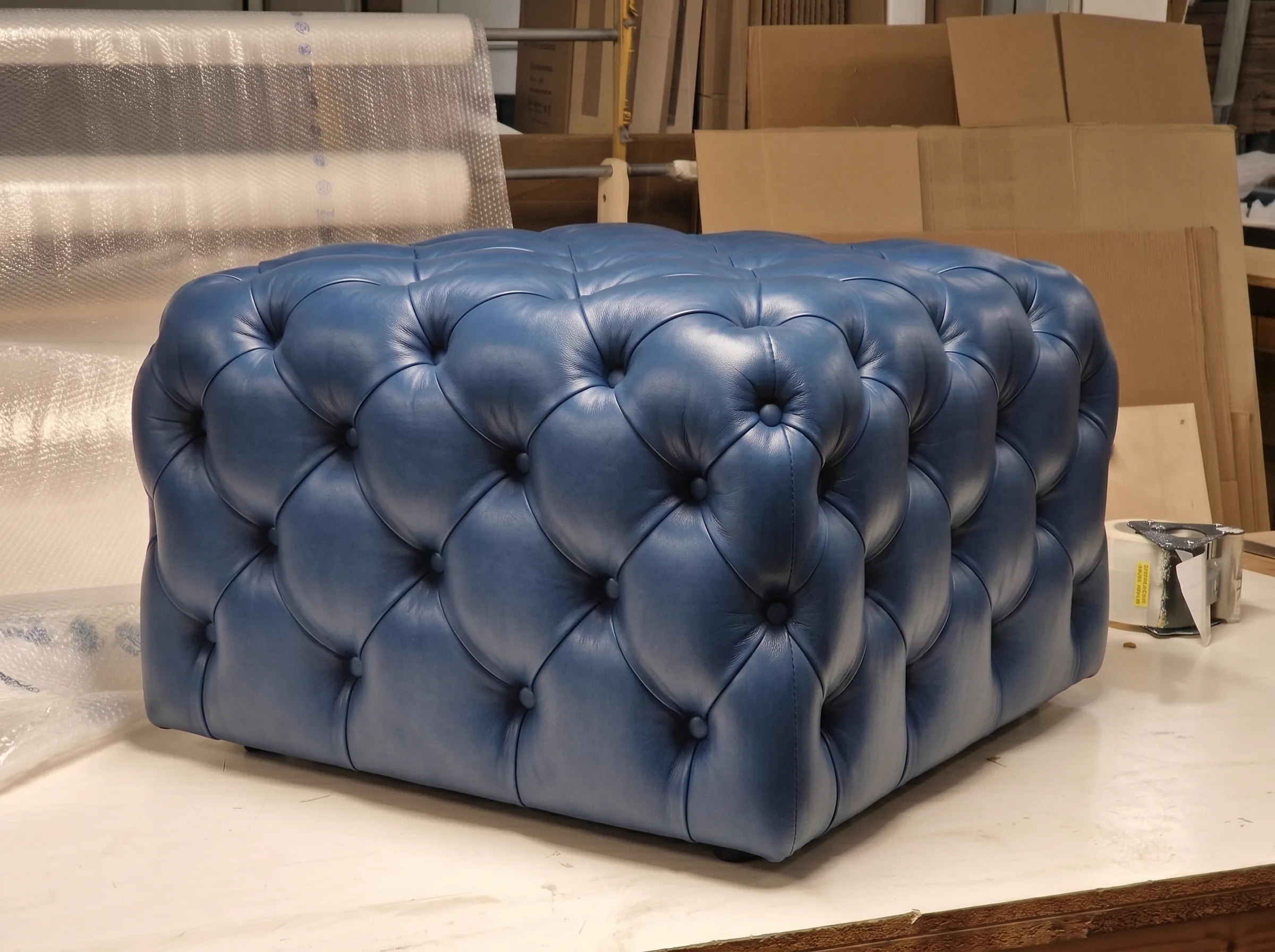
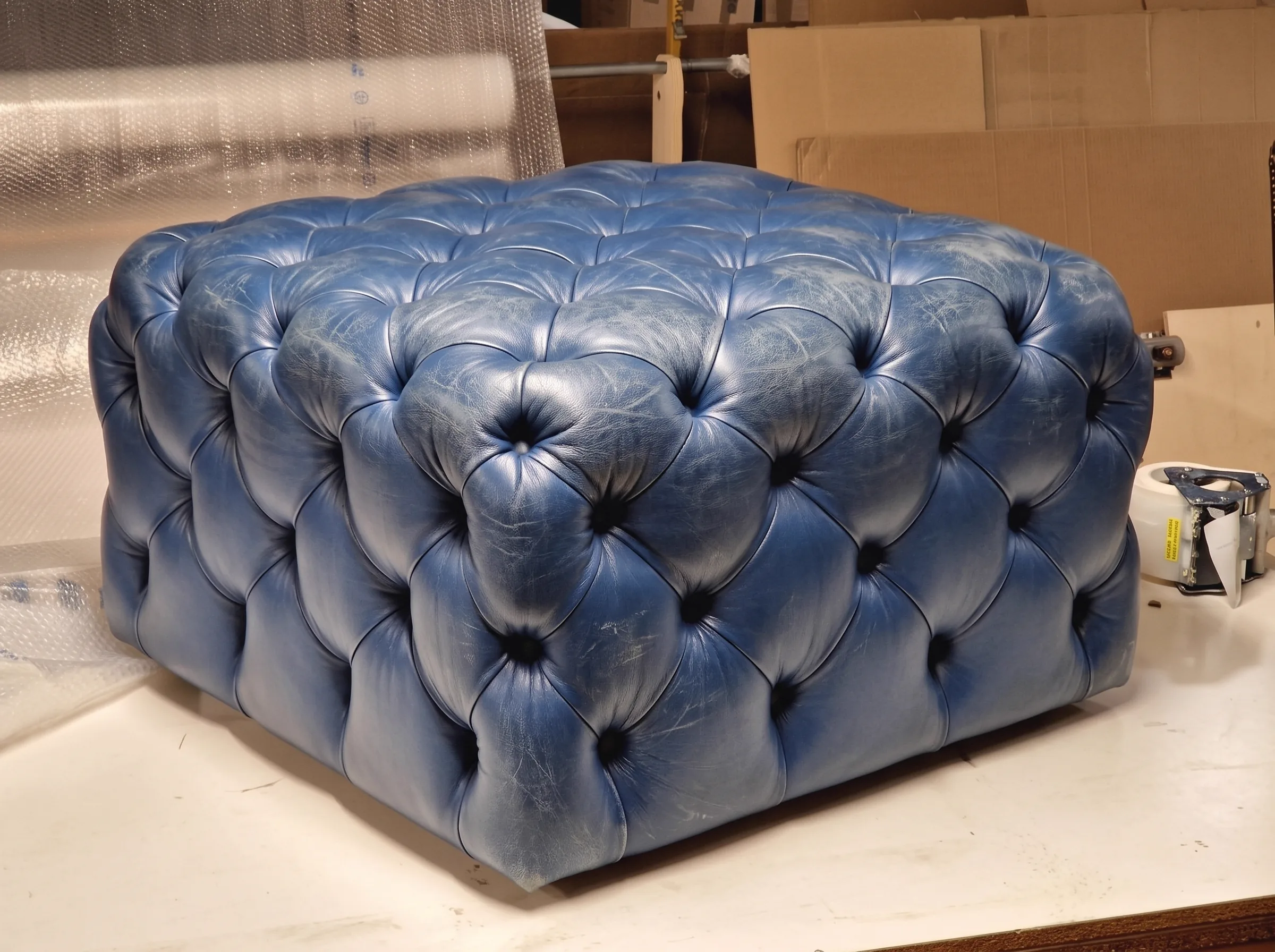
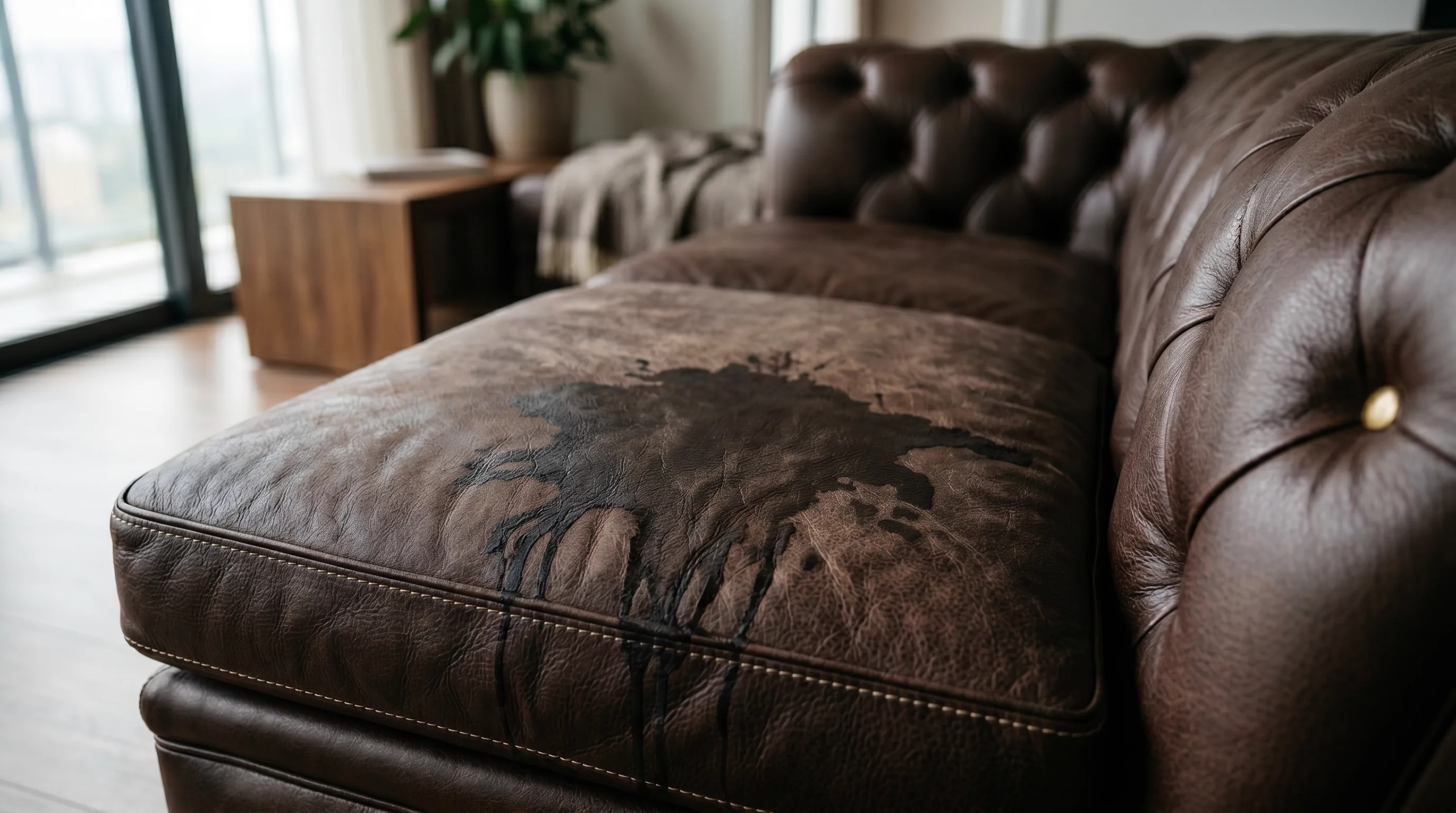
A conservator's protocol for ballpoint and fountain ink - lift the dye without driving the solvent deeper, lifted clean.
Explore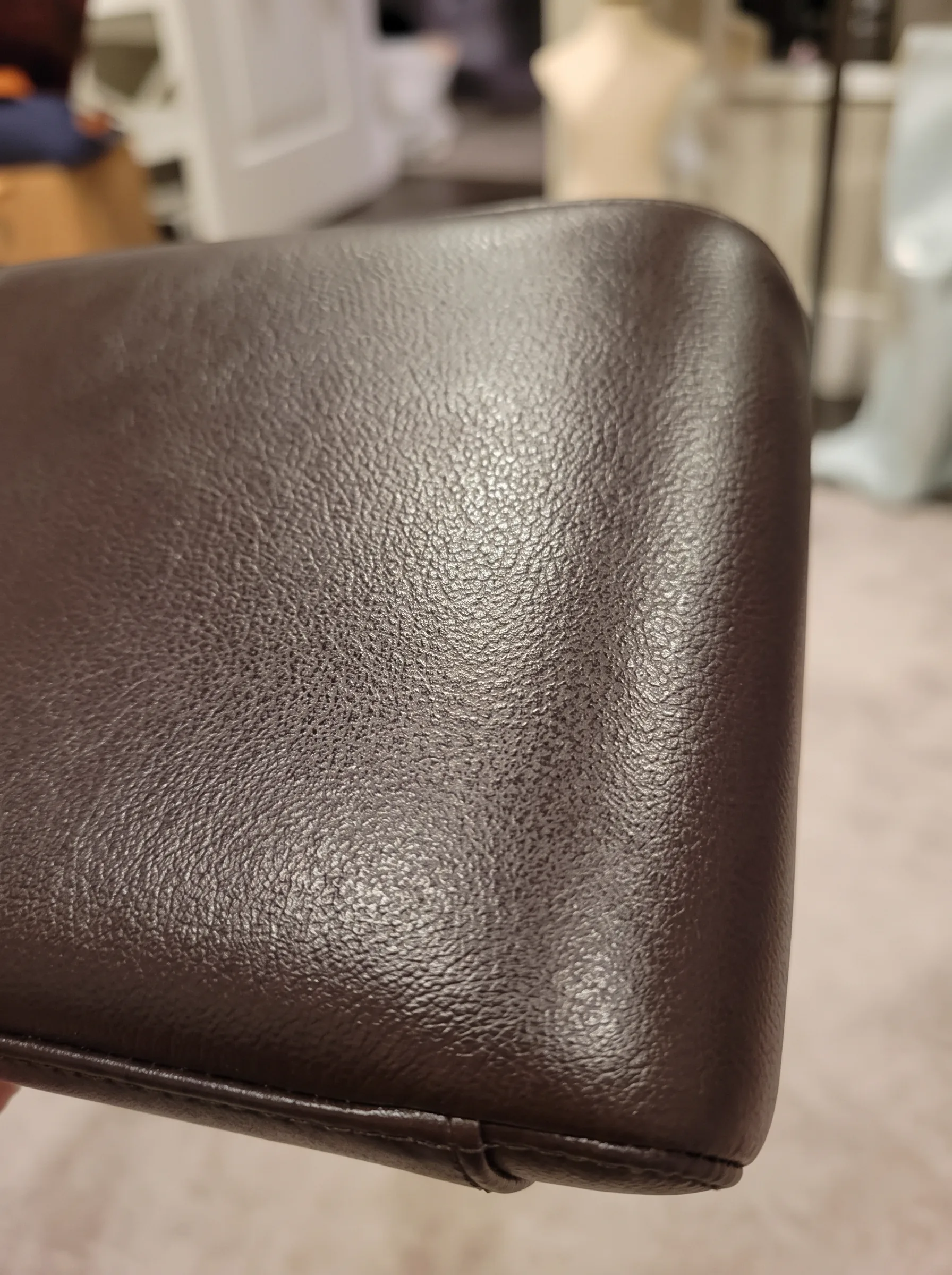
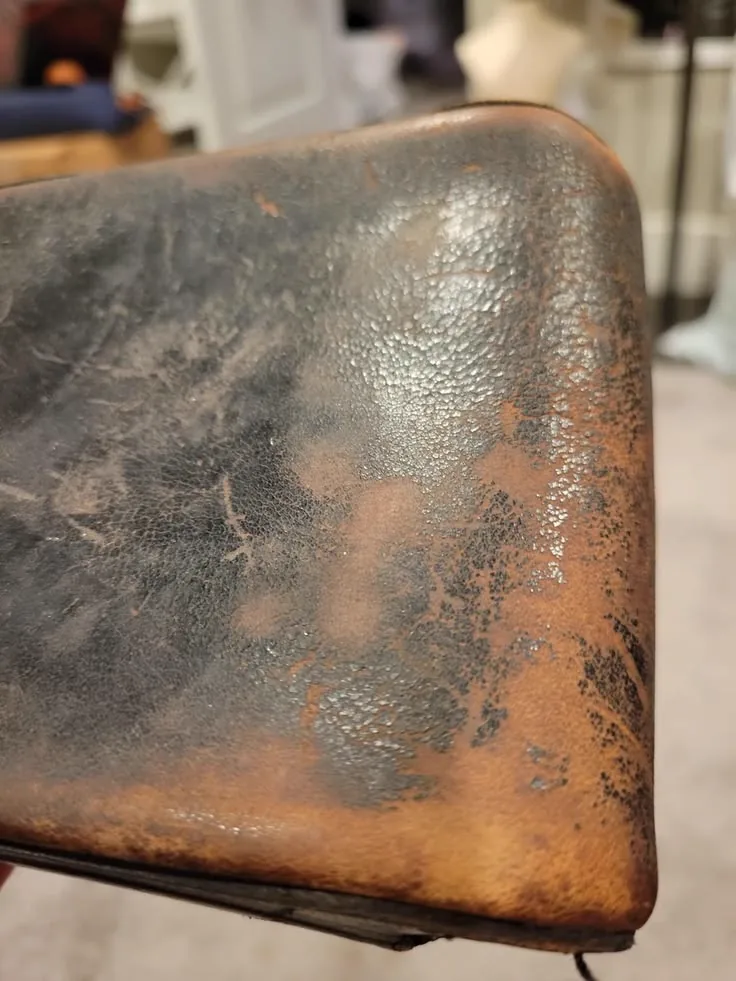
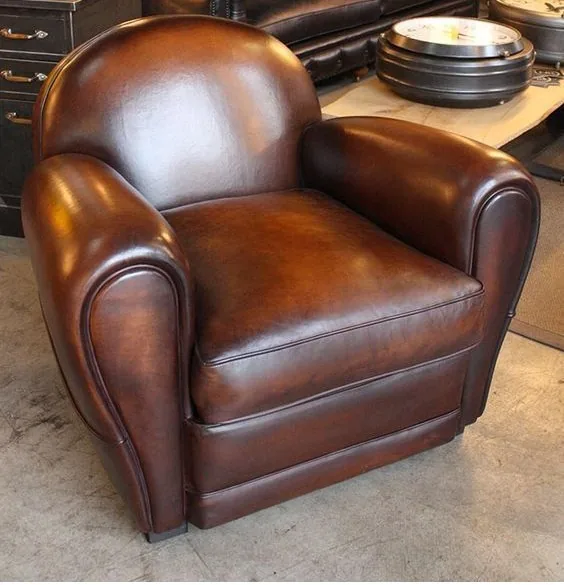
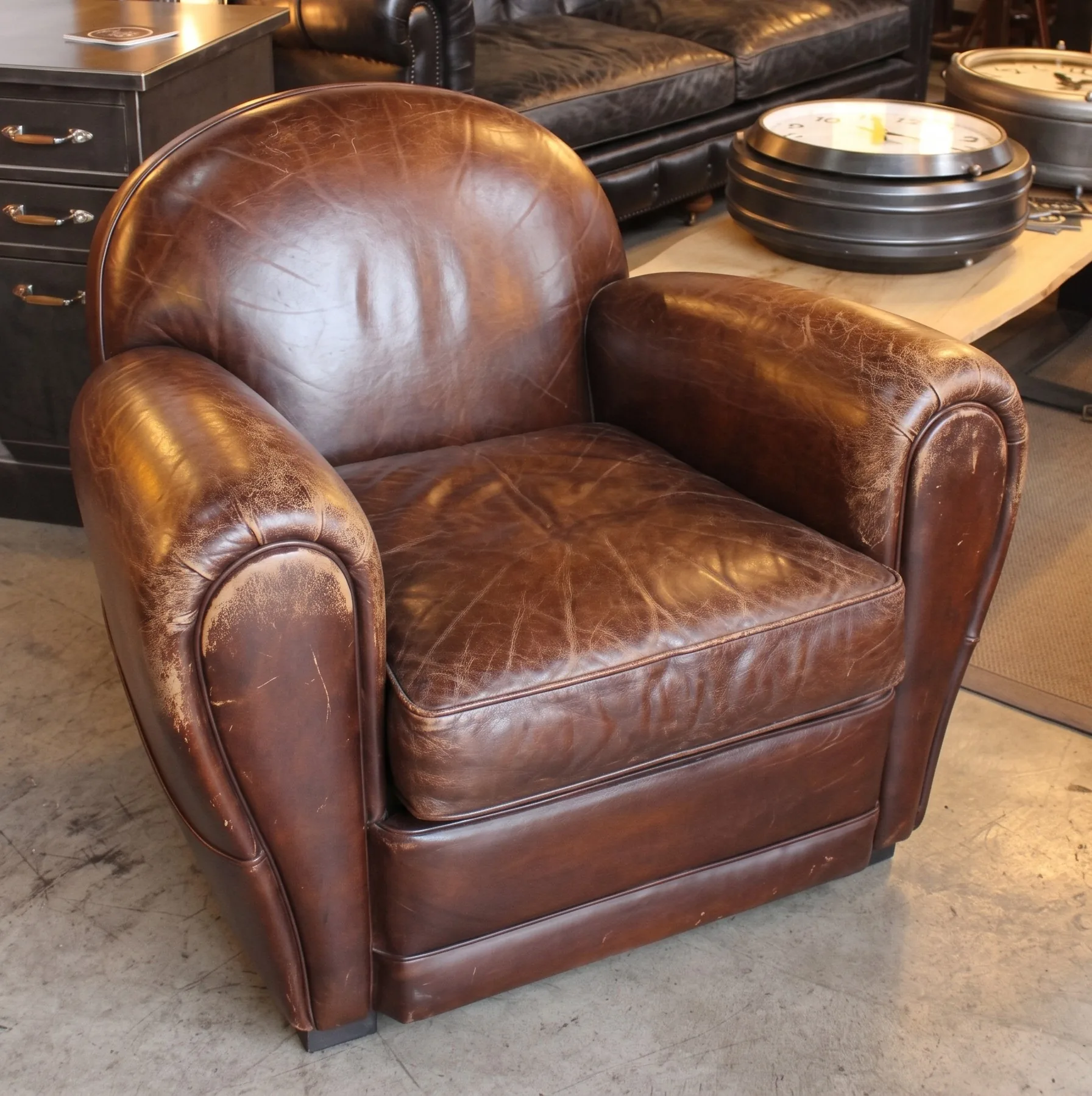
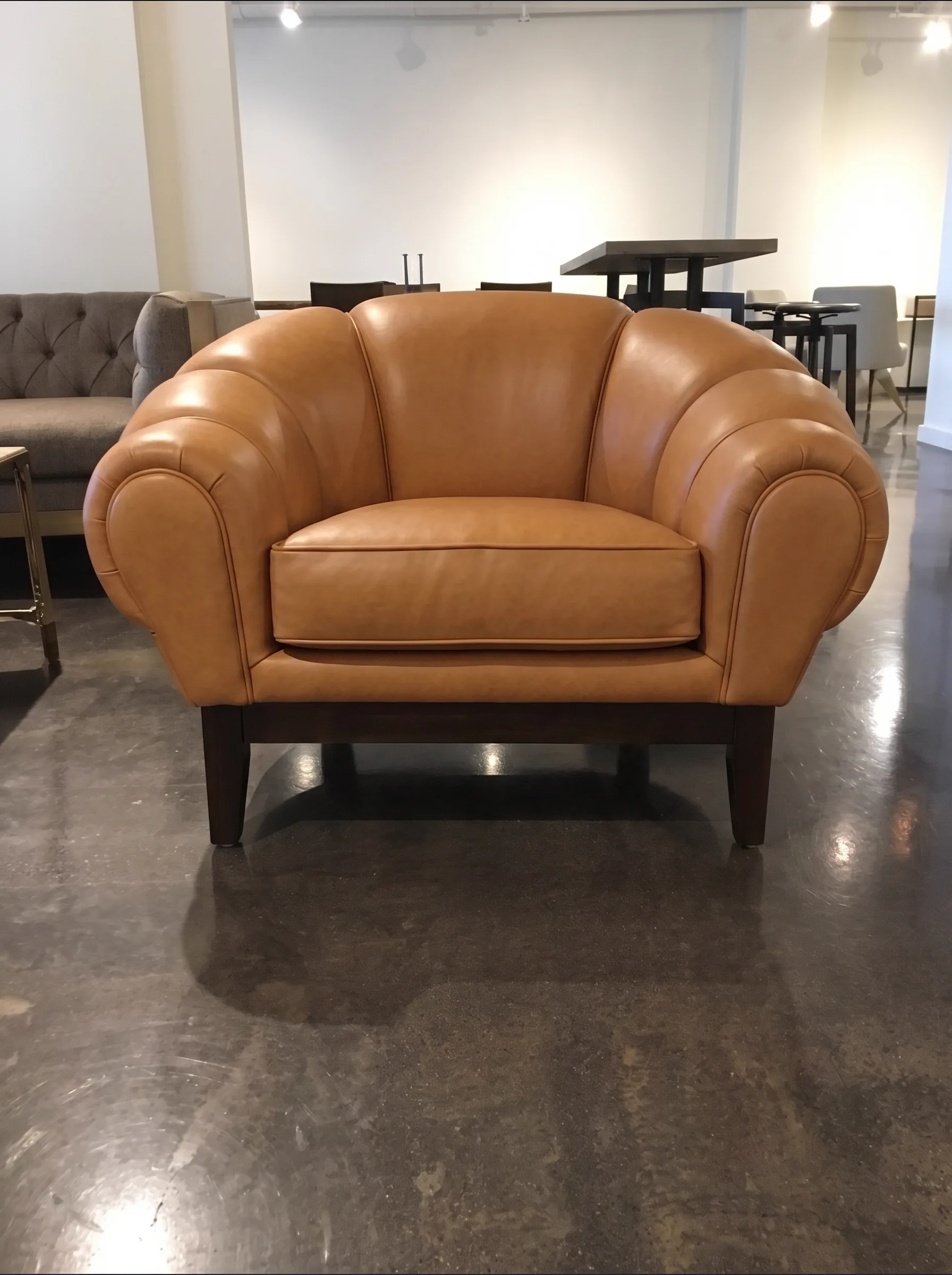
The honest verdict before you start - how fast to move, what is at risk, and how far it really reverses.
Book a Damage Check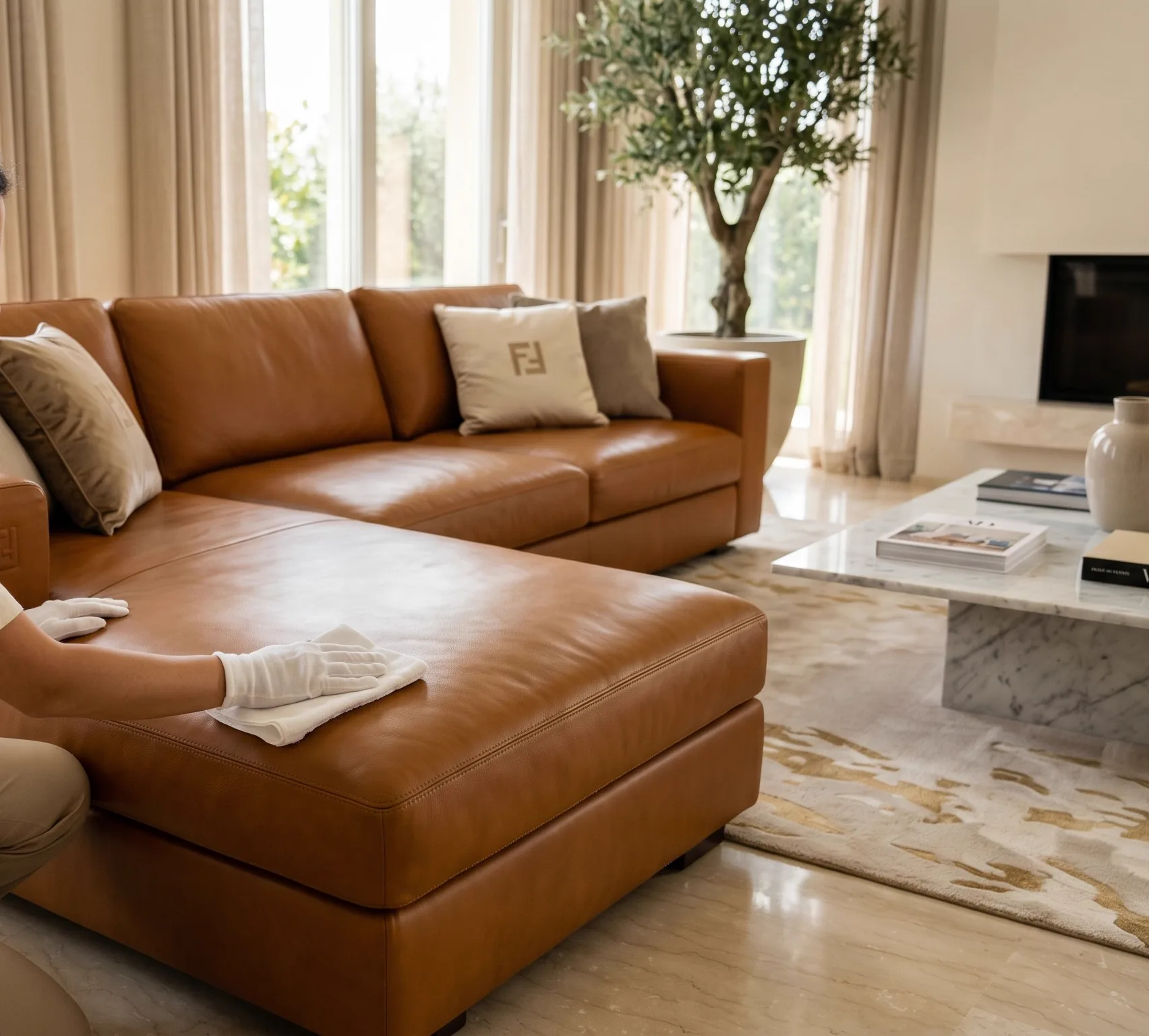 Time-Sensitive
Solvent dyes set as they dry.
 Leathers At Risk
Pigmented forgives - aniline does not.
 Difficulty
Patience over force, swab over cloth.
 Reversibility
Full restoration via studio dye-correction.
Water is not your first move on ink - it spreads the dye and drives it deeper. Blot, patch-test, and lift with a swab; water comes only at the end, as a single neutralising wipe.
Half the damage we see at the studio came from the wipe, not the spill. White cotton, twenty seconds of stillness, no panic, and most stains never reach our bench at all.
Photographed in studio - FaridabadHalf the "ink stains" people send us turn out to be something else, denim dye, food, newspaper transfer. A thirty-second look before you start saves the wrong cleaner from making the wrong stain permanent.
True ink draws a line - sharp where the pen tip pressed, fading where it lifted. A round dark spot is more likely shoe polish, food, or transferred dye from clothing.
On aniline leather you will see a soft 1-3 mm halo of feather-bleed where solvent carried dye into surrounding fibres. On pigmented leather the line stays sharply edged because the topcoat blocked migration.
Fresh ballpoint feels faintly waxy when you pass a clean fingertip lightly across it - residual paste binder. Dried ink loses this and sits absolutely flat with the surface.
View the mark from a low angle in daylight. Ink looks slightly more violet or bronze than printed - a tell-tale of metallised dye complexes used in modern pen formulations.
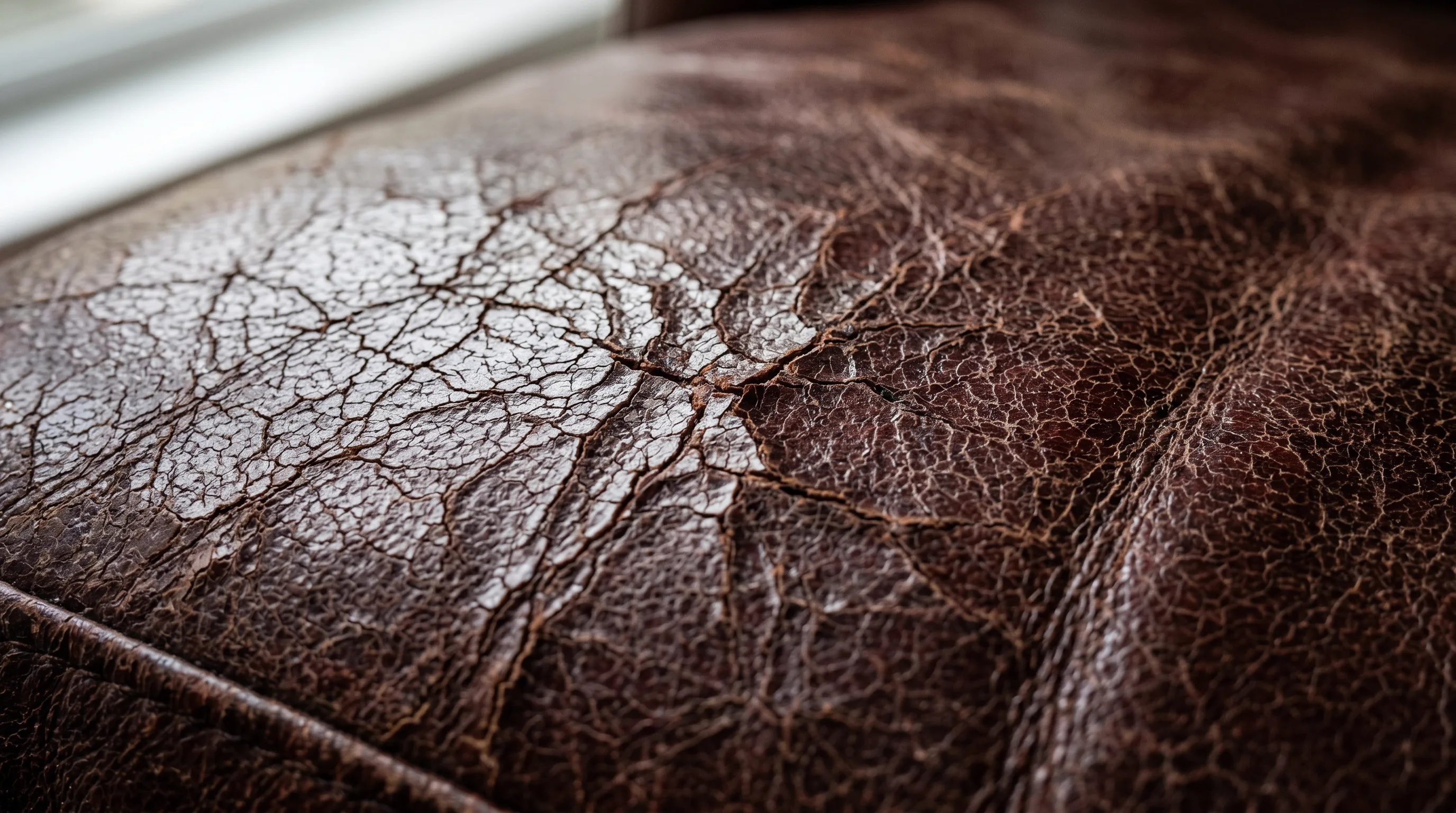
Diffuse blue cloud on cushion fronts. No sharp line, no halo. Lifts with leather cleaner alone - alcohol is overkill.
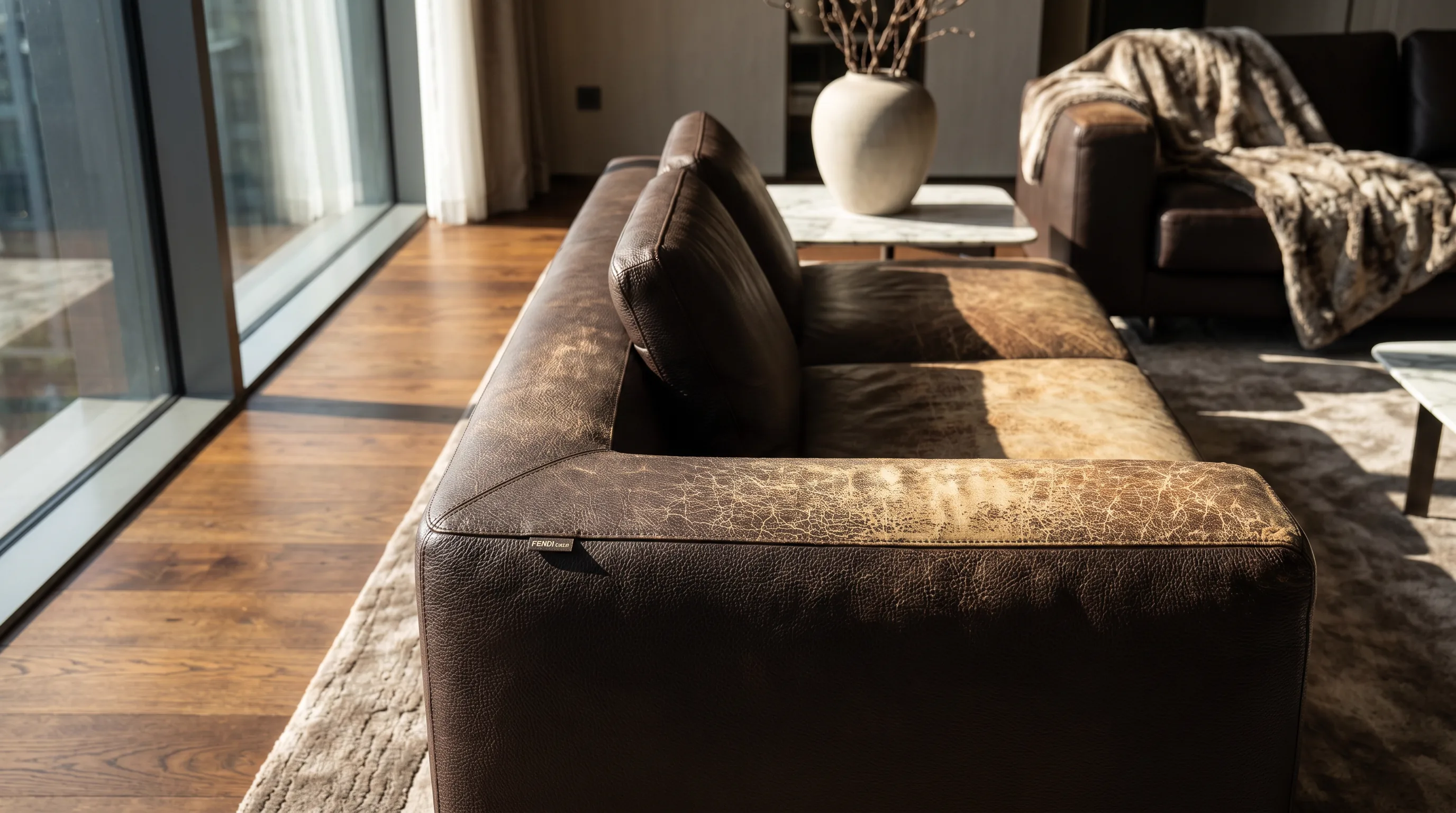
Mirror-image of text or images. Picks up off pigmented leather with a plastic eraser; resists alcohol because it is oil-based.
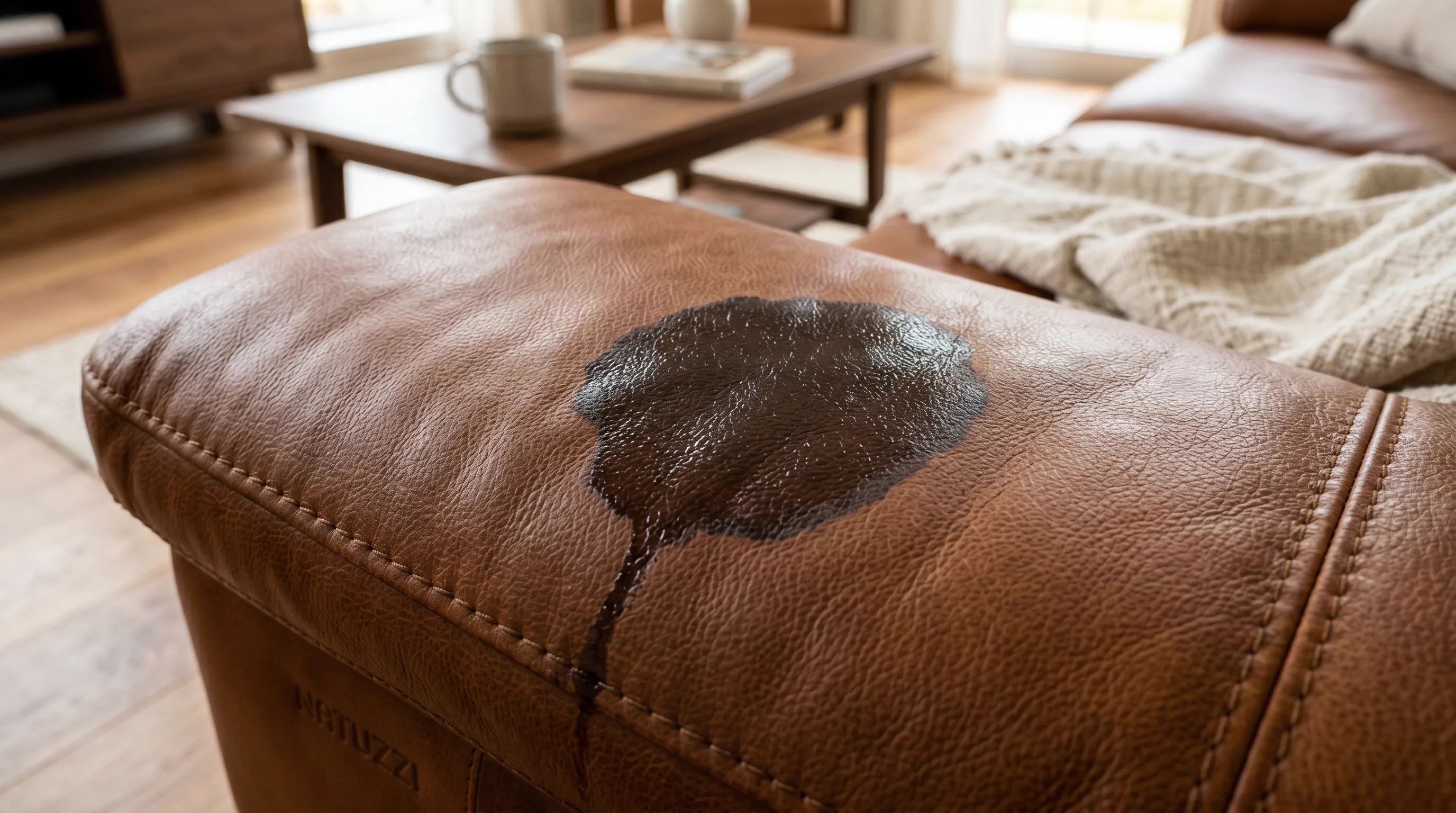
Glossy when fresh, brown not blue when dry. Smells. Wants distilled water and a pH-neutral cleaner, not solvent.
Modern pen ink is engineered to bond with paper fibres in milliseconds. Leather grain is denser than paper but chemically not that different, so the dye behaves the same way. Knowing what is happening underneath is half of why the protocol works.
Ballpoint paste is roughly forty percent dye, thirty percent fatty-acid solvent, and the rest resin and surfactant. The moment it hits a porous surface, the solvent runs ahead and drags the dye along behind it through capillary action. On leather, that path runs along the channels between collagen fibres, a network of microscopic tubes that pull the dye away from the surface you are trying to clean. This is also why patience works better than pressure here, you are coaxing the dye back out of those channels, not scrubbing it off the top.
Gel pens make it harder. The "gel" is a water-based polymer that suspends pigment particles, and those particles bond to the leather's finish coat or grain layer mechanically rather than chemically. Mechanical bonds resist alcohol but yield to gentle, repeated abrasion. That is exactly what the swab-and-roll technique in the protocol below is doing.
Permanent markers are a different problem again. They use xylene or alcohol as a carrier, and the dye is a lipid-soluble metallised complex that bonds directly with the topcoat polymer. That is why most marker stains end up needing a pigment touch-up rather than a clean. The worst case is old-school India ink (carbon black in shellac), where the shellac fuses with the finish coat and the only honest answer is studio dye-correction.

Solvent inks travel for fifteen minutes after they land. Stop the migration first; the lifting is the calmer half of the protocol that follows. Patience is not waiting - it is technique.
Photographed on site - IndiaInk keeps moving for the next fifteen minutes while it is still wet. The only thing you have to do right now is slow it down. The lifting comes after, and it is gentler than you think.
Do not reach for anything wet yet. Take a daylight photograph from two angles, this is your reference for "before". Then run the thirty-second self-test in Section 06 to find out whether your leather is aniline, semi-aniline, or pigmented. Everything else depends on this answer.
Press a clean white cotton cloth straight down on the ink. Lift it, rotate to a fresh dry section, press again. Each press takes roughly fifteen percent of the wet dye away with it. Keep going until the cloth picks up nothing more. This single habit, blotting instead of wiping, is what most people get wrong in the first thirty seconds.
Try 70 percent isopropyl on a hidden patch first (full method in Section 04). If it passes, work the visible mark with cotton swabs, dabbing from the outside edge inward. The moment a swab picks up any blue or black, throw it away and pick up a fresh one. A coloured swab will redeposit dye every time it touches the leather.
Wipe the worked area once with a barely-damp cloth dipped in distilled water. Pat it dry with fresh cotton. Then walk away for thirty minutes. Do not poke at it, do not condition yet, the leather is still settling and will look darker than it actually is.
These cause damage that the stain itself never would. Skip them, even if the internet swears by them.
A calm first response. Buys you the time to do this properly.
These steps assume 70 percent isopropyl alcohol on a non-aniline leather. If the patch-test fails, and on aniline it usually does, stop here and read Section 07. Handing the job over is not a failure; on the wrong hide it is what saves the leather.
Fresh - Run all six steps in order. Most fresh ballpoint and gel ink lifts to acceptable on semi-aniline and pigmented leather within 30 minutes.
Dried - Skip Step 1 (blotting wet dye is irrelevant). Spend longer on Step 3 with patient, repeated swab dabs. Expect partial recovery - 60-70 percent on pigmented, less on aniline.
Set - Step 1-2 will not help; Step 3 risks lifting pigment without removing dye. Stop and photograph. Set ink almost always needs studio dye-correction. Send the photograph for a free assessment.
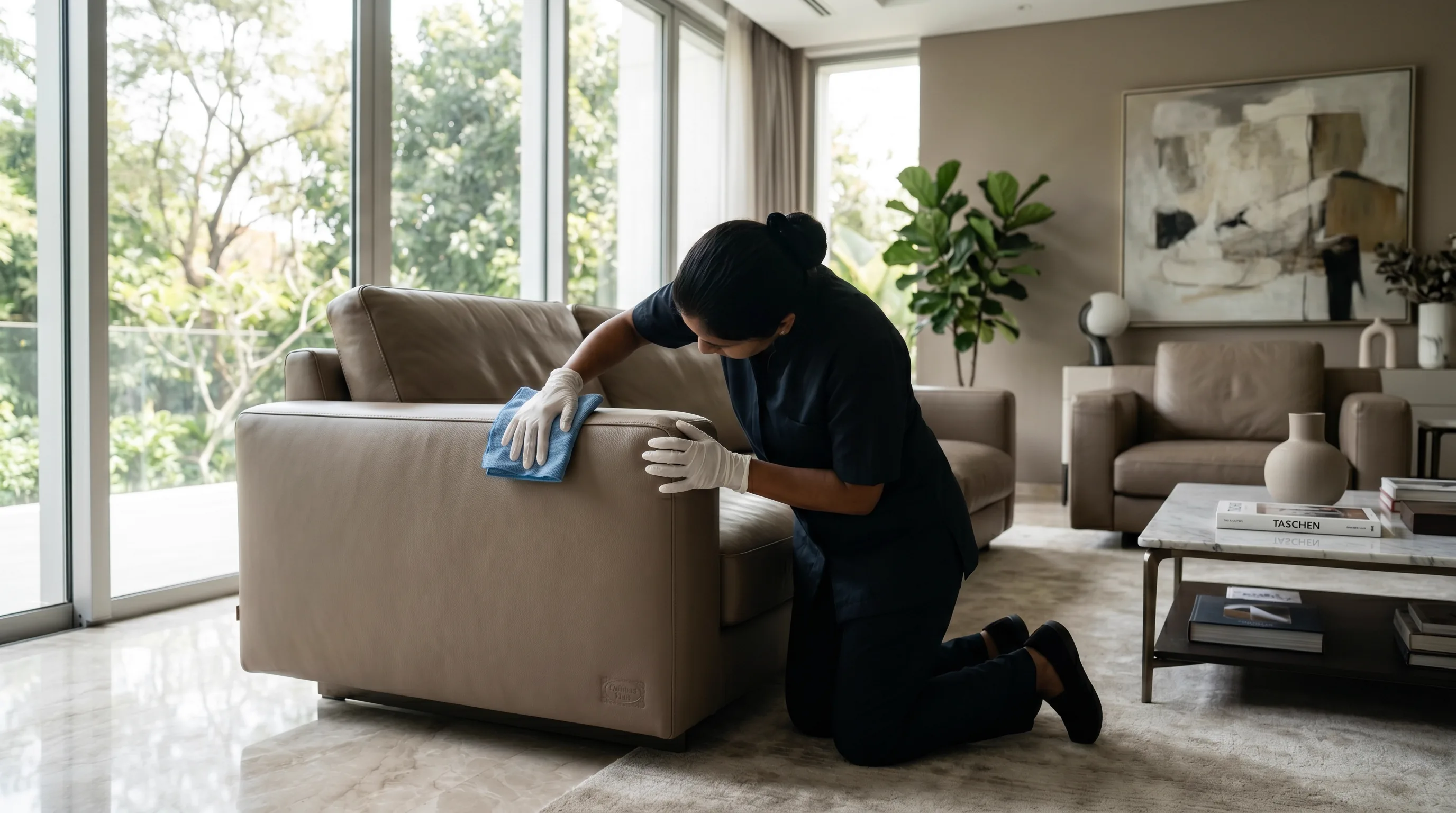
Press a clean white cotton cloth straight down on the ink. Do not rub, smear, or drag - that spreads the solvent further into the grain. Lift, refold to a dry section, press again. Repeat until a fresh press picks up nothing on the cloth. You are removing surface-wet ink before it migrates further; expect to lift roughly forty percent of the visible mark this way.
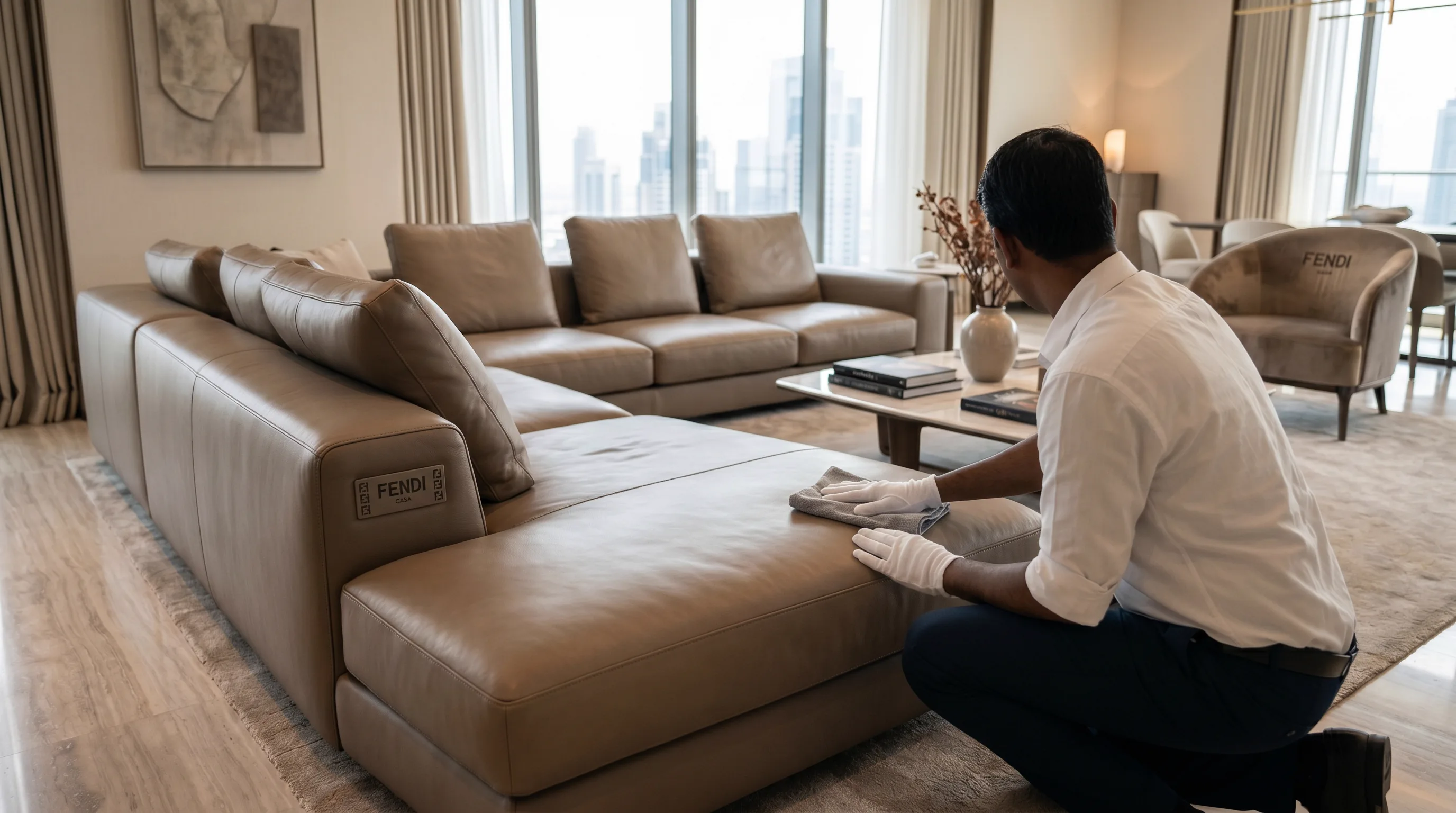
Choose a hidden patch on the back of the seat-back, under a cushion, or behind the skirt. Dab a coin-sized drop of 70 percent isopropyl alcohol with a cotton swab. Wait ten minutes by the clock. Inspect: if the patch dulls, lifts colour onto the swab, or leaves a darker halo, stop here - your leather is aniline or has a delicate finish, and the protocol below will damage it. Send a photograph and stop.
Damp a fresh cotton swab in 70 percent isopropyl - not soaked, just damp enough that no liquid drips. Place the tip at the outer edge of the stain. Roll the swab across the surface in three to four millimetre dabs, working inward toward the centre of the mark. The instant any blue, black or red transfers to the swab tip, throw it away and pick up a fresh one. Never re-touch a coloured swab to the leather - you will redeposit dye every time.
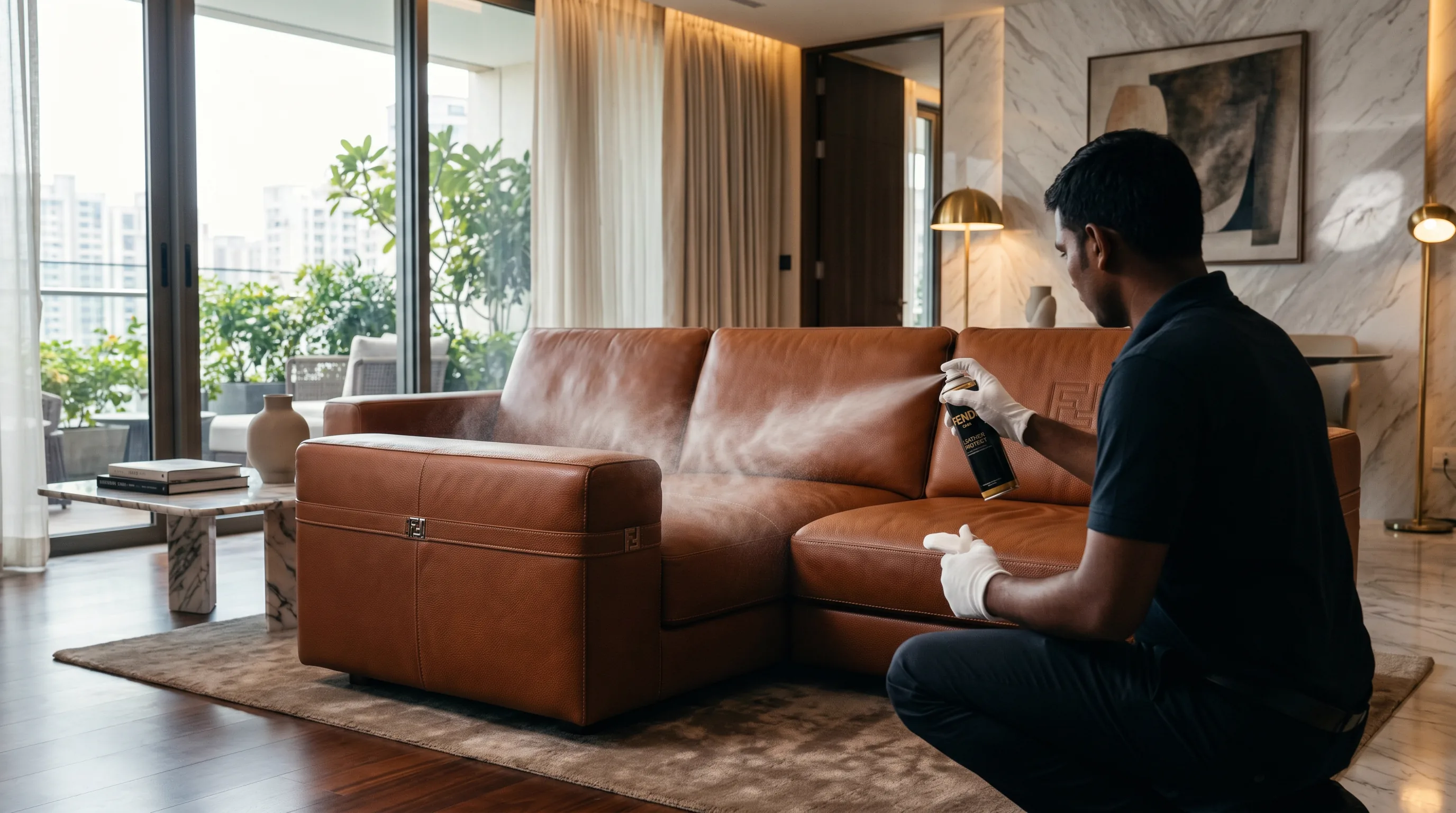
Damp a fresh white cotton cloth with distilled water - barely damp, not wet. Wipe the worked area once in a single direction. This carries away alcohol residue before it has time to dry the topcoat further. Do not flood the leather, and do not wipe back-and-forth - that abrades the now-vulnerable surface. Tap-water is fine if distilled is unavailable, but distilled avoids any mineral scale on dark hides.
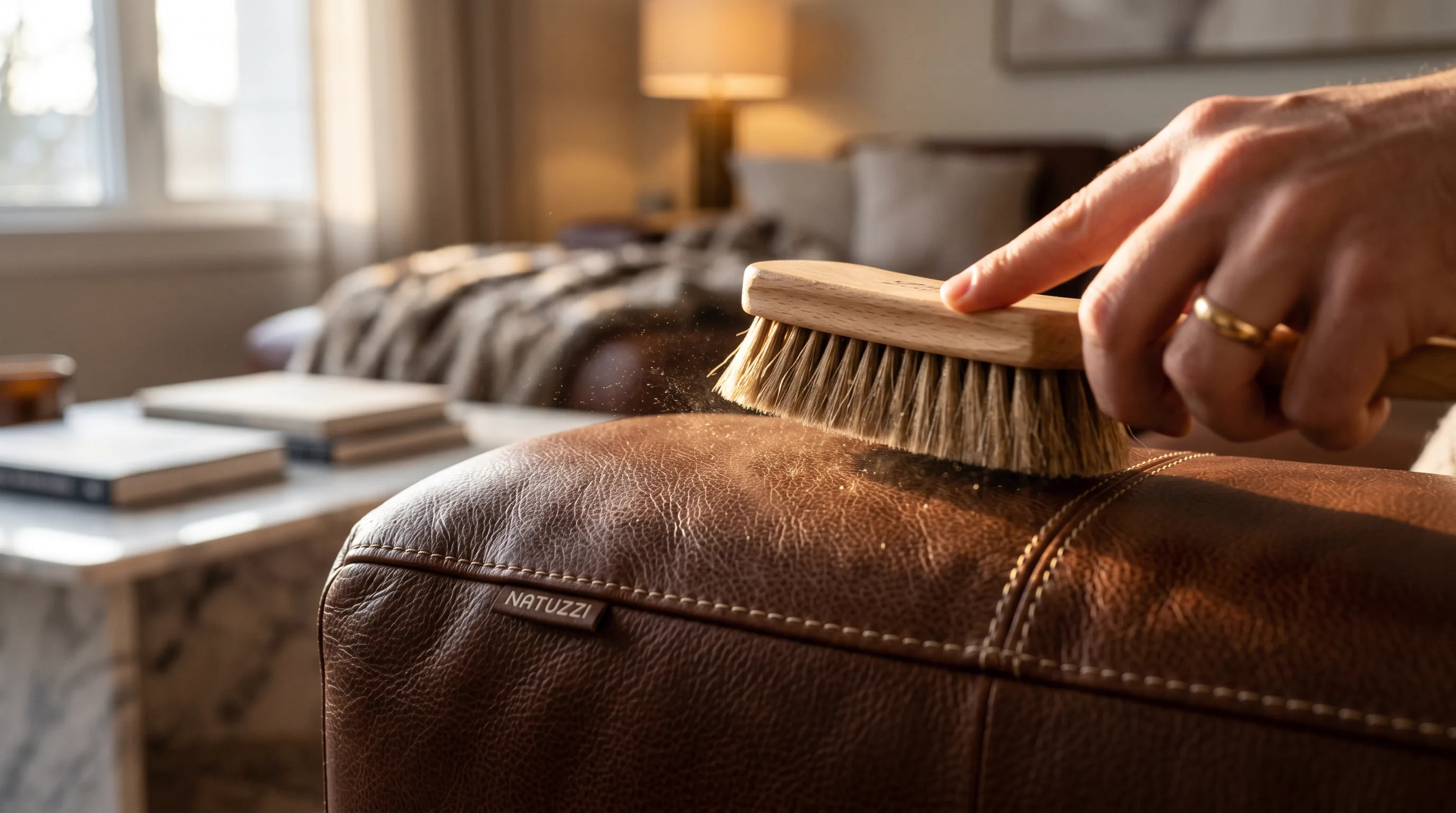
Pat the area dry with a fresh white cotton cloth. Then walk away. Let the panel air-dry for at least thirty minutes - longer in monsoon humidity, when the leather will need an hour or more. Never use a hairdryer, never aim a fan at it, never put it in direct sunlight. Rapid evaporation cracks the finish coat permanently and leaves the surface brittle for years afterward.
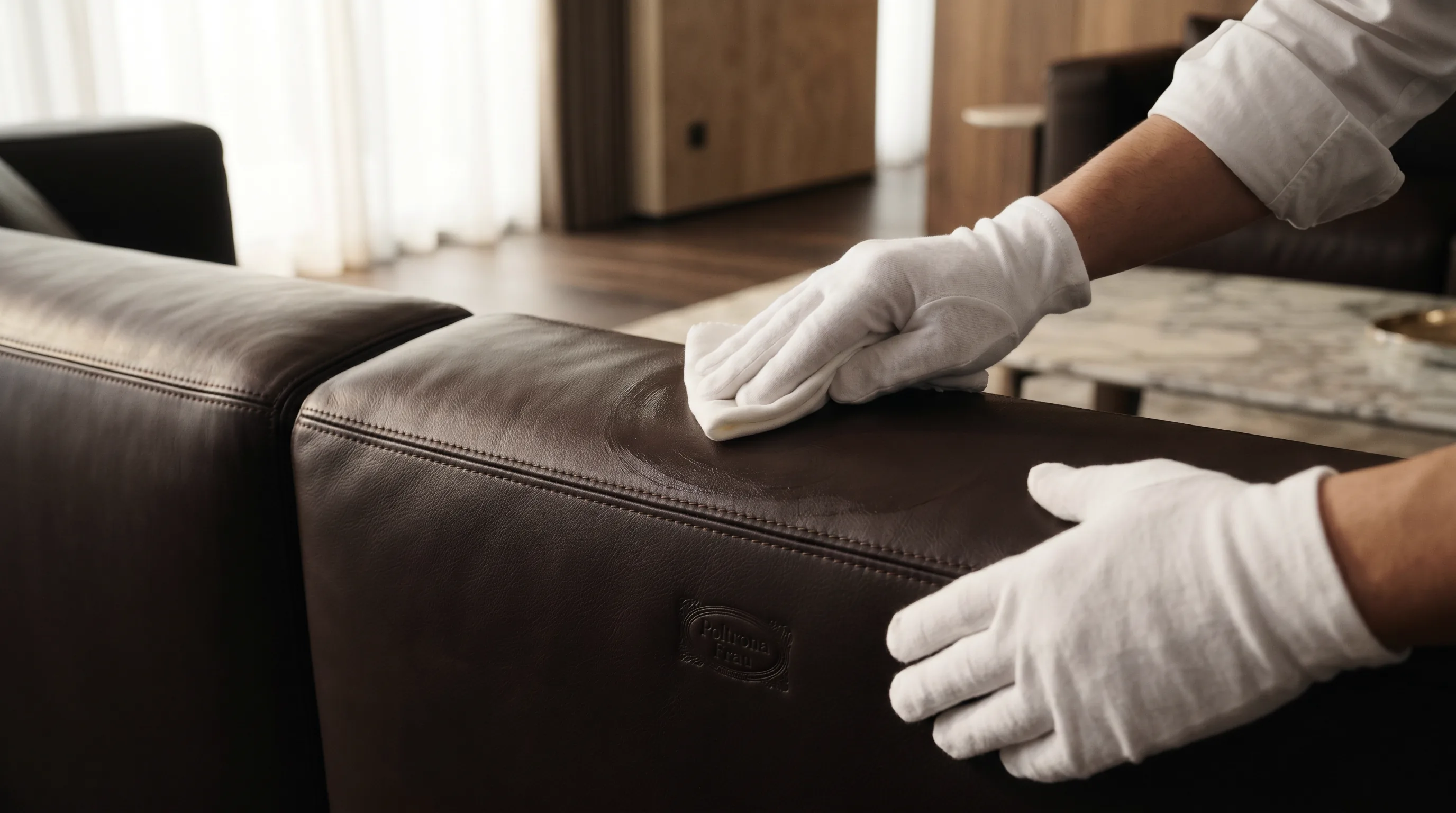
Once the leather is fully dry and at room temperature, apply a small bead of pH-neutral leather conditioner to a microfibre cloth. Buff into the worked area in small overlapping circles, then feather outward into the surrounding leather so there is no visible boundary. The alcohol stripped a fraction of the natural lipid layer; you are restoring it. Less is more - excess conditioner sits on the surface and attracts dust.
No visible ink line, even at oblique angles. The worked area matches the surrounding leather in colour and sheen within 24 hours. No dry, dull, or stiff patch where the swab passed.
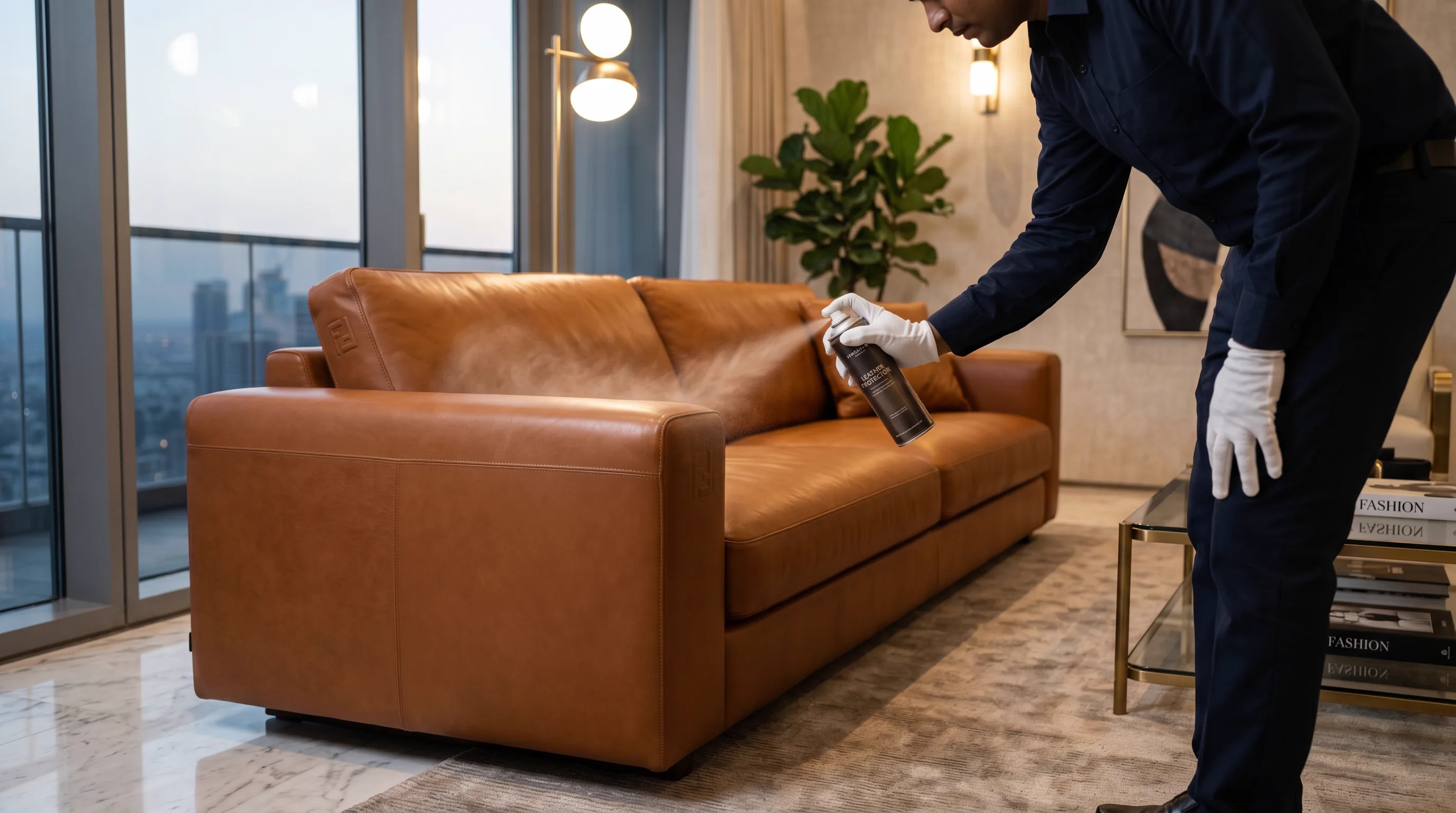
A faint shadow remains where the original line was - visible only in raking light. No halo, no pigment lift, no roughness. This is the realistic best case on aniline and most dried ink.
A pale halo, a fuzzy edge, or a dry rough patch where you swabbed. Any of these mean the protocol has reached its limit and is starting to lift pigment instead of ink. Stop, photograph it in daylight, and send it to us. This is fixable in the studio.
Ink removal does not need a toolkit. It needs the right six items in the right order. Almost everything here is in a Faridabad chemist or kirana shop within a kilometre.
The single active solvent in this protocol. Strong enough to break the dye-polymer bond, weak enough that a brief dab does not strip pigment. Stronger concentrations (90%+) flash too fast and over-strip.
Single-use, rotated constantly. The whole reason this protocol works is that you discard each swab the moment it picks up colour, never letting dye redeposit.
Used for blotting wet ink (Step 1) and the neutralising wipe (Step 4). White only - coloured cloths transfer dye onto already-wet leather.
Restores the lipid layer the alcohol stripped. The hardest item to source well in India - most "leather conditioners" sold cheaply are silicone polishes that yellow over time. Buy one trusted bottle and it lasts years.
For the Step 4 neutralising wipe. Distilled, not tap, only because tap-water minerals can leave faint scale on dark hides. On tan or beige leather, tap is fine.
Used only at Step 6 for buffing conditioner. Microfibre carries less lint than cotton and feathers conditioner more evenly into the surrounding leather.

Aniline forgives nothing. Pigmented forgives almost everything. Reading the leather before reaching for a cleaner is the one habit that has saved more sofas than any product on the shelf.
Photographed in studio - The PracticeThe same ballpoint mark behaves five different ways across the five common leather finishes. Find your row first. Your odds, and your next step, depend on it more than anything else on this page.
Pick a hidden patch (back of seat-back). Run all three tests, then read the matrix below for your type.
Place a single drop of water on the surface. Soaks in within 30 seconds = aniline. Beads and sits on top = pigmented or bicast. Slow darken with eventual absorb = semi-aniline.
Press a fingernail into the leather for two seconds, release. Mark stays then fades slowly = aniline / semi-aniline. No mark at all = pigmented or bicast (top-coat hides the indent).
Look across the surface at a low angle in daylight. Uneven natural grain, soft matte sheen = aniline. Plastic-like even sheen, perfectly uniform grain = bicast or heavily pigmented PU-leather.
Still unsure? WhatsApp a close-up photograph in daylight to +91 98915 96597 - identification is free.
No topcoat. Solvent-borne dye soaks straight into the corium within minutes. Halo bleeds 2-4 mm beyond the visible line. Alcohol patch-test usually fails - cleaner lifts pigment.
Blot only. Skip alcohol entirely. Photograph and send to the studio for dye-correction.
The single biggest predictor of ink-removal success is which row of this matrix your sofa sits in. Most premium furniture made in the last two decades is semi-aniline or pigmented - the two best-case rows. Older European pieces, Italian hides marketed as "natural" or "vintage," and most modern boutique brands lean aniline. A short read on the three finish classes separates them in under three minutes if you are unsure.
Bicast and bonded "leather" - common at price points below Rs 60,000 in India - look like leather but behave like plastic. The good news is ink rarely penetrates the polymer skin; the bad news is the skin itself peels in sheets if treated like real hide. The bicast / bonded explainer covers the failure modes you are trying to avoid.
There is a point on every stain where home methods stop helping and start harming. Recognising that line early is the most important call you make, and there is no shame in stopping.
Most home cleanings fail at the same place. People see partial progress, assume a little more pressure or a stronger solvent will finish the job, and cross from lifting ink into lifting pigment. The leather ends up looking worse than when they started. The vinegar-and-olive-oil "household trick" is the most common version of this story, a folk remedy that has cost more sofas than ink ever has.
If you have worked through all six steps and the mark is still visible after twenty-four hours of full-dry rest, you have reached the boundary. Past that point, the answer is dye-correction in a studio: colour matching the original hide, laying down a thin new pigment film, and re-finishing the area so it disappears into the surrounding panel. We do this every week. It is unglamorous but routine, and it is not a home job.
A pale halo around the original mark. That is pigment lift, not residual ink, and pushing harder will make it worse.
The leather feels rough, dry, or stiff where you worked, even after conditioning.
The ink line has spread into a fuzzy cloud instead of reducing. Solvent has carried dye outwards.
Cracks or fine lines start to show in the finish coat where you swabbed.
Colour transfers onto a fresh swab dampened with plain water. This means the topcoat is starting to fail.
The fix for an ink stain is almost always less aggressive than people think. By the time someone calls us, half the damage is from what they tried, not from the pen.
There is no need to commit to anything yet. Send a daylight photograph on WhatsApp and we will tell you honestly whether it is recoverable, whether home methods can still help, and what we would do if it came to the studio.
For the next two weeks, the spot you cleaned is slightly more delicate than the rest of the sofa. A little care now is what keeps a one-time stain from becoming a recurring one.
The alcohol that lifted the ink also took a small amount of the natural lipids out of the finish coat. For the next fourteen days, the worked area is a little more porous than the leather around it, meaning a second spill in the same spot will set faster, and deeper, than the first one did. Think of it as a freshly healed scab.
Routine conditioning every six to eight weeks with a pH-neutral product is the simplest insurance you can buy. The full furniture-care guide walks through frequency, product choice, and timing across Indian climate cycles. Condition four times a year and patch-test once before any new cleaning product touches a new spot, and your hide will outlast most of the people in the house.
The other half of prevention is unglamorous but cheap. Move the pen-cup off the side table. Cap the gel pens. Tell the kids that felt-tip is for paper, not "for everywhere." The single most effective ink-prevention measure on any sofa is a small tray on the side where pens collect during phone calls.
The worked area needs a second light condition exactly two weeks after the first. This re-seals the lipid layer fully.
Walk the sofa. Move pen-cups, remove uncapped pens from cushions, swap to retractable models that close when dropped.
For two weeks after ink removal, treat the worked area as the patch-test zone for any new cleaner, conditioner, or polish you bring home.
Four times a year, condition the whole sofa - not just stained spots. Even hydration prevents the patchy aging that makes future stains stand out.
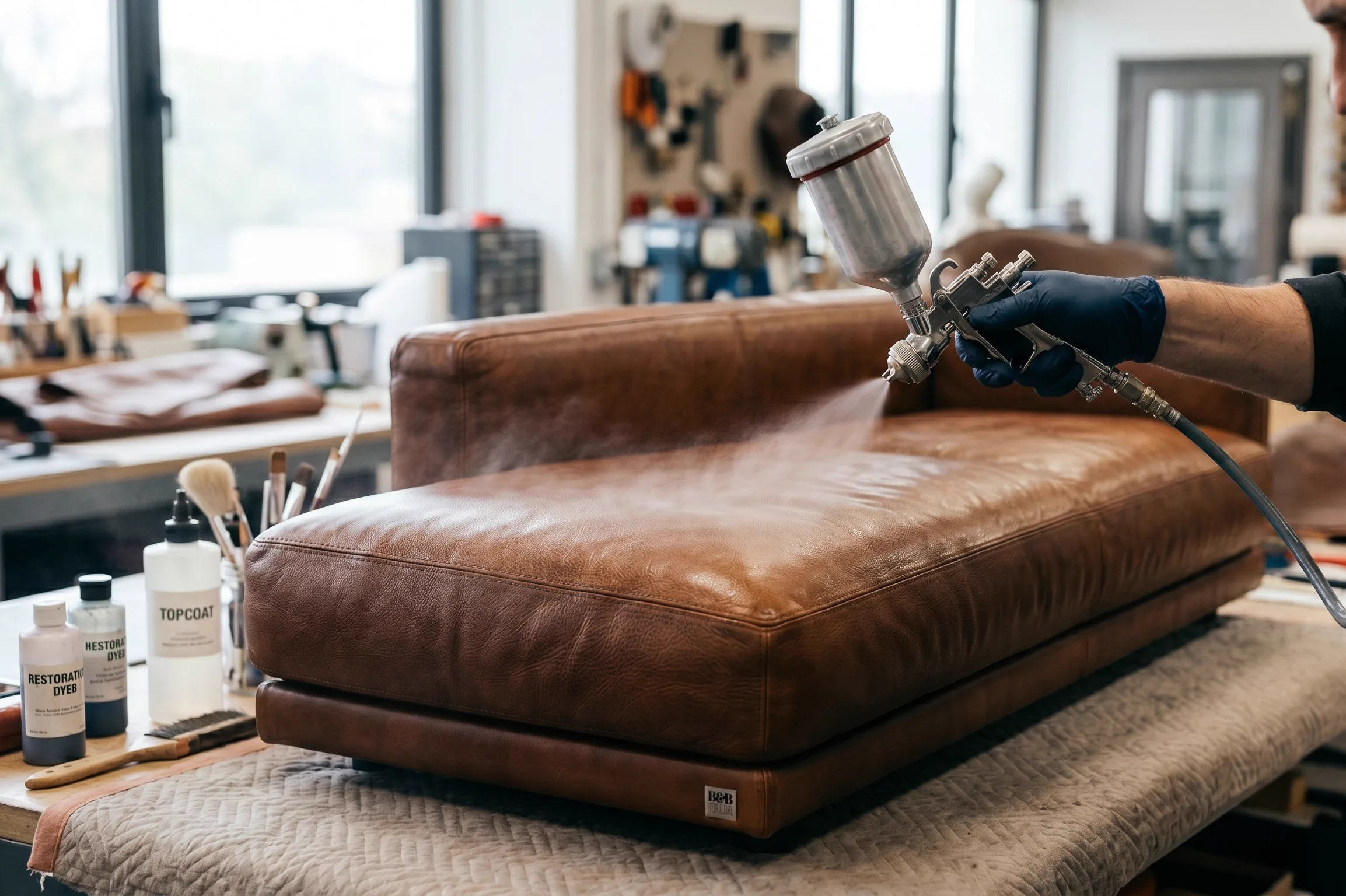
The mark you fix today fades into a decade of evenings. Routine conditioning, a cap on the gel pen, a soft tray for the pens that wander - small habits keep an heirloom an heirloom.
Photographed in client home - IndiaHand sanitiser is 60-70 percent isopropyl alcohol with added gel, perfume and glycerin. The alcohol will lift ink, but the gel residue dulls the finish and the perfume oils stain pigmented leather. Use plain 70 percent isopropyl on a cotton swab instead - it costs Rs 100 at any chemist and contains nothing else.
It works once or twice on cheap pigmented leather and ruins everything else. Modern hairsprays contain plasticisers and fragrances that bond into the topcoat and leave a sticky halo that attracts dust permanently. Skip it - the cost-benefit is bad on any leather you care about.
Permanent marker uses a solvent dye that bonds with the topcoat itself, not just the surface. Fresh marks (under one hour) can sometimes be lifted with the isopropyl protocol on this page. Anything older usually requires colour matching and pigment touch-up - photograph it and stop before you spread the bleed.
Rarely fully, and never quickly. Aniline leather has no protective topcoat, so dye soaks straight into the corium within minutes. Fresh ink (under five minutes) can sometimes be drawn out with a poultice. Set ink almost always requires professional dye correction.
Acetone strips leather pigment and finish coats on contact. It will lift the ink and a circle of colour around it, leaving a bleached patch worse than the original stain. Never use acetone, nail polish remover, paint thinner or petrol on a leather sofa.
No. Baby wipes contain preservatives and surfactants that lift surface pigment along with the ink, leaving a paler smear that grows every time you wipe. We have rebuilt dozens of sofas where the wipe damage was worse than the stain.
Stains that share a chemistry family, a tool, or a leather-risk profile with ink. Reach for these next.
PLATE I
The lipid sibling. Same outside-in discipline, but a poultice replaces the swab.
read entry →
PLATE III
Tannin-bound, not solvent-bound. Water during the first 30 seconds is your friend, unlike here.
read entry →
PLATE VIII
Wax-and-pigment hybrid. Same swab discipline, but cooled-down rather than alcohol-lifted.
read entry →
PLATE XII
Lawsone pigments behave like permanent marker - and the protocol borrows from this page.
read entry →
PLATE V
Tannin-pigment combo. Lower-stakes, but the early action window is just as tight.
read entry →
PLATE IV
Protein-bound, opposite of solvent. Cold water only - a useful reminder that family decides everything.
read entry →If the steps stalled, if a halo appeared, or if the ink was already there when the sofa came home, send us a daylight photograph on WhatsApp. We will tell you honestly whether it is recoverable, what we would do, and roughly what it would cost. No commitment, no pressure. Faridabad studio, Pan-India by photograph.
Tell us about your sofa. A leather specialist will respond the same day - no obligation.