Before / AfterRecolour
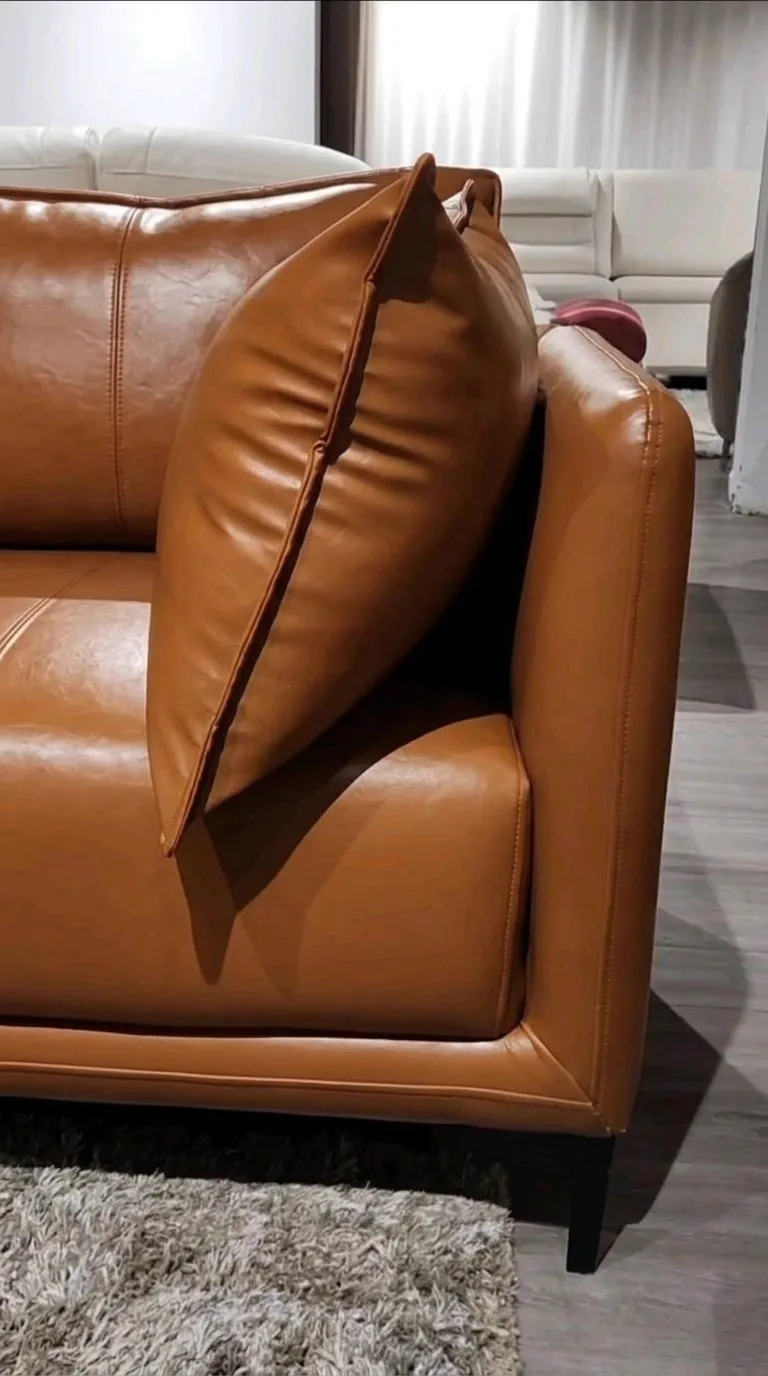
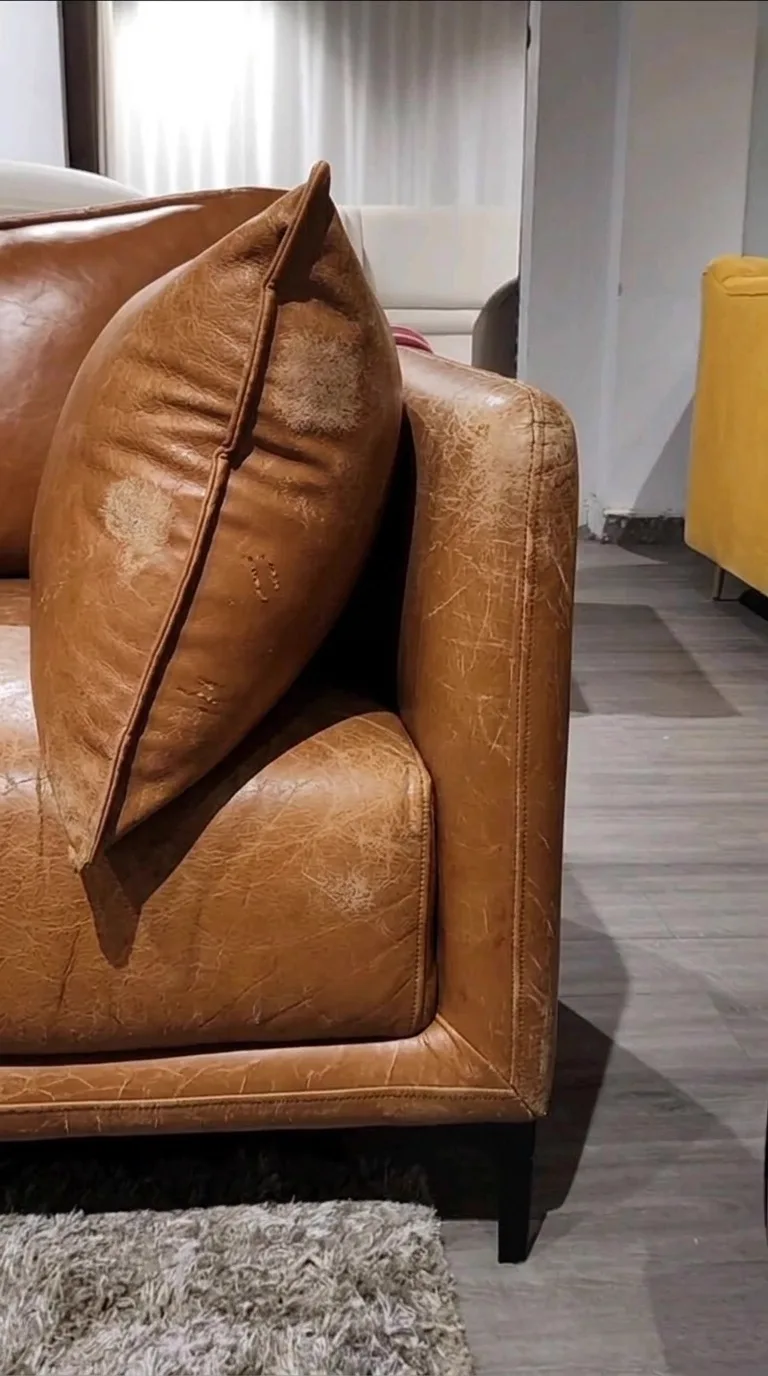
A conservator's protocol for animal-fat grease, lifted clean - absorb first, never rub it deeper into the grain.
Explore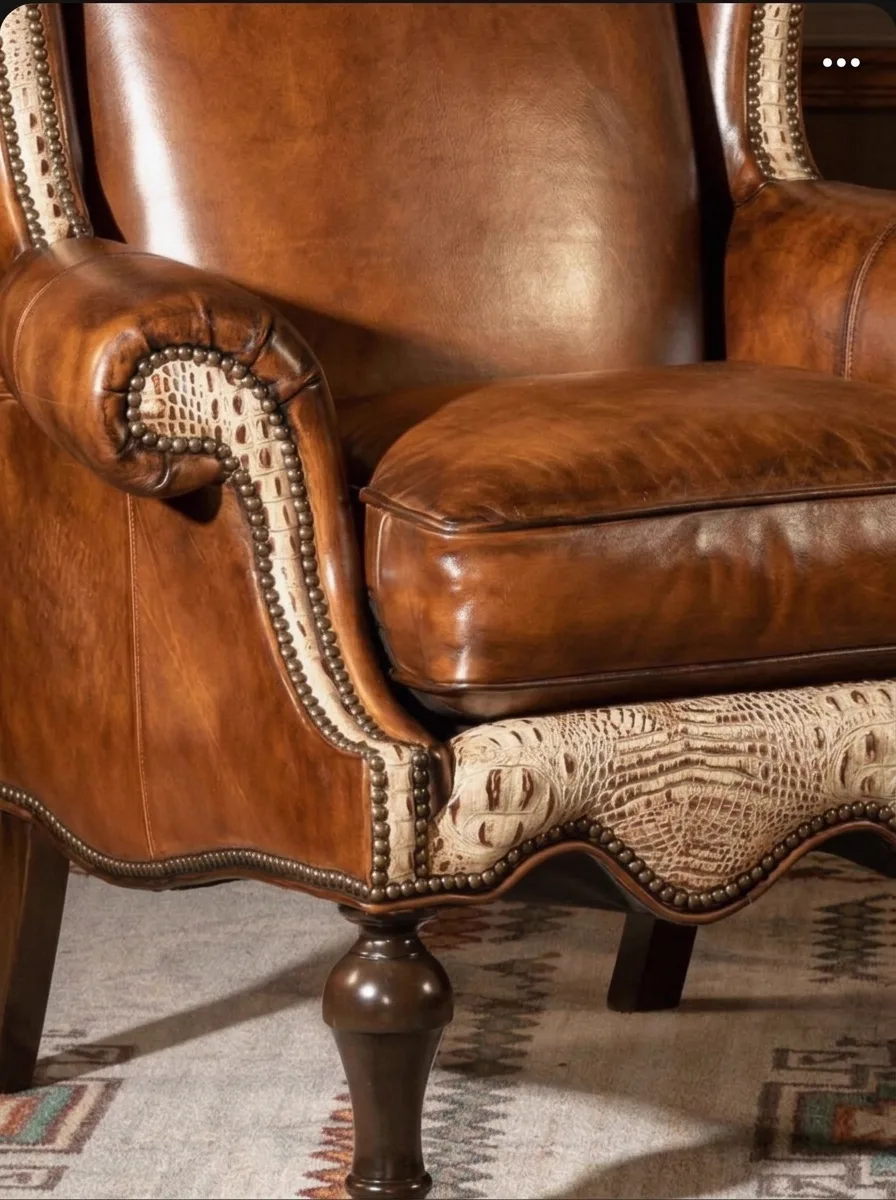
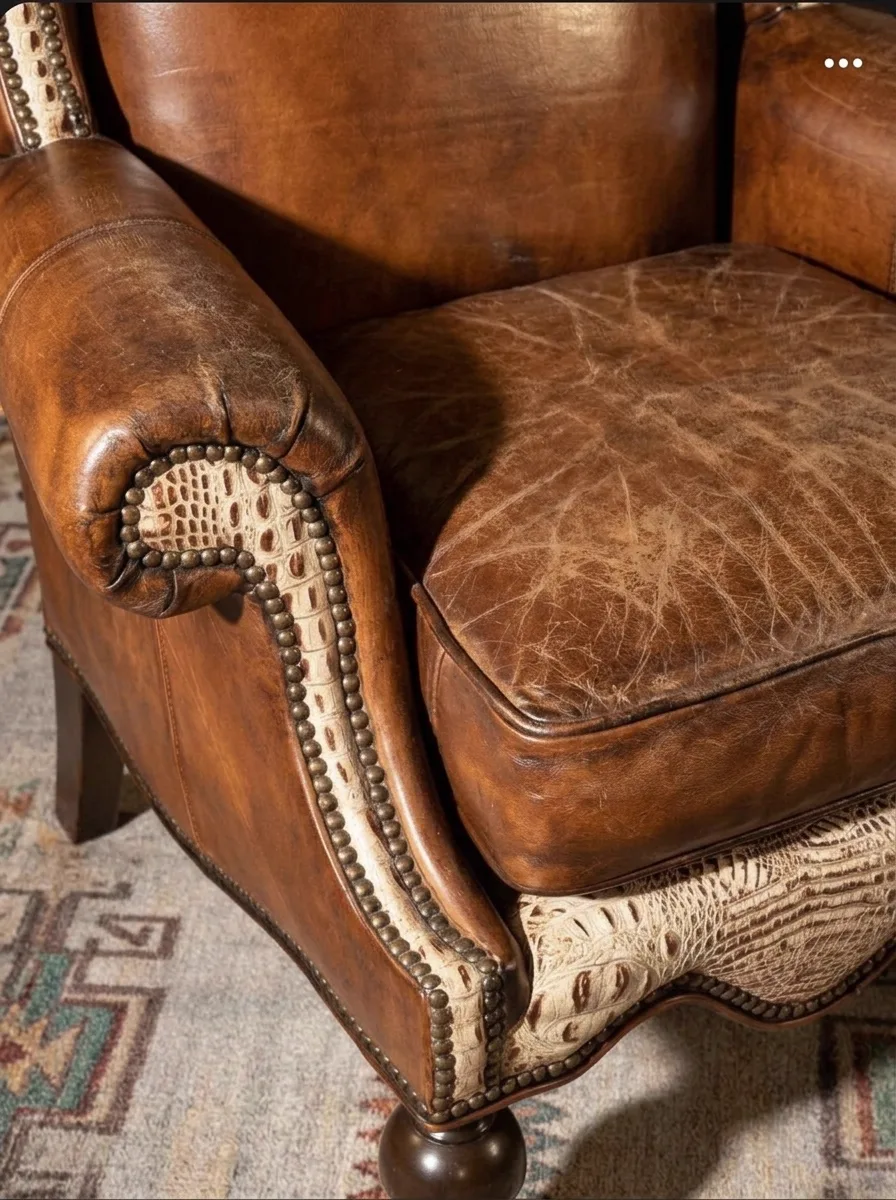
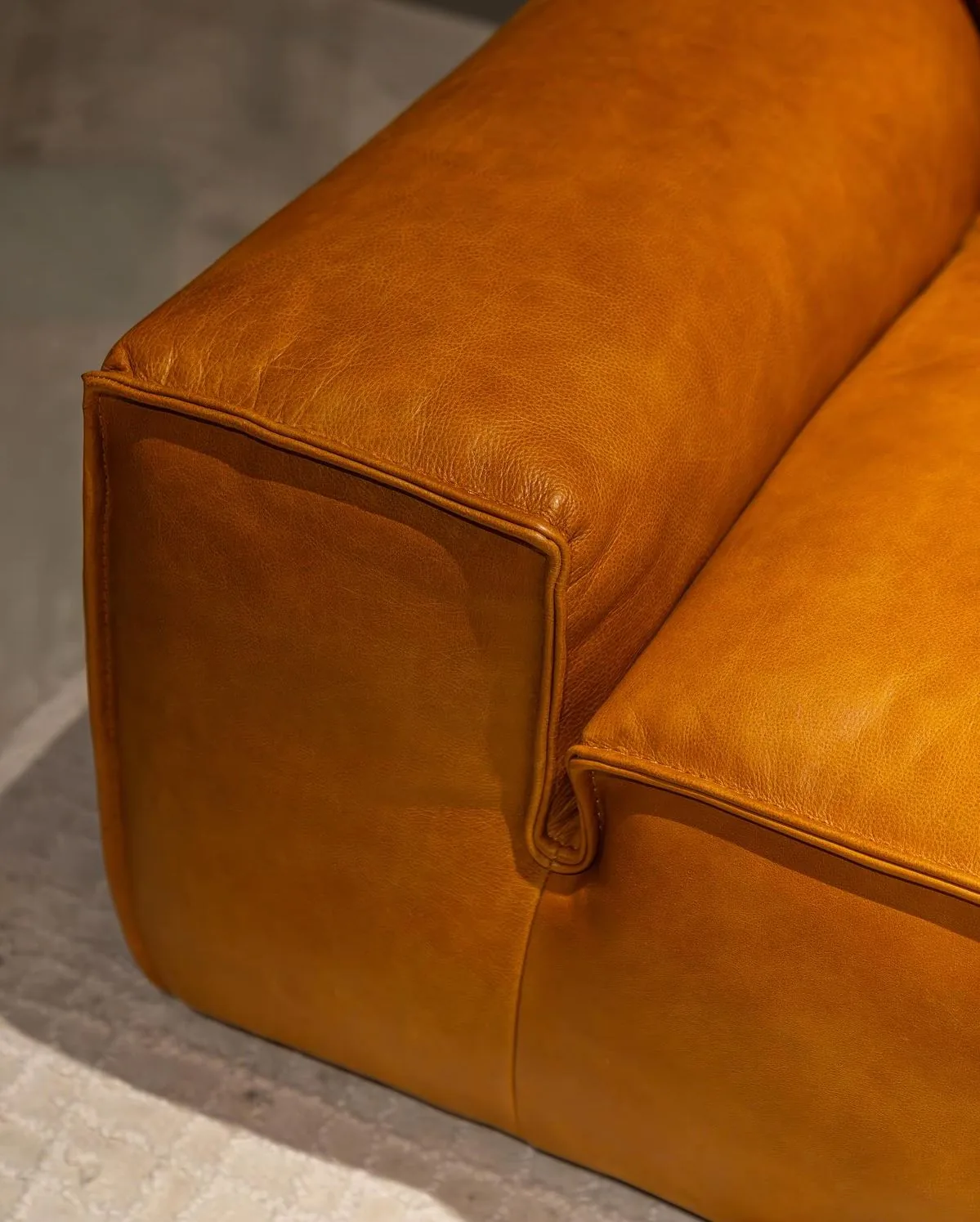
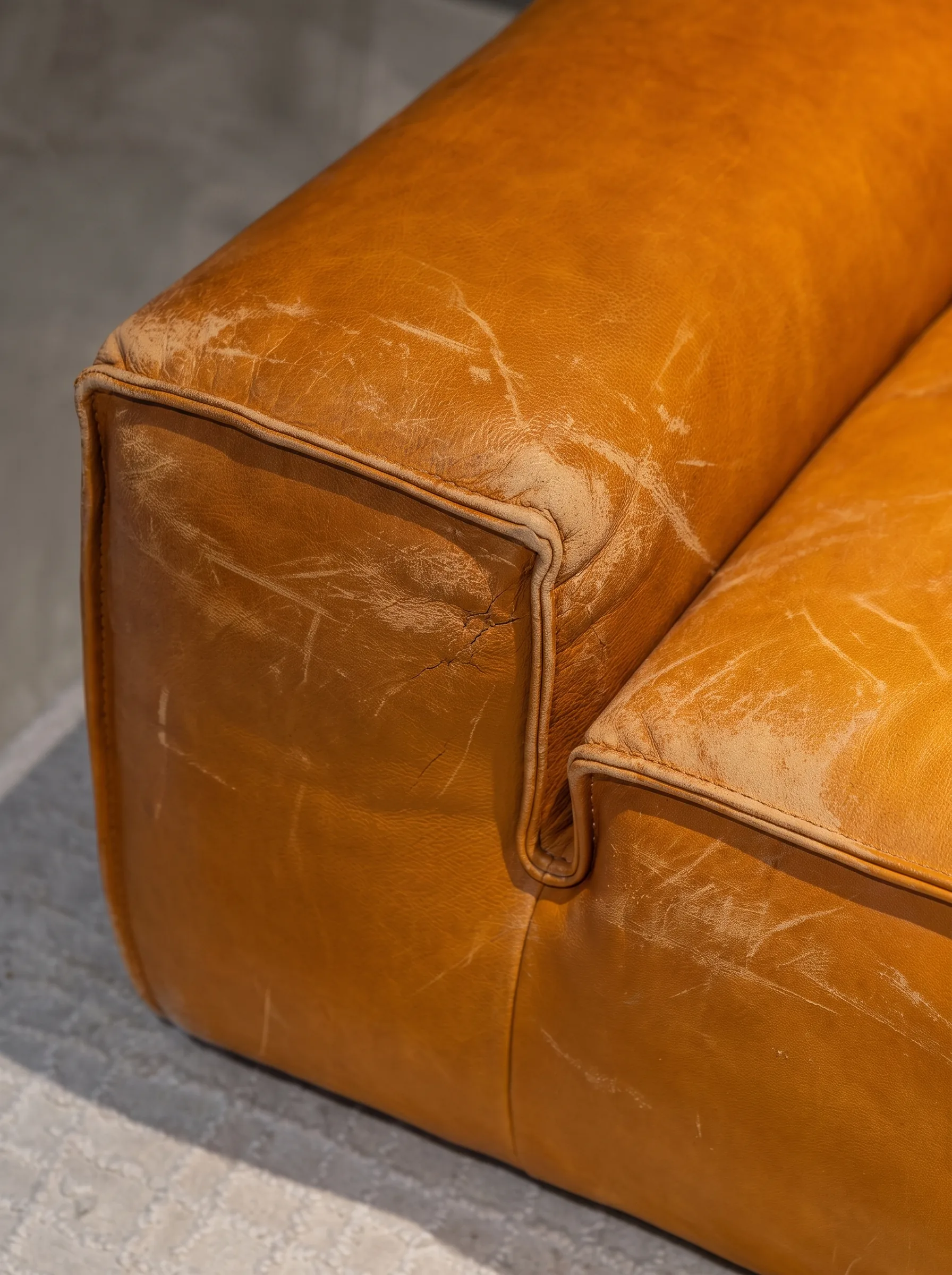
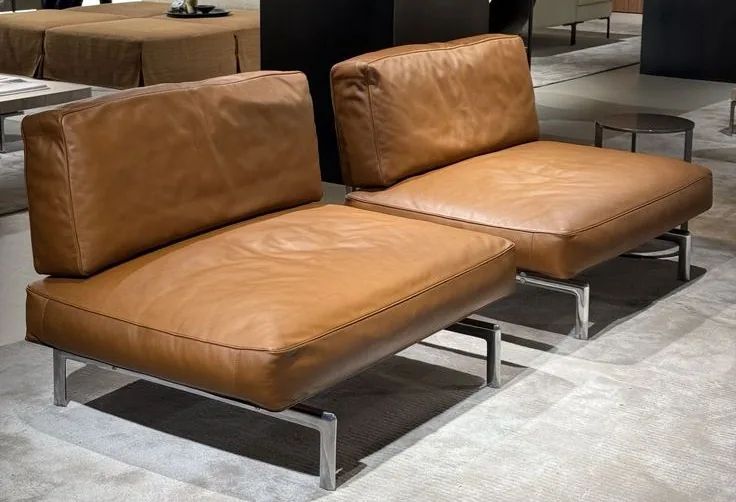
The honest verdict before you start - how fast to move, what is at risk, and how far it really reverses.
Book a Damage Check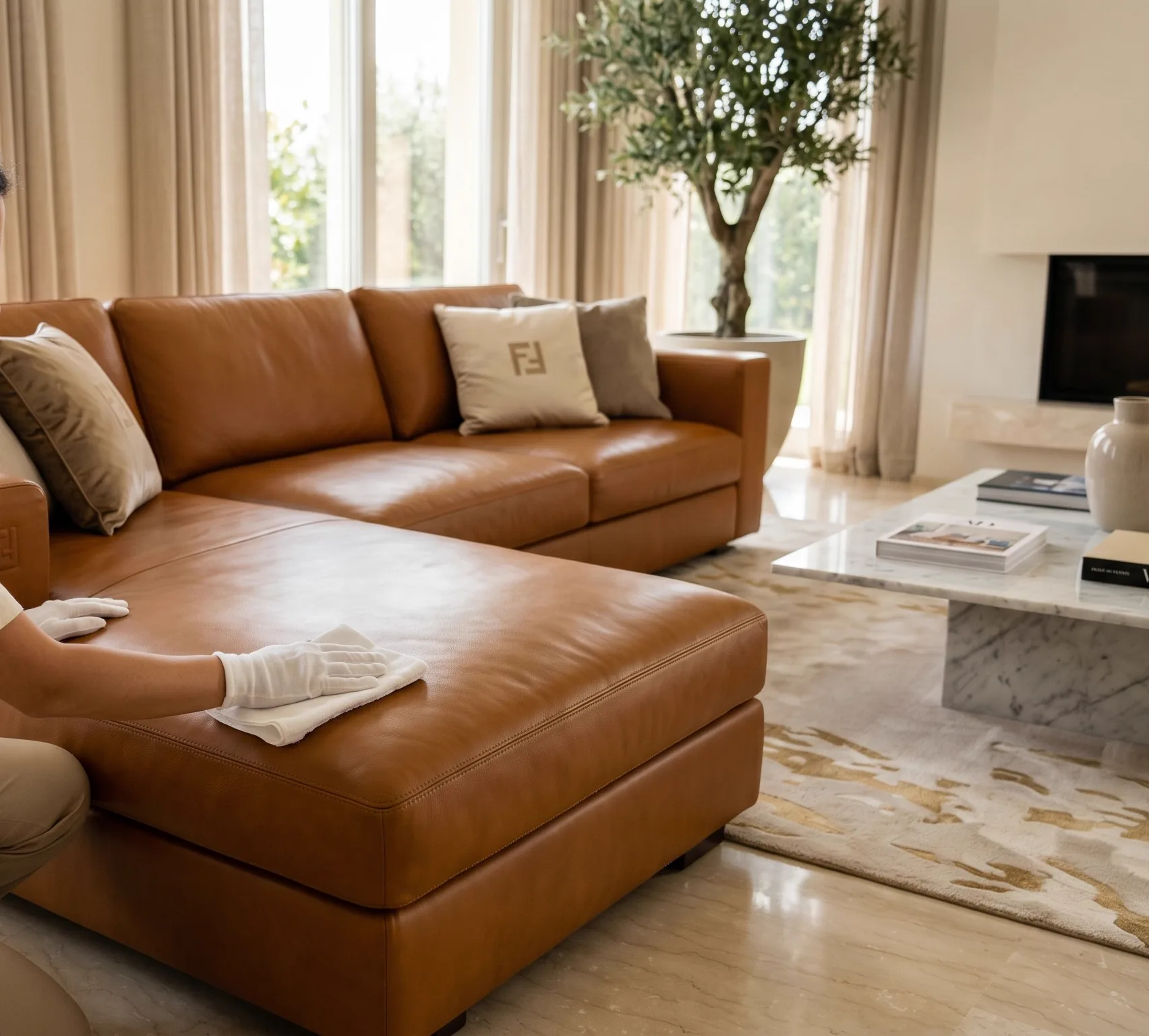 Time-Sensitive
Pure ghee soaks faster than mustard oil. The first thirty minutes decide most of the result.
 Leathers At Risk
Pigmented finishes resist. Aniline drinks the fat right into the corium - a deep soak is not always reversible.
 Difficulty
Two phases: lift the fat with a dry absorber, then chase the trace with a gentle surfactant.
 Reversibility
Fresh splashes lift well. Once oxidation darkens the patch over weeks, the stain becomes tonal - colour blending, not cleaning.
Ghee is fat, so the first move is dry, never wet. Lift it with a cornstarch poultice while it is fresh; a wet wipe only drives the grease into the corium where it turns tonal.
More than half the ghee damage on the studio bench began with a frantic wet wipe in the first thirty seconds. Cornstarch, twenty quiet minutes, no panic - and most splashes never reach our bench at all.
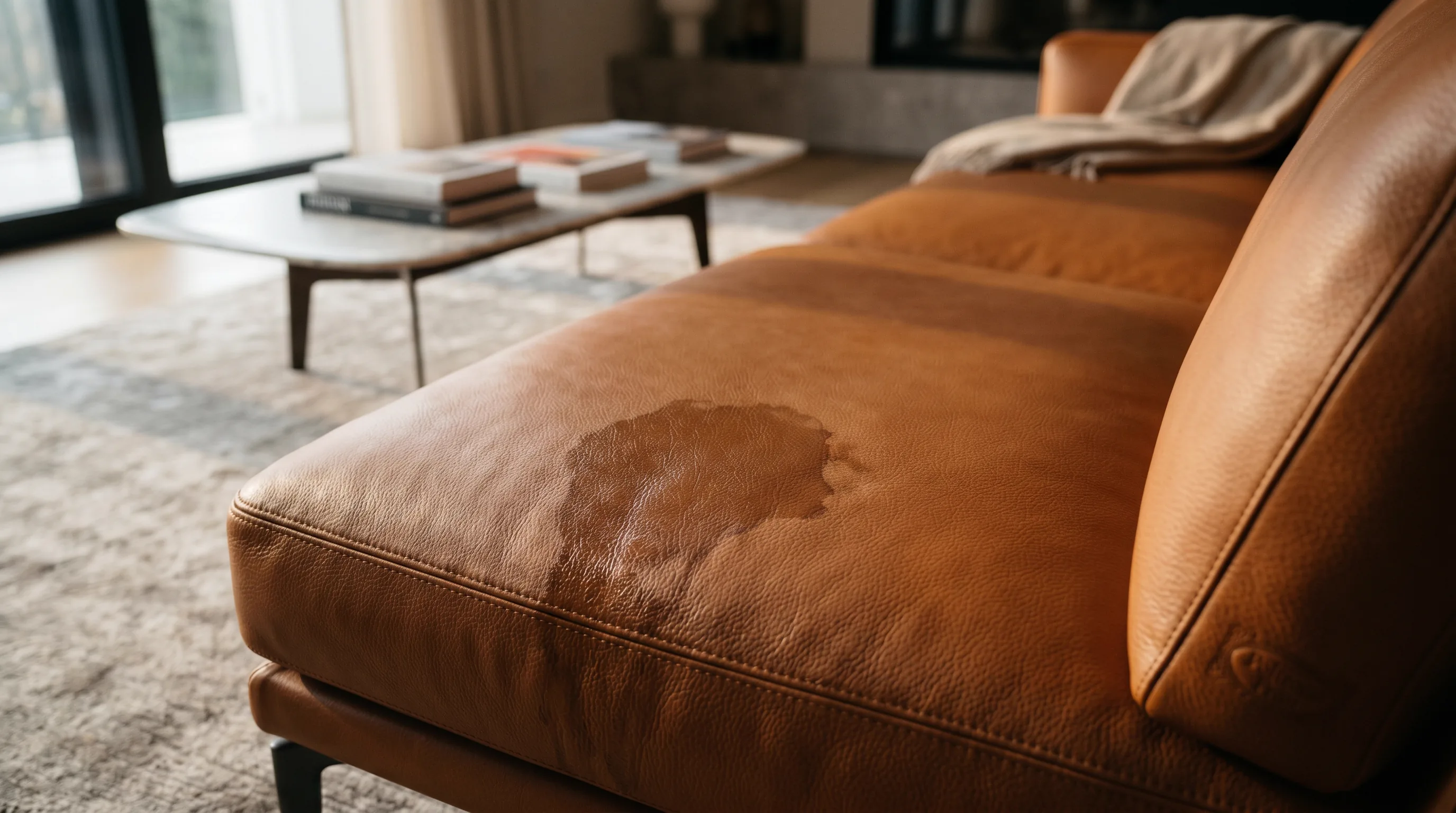
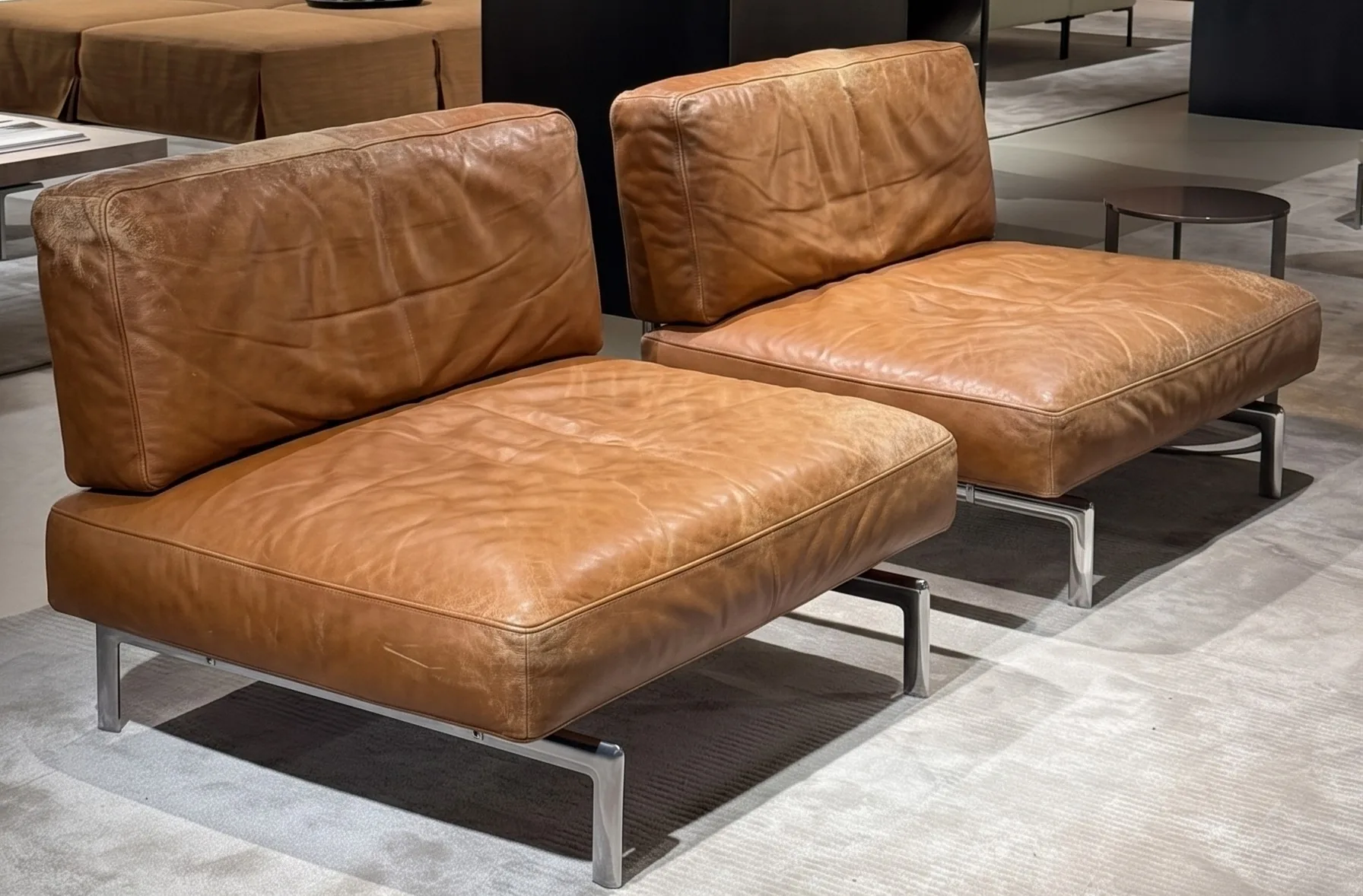
Photographed in studio - FaridabadA ghee or butter splash does not stain in the way wine or ink does. There is no foreign pigment fighting the leather. The fat itself, sitting inside the grain, changes how light bounces off the surface - and how much later UV will darken that patch.
A darker, almost wet-looking centre with a softer halo around it. The halo is the most useful sign - vegetable oil tends to leave a single uniform patch.
In flat indoor light the patch looks dull. Tilt your head, catch a low-angle window beam - it suddenly turns shiny. That is a fat film inside the grain.
Dairy butter carries milk solids - protein and a touch of water. After 24 to 48 hours these can leave a chalky outline at the edge of the fat patch.
Pure ghee oxidises slowly. Butter milk-solids rancidify - a faint sour or cheesy smell within seven to ten days is the giveaway that you missed a butter splash, not ghee.
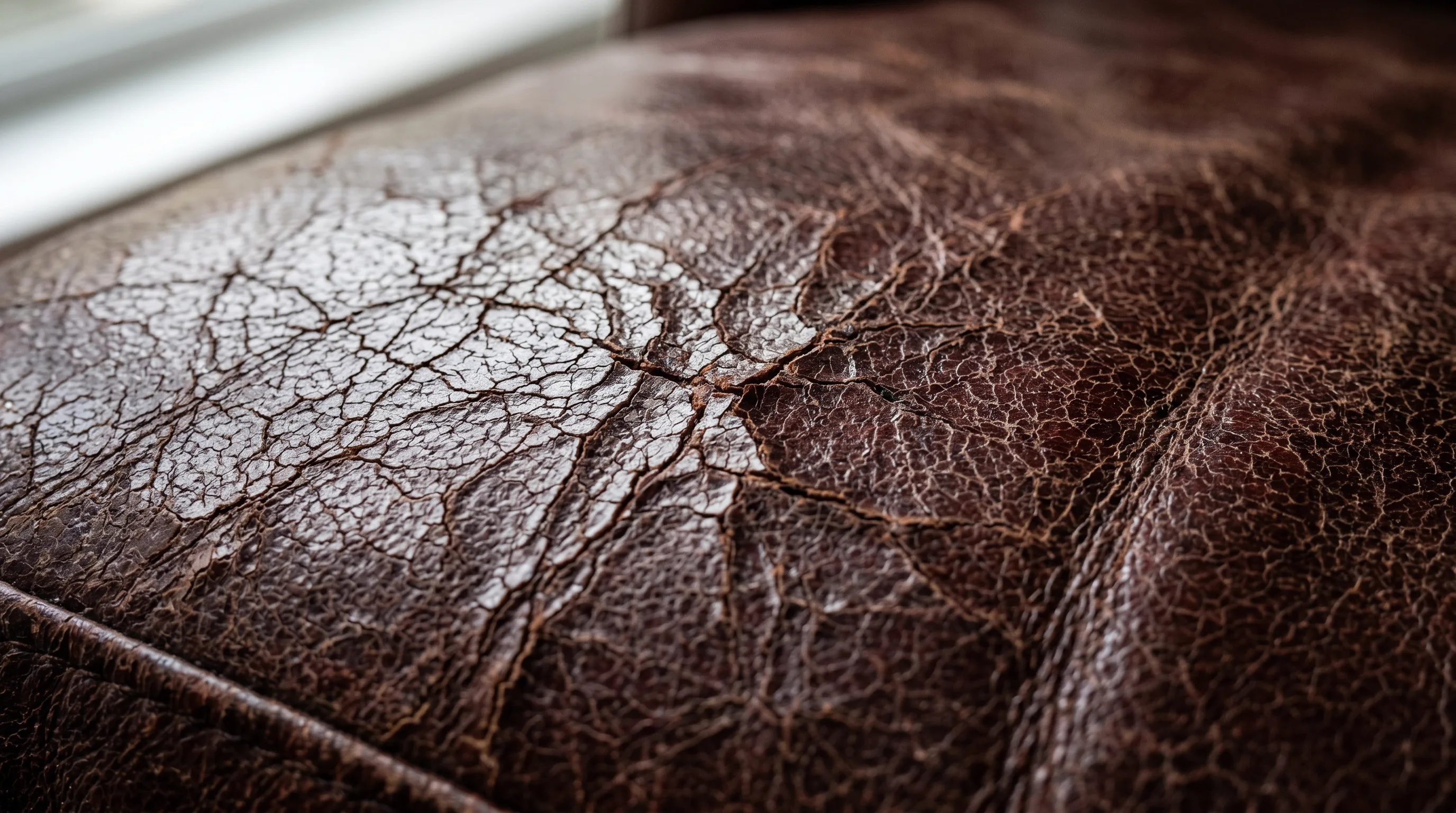
Plant oils have longer fatty-acid chains and stay liquid - one large soft halo, no two-tone centre, no rancidity ring.
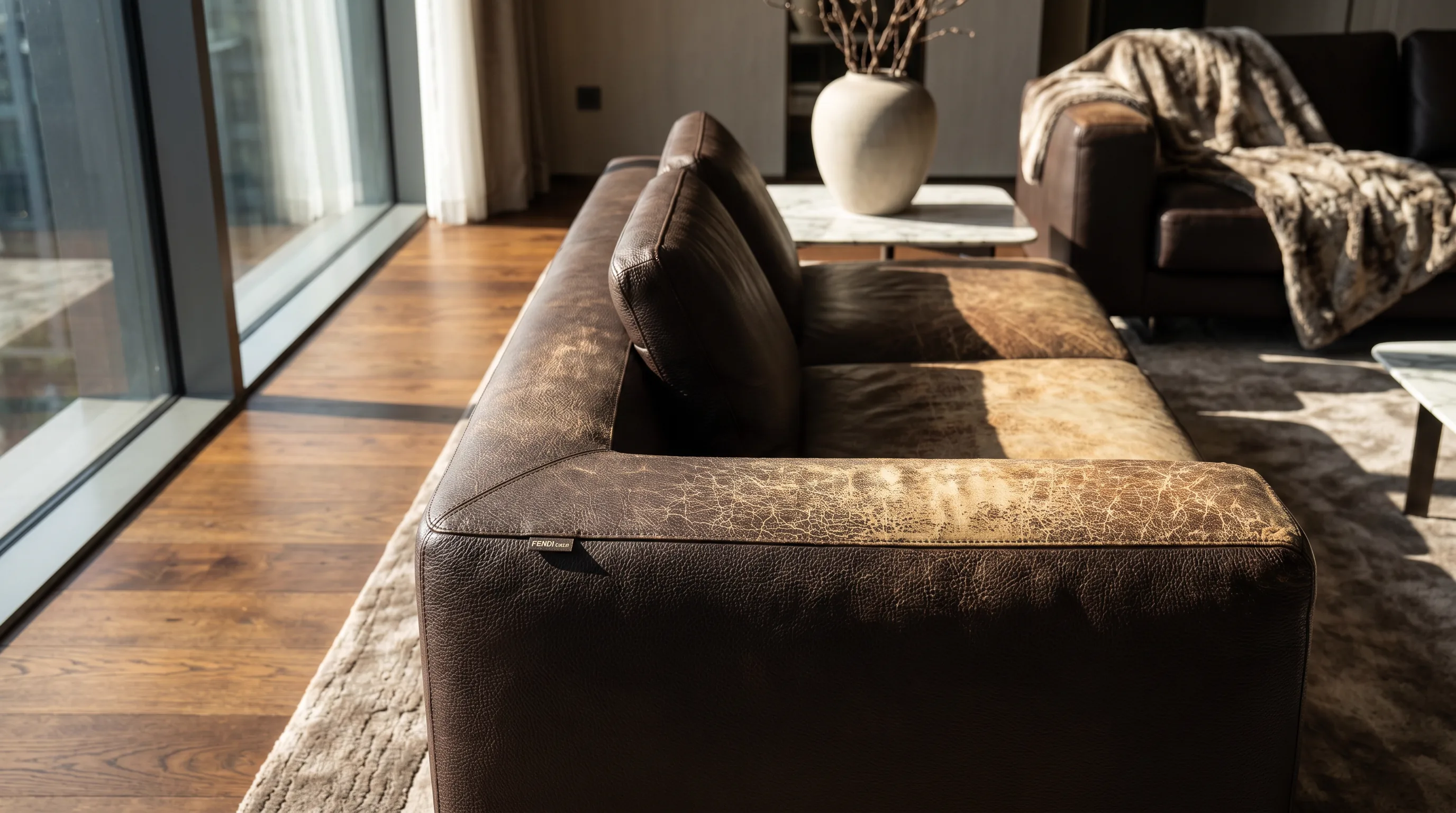
Coconut, mustard or amla hair oil leaves a heavier, slow-creeping mark high on the seat-back where heads rest. Different geometry, different oil chemistry.
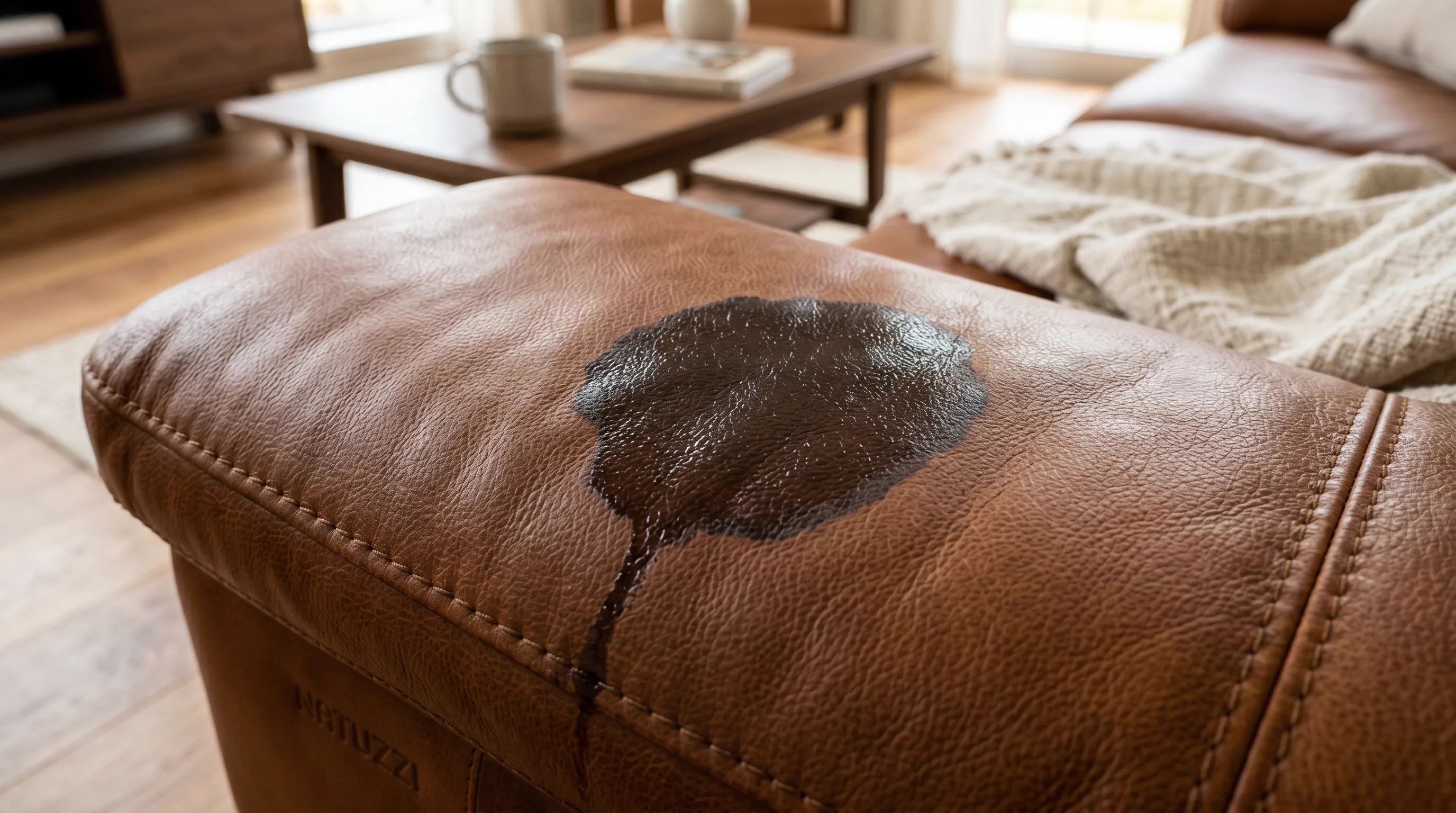
A tomato or curry splash is a multi-stain - fat, pigment and protein together. Treat the fat first using this protocol, then revisit any orange-red shadow afterwards.
Ghee is roughly ninety-nine percent triglyceride - three fatty-acid chains hung off a glycerol backbone. The clarification step removes the milk solids and water that ordinary butter carries, leaving a fat that flows into the grain almost like a varnish thinner.
A triglyceride is just a small molecule of glycerol with three fatty-acid tails. In butter, those tails include short-chain ones - butyric and capric acids - that mustard or sunflower oil simply do not contain. Short chains are smaller, more mobile, and pass between leather grain fibres faster than the long chains in vegetable oil. That is the technical reason a ghee splash looks darker, sooner, than a similar splash of refined cooking oil.
Butter carries water and milk-solid protein along with the fat. The water flashes off in minutes. The protein dries into a faint chalky ring that sits at the edge of the fat halo - and slowly rancidifies (the technical word for fats and proteins oxidising and going sour). This is why an old butter splash starts to smell faintly cheesy after a week, while an old ghee splash mostly just darkens.
Saponification is the chemistry word for what happens when an alkaline cleaner meets a fat: the fat is partly converted into a soap-like residue. That sounds helpful, but on leather it is not - alkaline saponification also disturbs the hide's pH balance and can leave a dull bleached patch where the colour-coat sat. Our protocol uses a near-neutral surfactant rinse, never a strong alkali, and never the home dish-soap-and-baking-soda combo people read about online. The reasoning is the same as in the warning on vinegar and olive-oil leather damage: pH-extreme home mixes lift the stain visually but injure the finish underneath.

Butterfat carries shorter fatty-acid tails than vegetable oil. They slip between the corium fibres in minutes. The technique is not chemistry - it is patience.
Site visit - South DelhiSlow your hands down. Most ghee damage on the studio bench started with a frantic wet wipe in the first thirty seconds. Dry-lift first, then surfactant, never the other way round.
If a piece of solid butter or a chunk of barfi is sitting on the seat, lift it off with the edge of a spoon or a folded card. Do not push, do not smear sideways. Anything still warm and liquid - blot once with a clean white cotton cloth pressed straight down. Lift the cloth, do not drag.
Heap a small mountain of cornstarch directly on the patch - a tablespoon for a coin-sized splash, more if larger. Do not rub it in. Let it sit. The starch is a dry absorber - it pulls the mobile fat upward out of the grain by capillary action. If no cornstarch, talcum powder or fine atta works as a backup.
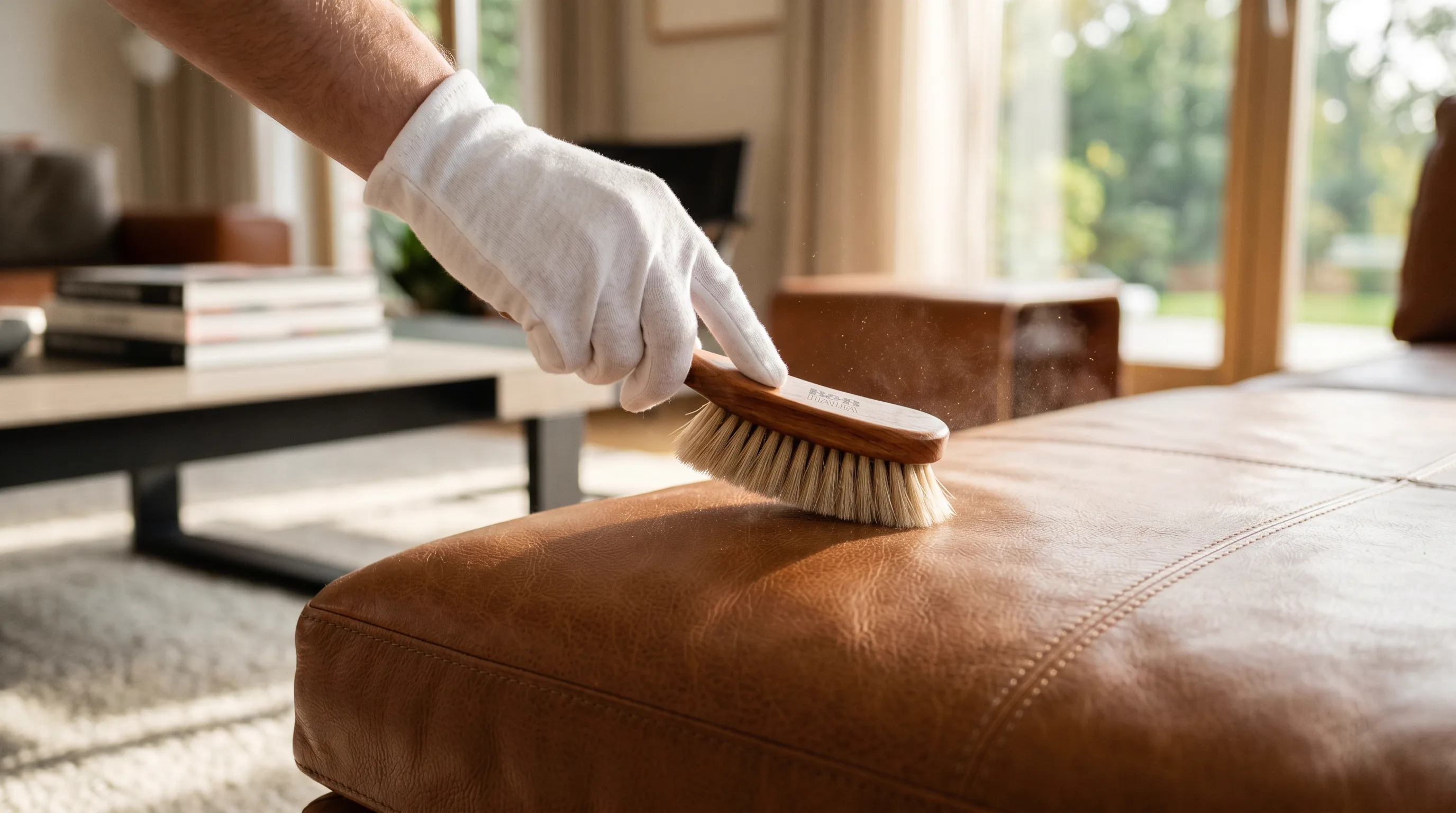
Most of the fat that the absorber will ever take has now moved upward. Brush the powder off gently with a soft dry brush or a folded tissue. If the powder is yellowed or oily, repeat with a fresh heap - sometimes two passes are needed for ghee, three for butter.
Now - and only now - prepare a tiny amount of mild dish soap (a pea-sized drop in 100 ml distilled water). Try it first on a hidden patch behind the cushion. If the test patch does not dull or lift colour after ten minutes, you can move to the full Removal Protocol below. If it does, stop and photograph.
These cause permanent damage. The stain may lift; the leather will not recover.
Conservator-grade first response. Buys you the time to do this properly.
You should be in shoulders-relaxed, deep-breath mode for this. Each step is short. The waiting between them is what does the work.
Fresh - Splash is still warm or just cooled, glossy, sits on the surface. Cornstarch poultice plus surfactant lifts most of it. Skip Step 4 if Step 3 is clean.
Dried - Three days or more. The patch has darkened, may smell faintly sour (butter) or simply richer (ghee). DIY can lighten the halo but not fully erase the tonal shift. Step 5 and Step 6 become essential.
Set - Hours to a day old. Fat has cooled into the grain, surface is matte, no smell yet. Use besan or atta as the absorber - protein binds the lipid better than starch on set ghee. Plan two passes.
Anything still solid - a curl of butter, a bit of laddu, a flake of barfi - comes off with the edge of a spoon held at a low angle. Slide under, lift away. Do not drag the spoon flat across the leather; you will smear the fat sideways and triple the affected area.
Heap a generous tablespoon of cornstarch directly onto the splash. The mound should fully cover the halo with extra around the edges. Do not press, do not rub - the starch works by capillary attraction, not by mechanical contact. Leave undisturbed for twenty minutes. If the splash is set or older, switch to fine besan (chickpea flour) or atta - the protein content binds cooled fat better than pure starch.
After twenty minutes, gently brush the cornstarch off with a soft dry brush or a folded tissue - do not vacuum aggressively, you will pull the absorbed fat back into the grain. Step back two metres and look at the patch in daylight at a low angle. If the halo is gone and the centre matches the surrounding hide, you may stop here. Most fresh ghee splashes finish at this step.
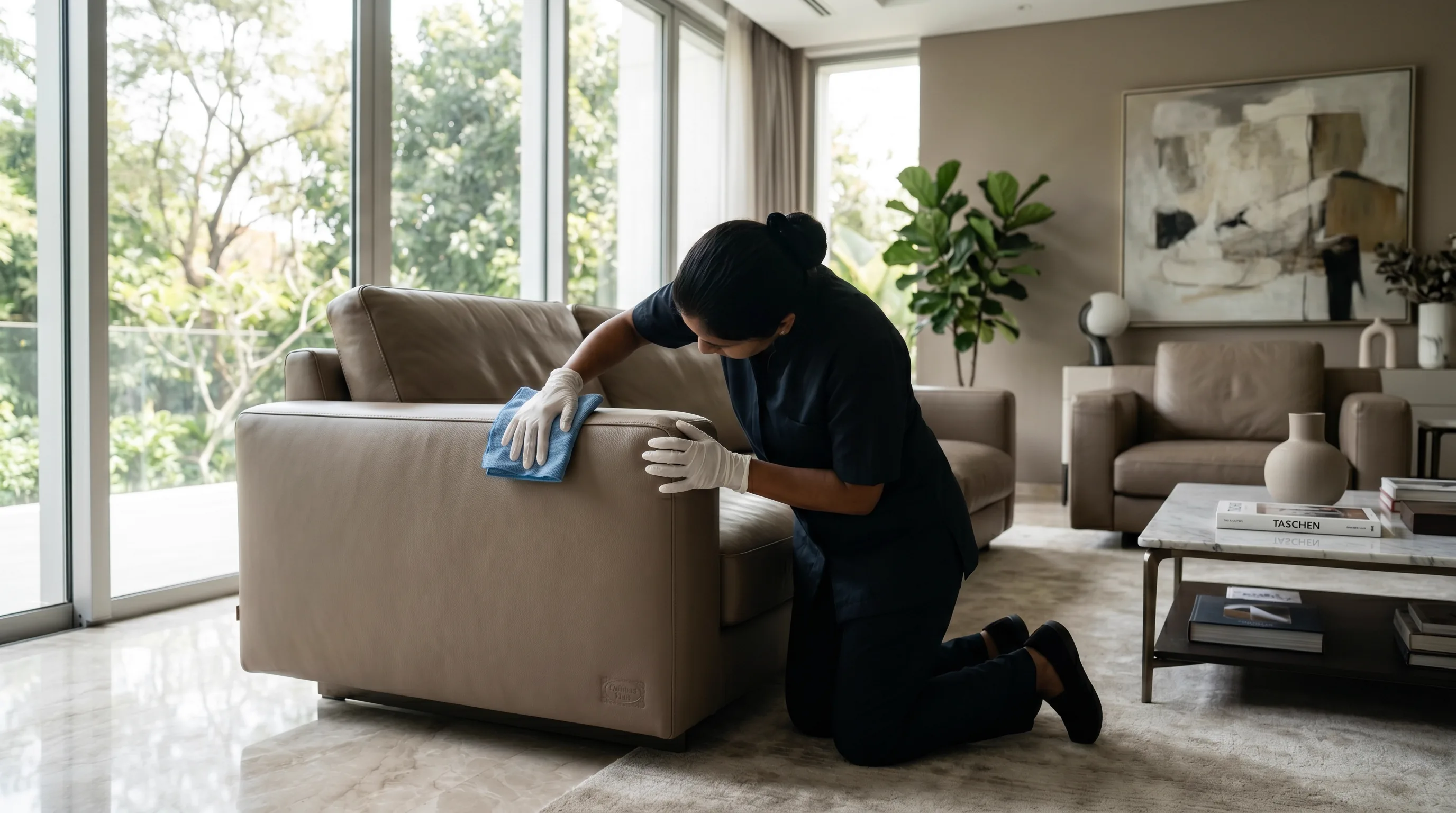
Mix one pea-sized drop of mild dishwashing liquid (Vim, Pril, or any non-coloured non-citrus household dish soap) into 100 ml of distilled water - the proportion matters, more is not better. Lightly damp a clean white cotton cloth with the solution. Wring until almost dry. Wipe in small overlapping circles, working outside-in. Do this once. Do not scrub, do not soak. Then wipe with a second cloth dampened with plain distilled water to lift any soap residue.
For week-old butter splashes only - the kind that have started to smell sour - dampen a cotton bud (ear-bud) with seventy-percent isopropyl alcohol from any chemist. Roll the bud lightly across the smell-source for ten seconds. Do not press, do not soak. The alcohol breaks down the rancid milk-solid layer without attacking the fat film below. Skip this step entirely for fresh ghee or fresh butter. Skip it on aniline if your patch test in Step 4 dulled the finish.
Let the panel air-dry for twenty minutes. Then apply a small amount of pH-neutral leather conditioner to a clean cloth, wipe across the treated area and a few centimetres beyond it. The conditioner replaces the small amount of natural fat the dry absorber and surfactant pulled out, and re-balances the surface waxes so the cleaned patch reads at the same sheen as its neighbour. Do not sit on the cushion for at least four hours. Re-assess in raking daylight at twenty-four hours.
The patch reads at the same tone as the surrounding hide in raking daylight. No greasy sheen, no dark halo, no sour smell. The grain pattern is unbroken.
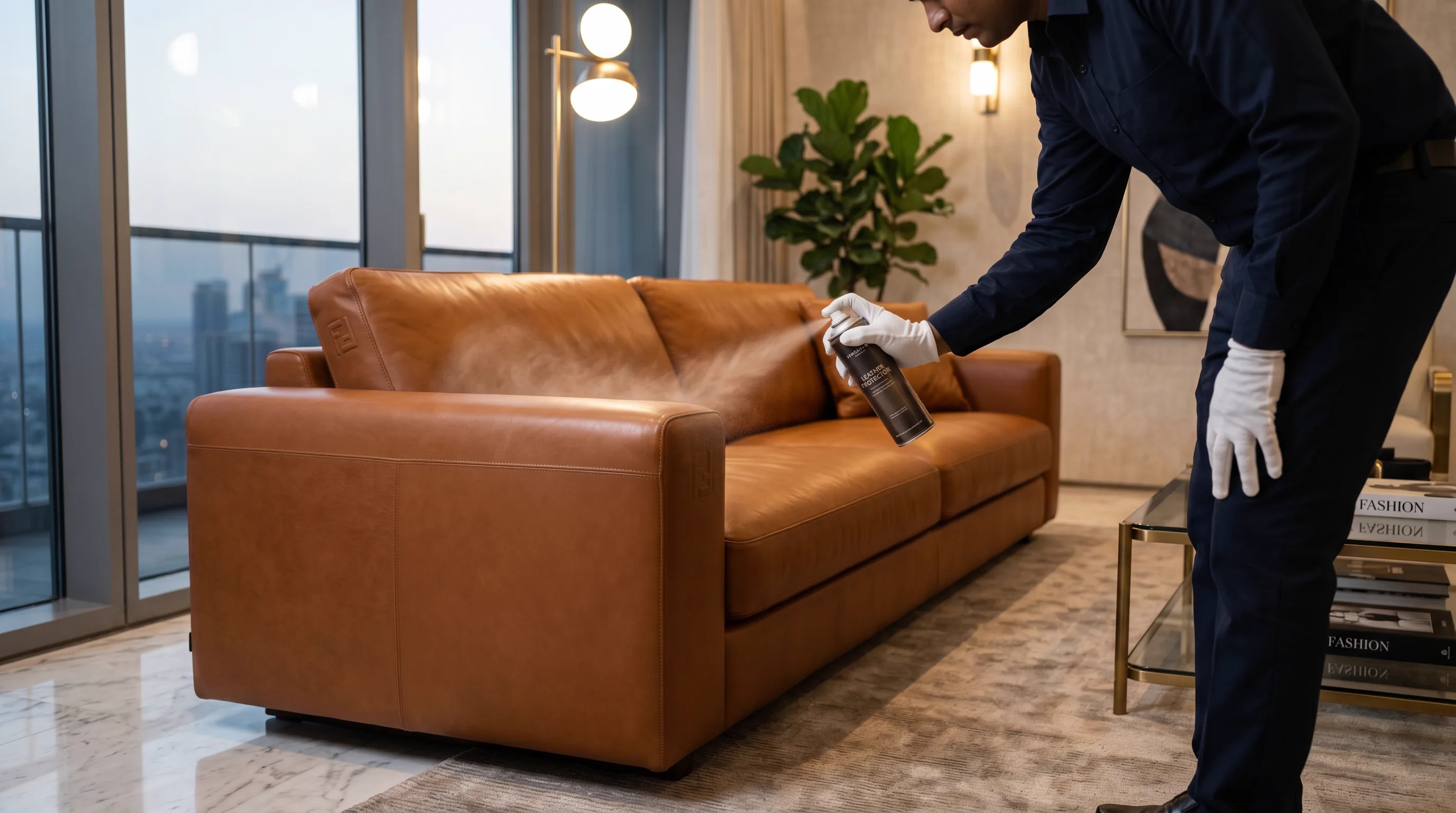
A faint memory remains - visible only at a low angle in strong light. Even tone returns within two to four weeks as the conditioner re-balances the surface oils.
Spreading dark ring, sour rancid smell after a week, sticky surface that re-attracts dust, or a dull bleached patch. The hide has either oxidised or been over-cleaned. Photograph and pause.
You will not need a leather-specialist shopping list. Six items, most of which are already in your kitchen or bathroom shelf.
Dry absorber. Pulls mobile fat upward out of the grain through capillary action, with no chemistry attached.
Lifting fluid splashes, applying surfactant, plain-water rinse pass. Always white - no dye transfer risk.
Surfactant pass. One pea-sized drop in 100 ml distilled water - never more, never neat.
Mixing the surfactant solution and the rinse cloth. Indian tap water carries minerals that can leave a chalky shadow on aniline.
Spot treatment for week-old rancid butter only. Cotton bud, ten seconds, no scrubbing.
Restores surface waxes after cleaning so the treated patch matches the neighbouring hide in sheen.

The same teaspoon of ghee writes a different story on each leather class. Reading the finish before reaching for any cloth is the conservator habit that saves the hide.
Studio bench - FaridabadFinish is the variable. A pigmented finish is a thin plastic film over the hide; aniline has no film at all. The same teaspoon of ghee behaves like five different stains depending on which hide caught it.
Pick a hidden patch (back of seat-back). Run all three tests, then read the matrix below for your type.
Place a single drop of water on the surface. Soaks in within 30 seconds = aniline. Beads and sits on top = pigmented or bicast. Slow darken with eventual absorb = semi-aniline.
Press a fingernail into the leather for two seconds, release. Mark stays then fades slowly = aniline / semi-aniline. No mark at all = pigmented or bicast (top-coat hides the indent).
Look across the surface at a low angle in daylight. Uneven natural grain, soft matte sheen = aniline. Plastic-like even sheen, perfectly uniform grain = bicast or heavily pigmented PU-leather.
Still unsure? WhatsApp a close-up photograph in daylight to +91 98915 96597 - identification is free.
Fat enters the grain on contact. Halo spreads sideways into the corium fibres within five minutes.
Move within ten minutes or the splash becomes a tonal, not chemical, problem.
In Indian homes the most expensive sofas tend to be Italian aniline, while most family-room sofas use a pigmented Indian or Chinese hide. The damage curve is opposite: aniline is the most beautiful and the most vulnerable. If your sofa is from B&B Italia, Natuzzi, Poltrona Frau, Roche Bobois, or any of the high-end Italian houses imported through Lutyens-area showrooms, treat the splash as severe regardless of how small it looks. Pigmented and bicast hides forgive late starts; aniline does not.
A fat splash on aniline that has lived past the seventy-two hour mark is rarely a cleaning job any more. The triglycerides have entered the corium and begun to oxidise. At this point the only honest option is colour-blending - a controlled tinting pass that brings the patch back into harmony with the surrounding hide. The studio handles these as aniline restoration jobs; remote diagnosis from a daylight photograph is enough to know whether it is still a cleaning problem.
There is a quiet line between "still a DIY job" and "now a tonal problem". Crossing it is the most common mistake we see at the bench. The signs below mean stop.
There is no shame in stopping. Most of the work that ends up on the studio bench arrived because the home owner pushed past the natural pause point - a fourth pass when the third had already done what it could. The honest move is the photograph. A daylight phone shot, the cushion held flat, the affected patch and a clean part of the same panel both visible in frame, is enough for us to read whether it is still a cleaning problem or a tonal problem. The home cleaning chronicle shows what the studio expects in those photographs.
For aniline sofas in particular, a tonal problem is not necessarily expensive - it is a controlled tinting pass, not a re-finish. Most are completed in a single visit at the customer's home. The variable is age and depth, not size. A small dark halo three weeks old is a harder bench-call than a large fresh splash from this morning.
A dark ring that has spread instead of shrinking after a full Step 2-Step 3 cycle.
A sour or cheesy smell that survives the isopropyl pass - the rancidity has reached the conditioner waxes.
A bleached, dull patch the same shape as the original splash - saponification damage from over-strong cleaner.
Any sticky surface that re-attracts dust within forty-eight hours - residual surfactant inside the grain.
On aniline, a ghee or butter splash older than seventy-two hours that has visibly darkened in raking light.
When a splash is fresh, slow hands win. When it is old, slow eyes win. The guess that does the damage is always made fast.
Send a daylight photograph. Free read-back from the bench within a working day.
A treated patch is not finished at hour one. The hide has to re-balance its waxes, and you have to make sure the splash story does not repeat next Sunday.
For seventy-two hours after the protocol, keep the cushion out of direct sun. UV speeds up the slow oxidation of any fat trace that did not lift on the first pass, and a sunny window can shift a faint halo into a permanent darker spot. If you live in a high-UV city - Delhi summer afternoons, Bengaluru rooftop sun, Chennai west-facing rooms - a curtain or a draped throw for a few days is enough.
A pH-neutral conditioner pass at hour twenty-four and again at hour seventy-two re-distributes the surface waxes that the dry absorber pulled along with the fat. This is the difference between a patch that "blends back in" and one that stays slightly matte forever. If you are in Delhi NCR during monsoon, double the conditioner step - humidity slows the wax re-balance.
Long-term, a fortnightly soft-cloth dusting and a quarterly conditioner pass keep the entire hide healthy and make the next splash more forgiving. The reasoning is simple - well-conditioned leather has its own surface waxes intact, which act as a thin natural barrier. Fat splashes that would soak straight into a thirsty hide tend to bead briefly on a well-kept one, buying you the action window you need.
A simple cotton or linen throw across the cushion the family uses for parantha-with-ghee mornings catches ninety percent of the splashes that ever reach our bench. Wash it weekly. The aesthetic cost is zero - in a Delhi home it just reads as a styling choice.
The dal-tadka splash and the laddu-tray crumb come from the same cause - hot fat dish placed directly on the cushion arm. A small wooden or marble tray on the side table costs nothing and ends the most common Indian sofa-fat story.
Every three months, a clean cloth and a small amount of pH-neutral leather conditioner across the whole sofa. The hide stays supple, the surface waxes act as a barrier, and tiny invisible micro-splashes between sit-downs do not accumulate.
A small zip-pouch with cornstarch, a folded white cloth, a cotton-bud pack and a 100 ml bottle of distilled water - kept in the side-table drawer, not in the kitchen. The action window is what wins these jobs, and a thirty-second hunt for cornstarch in a sealed kitchen jar is what loses them.
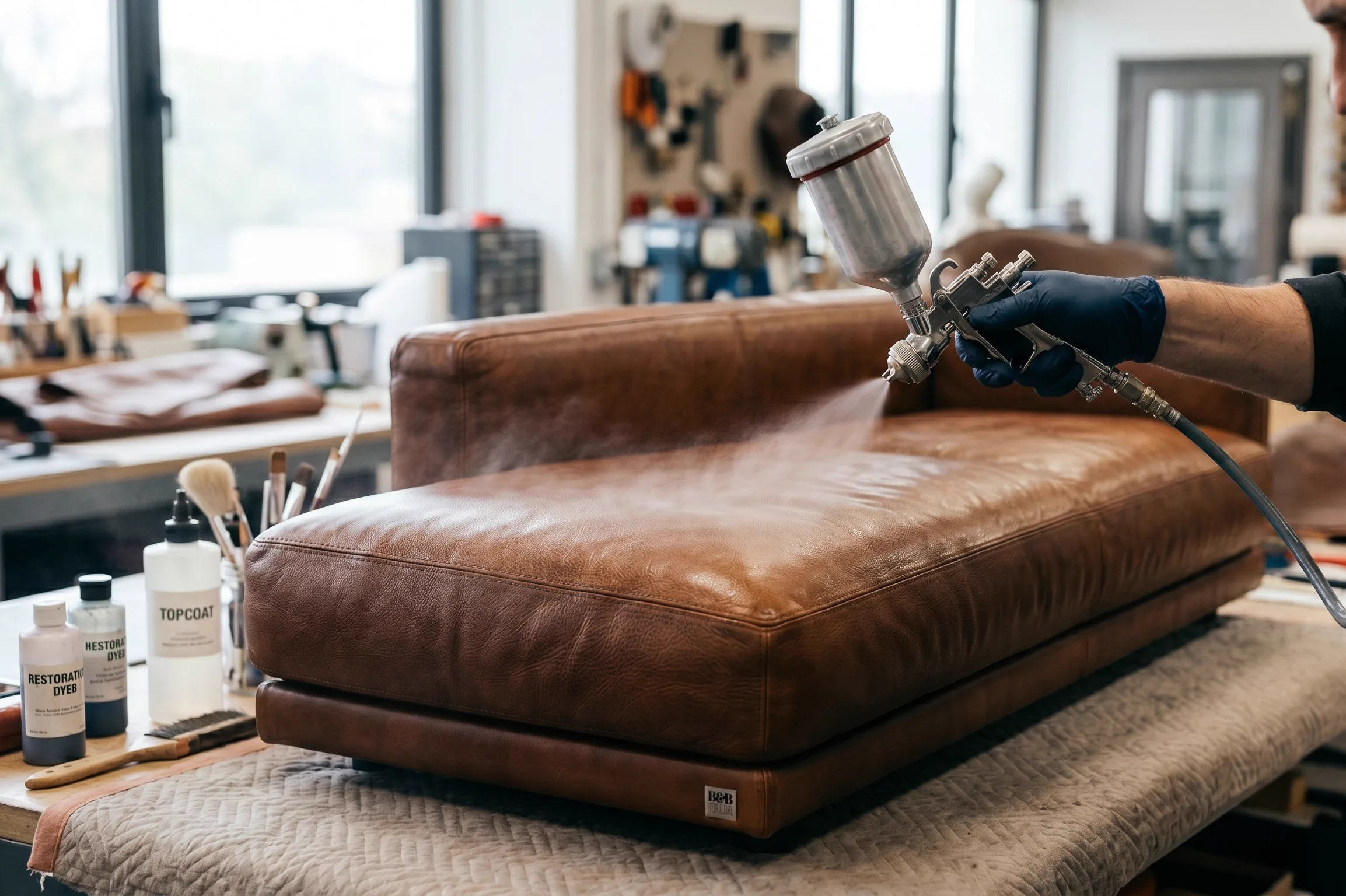
Wax re-balance, sun protection for seventy-two hours, a quiet conditioner pass at week one. The patch becomes invisible to its own owner. That is the result we work for.
Customer home - GurgaonGhee is almost pure butterfat - clarification removes the milk solids and water that ordinary butter carries. The fatty-acid chains in butterfat are shorter than those in mustard, sunflower or refined cooking oil. Shorter chains are smaller molecules, more mobile, and slip between leather grain fibres faster. That is the technical reason a ghee splash darkens quicker than the same volume of vegetable oil on the same hide.
Not necessarily, but you are now solving two problems instead of one. The sour smell is rancidity - the milk solids in the butter (proteins and a small amount of water-bound sugar) oxidising. A cotton bud lightly damped with seventy-percent isopropyl alcohol from the chemist, rolled gently across the smell-source for ten seconds, breaks down the rancid layer without attacking the fat film below. Follow with the regular surfactant and conditioner steps. If the smell persists past three days, photograph and pause.
Yes, and for older splashes besan is often slightly better. The protein content in chickpea besan binds set fat more readily than pure starch. For fresh splashes, cornstarch is finer-grained and brushes off more cleanly. Atta works in an emergency. Avoid coarse rava or maida-with-additives - they can leave a powdery residue inside the grain.
In the proportion this protocol uses - one pea-sized drop in 100 ml distilled water - yes, with a patch test first. Plain Vim or Pril, not the lemon or orange variants, not the antibacterial ones. Never use it neat, never combine it with baking soda, and always follow with a plain-water rinse cloth. The risk is saponification - alkaline reaction with fats - which on leather can leave a dull bleached patch the same shape as the original splash.
Likely, especially on pigmented or semi-aniline leather. Skip Step 1, start at Step 2 with besan or atta instead of cornstarch (set fat binds better to protein), plan two passes of the absorber, and proceed through Step 6. On aniline at twenty-four hours, the success rate is roughly fifty-five percent for full removal - lower if the splash has been in direct sun. Photograph first either way.
For ghee, almost always yes - pure butterfat oxidises slowly and quietly. For butter that has been on the hide a week or more, the milk-solid trace can leave a very faint scent for a few additional days even after Step 5. A pH-neutral conditioner pass at hour twenty-four and again at hour seventy-two usually clears it as the rancid film breaks up naturally. If a clear sour smell survives past day five, the rancidity has reached the conditioner wax layer - that is a bench job, not a home job.
Six neighbour entries that share chemistry, geometry or context with the ghee plate.
PLATE VI
Curcumin pigment - the wedding-week splash that turns red under the wrong cleaner.
read entry →
PLATE V
Tannin and pigment - the morning-mug ring that will not yield to plain water.
read entry →
PLATE II
Solvent-bound dye. The fastest-bonding stain in the Atlas - minutes, not hours.
read entry →
PLATE III
Polyphenol and tannin - a dinner-party stain that needs cold, never hot water.
read entry →
PLATE IX
The slow-creeping head-rest mark - coconut, amla and mustard hair oils on the seat-back.
read entry →
PLATE XII
Lawsone and betel pigment - the ceremony-week mark that needs Indian-context care.
read entry →A daylight photograph of the affected panel, the cushion held flat, with a clean part of the same hide in frame, is enough for the studio to read the splash and tell you whether it is still a cleaning job or a tonal one. No appointment, no obligation - just a working-day reply from the bench in Faridabad.
Tell us about your sofa. A leather specialist will respond the same day - no obligation.