Before / AfterRecolour, Crack Fill & Condition
A conservator's protocol for pet urine, lifted clean - neutralise the salts and odour before they scar the finish.
Explore
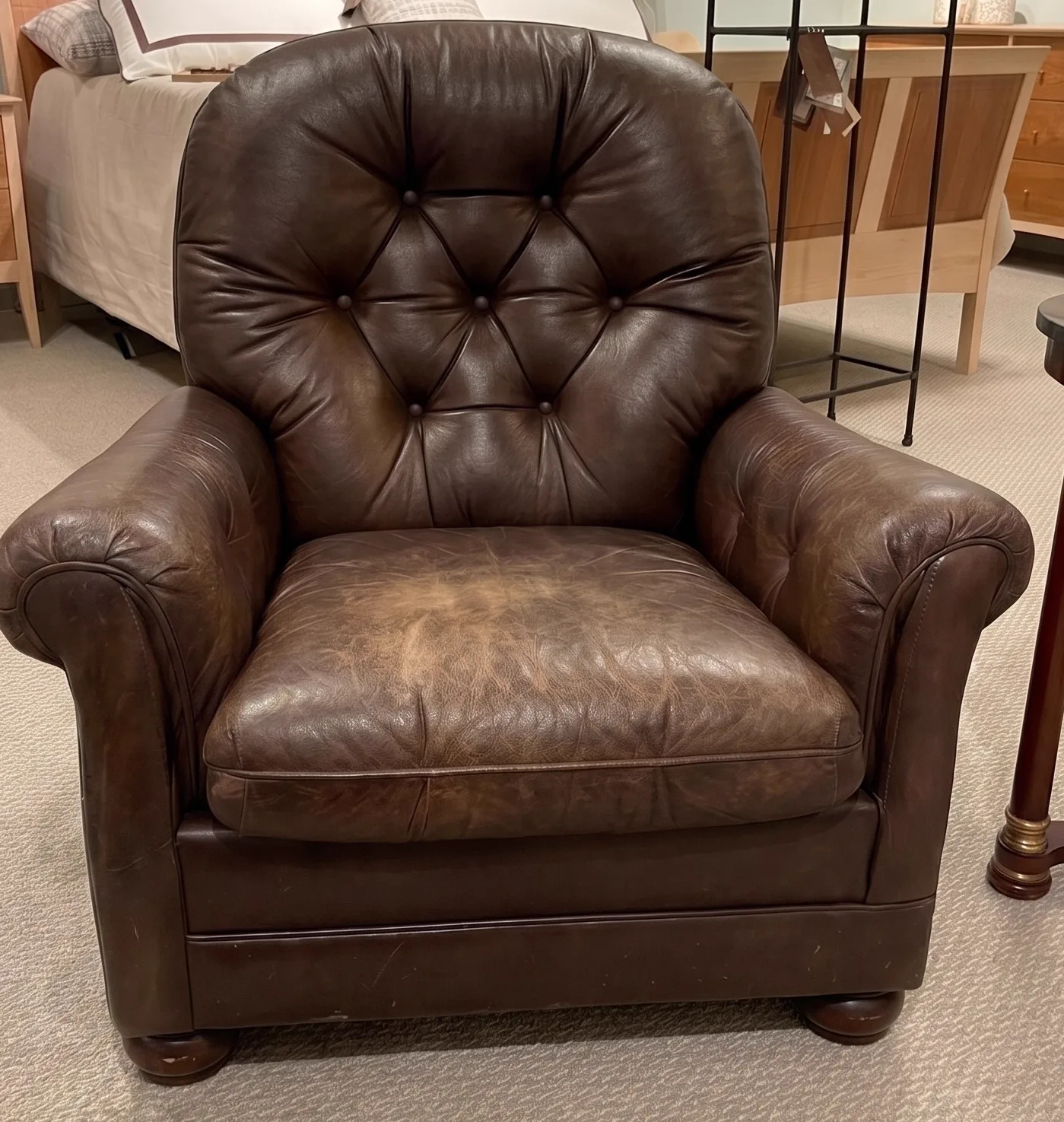
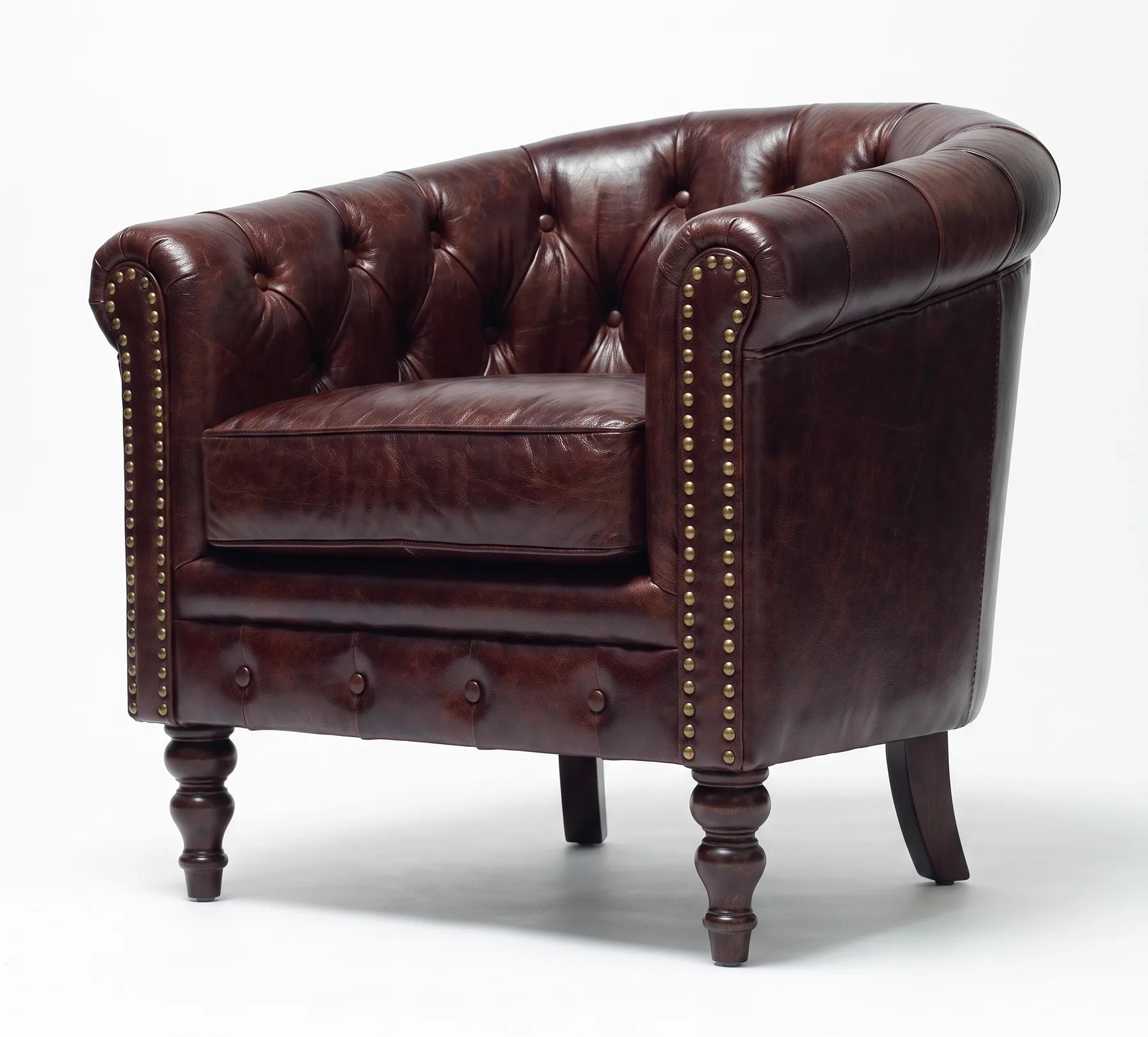
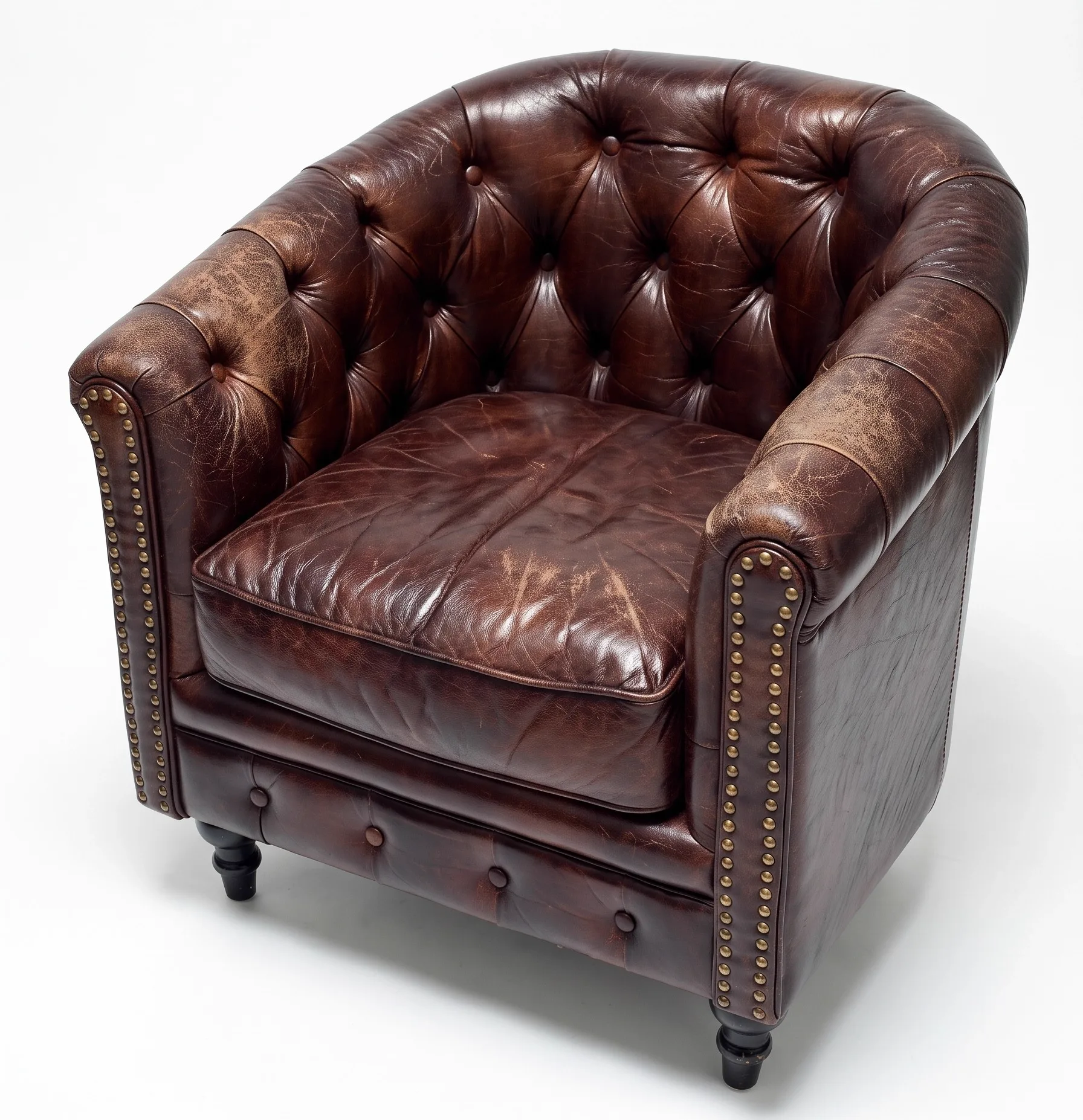
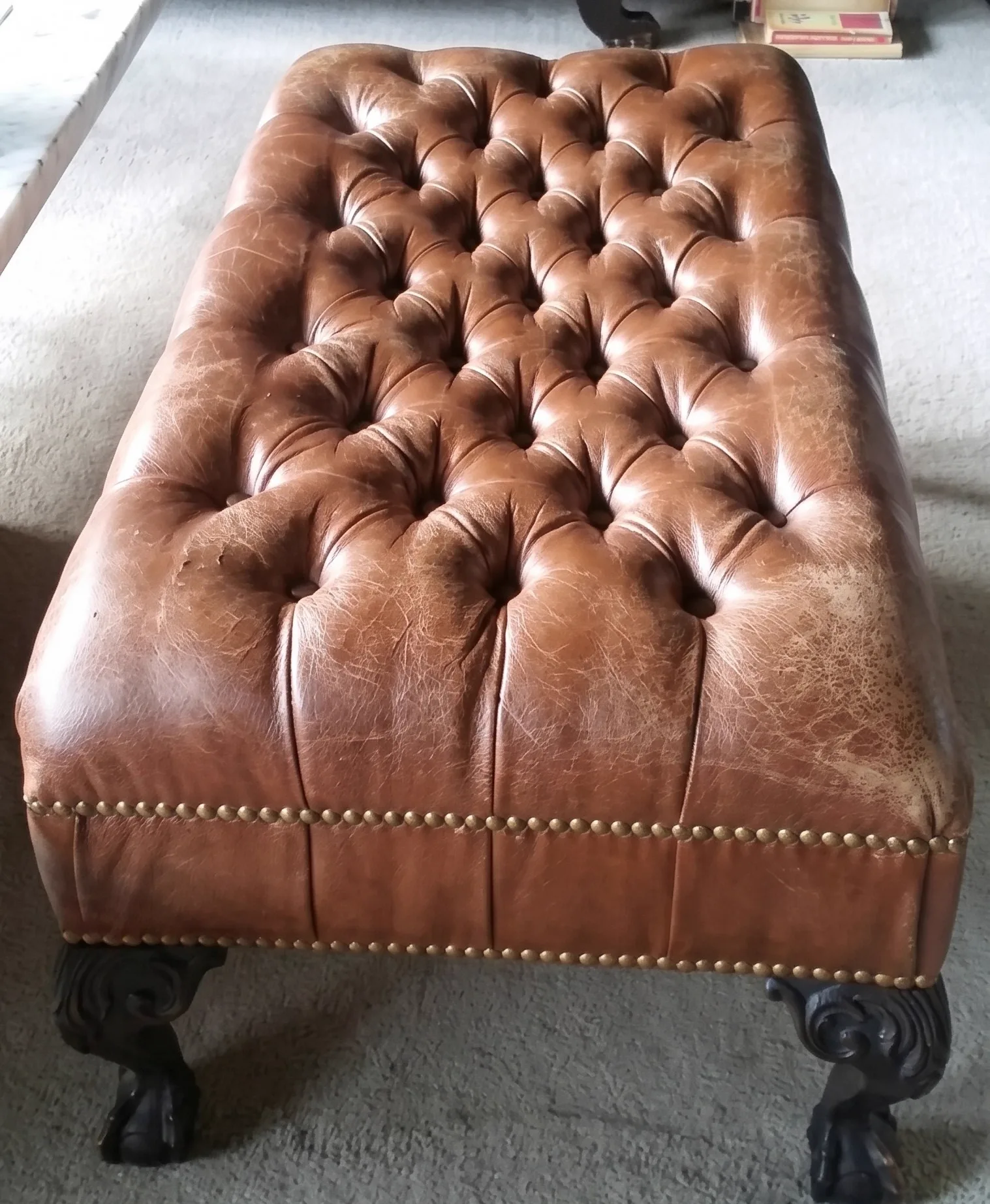
The honest verdict before you start - how fast to move, what is at risk, and how far it really reverses.
Book a Damage Check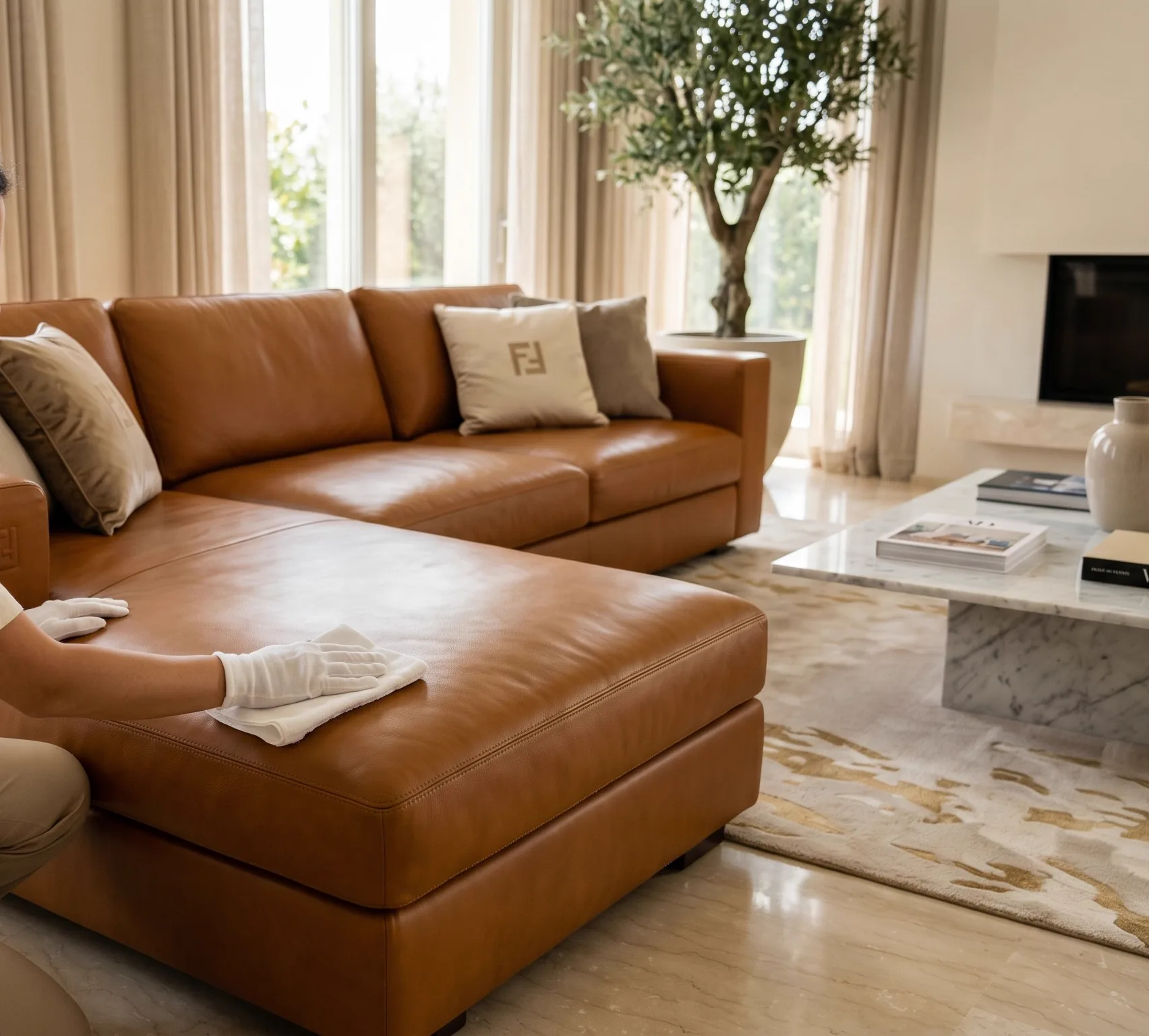 Time-Sensitive
Uric acid crystals begin to set within 20 minutes on dry leather.
 Leathers At Risk
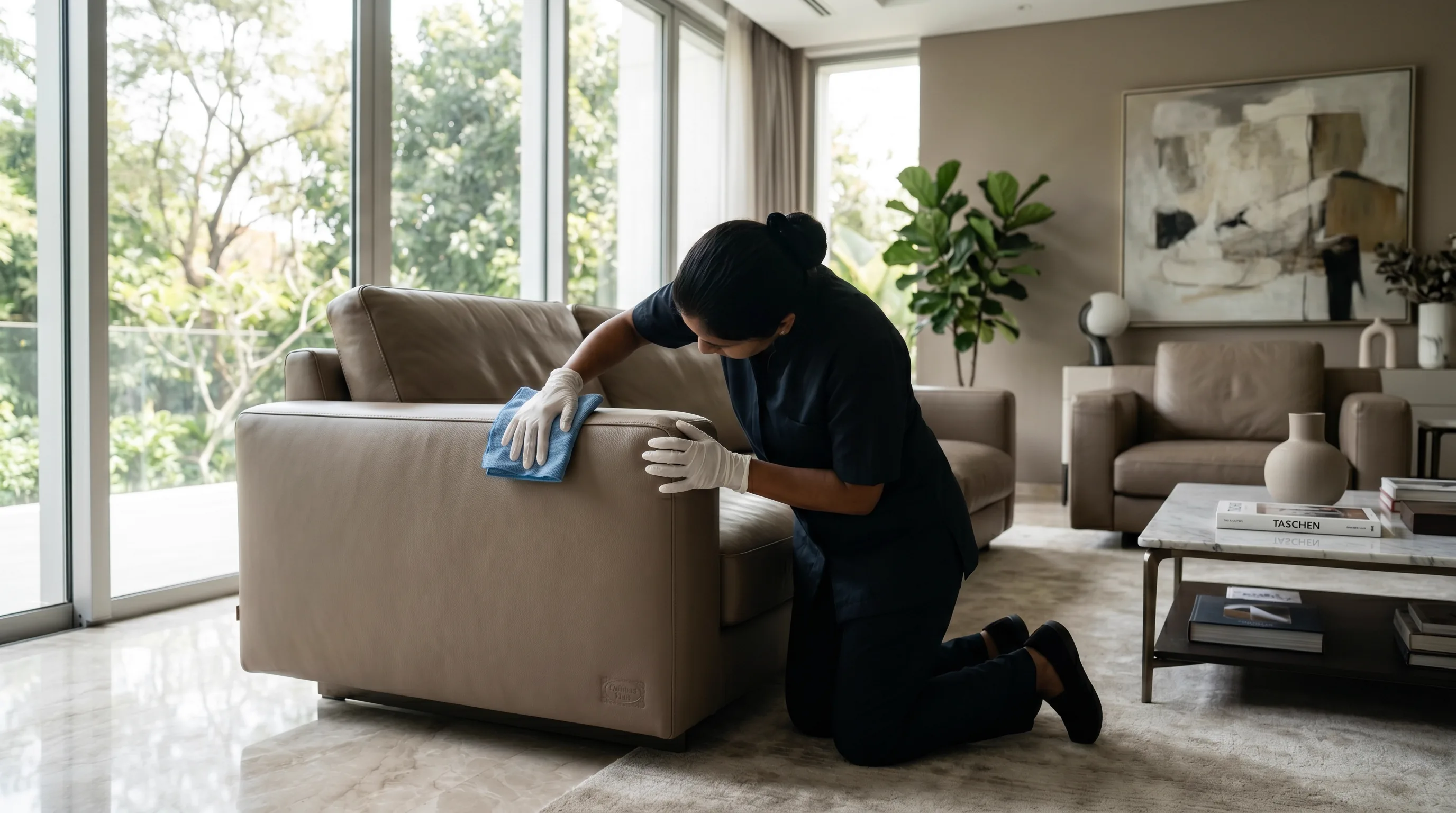
Ammonia breaks the dye layer on aniline hides within hours.
 Difficulty
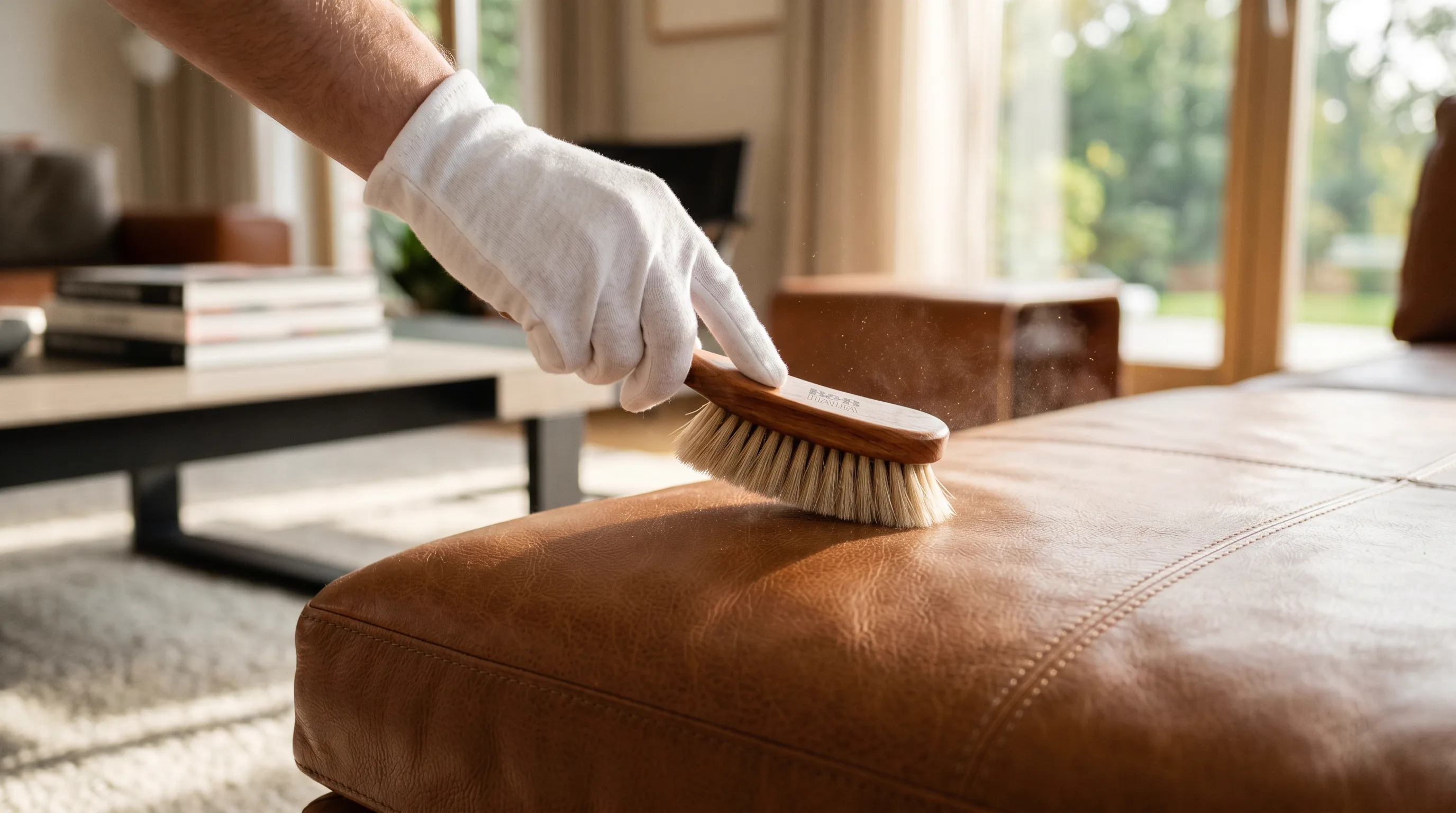
Fresh lifts well; dried odour-set stains need enzyme soak and patience.
 Reversibility
Overnight or older stains may retain odour permanently in deep grain.
Uric acid needs the right enzyme, not a stronger soap. Urease - found in pet-specific cleaners - is the only thing that breaks the crystals; laundry detergent just leaves residue and the smell behind.
Most families clean the visible patch, think the problem is solved, and are confused when the odour reappears the first time the monsoon humidity rises in July. Uric acid crystals are hydrophilic - they re-absorb atmospheric moisture and release ammonia again. The enzyme step is the only thing that stops the cycle.
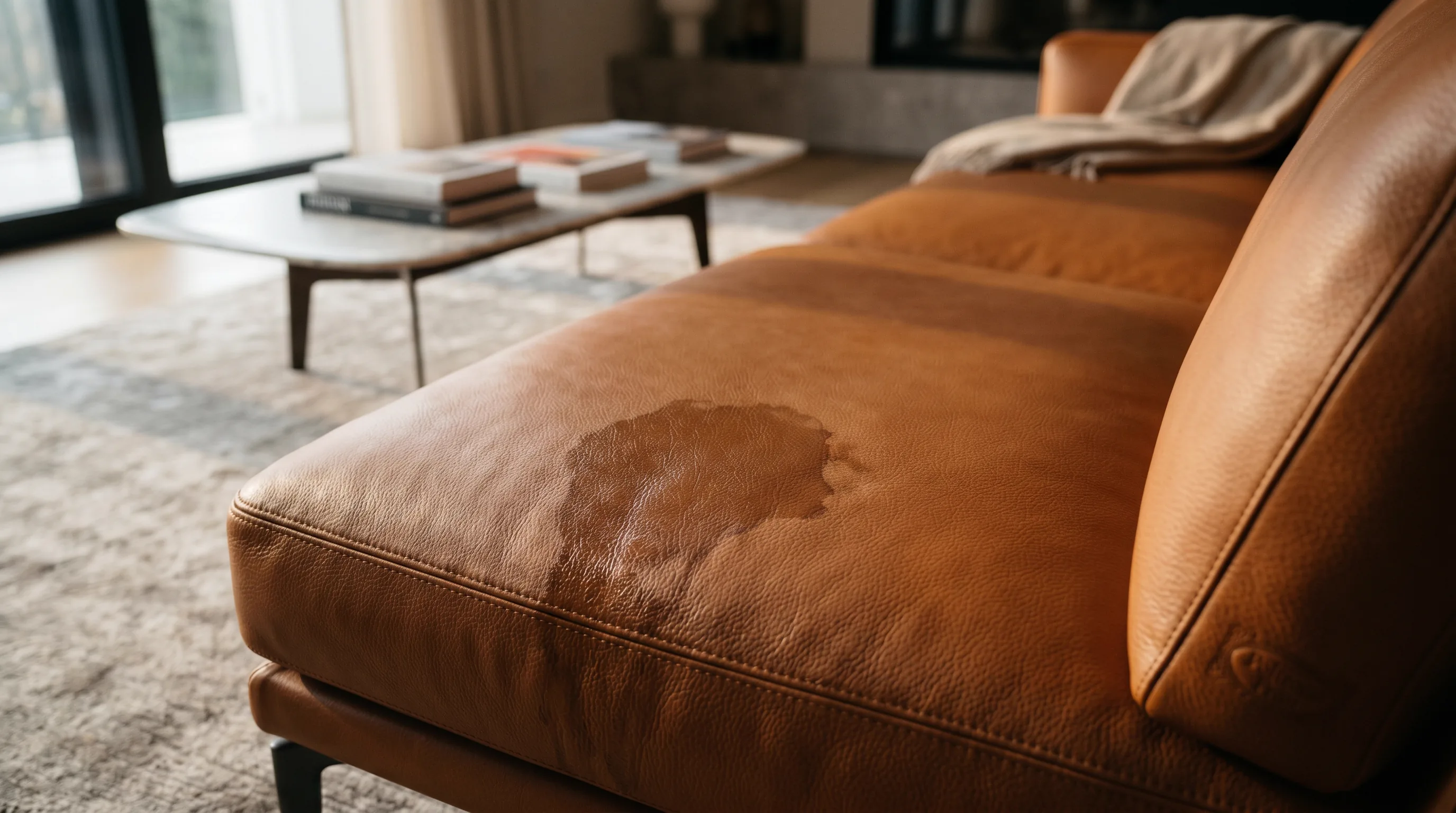
Photographed in studio - FaridabadPet urine on leather is not always where you expect it. Dogs and cats often choose the cushion seam, the corner of the seat-back, or the gap between cushions - places where the liquid runs off the visible surface and pools unseen. A quick three-point check before cleaning prevents missed coverage.
Fresh urine is unmistakable - a wet, slightly yellowish darkening of the leather with a sharp ammonia note. Cats produce more concentrated urine (higher uric acid) than dogs; the smell is stronger but the volume is usually smaller.
Dried urine leaves a faint white or pale yellow crust of salt deposits, often along a seam where the liquid pooled and evaporated. Press the area lightly - if the leather feels stiff or rough compared to surrounding panels, uric acid crystals have formed in the grain.
This is the signature of set uric acid crystals. The crystals re-absorb atmospheric moisture and release ammonia again. The odour that faded in dry weather returns in the June-September monsoon. If this is the complaint, the stain is old and enzyme treatment needs to be thorough.
Dried pet urine fluoresces under UV light (365nm black light). A UV torch sweeps the whole sofa surface and reveals where urine ran beyond the visible stain - under cushions, into seams, down the back panel. This is the most important identification step before treating a suspected area that might be larger than it looks.
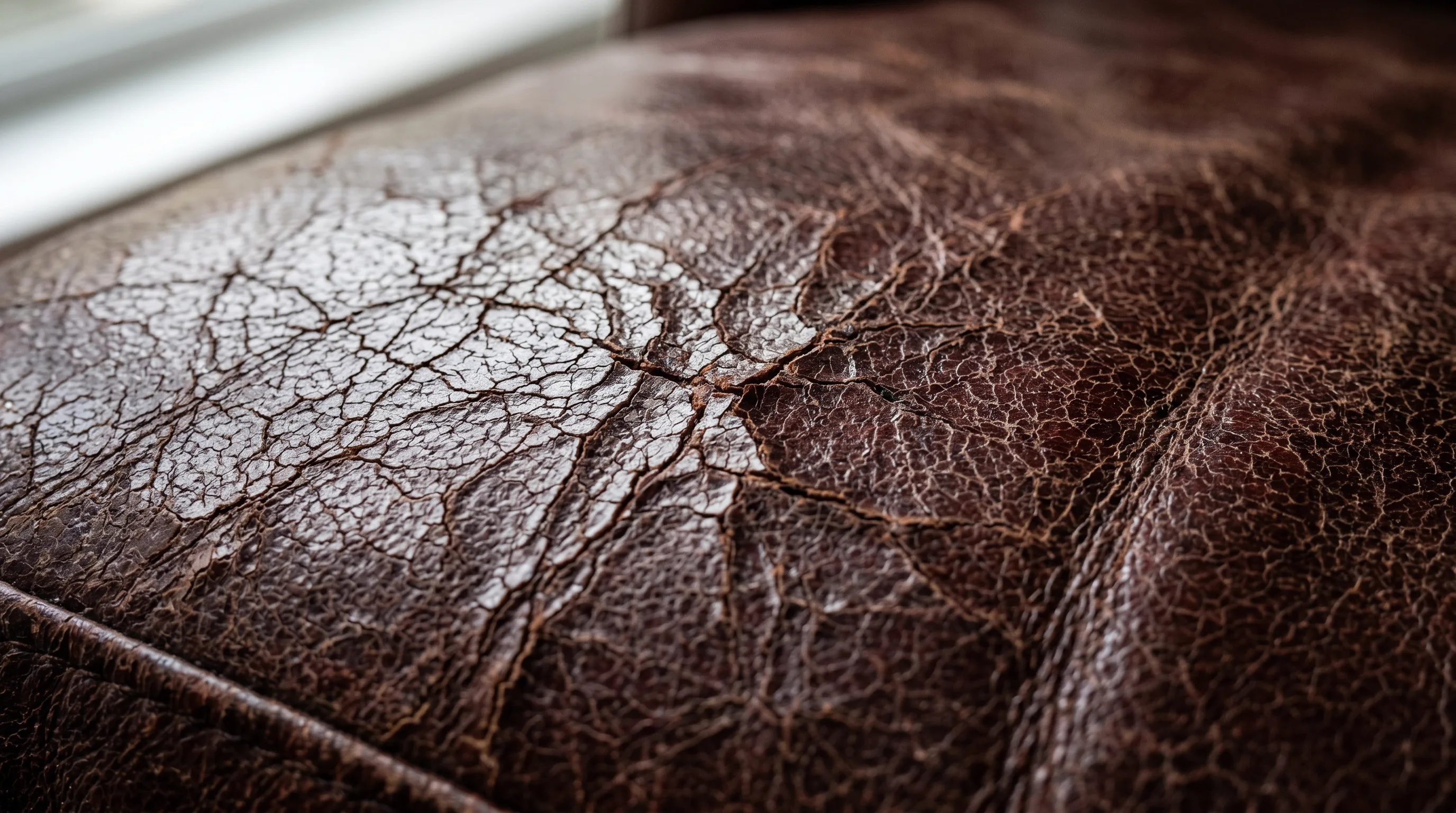
Leaves a tide mark but no odour and no crust. Disappears without enzyme treatment. No ammonia smell at any point.
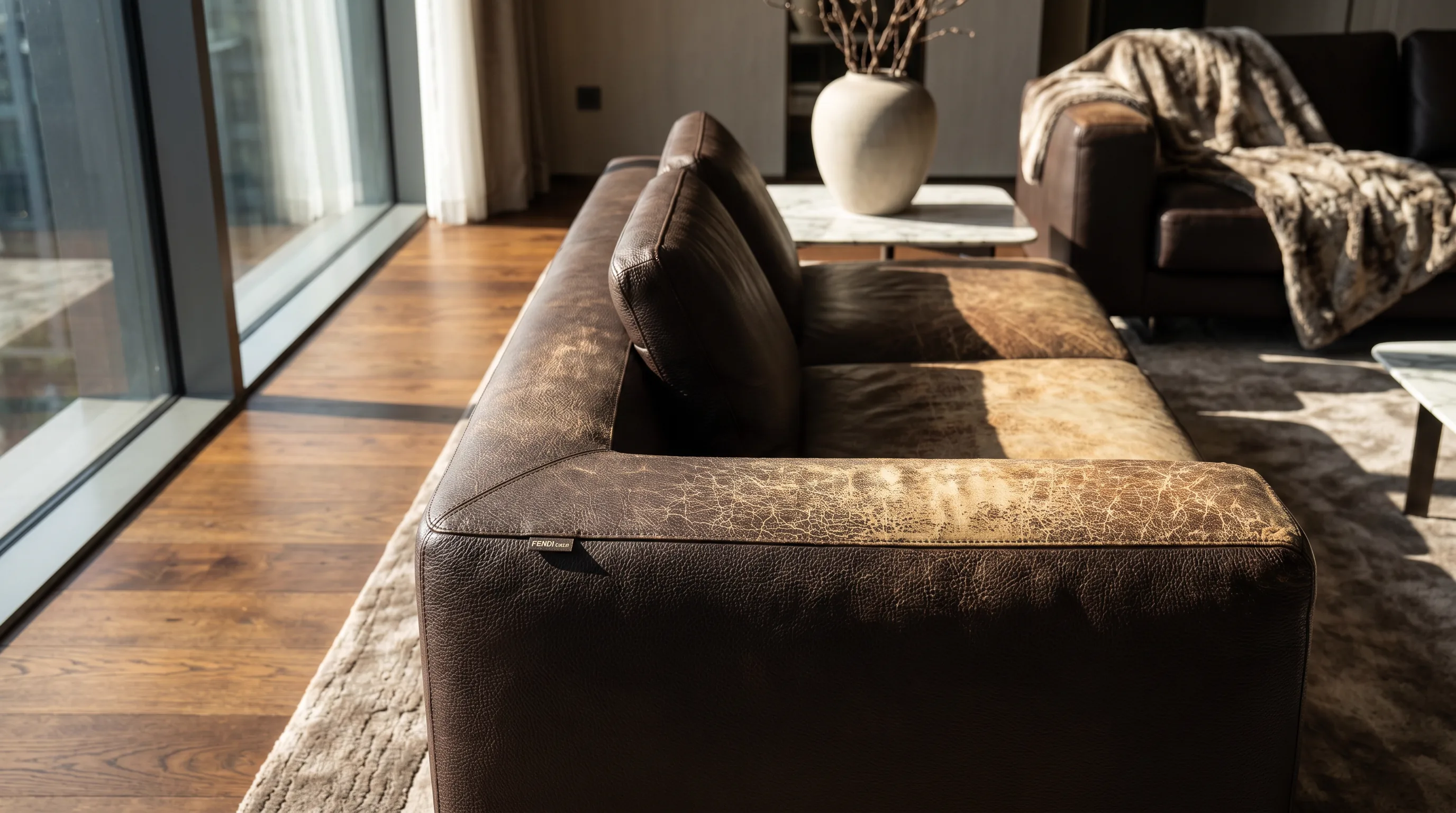
Builds up slowly at the seat-back interface. Slightly salty, low ammonia. No visible crust. A mild soap wash and conditioning resolves it without enzyme treatment.
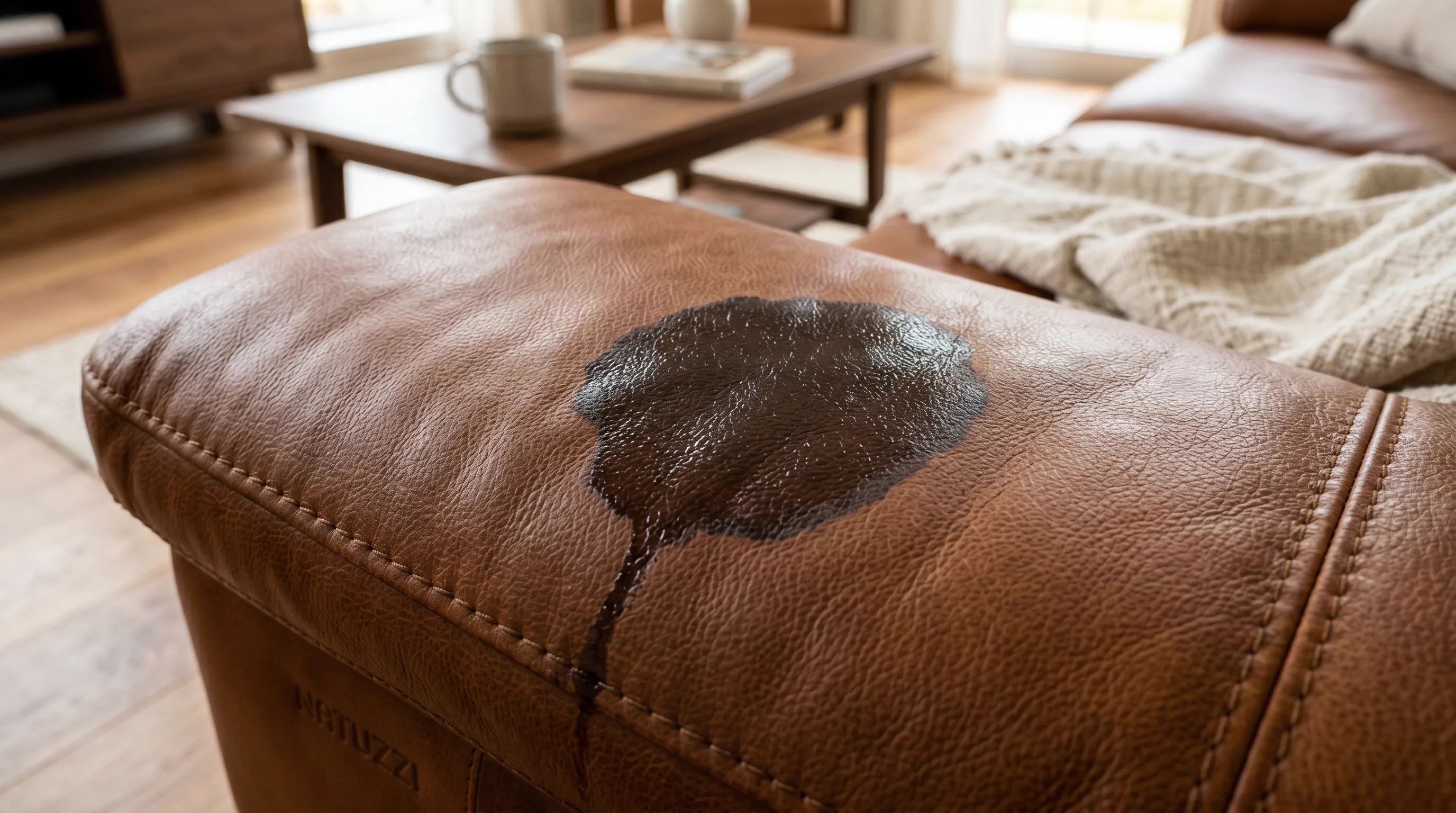
Human urine has lower uric acid concentration than cat urine but the same crystal-forming mechanism. The same enzyme protocol applies, with slightly shorter required contact time. Treat as a fresh-category pet urine case.
Pet urine is not a single substance. Three chemically distinct components each cause a different kind of damage and need a different response. Treating only the visible surface addresses the first two and leaves the third - the one that causes the recurring odour.
The first component is the water-soluble fraction: urea, creatinine, water, and dissolved salts. These make up the bulk of the liquid and are what you blot up immediately. They clean easily with a damp cloth and cause most of the visible surface staining. If they are the only thing left on the leather, the stain is resolved. The problem is that they are not usually the only thing left.
The second component is ammonia, produced when urea breaks down under bacterial action. Fresh urine is only mildly alkaline; as it ages, bacterial urease converts urea to ammonia (pH rises to 9-11). This alkalinity degrades the leather's finish coat and, on aniline leather, can begin to break down the dye layer within hours. This is why pet urine stains left overnight on aniline leather often show a dull or bleached patch around the stain even after cleaning.
The third component is uric acid. As urine dries, uric acid precipitates as microscopic crystals that bind tightly to protein fibres in the leather - the same collagen network that gives leather its structure. These crystals are insoluble in water and resistant to soap. When humidity rises (as it does every monsoon), the crystals re-absorb moisture and release ammonia again - which is why the odour returns seasonally for years if untreated. The only way to break uric acid crystals is enzymatic digestion: specific enzymes (protease, urease) that cleave the uric acid molecule and the protein bonds holding the crystals in place. Leather type determines how deeply the crystals penetrate - aniline allows full grain penetration, pigmented leather restricts them mostly to the surface.

In normal light the stain appeared to be a small patch on the seat cushion. Under UV, the urine had run down the seat-back, along the piping seam, and pooled in the back-panel crease - an area four times what was visible. Treating only the small visible patch would have left the odour returning every monsoon.
Photographed on site - IndiaFresh pet urine is your best-case scenario. Ten minutes of correct action prevents the odour problem from setting permanently. The sequence matters more than the products: never rub, never apply water before blotting, and have the enzyme cleaner ready before you start.
Fold a white cotton cloth into quarters. Press it straight down onto the wet urine. Lift, refold to a dry section, press again. Repeat until a fresh press picks up nothing more. Do not rub - rubbing spreads the uric acid and proteins deeper into the grain. White cloths so you can monitor the transfer. Remove as much liquid as possible before any water or product touches the leather.
Apply pet enzymatic cleaner directly to the affected area - enough to dampen the leather without flooding it. Do not dilute for fresh stains. Allow contact time of 5-8 minutes. The enzyme needs to reach the uric acid before it finishes crystallising. Do not blot during contact time - let the enzyme work. For fresh stains this is the critical window.
After the enzyme contact time, blot the area dry with a fresh white cloth. Follow with a barely-damp plain-water cloth to remove enzyme residue. Pat dry. Do not flood with water. For cushion-seam areas where the urine pooled, use a cotton swab to work the enzyme into the seam and blot out.
Use a UV torch on the whole sofa to check for additional urine areas you may have missed. Treat each revealed area with the same enzyme sequence. Once all areas are treated and dried, apply a thin coat of pH-neutral leather conditioner to restore the moisture drawn out by the cleaning. Keep the sofa well-ventilated but away from direct sun during drying.
These cause permanent damage. The stain may lift; the leather will not recover.
Conservator-grade first response. Buys you the time to do this properly.
This protocol assumes enzymatic cleaner is available. If you do not have it, blot the stain, apply cool water to dilute the uric acid load, blot again, and get enzymatic cleaner within 24 hours - the window for good odour resolution is days, not minutes, once you have done the initial blot.
Fresh - Fresh - Under 20 minutes since the accident. Still wet. Blot immediately, enzyme cleaner next. Full recovery is realistic.
Dried - Dried - Hours old, leather surface dry but stain visible. Enzyme cleaner still works but needs longer contact time - 10-15 minutes. Expect 70-80 percent odour resolution.
Set - Set - Overnight or days old. Uric acid crystals fully bonded with leather fibres. Visible stain may be faint but odour returns with humidity. Two enzyme applications plus a professional deep-treat may be required.
Fold a clean white cotton cloth into quarters. Press it flat onto the wet urine patch - straight down, no sideways motion. Lift, refold to expose a dry section, press again. Continue until the cloth lifts nothing further. For stains at cushion seams, use a folded cloth edge pressed into the seam line. The goal is to remove as much liquid as possible before it begins to dry and crystallise. The more you remove now, the less the enzyme has to work on later.
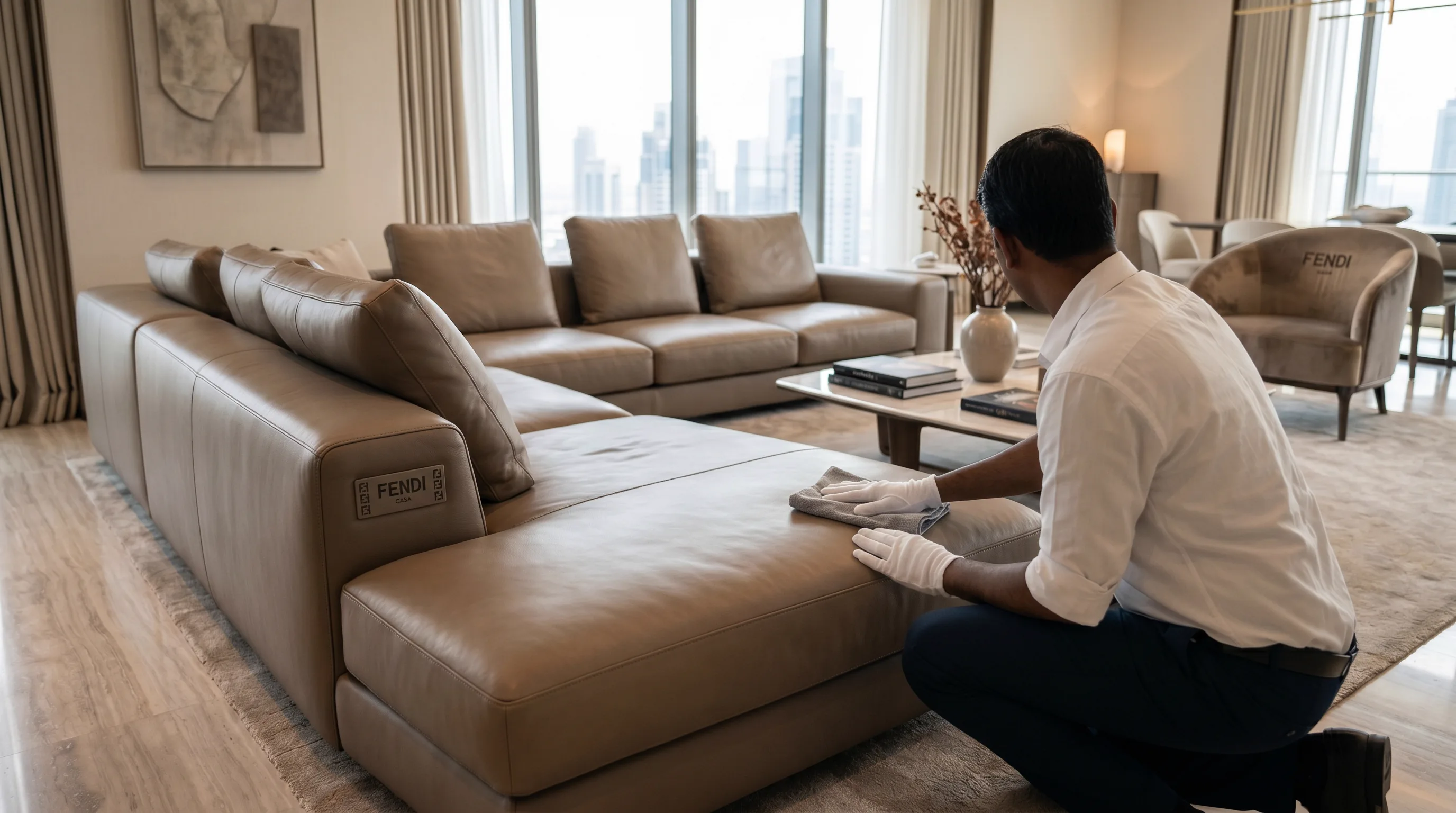
Apply pet enzymatic cleaner (enzyme-based, not ammonia-based) to cover the full stained area plus 3-4 cm beyond the visible boundary. For fresh stains, 5-8 minutes contact time is sufficient. For dried or set stains, allow 10-15 minutes. Do not blot during contact time - let the enzyme break the uric acid crystals. For cushion seams and gaps, use a cotton swab to work a small amount of enzyme into the seam line. Check coverage with a UV torch after application to ensure all fluorescing areas are treated.
After the enzyme contact time, blot the area with a fresh white cloth - press and lift, no rubbing. Follow with a barely-damp plain-water cloth (cool water, not warm) to remove enzyme residue from the surface. Pat dry immediately with another clean cloth. Do not saturate the leather with water - the goal is to rinse off surface enzyme without pushing it into the grain. For seam areas, use a dry cotton swab to absorb the enzyme from the seam line.
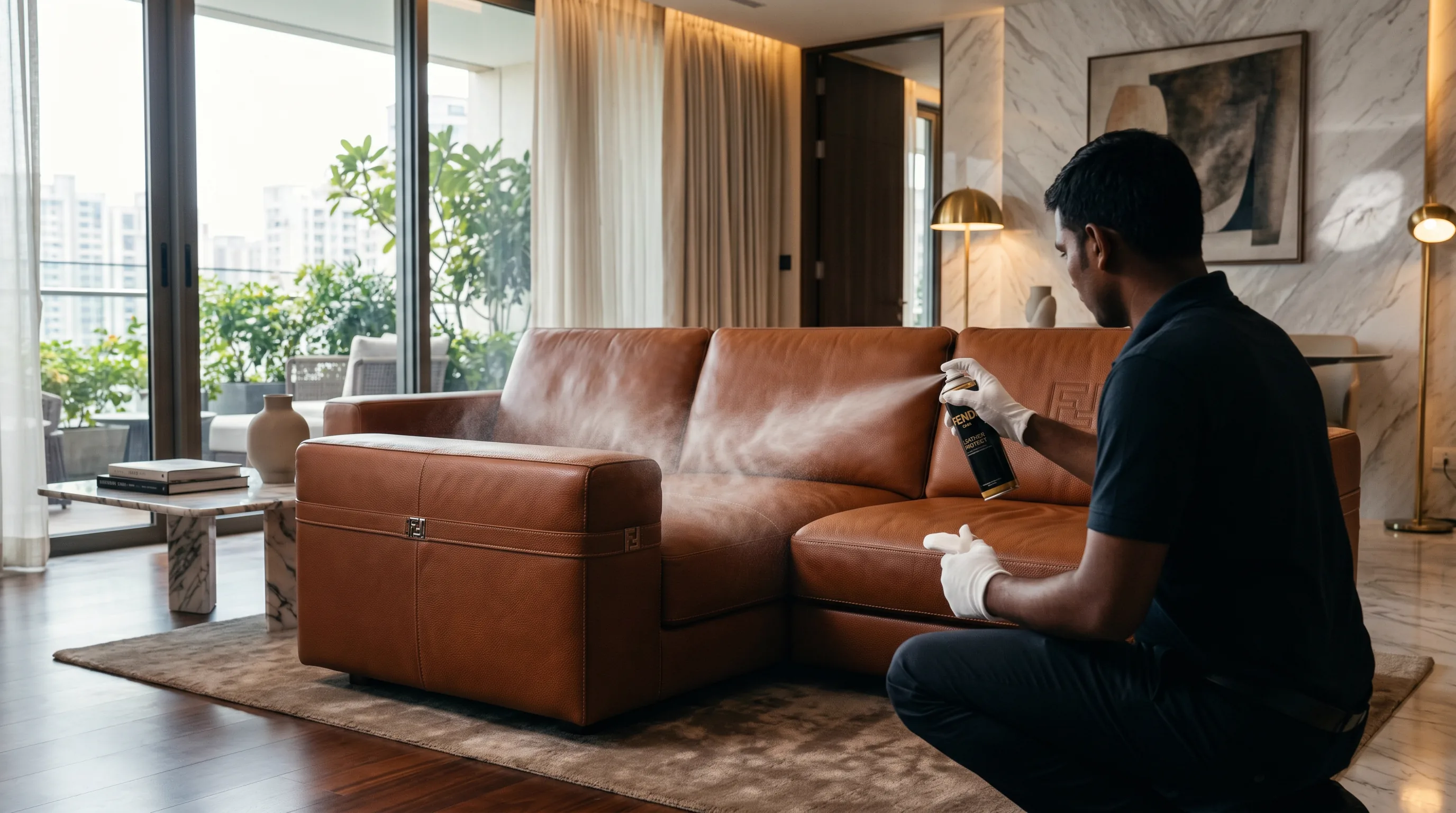
Once the leather has dried for 20 minutes, check the whole sofa surface with a UV torch in a darkened room. Any areas that still fluoresce have residual uric acid crystals - apply a second enzyme treatment with a 10-minute contact time. For cat urine, a second pass is almost always required. Check cushion undersides, the back panel below the stain, and any floor-facing leather panels that the urine may have reached if the cushion was removed.
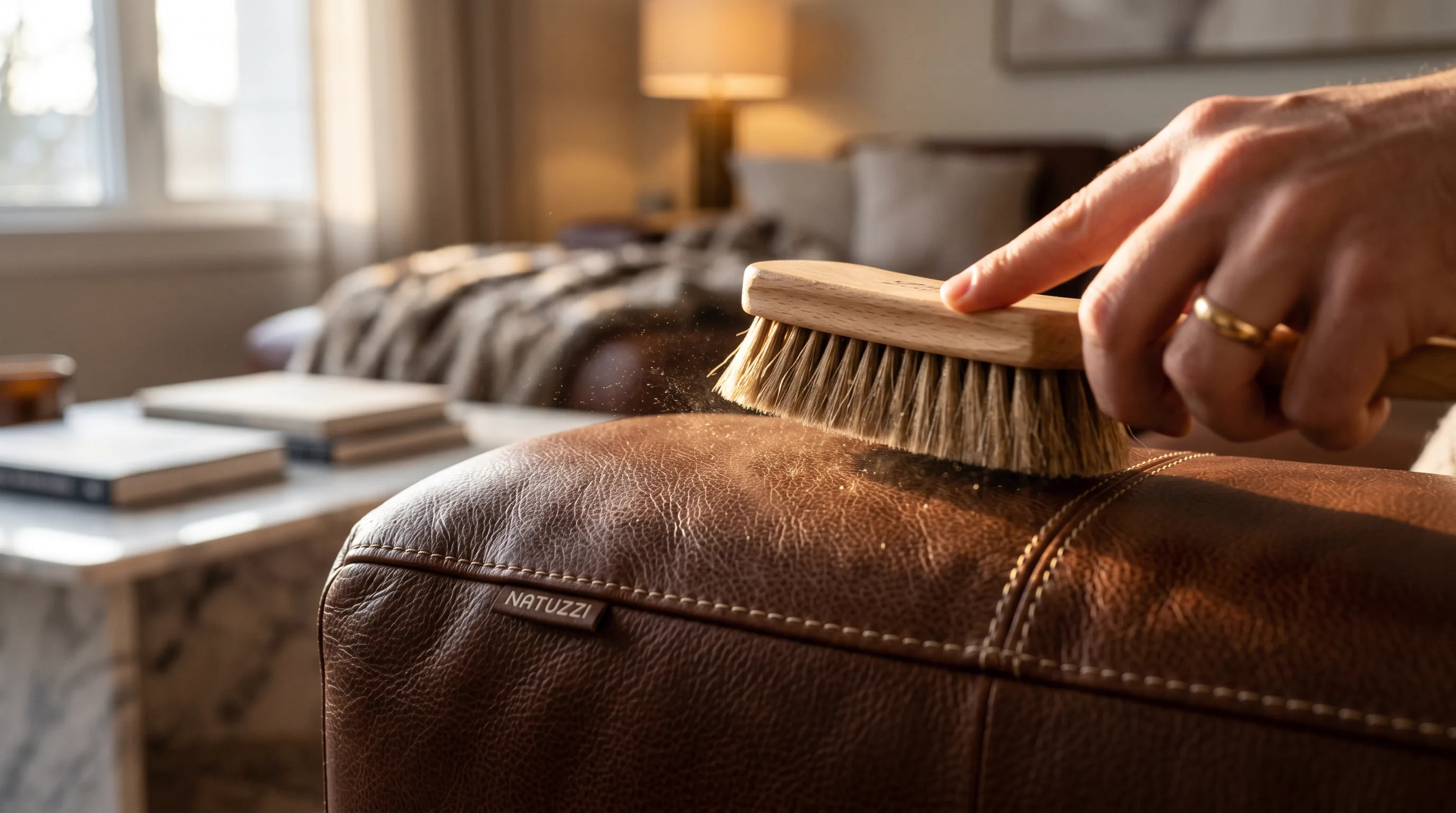
Allow the leather to air-dry completely - at least 30 minutes in good ventilation. Do not use a hair dryer or fan heater, which can crack the finish coat as the leather contracts during rapid drying. Once fully dry and back to room temperature, apply a thin coat of pH-neutral leather conditioner. Enzymatic cleaners strip some of the natural lipids from the leather surface; conditioning restores suppleness and closes the grain slightly against future staining. Apply conditioner to the whole sofa, not just the cleaned area, so there is no visible difference in sheen.
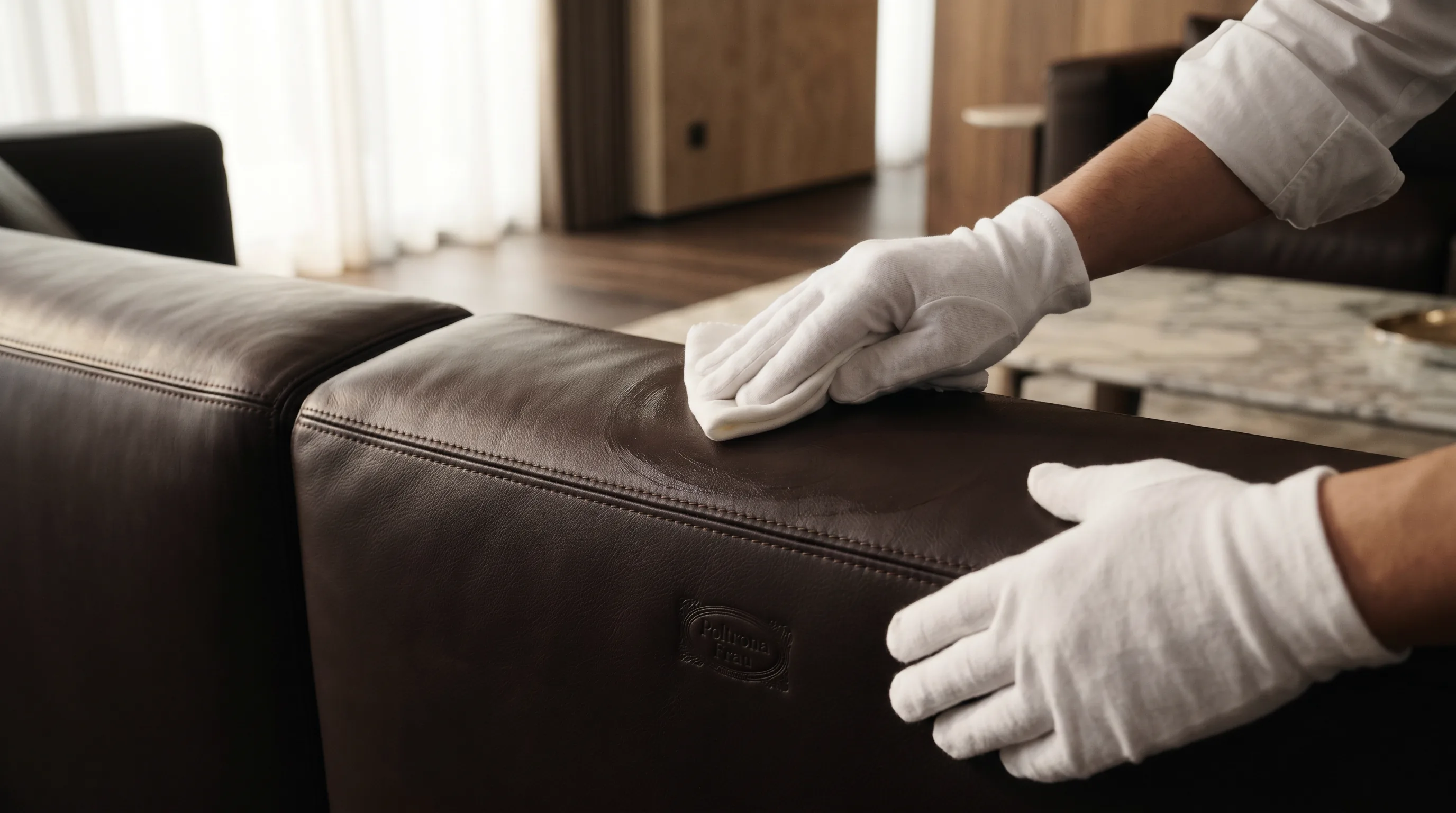
At 48 hours after treatment, press your nose close to the treated area and the surrounding seams. Any odour remaining at this point is residual uric acid crystals still in the grain. Apply one more full enzyme treatment with a 15-minute contact time, then blot and dry as before. If odour persists after three enzyme applications, the crystals are too deep in the grain for surface treatment to reach - contact the studio for a deep-clean assessment.
No visible stain, no odour on first clean or after humid day. Uric acid fully broken down by enzyme. Realistic on pigmented leather caught within 10 minutes.
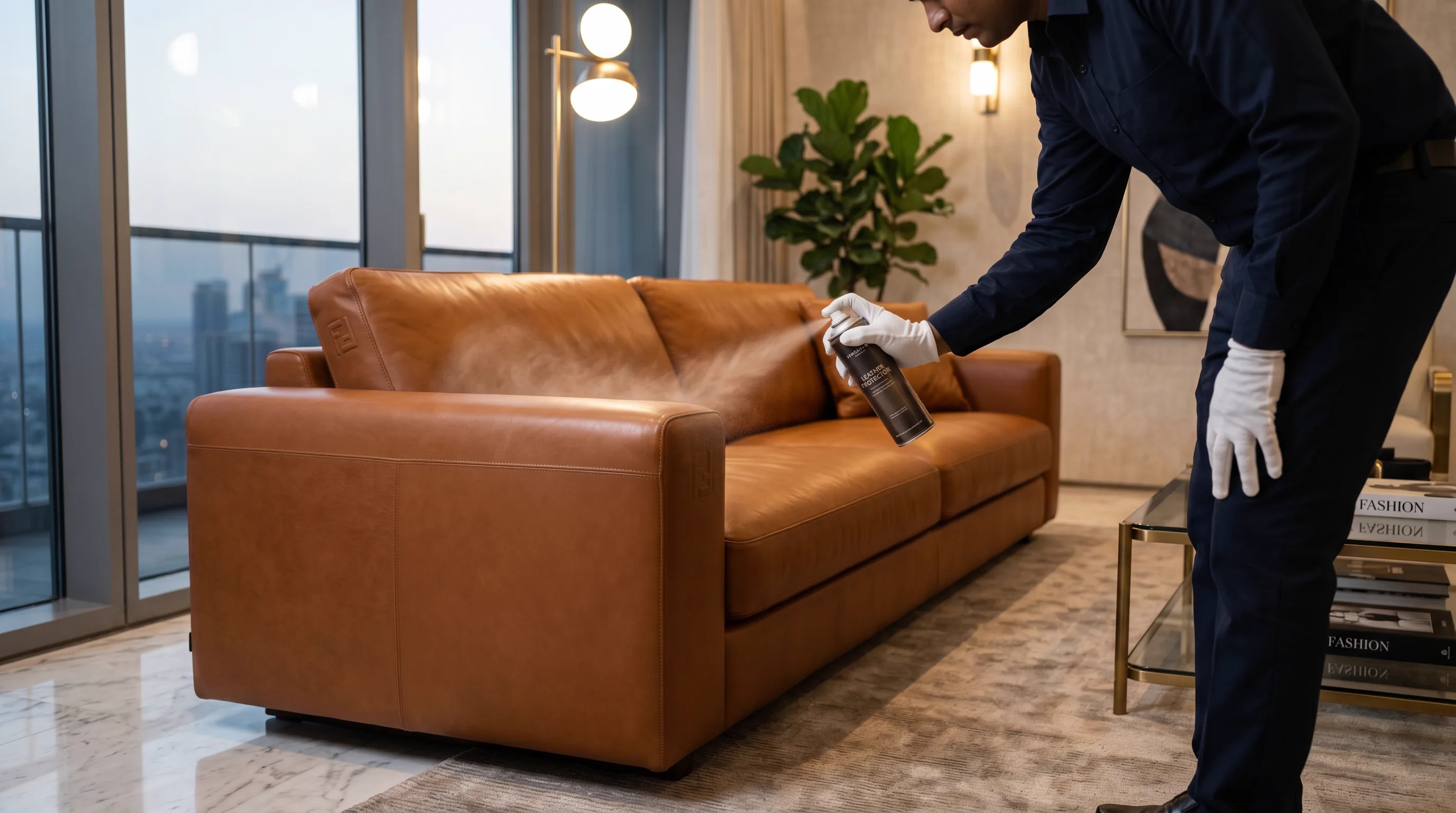
Stain cleared but faint odour returns on humid days. Uric acid crystals partially broken down. A second enzyme application after 48 hours usually resolves it.
Visible stain and persistent odour after two enzyme applications. Deeply set uric acid in the grain or ammonia damage to the finish coat. Studio treatment or panel replacement may be required.
Pet urine removal requires one specialist item - enzymatic cleaner. Everything else is household standard. The enzyme is worth sourcing before you need it if you have a pet on a leather sofa.
Steps 2 and 4. The only product that breaks uric acid crystals. Must be enzyme-based, not ammonia-based. Brand examples: Biozet Attack (liquid, widely available), Nature's Miracle (Amazon India), BioFresh.
Step 4 and initial identification. Reveals the full extent of uric acid deposits invisible in normal light. The single most useful tool for accurate pet urine treatment.
Steps 1 and 3. White so you can monitor transfer. Multiple cloths needed - fold fresh for each press.
Steps 2 and 4. Essential for working enzyme into cushion seams and gap areas where liquid pooled.
Step 5. Restores the lipid layer stripped by enzymatic cleaners. Apply to the whole sofa after treatment for an even result.
Step 3. Light rinse to remove enzyme residue. Cool only - warm water sets proteins and degrades enzyme.

The most common reason a pet urine treatment fails is that the cleaning area was smaller than the contamination area. Urine runs. It follows seams. A UV torch reveals the full picture before the enzyme contact starts - and that picture is almost always larger than the visible stain.
Photographed in studio - The PracticeUric acid penetrates more or less depending on the surface coating. Ammonia damage accumulates faster on open-finish leathers. Find your row before choosing how aggressively to treat.
Pick a hidden patch (back of seat-back). Run all three tests, then read the matrix below for your type.
Place a single drop of water on the surface. Soaks in within 30 seconds = aniline. Beads and sits on top = pigmented or bicast. Slow darken with eventual absorb = semi-aniline.
Press a fingernail into the leather for two seconds, release. Mark stays then fades slowly = aniline / semi-aniline. No mark at all = pigmented or bicast (top-coat hides the indent).
Look across the surface at a low angle in daylight. Uneven natural grain, soft matte sheen = aniline. Plastic-like even sheen, perfectly uniform grain = bicast or heavily pigmented PU-leather.
Still unsure? WhatsApp a close-up photograph in daylight to +91 98915 96597 - identification is free.
No topcoat. Uric acid crystals penetrate fully into the collagen network. Ammonia degrades the dye layer within hours. Fresh stains visible as dark patches; set stains leave a pale discoloured area.
Blot immediately and call the studio. DIY enzyme on aniline can tide-mark. The ammonia damage on this hide class needs professional assessment quickly.
Pigmented leather - the most common type in Indian sofas in the Rs 40,000-200,000 range - handles pet urine best among real leather types. The thick surface coating keeps uric acid crystals mostly at the surface level where enzyme cleaners can reach them in a single treatment. The DIY success rate is highest in this row, and a properly executed enzyme protocol on pigmented leather usually resolves both the stain and the odour completely on fresh incidents. Identifying whether you have aniline or pigmented leather before you start is the most important five minutes you spend on this problem.
Bicast and bonded leather is increasingly common in the Indian pet-owning household at the budget end because it is easy to wipe clean for surface spills. Pet urine on bicast is actually the easiest case in this matrix - the PU skin blocks crystal penetration and a damp cloth wipe removes most of the problem. The risk is that the PU skin coating is fragile at seams and corners - it peels in thin sheets if wiped aggressively. The bicast and bonded explainer shows why gentle handling matters for this material type.
Three enzyme applications over 72 hours is a reasonable home effort. If persistent odour remains after that, the uric acid crystals are beyond the depth that surface treatment can reach, or the ammonia has damaged the finish coat. Both are studio cases - and earlier is better than later.
The most common reason pet urine odour returns despite cleaning is that the enzyme treatment covered only the visible stain and not the full area revealed by UV. The crystals in the seam or in the panel below the cushion were never reached. Before concluding that the DIY treatment failed, use the UV torch one more time across the full sofa surface - including underside panels you may not have checked - and apply enzyme to any fluorescing area still visible. This solves roughly half the "enzyme did not work" cases we see.
The other common failure mode is damaged finish coat - ammonia is alkaline and breaks down the polyurethane or acrylic top coat of pigmented leather over time. Once the top coat is damaged, enzyme cannot penetrate evenly and the crystals are protected. This manifests as rough texture, dull patches, or a leather surface that feels tacky. Finish-coat repair involves professional cleaning, light sanding, and reapplication of a compatible topcoat - it is a restoration job, not a cleaning job, and it genuinely recovers the leather fully in most cases.
Odour returns every humid day despite two or three enzyme treatments. Crystals are deeper than surface treatment can reach.
Leather feels rough or stiff where the stain was. Ammonia has degraded the collagen structure or the finish coat.
A pale or discoloured patch remains after enzyme treatment. Ammonia has damaged the dye layer, not just the surface.
Enzyme cleaner beads on the surface and will not absorb. The finish coat is damaged and blocking penetration.
The pet has re-marked the same spot despite cleaning. Residual uric acid trace is attracting them back - deeper treatment is needed.
Pet urine is the stain we get called about most for "the cleaning worked but the smell came back." It always comes back the first monsoon after an incomplete enzyme treatment. The full UV-torch check before you consider the job done is the step that makes the treatment last.
If the odour has returned or the leather looks damaged, send a daylight photograph and describe when the incident happened and what products were used. We will tell you whether this is a second enzyme case or a finish-coat repair case, and what each looks like.
A correctly treated pet urine stain is resolved. The concern for the next three months is re-marking, monsoon humidity as a test of the treatment, and the overall leather surface condition after enzyme exposure.
Pets return to spots where they have urinated before because the residual uric acid trace is a territorial signal even at concentrations too low for human noses to detect. The UV torch is the most reliable tool for confirming that the enzymatic treatment removed the trace fully - if the area is dark under UV at 48 hours, a second enzyme pass is needed before the next monsoon. The full leather care guide covers protective products and covers that reduce the odds of a re-marking event.
The first monsoon after a pet urine incident is the definitive test of whether the uric acid was fully cleared. If the odour returns in July after a dry April-May with no smell, there are residual crystals in the grain that re-hydrated with the humidity. Run one more enzyme treatment in June before the humidity peaks and check at the 48-hour mark. The Delhi NCR monsoon leather manual covers the humidity management that helps during this window.
Practical prevention for pet households with leather sofas comes down to four things: a dedicated pet throw or cover on the sofa while the pet is present, regular conditioning (quarterly minimum) to keep the surface sealed, a UV torch check every six months as a routine scan, and enzyme cleaner kept in the cupboard so the 10-minute fresh response window is never missed. A sofa is a long-term object; a pet household routine keeps it that way.
Confirm treatment success with the UV torch at 48 hours post-enzyme. Any residual fluorescence means a second pass before the monsoon.
Keep a 500ml bottle in the cupboard. The 10-minute fresh response window is the difference between a clean resolution and a months-long odour problem. Having the product ready is half the protocol.
A washable cotton throw over the seat and back panels when the pet is on the sofa prevents contact with the leather surface entirely. The cheapest and most effective prevention for repeat incidents.
Regular conditioning keeps the leather surface sealed and slightly more resistant to liquid penetration. It also lets you spot any stiffness or dullness from ammonia damage early, before it becomes a structural problem.
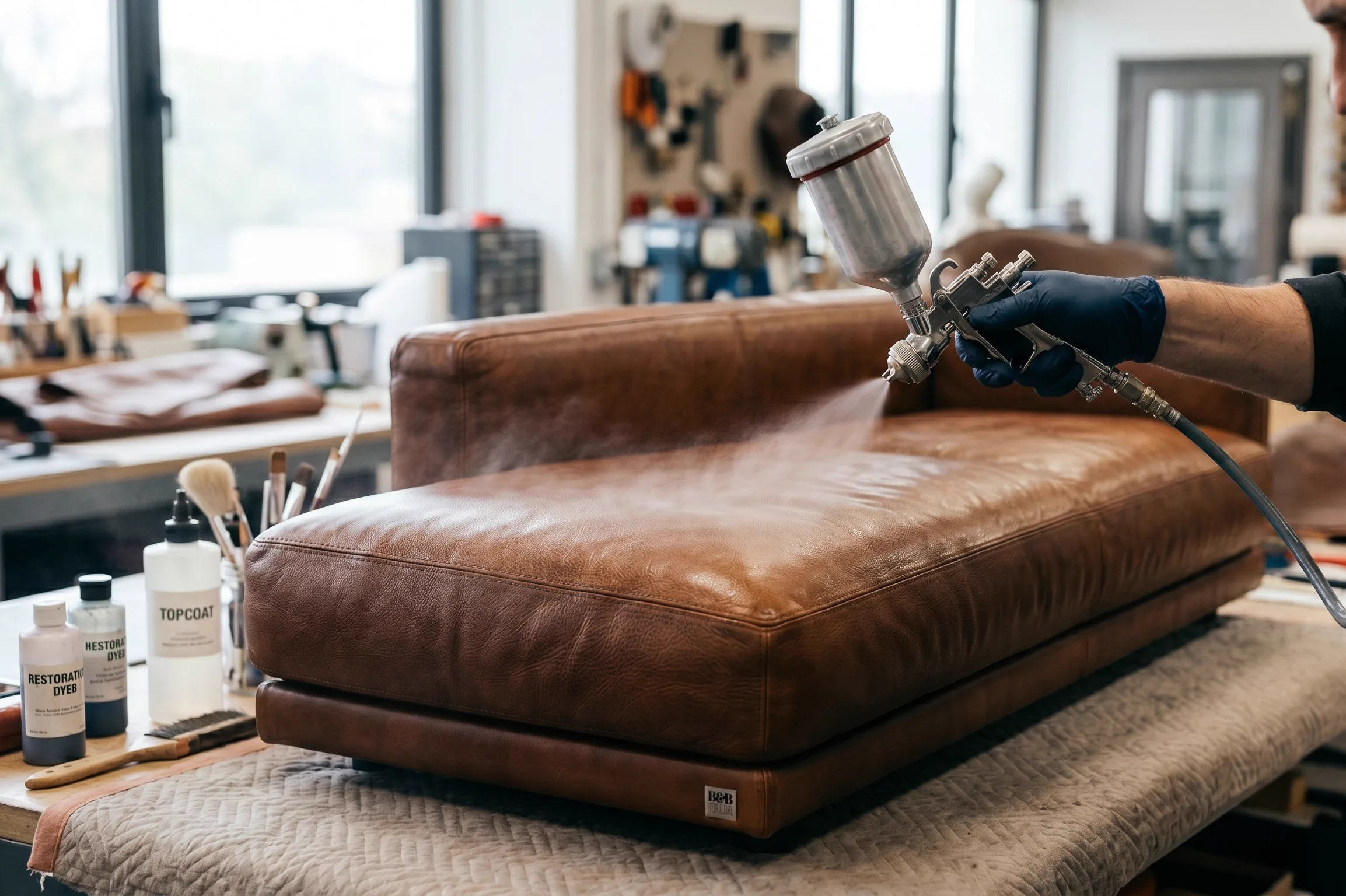
The families that manage it well keep enzyme cleaner in the cupboard, a throw on the sofa, and a UV torch handy. The families that do not are the ones we meet in July, six months after an incident that a ten-minute response would have resolved completely.
Photographed in client home - IndiaVinegar partly neutralises the ammonia odour in the short term because it is acidic. But it does not break uric acid crystals - the source of the recurring odour. It also strips the leather topcoat and leaves the surface more porous, which makes the next urine incident worse. Enzyme cleaner is the correct tool; vinegar is a short-term mask that creates a longer-term problem.
Cats return to previously marked spots because residual uric acid trace is a territorial signal at concentrations below human detection. If the UV torch still shows fluorescence at 48 hours post-treatment, there are crystals remaining in the grain and the cat can smell them. A second enzyme treatment followed by a UV check usually resolves re-marking behaviour in one more session.
No. Steam is hot water, and hot water sets protein stains permanently on leather. The heat also accelerates ammonia production and can crack or blister the leather finish coat. Steam cleaning is appropriate for fabric but is damaging to leather. Enzyme cleaner at room temperature is the correct alternative.
Not necessarily. Enzyme cleaner still works on set uric acid crystals - it just needs longer contact time (15 minutes) and usually requires two or three applications rather than one. A UV torch check first confirms the full extent. For stains more than a month old with persistent strong odour, a studio deep-clean is more reliable than home enzyme treatment, but the leather is not necessarily damaged beyond recovery.
A cotton throw over the sofa while the pet is in the room is the simplest and most reliable method. Consistent re-training works for most dogs over 2-4 weeks. Cats are less deterred by training alone; a washable throw is more reliable. Certain citrus sprays (diluted, spray-tested on a hidden patch first) deter cats from a specific spot.
Pet enzyme cleaners designed for fabric use are generally safe on pigmented leather when used as directed - brief contact time, then blotted and rinsed. Avoid leaving any enzyme cleaner on leather for more than 15 minutes. Always test on a hidden patch first for any new product. The slight lipid removal they cause is compensated by conditioning after treatment.
Stains that share a chemistry family, a protocol step, or a time-urgency pattern with pet urine. Reach for these next.
PLATE PLATE IV
Protein reactive. Same cold-water-only rule and same urgency window. Uric acid crystals are the pet-urine addition that blood does not have.
read entry →
PLATE PLATE III
Tannin-pigment, acidic. Shares the "speed is the protocol" lesson. Enzyme not required but the 10-minute window matters.
read entry →
PLATE PLATE V
Tannin with milk-fat. Different chemistry but same seam-and-gap awareness - liquid finds the same pooling points as urine.
read entry →
PLATE PLATE II
Solvent-bound dye. Shares the swab-rotate discipline useful for seam treatment in Step 2.
read entry →
PLATE PLATE X
Chemical-reactive class. Both require specialist chemistry (enzyme / IPA) that water alone cannot provide.
read entry →
PLATE PLATE VI
Plant pigment. Shares the "UV-check equivalent" lesson - verifying coverage beyond what visible light shows.
read entry →If the enzyme treatment did not clear the odour, or if the leather feels rough or looks discoloured after cleaning, send a daylight photograph on WhatsApp along with a brief description of when the incident happened and what was applied. We will tell you whether this is a second-pass enzyme case, a finish-coat repair, or a deep-clean - and what each involves. No commitment needed. Faridabad studio, pan-India by photograph.
Tell us about your sofa. A leather specialist will respond the same day - no obligation.