Before / AfterLeather Change
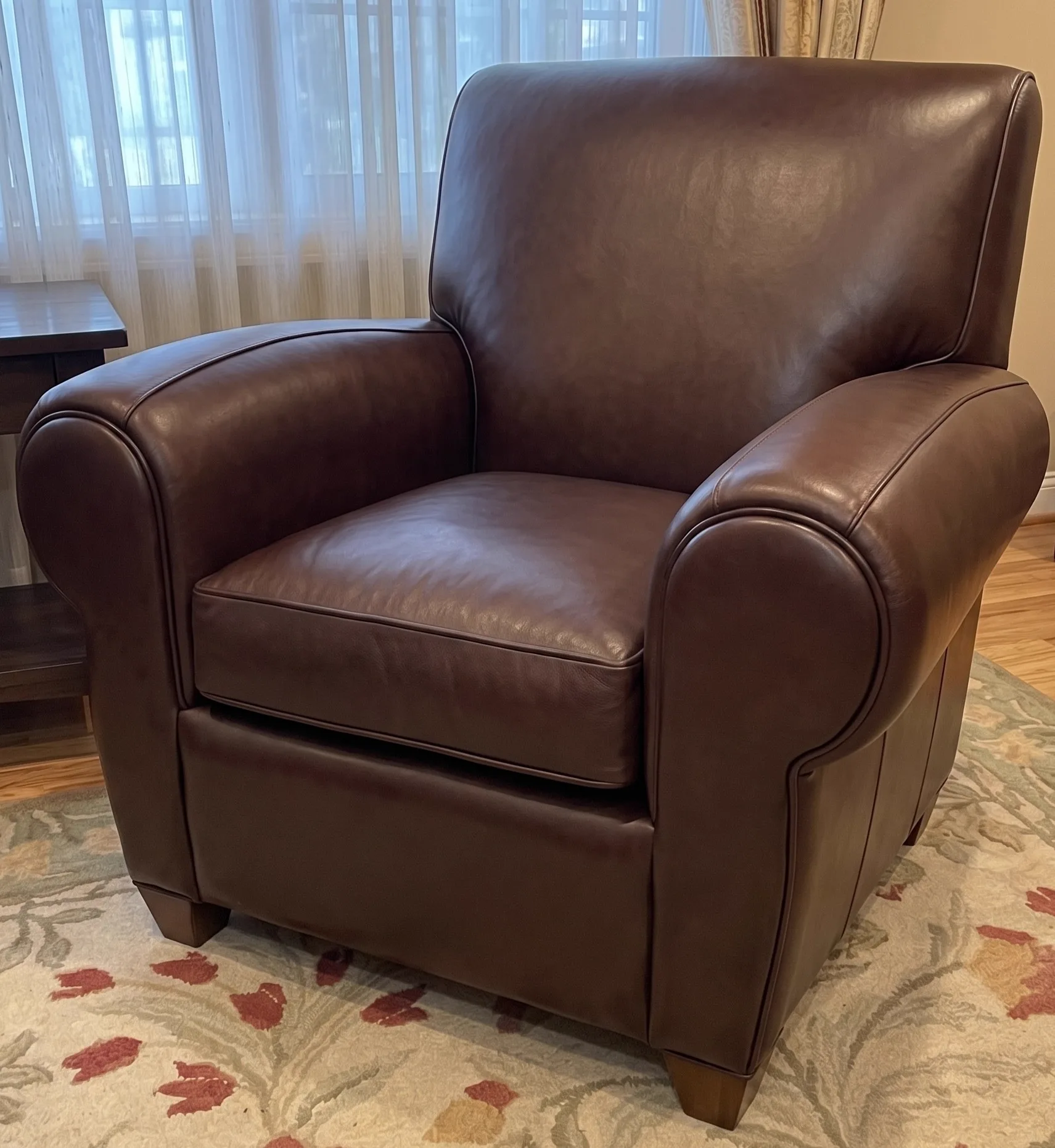
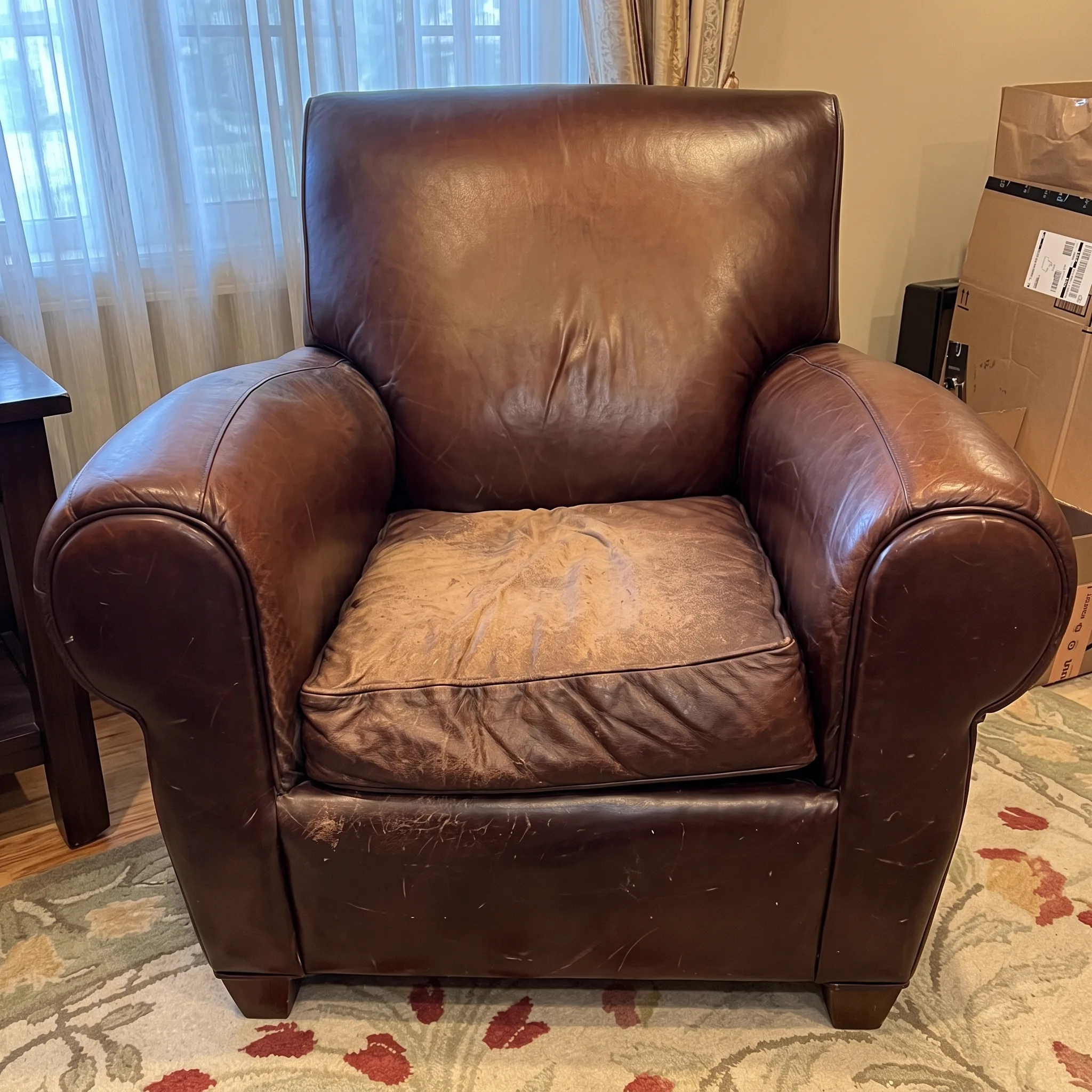
A conservator's protocol for sunscreen oils, lifted clean - lift the grease before the chemical filters yellow the hide.
Explore
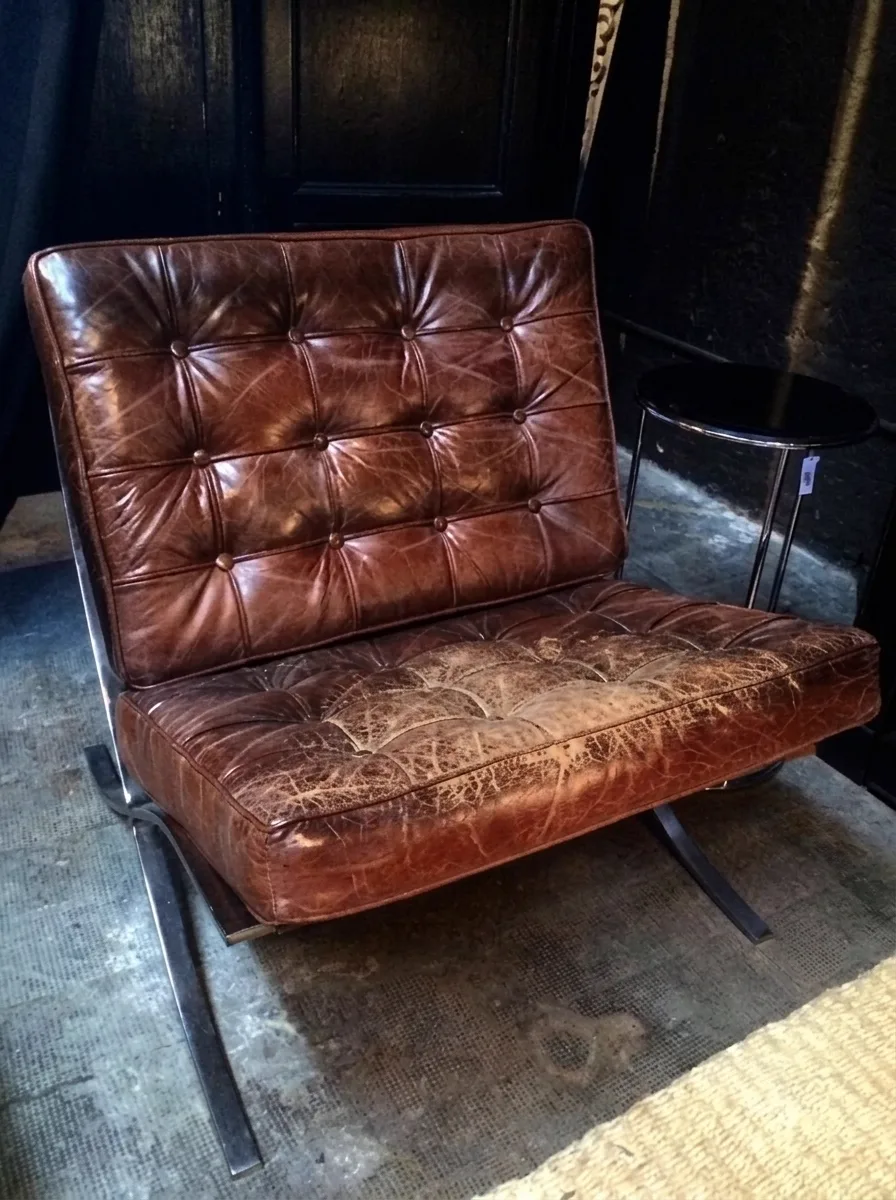
The honest verdict before you start - how fast to move, what is at risk, and how far it really reverses.
Book a Damage Check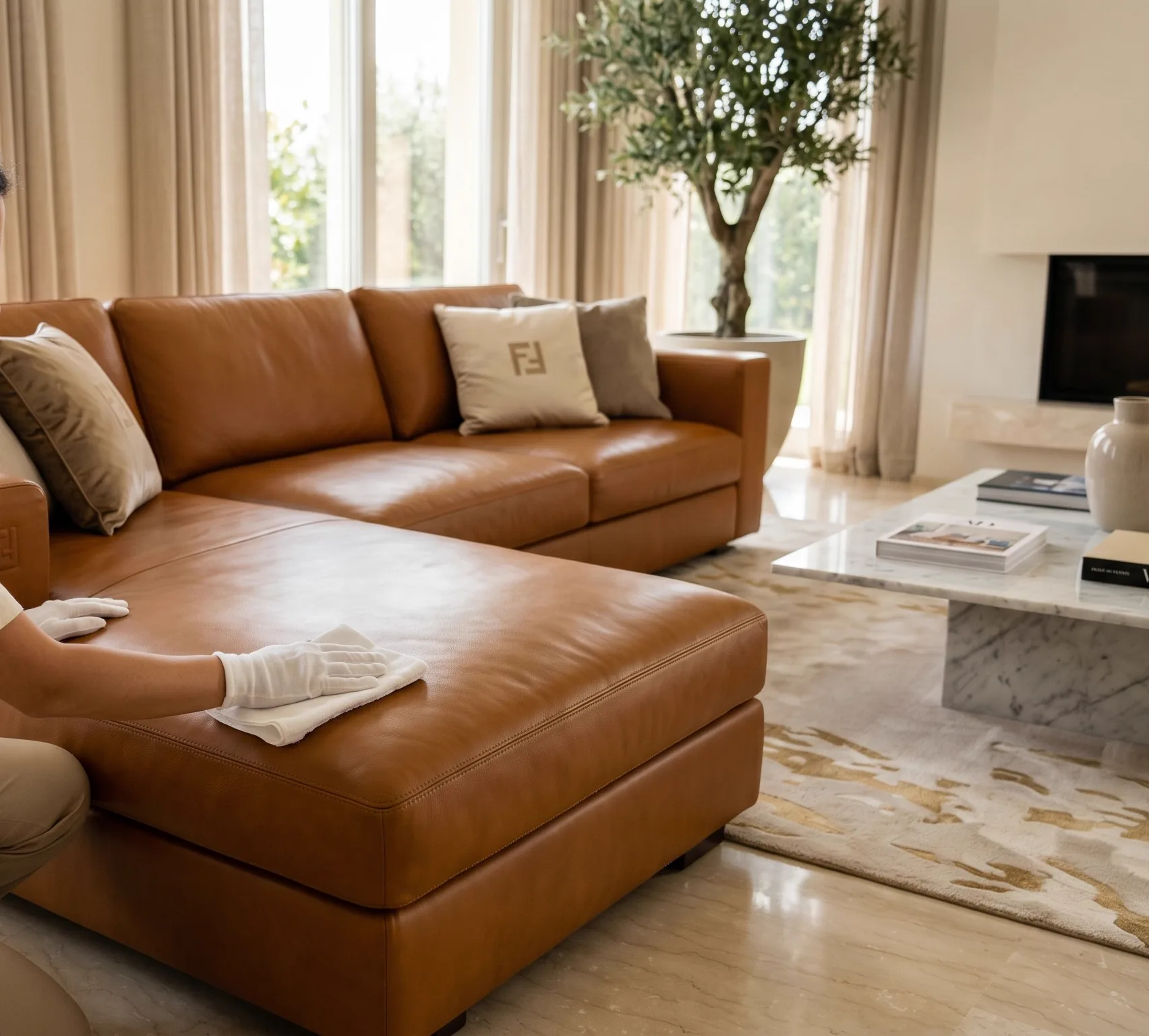 Time-Sensitive
Avobenzone starts reacting under UV within 2 hours.
 Leathers At Risk
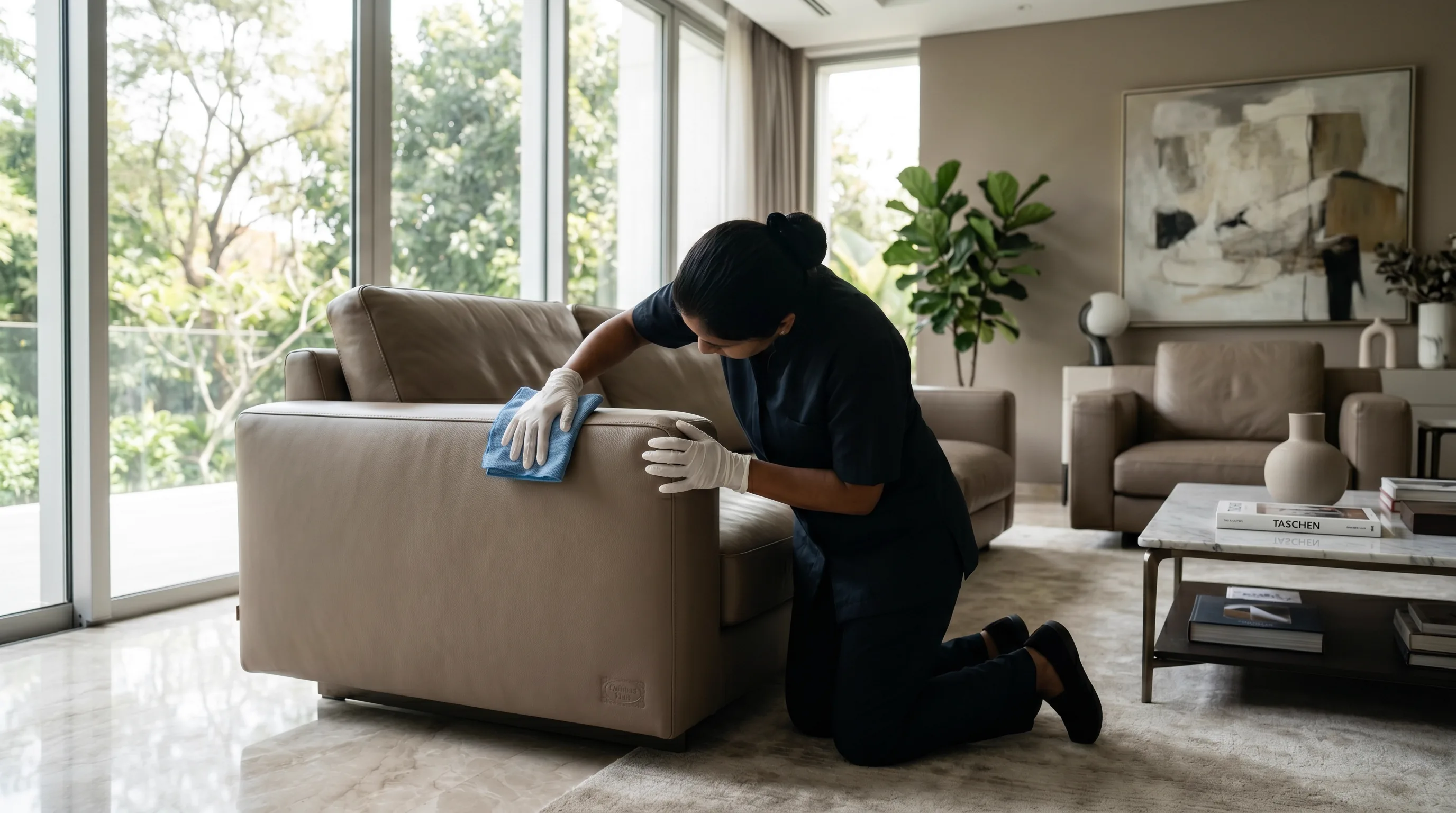
No surface coat - maximum penetration, avoid IPA.
 Difficulty
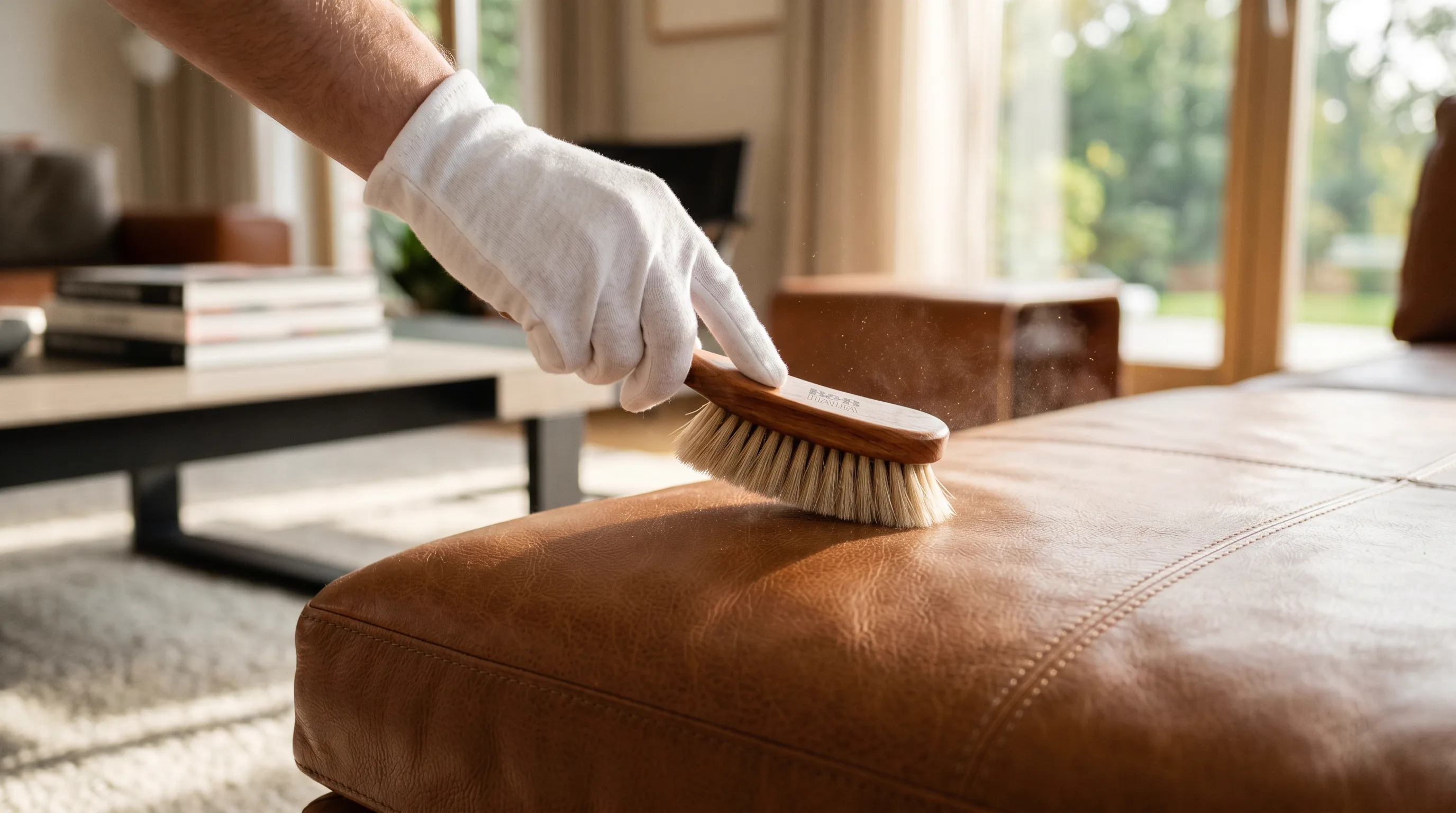
Fresh lifts easily; orange dye-shift needs professional colour correction.
 Reversibility
Avobenzone discolouration is permanent without pigment re-coating.
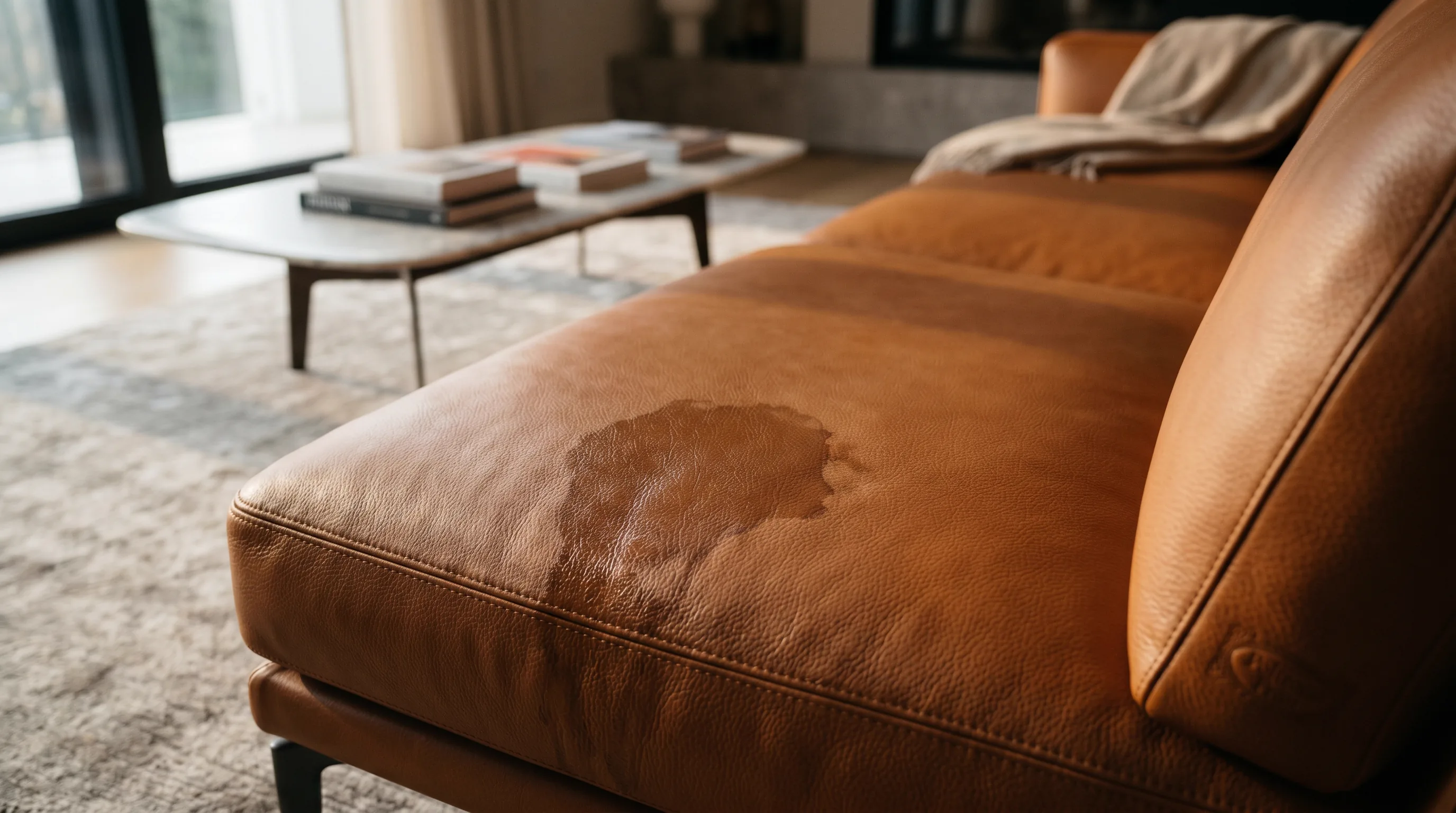
Sunscreen leaves a silicone film, not just a stain. An IPA wipe clears the film that is there; an armrest throw during SPF season keeps it from rebuilding week after week.
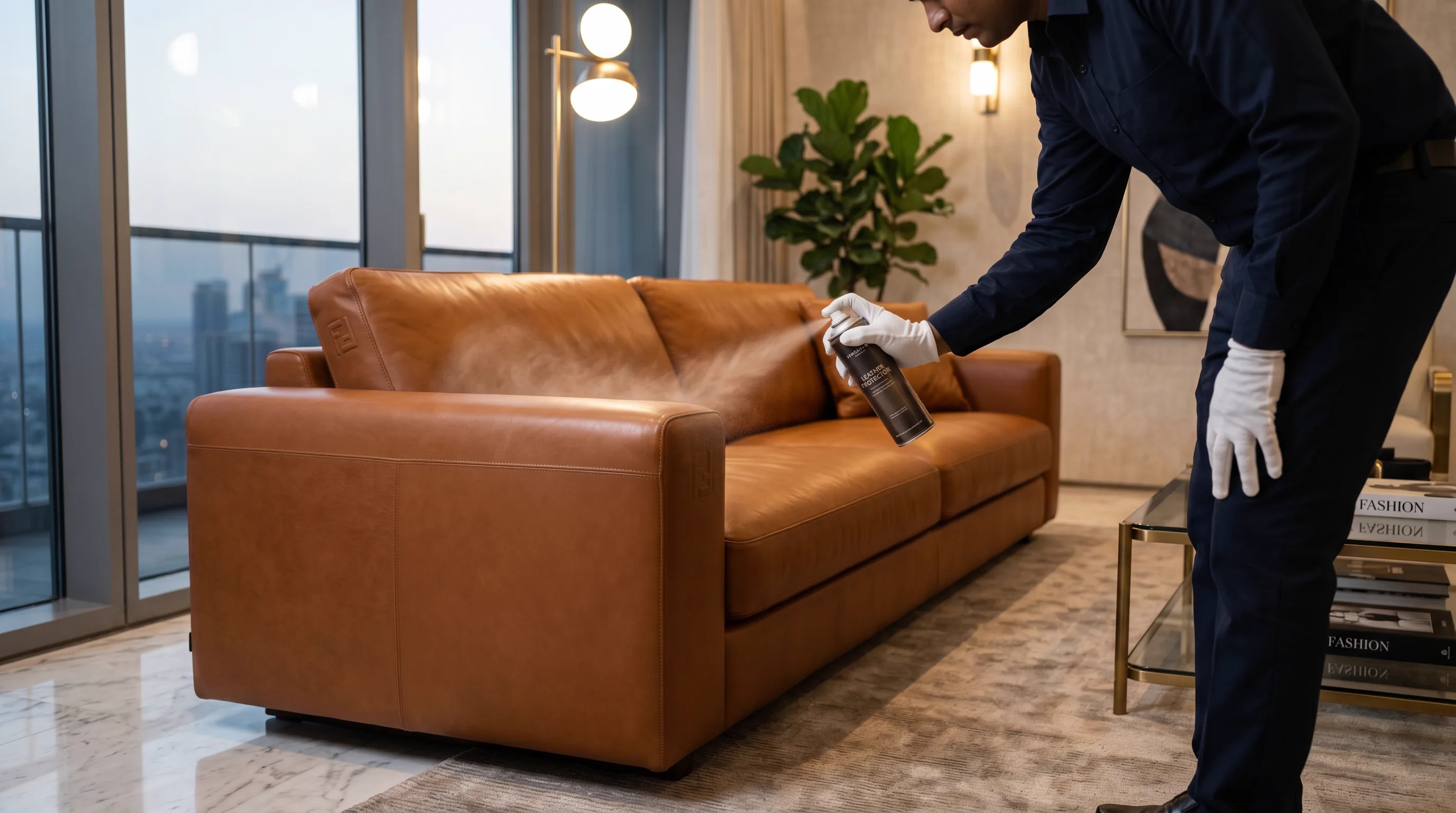
Aerosol SPF settles as a near-invisible mist across the whole sofa face. Families notice it as a gradual grey cast over summer, not as a discrete spill. By that point the silicone film has bonded well - and any balcony-facing panel may already be showing the early orange of avobenzone reaction.
Photographed in studio - FaridabadSunscreen stains are easy to misread. The visible cream or lotion is obvious; the silicone film that outlasts it is not. A quick two-point check separates sunscreen from other armrest stains and tells you whether you are dealing with the simpler lipid problem or the more complex avobenzone-reactive case.
Run a clean fingertip lightly over the dried area. A silicone carrier leaves a faint slip feeling - not greasy like hair oil, but not the normal texture of clean leather either. This is dimethicone forming a thin hydrophobic film. If the feel is present, the silicone step is necessary.
Mineral SPF (zinc oxide, titanium dioxide) leaves a visible white layer that sits on top of the leather. This is easier to remove than chemical SPF - a damp microfibre cloth lifts it without IPA. The risk is rubbing the mineral particles into the grain rather than lifting them.
Hold the stained area under a warm lamp or in daylight. An orange or reddish-brown colour shift against the surrounding leather means avobenzone has already reacted with iron in the leather dye. This is not a cleaning problem - it is a dye chemistry problem. No home step removes it.
This is the aerosol spray pattern. The fine mist is invisible when it settles but leaves a silicone film across a wide area. Over weeks, fine dust sticks to the silicone, producing a generalised grey dullness. Treat the whole panel, not just one spot.
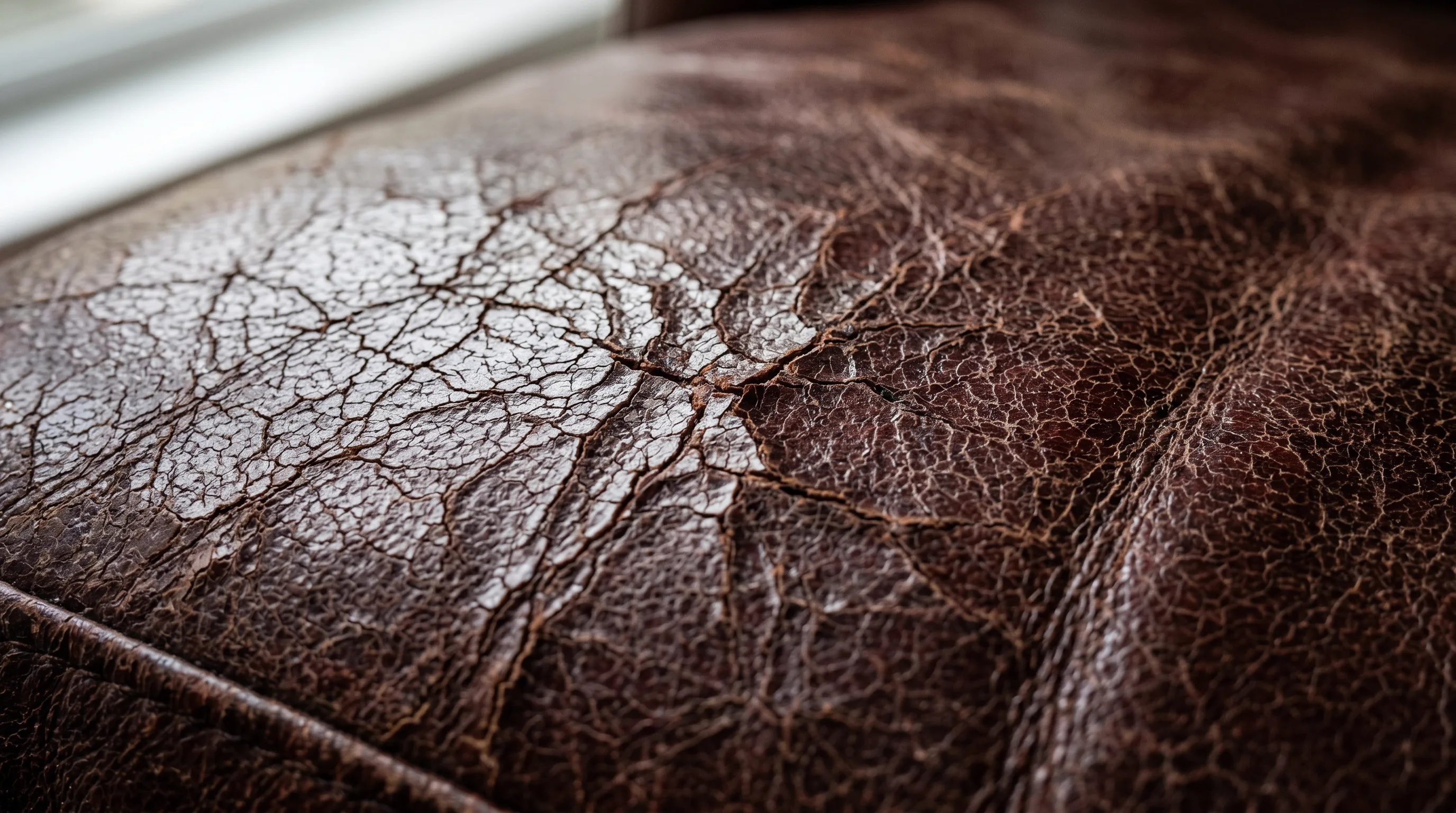
Also greasy on armrests, but no silicone feel, no orange shift, and the stain darkens into the leather rather than sitting as a surface film. See Plate IX.
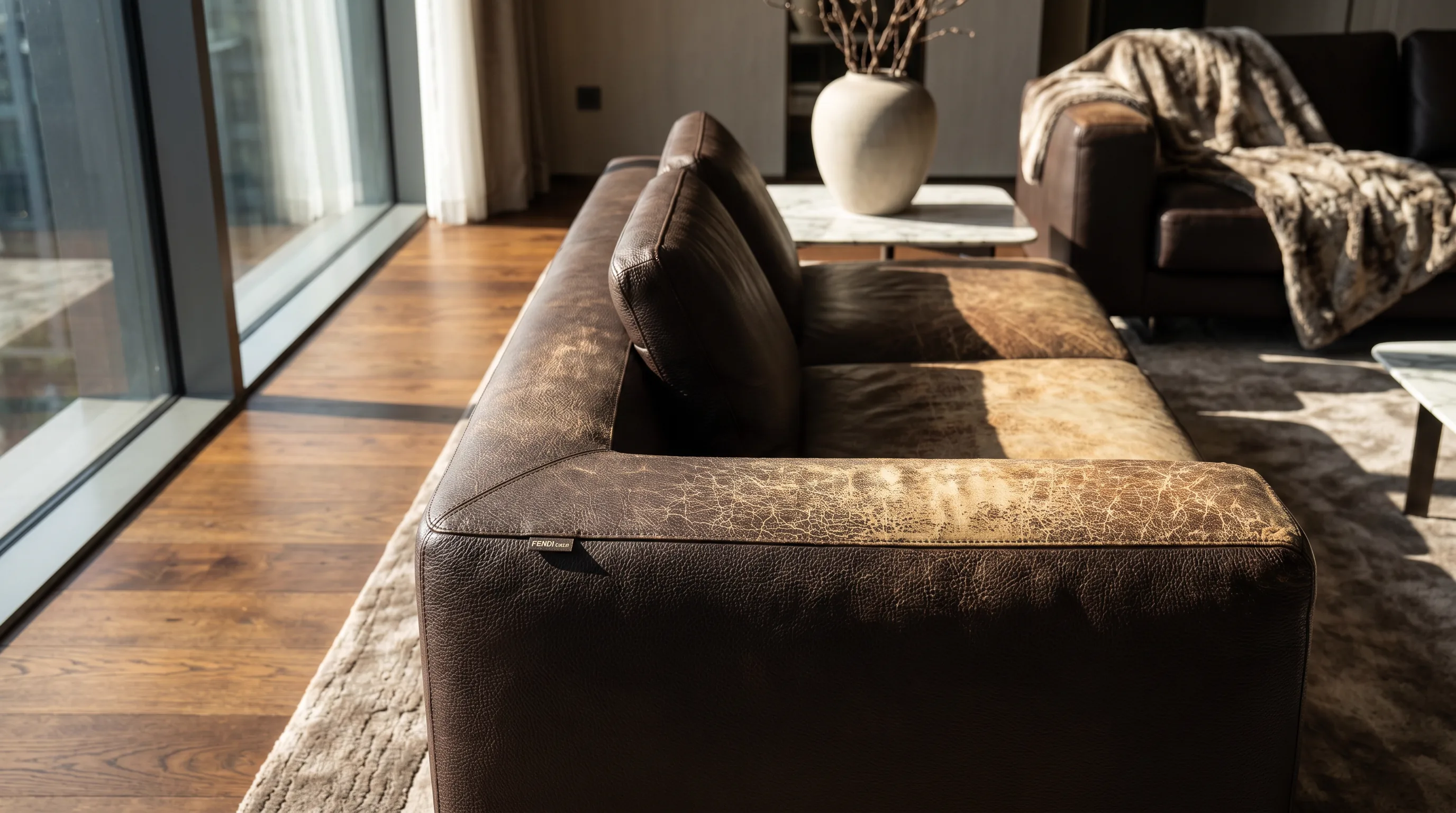
Pure lipid, no silicone, no reactive chemistry. Cornstarch lifts it completely without IPA. Warmer and more opaque than SPF on the leather surface. See Plate VII.
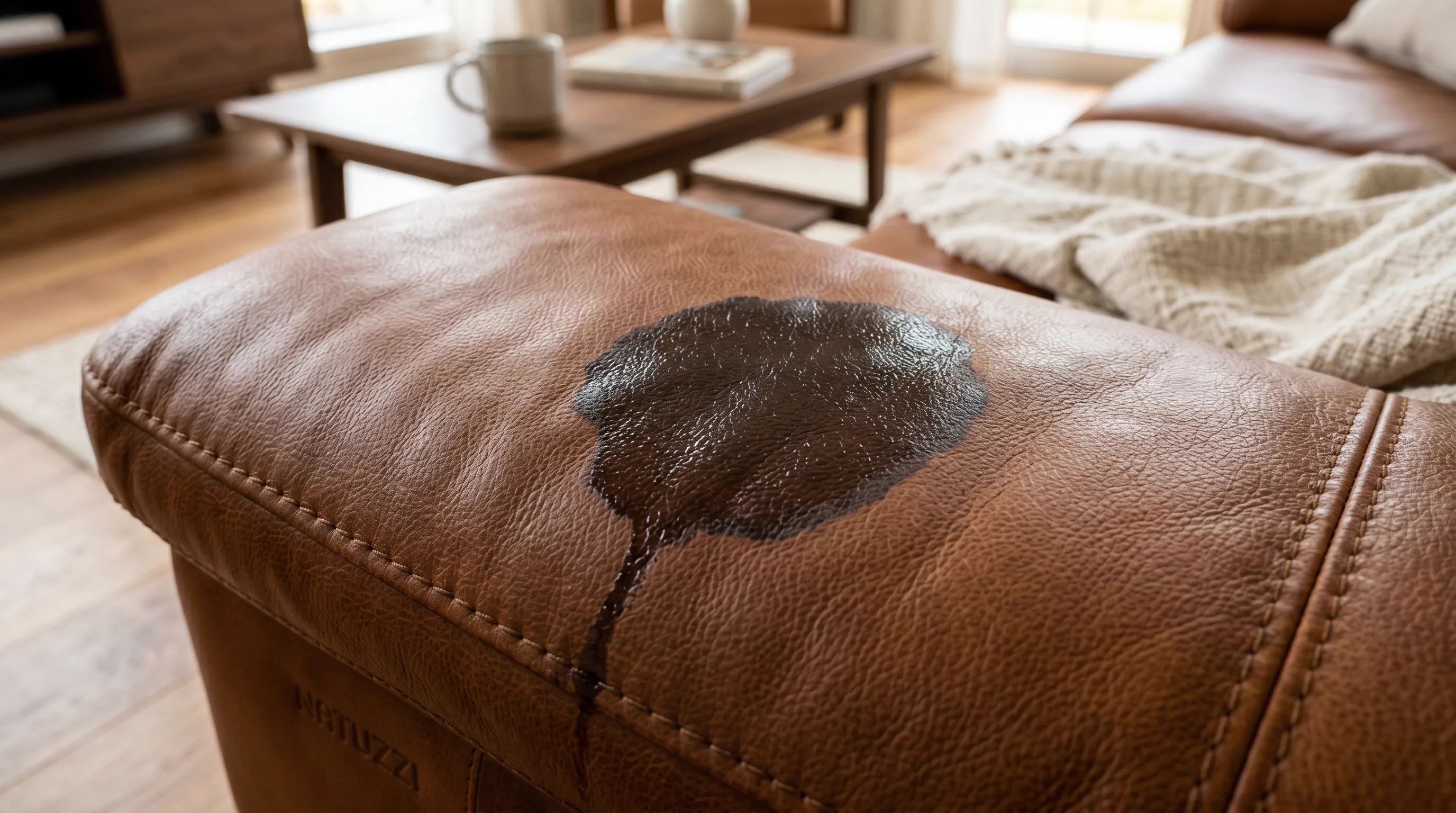
Wax-pigment composite. Has a silicone component in modern formulations, but also visible pigment transfer. No avobenzone reactive phase. See Plate VIII.
Modern broad-spectrum sunscreen contains two chemically distinct classes of active ingredients, each causing a distinct leather problem. Understanding them takes two minutes and changes which steps matter.
Chemical UV filters - avobenzone (butyl methoxydibenzoylmethane), octinoxate, oxybenzone - are organic molecules dissolved in an oil or emollient base. Avobenzone is the most problematic for leather because it chelates iron ions. Leather is tanned with iron-containing compounds, and the dyes used to colour the leather often include iron complexes. When avobenzone penetrates the surface and encounters these iron sites, it undergoes a photodegradation reaction under UV light, producing orange-brown degradation products. This is why a cream or beige sofa armrest develops an unexpected orange halo after an afternoon with the balcony door open. The reaction is irreversible at home - the iron-chelate degradation product is a structural change in the dye molecule, not a surface deposit. Aniline hides are most vulnerable because the dye sits directly in the collagen with no protective coating.
Almost every modern lotion and spray SPF contains dimethicone or cyclomethicone as a slip agent. Silicone forms a thin hydrophobic film on the leather surface that resists water, feels faintly waxy, and traps airborne dust. Over weeks this film darkens from cream to grey. Water-based cleaners cannot break it; a mild solvent is needed. Isopropyl alcohol at 30-40% concentration is ideal - strong enough to dissolve dimethicone, gentle enough not to strip the leather surface coating. Stronger concentrations (neat IPA or acetone) strip the topcoat and should never be used on finished leather.
Physical UV filters - zinc oxide and titanium dioxide - sit on top of the leather surface as a fine mineral powder suspended in a carrier. They do not penetrate or react with the leather dye. The risk with mineral SPF is mechanical: rubbing the particles into the grain rather than lifting them. A barely-damp microfibre cloth used in dabbing rather than wiping motions removes mineral SPF without IPA. If the product contains both mineral and chemical filters (common in Indian SPF 50+ formulations), treat it as chemical SPF and run the full IPA step.

A south-facing drawing room, a leather sofa two metres from the balcony door, a family applying SPF 50 daily before stepping out. By April the right armrest had a 15 cm orange crescent nobody had seen building. Avobenzone cases are the ones we get called to when the SPF tube is already empty.
Photographed on site - IndiaFresh SPF is a lipid-silicone emulsion sitting mostly on the surface. The first thirty minutes determine whether it stays there or penetrates the grain and triggers the avobenzone reaction. Move calmly but quickly - and keep the sofa out of direct sun while you work.
If the sofa is in a sun-facing room, close the blind or pull the curtain before doing anything else. Avobenzone needs UV to start the iron-chelation reaction. Removing the UV source buys time. Do not wipe yet.
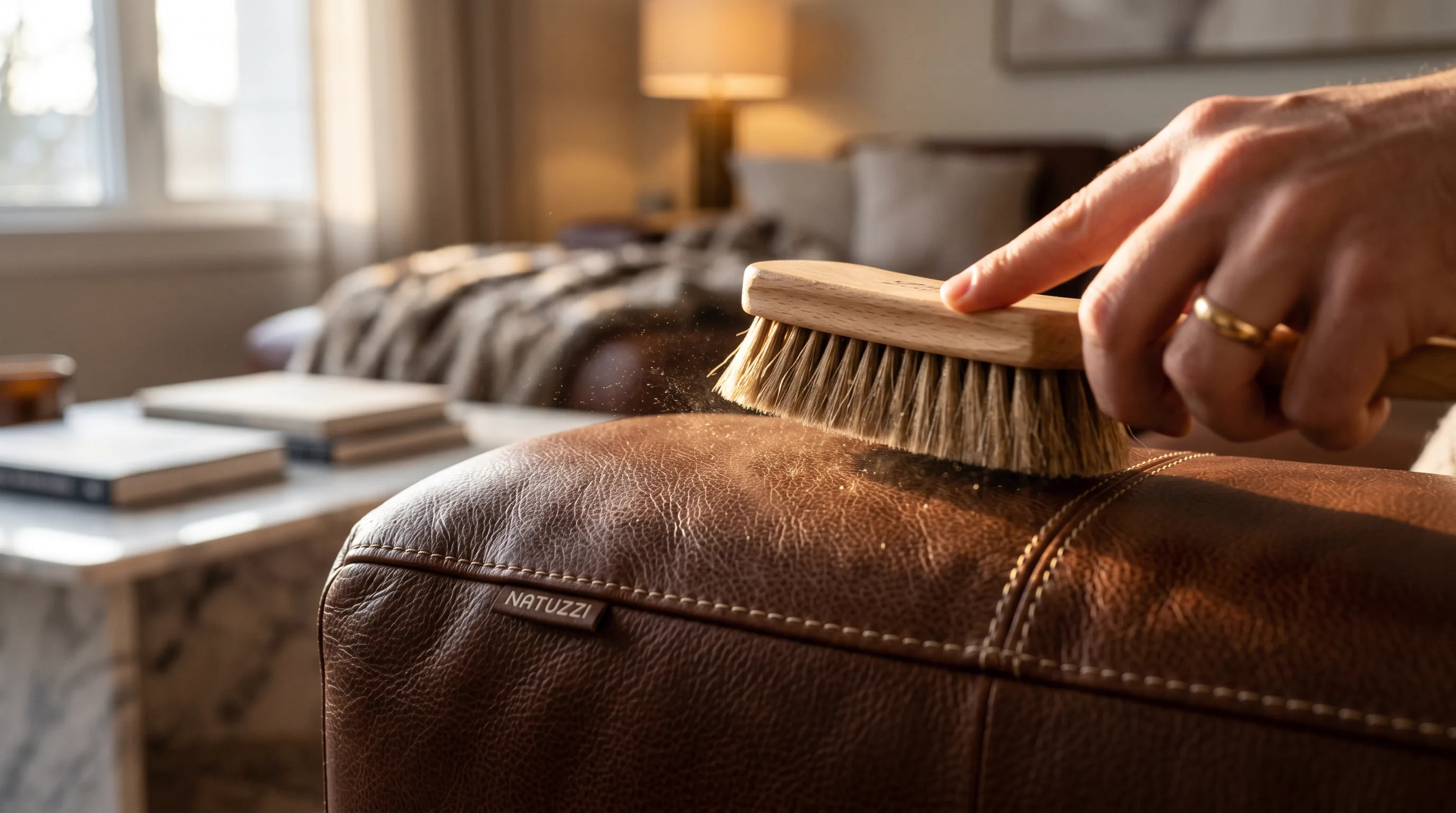
Pour a generous mound of cornstarch or arrowroot powder directly over the fresh SPF. Press lightly once with a fingertip - do not rub. Leave for 10-12 minutes. The starch absorbs the oil carrier and fatty alcohols. Brush off gently with a dry soft brush or folded dry cloth using outward strokes. This single step removes 60-70 percent of the stain load before any liquid touches the leather.
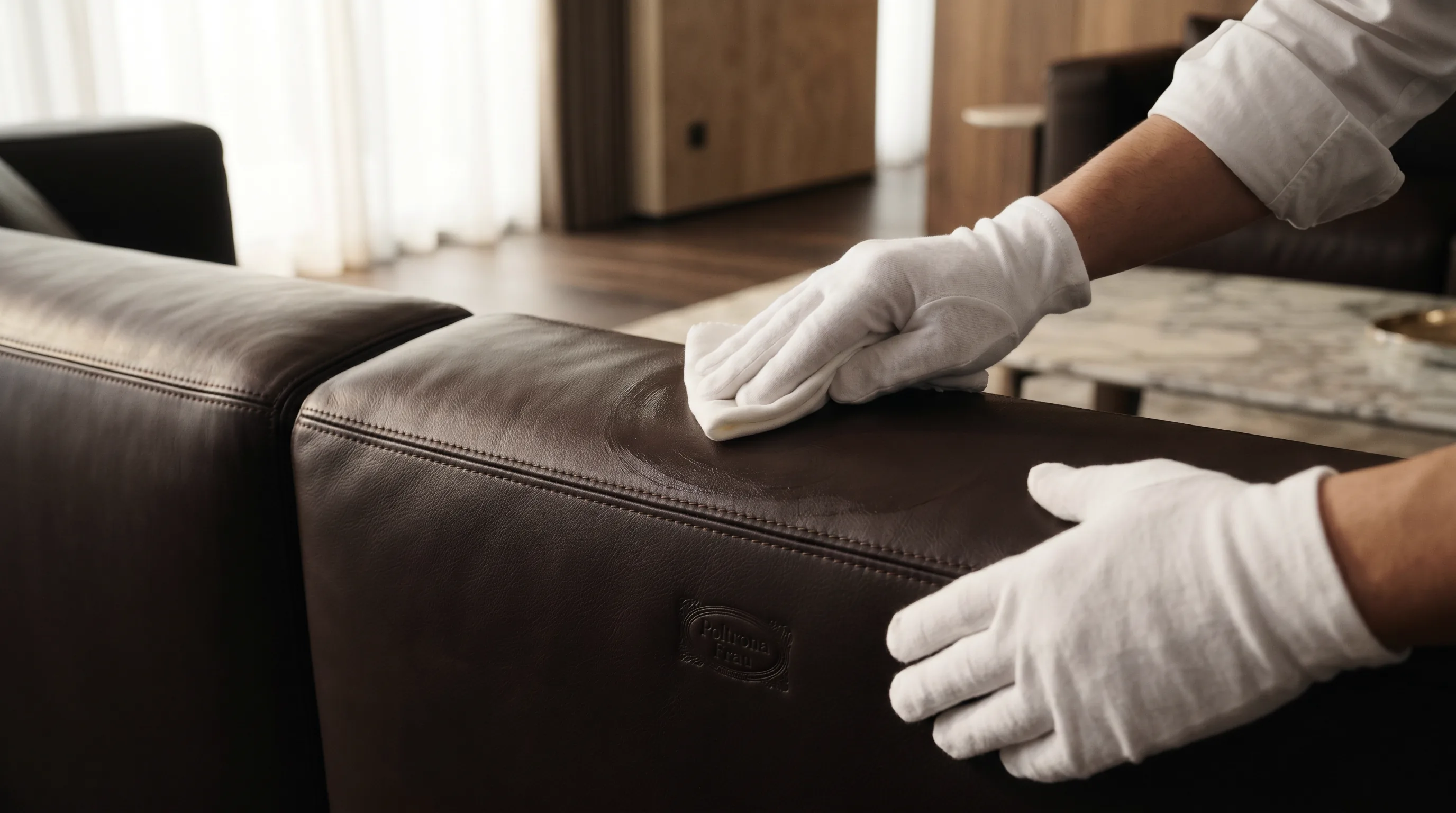
Mix 1 part pharmacy IPA 70% with 1 part cool water (result: roughly 35% IPA). Dampen a corner of a white microfibre cloth - not soaking, just damp. Dab the area in short inward strokes. Flip to a clean cloth section every 2-3 dabs. The silicone film dissolves and transfers onto the cloth. Stop when the cloth comes away clean and the faint waxy feel is gone.
Pat dry with a clean cloth. Allow 20-30 minutes of room-temperature drying. Apply a thin coat of pH-neutral leather conditioner with a microfibre cloth. Keep the sofa away from direct sun for at least 4 hours while the conditioner absorbs.
These cause permanent damage. The stain may lift; the leather will not recover.
Conservator-grade first response. Buys you the time to do this properly.
This protocol assumes chemical or mixed SPF on pigmented or semi-aniline leather with no visible orange colour shift. If you see orange, skip to Section 07. If your leather is aniline, skip the IPA step and use plain water only.
Fresh - Fresh - Under 30 minutes. Cornstarch still absorbs the carrier. Run all four steps. DIY success rate is high.
Dried - Dried - Hours old, silicone crust set. Cornstarch less effective; IPA step does more work. 2-3 passes typical. Expect slight residual dull patch that conditioning resolves.
Set - Reactive - Baked in sunlight. Check for orange colour shift first. If present, stop DIY and contact the studio - avobenzone has bonded with the dye.
Pour a generous mound of cornstarch or arrowroot powder directly over the SPF area. Press lightly once with a fingertip - do not rub. Leave undisturbed for 10-12 minutes. The starch absorbs the oil and fatty-alcohol carrier. Brush off gently with a dry soft brush using outward strokes. For a dried silicone crust, the cornstarch will absorb less but still lifts the oily residue before the IPA step.
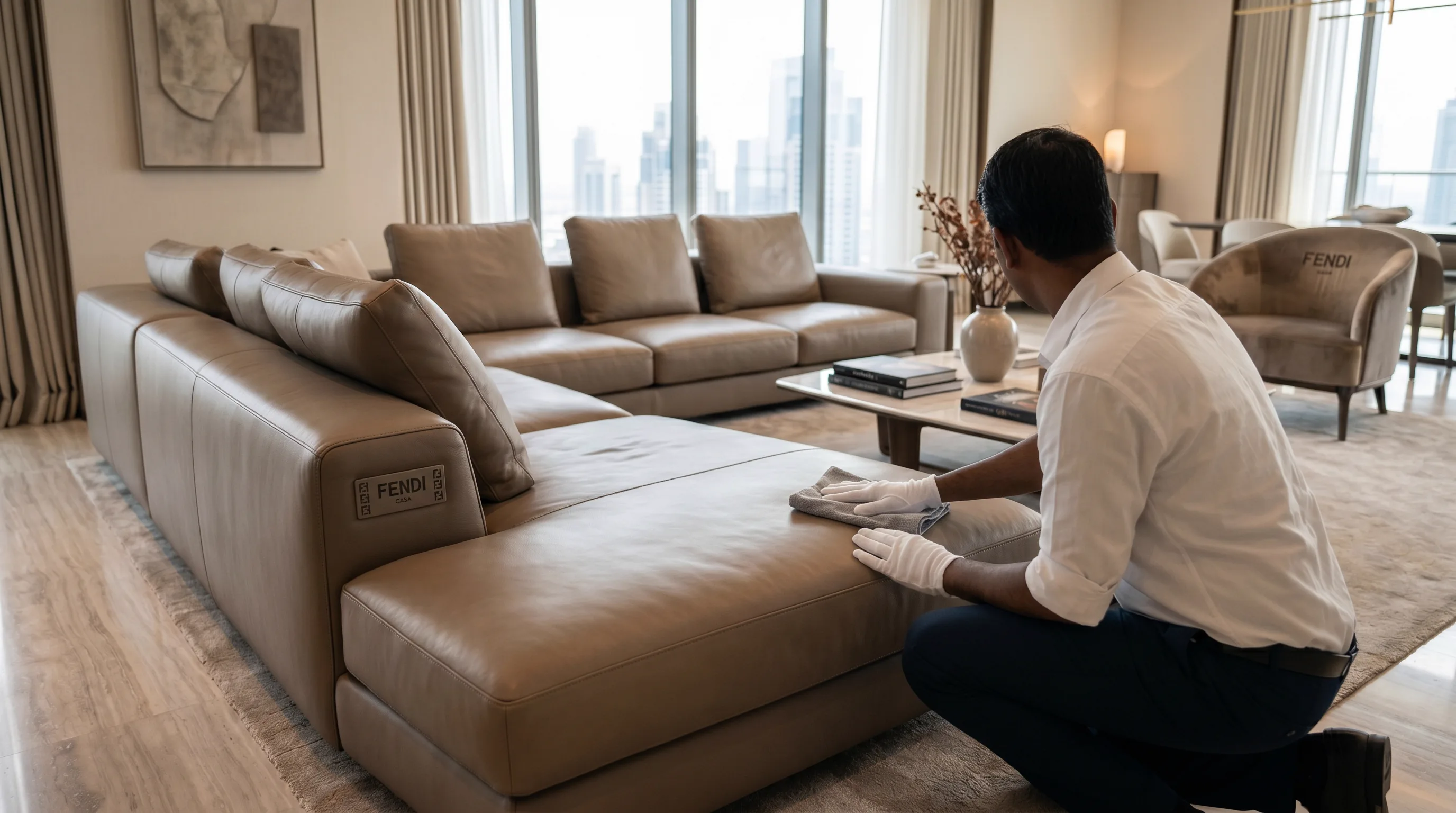
Mix 1 part IPA 70% with 1 part cool water to reach roughly 35% IPA. Dampen a corner of a white microfibre cloth - not soaking wet, just noticeably damp. Dab the stained area in short inward-to-centre strokes. The silicone film begins to dissolve and transfer onto the cloth. Flip to a clean section of cloth every 2-3 dabs. You are done when the cloth comes away clean and the faint waxy feel is gone from the leather surface. For aerosol-SPF grey cast across a large area, work one cushion-sized panel at a time and change cloths between panels.
Mix one drop of mild dish soap (Vim, Pril) in 200 ml of cool water. Apply a small amount of foam only - scoop from the top of the solution - onto the cleaned area with a damp cloth. Wipe in gentle circles. Follow immediately with a clean damp cloth to remove all soap. Any soap left on leather dries to a sticky residue that attracts dust and undoes the cleaning work. This step is optional for spray SPF (which has less oily residue) but necessary for thick lotion formulations.
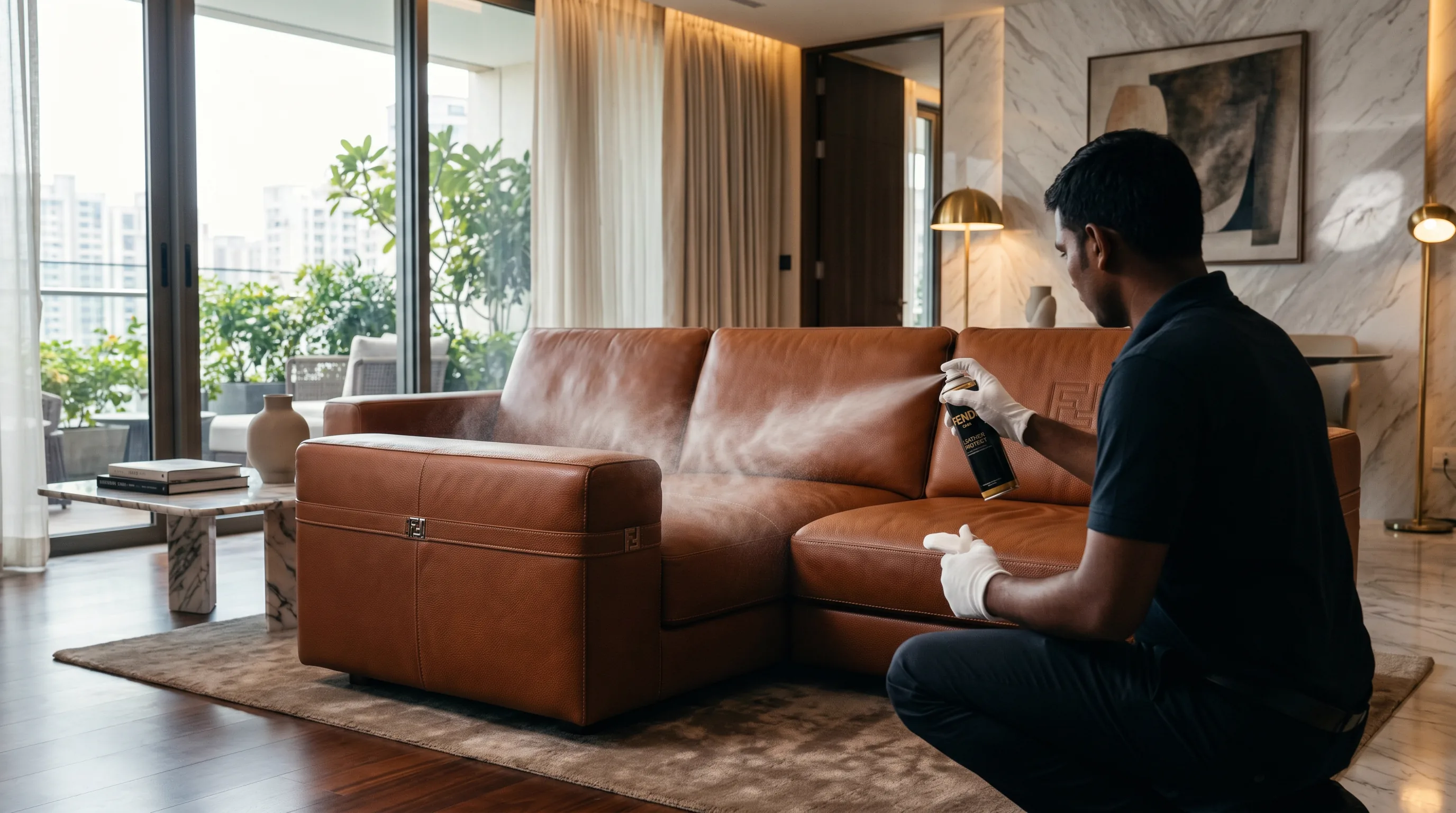
Pat dry with a clean cloth. Allow 20-30 minutes of room-temperature air-drying. Do not use a hair dryer or place in direct sun - heat accelerates any residual avobenzone reaction. Once the leather is fully dry, apply a thin coat of pH-neutral leather conditioner to a microfibre cloth. Buff into the worked area in small overlapping circles, then feather outward into the surrounding leather so there is no visible boundary. The conditioner restores the natural plasticisers that IPA draws out.
For aerosol spray SPF, the silicone film often extends well beyond the visible stain. After completing Steps 1-4 on the obvious area, run a fingertip lightly across the adjacent cushions and armrest surface. Any waxy feel means silicone is present. Work those panels with Step 2 (IPA wipe) before conditioning, so the whole sofa is treated evenly.
If at any point during cleaning you notice an orange or rust-coloured area developing or already present, stop all cleaning steps immediately. Take a clear daylight photograph showing the orange halo against the surrounding leather. Do not apply any further cleaning products - bleach, lemon juice, and colour-restore sprays will make the discolouration permanent. Contact the studio with the photograph; this is a pigment re-coating job, not a cleaning job.
No visible residue, no waxy feel, original colour fully restored. Realistic on fresh SPF on pigmented leather caught within 30 minutes.
Slight dulling or a faint grey cast remaining after the IPA step. Conditioning usually resolves it within 24 hours. Common for hour-old silicone crust.
An orange or rust-coloured halo where the stain sat. Avobenzone has chelated the iron in the leather dye. No cleaning step reverses this - professional pigment correction is the only path.
Sunscreen removal needs four to six items, all of them available at a kirana or chemist. The only specialist item is a good leather conditioner - and even that can wait until after the clean.
Step 1. Absorbs the oil and fatty-alcohol carrier before it penetrates further into the grain.
Step 2. Diluted 1:1 with water, breaks the silicone dimethicone film that water-based cleaners cannot touch.
Steps 2 and 4. White so you can see exactly what transfers. Microfibre holds the IPA evenly and releases it in controlled dabs.
Step 3. Surfactant lift for fatty-alcohol residue from lotion formulations. One drop per 200ml water only.
Step 4. Restores the natural plasticisers drawn out by IPA. Most important item for long-term leather health after any solvent cleaning.
Step 1. Brushes off the cornstarch without pressing it into the grain. A clean makeup brush or soft toothbrush works.

When families describe a sofa that looks "perpetually dusty" despite regular cleaning, the answer is almost always a silicone film from aerosol SPF or hair spray. The dust is not dirty air - it is clean dust clinging to a hydrophobic surface that water-based cleaning cannot reach. IPA breaks it in a single wipe.
Photographed in studio - The PracticeSPF stains vary significantly across the five common leather finishes. The silicone problem is universal; the avobenzone risk is highest where the surface is most open. Find your row before choosing a step.
Pick a hidden patch (back of seat-back). Run all three tests, then read the matrix below for your type.
Place a single drop of water on the surface. Soaks in within 30 seconds = aniline. Beads and sits on top = pigmented or bicast. Slow darken with eventual absorb = semi-aniline.
Press a fingernail into the leather for two seconds, release. Mark stays then fades slowly = aniline / semi-aniline. No mark at all = pigmented or bicast (top-coat hides the indent).
Look across the surface at a low angle in daylight. Uneven natural grain, soft matte sheen = aniline. Plastic-like even sheen, perfectly uniform grain = bicast or heavily pigmented PU-leather.
Still unsure? WhatsApp a close-up photograph in daylight to +91 98915 96597 - identification is free.
No topcoat. Avobenzone reaches iron sites in the collagen immediately. Silicone penetrates into the grain rather than sitting on the surface. IPA at any concentration risks tide marks.
Cornstarch only. Skip IPA - use a barely-damp plain-water cloth for the wipe. Any orange shift: photograph and contact the studio immediately.
The majority of Indian sofas purchased in the last 15 years are pigmented leather - the moderate-risk row, and the row with the highest DIY success rate. The concern is aniline and semi-aniline hides sold as premium Italian or European leather, often found in high-end Delhi-NCR homes. If your sofa was described at purchase as "natural," "vegetable-tanned," or "aniline finish," skip the IPA step and call us before using any solvent. The three-finish guide separates them clearly in under three minutes.
Bicast and bonded "leather" is common at price points below Rs 50,000 in India, and it is actually the easiest SPF case to clean because the PU skin blocks every reactive chemistry. The risk on bicast is mechanical - aggressive rubbing or scrubbing flakes the coating off in patches at the seams and corners. The bicast and bonded explainer covers what to watch for when cleaning this material.
There is one clear signal that home methods have stopped being useful and started being harmful on sunscreen stains: an orange or rust-brown colour shift in the leather. Everything else - silicone film, grey cast, mineral residue - is cleanable at home. The avobenzone-iron colour change is not.
Avobenzone-iron chelation is a molecular-level colour change, not a surface deposit. The dye molecule itself has changed. Cleaning solvents, bleach, lemon juice, and colour-restore sprays sold online cannot undo molecular structure. What they do is strip the surface coating further, which expands the area of discolouration and makes the subsequent professional re-dyeing more extensive and expensive. The earlier a studio assessment happens, the smaller the area that needs pigment correction.
Professional colour correction for avobenzone cases involves light surface abrasion, colour matching to the original hide, laying a thin pigment film, and re-sealing the surface. We do this regularly on south-facing living room sofas in India. It is not emergency repair - it is cosmetic restoration, and it is very different from replacing leather panels. The sofa that looked damaged is almost always fully recoverable in the studio.
An orange or rust-coloured halo where the stain was, visible under both lamp light and daylight.
Cleaning attempts have spread the orange area rather than reduced it.
The leather feels rough or dry in the stained area despite conditioning.
The colour shift is spreading slowly over days even after the sofa was moved out of direct sun.
White residue remaining after IPA treatment on what was thought to be a chemical SPF - may be a mineral-chemical hybrid needing a different approach.
The orange-shift cases are never about what the family should have done. Avobenzone reacts faster than people can notice it. The question is always: what does the studio need now to make it right, and how do we prevent the same armrest from doing it again next summer.
Send a daylight photograph on WhatsApp before trying anything else. We will tell you honestly whether it is a cleaning case or a colour-correction case, and what each path looks like. No commitment needed.
The sofa is cleaned. The armrest is back to its original colour. The two things that determine whether this becomes a recurring problem are light management and a change in application habits.
The IPA wipe in Step 2 draws a small amount of natural plasticiser from the leather surface coating. For the next two weeks, the cleaned area is slightly more porous than the leather around it - meaning a second SPF spill will penetrate faster than the first. A second conditioning application at the two-week mark re-seals the lipid layer and equalises the surface. The full furniture-care guide covers conditioning frequency and product selection across Indian climate cycles.
South-facing and west-facing rooms with leather sofas near balcony or window glass are the highest-risk configuration for avobenzone repeat cases. UV through glass is sufficient to trigger the reaction even in an air-conditioned room. A simple UV-filtering window film on the relevant panels reduces the risk significantly. This is a Rs 800-1,500 per-panel intervention that costs less than one studio visit. The Delhi NCR seasonal manual covers light and humidity management through the year.
The practical prevention habit is straightforward: apply sunscreen at least ten minutes before sitting, allow it to absorb into skin, and wash or cover forearms before reclining on the sofa. Most SPF transfers happen from forearm skin onto the armrest leather within the first ten minutes of application, before the product has absorbed. A thin cotton throw over the armrests during the peak March-June SPF season is the simplest barrier - not elegant, but it keeps the leather off the intake list.
Apply a second thin conditioning coat exactly two weeks after the IPA clean. This re-seals the plasticiser layer fully and equalises the surface porosity.
A UV-filtering window film on balcony or west-facing glass reduces avobenzone reaction risk to near zero. Standard hardware shops and glass shops in India stock these.
Apply sunscreen, wait 10 minutes for it to absorb into skin, then sit. Most leather transfer happens in the first minutes before the product has set.
Thin removable cotton covers over the armrests during March-June are the most effective zero-cost barrier for families that use sunscreen daily.
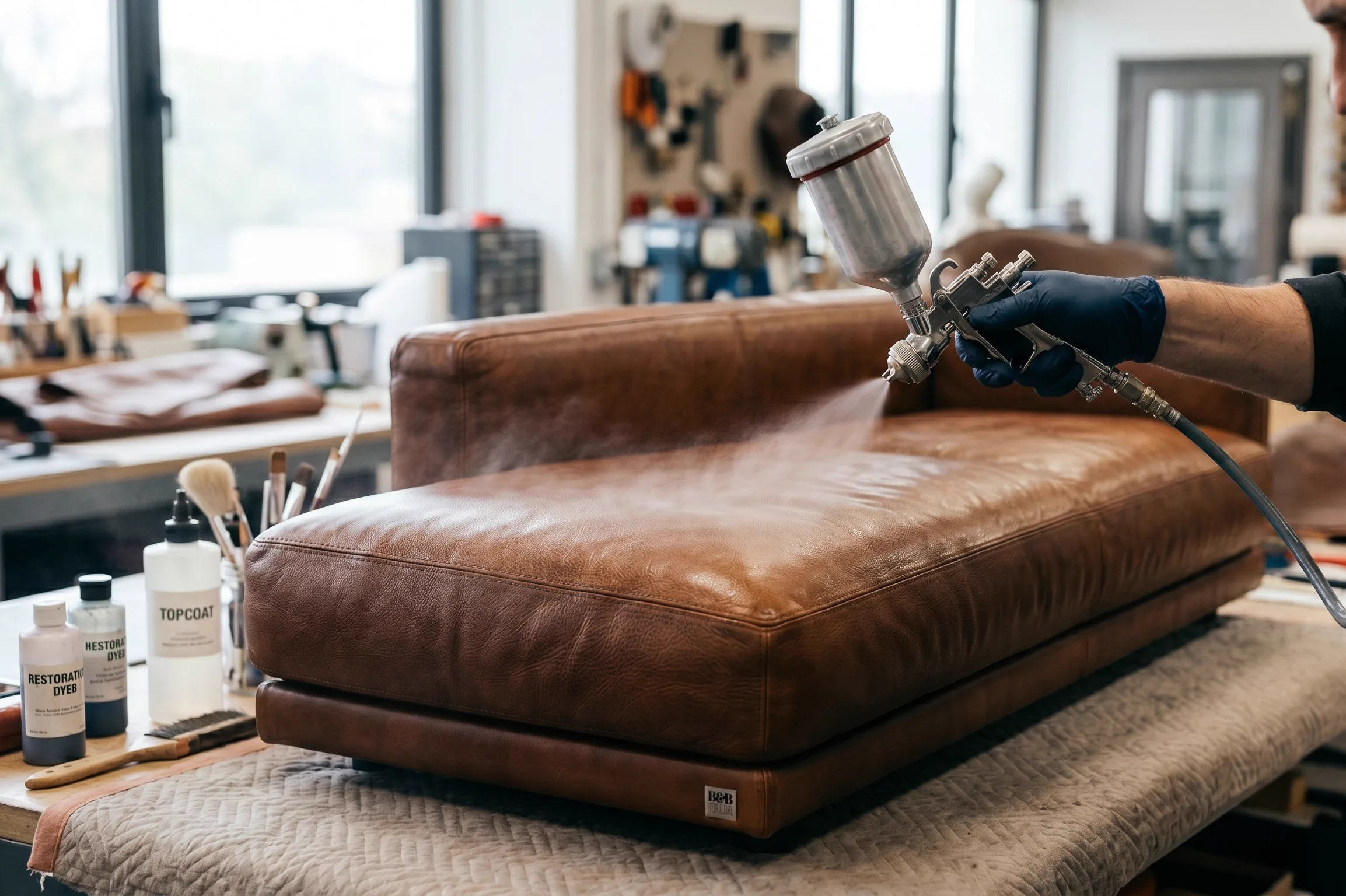
After the re-dye and the window film: same sofa, same room, same family. The armrest that was orange in April is indistinguishable from the rest of the leather by June. UV management is the one aftercare step that turns a recurring repair call into a one-time visit.
Photographed in client home - IndiaHand sanitiser is mostly IPA (60-70%) but also contains glycerol and fragrance. The glycerol leaves a sticky residue on leather and the fragrance can stain light-coloured hides. Use diluted pharmacy IPA at 35% instead - cleaner chemistry, no additives, same silicone-dissolving result.
No. Avobenzone-iron chelation is a structural change in the dye molecule - no cleaning step removes the orange colour shift. Lemon juice, whitening toothpaste, and colour-restore sprays make it worse by stripping the surface further. Professional pigment correction is the only reliable path. Send a daylight photograph to the studio before trying anything else.
Work in panels - divide the sofa into cushion-sized sections and complete cornstarch plus IPA wipe on one before moving to the next. Change cloths between panels. The silicone film lifts cleanly; you may need 2-3 passes per section. Condition the whole sofa once all panels are done so there is no visible sheen boundary between treated and untreated areas.
For pure lipid damage - no. Ghee and hair oil can penetrate deeply and set permanently if ignored. What makes sunscreen uniquely risky is the avobenzone reactive chemistry on chemical SPF, which can damage the dye rather than just the leather surface. A sunscreen stain caught in 30 minutes on pigmented leather is easier to remove than a week-old ghee stain; a sunscreen stain left in direct sun for two hours can cause permanent discolouration that ghee never would.
Three quick tests: put a single drop of water on a hidden patch. If it absorbs in under 30 seconds and darkens the leather, it is likely aniline. If it beads or takes over a minute, it is pigmented. Also look for natural grain variation and small insect marks or wrinkles in the hide - aniline leather shows these because it has no opaque topcoat. When in doubt, skip IPA and use plain water only.
Yes - consistent same-day removal is the most effective prevention. SPF that sits on leather overnight in a sun-facing room accumulates damage that is much harder to reverse than a fresh spill. A quick dry cornstarch application followed by a damp-cloth wipe at the end of each evening removes the carrier before avobenzone has time to react deeply with the leather dye.
Stains that share a chemistry family, a protocol step, or a leather-risk profile with sunscreen. Reach for these next.
PLATE PLATE IX
Lipid headrest stain. Same cornstarch-first protocol. No reactive chemistry but deep penetration risk.
read entry →
PLATE PLATE VII
Pure lipid carrier. Cornstarch lifts without IPA. Good comparison for the non-reactive SPF case.
read entry →
PLATE PLATE VIII
Wax-silicone composite. Shares the two-step lipid-then-IPA lift with sunscreen.
read entry →
PLATE PLATE IV
Protein reactive. Different family but same time-urgency logic - window closes fast.
read entry →
PLATE PLATE III
Polyphenol tannin. Speed protocol. Useful contrast with the reactive-chemistry mechanism of avobenzone.
read entry →
PLATE PLATE V
Tannin with milk-fat residue. Double-component lift similar to SPF with lotion carrier.
read entry →If the cornstarch and IPA steps did not clear it, or if you can see an orange shift that appeared after the stain, send a daylight photograph on WhatsApp. We will tell you whether it is a cleaning case or a colour-correction case, what each path involves, and roughly what it costs. No commitment needed. Faridabad studio, pan-India by photograph.
Tell us about your sofa. A leather specialist will respond the same day - no obligation.