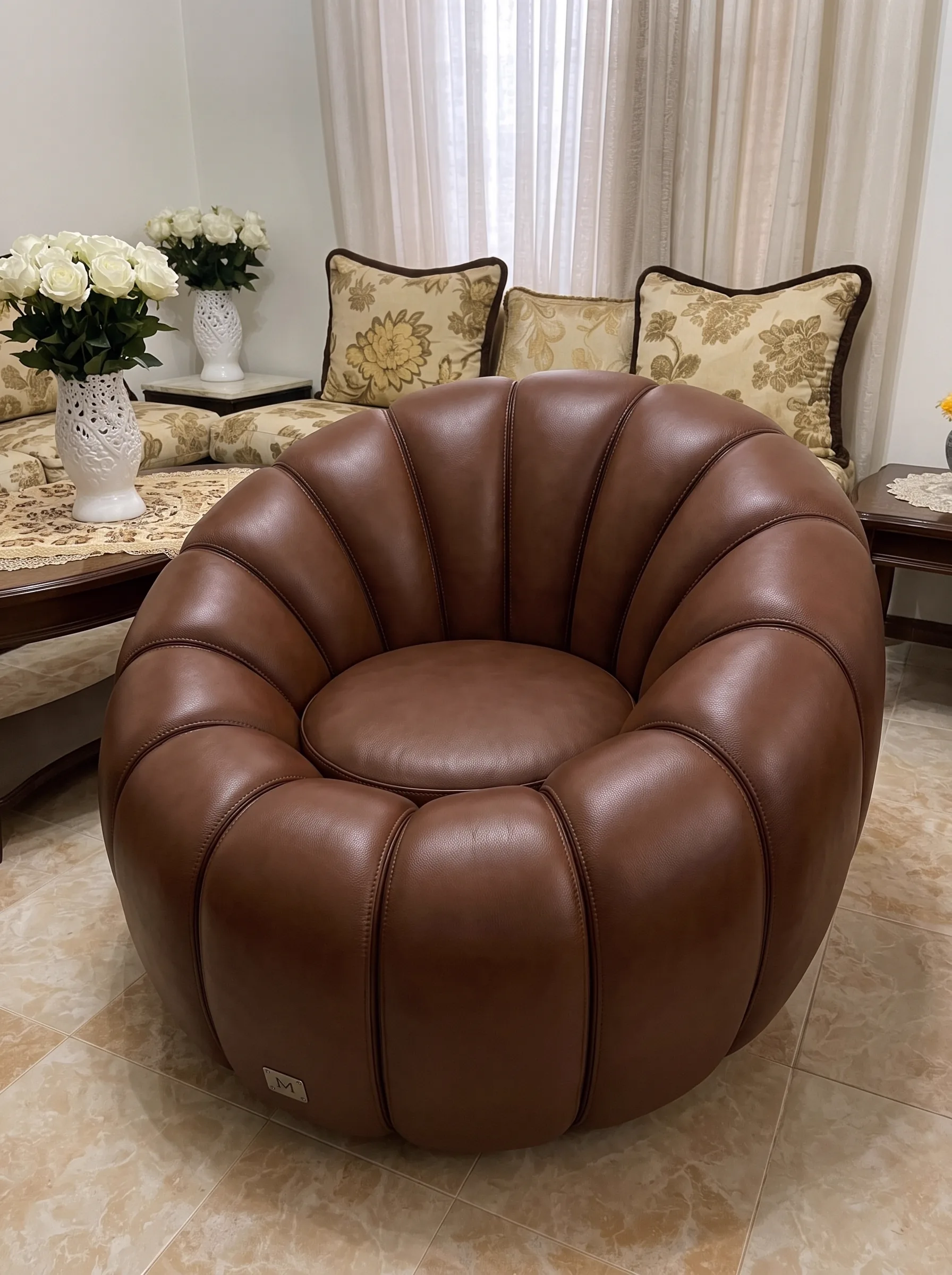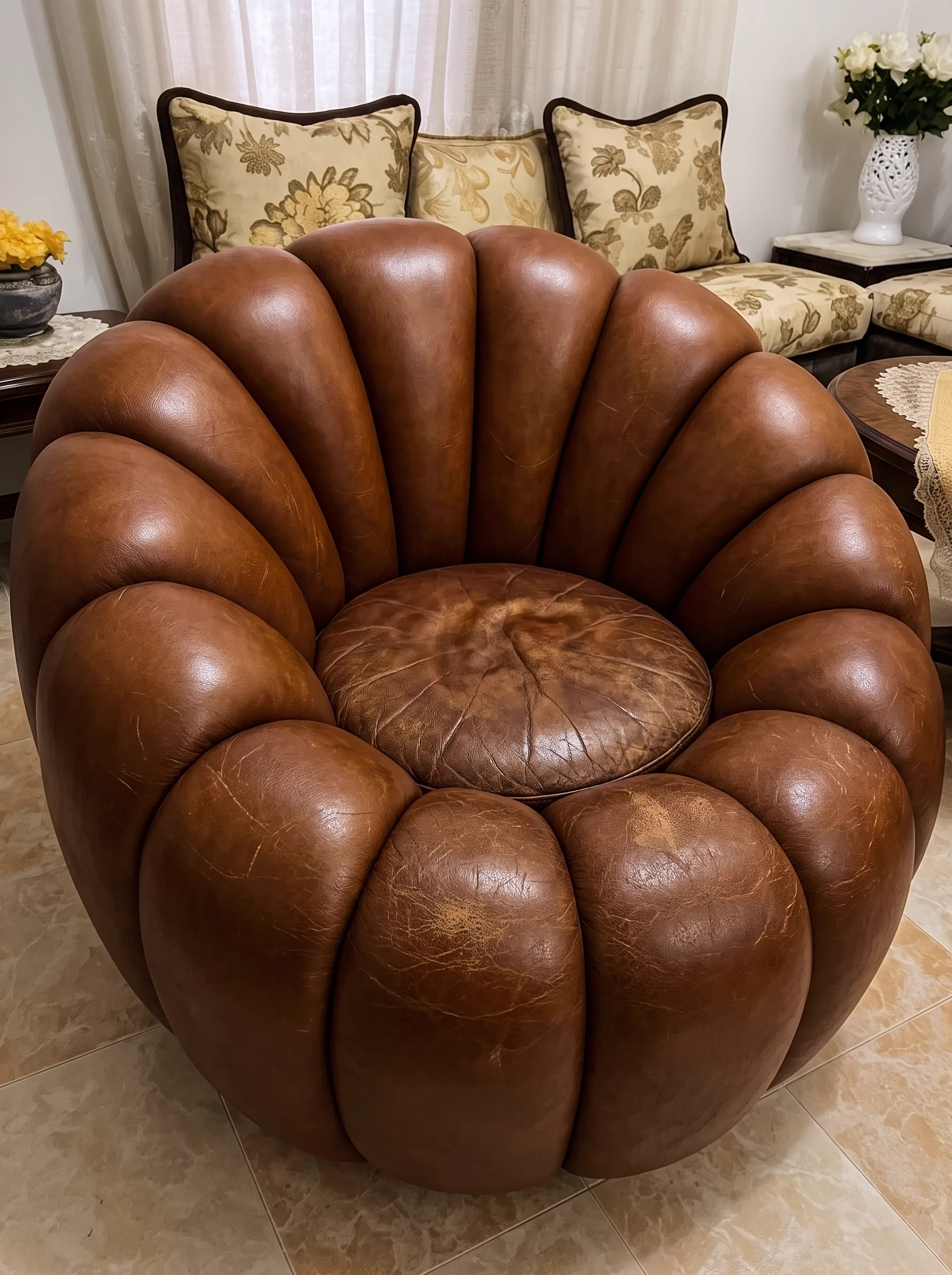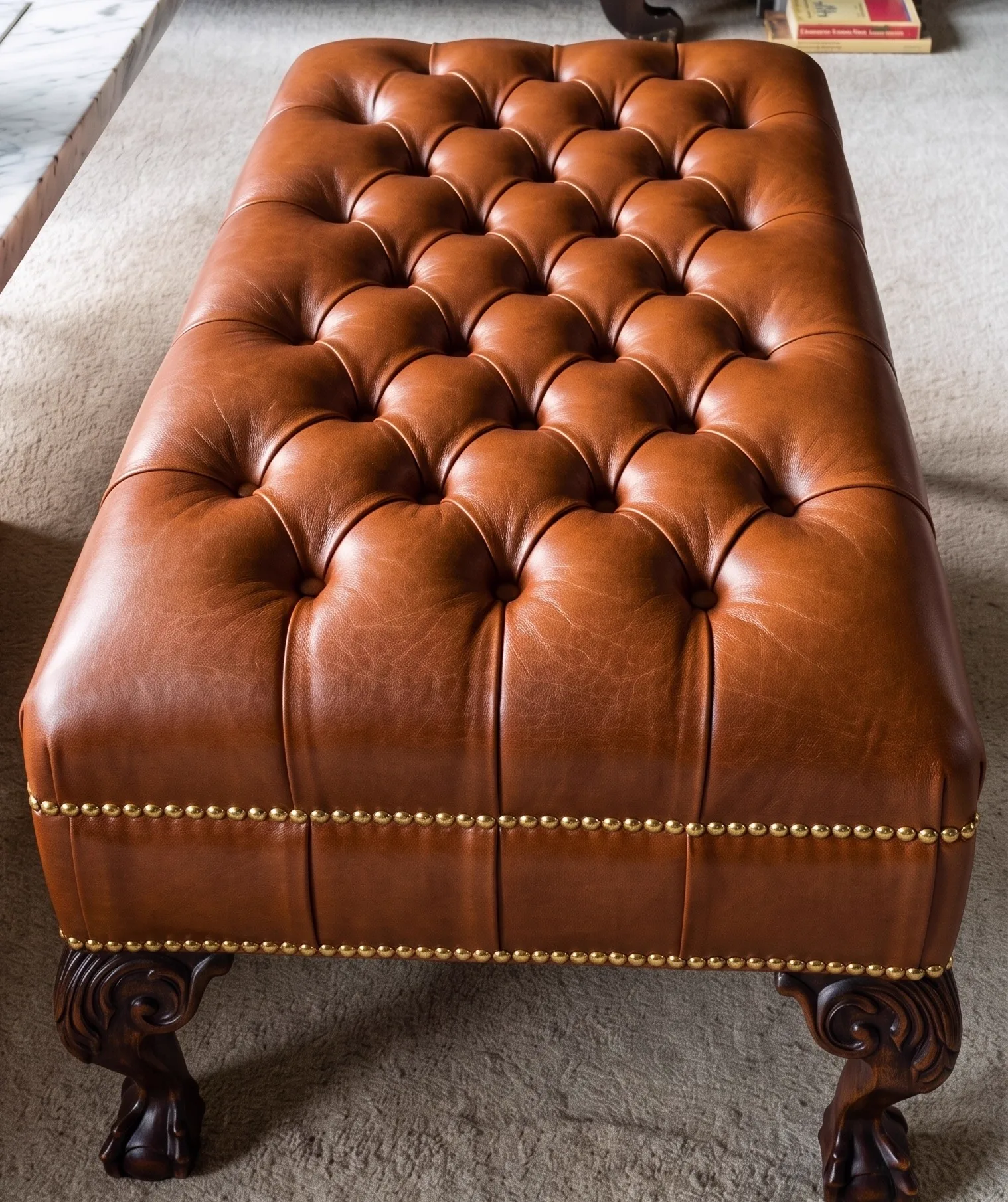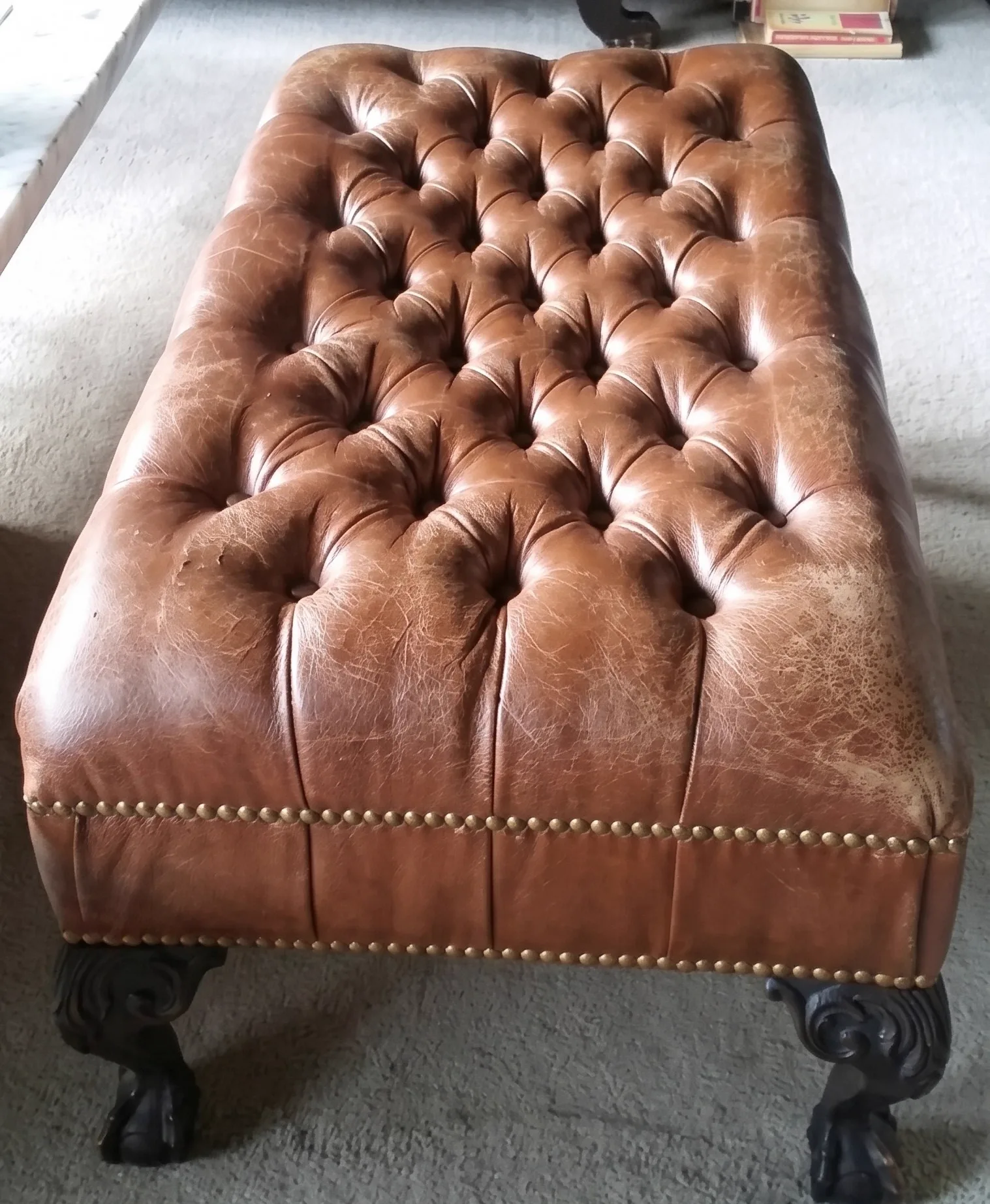
Your leather sofa is fading right now , and you probably cannot see it yet. UV radiation, India's humidity swings, and the wrong cleaning products all work silently on hide chemistry, and by the time damage is visible, it is already expensive to fix. Museum grade leather maintenance is the care tier that closes that gap. It is the same framework that conservators use at the Victoria and Albert Museum, the Metropolitan Museum of Art, and the National Museum in New Delhi to hold leather objects at preservation grade across centuries. The approach rests on four pillars , climate stability, calibrated light exposure, scheduled inspection, and documented care , and the goal is not to keep your sofa looking new. It is to preserve the original hide chemistry, the original finish layer, and the provenance of the piece across the generations it was built to span. This guide adapts that framework for owners of heritage leather furniture across India. Technical terms are defined in the leather conservation glossary; the foundation chemistry is documented in the guides on tanning chemistry and the science of moisturizing.
What Does "Museum-Grade" Actually Mean?
"Museum-grade" gets misused in the luxury market often enough that the definition needs to be clear before anything else. It is not a marketing tier. It is not a higher-priced version of standard care. It is a borrowed framework with documented origins in international textile and book conservation literature, codified by the International Council of Museums (ICOM), the American Institute for Conservation, and the standards that the V&A, the Met, the British Library, and the National Museum in New Delhi apply to objects in their permanent collections.
The framework sets four requirements for any leather piece held at preservation grade: a controlled climate within a tight band of temperature and humidity, light exposure measured in lux and ultraviolet microwatts per lumen, a scheduled inspection cycle that catches damage before it compounds, and a care record that travels with the piece across decades. The requirements are the same whether the object is a sixteenth-century Spanish embossed leather wall covering at the V&A or a 1970s Poltrona Frau armchair in a Lutyens-zone bungalow.
The Leather Restorators applies this framework to private heritage collections. The goal is not to turn your Delhi home into an institutional storage facility , that is neither necessary nor practical. The goal is to bring the parts of the framework that matter most into a home care plan that protects pieces of inheritance value across the generations they were built to span.
The key rule: regular luxury care reacts to damage. Museum-grade care prevents the conditions that create damage. The financial difference across a generation of ownership is two orders of magnitude in favour of prevention.
What Are the Four Pillars of Museum-Grade Care?
The framework has four pillars. Each is defined in the conservation literature and each translates directly into a step you can take at home.
Pillar one , climate stability
Temperature stays within a narrow band. Relative humidity stays within a narrow band. Daily swings stay under a set threshold. The numbers vary slightly across institutional standards, but the range is consistent: 18 to 22 degrees Celsius, 45 to 55 percent relative humidity, daily swing under 5 percent. The hide chemistry is built for stability. Long-term damage comes from the swings, not from any fixed condition.
Pillar two , calibrated light exposure
UV radiation stays below 75 microwatts per lumen on heritage pieces. Visible light stays within a defined lux band. Total annual exposure is spread across the year by rotating your cushions. The mechanism of UV-driven dye chromophore breakdown is covered in the dedicated guide on UV degradation and India's sun exposure. The standard is strict because the damage builds up and cannot be reversed.
Pillar three , scheduled inspection
Inspection runs on the calendar, not when you notice a problem. The cycle has three schedules , quarterly visual under raking light, annual macro photography baseline, twice-yearly master restorator visit , and running each on time is what stops early-stage damage from growing into a full restoration.
Pillar four , documented care
Every treatment is logged. Date, panel reference, product used, condition before and after, and the restorator's name. The log is permanent and travels with the piece. It does three things: it guides the next treatment, it supports valuation when the piece is passed on, and it forms part of the provenance record that sets a heritage piece apart from a standard luxury object.
What Climate Does Your Heritage Leather Actually Need?
The standard for heritage leather is 18 to 22 degrees Celsius, 45 to 55 percent relative humidity, and daily swings under 5 percent. This is not arbitrary. Below 40 percent humidity the fat liquor [the oil blend that lubricates the hide fibres] migrates out of the structure and the grain layer begins to micro-crack , a process covered in the dedicated guide on the role of fat liquor in leather longevity. Above 60 percent humidity, mould risk and the hydrolysis of vegetable tannage compounds become real threats. Temperature swings stress the protein matrix of the hide and speed up every other form of damage.
homes run well outside this band. Relative humidity in NCR swings from below 30 percent in the dry winter to above 70 percent during the monsoon , a range covered in the guides on monsoon leather care and winter smog leather damage in NCR. Temperature swings from 15 degrees Celsius on winter mornings to 40 degrees and above in summer afternoons. Daily swings frequently exceed 15 percent humidity and 10 degrees even inside a single climate-controlled room as people come and go and air conditioning cycles on and off.
Closing that gap is what museum-grade maintenance is designed to do. You do not need central HVAC for your entire home. A dedicated zone for your heritage piece , a study, a drawing room, or a collection space , fitted with a split-unit, a calibrated thermo-hygrometer with daily logging, supplementary humidification in dry winter months, dehumidification through the monsoon, and careful door-and-window habits is enough to hold the band tight.
How Much Light Is Safe for Heritage Leather?
The standard for heritage leather light exposure is two-part: UV radiation stays below 75 microwatts per lumen, and visible light stays within 50 to 150 lux on aniline finishes. These numbers come from museum textile and leather conservation literature and they are strict because dye chromophore breakdown builds up over the lifetime of the piece. A heritage aniline armchair exposed to 500 lux of unfiltered daylight for ten years will fade in ways that cannot be reversed without rebuilding the pigmentation panel by panel , and that rebuild compromises originality, which is the whole point of museum-grade preservation.
Protection is layered. Install 99 percent UV-blocking professional window film on every south, southwest, and west-facing window in direct line-of-sight of the leather. Use lux-controlled artificial lighting that stays within the safe range. Where window film is not architecturally acceptable, use heavy lined curtains plus sheer linen for daytime light management. Rotate cushions and panels every quarter to spread exposure evenly across all surfaces rather than letting one south-facing zone absorb the full cumulative dose.
Delhi NCR heritage homes face a specific problem. Bungalows in Lutyens, Sundar Nagar, and the older Civil Lines pockets often have original single-pane glass with no UV-protective coating. Original glass plus high south-facing exposure plus sustained NCR sunshine puts your leather at the upper end of the global UV-risk range. All three protection layers , film, curtains, and rotation , are the working standard for these properties.
How Often Should You Inspect Heritage Leather?
The inspection schedule is what separates museum-grade maintenance from standard luxury care. Premium care reacts when you notice a stain, a fade zone, or a tear. Museum-grade care runs inspections on the calendar so early-stage damage is found, logged, and fixed before it compounds into a full restoration.
Quarterly visual under raking light. A handheld inspection lamp held at a low angle to the hide reveals texture changes, early-stage cracking, surface particulate [fine dust and debris] build-up, and uneven sheen that are invisible under normal room lighting. You or trained household staff run the inspection, take notes against the panel-reference map, and record observations in the log. About thirty minutes per piece per quarter.
The video below shows what a workshop inspection looks like when carried out at your doorstep for heritage pieces.
Annual macro photography baseline. Photograph every panel of every heritage piece against a fixed colour reference card under standard lighting. Archive each year's images alongside the previous year's. Direct comparison shows fade trends, pigment migration, and surface changes that the eye misses when looking at the piece every day. The macro baseline is the most useful diagnostic record in the whole system.
Twice-yearly in-person inspection. A master restorator visits the piece at your home twice a year. The visit includes tannage-specific steps matched to the hide construction , vegetable, chrome-tanned, or combination tannage as covered in the tanning chemistry guide , panel-level fade records, crocking and colour transfer checks at contact zones, and a recalibrated conditioning schedule for the next six months based on observed condition. All findings go into the log.
Which Products Are Safe for Heritage Leather?
Product choice at the museum-grade tier is strict. The list of acceptable products is narrow and everything outside it is excluded , not assessed case by case. The reason is straightforward: every wrong-chemistry application on a heritage piece builds up across decades, and that accumulated damage is what separates a piece preserved at archival grade from one that looks visibly aged within a single generation.
pH-neutral cleaning only. Every cleaner that touches a heritage piece stays in the pH-neutral band of 5.0 plus or minus 0.5. The mechanism is covered in the dedicated guide on pH balance and leather longevity. Outside this band, the cleaner reacts with the hide chemistry. Alkaline products strip the natural protective layers and speed up fibre breakdown. Acidic products in the wrong range attack the tannage compounds. Generic household cleaners are out entirely.
Tannage-matched conditioning. Every conditioner you apply must match the original tannage chemistry of the hide. Vegetable-tanned heritage leather gets a conditioner built for vegetable tannage. Chrome-tanned leather gets a chrome-compatible synthetic ester emulsion. The mechanism is covered in the science of moisturizing. A mismatched conditioner either fails to penetrate or leaves a surface residue that builds up with each application.
Products that are always excluded. Silicone-based products are off the list entirely , they form a barrier that blocks all future conditioning and cannot be removed without professional stripping that stresses the hide. Wax is excluded except for pull-up leather, where wax is part of the original chemistry. Alkaline degreasers are always excluded. Kitchen oils, "leather-feeding" oils, and any consumer product without documented pH and tannage compatibility data are out.
Why Does Your Leather Need a Care Log?
The care log is the part of museum-grade maintenance that owners most often undervalue , and the part that pays off most over time. Every treatment goes into the log with the same fields that institutional conservators use: date, panel reference (mapped against a fixed diagram of the piece), treatment applied (product name, batch number where available, quantity), condition before the treatment, condition after the treatment, and the restorator's name.
The log does three things across the life of the piece. It guides the next treatment , the restorator visiting next year reads last year's notes and adjusts the conditioning schedule, product choice, and inspection focus. It supports valuation when the piece is passed on , a heritage Frau or vintage Chesterfield with a documented care log establishes provenance in a way that an undocumented piece, however well preserved, cannot. It also forms part of the cultural record of the piece , the treatment history is part of what sets a heritage object apart from a generic luxury possession.
The format is straightforward. A bound conservation notebook or a digital archive with timestamped entries both work , what matters is consistency, not the medium. Macro photography from the annual inspection is filed against the matching log entry. Keep the full archive in a fireproof location and maintain a duplicate off-site.
The log connects directly to the broader inheritance steps covered in the forthcoming article on the heirloom steps for leather furniture, which covers the legal, valuation, and intergenerational transfer side of owning heritage leather. The two articles work together for anyone treating their leather furniture as an inheritance asset.
"A heritage piece without a care log is an undocumented antique. With the log, it becomes a provenance object. The financial and cultural difference across a generation is real."
Which Leather Pieces Actually Need This Level of Care?
Museum-grade care applies to the specific group of private heritage leather pieces where preservation across generations is the stated goal. The group is narrower than "luxury furniture" , but wider than most owners expect.
Heritage Poltrona Frau pieces. Vintage Poltrona Frau commissioned in the 1960s, 1970s, and 1980s with original Tuscan workshop construction and the Pelle Frau chemistry of that period. These pieces are rising in value on the secondary market and are increasingly held with archival intent. Brand-specific care steps are in the Natuzzi and Poltrona Frau guide.
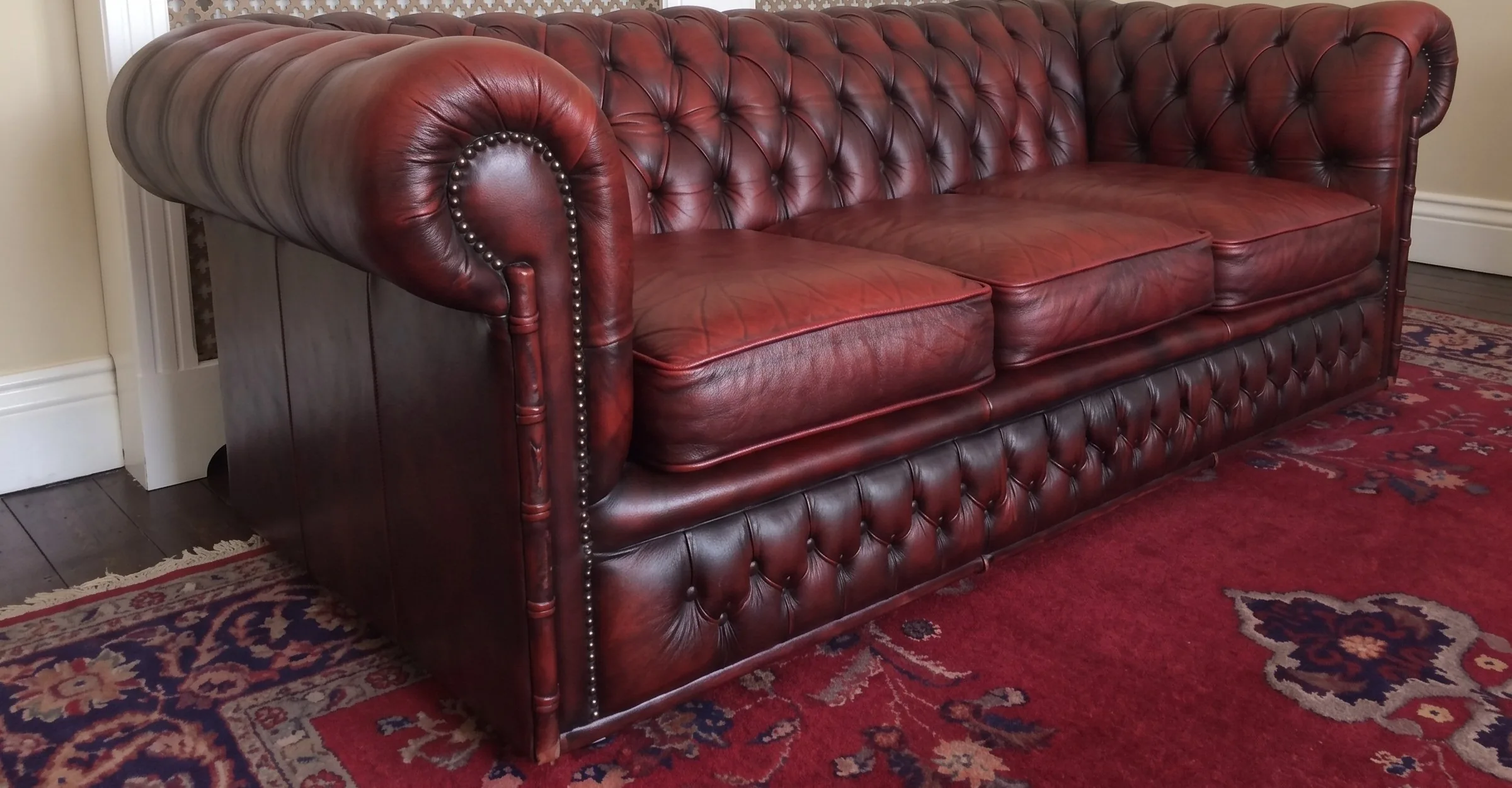
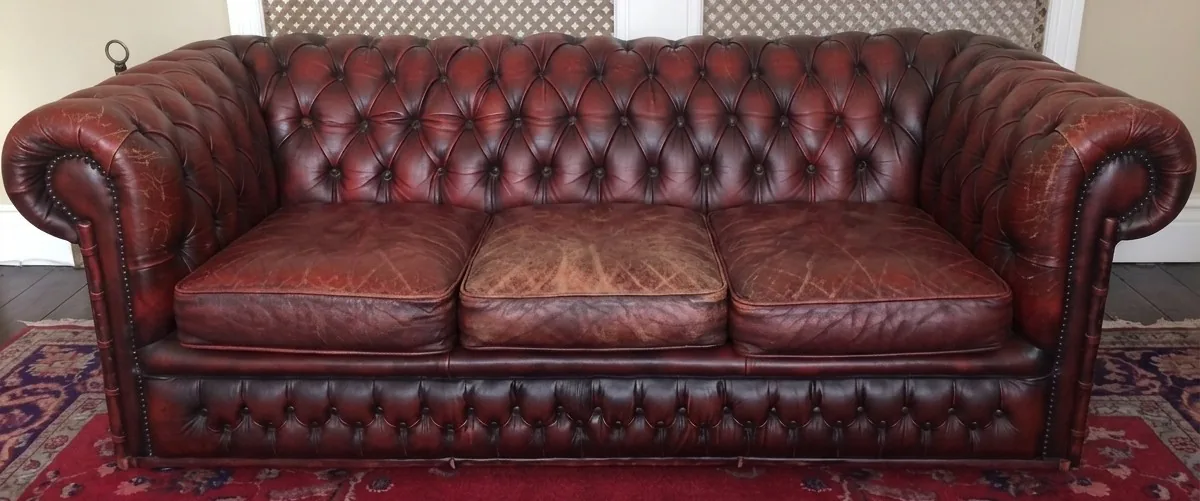
Vintage Chesterfield and English club pieces. Hand-buttoned, vegetable-tanned, often dating to the early or mid twentieth century. The hide chemistry is more sensitive than modern equivalents and the construction is built to be preserved through restoration, not replaced. Many are inherited from family or bought at auction specifically to hold across generations.
Family-acquired Maxalto and ultra-luxury Italian pieces. B&B Italia Maxalto pieces commissioned for original family residences in the late twentieth century, now held by the second generation with conservation intent. Brand-specific care steps are in the B&B Italia and Maxalto modular care guide.
Heritage Fendi Casa commissions. Selleria pieces with hand-stitched construction from the brand's heritage period. Construction-specific sensitivities are covered in the Fendi Casa care steps. Museum-grade care layers above the brand-specific routine.
New bespoke commissions built to be inherited. Pieces commissioned now with the goal of passing them on. You set up museum-grade care from year one instead of retrofitting it after years of standard-tier use. Common for premium nappa and full-grain aniline commissions where the original chemistry is documented and the care plan can be built around it from the start.
NCR owners of heritage leather furniture can book museum-grade assessments, scheduled inspection cycles, and expert restoration through heritage leather restoration, archival surface refinement, and doorstep visits across Noida, Faridabad, and Ghaziabad. Every engagement starts with a review of the piece's history, a baseline macro photography session, and the creation of the panel-reference map and care log that becomes the working archive for the piece in the years that follow. Each of the categories above maps onto a restoration page for that luxury sofa brand, setting out what the house's construction and original chemistry allow at the workshop bench.
Save this page. The next time you need to decide what humidity to hold, how much light to allow, when to book an inspection, which products to use, or what to record , the answers are here. Your care log is what protects the piece across the generations it was built to span.