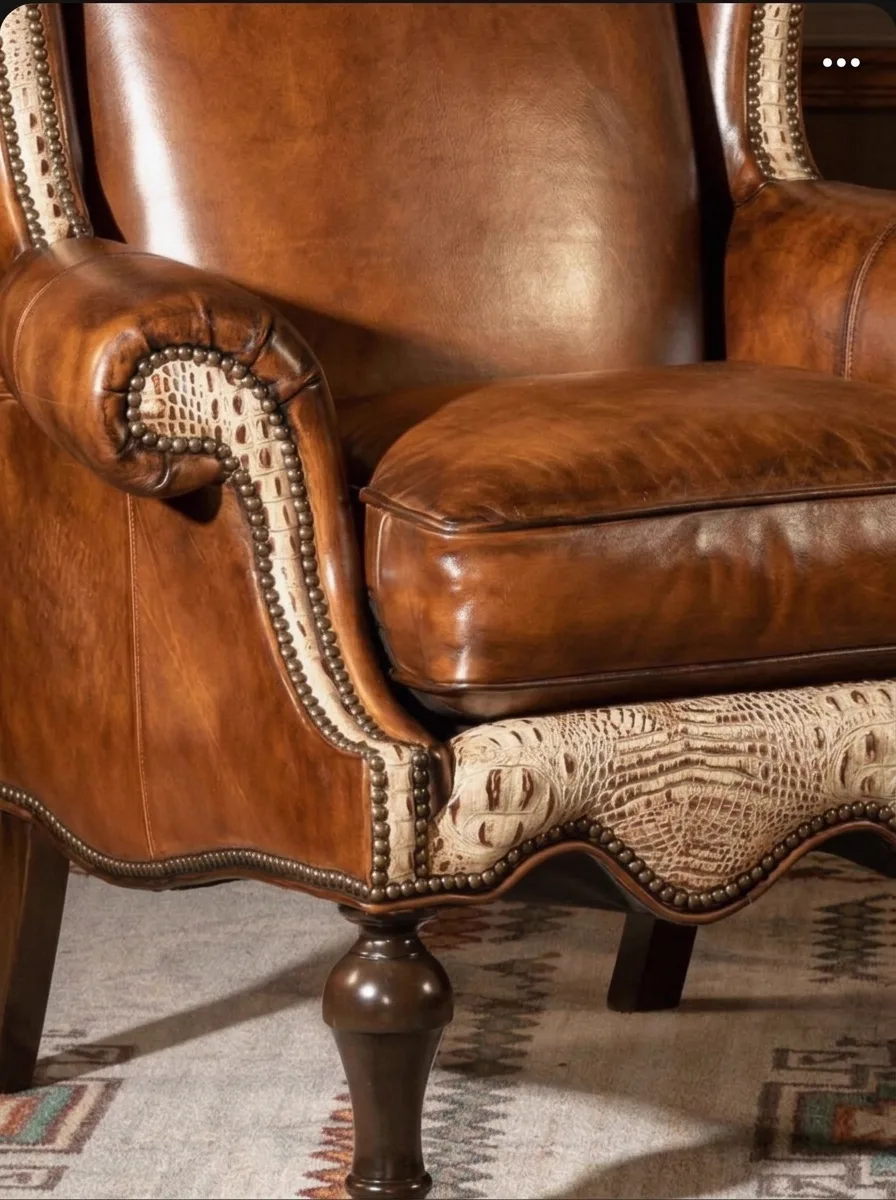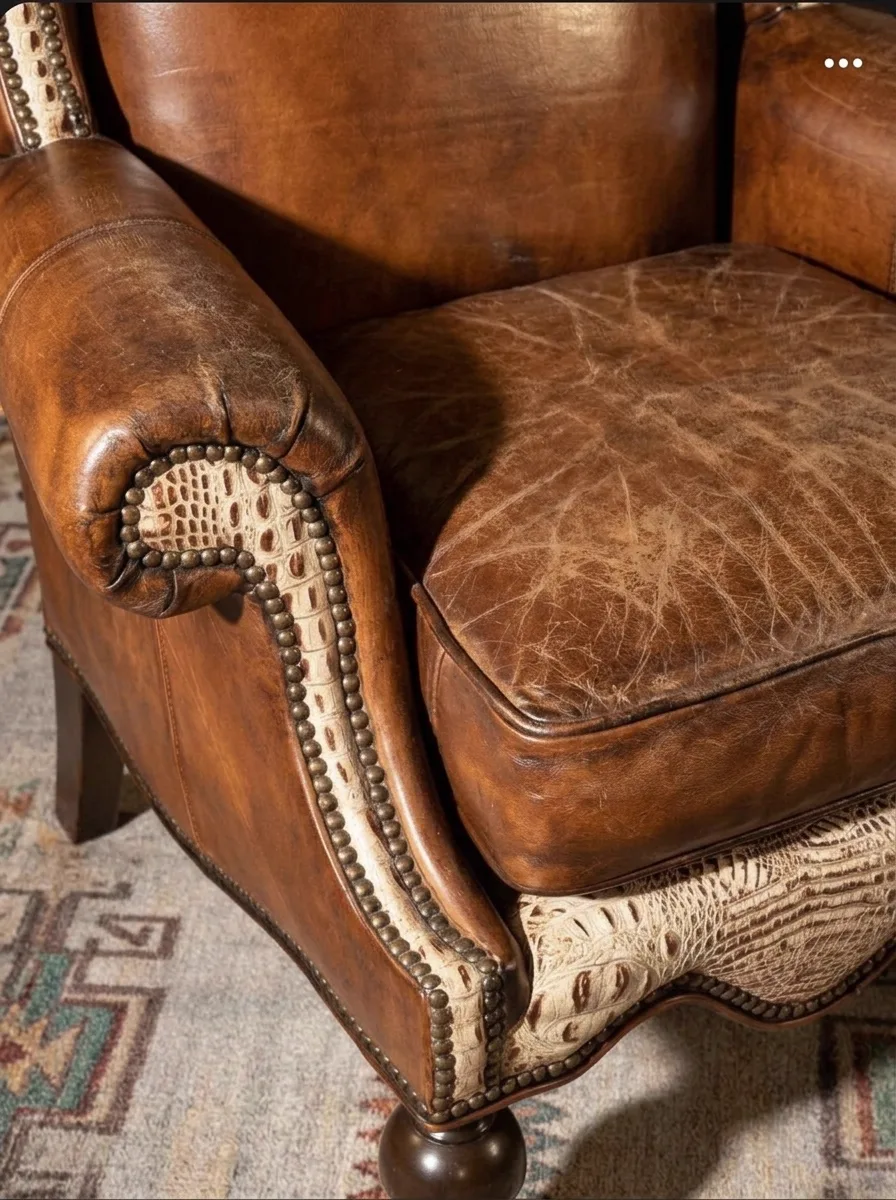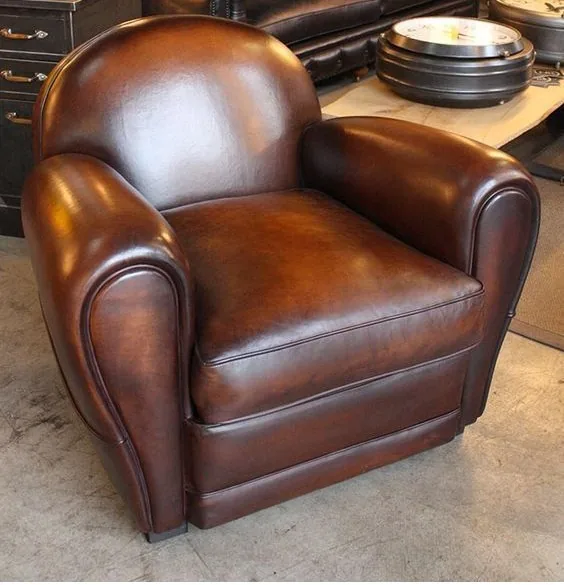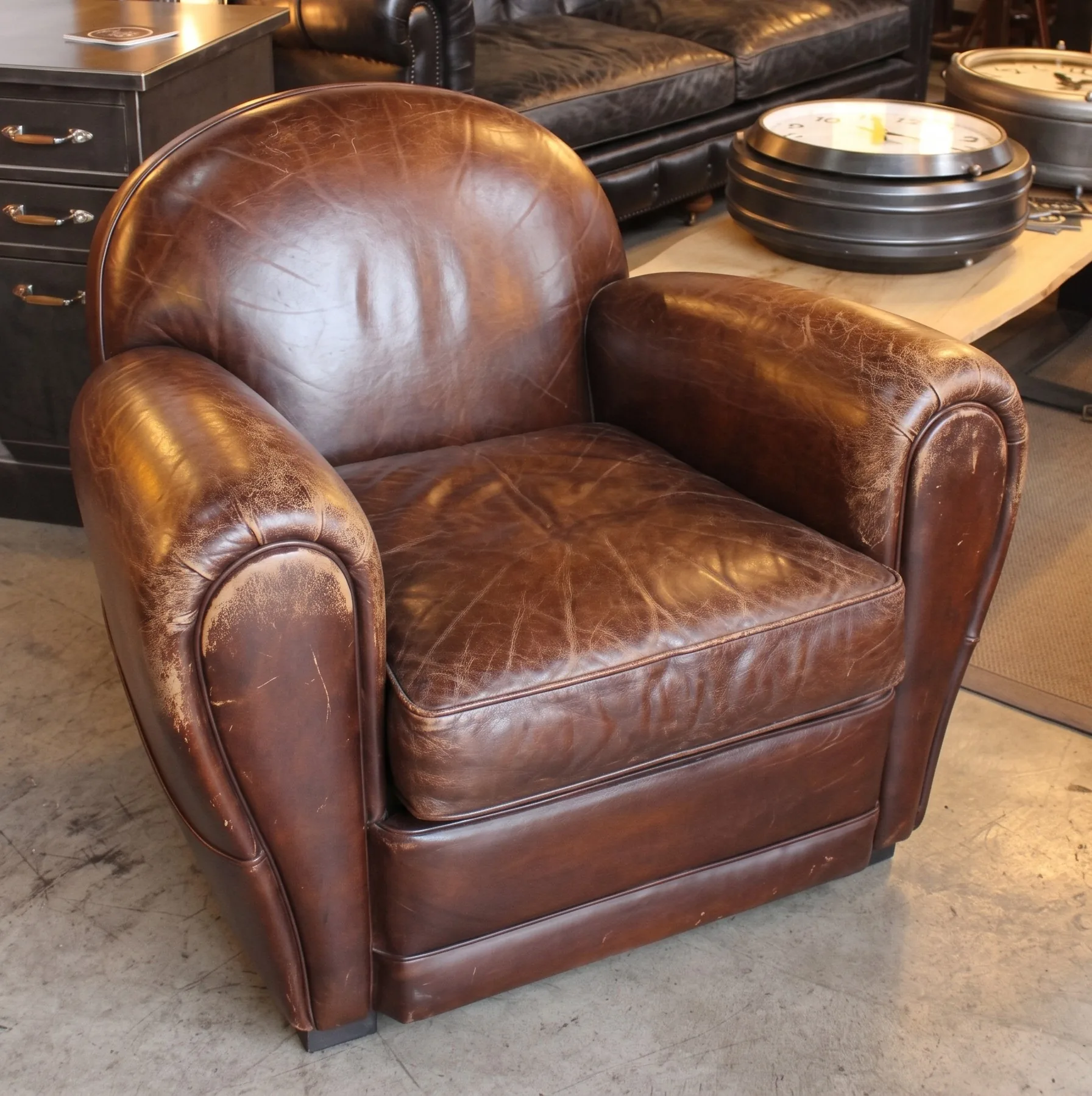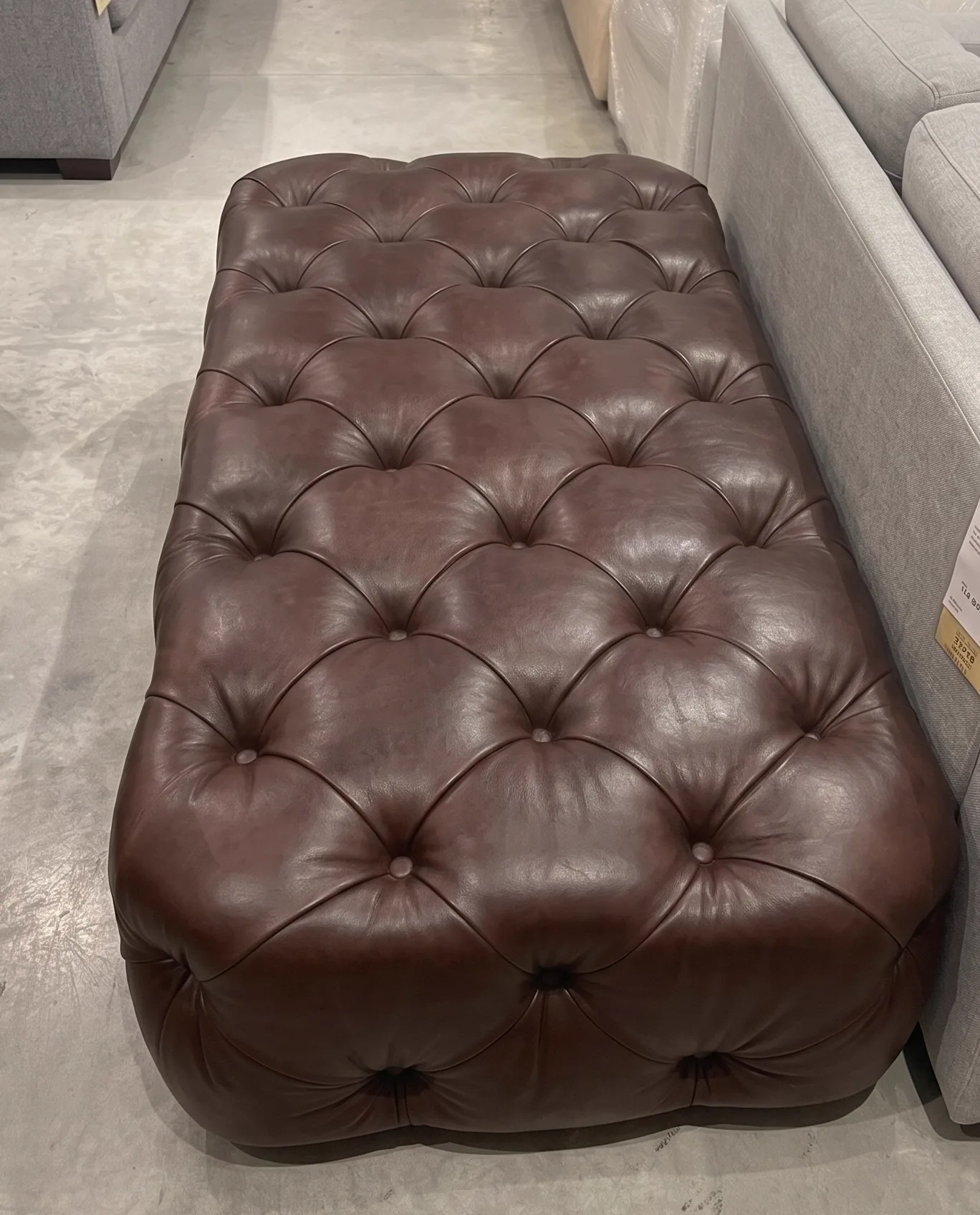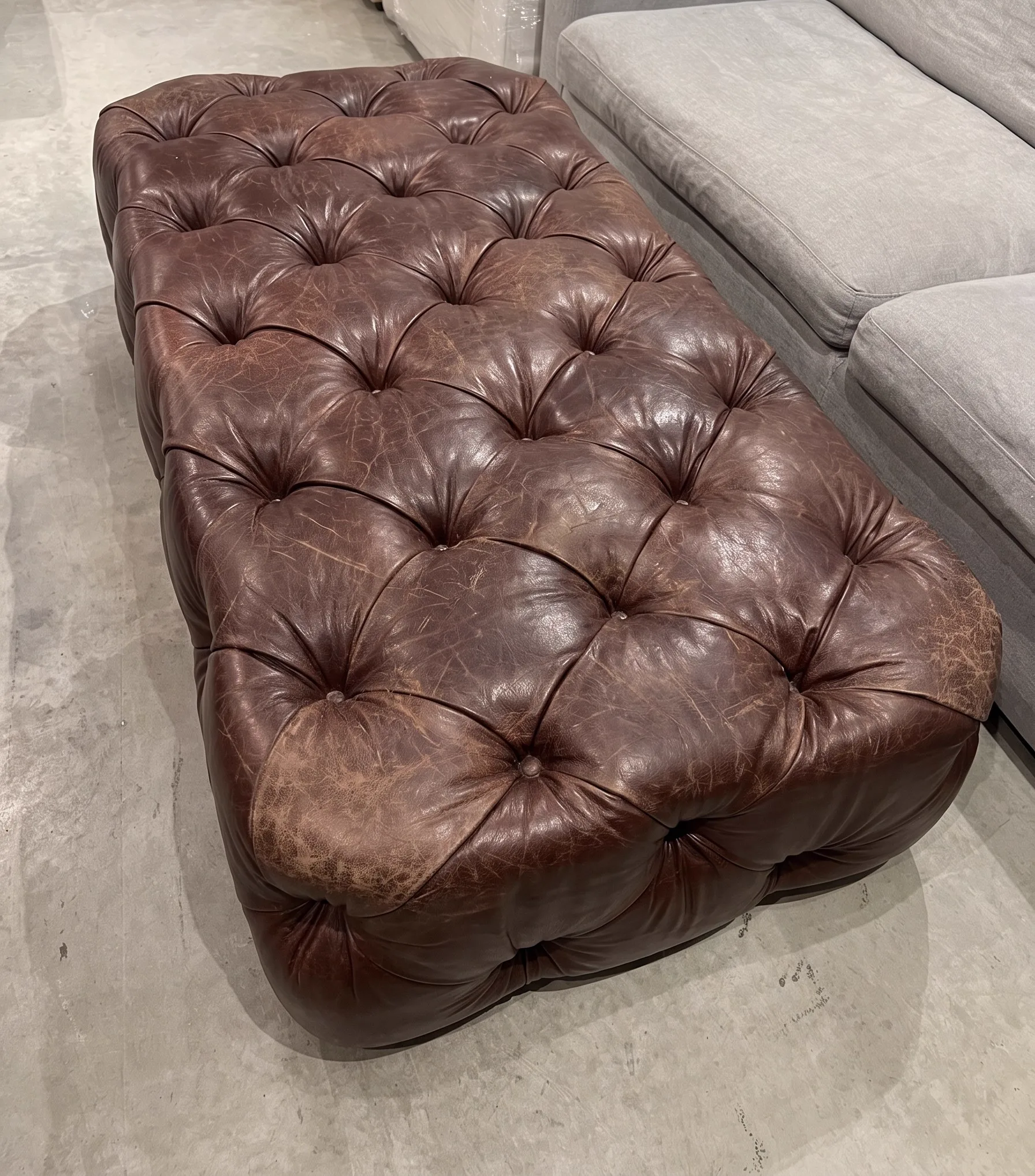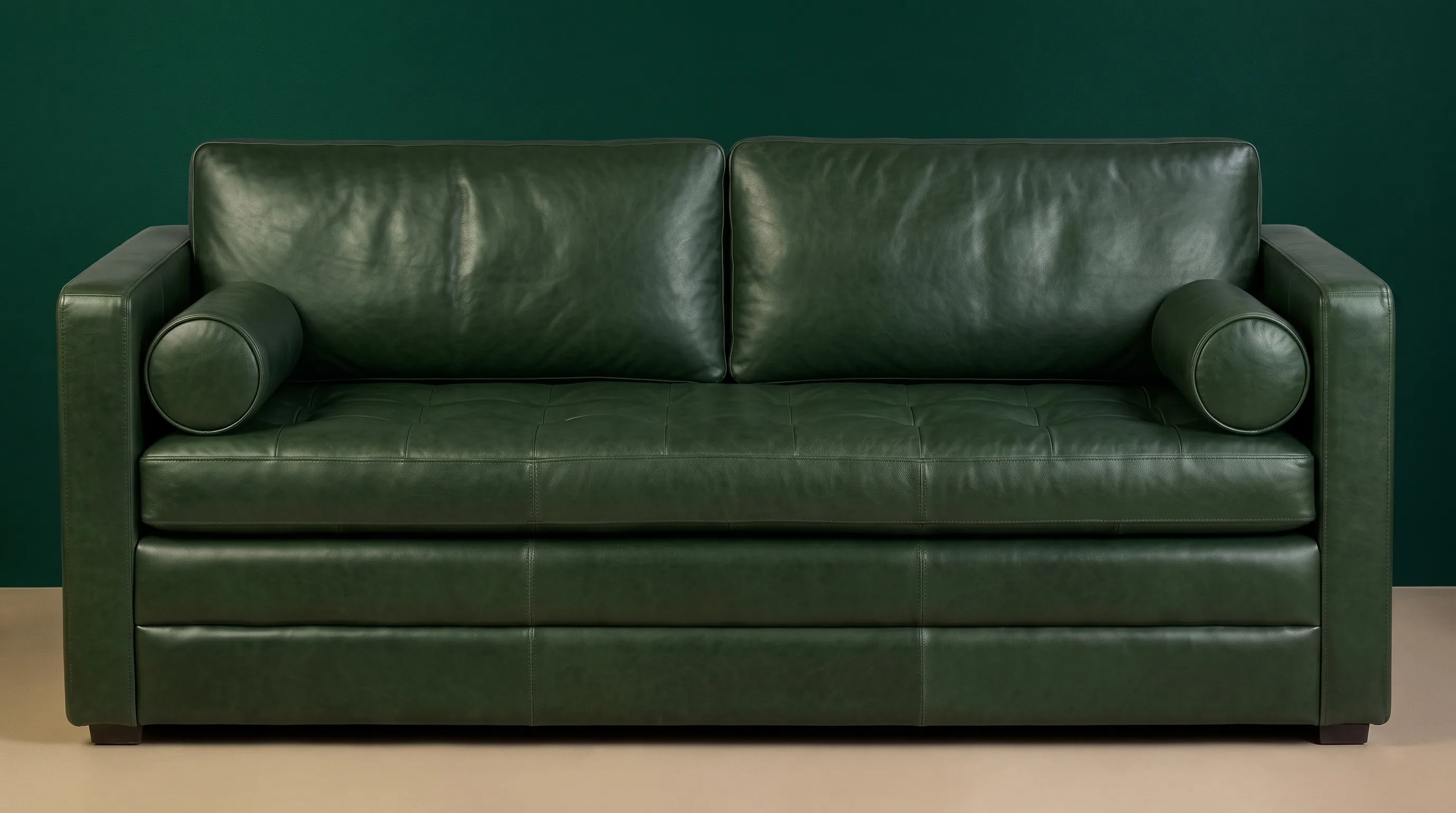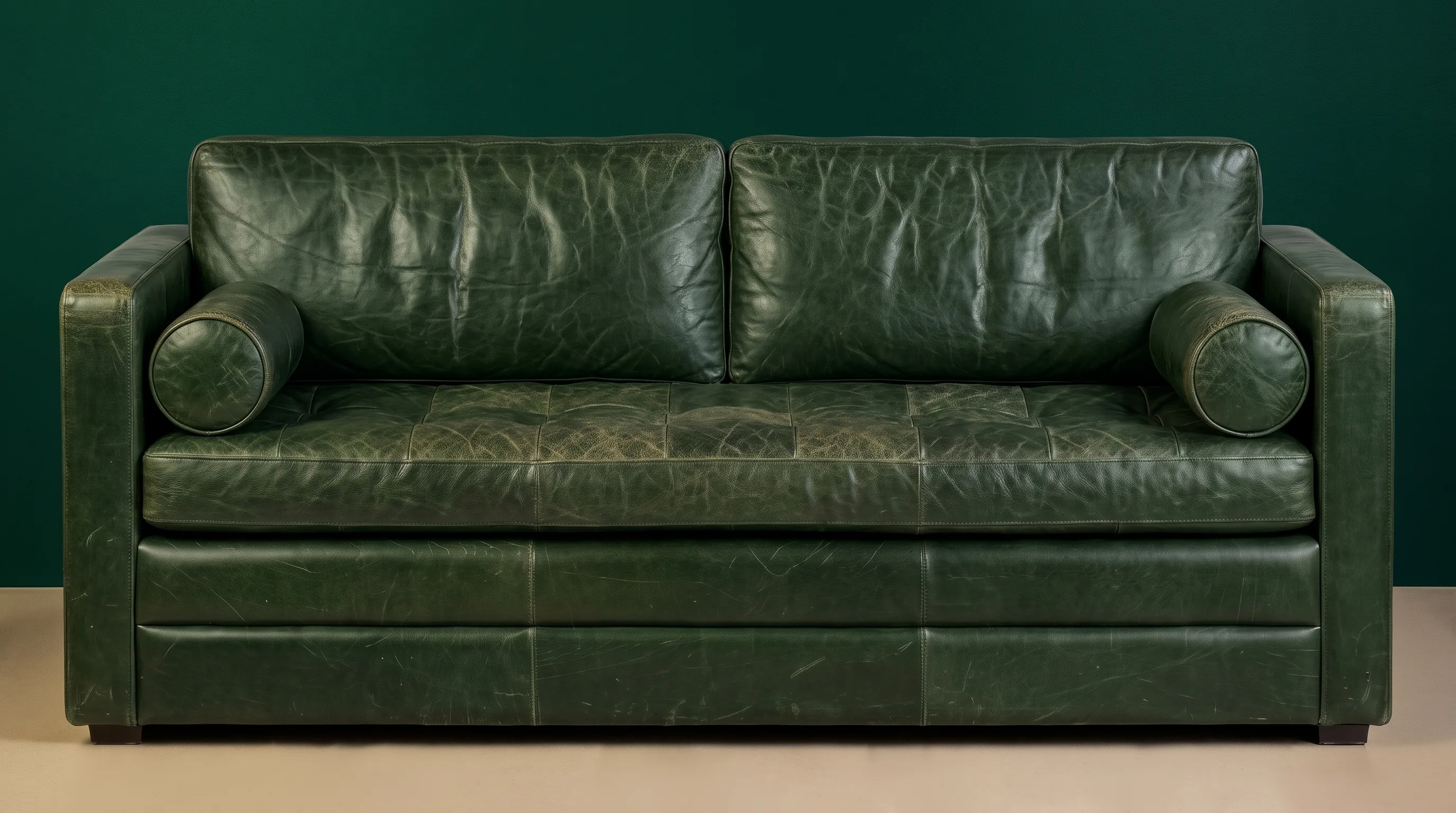
Your client's leather sofa will outlast the flooring, the paint, and the soft furnishings combined , if you specify it correctly. Leather is the only material in a luxury commission that is biological, chemically variable across hide lots, and climate-reactive across decades. It can be restored rather than replaced when damaged. But that only holds if the original spec was done right. A penthouse, a Lutyens-zone bungalow, a hospitality lobby, a corporate boardroom , each is a thirty-to-fifty-year decision. This guide walks through the specification framework we use when consulting on luxury commissions across the National Capital Region: tannage, finish, grain, hide source, brand provenance, climate steps, and the procurement-stage care that prevents most restoration work decades later. Technical terms are defined in the leather conservation glossary; the foundation chemistry is in the dedicated guides on tanning chemistry and grain category specification.
What Goes in a Leather Spec Brief?
A solid leather brief locks down five decisions before you talk to any vendor. This is the most important document you will produce for a leather commission. It turns an aesthetic preference into something procurable. It also stops the slow drift that happens when you negotiate each decision separately with vendors, upholsterers, and brand boutiques.
The five things to decide up front
Tannage. The chemistry that converts raw hide into stable leather. Vegetable, chrome, aldehyde, or hybrid. This one decision drives every conservation choice and the patina story of the piece across decades.
Finish. The surface treatment applied after tannage. Aniline, semi-aniline, pigmented, or pull-up. Sets the feel, the stain response, the colour stability, and how the piece gets restored in a workshop.
Grain. Which layer of the hide becomes the visible surface. Full-grain, top-grain, corrected-grain, or split. Determines natural character, durability, and structural integrity over decades.
Hide source. Where the raw material comes from , European bovine, North American steer, South American hide, or specialty hide. Affects size, natural marking pattern, thickness consistency, and supply chain transparency.
Certification. The paperwork that documents the supply chain. Leather Working Group rating, ICEC certification, or equivalent. Now required for many hospitality and corporate projects with ESG disclosure obligations.
The specification rule: all five decisions belong in the procurement document. If you only specify the look , colour, texture, finish appearance , and leave the chemistry to the vendor, the piece will perform unpredictably across decades. You carry the long-term liability, so you must control the long-term variables.
Which Leather Works in Which Room?
Room context drives hide selection more than any other variable. The same hide chemistry behaves very differently in a quiet drawing room versus a busy family room. Your spec must reflect actual use intensity, not a generic luxury aesthetic.
The drawing room
A drawing room used for guests and formal occasions can carry the most demanding spec. Choose full-grain aniline from a documented European supply chain, in a palette chosen for patina development across decades. Use intensity is low. Attention to quality is high. The room rewards the tactile depth that aniline finishing produces. Specify Pelle Frau, Fendi Casa Selleria, or comparable atelier-grade hide.
The library or study
A dedicated reading room supports vegetable-tanned full-grain hide where visible ageing is the design intent. The hide changes with use. Document this in the procurement brief as a feature, not a flaw. Use heritage Tuscan vegetable-tanned hide, Pueblo, or comparable tannery output. Tell your client in advance: the leather will look noticeably different at year ten than at year zero.
The family room
Daily use, mixed occupants, and occasional spills call for semi-aniline or premium pigmented finish. You get stain resistance without giving up the luxury feel entirely. See the dedicated guide on aniline, semi-aniline, and pigmented finishes for a full comparison. Specify Natuzzi Italia premium, B&B Italia, or comparable production with documented finish chemistry.
Hospitality lobbies and lounges
Public seating with heavy daily traffic needs pigmented leather with documented stain resistance, lightfastness, and abrasion ratings. The trade-off is real: pigmented hide looks more uniform and feels less tactile than aniline. But it lasts through the hospitality replacement cycle. Specify contract-grade leather with Martindale abrasion ratings and ISO lightfastness certifications.
Corporate boardrooms
Corporate boardroom projects fall into two tiers. Chairman's offices, partner boardrooms, and founder suites can carry full-grain aniline , the same brief as a residential drawing room. General corporate seating needs semi-aniline or premium pigmented with stain and abrasion ratings. Clarify the tier before you write the spec.
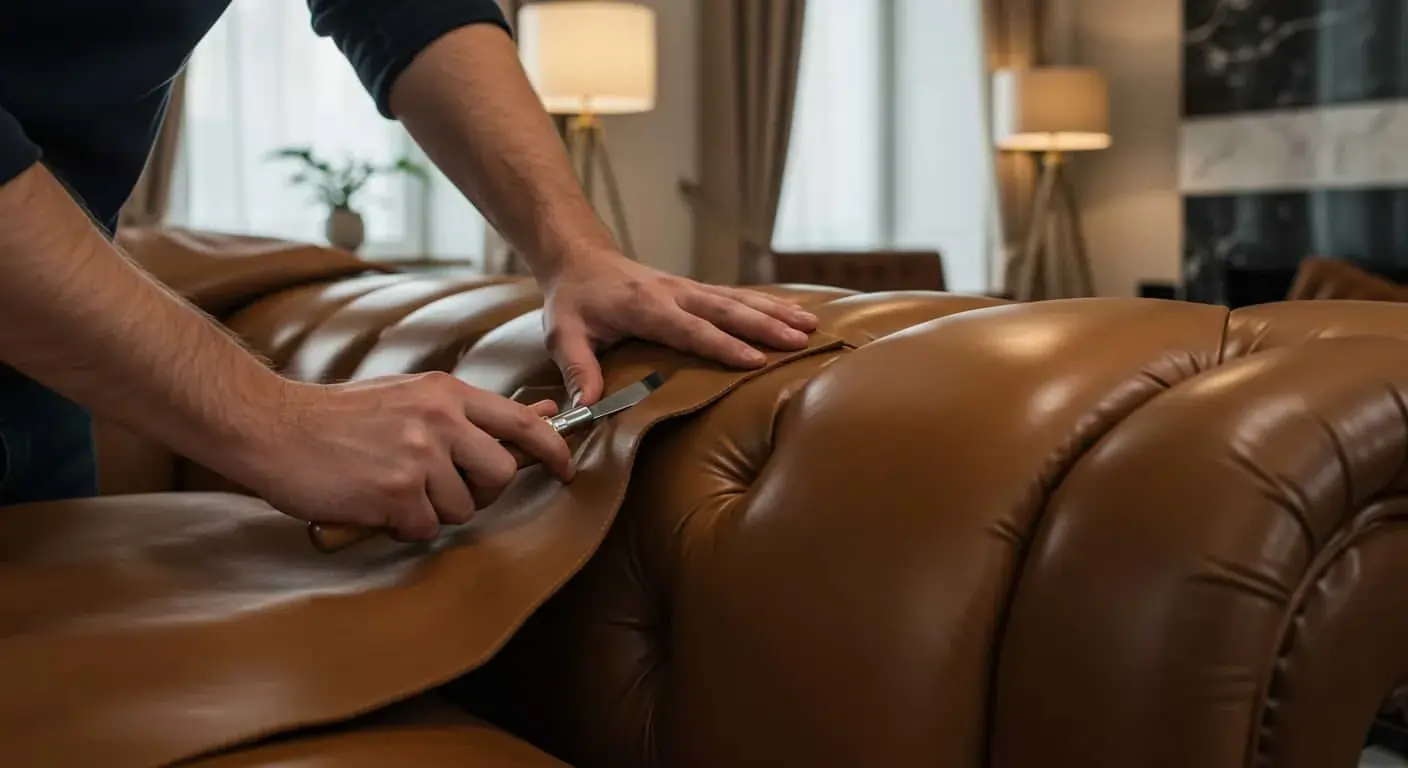
What Are the Four Leather Finish Types?
Your finish vocabulary covers four categories. Each ages differently, each has a distinct restoration path, and each needs a different level of disclosure in the procurement document. Quick reference below; full chemistry is in the leather academy guides.
Aniline
Pure aniline finish , transparent dye, no opaque pigment layer, full grain visible. The hardest finish to maintain and the most rewarding aesthetically. Patina builds with use. Stains penetrate without a barrier. The feel is unmatched. Specify for drawing rooms, ceremonial seating, and atelier commissions where your client accepts the care required. Full detail in the three-finishes guide.
Semi-aniline
Aniline base with a thin pigment top-coat. Keeps most of the aniline tactile depth while adding real stain resistance. The best all-round choice for the broader luxury market. Specify for family rooms, premium hospitality, and corporate seating where aniline quality is wanted but the care routine cannot be assured.
Pigmented
Opaque pigment layer over the hide , uniform colour, strong stain resistance, less tactile depth than aniline or semi-aniline. The standard spec for hospitality contract work and high-traffic corporate seating. Patina is minimal. The leather ages through pigment wear, not colour deepening.
Pull-up
Aniline finish with surface oils or waxes that lighten under stretch. The colour shifts as the hide flexes , that is the look. Specify for heritage aesthetic projects, weathered-luxury palettes, and library commissions where visible character development is the intent. Full detail in the pull-up versus pigmented guide. For napped surfaces, the nubuck and suede guide covers the specialty category that occasionally appears in luxury commissions.
How Do You Choose the Right Tannage?
Tannage is the core chemistry decision. It drives every conservation outcome downstream. Lock in the tannage before you discuss finish, colour, or brand. Three options anchor the choice.
Vegetable tannage
Hide tanned with plant-derived tannins , bark extracts, quebracho, mimosa, chestnut. Produces deep tactile character, a strong patina trajectory, and a palette weighted toward warm browns and cognacs. Specify for heritage drawing rooms, libraries, and atelier commissions where your client expects , and welcomes , visible ageing. The mechanism is in the tanning chemistry guide.
Chrome tannage
Hide tanned with chromium salts , the dominant tannage globally and the base of nearly all modern luxury leather. Gives you a wider colour range, faster production, and more predictable dimensional stability than vegetable tannage. Specify for the broader luxury market, contemporary design language, and any project where colour fidelity to a specific palette reference is the intent.
Aldehyde and hybrid tannage
Hide tanned with aldehyde-based or hybrid chemistry , now the go-to for ESG-sensitive commissions. Offers the colour flexibility of chrome tannage with a meaningfully lower chromium burden at the disclosure stage. Specify for hospitality and corporate projects with ESG obligations, and for residential clients with explicit sustainability requirements. The pH-neutral [meaning the hide's acidity is kept in a stable, safe range] governance for these tannages is in the pH balance guide.
The decision compresses to three questions. Is patina the design intent? Vegetable. Is colour fidelity the intent? Chrome. Does ESG disclosure apply? Aldehyde or hybrid. Specifying explicitly across these three choices controls the restoration trajectory and the procurement-stage compliance at the same time.
Which Italian Brand Should You Specify?
Italian luxury furniture dominates the high-end Indian market. Four atelier groups define the spec vocabulary. Each has a distinct hide chemistry, collection language, and restoration path.
Poltrona Frau
A Tuscan heritage atelier built around the Pelle Frau leather chemistry , a chrome-tanned full-grain hide with a proprietary aniline-grade finish that defines the brand's feel. Specify for heritage drawing rooms, library commissions, and ceremonial seating where documented hide provenance and patina development are the intent. The Natuzzi and Poltrona Frau care guide covers the chemistry.
Natuzzi Italia
The largest Italian luxury upholstery producer. It runs multiple collection tiers, from contemporary entry-luxury to atelier-grade premium. Specify Natuzzi Italia premium when your client wants a wider colour range, a contemporary look, and colour stability over patina. The Italian production sits at expert-grade luxury standards throughout.
Fendi Casa
Couture leather goods craft extended into furniture , limited production, atelier-grade hand-stitching, hide sourced from the same European supply chain as Fendi's handbag line. Specify for ultra-luxury penthouse drawing rooms, ultra-premium hospitality bespoke commissions, and any project where your client treats furniture as art collecting. The Fendi Casa Selleria protocol is the dedicated brand guide.
B&B Italia and Maxalto
Industrial-design heritage producing modular contemporary upholstery with a distinctive Italian design language. Specify for contemporary architectural projects, modular layouts, and commissions where geometric clarity matters more than heritage aesthetic. The B&B Italia and Maxalto modular care guide covers the brand specifics.
For specialty hide categories within named brand specs , Nappa-grade hides for ultra-soft commissions and nubuck and suede for napped-finish work , specify the surface category in addition to the brand and collection.
What to Watch Out for in a Bespoke Commission
Bespoke pieces , non-standard dimensions, non-standard hide spec, or non-standard colour references , need tighter spec care than catalogue procurement. Three things require your direct attention.
Hide lot consistency
Any piece using more than three hides , almost any sectional, sofa-and-armchair pair, or modular run , must specify hide lot consistency in the brief. Hides from different lots vary in tonal saturation, grain density, and finish gloss. The differences show at panel boundaries. Specify single-lot hide reservation in the procurement document. For large commissions, also specify a minimum reservation tonnage and a colour-batch matching tolerance.
Batch matching across delivery phases
If the commission ships in stages , drawing room first, family room later, or lobby before the suites , specify cross-batch colour matching with documented tolerance bands. Brand archives can hold reference hides for this if you request it at the order stage.
Building in restoration from day one
Every bespoke commission should include three restoration steps in the procurement document. Reserve hide samples with the brand for future panel matching. Hand over the documented commission spec to your client at delivery. Schedule a master restorator check at year five and year ten. These steps add very little cost at procurement. They prevent a large cost at restoration.
"You are commissioning a thirty-to-fifty-year material. The spec document is not a purchase order , it is a multi-decade conservation brief that your client, the building, and the future restorator will all refer to. Write it that way."
What Climate Steps Does Delhi NCR Require?
Delhi NCR adds four climate steps that belong in your spec , not in a note to the client. Getting these right at the architectural stage costs far less than fixing climate-driven damage decades later.
UV protection
India's latitude, the prevalence of high-floor glass-walled residences, and strong year-round sun combine to produce some of the highest residential UV exposure in the Indian luxury market. Specify 99 percent UV-blocking architectural film on every south, southwest, and west-facing window within sight of leather furniture. The mechanism and workshop evidence are in the dedicated guide on UV degradation and India's sun exposure.
Monsoon humidity management
The June-to-September monsoon pushes indoor relative humidity to 75–90 percent across NCR. The full monsoon steps are in the dedicated guide on monsoon leather care. Your brief must specify dehumidification capacity that holds indoor relative humidity at 45–55 percent during the monsoon months. Calculate this against the room volume, the leather inventory, and how much moisture enters through the building envelope.
Winter smog filtration
From November to February, acidic particulate [fine airborne pollutant particles that deposit onto surfaces] settles on leather surfaces in concentrations unique to Delhi NCR. The full smog steps are in the dedicated guide on winter smog leather damage in NCR. Specify HEPA-grade indoor air management to hold indoor PM2.5 below 35 micrograms per cubic metre during the smog window. Add micron-grade pre-filtration where outdoor PM2.5 routinely exceeds 300.
HVAC placement
Direct conditioned-air discharge onto leather is a common oversight , and it causes accelerated dehydration, surface cracking, and fat-liquor [the oils bound into the hide during tanning that keep leather supple] depletion. This pushes the piece toward early workshop repair. Specify vent placement that avoids direct discharge onto seating. Specify a minimum two-metre standoff between vent and leather. Specify supplementary humidification in the dry winter months. The underlying chemistry is in the guide on the science of moisturizing.
The 10-Point Procurement Checklist
Your procurement document is the most important thing you produce for a leather commission. Every item below belongs in it. Every commission of real value should carry all ten.
Item 1 , Tannage. Vegetable, chrome, aldehyde, or hybrid. Document the chemistry reference and why it fits the design intent.
Item 2 , Finish. Aniline, semi-aniline, pigmented, or pull-up. Document the use-context reason and what care routine your client can realistically follow.
Item 3 , Grain. Full-grain, top-grain, corrected-grain, or split. Document the durability target and the natural character expectation. The grain category guide is the technical reference.
Item 4 , Hide source. European bovine, North American steer, South American hide, or specialty. Document the provenance and the size-consistency expectation.
Item 5 , Brand and collection. Where atelier-grade spec applies, write the exact brand, collection, hide grade, and finish reference. Reference the brand's own specification language.
Item 6 , Colour reference. Brand palette reference, spectrophotometric reading, or a physical swatch archived with the brand. Document the cross-batch matching tolerance for multi-phase commissions.
Item 7 , Hide lot reservation. Single-lot reservation for commissions using more than three hides. Document the reservation paperwork at the procurement stage.
Item 8 , Climate steps. UV film, dehumidification capacity, HEPA filtration, HVAC standoff distance. Write these as architectural specifications , not as advice to the occupant.
Item 9 , Certification. Leather Working Group rating, ICEC certification, or equivalent. Required for any commission with ESG disclosure obligations.
Item 10 , Restoration steps. Reserved hide samples, spec handover at delivery, master restorator checks at year five and year ten. Commit to these in the procurement document.
Each item prevents a specific failure mode at restoration. Together they turn the commission from a one-time purchase into a managed conservation asset.
Why Getting the Spec Right Saves Money Decades Later
The one thing that separates experienced leather specifiers from the rest: getting the spec right at the start prevents roughly ninety percent of the restoration work that shows up decades later. Every line in the procurement checklist shuts down a specific failure category. Specifying tannage explicitly eliminates conservation-chemistry mismatches. Specifying finish explicitly eliminates use-context mismatches. Specifying climate steps at the architectural level eliminates UV, monsoon, and smog damage. Specifying restoration steps in the procurement document eliminates the documentation loss that wastes workshop time years down the line.
The economics are clear. Writing a solid spec, reserving hide lots, archiving references, and scheduling handover checks costs a small fraction of the leather's purchase value. The restoration cost you avoid across the life of the piece is a multiple of that purchase value. A well-specified commission stops being a one-time purchase. It becomes a managed asset that performs for the life of the building.
There is also a client perception case. A spec document that travels with the piece into your client's hands is itself a luxury signal , like the documentation that comes with a heritage watch, a heritage handbag, or a heritage car. Issuing the spec tells your client the commission is being treated with the seriousness the material deserves.
For NCR commissions where you need workshop input on the spec, expert consultation is available through leather restoration consultation, surface refinement consultation, and doorstep spec reviews across Noida, Faridabad, and Ghaziabad. Workshop input typically enters the brief at the tannage-and-finish stage, the brand-and-collection stage, and the climate steps stage. Where a client has already settled on a maker, our restoration notes by leather furniture brand tell you what that house's hides will demand once the piece is in service.
Bookmark this guide. Before the procurement conversation on any leather commission , drawing room, library, family room, hospitality lobby, boardroom, or bespoke piece , run it against this framework first. A careful spec at the start is the single most valuable contribution you can make to the long-term outcome.